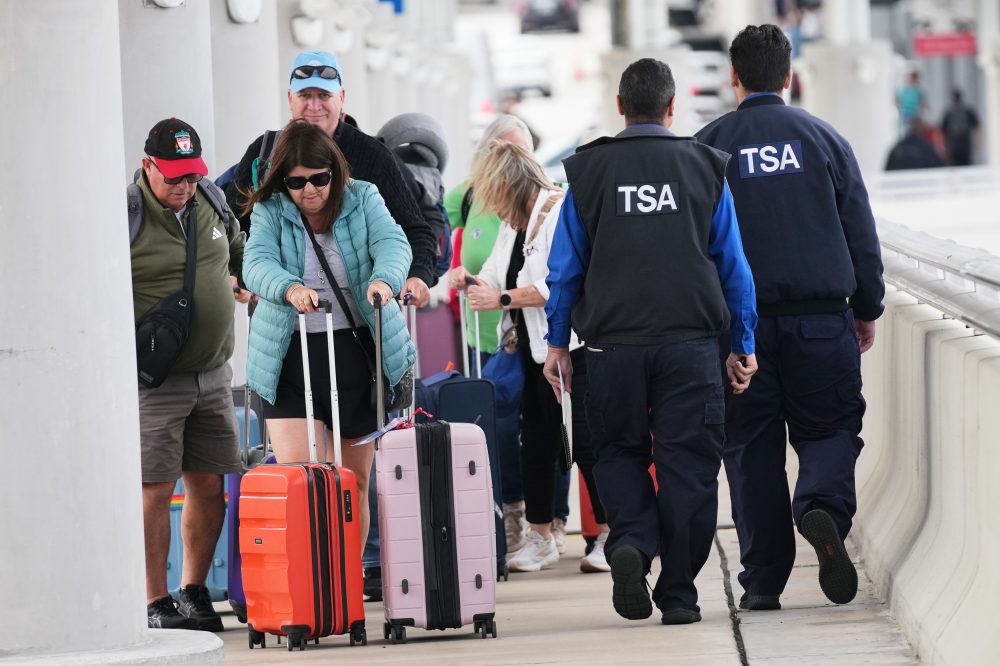

WASHINGTON — Members of a House committee voiced bipartisan concerns Wednesday about ensuring Transportation Security Administration workers receive compensation during government shutdowns and have access to modern equipment, as the Trump administration pushes to transfer airport screening duties to private companies.
The House Committee on Homeland Security conducted a hearing focused on updating the TSA nearly 25 years since its establishment following the September 11 attacks. However, discussions about advanced equipment and stable funding were dominated by concerns over TSA employee morale after workers went unpaid during three recent funding interruptions since October 1, amid administration plans to replace them at smaller airports nationwide.
“Between the 2025 and 2026 shutdowns, transportation security officers endured a total of 119 days impacted by shutdown conditions,” stated Republican Andrew Garbarino of New York, who chairs the committee. “That means TSA officers spent roughly 40% of this fiscal year reporting to work without a paycheck while continuing to carry out one of the most important security missions in the federal government.”
Multiple committee members highlighted Congress’s failure to approve pending legislation that would ensure TSA workers continue receiving pay during shutdowns. California Democrat Rep. Lou Correa suggested that if TSA employees don’t receive compensation during shutdowns, lawmakers shouldn’t either.
Correa also criticized President Donald Trump’s budget proposal, which allocates $477.3 million for private companies to assume airport screening responsibilities at approximately 250 airports while eliminating more than 4,500 TSA jobs to achieve $529.3 million in savings from compensation and benefits. The TSA recently permitted contractors in its airport staffing initiative to purchase and maintain screening equipment, a responsibility previously reserved for government agencies.
“Technology alone can’t replace the experienced people who make the security checkpoints work as they have for the past 25 years,” Correa stated. “It’s about pushing an antigovernment privatization ideology.”
Approximately 20 airports across the United States currently operate their security checkpoints through the Screening Partnership Program. Presently, airports can choose whether to participate. Trump’s budget proposal would mandate participation for smaller airports.
Hearing witnesses included Christopher Sununu, president and CEO of airline industry organization Airlines for America; Dallas Fort Worth International Airport CEO Chris McLaughlin; and American Federation of Government Employees President Everett Kelley, whose union represents TSA employees. All three testified that airports should retain the authority to decide whether to use private screening personnel.
“Ensuring SPP remains an option for airports and does not become a mandatory program is paramount to the U.S. aviation industry,” Sununu testified.
Kelley voiced strong opposition to the privatization elements in Trump’s budget.
“I’m totally against the privatization of any airport,” he declared. “You don’t contract out the CIA, do you?”
After several Democratic committee members expressed concerns that transferring airport security to private companies would increase vulnerabilities in U.S. airspace, Garbarino responded by noting that “the very conservative cities of San Francisco, Seattle and Atlanta” all utilize private screeners at their airports, adding “so yeah, maybe it’s not a Republican thing.”