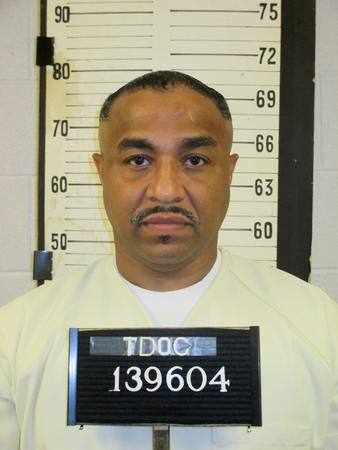

Defense lawyers for a Tennessee death row prisoner scheduled for execution Thursday are raising alarm that the state may intend to use expired lethal injection drugs, reflecting a nationwide problem as states maintain secrecy around their execution drug supplies.
Legal representatives for Tony Carruthers sent two requests to the Tennessee Department of Correction last month, seeking confirmation that proper drugs had been obtained for his execution date and requesting assurance that the chemicals had not passed their expiration dates.
Assistant Attorney General John W. Ayers’ reply avoided directly addressing the question but stated the department would follow its lethal injection protocol — which requires regular drug inventory checks to track expiration dates.
Carruthers, 57, received a death sentence following his conviction for the 1994 kidnappings and murders of Marcellos Anderson, his mother Delois Anderson, and Frederick Tucker.
When contacted Wednesday by The Associated Press, the Tennessee Department of Correction refused to confirm whether the drugs intended for Carruthers’ execution have expired. Gov. Bill Lee’s office did not immediately respond to a similar request.
Federal Public Defender Amy Harwell explained in an email that expiration dates indicate when a drug can no longer be safely relied upon to achieve the intended outcome.
“In the execution context, this may mean a slow, lingering death without a reliable loss of consciousness, as the body painfully and fitfully shuts down,” Harwell wrote.
Growing public resistance to executions has complicated prisons’ efforts to secure execution drugs, creating ongoing challenges for facilities that use lethal injection. Some states have had to accelerate executions or halt them completely because of drug expiration dates.
South Carolina suspended executions for 12 years while officials struggled to procure drugs. The state only managed to obtain them after enacting a shield law to protect supplier identities.
Tennessee has maintained in court that its shield law covers revealing expiration dates. Prior to Harold Nichols’ December execution, Tennessee Deputy Attorney General Cody Brandon offered instead to provide a sworn statement “attesting that the chemicals to be used in Mr. Nichols’ execution will not expire before his execution and have not expired,” according to court transcripts.
“The fact that TDOC was willing to provide such assurances to Mr. Nichols, but not Mr. Carruthers, raises serious concerns that TDOC is, in fact, intending to use expired drugs,” Harwell wrote in a May 18 follow-up to Ayers’ letter.
In 2017, Arkansas’ then-Gov. Asa Hutchinson signed death warrants for eight death row prisoners in a rush to use lethal injection drugs before they expired. The state executed four of the men, while four others received stays.
Arkansas has conducted no executions since then, partly due to drug procurement difficulties.
A group of Texas inmates in 2023 unsuccessfully attempted to prevent the state from using drugs they claimed were expired and dangerous. Prison officials rejected their allegations and maintained the state’s drug supply was safe.
Legal counsel for Idaho’s death row inmates expressed similar worries in 2024, when the state planned a second attempt to execute Thomas Creech after the initial try failed.
The Federal Defender Services of Idaho informed a federal judge that prison officials apparently neglected to verify the execution drugs’ expiration date before securing a death warrant for Creech in October 2024. Nine days afterward, the drugs were sent back to the supplier due to expiration, court records show. A new Idaho law has switched the state’s primary execution method to firing squad partly because of lethal injection drug procurement challenges.
Tennessee has experienced previous issues with its execution drugs. In 2022, Oscar Smith was minutes away from execution when Tennessee Gov. Bill Lee issued an unexpected reprieve that exposed the state’s failure to properly test lethal injection drugs for purity and potency. Executions were suspended for two years to permit an independent review of the problems.
The state attorney general’s office was also compelled to admit in court that two individuals primarily responsible for overseeing Tennessee’s lethal injection drugs at the time “incorrectly testified” under oath that officials were testing the chemicals as mandated.
Tennessee unveiled a new lethal injection procedure in December 2024, and resumed executions in 2025. Multiple death row inmates have filed lawsuits challenging the new protocols, claiming the Correction Department ignored investigation recommendations.
The new process has not proceeded without issues. When Byron Black was executed by lethal injection in August, he said he was “hurting so bad.” Prison officials have provided no explanation for what might have caused the pain.