A United States federal grand jury has issued criminal charges against Raul Castro, who previously served as Cuba’s president.
Castro, now 94 years old, is facing multiple serious criminal charges. Among the accusations are four separate murder charges connected to an incident targeting a humanitarian organization that took place more than three decades ago.
The indictment represents a significant legal development involving the former Cuban leader who stepped down from power years ago.
Weather officials have issued a heat advisory for Monday, warning residents to take precautions during the hottest part of the day.
The National Weather Service office in Mount Holly, New Jersey issued the advisory at 1:53 PM on May 20th, with the warning remaining in effect until 8:00 PM the same day.
Residents are advised to stay hydrated, limit outdoor activities during peak heat hours, and check on elderly neighbors and relatives during the advisory period.
Virginia Farm Bureau has served as the voice for the state’s agricultural community for nearly a century, with farmer members directing every policy stance the organization takes. The relationships these farmers build with legislators across rural and urban districts prove essential in advancing farming-related issues.
During the recent General Assembly session, Virginia Farm Bureau pursued numerous legislative priorities with mixed results. Many of their goals saw positive outcomes, though several matters remain in limbo due to the legislature’s adjournment without approving a state budget. As of mid-May 2026, Virginia’s General Assembly has yet to pass a new state budget, with discussions stalled over a proposed two-year spending plan. A special session is currently underway to resolve the deadlock before the new fiscal year begins in July.
SUCCESSFUL POLICY ACHIEVEMENTS
The organization secured several important victories for Virginia’s farming community. They successfully preserved the farmworker exemption from overtime requirements, protecting the economic viability of farming operations across the state. Additionally, they maintained exemptions for H-2A and H-2B workers from minimum wage requirements.
Virginia Farm Bureau also strengthened food labeling accuracy by securing requirements that products made from manufactured proteins cannot be labeled or marketed as animal-based foods. They established a producer-first definition of agrivoltaics and granted local governments authority to require solar canopies over parking lots, reducing pressure on agricultural and forest lands from solar development.
Other wins included giving localities authority to evaluate how data centers and other high energy use facilities affect water resources, agriculture, parks, historic sites, and forestland. The organization protected farmers’ ability to use biosolids while creating testing protocols and safeguards against dangerous PFAS levels.
Additional successes included preventing efforts to ban paraquat use by farmers, streamlining the kill permit process for farmers dealing with deer damage, and directing the Secretary of Agriculture and Forestry to develop economic development plans for agriculture and forestry at the beginning of each new gubernatorial administration.
POLICY SETBACKS
Despite these victories, Virginia Farm Bureau faced several defeats during the legislative session. They failed to maintain the broad farmworker exemption from minimum wage requirements and saw reduced decision-making power for local governments when positioning utility-scale solar facilities through the creation of state standards for ordinances.
The organization also encountered increased employer mandates through establishment of higher minimum wages, paid family medical leave, and paid sick leave programs. Additionally, they were unsuccessful in creating a tax incentive program to attract sustainable aviation fuel manufacturers, which would have increased market opportunities for biomass from wood residuals or grain.
DALLAS (AP) — The president of the Dallas Mavericks acknowledged Wednesday that dismissing Jason Kidd from his head coaching position was a challenging choice that he made independently after five years with the franchise.
Following Tuesday’s announcement of Kidd’s exit, the team president explained Wednesday that he believed the franchise required a fresh beginning.
“What he’s done for this organization we truly respect, so this was a very, very tough decision,” the president stated.
“I have to be accountable with a decision like this,” he continued. “I also have to be very active in how I look at the organization from top to bottom.”
The president, who assumed his role as team president and governor fourteen days earlier, clarified that the coaching change was unrelated to the February 2025 trade involving Luka Doncic or anyone associated with that transaction.
During his May 5 introductory press conference, the president avoided committing to Kidd’s future, indicating he would speak with the coach while assessing the team comprehensively.
Tuesday evening’s official announcement from the Mavericks characterized Kidd’s departure as a joint decision between both parties.
Under Kidd’s leadership alongside Doncic, Dallas achieved two significant postseason campaigns, advancing to the NBA Finals in 2024 and suffering a Western Conference finals defeat to Golden State two seasons prior.
During the 2024-25 campaign, the Mavericks dealt Doncic to the Los Angeles Lakers, receiving Anthony Davis as the primary asset in an exchange that proved disastrous for Dallas. The team failed to qualify for the playoffs that year and again in 2025-26, when Davis was subsequently traded.
The former Hall of Fame point guard, who helped deliver the franchise’s sole championship as a player in 2011, concluded his coaching tenure with an even regular-season record of 205-205 wins and losses.
Soccer enthusiasts in Botswana who support Arsenal believed they had extra cause for celebration when their team claimed its first Premier League championship in over two decades – a supposed government-declared day off work.
However, officials in Botswana quickly dismissed a circulating announcement that promised Wednesday as a public holiday in honor of the victory, calling it completely fabricated.
Botswana’s government shared the fraudulent document on X, marking it with red “FAKE” text overlay. Officials clarified in their post: “No, there is no holiday for Arsenal fans.”
The bogus announcement that spread across social media included authentic-looking elements such as the Republic of Botswana’s official coat of arms and presidential office markings. It claimed President Duma Boko had granted the holiday to recognize Arsenal supporters for their “passion, loyalty and unwavering support.”
Observant supporters might have spotted a telltale sign of the document’s fraudulent nature – it bore Sunday’s date of May 17. Arsenal only secured their championship victory on Tuesday following Manchester City’s 1-1 tie with Bournemouth.
A social media user jokingly suggested on X that the phony announcement might have originated from a Manchester United supporter.
NEW LONDON, Conn. — During a Wednesday commencement ceremony, President Donald Trump addressed graduating cadets at the U.S. Coast Guard Academy, praising their “unbelievable heroism and exceptional selflessness” while warning that greater challenges await them in their military service.
The speech to the class of 2026 marked the first occasion Trump has delivered a graduation address at a military academy while American forces are engaged in active combat operations.
Trump emphasized to the graduates that they would serve as America’s “first defenders” and “first responders.”
“You’ve all been tested. You’ll be tested further and probably at higher levels as your career goes on,” Trump said.
The president briefly referenced the ongoing conflict with Iran, now entering its 12th week, highlighting it as evidence of American success in “the hottest country anywhere in the world.”
“The only question is, do we go ahead and finish it up or are they going to be signing a document? Let’s see what happens,” Trump said.
The Republican leader had considered launching additional military action against Iran this week amid stalled diplomatic discussions and concerns about a fragile ceasefire. However, on Monday, Trump indicated he would allow Iran additional time due to “serious negotiations” taking place.
Trump has previously stepped back from threats against Iran, claiming diplomatic progress that has not been publicly confirmed.
Earlier Wednesday, he informed reporters that he was “in no hurry” to reach an agreement ending the conflict, citing political considerations and the upcoming November midterm elections.
The graduation ceremony took place under extreme heat conditions with minimal shade available for attendees waiting for the event to commence.
Medical personnel assisted at least one individual who collapsed from the heat. Family members requested that elderly guests be allowed to sit under shaded tent areas. While cold water bottles were provided, they quickly warmed in the intense temperatures.
Trump, who previously spoke at the academy’s 2017 graduation during his first presidency, expressed pride in becoming the first president to deliver two commencement speeches at the institution.
“We’re going to have to try it maybe a third time, too, to keep that record intact,” Trump said Wednesday.
The president characterized the graduates as entering service during “an incredible, exciting time for our nation,” describing it as a period of renewed national strength, morale and confidence.
While declaring “America is back,” Trump deviated from the typically nonpartisan nature of military commencement addresses by criticizing previous administrations, claiming the nation had been “run by foolish politicians.”
He advocated for his trade tariff policies and immigration enforcement measures, stating that “under this administration, we don’t apologize for American power or wealth.”
“What we do really is we want to maximize it. We take advantage of it,” he said. “We unleash it, and we wield it to pursue our country’s glorious destiny and our beautiful American Dream.”
According to tradition, the president and vice president annually speak at military service academies. Vice President JD Vance is scheduled to address graduates at the U.S. Air Force Academy on May 28.
Prior to traveling to Connecticut, Trump indicated his message to cadets would be, “Just enjoy your life.”
“You know, you don’t really realize how important Coast Guard is until you have a hurricane,” Trump said while commending the maritime service.
Students and teachers across the eastern United States endured a second consecutive day of unseasonable heat on Wednesday, forcing some school districts to make difficult decisions about classroom conditions.
Philadelphia’s school system moved to virtual instruction for pupils at 57 facilities, acknowledging that despite improvements, many buildings still lack sufficient cooling systems to handle the extreme temperatures.
Weather forecasters predicted another day of record-setting heat across the region stretching from the mid-Atlantic through New England, though relief is expected when a cold front arrives with rain later this week. Temperature records fell on Tuesday, with Portland, Maine reaching 92 degrees Fahrenheit (33 degrees Celsius) and Boston hitting 96 degrees (35.5 degrees Celsius).
At a Boston high school in the Dorchester area, administrators brought in fans, distributed water bottles and relaxed dress codes to allow students to wear shorts and T-shirts rather than standard uniforms.
“The heat outside feels like it’s manageable because of the wind but inside it feels just tight and burdening because we also have to go through quizzes, exams, there is no excuse,” student Ariolainy Baez told CBS News.
Weather officials issued heat advisories for parts of New York, New Jersey, Pennsylvania, Connecticut, Massachusetts and Rhode Island lasting through Wednesday evening.
New York City authorities opened cooling centers across the five boroughs to provide residents with air-conditioned relief from the dangerous temperatures.
“Just as New Yorkers look out for one another through the coldest days of winter, we must do the same through the hottest days of the year,” Mayor Zohran Mamdani said.
LOUISVILLE, Ky. – Salisbury University’s men’s lacrosse program continues its streak of national excellence, as faceoff specialist Blake Malamphy earned the prestigious USILA Face-Off Player of the Year honor on Tuesday.
The United States Intercollegiate Lacrosse Association announced Malamphy’s selection, marking the third consecutive year that the Sea Gulls have captured significant national recognition from the organization.
The award highlights Malamphy’s exceptional performance at the faceoff position throughout the season, cementing his status as one of the top specialists in collegiate lacrosse.
An environmental organization is challenging coffee giant Starbucks over claims that its plastic single-use cups can be recycled, saying a tracking study shows the containers end up in landfills instead.
The Vermont-based environmental nonprofit Beyond Plastics conducted an experiment earlier this year, placing tracking devices on 36 polypropylene cups and depositing them in recycling containers at Starbucks locations nationwide. According to the organization’s findings released Wednesday, not one cup reached a recycling facility. The majority—33 cups—wound up in landfills or incinerators, while three were last detected at sorting facilities.
These cups display recycling symbols prominently and are shown as recyclable on bins inside stores. In February, Starbucks declared its polypropylene cups “widely recyclable” across the United States after receiving approval from How2Recycle, a labeling organization.
When contacted Wednesday, a Starbucks spokesperson expressed doubts about Beyond Plastics’ research methods, though specific concerns were not detailed. The representative noted that recycling success varies by local infrastructure and stated the company “work closely with others, including the recycling companies, to help expand access and help improve the system.”
Trade organizations, including the Association of Plastic Recyclers representing mechanical recyclers, suggest that tracking devices might cause items to be removed from recycling processes.
The coffee chain made a 2020 pledge to ensure all customer packaging becomes reusable, recyclable or compostable before 2030. This year, Starbucks began accepting customer-provided cups for mobile and drive-through purchases. Under CEO Brian Niccol’s leadership, the company policy calls for serving café customers with reusable ceramic mugs, though Beyond Plastics reports many in-store patrons continue receiving plastic cups.
Judith Enck, who leads Beyond Plastics and previously worked for the Environmental Protection Agency, called on Starbucks to discontinue labeling plastic cups as recyclable. She also advocated for a complete transition to fiber-based cups, similar to what the company uses in certain markets. Such a change would represent “one of the most significant plastic-reduction corporate policies in the world,” she stated.
The Iran war has increased global plastic prices, as these materials derive from oil or natural gas, according to an April Reuters report.
Beyond Plastics reports that plastic recycling rates in the United States remain below 6%, with most recycled plastic not being polypropylene, which the group says has limited processing facilities capable of handling it.
A major British theatre company that operates venues worldwide is being positioned for a potential sale, according to four sources with knowledge of the situation.
ATG Entertainment, formerly called Ambassador Theatre Group, is in the preliminary phases of sale preparation by its private equity owner, marking a potential turnaround for an entertainment sector severely impacted by pandemic-related shutdowns.
Providence Equity Partners has engaged in recent discussions with advisers regarding the sale of its majority ownership in London’s biggest theatre operator, which presents hit shows such as The Book of Mormon, Wicked and The Lion King, three sources revealed.
The company could fetch a price exceeding 4 billion pounds ($5.38 billion), according to a fourth source, based on recent financial performance and comparable valuations of industry competitors like Live Nation.
Two sources indicated that a formal auction process might begin during the latter half of this year, though they requested anonymity due to the confidential nature of the discussions. No final determination has been reached, the sources noted.
Neither Providence nor ATG Entertainment provided responses to requests for comment.
Providence gained control of ATG Entertainment in 2013 through a 350 million pound acquisition, according to media reports from that period. A minority investment was made by another firm in 2024, based on news reports at the time.
According to company filings, ATG Entertainment manages and owns over 70 performance spaces throughout the United Kingdom, United States, Germany and Spain, serving more than 18 million patrons annually. Its U.S. operations include Broadway theaters such as the Lyric, the Hudson and Al Hirschfeld.
The European aircraft manufacturer has notified select customers about additional delays affecting A350 aircraft deliveries planned for later this decade, according to three industry sources who spoke about fresh concerns regarding production at a U.S. components facility the company recently purchased.
According to the sources, the setbacks primarily stem from continued challenges in obtaining essential fuselage components from the former Spirit AeroSystems facility located in Kinston, North Carolina.
Additionally, cargo doors manufactured by the company in Spain for the upcoming A350 Freighter are experiencing some production issues, the sources noted.
The aircraft manufacturer stated it does not provide commentary on delivery schedules.
A company spokesperson confirmed that the A350 Freighter’s inaugural flight, scheduled for later this year, and its initial delivery planned for 2027 continue as planned.
The company acquired the Kinston manufacturing facility, alongside Spirit’s Belfast-based wing production plant for the smaller A220 aircraft, last year when most of the supplier company returned to its previous parent company Boeing.
The 500,000-square-foot Kinston location, equipped with robotics, produces composite panels for the long-range A350’s upper fuselage section and manufactures a carbon-fiber spar, or structural beam, for each wing.
Industry sources indicated the ownership transfer has been complicated partly by workforce challenges, with some workers choosing to return to former Spirit operations now under Boeing.
“The transition hasn’t gone smoothly,” a senior aerospace source shared.
The aircraft manufacturer informed analysts last month that no unexpected problems were discovered at Kinston, though CFO Thomas Toepfer emphasized the logistical challenges involved in deploying European specialists to assist with production increases.
Major chocolate manufacturers are bringing real cocoa back to their products following a dramatic 70% drop in bean prices from record highs reached in late 2024.
The price decline has prompted companies to reverse course from last year’s trend of smaller candy bars, additional wafers, and cocoa-light alternatives that emerged when bean costs soared above $12,000 per metric ton due to weather problems and crop disease.
Confectionery giant Hershey has announced plans to increase cocoa content in its chocolate alternatives, which the company labels as chocolate candy. Following criticism from the grandson of Reese’s founder over recipe changes to classic Reese’s items, Hershey committed to restoring original formulas for all Hershey’s and Reese’s products starting next year.
Industry experts predict other manufacturers will follow this trend. Independent consultant Roger Bradshaw stated: “Absolutely it makes sense to switch back to real chocolate at current cocoa price levels.”
When contacted for comment, snack producer Mondelez did not respond regarding recipe modifications, while Nestle provided no immediate statement. Ferrero indicated its formulations aren’t influenced by temporary ingredient price changes but declined to discuss cocoa usage adjustments.
The dramatic price swing occurred after cocoa costs nearly tripled in 2024, forcing manufacturers to reduce bar sizes, incorporate more nuts and fruit, and develop cocoa-free alternatives. Companies also depleted cocoa reserves, increased consumer prices, and invested in products like ChoViva, a chocolate substitute made from sunflower seeds and oats created by German startup Planet A Foods through its collaboration with Barry Callebaut, the world’s largest chocolate manufacturer and cocoa processor.
These industry changes triggered a significant decline in cocoa demand that analysts believe caused the 70% price drop from late 2024 peaks. Veteran analyst and cocoa expert Steve Wateridge projects demand could reach nine-year lows in the 12 months ending in September, though he expects recovery beginning in the year’s second half.
“The factors that pushed us to these price lows are all likely to unwind,” Wateridge explained.
Price changes typically take about 10 months to reach retail chocolate prices because manufacturers secure purchase agreements months ahead and maintain substantial inventories. Supermarkets and retailers have pressured chocolate makers for lower prices since mid-2025, with some companies responding.
Mondelez reported reducing European chocolate prices last month and observing increased sales volumes. Barry Callebaut, whose ingredients appear in 25% of global chocolates, anticipates volume growth of 1% to 5% in the six months through August compared to the previous year, based on first-half financial results.
The company, which provides chocolate for Nestle’s Kit Kat bars and The Magnum Ice Cream Company, notes that current cocoa prices make traditional chocolate production less expensive than creating chocolate-flavored alternatives using vegetable fat instead of cocoa butter.
This shift means “some customers (are) going back to chocolate,” Chief Executive Hein Schumacher said in April, without identifying specific companies.
Legislative changes are also driving the return to cocoa in certain regions. Brazil, ranking as the world’s sixth-largest chocolate consumer per capita, enacted legislation this month requiring products labeled as dark chocolate to contain minimum 35% cocoa solids. This regulation aligns Brazil more closely with European and North American markets by strengthening cocoa content standards.
The transition back to traditional chocolate would benefit nearly 2 million impoverished cocoa farmers in leading producers Ivory Coast and Ghana, as increased demand should support bean prices. However, returning to pre-rally volume levels will require time.
“I expect it will take 2.5 years to get back to where we were before 2023/24” regarding demand, said a veteran cocoa consultant and former trader who requested anonymity. This timeline reflects various trends including Gen Z’s openness to innovations like cocoa-free chocolate and weight-loss medications’ impact on eating patterns.
Nevertheless, chocolate makers remain concerned about potential price increases, suggesting some alternatives will persist. These products maintain profitability in mass-market segments, according to Vontobel analyst Jean-Philippe Bertschy.
US Health Secretary Robert F. Kennedy Jr. removed the top leadership of a significant medical panel that determines which preventive healthcare services must be offered to patients without charge, according to documents obtained by Reuters.
The dismissals affected the chair and vice chair of the Preventive Services Task Force, which occurred earlier this month. Dr. John Wong, a medicine professor at Tufts University School of Medicine who served as chair, and Dr. Esa Davis, a professor at the University of Maryland School of Medicine who was vice chair, were both terminated from their positions.
The influential panel, which normally operates with 16 members, has not convened for more than a year following Kennedy’s decision to suspend its routine meetings. Additionally, five volunteer members whose terms concluded in December have not been replaced with new appointments.
Three men are being honored as heroes after they gave their lives protecting children and staff during a deadly attack at the Islamic Center of San Diego.
Amin Abdullah, Nadir Awad and Mansour Kaziha confronted and held off two armed attackers who entered the religious facility. Their brave intervention provided crucial time for the many young people and employees inside the mosque to reach safety.
The three victims paid the ultimate price for their courageous actions, losing their lives while ensuring others could escape the violence unharmed.
A dedicated emergency medical services worker from Northampton County has earned recognition as the top provider in the state for 2025.
Charlene Bagwell has been selected to receive the NCEMS 2025 Provider of the Year award, marking a significant achievement in her emergency medical services career.
The annual recognition highlights outstanding performance and dedication among emergency medical service providers throughout the region.
British defense officials announced Wednesday that Russian military aircraft conducted a dangerous intercept of a Royal Air Force surveillance plane over the Black Sea last month, describing the encounter as a risky incident that could heighten tensions between NATO and Russia.
According to defense ministry officials, the British Rivet Joint aircraft was conducting standard surveillance operations in international airspace over the Black Sea and was not carrying weapons. The plane faced multiple intercepts from a Russian Su-35 fighter, which approached close enough to activate emergency warning systems aboard the British aircraft, officials reported. Additionally, a Russian Su-27 made six separate passes, coming as close as six meters to the front of the Rivet Joint plane.
Defense officials characterized this as the most serious Russian aggressive action toward a British surveillance aircraft since 2022, when a Russian plane fired a missile over the Black Sea near a UK aircraft. Moscow later attributed that earlier incident to equipment failure.
British Royal Air Force surveillance missions are conducted regularly alongside allied forces to help protect NATO’s eastern borders, according to officials.
The announcement comes during a week that has seen multiple security concerns in the Baltic area, including a drone breach of Lithuanian airspace and a fighter aircraft downing what authorities believe was a Ukrainian drone over Estonia.
Earlier this year, Britain sent naval forces to counter potential attacks on underwater cables and pipelines by Russian submarines that operated in and near British waters for more than a month, officials said.
Nine individuals from West African nations arrived in Sierra Leone Wednesday aboard a deportation flight from the United States, marking the beginning of a new agreement between the two countries.
Foreign Minister Timothy Kabba confirmed to Reuters the previous week that Sierra Leone has committed to accepting up to 300 West African migrants annually who face deportation from the United States, with monthly arrivals capped at 25 people.
The group that landed Wednesday consisted of seven men and two women originally from Ghana, Senegal, Guinea and Nigeria, according to Patrick Robin, who leads Kenvah Solutions, the private company contracted to provide housing for the deportees at two hotels located near the airport.
The duration of the deportees’ stay in Sierra Leone remains uncertain, as a government spokesperson has not responded to inquiries for clarification. “We will look after them in a dignified and comfortable way for up to two weeks,” Robin stated, noting that under “exceptional circumstances” some individuals might remain at the facilities for 30 days.
This West African-only deportee arrangement mirrors a similar agreement with Ghana. Reuters has documented cases where deportees sent to Ghana, Equatorial Guinea and other African nations were subsequently compelled to return to their countries of origin, despite having received court-ordered protection in the United States designed to prevent such outcomes.
While Robin indicated that “most of” Wednesday’s arrivals expressed a desire to return home, a Reuters observer noted that at least one deportee appeared reluctant to exit the aircraft before being convinced to do so.
What Sierra Leone receives in return for accepting these deportees remains unclear.
A February report from Democrats on the Senate Foreign Relations Committee revealed that while the total expense of third-country removals is unknown, over $32 million has been directly transferred to five nations — Equatorial Guinea, Rwanda, El Salvador, Eswatini and Palau.
A State Department spokesperson declined to provide comment on the matter.
French officials are investigating claims of foreign election meddling that targeted hard-left political candidates during municipal elections in March, the country’s Interior Minister Laurent Nunez announced Wednesday.
The investigation centers on allegations that an Israeli company called BlackCore orchestrated a disinformation campaign against at least three mayoral candidates from the France Unbowed (LFI) party. According to Reuters reporting from last week, the operation involved creating misleading websites and fake social media profiles that made false accusations of criminal conduct, along with negative digital advertisements.
When questioned by LFI lawmaker Francois Piquemal, one of those allegedly targeted, Nunez confirmed the ongoing investigation and called the campaign “extremely grave.”
The Interior Minister also committed to publicly releasing a complete report from electoral security officials about the suspected operation. This pledge came after the satirical publication Le Canard Enchaine reported that there were attempts to suppress the report’s release.
Reuters was unable to confirm the identity of BlackCore’s operators, determine its actual location, or locate any records of the company in Israeli business databases.
The company did not respond to multiple contact attempts through its website and LinkedIn profile, both of which have since been removed from the internet.
Meta’s chief executive Mark Zuckerberg informed staff members through an internal company message on Wednesday that he doesn’t anticipate additional widespread job eliminations for the remainder of this year, according to a copy of the communication obtained by Reuters.
The statement came on the same day the social media giant behind Facebook completed a sweeping organizational overhaul, eliminating 10% of its global workforce while reassigning 7,000 workers to artificial intelligence-focused divisions.
NEW YORK (AP) — You could label it an incredible rally. Or you could call it a complete meltdown.
The opening game of the Eastern Conference finals featured elements of both scenarios. New York’s dramatic surge wouldn’t have been possible without Cleveland’s stunning collapse.
Cleveland held a commanding 93-71 advantage with less than eight minutes remaining before New York dominated the final stretch, outscoring their opponents 44-11 to secure a 115-104 overtime victory. Among playoff games over the past three decades, only the Clippers’ 24-point rally against Memphis in 2012’s opening game represents a larger fourth-quarter turnaround.
“We should’ve won the game,” Cavaliers All-Star Donovan Mitchell said. “We didn’t.”
Here’s an examination of what went wrong for Cleveland.
Though it seemed unthinkable moments later, James Harden executed solid defense against a then-struggling Jalen Brunson while Cleveland maintained a 20-point cushion with 7:04 left on the clock. Harden successfully blocked Brunson’s driving attempt, though Karl-Anthony Towns secured the loose ball to keep the play alive and found Landry Shamet open for a three-pointer. Following a Cleveland turnover, New York called timeout with 6:41 remaining. Despite the score still reading 93-76, the Knicks appeared energized for the first time in quite a while as Shamet encouraged his teammates with enthusiastic gestures.
“If you’re going to make a run, that’s when you’ve got to do it. So might as well throw your best punch at that point and try to do what you can,” Shamet said.
“You’ve got to leave it all out there especially at this time of the year and that’s what we did. We had a group that didn’t flinch at that deficit and made some effort.”
New York’s strategy during the following minutes centered on fundamental basketball principles. When Brunson advanced the ball upcourt, whichever player Harden was defending — typically either Mikal Bridges or OG Anunoby — would establish a screen against Brunson’s defender, forcing Harden to switch onto Brunson. Brunson then exploited this matchup by driving against Harden, creating opportunities for the floaters and bank shots that helped establish his All-Star reputation.
This approach yielded four consecutive New York baskets for Brunson, culminating in a three-pointer that narrowed the gap to 94-89 with 3½ minutes left.
Just before Brunson attempted that crucial three-pointer, ESPN analyst Richard Jefferson suggested Cleveland might benefit from a timeout if New York scored.
However, was the opportunity already lost? Cleveland witnessed multiple possessions where New York repeatedly executed the same strategy and could have stopped play earlier to implement defensive adjustments that might have altered the outcome.
“I like to hold my timeouts,” Cavs coach Kenny Atkinson explained afterward. “I didn’t want to get one timeout at the end of the game, a one- or two-point game. I try to hold them.”
Cleveland might have avoided overtime entirely with better fortune on two three-point attempts.
Mitchell attempted one with 3:47 remaining that rolled around the rim before falling out. Success there would have pushed Cleveland’s lead to 11 points. Instead, Brunson connected on his three-pointer just 17 seconds later, cutting the deficit to 94-89.
Later, after Shamet’s game-tying three-pointer bounced favorably off the rim before dropping through, Cleveland possessed the ball for regulation’s final possession and found Sam Merrill in prime position. His attempt appeared so accurate that play-by-play announcer Mike Breen seemed ready to deliver his famous “BANG!” call with the ball rolling inside the rim. However, he managed only “BA!” before switching to “In and out! That one halfway down!”
“We got a little unlucky,” Atkinson said.
During the game’s final 12:49 — encompassing the end of regulation plus overtime — Brunson alone outscored Cleveland 17-11. Anunoby nearly matched that feat with 10 points during the same period.
The statistics from that crucial stretch tell the story:
— Field goal shooting: New York .750 (15-20), Cleveland .222 (4-18).
— Three-point shooting: New York .750 (6-8), Cleveland .182 (2-11).
— Free throw shooting: New York .800 (8-10, all from Anunoby), Cleveland .250 (1-4).
— Rebounding: New York 13, Cleveland 2.
— Brunson converted 8 of 10 shots during those minutes, while Shamet and Bridges combined for perfect 5-for-5 shooting (all three-pointers).
— Harden (1-5) and Mitchell (0-5) struggled badly, combining for just 1-for-10 shooting during the collapse.
A Norwegian soccer star anticipated to make his country’s World Cup roster has joined fellow athletes in pressing FIFA to enhance heat safety measures for the upcoming tournament.
Morten Thorsby, who is likely to represent Norway in their first men’s World Cup appearance since 1998, has signed onto demands for stronger heat protection protocols. Thorsby established “We Play Green” in 2020, an initiative encouraging soccer athletes to take action on environmental and climate concerns.
The Norwegian player joined dozens of other soccer athletes in signing a letter from the New Weather Institute urging FIFA to adopt better heat safety standards. The correspondence emphasizes that “essential that the best available medical expertise is put to practice” during the tournament scheduled across the United States, Canada and Mexico starting June 11.
“We share the concerns outlined by the medical professionals and support their demand that FIFA updates its heat-stress framework before the World Cup,” the letter states.
The athletes’ appeal follows a separate communication from prominent health specialists to soccer’s international governing body last week. These medical experts expressed alarm about “worrying levels of heat stress” that could affect players during the competition and stated they are “concerned that FIFA’s current guidelines on heat stress mitigation are inadequate and will place players at risk of heat injury.”
The health professionals recommended implementing 6-minute cooling intervals during games and ensuring locker facilities include “the right equipment for aggressive pre-game and halftime cooling.”
Research has indicated that 14 out of 16 host cities for World Cup matches will face “levels of extreme heat, which could be potentially dangerous to players, match officials and possibly spectators.” Studies show wet bulb globe temperatures — measurements incorporating humidity, wind speed, sun angle and additional factors — may surpass 90 F (32 C) during afternoon hours in Monterrey, Mexico, while Miami was highlighted for its “particularly high humidity.”
FIFA has established a Heat Illness Mitigation and Management Task Force consisting of medical and operational specialists and implemented various heat-related measures, including mandatory 3-minute hydration pauses for athletes during each half regardless of weather, while team personnel and substitutes will have access to climate-controlled seating areas during outdoor competitions.
The international soccer organization stated that weather conditions have been considered in developing the match schedule.
MIAMI (AP) — Federal prosecutors were set to reveal criminal charges Wednesday targeting former Cuban President Raúl Castro, as the current administration intensifies its pressure campaign against Cuba’s socialist leadership, sources with knowledge of the situation reported.
Miami-based federal prosecutors have been developing an indictment connected to Castro’s suspected involvement in the 1996 destruction of two aircraft flown by Brothers to the Rescue, a Miami-headquartered exile organization. The 94-year-old Castro served as Cuba’s defense minister during that period.
The anticipated charges encompass murder and aircraft destruction, according to one source briefed on the matter. These individuals requested anonymity since they lacked authorization to speak publicly before the official announcement.
Acting Attorney General Todd Blanche along with other senior Justice Department leadership were scheduled to attend a Miami ceremony Wednesday commemorating the victims of the aircraft attack.
President Donald Trump has been issuing military threats against Cuba following U.S. forces’ capture of Venezuelan President Nicolás Maduro, Cuba’s long-standing ally. Following Maduro’s removal, the White House implemented a blockade cutting off fuel deliveries to Cuba, resulting in widespread power outages, food scarcity and economic devastation throughout the nation.
Following Maduro’s detention, Trump has intensified discussions about Cuban regime change after promising earlier this year to execute a “friendly takeover” of the nation unless its leaders opened their economy to American investment and expelled U.S. enemies.
Trump’s initial presidency brought drug-trafficking charges against Maduro and used those accusations to justify his removal through a surprise military operation in January that transported the Venezuelan president to New York for prosecution.
Secretary of State Marco Rubio on Wednesday called on Cuban citizens to demand a free-market system with new leadership that he claimed would establish a fresh direction in U.S. relations.
“In the U.S., we are ready to open a new chapter in the relationship between our people,” Rubio, the son of Cuban immigrants, said in a Spanish-language video message. “Currently, the only thing standing in the way of a better future are those who control your country.”
Cuba’s deputy foreign minister, Carlos F. de Cossío attacked Rubio on X, claiming he “lies so repeatedly and unscrupulously about Cuba and tries to justify the aggression he inflicts on the Cuban people.” Rubio “knows full well that there is no excuse for such cruel and ruthless aggression.”
No evidence suggests Castro will be brought into U.S. custody in the near future.
He assumed the presidency from his ill older brother Fidel Castro in 2006 before transferring authority to a loyal ally, Díaz-Canel, in 2018.
Though he stepped down as Cuban Communist Party leader in 2021, he is widely thought to maintain influence from behind the scenes, highlighted by his grandson Raúl Guillermo Rodríguez Castro’s prominent role, who previously held secret discussions with Rubio.
Last week, CIA Director John Ratcliffe visited Havana for discussions with Cuban leadership, including Castro’s grandson. Two additional senior State Department representatives met with the grandson in April.
“The symbolic nature is absolutely crucial,” said Lindsey Lazopoulos Friedman, a former prosecutor at the U.S. attorney’s office in Miami who handled national security cases and crimes involving Cubans.
“Even though Raúl Castro will likely stay and die in Cuba, you can use the indictment as a pressure point, a tactical advantage, to extract other concessions like the release of prisoners or to keep Russia out,” she added.
Beginning in 1995, aircraft operated by Brothers to the Rescue members, an organization established by Cuban exiles, flew over Havana distributing pamphlets encouraging Cubans to rebel against the Castro regime.
Cuban authorities complained to the U.S. government, cautioning they would protect their airspace. Federal Aviation Administration officials also launched an inquiry and met with the organization’s leadership to encourage them to halt the flights, according to declassified government documents obtained by George Washington University’s National Security Archive.
“This latest overflight can only be seen as further taunting of the Cuban Government,” an FAA official wrote in an email to her superiors after one intrusion in January 1996. “Worst case scenario is that one of these days the Cubans will shoot down one of these planes.”
However, these warnings were ignored and on Feb. 24, 1996, missiles launched by Russian-manufactured MiG-29 fighter aircraft destroyed two unarmed civilian Cessna planes shortly north of Havana just outside Cuba’s airspace. All four occupants perished.
Guy Lewis, who served as a federal prosecutor, discovered evidence connecting senior Cuban military leaders to cocaine smuggling by Colombia’s Medellin cartel. After the shootdown, the probe expanded, and prosecutors pursued charges against Raúl Castro for directing a massive racketeering operation by Cuba’s military forces.
“The evidence was strong,” Lewis said in an interview.
Ultimately, the Clinton administration charged four people, including the MiG pilots, the Cuban air force commander and the leader of a Cuban intelligence network in Miami — the sole individual to serve time in a U.S. prison — for supplying crucial information about the flights.
The event prompted the U.S. to strengthen its stance against Cuba, despite the Cold War’s conclusion and the declining memory of the Castros’ support for revolution throughout Latin America.
However, Castro himself escaped charges as the Clinton administration — which had quietly attempted to improve Cuban relations before the incident — expressed foreign policy concerns regarding such a prominent indictment.
“Raúl was definitely one who slipped through the noose,” Lewis said. “The crime is notorious. Three U.S. citizens and one legal permanent resident were killed in a premeditated orchestrated murder. That should never be forgotten.”
An organization established by Cuban exiles called Brothers to the Rescue sits at the core of the U.S. Justice Department’s effort to pursue criminal charges against former Cuban leader Raúl Castro, a development that could resurrect one of the most contentious episodes in the nations’ troubled history spanning decades.
According to a source with knowledge of the probe who spoke to The Associated Press, the possible charges relate to Castro’s suspected involvement in the 1996 downing of two aircraft flown by the Miami-headquartered exile organization. At that time, Castro served as defense minister, positioning him as the country’s second-highest official behind his brother Fidel.
The source requested anonymity as they lacked permission to speak publicly about an active investigation.
Brothers to the Rescue launched operations in 1980 amid the unexpected exodus of 125,000 Cubans to the United States. Established by emigrant José Basulto, the organization sought to assist Cuban refugees navigating the Florida straits through aerial supply drops and Coast Guard notifications.
The extended crisis started when some Cubans demonstrated against travel limitations enforced by President Fidel Castro’s communist regime, prompting Castro to open Mariel port to departing citizens, resulting in the straits becoming crowded with desperate individuals.
The administration of U.S. President Bill Clinton modified immigration policies to prevent Cubans from attempting the dangerous journey north on unstable, improvised vessels. However, Brothers to the Rescue, alternatively called by its Spanish designation Hermanos al Rescate, persisted in flying near Cuban airspace and antagonizing Havana.
On Feb. 24, 1996, three aircraft transporting Brothers to the Rescue members flew into an area near the 24th parallel, located a brief distance north of Havana and some of Cuba’s most critical installations.
Cuban military aircraft destroyed two of the exiles’ defenseless civilian Cessnas, resulting in the deaths of all four occupants. A third aircraft, transporting the group’s leader, barely avoided the same fate.
American University Cuba expert William LeoGrande and National Security Archive senior researcher Peter Kornbluh stated this week that their 2015 publication, “Back Channel to Cuba: The Hidden History of Negotiations between Washington and Havana,” demonstrates how the Clinton administration’s continuous advisories about provoking Cuba failed to deter Hermanos al Rescate.
“Only after the shootdown did the FAA issue a concrete ‘cease and desist’ order against Basulto for what it called ‘careless or reckless’ operations that ‘endanger the lives or property of others,’” the authors stated.
Given Hermanos al Rescate’s provocation of the Cuban government, the U.S. failure to halt the organization, and the Cuban air force’s attack on civilian aircraft, “there’s no good guys in this story,” LeoGrande observed.
U.S. counterintelligence apprehended five Cuban intelligence operatives who had penetrated Brothers to the Rescue. This narrative was dramatized in the film “The Wasp Network.”
Two of the Cuban operatives completed lengthy prison terms while three were freed through a prisoner swap that preceded former President Barack Obama’s diplomatic opening with Raúl Castro.
Two Cuban fighter pilots and their superior officer who were also charged in connection with the shootdown have stayed beyond U.S. law enforcement jurisdiction while residing in Cuba.
Castro has faced U.S. criminal scrutiny previously. In 1993, federal prosecutors in Miami contemplated charging him and other high-ranking Cuban military leaders with drug trafficking based on Colombian trafficker testimony that surfaced during former Panamanian leader Manuel Noriega’s narcotics trial, the AP reported in 2006.
However, charges were never filed as the Clinton administration expressed foreign policy objections.
WASHINGTON — A pair of law enforcement officers who protected the U.S. Capitol during the January 6, 2021 attack have filed a federal lawsuit seeking to prevent anyone, including the rioters themselves, from collecting money from a newly established $1.776 billion settlement fund intended for individuals claiming to be victims of politically motivated prosecutions.
The legal action was filed Wednesday, one day after Acting Attorney General Todd Blanche testified before Congress about the fund’s establishment. Blanche, who previously served as President Donald Trump’s personal lawyer before joining the Justice Department, declined to rule out the possibility that individuals who attacked police during the January 6 riot could qualify for payments from the fund.
In their legal filing, the officers characterize the government’s “Anti-Weaponization Fund” as an unlawful slush fund that Trump intends to use to “finance the insurrectionists and paramilitary groups that commit violence in his name.” The lawsuit characterizes the fund’s establishment as “the most brazen act of presidential corruption this century” and demands its elimination.
“No statute authorizes its creation, the settlement on which it is premised is a corrupt sham, and its design violates the Constitution and federal law,” the suit says.
The fund originates from a settlement related to Trump’s $10 billion legal action against the Internal Revenue Service concerning the disclosure of his tax documents. Its purpose is to provide compensation to individuals who believe they faced unfair treatment from previous administrations’ Justice Department. A five-member panel selected by the attorney general will determine payment distributions.
The Capitol riot resulted in injuries to more than 100 law enforcement officers. Prosecutors brought charges against over 1,600 individuals for January 6-related offenses, though Trump eliminated all of these cases through comprehensive pardons last year.
The legal challenge comes from Metropolitan Police Department officer Daniel Hodges and former U.S. Capitol Police officer Harry Dunn, who is running in Maryland for a seat in Congress. Both Hodges and Dunn provided congressional testimony about their traumatic January 6 experiences. Video footage showed a rioter removing Hodges’ mask while he was trapped against a door during fighting over a tunnel entrance.
The officers argue the fund “encourages those who enacted violence in the President’s name to continue to do so.”
“Dunn and Hodges already face credible threats of death and violence on regular basis; the Fund substantially increases the danger,” the suit alleges.
During Tuesday’s congressional hearing, lawmakers questioned Blanche extensively about the fund. He characterized it as “unusual” but not unprecedented. Blanche failed to acknowledge that Trump’s Justice Department has investigated and prosecuted some of the Republican president’s political enemies, including former FBI Director James Comey and New York Attorney General Letitia James.
The lawsuit also names Blanche and Treasury Secretary Scott Bessent as defendants. Representatives from the Justice and Treasury departments did not immediately provide responses to requests for comment regarding the legal action.
Brendan Ballou, a former Justice Department prosecutor who worked on Jan. 6 cases, represents the officers as one of their attorneys.
A Spanish court has identified the son of a fashion retail mogul as a suspect in connection with his father’s deadly fall from a cliff, according to court documents reviewed by Reuters.
Jonathan Andic, age 45, was named by a Barcelona court on Tuesday as part of an ongoing investigation into the death of fashion executive Isak Andic, who plunged more than 100 meters (328 feet) from a cliff located near the Catalan capital.
According to the court filing, Judge Raquel Nieto Galvan stated there was “sufficient evidence to suggest that the death of (Isak Andic) may not have been accidental, and that (Jonathan Andic) played an active and premeditated role in his father’s death.”
Attempts to reach Jonathan Andic’s legal representative for comment were unsuccessful. A family spokesperson declined to provide comment, pointing to Tuesday’s statement that described the investigation as a chance to demonstrate his innocence.
The judge indicated that their troubled relationship stemmed from Jonathan’s “obsession with money to the extent that he asked his father (Isak Andic) for an inheritance while he was still alive,” according to Nieto Galvan’s written findings.
Text messages on WhatsApp revealed that Jonathan Andic had expressed “feelings of hatred, resentment and thoughts of death, and blaming his father for his situation.”
The court documents suggest Jonathan sought either to obtain his inheritance during his father’s lifetime “or for the figure of the father to cease to exist, either in his thoughts or in reality.”
WORKPLACE AND FAMILY TENSIONS
Court testimony revealed that some of the animosity originated from incidents in 2015 when Isak Andic initially granted his son expanded duties at Mango before abruptly removing those responsibilities. This sequence of events led to what the court described as “a crisis on a professional, personal and family level, particularly with his father” for Jonathan Andic.
While Jonathan Andic acknowledged to the judge that his father had taken back some authority he had been granted at Mango, he disputed that this situation had caused any professional or personal friction between them.
The court filing indicates that Jonathan learned in mid-2024 of Isak’s intention to modify his will to establish a charitable foundation for those in need, which resulted in “a marked change” in his behavior. He then attempted to repair relations with his father, who agreed to Jonathan’s suggestion for the December 14 hiking trip so they could have a private conversation.
Jonathan’s actions both before and after the deadly hiking excursion also drew scrutiny. Vehicle tracking data revealed he had traveled to the identical location on December 7, December 8 and December 10, despite his claims that he had only visited the area once, two weeks prior to his father’s death.
Jonathan provided inconsistent accounts of what transpired during two emergency service phone calls and in a subsequent police statement.
Police conducted four reconstructions and determined that the footprint evidence at the location and the manner of the body’s fall did not align with an accidental slip.
Investigators found that he had fallen feet-first in a sliding motion. Additionally, there were no injuries to his palms, which led authorities to eliminate the possibility that he had stumbled over a rock.
Jonathan Andic also replaced his mobile phone, resulting in the loss of all its stored information, claiming it had been taken during a three-day visit to Quito, Ecuador in March 2025. The timing of the phone’s disappearance aligned with news coverage indicating the case had been reopened, the judge noted.
The French video game publisher Ubisoft delivered sobering financial news Wednesday, projecting continued losses and declining revenue following what executives described as a record-breaking annual deficit.
The gaming company disclosed an International Financial Reporting Standards operating deficit of 1.3 billion euros ($1.40 billion) for the fiscal year ending March 2026. During a media briefing, Chief Financial Officer Frederic Duguet characterized this figure as unprecedented for the company. Meanwhile, net bookings dropped 17.4% to reach 1.53 billion euros.
Looking ahead to fiscal year 2026-27, Ubisoft projected revenue will decline between 8% and 9%, accompanied by a high single-digit operating loss margin and potential cash expenditures reaching 500 million euros. Company officials anticipate returning to profitability and positive free cash flow during 2027-28, banking on an improved game release schedule and expansion of live-service, online multiplayer titles designed to generate ongoing player spending similar to Riot Games “League of Legends.”
The publisher has faced mounting challenges stemming from disappointing game launches, production delays, and a January reorganization that negatively impacted stock prices. Management indicated the company maintains sufficient cash reserves for immediate debt obligations and is currently negotiating with financial institutions to refinance upcoming payment deadlines.
In a significant leadership development, the company announced that Nicolo Laurent, the former chief executive of Tencent-owned Riot Games, will join Vantage Studios as a special adviser. Vantage Studios represents a joint venture between Tencent and Ubisoft focused on managing the publisher’s most valuable gaming properties.
For the upcoming first quarter, Ubisoft forecasts net bookings of approximately 250 million euros, timed with the launch of “Assassin’s Creed Black Flag Resynced,” an updated version of the popular 2013 Caribbean-themed adventure.
As part of its cost-reduction strategy, the publisher eliminated roughly 1,200 positions during the previous year, bringing total employment to about 16,600 workers. The company also reduced fixed expenses by 118 million euros to 1.435 billion euros in 2025-26, with plans to further decrease costs to 1.25 billion euros by March 2028 as it works to achieve financial stability.
A federal appeals court has dismissed allegations that Amazon knowingly assisted overseas fur manufacturers in avoiding import duties and fees through its online marketplace.
The 2nd U.S. Circuit Court of Appeals determined on Wednesday that there was insufficient evidence showing Amazon was aware that international manufacturers were deliberately understating shipment values to pay reduced tariffs, or that they were bypassing U.S. Fish and Wildlife Service inspection requirements by omitting necessary documentation and using ports not monitored by the agency.
The lawsuit was brought by Mike Henig, who operates Henig Furs from Montgomery, Alabama. Henig alleged that Amazon should have recognized that overseas manufacturers were offering products at unusually low prices by illegally avoiding import duties and fees from 2007 through 2024, violating the False Claims Act by depriving the federal government of revenue.
However, the appeals court based in New York determined there could be legitimate reasons for the reduced pricing, including operational efficiencies or reduced labor expenses.
Circuit Judge Jose Cabranes, writing for the unanimous three-member panel, stated that “Below-market prices alone are therefore insufficient in this case to show that Amazon was aware of a substantial risk that the foreign manufacturers were submitting false claims.” The ruling confirmed a lower court’s dismissal from January 2025.
The Seattle-based online retailer frequently faces legal challenges from customers and businesses attempting to hold it accountable for actions taken by third-party sellers using its platform.
In 2025, the company’s revenue exceeded that of Walmart, which had long held the position as the world’s top retailer by revenue.
Representatives for Henig did not respond immediately to requests for comment. Amazon and its legal team also did not provide immediate responses to similar inquiries.
This case represents one of several tariff-related legal challenges facing Amazon.
Just last Friday, consumers initiated a proposed class action lawsuit alleging that Amazon failed to reimburse customers for increased costs that stemmed from tariffs later deemed unlawful by the U.S. Supreme Court during President Donald Trump’s administration. Similar legal actions have been filed against numerous other major companies including Costco, FedEx and Nike.
Two law enforcement officers who protected the U.S. Capitol during the January 6, 2021 riot have taken legal action to stop President Donald Trump’s nearly $1.8 billion compensation fund for victims of political weaponization.
Harry Dunn, a former Capitol Police officer, and Daniel Hodges from the Metropolitan Police Department filed their federal court challenge in Washington on Wednesday. In their legal filing, they claim Trump has established a taxpayer-funded slush fund worth $1.776 billion designed to benefit insurrectionists and paramilitary organizations that engage in violence on his behalf.
The officers are requesting a judicial order to prevent any disbursements from the fund, describing it as the most blatant example of presidential corruption in this century.
The compensation fund emerged from Trump’s Monday settlement with the Internal Revenue Service, where he agreed to withdraw his $10 billion legal action concerning the disclosure of his tax documents from his previous presidency. The Justice Department established the fund as part of this agreement to provide compensation for those affected by political weaponization.
During congressional hearings on Tuesday, acting Attorney General Todd Blanche fielded numerous inquiries about the fund’s operations. Blanche explained that the money would be available to individuals from all political parties and would not be restricted solely to January 6 defendants. He noted that eligibility would be determined broadly based on experiences of weaponization.
Dunn, who is Black and served 15 years protecting lawmakers, has spoken publicly about enduring physical attacks and racist harassment during the Capitol assault. Trump supporters were attempting to stop Congress from confirming former President Joe Biden’s 2020 election victory. Dunn testified before a bipartisan House committee investigating the deadly incident and has discussed his struggle with post-traumatic stress disorder resulting from the attack.
Hodges gained widespread attention when video footage showed him trapped in a revolving door by a rioter using a police shield during the Capitol breach. He continues serving with Washington’s police department and has provided congressional testimony about his ordeal.
Sussex County has teamed up with the Delaware Department of Transportation (DelDOT) and the Delaware Office of State Planning Coordination (OSPC) to begin a comprehensive planning initiative for managing future development along the US Route 9 and US Route 113 corridors. This research will provide guidance for recommendations before the County’s scheduled comprehensive plan revision and assist in directing upcoming choices regarding infrastructure, land use, and development projects.
To support this initiative, Sussex County is requesting community participation through an online survey created to collect opinions on existing conditions, resident priorities, and potential developments along the US Route 9 corridor. Community feedback will directly influence proposed enhancements and strategic planning approaches for the long term.
Local residents and community members with a stake in the area are invited to learn additional details and provide their thoughts by accessing the Master Plan Study website.
A Heat Advisory remains in effect until 8 PM tonight for northern portions of the Delmarva Peninsula as dangerous heat index values climb toward 97 degrees.
The National Weather Service issued the advisory this morning for New Castle County in Delaware, along with neighboring areas in southeastern Pennsylvania and southern New Jersey. The combination of hot temperatures and high humidity creates potentially dangerous conditions that could lead to heat-related illnesses.
“We’re looking at some serious heat out there today,” said meteorologists at the Mount Holly office. “The heat index – what it actually feels like outside – could reach 97 degrees, which puts people at risk for heat exhaustion and heat stroke.”
Officials urge residents to take precautions during the hottest part of the day. Stay indoors in air-conditioned spaces when possible, drink plenty of water, and avoid prolonged sun exposure. Don’t forget to check on elderly neighbors and relatives who may be more vulnerable to the heat.
The advisory expires at 8 PM tonight, with cooler conditions expected to move in overnight. However, residents should continue monitoring weather conditions as we head into the peak summer months ahead.
A national milk producers federation has released its regulatory register covering the Spring 2026 period. The publication contains information about regulatory developments affecting the dairy industry during that timeframe.
Three University of Delaware track and field athletes have received Conference USA all-conference recognition following their strong showings at the outdoor championships, according to a Wednesday announcement from the league.
The honored athletes include Olamide Ayeni, who competes in throwing events, Lauren Leath, a sprints competitor, and Kadence Dumas, who runs middle-distance races. All three earned their all-conference status through their performances at the conference’s outdoor track and field championships.
The Conference USA league made the honors announcement on Wednesday, recognizing the standout performances from the University of Delaware’s track and field program during the outdoor season.
The Democratic Republic of Congo’s national soccer team has scrapped its planned three-day training camp and public farewell event in Kinshasa due to health concerns stemming from an Ebola outbreak affecting the eastern regions of the country.
The team will relocate its preparation activities following an outbreak of the Bundibugyo strain of Ebola, which health officials believe has resulted in more than 130 deaths and nearly 600 suspected infections.
The World Health Organization has classified the situation as a public health emergency of international concern.
The team’s upcoming exhibition matches remain unchanged, with games against Denmark set for June 3 in Liege, Belgium, and Chile scheduled for June 9 in southern Spain. Team spokesman Jerry Kalemo confirmed to The Associated Press on Wednesday that both fixtures will proceed as originally planned.
“There were three stages of preparation: in Kinshasa to say goodbye to the public, Belgium and Spain with two friendly matches against Denmark in Liege and Chile in Spain, and the third stage from June 11 in Houston, United States. Only one stage was canceled – the one in Kinshasa,” Kalemo said.
The entire roster and French coach Sébastien Desabre are currently residing outside the central African nation, with the majority of players competing professionally in France.
Team personnel who remain in Congo “are leaving in the next hours,” Kalemo said.
FIFA released a statement acknowledging its awareness of the health crisis, saying “it is aware of and monitoring the situation regarding an Ebola outbreak and is in close communication with the Congo DR Football Association to ensure that the team are made aware of all medical and security guidance.
“FIFA continues to work with all three FIFA World Cup 2026 host countries’ governments, including the US Department of State, CDC and Department of Homeland Security, Mexico’s Secretariat of Health and the Public Health Agency of Canada, as well as with the World Health Organization, to ensure a safe and secure tournament, as the health of all individuals involved remains FIFA’s priority.”
Congo secured its World Cup spot by winning a playoff tournament in Mexico and has been placed in Group K. The team will open tournament play against Portugal in Houston on June 17.
The Leopards will then meet Colombia in Guadalajara on June 23 before concluding group stage action against Uzbekistan in Atlanta on June 27.
This marks Congo’s first World Cup appearance since 1974, when the nation competed under the name Zaire, leading to widespread celebration throughout the country that has endured decades of armed conflict.
Federal authorities announced Wednesday they have placed financial sanctions on over a dozen individuals and businesses allegedly connected to the Sinaloa cartel’s deadly fentanyl trafficking operations.
The Treasury Department’s Office of Foreign Assets Control focused on Jesus Gonzalez Penuelas, a fugitive also called Chuy Gonzalez, who officials say is involved in smuggling narcotics into the United States and washing money for the criminal organization. The State Department has maintained a $5 million bounty for information leading to his capture since 2024.
The sanctions also target Armando de Jesus Ojeda Aviles, who authorities claim assists in cleaning drug proceeds for the cartel’s benefit.
Among the businesses sanctioned is Gorditas Chiwas, a restaurant located in Chihuahua that operates under the control of previously sanctioned businessman Alfredo Orozco Romero.
These financial penalties disconnect the targets from American banking systems, prohibit business dealings with U.S. citizens, and freeze any American assets they may hold. Officials have not disclosed how deeply these individuals and companies are integrated into U.S. financial networks.
Treasury Scott Bessent stated that Treasury “will continue to target terrorist cartels and their fentanyl trafficking networks to protect our communities and Keep America Safe.”
The synthetic opioid fentanyl represents the most lethal drug threat facing America currently. Just 2 milligrams entering the human body can cause death.
Though drug overdose fatalities rose dramatically over the past twenty years, climbing roughly 520% between 1999 and 2023, recent CDC statistics show overdose deaths dropping nearly 3% from 2022 to 2023.
According to the Drug Enforcement Administration, which fights illegal drug smuggling, Mexico and China serve as the main sources for fentanyl and related substances entering the United States directly. Chinese companies supply virtually all the chemical ingredients required for fentanyl production, frequently using false return addresses and incorrect product labels to evade law enforcement detection.
President Donald Trump has repeatedly proposed deploying American military forces against the cartels, and his administration classified the Sinaloa cartel as a terrorist organization in 2025.
Mexico’s financial intelligence division collaborated with Treasury officials and the U.S. Drug Enforcement Administration to identify the targets of Wednesday’s sanctions.
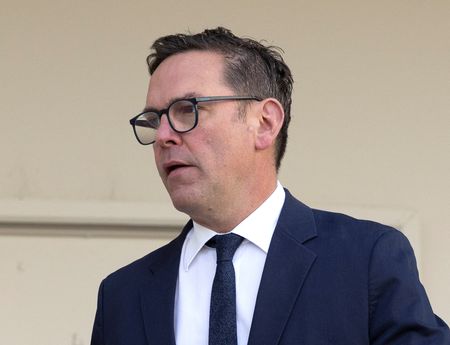
Media investor James Murdoch announced Wednesday his plans to purchase three key divisions of Vox Media through his investment company Lupa Systems, in a deal valued at more than $300 million according to sources familiar with the transaction.
The acquisition encompasses New York Magazine along with its digital publications, the Vox news platform, and an extensive podcast network that collectively attract tens of millions of readers and listeners, the digital media company confirmed.
Through Lupa Systems, Murdoch will gain ownership of one of the industry’s most well-known magazine brands and a substantial podcasting operation during a period when digital media companies are seeking new opportunities for expansion.
The purchase also covers the Vox news platform, which creates content in various formats including video, written articles and podcasts like “Today, Explained” and “America, Actually.”
“This acquisition reflects both our interest in the forward edge of culture and our deep commitment to ambitious journalism,” James Murdoch stated. He is the younger son of media mogul Rupert Murdoch.
James has developed Lupa Systems as a media and technology company independent from the conservative media empire that includes Fox News and News Corp, which has been headed by his father Rupert and is now under his brother Lachlan’s control.
According to a source close to the deal who spoke with Reuters, the Vox acquisition is worth over $300 million. The New York Times initially reported the transaction on Wednesday.
Vox Media CEO Jim Bankoff will move to Lupa Systems while maintaining his leadership role over the brands under the Vox Media name, he informed company employees in a memo. He noted the deal should finalize within four to six weeks.
New York Magazine’s portfolio features The Cut, Vulture and Intelligencer, attracting a digital readership in the tens of millions along with over 400,000 paying subscribers.
The Vox Media podcast network hosts approximately 50 programs, including “Pivot” featuring Kara Swisher and Scott Galloway, as well as the crime podcast “Criminal.”
Several other Vox Media properties including Eater, Popsugar and The Verge are not part of this deal. Those brands, together with SB Nation and The Dodo, will form a separate independent company operating under a different corporate identity.
The chief executive of Germany’s Volkswagen addressed employee concerns Wednesday, denying current negotiations with Chinese manufacturers regarding the company’s European manufacturing facilities that are dealing with excess production capacity.
CEO Oliver Blume spoke to workers during a general assembly in Wolfsburg, attempting to address growing speculation about the future of the automaker’s German operations. The company faces mounting pressure from declining profits, reduced demand, and fierce competition, forcing Europe’s largest car manufacturer to consider downsizing its extensive facility network.
“We still have excess capacity at our plants in Europe and Germany. We need to address this in order to remain competitive,” Blume told the assembly, emphasizing there were “currently no plans or discussions with Chinese manufacturers.”
The automotive giant has undergone three years of cost reduction measures, including eliminating 50,000 positions in Germany and implementing cuts across its Audi and Porsche divisions. Blume indicated these measures have strengthened the company for challenging times marked by high tariffs and changing markets.
The CEO warned that European sales would not return to pre-pandemic levels and acknowledged that the company’s traditional approach of manufacturing vehicles in Germany for global export is shifting toward localized production in key markets such as China, where Volkswagen operates through partnerships with local companies.
The automaker has committed to preventing factory shutdowns through agreements with German labor unions and the company’s influential works council.
Last month, Blume mentioned potential solutions including contracts with defense companies or Chinese facility-sharing arrangements, which sparked media speculation about possible partnerships similar to recent agreements between Stellantis and Chinese automakers.
Government officials in Lower Saxony and Saxony have shown support for plant partnerships with Chinese companies, concerned about protecting local industry. However, critics worry that such collaborations could assist Chinese automakers like BYD and Chery in expanding their European market presence.
The company is proceeding with negotiations to sell its northern Germany facility in Osnabrueck to a defense partner. Volkswagen reports achieving cost reductions exceeding 20% on average last year at its Wolfsburg, Emden, and Zwickau plants.
Works council head Daniela Cavallo urged an end to speculation about the German facilities’ future, telling thousands of workers at the assembly: “One gets the impression that Volkswagen is almost a takeover target and needs to be rescued.”
Cavallo encouraged management to concentrate on product success rather than “the umpteenth debate about alleged plant closures or supposed talks with third parties regarding alternative uses for our plants.”
Morocco and France are working together on a groundbreaking partnership agreement that will be finalized during King Mohammed VI’s upcoming state visit to France, foreign ministers from both nations announced Wednesday.
Moroccan Foreign Minister Nasser Bourita revealed to reporters that this will mark Morocco’s first treaty with any European nation, following discussions with French Foreign Minister Jean-Noel Barrot in Rabat. The ministers did not provide a timeline for the royal visit.
The diplomatic relationship between the two countries has strengthened significantly after Paris acknowledged Rabat’s authority over the contested Western Sahara region in 2024.
“Moroccan-French partnership is living its best era at all levels,” Bourita stated, highlighting cooperation in defense manufacturing, security matters, and aviation sectors.
Barrot emphasized the historic nature of the agreement, noting “this will be the first treaty of its kind with a non-European country.” He explained the pact aims to establish a foundation for enduring bilateral relations, though specific terms and provisions were not disclosed by either side.
Regarding the Western Sahara dispute, Barrot confirmed France supports renewed direct negotiations between all involved parties, based on autonomy under Moroccan control and consistent with UN Security Council resolution 2797. This stance has strained France’s relationship with Algeria, which supports the Polisario Front’s independence movement for Western Sahara.
Barrot described Morocco as France’s primary economic ally in Africa and a crucial logistical and financial gateway to the continent, making collaboration “natural” between the nations.
As France has reduced its footprint in West Africa and the Sahel region, Morocco has grown its regional presence through various sectors including commerce, fertilizer production, banking, telecommunications, and construction enterprises.
BELFAST, May 20 – A Belfast court ruled Wednesday that Eleanor Donaldson, spouse of ex-Northern Ireland political figure Jeffrey Donaldson, cannot proceed to trial on charges connected to historical sexual offenses due to her medical condition.
Her husband, the former Democratic Unionist Party leader, is scheduled to face trial next week on charges including one rape count, 13 indecent assault counts involving a female minor, and four gross indecency counts toward a child. Jeffrey Donaldson has entered not guilty pleas to all charges.
The joint trial proceedings for both Jeffrey and Eleanor Donaldson have been postponed for over a year because of Eleanor’s health problems. Her charges include allegations of aiding and abetting rape.
Following testimony from medical experts Wednesday, Judge Paul Ramsey determined Eleanor Donaldson was medically unfit to participate in standard trial proceedings.
Instead, Eleanor will undergo what’s called a trial of the facts, a process where jurors determine whether the defendant performed the alleged acts, rather than rendering a traditional guilty or not guilty verdict.
Jeffrey Donaldson, formerly among Northern Ireland’s most prominent political figures, abruptly resigned from his leadership position of the region’s biggest pro-British unionist party in March 2024. His departure came after the DUP announced he faced charges involving historical allegations.
SALISBURY, Md. — Salisbury officials have announced a two-week shutdown of the downtown parking garage beginning June 1 and lasting through June 15 to accommodate essential structural repairs and facility upgrades.
The comprehensive renovation project will include multiple improvements:
Professional contractors will conduct corbel repair work on the garage structure.
Fresh paint will be applied to stairwells along with a new numbering system designed to help visitors navigate more easily.
New payment signs will be mounted throughout all interior floors, ramps, and shared spaces.
Crews will pressure wash every interior level, ramp, and common area.
Automated cleaning equipment will sweep all driving lanes and parking spaces.
Workers will clear out accumulated trash, debris, and blockages from every level and corner.
Landscaping work will enhance entrance and exit areas plus surrounding grounds where needed.
All doors and windows will receive inspection and repairs, including hardware, closing mechanisms, and weather protection.
Outstanding standpipe system inspections, testing, and maintenance will be completed.
Elevator safety inspections will be finished to meet compliance requirements.
Damaged tiles and flooring in elevator cars and entrance areas will be replaced.
Officials recommend that both short-term and permit holders use Lot 1, 10, 12, or 15, as well as street parking options across downtown while the garage remains closed.
Directional signs will be installed to guide motorists toward available parking alternatives.
Mayor Taylor commented, “While closure of the parking garage is never convenient, as you can see, the City has timed a host of repairs for this closure in order to limit disruptions. We appreciate your patience as we strive to keep the garage properly maintained.”
To help residents and visitors cope with the garage closure, city officials will ease street parking enforcement, focusing only on serious infractions like parking in the wrong direction or double parking.
Officials express gratitude for public understanding and cooperation while these critical facility improvements are underway.
Those seeking updates and more details can check the City of Salisbury’s website or monitor the city’s official social media accounts.
NASA’s Perseverance Rover is approaching a significant milestone as it continues its extended mission exploring the Red Planet’s surface. The robotic vehicle has covered 26.09 miles during more than five years of operation, nearly reaching the standard marathon distance of 26.22 miles.
Mission manager Robert Hogg expects the rover will surpass the marathon mark within the coming month as it continues its scientific work.
The automobile-sized explorer touched down on the Martian surface on February 18, 2021, originally scheduled for a mission lasting one Martian year, equivalent to approximately 687 Earth days.
“The rover continues in good health with at least a decade left in its power source. The duration of the mission will depend on choices NASA makes,” said Ken Farley, the rover’s deputy project scientist at Caltech, in statements shared with Reuters through NASA.
Equipped with advanced scientific equipment, Perseverance has conducted operations within and surrounding Jezero Crater, located in Mars’ northern hemisphere. Scientists believe this region was once submerged under water and contained an ancient lake system. The area features various water-related geological formations, including an ancient fan-shaped sedimentary structure where a river emptied into a lake over three billion years ago.
While Mars today appears cold and barren, the planet once maintained a denser atmosphere and warmer temperatures that supported liquid water on its surface. Researchers hope to discover whether Mars once supported life forms. Since water represents a crucial component for life, Jezero Crater’s watery history makes it an ideal location for investigation.
NASA announced Perseverance’s most significant finding last year – a sample extracted from within the crater consisting of reddish rock that formed billions of years ago from lake-bottom sediment, potentially containing indicators of ancient microscopic life. Scientists noted that minerals identified by the rover might indicate past microbial activity, though they could also result from non-biological processes.
“Further work evaluating whether these are truly evidence of Martian life requires analysis in terrestrial laboratories that contain the kinds of instrumentation necessary to make that determination,” Farley explained.
“Perseverance will continue to collect rock samples with the hope for return to Earth by a future robotic or crewed mission,” Farley added.
The rover has also collected information about organic compounds on Mars. Additional discoveries include documentation of electrical activity in the Martian atmosphere, detecting electrical charges commonly linked with spinning wind formations known as dust devils, and recording the first visible-light aurora observation on Mars, showing the sky glowing faintly in green.
During its initial years, Perseverance recorded the development cycle of the lake that occupied Jezero Crater approximately 3.7 billion years ago. The lake began as a shallow body of water, leaving salt-heavy sediments on the crater bottom, then expanded to a depth of at least 30 feet, with sandy materials flowing into the lake to create a delta formation, according to Farley.
The rover currently operates just beyond Jezero Crater’s boundaries, studying extremely old rock formations likely dating back more than four billion years. Since Mars and Earth both formed roughly 4.5 billion years ago, these rocks represent samples from the planet’s early period.
“Importantly this time period, and this surface environment, are very likely similar to those on Earth when life originated. Because rocks of this era were completely destroyed on Earth, Mars offers a key analog environment in which to investigate pre-biotic chemistry and possibly the origin of life,” Farley stated.
NASA operates a second rover on Mars called Curiosity, which arrived in 2012 at Gale Crater near the Martian equator and has traveled 22.93 miles. The rover with the greatest distance record on Mars was NASA’s Opportunity, which covered 28.06 miles during its mission from 2004 to 2019.
Perseverance carried a compact helicopter named Ingenuity that achieved the first powered and controlled aircraft flight on another world, successfully operating in Mars’ extremely thin atmosphere 72 times, traveling 10.5 miles and reaching heights of approximately 79 feet.
The varied environments both inside and outside Jezero Crater have provided valuable insights into Mars’ history.
“The fact that Perseverance could explore both a lake-river system and the early Martian crust, separated in time by perhaps half a billion years, means the Jezero site keeps on giving scientifically even after five years on the surface,” Farley concluded.
A Heat Advisory remains in effect for parts of northern Delmarva until 8 PM tonight, as dangerous heat index values climb toward 97 degrees.
The National Weather Service issued the advisory for New Castle County in Delaware, along with surrounding areas in southeastern Pennsylvania and southern New Jersey. The combination of hot temperatures and high humidity creates potentially dangerous conditions that could lead to heat-related illnesses.
“We’re seeing that oppressive combination of heat and humidity that can really impact your body’s ability to cool itself,” said meteorologists at the Mount Holly office.
Health officials urge residents to take precautions during the hottest part of the day. Stay indoors in air conditioning when possible, drink plenty of water throughout the day, and avoid prolonged sun exposure. Officials also remind everyone to check on elderly relatives and neighbors who may be more vulnerable to heat stress.
Children and pets should never be left in vehicles, even for short periods, as car interiors can reach deadly temperatures within minutes.
The advisory is set to expire at 8 PM tonight, with slightly cooler conditions expected tomorrow. However, residents should continue monitoring weather conditions as we move deeper into the warm season.
A leading Brazilian food delivery service has taken legal action against a Chinese-owned competitor, accusing the company of engaging in corporate espionage to gain unfair business advantages.
The company iFood, which is owned by Dutch investment group Prosus, filed the legal complaint in a Sao Paulo business court against Keeta, which is controlled by Chinese group Meituan. Court documents reviewed by Reuters show iFood is seeking a court order requiring its competitor to modify its business operations and pay moral damages totaling 1 million reais, along with additional compensation amounts to be decided later.
According to the legal filing, iFood claims that consulting companies contacted its workers in an attempt to acquire sensitive company information in return for “significant compensation.”
Responding to the allegations, Keeta issued a statement saying the company supports an open and competitive marketplace while following all regulatory requirements. The firm rejected claims that it hired outside parties to contact individuals for such activities and stated it has not been formally notified of the legal action.
The lawsuit details how iFood discovered a former worker who had agreed to one of these arrangements and participated in video meetings while still employed at the company. This discovery prompted a police inquiry that included searching and confiscating electronic equipment.
iFood stated that these investigative steps led to obtaining records demonstrating that accounts connected to the Meituan domain had participated in the communications.
Keeta entered Brazil’s food delivery sector, which iFood dominates, roughly one year ago with an initial investment of about $1 billion.
Weather officials have issued a heat advisory that went into effect Monday morning at 10:35 AM and will remain active until 8:00 PM Monday evening.
The advisory comes from the National Weather Service office in Mount Holly, New Jersey, alerting residents to prepare for potentially dangerous heat conditions throughout the day.
Residents are advised to take appropriate precautions during the hottest hours and stay hydrated while limiting outdoor activities when possible.
The National Basketball Association announced Wednesday that the New Orleans Pelicans and San Antonio Spurs will compete in two European cities next year as the league continues its multi-season commitment to international regular-season play.
The two franchises are set to face each other on January 14 in Paris, followed by another matchup in Manchester three days later on January 17.
This European tour continues the NBA’s previously announced plan to stage a minimum of six regular-season contests across Europe during a three-year period.
The initiative launched with matchups between the Memphis Grizzlies and Orlando Magic this past January, with those teams playing in Berlin and London. Future games scheduled for the 2027-28 campaign will occur in Berlin and Paris.
George Aivazoglou, the NBA’s managing director for Europe and the Middle East, expressed enthusiasm about the upcoming games in an official statement.
“Playing games in Paris and Manchester reflects the strong momentum we’re seeing for basketball and the NBA in France, the UK and across Europe,” George Aivazoglou, the NBA’s managing director for Europe and the Middle East, said in a statement.
“As interest in the game continues to grow across the continent, we look forward to working with the Pelicans, the Spurs and our partners to deliver unique experiences for fans, aspiring players and the local communities.”
The upcoming Paris matchup will represent the NBA’s 16th contest in France dating back to 1991 and marks the sixth regular-season game held in Paris. While Manchester has not previously welcomed a regular-season NBA game, the event will be the 20th contest involving an NBA franchise in England since 1993.
SAN DIEGO — In a battle of wills that captivated everyone watching, Andy Pages stood firm in the batter’s box against Mason Miller and refused to back down. The Los Angeles outfielder managed to foul off six consecutive pitches from San Diego’s elite closer during a remarkable plate appearance Tuesday evening — three blazing fastballs over 100 mph and three 87 mph breaking balls.
On the ninth offering from Miller, Pages finally made solid contact, sending a 101.5 mph fastball just deep enough to bring home Los Angeles’ go-ahead run in the final frame of an exciting 5-4 triumph over the Padres.
For the Dodgers, this represented far more than a simple sacrifice fly, as they handed Miller (1-1) his initial defeat since joining San Diego.
Pages demonstrated once more that the reigning World Series champions can rise to meet any challenge presented by their nearest regional competitors — regardless of whether it arrives at triple-digit velocity.
“That was one of the greatest at-bats I’ve ever seen in person,” Freddie Freeman said. “And I’ve been playing a long time. That was incredible.”
The Dodgers understand they’ll be facing Miller regularly in future seasons, having already encountered the reliever nicknamed “The Reaper” in both opening contests of their initial series against the Padres this year.
Following Miller’s successful escape from trouble on Monday, the Dodgers created an unearned run Tuesday to defeat the standout performer from San Diego’s formidable bullpen. Los Angeles benefited from an ABS challenge and an unlucky throwing mistake by Miller, though the most difficult task fell to Pages, the Cuban center fielder who has performed at an elite level this season in his third major league campaign.
“Good plate appearance from Pages,” Miller said. “Good, long at-bat, and just barely got it done. Unfortunate, for sure.”
The run batted in marked Pages’ 42nd of the campaign — 17 more than four-time MVP Shohei Ohtani, and significantly higher than World Series hero Freeman or big-money acquisition Kyle Tucker.
“The work he’s put in showed itself there, but I think at the end of the day, it was just fight,” Dodgers manager Dave Roberts said. “It was just will. Determination. Not worrying about mechanics and this and that. It’s just me versus you, and it was him versus Mason Miller, and he wasn’t going to lose that battle. Mason is the best in the game right now, and Andy willed himself to do something productive in that at-bat. … It’s a fight, and Andy is a tough kid, and he’s hungry.”
The scoring opportunity began with a one-out base on balls when Max Muncy successfully appealed a called third strike. Pinch-runner Alex Call nearly got caught off first base moments afterward — but Miller made his first professional error on his pickoff attempt when Ty France touched the ball but couldn’t secure it.
“Sped up on me a little bit and yanked it,” Miller said. “Probably threw it a little harder than I should have, too. Obviously want it back, but it is what it is.”
Pages worked his way back from an 0-2 deficit in remarkable fashion and eventually lofted his fly ball 275 feet toward right field. Fernando Tatis Jr.’s throw to home plate was intercepted by Sung-mun Song, providing Call sufficient time to score safely.
“The most important thing is to win,” Pages said through an interpreter. “To win at any cost. Doing that against a pitcher of that caliber is obviously really good, but I felt very confident the whole time through.”
The defeat marked Miller’s first since May 17, 2025 — exactly one year and two days earlier, during his tenure with the Athletics. He hadn’t suffered a loss or blown save since last Aug. 5 in his second appearance after the Padres acquired him in a bold trade centered around teenager Leo De Vries, one of baseball’s premier prospects.
Miller has arguably been baseball’s top reliever this season, leading the position in most WAR calculations and successfully converting all 15 save chances to pace the majors. He earned NL reliever of the month honors for March/April, striking out 53.7% of opposing hitters while surrendering just one run and six hits over 15 outings.
“We all know how good Miller has been, so having (Pages) grind it out, battle, spoil pitches — it was tremendous,” Call said. “Incredible job by Andy and the guys tonight.”
JERUSALEM (AP) — For the majority of the last 17 years, Israeli Prime Minister Benjamin Netanyahu has maintained his grip on power largely through a strong partnership with ultra-Orthodox religious factions.
However, this partnership is now fracturing his governing coalition and creating another significant challenge for the veteran Israeli leader as the nation prepares for elections scheduled for later this year. The October 7, 2023, assault — along with the unresolved conflicts that followed — are also creating pressure on his leadership.
Following 2 1/2 years of continuous combat across multiple regions, much of it requiring reservists, numerous Israelis have grown weary of an established arrangement that permits ultra-Orthodox men to avoid military duty. This frustration has reached even Netanyahu’s own political supporters.
The ultra-Orthodox community is simultaneously outraged by his inability to make their exemptions legal. They pulled their coalition backing two weeks ago, resulting in a preliminary vote to disband parliament, called the Knesset, on Wednesday.
This action initiated a sequence that could advance elections from October to September.
Netanyahu continues attempting to advance legislation that would make the exemptions legal and honor a commitment to his religious allies, but this seems unlikely given the fierce resistance from many within his own coalition.
Deputy Foreign Minister Sharren Haskel, who completed three years in a combat unit and strongly backs Netanyahu, stated she was among no fewer than seven coalition members who will oppose the draft legislation, making it impossible to pass.
“The ultra-Orthodox are trying to extort us. It’s immoral. It’s not fair,” Haskel declared, wearing her military uniform during Wednesday’s dissolution vote to emphasize her opposition and showcase her own military background.
Two significant ultra-Orthodox parties abandoned Netanyahu this month after he informed them he didn’t anticipate being able to advance the exemptions legislation. This departure stripped his coalition of a parliamentary majority and represents one of the primary reasons for the Knesset dissolution bill.
“He made a promise to his most loyal allies in the coalition, and he could not deliver, he kept postponing,” explained Shmuel Rosner, a senior fellow at the Jewish People Policy Institute, a Jerusalem think tank.
Yitzhak Pindrus, a legislator from one of the groups, informed The Associated Press on Tuesday that his faction has no intentions of rejoining the coalition.
“We need the draft bill,” he stated.
Israel’s political environment is extremely divided, and no single party has ever secured a majority in the 120-member Knesset.
Rather, parties must form partnerships to assemble a majority, which frequently requires negotiations that grant smaller parties disproportionate power.
The ultra-Orthodox presently hold 18 Knesset seats, comparable to previous years, but have remained essential to Netanyahu. In return for his backing of government funding and the draft exemptions, they have supported him through regional conflicts and ongoing corruption charges.
Netanyahu has historically depended on “automatic support” from the ultra-Orthodox, noted Gilad Malach, an expert on the ultra-Orthodox at the Israel Democracy Institute, a research organization in Jerusalem.
This backing enabled Netanyahu to stay in office through the most devastating attack in Israel’s history.
The coalition, which also encompasses ultra-nationalist parties, “was much more stable than I ever imagined,” Rosner observed. “Maybe it’s because they realized in a new election, they’re going to get defeated, and that’s why they stuck together.”
Should Netanyahu somehow advance some version of the draft exemption legislation, it could dramatically reshape the electoral landscape. It would drive large portions of the population, who have previously backed Netanyahu but are struggling under hundreds of days of reserve service, to support opposition parties that promise equal military duty, Malach explained.
Netanyahu seems to have minimal prospects of continuing as prime minister following October’s elections without ultra-Orthodox backing. And he likely represents their sole opportunity for legislation that would prevent mandatory enlistment from being considered in the next government.
Yet maintaining ties with the ultra-Orthodox threatens to damage Netanyahu’s position with the general public, creating a dilemma as the country approaches elections.
Most Jewish men must complete nearly three years of military duty, followed by years of reserve service. Jewish women serve two mandatory years.
Annually, approximately 13,000 ultra-Orthodox men reach the draft age of 18, but fewer than 10% join the military, according to a parliamentary committee.
Confronting severe soldier shortages, the military is considering extending the mandatory service period.
The ultra-Orthodox, who comprise roughly 13% of Israeli society and represent the fastest expanding demographic, have historically received exemptions when studying full-time in religious seminaries. The exemptions trace back to the state’s founding in 1948, when a small group of students sought to rebuild the Jewish scholarship tradition after it was destroyed by the Holocaust.
These exemptions — along with the government payments many seminary students receive until age 26 — have angered many Israelis. Israel currently maintains simultaneous military operations in Gaza, Lebanon, and Syria, while also fighting a conflict with Iran, which has strained its strong military to its limits.
The Supreme Court declared the exemptions illegal in 2017, but repeated extensions and government stalling tactics have kept them active.
Within Israel’s Jewish majority, mandatory military duty is widely viewed as a unifying experience and coming-of-age ritual. Many in the isolated ultra-Orthodox community worry that military service would subject young people to secular influences.
A seagull created an unforgettable moment during King Charles III’s Wednesday visit to Northern Ireland when nature called at an inopportune time.
The bird released its droppings from overhead, striking the monarch’s jacket and splashing onto nearby individuals, including journalists covering the event.
“It’s well it didn’t land on my head,” the king remarked with humor, as reported by Irene Marting, who observed the messy encounter and spoke with the unruffled monarch moments later.
“Being hit by a seagull, it’s supposed to be good luck,” Marting commented. “We’re so thrilled he’s come to Northern Ireland to see us and it’s really nice to see him in Newcastle.”
The monarch was touring the southeastern coastal community during his second day of a three-day royal visit alongside Queen Camilla. The queen avoided the messy situation as she was conducting her own separate engagement at Royal Hillsborough, where she attempted to draw a pint of Guinness at a local establishment.
Earlier that day, the king may have inadvertently predicted his predicament while touring a food pantry, where he picked up toilet paper and commented, “very important.”
A pioneering figure in American politics and LGBTQ rights advocacy has passed away. Barney Frank, the former Democratic congressman who served Massachusetts for more than three decades, died Tuesday at age 86.
Jim Segel, who served as Frank’s former campaign manager and remained a close friend, confirmed the death occurred late Tuesday.
Frank had been receiving hospice care in Ogunquit, Maine since April, battling congestive heart failure. He leaves behind his husband Jim Ready, sisters Ann Lewis and Doris Breay, and brother David Frank. Lewis is recognized as a longtime Democratic strategist.
The congressman, who once characterized himself as a “left-handed gay Jew,” became famous for his sharp tongue, confrontational approach, and dedication to underrepresented groups. While championing progressive causes, he maintained relationships with Democratic leadership that sometimes disappointed more liberal activists.
Frank’s most significant contribution to American society came through his groundbreaking work for LGBTQ equality. Following years of personal struggle with his identity, he became the first Congress member to voluntarily reveal his homosexuality in 1987. His 2012 wedding to Ready marked another historic first, as he became the initial sitting lawmaker to enter a same-sex marriage.
During his final interview in April while beginning hospice treatment, Frank expressed hope his legacy would center on promoting progressive politics through practical means rather than forcing change before voters were ready. He worried this balanced approach was losing favor as Democrats look toward reclaiming the presidency in 2028 and moving beyond current political divisions.
“I hope I made the point that the best way to accomplish the improvements in our society that we need, particularly in making it less unfair economically and socially, is by conventional political methods,” Frank said. “The main obstacle to our defeating populism and going further in the right direction is that mainstream Democrats have to make it clear that we oppose that part of the agenda of our friends on the left that is politically unacceptable. They’re right about a lot of things but you have to have some discretion.”
“You should not take the most unpopular parts of your agenda and make them litmus tests,” he added. “And that’s what my friends on the left have been doing.”
Frank’s political awakening began in 1940 when he was born in Bayonne, New Jersey. In his 2015 autobiography, he credited the lynching of Emmett Till, a 14-year-old Black teenager from Chicago killed by white men in Mississippi, with inspiring his public service calling. He participated in Mississippi’s Freedom Summer campaign in 1964, though admitted his communication style posed challenges in that environment.
“My direct organizing of Mississippi voters was limited by the fact that my accent (to this day more New Jersey than New England), my poor diction, and my rapid speech, especially when I got excited, rendered me largely incomprehensible to rural Mississippians of both races,” he wrote.
His political career launched in 1968 working for Boston Mayor Kevin White, followed by election to the Massachusetts House in 1972. Frank secured his congressional seat in 1980, bucking a difficult year for Democrats when the party suffered major House losses and Republican Ronald Reagan captured the presidency.
Frank’s practical governing philosophy emerged quickly during his congressional tenure. While joining the liberal Democratic Study Group to pressure then-Speaker Tip O’Neill to more aggressively challenge the Reagan administration, Frank often found himself supporting O’Neill’s less confrontational strategies.
His willingness to compromise ideology for practical gains appeared years later during a major tax reform debate. Initially planning to oppose the legislation due to reduced top tax rates, Frank switched positions after negotiating increased affordable housing tax credits.
“I was happy to sacrifice my ideological purity to improve legislation that was going to become law with or without me,” he wrote.
Rep. Nancy Pelosi, the California Democrat and former House speaker, praised Frank as an “idealist to the nth degree.”
“The goals, the vision, the promise of it all,” she recalled in an interview. “Nobody could ever surpass what he brought to the table in that regard.”
Frank’s early Washington years involved maintaining separate public and private identities. While participating in the city’s gay social scene and maintaining relationships privately, he avoided public acknowledgment of his sexuality. Media coverage of sexual orientation typically occurred only during scandals. When Frank invited a reporter to his office in 1987 to directly address questions about his sexuality, Frank simply responded, “yeah, so what?”
While other officials like San Francisco’s Harvey Milk had previously come out, and Congress members including Rep. Gerry Studds had been outed through scandals, Frank’s voluntary disclosure made him the nation’s most visible gay political leader throughout the 1980s and 1990s. He successfully advocated for AIDS funding and unsuccessfully pushed the Clinton administration to eliminate military service restrictions for gay personnel.
However, Frank faced significant challenges, including a 1987 House reprimand for poor judgment involving a male prostitute he employed in 1985. Rep. Newt Gingrich of Georgia, serving as Republican whip, sought the more serious censure punishment, which was overwhelmingly rejected.
Frank endured personal attacks from conservative Republicans, including House Majority Leader Dick Armey of Texas, who used a homophobic slur against Frank in 1995. Armey later claimed he misspoke and issued a House floor apology.
Despite these challenges, Frank developed a reputation as one of Congress’s most quotable members. He criticized Republican positions on abortion by saying they believed “life begins at conception and ends at birth,” targeting their opposition to social programs. After Ken Starr released his detailed report on President Bill Clinton’s relationship with Monica Lewinsky, Frank complained it contained “too much reading about heterosexual sex.”
Rep. Steny Hoyer, who entered Congress alongside Frank, remembered his colleague’s approach: “You may get a blow, but it was softened by the humor that came with it.”
Frank’s most enduring policy impact came through his leadership of the House Financial Services Committee beginning in 2007, as the U.S. economy approached collapse. He collaborated with the Republican Bush administration on rescue legislation supporting financial institutions, though this sparked ongoing populist backlash in American politics.
Following the initial crisis, Frank helped develop the most comprehensive reform legislation since the New Deal era. Partnering with then-Senate Banking Committee Chairman Chris Dodd, the resulting Dodd-Frank Act strengthened consumer protections, established new bank capital requirements, and expanded regulatory oversight capabilities.
“Barney and I shared a fantastic relationship,” Dodd said. “I had many good moments in those 36 years in Congress, but none more significant, joyful, or productive than those almost two years working with Barney on our banking bill.”
The current Republican administration has worked to eliminate many provisions from this legislation, arguing the regulations were excessively burdensome.
Frank encountered his most challenging reelection battle in 2010 during the tea party movement’s political surge. He chose not to seek reelection in 2012 but remained politically active after leaving Congress and consistently criticized the former president.
When asked about potential future presidential candidates, Frank acknowledged “unfortunately I won’t get to vote for it.”
Ukrainian President Volodymyr Zelenskiy announced Monday that his country will deploy additional military forces to its northern territories and increase diplomatic efforts with Belarus in response to intelligence suggesting Russia is preparing a new northern offensive targeting the capital region.
According to Zelenskiy, Ukrainian intelligence has identified five potential scenarios that Russia has developed to expand the conflict through northern routes.
“We analysed in detail the available data from our intelligence agencies on Russia’s planning of offensive operations in the Chernihiv-Kyiv direction,” Zelenskiy posted on X, mentioning the city located north of the capital along the route to Belarus. “Our forces in this sector will be increased.”
Over recent weeks, Zelenskiy has issued renewed alerts about possible northern threats originating from Belarus, Russia’s close partner. He has reported detecting suspicious activity along the border area, though he has not shared specific details.
Ukraine’s top military commander, Oleksandr Syrskyi, stated Tuesday that intelligence indicates the Russian General Staff is actively developing and preparing offensive strategies from northern positions.
Neither Russian nor Belarusian officials have responded to these claims.
BELARUS INVOLVEMENT
Zelenskiy indicated that Moscow is attempting to pull Belarus further into the conflict, noting that Belarus previously permitted Russian forces to use its territory for the 2022 invasion of Ukraine.
He stated that Ukraine’s Foreign Ministry will develop “additional measures of diplomatic influence regarding Belarus,” though he did not elaborate on specific actions.
During the original large-scale invasion in 2022, Ukrainian forces successfully defended against a massive Russian armored convoy that tried to capture the capital from the north.
Belarus has maintained its position as Moscow’s strongest ally throughout the conflict. Russian attack drones have traveled through Belarusian airspace during strikes on Ukraine, and Belarus has announced the deployment of Russia’s Oreshnik intermediate-range hypersonic ballistic missile system.
“As of now, we haven’t detected any movement of equipment or personnel directly at our border, but of course, we can see the pressure Russia is putting on Belarus,” stated Ukraine’s border guards spokesman, Andriy Demchenko, in comments to Ukrinform news agency Wednesday.
Philip Morris International announced Wednesday that company veteran Massimo Andolina will take over as chief financial officer beginning August 1st, replacing Emmanuel Babeau in the role.
Babeau, who has held the CFO position since May 2020, will continue working with the tobacco company through March 31, 2027, serving as a strategic advisor to CEO Jacek Olczak.
The leadership transition occurs during a pivotal time as Philip Morris accelerates its transformation away from traditional cigarettes toward smoke-free alternatives, facing increased competition from competitors like British American Tobacco’s Velo nicotine pouches.
Andolina brings extensive company experience to his new role, having started with Philip Morris in 2008 as director of global operations before advancing to his most recent position as president of the Europe region.
During Babeau’s leadership, he guided the company through significant changes including the 2022 purchase of competitor Swedish Match. Before joining Philip Morris, Babeau had worked at Pernod Ricard and spent more than ten years with Schneider Electric.
The company recently reduced its annual earnings projections in April due to regulatory questions surrounding its Zyn nicotine pouches and heightened competition within the tobacco industry.
The National Basketball Association revealed Wednesday that two teams will take their regular-season competition overseas next year, with the San Antonio Spurs and New Orleans Pelicans scheduled to face off in European venues.
The international series will begin January 14, 2027, when Frenchman Victor Wembanyama and the Spurs meet Zion Williamson and the Pelicans at Accor Arena in Paris, France.
The teams will then travel to England for a second matchup three days later at Co-op Live in Manchester.
This marks a historic first for Manchester, which has never before hosted an NBA regular-season game, while Paris adds to its collection of five previous regular-season contests.
The European tour represents significant milestones for both franchises. The Spurs will play their 10th and 11th games on the continent, including their sixth contest in France and inaugural game in England.
Meanwhile, the Pelicans will experience their third and fourth European games overall, marking their first appearances in both France and England.
President Donald Trump announced Wednesday his plans to engage in dialogue with Taiwan’s President Lai Ching-te, marking a potentially significant shift in diplomatic protocol.
“I’ll speak to him,” Trump informed reporters. “I speak to everybody. … We’ll work on that, the Taiwan problem.”
The president’s willingness to engage in this conversation follows his recent visit to China last week, which Trump described as “amazing” during Wednesday’s remarks.
Such direct communication between American and Taiwanese leaders would represent a major diplomatic milestone, as no direct conversations have taken place since the United States transferred its diplomatic recognition from Taipei to Beijing in 1979.
This potential dialogue could provoke anger from China, which considers the democratically-run island part of its territory.
Following his recent meeting with China’s President Xi Jinping, Trump indicated he remains undecided about moving forward with a substantial weapons package valued at up to $14 billion for Taiwan.
American law mandates that Washington supply Taiwan with defensive capabilities, and lawmakers from both major political parties have pressed the Trump administration to maintain weapons transfers.
A Heat Advisory remains in effect across northern portions of the Delmarva Peninsula until 8 PM tonight as dangerous heat index values climb toward 100 degrees.
The National Weather Service says heat index readings could reach 97 degrees, with peak conditions expected during the afternoon hours. New Castle County in Delaware is included in the advisory area, along with portions of southeastern Pennsylvania and southern New Jersey.
“Given the intensity of this early season stretch of heat and humidity, we are not fully acclimated to it,” meteorologists warn, noting that heat-related illnesses are possible without proper precautions.
Health officials urge residents to drink plenty of fluids, stay in air-conditioned spaces when possible, and avoid prolonged sun exposure. Don’t forget to check on elderly neighbors and relatives who may be more vulnerable to heat stress.
Relief is on the way. Showers and thunderstorms are expected to move through the region later this afternoon and evening, bringing an end to this early season heat wave.
The Heat Advisory expires at 8 PM tonight. Stay with TV Delmarva for continuing weather updates throughout the day.
The NBA conference finals delivered unprecedented opening night drama as both Game 1 matchups went to overtime – a first in conference finals history – with both contests ending regulation knotted at an identical 101-101 score.
In the Eastern Conference finals, New York mounted one of the most remarkable postseason rallies in NBA history, overcoming a 22-point fourth-quarter deficit to defeat Cleveland 115-104 in overtime. Jalen Brunson led the comeback with 38 points, repeatedly targeting James Harden on defense during a crucial 18-1 run that transformed the game. “We were attacking Harden,” the team noted about their strategy down the stretch.
Harden’s defensive struggles against Brunson became a pivotal factor as Cleveland surrendered their commanding lead. The veteran guard also had offensive difficulties, connecting on just 5 of 16 shots including 1 of 3 from beyond the arc, while committing six turnovers. Cleveland coach Kenny Atkinson maintained faith in the 11-time All-Star, never considering benching him despite the struggles.
In the Western Conference, San Antonio pulled off a stunning upset victory over defending champion Oklahoma City, powered by Victor Wembanyama’s dominant 41-point, 24-rebound performance. The young star took control in crunch time, mirroring Brunson’s heroics in the East.
Meanwhile, coaching changes continue across the league as Dallas parted ways with Jason Kidd after five seasons. The decision came two weeks after the franchise hired former Toronto executive Masai Ujiri as team president and governor. The Hall of Fame point guard, who helped lead Dallas to its only championship as a player in 2011, mutually agreed to the separation.
In other NBA news, the league’s coaching diversity program resumed this week in Orlando, Florida. Jeff Ulbrich, the former interim head coach of the New York Jets, participated alongside 33 others in the revamped accelerator program designed to increase diversity among coaches and front office executives.
Baseball fans nationwide have embraced a new phenomenon called “Tarps Off,” where groups remove their shirts and twirl them overhead at stadiums. The trend originated in St. Louis and has spread to ballparks in Detroit, Tampa Bay, Philadelphia and Anaheim.
Tennis star Coco Gauff enters the French Open with a fresh perspective on defending her Grand Slam title. “I realize that the ‘defending’ means nothing in a way,” Gauff explained. “I don’t really look at it as defending anymore.” After struggling with 19 double faults during her U.S. Open title defense two years ago, she’s adopted a new mindset. “At the U.S. Open I was like, ‘I need to defend, defend,’” she said. “That’s why I just say now it’s just another tournament.”
In international soccer, British Prime Minister Keir Starmer celebrated Arsenal’s Premier League championship, posting on social media: “22 long years for the Arsenal. But finally, we’re back where we belong. Champions!” The victory provided rare positive news for Starmer amid political challenges following poor election results.
For visiting teams in the NBA playoffs, crowd noise presents a significant challenge. San Antonio coach Mitch Johnson has been doing plenty of yelling to communicate with his players at Oklahoma City’s Paycom Center, where noise levels reach approximately 110 decibels. Forward Julian Champagnie noted the difficulty of hearing himself on defense in the thunderous environment.
The University of Delaware football program has announced that fans can now purchase various ticket options for the upcoming season.
Available options include mini season packages, group ticket opportunities, and tailgating experiences for fans looking to attend games at the university’s stadium.
The ticket sales launch comes as the Blue Hens prepare for their upcoming football season, giving supporters multiple ways to enjoy games and pre-game activities.
A Wilmington native has secured consecutive honors as the premier track athlete in his collegiate conference while helping his team earn widespread regional recognition.
Jalen Wright, a junior at Goldey-Beacom College from Wilmington, DE, has been named the Central Atlantic Collegiate Conference Men’s Track Athlete of the Year for the second year in a row. The achievement marks back-to-back seasons of conference-level excellence for the Delaware athlete.
Wright’s individual success was part of a broader team achievement, as he joined three other Goldey-Beacom athletes in earning All-East Region recognition from the United States Track & Field and Cross Country Coaches Association. The quartet’s selection highlights the strength of the college’s track and field program on a regional scale.
The repeat honor demonstrates Wright’s continued dominance in conference competition and establishes him as one of the standout performers in collegiate track and field in the region.
The National Oceanic and Atmospheric Administration’s Office of Education has chosen 128 undergraduate students for its prestigious Ernest F. Hollings scholarship program for the 2026-2028 class. Among the recipients are two Delaware students attending the University of Delaware: Alex Montana and Evan Borodin.
The competitive scholarship provides financial support for students’ junior and senior years, along with paid summer internship opportunities and funding to attend up to two national scientific conferences.
“Congratulations to the 2026 Hollings scholars! This year’s class of scholars brings incredible skill and passion to the NOAA mission. Your selection as a scholar is a testament to your talent and dedication. We are excited to welcome you to the NOAA community and eagerly anticipate the exciting opportunities that await you and the valuable contributions you will make during your internship experience,” said Louisa Koch, Director of Education.
This year’s selection process drew 829 applications from students across the country. The chosen scholars represent 95 different colleges and universities spanning 40 states, plus Guam and Washington, D.C.
The scholarship recipients will participate in an orientation program from June 2-4, 2026, followed by 10-week internships at NOAA facilities during summer 2027. During the orientation, students will learn about NOAA’s various divisions and their roles in supporting the agency’s mission and vision. They will have opportunities to network with NOAA leadership and staff, and visit local NOAA facilities to observe ongoing research and operations.
Students interested in applying for the 2027 class can submit applications starting September 1, 2026, with a deadline of January 31, 2027.
The states with the highest number of scholarship recipients include Maryland, Pennsylvania, New Jersey, Washington, North Carolina, Massachusetts, Florida, and California. Florida, California, Maryland, Massachusetts, and North Carolina host the most institutions represented by the scholars.
Approximately 430 protesters who were captured while attempting to breach Israel’s naval blockade around Gaza were brought to the Israeli port city of Ashdod on Wednesday aboard military vessels, where National Security Minister Itamar Ben-Gvir confronted them and demanded they be imprisoned for an extended period.
Footage distributed by Ben-Gvir depicted the minister moving through groups of the captured protesters while surrounded by law enforcement and military personnel, carrying a large Israeli flag and declaring “Welcome to Israel, we are the landlords.” The video captured one restrained protester yelling “Free Palestine” as Ben-Gvir passed by, prompting security forces to immediately force the individual to the ground.
The recording revealed protesters with their hands restrained behind them, kneeling with their faces to the floor in what appeared to be a temporary holding facility at Ashdod port and on a ship’s deck.
In additional footage, Ben-Gvir remarked that the protesters “came here all full of pride like big heroes. Look at them now,” while requesting Israeli Prime Minister Benjamin Netanyahu to authorize their extended detention.
“I say to Prime Minister Netanyahu, give them to me for a long, long time, give them to us for the terrorist prisons, that’s what it should look like,” Ben-Gvir said.
The Legal Center for Arab Minority Rights in Israel, known as Adalah, condemned Israeli officials for “employing a criminal policy of abuse and humiliation against activists.”
Adalah released a statement claiming this mirrored previous patterns of mistreatment by Israeli officials toward protesters in earlier flotilla operations “for which Israel faced zero accountability.” The organization reported that its attorneys and other volunteers were offering legal assistance to protesters at Ashdod while demanding their immediate freedom.
“The international community must take urgent measures to protect the flotilla members against this brutal and illegal conduct by Israeli officials,” the group said.
Italian Foreign Minister Antonio Tajani contacted Israeli counterpart Gideon Saar during overnight hours, pressing for the swift release of Italian nationals — including a lawmaker and a journalist — and requesting protection of their safety and rights.
Israeli military forces on Tuesday intercepted the final vessels from the flotilla that attempted to challenge the blockade — the most recent initiative to draw attention to the dire circumstances facing nearly 2 million Palestinians in Gaza.
Flotilla coordinators alleged Israeli troops opened fire on five vessels during the seizures, resulting in some damage. Israel’s Foreign Ministry stated that no live rounds were discharged and that “nonlethal means” were directed at the ships as a warning, without targeting or harming demonstrators.
Israeli forces had started intercepting the flotilla approximately 167 miles (268 kilometers) from Gaza’s shoreline, based on the flotilla’s website. The ships had left Turkey the previous week.
Israel has characterized the flotilla as “a PR stunt at the service of Hamas” without genuine intentions to provide aid to Gaza. The vessels transported a token amount of humanitarian supplies.
On Monday, the Israeli navy intercepted 41 vessels from the flotilla in international waters near Cyprus and detained everyone aboard.
More than a dozen Irish citizens participated in the flotilla, including the sister of Irish President Catherine Connolly. Irish Prime Minister Micheál Martin has denounced Israel’s seizure of the boats in international waters as “absolutely unacceptable.”
Turkey and the Palestinian militant group Hamas have characterized the seizures as “piracy.” Italy, Spain and Indonesia urged Israel to free the protesters and guarantee their safety.
The U.S. Treasury, however, imposed sanctions against several European activists aboard the flotilla, which U.S. Treasury Secretary Scott Bessent called “pro-terror.”
Israel has enforced a maritime blockade of Gaza since Hamas assumed control of the region in 2007. Israeli officials tightened it following the Hamas-led militant attacks on southern Israel that resulted in approximately 1,200 deaths and saw more than 250 people taken hostage on Oct. 7, 2023.
Opponents argue the blockade constitutes collective punishment. Israel has maintained that the blockade aims to prevent Hamas from obtaining weapons. Egypt, which controls the sole border crossing with Gaza not under Israeli authority, has also severely limited movement in and out.
Gaza’s Health Ministry reports that Israel’s retaliatory campaign following the Oct. 7 attacks has resulted in more than 72,700 deaths. The ministry, operating under Gaza’s Hamas-run government, does not provide a breakdown between civilians and combatants. The ministry consists of medical professionals who maintain and publish detailed records considered generally reliable by the international community.
A Tennessee man will receive $835,000 from local officials after being imprisoned for over a month due to a Facebook post concerning the assassination of conservative activist Charlie Kirk.
Larry Bushart’s situation was unusual among the many Americans who faced job losses following social media comments about Kirk’s death, as his case resulted in actual criminal charges. The 61-year-old former police officer remained incarcerated for 37 days until authorities dismissed the felony charges in October.
While imprisoned, Bushart lost his post-retirement employment and was unable to attend his wedding anniversary celebration or witness his granddaughter’s birth, according to the federal lawsuit he filed in December against Perry County, its sheriff and the investigator who secured his arrest warrant.
“I am pleased my First Amendment rights have been vindicated,” Bushart stated when announcing the settlement Wednesday. “The people’s freedom to participate in civil discourse is crucial to a healthy democracy. I am looking forward to moving on and spending time with my family.”
Authorities arrested Bushart in September when he declined to remove Facebook memes making light of Kirk’s death, which had generated significant mourning among conservatives, including Perry County residents near Bushart’s residence who organized a candlelight vigil.
The specific meme leading to his arrest stated: “This seems relevant today…” and displayed President Donald Trump with the text, “We have to get over it.” The meme indicated this quote came from Trump’s 2024 response to a school shooting at Iowa’s Perry High School.
Perry County Sheriff Nick Weems informed media outlets that while most of Bushart’s “hate memes” constituted protected speech, community members were disturbed by the school shooting reference, worrying Bushart might be targeting their local Perry County High School, despite Weems acknowledging the meme referenced an Iowa school.
“Investigators believe Bushart was fully aware of the fear his post would cause and intentionally sought to create hysteria within the community,” Weems stated to The Tennessean last year.
Officials initially set Bushart’s bail at $2 million before his release as the case gained nationwide attention.
“It’s in times of turmoil and heightened tensions that our national commitment to free speech is tested the most,” said Cary Davis, an attorney for the Foundation for Individual Rights and Expression, which helped represent Bushart. “When government officials fail that test, the Constitution exists to hold them accountable. Our hope is that Larry’s settlement sends a message to law enforcement across the country: Respect the First Amendment today, or be prepared to pay the price tomorrow.”
Motorists traveling on Route 1 northbound should expect delays due to a construction-related lane closure affecting traffic between W James Street and King Street.
The right lane is currently blocked to accommodate construction activities, with the restriction expected to be lifted by 4 PM today.
Drivers are advised to allow extra travel time and exercise caution when navigating through the work zone area.
Drivers traveling through the area of Doncaster Road and East Edinburgh Drive should plan for potential delays as construction crews continue their work in the area.
Transportation officials report that intermittent lane closures are currently affecting traffic flow at this intersection, with the restrictions expected to remain in place through 6 PM today.
Motorists are advised to use alternate routes when possible or allow extra travel time if they must pass through the construction zone.
Motorists traveling westbound on Route 4 (W Newport Pike) should plan for potential delays this afternoon due to ongoing construction work.
The right lane is currently blocked between Glenmore Drive and Glen Berne Drive, creating a bottleneck for drivers in the area. Traffic officials expect the lane restriction to remain in place until 4 PM today.
Drivers are advised to allow extra travel time and use caution when passing through the construction zone.
Software company Intuit plans to eliminate approximately 3,000 positions worldwide, representing roughly 17% of its total workforce, as the company works to streamline its operations and concentrate on artificial intelligence development, according to an internal company document obtained by Reuters on Wednesday.
Company leader Sasan Goodarzi communicated the decision to employees through an email message sent earlier Wednesday, explaining that decreasing operational complexity and creating a more straightforward organizational structure would enable the company to develop superior products, the document revealed along with information from a knowledgeable source.
The software firm, which was set to announce its third-quarter financial results later Wednesday, had not responded to requests for comment at the time of the report.
This workforce reduction adds Intuit to an expanding roster of corporations that have implemented job eliminations throughout this year, with several attributing the cuts to improved operational efficiency achieved through AI technology, including companies led by Jack Dorsey such as Block, along with Amazon and Pinterest.
In his message to employees, Goodarzi explained that the workforce reduction would enable Intuit to concentrate more effectively on the company’s major strategic priorities, particularly initiatives to incorporate AI technology throughout its service offerings.
The organization has established long-term agreements with AI development companies Anthropic and OpenAI to incorporate their artificial intelligence systems into Intuit’s software while adding the company’s specialized tax, financial, accounting and marketing features to Claude and ChatGPT platforms.
Affected employees in the United States will have their final work day on July 31 and will be provided with 16 weeks of standard compensation plus an additional two weeks for each year of service with Intuit as part of their departure benefits, Wednesday’s internal document indicated.
According to the company’s annual filing, Intuit employed approximately 18,200 people across seven nations as of July 31, 2025.
Technology sector workers in Silicon Valley have expressed mounting anxiety about AI-related job displacement in recent months following workforce reductions by more than 140 technology companies that eliminated over 111,000 positions this year, based on data from Layoffs.fyi, a platform that monitors industry-wide job cuts. The previous year’s total reached approximately 124,636.
During the World Economic Forum’s January annual gathering, two business leaders informed Reuters that artificial intelligence would serve as justification for companies that had already decided to implement layoffs.
President Donald Trump celebrated another victory over a Republican opponent Tuesday when Rep. Thomas Massie was defeated in Kentucky’s primary election, eliminating one of his harshest critics from Capitol Hill. Massie had proven to be an especially troublesome adversary for Trump, standing against the conflict with Iran and casting votes opposing Trump’s major tax reform package from the previous year.
Here are the latest developments:
Immigration Issue Shows Signs of Recovery for Trump: AP-NORC Survey
Immigration appears to be regaining its status as a favorable topic for Trump, according to findings from a recent AP-NORC survey.
The immigration issue initially served as one of Trump’s political advantages, with approximately half of American adults expressing support for his policies, but his approval ratings on this matter declined following periods of intensive immigration enforcement actions.
Currently, slightly less than half of American adults, at 45%, express approval for his management of this policy area.
Among Republicans, immigration continues to rank among Trump’s most successful policy areas. Approximately 8 out of 10 Republicans — 83% — support his immigration policies, a figure that exceeds the percentage who express approval for his overall presidential performance.
Survey Results: Economic Concerns Among Republicans Don’t Shake Trump Support
While Republicans express greater dissatisfaction with President Trump’s economic policies compared to recent months, most continue to support him overall.
Approximately 6 out of 10 Republicans — 63% — express approval for Trump’s economic management in the latest AP-NORC survey. This represents a decline from 79% recorded in February, prior to the start of the Iran conflict.
Roughly one-third of all American adults support his economic leadership.
This decrease in economic confidence hasn’t affected his general job performance ratings — approximately 7 out of 10 Republicans continue to approve of his presidential leadership, consistent with earlier polling this year. These results demonstrate Trump’s persistent support within the Republican Party, despite growing economic concerns.
Vance and Rubio Begin 2028 Presidential Positioning Through White House Press Duties
The initial indicators of presidential campaigns typically involve discrete behind-the-scenes maneuvering from potential candidates, commonly referred to in political circles as the “shadow primary.”
However, the emerging Republican competition to follow Trump in slightly more than two years appears to be unfolding in one of the most visible venues available: the White House press briefing room.
Vice President JD Vance, widely regarded as one of the GOP’s most viable presidential prospects for 2028, approached the podium Tuesday, commanding attention for 54 minutes while responding to reporter questions.
His appearance lasted five minutes beyond the session conducted two weeks earlier by Secretary of State Marco Rubio, currently viewed as Vance’s primary potential competitor — or possible running mate — for 2028.
Both Vance and Rubio were selected as interim substitutes for White House press secretary Karoline Leavitt, who is currently on maternity leave. The opportunity to engage with reporters before television cameras provided a prominent platform to demonstrate their qualifications for the presidency.
Federal Government Drops Tax Claims Against Trump in Expanded IRS Settlement
The federal government will permanently abandon tax claims against Trump, based on a settlement document released Tuesday, representing an unusual application of executive authority that could help protect the president from additional scrutiny of his financial and legal affairs.
Under the settlement agreement designed to resolve Trump’s $10 billion legal action against the Internal Revenue Service regarding the disclosure of his tax documents, the federal government is “forever barred and precluded” from investigating or pursuing Trump, his sons, and the Trump organization’s ongoing tax reviews, according to a single-page document published on the Justice Department’s website.
The government is additionally prohibited from investigating Trump’s family members, associates, and others, based on the document, which bears the signature of acting Attorney General Todd Blanche. This document serves as a separate supplement to the original settlement announced Monday and was posted to the Justice Department website Tuesday.
The White House directed Associated Press questions to the Justice Department, while the U.S. Treasury did not respond to Associated Press inquiries.
Georgia Republicans Prepare for Runoff Elections for Senate and Governor Positions
Georgia Republicans will continue their internal competition as they move toward runoff elections to select their candidates for governor and U.S. Senate in the competitive state, after Tuesday’s primary elections failed to determine clear winners.
The Senate runoff will include former college football coach Derek Dooley and Rep. Mike Collins, while Rep. Buddy Carter was eliminated from contention. The victor will face Democratic Sen. Jon Ossoff in one of the most scrutinized races in the November midterm elections.
Lt. Gov. Burt Jones and healthcare billionaire Rick Jackson proceeded to the runoff in the Republican gubernatorial primary, continuing their intense and costly campaign rivalry. Former Atlanta Mayor Keisha Lance Bottoms secured the Democratic nomination Tuesday.
With approximately one month remaining until the June 16 runoff, Republicans will invest additional time and resources competing internally before focusing on their Democratic challengers in crucial contests.
Previous Political Opponents Set for Rematch in Alabama Governor’s Race and Senate Runoffs
Alabama will witness a rematch between two prominent gubernatorial candidates, while contenders from both major parties will advance to runoff elections next month for a vacant U.S. Senate position.
Republican U.S. Sen. Tommy Tuberville and former U.S. Sen. Doug Jones, a Democrat, comfortably secured their respective primary victories for governor Tuesday, establishing their second direct competition after Tuberville defeated Jones six years earlier.
Jones won election to the U.S. Senate in a special election in 2017, but his tenure was brief in the strongly Republican state. He hopes that voter dissatisfaction with their Republican-controlled government, particularly regarding healthcare and increasing living costs, will drive him to another uncommon Democratic success in the Deep South.
Tuberville’s decision to pursue the governor’s office sparked an intense Republican competition for a vacant Senate seat that will almost certainly remain Republican.
Trump achieved another victory Tuesday over a Republican opponent, removing Rep. Thomas Massie in Kentucky’s primary and eliminating one of his most vocal Capitol Hill critics.
Massie had proven particularly challenging for Trump. He opposed the Iran conflict and voted against Trump’s major tax reform legislation from last year. He was defeated by Trump-endorsed candidate Ed Gallrein in what became the most expensive U.S. House primary in American history.
Although Trump has achieved multiple victories during this primary season, this particular win may deliver an even stronger warning to the president’s Republican opponents. Massie was well-established in his strongly Republican Kentucky district before his conflict with Trump intensified, ending a congressional career that started in 2012.
Nevertheless, Massie will continue serving in Congress until his term concludes in January, and without facing a Republican primary in the future, he now possesses greater freedom than before to challenge Trump.
OKLAHOMA CITY (AP) — San Antonio’s head coach Mitch Johnson sounds like he’s been dealing with a throat injury lately. His voice has turned rough and scratchy, resembling someone who has been shouting for hours.
The vocal strain isn’t going away anytime soon. During Wednesday’s Game 2 of the Western Conference finals, Johnson will need to yell constantly if he wants his players to hear his instructions over the crowd.
When visiting teams step into Paycom Center, home to the Oklahoma City Thunder, they’re not facing just five opposing players. They’re battling against 18,005 screaming fans. The noise level inside reaches extraordinary heights — consistently hitting around 110 decibels, comparable to standing next to a jackhammer. Game 1 featured T-shirts reading “Oklahoma City Loud,” and the slogan accurately captures the Thunder faithful’s identity.
“I would say anytime you play a team that is having or has had the level of recent success as the Thunder have, the fans follow,” Johnson said. “There’s people that get enthusiastic and bring energy to support. I would say that this would be probably one of the higher-end fan bases and arenas in terms of what the environment is like.”
The Thunder’s supporters have mastered the art of strategic noise-making. They understand precisely when to unleash maximum volume, taking collective deep breaths before creating ear-splitting sounds.
Player introductions trigger massive roars. Every Thunder basket generates thunderous cheers. Arena displays even guide fans through different noise levels during timeouts — ranging from loud to louder to loudest — with distinctly noticeable differences between each category.
Even the home team struggles with the acoustic chaos.
During Monday’s Game 1, Thunder coach Mark Daigneault attempted to get a referee’s attention by shouting from the sideline. When that failed, he moved several steps closer and tried again. Still no response. He continued walking until he reached midcourt — nearly closer to the opposing team’s bench than his own — before finally catching the official’s attention.
“It’s the loudest basketball arena I’ve ever been in. … I think it’s just a testament to how much the community cares, how much this city cares about basketball and this team,” Thunder guard Alex Caruso said during last season’s playoff run.
When asked to describe the volume level, Caruso offered one word: “Deafening.”
While all NBA venues generate significant noise during successful moments, the four remaining playoff locations — Paycom in Oklahoma City, the Frost Bank Center in San Antonio, Rocket Arena in Cleveland and Madison Square Garden in New York — can become particularly overwhelming.
“Some of these arenas, the timeout and the music’s playing and you’re like, ‘I’m not even going to say anything until the music (is over).’ It’s crazy,’” Cavaliers coach Kenny Atkinson said.
Cleveland managed to silence Madison Square Garden on Tuesday night, until they couldn’t. The Knicks mounted a remarkable comeback from a 22-point fourth-quarter deficit to capture Game 1 of the Eastern Conference finals in overtime. The Garden erupted as expected during the dramatic finish.
Paycom Center fell silent Monday evening when San Antonio completed their double-overtime victory in Game 1 of the Western Conference finals. Visiting teams have discovered the simple solution: win games to eliminate the noise.
“It really puts emphasis on the players to echo calls and communicate with each other because there’s no way anyone on the sideline, let alone myself or whoever’s coaching, is going to be able to get all five guys’ attention at times,” Johnson said of the challenge of coaching on the road in very loud places. “And with that being said, I hope there’s also a level of competitiveness and enjoyment of being in an environment like that.”
Spurs forward Julian Champagnie offered Thunder fans the ultimate compliment Tuesday when describing their impact on the game.
“I was trying to talk on defense,” Champagnie said, “and I couldn’t hear myself.”
The eventual silence at game’s end made San Antonio’s victory even more satisfying. The quiet served as evidence of a successful road performance.
“That means you’re doing something right,” Champagnie said.
A preview has been published for the 2026 NCAA Outdoor Track & Field Championships, highlighting what promises to be an exciting competition for collegiate athletes across the nation.
The championships will showcase the top track and field talent from universities nationwide as they compete for national titles in their respective events.
Details about the upcoming competition continue to develop as the event approaches.
ORLANDO, Fla. — Jeff Ulbrich is hoping his short stint as the New York Jets’ interim head coach won’t hurt his chances of running his own team in the future.
Daronte Jones is focused on preparing himself for advancement opportunities.
These two defensive coordinators were part of a group of 34 people who took part in the NFL’s updated coaching and front-office accelerator program, which took place Monday and Tuesday at an upscale resort near Disney World.
“I would like to hope that people don’t judge me 100% off of that experience because it is challenging but, at the same time, I learned a lot, although it was not necessarily my team and my culture and my staff,” Ulbrich said regarding his 3-9 record with the 2024 Jets after taking over for Robert Saleh.
“I loved all the members of that team, both players and coaches alike, but I did learn the responsibilities and the things that come across that desk that I had no clue of. I think we make assumptions that we know and until you actually sit in it, it was eye-opening to say the least.”
The NFL established the accelerator program in 2022 as part of the Rooney Rule’s expansion to boost diversity among coaching staffs and front office leadership.
Those who participate have chances to meet with team owners and executives, plus attend workshops meant to prepare them for future job interviews. The program took a break last year and now welcomes participants from all backgrounds. About half of this year’s attendees were white men, including Ulbrich.
Additional participants featured former Dolphins coach and current Chargers OC Mike McDaniel; former Giants interim coach and current Lions assistant Mike Kafka; Chiefs OC Eric Bieniemy; and Vikings assistant Josh McCown.
“I get caught in my defensive-minded silo in that I don’t think about potential coaching staffs, I don’t think about the global vision of a team necessarily as often as I should,” said Ulbrich, who is starting his second season with the Atlanta Falcons. “This is that opportunity to step away from your club and step away from your primary role that you’re currently serving and really look at it from that perspective. There’s a ton of power in that because it’s not your job until it’s your job, and to think that you’re just gonna follow into it and have success, you’re setting yourself up for a real failure that way. This is definitely preparing us in a way that we wouldn’t otherwise be prepared. So I’m very grateful to the NFL for having this and providing this for us.”
Jones is working his first season with the Washington Commanders following two separate periods in Minnesota. He served as the Vikings’ defensive backs coach in 2020, worked as defensive coordinator at LSU in 2021, then returned to Minnesota from 2022-2025.
“It’s been great, the perspective of challenging who you are as a person and self-awareness, fear and how that can kind of tap into things and just identify things so it’s been very informative that way,” Jones said about his accelerator experience.
“I’m very thankful for having this program. Just the amount of information and resources that was allotted to us these last 48 hours has been huge so I’m just thankful and grateful to be a part of this. You’re getting so much information you want to share it to others and you’re like, man, I wish other people could hear this and it’s just been very valuable.”
Three people have landed top positions after completing the NFL’s original accelerator program: one head coach (Aaron Glenn) and two general managers (Ran Carthon and Ian Cunningham).
The NFL has faced criticism regarding its diversity, equity and inclusion efforts.
Last week, Florida Attorney General James Uthmeier sent a subpoena to the NFL while investigating potential civil rights violations connected to the Rooney Rule and the league’s employment practices, policies and programs.
In March, Uthmeier warned of possible enforcement action against the league unless it halted the 23-year-old Rooney Rule, which mandates NFL teams interview at least two external minority candidates for head coach, general manager and coordinator roles. Teams must also interview at least one minority candidate for quarterbacks coach positions.
In a letter to NFL Commissioner Roger Goodell, Uthmeier characterized the Rooney Rule as “blatant race and sex discrimination.”
“I think all of our policies, all of our programs need to be looked at because the challenges are different,” Goodell said. “And so as we’re looking at every single one of our programs, we did that, whether it’s the accelerator program or any one of the policies. It’s one of the things we spent time on today, is how do we continue to look at our policies in scheduling? How do we look at policies in international? All of those things are hoping to make our game better, make it more accessible to our fans. And that doesn’t happen without a lot of work and refocus. You can call it innovation, I think it is in many ways, but it’s a desire to get better.”
With tax filing season behind us, many people won’t give taxes another thought until next spring. Financial experts warn this approach could cost you money and suggest year-round tax planning strategies that could boost your long-term wealth.
Here are six areas where taxpayers commonly make mistakes and key questions to consider throughout the year.
Many people fall into “same as last year” habits when it comes to tax decisions. However, tax results depend on constantly changing factors including earnings, market conditions, tax regulations, interest rates, and personal situations.
Consider these scenarios:
1. Home office deduction: The calculation method can vary. One approach is based on square footage, but allocating based on number of rooms might be better. The method chosen last year may not be optimal this year.
2. Vehicle expenses: The choice between standard mileage and actual expenses can change if driving patterns or vehicle costs change.
3. Standard versus itemized deduction: This should be calculated every year. Taxpayers can — and should — choose the better option annually. For example, a year with significant charitable giving, mortgage interest, or taxes paid may favor itemizing, while another year may not.
“Given my situation this year, what approach produces the best tax outcome for me?” is the key question to consider.
Once tax returns are filed, most opportunities for optimization have passed. Effective tax management requires ongoing attention throughout the year, not just annual preparation.
Important areas for continuous planning include:
4. Retirement contributions –Rothversus traditional: Choosing between a Roth 401(k) and a traditional 401(k) is fundamentally a tax decision: Should you pay taxes now (Roth), or defer taxes (traditional)? The right answer depends on both current and expected future tax rates.
5. Charitable-giving strategy: The tax benefit depends heavily on how you give. Donating appreciated securities instead of cash can eliminate capital gains tax. Bunching contributions into a single year can increase the likelihood of itemizing—at least every other year.
6. Bonus and supplemental income withholding: Bonuses are often withheld at flat rates that may not reflect actual tax liability. This can create either cash flow drag or underpayment risk.
7. Investment decisions: Realizing gains, harvesting losses, and holding periods all affect after-tax returns.
Ask yourself: “What decisions throughout the year will improve my after-tax outcome?”
Many people view tax refunds as a positive outcome. However, refunds simply indicate you overpaid throughout the year, essentially providing the government with an interest-free loan. Those funds could have been invested or used elsewhere during the year.
Consider: “Am I aligning my tax payments with my actual liability?”
Smart cash flow management is an essential component of effective tax planning.
Tax implications should influence decisions, not control them. While a deduction reduces expense costs, it doesn’t eliminate them entirely. Spending $1,000 to save $300 in taxes still results in a net outflow of $700.
This principle particularly applies to charitable contributions and investment decisions made for tax reasons rather than economic merit.
Ask: “Does this decision make sense on its own, before considering taxes?”
While tax software has become more user-friendly, it hasn’t eliminated the need for professional expertise.
Complex situations for taxpayers often involve:
8. Capital gains and losses coordination
9. Multi-account asset location
10. Timing decisions across tax years
11. Interactions between income, deductions, and credits
Mistakes or missed opportunities can be subtle but expensive over time.
Consider: “What is the long-term cost of suboptimal tax decisions?”
Some of the most valuable tax strategies begin with simple questions, many of which initially seem unlikely.
For example, can I deduct my pet expenses? Usually no. But in specific cases, such as a legitimate service animal, these expenses may qualify as medical deductions.
The key is not whether a question leads to a “yes,” but whether it uncovers possibilities or clarifies boundaries.
Ask: “Is there any situation where this could apply to me?”
Effective tax planning isn’t about pursuing every possible deduction or reducing a single year’s tax bill. The goal is maximizing after-tax wealth over the long term.
The most valuable approaches:
12. Challenge assumptions
13. Focus on strategy, not just transactions
14. Integrate taxes into broader financial decisions
Shifting from “What can I write off?” to “How should I plan?” can significantly improve long-term financial outcomes. This strategic approach is where thoughtful tax planning delivers its greatest value.
This article was provided to The Associated Press by Morningstar.
Sheryl Rowling, CPA, is an editorial director, financial adviser for Morningstar.
MONTEZUMA, Kan. — For decades, Orville Williams has successfully cultivated wheat across his 2,600-acre operation in Montezuma, Kansas, maintaining productive harvests since his teenage years.
While he’s weathered economic hardships during the 1980s and various drought periods that affected his yields over the years, this growing season presents unprecedented challenges.
“All in all, it’s not going to be a good year,” Williams, 76, explained.
Extreme drought conditions and above-normal temperatures, combined with sudden temperature drops, have devastated much of the United States this year, particularly affecting Plains states. These harsh conditions have accelerated the spread of wheat streak mosaic virus and barley yellow dwarf virus, severely limiting crop potential. Rising expenses for fertilizer, diesel fuel, and tariffs have created additional financial strain for experienced wheat producers.
“It’s kind of a double whamma,” Williams noted.
Production forecasts reveal the severity of the crisis. Agricultural producers face their lowest wheat output since 1972, with the U.S. Department of Agriculture projecting 1.56 billion bushels this year, declining to 1.05 billion bushels in 2025. This situation particularly impacts Kansas, which ranks among America’s leading wheat-producing states.
Analysis of USDA information indicates that Kansas wheat conditions have reached such poor levels in only five instances over the past four decades, with 58% of crops classified as “poor” or “very poor” as of May 17. Field conditions haven’t been this deteriorated since a devastating drought in 2023.
“It’s very tough conditions that growers are faced with right now,” explained Kansas State agronomist Romulo Lolloto. He emphasized the consumer impact, “whether it is through going to a bakery and having higher bread prices, or whether it’s through losing some of the international market out there for the U.S.”
The challenging season has forced numerous wheat producers to file crop insurance claims or explore alternative crops to manage financial uncertainty.
Williams achieved nearly 100 bushels per acre with irrigation last season, but expects only 30 to 40 bushels this year. He divides his wheat production between irrigated fields and dryland farming — which relies on natural rainfall and soil moisture — where he anticipates just 10 to 15 bushels per acre.
Williams and fellow producers acknowledge they’ll experience financial losses this season. “I guess my attitude is: Stay the course. Don’t make any new purchases,” he stated. “And forget your wants and just do your needs.”
Climate change, resulting from burning fossil fuels, has increasingly complicated crop production over recent years, and wheat faces similar challenges. Multiple wheat producers described intensifying weather extremes this season, including winter’s unusual heat, late freezing temperatures, and persistent rainfall shortages.
Meanwhile, the United States has ceded market share in global wheat trade to Russia and the European Union; domestic wheat acreage has declined over recent years due to multiple factors, according to USDA meteorologist Brad Rippey.
“There’s certainly a downward trend for wheat in the Great Plains and elsewhere in the U.S. based on a number of factors, and certainly the weather challenges over the last couple of decades have been a big part of that,” Rippey observed.
Nevertheless, wheat remains the country’s third-largest field crop by planted area, production volume, and farm revenue, following corn and soybeans, per USDA data. The United States ranks among the world’s top wheat producers by volume annually and serves as a major crop exporter.
Thousands of American farmers depend on wheat for their primary income — and circumstances beyond their influence have complicated their operations.
Dry weather accelerated crop development, according to USDA records, which doesn’t indicate positive harvest quality.
By early May’s first complete week, 86% of Kansas wheat crops had developed seed heads, compared to the typical 61% during the same period over the previous decade. While plants are “genetically programmed” to form heads before dying, Rippey explained, premature development often results in inferior quality.
Farmers planted only 32.4 million acres (13.1 million hectares) of wheat this year initially, with harvested acreage reaching just 22 million, creating an abandonment rate slightly above 32% of this year’s wheat crop, based on USDA projections.
Excluding the 2022-2023 cycle, only a few other historical periods have seen higher U.S. winter wheat abandonment rates, Rippey pointed out.
In Kansas, approximately 17% of the crop faces abandonment this year.
“Rain makes grain,” stated Mike Nickelson, who grows wheat and corn in western Kansas. “That’s the whole key. We can do the very best we can do and then if we don’t get the rain, then it makes it pretty tough.”
Weather forecasters predict a significant El Nino pattern, a natural cyclical phenomenon where equatorial Pacific waters warm and modify global weather systems, including precipitation. Since this typically brings above-normal summer temperatures to the United States, drought relief may not arrive for months.
“It seems like we’re the ones out trying to feed the world and we’re the ones suffering the most,” Nickelson, 60, reflected. “My son is here farming with me and I’d really like to transition him to help take over the farm. I’m like, really, do I want him to have to do this? I mean, it’s a great life, but man, right now it’s just tough.”
The conflict in Iran has driven fuel costs higher. Williams, the Montezuma producer, travels 150 to 200 miles (240 to 320 kilometers) daily, with diesel prices increasing nearly $2 per gallon compared to last year.
Expenses for seeds, fertilizer, and other inputs continue climbing rapidly. Some producers purchased fertilizer early for this season but remain concerned about next year’s costs. Farmers continue dealing with consequences from the Trump administration’s volatile trade policies.
Nickelson reported that urea, an agricultural fertilizer, previously cost $400 per ton. He currently pays between $600 and $700 per ton. “You hope to break even, but I’m not sure we’re gonna do that,” he said.
For Ben Palen, a fifth-generation farmer and agricultural consultant, viable solutions remain elusive, with minimal relief available.
Crop insurance coverage for losses provides limited compensation. The Trump administration has provided one-time bridge payments for qualifying producers of various crops to offset increased costs from trade disruptions and inflation, though these funds remain restricted.
Leaving wheat fields fallow — essentially unused to prepare land for future crops — or planting alternative crops aren’t practical alternatives. Simply adding irrigation water won’t salvage wheat crops, and switching to different crops at this point in the growing season proves difficult for farmers.
“It’s a little late now to try to plant something on say, a wheat crop that’s failed on a particular farm,” Palen, 70, explained, “because we just don’t have soil moisture to get another crop started.
“This is probably about as challenging of a time to be a farmer that I can recollect,” he concluded. “It’s a pretty serious situation.”
Motorists traveling on Fleetwood Pond Road are dealing with lane restrictions due to ongoing construction work affecting traffic flow through this evening.
The westbound right lane remains blocked between Old Furnace Road and Concord Road, with the closure expected to remain in effect until 6 PM today.
Drivers should plan for potential delays and consider alternate routes if possible while crews complete their work in the area.
Police officials are warning residents about a fraudulent scheme that has targeted multiple victims in recent weeks. The New Castle County Division of Police reports they have received numerous complaints and are actively investigating these deceptive practices.
The fraudsters are reaching out to potential victims through various communication methods, including phone calls, text messages, and emails. These criminals falsely inform targets that they failed to appear for required jury service and now face serious legal consequences, including charges for not appearing in court or being in contempt.
According to investigators, the perpetrators are impersonating police officers and using intimidation tactics, warning victims they could be arrested or sent to jail if they don’t take immediate action.
President Trump claimed another victory Tuesday in his battle against Republican opponents, defeating Rep. Thomas Massie in Kentucky’s Republican primary and eliminating one of his harshest critics from Capitol Hill. Massie had proven to be an especially troublesome adversary for Trump, advocating for the Jeffrey Epstein files to be made public, opposing the Iran conflict, and casting a vote against Trump’s major tax reform package last year.
New polling from AP-NORC reveals that while Republicans express less satisfaction with Trump’s economic management compared to several months ago, they continue to support him overall as the Iran conflict persists. Approximately 6 out of 10 Republicans endorse Trump’s economic policies, according to the survey. This represents a decline from roughly 8 out of 10 in February, prior to the war’s start.
Recent AP-NORC polling indicates that immigration could be regaining its position as a political advantage for Trump.
Immigration served as one of Trump’s political strengths initially, with approximately half of American adults expressing support for his policies, though his approval ratings on this matter declined following periods of intensive immigration enforcement.
Currently, slightly less than half of American adults, at 45%, endorse his immigration policies.
Immigration continues to rank among Trump’s most successful issues with Republicans. Roughly 8 out of 10 — 83% — support his immigration approach, which exceeds the percentage who rate his presidential performance positively.
While Republicans show decreased satisfaction with President Trump’s economic policies compared to recent months, they continue to demonstrate loyalty to him overall.
Approximately 6 out of 10 Republicans — 63% — endorse Trump’s economic management in recent AP-NORC polling. This marks a decrease from 79% in February, prior to the Iran war’s beginning.
Around one-third of all American adults support his economic approach.
This decline hasn’t affected his general job performance ratings — roughly 7 out of 10 Republicans approve of his presidential leadership, consistent with earlier in the year. These results demonstrate Trump’s persistent support within the Republican Party, despite increasing economic concerns.
The initial indicators of a presidential campaign typically involve such discreet and private maneuvering by candidates that political insiders have termed it the “shadow primary.”
However, the emerging Republican competition to replace Trump in slightly more than two years appears to be unfolding in one of the most visible venues imaginable: the White House press briefing room.
Vice President JD Vance, considered among the GOP’s most promising potential presidential contenders for 2028, approached the podium on Tuesday, commanding attention for 54 minutes while responding to reporter questions.
This exceeded by five minutes the session conducted two weeks earlier by Secretary of State Marco Rubio, currently viewed as Vance’s potential primary opponent — or running mate — in 2028.
Vance and Rubio were selected as interim substitutes for White House press secretary Karoline Leavitt, who is on maternity leave. The opportunity to field questions before television cameras provided a prominent platform to demonstrate their qualifications for commander-in-chief.
According to a settlement document released Tuesday, the U.S. government will permanently abandon tax claims against Trump, representing an unprecedented exercise of executive authority that could effectively protect the president from additional scrutiny of his financial affairs and legal behavior.
Under the settlement agreement designed to resolve Trump’s $10 billion lawsuit against the Internal Revenue Service regarding the disclosure of his tax returns, the U.S. is “forever barred and precluded” from investigating or prosecuting Trump, his sons and the Trump organization’s ongoing tax reviews, according to a single-page document published on the Justice Department’s website.
The government is additionally prohibited from investigating Trump’s family, associates and others, according to the document, signed by acting Attorney General Todd Blanche. This document serves as a separate supplement to the original settlement announced Monday, and was discreetly posted to the Justice Department website on Tuesday.
The White House directed Associated Press questions to the Justice Department, and the U.S. Treasury did not respond to Associated Press requests for comment.
Georgia Republicans will continue their internal competition as they advance toward a runoff to select their nominees for governor and U.S. Senate in the competitive state after Tuesday’s primary failed to determine clear winners.
The Senate runoff will include former college football coach Derek Dooley and Rep. Mike Collins, while Rep. Buddy Carter was eliminated from contention. The victor will face Democratic Sen. Jon Ossoff in one of the most scrutinized campaigns in the November midterm elections.
Lt. Gov. Burt Jones and healthcare billionaire Rick Jackson proceeded to the runoff in the Republican gubernatorial primary, continuing their intense and costly campaign rivalry. Former Atlanta Mayor Keisha Lance Bottoms secured the Democratic nomination on Tuesday.
With approximately one month remaining until the June 16 runoff, Republicans will invest additional time and resources competing internally before focusing on their Democratic challengers in crucial races.
Alabama will witness a repeat contest between two prominent gubernatorial candidates, while nominees from both major parties will advance to runoff elections next month for a vacant U.S. Senate position.
Republican U.S. Sen. Tommy Tuberville and former U.S. Sen. Doug Jones, a Democrat, comfortably secured their respective gubernatorial primaries on Tuesday, establishing their second direct competition after Tuberville defeated Jones six years ago.
Jones won election to the U.S. Senate in a special contest in 2017, though his tenure was brief in the strongly Republican state. He hopes voters’ dissatisfaction with their Republican-controlled government, including concerns about healthcare and increasing living costs, will drive him to another uncommon Democratic success in the Deep South.
Tuberville’s entry into the gubernatorial race sparked an intense Republican competition for a vacant Senate seat that will almost certainly remain Republican.
Trump achieved another victory Tuesday against a Republican opponent, defeating Rep. Thomas Massie in Kentucky’s primary and removing one of his most vocal Capitol Hill critics.
Massie had proven especially problematic for Trump. He advocated for releasing the Jeffrey Epstein files, opposed the Iran conflict and voted against Trump’s major tax legislation last year. He lost to Trump-endorsed challenger Ed Gallrein following the most costly U.S. House primary in history.
While Trump has achieved multiple victories this primary season, this particular win perhaps delivers an even stronger warning to the president’s Republican critics. Massie was firmly established in his solidly red Kentucky district before his conflict with Trump intensified, ending a congressional career that started in 2012.
Nevertheless, Massie will continue serving in Congress until his term concludes in January, and without a Republican primary ahead, he now possesses greater freedom than ever to challenge Trump.
WARSAW, Poland — Polish leadership expressed relief Wednesday following American officials’ clarification that halting the deployment of 4,000 U.S. military personnel to the central European nation represents only a temporary postponement.
Last week, the Polish administration responded with shock upon learning that 4,000 service members from the Army’s 2nd Armored Brigade Combat Team, 1st Cavalry Division would not arrive as originally scheduled to the nation that shares a border with Ukraine.
The Trump administration had earlier announced reductions to American military presence in Germany, creating concerns and drawing criticism across Europe and in Washington.
Tuesday evening, chief Pentagon spokesperson Sean Parnell characterized the situation as a “temporary delay” of the deployment of U.S. forces to Poland, calling the nation a “model U.S. ally.”
Within the NATO military alliance, Poland allocates the highest percentage of its economy to defense spending, approximately 4.7% in 2025.
Parnell explained the postponement resulted from America’s reduction of brigade combat teams assigned to Europe from four down to three, noting the Pentagon must determine optimal troop positioning.
Also speaking Tuesday evening, Vice President JD Vance rejected characterizations that the U.S. was decreasing troop numbers in Poland: “That’s not a reduction. That’s just a standard delay in rotation that sometimes happens in these situations.”
Polish Prime Minister Donald Tusk said Wednesday he was pleased to hear “Washington’s declaration that Poland will be treated as it deserves.”
Polish Defense Minister Władysław Kosiniak-Kamysz, who held discussions with Defense Secretary Pete Hegseth Tuesday evening, stated the updated American position confirms that the “U.S. presence is maintained.”
He continued: “Sometimes a rotating model can change into a permanent model and this is always much better.” Approximately 10,000 U.S. troops are regularly based in Poland, with most serving on rotational assignments.
Polish authorities indicated they were assured of participation in conversations regarding the restructuring of American forces across Europe.
America did not specify the duration of the postponement. The Polish defense minister expressed hope for clarification regarding troop presence in coming weeks.
However, Tusk cautioned that Europeans should harbor no misconceptions about Washington’s commitment to reducing its military footprint on the continent and Europeans’ responsibility to address the shortfall.
Wednesday, NATO Secretary-General Mark Rutte noted U.S. allies have understood for a year that the Trump administration would withdraw some forces from Europe and it anticipates, “rightly, for Europe and Canada to take a bigger responsibility for the conventional defense of NATO and particularly, of course, the European part of NATO.”
Rutte indicated the U.S. “will stay involved” but may eventually redirect resources to other global regions.
The Trump administration has cautioned that Europe must assume responsibility for its own security, including Ukraine’s, going forward.
Trump and the Pentagon have announced plans to reduce at least 5,000 troops in Germany following Chancellor Friedrich Merz’s comments that the U.S. was being “humiliated” by Iran’s leadership and his criticism of what he termed insufficient strategy in the conflict.
NEW YORK — The Open Society Foundations announced Wednesday it will dedicate $300 million over the next five years to programs aimed at protecting democratic principles and promoting economic stability across the United States.
This commitment arrives during a period when the current administration has targeted the organization and its founder’s family, claiming they promote unrest and division. These criticisms represent part of a wider 2025 campaign by President Donald Trump and supporters to pressure nonprofit organizations and charitable donors through executive actions, funding restrictions, and investigation threats.
“We are continuing our work unabated. We will not be intimidated into silence,” said Laleh Ispahani, managing director for the U.S. at Open Society Foundations, when asked about the administration’s attacks on the Soros family.
Congressional supporters of the president have requested that the Internal Revenue Service and the Department of Justice examine nonprofit groups they claim back domestic terrorism, unauthorized immigration, or environmental initiatives they oppose. Last December, then-Attorney General Pam Bondi directed law enforcement agencies to investigate organizations supporting antifa, which Trump has classified as a domestic terrorist movement.
A Justice Department representative declined to comment when asked whether the agency was examining Open Society, stating the department does not discuss ongoing investigations.
Over the past year, Ispahani explained that OSF has awarded grants to groups defending legal principles and challenging policies designed to discourage certain Americans from engaging in civic life. The organization’s updated approach seeks to enhance economic opportunities while strengthening civil rights protections, areas she believes are typically addressed separately instead of being recognized as interconnected issues.
The foundation plans to identify state-level policies protecting at-risk communities that could serve as models for other states, Ispahani noted, while also supporting measures that create economic fairness for working families.
“You can’t address the racial wealth gap without tackling core, working class economic issues like living wages, affordable child care and housing,” she said.
Of the total $300 million pledge, OSF has already allocated $20 million for this year to support organizations defending rights and legal standards through strategic court cases, nonprofit protection efforts, and government corruption monitoring initiatives.
This democracy-focused strategy marks the first new domestic program approved under Alex Soros, one of the founder’s sons, who has led a comprehensive reorganization of the foundations that included significant staff reductions.
“Guaranteed rights and freedoms are just as critical as broad economic prosperity and are the strongest defense we have against a closed society,” Alex Soros, chair of the Open Society Foundations, said in a statement. “Our new investments will tackle these twin challenges.”
The organization’s earlier U.S. democracy initiative invested at least $220 million in creating a diverse, interfaith coalition supporting democratic values, including five-year funding commitments to community organizations led by people of color and women.
Historically, major charitable foundations rarely considered supporting democracy work within the United States as part of their mission.
While charitable organizations cannot directly back political candidates or parties, they may fund various nonpartisan activities including voter registration drives, civic education programs, journalism, policy research, and government oversight work.
During the final years of President Barack Obama’s administration and throughout Trump’s initial presidency, large foundations began directing more resources toward democracy-related activities, according to research by Kristin Anne Goss, a professor at the Sanford School of Public Policy at Duke University.
Using grant data from the nation’s largest 1,000 foundations, Goss discovered that among the biggest foundations, democracy-related giving as a share of total contributions rose substantially from 2013 to 2020. She noted these patterns indicate that some funders traditionally focused on areas like health and education began prioritizing democracy work.
David Wolcheck, lead data analyst for research at the nonprofit Candid, which monitors charitable giving, used different data sources but found foundation support for democracy activities increased threefold between 2016 and 2020, then declined by one-third the following year. He emphasized that additional research is necessary to understand these changes.
Many foundations explicitly state in their giving strategies that they aim to combat authoritarianism and advance social equity. These funds also include support for policies and organizations with varying values and different visions for America’s future, Goss observed.
However, she noted, “If you’re looking at these numbers and these trends, the vast, vast, vast majority of it is going toward a vision of society that is inclusive,” and supports the rule of law and civil liberties.
Several other major foundations have announced significant democracy-related commitments recently, though complete data on this type of giving will not be publicly available for several years.
According to Wolcheck’s research, the Ford Foundation ranks as the largest private and community foundation supporter of democracy work in the United States. Under new president Heather Gerken’s leadership, Ford Foundation stated it is “providing substantial funding to organizations across the political spectrum doing nonpartisan work to safeguard our democracy and protect the rule of law.”
The John D. and Catherine T. MacArthur Foundation committed $100 million over the past two years to protect voting and civil rights while improving democracy’s ability to serve people effectively. The Minnesota-based McKnight Foundation approved an additional $20 million from its endowment for 2026, with portions supporting efforts to increase civic engagement among people with diverse perspectives.
A separate initiative by the nonprofit Democracy Fund encourages philanthropic donors to support fair elections by funding relevant nonprofits before the end of April. This second “All by April” campaign responds to requests from nonpartisan voter registration and turnout organizations for early funding well ahead of Election Day. The campaign also recommends grants to shield nonprofits and their leadership from government intimidation and other exceptional threats.
The variety of these commitments demonstrates the dual challenge facing philanthropic donors: responding quickly to anti-democratic policies while providing sustained support for organizations working to expand political participation and improve governance.
The range of strategies may also reflect uncertainty about which approaches will effectively protect and strengthen democracy through nonpartisan funding.
“A lot of the things that they’re working on, especially around democracy, it’s really hard to measure impact,” Goss said of foundations. “Because they’re trying to intervene in things that are deep and long standing and often in the political sphere or having roots in the global economy and other huge, huge structures.”
WASHINGTON (AP) — Eleven historic locations across America have been designated as the nation’s most at-risk heritage sites by the National Trust for Historic Preservation, including the Stonewall National Monument, the President’s House Site, and the Women’s Rights National Historic Park.
Released Wednesday, the 2026 roster celebrates America’s upcoming 250th birthday by focusing on the fundamental belief that all people are created equal, explained Carol Quillen, the nonprofit’s president and CEO. These eleven locations demonstrate how Americans have continuously battled inequality and championed justice throughout history, she noted.
“We wanted to think about those ideas, especially this notion that all human beings are created equal and find places, sometimes unsung places … that not all Americans routinely think about,” Quillen told The Associated Press.
The endangered locations stretch nationwide — spanning from New York and California on opposite coasts, to Alabama and Texas in southern states, to Michigan in the heartland and the Four Corners region encompassing Arizona, Colorado, New Mexico and Utah in the Rocky Mountain area.
Three locations — Stonewall, the El Corazon church in Texas and President’s House in Philadelphia — have faced endangerment due to Trump administration policies.
“We want to save these places,” Quillen said, “not just because the bricks and mortar is important but because the stories these places hold are important.”
In a first since the program began in 1988, every location on the 2026 roster will be awarded a $25,000 one-time grant to emphasize their ties to equality principles and combat the dangers they encounter.
The 11 locations include:
This establishment provided sanctuary for Black individuals during the era of enforced racial segregation in the South. Extended periods of abandonment have led to building decay, while the surrounding historic Centennial Hill area faces development pressures. The facility accommodated important Civil Rights Movement figures, including Dr. Martin Luther King, Jr., and Rev. Ralph Abernathy. The Conservation Fund revealed in November its commitment to help preserve the property.
Originally called the Tule Lake War Relocation Center, this facility began as a camp but evolved into a segregation center where Japanese Americans deemed disloyal to America were held. Now operating as a national monument under National Park Service management, only 37 acres of the original 1,100-acre location remain protected. The majority faces potential permanent modification from a nearby proposed construction project.
Operating as the West Coast’s primary immigration gateway from 1910 to 1940, this station particularly processed Asian and Pacific immigrants. Hundreds of thousands underwent processing, detention, and interrogation based on racial factors. The facility now confronts physical, environmental, political and economic challenges. Extra funding is required for structural improvements and educational programs to boost public awareness.
Acknowledged as the state’s oldest surviving Quaker meeting house, this 1701 structure served as sanctuary for a congregation escaping religious persecution while seeking a secure worship location. The facility has remained shuttered for years and requires extensive restoration.
Established in 1921, this organization represented one of Detroit’s first Black groups to own their headquarters facility, acquired in 1941. However, the building has been shuttered since 2024 following burst water pipes that caused interior damage. Financial support is needed to help the organization reopen the facility.
This terrain represents ancestral territory maintained for more than a thousand years by Pueblo and Hopi peoples, yet faces threats from federal land policy modifications that could expose large areas to oil and gas extraction. Permanent safeguards and tribal consultation are essential to maintain its cultural significance.
This park chronicles the story of the inaugural Women’s Rights Convention, conducted in Seneca Falls during July 1848. It confronts a deferred maintenance deficit exceeding $10 million. Additional funding and assistance are required to preserve the park as an educational site about women’s rights history.
America’s first and sole national monument devoted to LGBTQ+ history became subject to Trump administration measures that resulted in the rainbow Pride flag’s removal from its flagpole earlier this year before being restored. The National Park Service had taken down the flag in February, referencing federal guidelines that restricted the agency to displaying only American, Interior Department and POW/MIA flags. However, the Trump administration changed direction in April when agreeing to settle litigation filed by advocacy and preservation organizations seeking to prevent the flag’s removal.
Following Trump’s return to office, he terminated diversity, equity and inclusion programs, and numerous references to transgender individuals were removed from the Stonewall monument’s website and materials. Trump’s administration has similarly scrutinized national parks, museums and landmarks for messaging, seeking to eliminate or modify materials it considers “divisive or partisan” or “inappropriately disparage Americans.”
The Trump administration suddenly eliminated displays about nine enslaved individuals’ lives at this location during the 1790s under George Washington, America’s first president, who resided there when Philadelphia functioned as the nation’s capital. The displays were removed as part of the administration’s broader initiative to eliminate information it considers “disparaging” to Americans from federal properties. The matter is currently under litigation between the city and federal government.
The Battle of Hanging Rock represented a crucial engagement in the Revolutionary War’s Southern Campaigns and is viewed as a Patriot triumph that helped elevate morale and ultimately diminish British authority in South Carolina. Only sections of the primary battlefield receive protection and public access, with the region expecting population increases and mounting development pressures.
This adobe church, over a century old, functioned as sanctuary and worship space for Mexican and Mexican American agricultural communities on both sides of the U.S.-Mexico border along the Rio Grande River. Abandoned since the 1950s, the building has received ongoing restoration from the nonprofit Friends of the Ruidosa Church but continues facing threats from proposed U.S. border wall construction that could approach within several hundred yards of the site.
GOTEMBA, Japan — American Marines launched twelve rockets from a truck-mounted system Wednesday during a training exercise at a military range located in the foothills of Japan’s famous Mount Fuji, practicing with equipment that has become increasingly vital to U.S. military operations.
The High Mobility Artillery Rocket System (HIMARS) consists of a rocket launcher installed on a military vehicle that can quickly emerge from hiding, launch its payload, and rapidly relocate to prevent enemy retaliation. These rapid deployment and repositioning methods, known as “shoot and scoot” strategies, are gaining significance as battlefield drones become more common, making fixed positions easier targets.
American forces have deployed this system in Iraq and Afghanistan, and U.S. Central Command recently reported using it in initial strikes against Iran, where it fired an advanced precision-guided missile capable of hitting targets several hundred miles distant.
This capability holds special significance in the Pacific region, where the United States aims to prevent a potential Chinese attack on Taiwan, which China considers its territory and has not dismissed conquering through military action. HIMARS units equipped with the newest missiles could potentially strike locations in the Taiwan Strait separating Taiwan from mainland China if positioned on Japanese or neighboring islands.
However, HIMARS typically uses shorter-distance rockets, and Wednesday’s training at the U.S. military’s Camp Fuji, located approximately two hours by car from Tokyo, utilized only practice rounds.
This marks just the second occasion HIMARS has been tested at Camp Fuji, with the drill conducted in close partnership with Japanese military personnel. Officials temporarily shut down a public highway that passed between the launch site and target area as a safety measure during the exercise.
An artificial intelligence cloud computing company announced Wednesday it has secured a significant contract with a major high-speed trading firm.
Lamda, which received backing from chip manufacturer Nvidia and secured $1.5 billion in funding last year following an agreement to supply Microsoft with chip access, revealed the new partnership with Hudson River Trading. The arrangement will provide the trading company with access to over 1,000 of the newest “Blackwell” chip systems from Nvidia.
The trading firm generated $12.3 billion in trading revenues last year, according to reports from last month. Neither company revealed the monetary value of their new agreement.
According to Stephen Balaban, who serves as co-founder and chief technology officer at Lamda, the contract involves chip systems that his company had already acquired and set up in their data center facilities, rather than requiring new chip purchases.
While Hudson River Trading maintains a significant relationship with Alphabet’s Google Cloud services, the firm has only publicly disclosed using Nvidia’s chips through Google’s platform, not Google’s proprietary AI chip technology. Balaban explained that the widespread availability of Nvidia’s AI chips has made them particularly attractive to major clients.
“It’s the only product that’s available in every one of the major cloud providers,” Balaban stated.
A major American semiconductor equipment manufacturer announced Wednesday the launch of a new research facility in Salzburg, Austria, dedicated to developing advanced chip packaging methods that could boost production efficiency and reduce manufacturing expenses as artificial intelligence drives unprecedented demand for processors.
Lam Research revealed that their Austrian location will concentrate on panel-level packaging techniques, which substitute the industry’s standard round silicon wafers with rectangular panels for semiconductor production.
Traditional circular wafers result in material waste along the curved perimeters where complete chips cannot be manufactured. Rectangular panels eliminate this wasted space, enabling manufacturers to create additional chips per surface area while lowering per-unit production costs — a vital benefit as artificial intelligence creates processor shortages.
Rising demand for increasingly sophisticated and powerful processors has created a boom in orders for wafer manufacturing equipment, which consists of complex and costly machinery supplied by companies such as Lam, Applied Materials, Dutch company ASML and KLA Corp.
Among Lam’s clientele are Samsung Electronics and the globe’s top contract chip producer, Taiwan Semiconductor Manufacturing Co.
The corporation stated that the new research and development location leverages the knowledge of Semsysco GmbH, a Salzburg-based chip equipment company established in 2012 that Lam Research purchased in 2022.
According to the company, the Salzburg location represents Lam’s inaugural panel-focused wet-processing laboratory, which employs liquid chemicals for cleaning and preparing semiconductor materials.
“This new campus, a state-of-the-art laboratory for panel-level processing, seamlessly bridges the gap from research and development to production,” Salzburg Governor Karoline Edtstadler said in a statement.
A recent survey indicates that conservative candidate Keiko Fujimori maintains an advantage in Peru’s upcoming presidential runoff election scheduled for June 7, according to polling data released Wednesday.
The Ipsos Peru survey shows Fujimori capturing 39% of voter support, while her leftist opponent Roberto Sanchez trails with 35% in the head-to-head matchup. The polling was conducted between May 16-17 and the results were published in Peru 21, a local newspaper.
U.S. stock market futures moved upward Wednesday morning as semiconductor companies recovered ahead of Nvidia’s highly anticipated quarterly earnings announcement, with investors treating the report as a critical measure of artificial intelligence market strength while worrying about rising government bond yields.
Nvidia, currently the globe’s highest-valued corporation and central figure in the worldwide artificial intelligence expansion, increased 1.9% in early trading before market opening, with quarterly financial results scheduled for release after trading closes.
Market participants will analyze the figures for indications that demand for AI technology infrastructure continues at levels sufficient to justify high stock prices throughout the technology and artificial intelligence sectors.
“There’s a lot riding as ever on Nvidia. It always gets the top billing whenever it rolls around and certainly is the last big event of the season,” said Chris Beauchamp, chief market analyst, IG Group.
“It does feel like this is still a market that very much wants to rally … we’ll just have to see whether Nvidia can keep stoking the fuel for the fire and keep the party going.”
The wider semiconductor industry also moved higher Wednesday, contributing to increases in stock futures overall. Marvell Technology jumped 4.7%, Intel climbed 4.2% and Micron Technology increased 3.9%, while the iShares Semiconductor ETF advanced 2.2%.
As of 7:25 a.m. ET, Dow E-minis had gained 107 points, or 0.22%, while S&P 500 E-minis rose 26.5 points, or 0.36%. Nasdaq 100 E-minis increased 193.5 points, or 0.67%.
American equities have faced downward pressure recently as declining global bond markets pushed yields upward.
The standard 10-year Treasury yield, which reached a 16-month peak of 4.687% during the prior session, dropped to 4.6393% Wednesday.
Market participants have increased expectations that the U.S. Federal Reserve might implement interest rate increases at year’s end as Middle Eastern conflict drives oil prices higher, reigniting concerns about inflation.
Brent crude futures fell 3.3% to $108.38 per barrel after U.S. President Donald Trump repeated that the conflict with Iran would conclude “very quickly.” However, investors stayed wary about peace negotiation outcomes as Middle Eastern supply disruptions persisted.
Market watchers are also expecting the Fed’s most recent meeting minutes — set for release later Wednesday — for insights into policymaker perspectives, as anticipation for rate increases continues building.
Markets currently estimate over 40% probability of a 25-basis-point rate increase in December, based on CME’s FedWatch tool. Expectations for a 50-basis-point rise that month have grown to 13.2%, up from 4.2% one week prior.
In other company movements, Vans owner VF Corp increased 5.7% as fourth-quarter revenue exceeded Wall Street projections.
Retailer Target rose 1.9% after doubling its yearly sales growth projection, while home improvement company Lowe’s declined 3% as the firm maintained its full-year outlook.
The home improvement giant Lowe’s reaffirmed its yearly projections on Wednesday, echoing concerns from competitor Home Depot about difficulties facing the U.S. housing sector as hesitant consumers delay major do-it-yourself renovation projects.
Consumer confidence dropped to an unprecedented low in early May, while mortgage rates climbed to 6.46% last month. The Iran conflict contributed to rising oil costs and Treasury yields, adding strain to a housing market already burdened by high property values.
Lowe’s stock declined approximately 2% during premarket hours Wednesday. The company’s shares have dropped over 9% year-to-date.
According to eMarketer analyst Zak Stambor, home retailers like Lowe’s face reduced renovation demand due to historically low housing turnover rates. However, the maintained projections suggest confidence that professional contractor strength can balance weaker do-it-yourself performance.
Data from the National Association of Realtors this month revealed properties remain on the market longer compared to the same timeframe last year.
Similar to Home Depot, Lowe’s surpassed first-quarter revenue projections due to consistent professional customer demand.
The retailer has focused investments on its professional segment, which serves small and medium contractors, carpenters and builders through expanded product selections and job-site delivery options.
CEO Marvin Ellison stated, “Strong spring execution and continued momentum in Pro, Appliances, Online, and Home Services supported a solid start to the year …”
For fiscal 2026, the company anticipates comparable sales ranging from flat to a 2% increase, with adjusted earnings projected between $12.25 and $12.75.
First-quarter revenue reached $23.08 billion, exceeding analyst predictions of $22.97 billion based on LSEG data.
Store visits increased roughly 2% during the first quarter, according to analytics firm Placer.ai.
The company reported quarterly adjusted earnings of $3.03 per share and recorded $96 million in pre-tax costs from recent purchases of Foundation Building Materials and Artisan Design Group. Analysts had projected adjusted earnings of $2.97 per share.
NEW YORK (AP) — When Stephen Colbert first took over hosting duties for ‘The Late Show’ in 2015, he immediately targeted Donald Trump during his debut episode while eating Oreos, comparing his compulsion for the cookies to his compulsion for criticizing the future president.
‘Look, you don’t own me. I don’t need to play tape of you to have a successful TV show,’ he told Trump’s image. ‘Someone on television should have a modicum of dignity and it could be me.’
During the following 11 years, Colbert never lost his taste for Trump jokes, frequently transforming his program into a comprehensive attack on MAGA policies. Trump responded by calling him a ‘dead man walking.’
The public battle between these two figures appears to conclude Thursday night when Colbert’s highest-rated late-night television show broadcasts its last episode, essentially eliminating a prominent voice critical of the White House.
‘The legacy of this show needs to be that we remember it as the show that was canceled because a presidential administration wanted it off the air,’ states Heather Hendershot, a professor of communication studies and journalism at Northwestern University. ‘We haven’t connected every single dot on that, but it’s very clear that this was a political decision. And I think 20, 30, 40 years later, that is going to be strongly remembered about this show — that this was a moment of authoritarian triumph.’
CBS announced last summer that Colbert’s program would conclude in May, citing financial considerations, but many people — including Colbert himself — have questioned whether Trump’s constant attacks on the show played no role in the decision.
The show’s end followed CBS parent company Paramount’s agreement to pay $16 million to resolve Trump’s lawsuit regarding a ’60 Minutes’ interview, while Paramount’s sale to Skydance Media required Trump administration approval. Colbert described the settlement as a ‘big fat bribe.’
Trump celebrated the cancellation on Truth Social, posting ‘I absolutely love’ that the host ‘got fired.’ He added: ‘I hear Jimmy Kimmel is next.’ Two months afterward, ABC temporarily suspended Kimmel — host of its late-night program — after pressure from Trump’s Federal Communications Commission chair and affiliate networks following his comments about the assassination of conservative activist Charlie Kirk.
Television analysts noted few instances of successful programs being terminated due to political influence. In 1969, CBS suddenly ended ‘The Smothers Brothers Comedy Hour,’ which had featured comedy segments opposing the Vietnam War and supporting civil rights.
Colbert, who previously worked on ‘The Daily Show,’ spent nine years portraying a foolish conservative pundit on Comedy Central’s ‘The Colbert Report.’ His transition to ‘The Late Show’ wasn’t universally accepted by those he had mocked, with Rush Limbaugh declaring ‘CBS has just declared war on the heartland of America.’
Throughout both Democratic and Republican presidencies, Colbert and fellow late-night comedians have provided commentary on current events that differed from conventional news coverage.
‘In given moments, like when something big happened, you really do want that perspective that says, ‘Here’s another way to look at it,” explains Dustin Kidd, a professor of sociology at Temple University. ‘Or when it feels really overwhelming, you want that reminder that there’s still some way to laugh at it. And so the more you lose those ways to laugh at it, the more we all decline.’
‘The Late Show’ featured celebrity interviews, musical performances and jokes about Arby’s and Spirit Airlines, similar to other late-night programs. However, Colbert added his personal touch, openly displaying his Catholic beliefs and his love for his wife and regular guest, Evie McGee Colbert.
Following his opening monologue, he presented unique segments including ‘Meanwhile,’ international affairs coverage in ‘What’s Going On Over There?,’ technology discussions with ‘Cyborgasm’ and youth culture explanations in ‘Stephen Colbert Presents: That’s Yeet. Dabbing on Fleek, Fam!’
‘The Late Show,’ which started in 1993 with host David Letterman, earned two Emmys during Colbert’s tenure, plus a Peabody Award. Starting Friday, the 11:35 p.m. slot will feature ‘Comics Unleashed,’ a talk show whose host Byron Allen has promised to avoid political content.
‘There’s just going to be a huge void,’ states Lisa Rogak, author of the 2011 biography ‘And Nothing But the Truthiness: The Rise (and Further Rise) of Stephen Colbert.’ ‘And I don’t think anybody’s going to really want to step up and fill it.’
Astrophysicist Neil deGrasse Tyson, a regular guest, regrets Colbert’s departure. While Johnny Carson previously featured scientists, Tyson observes that few current TV hosts follow that practice. Colbert even created a segment showcasing new discoveries called ‘The Sound of Science.’
‘Science doesn’t have many opportunities to access centerline pop culture,’ Tyson notes.
Unlike past conflicts, other late-night hosts have supported Colbert. Kimmel, Jimmy Fallon, John Oliver and Seth Meyers — who joined Colbert for the ‘Strike Force Five’ podcast during Hollywood strikes — recently appeared on ‘The Late Show.’
NBC’s ‘The Tonight Show Starring Jimmy Fallon’ and ABC’s ‘Jimmy Kimmel Live!,’ which normally compete with ‘The Late Show,’ will show reruns Thursday instead.
Catholic viewers will also miss a late-night host who could recite Psalms from memory and discussed faith with guests, even exploring death through ‘The Colbert Questionert.’
‘We’re losing a very well-known Catholic and someone who shares his religious ideas freely and intellectually, too,’ says Stephanie Brehm, author of ‘America’s Most Famous Catholic (According to Himself): Stephen Colbert and American Religion in the Twenty-First Century.’
She highlighted meaningful moments including Colbert’s conversation with then-Vice President Joe Biden about losing his son, his grief discussion with Anderson Cooper and his examination of faith and comedy with Dua Lipa.
Brehm observed Colbert establishing himself as a moral voice while embracing progressive Catholic social justice values: ‘He is playing up that moral quality by standing up for American moral values like freedom of speech, freedom of expression, and he’s doing it with a Catholic jargon, with Catholic language.’
J.R.R. Tolkien enthusiasts also appreciate Colbert’s contributions. As a devoted fan of ‘The Hobbit’ and ‘Lord of the Rings,’ he promoted Tolkien through sketches, references and contests, notably defeating James Franco in trivia challenges.
‘I think if you step back and reflect on his career, everything he’s done is for the betterment of the community,’ says Duane Cronkite, head of live programming for the Fellowship of Fans forum and news site.
Timothy Lenz, part of The Mythopoeic Society leadership committee, a group focused on Tolkien study and appreciation, credits Colbert with inspiring new readers.
‘Stephen Colbert is easily the most enthusiastic celebrity fan of Tolkien’s works,’ he explains. ‘That sort of public, unapologetic enthusiasm for stories that in Colbert’s youth would have been considered like nerdy and uncool, that really helps to encourage fans of all ages to let their geek flag fly.’
Appropriately, Tolkien provides Colbert’s next project after his show ends. He’s collaborating on a new ‘Lord of the Rings’ film.
‘He’s living the fan dream right now,’ Lenz concludes.
Two popular three-row family SUVs have earned recognition as top choices from automotive experts for several years running. These vehicles offer spacious seating arrangements, sophisticated styling, abundant standard features, and price points that could save buyers thousands compared to competitors. However, choosing between the Kia Telluride and Hyundai Palisade presents challenges since both share mechanical components and numerous similarities. The decision has become more complex following complete redesigns of both models.
The 2026 Palisade received a comprehensive refresh featuring updated exterior styling, advanced technology additions, and a new hybrid engine option delivering fuel economy in the mid-30s range. Kia implemented similar updates for the newly launched 2027 Telluride. Despite these similarities, important distinctions exist between these SUVs that potential buyers should understand. Automotive testing specialists have evaluated both vehicles to determine which better serves family transportation needs.
While both SUVs maintain similar overall exterior measurements, their interior configurations differ notably. The Palisade provides additional front-seat legroom and offers an optional front passenger seat featuring deep recline capability and an integrated footrest resembling premium lounge furniture. These luxury-style seats are also available for second-row captain’s chair positions. Though the Telluride delivers comfortable and attractive interior space, it cannot match the Palisade’s potential for premium comfort in front and middle seating areas.
Cargo capacity specifications favor the Telluride for space behind the third row. However, real-world testing revealed limitations when loading hard-shell luggage that interfered with rear door operation. The Palisade’s available power-adjustable third row provided an advantage here, allowing seats to slide forward sufficiently to accommodate full-size suitcases.
Interior materials and atmosphere quality remain comparable between both vehicles. The Telluride features a modern design theme emphasizing straight lines and sharp angles. The Palisade draws inspiration from earlier eras with gentle curves and rounded elements reminiscent of mid-century modern aesthetics. Both include standard synthetic leather with premium genuine leather available as upgrades. While personal preferences will vary, the Palisade gains a narrow advantage for superior practical functionality and uncompromised luxury appointments.
Winner: Palisade
Standard engine configurations differ between models, with the Telluride featuring a 274-horsepower turbocharged four-cylinder while the Palisade begins with a 287-horsepower V6. Despite the V6’s superior power ratings, testing demonstrates the four-cylinder Telluride actually delivers stronger performance for highway acceleration and passing maneuvers. Track testing showed the Palisade required 8.8 seconds for zero-to-60 acceleration, while the Telluride completed the sprint in 8.1 seconds.
Both models now offer optional hybrid systems combining turbocharged four-cylinder engines with electric components to generate 329 horsepower while improving fuel efficiency. The front-wheel drive Telluride Hybrid achieves an EPA-estimated 35 mpg combined rating, slightly ahead of the Palisade Hybrid’s 34 mpg figure. The hybrid variants also demonstrate impressive acceleration, with both completing zero-to-60 runs in approximately 7 seconds during testing.
Winner: Telluride
Technology offerings showcase forward-thinking design with impressive display arrays, charging capabilities, and connectivity features. Both vehicles include dual 12.3-inch screens – one serving as digital instrumentation and another providing touchscreen infotainment and climate controls. Apple CarPlay and Android Auto smartphone integration comes standard on both, though the Telluride includes two wireless charging pads as standard equipment, providing greater convenience for simultaneous device charging.
Safety and driver assistance technologies remain virtually identical across both models. Standard equipment includes blind-spot monitoring, adaptive cruise control with stop-and-go capability, and lane centering assistance for reduced driver fatigue during highway travel or heavy traffic conditions. While drivers must maintain steering wheel contact, these systems significantly ease highway driving demands.
Winner: tie
Pricing for the Palisade begins at $41,035 including destination charges, with hybrid versions adding $4,725. The Telluride starts at $40,735 including destination fees, requiring a $7,300 premium for hybrid capability. While the standard Telluride costs slightly less than its competitor, the price difference between entry-level hybrid models is substantial.
The Palisade Hybrid costs less and includes standard second-row captain’s chairs with optional bench seating for eight passengers. The Telluride Hybrid limits capacity to seven passengers with standard captain’s chairs only. Both vehicles include five-year comprehensive warranties and eight-year powertrain coverage.
Winner: Palisade
Distinctive styling, strong value propositions, and available hybrid efficiency make both the Palisade and Telluride excellent choices for family-oriented three-row SUV buyers. When selecting between these closely matched vehicles, the Palisade’s enhanced luxury character and more affordable hybrid pricing provide a slight competitive advantage.
This story was provided to The Associated Press by the automotive website Edmunds. Dan Frio is a contributor at Edmunds.
The retail giant Target announced Wednesday that it achieved its strongest quarterly performance in four years, posting significant gains in comparable store sales during the first quarter.
The Minneapolis-based company saw comparable sales increase by 5.6% during the three-month period ending May 2, representing growth across stores and digital platforms that have been operational for at least a year. This marked a dramatic turnaround from the decline experienced during the same period last year and represents the strongest performance since early 2022.
Customer purchases increased across all six major merchandise categories at the discount retailer, contributing to results that exceeded Wall Street expectations. The positive momentum prompted Target to increase its annual revenue projections for the remainder of the year.
Stock prices climbed more than 1% in pre-market trading Wednesday following the announcement.
Michael Fiddelke, who took over as CEO in February after spending two decades with the company, expressed cautious optimism about the retailer’s ongoing transformation efforts.
“We’re encouraged to see a strong guest response so far,” Fiddelke stated during a Tuesday briefing with reporters. He added: “We’re maintaining a cautious outlook given the work we know we have in front of us and ongoing uncertainty in the macroeconomic environment.”
In March, Fiddelke and his executive team unveiled a comprehensive $6 billion strategy aimed at ending three consecutive years of sales declines. The plan focuses on store renovations, restoring the company’s reputation for trendy yet affordable fashion, and enhancing staffing levels and employee development programs.
Company leadership highlighted successful partnerships with brands such as Roller Rabbit, an apparel and home goods brand known for its whimsical, block-print designs, which proved popular with customers. Additionally, an expanded inventory of toys priced below $10 performed well, according to Fiddelke.
As one of the first major retailers to release earnings covering the February through April timeframe, Target’s results will be closely watched by industry analysts. Experts are particularly interested in executive commentary regarding potential changes in consumer behavior due to rising gasoline costs related to the Iran war.
The discount chain had been facing challenges well before the current conflict, losing market position to competitor Walmart. Shoppers had criticized stores for appearing disorganized and losing the fashionable yet budget-friendly appeal that once earned Target the affectionate nickname “Tarzhay.”
Under Fiddelke’s leadership, several strategic changes have been implemented to attract customers back to the brand. He reorganized the executive leadership structure, boosted investment in store personnel, and reduced operations at distribution centers and regional headquarters. On Tuesday, the company announced the hiring of a former Walmart executive to lead supply chain operations, addressing inventory management issues that have negatively impacted sales.
The retailer has also concentrated on revitalizing product categories where it lost market position, particularly home goods and apparel. According to company statements from early March, 75% of decorative home accessories, including pillows and candles, will feature new designs.
Beyond operational challenges, Target has faced reputational difficulties over the past two years. The company’s decision to scale back diversity, equity and inclusion programs resulted in public demonstrations and customer boycotts.
The retailer faced additional controversy this year when Minneapolis, where Target maintains its corporate headquarters, became the focus of an immigration enforcement campaign. Community advocates pressured the company to publicly oppose the Trump administration’s deployment of federal agents to the city, particularly after two protest participants were killed.
During a March interview with The Associated Press, Fiddelke confirmed that boycotts had affected Target’s sales performance. However, he noted Tuesday that increased customer traffic during the first quarter was consistent across different geographic regions and customer demographics.
For the quarter ending May 2, Target reported earnings of $781 million, equivalent to $1.71 per share. This compares to $1.04 billion, or $2.27 per share, during the corresponding period last year.
Adjusted earnings came in at $1.71 per share.
Total revenue increased 6.7% to reach $25.44 billion.
Wall Street analysts had projected earnings of $1.47 per share on revenue of $24.7 billion, according to FactSet data.
Looking ahead to the full year, Target indicated it expects earnings per share to approach the upper range of its March guidance of $7.50 to $8.50. Analyst consensus stands at $8.12 per share for the year, based on FactSet projections.
The company revised its annual net sales growth expectation upward to 4%, an increase from the previously forecasted 2%. This adjustment would result in total sales of $108.97 billion.
Industry analysts anticipate annual sales of $107.15 billion for the year, according to FactSet estimates.
WASHINGTON — An emerging group of Republican lawmakers is demonstrating increased independence from President Donald Trump’s legislative priorities.
Despite Trump’s continued strong support among Republican voters, this expanding faction of GOP members willing to oppose the White House could create obstacles for his policy goals ranging from Iran military operations to immigration spending, particularly given the party’s narrow congressional majorities.
Louisiana’s Sen. Bill Cassidy represents the latest addition to this group. Following his recent primary defeat to a candidate backed by Trump, Cassidy switched his position Tuesday on Iran war legislation, joining Democrats in supporting measures to limit U.S. military involvement.
“The way our Constitution is set up, Congress should hold the executive branch accountable,” he told reporters the day before.
Texas Sen. John Cornyn might follow a similar path after Trump endorsed Ken Paxton, Cornyn’s opponent in next week’s Republican runoff election.
Kentucky Rep. Thomas Massie could be considered an original member of this independent-minded group, having clashed with Trump throughout the president’s first administration. His recent primary loss to a Trump-endorsed candidate has reinforced his willingness to oppose the president.
Massie has angered Trump by opposing his major tax and spending legislation and advocating for the Jeffrey Epstein files’ release.
He suggested more opposition is coming during his remaining time in office.
“I got seven months left in Congress,” Massie said with a grin during his concession speech as the crowd erupted.
Additional Republicans in similar positions include Sen. Thom Tillis, who strongly criticized former Homeland Security Secretary Kristi Noem and has recently focused criticism on Defense Secretary Pete Hegseth. Alaska’s Sen. Lisa Murkowski joined Democrats last week in attempting to limit Trump’s Iran war powers. Maine’s Sen. Susan Collins and Kentucky’s Sen. Mitch McConnell have opposed some of Trump’s Cabinet selections. Nebraska Rep. Don Bacon has worked to restore congressional authority over tariffs.
“If the legislative branch always votes with the president, we do have a king,” Massie said in his Tuesday concession speech.
This development doesn’t represent a resurrection of the Never Trump movement that some Republicans unsuccessfully hoped would limit the president’s actions during his first term or prevent his return to office. Many party members, including occasional Trump critics, have either supported or failed to stop the president as he initiated the Iran war and oversaw aggressive immigration enforcement and federal workforce reductions.
These unrestrained Republicans don’t share a common ideology. However, they share a boldness that can only emerge in specific circumstances within Trump’s Washington.
Many, including Tillis, McConnell and Bacon, have announced retirement plans and can vote without concern for future Republican primary challenges. Others like Collins and Murkowski enjoy greater freedom because their states tend to value political independence. Some like Massie believed voters could support both Trump and someone who occasionally opposed him.
This creates a challenge for Trump. As he demands complete loyalty and removes Republican dissidents, he’s creating a growing group who, for various reasons, have no obligations to Trump.
This situation could prove problematic for Senate Majority Leader John Thune and House Speaker Mike Johnson, who already work with extremely narrow majorities. Even small shifts in Republican loyalty could significantly complicate either chamber’s ability to pass major legislation before November’s midterm elections.
Upcoming challenges may emerge this week as Thune advances funding legislation for Immigration and Customs Enforcement and Customs and Border Patrol designed to pass along party lines.
Democrats are prepared to capitalize on these divisions.
At a Tuesday Washington event hosted by the Center for American Progress, House Democratic leader Hakeem Jeffries announced plans to create divisions among Republicans using discharge petitions to bring issues directly to floor votes.
This strategy has succeeded in securing House approval on various issues from the Epstein files to temporary Haitian immigrant protections.
“When we’re disciplined and when we’re focused and when we put pressure in particular on the so-called swing seat Republicans, they have been breaking with us,” Jeffries said.
California Gov. Gavin Newsom told reporters Tuesday that Trump’s endorsement of Cornyn’s opponent demonstrates his political influence remains limited to the Republican base rather than the broader American public.
“He’s showed the only influence he has, and that’s an outsize influence within the base of the party,” the potential 2028 Democratic presidential contender told reporters in Washington. “Otherwise he’s shown little to no influence with the American people.”
This situation leaves Republicans calculating how to gather necessary votes for legislation passage.
North Dakota Sen. John Hoeven called Cassidy a “good friend” and described the loss as “tough for him.” He said Cassidy “will always vote in line with what he thinks is best” but expressed doubt he would become a less dependable Republican vote.
His Louisiana colleague, Sen. John Kennedy, said Cassidy uses power “rationally and maturely” and “will continue to do the same thing.”
Cassidy has consistently rejected suggestions that he will spend his final Washington months as a Trump troublemaker, stating he plans to do “what’s good for my country and my state.”
However, the independent approach that concluded his political career has quickly reemerged. Following Trump’s China visit, Cassidy discussed a western alliance that’s “totally falling apart” and will be unable to “push back on the threat China represents.” He appeared surprised by the administration’s creation of a nearly $1.8 trillion fund to compensate Trump allies they believe have been unfairly investigated and prosecuted.
“I just came off the campaign trail,” he said. “People are concerned about making their own ends meet, not about putting a slush fund together without a legal precedent.”
BRUSSELS (AP) — Following intense internal discussions, the European Union gave final approval Wednesday to a trade agreement with the United States that establishes a 15% ceiling on tariffs for most European exports, preventing a potential confrontation with President Donald Trump before his July 4 deadline.
Sharp disagreements erupted within the 27-member union’s legislative body and leadership, threatening the carefully negotiated agreement that governs the enormous flow of commerce between two of the globe’s biggest economic powers, both currently dealing with serious consequences from the conflict in Iran.
Within the European Parliament, members threatened to reject the commercial pact that European Commission President Ursula von der Leyen had negotiated last July with United States President Donald Trump at his Turnberry golf facility in Scotland, after extended discussions following his administration’s worldwide wave of tariff impositions.
The agreement between von der Leyen and Trump launched additional months of detailed negotiations between Washington and Brussels, even as European criticism of the arrangement intensified after Trump made threats regarding Greenland, a semi-independent Danish territory. He has since stepped back from those threats, at least temporarily.
“A deal is a deal, and the EU honours its commitments,” stated the EU executive in a social media message celebrating the accord.
European legislators had successfully demanded the inclusion of safeguards in the agreement should the U.S. retreat or hesitate on specific terms, according to Bernard Lange, who chairs the parliamentary trade committee.
“If there is something going wrong, of course, we are self-confident to act on that,” he stated.
The basic framework of the agreement is straightforward: a 15% tariff ceiling on most European imports, while duties on US industrial products would drop to zero. Although the deal imposed higher costs on consumers and businesses compared to the former average of 4.8%, it also provided commercial certainty for future planning, a benefit credited with helping Europe sidestep recession last year.
Given the ongoing blockade of the Strait of Hormuz that continues pushing up costs as Middle Eastern warfare persists, affecting interest rates and inflation from Latvia to Louisiana, supporters of the EU-U.S. agreement maintain that resolving trade disputes between them is essential during this period of worldwide economic uncertainty.
The American Chamber of Commerce in Brussels released a statement expressing relief at seeing the EU achieve agreement on the deal. “The trilogue agreement is a sign that the EU is honouring its commitments under the deal,” it stated, enabling Washington and Brussels to “move beyond tariffs” and address complex matters like vital supply chains.
The EU’s trade negotiator, Maroš Šefčovič, explained that the final effort to approve the deal occurred after five hours of “an intensive night” of trilogue talks between the European Council, European Parliament and the EU’s executive, the European Commission.
He noted that once the political agreement receives formal adoption by legislators in upcoming weeks, “this outcome will reinforce stability in EU-U.S. trade and open the door even wider to constructive cooperation on many issues of strategic importance.”
However, European concerns remain about whether the White House can deliver on the agreement after the U.S. Supreme Court ruled this year against the legal foundation Trump had relied upon to implement that tax.
This situation left Trump searching for alternative legal justifications, and his administration has implemented a 10% tax while examining trade imbalances and national security concerns, to establish new tariffs compensating for lost revenue. In May, a federal court determined that Trump had exceeded the tariff authority Congress had granted the president under existing law, rendering the new tariffs “invalid” and “unauthorized by law.”
This could potentially encompass tariffs Trump has threatened to impose on EU automobiles and trucks in a social media message where he also criticized the EU regarding the deal for not “as usual” adhering to it, without specifying the sources of disagreement.
Following the EU’s completion of its internal democratic procedures, it now awaits a favorable response from Washington, according to Lange, the EU legislator.
“That’s, of course, a big question mark. I have not my crystal ball here with me,” he stated.
Delaware’s Department of Natural Resources and Environmental Control has updated state fishing rules for bluefish, allowing recreational fishers to keep more of their daily catch.
Under the new regulations, anglers fishing from private boats or casting from the shoreline can now keep five bluefish per day, up from the previous limit of three fish. Meanwhile, those fishing aboard charter vessels will be permitted to retain seven bluefish daily, an increase from the former five-fish restriction.
The regulatory changes are designed to provide greater benefits to recreational fishing enthusiasts throughout the state.
Law enforcement officials in the United Kingdom have dismissed all criminal charges against a religious minister who was taken into custody for evangelizing on city streets in Bristol during the previous year. Pastor Dia Moodley received legal representation from Alliance Defending Freedom International throughout the proceedings.
According to the legal organization, “The police decision to drop their investigation is a vindication of the pastor’s lawful conduct. He has been repeatedly arrested, imprisoned, and told that expressing his Christian views is a criminal matter.”
The case resolution is being celebrated as a significant win for religious liberty protections in the country.
Two law enforcement officers in Norfolk, Virginia are facing disciplinary action after raising concerns about facility usage policies at their police station. Officers Megan Grabow and Martin Powers received suspensions following their objections to a male colleague who identifies as a woman being permitted access to women’s restrooms and changing areas at the Norfolk Police Station.
The suspended officers shared their account with Independent Women’s Features, expressing concerns that their employment may be terminated as a result of their position on the matter. Both officers indicated they worry about facing job loss for voicing their objections.
This incident reflects broader tensions across Virginia regarding transgender policies, with similar disputes emerging in educational institutions and making their way through the state’s court system.
Opponents of reproductive rights have launched a court challenge against Ohio’s recently approved abortion amendment, claiming the measure’s passage violated proper constitutional procedures. The legal action contends that Ohio’s state constitution requires a constitutional convention to implement this type of amendment, rather than allowing it to pass through direct voter ratification alone.
Janet Porter from Faith To Action shared with LifeSite News that a successful outcome in Ohio’s case might encourage comparable legal challenges in additional states across the country.
American corporations are turning to convertible bonds in record numbers as artificial intelligence companies drive unprecedented demand for financing instruments that can transform into company stock during market upswings.
Convertible bond issuance in the United States hit approximately $34 billion during the opening four months of 2026, representing more than twice the volume from the corresponding timeframe in the previous year, data from Bank of America Global Research and Barclays Research shows. This aggressive start positions the market to exceed last year’s annual record of more than $120 billion.
About half of this year’s bond offerings connect to artificial intelligence in some capacity, highlighting how the technology sector is simultaneously addressing corporate capital requirements and investor enthusiasm. Organizations are utilizing convertible financing to support data center construction, electrical infrastructure projects, and cloud service expansion, while simultaneously refinancing debt originally issued during the pandemic period.
“A lot of it is to build out capital expenditure, particularly AI, and that’s unusual and not something we’ve seen in previous cycles,” said Michael Youngworth, managing director and head of global convertibles at Bank of America Securities.
Major transactions include Oracle’s $5 billion fundraising effort, a $4 billion issuance from cloud infrastructure firm CoreWeave, and $2.6 billion raised by Australia-based data center company IREN Limited.
Energy providers and semiconductor manufacturers have similarly accessed this market: NextEra Energy secured $2.3 billion while On Semiconductor collected $1.3 billion.
Industry analysts note that refinancing activities are also driving growth, as organizations replace convertible bonds originally issued during the 2020-2021 pandemic surge, which are now nearing their standard five to six-year maturity periods. Recent refinancing examples include Duke Energy’s $1.5 billion deal and Microchip Technology’s $900 million offering.
Within today’s elevated interest rate climate, where conventional lending carries high costs and stock offerings reduce existing shareholder value, convertible instruments have gained special appeal for AI-centered companies funding substantial investments.
These financial instruments provide fixed interest payments similar to standard debt but allow conversion to company shares when stock prices exceed a specified threshold. This conversion mechanism essentially includes a stock purchase option, which increases in worth alongside equity market volatility and larger stock price movements.
The potential for such returns enables these bonds to sell at lower interest rates than traditional debt. Health technology firm Tempus AI, which applies artificial intelligence to examine clinical and genetic healthcare data, raised $400 million through a six-year convertible offering zero interest payments and no principal growth at maturity.
These bonds will transform into stock ownership if share prices reach $69.26, representing roughly 40% above the stock’s value when the offering launched in May.
The combined attractiveness of convertibles has maintained investor interest throughout this unpredictable, high-rate period. Standard 10-year U.S. Treasury yields have reached 16-month peaks, increasing borrowing expenses across fixed-income markets.
Hedge funds and major asset management firms control the convertible investor landscape, with hedge funds attempting to profit from relative value opportunities within the volatility assumptions built into convertibles, explained Venu Krishna, managing director and head of U.S. equity strategy at Barclays.
Long-term investors are “buying for exposure to semiconductors – the hottest part of the market right now, driven by AI capital spending,” Krishna said.
This investor appetite has attracted a broader spectrum of companies to the market, including organizations with riskier financial profiles than the prominent names leading AI expansion.
In January, WhiteFiber raised $230 million through a five-year convertible bond sale, with funds primarily designated for data center expansion.
The company, which completed its public offering in August 2025, carries a negative forward price-to-earnings ratio of approximately 36. Nevertheless, its share price suggests an enterprise value of roughly 19 times forward earnings before interest, taxes, depreciation, and amortization, according to LSEG data, exceeding peer companies and indicating investor expectations for substantial future growth.
Stock values have climbed nearly 60% during 2026.
“The market has performed quite well and demand has improved, and all this has allowed corporates to come to the convert space at very attractive terms,” said Youngworth. Companies are not necessarily seeking financing for specific requirements, “but because money is cheap.”
Two advocacy organizations focused on children’s welfare have formally requested that federal trade regulators examine the popular gaming platform Roblox, alleging the company employs misleading safety claims and manipulative spending tactics targeting young users.
Fairplay and the National Center on Sexual Exploitation submitted their petition to the U.S. Federal Trade Commission on Wednesday, requesting an investigation into potential violations of the Federal Trade Act’s section 5, which bars deceptive or unfair business practices in commerce.
In their formal request, the organizations claim Roblox misleads families regarding platform safety measures while using manipulative tactics to pressure children into making purchases for premium gaming features and special access.
This petition arrives amid growing global concerns about the gaming company’s practices. Roblox currently faces more than 140 federal court cases alleging the platform knowingly enables sexual exploitation of children by creating a system that allows predators to identify and communicate with minors despite marketing itself as child-friendly.
A company representative said Roblox “strongly disputes” the allegations outlined in the advocacy groups’ letter. The spokesperson noted that the platform mandates age verification for U.S. users before enabling chat functions and restricts minor users to communicating only with peers in similar age ranges.
When contacted for response, a Federal Trade Commission representative declined to provide comment on the matter.
OSBORN, Mo. (AP) — Local entrepreneurs in Kansas City are preparing special treats and merchandise to welcome supporters of defending World Cup champions Argentina and Algeria when they arrive for the tournament’s opening match on June 16.
Businesses like Hen House Markets and Betty Rae’s Ice Cream are among numerous small enterprises looking to increase sales and join the excitement as Kansas City serves as a host city for one of the planet’s most popular sporting competitions.
The grocery chain is developing tasting experiences based on countries visiting the Midwest during the summer tournament, while Betty Rae’s has created special flavors targeting supporters of teams that will compete at Arrowhead Stadium and establish training facilities in the region.
“I mean, anything that puts Kansas City on a stage is exciting for us. If Kansas City wins, we feel like we win,” said Matt Shatto, the owner of Betty Rae’s, which has been voted the city’s top ice cream shop for most of the past decade.
“There’s a lot of thought and conversation about how many people are going to come, and for us, it’s not about the people that are coming, necessarily,” Shatto said. “Our job at the end of the day is to take care of our customers. For those that can’t go to the World Cup games or FanFest, we want to bring those festivities to them in their local neighborhood through our scoop shops.”
Argentine supporters, including those following Lionel Messi, can enjoy a frozen interpretation of alfajores, the cookie-style treat beloved in Argentina. Betty Rae’s version incorporates a dulce de leche foundation with traditional pastry pieces blended throughout.
Fans from Algeria can sample a baklava-inspired creation featuring honey ice cream combined with phyllo dough and almonds.
“We have a number of interesting flavors that we’re going to be bringing out,” Shatto said.
Small enterprises routinely attempt to benefit from major athletic competitions that draw visitors nationally and internationally, whether it’s the Super Bowl or Olympic Games. While the World Cup began in 1930, this tournament stands apart as the first co-hosted by three countries: the United States, Mexico and Canada. FIFA anticipates generating record revenues exceeding $11 billion through an expanded 48-team structure, ticket purchases, corporate partnerships and merchandise deals.
Kansas City officials project more than 600,000 visitors throughout the summer tournament period, creating opportunities for enterprises of all sizes to profit.
Hen House, which is also stocking official World Cup products, and Betty Rae’s decided to develop flavors representing tournament participants. Shatto Milk Co., which continues traditional glass-bottle home deliveries, has introduced nine special flavors honoring teams coming to the Heartland.
Examples include orange chocolate representing Curacao, chai latte for England, and butter pecan celebrating the Netherlands.
“The restaurants and grocery stores are really on the bandwagon, and other people and other companies want to join in the fun,” said Barbara Shatto, whose family operates the century-old dairy farm that forms the company’s foundation. She is Matt Shatto’s mother.
“To have the World Cup being in Kansas City is tremendous for the economy,” she said, “but more, we can meet new friends from other countries and share things that we do in America. For just a little farm like us, they can learn how we make milk, butter, cheese and ice cream, and we can celebrate and learn from them.”
Sandlot Goods, a Kansas City company producing clothing and retro-style products, has launched its Summer of Soccer collection featuring shirts displaying “Kansas City” in the colors of Argentina, Algeria, England and the Netherlands—the four countries establishing training bases locally.
Three KC perhaps best represents the small businesses embracing World Cup excitement. Mathematics instructor Brendan Curran operates this clothing venture single-handedly, and his soccer-themed designs initially sold online have been adopted by multiple physical stores across the region.
“Shops were pretty pleased with the first run of shirts and they have ordered more, so that bodes well as the World Cup approaches,” Curran said. “I would love for visitors to pick up a piece of Kansas City while they are here.”
TEL AVIV, Israel — Israeli defense industry sales have reached unprecedented levels as companies showcase military technology proven effective in recent conflicts, even as international criticism mounts over the country’s wartime actions.
When defense officials contacted Massivit about utilizing its specialized 3D printing capabilities for military drone components, company CEO Yossi Azarzar eagerly agreed to shift focus from entertainment industry clients like Disney, DreamWorks and Netflix.
“I stopped thinking about Hollywood sets,” Azarzar explained. “The entertainment industry is a nice customer — defense is a necessity.”
The Israeli weapons industry has experienced remarkable growth amid ongoing conflicts in Gaza, with Hezbollah, and with Iran. Industry representatives report that nations publicly critical of Israeli arms manufacturers are still discreetly submitting purchase orders. Companies, including those like Massivit without prior military experience, can demonstrate their products undergo continuous battlefield testing and enhancement.
Israeli weapons exports have more than doubled during the past five years, reaching a record $15 billion in 2024, according to the Defense Ministry. Major manufacturers including Elbit and Israel Aerospace Industries both posted double-digit sales increases last year, though complete 2025 statistics remain unreleased.
Missiles, rockets and air-defense systems comprise over half of Israeli arms sales. Israel has now overtaken the United Kingdom as the world’s seventh-largest weapons supplier, marking the first time it achieved this ranking, according to Stockholm International Peace Research Institute data from March.
“This tremendous achievement is a direct result of the successes of the (army) and defense industries. … The world sees Israeli strength and seeks to be a partner in it,” stated Israel’s defense minister, Israel Katz.
The recent Defense Tech Expo in Tel Aviv demonstrated growing international demand for Israeli military equipment, with manufacturers highlighting weapons and systems developed through recent combat experiences. However, the event also exposed tensions between military technology promotion and political controversy, as protesters condemned Gaza’s widespread destruction as a weapons testing ground.
Spain terminated a contract for anti-tank missile systems from an Israeli company subsidiary last year. Slovenia announced comprehensive bans on weapons imports, exports and transit involving Israel following its Gaza operations. After Hamas’s Oct. 7, 2023 attack killed approximately 1,200 people and captured roughly 250 hostages, Israeli retaliation has resulted in over 72,700 Palestinian deaths, according to Gaza Health Ministry figures that don’t separate combatants from civilians. Multiple countries and human rights organizations have alleged Israeli war crimes.
Israel’s Defense Ministry maintains its equipment serves defensive purposes and rejects claims of using battlefields for weapons testing.
Human rights advocates assert Israel has introduced new weapons and technologies during Gaza operations, particularly involving artificial intelligence, big data and targeting systems.
“The regional war has drawn heavily on Israel’s deadly playbook and provided a boon to Israeli and other defense and technology companies able to parlay the use of their products in Gaza to attract more business,” said Omar Shakir, executive director of DAWN, a U.S.-based organization founded by murdered journalist Jamal Khashoggi promoting Middle Eastern human rights.
While critics argue Israel’s weapons sector profits from battlefield-tested technologies, experts note this practice isn’t unique.
“Countries have had to dramatically increase defenses because of the proliferation of global conflicts and they need systems that will work. And most countries don’t have the time right now to build their own defense systems locally and quickly,” explained Seth J. Frantzman, an adjunct fellow at the Foundation for Defense of Democracies who has monitored Israel’s arms industry for ten years and authored “Drone Wars.”
Many nations turn to Israel because they witness real-time proof these munitions and systems function effectively, he noted.
Massivit’s sales have skyrocketed since transitioning to military drone component production, including a 200% increase in buyer inquiries following U.S.-Israeli strikes on Iran in late February, Azarzar reported.
The company’s specialized 3D printing creates large drone components within days rather than weeks. Beyond Israeli military contracts, the technology has attracted European, American, Southeast Asian and Indian defense and aerospace interest.
Other defense contractors report similar success.
Tomer Malchi, co-founder and CEO of ASIO, said Israeli army orders for the company’s ruggedized Orion smartphone have jumped 400% since Gaza fighting began.
These devices employ mapping, augmentation and artificial intelligence to assist soldiers with mission planning, navigation and real-time threat response. ASIO recently concluded agreements with a major U.S. defense contractor and maintains discussions with approximately 20 additional countries, Malchi said.
Israel’s Defense Ministry identifies anti-drone technology as a future innovation priority, citing challenges encountered during Iranian conflicts. Drones prove difficult to detect on radar systems designed for high-speed missiles and may be confused with birds or aircraft.
Israel Weapon Industries has created a system enabling soldiers to more precisely eliminate tactical drones. At a central Israeli shooting range, an IWI instructor demonstrated the technology by firing at a mock drone target. A computer chip integrated into soldiers’ rifles provides enhanced accuracy and efficiency while significantly reducing fatigue and other human factors by maintaining trigger pressure.
The Arbel system launched in 2024 and now serves over two dozen countries, according to Semion Dukhan, IWI’s European operations head.
IWI’s customers include nations that have publicly rejected Israeli business relationships, though Dukhan declined to identify them.
“People and politicians say things they need to say … what they say is not necessarily what is going on underneath the surface,” he observed, noting countries ultimately seek optimal equipment for their personnel.
The World Health Organization announced Wednesday that the current Ebola outbreak affecting Congo and Uganda carries significant risk at the national and regional level, though the threat of worldwide transmission remains minimal.
This assessment comes as the head of WHO’s team in Congo indicated the crisis, which has resulted in 134 suspected fatalities, may persist for a minimum of two additional months while relief organizations work to control transmission.
The global health agency has classified this Ebola outbreak as a public health emergency requiring international coordination. Officials expressed alarm Tuesday regarding the outbreak’s “scale and speed.”
Local residents report increasing costs for protective masks and cleaning supplies after the emergence of this uncommon Ebola strain, called the Bundibugyo virus. This variant went undetected for weeks after the initial known fatality because authorities initially tested for a more prevalent strain that returned negative results, according to health officials and humanitarian workers. Currently, no authorized treatments or vaccines exist for the Bundibugyo virus.
WHO Director-General Tedros Adhanom Ghebreyesus reported Wednesday that 51 confirmed cases have been documented in Congo’s northern Ituri and North Kivu provinces, plus two additional cases in Uganda. He noted nearly 600 additional suspected cases and deaths beyond the confirmed numbers.
“We know that the scale of the epidemic is much larger,” he said. “We expect those numbers to keep increasing.”
Congo anticipates receiving experimental vaccine shipments from the United States and Britain for various Ebola strains, created by Oxford researchers, Jean-Jacques Muyembe from the National Institute of Biomedical Research informed reporters Tuesday.
“We will administer the vaccine and see who develops the disease,” he said.
Health specialists noted that delayed virus identification, significant population movement in affected regions, and existing humanitarian challenges have complicated response efforts. Armed rebel groups control portions of eastern Congo, creating obstacles for aid distribution.
Congo reported the first virus-related death occurred April 24 in Bunia, though confirmation took several weeks. The deceased was returned to the Mongbwalu health zone, a mining region with substantial population density.
“That caused the Ebola outbreak to escalate,” said Congo’s Health Minister Samuel Roger Kamba.
Dr. Anne Ancia, leading WHO’s Congo team, stated officials have not yet located “patient zero.” She emphasized the lengthy response ahead, noting that funding reductions have had “a marked detrimental effect on humanitarian actors.”
U.S. Secretary of State Marco Rubio informed reporters Tuesday that the current administration would increase Ebola response involvement, prioritizing funding for 50 emergency medical facilities in affected regions. The United States has provided $13 million thus far, with additional funding planned, according to Rubio.
In Bunia, where the first confirmed death occurred, educational institutions and religious facilities continued operating Wednesday, with some residents wearing protective masks outdoors. Citizens reported difficulty obtaining masks and noted disinfectant prices rising from 2,500 Congolese francs to 10,000 francs ($4.4).
“It’s truly sad and painful because we’ve already been through a security crisis, and now Ebola is here too,” said Justin Ndasi, a resident of Bunia. “We have to protect ourselves to avoid this epidemic.”
Trish Newport, emergency program manager from Doctors Without Borders, said her Bunia team discovered suspected cases over the weekend at Salama hospital, which lacks an isolation unit. Attempts to transfer patients to other Bunia medical facilities proved unsuccessful.
“The team called around to other health facilities to see if they had isolations,” she said. “Every health facility they called said, ‘We’re full of suspects cases. We don’t have any space.’ This gives you a vision of how crazy it is right now.”
In Mongbwalu, the community at the outbreak’s center, the Ugandan border remains accessible and gold extraction operations continue, according to local civil society leader Chérubin Kuku Ndilawa.
“There’s no panic; people are continuing their normal lives, but they’re also starting to spread the word,” said Ndilawa.
Containment efforts face challenges due to insufficient handwashing facilities in community spaces, Ndilawa reported.
Dr. Didier Pay, former director of Mongbwalu General Hospital, said his medical facility was caring for approximately 30 Ebola patients. He confirmed a student from the area’s medical technology school died Wednesday morning.
Citizens in Lithuania’s capital city were ordered to seek immediate shelter Wednesday after military officials detected drone activity close to the Belarus border, highlighting security anxieties among NATO’s eastern member countries amid Russia’s ongoing conflict with Ukraine.
Military authorities issued an emergency alert instructing people throughout the capital region to “immediately head to a shelter or a safe place.”
The warning, which remained active for approximately one hour, prompted officials to shut down airspace above the city’s main airport. President Gitanas Nauseda and Prime Minister Inga Ruginiene were moved to secure locations, while Lithuania’s parliament, known as the Seimas, was also evacuated according to BNS news agency reports.
This marked the first significant emergency that forced citizens and government officials in a European Union and NATO member capital to seek shelter since Russia launched its comprehensive invasion of Ukraine in February 2022.
Lithuania shares borders with Russia-allied Belarus on its eastern side and Russia’s Kaliningrad territory to the west. Wednesday’s emergency alert followed military detection of drone movement within Belarus, though no unmanned aircraft were observed flying over Lithuanian territory.
NATO Secretary-General Mark Rutte praised the alliance’s handling of multiple recent drone incidents on Wednesday, describing the response as “a calm, decisive and proportionate response.” Rutte stated: “This is exactly what we planned and prepared for,” while attributing the situation to Russia’s war against Ukraine.
Over recent months, Ukrainian drones targeting Russia have repeatedly entered or crashed within NATO member territory. Western authorities have attributed these incidents to suspected Russian electronic interference with the unmanned aircraft. Russia has escalated its warnings that it would strike back if Ukrainian drones are launched from Baltic nations or if those countries assist in their deployment against Russian targets.
Lithuanian Foreign Minister Kęstutis Budrys posted on social media Tuesday evening that “Russia is deliberately redirecting Ukrainian drones into Baltic airspace while waging smear campaigns” against Lithuania, Latvia and Estonia. “It’s a transparent act of desperation — an attempt to sow chaos and distract from a simple reality: (Ukraine) is hitting Russian military machine hard.”
Budrys made this statement just hours after a NATO aircraft destroyed a Ukrainian drone above southern Estonia. Ukraine issued an apology for the “unintended incident,” though did not provide details about what occurred.
Latvia’s government fell apart last week following disagreements about managing several incidents involving wandering drones believed to originate from Ukraine. The defense minister was compelled to step down after his political party withdrew support, leading the prime minister to also resign. The ruling coalition had faced pressure for months due to various other disputes.
As aerial attacks have intensified recently, Russia and Ukraine have occasionally launched hundreds of drones daily against each other.
Ukraine’s air force reported Wednesday that it destroyed 131 of 154 drones Russia sent overnight. The unmanned aircraft that penetrated air defenses resulted in three civilian deaths and injured 18 others, including two children, according to officials.
Ukraine maintained its aerial offensive against Russia’s critical oil infrastructure, with military leadership reporting overnight strikes on a significant Russian oil refinery and a pipeline pumping facility.
Russian media also suggested that a chemical facility in the southern Stavropol region was struck and ignited, though local authorities did not verify any direct impact.
The United Kingdom government, which strongly backs Ukraine’s military efforts, has relaxed strict penalties on Russian oil processed into diesel and jet fuel in third countries as fuel costs increase due to the Iran conflict.
The exemption takes effect Wednesday and reflects mounting supply worries about specific fuels caused by the effective closure of the crucial Strait of Hormuz shipping route.
This action follows U.S. Treasury Secretary Scott Bessent’s announcement two days earlier that Washington was providing a 30-day extension allowing countries to import Russian oil currently aboard ships at sea, designed to address oil supply shortages.
The decision represents a continuing policy shift by the Trump administration, which had previously indicated that Russian oil sanctions would be reinstated. Initially declared in early March, the temporary suspension of sanctions received its first extension in April.
JAKARTA, Indonesia — The Indonesian government is implementing sweeping new rules that will place state-owned companies in charge of exporting crucial natural resources, including palm oil, coal, and iron alloys.
Speaking to parliament on Wednesday, President Prabowo Subianto revealed that Indonesia has suffered losses of up to $908 billion from commodities being sold below their true value on international markets. Enhanced government oversight will generate additional revenue for state budgets, he explained, calling the practice of underreporting exports to avoid taxes “fraud or deception.”
“The primary objective of this policy is to strengthen oversight and monitoring — and to combat under-invoicing, transfer pricing and the diversion of export proceeds,” Prabowo said.
Indonesia dominates global markets as the top supplier of thermal coal and palm oil. The Southeast Asian country, home to approximately 287 million people, also possesses the planet’s largest confirmed nickel deposits — a strategic mineral both China and the United States are vying to secure.
Currently, government-owned companies manage just a small fraction of Indonesia’s commodity export operations, according to industry analysts.
Enhanced government involvement will provide Indonesia with stronger “bargaining power” when negotiating with major world powers seeking access to the nation’s abundant natural resources, according to Dinita Setyawati from the energy research organization Ember.
The centralized commodity management approach might also help Indonesia tackle persistent environmental damage from excessive resource extraction, she noted, though success will hinge on proper policy execution.
“There’s going to be a question of trust,” Setyawati said. “Most notoriously, corruption needs to be watched to make sure that everything goes according to what it should be.”
In recent months, authorities have intensified efforts against illegal mining activities. The administration has promoted domestic processing of materials like coal and nickel, implementing a ban on unprocessed nickel ore exports in 2020.
This week’s declaration from Prabowo represents the administration’s most significant step toward direct commodity oversight, said Putra Adhiguna from the Energy Shift Institute, a Jakarta-based research group.
He explained the measures will increase government income and help offset budget gaps created by expanded subsidies designed to shield consumers from elevated fuel costs resulting from energy market disruptions linked to the Iran conflict. This could substantially affect the nation’s economy.
Indonesia’s central bank increased its benchmark interest rate by half a percentage point to 5.25% on Wednesday, primarily responding to the declining value of the rupiah currency.
The export oversight initiative’s initial stage is scheduled for June through August, when private firms will transfer their trading operations to government-owned enterprises. State companies are projected to oversee all commercial transactions between international purchasers and domestic suppliers by September.
“This policy will optimize tax revenue and government revenue, as well as the management and sale of our natural resources,” Prabowo said. He continued that “we do not want our revenue to be the lowest simply because we lack the courage to manage what belongs to us, what belongs to the Indonesian people.”