An American artificial intelligence company is setting up shop in Milan this month as it continues expanding across Europe to meet growing demand for AI technology.
Anthropic, the AI startup established in 2021 by brother and sister team Dario and Daniela Amodei, announced plans to significantly grow its international staff by three times to handle increased interest in its Claude AI language models beyond American borders. The company already operates European locations in Dublin, Zurich, Paris, and Munich, plus a London facility with approximately 200 employees.
“After France and Germany, Italy is a natural next step,” Chris Ciauri, Anthropic’s managing director of international, said in an interview published by Italy’s Il Corriere della Sera.
The move reflects a broader trend as businesses throughout Europe hurry to implement AI technologies to improve efficiency, while government officials work to establish regulations for the rapidly evolving field.
Daniela Amodei emphasized that lawmakers should take proactive steps to prevent repeating the regulatory delays that occurred with social media companies, where protective measures came well after widespread public use.
The company has had disagreements with the Trump administration, particularly regarding its insistence on maintaining restrictions that prevent its AI models from being used for military applications like autonomous weapon targeting or domestic surveillance operations.
Pharmaceutical giant Eli Lilly announced Thursday that participants in a major clinical trial of its experimental obesity medication retatrutide achieved weight loss of more than 28% over an 18-month period, setting the stage for the company to pursue regulatory approval and potentially bring the drug to market next year.
The advanced-stage study followed weight reduction in participants diagnosed with obesity who did not have diabetes, representing another step in Lilly’s effort to capture a larger share of the rapidly expanding obesity treatment market, which includes its current injectable medication Zepbound and competitor Novo Nordisk’s Wegovy.
The experimental medication retatrutide stands out as Lilly’s first obesity treatment to target three different hormone receptors simultaneously – GLP-1 for appetite suppression, GIP for improved insulin production, and glucagon for enhanced fat metabolism – which has led researchers to call it ‘triple G.’ Earlier studies have demonstrated that it produces greater weight reduction than existing medications from both Lilly and its Danish competitor.
During this advanced trial involving adults with obesity or those who were overweight with at least one related health condition, researchers discovered that participants receiving the maximum 12-milligram dose of retatrutide achieved an average weight reduction of 28.3% during the 80-week study period. Additionally, more than 45% of trial participants lost 30% or more of their body weight.
‘That’s really a threshold that’s historically been associated with bariatric surgery,’ said Kenneth Custer, Eli Lilly’s president of cardiometabolic health, said in an interview. ‘To have that available in a medicine is a pretty big deal.’
Custer indicated the company aims to bring the medication to market next year.
The trial outcomes matched analyst predictions. RBC Capital Markets researchers noted Tuesday that they anticipated 28-30% weight loss from the study.
Trial participants with appropriate body mass index who continued the medication for a complete two-year period achieved an average weight loss of slightly more than 30%, according to the company.
Study participants who received a lower 4-milligram dose experienced 19% weight reduction over the 80-week trial period, Lilly reported.
A previous study released in December showed that retatrutide helped participants with obesity and knee osteoarthritis achieve an average 28.7% weight loss over 40 weeks while also reducing knee discomfort. In March, Lilly reported that another trial demonstrated the drug’s ability to lower blood sugar and produce an average weight loss of 15.3%.
Side effects included dysesthesia, an unusual skin sensation, which affected 12.5% of patients receiving the 12-milligram dose, compared to 0.9% of those receiving placebo.
Financial analysts from J.P. Morgan have previously noted that retatrutide showed higher rates of adverse effects compared to Lilly’s other diabetes medication, Mounjaro, which somewhat diminished the drug’s benefits.
When questioned about side effects, Custer stated the medication performed comparably to other GLP-1 treatments.
Drivers traveling northbound on Bayside Drive (Route 9) should expect delays today as construction crews have closed one lane between South Little Creek Road and Port Mahon Road.
The lane closure is scheduled to remain in effect until 4 PM, according to traffic officials. Motorists are advised to plan alternate routes or allow extra travel time when using this stretch of roadway.
The construction work is affecting the northbound direction only, leaving southbound traffic unimpacted by the closure.
The Democratic Party in Colorado has taken the unusual step of officially rebuking their own governor after he reduced the prison sentence of a former county clerk who was convicted for her role in advancing debunked claims about the 2020 election.
Party members voted to censure Gov. Jared Polis for his decision to commute the sentence of Tina Peters, who had served as a county clerk before her conviction related to a scheme aimed at promoting false allegations about election fraud.
A former reality television personality is making waves in the Los Angeles mayoral race through an unconventional social media campaign strategy.
The candidate is saturating online platforms with provocative content, artificial intelligence-generated material, and confrontational messaging as part of his effort to capture attention and appeal to highly engaged internet users. Political analysts believe this approach could signal how future digital campaigns will operate.
The strategy represents a new frontier in political campaigning, where candidates target voters who spend significant time online through attention-grabbing content and internet culture references.
A federal agency responsible for student financial aid is actively recruiting new staff members after experiencing significant workforce reductions in recent years.
The Federal Student Aid office saw its employee count cut in half during downsizing initiatives implemented under the Trump administration. The substantial staffing losses impacted the agency’s operations and ability to serve students seeking financial assistance for their education.
Despite ongoing discussions about restructuring the Education Department, the student aid division is now working to fill hundreds of vacant positions. The recruitment effort represents an attempt to rebuild the agency’s workforce and restore its operational capabilities.
The hiring initiative highlights the challenges facing federal agencies as they navigate changing priorities and staffing levels while continuing to provide essential services to the public.
The Transportation Security Administration has unveiled a new initiative called ‘Gold+’ aimed at expanding private security screening operations at airports nationwide.
According to the agency, this program represents an enhancement of the existing Screening Partnership Program, which currently operates at 20 airports throughout the United States. Under this existing arrangement, private security contractors handle passenger screening duties instead of federal employees.
The Transportation Security Administration was established following the September 11, 2001 terrorist attacks, though not all airports in the United States utilize federal screening personnel.
The new Gold+ program seeks to increase the number of airports that rely on private security companies for passenger checkpoint operations rather than government workers.
The coronavirus pandemic appears to be influencing how Americans respond to news of other infectious diseases, with some people showing heightened concern about Ebola and hantavirus outbreaks.
Health officials note that while the public may be more vigilant about these diseases following the COVID-19 experience, they do not anticipate these current outbreaks will develop into another pandemic situation.
The increased awareness comes as Americans have lived through the widespread impact of COVID-19, which may be making people more sensitive to reports of other infectious disease cases.
COVINGTON, Ky. — More than a dozen young Republicans met recently at dEcORa, a bar with vibrant neon lighting in northern Kentucky, sharing drinks and voicing their growing discontent with the presidential administration they once enthusiastically supported.
Their initial excitement for Donald Trump has transformed into deep frustration.
“I absolutely do not regret voting for Trump in 2024,” stated Nathaniel Showalter, 34, seated near a spray-painted concrete column. “I can’t wait for him to get out of office.”
During their evening gathering beneath the bar’s dim lighting, participants expressed feeling abandoned by the Republican establishment — the same system they once cheered Trump for challenging, but now believe he’s perpetuating. This growing discontent has created a widening divide between younger and older conservatives as the party begins contemplating its post-Trump future.
The bar patrons view Trump’s conflict with Iran as a violation of his campaign commitments. They’re experiencing economic conditions that seem as unstable as before his presidency began. Additionally, they’re grieving the death of Charlie Kirk, the 31-year-old conservative activist they considered their primary advocate with White House access.
Tuesday’s primary defeat of Republican Rep. Thomas Massie — who had gained younger, anti-establishment supporters while clashing with Trump — eliminated one of their strongest congressional allies.
“There seems to be a concerted effort to keep the next generation out on the right,” explained TJ Roberts, the group’s tall leader. The 28-year-old state representative was the only suit-wearing attendee. “There’s this sense of entitlement among the establishment on the right. ‘Well, I’m better than the alternative.’ Well, sure, but a stomach flu is preferable to stomach cancer. I’d rather have neither.”
Roberts organizes monthly political discussions for the group, this time including The Associated Press, expressing concern that young people like those at dEcORa were “going to live a shorter, less prosperous life than your parents.”
“We have to make sure that young Republicans have a voice in Washington, D.C.,” he emphasized.
The energetic group, consisting entirely of men in their twenties and thirties, gathered around a table decorated with kaleidoscope artwork. They exchanged crude humor and engaged in debates, occasionally mimicking Trump or conspiracy theorist Alex Jones.
While opinions on Trump’s presidency vary — some favor his second term more than others — they were united in their anger regarding the Iranian conflict.
For many attendees, Operation Epic Fury represents more than just “a complete betrayal of his promises,” as 32-year-old Michael Gartman described it. They see it as proof that their concerns have been overshadowed by the political establishment, defense contractors, and major donors whom they believe are advancing Israel’s interests.
Logan Edge, a 30-year-old gun lobbyist wearing a Hawaiian shirt and sporting a Lincoln-style beard, imitated Trump discussing Miriam Adelson, the billionaire whom Trump once said counseled him on Israel.
“‘Oh Miriam, she’s over there, she loves Israel, maybe more than America,’” he said.
Dropping the presidential impression, he added, “You can’t piss on my shoes and tell me it’s raining.”
Sitting opposite Logan was Andrew Cooperrider, a 33-year-old host of a conservative Kentucky politics podcast, accompanied by his 14-year-old son Leo. The teenager hopes to become an underwater welder and suggested to his father that military service could provide the necessary training.
“And I said absolutely not,” the elder Cooperrider responded, “not with everything going on, my son is not getting into the military right now and go fight these wars for these psychopaths.”
“Thank you!” someone called out, as Cooperrider noted that Leo could learn the trade through civilian channels.
Edge interjected, sharing that he and his father, a Desert Storm and Iraq veteran, had visited Arlington National Cemetery.
He described using a mobile app to locate specific gravesites, his voice becoming emotional. “And me and my dad spent the day finding his friends. And it was very emotional, very tough. And you can get on the Metro and go to the next Metro stop and the first thing you see is Raytheon, Lockheed Martin and Northrop Grumman, and I said to my dad, ‘Look what you’re about to see.’”
Edge paused. “It brings tears to my eyes,” he said, pushing back his chair and looking away from the group. Roberts leaned over to check on Logan’s wellbeing.
“Why do my friends have to be over there?” asked Angel Figueroa, 27, a military veteran with friends currently stationed in the Middle East. “It would devastate me to see one of my friends getting bombed one day and what, I have to see their box now?”
While most believed a military draft was improbable, Elijah Drysdale, 27, wearing a backwards cap over his red mullet, said the mere discussion “speaks volumes to me, and it’s why we need a change in leadership.”
Despite Roberts’ concerns about the Republican establishment, he stood out as one of the few dEcORa attendees satisfied with Trump’s second term. He contended that the party “under President Donald Trump is without doubt the best Republican Party I have seen in my entire lifetime, the old order is dead.”
“It’s dying,” someone interrupted.
“No, it’s gone,” Roberts countered. “Trump shifted the culture so well that these conversations you’re hearing right now, this would be unacceptable in the Republican Party of 2014.”
Roberts noted increased willingness to challenge foreign military involvement, corporate bailouts, and aid to countries like Ukraine and Israel. The party had also taken a stronger immigration stance, which the group supported.
“I do think Trump started the (establishment’s) downfall, I think it’s only being kept alive now by him,” said the elder Cooperrider, pointing to Trump’s endorsement of U.S. Sen. Lindsey Graham and his opposition to Massie.
John Wardrop, a 24-year-old in a tucked-in short-sleeve shirt and large belt buckle, said “we could do a whole lot better.” He expressed optimism about certain administration figures, including Director of National Intelligence Tulsi Gabbard, Health Secretary Robert F. Kennedy Jr. and Vice President JD Vance.
“I’m actually in disagreement,” said Drysdale, offering sharper criticism of Trump than most attendees. “I think that he broke a lot of his promises.”
Any connection to this administration, he argued, will be “a stain on your reputation. This isn’t the party that we want, this isn’t the party that we voted for, or thought we were voting for.”
When asked if they could imagine supporting a Democrat, Henry Hecht, a 26-year-old libertarian sipping a cocktail garnished with a pirate flag, hesitantly raised his hand and shrugged.
“What’s he doing here?” Cooperrider joked angrily. “Get him out of here, somebody get the log!”
Their sense of disillusionment has been worsened by Kirk’s death. Kirk, who established the conservative youth organization Turning Point USA, appears to have no obvious successor, and Roberts said he “was kinda like a mediator, so Trump understood where young Republicans were coming from.”
The attendees cited multiple instances where they felt Republican officials had abandoned their commitments and conservative principles, including the Foreign Intelligence Surveillance Act extension and the expanding national debt.
Massie had opposed the White House on these and other matters. Trump retaliated by supporting a primary opponent, former Navy SEAL Ed Gallrein, who built his campaign around loyalty to the president.
Gallrein’s Tuesday victory demonstrated Trump’s party influence while deepening frustration with his leadership among other factions.
“We cannot really fight the left until we defeat these old, boomer Republicans,” Edge declared. “The left is organized, the left is institutionalized, they’re smart, they’re tactical, they’re not a joke, they don’t play.”
“We look at our own organization on our side and say, ‘We’re a little lost,’” said Cooperrider, suggesting younger liberals showed greater mobilization.
“Why don’t right-wingers do it?” Hecht wondered.
“My question is: why would you when, for so long, the right has been joking about their promises?” Roberts responded.
“It creates an endless cycle,” he concluded. “Eventually that cycle has to break.”
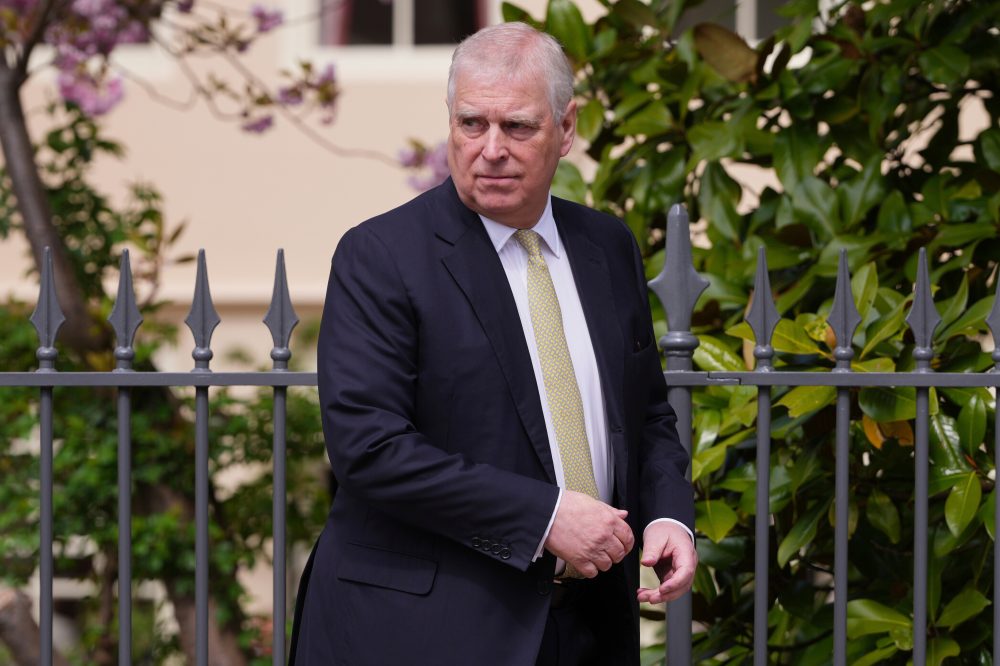
LONDON — Newly released government documents reveal that Queen Elizabeth II strongly advocated for the former Prince Andrew to receive the position of Britain’s trade envoy.
British officials made the confidential records public on Thursday concerning Andrew’s appointment to the role, coming just months after members of parliament criticized the king’s brother for prioritizing his relationship with Jeffrey Epstein over national duties.
“The Queen is very keen that the Duke of York should take on a prominent role in the promotion of national interests,” the head of Britain’s trade body wrote in a letter.
A separate government memo distributed to British trade personnel worldwide indicated that “HRH’s high public profile” would necessitate “careful and sometimes strict media management,” referring to Andrew.
FRANKFURT, Germany — European Union officials have revised downward their economic projections and anticipate elevated inflation rates as energy costs spike amid the Iranian conflict, though they believe the region will steer clear of a full recession.
“As a net energy importer, the EU’s economy is highly susceptible to the energy shock caused by the conflict in the Middle East,” the commission said in a statement Thursday. The rising cost of fuel “means higher household bills and surging business costs that reduce profits for many industries.”
In its spring economic forecast, the commission reduced growth expectations for eurozone nations to 0.9% this year, down from the previous autumn projection of 1.2%, while 2027 growth estimates dropped from 1.4% to 1.2%. Meanwhile, inflation projections for 2026 jumped to 3.0%, a significant increase from the earlier 1.9% estimate.
This updated inflation forecast surpasses the European Central Bank’s 2% target, prompting speculation that the ECB may implement interest rate increases this year to counter rising prices.
Energy markets experienced significant volatility following Iranian drone and speedboat threats that effectively halted most shipping through the Strait of Hormuz, a critical waterway handling approximately one-fifth of global oil and natural gas transport. Additionally, war developments have undermined consumer sentiment, which dropped to its lowest point in 40 months as concerns mount over potential job losses and accelerating inflation.
Despite these challenges, commission officials maintain that the economy will demonstrate continued modest expansion while avoiding a complete recession.
However, they cautioned that extended periods of elevated energy costs could further dampen growth prospects while pushing inflation even higher.
Ukrainian forces launched another deep-strike drone attack on Russian territory Thursday, targeting an oil refinery located more than 500 miles inside Russia and sparking fires that sent massive plumes of black smoke into the sky, according to President Volodymyr Zelenskyy.
Zelenskyy announced on social media that the attack hit the Syzran oil refinery, situated over 800 kilometers from the Ukrainian border. He shared video footage showing the aftermath of the strike.
Independent verification of the footage and confirmation of the attack was not immediately available. Vyacheslav Fedorishchev, who serves as governor of Russia’s Samara region, confirmed that Ukrainian drones killed two people in Syzran but did not reference the refinery attack. Russia’s Astra news outlet reported that the drones struck the Syzran facility, which is operated by oil and gas company Rosneft.
The attack demonstrates Ukraine’s expanding capabilities for medium and long-distance strikes, utilizing sophisticated drone and missile technology developed within the country as it continues fighting against Russia’s 4-year-old invasion. Other nations are now seeking Ukrainian military technology and expertise, a stark contrast to earlier in the conflict when Ukraine desperately needed foreign military assistance.
Zelenskyy revealed that Ukrainian drones had also struck another refinery the day before, as attacks on Russian oil facilities that help finance the invasion have become routine.
“Overall, our long-range plan for May is being carried out largely in full,” Zelenskyy said in a social media post late Wednesday. “The key targets are Russian oil refineries, storage facilities, and other infrastructure tied to these oil revenues.”
The intensifying campaign has damaged Moscow’s revenue streams while international sanctions continue to squeeze the Russian economy. Some strikes have penetrated over 1,500 kilometers into Russian territory, contributing to growing unease among Russians about the war and increasing pressure on Russian President Vladimir Putin.
Ukraine’s enhanced striking distance has also enabled its forces to push back Russian troops along certain sections of the front line, with Ukrainian forces achieving their most substantial battlefield progress since 2024, according to the Institute for the Study of War.
“Ukraine’s intensified midrange strike campaign against Russian logistics, military equipment, and manpower since early 2026 has also degraded Russian forces’ ability to conduct offensive operations across the theater and has also likely supported recent Ukrainian advances,” the Washington-based think tank said in an assessment late Wednesday.
Russia’s Defense Ministry reported that air defense systems intercepted 121 Ukrainian drones during the overnight period from Wednesday into Thursday.
In the Belgorod region along Ukraine’s border, eight people sustained injuries from Ukrainian drone attacks, regional governor Alexander Shuvayev reported.
Russia has similarly made substantial investments in drone technology, using them to attack civilian areas throughout Ukraine during the war, resulting in more than 15,000 civilian deaths according to United Nations figures.
Ukraine’s air force announced Thursday that it successfully intercepted 109 of 116 drones launched by Russia during the night.
The Russian strikes killed one civilian and wounded at least six others across Ukraine’s northern, southern and eastern regions, emergency services reported.
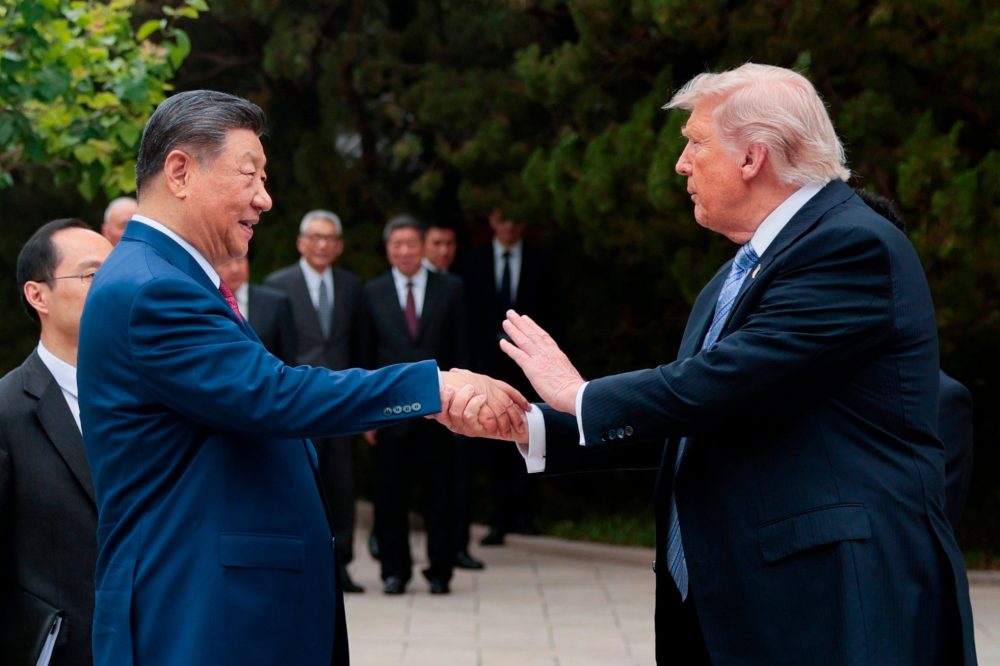
BEIJING (AP) — Chinese leader Xi Jinping recently conducted consecutive diplomatic meetings with U.S. President Donald Trump and Russian President Vladimir Putin, which appeared similar on the surface with formal ceremonies at Beijing’s Tiananmen Square, enthusiastic welcomes from children waving flags, and military honor guards with gleaming weapons. However, these visits highlighted the contrasting nature of China’s relationships with both nations.
Trump’s visit focused on stabilizing relations between the United States and China, whereas Putin’s trip aimed at strengthening the strategic alliance between Russia and China.
Xi provided ceremonial treatment during Trump’s stay, featuring an exclusive visit to Zhongnanhai, the former royal gardens that currently house China’s government headquarters. Beijing recognized that Trump appreciated prominent demonstrations of respect, according to George Chen, partner for Greater China practice for The Asia Group. “Xi knows this is what Trump values: being treated like a VIP, respected in front of the cameras.”
Regarding Putin, Chen noted that Xi focused on meaningful discussions. “Reaffirming the friendship treaty, signing new energy deals, and re-emphasizing their ‘no limits’ partnership,” he explained.
The visits differed in duration: the U.S. president remained in China for three days, compared to Putin’s two-day stay.
Both leaders received ceremonial welcomes at Tiananmen Square featuring honor guards, military bands, and children displaying Chinese and respective national flags.
Each leader also conducted private discussions with Xi at the Great Hall of the People, located adjacent to the square.
However, Trump’s visit did not feature a public ceremony for signing agreements, while Putin and Xi observed the formal signing of bilateral accords and memorandums of understanding.
Trump received an exclusive visit to the Temple of Heaven and toured the royal gardens of Zhongnanhai.
Putin alternatively spent considerable time with Xi within the Great Hall of the People, where both leaders viewed a photographic display showcasing China-Russia relations before sharing tea.
This marked Trump’s second presidential visit to China. For Putin, this represented his 25th trip to the nation.
The primary difference between both summits lay in their communication approaches.
During Trump’s visit, Xi emphasized maintaining relatively stable relations following months of conflict and trade disputes between the world’s largest economies. He encouraged the U.S. president to view China as an ally rather than an adversary, with both leaders committing to pursue what they termed “a constructive China-U.S. relationship of strategic stability.”
With Putin, Xi aimed to strengthen and expand a long-established partnership that holds strategic and economic significance for both nations.
While the U.S. and China continue working to stabilize their commercial relationships, Moscow and Beijing confirmed their status as crucial partners. Putin identified the “driving force” of their relationship as the energy industry, especially oil and natural gas.
Both sides executed over 40 cooperation agreements spanning trade, technology, and media collaboration. The leaders also endorsed a joint statement characterizing Russia and China as “important centers of power in a multipolar world.”
Trump and Xi, in comparison, did not endorse a joint statement or witness any agreement signings during the visit. Only after the U.S. president departed Beijing did both countries reveal details of several arrangements, with Washington announcing that China committed to purchasing U.S. agricultural goods at an annual rate of $17 billion and acquiring 200 Boeing aircraft.
“China and Russia reached more agreements, and with China and the U.S., what are the agreements? Even that is not very clear,” stated Claus Soong, an analyst at the Mercator Institute for China Studies in Berlin.
However, Lyle Morris, senior fellow on Chinese national security and foreign policy at Asia Society Policy Institute’s Center for China Analysis, noted the most unexpected outcome from the Xi-Putin meetings was the apparent absence of a formal agreement for the Power of Siberia 2 gas pipeline project, which would transport gas from Russia to China via Mongolia.
“This is a huge setback for Russia and Putin,” he stated.
Moscow shares Beijing’s position on Taiwan, the island democracy that China considers its territory. Meanwhile, the U.S. maintains a deliberately unclear position on the island while serving as its primary unofficial supporter and weapons supplier.
Xi informed Trump that Taiwan represents the most critical issue in bilateral relations and cautioned that mismanaging U.S. connections with the self-governing island could result in conflict between both countries.
Trump avoided public discussion of Taiwan during his visit. However, while returning to the United States, he characterized weapons sales to Taiwan as a “very good negotiating chip” with China, remarks that created concern on the island that Beijing claims as its territory.
With Putin, no disagreement appeared regarding this matter.
In the joint statement signed by Xi and Putin, Russia restated its opposition to Taiwanese independence “in any form” and expressed support for what it characterized as China’s efforts to protect its sovereignty and achieve “national unification.”
According to the Chinese Foreign Ministry, both parties also expressed concerns about what they described as “accelerated remilitarization” of Japan, amid tense China-Japan relations regarding Taiwan.
Three brothers in San Diego are honoring their father’s memory after he made the ultimate sacrifice to protect children during a deadly attack at a local mosque.
Amin Abdullah, age 51, worked as a security guard at the Islamic Center of San Diego, the county’s largest mosque. According to police, he gave his life to shield 140 students at the mosque school from danger by confronting two attackers in a gun battle and radioing for an emergency lockdown. The violent incident also claimed the lives of mosque elder Mansour Kaziha, 78, and Nadir Awad, 57, an Uber driver and community member whose spouse teaches at the mosque school. Authorities are treating the shooting as a hate crime.
Thursday will mark the funeral services for all three victims.
“When I learned about it … I couldn’t believe it. It didn’t feel real. I was just in shock,” Muhammad Amin Abdullah, 28, said on Wednesday. “But when I learned that his actions saved all the kids … I felt proud, and I felt comfort because I know that’s exactly how my dad would have wanted to go out – protecting people.”
Muhammad joined his brothers Jibreel and Khaled as they welcomed visitors offering sympathy at their father’s residence, sharing memories of a man they considered both their closest friend and a community cornerstone.
Khaled, 24, said his family has drawn strength from the way he died.
“The fact that he was on the front line, trying to defend kids and innocent people, that makes me feel good,” Khaled said. “Calling him a hero is the least we can do.”
Jibreel, 21, described his father as “the kindest person you’d meet.”
“Ask anyone … they’d have nothing but good things to say about my dad,” he said. “Best dad you could ask for.”
The family urged others to honor their father by living with compassion and a sense of service.
“Live your life serving others … and just be kind to everybody,” Muhammad said. “The world would definitely be a better place if people lived like that.”
Their sister, Hawaa, made a similar plea on Tuesday. She told reporters their father “stood against any form of hate.”
Police and FBI have said that they are investigating the attack as a hate crime but have not offered details about the possible motive of the attackers, who took their own lives shortly after the shooting.
Target is implementing a new business strategy focused on attracting young families as the retail giant works to reverse a prolonged period of declining sales and compete with budget retailers like Walmart and TJX that have drawn away customers in recent years.
The retail chain believes it can gain a competitive advantage by attracting new parents and maintaining their loyalty as their children grow up. While Walmart dominates as the preferred destination for everyday family essentials like milk, bread and diapers, Target aims to position itself as the go-to store for more specialized products including baby clothing, toy collections and vitamin supplements.
On Wednesday, the company announced its first strong quarterly earnings in twelve months. During a conference call following the earnings release, Cara Sylvester, Target’s chief merchandising officer, revealed that the company has introduced 2,000 new products to its baby section this year, specifically targeting busy families.
The retailer saw sales increase by 5.6% compared to the previous year and raised its net sales growth projection to 4%, doubling the previous forecast. New CEO Michael Fiddelke is committing $2 billion to improve the product selection, renovate stores and increase staffing levels.
However, retailers continue to face significant challenges as the Iran war has driven up inflation and made consumers more cautious about spending. Target’s stock price dropped 5% following the earnings report.
“I continue to expect share losses in some of these categories, like apparel and home, as competition remains quite strong,” said Mari Shor, senior equities analyst at Target shareholder Columbia Threadneedle.
The company has broadened its toy selection while introducing 1,500 health and wellness items, including family-focused products such as First Day vitamins for kids and teens, and Tubby Todd baby body lotion.
“Attempting to build a relationship with busy families could prove to be helpful in re-establishing a longer-term relationship with their customer base,” said Morningstar analyst Brett Husslein.
According to Husslein, Target has struggled in recent years to establish itself as the primary destination for any specific product category or customer demographic, losing budget-minded shoppers to stores like Walmart while failing to attract younger, affluent consumers seeking clothing and accessories.
Research from a 2025 survey conducted by 84.51, a retail analytics company owned by Kroger Co., indicates that people typically become more price-sensitive and appreciate the convenience of one-stop shopping after having children.
Fiddelke, whose hiring last year faced some doubt, told media this week that Target’s recovery strategy depends on combining “style, design and value.”
Since taking charge, Fiddelke has reorganized company management, including bringing in former Walmart executive Jeff England to oversee Target’s supply chain operations.
The retailer’s new baby product lineup includes both budget-friendly options such as store-brand baby wipes, food and shampoo, as well as premium brands like Bugaboo, whose strollers can exceed $2,000.
Target has established “baby boutiques” in 200 locations, allowing parents to test strollers, examine bassinets outside their packaging and consult with shopping specialists.
Given that Walmart remains the more affordable choice overall, Target’s success “will be vitally dependent on its ability to consistently execute … through store experience and merchandise assortment,” Husslein noted.
A new artificial intelligence chatbot from the company behind SpaceX is struggling to win over what could be one of its biggest potential customers – the federal government.
Records from federal agencies reveal that Grok, developed by the AI startup xAI, appears in just three instances out of more than 400 documented government artificial intelligence applications that identify specific technology vendors. Meanwhile, competing products dominate the landscape, with 234 applications using technology from OpenAI including ChatGPT, 33 utilizing products from Alphabet, and 26 employing Anthropic’s Claude system.
The disappointing performance comes as SpaceX prepares what it describes as the largest initial public offering in history, banking heavily on capturing a significant portion of what the company estimates as a multi-trillion-dollar artificial intelligence services market through xAI.
Federal inventory documents compiled by the Office of Management and Budget paint a picture of limited government interest in Grok, despite the chatbot being offered to agencies at deeply discounted rates of 42 cents per agency for eight months. This pricing strategy mirrors tactics used by technology companies to encourage initial adoption before transitioning to higher-cost contracts.
“The goal is to encourage adoption so that federal employees eventually can’t imagine doing their jobs without generative AI,” explained Valerie Wirtschafter, who researches AI adoption in the federal government at the Brookings Institution.
The lackluster government reception creates uncertainty around SpaceX’s projected $1.75 trillion IPO valuation. Company filings indicate expectations for substantially higher revenue from building AI solutions for large organizations – a market opportunity valued at $26.5 trillion – compared to other business segments.
Industry experts view the federal government’s lukewarm response as a warning sign for broader market acceptance. “It suggests the model lacks the security rigor required at the federal level, which will be a red flag” for corporate buyers, said Vineet Jain, co-founder and CEO of enterprise software company Egnyte. “Without government validation, the $1.75 trillion valuation looks less like a floor and more like a high ceiling.”
The chief executive of SpaceX has publicly championed Grok’s potential for federal applications and advocated for widespread government adoption. In September, announcing Grok’s arrangement with the General Services Administration, he expressed his team’s desire to collaborate with the current administration to “rapidly deploy AI throughout the government for the benefit of the country.”
His Department of Government Efficiency actively pushed Grok adoption, including directing Department of Homeland Security officials to use the system despite lacking proper approval for the agency’s operations.
Government usage data shows Grok being employed for basic functions at agencies like the Office of Personnel Management and Department of Health and Human Services, including document drafting and social media posting. An OPM spokesperson noted that Microsoft Copilot remains the agency’s most frequently used AI tool.
More advanced AI applications also show minimal Grok presence. Only three references appear in specialized deployment data, showing “limited test or pilot capacity” usage at the Energy Department’s Lawrence Livermore National Laboratory and the Election Assistance Commission. OpenAI and Microsoft combined account for 140 such applications.
While the Pentagon maintains a $200 million contract with xAI and has added Grok to its unclassified AI platform, internal preferences lean toward competitors. A Pentagon source with direct knowledge reported that many staff members favor alternative AI tools over Grok.
At the Defense Advanced Research Projects Agency, the Pentagon’s research division, different AI systems serve specific purposes: one company’s product handles engineering analysis while another manages coding and research tasks. The source indicated Grok sees limited use because it’s “just not the best model out there.”
xAI recently began pursuing enhanced government authorization through partnership with the Department of Agriculture, though three USDA information technology professionals reported no awareness of Grok usage within their organization. The department stated it was “proud to sponsor Grok” but didn’t address questions about actual utilization.
Recent setbacks include xAI losing a bid to develop a Grok-powered solution for the Department of Veterans Affairs, with sources indicating the chatbot failed to meet departmental requirements.
Corporate adoption mirrors the government struggles. Web traffic monitoring firm Netskope, which tracks AI usage among thousands of business customers, reported that Grok has “failed to gain significant traction” in corporate environments. Updated figures show enterprise usage declining to 2 out of every 1,000 users from a previous peak of 5 per 1,000 users.
Netskope executive Ray Canzanese noted that even active Grok users spend significantly less time with the chatbot compared to competitors – roughly half the engagement time of ChatGPT users. “The Grok usage data told him the chatbot “is just not going to enter the mainstream for corporate America,” he concluded.
Affordable pricing for weight-loss medications in pill form from Novo Nordisk and Eli Lilly is encouraging patients to move away from compounded alternatives toward branded treatments like Wegovy and Foundayo, based on conversations with nine physicians nationwide.
The starting doses of both companies’ oral medications typically cost less than their injectable counterparts and match pricing offered by pharmacies that create their own compounded alternatives by mixing ingredients themselves.
With insurance coverage becoming increasingly limited, these more affordable choices have benefited pharmaceutical manufacturers, medical professionals report.
The Danish company Novo and Indianapolis-headquartered Lilly launched their oral treatments in the United States during January and April respectively, reporting robust interest from first-time users.
However, both companies have raised concerns about compounded alternatives, which the U.S. FDA permits for customized formulations and dosing. The Food and Drug Administration has worked to impose stricter regulations after drug shortages that previously enabled compounding operations to expand have resolved.
Medical professionals and health authorities have expressed optimism that competitive pricing would encourage patients toward branded medications, which face more stringent regulatory oversight.
“I am seeing people are switching from compounds,” explained Dr. Michael Weintraub, assistant clinical professor of endocrinology at NYU Langone in New York. He noted that while he doesn’t prescribe compounded medications, he treats patients already using them.
“I have patients increasingly coming to me saying, ‘I hear it’s not as expensive to get the pharmaceutical-grade branded version, can we switch over?’”
A company representative from Lilly stated they were “encouraged by the early momentum, growing prescriber interest and intent to prescribe, and by patients choosing authentic, FDA-approved treatments like Foundayo.”
Novo reported expanding patient access to its GLP‑1 medications through its NovoCare Pharmacy and retail partnerships, designed to guide patients toward FDA‑approved options instead of compounded alternatives.
While physicians indicated some patients are transitioning to injectable GLP-1 treatments, the majority are choosing pill forms because their costs more closely match compounded versions.
Starting doses of Novo’s Wegovy pills run approximately $149 monthly, while injector pens begin at $199 monthly, based on company and White House website information.
Lilly’s Foundayo similarly begins at $149 monthly, while vials and pens of its GLP-1 weight management medication Zepbound can reach $299 or higher for patients paying directly.
Medical professionals noted that Novo’s Wegovy pill enjoys greater brand familiarity since it shares the same active ingredient and name as the injectable version. It also has proven heart-protective benefits, making patients and doctors more confident prescribing it, particularly for individuals with cardiovascular risk factors.
Physicians also mentioned patient hesitancy toward the less familiar Foundayo, as it represents a somewhat different medication type without established heart-benefit research.
“Something about saying it is new creates a little hesitation in at least a handful of patients I’ve spoken about it with,” noted Dr. Jorge Moreno, a Yale Medicine Obesity Specialist. “It’s a small sample, but they’ve opted for the Wegovy (pill).”
Oral Wegovy produced approximately 14% body weight reduction over 64 weeks, while Foundayo achieved roughly 11% reduction over 72 weeks in separate clinical trials. Patients using GLP-1 injections lost 15%-20% of body weight during studies.
Foundayo’s ease of use – requiring no empty stomach like Wegovy – and additional market time are anticipated to help Lilly close Novo’s current advantages in oral medications.
Financial analysts from Citi reported that prescribers anticipated equal distribution between Foundayo and Wegovy pills according to a survey involving 120 doctors who prescribe GLP-1 treatments.
Survey results also revealed that physicians at academic medical centers predict Foundayo will ultimately represent approximately 70% of prescriptions between both pill options. They identified Foundayo’s elimination of fasting requirements as a significant benefit.
Nevertheless, costs remain prohibitive for many patients, and all interviewed doctors confirmed that insurance approval continues presenting obstacles.
“Every day, I get a message from a patient saying ‘my insurance company didn’t approve or denied it again,’” Yale’s Moreno shared.
Frequently, physicians incorrectly code diagnoses for proper prescriptions, resulting in rejections, he explained. Insurance providers also show less willingness to cover preventive treatments compared to existing medical conditions.
Lilly’s representative mentioned that two of America’s three largest pharmacy benefit managers have started covering Foundayo, with the company pursuing broader coverage expansion.
Many physicians expressed anticipation for the U.S. government’s upcoming program providing GLP-1 coverage for Medicare recipients, scheduled to start in July and continue through 2027. They hope this government initiative will encourage commercial coverage for broader patient populations.
Some patients currently using injectable treatments are transitioning to pills, though not in large numbers, according to most interviewed doctors.
“Right now only a small percentage are switching to the pill,” said Dr. Christina Nguyen, an obesity specialist in Atlanta. “The injectables are working well and people don’t want to mess anything up.”
Physicians also confirmed what pharmaceutical executives have indicated: pill options are attracting new patients to the market.
“This is expanding the market of GLP-1,” explained Sarah Ro, medical director of the University of North Carolina Health’s weight-management program. “Patients who have been offered a GLP-1, but due to price, declined… now, they’re wanting to try.”
The three co-founders of an artificial intelligence startup are considering strategies to follow China’s directive to reverse Meta’s acquisition worth more than $2 billion, according to a Bloomberg News report published Thursday.
Co-founders Xiao Hong, Ji Yichao and Zhang Tao are examining various approaches, including securing approximately $1 billion from outside investors to repurchase their company, the report stated, citing sources with knowledge of the situation.
The trio is in talks about a financing round that would establish the company’s worth at a comparable level to what Meta originally paid for the Singapore-based startup, according to the report.
Reuters was unable to immediately confirm the Bloomberg report. The company did not provide an immediate response to Reuters’ request for comment.
The co-founders might contribute their own funds to cover any remaining financial shortfall, the report indicated.
This approach could transform the startup into a joint venture with prospective investors and potentially lead to a public stock offering in Hong Kong.
Meta had revealed the acquisition in late December as part of efforts to enhance sophisticated AI capabilities throughout its various platforms. China quickly initiated an investigation into whether the transaction breached investment regulations and prevented two of the startup’s co-founders from departing the country.
Last month, Beijing instructed the California-based tech giant to reverse the purchase as part of increased oversight of American investments in cutting-edge Chinese technology companies amid escalating U.S.-China technology disputes.
The startup creates versatile AI systems that operate as virtual workers, autonomously performing duties including research and process automation with limited human oversight.
Wealthier nations delivered an unprecedented $136.7 billion in climate assistance to developing countries last year, marking a new milestone in global efforts to combat climate change, according to data released Thursday by the Organisation for Economic Co-operation and Development.
The funding represents a 3% increase from 2023 levels and supports initiatives such as renewable energy expansion and infrastructure improvements to defend against severe weather events, the OECD reported.
This achievement builds on a commitment made by affluent nations in 2009 to provide $100 billion annually by 2020 to assist vulnerable countries dealing with increasingly destructive climate disasters. That original goal was finally reached in 2022.
However, future funding levels may face uncertainty as the current administration has suspended contributions to global climate financing programs, potentially leading to reduced totals in 2025 data.
At the COP29 climate conference held in 2024, participating nations committed to expanding their financial support to $300 billion annually by 2035. Yet experts warn this amount remains insufficient compared to the trillions economists estimate developing countries require for rapid clean energy transitions and climate adaptation measures.
Developing nations maintain they cannot commit to more stringent emissions reduction agreements without reliable financial backing from the world’s wealthiest economies.
Notably absent from these figures is climate financing from the world’s second-largest economy. Despite its economic status, the nation is classified as “developing” under U.N. frameworks, excluding its international climate contributions from official tallies.
Ukrainian forces carried out a nighttime drone assault on a Russian oil processing facility owned by Rosneft in the Samara region, according to statements from Ukraine’s military leadership and President Volodymyr Zelenskiy on Thursday.
“Another Ukrainian long-range sanction against Russian oil refining – and we are continuing this line of action,” Zelenskiy wrote on the Telegram messaging platform.
“This time around, it was the Syzran oil refinery – more than 800 kilometers away from our border.”
The Ukrainian president shared video showing flames and thick smoke rising into the air from the targeted facility.
Regional authorities reported that two fatalities resulted from the drone assault on Syzran in the Samara region, though the local governor did not specify whether any infrastructure sustained damage during the operation.
According to Ukraine’s Unmanned Systems Forces, the strike ignited a significant blaze at the oil processing plant, which has the capability to refine between 7 and 8.9 million tons of crude oil annually.
Robert Brovdi, who leads Ukraine’s drone operations, stated this marked the 11th Russian petroleum facility that Ukrainian forces have struck during the month of May.
Coco Gauff has abandoned the mental approach that typically accompanies being a defending champion, stating she’s finished with the stress of constantly trying to “defend, defend” as she prepares to compete for another French Open championship.
With Aryna Sabalenka entering the tournament dealing with injury concerns and Iga Swiatek showing less dominance on clay courts than in previous years, Gauff stands among the top contenders to claim victory in Paris once more.
The world number four, who defeated Sabalenka in last year’s Roland Garros final to capture her second Grand Slam championship, explained she gained an important insight from her earlier experience defending a major tournament, when she was knocked out of the 2024 U.S. Open in the fourth round.
“I realise that the defending means nothing in a way. Each year is a new opportunity and new chance for anyone to win. Obviously I hope it’s me,” she told reporters at this month’s Italian Open.
“I don’t really look at it as defending anymore. I guess at the U.S. Open I was like, ‘I need to defend, defend’… I say now ‘it’s just another tournament’.
“I won it last year. I’ll try again to do it this year. I’m not going to be able to defend every year. I’m not Rafa (Nadal). Maybe one day!”
Gauff’s preparation for the French Open has faced challenges, as she dealt with illness and suffered a fourth-round defeat in Madrid before recovering to make her second consecutive Italian Open final appearance.
During that final match, Gauff recorded seven double faults and lost to Elina Svitolina.
Despite this setback, she feels confident about resolving her serving difficulties, which have put her at the top of the WTA Tour’s double fault statistics for both 2024 and 2025, leading her to work with biomechanics expert Gavin MacMillan last year to tackle the issue.
Although she remains atop the double fault rankings for 2026, she managed just one double fault in each of her victories against Sorana Cirstea and Iva Jovic in Rome, progress she attributes to improved consistency on her second serve.
“It’s been an up-and-down process. I obviously don’t want to jinx anything, but I think we found the recipe to making it more consistent,” Gauff said.
“Now it’s focusing on how to make it more of a weapon, how to serve smarter. I’m tossing a bit more consistent. My weight I feel is a little bit better. Also just the trust, the confidence in it is a lot better.”
Should Gauff successfully overcome the serving troubles that have hindered her performance in the past, she could be positioned to capture a third Grand Slam championship.
Good morning, Delmarva! We’re tracking a soggy day ahead with showers and thunderstorms moving through the peninsula. Temperatures will reach a mild 68 degrees this afternoon, but don’t let that fool you – keep those umbrellas handy!
We’ll see a chance of rain showers starting around 10am, then transitioning to more widespread showers and thunderstorms this afternoon. With northeast winds around 10 mph and an 80% chance of precipitation, we could see rainfall amounts between a tenth and quarter of an inch. The clouds will stick around all day, keeping things on the cooler side.
Tonight, those showers and storms will continue with temperatures dropping to a comfortable 54 degrees. Unfortunately, the wet weather pattern continues into Friday with rain showers likely and highs only reaching 63 degrees. Friday night looks soggy too, with more rain showers and lows around 51.
This is definitely an indoor kind of day, folks! Make sure to grab that rain gear if you’re heading out, and drive safely on those wet roads. Stay dry out there, Delmarva!
New Mexico authorities have initiated fresh investigations into claims of abuse that allegedly occurred at a vast ranch property once belonging to Jeffrey Epstein, the disgraced financier.
The sprawling 10,000-acre estate, which featured a large mansion and was known by Epstein as the Zorro Ranch, sits outside Santa Fe. Following public pressure for action, state officials have taken multiple steps to examine the allegations.
The state attorney general’s office conducted a thorough search of the expansive property as part of their investigation. Additionally, state lawmakers in the House have established what they are calling a “Truth Commission” to further examine the matter.
The renewed focus on the New Mexico property comes as authorities continue to investigate various aspects of Epstein’s activities and alleged crimes at his multiple properties across different states.
Five standout athletes are being highlighted as top contenders for the women’s singles championship at this year’s French Open tournament, which kicks off on Sunday.
ELENA RYBAKINA (KAZAKHSTAN)
* World ranking: 2
The Kazakhstani player, who has reached the French Open quarterfinals twice before, began 2026 with impressive momentum after capturing her second Grand Slam victory at the Australian Open – her first major title since claiming Wimbledon in 2022.
After struggling to advance beyond the fourth round in any major tournament last year, Rybakina changed her fortunes at November’s WTA Finals by defeating world number one Aryna Sabalenka in the championship match.
The 26-year-old athlete successfully defended her Stuttgart Open championship last month to begin her clay court season, and now has the chance to overtake Sabalenka for the world’s top ranking at the French Open.
ELINA SVITOLINA (UKRAINE)
* World ranking: 7
Svitolina captured a decisive victory against defending French Open titlist Coco Gauff in last week’s Italian Open championship, positioning herself among the tournament’s leading favorites at Roland Garros.
The Ukrainian athlete, who has advanced to the French Open quarterfinals on five occasions, also defeated both Rybakina and Iga Swiatek during her Italian Open campaign, delivering a clear message to the top seeds before the year’s second Grand Slam event.
The 31-year-old competitor made it to the Australian Open semifinals in January and has recorded seven victories against top-10 opponents in 2026, as she pursues her first Grand Slam title at the French Open.
JESSICA PEGULA (UNITED STATES)
* World ranking: 5
While continuing her quest for a first Grand Slam championship, Pegula experienced disappointing near-misses in her last two major tournaments, falling in the semifinals at both the U.S. and Australian Opens.
The 32-year-old player attributed her enhanced performance to improvements in her serve, explaining to the Tennis Channel in March that she had changed her approach from emphasizing raw power to incorporating varied spins and better positioning.
The former U.S. Open finalist hopes her modified technique will prove more successful on clay courts at Roland Garros, where she advanced to the quarterfinals in 2022.
MARTA KOSTYUK (UKRAINE)
* World ranking: 15
Kostyuk hasn’t progressed past the French Open’s second round since 2021, but the 23-year-old became an unexpected contender when she claimed the Madrid Open title, securing her first WTA 1000 championship by defeating Mirra Andreeva in the final.
Hip and thigh problems caused her to pull out of the Italian Open this month, but she’s anticipated to enter the French Open healthy, well-rested, and maintaining a perfect clay court record this year with 12 victories and two championships, including the Rouen Open title last month.
MIRRA ANDREEVA (RUSSIA)
* World ranking: 6
Andreeva gained recognition through her semifinal appearance at the 2024 French Open and continued with a quarterfinal showing the following year.
The 19-year-old has demonstrated consistent progress throughout the clay season, capturing the Linz Open title and defeating Swiatek in the Stuttgart Open quarterfinals before advancing to her first WTA 1000 championship match at the Madrid Open this month.
Israeli authorities have freed hundreds of international protesters who tried to break through the country’s naval blockade around Gaza and are now sending them out of the country, a legal advocacy organization reports.
Adalah, the Legal Center for Arab Minority Rights in Israel, announced Thursday that the majority of the international protesters are being transported to a civilian airport close to the southern Israeli city of Eilat for removal from the country.
Prime Minister Benjamin Netanyahu announced Wednesday that he had ordered the protesters to be removed from Israel “as soon as possible,” following his harsh criticism of Israel’s national security minister for releasing a controversial video that showed the minister mocking handcuffed and kneeling flotilla participants.
Netanyahu stated that while Israel has full authority to intercept “provocative flotillas of Hamas terrorist supporters,” National Security Minister Itamar Ben-Gvir’s treatment of the protesters was “not in line with Israel’s values and norms.”
Ben-Gvir published videos Wednesday depicting him moving among some of the roughly 430 detained individuals. One video showed protesters with bound hands in a kneeling position, their heads pressed to the floor in what looked like a temporary holding area on a ship’s deck.
The flotilla, consisting of more than 50 vessels, left for Gaza last week from Turkey, close to Cyprus. Organizers stated their goal was to bring fresh focus to the living conditions of nearly 2 million Palestinians in the Gaza Strip.
Israeli officials have characterized the flotilla as “a PR stunt at the service of Hamas” without genuine intentions to provide assistance to Gaza. The vessels transported only a small, symbolic quantity of aid.
Israeli military forces started intercepting the vessels approximately 268 kilometers (167 miles) off the Gaza coast, the flotilla’s website reported. Israel had previously halted 20 flotilla boats on April 30 near Crete.
This week, the U.S. Treasury placed sanctions on multiple European protesters aboard the flotilla, which U.S. Treasury Secretary Scott Bessent labeled “pro-terror.”
Israel has enforced a maritime blockade around Gaza since Hamas assumed control of the region in 2007. Israeli officials tightened these restrictions following the Hamas-led militant attacks on southern Israel that resulted in approximately 1,200 deaths and over 250 hostages on Oct. 7, 2023.
Opponents argue the blockade constitutes collective punishment. Israel maintains it’s designed to stop Hamas from obtaining weapons. Egypt, which controls the sole border crossing with Gaza not under Israeli authority, has also severely limited movement into and out of the territory.
Israel’s counter-offensive launched after the Oct. 7 attacks that triggered the war has resulted in more than 72,700 deaths, Gaza’s Health Ministry reports. The ministry, operating under Gaza’s Hamas-controlled government, does not distinguish between civilian and combatant casualties. It employs medical professionals who keep and publish comprehensive records considered generally credible by the international community.
LONDON (AP) — Britain’s government will publish classified documents Wednesday concerning Andrew Mountbatten-Windsor’s former position as trade envoy, following parliamentary demands for transparency after allegations emerged that the king’s brother prioritized his relationship with Jeffrey Epstein over national interests.
Parliament members passed a resolution in February requiring the documents’ release after the former royal, now called Andrew Mountbatten-Windsor, faced arrest on accusations of providing government intelligence to Epstein during his tenure as trade representative.
This action came after the U.S. Justice Department disclosed millions of documents concerning Epstein. These records revealed how the affluent financier leveraged a global network of wealthy, influential associates to build power and sexually abuse young women and girls.
The United Kingdom has experienced the most significant impact from these document revelations, as the controversy has sparked inquiries about how authority is exercised by nobility, high-ranking politicians and prominent business leaders, collectively referred to as “the Establishment.”
Throughout parliamentary discussions regarding Mountbatten-Windsor’s connections to Epstein, government officials and fellow legislators called for greater transparency from the royal family.
Trade Minister Chris Bryant stated that Mountbatten-Windsor pursued a continuous “self-enriching hustle” throughout his period as an active royal family member.
Mountbatten-Windsor was a “rude, arrogant and entitled man who could not distinguish between the public interest, which he said he served, and his own private interest,” Bryant said at the time.
Mountbatten-Windsor lost his royal designation last year when King Charles III attempted to shield the monarchy from increasing consequences of the Epstein controversy. The former prince worked as a special envoy for international trade from 2001 to 2011, when he was compelled to resign due to worries about his associations with dubious individuals in Libya and Azerbaijan.
KATHMANDU, Nepal — Mountain climbers achieved a historic milestone Wednesday when 274 people successfully reached the summit of Mount Everest in one day, marking a new single-day record, according to officials who announced the achievement Thursday.
The mountaineers capitalized on favorable weather conditions Wednesday, according to Rishi Ram Bhandari of the Expedition Operators Association Nepal. This represents the largest number of people to summit the mountain in one day using the well-traveled southern route located in Nepal.
Climbers can approach the summit from two directions: the southern approach in Nepal or the northern route through China’s Tibet region. In comparison, on May 22, 2019, the Nepal route saw 223 successful climbs while the Chinese route recorded 113 summits. However, Chinese officials have kept their route closed this climbing season.
Several individual climbing milestones were also achieved this week. Experienced mountain guide Kami Rita Sherpa reached the summit for his 32nd time, surpassing his previous record. Meanwhile, Pasang Dawa Sherpa, his nearest rival, completed his 30th successful climb this week. Additionally, Lakpa Sherpa made her 11th summit, extending her record as the woman with the most Everest climbs.
The current climbing season started later than usual due to safety concerns about a massive serac threatening the primary summit route. Approximately 494 climbers along with an equal number of Sherpa guides are planning summit attempts before the season concludes at month’s end. The mountain stands 8,850 meters (29,032 feet) tall.
Since New Zealander Edmund Hillary and Sherpa guide Tenzing Norgay first reached the summit on May 29, 1953, thousands of people have successfully climbed the peak.
Myanmar’s army-controlled government announced it has seized two border towns from opposition forces, representing major victories in the nation’s continuing civil conflict as military leaders work to regain territory previously controlled by resistance groups.
State-controlled Myanma Alinn newspaper reported Thursday that government forces took Tonzang, located near the Indian border, on Wednesday following a 10-day military campaign. The publication included photographs showing troops at the town’s government buildings and administrative facilities.
This announcement followed Wednesday’s report in the same newspaper stating that military forces had regained Mawtaung on Tuesday, a border town crucial for commerce with Thailand, after conducting operations for two weeks.
The military’s success in capturing Tonzang in Chin state’s northwest and Mawtaung in the Tanintharyi region’s south occurs as government forces have gained momentum in the nationwide struggle since mid-2025, following China-mediated truces and expanded military personnel through conscription efforts.
These developments follow Min Aung Hlaing’s call one month ago for new peace negotiations with the nation’s armed opposition organizations. Min Aung Hlaing leads the military-controlled government.
Both Chin and Tanintharyi regions have experienced severe fighting since military leaders overthrew Aung San Suu Kyi’s democratically chosen administration in 2021. When peaceful protests were violently suppressed, numerous military opponents armed themselves, plunging large portions of the nation into civil warfare.
Tonzang, positioned approximately 25 kilometers (15 miles) from the Indian frontier, had remained under allied Chin ethnic militia and local opposition control since May 2024.
Mawtaung, located roughly 630 kilometers (390 miles) southeast of Yangon, the nation’s most populous city, was controlled by the Karen National Union alongside other local opposition organizations.
Following over 207 military confrontations, 24 bodies from the KNU and allied forces were found and their weapons seized, according to newspaper accounts, which noted that some government security personnel also died.
The KNU and additional local opposition groups have not yet provided responses to comment requests.
Media limitations make independent verification of the town recaptures nearly impossible, although the military’s assertions remain unchallenged.
The Democratic Republic of Congo’s soccer squad has scrapped their World Cup preparation activities at home because of the ongoing Ebola outbreak, moving their training operations to Belgium instead, according to a team representative.
The national team had originally scheduled a public training session for fans and a farewell event with the nation’s leader Felix Tshisekedi on Monday before heading to the World Cup tournament in Canada, Mexico and the United States.
But U.S. health officials have implemented travel limitations due to the disease outbreak, forcing the team to alter their plans, the representative explained to Reuters.
The U.S. CDC has banned entry for individuals without American passports who have visited DR Congo, Uganda, or South Sudan within the past 21 days.
This means all team personnel currently in DR Congo must depart the nation by Thursday to gain unrestricted access to the United States. The squad expects to reach the U.S. on June 10 or 11.
Team manager Dodo Landu minimized the impact of the scheduling adjustment.
“The change is not very big, because we only had three days in Kinshasa,” he stated to RFI. “We will just maintain the program in Belgium, the event on May 25 will take place in Brussels instead of Kinshasa.”
During the World Cup, the team will establish their base in Houston, Texas. The complete roster, which was revealed on Monday, consists entirely of players competing for clubs outside DR Congo, with most playing in European leagues.
The Texas Department of State Health Services announced Wednesday they are “working closely with the CDC, FIFA, and local health departments to ensure the health and safety of the teams, spectators, and all Texas residents.”
DR Congo will face Portugal in their opening World Cup match in Houston, followed by a game against Colombia in Guadalajara, and conclude their group stage against Uzbekistan in Atlanta.
As of Wednesday, the Ebola outbreak in DR Congo has produced 600 suspected cases and 139 suspected deaths.
Authorities in Taiwan announced Thursday they are pursuing criminal charges against three individuals suspected of orchestrating an illegal scheme to ship advanced artificial intelligence servers to China, defying strict U.S. trade restrictions.
The U.S. Justice Department previously filed charges in March against three individuals connected to Super Micro, including one of the company’s co-founders, alleging they facilitated the smuggling of more than $2.5 billion worth of American AI technology to China in breach of export regulations.
Legal officials from Keelung, a city in northern Taiwan, released a statement indicating the three suspects under investigation were aware that Super Micro’s AI servers fell under stringent U.S. export restrictions and were prohibited from sale to mainland China, Hong Kong, and Macau.
According to prosecutors, the defendants allegedly worked together to acquire the servers within Taiwan and then used fraudulent paperwork and false information to export them to China in pursuit of “huge illegal profits.”
Neither Super Micro nor Nvidia provided immediate responses to requests for comment from Reuters. Both corporations have previously stated their commitment to following U.S. export regulations.
Prosecutors revealed that on Wednesday, they instructed Taiwan’s coast guard to conduct searches at 12 different sites, including the homes of the three suspects and associated business locations.
Officials confiscated evidence during the raids and either detained or called in the three defendants along with related witnesses for interrogation.
Taiwan serves as a semiconductor industry leader and is the primary manufacturer of the sophisticated chips that drive artificial intelligence development.
The island nation maintains stringent regulations designed to block the transfer of advanced technology and technical expertise to China, which considers Taiwan part of its territory and has intensified political and military pressure on Taiwan’s democratically elected leadership. Taiwan firmly rejects China’s territorial claims.
Workers and local residents near Samsung Electronics’ massive semiconductor facility outside Seoul are experiencing mixed emotions following a last-minute wage agreement that averted a potential strike.
The facility represents Samsung’s biggest chip manufacturing location, producing semiconductors that have seen tremendous demand due to artificial intelligence growth and delivering unprecedented profits – while simultaneously fueling worker demands for better compensation.
The preliminary wage agreement has brought comfort to South Korea, considering Samsung’s critical role in the nation’s economy, and has raised optimism among local businesses surrounding the manufacturing site.
Lee Se-hee, who operates an upscale restaurant in Pyeongtaek, a city with approximately 650,000 residents, expressed hope about the outcome. “If employees receive performance bonuses as a result of this general strike, I think restaurants near Samsung will benefit greatly, including through company dinners and group meals,” Lee Se-hee said.
However, the agreement has revealed significant workplace divisions, as memory chip department employees are positioned to earn bonuses of approximately $416,000, creating concerns that staff in less profitable areas will be overlooked.
A foundry engineer working in the logic chip-focused division at the Pyeongtaek location expressed frustration. “It’s a huge disappointment,” the engineer stated.
The engineer, who requested anonymity due to the sensitive nature of the topic, added, “It looks like those who can switch to SK Hynix will keep applying, while others will try to transfer internally to the memory division.”
Workers at competing semiconductor company SK Hynix earned three times more in performance compensation last year compared to Samsung employees, a gap that contributed to Samsung worker dissatisfaction and departures to SK Hynix.
“The memory colleagues seem to be satisfied with the total amount, but a bit disappointed because they were paid in stock,” the engineer noted, referencing Samsung’s strategy to distribute much of the performance bonuses through company shares.
The Samsung facility in Pyeongtaek employs roughly 14,000 people, though a local property professional suggested limited economic impact for the city since many employees don’t reside locally and bonuses will primarily come as stock.
Kim Suk-joon, 66, described the situation from a contractor perspective. “For local subcontractors, this strike-and-bonus deal is like watching someone else’s feast,” Kim Suk-joon said.
A worker in Samsung’s contract manufacturing division said he would likely support the agreement despite its heavy favor toward the memory business.
“We were all in the same position, so it feels a bit unfair that only the memory division is getting that much,” said the employee, who also chose to remain anonymous.
Jang Sung-hyun, 47, employed by a Samsung contractor, expressed relief that the strike threat had passed while worrying about potential excessive costs for the company.
“Weren’t they basically holding the public and companies hostage for the sake of their own performance bonuses?” Jang Sung-hyun questioned.
On a union discussion platform, several members posted encouraging comments, commending union leadership for resisting intense pressure from both corporate management and government officials to reach an agreement.
One message on the Selunion forum read, “Some may be satisfied, and others may be unhappy, but you truly went through a lot. Thank you for your hard work.”
Stock prices for European space industry companies experienced dramatic increases on Thursday, driven by investor enthusiasm following Elon Musk’s SpaceX announcement of plans to go public through a stock market listing.
French satellite operator Eutelsat saw its stock price climb 10% during morning trading hours, while German satellite manufacturer OHB experienced a 12% increase and Luxembourg-based SES recorded gains of 3.5%.
The weekly performance has been even more impressive, with Eutelsat climbing 20% and OHB surging 32% over the course of the week. According to one trader who spoke with Reuters, the positive momentum for European satellite companies stems directly from SpaceX’s initial public offering filing submitted on Wednesday.
Emergency responders in China are conducting water rescues by swimming through dangerous floodwaters and deploying boats to save stranded residents after devastating storms claimed the lives of at least 25 people and forced widespread shutdowns of educational institutions, commercial operations and transportation networks across central and southwestern regions of the country on Wednesday.
Weather officials warn that additional downpours are forecast to continue battering southern and central regions, encompassing Jiangxi, Anhui, Hunan, Hubei, Guizhou, Guangxi, Guangdong and Hainan provinces, creating elevated dangers for mudslides, rapid flooding and serious urban water accumulation, according to government authorities.
Video footage from Chinese social media platform Douyin captured scenes in Dachong, located in southern Guangdong, where motor scooters disappeared beneath the water with only steering components remaining visible above the surface, while emergency teams in inflatable watercraft saved a resident who had sought refuge in a tree to avoid the rising waters.
Within Hubei province in central China, emergency response teams and military units were observed assisting local inhabitants in escaping perilous conditions, with many of those rescued being elderly community members.
Senior residents were transported from their residences using watercraft, while some rescue personnel entered flooded structures by swimming to reach individuals who had become trapped inside, according to video documentation from state television network CCTV.
Broadcasting footage from CCTV depicted one rescue scenario where emergency workers faced difficulties reaching a trapped individual surrounded by chest-deep water behind a doorway. The network reported that rescue teams required a full hour to successfully bring the person to a secure location.
Overhead camera footage revealed extensive flood coverage across large portions of Hubei province and its neighboring southern province of Hunan.
The exceptionally widespread zone of heavy precipitation, extending across more than 1,000 km (621 miles), resulted from the meeting of significant moisture sources originating from the Bay of Bengal, the South China Sea and the Pacific Ocean. The weather pattern’s slow movement also contributed to substantial accumulated rainfall totals, meteorological experts from China explained.
“A new round of rainfall will arrive tomorrow (Thursday), bringing significant precipitation to many areas in both the north and south,” China’s weather bureau said. Government officials indicated that regions such as Shaanxi, Sichuan, Hunan, Guangxi, and Guangdong would face additional torrential downpours.
Public libraries nationwide are experiencing difficulties acquiring new materials after the country’s biggest book distributor ceased operations earlier this year.
The shutdown has created significant supply chain challenges for libraries attempting to stock their shelves with fresh reading materials for patrons.
Retailers across the country are experiencing unexpected supply shortages of hacky sacks as the classic 1990s toy experiences a dramatic resurgence in demand. The sudden spike in popularity has been attributed to recent viral social media content that has reintroduced the game to a new generation.
Multiple vendors are struggling to keep up with the unprecedented demand for the small bean-filled bags that were a staple of ’90s culture. The shortage highlights how quickly social media trends can impact retail markets and consumer behavior.
Syria is set to make history by participating in the G7 summit for the first time since the international forum began nearly five decades ago, according to three sources with knowledge of the situation.
President Ahmed al-Sharaa will represent Syria as a guest nation at the upcoming summit scheduled for June 15-17 in Évian-les-Bains, located in southeastern France. This marks a significant milestone as Syria has never participated in a G7 gathering since the group’s establishment in 1975.
The invitation was personally delivered to Syrian Finance Minister Yisr Barnieh during the group’s financial discussions held in Paris this week, according to one source.
A Syrian official indicated that the nation’s involvement in the discussions will likely center on Syria’s potential role as a “strategic hub for supply chains” in light of the Strait of Hormuz closure.
Maritime traffic through the strait has been significantly disrupted since the Iran war began in late February, creating widespread economic turbulence globally.
As Syria works to emerge from its 14-year civil conflict as a Western ally, the country is focused on reconstructing an economy devastated by years of warfare and international sanctions.
Although many sanctions from the era of former Presidents Hafez and Bashar al-Assad have been relaxed, securing foreign investment and reestablishing standard banking relationships has progressed more slowly than many government officials anticipated.
A spokesperson for Russia’s Foreign Ministry accused Ukrainian President Volodymyr Zelenskiy on Thursday of attempting to intensify the war between the two nations.
Maria Zakharova made the allegation during a standard government briefing held in Moscow on May 21.
Mount Everest witnessed an unprecedented surge of mountaineers on Wednesday, with 274 climbers successfully reaching the summit from Nepal’s side of the mountain, according to hiking officials.
The achievement marks a new milestone for the world’s highest peak at 8,849 meters (29,032 feet), which sits along the Nepal-Tibet border and offers climbing routes from both countries.
This year’s climbing activity was concentrated entirely on Nepal’s side, as expedition operators report that Chinese officials did not grant any permits for the Tibetan route.
Rishi Bhandari, secretary general of the Expedition Operators Association of Nepal, announced Thursday that Wednesday’s total surpassed the former record of 223 successful climbs from Nepal’s side, which occurred on May 22, 2019.
“This is the highest number of climbers in a single day so far,” Bhandari told Reuters, noting that the final count might increase as additional summit teams may not have yet reported their achievements to base camp.
While Chinese climbing statistics remain unavailable, Bhandari indicated that typically around 100 mountaineers attempt the summit from Tibet during the standard April-May climbing window.
Department of Tourism official Himal Gautam confirmed receiving initial reports of more than 250 successful Wednesday climbs.
“We wait for climbers to return, give us photographs and other evidence to prove their ascents and provide them with climbing certificates,” Gautam explained to Reuters. “Only then we will be able to confirm the numbers.”
Nepal distributed 494 Everest climbing permits this season, with each permit carrying a $15,000 fee.
The massive influx of climbers has reignited criticism from mountaineering specialists who argue that Nepal permits excessive numbers on the mountain, creating dangerous bottlenecks and lengthy waiting lines in the “death zone” beneath the summit, where oxygen levels fall critically below human survival requirements.
Nepalese authorities have recognized the hazards posed by overcrowding and inexperienced mountaineers, responding with stricter regulations and increased permit costs.
According to a Thursday CNN report, Iran has begun resuming drone manufacturing operations during a six-week ceasefire that commenced in early April, based on information from two sources with knowledge of US intelligence assessments.
Intelligence from the United States suggests that Iran’s military capabilities are recovering at a pace that exceeds original projections, the report stated, referencing four sources.
The report could not be independently confirmed by Reuters.
On Wednesday, US President Donald Trump stated that America was prepared to move forward with additional strikes against Tehran should Iran refuse to accept a peace agreement, while indicating Washington might wait several days to “get the right answers.”
Malaysia’s telecommunications oversight body announced Thursday that it has delivered a formal legal demand to TikTok, accusing the social media giant of inadequate response to offensive material targeting the nation’s royal family.
The Malaysian Communications and Multimedia Commission stated the controversy stems from content linked to a profile claiming connections to King Sultan Ibrahim of Malaysia.
TikTok has not yet provided a response to requests for comment regarding the allegations.
According to the commission, the problematic material contained content that was “grossly offensive, false, menacing and insulting in nature,” featuring artificially generated videos and doctored photographs that potentially violate domestic regulations.
The regulatory body emphasized its firm stance against misusing digital platforms for distributing such material, especially when targeting Malaysian monarchy members.
“Such matters fall within the broader context of race, religion and royal issues, which are highly sensitive, undermines public order, national harmony and respect for constitutional institution,” the commission stated.
Officials noted that despite previous warnings and discussions, TikTok’s content oversight efforts proved inadequate, particularly regarding swift content removal and preventing continued spread of harmful posts.
The formal demand will compel TikTok, which is controlled by Chinese company ByteDance, to implement immediate corrective actions, including enhanced content oversight systems and more robust enforcement against material violating Malaysian regulations.
The platform must also submit a detailed response explaining its alleged oversight shortcomings, according to the commission.
Malaysian authorities have intensified oversight of social media platforms recently following documented increases in dangerous online material. Officials plan to implement age verification requirements this year, mirroring global efforts to restrict minors’ social media access.
ADELAIDE, May 21 – A populist political party in Australia has announced an ambitious energy plan that would establish a sovereign wealth fund similar to Norway’s model and give the federal government partial ownership of offshore oil and gas projects.
Pauline Hanson’s One Nation party presented the proposal during the Australian Energy Producers conference in Adelaide on Thursday. The party has experienced growing support this year, securing its first House of Representatives seat and receiving backing from Australia’s wealthiest individual, Gina Rinehart, who has provided financial support including donating aircraft and hosting fundraising events.
Rinehart controls energy assets through Hancock Energy, including coal seam gas properties in Queensland and traditional gas holdings in Western Australia. These holdings fall under state jurisdiction and would not be impacted by Hanson’s federal proposal, despite One Nation’s historical opposition to coal seam gas development.
Speaking to a crowded conference hall, Hanson declared: “We want more gas, more oil and more energy to drive our country forward.”
The party leader criticized the current Labor administration’s recently announced policy mandating that energy exporters set aside 20% of natural gas production for domestic east coast markets. This requirement, revealed in early May, has drawn strong opposition from industry leaders.
Hanson emphasized that her proposed Australian National Wealth Investment Corporation represented “not a socialist takeover” and would operate under industry leadership while focusing exclusively on federal waters.
Under the outlined framework, the federal government would acquire a 30% ownership stake in offshore permits, participate in both development expenses and cleanup costs, and reserve portions of production for domestic consumption including fertilizer and fuel manufacturing. The approval process would be streamlined to six months, according to Hanson.
Amplitude Energy CEO Jane Norman expressed support for the concept, suggesting that government partnership could create better alignment of interests. Norman revealed her company expects to invest A$20 million ($14.25 million) in obtaining federal approvals for offshore exploration activities.
However, MST Marquee analyst Saul Kavonic criticized the plan as “even more interventionist” than Labor’s current policies and warned it would burden taxpayers with additional costs.
Government officials from Ukrainian cities recently toured a massive underground facility carved into bedrock beneath Helsinki, marveling at a space designed to protect 6,000 people during emergencies.
These visitors represent just a fraction of approximately 800 international delegations that have examined Helsinki’s Merihaka civil protection facility — Finland’s largest dual-purpose shelter that has become a showcase for Finnish businesses seeking international customers worried about regional conflicts in Ukraine and Iran.
The enormous underground space measures 71,000 cubic meters, equivalent to a seven-story office building. Constructed in 2003, the facility operates 25 meters below ground and features athletic courts, fitness facilities, and children’s play areas used by residents every day.
When emergencies arise, the space can transform into a protective shelter equipped with sleeping quarters, water storage, and sanitation facilities within three days.
Finland’s difficult wartime relationship with Russia during World War Two shaped current building requirements that mandate protective shelters beneath residential and commercial structures of specified sizes.
These regulations have given Finnish firms expertise in shelter design and maintenance, including specialized radiation-resistant entryways, air filtration systems, emergency electrical systems, communications infrastructure, and waste management networks.
International visitors have included government representatives, business executives, and officials from major corporations like oil company Saudi Aramco, according to authorities and industry representatives.
Resilience Center Finland, a trade promotion organization launched in March, reports that the nation’s security and defense exports total tens of billions of euros, with shelter sales reaching several dozen million euros and showing substantial expansion opportunities.
“Within two years we won’t need to compete fiercely with our peers over getting a gig. Rather, it will very soon be a question of capacity running out,” said Ilkka Kivisaari, CEO of Finnish-Swiss-owned Verona Shelters Group, pointing to strong demand from Poland and Germany plus significant interest from Middle Eastern nations.
The Merihaka facility represents one of 48 large shelters and 5,500 smaller protective spaces throughout Helsinki — part of 50,500 such structures built across Finland following a Soviet invasion attempt during World War Two.
At another Helsinki shelter capable of housing 3,800 people, Juha Simola, CEO of Finnish Temet Group, arrived directly from the Czech Republic following a trade mission led by the country’s leader Alexander Stubb.
Simola was demonstrating shelter technology to representatives from Saudi Aramco, the world’s largest oil producer, and mentioned receiving inquiries from other Gulf region countries during the conflict with Iran.
“There was a quite big hit in Abu Dhabi and I got a phone call from there that please come quickly,” Simola told Reuters, declining to provide additional details.
His company is constructing a manufacturing facility in the United Arab Emirates, which plans to build hundreds of protective shelters, he said.
Temet, operating in this sector for seven decades, aims to generate 80% of revenue from international sales in coming years, according to Simola.
While Temet and Verona lead Finland’s shelter industry, several smaller companies focus on specialized components including blast-resistant doors and communication systems.
Building regulations require protective shelters beneath structures exceeding 1,200 square meters, said Pauliina Eskola, who heads the rescue department at Finland’s interior ministry, emphasizing the importance of standards and quality control.
Shelter construction costs for new apartment buildings in Finland range from 1.5% to 4% of total building expenses, paid by property developers, Verona’s Kivisaari explained.
High-profile visitors to Merihaka in recent years have included Ukrainian leader Volodymyr Zelenskiy, Polish counterpart Karol Nawrocki, and EU Commission chief Ursula von der Leyen.
“We came to gain the experience that’s available here, and we have a very big dream of building a sports complex like this,” said Tetiana Grunska, deputy head of the Balakliia City Military Administration in Ukraine, during a visit by the Mayors’ Club Ukraine, which represents over 600 current and former municipal leaders.
Poland is also modernizing its shelter infrastructure.
Polish authorities allocated 5.8 billion zlotys ($1.59 billion) over the past two years for rebuilding collective defense facilities, the interior ministry reported.
“We’re building from scratch. The situation in this respect was really dire in Poland – the last shelter was built in the mid‑1990s, so for 30 years nothing was done,” said Robert Klonowski, deputy director in the Polish interior ministry.
Ukraine and Poland have enacted new laws requiring shelters in certain new construction projects, but Mayors’ Club board member Yuliya Chufistova noted that stricter requirements have caused private developers to abandon projects in Ukraine.
“The price is higher when rules are more strict, so we need to find the balance,” she said.
Near Ukraine’s front lines in Grunska’s hometown of Balakliia, daily warning sirens during the war’s fifth year demonstrate the value of dual-purpose protective facilities.
One of the community’s few bomb shelters was constructed over the past year to function as a school, enabling children to attend classes several floors underground, protected from Russian drone and missile strikes.
Warning sirens sound 15 times daily or more, said boxing instructor Volodymyr Borshch.
“I would like there to be an underground shelter for sports activities as well, where it would be possible not just to wait out the air raid alert, but to carry out a full training session while we wait,” he told Reuters.
BUDAPEST, May 21 – Hungary’s governing Tisza party introduced legislation to parliament Wednesday evening proposing constitutional changes that would cap prime ministerial service at eight years maximum, a move that would prevent former leader Viktor Orban from returning to power.
Current Prime Minister Peter Magyar, who defeated nationalist Orban in April’s election following his 16-year tenure, has pledged to leverage his parliamentary super majority to reverse and modify laws enacted by Orban’s Fidesz party, including constitutional revisions, in an effort to restore democratic oversight mechanisms.
The proposed constitutional change, posted on parliament’s official website, states that individuals who have previously served as prime minister for eight years or more “cannot be elected prime minister.” The restriction applies to terms served after May 2, 1990.
The legislation also establishes that prime ministers must step down after completing eight total years in office, equivalent to two terms.
Additionally, the amendment creates a pathway to eliminate the Sovereignty Protection Office, an agency established by Orban in 2023 that maintained lists of media outlets considered threats to Hungary’s sovereignty and possessed authority to “probe activities that threaten the country’s sovereignty.”
Under the proposed legislation, Magyar’s administration would also regain control over founder rights of public-interest asset management foundations that oversee nearly two dozen universities, granting the government power to dissolve these organizations.
Should this occur, state resources valued at hundreds of billions of forints that Orban’s government transferred to these foundations would be returned to state control.
“The amendment makes it clear that although the foundations … are private entities, their assets are national assets,” the proposal states.
Pharmaceutical company Bayer announced Thursday that federal regulators have accepted the company’s supplemental New Drug Application for finerenone and provided it with priority review status from the U.S. Food and Drug Administration.
The medication, which goes by the brand name Kerendia, serves as a treatment option for chronic kidney disease that develops in patients with type 1 diabetes.
According to Bayer, clinical trial data backs the supplemental application, demonstrating that finerenone decreased the primary endpoint — specifically the urine albumin-to-creatinine ratio — by approximately 25% from initial measurements over a six-month period when compared to placebo treatment in adult patients diagnosed with the condition.
Oklahoma City’s standout player Shai Gilgeous-Alexander didn’t mince words when discussing his poor performance in the opening game of the Western Conference finals.
“I have sucked when I get too long of a break,” Gilgeous-Alexander said. “I don’t think it’s anything other than that. I guess I gotta do a better job with my breaks.”
Just two days after those comments, the two-time reigning Most Valuable Player delivered a vastly improved showing in Game 2, putting up 30 points to propel the Thunder to a 122-113 victory at home against the San Antonio Spurs on Wednesday.
The win tied the best-of-seven series at one win for each team before Game 3 takes place Friday in San Antonio.
Following his squad’s lackluster beginning in Monday’s Game 1 that ended in a double-overtime defeat, Thunder head coach Mark Daigneault anticipated a stronger effort in the second contest.
His expectations were met.
Oklahoma City maintained the lead throughout the game after the opening quarter, although the outcome remained uncertain until the final minutes.
The Thunder achieved victory through improved play from Gilgeous-Alexander, a recovery effort by Chet Holmgren, increased playing time for Isaiah Hartenstein, and another solid defensive showing despite losing Jalen Williams to another hamstring problem.
They also contained Spurs standout Victor Wembanyama.
Wembanyama delivered 41 points and 24 rebounds in a record-setting display during the first game. Wednesday saw him contribute 21 points on 8-of-16 field goal attempts while collecting 17 rebounds and four blocks.
Despite Oklahoma City controlling play for nearly the entire second half and building their advantage to as many as 13 points, San Antonio narrowed the gap to just five points with slightly over one minute left. The Spurs regained possession after Gilgeous-Alexander was whistled for an offensive foul.
But Devin Vassell’s 3-point attempt fell short, and the possession concluded with Stephon Castle’s ninth turnover of the contest.
Gilgeous-Alexander responded by connecting on a step-back jump shot, and following Castle’s missed three-pointer, Alex Caruso’s driving layup sealed the victory with 19.7 seconds remaining.
Gilgeous-Alexander connected on 12 of 24 shots after making just 7 of 23 attempts in the opener. He contributed nine assists on Wednesday.
Holmgren had difficulty getting involved in the first game, managing only eight points on 2-of-7 shooting.
He tallied 13 points in Game 2, including seven during the third period.
Daigneault admitted that giving Hartenstein only 12 minutes in the opener “didn’t feel good.” Hartenstein proved crucial to Oklahoma City’s strategy against Wembanyama in the second game.
Hartenstein committed his second foul just three minutes into the contest but managed to stay out of serious foul difficulty and made significant contributions on both offense and defense. He recorded 10 points and 13 rebounds across 27 minutes.
“That’s the matchup, and so we decided to start with it,” Daigneault said of Hartenstein facing Wembanyama.
Hartenstein’s impact was particularly notable in the fourth quarter, when he contributed four points, eight rebounds and two assists.
While Wembanyama still posted solid statistics, his performance was much less dominant than in Game 1.
“He’s changed the dynamic since the first game he’s played,” Gilgeous-Alexander said of Hartenstein. “He’s our physicality and our backbone. He’s our bruiser, sets screens, rebounds for us, physical.”
Gilgeous-Alexander emphasized that the Thunder cannot become overconfident as the series moves to San Antonio.
“Tonight wasn’t good enough to win the series,” he said, “and we know that.”
San Antonio had controlled turnovers effectively during regular-season matchups with Oklahoma City, which helped the Spurs capture four of five games.
However, without starting point guard De’Aaron Fox, who has been sidelined for both series games with an ankle sprain, San Antonio has faltered in this area.
The Spurs turned the ball over 21 times in Game 2, resulting in 27 points for the Thunder. Castle was responsible for nine of those turnovers.
“They do such a good job of showing crowds in the paint, having multiple bodies,” San Antonio coach Mitch Johnson said. “It’s not just Steph. He had too many turnovers, but our whole team did.”
The Spurs also lost rookie guard Dylan Harper, who played a key role in Game 1, to a right leg injury. Harper left the game shortly after the midpoint of the third quarter.
Wembanyama acknowledged that the Spurs must improve across the board without Fox and Harper available.
“We’ve got to help our ball-handlers more (to) take care of the ball,” Wembanyama said.
Williams, who appeared in only 33 regular-season games due to multiple injuries, departed late in the first quarter after experiencing left hamstring tightness.
Williams had been absent for six straight games because of a left hamstring injury before returning Monday for the series opener.
Daigneault provided little information about Williams’ condition following the game.
“He’ll get checked out in the morning. We’ll see where he’s at,” the coach said.
Investment managers gathered at a major Hong Kong conference this week to share their top stock picks for 2024, with artificial intelligence infrastructure and Generation Z consumer trends taking center stage.
At the annual Sohn Investment Conference in Hong Kong, hedge fund leaders outlined their strategies for capitalizing on the technology surge and evolving spending patterns among younger consumers. The event serves as a platform where investment firms present their most promising investment opportunities.
The conference comes as semiconductor stocks have driven strong performance in Asian markets this year, outpacing their Western counterparts amid continued AI enthusiasm.
Kenny Zhang, who serves as chief investment officer at Valliance Asset Management, highlighted U.S. AI data center company CoreWeave as a key opportunity. The company supplies technology firms with computing hardware and cloud services using advanced chips from leading manufacturers.
Zhang predicted a fundamental shift in how businesses operate, suggesting that artificial intelligence will enable companies worldwide to outsource intellectual work to digital assistants. “If we think chips are replacing people, how do we make the digital people happy? … You need a company like Coreweave,” Zhang explained during his presentation.
His Hong Kong-based firm projects CoreWeave’s annual revenue could surge to $55 billion by 2028, a massive jump from $1 billion recorded in early 2024.
Other investment managers are focusing on supply chain bottlenecks created by the AI boom. CloudAlpha Capital, another Hong Kong-based hedge fund, identified printed circuit boards as facing the most acute shortages across semiconductor supply chains.
The firm favors Taiwan’s Compeq Manufacturing, a leading circuit board producer. Chris Wang, founding partner and co-chief investment officer at CloudAlpha, warned that even major chip manufacturer operations could face circuit board capacity constraints over the next one to three years.
Wang sees potential for Compeq’s stock to be revalued higher, noting the company supplies major technology brands and is expanding production while trading at less than 15 times valuation.
Keyrock Capital Management is backing Japan’s Kandenko, an electrical engineering company, expecting it to benefit significantly from construction activity related to new AI data center development.
Beyond technology investments, several funds are targeting shifts in consumer behavior, particularly among younger demographics.
Jun Y. Oh from Washington-based Griet Capital endorsed Thai pet food manufacturer i-Tail Corp, pointing to fundamental changes in how people view their animals. “The way people think about pets is very different from our parents,” Oh observed.
He cited striking statistics from South Korea, where pet stroller sales exceeded baby stroller sales last year. Oh noted that Generation Z consumers spend over $6,000 annually on their pets, roughly 2.5 times more than baby boomers.
Hong Kong’s Kaleido Capital Partners is similarly focused on youth-oriented food products. The firm sees continued growth potential for South Korean instant noodle producer Samyang Foods, driven by expanding international sales in Europe and the United States, along with improving profit margins.
The investment firms did not reveal whether they currently hold positions in the companies they recommended during the conference presentations.
Two-way sensation Shohei Ohtani put on a masterful display Wednesday evening, connecting on a leadoff home run and delivering five innings of shutout pitching as the Los Angeles Dodgers defeated the San Diego Padres 4-0 on the road.
Ohtani improved to 4-2 on the mound, surrendering just three hits while issuing two walks and recording four strikeouts across 88 pitches. Four relief pitchers completed the five-hit shutout, helping Los Angeles capture their first series victory of the season against their National League West division rivals.
Padres starter Randy Vasquez fell to 5-2 after allowing six hits and three runs over 4 1/3 innings of work.
The game opened with Ohtani crushing a high fastball over the wall in deep right-center field, just beyond the reach of leaping center fielder Jackson Merrill, for his eighth home run of the campaign. The unsuccessful leap appeared to injure Merrill, who exited the contest after four innings with what seemed to be a back injury.
In other action around the majors:
Brewers 5, Cubs 0
Kyle Harrison dominated with two hits allowed across seven shutout frames, helping visiting Milwaukee complete a three-game sweep of Chicago. Harrison moved to 5-1 while fanning 11 batters and dropping his ERA to 1.77. David Hamilton collected two singles and a triple, scoring twice and driving in one run, while William Contreras also recorded three hits and crossed the plate once for Milwaukee, winners of six of their last seven contests. DL Hall worked two innings to finish the two-hit shutout.
Cubs starter Edward Cabrera dropped to 3-2, surrendering four runs with only one earned across three innings before departing one pitch into the fourth due to a blister on his right middle finger. Chicago has dropped a season-high five straight games and nine of their past 11.
Reds 9, Phillies 4
Andrew Abbott captured his fourth consecutive victory while Nathaniel Lowe doubled twice and knocked in three runs as visiting Cincinnati defeated Philadelphia in the series finale. The Reds split their six-game road trip while the Phillies suffered just their sixth loss in 22 games and their first series defeat under new manager Don Mattingly.
Lowe’s two-run double in the seventh stretched Cincinnati’s advantage to 7-4 before Sal Stewart capped the scoring with a two-run homer in the ninth.
Rays 5, Orioles 3
Two-out hits from Jonathan Aranda and Richie Palacios in the eighth inning sparked Tampa Bay’s comeback victory over Baltimore, wrapping up a three-game series sweep in St. Petersburg, Florida. The Rays managed only two hits through seven innings before erupting for four runs in their fourth straight triumph. Junior Caminero and Hunter Feduccia, who went deep, each collected two hits to help the Rays finish a 5-1 homestand.
Pete Alonso and Samuel Basallo homered for the Orioles, but it wasn’t sufficient to prevent their sixth loss in eight games. Shane Baz delivered his finest pitching performance of the season against his former club, tossing six innings of one-run baseball.
Guardians 3, Tigers 2 (10 innings)
Angel Martinez’s triple brought home the decisive run in the 10th inning as Cleveland beat host Detroit to move within one victory of completing a four-game sweep. Jose Ramirez contributed an RBI double in the 10th against Tyler Holton, who fell to 0-4, as the Guardians won for the eighth time in nine games. Colin Holderman improved to 2-0 by striking out both batters he faced.
Zach McKinstry opened the bottom of the 10th with an RBI single, but Cade Smith retired the next three hitters for his 16th save. The Tigers have now lost 13 of their last 15 games.
Twins 4, Astros 1
Ryan Kreidler smashed a three-run homer and Joe Ryan fanned a season-high nine batters, powering Minnesota past Houston in Minneapolis. Victor Caratini launched a solo homer among his two hits as the Twins won the deciding game of a three-game series. Ryan moved to 3-3, permitting one run on four hits over six innings. Andrew Morris retired the side in the ninth for his first career save.
Christian Vazquez delivered an RBI single and Cam Smith had two of five hits for the Astros, who have dropped eight of their past 12 games. Mike Burrows fell to 2-6 after giving up seven runs on eight hits in 5 2/3 innings.
Pirates 7, Cardinals 0
Spencer Horwitz homered as Pittsburgh emphatically ended a four-game losing streak with a victory at St. Louis. Carmen Mlodzinski improved to 4-3 by throwing five scoreless innings for the Pirates, who out-hit the Cardinals 15-5. Four relievers completed the shutout. Pittsburgh rookie Konnor Griffin went 4-for-5 and scored three runs.
JJ Wetherholt finished 2-for-4 for the Cardinals, who had won four of their previous five games. Michael McGreevy fell to 3-3 after being charged with three runs in five-plus innings.
A pair of law enforcement officers who served on the front lines protecting the U.S. Capitol during the January 6th attack have filed a lawsuit seeking to prevent distributions from a recently created settlement fund.
The two officers, who were among those who defended the Capitol building during the riot, are taking legal action to stop any individuals from receiving money from the new compensation fund.
The lawsuit represents an effort by the officers to block the fund’s payout process entirely, though details about their specific objections to the settlement distributions were not immediately available.
Federal authorities have filed charges against a former prosecutor accused of improperly transmitting a sensitive report to her personal email address.
The charges center on allegations that the former federal attorney forwarded documentation related to Jack Smith’s investigation into President Trump’s retention of classified materials to her private email account.
The case raises questions about the proper handling of sensitive government documents and the protocols federal employees must follow when dealing with confidential investigative materials.
SAN DIEGO — The Los Angeles Dodgers witnessed the full power of their two-way superstar on Wednesday night as he delivered excellence both at the plate and on the mound in a commanding 4-0 win against the San Diego Padres.
Making his first dual appearance in nearly a month, the four-time MVP wasted no time making an impact, connecting on the opening pitch of the game for a home run before taking the mound to deliver five innings of stellar pitching, allowing just three hits.
The performance marked his eighth home run of the campaign and dropped his earned run average to an impressive 0.73, establishing himself as the league leader among hurlers with a minimum of 25 innings pitched.
Despite the outstanding results, the Japanese star expressed some reservations about his outing through his interpreter, stating he had “a lot of uncertainty coming into this outing, because the feel wasn’t great. And so the results were good, but as you saw, the process wasn’t that great. … I have a pretty high standard in terms of performance, so it didn’t really match.”
The unique demands of excelling in both roles have presented challenges this season. While his mound work has been exceptional with the lowest ERA among qualified pitchers, his offensive production struggled through April and into May, particularly his power numbers.
“Like we all know, he wants to win that Cy Young, and he wants to help us win games, and he wants to be a really productive offensive player,” Dodgers manager Dave Roberts explained. “At this point in time, he’s doing all of the above.”
Recent weeks have seen a turnaround at the plate with 13 hits across his last seven contests. However, his offensive contributions had been absent during pitching appearances this season, leading Roberts to remove him from the batting order for his previous three starts on the mound.
The decision reportedly didn’t sit well with the superstar, but Roberts only returned him to the lineup at Petco Park due to Thursday’s scheduled day off.
His approval of the decision was immediate, as he drove Randy Vásquez’s elevated fastball 398 feet to center field for his eighth homer and 27th career leadoff blast.
“I think that he’s very mindful of everything that’s said about him, and at times he uses that as motivation to prove people wrong, that he can do something,” Roberts observed. “I think that he likes to contribute, and I know that he’s heard about (his struggles) on days that he pitches or days after he pitches. So for him to homer in that first at-bat, I think he was like, ‘OK, I’ve contributed on the offensive side.’ And then he took some good at-bats tonight.”
The feat made him the only player in baseball history to hit a game-opening homer while serving as the starting pitcher, accomplishing this rare double for the second time. His first occurrence came during one of baseball’s most memorable individual performances — a three-homer, pitching victory masterpiece in the decisive Game 4 of last fall’s National League Championship Series against Milwaukee.
Following Wednesday’s performance, the pitcher credited his hitting counterpart for providing early support.
“The goal as a pitcher is not to give up the first run, so I was glad I was able to not do that,” he said through his interpreter. “I was glad we were able to score first.”
That single run proved sufficient, as he has surrendered merely four earned runs across 49 innings this season, keeping opponents off the scoreboard in five of his eight starts.
His mound work in San Diego lacked smoothness but achieved effectiveness. Though he dispatched the Padres’ initial nine hitters, the effort required 52 pitches, ultimately resulting in his briefest start of the season at fewer than six innings with just 88 pitches, barely exceeding his season minimum. Roberts managed his workload carefully due to his dual role.
“It’s just another case in point that it’s good for us to be mindful of the workload and just not take that for granted,” Roberts noted. “But again, he’s pretty special.”
Challenging situations arose in his final two frames, but he navigated them successfully. With San Diego loading the bases in the fifth inning on two singles and a walk with one out, he induced Fernando Tatis Jr. to ground into a double play on his final delivery.
The moment brought visible emotion from the typically reserved star, who roared with joy in a rare display of the enthusiasm he seldom shows as a hitter.
“I loved the results, but I had walked the guy before, and that wasn’t quite exactly what I wanted to do there, so just the results were good,” he reflected.
Dangerous temperatures have transformed daily routines across northern India, forcing streets and marketplaces to shut down during afternoon hours while agricultural workers have shifted to overnight schedules to escape the brutal heat.
Weather forecasters with the India Meteorological Department predicted Thursday’s peak temperatures would climb to approximately 45 degrees Celsius (113 Fahrenheit) in the nation’s capital, New Delhi, prompting officials to establish temporary “cooling zones” for public relief.
The meteorological agency cautioned that these dangerous conditions would continue affecting multiple northern territories over the next several days, with temperatures remaining significantly higher than typical seasonal norms. Officials advised residents to remain inside during peak heat periods and take protective measures against heat-related health problems.
The country officially declares dangerous heat conditions when temperatures exceed 40 C (104 F) in lowland areas and reach 30 C (86 F) or higher in mountainous territories.
These sweltering conditions have severely altered everyday activities throughout multiple northern states.
Within portions of Uttar Pradesh state, the nation’s most densely populated region, commercial areas and transportation routes have ceased operations during midday as residents shelter indoors, while business owners have moved their activities to dawn hours. Agricultural workers have begun laboring during nighttime because daytime heat became intolerable.
Educational institutions also faced significant disruption, with regional administrators declaring premature summer breaks and canceling classes after maximum temperatures soared to 48.2 C (118.8 F) on Tuesday in Banda city.
Medical officials recommended avoiding outdoor activities during intense afternoon periods, maintaining proper hydration, and obtaining professional care for symptoms including lightheadedness or elevated body temperature.
Throughout New Delhi, both locals and visitors found refuge within cooling facilities established across the metropolitan area. These covered locations offer air cooling systems, ventilation devices, drinking water, and rehydration treatments to assist people managing the severe heat.
Within one facility on Wednesday, individuals rested near cooling units while staff provided cups of water containing rehydration minerals.
“We had come here for outing. But it is too hot here. The cooling system here is good for us,” said Basharat Ahmad Malla, a 25-year-old tourist.
Environmental researchers indicate that the nation’s increasing temperatures represent part of a wider worldwide trend connected to climate change.
The country has experienced more regular and severe heat episodes in recent years, with all its record-breaking warm years happening within the past ten years.
“India has warmed considerably as a result of anthropogenic (human-made) climate change in the last decade compared to previous years. Northwestern India has warmed much faster than many other parts of the country,” said Anjal Prakash, author of several United Nations climate reports and professor of public policy at Pune-based Flame University.
Prakash explained that while the nation typically experiences summer heat, “climate change is loading the dice towards extreme and pervasive episodes like those we see now.”
Research conducted by public health specialists determined that as many as 1,116 individuals have perished annually between 2008 and 2019 from heat exposure. Medical experts believe the actual number of heat-related fatalities likely reaches into the thousands, but since heat exposure frequently goes unlisted on death records, numerous deaths remain uncounted in government statistics.
Advanced Micro Devices announced Thursday it plans to pour more than $10 billion into Taiwan’s artificial intelligence sector while expanding strategic alliances to boost its manufacturing operations.
The American semiconductor company revealed it will partner with Taiwanese companies ASE and SPIL to create more energy-efficient technology for artificial intelligence systems and processors, according to a company statement.
The African kingdom of Eswatini rapidly agreed to accept deported migrants from the United States after learning through diplomatic channels that the Trump administration was seeking African partners for such arrangements, according to three senior government officials familiar with the discussions.
Prime Minister Russell Dlamini held private discussions with then-Acting U.S. Charge d’Affaires Caitlin Piper in mid-February of last year regarding the deportation arrangement, the sources revealed.
After Dlamini brought the proposal to King Mswati III, who celebrated four decades of rule in April, the monarch quickly approved hosting the deportees, two sources said, describing previously undisclosed private negotiations.
The rapid approval, which has resulted in 19 migrants being held at a detention facility south of the capital Mbabane, demonstrates Eswatini’s eagerness to maintain strong ties with its American partner.
“The king embraced the deal as Eswatini’s contribution to world order,” King Mswati’s spokesperson, Percy Simelane, told Reuters of the decision.
America served as Eswatini’s primary external donor in 2024, with substantial funding directed toward HIV/AIDS initiatives, according to U.S. Official Development Assistance data. The small landlocked nation of 1.2 million has among the world’s highest HIV infection rates.
Under the arrangement to house up to 160 deportees, Eswatini – where one-third of residents survive on less than $2.15 daily according to World Bank poverty measurements – would receive $5.1 million, based on a leaked agreement document reviewed by Reuters.
ATTORNEYS QUESTION DEAL’S CONSTITUTIONALITY
The agreement to accept deportees from countries including Cuba, Jamaica, Cambodia and Laos has generated controversy and unusual public demonstrations, despite the monarch’s broad authority.
Small but uncommon demonstrations occurred in July outside the detention facility. Two attorneys are pursuing legal challenges, arguing the arrangement violates multiple constitutional provisions.
The legal violations include circumventing parliamentary approval, detaining individuals beyond the constitutionally mandated 48-hour limit without charges, denying legal representation, and holding people who committed no offenses within Eswatini’s borders.
“The government of Swaziland (Eswatini) have put themselves in a mess that they don’t know how to take themselves out of,” the lawyer for the deportees, Sibusiso Nhlabatsi, told Reuters.
“Swaziland (Eswatini) is regarded as a golden boy in Africa,” by the U.S., Nhlabatsi said. “I think we found ourselves in the good books … (and) wanted to stay there.”
Following months of legal efforts, Nhlabatsi secured a court victory on April 10 granting detainees access to legal counsel, though prison officials have not yet provided such access, he reported.
Eswatini’s correctional services director did not respond to requests for comment.
ARRANGEMENT MAINTAINED IN SECRECY
A U.S. State Department representative declined to address specific inquiries but stated “we remain unwavering in our commitment to end illegal and mass immigration and bolster America’s border security.”
The initial group of five deportees arrived in July of last year. Additional arrivals have brought the total to 19, with two individuals having been released and returned to their home countries.
Based on information from three government officials and three diplomatic sources, only the king, Queen Mother Ntfombi and Prime Minister Dlamini were aware of the arrangement until the migrants arrived.
“Bringing USA deportees to Eswatini (concerned) security. It had to start where it started and the rest of the system structures were to learn of the decision later,” said Simelane.
Two diplomatic sources and one government official reported that when the $5.1 million payment arrived in government accounts, officials including the finance minister were unaware of its purpose.
Simelane declined to provide additional comment.
BENEFICIAL U.S. TRADE TERMS AND HEALTHCARE AGREEMENT
In contrast to neighboring South Africa, Eswatini has preserved positive U.S. relations and secured favorable terms in a health agreement signed in December, supporting its struggling healthcare infrastructure.
Among 14 African nations signing bilateral U.S. health agreements in December to replace discontinued USAID programs, Eswatini received the highest per-person allocation of $205 million. The country also received 10% tariffs, one-third of those imposed on South Africa.
“The MOU had a significant impact,” health portfolio committee head Nxumalo Somntongo told Reuters, referring to the December health deals. He said they had made financing more sustainable and supply chains more reliable.
However, three sources and Nxumalo stated they were unaware of any evidence that restored aid or favorable trade terms were discussed as components of the deportee arrangement.
“To the best of our knowledge, no carrot, in the form of tariffs was dangled. Health aid was going on long before the deal and could not have been bait,” Simelane said.
HARSH DETENTION CONDITIONS
For some detainees and their families, the experience has been distressing.
Pheap Rom from Cambodia, one of the two released detainees, became alarmed upon realizing he was being transported to an African country rather than another U.S. ICE (Immigration and Customs Enforcement) facility.
“I was (so) scared, my knees were shaking,” he told Reuters last month in Phnom Penh.
The detention conditions in Eswatini were overcrowded, he reported, with four individuals sharing small cells.
The long-term partner of another deportee still held in Eswatini, Felix Perez, 64, said most of their phone conversations center on his fears of dying in detention due to poor health.
“It’s a thought I can’t shake,” the woman, who gave her name as Phyllis, told Reuters in a text message from her Louisiana home town. “To know he has to fight mosquitoes all night and can’t get proper care. I cry daily.”
Two fatalities occurred during a drone strike on the Russian town of Syzran in the Samara region along the Volga River, according to the local governor, as both Russia and Ukraine reported casualties from overnight cross-border attacks on May 21.
The town of Syzran, situated approximately 1,000 kilometers (620 miles) from Ukraine’s border, houses a major oil refinery. Governor Vyacheslav Fedorishchev did not indicate whether any facilities sustained damage when announcing the incident on Telegram.
Additional drone strikes injured three individuals in and near Shebekino, a town in Russia’s Belgorod region that borders Ukraine, according to regional authorities posting on Telegram.
Ukrainian emergency services reported on Telegram that Russian strikes on the Chernihiv region near the Russian border and the southeastern Dnipropetrovsk region resulted in two deaths and multiple injuries.
Independent verification of these incidents by Reuters was not possible. Both Russia and Ukraine maintain they do not intentionally target civilian populations.
Diplomatic efforts to resolve the conflict that started with Russia’s 2022 invasion of Ukraine have reached an impasse, with both nations continuing to launch regular attacks against each other, including targeting energy facilities.
During an overnight address, Ukrainian President Volodymyr Zelenskiy mentioned recent positive discussions with the United States, which has attempted to facilitate negotiations to end the conflict.
“If, in the coming weeks, we manage to return to meaningful trilateral communication and involve the Europeans, this would be the right outcome,” Zelenskiy said.
“For our part, we are ready for such steps. I count on our partners to be ready as well – and that the Russians will not hide.”
DENVER (AP) — Carter Hart’s journey back to playoff hockey has been marked by dramatic changes, but his exceptional goaltending remains unchanged.
Four years ago, the 21-year-old netminder backstopped the Philadelphia Flyers through a second-round playoff appearance during the Toronto bubble, recording a 9-6 record with a .926 save percentage and two shutouts.
Following an extended absence from hockey due to his involvement in the Hockey Canada sexual assault scandal — charges from which he was later cleared — Hart signed with the Vegas Golden Knights this past December. His playoff performance has been instrumental for Vegas, posting a 9-4 record and helping the team capture a crucial 4-2 road victory against top-seeded Colorado to open their Western Conference Final on Wednesday evening.
“We know they’re a good team,” said Hart, who has maintained a .920 save percentage in these playoffs while surrendering only 2.35 goals per game. “We know they got a lot of skill on their team and we respect that, but you can’t respect them too much. And I thought we did a good job of defending and limiting their time in space and I thought we blocked a lot of shots tonight and got in a lot of lanes and tied up some sticks.”
Hart delivered an outstanding performance between the pipes, denying 36 of 38 shots he faced. The only goals that beat him came from a between-the-legs score by Valeri Nichushkin and a late tally from Gabe Landeskog during a power play when the Avs had pulled goaltender Scott Wedgewood for an extra attacker.
“Carter Hart’s a hell of a goalie,” said Golden Knights coach John Tortorella, who assumed coaching duties in Vegas on March 29 and previously coached Hart in Philadelphia. “He was great in Philly for me, and we’ve got two good ones, you know. (Adin Hill)’s kind of been put off to the side a little bit, that’s a guy that just won a Stanley Cup a couple years ago.
“But Carter, I think he’s grown so strong mentally. I don’t think much bothers him. He is just zeroed in. And he’s going to have to be, because we’ve got a lot of work to do here.”
The admiration flows both ways.
“Yeah, I think he’s done a great job coming in here,” Hart said. “It’s never easy coming in late in the season like he did and I think he’s done a tremendous job of just rallying the group and earning the guys’ trust and I really enjoy playing for him. I enjoyed playing for him in Philly and I’m happy he’s here.”
Hart’s hockey career was put on hold in early 2024 when he was given an indefinite leave of absence after facing charges related to an alleged sexual assault involving members of Canada’s 2018 world junior team in connection with the Hockey Canada sexual assault scandal; all charges against him were dismissed last year, allowing him to return to professional hockey with Vegas.
League officials reviewed the situation and permitted the cleared defendants to return to play beginning Dec. 1, 2025. Hart became the first among the five Canada junior players to secure an NHL contract, inking a two-year, $4 million deal before spending time with Vegas’ American Hockey League affiliate in Henderson, Nevada.
Following his contract signing, Hart delivered a statement to media members that included his desire “to show the community my true character and who I am and what I’m about.”
His current performance demonstrates his value to Vegas’ Stanley Cup aspirations. Hart stopped 10 shots during a scoreless opening period as the Golden Knights demonstrated they wouldn’t follow the path of the Los Angeles Kings or Minnesota Wild, who managed just a 1-8 combined record against Colorado in earlier playoff rounds.
“It’s huge,” Hart said. “To come out like we did, I thought we came out really good in the first period and I know this is a hard building to play in and it was huge for us just to get rolling and just start off the right way and then build off that.”
OKLAHOMA CITY (AP) — In the early moments of Wednesday night’s Game 2 of the Western Conference finals, Victor Wembanyama appeared to commit a foul on Jalen Williams during a shooting attempt.
But appearances can be deceiving.
While Wembanyama did make contact with Williams, and the play initially appeared to warrant a whistle, a review revealed that Thunder center Isaiah Hartenstein had actually pushed Wembanyama into his own teammate, causing the contact.
This incident exemplified Oklahoma City’s aggressive physical approach against Wembanyama throughout Game 2. The Thunder employed constant grabbing, pushing and nudging against the 7-foot-4 French sensation, who nonetheless managed to record 21 points, 17 rebounds, six assists and four blocked shots.
However, Oklahoma City prevailed 122-113, evening the series at one game apiece.
“It’s all in the scouting,” Wembanyama said. “I have to trust the scouting. We have to trust it and do our work early. It’s straight effort. … Doesn’t mean it’s easy. We have to work through it.”
Both teams anticipated this physical strategy. Oklahoma City coach Mark Daigneault had informed Hartenstein on Tuesday that his role would expand in Game 2.
“I’m just kind of one of those players that brings physicality to the game,” said Hartenstein, who played only 12 minutes in Game 1 before taking on a crucial role in Game 2 — contributing 10 points and 13 rebounds. “I think that’s just kind of what we needed.”
Completely neutralizing Wembanyama remains an impossible task given his exceptional talent. Oklahoma City’s strategy in Game 2 — and moving forward — focuses on making his job as challenging as possible, aiming to avoid explosive performances like his 41-point, 24-rebound masterpiece in San Antonio’s Game 1 victory.
“Every good player, they have to feel the defense,” Thunder guard Shai Gilgeous-Alexander said. “It’s tough. He’s very different to scout. You’ve got to try to mix things up, you’ve got try different things. And that’s just what we did. Coach tried something in the first game, didn’t like it, tried something else. That’s what it’s about.”
Wembanyama’s conference finals debut has been statistically impressive. Through two games, he has accumulated 62 points and 41 rebounds; the last player to achieve 60 points and 40 rebounds in the opening two games of the conference finals was Kareem Abdul-Jabbar in 1974 — who posted 69 points and 40 rebounds for Milwaukee against Chicago.
Despite these accolades, the MVP finalist and Defensive Player of the Year showed little interest in discussing statistics. His focus was on securing a 2-0 series advantage, and accepting a 1-1 split heading home for Game 3 provided no consolation. San Antonio mounted a comeback from a 13-point fourth-quarter deficit to create drama, but couldn’t complete the rally.
When asked about the most challenging aspect of Game 2, Wembanyama responded candidly.
“I would say it’s spending so much energy on catching back up … then letting it go away,” Wembanyama said.
For him, that represented the most painful blow of the evening.
DUBAI, United Arab Emirates (AP) — A militant Iranian military commander connected to controversial operations spanning decades appears to have gained significant influence as diplomatic discussions with the United States remain uncertain.
Brig. Gen. Ahmad Vahidi, who commands Iran’s paramilitary Revolutionary Guard, has emerged as a key figure in shaping Iran’s aggressive approach to negotiations aimed at potentially ending the conflict with the United States, according to analysts. Sources suggest he belongs to a select inner circle maintaining direct communication with Iran’s Supreme Leader Ayatollah Mojtaba Khameini, who has remained out of public view after reportedly suffering injuries during the Feb. 28 Israeli attacks that resulted in his father’s death, Ayatollah Ali Khamenei.
Similar to many aspects of Iranian governance since hostilities commenced, the actual power structure for making critical decisions remains unclear. Within Iran’s religious leadership hierarchy, individuals competing for influence can rapidly gain or lose standing. Vahidi has not made any public appearances since Feb. 8, several weeks prior to the war’s outbreak.
A seasoned figure within Iran’s governing apparatus, Vahidi played a role in developing Iran’s backing of militant organizations throughout the region, faces accusations regarding his involvement in the 1994 attack on a Jewish facility in Argentina, and during 2022 directed internal security operations during a violent suppression of demonstrators.
After being promoted to Guard leadership this year following his predecessor’s death early in the conflict, he now oversees Iran’s most influential military organization, which controls ballistic missile stockpiles and operates small naval vessels that pose threats to Persian Gulf maritime traffic.
“Vahidi and members of his inner circle have likely consolidated control over not only Iran’s military response in the conflict but also Iran’s negotiations policy,” the Washington-based Institute for the Study of War said.
Iran’s military approach has focused on maintaining control over the Strait of Hormuz, preventing oil and gas shipments and creating worldwide energy shortages. Simultaneously, it has launched aggressive attacks against petroleum infrastructure, hospitality facilities and vital systems in Gulf Arab countries.
During diplomatic discussions, it has resisted U.S. requirements to relinquish its supply of highly enriched uranium, calculating that it can endure longer than the U.S. in the current confrontation and that President Donald Trump will hesitate to restart full-scale warfare that might cause additional harm to America’s Gulf partners.
This approach probably mirrors Vahidi’s aggressive methodology. “He comes from that mindset of unending revolution, unending resistance,” said Kenneth Katzman, a senior fellow at the The Soufan Group, a New York-based think tank. Vahidi believes “the U.S. needs to be challenged at every turn,” said Katzman, a senior Iran expert who advised the U.S. Congress for over 30 years.
Vahidi boasted in January that Iran’s defense power has developed to make it a “high risk for any military action by an enemy.”
Pakistan hosted talks in April between an Iranian delegation led by parliament speaker Mohammad Bagher Qalibaf and an American one headed by U.S. Vice President JD Vance. But it ended without any deal.
Qalibaf and Foreign Minister Abbas Araghchi returned home to face criticism from inside the theocracy suggesting they were too willing to make concessions. Qalibaf had to insist publicly that the talks had the support of the supreme leader.
Since then, Vahidi has become the main point of contact for those negotiating with Iran, said a regional official with direct knowledge of the mediation. The official spoke on condition of anonymity to discuss the sensitive diplomacy.
The extreme seclusion and unknown condition of the supreme leader have fueled speculation about jockeying among leaders for access to Khamenei and influence over him. In early May, President Masoud Pezeshkian, who many see as sidelined from influence by the Guard, went out of his way to say he “got to see our dear leader” and spoke to him for around two hours.
But Holly Dagres, a senior fellow at the Washington Institute for Near East Policy, said it’s likely the new supreme leader “is in lockstep with a more hard-line (Guard) — similar to his father, but in a more emboldened and uncompromising form.”
Analyst Kamran Bokhari wrote that figures like Vahidi “are not just managing war — they are actively reshaping succession, consolidating authority around a weakened supreme leader, and effectively ‘capturing’ the state through crisis governance.”
Born Ahmad Shahcheraghi in Iran’s southern city of Shiraz in 1958, Vahidi like many young men after the 1979 revolution joined the Revolutionary Guard and fought against the invasion by Iraqi leader Saddam Hussein that sparked a bloody, eight-year war.
Vahidi entered the Guard’s nascent intelligence arm and soon was overseeing operations outside Iran. He gained the favor of powerful patrons, including Akbar Hashemi Rafsanjani, a later president. Rafsanjani said in his autobiography that Vahidi was involved in the 1980s Iran-Contra scandal, in which the Reagan administration sold weapons to Tehran in an effort to free hostages held by Iranian-backed militants in Lebanon. The U.S. later used the money from those sales to fund Contra rebels in Nicaragua.
Rafsanjani later intervened to protect Vahidi when then-Supreme Leader Ayatollah Ruhollah Khomeini sought to prosecute members of the Guard who failed to stop an incursion by armed fighters from an Iranian exile group in the late 1980s during the war.
Around this time, Vahidi took over the newly formed Quds, or Jerusalem, Force. Over decades, the Quds Force helped create a network of proxy militant groups and allied governments around the Middle East. The Quds Force under Vahidi helped mastermind the 1994 bombing targeting Argentina’s largest Jewish community center, killing 85 people and wounding 300 others, prosecutors say. Iran has denied involvement.
American investigators also believe that under Vahidi, Iran organized the 1996 Khobar Towers bombing in Saudi Arabia, killing 19 U.S. service members and wounding hundreds. Tehran has denied being involved in that attack as well.
Vahidi left the Quds Force in 1998. In 2010, while he was defense minister, the United States imposed sanctions on him over alleged involvement in Iran’s nuclear program and its pursuit of weapons of mass destruction.
More recently, as interior minister, Vahidi oversaw police units involved in a bloody, monthslong crackdown on protests over the 2022 death of Mahsa Amini, who died in police custody after being arrested for not properly wearing the mandated headscarf to the liking of authorities.
An Iranian newspaper later published a classified document that showed Vahidi’s Interior Ministry ordered security agencies to monitor and photograph women not wearing the hijab, something he had denied was taking place.
At around that time, Vahidi said in public comments that calls to remove the hijab were a “colonial plan” by Iran’s enemies trying to undermine the Islamic Republic. “The hijab has been a big barrier against the progress of effete Western culture,” he said.
Vahidi’s role makes reaching an accord with Iran that much more difficult for the U.S. — as does the continued obscurity over Iran’s leadership.
Trump wants a single interlocutor in Iran for negotiations, but “the whole system has changed,” said Hamidreza Azizi, an Iran expert at the Middle East Institute.
“It is not a one-man show. Vahidi is one alongside others,” Azizi said. “Some we know and some we don’t know.”
Recent months have seen Ukrainian unmanned aircraft strike a power plant smokestack in Estonia, damage unoccupied fuel storage facilities in Latvia, and get intercepted by Romanian military aircraft operating from Lithuania.
Wednesday marked an unprecedented moment when residents of Vilnius took cover in underground parking structures as officials issued warnings about unknown drone movement in nearby Belarus – the first such incident in a NATO and European Union capital city.
While no recent casualties have occurred, the growing number of airspace breaches has led some Baltic officials to criticize Ukraine for these violations, which contributed to the downfall of Latvia’s government in May.
With U.S. President Donald Trump’s war in Iran driving up oil prices – a crucial income source for the Kremlin – Ukraine has intensified strikes on Baltic Sea shipping facilities used for Russian energy exports to damage Moscow’s financial resources.
Ukraine’s unmanned aircraft have traveled northward, passing near the boundaries of NATO countries Latvia, Lithuania, Estonia and Finland. Several went undetected before making emergency landings in Baltic territories.
Ukrainian authorities issued apologies, explaining the drones targeted military installations within Russia but were diverted by Russian electronic warfare tactics.
These repeated airspace breaches have raised concerns about defensive capabilities along NATO’s eastern border.
Here’s an examination of the circumstances:
Ukraine has intensified its offensive operations against Russia, concentrating on weapons manufacturing facilities, Baltic Sea shipping terminals and energy infrastructure as the Iran conflict has elevated oil prices.
The country has specifically focused on the Ust-Luga and Primorsk shipping facilities, located near Estonian and Finnish borders. Russia utilizes these ports to load vessels transporting oil exports across the Baltic Sea.
During a May assault that ignited sections of Primorsk port, over 60 Ukrainian drones were destroyed, according to Leningrad region governor Alexander Drozdenko.
Following wayward Ukrainian drones entering Latvian airspace on May 7, Defense Minister Andris Spruds and Prime Minister Evika Silina stepped down.
On May 19, a Romanian fighter aircraft stationed in Lithuania destroyed a Ukrainian drone above southern Estonia. Estonian Defense Minister Hanno Pevkur indicated it likely targeted Russian installations and instructed Ukraine to route its drones “as far from NATO territory as possible.”
Following Russia’s 2022 invasion of Ukraine, Nordic and Baltic countries have repeatedly raised concerns about electronic interference from Russia disrupting communications with aircraft, vessels and drones.
Throughout the Baltic area, Russia frequently employs jamming and spoofing techniques to redirect drones.
Satellite communication networks – collectively called the Global Navigation Satellite System, or GNSS – receive accurate timing signals from satellites approximately 20,000 kilometers (12,400 miles) above Earth. Smartphones, vehicles, marine or aviation navigation equipment compare signal reception times from multiple satellites to determine precise positioning.
Jamming happens when receivers are flooded by powerful radio transmissions on the same frequency bands as GNSS and other satellite navigation signals, preventing receivers from establishing location or timing. Spoofing involves broadcasting false signals mimicking genuine GNSS satellite transmissions, commonly called GPS, to trick phones, ships, or aircraft into believing they’re elsewhere.
Lithuanian Foreign Minister Kęstutis Budrys stated Tuesday that Russia is “deliberately” steering Ukrainian drones into Baltic airspace through electronic interference.
In September 2025, approximately 20 Russian drones entered Poland, highlighting weaknesses in NATO’s air defenses as expensive fighter jets were deployed. Those drones escaped advance detection, Estonia’s defense minister noted then.
Similarly undetected was a Ukrainian military drone carrying explosives that crashed in Lithuania last week, according to Vilmantas Vitkauskas, director of Lithuania’s National Crisis Management Centre, who spoke Sunday.
While Poland and Romania addressed drone intrusions last year by implementing new anti-drone technology – the first NATO alliance deployment specifically designed for drone threats – this system hasn’t been installed throughout the Baltic region.
Countering drones requires addressing complex technological, financial and administrative challenges and “there is no one solution against every type of drone,” said Colonel Janno Märk of the Estonian Defense Forces.
Multiple drone varieties operate at varying speeds and heights, necessitating comprehensive air defense strategies, Märk explained during military training exercises in southeastern Estonia.
Lithuanian foreign minister Budrys told AP in a Saturday interview that Baltic nations will likely need to continue addressing Ukrainian drone incursions as Kyiv now possesses capabilities to strike targets “deep in Russia” and Baltic Sea ports. The solution for countering these drones, he said, actually involves Ukraine’s assistance since the most effective anti-drone systems have been created in that country.
In a post on X, Budrys accused Moscow of “waging smear campaigns” after Russia’s Foreign Intelligence Service, the SVR, claimed Tuesday without evidence that Ukraine is preparing to launch drone attacks against Russia from Baltic territories.
The SVR alleged Ukrainian military personnel had already arrived in Latvia and warned that NATO membership wouldn’t shield the country from “just retribution.”
Ukrainian foreign ministry spokesman Heorhii Tykhyi said Tuesday that none of the Baltic states or Finland have permitted Ukraine to use their airspace for Russian strikes.
Budrys labeled the SVR claim a “transparent act of desperation” and an effort to create chaos while distracting from a “simple reality” – that Ukraine is severely damaging Russia’s military capabilities.
NATO Secretary-General Mark Rutte commended Tuesday the alliance’s handling of drone incidents, saying they received “a calm, decisive and proportionate response.”
“This is exactly what we planned and prepared for,” Rutte said, attributing the incursions to Russia’s war against Ukraine.
PODGORICA, Montenegro (AP) — This week, Montenegro commemorates two decades since gaining independence from its partnership with Serbia, marking a significant transformation period that has led the Balkan nation into NATO membership. The country now sets its sights on achieving complete European Union integration.
In an interview with The Associated Press during national celebrations, President Jakov Milatovic highlighted NATO membership as a crucial achievement and expressed confidence that the nation of 623,000 residents will accomplish its goal of becoming the EU’s 28th member by 2028.
The slogan “28 by 28” has been painted on aircraft belonging to the country’s national airline.
“We can achieve it,” Milatovic stated from his presidential office in Podgorica, the nation’s capital. “I am optimistic about it.”
Musical performances and various festivities are taking place throughout the capital city of Podgorica and other municipalities across Montenegro, a nation recognized for its breathtaking Adriatic coastline and majestic mountain ranges.
Among the six Western Balkan nations at various stages of the membership process, Montenegro stands as a leading candidate for EU admission. Multiple additional countries, including Ukraine, also aspire to eventual membership.
The European Union has established a working committee to develop an accession agreement for Montenegro — indicating that membership remains achievable.
EU representatives are anticipated to reinforce this message during a gathering in the Montenegrin coastal city of Tivat in early June with Western Balkan candidate nation leaders. The remaining candidates include Albania, Bosnia-Herzegovina, North Macedonia, Serbia and Kosovo.
Milatovic observed that EU support within Montenegro reaches approximately 80%. However, the nation must complete democratic and economic transformations, and the pace of completion “now is entirely up to Montenegro,” he emphasized.
Unity was significantly less evident when the country decided 20 years ago to exit the State Union of Serbia and Montenegro — which was itself among several states that emerged from Yugoslavia’s dissolution.
Divided between independence advocates and those favoring continued union with Serbia, Montenegro conducted a referendum on May 21, 2006, to determine its direction following a decade of conflicts and NATO airstrikes in 1999 designed to end the Kosovo war. The outcome: 55.5% voted for independence.
Separating from the joint state created division due to Montenegro’s deep historical connections with Serbia and because approximately one-third of Montenegrins identify as Serbs. Montenegro and Serbia share Orthodox Christian faith, speak similar languages and maintain centuries-old partnerships.
The independence movement was spearheaded by Montenegro’s former longtime leader Milo Djukanovic, who guided the country toward NATO membership and away from Russia, another traditional Slavic partner.
“Twenty years ago, the citizens of Montenegro took decision-making into their own hands, and that was the basis of our development,” the president stated.
“The major progress probably happened when the country became a part of NATO in 2017,” he continued. “Being a part of NATO for a small country like Montenegro is very important because NATO is indeed a security guarantee for our independence and statehood.”
As a candidate since 2010, Montenegro continues to encounter numerous obstacles on its EU path, according to former European integration minister Jovana Marovic. A primary focus involves reinforcing state institutions.
“What was missing in the last 14 years, we have to provide now just in six months,” she stated. “So it’s really demanding, but the process is going on.”
For Montenegro’s population, economic conditions and living standards represent top concerns. Alongside democratic transformations, Montenegro has implemented the euro as its currency, though the economy remains limited and heavily reliant on tourism.
Zorana Popivoda, 28, praised Montenegro’s independence restoration. However, she noted, “then you go into a store and you see that you can buy absolutely nothing.”
President Milatovic, 39 and trained as an economist, condemned previous Montenegrin leadership for insufficient action during independence’s early years to advance democratic reforms and combat organized crime and corruption.
“I think that over the last 20 years, we can objectively say that the country experienced progress,” he remarked, “but also that Montenegro had a number of missed opportunities.”
THE HAGUE, Netherlands — The International Court of Justice will deliver a significant ruling Thursday regarding workers’ rights to strike, potentially clarifying whether employees can legally refuse to work as a form of protest.
The court’s 15 judges were requested in 2023 by the International Labor Organization, a United Nations agency, to resolve an internal disagreement about whether one of the ILO’s agreements grants workers strike privileges.
This agreement has received approval from 158 nations and has been integrated into United Nations labor standards, guidance from the Organization for Economic Cooperation and Development, and global trade deals. While the United States participates in the ILO, it has not approved this particular agreement.
Though advisory rulings lack legal enforcement power, they hold substantial influence and this determination could affect labor laws across the globe.
Various United Nations agencies have the authority to request the ICJ’s input on legal matters and receive advisory guidance. In the previous year, the court delivered a significant advisory ruling stating that nations might violate international law if they don’t implement measures to safeguard the environment from climate change.
Throughout October hearings, the court in The Hague received testimony from 18 nations and five global organizations, including the ILO, while numerous other countries provided written statements. Most participants supported workers’ strike rights.
MANILA, May 21 – Philippine authorities announced Thursday that they will enforce an International Criminal Court arrest warrant against Senator Ronald dela Rosa, with law enforcement officials directed to take him into custody.
Justice Secretary Fredderick Vida declared that the arrest warrant is valid and must be carried out. Vida characterized dela Rosa as someone evading justice who must be delivered to the ICC to answer criminal charges.
A group of ten American mayors representing cities like Chicago and Cincinnati have formed an alliance with European municipal leaders to combat authoritarianism and defend democratic institutions.
The American city leaders have become part of a coalition with European mayors focused on protecting democracy and progressive principles while opposing right-wing populist movements and authoritarian governance.
Among the participants in this international municipal partnership was Lacey Beaty, who serves as mayor of Beaverton, Oregon. She was one of the U.S. representatives at a recent gathering held in Bratislava, Slovakia.
The meeting in Slovakia also included several European officials, with Omar Al-Rawi from the Vienna City Council, Audrey Pulvar who holds the position of deputy mayor of Paris, Budapest mayor Gergely Karácsony, and Warsaw mayor Rafał Trzaskowski participating in the discussions.
This cross-continental partnership represents an effort by municipal leaders to coordinate responses to what they view as threats to democratic governance and liberal values in their respective regions.
Tennessee officials plan to carry out the execution of Tony Carruthers on Thursday, despite ongoing legal battles over the state’s lethal injection protocols and his defense team’s concerns about his mental fitness for execution.
Carruthers, age 57, received a death sentence following his conviction for the 1994 abductions and killings of Marcellos Anderson, his mother Delois Anderson, and Frederick Tucker. During his trial, he was compelled to act as his own lawyer after repeatedly objecting to his court-appointed legal representation and making threats against multiple attorneys.
The conviction relied heavily on witness statements from individuals who claimed they heard Carruthers admit to or discuss the murders, as prosecutors presented no physical evidence connecting him to the deaths. Among those witnesses was someone later identified as a police informant who publicly stated he received payment for his testimony. James Montgomery, who was initially co-defendant and also received a death sentence alongside Carruthers, later had his sentence reduced and was freed from prison in 2015, court documents show.
Law enforcement officials indicated that Marcellos Anderson dealt drugs, and prosecutors alleged Carruthers sought control over the illicit drug business in their Memphis community. Defense lawyers contended that their client’s mental state, characterized by suspicion and false beliefs, made it impossible for him to work effectively with assigned counsel, though the presiding judge determined his behavior was deliberate.
On appeal, the Tennessee Supreme Court acknowledged that Carruthers’ conduct during trial proceedings was inappropriate and harmful to his own case, but ruled that he had created the circumstances himself. Should the execution proceed as planned, Carruthers would become the first individual put to death after being required to represent himself in over 100 years, according to a clemency appeal submitted to the governor.
In their clemency request, Carruthers’ legal team contends that his death sentence resulted from a medical examiner’s testimony describing how the victims were interred while still alive, providing graphic details to jurors. The examiner subsequently retracted this assertion, and other experts have determined it was inaccurate.
Defense attorneys have attempted to demonstrate that Carruthers lacks the mental capacity for execution. Legal documents state that Carruthers maintains the government is pretending to execute him to force him into accepting an imaginary plea agreement, believing this allows officials to avoid paying him millions of dollars he thinks they owe him. He remains convinced his own lawyers are conspiring against him and will not communicate with them, court papers indicate.
Nationwide executions increased dramatically from 25 in 2024 to 47 in 2025, primarily due to Florida’s significant uptick. Florida conducted 19 executions in 2025 compared to just one the year before, data from the Death Penalty Information Center shows. This year, four states have already executed 13 individuals, with 11 additional executions on the calendar.
Multiple executions within brief timeframes occur regularly. In 2025, four individuals were put to death across three days in March across Oklahoma, Florida, Louisiana and Arizona. Another five executions took place within one week in October across Arizona, Mississippi, Missouri, Florida and Indiana, according to the Death Penalty Information Center.
Tennessee resumed executions in 2025 following a three-year halt after officials discovered the state failed to properly examine lethal injection chemicals for quality and strength. A subsequent independent investigation revealed that none of the drugs used for the seven inmates executed in Tennessee since 2018 underwent complete testing. The state attorney general’s office also admitted in court that two officials primarily responsible for overseeing Tennessee’s execution drugs provided false testimony under oath regarding chemical testing requirements.
WASHINGTON — Senate Republican leadership plans to drop a controversial $1 billion security funding proposal for the White House complex and President Trump’s ballroom following criticism from within their own ranks over timing concerns and insufficient details from the Secret Service.
Under pressure from the White House, GOP leaders attempted to include this funding in an approximately $70 billion measure aimed at restoring money to U.S. Immigration and Customs Enforcement and the Border Patrol. However, the security proposal faced strong opposition from Republican lawmakers who raised concerns about the expense and questioned how taxpayer money would be spent.
While the bill’s text remains unreleased, the Senate aims to approve it this week and forward it to the House before departing for a weeklong Memorial Day recess. Senate Majority Leader John Thune, R-S.D., admitted to “ongoing vote issues” on Wednesday as leadership worked to gauge Republican backing, along with “ongoing parliamentarian issues” as they determine what provisions will be permitted under chamber rules.
Sen. John Kennedy, R-La., stated Wednesday that without the security funding, the bill would return to “square one” because “the votes are not there.”
Sen. Thom Tillis, R-N.C., characterized the attempt to include the security package as a “bad idea” and expressed doubt about sufficient support for passage, even with reduced costs.
This internal conflict emerges as Democrats have criticized Republicans for attempting to finance Trump’s ballroom while voters face basic affordability challenges — and as some GOP lawmakers grow increasingly frustrated with Trump. Multiple GOP senators have opposed the administration’s $1.776 billion settlement fund intended to compensate Trump’s allies who claim persecution, and many expressed anger over the president’s Tuesday endorsement of Texas Attorney General Ken Paxton in next week’s party primary runoff against Sen. John Cornyn.
“There’s always a consequence with taking on United States senators,” Thune said Wednesday. The president “obviously has his favorites and people he wants to endorse and that’s his prerogative. But what we have to deal with up here is moving the agenda, and obviously that can become slightly more complicated.”
The “anti-weaponization” fund, stemming from a settlement that resolves Trump’s lawsuit against the Internal Revenue Service regarding his tax return leak, has surprisingly become a major complication in the legislation. Democrats indicated they would force votes to block it or impose restrictions.
Democrats have leverage because Republicans are attempting to pass the immigration enforcement bill through a complex budget process requiring numerous amendment votes. Democrats are considering multiple amendments, potentially to eliminate the new fund entirely or prohibit payments to Trump supporters who injured law enforcement officers during the Jan. 6, 2021, Capitol attack.
These amendments, among others, could succeed as increasing numbers of Republicans express doubts about the fund. Republicans are now discussing their own last-minute additions to prevent this, potentially establishing parameters for the settlement and eligible recipients, according to two individuals familiar with private discussions who requested anonymity.
Thune — who stated Tuesday that he is “not a big fan” of the settlement and doesn’t understand its purpose — said Wednesday that any new language potentially restricting the settlement remains “a work in progress.”
How any Senate Republican modifications would be received in the House remains uncertain, despite some House Republicans also criticizing the settlement.
House Speaker Mike Johnson, R-La., said Wednesday that the House will approve the bill “whatever form it takes.”
As Republicans challenged the settlement and portions of his agenda, Trump criticized the Senate in a social media post.
He urged Republicans to dismiss Senate parliamentarian Elizabeth MacDonough, who determined over the weekend that portions of the $1 billion security proposal cannot remain in the ICE and Border Patrol bill. Trump also renewed longstanding calls for the Senate to pass the SAVE Act, a Republican measure requiring all voters to prove U.S. citizenship, and to eliminate the Senate filibuster.
Republicans must “get smart and tough,” Trump said, or “you’ll all be looking for a job much sooner than you thought possible!”
While remaining loyal to Trump on most matters, Senate Republicans have rejected his repeated appeals — including during his first term — to eliminate the filibuster, which creates a 60-vote threshold in the Senate.
Overshadowing the growing GOP division is Trump’s unexpected endorsement of Paxton. This intervention has Republican senators privately angry that it could jeopardize their majority in November as they consider the incumbent, Cornyn, the stronger candidate for the November general election.
According to the Secret Service’s request, approximately $220 million would finance security enhancements related to the ballroom. The remainder would fund a new visitor screening center, training, and additional security measures.
Tillis said the bill should not have included the other security improvements “because it’s just giving everybody the ‘billion-dollar ballroom.’”
Several other House and Senate Republicans have questioned the request, and senators departed a briefing with the Secret Service director last week stating they required much more information.
People “can’t afford groceries and gasoline and healthcare, and we’re going to do a billion dollars for a ballroom?” asked Louisiana Sen. Bill Cassidy, who lost reelection in his GOP primary on Saturday after Trump endorsed one of his opponents.
Remaining in the bill is funding for ICE and Border Patrol, which Democrats have blocked for months in protest of the Trump administration’s immigration enforcement crackdown.
Democrats demanded agency reforms, but negotiations with the White House produced minimal progress. Republicans are therefore using the complex budget maneuver called reconciliation — the same process that enabled them to pass Trump’s tax and spending cuts bill last year — to fund the agencies through Trump’s term with a simple majority and no Democratic votes.
However, passage requires parliamentarian approval and Republican unity.
“We’re working on it,” Thune said as he departed the Capitol on Wednesday evening.
PARIS (AP) — Paris’ most historic bridge is disappearing this week beneath a massive artistic creation, as renowned street artist JR — often called the “French Banksy” — has completed inflating an enormous “cave” structure over the Pont Neuf.
The impressive rocky illusion is engulfing the centuries-old bridge, which has transported Parisians over the Seine River for more than four centuries. As of Thursday, the installation created the appearance of an ancient cliff formation emerging in the center of the city.
The inflation work, completed during nighttime hours following weather-related postponements, represents the most spectacular phase of an endeavor that has been developing for over a year.
This ranks among Paris’ most daring public art installations in recent decades, financed through sales of JR’s artwork and several corporate sponsors, and won’t welcome visitors until June 6.
“We’re about to leave something pretty incredible in the middle of Paris,” JR told The Associated Press earlier this year at his studio in the city’s east, wearing his trademark hat and shades.
The bridge’s metamorphosis has been captured by AP photographers since March using time-lapse equipment, including cameras positioned on an elevated rooftop overlooking the river, recording the bridge’s gradual concealment over time.
From an external perspective, the artwork resembles a stone formation that “literally” disrupts the cityscape, explained JR, who has gained recognition for mounting massive photographic works on structures, walls and rooftops worldwide. This project aims to encourage Parisians to do something uncommon on their most trafficked bridge: pause.
The public will have free access to walk through an extended, darkened passage that blocks all natural light and where, JR notes, visitors “will lose track of time.”
The scale is remarkable. The construction spans 120 meters (393 feet) in length and rises 18 meters (59 feet) high — equivalent to a six-story structure.
Despite its size, it consists almost completely of air — 80 fabric sections containing 20,000 cubic meters of it — and has a total weight of just five tons. The material was manually sewn by 25 craftspeople in a Brittany village.
The historic stonework remains untouched.
Releasing the air would cause the cliff to deflate like an exhaled breath — a scenario JR’s technical team practiced repeatedly in an Orly airport hangar to ensure that any power failure would result in a controlled, gentle descent.
The installation, titled La Caverne du Pont Neuf, honors a legendary Parisian art duo.
In 1985, artist Christo and his wife, Jeanne-Claude, covered this same bridge with pale golden material — using 13 kilometers of rope, enduring a decade of municipal negotiations, and attracting three million visitors over two weeks. Their work helped establish the concept of large-scale art in contemporary urban spaces.
A nearby plaza now bears their names.
“It’s pretty hard to go after them,” JR said.
His concept, he explained, involves returning “mineral and nature” to the city center. Rather than concealing the bridge, he’s revealing it — returning the carved stone to its origins in the limestone quarries that built Paris.
The cave also serves as a cautionary message. JR designed it referencing Plato’s allegory, where captives confuse wall shadows with actual reality.
“What are our caves today? Our phones,” he said. “Because we believe that our algorithm on social media is the reality.”
He then acknowledges the irony: to experience his cave commentary about screens, visitors must use their phones.
Technology company Snap has created an augmented-reality component that reveals hidden elements invisible to the naked eye.
The audio features deep, mineral-like tones from Thomas Bangalter, previously of Daft Punk — who was 10 when Christo covered the bridge.
The cave will operate continuously from June 6-28, blocking vehicle traffic and remaining visible from riverbanks, passing watercraft, and even the Eiffel Tower’s summit.
The timing aligns with Paris Fashion Week, World Music Day and the overnight Nuit Blanche arts celebration.
Following removal, the fabric materials will be repurposed or recycled. Air, JR emphasizes, creates no lasting impact.
Eventually, like the golden covering four decades earlier, the cave will vanish — and the Pont Neuf, predating both the republic and revolution, will emerge unchanged.
NEW YORK (AP) — Thursday night marks the end of an era as Stephen Colbert takes his place at the CBS desk one last time to conclude his run hosting ‘The Late Show.’
The network has kept details about the farewell episode under wraps, though the production team has had several months to plan for the conclusion of CBS’s three-decade-plus late-night programming tradition.
The show’s final week featured an impressive roster of celebrity visitors including Michael Keaton, Jon Stewart, Julia Louis-Dreyfus, Steven Spielberg, David Byrne and Bruce Springsteen, along with a comedic musical number transforming ‘It’s Raining Men’ into ‘It’s Raining Fish.’
Last summer, CBS revealed plans to end Colbert’s program after 11 seasons, pointing to financial considerations despite the show’s position as the top performer in late-night television ratings. Colbert himself, along with numerous observers, have questioned whether President Donald Trump’s ongoing attacks on the program influenced the network’s decision.
The cancellation announcement followed parent company Paramount’s $16 million settlement of Trump’s legal action regarding a ’60 Minutes’ segment, as the company sought the incoming administration’s green light for its proposed acquisition by Skydance Media. Colbert had previously characterized the settlement as a ‘big fat bribe.’
Dustin Kidd, a professor of sociology at Temple University, points out that Colbert’s departure comes while he maintains his dominant position in late-night ratings, making purely economic explanations insufficient.
‘I would argue that it’s answerable, frankly, through politics,’ Kidd said. ‘There’s been a lot of political pressure levied against this show and a lot of political pressure at work within CBS more generally. And I think that has a lot more to offer in terms of explaining why this show, at this time.’
Competing networks ABC’s ‘Jimmy Kimmel Live!’ and NBC’s ‘The Tonight Show with Jimmy Fallon’ have scheduled repeat episodes during Colbert’s farewell broadcast Thursday evening.
CBS plans to replace ‘The Late Show’ with ‘Comics Unleashed,’ a program featuring comedians telling personal anecdotes. The show’s host Byron Allen has pledged to steer clear of political content.
WASHINGTON, England (AP) — Noisy. Damaged. Confusing.
When British citizens share their thoughts about their former colonial territory in 2026, these enduring perspectives of America and its people emerge. However, after two and a half centuries since breaking away from British rule, the nation’s previous governors find it impossible to discuss the United States without first bringing up President Donald Trump, nearly always before cataloging the numerous characteristics they respect and value in the ambitious country overseas.
“It’s Trump’s world now, isn’t it?” states Mark Keightley, a printing equipment specialist working in the Cambridge region, roughly an hour north of London.
Throughout the previous year, The Associated Press questioned British residents — from George Washington’s family estate near Scotland to Cambridge, Bristol and London — with a straightforward inquiry: “What do you think of America now?” Nearly every response, including from individuals like Keightley who back certain presidential policies, starts with a thoughtful silence, then a diplomatic reference to Trump and his administration.
“Your president …” “The current state of politics …” and “He …” with clear understanding of the subject, represent common responses. These reactions reveal as much about British views of their former territory as the analysis that typically follows. When questioned whether discussing America without mentioning Trump is feasible, the consistent response from these conversations: Absolutely not.
“My own opinion of America is now dictated by the president and he’s not covering himself in glory as far as I’m concerned,” expressed Eddie Boyle of Falkirk, Scotland, while crossing Westminster Bridge in London recently. “It’s a shame that such a long arrangement between the two countries has been tarnished.”
British citizens feeling let down by American reality represents nothing new.
Charles Dickens expressed similar sentiments to a friend during his 1842 journey to the young country, where he received acclaim from Boston to New York and Washington — and allegedly made substantial money from public performances of his writings. However, he remained appalled by the continued existence of slavery, which Britain had ended in 1833. The celebrated freedom of speech that Americans had protected in the First Amendment, he noted, had deteriorated into “a press more mean, and paltry, and silly, and disgraceful than any country I ever knew.”
Additionally, he documented in a travel account, Americans engaged in public spitting — a “filthy custom.”
“This is not the Republic I came to see. This is not the Republic of my imagination,” he expressed to William Charles Macready on March 22, 1842. “In every respect but that of National Education, the Country disappoints me.”
Through the decades, the development of U.S.-U.K. relations progressed so that no single incident or leader can characterize it completely.
Multiple turning points encouraged Britain to regard America as a lasting authority rather than a fleeting, rebellious phase. These included the War of 1812 — essentially a second confrontation between the nations. While ending without a clear winner, the battle strengthened American independence and positioned the United States as a formidable commercial and military presence.
The young nation then endured its internal Civil War. Subsequently, within a century, the United States assisted Britain in preventing Nazi control and, alongside other Allied nations, conquered Germany in World War II. Forty years afterward, the celebrated partnership between President Ronald Reagan and Prime Minister Margaret Thatcher contributed to ending Soviet power in 1991.
“They did something great there,” Maria Miston of Suffolk, stopping recently beside Big Ben, remarks about Thatcher and Reagan. “They actually managed to bring the Cold War to an end.” She observes that the U.S.-directed invasion of Iraq in 2003 harmed the superpower’s reputation globally. Furthermore, she believes conditions haven’t improved. “We’ve just gone backwards since then.”
Throughout his second presidency, the American leader initially tolerated his counterpart, British Prime Minister Keir Starmer, but later criticized him as “not Winston Churchill” following the premier’s decision against involving the U.K. in the U.S. conflict with Iran.
Trump has indicated he views the king, rather than the prime minister, as his equal. The president felt honored by the king’s offer for an exceptional second state visit to England — including an elaborate royal feast at Windsor Castle — last year plus Charles’ recent Washington trip. During his U.S. visit, Charles described the four-century U.S.-British partnership as “more important today than it has ever been,” while also endorsing governmental checks and balances — interpreted as subtle Trump criticism.
The White House shared on social platforms that the two are “TWO KINGS,” — possibly responding to “No Kings” demonstrations that attracted participants nationwide during Charles’ visit. The contradiction wasn’t overlooked in the birthplace of the Declaration of Independence, the U.S. Constitution, Thomas Paine’s “Common Sense,” and additional founding documents that opposed Charles’ five-times great-grandfather, King George III, and monarchical rule generally.
In Britain, where surveys indicated substantial resistance to the king’s visit initially, Charles’ actions received praise as effective diplomatic influence. This appeared particularly significant considering clear disagreement between the monarch and president regarding environmental matters, plus Trump’s proposal to make Canada the 51st state, where Charles serves as head of state.
“May I say, well done in the Americas,” rock star Rod Stewart told Charles at a May 11 gala within earshot of reporters. “You were superb, absolutely superb, put that little rat bag in his place.”
Surveys indicate British opinion of America has declined. Just 28% of British adults supported U.S. leadership in a Gallup survey from late summer and early fall 2025, with 68% expressing disapproval. This aligns with attitudes toward U.S. leadership during Trump’s initial presidency, and falls below approval ratings under Democratic President Joe Biden, when approximately 45% of U.K. adults endorsed American leadership.
The Pew Research Center’s 2025 Global Attitudes Survey, conducted that spring, discovered roughly half of U.K. adults held positive views of the U.S. British adults maintained more optimistic opinions during Biden’s first two years, when about two-thirds viewed the U.S. favorably. This dropped to 54% by spring 2024.
U.S.-U.K. relations have faced challenges historically. The Suez Canal crisis in 1956, for instance, demonstrated Britain’s declining influence and American dominance internationally. Ten years later, Britain rejected U.S. pressure to participate in the Vietnam War.
Over time, observing America has evolved into entertainment for Britain, serving to measure how effectively — or ineffectively, or entertainingly — their Atlantic relatives practice democracy.
Currently, British citizens freely recognize extensive American qualities they admire along with those that frustrate or puzzle them. Positive aspects include: American determination, national prosperity, military strength, geographic scale, entertainment industry, and endurance despite racial conflicts and the January 6, 2021, Capitol attack.
Simultaneously exist concerns: America’s gun violence appears incomprehensible from Great Britain, where handguns became illegal in 1997 following a school shooting. U.S. immigration restrictions seem contradictory to many British people since America began with immigrants. However, like much of Europe, the U.K. faces similar challenges with unauthorized border crossings.
Leading the confusion list is Trump, the 47th president during this period when the United States marks 250 years of independence. Discussing him requires social caution, British people explain, with Brexit remaining a sensitive division and populist reform, supported by some Trump allies, gaining ground in recent local voting.
“How can someone like that become president?” Mark Gibson wondered over a beer recently at The Cross Keys pub in Washington, below the first president’s family estate. He comprehends why Americans chose other leaders, even when disagreeing with them. But Trump? “I don’t understand it. He’s had bankruptcies and legal troubles.”
“But,” Gibson continues, “I guess that’s what people wanted. They elected him twice.”
EDITOR’S NOTE: This story includes discussion of suicide. If you or someone you know needs help, the national suicide and crisis lifeline in the U.S. is available by calling or texting 988.
Two teenagers who launched a deadly assault on an Islamic Center in San Diego earlier this week made clear through hate-filled writings that they drew inspiration from previous acts of extremist violence, particularly the gunman who murdered 51 people at two mosques in Christchurch, New Zealand, in 2019.
Experts who research extremist movements have long observed how the Christchurch massacre continues to influence far-right attackers, pointing to the scale of carnage, the manifesto the perpetrator published, and notably his choice to broadcast the killings live online. The influence extended to a gunman who later murdered 22 people at a Texas Walmart.
“Part of what we’re seeing in violent extremist communities online is wanting to emulate the attacks that have had the most kills — which is a disgusting thing to say, but it’s the reality,” said Katherine Keneally, director of threat analysis and prevention at the Institute for Strategic Dialogue, an anti-extremism organization. “There is this obsession and it’s just sort of gamifying of attacks.”
Cain Clark, 17, and Caleb Vazquez, 18, launched their assault on the Islamic Center Monday but were forced back outside by a security guard who engaged them in gunfire while implementing lockdown procedures, helping safeguard 140 children inside, according to authorities.
The attackers murdered the security guard, Amin Abdullah, along with two other men before ending their own lives in a nearby vehicle.
Their written manifesto spanned 74 pages — matching the length of Christchurch shooter Brenton Tarrant’s document. Similar to Tarrant’s writings, it referenced various far-right ideological influences, including theories about white people being displaced by other populations, and featured self-conducted interviews explaining their motivations and objectives.
The pair identified themselves as “Sons of Tarrant.”
Their manifesto contained hostile language targeting Jewish people, Muslims and Islam, along with the LGBTQ+ community, Black people, women, and both political sides. The writings suggested they aimed to hasten societal breakdown. Vazquez wrote about struggling with “some mental health issues” and experiencing rejection from women.
Brian Levin, the founding director of the Center for the Study of Hate and Extremism at California State University in San Bernardino, observed that while white supremacist literature from the 1970s provided a framework for decentralized terrorist attacks, neo-Nazis from earlier decades preferred what was sometimes termed the “propaganda of the deed” — where the attack itself was meant to inspire imitators without written explanations.
Digital platforms have simplified the distribution of attackers’ writings, and since a far-right perpetrator killed 77 people in Norway in 2011 while releasing a 1,500-page manifesto, written documents have become increasingly common alongside such violence, Levin explained. These writings often reference earlier white-supremacist texts.
“This strategy of being another chapter in a continuing chain of extremism not only telegraphs that the movement is bigger than it is, but also its resilience — that it is reoccurring with a different set of violent actors, some of whom die in the process,” Levin said.
This attack represents the most recent in a string of assaults on religious facilities. Threats and hate crimes against Muslim and Jewish communities have increased since Middle Eastern conflicts began, prompting enhanced security measures.
Keneally expressed conflicted views about media coverage of such attacks: While the public requires understanding of events, coverage also risks amplifying the perpetrators’ messaging and spreading the influence of mass violence. She noted her difficulty with questions about whether such attacks stem from nihilistic extremism or accelerationist, neo-Nazi, or white supremacist beliefs.
“We’re trying to put people in buckets and we’re asking the why, but we’re not going back and looking at the how,” Keneally said. “How did these kids end up going down this route? How is social media playing a role in that?”
At ages 17 and 18, she noted, healthy teenagers should be anticipating high school graduation or beginning adulthood, not embracing extremist ideologies.
While hateful extremism drove the teenagers to assault the Islamic center, it motivated the security guard, Abdullah, differently: to protect it.
During an interview, his friend Khalid Alexander explained that Abdullah had grown increasingly worried about anti-Muslim rhetoric, including from political figures.
“He recognized a direct kind of correlation between the threat of the community he was protecting and the types of, really, hate that was being spewed on television in an anti-Muslim, anti-Black, anti-immigrant feeling,” Alexander said. “And so he was keenly aware of the dangers of his job. And that’s exactly why he chose to do it.”
MINNEAPOLIS — Federal prosecutors want a 50-year prison term for the former head of a Minnesota nonprofit organization convicted in a massive $250 million fraud scheme that sparked a nationwide immigration enforcement campaign.
Aimee Bock, the former director of Feeding our Future, faces sentencing Thursday in Minneapolis federal court. The organization allegedly provided millions of meals to needy children during the pandemic.
“Feeding Our Future operated like a cash pipeline, open to anyone willing to submit fraudulent claims and pay kickbacks,” prosecutors stated in Monday’s court document. “The ripple effects of her actions are profound, immeasurable, and will have lasting consequences for both Minnesota and the nation.”
A jury found Bock guilty last year on several charges including conspiracy, wire fraud and bribery. She continues to maintain her innocence.
Defense attorney Kenneth Udoibok requested a maximum sentence of 37 months, claiming his client cooperated with federal investigators. He contended that Bock was wrongly characterized as the operation’s mastermind and pointed to two other defendants as the actual scheme organizers.
According to prosecutors, the nonprofit operated as the hub of an extensive fraud network featuring partner organizations, fake meal distribution locations, kickback payments and fabricated lists of children allegedly receiving food. The sprawling case has resulted in convictions for dozens of individuals, many from Minnesota’s substantial Somali community, across multiple related food fraud prosecutions spanning several years.
President Donald Trump, who has previously criticized Somalis, last year called the state “a hub of fraudulent money laundering activity.” He attacked the leadership of Gov. Tim Walz, who served as the Democratic vice presidential candidate in 2024, and cited these fraud cases as grounds for implementing the immigration enforcement actions that disrupted the city.
“Somali gangs are terrorizing the people of that great State, and BILLIONS of Dollars are missing. Send them back to where they came from,” Trump posted on social media.
Bock is white, while the U.S. Attorney’s Office reports that most defendants in these cases are of Somali heritage. The majority hold U.S. citizenship.
ATLANTA (AP) — Donald Trump appears unwilling to move past the 2020 presidential race, particularly when it comes to Georgia.
The former president’s persistent false assertions that his loss to Democrat Joe Biden resulted from widespread fraud continue to influence elections in this key swing state. These claims are expected to factor significantly into the upcoming four-week runoff period as Republican voters select their nominees for governor, secretary of state and U.S. Senate.
The candidate field includes one of Trump’s alternate electors from his effort to reverse Biden’s Georgia victory, a Trump supporter who secured his initial congressional seat while claiming Trump actually won in 2020, and a secretary of state candidate who promotes Trump’s conspiracy theories while seeking to become the state’s chief elections officer.
For the record, Georgia’s presidential ballots were tallied three separate times, including one hand recount, with each count confirming Biden’s win.
The primary occurred during ongoing legal and political disputes about election administration in Fulton County — which includes heavily Democratic Atlanta. Trump’s challenges to Georgia’s results and his long-standing criticism of Fulton County elections intensified this year after the FBI conducted a search of the county’s election office, confiscating ballots and documents from 2020.
Initial primary results demonstrated that aligning with Trump, including his election falsehoods, remains politically advantageous within the Republican Party. Georgia candidates who resisted Trump’s 2020 efforts suffered decisive defeats. However, some conservatives express concern that mishandling this issue — or highlighting it too much — might alienate general election voters come November.
“We’re going to look stupid,” cautioned Debbie Dooley, an early tea party organizer who backed Trump from his first presidential campaign’s beginning. “What are you going to say — Trump won, and he was always the president? It serves no purpose.”
She argued Republicans should concentrate on economic issues instead, and any discussion of election processes should focus on “securing future elections, looking forward.”
Whether Trump shares this perspective remains unclear. The former president has already backed Burt Jones, one of his 2020 alternate electors, for the governor’s race. Dooley, who supports Jones, said she expects Trump might visit Georgia to campaign — and voice his 2020 complaints once more.
“I don’t know if the president gets it or not,” she remarked.
Jones served as a state legislator in 2020 when he joined Trump’s effort to reverse Biden’s 11,779-vote Georgia margin. He leveraged that allegiance to secure the lieutenant governor position in 2022 and earn Trump’s early backing for his current advancement bid. On Tuesday, he captured approximately 40% of Republican votes.
While Trump and Jones avoid revisiting specifics, Trump has repeatedly commended Jones on his Truth Social platform for his loyalty, while Jones has championed “election integrity.”
Jones’ runoff opponent, billionaire political newcomer Rick Jackson, represents Republicans who rarely discuss the 2020 election. However, he used part of the $83 million he put into his own campaign for an advertisement targeting outgoing Secretary of State Brad Raffensperger, another GOP gubernatorial candidate who refused Trump’s request to help “find 11,800 votes” to overturn Biden’s 2020 victory.
The advertisement showed a child asking his mother about choosing the name Brad. The mother responded that her second option was “Judas” — referencing the New Testament disciple who betrayed Jesus to Roman authorities. The complete name “Brad ‘Judas’ Raffensperger” appeared on screen as the spot concluded.
Raffensperger placed a distant third in this week’s primary, earning only 15% of votes.
Rep. Mike Collins, who topped the Senate GOP primary with roughly 40% of votes, has maintained his false assertions that Biden’s victory was fraudulent, an argument he highlighted during his initial 2022 congressional campaign.
“You count the legal votes that were cast in the state of Georgia, Donald Trump won this state. Period,” he declared in one advertisement, while holding a long gun and criticizing the “federal hijacking” of the 2020 election. He ended by shooting a mock voting machine.
Collins’ runoff challenger, former college football coach and political newcomer Derek Dooley, has been more cautious. Both candidates are pledging loyalty to Trump, though the former president hasn’t endorsed anyone in the race to challenge Democratic Sen. Jon Ossoff.
Notably, Dooley’s primary political supporter is outgoing Gov. Brian Kemp, who like Raffensperger angered Trump in 2020 for certifying Biden’s electors.
Kemp sought and won reelection in 2022, advocating that Republicans should move forward rather than relitigate the 2020 election. Trump eventually reconciled with Kemp during the 2024 presidential campaign, and advisers to both indicate Kemp has discussed the Senate race with the former president.
State Rep. Tim Fleming, a former deputy secretary of state, and former state Rep. Vernon Jones, a Trump loyalist and repeat candidate, received the most votes in the secretary of state race and will compete next month.
Jones, a former Democrat, supported Trump’s “stop the steal” movement and stated during an Atlanta Press Club debate last month, “I stand with those who believe there was election fraud.”
Fleming, who served under Kemp when the governor held the secretary of state position, has cited “irregularities” in the 2020 election — a term used by Republicans who avoid fully echoing Trump while not contradicting him. Fleming said he believes the state has made significant improvements in election procedures since then and wants to concentrate on future elections.
Fleming and Jones significantly outperformed one of Raffensperger’s top assistants, Gabriel Sterling, who gained prominence in December 2020 for asking Trump to help discourage violence threats against election workers. Sterling received 12% of primary votes, finishing fourth.
Trump has consistently focused on Fulton County, claiming it was the hub of Georgia fraud in 2020. The FBI confiscated 2020 ballots and records from county election offices in January, and the county remained a target for Republican criticism through Tuesday’s vote counting.
During voting hours, two polling locations closed for four hours in an Atlanta suburb after police received reports about possible gunfire and a suspicious individual in military-style clothing. Though unrelated to the primary, a judge required the precincts to remain open until 11 p.m. to compensate for lost time, and Fulton officials said legal requirements prevented releasing any results until those locations closed.
State Sen. Greg Dolezal, a Republican lieutenant governor runoff candidate, attempted to exploit the delay, despite seeking an office with no ballot counting or election certification responsibilities.
“Here we are on Election Night, Georgians are anxiously awaiting the results, and which county hasn’t even started reporting? It’s always Fulton County,” Dolezal wrote on social media. “It’s time for Georgia to takeover the process. We will not have another 2020 this November!”
A Tennessee shooting case involving a white content creator who built an online following through racist provocations has sparked renewed conversations about the boundaries between free expression and public safety in digital spaces.
The incident has highlighted growing concerns about livestreamers who generate income through hateful content, as the distinction becomes less clear between protected speech and the right of individuals to feel secure in public spaces. Within online streaming communities, opinions vary between those who claim unrestricted speech rights and revenue generation, and others who advocate for establishing limits.
Civil rights advocates express concern that financial incentives will only amplify and make racist behavior more commonplace. Regarding oversight, the social media environment often operates without clear governance, typically leaving platforms to police themselves and enforce consequences for offensive and harmful language. However, legal experts note that existing laws governing real-world conduct can override online protections.
Dalton Eatherly, who uses the online name “Chud the Builder,” faces charges including attempted murder following allegations he shot another individual last week near the Montgomery County Courthouse in Clarksville, Tennessee, according to law enforcement. Eatherly, currently detained on a $1.25 million preliminary bond, has a complete bond hearing set for Thursday.
The 28-year-old Eatherly and the injured party became involved in a “physical altercation that escalated to gunfire,” according to the local sheriff’s department. A bystander described the shooting victim, who sustained multiple gunshot wounds, as Black. Eatherly is white.
In audio recorded immediately following the shooting, Eatherly claimed he fired in self-defense. Whether the individuals spoke before the altercation remains unknown. His legal representative, Jacob Fendley, declined to discuss the charges when approached by The Associated Press two days following Eatherly’s detention.
A digital fundraising campaign for Eatherly collected more than $100,000 in a single day to support his legal costs. He has also justified his video content on the fundraising platform as “mild jokes, unfiltered thoughts.”
Though he has previously justified using racial slurs as “edgy, harmless humor,” Eatherly stated, “I know it’s controversial, but it’s my right to speak freely.”
This situation echoes an event from the previous year when a white Minnesota woman was recorded on mobile video acknowledging she used a racist slur toward a child. She collected over $800,000 on GiveSendGo and similarly cited her First Amendment protections.
The free speech defense lacks validity in these situations, according to the 41-year-old livestreamer and content producer known online as SendaRoni Sloscru.
“When you get to terrorizing and doing all this hate speech, that’s when the line gets drawn, especially when nobody is bothering you,” said Los Angeles-based SendaRoni. “Whatever platform is allowing him to get away with that is basically race-baiting, and I just think in this day and time you got people who are going to laugh at it or people who will beat you to death about it.”
“Race-baiting” material poses immediate danger to Black community members, according to Brandon Tucker, senior director of government affairs for civil rights organization Color of Change. A “power imbalance” exists with livestreamers who draw audiences.
“The same free speech that this individual wants to advocate for doesn’t recognize the chilling of my response to know that I cannot react in any reasonable way because my face, my safety, my family’s safety is in jeopardy and being broadcast to an audience that most likely aligns with this person’s views,” Tucker said.
These platforms cannot maintain neutrality while financially incentivizing users for employing racist language to provoke others, he stated.
Eatherly was broadcasting on Pump.fun, a service where users develop and exchange cryptocurrency tokens. Token developers have utilized the livestream function to attract attention through extreme methods including dangerous activities and violence threats. In November 2024, Pump.fun suspended the feature due to users violating service terms by posting abusive, obscene or dishonest content.
“It’s not clear what was done to improve that situation before it was reinstated,” said Kate Ruane, director of the free expression program at the Center for Democracy and Technology. “If you’re relying on users to report and none of the users that are viewing these livestreams disagree or have a problem with what they’re seeing, you might not be getting the user reports that you should.”
Pump.fun did not respond to an email sent Wednesday requesting comment.
Brandon Golob, a criminology, law and society professor at University of California, Irvine, noted that while livestreaming platforms have multiplied, self-regulation can still resemble ‘the Wild West.’
The First Amendment does not provide complete protection from existing laws addressing harassment, hate crimes and provocation.
“The reality is that when it involves two private individuals, state law is going to govern,” Golob said. “We just want to make sure that we’re not conflating government responsibility or government censorship with private accountability.”
SendaRoni reports he has been livestreaming for several years and maintains “tens of thousands” of followers across multiple social media platforms.
“I usually talk about social issues. I speak on trending events, news,” he explained, noting that numerous livestreamers discussed Eatherly’s behavior after the Clarksville shooting.
“I think he tried to find people he’d get a reaction out of,” SendaRoni said. “When you do things such as that the end results are not going to be exciting. You’re acting like no one has a reason not to be disgusted and you made a mockery of yourself.”
Major livestreaming services including YouTube and Twitch maintain content moderation systems and community standards prohibiting hate speech and slurs. They employ automated detection and user reporting mechanisms.
Both Golob and Ruane recommend people understand their rights when dealing with livestreamers who make them uncomfortable. Ruane suggests it’s acceptable “to film them right back.”
“Make sure that you’re sharing a different version of the story because whatever First Amendment rights they might be exercising, you have them too,” Ruane said. “Make sure that is being published at the same time and that can serve as a form of pushback in and of itself.”
American energy storage developers achieved a milestone in the opening months of 2026, adding 9.7 gigawatt-hours of new capacity during the first quarter – setting a new record for that time period, according to an industry analysis released Thursday.
The sector experienced a 32% expansion compared to the same quarter last year, even as the industry contends with federal policies that developers claim are hampering clean energy progress, according to findings from the Solar Energy Industries Association (SEIA) and Benchmark Mineral Intelligence.
According to the SEIA, the increased demand stems from data center requirements, fluctuating power costs, and global supply chain disruptions affecting gas and turbine equipment.
Leading tech corporations such as Google and Meta have signed agreements this year to secure tens of thousands of megawatt-hours worth of storage systems to support data centers required for artificial intelligence operations.
OBSTACLES FOR RENEWABLE SECTOR
The solar sector confronts tariff challenges and halted approvals for large-scale developments under the Trump administration, reflecting priorities centered on oil, gas, coal and nuclear power sources.
According to the analysis, 467 solar and storage developments are awaiting permits and may experience postponements or terminations.
“If federal permitting bottlenecks persist, household electric bills will continue to rise and China will surge further ahead in the race for AI leadership,” the report said.
The analysis projects over 610 GWh in storage expansion through 2030.
“Energy storage’s remarkable first quarter only underscores the fundamental values of this technology,” said Darren Van’t Hof, SEIA’s interim president and chief executive.
Sufficient energy storage capabilities can protect customers from fuel cost volatility, contribute to reduced electricity expenses and enhance power grid dependability, he explained.
Texas, Arizona and California topped utility-scale deployments during the quarter. More than 70% of utility-scale storage systems installed during this period were located in states won by U.S. President Donald Trump.
Large-scale utility projects represented 7.8 GWh of first-quarter deployments; commercial and industrial installations contributed 648 megawatt-hours while residential systems added 515 MWh.
A top German official has unveiled a plan to provide Ukraine with special standing in European Union operations as a stepping stone toward complete membership, suggesting this approach could support efforts to resolve the ongoing conflict sparked by Russia’s military action.
According to a communication to EU leadership obtained by Reuters, the German chancellor recommended Ukraine receive a new designation as an “associate member” that would enable Ukrainian representatives to participate in EU leadership gatherings and ministerial sessions without voting privileges.
The German official also recommended that EU nations make a “political commitment” to extend the organization’s mutual defense provision to Ukraine “in order to create a substantial security guarantee”.
Political experts indicate that establishing a definitive pathway to EU membership could prove crucial for President Volodymyr Zelenskiy when presenting any peace agreement to Ukrainian citizens, especially if Ukraine fails to reclaim all its territory or secure NATO membership as many anticipate.
However, European representatives indicate that achieving complete membership for Ukraine within the coming years remains unrealistic, despite a target date of 2027 being included in a 20-point peace framework discussed between the United States, Ukraine and Russia.
This proposal attempts to bridge the gap between rapid admission and Ukraine’s present status as a candidate nation beginning the membership journey.
“My proposal reflects Ukraine’s particular situation, a country at war. It will help facilitate the ongoing peace talks as part of a negotiated peace solution,” the German leader stated, noting this was “essential not only for Ukraine’s but for the entire continent’s security”.
The standard membership process typically involves extensive bureaucratic procedures, including comprehensive negotiations and legal changes to satisfy EU democratic and economic requirements.
EU admission demands approval and confirmation from all 27 member nations, creating potential for considerable hurdles.
The German official detailed advantages Ukraine might gain through associate membership, a classification not currently recognized in EU regulations.
Such advantages could encompass a Ukrainian non-voting associate representative on the European Commission and non-voting delegates in the European Parliament.
The chancellor noted that safeguards could be established to reverse Ukraine’s status if the country fails to maintain rule-of-law principles or falls behind in the admission process.
The proposal would not impact other candidate nations, and the German leader suggested the organization “look into innovative solutions” for countries that have pursued EU membership for extended periods.
The German official indicated plans to present these concepts to other European leadership.
“My aim would be to reach an agreement soon, and to set up a dedicated Task Force to work out the details,” the communication stated.
Representatives from the sports betting industry faced intense questioning from congressional lawmakers during a hearing that examined cheating controversies, advertising practices, and ongoing regulatory challenges.
The Senate subcommittee session concentrated on holding the gambling industry accountable as officials pressed executives about recent scandals that have rocked the sector.
Lawmakers also scrutinized how these companies market their services to consumers and the various regulatory disputes currently affecting the industry.
The hearing reflects growing congressional concern about oversight of the expanding online sports gambling market and its impact on consumers nationwide.
Israeli officials have freed South Korean citizens who were detained after authorities intercepted a humanitarian ship traveling to Gaza, according to South Korea’s presidential office on Thursday.
The South Korean government had previously condemned Israel’s action in taking control of the aid vessel and detaining its nationals, and has now expressed satisfaction with their freedom, according to a presidential spokesperson.
TOKYO (AP) — April trade figures from Japan’s Finance Ministry revealed a substantial 14.8% increase in exports compared to the same period last year, demonstrating the nation’s continued commercial strength amid concerns about energy supply disruptions stemming from conflict in Iran.
The export growth exceeded projections, marking the eighth consecutive month of increases as semiconductor shipments experienced a dramatic surge of nearly 42% in value year-over-year. The explosive growth in demand for computer chips and related technology infrastructure supporting artificial intelligence development has created significant profits for numerous Asian technology manufacturers.
Import figures also showed growth, climbing 9.7% compared to the previous year.
Japan’s trade position moved into positive territory with a surplus of 301.9 billion yen ($1.9 billion), contrasting with a deficit during the same month in the prior year. The nation had previously recorded a surplus approaching 643 billion yen in March.
Additional export categories that boosted April’s performance included medical equipment, paper products, and electrical machinery.
Trade with China showed exports increasing 15.5% while U.S.-bound exports grew 9.5%. Import data revealed a 15% rise from China and a significant 23% jump from the United States.
Despite overall import growth, Japan experienced a dramatic decline in oil imports, falling nearly 50% by value from the previous year, while liquefied natural gas imports decreased 20%. These reductions stem from restricted access through the Strait of Hormuz, the primary shipping channel for Persian Gulf exports, due to Iranian conflict.
Given Japan’s near-total dependence on oil imports, Prime Minister Sanae Takaichi has attempted to address supply shortages by authorizing releases from strategic petroleum reserves. Nevertheless, reduced availability has driven up costs and affected production of petroleum-derived products including naphtha.
Brent crude prices, which stood at $70 per barrel before the Iranian conflict began, have surged beyond $100, while Japan’s weakening currency has made dollar-denominated oil purchases even more expensive.
A federal court in Australia has imposed a $465,000 fine on X Corp. for violating online safety requirements related to child exploitation material on its platform.
Federal Court Justice Michael Wheelahan delivered the penalty Thursday, ordering the Texas-headquartered social media company to pay 650,000 Australian dollars. The judge also mandated X pay an additional AU$100,000 ($71,000) toward eSafety Commissioner Julie Inman Grant’s legal expenses within 45 days.
The decision brings closure to a three-year court dispute where X maintained it wasn’t required to respond to eSafety’s inquiries.
X acknowledged violating Australia’s Online Safety Act by not submitting a complete report addressing questions from eSafety in a transparency notice dated Feb. 22, 2023, according to the agency’s attorney Christopher Tran. The company had until March 29 of that year to submit its responses.
X’s legal representative Perry Herzfeld informed the court that eSafety did not claim the violations persisted beyond May 5, 2023.
“That was a period of change and transition for the company,” Herzfeld said, in a reference to Elon Musk taking over.
The transparency notice was originally sent to Twitter Inc., which became part of X through a merger in March 2023.
Tran noted that both X and eSafety considered the financial penalty suitable.
“It’s appropriate because X Corp. is obviously a large company and a large figure is needed to ensure that a contravention is not treated as a cost of doing business,” Tran said.
Last July, the full Federal Court determined X must comply with eSafety’s transparency requirements. This decision supported an earlier judge’s ruling from October 2024.
Inman Grant, who previously worked at Twitter, emphasized that genuine transparency plays a crucial role in keeping technology companies accountable.
“In early 2023, we asked some of the world’s biggest technology companies, including Twitter, to report on steps they were taking to comply with the Australian Basic Online Safety Expectations in relation to the proliferation of child sexual exploitation and abuse materials on their platforms,” Inman Grant said in a statement.
“This is not only a key part of our work as Australia’s online safety regulator, it also provides the Australian public with important information about how these companies are tackling the worst-of-the-worst content on their platforms,” she added.
X has not yet provided a response to requests for comment regarding Thursday’s ruling.
Technology stocks powered Asian markets to significant gains Thursday, following a rebound on Wall Street driven by artificial intelligence momentum and declining oil prices.
The rally received a major boost from chipmaker Nvidia’s impressive quarterly results, showing profits that skyrocketed over 200% compared to the same period last year, with revenue climbing 85% during the February-April timeframe.
The company has emerged as a major winner in the artificial intelligence boom, benefiting from strong demand for its advanced AI processors. While Nvidia’s stock climbed 1.3% on Wednesday ahead of the earnings announcement, shares dropped 1.3% in after-hours trading following the results.
South Korea’s Kospi index led regional gains with a remarkable 6.7% jump to 7,688.43, driven by heavy buying in technology companies including Samsung Electronics, which rose 6.3%. SK Hynix, a memory chip manufacturer that collaborates with Nvidia, saw shares leap 9.5%.
Taiwan’s Taiex, dominated by technology stocks, climbed 3.3% as major semiconductor producer TSMC advanced 2.3%.
Tokyo’s Nikkei 225 posted a strong 3.5% increase, reaching 61,877.89.
Chinese markets showed more restrained growth, with Hong Kong’s Hang Seng gaining 0.2% to 25,702.46, while the Shanghai Composite index rose 0.4% to 4,179.16.
Australia’s S&P/ASX 200 advanced 1.3% to 8,606.70.
Energy prices moved higher early Thursday after Brent crude tumbled 5% the previous day. Brent, the global benchmark, increased 48 cents to $105.50 per barrel, while U.S. crude added 52 cents to $98.78 per barrel.
Brent continues trading well above its approximately $70 level from before the conflict with Iran. Energy prices have fluctuated based on changing expectations about whether the United States and Iran might reach a deal enabling full resumption of oil shipments from the Persian Gulf to global markets.
Wednesday saw U.S. markets recover, with the S&P 500 rising 1.1% for its first gain in four sessions, closing at 7,432.97. The Dow Jones Industrial Average increased 1.3% to 50,009.35 while the Nasdaq composite surged 1.5% to 26,270.36.
Equities benefited from declining bond yields, as the 10-year Treasury yield dropped to 4.57% from Tuesday’s close of 4.67%. This represents a substantial shift in a market where movements are typically measured in tiny fractions.
The 10-year Treasury yield had been climbing from below 4% before the conflict with Iran started, along with other global government bond yields, due to concerns that ongoing fighting will maintain elevated oil prices and other factors. Inflation worries decrease the likelihood of Federal Reserve rate cuts this year and increase risks that global central banks may need to raise rates in 2026.
Elevated yields constrain economic growth and pressure prices for stocks, digital currencies and various other investments. Beyond increasing mortgage costs, they could also limit corporate borrowing for artificial intelligence data center construction that has recently supported U.S. economic expansion.
As yields retreated, technology companies helped drive Wall Street’s advance.
Leading technology gainers included Advanced Micro Devices, which jumped 8.1%, and Intel, which rose 7.4%.
Smaller companies often experience greater benefits from lower yields than larger competitors since many rely on borrowing for growth. The Russell 2000 index tracking the smallest U.S. companies surged 2.6%, more than twice the S&P 500’s gain, which tracks the largest U.S. corporations.
Red Robin Gourmet Burgers soared 18.2%, and Cava Group gained 3.1% after delivering stronger-than-anticipated profit results that boosted confidence in consumer spending power despite elevated fuel costs and economic pessimism.
Most major U.S. corporations have delivered better early 2026 profits than analysts predicted, helping drive stocks to record levels. Share prices typically track corporate earnings trends over extended periods.
Among Wall Street’s declining stocks was Target, which dropped 3.9% despite the retailer posting better profit and revenue results than analysts forecasted. A new CEO, Michael Fiddelke, is working to revitalize the company and increase sales.
In early Thursday currency trading, the U.S. dollar weakened to 158.85 Japanese yen from 158.92 yen. The euro strengthened to $1.1631 from $1.1624.
Law enforcement officials in Mexico have detained six political figures as part of an ongoing investigation into corruption and organized crime activities in the central state of Morelos, according to special prosecutor Ulises Lara, who announced the arrests in a video statement on Wednesday evening.
Among those taken into custody was the municipal president of Atlatlahucan, along with the former municipal president of Yecapixtla, Lara confirmed.
The arrests came on the same day that authorities announced they had frozen financial accounts belonging to 22 individuals and 10 organizations connected to what officials describe as a corruption network operating in Morelos.
Toronto Blue Jays pitcher Jose Berrios will be sidelined for at least another year following Tommy John surgery performed on Wednesday.
The procedure was carried out by Dr. Keith Meister in Texas, with initial expectations that only minor removal of “loose bodies” from the elbow would be necessary. Instead, doctors determined that complete elbow ligament reconstruction was needed.
“The bone in the elbow was on the ligament. Not ideal,” Toronto manager John Schneider said. “We kind of decided that, when they go in there, if that’s compromised at all, we’ll fix it. It was. He’ll be down for 12 to 14 months.”
The right-handed pitcher has spent the entire season on the injured list while attempting to recover from the elbow problem that also prevented him from participating in the team’s playoff run last fall. During the past month, he completed four minor league rehabilitation outings, posting a 0-1 record with a 10.67 ERA across Class-A and Triple-A levels. His most recent appearance for Triple-A Buffalo showed diminished fastball speed compared to his typical velocity.
The 31-year-old has been a cornerstone of Toronto’s starting rotation ever since the Blue Jays obtained him from the Minnesota Twins through a July 2021 trade. Over the previous five seasons, he consistently made 30 or more starts each year, although he was temporarily shifted to relief duties last September before being placed on the injured list.
“It’s weird not having him,” Schneider said. “We were looking for him to get back to normal, and he was hoping for that, too. It’s definitely weird and frustrating for him, too.”
During the previous season, Berrios compiled a 9-5 record with a 4.17 ERA across 31 appearances, including 30 starts.
The two-time All-Star has accumulated a career record of 108-82 with a 4.08 ERA over 275 games, making 273 starts between his time with Minnesota (2016-21) and Toronto (2021-25).
Berrios still has two years and $48 million left on the seven-year, $131 million contract extension he signed with the Blue Jays in November 2021.
The Colorado Rockies moved closer Victor Vodnik to the 15-day injured list Wednesday due to right ulnar nerve inflammation, commonly referred to as funny bone issues.
To fill the roster spot, the Rockies brought up right-hander Keegan Thompson from Triple-A Albuquerque. The team also designated first baseman Blaine Crim for assignment to make room for Thompson on the 40-man roster.
The 26-year-old Vodnik’s most recent appearance came Monday, when he gave up three runs on one hit and two walks while throwing 14 pitches to three batters during Colorado’s 7-6 home victory against the Texas Rangers.
This season, the right-handed pitcher has posted a 1-2 record with four saves, an 8.00 ERA, 13 walks and 16 strikeouts across 18 innings in 18 relief outings (finishing 10 games).
Throughout his major league tenure spanning parts of four seasons with Colorado, Vodnik has accumulated an 11-9 record with 23 saves, a 4.53 ERA, 79 walks and 142 strikeouts in 151 innings across 140 relief appearances. His best campaign came last season with 10 saves and a 3.02 ERA.
Colorado’s injured list already includes starting pitchers Chase Dollander and Ryan Feltner, along with reliever Jimmy Herget.
Thompson, 31, spent time in the majors with the Chicago Cubs from 2021-24, recording a 17-11 mark with five saves, a 3.64 ERA, 111 walks and 225 strikeouts in 227 1/3 innings across 104 games (23 starts).
At Albuquerque this season, Thompson went 1-3 with a 3.34 ERA, 10 walks and 19 strikeouts in 32 1/3 innings over 11 games (five starts).
The 28-year-old Crim, who hasn’t appeared in the majors this season, hit .200 with five home runs and 12 RBIs in 20 combined games with the Texas Rangers and Colorado last season. This year at Albuquerque, he batted .265 with seven homers and 35 RBIs in 36 games.
San Diego Padres centerfielder Jackson Merrill departed Wednesday evening’s contest against the Los Angeles Dodgers after playing just four innings due to what appears to be a back injury.
The injury seemed to occur when Merrill jumped in an attempt to catch Shohei Ohtani’s leadoff home run to begin the game. Throughout the following three innings, Merrill was observed stretching his back repeatedly.
Before the start of the third inning, San Diego manager Craig Stammen and a trainer approached Merrill but allowed him to continue playing. Bryce Johnson was prepared to pinch-hit for Merrill in the fourth inning, but Xander Bogaerts made the final out of the inning instead.
Johnson took over Merrill’s defensive position in center field when the fifth inning began. When Merrill left the game, Los Angeles held a 2-0 advantage.
In his single plate appearance, Merrill struck out, causing his batting average to fall to .203.
The Trump administration has issued warnings that it could revoke visas for Palestinian representatives at the United Nations unless their ambassador abandons his campaign for vice president of the U.N. General Assembly, according to internal State Department communications obtained by Reuters.
A diplomatic cable from Wednesday directs American embassy staff in Jerusalem to communicate that Palestinian U.N. ambassador Riyad Mansour’s General Assembly campaign “fuels tensions” and poses risks to Trump’s Gaza peace initiative, potentially triggering Washington’s retaliation if pursued.
“To be clear, we will hold the PA responsible if the Palestinian delegation does not withdraw its VPGA candidacy,” stated the cable, which was classified as sensitive but unclassified, referencing the Palestinian Authority that maintains limited governance in the West Bank.
The State Department’s guidance to American diplomats highlighted the September 2025 waiver of visa restrictions for Palestinian officials working at the Palestinian U.N. office in New York.
“It would be unfortunate to have to revisit any available options,” the cable warned, according to initial reporting by NPR.
The Palestinian U.N. office has not yet provided a response to requests for comment.
A State Department representative stated: “We take seriously our obligations under the U.N. Headquarters Agreement. Due to visa record confidentiality, we have no comment on Department actions with respect to specific cases.”
Trump’s Gaza strategy, devastated following more than two years of conflict, remains stalled due to Hamas’s unwillingness to surrender arms and ongoing Israeli military operations in Gaza that have weakened an October ceasefire agreement.
Israeli military forces continue controlling more than half of Gaza’s land, having destroyed most standing structures and forcing all civilians to evacuate.
The cable revealed that Mansour had previously abandoned his campaign for General Assembly president following American pressure in February, but noted that winning the less prominent vice presidency would still allow him to oversee General Assembly proceedings.
“Therefore, there is still a risk that the Palestinians could preside over GA sessions during UNGA81 unless they withdraw from the race,” the communication stated, referencing the U.N. General Assembly’s 81st annual high-level gathering scheduled for September.
“In a worst-case scenario, the next PGA might assist the Palestinians in presiding over high-profile sessions related to the Middle East or during UNGA81 high-level week,” the document continued.
Elections for the U.N. General Assembly president and 16 delegations serving as vice presidents are scheduled for June 2.
The Palestinian Authority, which speaks for Palestinian people at the United Nations under the official designation State of Palestine, lacks full membership status and voting rights in the 193-member General Assembly. They maintain observer state standing, equivalent to the Holy See (Vatican).
Australia’s job market delivered surprising weakness in April, with employment numbers dropping while unemployment surged to levels not seen since late 2021, potentially indicating the labor market may be cooling enough to prevent immediate interest rate increases.
The disappointing employment figures caused financial markets to reduce expectations for a rate increase next month to just 10%, down from 20% previously, after the central bank implemented three consecutive rate hikes this year in efforts to control inflation. Prospects for an August rate adjustment are now considered unlikely.
Australia’s currency declined 0.2% to $0.7136, while three-year government bond yields dropped 13.8 basis points to 4.568%, continuing earlier downward movement.
Data released by the Australian Bureau of Statistics revealed net employment decreased by 18,600 positions in April compared to March, which saw a revised increase of 23,300 jobs. This result fell significantly short of market predictions calling for a 15,000 job gain. Full-time positions declined by 10,700 following a substantial increase in the prior month.
Unemployment climbed to 4.5%, marking the highest level since November 2021, while economists had anticipated the rate would remain steady at 4.3%. The participation rate decreased slightly to 66.7%. Despite the employment decline, hours worked increased a robust 0.8%.
“Compared to what we usually see in April, more people remained unemployed this month,” said Sean Crick, ABS head of labour statistics.
“A drop in female employment drove the overall fall in employment … This is the first fall in female employment since August 2025.”
The central bank has implemented three interest rate increases this year, bringing rates to 4.35% to address a war-related global energy crisis, completely reversing policy easing measures from the previous year. Annual inflation rose to 4.6% in March, significantly exceeding the target range of 2%-3%.
The employment market has demonstrated remarkable strength, leading the central bank board to determine that additional loosening would be necessary to address the deteriorating inflation outlook.
An ANZ survey indicated Australian job advertisements decreased 0.8% in April, marking the second consecutive month of declines, while a National Australia Bank business survey showed its employment index dropped significantly to just +1 in April from +6.
The artificial intelligence chipmaker Nvidia delivered quarterly financial results that dramatically exceeded Wall Street forecasts once more, powered by enormous demand for its advanced AI processors. The technology giant announced Wednesday that it generated $58.32 billion in earnings, equivalent to $2.39 per share, during the February through April quarter. This represents a significant increase from the $18.78 billion, or 76 cents per share, recorded in the corresponding quarter last year. When one-time charges are excluded, Nvidia posted earnings of $1.76 per share. The company’s revenue surged 85% to $81.62 billion compared to $44.01 billion in the prior year period. Financial analysts had projected earnings of $1.75 per share and revenue of $78.91 billion on average, based on FactSet polling data.
Wall Street stocks rebounded Wednesday as bond market tensions subsided and oil prices retreated from recent gains. The S&P 500 index rose 1.1% for its first positive session in four trading days, approaching the record high established last week. The Dow Jones Industrial Average gained 1.3%, while the Nasdaq composite index advanced 1.5%. Equity markets received support from declining bond yields, which ended their recent sharp increases tied to inflation concerns. The benchmark 10-year Treasury yield dropped back under 4.60% as Brent crude oil prices fell more than 5%.
Elon Musk unveiled plans Wednesday for what could become one of the largest public stock offerings in history for his aerospace company, despite the firm currently posting billions in annual losses. Wednesday’s regulatory filing revealed that his SpaceX recorded $2.6 billion in operational losses last year against $18.7 billion in revenue, with losses continuing to accumulate in early 2025. Nevertheless, the planned initial public offering is anticipated to rank among the largest on record, potentially exceeding the current record holder, Saudi Aramco, the petroleum company that went public seven years ago. The stock sale might also elevate Musk, a major shareholder who established SpaceX in 2002, to become the world’s first trillionaire. Forbes currently estimates his wealth at $839 billion.
Media heir James Murdoch has finalized an agreement with the digital media company Vox Media to purchase New York magazine, the Vox Media Podcast Network and the Vox editorial brand. The transaction with the liberal-oriented Vox represents a significant step toward building his independent media empire for the 53-year-old younger son of Rupert Murdoch, who previously controlled New York Magazine from 1976 to 1991. The deal follows less than a year after the Murdoch family settled arrangements for control of the 95-year-old media mogul’s empire following his eventual death. The agreement’s financial details, with completion expected in the coming weeks, remain undisclosed.
Young single women from Generation Z are surpassing their male counterparts in home purchasing rates. These women comprised 35% of all homebuyers within their generation, compared to 18% for single Gen Z men, based on National Association of Realtors survey information. The research examined homebuyers from July 2024 through June 2025. Single women across all age groups constituted a quarter of homebuyers, while single men represented 11%. This pattern demonstrates that single women continue choosing homeownership and successfully addressing affordability obstacles at higher rates than single men. However, older generations and married couples still comprise the majority of overall homebuyers.
Canadian mining company Sherritt International Corp. has entered into a preliminary agreement with Gillon Capital LLC. Gillon operates as a family office connected to a former adviser of U.S. President Donald Trump. The arrangement would enable Gillon to acquire a controlling interest in Sherritt as it manages sanctions affecting its Cuban operations. This announcement follows Sherritt’s Tuesday statement that it abandoned plans to dissolve its Cuban joint venture, reversing last week’s decision amid expanded U.S. sanctions on the nation. Gillon serves as the family office for the Washburne family. Ray Washburne received a Trump appointment to lead the U.S. development bank from 2017 to 2019 and subsequently served on the president’s intelligence advisory board.
Target, which launched a turnaround strategy under new leadership earlier this year, posted its largest quarterly sales increase for a key metric in four years. The retail company initiated a $6 billion plan earlier this year to reverse three straight years of sales declines. CEO Michael Fiddelke expressed cautious optimism about the results. Fiddelke assumed the chief executive role in February. The company is renovating stores and working to restore its reputation for offering fashionable, affordable apparel. Target ranks among the first major retailers to announce financial results for the February-April period. Analysts will monitor executive commentary regarding potential consumer behavior changes due to rising gasoline costs.
A House committee examined the Transportation Security Administration’s future as the Trump administration promotes replacing TSA officers with private contractors. House Committee on Homeland Security members conducted a hearing on TSA modernization approaches nearly 25 years after its establishment following the Sept. 11 attacks. They demonstrated bipartisan support for guaranteeing TSA worker compensation during future government shutdowns and providing them with current technology. However, concerns about TSA officer morale following unpaid work during recent shutdowns and Trump’s proposal to replace workers at 250 smaller airports dominated discussions about improved equipment and stable funding.
Pittsburgh Steelers quarterback Aaron Rodgers has announced that his upcoming 22nd NFL campaign will mark the conclusion of his professional football career. When questioned Wednesday about retirement plans following the 2026 season, the veteran player stated “this is it.”
The 42-year-old did not elaborate on the reasoning behind his decision to call it quits after next season. Rodgers recently inked a one-year contract to continue with the Steelers just prior to the beginning of organized team activities.
The four-time NFL MVP indicated that the appointment of Mike McCarthy as head coach influenced his choice to return to Pittsburgh for another campaign after contributing to the team’s AFC North championship run last season.
In basketball news from the Eastern Conference finals, the Cleveland Cavaliers are dismissing defensive worries about James Harden as they gear up for Game 2 against the New York Knicks on Thursday. The anticipated showdown between Jalen Brunson and Donovan Mitchell took a different turn in Game 1’s final quarter when Brunson repeatedly targeted Harden defensively, leading the Knicks to overcome a 22-point fourth-quarter deficit for a 115-104 win in one of the largest postseason rallies ever recorded.
Dallas Mavericks president Masai Ujiri revealed Wednesday that the choice to part ways with head coach Jason Kidd after five seasons was entirely his own difficult decision. Speaking one day after the team announced Kidd’s exit, Ujiri explained he believed the franchise required a fresh start. The former Toronto Raptors executive assumed control as team president and governor just two weeks ago, emphasizing that Kidd’s removal was unrelated to the February 2025 Luka Doncic trade or any associated personnel.
College football’s playoff expansion discussions continue as the Big Ten pushes for a 24-team format, though questions persist about television partnerships and financial arrangements. While Fox backs the expansion concept, networks express concerns about compensation for games featuring less prominent teams. The current ESPN agreement totals $7.8 billion across six seasons. The Southeastern Conference favors maintaining a 16-team structure, while the Big Ten has garnered support from the Atlantic Coast and Big 12 conferences for the larger format. An expanded playoff system could potentially eliminate conference championship games, impacting revenue streams, with the NFL’s television dominance playing a role in ongoing negotiations.
Congo’s national soccer team has scrapped a three-day World Cup preparation camp and fan send-off event in Kinshasa due to an Ebola outbreak in the country’s eastern region. The cancellation comes amid an outbreak of the Bundibugyo strain of Ebola, which has reportedly claimed over 130 lives with nearly 600 suspected infections. Team spokesman Jerry Kalemo confirmed to The Associated Press that Congo’s World Cup warm-up matches against Denmark in Liege, Belgium on June 3 and Chile in southern Spain on June 9 will proceed as scheduled. Congo is set to face Portugal in their World Cup opener in Houston on June 17.
Texas Tech quarterback Brendan Sorsby faces significant challenges in his legal battle against the NCAA’s permanent gambling ban, according to a former NCAA infractions arbitrator. Sorsby filed suit in Lubbock, Texas this week seeking court intervention to allow him to compete for the Red Raiders this season. The director of the Sports Law Clinic at Brooklyn Law School noted that courts have traditionally supported sports governing bodies when enforcing rules related to game integrity.
The Montreal Victoire captured their inaugural PWHL championship Wednesday night, defeating the Ottawa Charge 4-0 in Game 4 of the Walter Cup Finals. Abby Roque netted two goals while Ann-Renée Desbiens stopped 23 shots in the victory. Maggie Flaherty and Lina Ljungblom contributed additional goals for Montreal. The Victoire had opened the best-of-five series with two overtime home victories before dropping a 2-1 decision in Ottawa on Monday. The Minnesota Frost had claimed the league’s first two titles, including last year’s four-game championship series win over Ottawa.
Aston Villa ended a three-decade trophy drought by defeating Freiburg 3-0 in Istanbul to claim the Europa League title, with manager Unai Emery securing his record fifth championship in the competition. Prince William, a devoted Villa supporter, was among the celebrating fans at Tupras Stadium as his team captured their first major trophy in 30 years.
Southampton’s challenge of its removal from the Championship playoff final due to spying violations has been rejected. An arbitration panel confirmed the English Football League’s decision to exclude Southampton from Saturday’s Wembley final, allowing Middlesbrough to take their spot against Hull for Premier League promotion. The ruling is final. Southampton faced expulsion Tuesday after acknowledging repeated spying activities, including unauthorized filming of Middlesbrough’s training sessions before their semifinal encounter. The club also admitted additional violations this season involving matches against Oxford and Ipswich, resulting in a four-point deduction for next season.
OKLAHOMA CITY (AP) — Oklahoma City Thunder guard Jalen Williams was sidelined for the remainder of Game 2 against San Antonio in Wednesday night’s Western Conference finals matchup due to recurring hamstring troubles.
The Thunder described Williams’ condition as hamstring tightness, marking another setback for the player who had previously sat out six playoff games with a strained left hamstring.
During the first half, Williams was observed receiving treatment for his hamstring before departing the bench area and missing the entire second quarter.
When the second half began, Cason Wallace took Williams’ starting position, and Oklahoma City officials soon confirmed that Williams would not return to the game.
Williams had made his comeback in Game 1 of this series against the Spurs, contributing 26 points over 37 minutes during Monday night’s 122-115 double-overtime defeat in Oklahoma City. In Wednesday’s contest, he managed four points in seven first-quarter minutes, highlighted by an alley-oop dunk with 2:12 remaining in the opening period.
The series continues Friday in San Antonio for Game 3.
Prior to Wednesday’s game, Williams had been absent for 55 of Oklahoma City’s first 91 games this season, including playoff contests. These missed games stemmed from multiple injury issues: 19 games due to a right wrist problem and 36 games related to hamstring injuries — with the right hamstring causing 30 regular season absences and the left hamstring responsible for his most recent six playoff game absence.
NEW LONDON, Conn. — President Donald Trump delivered a commencement address to U.S. Coast Guard Academy graduates on Wednesday, praising the new officers for demonstrating “unbelievable heroism and exceptional selflessness” while cautioning that greater challenges await them in their military service.
The speech to the class of 2026 marked the first occasion Trump has addressed military academy graduates since deploying American forces in a new conflict.
Trump characterized the graduating cadets as America’s “first defenders” and “first responders.”
“You’ve all been tested. You’ll be tested further and probably at higher levels as your career goes on,” Trump stated during his remarks.
The president briefly referenced the ongoing conflict with Iran, which has entered its 12th week, describing it as evidence of American success in “the hottest country anywhere in the world.”
“The only question is, do we go ahead and finish it up or are they going to be signing a document? Let’s see what happens,” Trump commented.
The Republican commander in chief had considered launching additional military strikes against Iran this week as diplomatic discussions appeared stalled and a tenuous ceasefire seemed unstable. However, Trump announced Monday he would allow Iran additional time due to “serious negotiations” taking place.
The president has not provided specific details and has previously stepped back from threats against Iran, claiming progress in discussions that have not been publicly confirmed.
Speaking to reporters earlier Wednesday, Trump indicated he was “in no hurry” to reach an agreement ending the conflict, citing political considerations and the approaching November midterm elections.
The graduation ceremony took place during extremely hot weather conditions with minimal shade available for attendees waiting for the event to commence.
At least one individual needed medical assistance after fainting. Family members requested that elderly guests be allowed to sit under shaded tent areas. Cold water bottles were provided but quickly warmed in the heat.
Trump, who previously spoke at the academy’s 2017 graduation during his initial presidency, expressed pride in becoming the first president to deliver two commencement speeches at the institution.
“We’re going to have to try it maybe a third time, too, to keep that record intact,” Trump said Wednesday.
The president told graduates they were completing their studies during “an incredible, exciting time for our nation,” describing the current period as one of renewed national strength, morale and confidence.
While proclaiming “America is back,” the president moved away from the typically nonpartisan nature of military commencement speeches by criticizing previous administrations, claiming the nation had been “run by foolish politicians.”
Trump highlighted his trade policies and immigration enforcement efforts, stating that “under this administration, we don’t apologize for American power or wealth.”
“What we do really is we want to maximize it. We take advantage of it,” he explained. “We unleash it, and we wield it to pursue our country’s glorious destiny and our beautiful American Dream.”
According to tradition, the president and vice president address one of the military service academies annually. Vice President JD Vance is scheduled to speak at the U.S. Air Force Academy commencement on May 28.
Prior to his departure for Connecticut, Trump told reporters his message to the cadets would be, “Just enjoy your life.”
“You know, you don’t really realize how important Coast Guard is until you have a hurricane,” Trump remarked while commending the maritime service.
An Australian mining company announced Thursday it has formed a partnership with a United States-based mineral processing firm to enhance rare earth element production outside of China.
Ionic Rare Earths revealed its collaboration with Nth Cycle, a critical mineral refining company, designed to bolster rare earth processing capabilities in America and other international markets.
The partnership will see Nth Cycle providing its specialized recycling and processing technology to enhance Ionic Rare Earths’ mining operations.
“Nth Cycle’s technology pathway not only lowers costs, but also addresses critical supply chain vulnerabilities, exactly the kind of partnership that can make ex-China refining viable,” said IonicRE Executive Chairman Brett Lynch.
Following the announcement, IonicRE stock prices climbed 4.5% to A$0.345 during morning trading sessions, putting the company on pace for its strongest single-day performance in a week if the upward trend continues.
Taiwan’s Foreign Ministry announced Thursday that President Lai Ching-te would welcome the opportunity for a conversation with U.S. President Donald Trump, marking what could be an historic diplomatic moment.
No direct communication has taken place between leaders of the United States and Taiwan since 1979, when Washington transferred its diplomatic recognition from Taipei to Beijing. Beijing views Taiwan as part of its territory and maintains it has not ruled out military force to achieve control over the island.
On Wednesday, Trump indicated he would engage in dialogue with Lai, though he provided no additional specifics about such a conversation.
The Foreign Ministry in Taiwan echoed statements Lai delivered Wednesday, noting that any discussion with Trump would include his message that China threatens regional stability while his administration remains committed to preserving current conditions in the Taiwan Strait.
“In addition to being committed to maintaining the stable status quo in the Taiwan Strait, President Lai is also happy to discuss these matters with President Trump,” the ministry added, without elaborating.
A similar diplomatic breakthrough occurred in late 2016 when Trump, as president-elect, conducted a phone conversation with Taiwan’s then-President Tsai Ing-wen, breaking established U.S. diplomatic protocol spanning decades.
China has expressed frustration over continued U.S. military assistance to Taiwan aimed at preventing Chinese military intervention, particularly through weapons sales.
Taiwan’s leadership continues to reject Beijing’s claims of sovereignty over the island.
The private space company has set an ambitious target of conducting 10,000 rocket launches each year within the next five years, according to federal aviation officials who say enhanced safety measures must come first.
FAA Administrator Bryan Bedford revealed Wednesday that he recently met with SpaceX President Gwynne Shotwell, who outlined the company’s bold expansion plans. This represents a dramatic increase from the 170 launches SpaceX completed in 2025, which deployed approximately 2,500 satellites into orbit.
During their discussion, Shotwell shared details “about the SpaceX five-year vision to get to 10,000 launches a year,” Bedford explained.
The company’s CEO Elon Musk has also discussed similar goals in recent media appearances. In a Forbes video interview released this week, Musk mentioned that the company currently operates 10,000 satellites in space and hopes to eventually deploy 10,000 communication satellites annually, though he didn’t provide specific timing.
However, Bedford emphasized that federal regulators will require significant improvements before approving such expansion. “We need to see a lot more reliability,” Bedford told reporters following a recent forum.
The FAA oversees licensing for all commercial space missions and works to reduce regulatory obstacles while ensuring launches don’t disrupt commercial aviation or pose safety risks.
Bedford described the meeting’s purpose as examining “the constraints that we see and what can we do planning wise now to put ourselves in a position to accommodate that type of a stretch goal.”
SpaceX has not yet provided comment on the discussions.
The FAA chief characterized their conversation as productive but direct. He and Shotwell “had a very frank conversation, we’re going to have to push ourselves, they’re going to have to push their reliability,” Bedford said.
The discussions come as President Donald Trump has called for returning to the moon before 2028. “To do that, we are going to have to work with industry to unlock that innovation,” Bedford noted.
Bedford acknowledged that while the FAA isn’t currently limiting space launch activities, that could change. “I can see a future where we will be the limiting factor, because we are not putting enough funding into our space team,” he warned.
The agency is currently analyzing data from previous launches to better assess potential risks. Safety protocols require blocking aircraft from certain areas during launches, which “can be very disruptive,” Bedford explained.
Earlier this year in January, SpaceX announced plans for an even more ambitious project involving 1 million satellites designed to orbit Earth and capture solar energy for powering artificial intelligence data centers.
Global stock markets posted gains Thursday as technology sector developments boosted investor confidence, with Nvidia’s strong earnings report and Samsung’s strike resolution driving chipmaker shares higher.
Asian markets outside Japan saw broad increases of 1.2% according to MSCI’s regional index, ending a four-day losing streak. South Korea’s KOSPI jumped more than 4% on the positive news.
Oil markets also moved higher, with Brent crude futures gaining 0.7% to reach $105.76 per barrel during Asian trading. The increase came after three large tankers successfully navigated the Strait of Hormuz on Wednesday, while Iran maintained control over the strategic waterway.
U.S. markets had posted solid gains the previous day, with the S&P 500 advancing 1.1% and the Nasdaq climbing 1.5% following three consecutive days of declines. The rally came as President Donald Trump indicated the United States remained prepared for additional military action against Iran if Tehran rejected peace negotiations, though he suggested Washington might wait several days to “get the right answers.”
“Oil prices declined and other major markets rallied, as investors took comfort from headlines quoting Trump saying the U.S. was in the ‘final stages’ with Iran,” analysts from Westpac wrote in a research report.
Technology stocks received a boost after Nvidia exceeded revenue expectations in its Wednesday forecast. CEO Jensen Huang worked to convince investors that the world’s most valuable company could maintain explosive growth in artificial intelligence chip demand.
“The chip landscape remains Nvidia’s world with everybody else paying rent, as more sovereigns and enterprises wait in line for Nvidia’s chips,” said Dan Ives, global head of technology research at Wedbush Securities in New York.
Despite the positive forecast, Nvidia shares dropped 1.1% in after-hours trading, while S&P 500 e-mini futures declined 0.5%.
“The market’s reaction was relatively muted by its own lofty standards,” said Tony Sycamore, market analyst at IG in Sydney. “The lack of any China sales in the outlook and guidance that was only modestly ahead of expectations left some investors wanting a bit more fireworks.”
Samsung Electronics shares soared more than 6% in Seoul after the company’s union announced it would halt planned industrial action following a preliminary wage agreement. The move prevented a strike by nearly 48,000 workers that could have disrupted South Korea’s economy and worldwide semiconductor supply chains.
Japan’s Nikkei 225 index rose 1.9% even as S&P Global’s preliminary manufacturing activity index showed slower expansion, falling to 54.5 in May from 55.1 the prior month.
Japanese export data provided additional economic encouragement, with April shipments increasing 14.8% compared to the same period last year. The finance ministry figures marked the eighth consecutive month of export growth, easing concerns about global economic stagnation.
Australian markets gained 1.5% despite mixed economic indicators. Preliminary service sector activity slowed to 47.7 in May from 50.7 in April, while manufacturing activity remained steady at 50.2, just above the threshold indicating expansion.
The 10-year U.S. Treasury yield increased 1.9 basis points to 4.588%, continuing its upward trend after breaking a three-day decline Wednesday. Federal Reserve meeting minutes from April 28-29 revealed heightened inflation concerns among policymakers, with more officials considering potential interest rate increases.
Cryptocurrency markets showed minor declines, with Bitcoin falling 0.3% to $77,453.44 and ether dropping 0.3% to $2,127.53.
A new IPO filing from SpaceX has pulled back the curtain on the vast web of business relationships connecting Elon Musk’s various companies, revealing billions of dollars in transactions that span everything from vehicle purchases to shared aircraft arrangements.
The Wednesday filing disclosed previously unknown details about how the billionaire’s enterprises have evolved into an interconnected network of commercial deals, financial commitments and operational partnerships across artificial intelligence, transportation, communications and infrastructure sectors.
The documents show rapidly growing business between SpaceX, electric vehicle manufacturer Tesla, AI company xAI and social media platform X as SpaceX prepares for a public offering that could reach a $1.75 trillion valuation.
Combined purchases by SpaceX and its xAI division from Tesla totaled approximately $650 million last year, with xAI alone acquiring $506 million worth of Megapack battery systems from the electric vehicle company.
SpaceX’s commercial spending reached $144 million on various goods and services, including $131 million for Tesla’s stainless-steel Cybertrucks purchased at retail prices – enough to acquire over 1,000 vehicles.
The filing also showed Tesla, which traditionally spends minimal amounts on conventional marketing, paid $4 million for advertising on X during 2025.
Aircraft sharing agreements between Tesla and Musk personally were also revealed, along with security service payments to a private company under Musk’s ownership.
Tesla holds nearly 19 million shares of SpaceX Class A stock, representing under 1% ownership following the planned offering, after investing $2 billion in SpaceX this year.
The two companies are collaborating on an ambitious multibillion-dollar initiative called the Terafab, a semiconductor manufacturing project that demonstrates the growing integration between Musk’s ventures in AI and computing infrastructure.
Tesla is constructing a solar manufacturing facility designed to reach 100 gigawatts of annual domestic production capacity, intended to provide specialized solar equipment for SpaceX’s proposed network of orbital AI data centers.
The revelations arrive as investors examine governance practices, investment decisions and business overlap among Musk-controlled entities more closely, particularly as SpaceX diversifies from rockets and satellite internet into AI infrastructure and computing services.
The filing uncovered over $20 billion in related-party AI infrastructure lease commitments connected to equipment deals between xAI subsidiaries and private investment company Valor Equity Partners, whose founder Antonio Gracias serves on SpaceX’s board.
Some Valor AI infrastructure lease deals were classified as “failed sale-leaseback” transactions, forcing SpaceX to record billions in associated commitments as debt on its financial statements.
Valor Equity Partners did not respond immediately to requests for comment.
SpaceX indicated that payment and performance responsibilities under these agreements were backed by SpaceX or its subsidiaries. The company reported paying $885 million under these arrangements in 2025 and an additional $857 million during just the first two months of 2026.
Additional operational connections among Musk-affiliated businesses were disclosed, including lease payments from xAI to Musk Industries LLC, a private entity owned by Musk, and construction services provided by The Boring Company in Texas for SpaceX projects.
Drivers traveling on Route 1 southbound should expect delays near Thompsonville Road due to ongoing construction work.
The right lane is currently blocked off to traffic as crews continue their work in the area. Officials say the lane closure will remain in place until 3 AM.
Motorists are advised to use caution when traveling through the construction zone and allow extra time for their commute.
Professional competitive eater Joey “Jaws” Chestnut will be permitted to participate in this year’s Nathan’s Famous International Hot Dog Eating Contest while serving probation following his conviction on a misdemeanor battery charge.
The 17-time champion and current titleholder entered his guilty plea on April 20 and received a 180-day probation sentence in Hamilton County, Indiana. A judge approved his request for out-of-state travel, enabling him to compete for the signature Mustard Belt at the July 4th event on Coney Island.
According to Us Weekly, the competitive eating star was charged after allegedly striking a man in the face during a late-night incident at an Indiana bar. When authorities questioned him about the incident, he reportedly stated he had been drinking and could not recall the confrontation.
Chestnut’s legal representative, Mario Massillamany, has not yet provided a response to requests for comment.
Major League Eating co-founder and president Richard Shea confirmed to The Associated Press that the incident would not impact the competitor’s eligibility for the contest.
“This incident did not violate Major League Eating’s code of conduct, as it occurred outside any organizational event or activity and it was addressed by local authorities,” Shea said.
During last year’s Nathan’s Famous competition, the eating champion reclaimed his title by consuming 70 1/2 hot dogs and buns within the 10-minute time limit. He had been unable to compete in 2024 after Nathan’s temporarily prohibited his participation due to a sponsorship agreement with plant-based meat producer Impossible Foods.
His most recent victory came at the 2026 Ultimate Bologna Showdown in Tennessee, where he claimed his third consecutive championship by eating 16 pounds of sausage in 8 minutes, establishing a new world record.
Crude oil prices recovered Thursday after experiencing two consecutive days of declines, driven by ongoing supply worries stemming from unclear prospects for ending the Iran conflict and significant inventory reductions that have sparked fears about depleting global reserves.
Brent crude futures climbed 81 cents, representing a 0.77% increase to reach $105.83 per barrel by 0055 GMT, while U.S. West Texas Intermediate futures gained 97 cents, up 0.99% to $99.23.
Both oil benchmarks had fallen more than 5.6% Wednesday following comments from U.S. President Donald Trump indicating that discussions with Iran had reached their final phases, though he also issued warnings of additional military action should Iran reject a peace agreement.
Iran responded with warnings against further military strikes and revealed measures strengthening its grip on the vital Strait of Hormuz shipping lane, which previously transported oil and liquefied natural gas equivalent to roughly 20% of worldwide consumption before becoming largely inaccessible due to the conflict.
“The sharp drop in oil prices appears to be pricing in the possibility of a breakthrough in the talks,” said Yang An, analyst at Haitong Futures.
“However, if Trump insists on making no concessions to Iran, an agreement seems unlikely, and the final outcome of the negotiations could reverse sharply,” Yang said.
Iran revealed Wednesday the creation of a new “Persian Gulf Strait Authority,” declaring the establishment of a “controlled maritime zone” within the Strait of Hormuz.
The nation shut down the strait as retaliation for attacks by the U.S. and Israel that initiated the war on February 28. While most combat operations have ceased following an April ceasefire, Iran continues restricting passage through Hormuz as the U.S. maintains a coastal blockade.
Supply disruptions from the critical Middle Eastern region due to the ongoing conflict have compelled nations to rapidly deplete their commercial and strategic reserves, creating alarm about potential exhaustion of these stockpiles.
The U.S. Energy Information Administration reported Wednesday that the nation removed almost 10 million barrels from its Strategic Petroleum Reserve during the previous week, marking the largest withdrawal ever recorded.
The EIA additionally reported that commercial crude stockpiles decreased by 7.9 million barrels to 445 million barrels last week, exceeding analysts’ projections in a Reuters survey that anticipated a 2.9 million-barrel reduction.
Gasoline stockpiles declined by 1.5 million barrels, while distillate inventories increased by 372,000 barrels.
“The drawdown in oil inventories will make it difficult for oil prices to remain low,” said Mingyu Gao, chief researcher for energy and chemicals at China Futures.
“With the Strait of Hormuz blocked, global refined-product and onshore crude inventories are expected to fall below their lowest levels for this time of year in the past five years by late May and late June,” Gao said.
The American dollar retreated from a six-week high Thursday as markets responded to growing optimism that Washington may be close to reaching an agreement with Tehran to resolve ongoing Middle Eastern conflicts.
U.S. President Donald Trump indicated that diplomatic talks have reached their final phases, though he also cautioned about potential military action should Iran reject a negotiated settlement.
Currency markets saw the dollar weaken against the Japanese yen for the first time in eight trading days on Wednesday, with the exchange rate dropping slightly to 158.905 yen during early Thursday sessions. This movement pulled the dollar back from the 160 yen threshold that market experts consider a potential catalyst for Japanese government currency intervention.
The European currency remained stable at $1.1626 Thursday, recovering after reaching its lowest point since April 7 at $1.1583 during the previous trading session.
The dollar index, which tracks the American currency’s performance against six major international currencies including the euro and yen, held steady at 99.128 after reaching 99.472 Wednesday – its strongest position since April 7.
“The ‘safe haven’ flows reversed because of positive news about the Iran war,” Joseph Capurso, head of FX at Commonwealth Bank of Australia, wrote in a client note.
He added that “while the U.S. has domestic political incentives to seek peace, we would not be surprised if President Trump chooses military escalation to gain leverage in negotiations.”
The Australian dollar declined 0.1% to $0.7147 as traders awaited local employment data scheduled for release later Thursday.
The British pound showed minimal movement at $1.3430.
Bitcoin remained unchanged at approximately $77,650.
The Indiana Fever will be without their standout guard Caitlin Clark for Wednesday evening’s matchup at home versus the Portland Fire due to a back injury.
Clark’s name did not appear on the injury report released a day prior to the contest. Head coach Stephanie White explained that Clark experienced stiffness and soreness upon waking Wednesday morning, having missed Tuesday’s practice session to receive medical treatment.
White expressed optimism that this won’t develop into a long-term problem for Clark, noting that the player had to step away multiple times during the team’s season opener on May 9 for back adjustments.
“It’s not the time to take a chance,” White said. “We just really want to be cautious, you know.”
“… She’s healthy. We’re not managing anything. This is just a back issue that we want to make sure we give the time to be ready.”
The 24-year-old Clark leads the team with 24.3 points per contest while also contributing 9.0 assists and 5.0 rebounds through four games this season. The former No. 1 overall draft pick in 2024 and two-time All-Star appeared in only 13 contests last season after dealing with quad, groin and ankle injuries.
The NBA revealed its All-Rookie first team Wednesday evening, with Dallas Mavericks forward Cooper Flagg taking center stage as both the league’s Rookie of the Year and the top overall selection from last year’s draft.
A panel of 100 international media members voted to place Flagg alongside Charlotte Hornets guard Kon Knueppel, Philadelphia 76ers guard VJ Edgecombe, San Antonio Spurs guard Dylan Harper, and Memphis Grizzlies guard Cedric Coward on the elite first team.
Three players earned unanimous recognition for the first team: Flagg, Knueppel, and Edgecombe. Harper secured 93 first-team votes, while Coward received 29 first-team selections along with 67 second-team votes.
The Rookie of the Year race proved extremely competitive, with Flagg barely defeating Knueppel by collecting 56 first-place votes compared to Knueppel’s 44.
The second team featured New Orleans Pelicans center Derik Queen, Sacramento Kings center Maxime Raynaud, Pelicans guard Jeremiah Fears, Utah Jazz guard Ace Bailey, and Toronto Raptors forward Collin Murray-Boyles.
Scoring statistics showed the top three rookies were Flagg at 21.0 points per game, Knueppel at 18.5, and Edgecombe at 16.0. Flagg also ranked second in rookie assists with 4.5 per game, while Edgecombe finished fourth at 4.2. Knueppel made history by becoming the first rookie to lead the entire league in three-pointers made with 273.
Harper contributed 11.8 points, 3.9 assists, and 3.4 rebounds during the regular season for San Antonio. His playoff performance has improved to 14.6 points, 5.6 rebounds, 2.5 assists, and 1.7 steals across 12 games with one start.
Coward posted averages of 13.6 points, 5.9 rebounds, and 2.6 assists for Memphis. Unlike his four first-team colleagues who were the draft’s top four selections, Coward was chosen 11th overall from Washington State in the 2025 Draft.
Australia’s financial oversight agency issued warnings Thursday about mounting international private credit dangers that could affect the nation’s financial institutions, prompting enhanced monitoring efforts.
The Australian Prudential Regulation Authority (APRA) released a report to financial institutions stating that while private credit represents a smaller segment domestically, local institutions face exposure to international pressures through various pathways.
APRA noted it has strengthened supervision of banks, insurance companies and superannuation trustees as international political conflicts, artificial intelligence advances and increasing complexity in worldwide financial markets continue transforming the risk landscape.
“Among the areas we are most focused on are rapid developments in AI, which are outpacing the ability of many entities to manage the risks, and potential impacts on Australia’s financial system flowing from the war in the Middle East and other geopolitical volatility,” APRA Chair John Lonsdale said.
Financial experts have indicated that Asia-Pacific banking institutions, including Australian lenders, might need to increase their short-term loan loss reserves as the Iran conflict creates darker economic outlooks in a region heavily dependent on Middle Eastern oil supplies.
The nation’s largest lender, Commonwealth Bank of Australia, has allocated additional funds to prepare for conflict-related risks. The remaining three major banks, National Australia Bank, Westpac and ANZ Group, have increased provisioning by A$757 million ($541.03 million) to address potential bad debts stemming from the war.
APRA stated Australia’s financial framework remains well-equipped to support the economy through volatile periods, with banks and insurers maintaining robust liquidity positions. Stress evaluations also demonstrated the system could endure various “severe but plausible” disruptions.