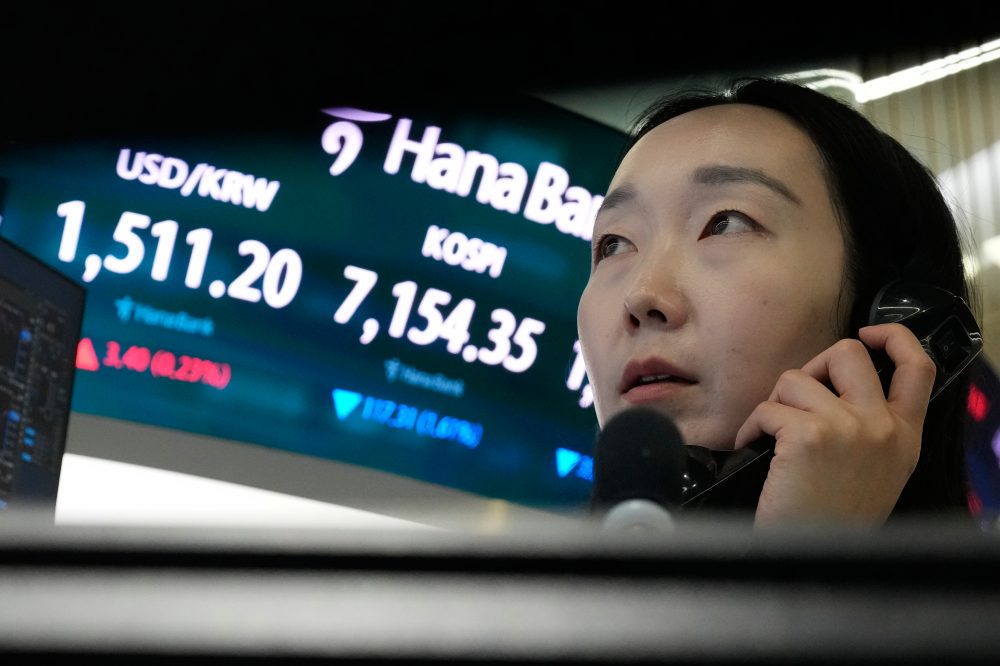
U.S. stock market futures moved upward Wednesday morning as semiconductor companies recovered ahead of Nvidia’s highly anticipated quarterly earnings announcement, with investors treating the report as a critical measure of artificial intelligence market strength while worrying about rising government bond yields.
Nvidia, currently the globe’s highest-valued corporation and central figure in the worldwide artificial intelligence expansion, increased 1.9% in early trading before market opening, with quarterly financial results scheduled for release after trading closes.
Market participants will analyze the figures for indications that demand for AI technology infrastructure continues at levels sufficient to justify high stock prices throughout the technology and artificial intelligence sectors.
“There’s a lot riding as ever on Nvidia. It always gets the top billing whenever it rolls around and certainly is the last big event of the season,” said Chris Beauchamp, chief market analyst, IG Group.
“It does feel like this is still a market that very much wants to rally … we’ll just have to see whether Nvidia can keep stoking the fuel for the fire and keep the party going.”
The wider semiconductor industry also moved higher Wednesday, contributing to increases in stock futures overall. Marvell Technology jumped 4.7%, Intel climbed 4.2% and Micron Technology increased 3.9%, while the iShares Semiconductor ETF advanced 2.2%.
As of 7:25 a.m. ET, Dow E-minis had gained 107 points, or 0.22%, while S&P 500 E-minis rose 26.5 points, or 0.36%. Nasdaq 100 E-minis increased 193.5 points, or 0.67%.
American equities have faced downward pressure recently as declining global bond markets pushed yields upward.
The standard 10-year Treasury yield, which reached a 16-month peak of 4.687% during the prior session, dropped to 4.6393% Wednesday.
Market participants have increased expectations that the U.S. Federal Reserve might implement interest rate increases at year’s end as Middle Eastern conflict drives oil prices higher, reigniting concerns about inflation.
Brent crude futures fell 3.3% to $108.38 per barrel after U.S. President Donald Trump repeated that the conflict with Iran would conclude “very quickly.” However, investors stayed wary about peace negotiation outcomes as Middle Eastern supply disruptions persisted.
Market watchers are also expecting the Fed’s most recent meeting minutes — set for release later Wednesday — for insights into policymaker perspectives, as anticipation for rate increases continues building.
Markets currently estimate over 40% probability of a 25-basis-point rate increase in December, based on CME’s FedWatch tool. Expectations for a 50-basis-point rise that month have grown to 13.2%, up from 4.2% one week prior.
In other company movements, Vans owner VF Corp increased 5.7% as fourth-quarter revenue exceeded Wall Street projections.
Retailer Target rose 1.9% after doubling its yearly sales growth projection, while home improvement company Lowe’s declined 3% as the firm maintained its full-year outlook.
The home improvement giant Lowe’s reaffirmed its yearly projections on Wednesday, echoing concerns from competitor Home Depot about difficulties facing the U.S. housing sector as hesitant consumers delay major do-it-yourself renovation projects.
Consumer confidence dropped to an unprecedented low in early May, while mortgage rates climbed to 6.46% last month. The Iran conflict contributed to rising oil costs and Treasury yields, adding strain to a housing market already burdened by high property values.
Lowe’s stock declined approximately 2% during premarket hours Wednesday. The company’s shares have dropped over 9% year-to-date.
According to eMarketer analyst Zak Stambor, home retailers like Lowe’s face reduced renovation demand due to historically low housing turnover rates. However, the maintained projections suggest confidence that professional contractor strength can balance weaker do-it-yourself performance.
Data from the National Association of Realtors this month revealed properties remain on the market longer compared to the same timeframe last year.
Similar to Home Depot, Lowe’s surpassed first-quarter revenue projections due to consistent professional customer demand.
The retailer has focused investments on its professional segment, which serves small and medium contractors, carpenters and builders through expanded product selections and job-site delivery options.
CEO Marvin Ellison stated, “Strong spring execution and continued momentum in Pro, Appliances, Online, and Home Services supported a solid start to the year …”
For fiscal 2026, the company anticipates comparable sales ranging from flat to a 2% increase, with adjusted earnings projected between $12.25 and $12.75.
First-quarter revenue reached $23.08 billion, exceeding analyst predictions of $22.97 billion based on LSEG data.
Store visits increased roughly 2% during the first quarter, according to analytics firm Placer.ai.
The company reported quarterly adjusted earnings of $3.03 per share and recorded $96 million in pre-tax costs from recent purchases of Foundation Building Materials and Artisan Design Group. Analysts had projected adjusted earnings of $2.97 per share.
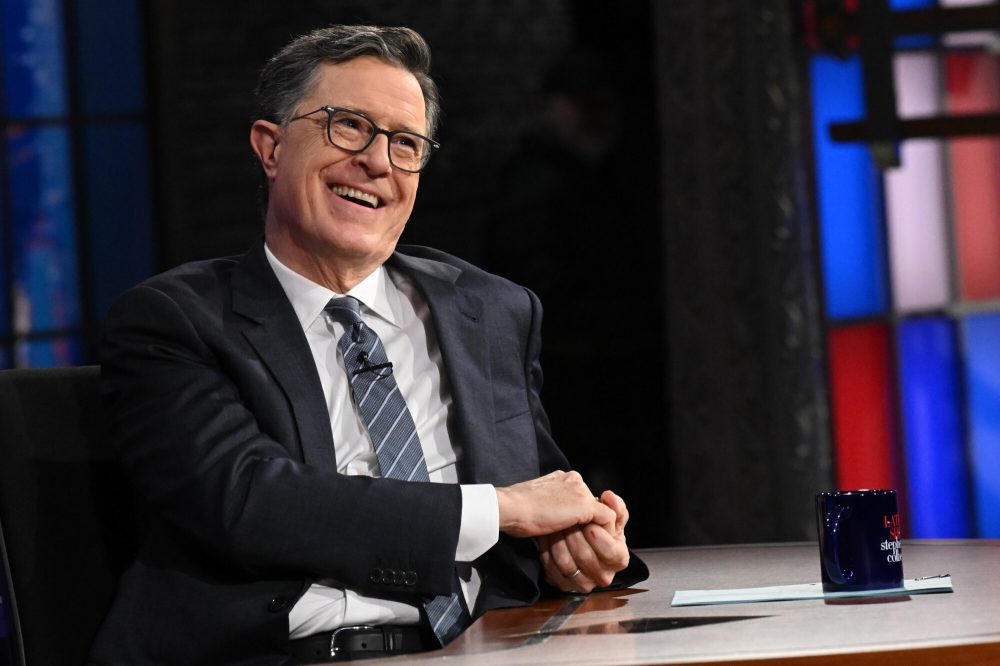
NEW YORK (AP) — When Stephen Colbert first took over hosting duties for ‘The Late Show’ in 2015, he immediately targeted Donald Trump during his debut episode while eating Oreos, comparing his compulsion for the cookies to his compulsion for criticizing the future president.
‘Look, you don’t own me. I don’t need to play tape of you to have a successful TV show,’ he told Trump’s image. ‘Someone on television should have a modicum of dignity and it could be me.’
During the following 11 years, Colbert never lost his taste for Trump jokes, frequently transforming his program into a comprehensive attack on MAGA policies. Trump responded by calling him a ‘dead man walking.’
The public battle between these two figures appears to conclude Thursday night when Colbert’s highest-rated late-night television show broadcasts its last episode, essentially eliminating a prominent voice critical of the White House.
‘The legacy of this show needs to be that we remember it as the show that was canceled because a presidential administration wanted it off the air,’ states Heather Hendershot, a professor of communication studies and journalism at Northwestern University. ‘We haven’t connected every single dot on that, but it’s very clear that this was a political decision. And I think 20, 30, 40 years later, that is going to be strongly remembered about this show — that this was a moment of authoritarian triumph.’
CBS announced last summer that Colbert’s program would conclude in May, citing financial considerations, but many people — including Colbert himself — have questioned whether Trump’s constant attacks on the show played no role in the decision.
The show’s end followed CBS parent company Paramount’s agreement to pay $16 million to resolve Trump’s lawsuit regarding a ’60 Minutes’ interview, while Paramount’s sale to Skydance Media required Trump administration approval. Colbert described the settlement as a ‘big fat bribe.’
Trump celebrated the cancellation on Truth Social, posting ‘I absolutely love’ that the host ‘got fired.’ He added: ‘I hear Jimmy Kimmel is next.’ Two months afterward, ABC temporarily suspended Kimmel — host of its late-night program — after pressure from Trump’s Federal Communications Commission chair and affiliate networks following his comments about the assassination of conservative activist Charlie Kirk.
Television analysts noted few instances of successful programs being terminated due to political influence. In 1969, CBS suddenly ended ‘The Smothers Brothers Comedy Hour,’ which had featured comedy segments opposing the Vietnam War and supporting civil rights.
Colbert, who previously worked on ‘The Daily Show,’ spent nine years portraying a foolish conservative pundit on Comedy Central’s ‘The Colbert Report.’ His transition to ‘The Late Show’ wasn’t universally accepted by those he had mocked, with Rush Limbaugh declaring ‘CBS has just declared war on the heartland of America.’
Throughout both Democratic and Republican presidencies, Colbert and fellow late-night comedians have provided commentary on current events that differed from conventional news coverage.
‘In given moments, like when something big happened, you really do want that perspective that says, ‘Here’s another way to look at it,” explains Dustin Kidd, a professor of sociology at Temple University. ‘Or when it feels really overwhelming, you want that reminder that there’s still some way to laugh at it. And so the more you lose those ways to laugh at it, the more we all decline.’
‘The Late Show’ featured celebrity interviews, musical performances and jokes about Arby’s and Spirit Airlines, similar to other late-night programs. However, Colbert added his personal touch, openly displaying his Catholic beliefs and his love for his wife and regular guest, Evie McGee Colbert.
Following his opening monologue, he presented unique segments including ‘Meanwhile,’ international affairs coverage in ‘What’s Going On Over There?,’ technology discussions with ‘Cyborgasm’ and youth culture explanations in ‘Stephen Colbert Presents: That’s Yeet. Dabbing on Fleek, Fam!’
‘The Late Show,’ which started in 1993 with host David Letterman, earned two Emmys during Colbert’s tenure, plus a Peabody Award. Starting Friday, the 11:35 p.m. slot will feature ‘Comics Unleashed,’ a talk show whose host Byron Allen has promised to avoid political content.
‘There’s just going to be a huge void,’ states Lisa Rogak, author of the 2011 biography ‘And Nothing But the Truthiness: The Rise (and Further Rise) of Stephen Colbert.’ ‘And I don’t think anybody’s going to really want to step up and fill it.’
Astrophysicist Neil deGrasse Tyson, a regular guest, regrets Colbert’s departure. While Johnny Carson previously featured scientists, Tyson observes that few current TV hosts follow that practice. Colbert even created a segment showcasing new discoveries called ‘The Sound of Science.’
‘Science doesn’t have many opportunities to access centerline pop culture,’ Tyson notes.
Unlike past conflicts, other late-night hosts have supported Colbert. Kimmel, Jimmy Fallon, John Oliver and Seth Meyers — who joined Colbert for the ‘Strike Force Five’ podcast during Hollywood strikes — recently appeared on ‘The Late Show.’
NBC’s ‘The Tonight Show Starring Jimmy Fallon’ and ABC’s ‘Jimmy Kimmel Live!,’ which normally compete with ‘The Late Show,’ will show reruns Thursday instead.
Catholic viewers will also miss a late-night host who could recite Psalms from memory and discussed faith with guests, even exploring death through ‘The Colbert Questionert.’
‘We’re losing a very well-known Catholic and someone who shares his religious ideas freely and intellectually, too,’ says Stephanie Brehm, author of ‘America’s Most Famous Catholic (According to Himself): Stephen Colbert and American Religion in the Twenty-First Century.’
She highlighted meaningful moments including Colbert’s conversation with then-Vice President Joe Biden about losing his son, his grief discussion with Anderson Cooper and his examination of faith and comedy with Dua Lipa.
Brehm observed Colbert establishing himself as a moral voice while embracing progressive Catholic social justice values: ‘He is playing up that moral quality by standing up for American moral values like freedom of speech, freedom of expression, and he’s doing it with a Catholic jargon, with Catholic language.’
J.R.R. Tolkien enthusiasts also appreciate Colbert’s contributions. As a devoted fan of ‘The Hobbit’ and ‘Lord of the Rings,’ he promoted Tolkien through sketches, references and contests, notably defeating James Franco in trivia challenges.
‘I think if you step back and reflect on his career, everything he’s done is for the betterment of the community,’ says Duane Cronkite, head of live programming for the Fellowship of Fans forum and news site.
Timothy Lenz, part of The Mythopoeic Society leadership committee, a group focused on Tolkien study and appreciation, credits Colbert with inspiring new readers.
‘Stephen Colbert is easily the most enthusiastic celebrity fan of Tolkien’s works,’ he explains. ‘That sort of public, unapologetic enthusiasm for stories that in Colbert’s youth would have been considered like nerdy and uncool, that really helps to encourage fans of all ages to let their geek flag fly.’
Appropriately, Tolkien provides Colbert’s next project after his show ends. He’s collaborating on a new ‘Lord of the Rings’ film.
‘He’s living the fan dream right now,’ Lenz concludes.
Two popular three-row family SUVs have earned recognition as top choices from automotive experts for several years running. These vehicles offer spacious seating arrangements, sophisticated styling, abundant standard features, and price points that could save buyers thousands compared to competitors. However, choosing between the Kia Telluride and Hyundai Palisade presents challenges since both share mechanical components and numerous similarities. The decision has become more complex following complete redesigns of both models.
The 2026 Palisade received a comprehensive refresh featuring updated exterior styling, advanced technology additions, and a new hybrid engine option delivering fuel economy in the mid-30s range. Kia implemented similar updates for the newly launched 2027 Telluride. Despite these similarities, important distinctions exist between these SUVs that potential buyers should understand. Automotive testing specialists have evaluated both vehicles to determine which better serves family transportation needs.
While both SUVs maintain similar overall exterior measurements, their interior configurations differ notably. The Palisade provides additional front-seat legroom and offers an optional front passenger seat featuring deep recline capability and an integrated footrest resembling premium lounge furniture. These luxury-style seats are also available for second-row captain’s chair positions. Though the Telluride delivers comfortable and attractive interior space, it cannot match the Palisade’s potential for premium comfort in front and middle seating areas.
Cargo capacity specifications favor the Telluride for space behind the third row. However, real-world testing revealed limitations when loading hard-shell luggage that interfered with rear door operation. The Palisade’s available power-adjustable third row provided an advantage here, allowing seats to slide forward sufficiently to accommodate full-size suitcases.
Interior materials and atmosphere quality remain comparable between both vehicles. The Telluride features a modern design theme emphasizing straight lines and sharp angles. The Palisade draws inspiration from earlier eras with gentle curves and rounded elements reminiscent of mid-century modern aesthetics. Both include standard synthetic leather with premium genuine leather available as upgrades. While personal preferences will vary, the Palisade gains a narrow advantage for superior practical functionality and uncompromised luxury appointments.
Winner: Palisade
Standard engine configurations differ between models, with the Telluride featuring a 274-horsepower turbocharged four-cylinder while the Palisade begins with a 287-horsepower V6. Despite the V6’s superior power ratings, testing demonstrates the four-cylinder Telluride actually delivers stronger performance for highway acceleration and passing maneuvers. Track testing showed the Palisade required 8.8 seconds for zero-to-60 acceleration, while the Telluride completed the sprint in 8.1 seconds.
Both models now offer optional hybrid systems combining turbocharged four-cylinder engines with electric components to generate 329 horsepower while improving fuel efficiency. The front-wheel drive Telluride Hybrid achieves an EPA-estimated 35 mpg combined rating, slightly ahead of the Palisade Hybrid’s 34 mpg figure. The hybrid variants also demonstrate impressive acceleration, with both completing zero-to-60 runs in approximately 7 seconds during testing.
Winner: Telluride
Technology offerings showcase forward-thinking design with impressive display arrays, charging capabilities, and connectivity features. Both vehicles include dual 12.3-inch screens – one serving as digital instrumentation and another providing touchscreen infotainment and climate controls. Apple CarPlay and Android Auto smartphone integration comes standard on both, though the Telluride includes two wireless charging pads as standard equipment, providing greater convenience for simultaneous device charging.
Safety and driver assistance technologies remain virtually identical across both models. Standard equipment includes blind-spot monitoring, adaptive cruise control with stop-and-go capability, and lane centering assistance for reduced driver fatigue during highway travel or heavy traffic conditions. While drivers must maintain steering wheel contact, these systems significantly ease highway driving demands.
Winner: tie
Pricing for the Palisade begins at $41,035 including destination charges, with hybrid versions adding $4,725. The Telluride starts at $40,735 including destination fees, requiring a $7,300 premium for hybrid capability. While the standard Telluride costs slightly less than its competitor, the price difference between entry-level hybrid models is substantial.
The Palisade Hybrid costs less and includes standard second-row captain’s chairs with optional bench seating for eight passengers. The Telluride Hybrid limits capacity to seven passengers with standard captain’s chairs only. Both vehicles include five-year comprehensive warranties and eight-year powertrain coverage.
Winner: Palisade
Distinctive styling, strong value propositions, and available hybrid efficiency make both the Palisade and Telluride excellent choices for family-oriented three-row SUV buyers. When selecting between these closely matched vehicles, the Palisade’s enhanced luxury character and more affordable hybrid pricing provide a slight competitive advantage.
This story was provided to The Associated Press by the automotive website Edmunds. Dan Frio is a contributor at Edmunds.
The retail giant Target announced Wednesday that it achieved its strongest quarterly performance in four years, posting significant gains in comparable store sales during the first quarter.
The Minneapolis-based company saw comparable sales increase by 5.6% during the three-month period ending May 2, representing growth across stores and digital platforms that have been operational for at least a year. This marked a dramatic turnaround from the decline experienced during the same period last year and represents the strongest performance since early 2022.
Customer purchases increased across all six major merchandise categories at the discount retailer, contributing to results that exceeded Wall Street expectations. The positive momentum prompted Target to increase its annual revenue projections for the remainder of the year.
Stock prices climbed more than 1% in pre-market trading Wednesday following the announcement.
Michael Fiddelke, who took over as CEO in February after spending two decades with the company, expressed cautious optimism about the retailer’s ongoing transformation efforts.
“We’re encouraged to see a strong guest response so far,” Fiddelke stated during a Tuesday briefing with reporters. He added: “We’re maintaining a cautious outlook given the work we know we have in front of us and ongoing uncertainty in the macroeconomic environment.”
In March, Fiddelke and his executive team unveiled a comprehensive $6 billion strategy aimed at ending three consecutive years of sales declines. The plan focuses on store renovations, restoring the company’s reputation for trendy yet affordable fashion, and enhancing staffing levels and employee development programs.
Company leadership highlighted successful partnerships with brands such as Roller Rabbit, an apparel and home goods brand known for its whimsical, block-print designs, which proved popular with customers. Additionally, an expanded inventory of toys priced below $10 performed well, according to Fiddelke.
As one of the first major retailers to release earnings covering the February through April timeframe, Target’s results will be closely watched by industry analysts. Experts are particularly interested in executive commentary regarding potential changes in consumer behavior due to rising gasoline costs related to the Iran war.
The discount chain had been facing challenges well before the current conflict, losing market position to competitor Walmart. Shoppers had criticized stores for appearing disorganized and losing the fashionable yet budget-friendly appeal that once earned Target the affectionate nickname “Tarzhay.”
Under Fiddelke’s leadership, several strategic changes have been implemented to attract customers back to the brand. He reorganized the executive leadership structure, boosted investment in store personnel, and reduced operations at distribution centers and regional headquarters. On Tuesday, the company announced the hiring of a former Walmart executive to lead supply chain operations, addressing inventory management issues that have negatively impacted sales.
The retailer has also concentrated on revitalizing product categories where it lost market position, particularly home goods and apparel. According to company statements from early March, 75% of decorative home accessories, including pillows and candles, will feature new designs.
Beyond operational challenges, Target has faced reputational difficulties over the past two years. The company’s decision to scale back diversity, equity and inclusion programs resulted in public demonstrations and customer boycotts.
The retailer faced additional controversy this year when Minneapolis, where Target maintains its corporate headquarters, became the focus of an immigration enforcement campaign. Community advocates pressured the company to publicly oppose the Trump administration’s deployment of federal agents to the city, particularly after two protest participants were killed.
During a March interview with The Associated Press, Fiddelke confirmed that boycotts had affected Target’s sales performance. However, he noted Tuesday that increased customer traffic during the first quarter was consistent across different geographic regions and customer demographics.
For the quarter ending May 2, Target reported earnings of $781 million, equivalent to $1.71 per share. This compares to $1.04 billion, or $2.27 per share, during the corresponding period last year.
Adjusted earnings came in at $1.71 per share.
Total revenue increased 6.7% to reach $25.44 billion.
Wall Street analysts had projected earnings of $1.47 per share on revenue of $24.7 billion, according to FactSet data.
Looking ahead to the full year, Target indicated it expects earnings per share to approach the upper range of its March guidance of $7.50 to $8.50. Analyst consensus stands at $8.12 per share for the year, based on FactSet projections.
The company revised its annual net sales growth expectation upward to 4%, an increase from the previously forecasted 2%. This adjustment would result in total sales of $108.97 billion.
Industry analysts anticipate annual sales of $107.15 billion for the year, according to FactSet estimates.
WASHINGTON — An emerging group of Republican lawmakers is demonstrating increased independence from President Donald Trump’s legislative priorities.
Despite Trump’s continued strong support among Republican voters, this expanding faction of GOP members willing to oppose the White House could create obstacles for his policy goals ranging from Iran military operations to immigration spending, particularly given the party’s narrow congressional majorities.
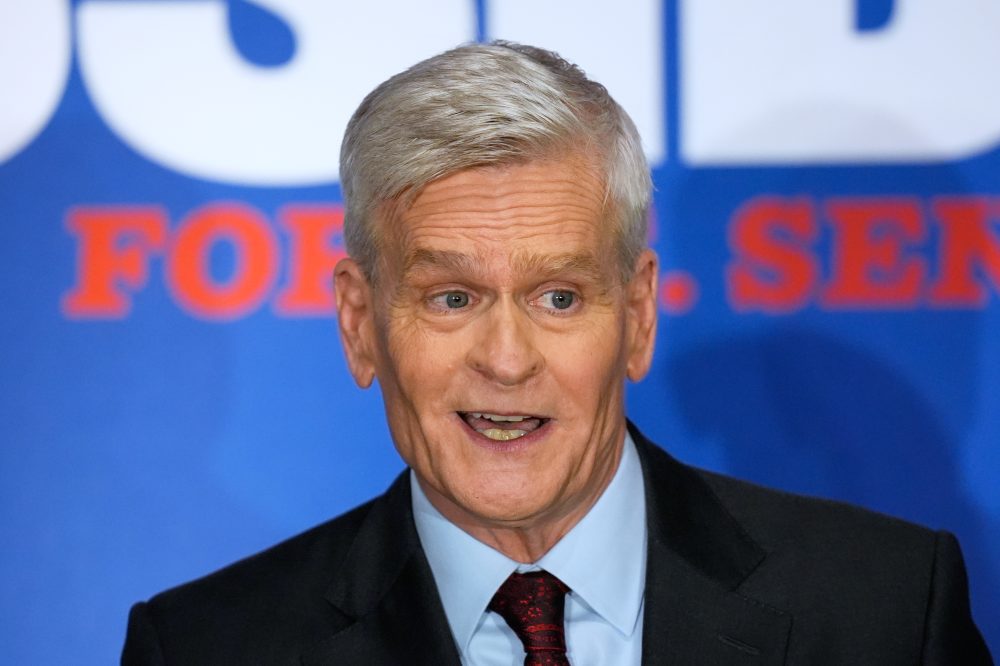
Louisiana’s Sen. Bill Cassidy represents the latest addition to this group. Following his recent primary defeat to a candidate backed by Trump, Cassidy switched his position Tuesday on Iran war legislation, joining Democrats in supporting measures to limit U.S. military involvement.
“The way our Constitution is set up, Congress should hold the executive branch accountable,” he told reporters the day before.
Texas Sen. John Cornyn might follow a similar path after Trump endorsed Ken Paxton, Cornyn’s opponent in next week’s Republican runoff election.
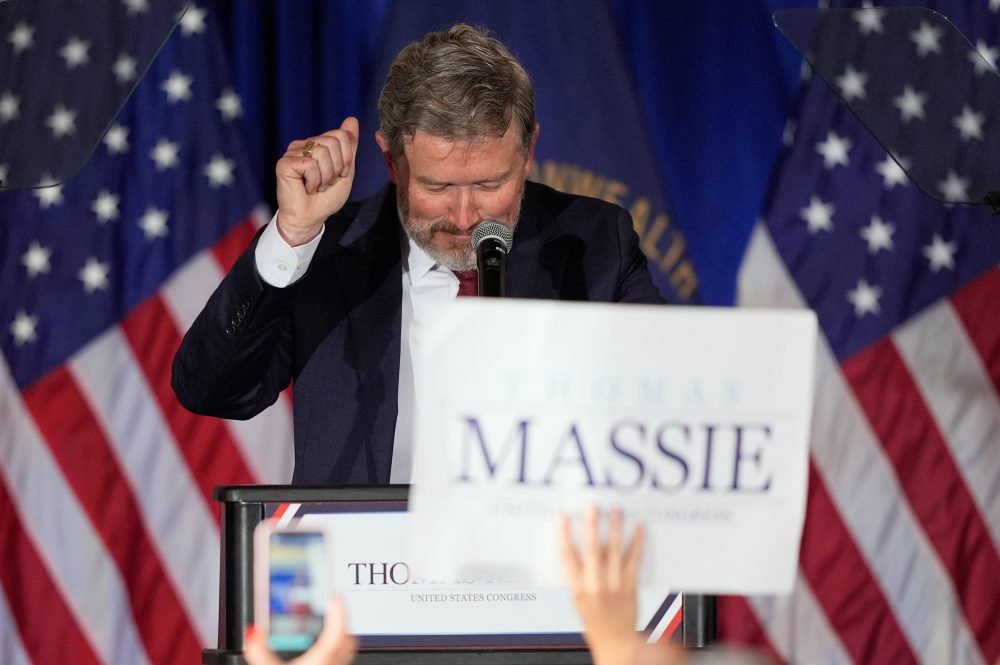
Kentucky Rep. Thomas Massie could be considered an original member of this independent-minded group, having clashed with Trump throughout the president’s first administration. His recent primary loss to a Trump-endorsed candidate has reinforced his willingness to oppose the president.
Massie has angered Trump by opposing his major tax and spending legislation and advocating for the Jeffrey Epstein files’ release.
He suggested more opposition is coming during his remaining time in office.
“I got seven months left in Congress,” Massie said with a grin during his concession speech as the crowd erupted.
Additional Republicans in similar positions include Sen. Thom Tillis, who strongly criticized former Homeland Security Secretary Kristi Noem and has recently focused criticism on Defense Secretary Pete Hegseth. Alaska’s Sen. Lisa Murkowski joined Democrats last week in attempting to limit Trump’s Iran war powers. Maine’s Sen. Susan Collins and Kentucky’s Sen. Mitch McConnell have opposed some of Trump’s Cabinet selections. Nebraska Rep. Don Bacon has worked to restore congressional authority over tariffs.
“If the legislative branch always votes with the president, we do have a king,” Massie said in his Tuesday concession speech.
This development doesn’t represent a resurrection of the Never Trump movement that some Republicans unsuccessfully hoped would limit the president’s actions during his first term or prevent his return to office. Many party members, including occasional Trump critics, have either supported or failed to stop the president as he initiated the Iran war and oversaw aggressive immigration enforcement and federal workforce reductions.
These unrestrained Republicans don’t share a common ideology. However, they share a boldness that can only emerge in specific circumstances within Trump’s Washington.
Many, including Tillis, McConnell and Bacon, have announced retirement plans and can vote without concern for future Republican primary challenges. Others like Collins and Murkowski enjoy greater freedom because their states tend to value political independence. Some like Massie believed voters could support both Trump and someone who occasionally opposed him.
This creates a challenge for Trump. As he demands complete loyalty and removes Republican dissidents, he’s creating a growing group who, for various reasons, have no obligations to Trump.
This situation could prove problematic for Senate Majority Leader John Thune and House Speaker Mike Johnson, who already work with extremely narrow majorities. Even small shifts in Republican loyalty could significantly complicate either chamber’s ability to pass major legislation before November’s midterm elections.
Upcoming challenges may emerge this week as Thune advances funding legislation for Immigration and Customs Enforcement and Customs and Border Patrol designed to pass along party lines.
Democrats are prepared to capitalize on these divisions.
At a Tuesday Washington event hosted by the Center for American Progress, House Democratic leader Hakeem Jeffries announced plans to create divisions among Republicans using discharge petitions to bring issues directly to floor votes.
This strategy has succeeded in securing House approval on various issues from the Epstein files to temporary Haitian immigrant protections.
“When we’re disciplined and when we’re focused and when we put pressure in particular on the so-called swing seat Republicans, they have been breaking with us,” Jeffries said.
California Gov. Gavin Newsom told reporters Tuesday that Trump’s endorsement of Cornyn’s opponent demonstrates his political influence remains limited to the Republican base rather than the broader American public.
“He’s showed the only influence he has, and that’s an outsize influence within the base of the party,” the potential 2028 Democratic presidential contender told reporters in Washington. “Otherwise he’s shown little to no influence with the American people.”
This situation leaves Republicans calculating how to gather necessary votes for legislation passage.
North Dakota Sen. John Hoeven called Cassidy a “good friend” and described the loss as “tough for him.” He said Cassidy “will always vote in line with what he thinks is best” but expressed doubt he would become a less dependable Republican vote.
His Louisiana colleague, Sen. John Kennedy, said Cassidy uses power “rationally and maturely” and “will continue to do the same thing.”
Cassidy has consistently rejected suggestions that he will spend his final Washington months as a Trump troublemaker, stating he plans to do “what’s good for my country and my state.”
However, the independent approach that concluded his political career has quickly reemerged. Following Trump’s China visit, Cassidy discussed a western alliance that’s “totally falling apart” and will be unable to “push back on the threat China represents.” He appeared surprised by the administration’s creation of a nearly $1.8 trillion fund to compensate Trump allies they believe have been unfairly investigated and prosecuted.
“I just came off the campaign trail,” he said. “People are concerned about making their own ends meet, not about putting a slush fund together without a legal precedent.”
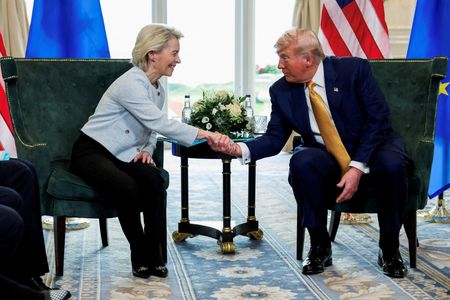
BRUSSELS (AP) — Following intense internal discussions, the European Union gave final approval Wednesday to a trade agreement with the United States that establishes a 15% ceiling on tariffs for most European exports, preventing a potential confrontation with President Donald Trump before his July 4 deadline.
Sharp disagreements erupted within the 27-member union’s legislative body and leadership, threatening the carefully negotiated agreement that governs the enormous flow of commerce between two of the globe’s biggest economic powers, both currently dealing with serious consequences from the conflict in Iran.
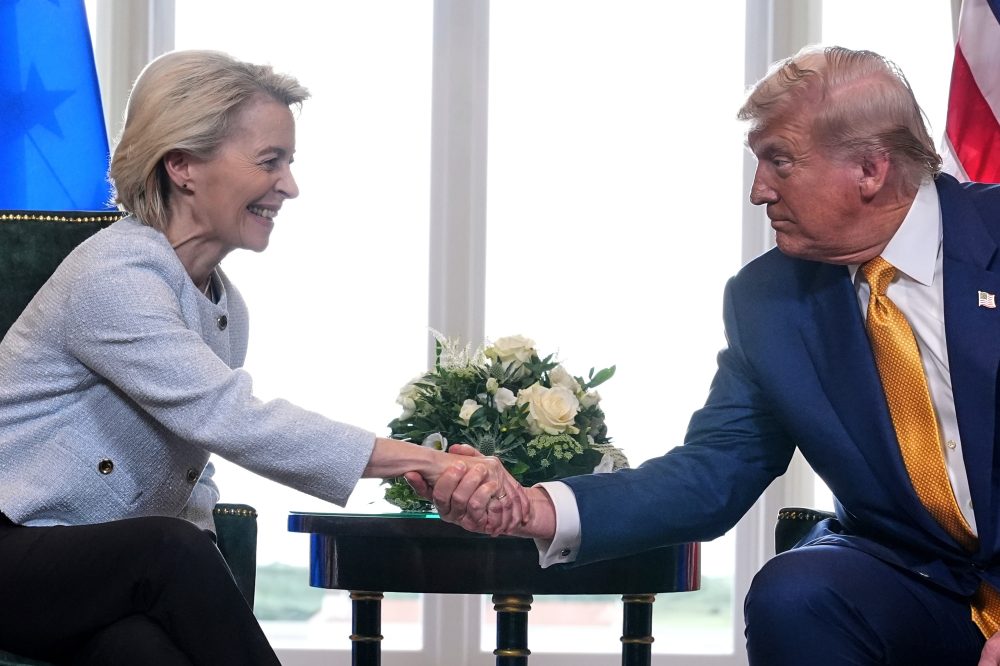
Within the European Parliament, members threatened to reject the commercial pact that European Commission President Ursula von der Leyen had negotiated last July with United States President Donald Trump at his Turnberry golf facility in Scotland, after extended discussions following his administration’s worldwide wave of tariff impositions.
The agreement between von der Leyen and Trump launched additional months of detailed negotiations between Washington and Brussels, even as European criticism of the arrangement intensified after Trump made threats regarding Greenland, a semi-independent Danish territory. He has since stepped back from those threats, at least temporarily.
“A deal is a deal, and the EU honours its commitments,” stated the EU executive in a social media message celebrating the accord.
European legislators had successfully demanded the inclusion of safeguards in the agreement should the U.S. retreat or hesitate on specific terms, according to Bernard Lange, who chairs the parliamentary trade committee.
“If there is something going wrong, of course, we are self-confident to act on that,” he stated.
The basic framework of the agreement is straightforward: a 15% tariff ceiling on most European imports, while duties on US industrial products would drop to zero. Although the deal imposed higher costs on consumers and businesses compared to the former average of 4.8%, it also provided commercial certainty for future planning, a benefit credited with helping Europe sidestep recession last year.
Given the ongoing blockade of the Strait of Hormuz that continues pushing up costs as Middle Eastern warfare persists, affecting interest rates and inflation from Latvia to Louisiana, supporters of the EU-U.S. agreement maintain that resolving trade disputes between them is essential during this period of worldwide economic uncertainty.
The American Chamber of Commerce in Brussels released a statement expressing relief at seeing the EU achieve agreement on the deal. “The trilogue agreement is a sign that the EU is honouring its commitments under the deal,” it stated, enabling Washington and Brussels to “move beyond tariffs” and address complex matters like vital supply chains.
The EU’s trade negotiator, Maroš Šefčovič, explained that the final effort to approve the deal occurred after five hours of “an intensive night” of trilogue talks between the European Council, European Parliament and the EU’s executive, the European Commission.
He noted that once the political agreement receives formal adoption by legislators in upcoming weeks, “this outcome will reinforce stability in EU-U.S. trade and open the door even wider to constructive cooperation on many issues of strategic importance.”
However, European concerns remain about whether the White House can deliver on the agreement after the U.S. Supreme Court ruled this year against the legal foundation Trump had relied upon to implement that tax.
This situation left Trump searching for alternative legal justifications, and his administration has implemented a 10% tax while examining trade imbalances and national security concerns, to establish new tariffs compensating for lost revenue. In May, a federal court determined that Trump had exceeded the tariff authority Congress had granted the president under existing law, rendering the new tariffs “invalid” and “unauthorized by law.”
This could potentially encompass tariffs Trump has threatened to impose on EU automobiles and trucks in a social media message where he also criticized the EU regarding the deal for not “as usual” adhering to it, without specifying the sources of disagreement.
Following the EU’s completion of its internal democratic procedures, it now awaits a favorable response from Washington, according to Lange, the EU legislator.
“That’s, of course, a big question mark. I have not my crystal ball here with me,” he stated.
Delaware’s Department of Natural Resources and Environmental Control has updated state fishing rules for bluefish, allowing recreational fishers to keep more of their daily catch.
Under the new regulations, anglers fishing from private boats or casting from the shoreline can now keep five bluefish per day, up from the previous limit of three fish. Meanwhile, those fishing aboard charter vessels will be permitted to retain seven bluefish daily, an increase from the former five-fish restriction.
The regulatory changes are designed to provide greater benefits to recreational fishing enthusiasts throughout the state.
Law enforcement officials in the United Kingdom have dismissed all criminal charges against a religious minister who was taken into custody for evangelizing on city streets in Bristol during the previous year. Pastor Dia Moodley received legal representation from Alliance Defending Freedom International throughout the proceedings.
According to the legal organization, “The police decision to drop their investigation is a vindication of the pastor’s lawful conduct. He has been repeatedly arrested, imprisoned, and told that expressing his Christian views is a criminal matter.”
The case resolution is being celebrated as a significant win for religious liberty protections in the country.
Two law enforcement officers in Norfolk, Virginia are facing disciplinary action after raising concerns about facility usage policies at their police station. Officers Megan Grabow and Martin Powers received suspensions following their objections to a male colleague who identifies as a woman being permitted access to women’s restrooms and changing areas at the Norfolk Police Station.
The suspended officers shared their account with Independent Women’s Features, expressing concerns that their employment may be terminated as a result of their position on the matter. Both officers indicated they worry about facing job loss for voicing their objections.
This incident reflects broader tensions across Virginia regarding transgender policies, with similar disputes emerging in educational institutions and making their way through the state’s court system.
Opponents of reproductive rights have launched a court challenge against Ohio’s recently approved abortion amendment, claiming the measure’s passage violated proper constitutional procedures. The legal action contends that Ohio’s state constitution requires a constitutional convention to implement this type of amendment, rather than allowing it to pass through direct voter ratification alone.
Janet Porter from Faith To Action shared with LifeSite News that a successful outcome in Ohio’s case might encourage comparable legal challenges in additional states across the country.
American corporations are turning to convertible bonds in record numbers as artificial intelligence companies drive unprecedented demand for financing instruments that can transform into company stock during market upswings.
Convertible bond issuance in the United States hit approximately $34 billion during the opening four months of 2026, representing more than twice the volume from the corresponding timeframe in the previous year, data from Bank of America Global Research and Barclays Research shows. This aggressive start positions the market to exceed last year’s annual record of more than $120 billion.
About half of this year’s bond offerings connect to artificial intelligence in some capacity, highlighting how the technology sector is simultaneously addressing corporate capital requirements and investor enthusiasm. Organizations are utilizing convertible financing to support data center construction, electrical infrastructure projects, and cloud service expansion, while simultaneously refinancing debt originally issued during the pandemic period.
“A lot of it is to build out capital expenditure, particularly AI, and that’s unusual and not something we’ve seen in previous cycles,” said Michael Youngworth, managing director and head of global convertibles at Bank of America Securities.
Major transactions include Oracle’s $5 billion fundraising effort, a $4 billion issuance from cloud infrastructure firm CoreWeave, and $2.6 billion raised by Australia-based data center company IREN Limited.
Energy providers and semiconductor manufacturers have similarly accessed this market: NextEra Energy secured $2.3 billion while On Semiconductor collected $1.3 billion.
Industry analysts note that refinancing activities are also driving growth, as organizations replace convertible bonds originally issued during the 2020-2021 pandemic surge, which are now nearing their standard five to six-year maturity periods. Recent refinancing examples include Duke Energy’s $1.5 billion deal and Microchip Technology’s $900 million offering.
Within today’s elevated interest rate climate, where conventional lending carries high costs and stock offerings reduce existing shareholder value, convertible instruments have gained special appeal for AI-centered companies funding substantial investments.
These financial instruments provide fixed interest payments similar to standard debt but allow conversion to company shares when stock prices exceed a specified threshold. This conversion mechanism essentially includes a stock purchase option, which increases in worth alongside equity market volatility and larger stock price movements.
The potential for such returns enables these bonds to sell at lower interest rates than traditional debt. Health technology firm Tempus AI, which applies artificial intelligence to examine clinical and genetic healthcare data, raised $400 million through a six-year convertible offering zero interest payments and no principal growth at maturity.
These bonds will transform into stock ownership if share prices reach $69.26, representing roughly 40% above the stock’s value when the offering launched in May.
The combined attractiveness of convertibles has maintained investor interest throughout this unpredictable, high-rate period. Standard 10-year U.S. Treasury yields have reached 16-month peaks, increasing borrowing expenses across fixed-income markets.
Hedge funds and major asset management firms control the convertible investor landscape, with hedge funds attempting to profit from relative value opportunities within the volatility assumptions built into convertibles, explained Venu Krishna, managing director and head of U.S. equity strategy at Barclays.
Long-term investors are “buying for exposure to semiconductors – the hottest part of the market right now, driven by AI capital spending,” Krishna said.
This investor appetite has attracted a broader spectrum of companies to the market, including organizations with riskier financial profiles than the prominent names leading AI expansion.
In January, WhiteFiber raised $230 million through a five-year convertible bond sale, with funds primarily designated for data center expansion.
The company, which completed its public offering in August 2025, carries a negative forward price-to-earnings ratio of approximately 36. Nevertheless, its share price suggests an enterprise value of roughly 19 times forward earnings before interest, taxes, depreciation, and amortization, according to LSEG data, exceeding peer companies and indicating investor expectations for substantial future growth.
Stock values have climbed nearly 60% during 2026.
“The market has performed quite well and demand has improved, and all this has allowed corporates to come to the convert space at very attractive terms,” said Youngworth. Companies are not necessarily seeking financing for specific requirements, “but because money is cheap.”
Two advocacy organizations focused on children’s welfare have formally requested that federal trade regulators examine the popular gaming platform Roblox, alleging the company employs misleading safety claims and manipulative spending tactics targeting young users.
Fairplay and the National Center on Sexual Exploitation submitted their petition to the U.S. Federal Trade Commission on Wednesday, requesting an investigation into potential violations of the Federal Trade Act’s section 5, which bars deceptive or unfair business practices in commerce.
In their formal request, the organizations claim Roblox misleads families regarding platform safety measures while using manipulative tactics to pressure children into making purchases for premium gaming features and special access.
This petition arrives amid growing global concerns about the gaming company’s practices. Roblox currently faces more than 140 federal court cases alleging the platform knowingly enables sexual exploitation of children by creating a system that allows predators to identify and communicate with minors despite marketing itself as child-friendly.
A company representative said Roblox “strongly disputes” the allegations outlined in the advocacy groups’ letter. The spokesperson noted that the platform mandates age verification for U.S. users before enabling chat functions and restricts minor users to communicating only with peers in similar age ranges.
When contacted for response, a Federal Trade Commission representative declined to provide comment on the matter.
OSBORN, Mo. (AP) — Local entrepreneurs in Kansas City are preparing special treats and merchandise to welcome supporters of defending World Cup champions Argentina and Algeria when they arrive for the tournament’s opening match on June 16.
Businesses like Hen House Markets and Betty Rae’s Ice Cream are among numerous small enterprises looking to increase sales and join the excitement as Kansas City serves as a host city for one of the planet’s most popular sporting competitions.
The grocery chain is developing tasting experiences based on countries visiting the Midwest during the summer tournament, while Betty Rae’s has created special flavors targeting supporters of teams that will compete at Arrowhead Stadium and establish training facilities in the region.
“I mean, anything that puts Kansas City on a stage is exciting for us. If Kansas City wins, we feel like we win,” said Matt Shatto, the owner of Betty Rae’s, which has been voted the city’s top ice cream shop for most of the past decade.
“There’s a lot of thought and conversation about how many people are going to come, and for us, it’s not about the people that are coming, necessarily,” Shatto said. “Our job at the end of the day is to take care of our customers. For those that can’t go to the World Cup games or FanFest, we want to bring those festivities to them in their local neighborhood through our scoop shops.”
Argentine supporters, including those following Lionel Messi, can enjoy a frozen interpretation of alfajores, the cookie-style treat beloved in Argentina. Betty Rae’s version incorporates a dulce de leche foundation with traditional pastry pieces blended throughout.
Fans from Algeria can sample a baklava-inspired creation featuring honey ice cream combined with phyllo dough and almonds.
“We have a number of interesting flavors that we’re going to be bringing out,” Shatto said.
Small enterprises routinely attempt to benefit from major athletic competitions that draw visitors nationally and internationally, whether it’s the Super Bowl or Olympic Games. While the World Cup began in 1930, this tournament stands apart as the first co-hosted by three countries: the United States, Mexico and Canada. FIFA anticipates generating record revenues exceeding $11 billion through an expanded 48-team structure, ticket purchases, corporate partnerships and merchandise deals.
Kansas City officials project more than 600,000 visitors throughout the summer tournament period, creating opportunities for enterprises of all sizes to profit.
Hen House, which is also stocking official World Cup products, and Betty Rae’s decided to develop flavors representing tournament participants. Shatto Milk Co., which continues traditional glass-bottle home deliveries, has introduced nine special flavors honoring teams coming to the Heartland.
Examples include orange chocolate representing Curacao, chai latte for England, and butter pecan celebrating the Netherlands.
“The restaurants and grocery stores are really on the bandwagon, and other people and other companies want to join in the fun,” said Barbara Shatto, whose family operates the century-old dairy farm that forms the company’s foundation. She is Matt Shatto’s mother.
“To have the World Cup being in Kansas City is tremendous for the economy,” she said, “but more, we can meet new friends from other countries and share things that we do in America. For just a little farm like us, they can learn how we make milk, butter, cheese and ice cream, and we can celebrate and learn from them.”
Sandlot Goods, a Kansas City company producing clothing and retro-style products, has launched its Summer of Soccer collection featuring shirts displaying “Kansas City” in the colors of Argentina, Algeria, England and the Netherlands—the four countries establishing training bases locally.
Three KC perhaps best represents the small businesses embracing World Cup excitement. Mathematics instructor Brendan Curran operates this clothing venture single-handedly, and his soccer-themed designs initially sold online have been adopted by multiple physical stores across the region.
“Shops were pretty pleased with the first run of shirts and they have ordered more, so that bodes well as the World Cup approaches,” Curran said. “I would love for visitors to pick up a piece of Kansas City while they are here.”
TEL AVIV, Israel — Israeli defense industry sales have reached unprecedented levels as companies showcase military technology proven effective in recent conflicts, even as international criticism mounts over the country’s wartime actions.
When defense officials contacted Massivit about utilizing its specialized 3D printing capabilities for military drone components, company CEO Yossi Azarzar eagerly agreed to shift focus from entertainment industry clients like Disney, DreamWorks and Netflix.
“I stopped thinking about Hollywood sets,” Azarzar explained. “The entertainment industry is a nice customer — defense is a necessity.”
The Israeli weapons industry has experienced remarkable growth amid ongoing conflicts in Gaza, with Hezbollah, and with Iran. Industry representatives report that nations publicly critical of Israeli arms manufacturers are still discreetly submitting purchase orders. Companies, including those like Massivit without prior military experience, can demonstrate their products undergo continuous battlefield testing and enhancement.
Israeli weapons exports have more than doubled during the past five years, reaching a record $15 billion in 2024, according to the Defense Ministry. Major manufacturers including Elbit and Israel Aerospace Industries both posted double-digit sales increases last year, though complete 2025 statistics remain unreleased.
Missiles, rockets and air-defense systems comprise over half of Israeli arms sales. Israel has now overtaken the United Kingdom as the world’s seventh-largest weapons supplier, marking the first time it achieved this ranking, according to Stockholm International Peace Research Institute data from March.
“This tremendous achievement is a direct result of the successes of the (army) and defense industries. … The world sees Israeli strength and seeks to be a partner in it,” stated Israel’s defense minister, Israel Katz.
The recent Defense Tech Expo in Tel Aviv demonstrated growing international demand for Israeli military equipment, with manufacturers highlighting weapons and systems developed through recent combat experiences. However, the event also exposed tensions between military technology promotion and political controversy, as protesters condemned Gaza’s widespread destruction as a weapons testing ground.
Spain terminated a contract for anti-tank missile systems from an Israeli company subsidiary last year. Slovenia announced comprehensive bans on weapons imports, exports and transit involving Israel following its Gaza operations. After Hamas’s Oct. 7, 2023 attack killed approximately 1,200 people and captured roughly 250 hostages, Israeli retaliation has resulted in over 72,700 Palestinian deaths, according to Gaza Health Ministry figures that don’t separate combatants from civilians. Multiple countries and human rights organizations have alleged Israeli war crimes.
Israel’s Defense Ministry maintains its equipment serves defensive purposes and rejects claims of using battlefields for weapons testing.
Human rights advocates assert Israel has introduced new weapons and technologies during Gaza operations, particularly involving artificial intelligence, big data and targeting systems.
“The regional war has drawn heavily on Israel’s deadly playbook and provided a boon to Israeli and other defense and technology companies able to parlay the use of their products in Gaza to attract more business,” said Omar Shakir, executive director of DAWN, a U.S.-based organization founded by murdered journalist Jamal Khashoggi promoting Middle Eastern human rights.
While critics argue Israel’s weapons sector profits from battlefield-tested technologies, experts note this practice isn’t unique.
“Countries have had to dramatically increase defenses because of the proliferation of global conflicts and they need systems that will work. And most countries don’t have the time right now to build their own defense systems locally and quickly,” explained Seth J. Frantzman, an adjunct fellow at the Foundation for Defense of Democracies who has monitored Israel’s arms industry for ten years and authored “Drone Wars.”
Many nations turn to Israel because they witness real-time proof these munitions and systems function effectively, he noted.
Massivit’s sales have skyrocketed since transitioning to military drone component production, including a 200% increase in buyer inquiries following U.S.-Israeli strikes on Iran in late February, Azarzar reported.
The company’s specialized 3D printing creates large drone components within days rather than weeks. Beyond Israeli military contracts, the technology has attracted European, American, Southeast Asian and Indian defense and aerospace interest.
Other defense contractors report similar success.
Tomer Malchi, co-founder and CEO of ASIO, said Israeli army orders for the company’s ruggedized Orion smartphone have jumped 400% since Gaza fighting began.
These devices employ mapping, augmentation and artificial intelligence to assist soldiers with mission planning, navigation and real-time threat response. ASIO recently concluded agreements with a major U.S. defense contractor and maintains discussions with approximately 20 additional countries, Malchi said.
Israel’s Defense Ministry identifies anti-drone technology as a future innovation priority, citing challenges encountered during Iranian conflicts. Drones prove difficult to detect on radar systems designed for high-speed missiles and may be confused with birds or aircraft.
Israel Weapon Industries has created a system enabling soldiers to more precisely eliminate tactical drones. At a central Israeli shooting range, an IWI instructor demonstrated the technology by firing at a mock drone target. A computer chip integrated into soldiers’ rifles provides enhanced accuracy and efficiency while significantly reducing fatigue and other human factors by maintaining trigger pressure.
The Arbel system launched in 2024 and now serves over two dozen countries, according to Semion Dukhan, IWI’s European operations head.
IWI’s customers include nations that have publicly rejected Israeli business relationships, though Dukhan declined to identify them.
“People and politicians say things they need to say … what they say is not necessarily what is going on underneath the surface,” he observed, noting countries ultimately seek optimal equipment for their personnel.
The World Health Organization announced Wednesday that the current Ebola outbreak affecting Congo and Uganda carries significant risk at the national and regional level, though the threat of worldwide transmission remains minimal.
This assessment comes as the head of WHO’s team in Congo indicated the crisis, which has resulted in 134 suspected fatalities, may persist for a minimum of two additional months while relief organizations work to control transmission.
The global health agency has classified this Ebola outbreak as a public health emergency requiring international coordination. Officials expressed alarm Tuesday regarding the outbreak’s “scale and speed.”
Local residents report increasing costs for protective masks and cleaning supplies after the emergence of this uncommon Ebola strain, called the Bundibugyo virus. This variant went undetected for weeks after the initial known fatality because authorities initially tested for a more prevalent strain that returned negative results, according to health officials and humanitarian workers. Currently, no authorized treatments or vaccines exist for the Bundibugyo virus.
WHO Director-General Tedros Adhanom Ghebreyesus reported Wednesday that 51 confirmed cases have been documented in Congo’s northern Ituri and North Kivu provinces, plus two additional cases in Uganda. He noted nearly 600 additional suspected cases and deaths beyond the confirmed numbers.
“We know that the scale of the epidemic is much larger,” he said. “We expect those numbers to keep increasing.”
Congo anticipates receiving experimental vaccine shipments from the United States and Britain for various Ebola strains, created by Oxford researchers, Jean-Jacques Muyembe from the National Institute of Biomedical Research informed reporters Tuesday.
“We will administer the vaccine and see who develops the disease,” he said.
Health specialists noted that delayed virus identification, significant population movement in affected regions, and existing humanitarian challenges have complicated response efforts. Armed rebel groups control portions of eastern Congo, creating obstacles for aid distribution.
Congo reported the first virus-related death occurred April 24 in Bunia, though confirmation took several weeks. The deceased was returned to the Mongbwalu health zone, a mining region with substantial population density.
“That caused the Ebola outbreak to escalate,” said Congo’s Health Minister Samuel Roger Kamba.
Dr. Anne Ancia, leading WHO’s Congo team, stated officials have not yet located “patient zero.” She emphasized the lengthy response ahead, noting that funding reductions have had “a marked detrimental effect on humanitarian actors.”
U.S. Secretary of State Marco Rubio informed reporters Tuesday that the current administration would increase Ebola response involvement, prioritizing funding for 50 emergency medical facilities in affected regions. The United States has provided $13 million thus far, with additional funding planned, according to Rubio.
In Bunia, where the first confirmed death occurred, educational institutions and religious facilities continued operating Wednesday, with some residents wearing protective masks outdoors. Citizens reported difficulty obtaining masks and noted disinfectant prices rising from 2,500 Congolese francs to 10,000 francs ($4.4).
“It’s truly sad and painful because we’ve already been through a security crisis, and now Ebola is here too,” said Justin Ndasi, a resident of Bunia. “We have to protect ourselves to avoid this epidemic.”
Trish Newport, emergency program manager from Doctors Without Borders, said her Bunia team discovered suspected cases over the weekend at Salama hospital, which lacks an isolation unit. Attempts to transfer patients to other Bunia medical facilities proved unsuccessful.
“The team called around to other health facilities to see if they had isolations,” she said. “Every health facility they called said, ‘We’re full of suspects cases. We don’t have any space.’ This gives you a vision of how crazy it is right now.”
In Mongbwalu, the community at the outbreak’s center, the Ugandan border remains accessible and gold extraction operations continue, according to local civil society leader Chérubin Kuku Ndilawa.
“There’s no panic; people are continuing their normal lives, but they’re also starting to spread the word,” said Ndilawa.
Containment efforts face challenges due to insufficient handwashing facilities in community spaces, Ndilawa reported.
Dr. Didier Pay, former director of Mongbwalu General Hospital, said his medical facility was caring for approximately 30 Ebola patients. He confirmed a student from the area’s medical technology school died Wednesday morning.
Citizens in Lithuania’s capital city were ordered to seek immediate shelter Wednesday after military officials detected drone activity close to the Belarus border, highlighting security anxieties among NATO’s eastern member countries amid Russia’s ongoing conflict with Ukraine.
Military authorities issued an emergency alert instructing people throughout the capital region to “immediately head to a shelter or a safe place.”
The warning, which remained active for approximately one hour, prompted officials to shut down airspace above the city’s main airport. President Gitanas Nauseda and Prime Minister Inga Ruginiene were moved to secure locations, while Lithuania’s parliament, known as the Seimas, was also evacuated according to BNS news agency reports.
This marked the first significant emergency that forced citizens and government officials in a European Union and NATO member capital to seek shelter since Russia launched its comprehensive invasion of Ukraine in February 2022.
Lithuania shares borders with Russia-allied Belarus on its eastern side and Russia’s Kaliningrad territory to the west. Wednesday’s emergency alert followed military detection of drone movement within Belarus, though no unmanned aircraft were observed flying over Lithuanian territory.
NATO Secretary-General Mark Rutte praised the alliance’s handling of multiple recent drone incidents on Wednesday, describing the response as “a calm, decisive and proportionate response.” Rutte stated: “This is exactly what we planned and prepared for,” while attributing the situation to Russia’s war against Ukraine.
Over recent months, Ukrainian drones targeting Russia have repeatedly entered or crashed within NATO member territory. Western authorities have attributed these incidents to suspected Russian electronic interference with the unmanned aircraft. Russia has escalated its warnings that it would strike back if Ukrainian drones are launched from Baltic nations or if those countries assist in their deployment against Russian targets.
Lithuanian Foreign Minister Kęstutis Budrys posted on social media Tuesday evening that “Russia is deliberately redirecting Ukrainian drones into Baltic airspace while waging smear campaigns” against Lithuania, Latvia and Estonia. “It’s a transparent act of desperation — an attempt to sow chaos and distract from a simple reality: (Ukraine) is hitting Russian military machine hard.”
Budrys made this statement just hours after a NATO aircraft destroyed a Ukrainian drone above southern Estonia. Ukraine issued an apology for the “unintended incident,” though did not provide details about what occurred.
Latvia’s government fell apart last week following disagreements about managing several incidents involving wandering drones believed to originate from Ukraine. The defense minister was compelled to step down after his political party withdrew support, leading the prime minister to also resign. The ruling coalition had faced pressure for months due to various other disputes.
As aerial attacks have intensified recently, Russia and Ukraine have occasionally launched hundreds of drones daily against each other.
Ukraine’s air force reported Wednesday that it destroyed 131 of 154 drones Russia sent overnight. The unmanned aircraft that penetrated air defenses resulted in three civilian deaths and injured 18 others, including two children, according to officials.
Ukraine maintained its aerial offensive against Russia’s critical oil infrastructure, with military leadership reporting overnight strikes on a significant Russian oil refinery and a pipeline pumping facility.
Russian media also suggested that a chemical facility in the southern Stavropol region was struck and ignited, though local authorities did not verify any direct impact.
The United Kingdom government, which strongly backs Ukraine’s military efforts, has relaxed strict penalties on Russian oil processed into diesel and jet fuel in third countries as fuel costs increase due to the Iran conflict.
The exemption takes effect Wednesday and reflects mounting supply worries about specific fuels caused by the effective closure of the crucial Strait of Hormuz shipping route.
This action follows U.S. Treasury Secretary Scott Bessent’s announcement two days earlier that Washington was providing a 30-day extension allowing countries to import Russian oil currently aboard ships at sea, designed to address oil supply shortages.
The decision represents a continuing policy shift by the Trump administration, which had previously indicated that Russian oil sanctions would be reinstated. Initially declared in early March, the temporary suspension of sanctions received its first extension in April.
JAKARTA, Indonesia — The Indonesian government is implementing sweeping new rules that will place state-owned companies in charge of exporting crucial natural resources, including palm oil, coal, and iron alloys.
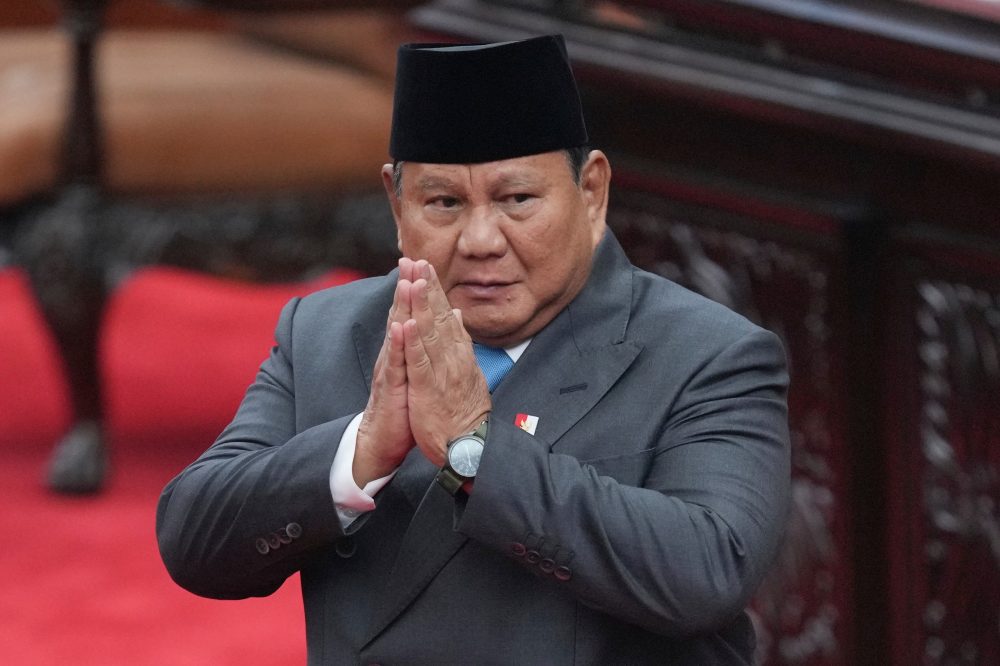
Speaking to parliament on Wednesday, President Prabowo Subianto revealed that Indonesia has suffered losses of up to $908 billion from commodities being sold below their true value on international markets. Enhanced government oversight will generate additional revenue for state budgets, he explained, calling the practice of underreporting exports to avoid taxes “fraud or deception.”
“The primary objective of this policy is to strengthen oversight and monitoring — and to combat under-invoicing, transfer pricing and the diversion of export proceeds,” Prabowo said.
Indonesia dominates global markets as the top supplier of thermal coal and palm oil. The Southeast Asian country, home to approximately 287 million people, also possesses the planet’s largest confirmed nickel deposits — a strategic mineral both China and the United States are vying to secure.
Currently, government-owned companies manage just a small fraction of Indonesia’s commodity export operations, according to industry analysts.
Enhanced government involvement will provide Indonesia with stronger “bargaining power” when negotiating with major world powers seeking access to the nation’s abundant natural resources, according to Dinita Setyawati from the energy research organization Ember.
The centralized commodity management approach might also help Indonesia tackle persistent environmental damage from excessive resource extraction, she noted, though success will hinge on proper policy execution.
“There’s going to be a question of trust,” Setyawati said. “Most notoriously, corruption needs to be watched to make sure that everything goes according to what it should be.”
In recent months, authorities have intensified efforts against illegal mining activities. The administration has promoted domestic processing of materials like coal and nickel, implementing a ban on unprocessed nickel ore exports in 2020.
This week’s declaration from Prabowo represents the administration’s most significant step toward direct commodity oversight, said Putra Adhiguna from the Energy Shift Institute, a Jakarta-based research group.
He explained the measures will increase government income and help offset budget gaps created by expanded subsidies designed to shield consumers from elevated fuel costs resulting from energy market disruptions linked to the Iran conflict. This could substantially affect the nation’s economy.
Indonesia’s central bank increased its benchmark interest rate by half a percentage point to 5.25% on Wednesday, primarily responding to the declining value of the rupiah currency.
The export oversight initiative’s initial stage is scheduled for June through August, when private firms will transfer their trading operations to government-owned enterprises. State companies are projected to oversee all commercial transactions between international purchasers and domestic suppliers by September.
“This policy will optimize tax revenue and government revenue, as well as the management and sale of our natural resources,” Prabowo said. He continued that “we do not want our revenue to be the lowest simply because we lack the courage to manage what belongs to us, what belongs to the Indonesian people.”
DUBAI, United Arab Emirates (AP) — Civilians in Tehran are now being taught how to use Kalashnikov-style assault rifles by members of Iran’s Revolutionary Guard in public demonstrations. Military parades through the city showcase vehicles equipped with Soviet-era machine guns, while a ballistic missile similar to those used against Israel was recently displayed at a mass wedding ceremony.
These public displays of armaments have become commonplace in Tehran, serving as a bold statement of resistance as U.S. President Donald Trump warns he might resume military action against Iran if diplomatic talks fail and the nation continues controlling the Strait of Hormuz.
The military exhibitions underscore real security concerns Iran is grappling with: Trump has hinted that American troops might forcibly seize Iran’s enriched uranium supplies and has previously acknowledged providing weapons to Kurdish forces for distribution to anti-government demonstrators.
However, these shows also serve to bolster and inspire hardline supporters while providing rare public spectacle during uncertain times, as citizens deal with widespread job losses, business shutdowns, and soaring costs for food, medicine, and essential items. The implication that more hardliners will be armed could also help prevent future uprisings against Iran’s religious government, which brutally crushed nationwide protests in January through a crackdown that activists claim resulted in more than 7,000 deaths and tens of thousands of arrests.
“This is necessary for all our people to get trained because we are in a war situation these days,” said Ali Mofidi, a 47-year-old Tehran resident at a weapons training Tuesday night. “If necessary, everyone should be available and know how to use a gun.”
For months, state-controlled television and government text messages have flooded citizens with appeals to join the “Janfada,” meaning “ones who sacrifice their lives.” At one time, hardliners urged families with sons as young as 12 to send them to Revolutionary Guard checkpoint duties — a practice Amnesty International condemned as a war crime.
Government leaders claim more than 30 million Iranians — in a nation of approximately 90 million — have signed up through online registration or at public events to give their lives for Iran’s theocracy. This number cannot be independently verified, and there has been no evidence of large-scale mobilization similar to what Ukraine experienced before Russia’s 2022 full-scale invasion, when authorities distributed weapons and citizens collaborated to create gasoline bombs.
Nevertheless, there have been multiple public announcements and television presenters have appeared with weapons during live state TV broadcasts as part of efforts to stoke enthusiasm.
“Looking back at the moment I registered my name, I realize I wasn’t truly contemplating the dangers of fighting on the front lines. In that moment, like everyone else, my thoughts were solely on Iran,” wrote journalist Soheila Zarfam in a column for the state-owned Tehran Times newspaper. “My life might end, but Iran would endure, and that was all that truly mattered.”
Iranian Nobel Peace Prize laureate Shirin Ebadi has criticized the public weapons demonstrations, particularly footage of young boys handling assault rifles, saying: “Scenes like these are reminiscent of child hostage-taking and arming by groups such as Boko Haram in Nigeria, and militias in Sudan and Congo.”
A recent government-organized demonstration by nomads in Iran saw them carrying everything from bolt-action Lee–Enfield rifles of the British Empire to a blunderbuss, a predecessor of the shotgun more familiar to the age of pirates on the high seas.
But during weeks of an unsteady ceasefire, most of the weapon demonstrations appear focused on Tehran, not the rural areas where there is a tradition of keeping rifles and shotguns at home.
At a demonstration Tuesday night in Tehran, male and female participants divided into separate classes. Hadi Khoosheh, a member of the Revolutionary Guard’s all-volunteer Basij force and trainer, demonstrated how to handle a folding-stock Kalashnikov-style assault rifle.
“At the end of the training those who completed the course will receive a card titled ‘Janfada,’ proving they have received basic and preliminary training for this type of gun and they are able to use it if, God forbid, something happens to our country,” Khoosheh said.
However, the weapons training was rudimentary at best for the young boys and older men gathered. One struggled to insert the rifle’s magazine and inadvertently pointed the barrel of the unloaded weapon at others — a major safety breach that people are taught to avoid in basic firearms training.
“Definitely we will stand against (the Americans) and won’t give up even an inch of our soil,” said Mofidi, the man at the training. “No matter if they come from the sea or land, we will stand by our flag.”
Young women in Generation Z are purchasing homes at significantly higher rates than men their age, according to new research from the National Association of Realtors.
Data shows single women represented 35% of all Gen Z homebuyers, while single men made up just 18% of purchases in their age group. The findings come from a survey examining home purchases between July 2024 and June 2025.
The study looked at buyers across multiple age groups, from Gen Z (ages 18-26) to the Silent Generation (ages 80-100). No other generation showed such a large gap between single women and men buying homes.
Generation Z buyers, defined as those born between 1999 and 2011, still represent only 4% of total home purchases during the survey period. The data also reveals that first-time buyers of all ages have dropped to their lowest share since record-keeping began in 1981.
First-time purchasers typically lack equity from selling a previous property to help with down payments. Bri LaFluer experienced this challenge firsthand when she bought her home in 2023 at age 24, after saving half her income while working two jobs.
“I’ve always been a really independent person and I just wanted my own place to have peace and quiet by myself,” said LaFluer, now 27.
LaFluer began house hunting in 2021, but extremely low mortgage rates created fierce competition that drove up prices. She eventually purchased a three-bedroom, 1.5-bathroom house built in 1900 in Baldwinsville, N.Y., about 15 miles from Syracuse, for $175,000.
“I feel like it was meant to be and this just ended up being the perfect house for me and my dogs,” she said.
Working as a content creator for a video game company, LaFluer lived with her mother while paying modest rent, which accelerated her ability to save $20,000 for a down payment.
Young adults seeking homeownership encounter several financial obstacles: they’re typically early in their careers with peak earning years still ahead, often unmarried, and may carry student debt burdens.
Gen Z buyers reported the lowest median annual income at $76,000 as of 2024, compared to all other generational groups, according to the association’s data.
Years of rapidly increasing home values have made affordability even more challenging. Although price growth has decelerated and some metropolitan areas have seen decreases, most markets continue experiencing upward price pressure. The national median home sale price reached $417,700 last month, representing a 0.9% increase from the previous year.
However, Gen Z purchasers are more likely to receive family financial support and often research community grants or assistance programs for first-time buyers. One in ten used funds from their 401(k) retirement accounts for down payments.
Some buyers rely entirely on personal savings efforts.
Mariah Berry took this approach while her college classmates enjoyed typical post-graduation activities.
“I did not go out and was driving an old beat-up car,” said Berry, a social media content creator. “It was not fun.”
Berry’s frugal lifestyle enabled her to purchase a two-bedroom, one-bathroom home in Charleston, Tennessee, a small community about 45 miles from Chattanooga, in 2023 at age 23.
While Berry had long desired homeownership, the goal became more pressing after she and her boyfriend spent time in temporary rentals or staying with friends.
Berry acquired her unit in a ranch-style duplex for $218,000, financing the remaining balance after a $7,000 down payment with a 30-year mortgage at 6% interest.
“I do think it’s pretty frickin’ awesome that I’m a homeowner and that I became a homeowner at 23,” she said. “I will say that after I put in the offer, I wanted to puke. I was like, ‘Oh my God, did I do the right thing?’”
Berry is now considering purchasing the duplex’s other half.
“That could be a good opportunity for us to have and like rent out half of it,” she said.
The survey findings reflect a broader pattern of single women achieving homeownership at higher rates than single men.
Across all generations, single women comprised 25% of all buyers during the July 2024-June 2025 timeframe. Single men represented 11% of total purchases.
This trend dates back at least to 1981. During the mid-2000s housing boom in 2006, single women reached their highest share at 22% of purchases. Single men peaked at 12% in 2010.
Researchers say multiple factors contribute to why single women consistently outnumber single men in homeownership across age groups.
Women currently exceed men in college enrollment, potentially leading to higher earning potential, explained Jessica Lautz, the association’s deputy chief economist.
Women also demonstrate strong motivation for homeownership as a means of securing independence, something historically difficult to achieve alone.
“It wasn’t until the 1970s where women were legally protected to have a mortgage on their own,” Lautz said. “And they have embraced this and been very strongly embracing this.”
DENVER — Colorado’s highest court has directed the state’s biggest children’s hospital to reinstate gender-affirming medical services for minors, overruling the facility’s decision to halt treatments amid concerns about potential federal funding cuts.
Children’s Hospital Colorado halted medical interventions for transgender youth under 18 years old this past January following what the institution described as a federal Health and Human Services Department probe into its treatment protocols. This action came during ongoing disputes between President Donald Trump’s administration and advocacy groups regarding transgender healthcare for young people.
Hospital officials released a statement indicating they are examining Monday’s judicial decision and weighing their response options. The facility had previously indicated it would maintain mental health services for minors while continuing medical care for patients between 18 and 21 years old.
A group of four transgender girls, ages 10 through 17, filed suit against the hospital through their legal guardians, claiming the institution violated state anti-discrimination statutes by denying them care based on both their gender identity and their medical condition of gender dysphoria. Medical professionals define gender dysphoria as the psychological distress experienced when an individual’s gender expression conflicts with their birth-assigned sex.
The young plaintiffs expressed concerns about losing access to medications and medical supervision needed to prevent puberty and the development of male physical characteristics. They also documented psychological consequences including depression and thoughts of suicide.
The state’s top court supported the girls’ position in a 5-2 decision, determining that ending services for minors violated state anti-discrimination statutes. Writing for the majority, Justice William Wood III stated, “We conclude that the actual immediate and irreparable harm to petitioners outweighs the speculative harm CHC may face if the federal government further acts against it.”
In his opposing view, Justice Brian Boatright argued the hospital’s choice wasn’t motivated by patients’ gender identity. Instead, he explained, “It was a decision driven by the direct threat to the viability of the entire hospital.”
A judge in Kansas reached a similar conclusion favoring transgender minors in a decision issued last week.
The Colorado facility’s TRUE Center, which specializes in gender-affirming treatments, operates as one of the nation’s most extensive programs and serves as the sole comprehensive care facility throughout the Rocky Mountain area, court documents indicate.
Children’s Hospital Colorado stated that HHS launched its investigation following Health and Human Services Secretary Robert F. Kennedy Jr.’s declaration characterizing treatments including puberty blockers, hormone therapy and surgical procedures as dangerous and ineffective for children and teenagers experiencing gender dysphoria.
A federal judge based in Oregon ruled in March that Kennedy’s declaration exceeded appropriate bounds, siding with Colorado and 20 additional states in that determination.
Legal experts are raising concerns about the Supreme Court’s inconsistent handling of voting map disputes, noting that recent rulings have consistently favored Republican interests while applying election timing rules unevenly.
The nation’s highest court last December allowed Texas to proceed with new voting districts that help Republicans, citing concerns about a lower court blocking the maps “on the eve of an election.” However, the primary elections were still four months away and the general election was nearly a year off.
The court referenced the Purcell principle, a legal concept from two decades ago stating that courts should avoid altering voting procedures too close to elections to prevent voter confusion.
However, this month the court permitted Louisiana and Alabama to implement Republican-friendly maps that redraw their House districts, even though in-person voting was about to start and thousands of mail-in ballots had already been submitted.
The court’s seemingly contradictory use of the Purcell principle has resulted in outcomes that benefit Republicans each time, as the party works to maintain congressional control in November’s midterm elections.
These decisions have led some legal scholars to question the motivations of the conservative justices, who hold a 6-3 majority.
“I’ll just say that the Purcell principle is not really a principle anymore, at least if we think ‘principle’ means it is going to be consistently applied,” said University of Kentucky law professor Joshua Douglas.
“Cynics would say this is politics all the way down,” Douglas continued, “and there’s evidence of that given that the court seems to be letting Republican-controlled states implement new maps when previously it had stopped lower court rulings against some of those maps.”
However, not all legal experts see contradiction in the court’s actions.
University of Notre Dame law professor Derek Muller argued the recent rulings share a common theme: reinstating state legislative decisions that lower courts had blocked. While the cases may create election uncertainty due to timing, Muller said this isn’t because the court changed rules.
“It’s because the court has stepped back and allowed the legislature to act,” Muller explained.
The Purcell principle stems from a 2006 case where the Supreme Court removed a judicial block on an Arizona voter-identification law that a lower court had stopped 33 days before midterm elections.
Some legal experts argue that what started as a simple principle of judicial restraint in election cases has been manipulated by conservative justices to benefit Republicans. These experts say the court’s recent actions have created the impression that political outcomes, rather than legal principles, drive decisions.
During redistricting, legislative district boundaries nationwide are redrawn to reflect population changes from the national census every decade. State legislatures traditionally handle this process at each decade’s beginning.
In the current unusual mid-decade redistricting battle, Republicans have gained a clear advantage, strengthened by recent Supreme Court decisions.
Following urging from the former president, Republican-controlled Texas redrew its electoral map last year attempting to flip five Democratic-held House seats. Democratic-led California responded by reconfiguring its map to target five Republican-held seats. Multiple other states then joined the redistricting fight.
Democrats faced a setback when the Supreme Court last month weakened a key section of the 1965 Voting Rights Act, allowing Republican-led Southern states to eliminate Democratic-held majority-Black and majority-Latino districts before November’s elections. Black and Latino voters typically support Democratic candidates.
In its 6-3 decision with conservative justices in the majority and liberal justices dissenting, the Supreme Court eliminated one of Louisiana’s two majority-Black House districts. The ruling came on April 29, three days before early voting was scheduled to begin for Louisiana’s May 16 primary.
UCLA law professor Richard Hasen, who created the term “Purcell principle” a decade ago, said the Louisiana ruling’s timing indicates the Supreme Court isn’t particularly concerned about preventing electoral disruption under this legal concept.
“The court issued the opinion as people were voting, knowing it was going to lead to this frenzy,” Hasen observed. “If the court was actually concerned about upsetting election rules on the eve of an election, it would either have issued (it) earlier or later.”
Four Republican-led Southern states – Louisiana, Tennessee, Alabama and South Carolina – responded by quickly dismantling several House districts with large Black populations before the midterms.
The Supreme Court’s treatment of Alabama’s voting map redistricting may represent the clearest example of its uneven approach.
In January 2022, a federal court prevented Alabama from using a Republican-drawn map that the court determined illegally denied Black voters an additional House district where they would form a majority or near-majority, likely violating the Voting Rights Act.
The following month, the Supreme Court decided this disputed voting map, which benefits Republicans, must stay in place to avoid disrupting the primary election scheduled more than three months later.
Justice Brett Kavanaugh, in a concurring opinion joined by fellow conservative Justice Samuel Alito, said the election was too close to permit map changes.
“When an election is close at hand,” Kavanaugh wrote, “the rules of the road must be clear and settled.”
Four years later, the court’s conservatives appear to have disregarded those concerns. On May 11, eight days before Alabama’s scheduled primaries, they allowed the state to return to that same map, removing a judicial order that had blocked its implementation. The Supreme Court offered no explanation for its decision.
Republican Governor Kay Ivey immediately delayed the scheduled primaries for four House districts whose boundaries change under the map, effectively nullifying votes already cast in those races.
Loyola Marymount University law professor Justin Levitt said conservative justices seem to have replaced the Purcell principle’s broad requirement for judicial restraint with a new approach: “When we like what’s happening, we rule.”
“I am not quick to accuse the court of indulging purely partisan leanings, but man, oh man, they’re making it real difficult to try and figure out what they’re doing, if not that,” said Levitt, who worked as a White House adviser on democracy and voting rights under the previous Democratic administration.
Some confusion around the court’s Purcell principle decisions may result from these rulings being issued under the court’s emergency docket, or “shadow docket.” In such instances, the court responds to emergency requests, often without providing legal reasoning.
“Part of the problem with the Purcell principle is that it’s never been fully explained in a majority opinion,” Hasen noted. “There’s no hard-and-fast rule.”
Turkey’s top diplomat will address fellow NATO foreign ministers this week regarding the upcoming alliance summit scheduled for the Turkish capital in July, according to a foreign ministry official who spoke Wednesday.
Foreign Minister Hakan Fidan is set to participate in NATO foreign ministers’ discussions on Thursday and Friday in Helsingborg, Sweden.
The Turkish capital will serve as the venue for the next NATO leaders’ gathering on July 7-8.
According to the ministry source, Fidan plans to outline Turkey’s goals for the Ankara meeting and update partner nations on Turkish preparations to make the event a significant occasion that reinforces NATO’s unity and integrity.
The foreign minister will also share details about Turkey’s NATO contributions and showcase “Turkey’s best practices regarding the conversion of defence expenditure into capabilities.”
Fidan intends to stress the importance of advancing transatlantic defense industry partnerships within NATO without limitations.
Another Turkish diplomatic official indicated that members of the Istanbul Cooperation Initiative (ICI), which includes several Middle Eastern nations, along with Japan, New Zealand, South Korea and Australia — referred to as the Indo-Pacific Four — might receive invitations to participate in the Ankara summit at the foreign minister level.
The official noted that NATO member countries will reach consensus in the coming days regarding summit attendees, with potential discussion of this matter during the Sweden gathering.
WASHINGTON – Federal Reserve officials are showing their deepest disagreements in decades over interest rate policy, with a detailed account of their disputes set to be revealed Wednesday as Kevin Warsh prepares to take over as the new Fed chair.
The upcoming release of meeting notes from the April 28-29 Federal Reserve session will highlight the sharp split between two camps of officials that Warsh will inherit – one growing group concerned about rising prices from the Iran conflict and opposed to any rate reductions, and another shrinking faction still supporting lower borrowing costs.
Warsh, who will be installed as Fed chair during a White House ceremony on Friday hosted by President Donald Trump, has said he welcomes a “good family fight” and has previously argued for reduced interest rates. Trump, who selected Warsh for the position, has been vocal about wanting significant rate cuts, though he has recently tempered those expectations.
At their most recent gathering, the Federal Open Market Committee kept the benchmark interest rate steady between 3.50% and 3.75%, but saw four members vote against the decision – the highest number of dissenting votes since 1992.
The disagreements went in different directions. Governor Stephen Miran, another Trump selection who will step down Friday to make room for Warsh, once again voted for a rate reduction. Three other officials, however, objected to keeping language in the policy statement that hints at possible future rate cuts.
Those three officials – along with others who have spoken since the meeting – point to inflation running significantly above the Fed’s 2% goal and likely to worsen due to expanding price pressures from the U.S-Israeli-led conflict with Iran. The war has pushed oil prices up more than 50%, and recent consumer and wholesale price data show inflationary pressures spreading beyond energy.
They also highlight steady unemployment levels and two months of better-than-expected job growth as evidence the labor market remains strong without needing lower rates for support.
Wednesday’s minutes will particularly focus on the section describing policy discussions among committee members. The March meeting notes, for example, revealed more officials believed there was justification for “two-sided description of the Committee’s future interest rate decisions in the postmeeting statement,” suggesting more members thought rate increases might be needed if inflation stayed elevated.
“While Wednesday’s minutes are somewhat stale in light of the solid April jobs report and last week’s elevated inflation readings, they will nonetheless be useful for benchmarking the evolving size of the group advocating for more neutral forward guidance,” Deutsche Bank analysts wrote ahead of the release.
“As a reminder, three officials dissented to the slight easing bias in the forward guidance language of the April FOMC meeting statement. Since that meeting, the Fedspeak has moved in a somewhat more hawkish direction.”
Following eight years under Chair Jerome Powell’s leadership, Warsh will lead his first Fed meeting on June 16-17 with no anticipated rate changes, particularly not reductions.
Bond markets in the U.S. and worldwide increasingly expect the Fed and other major central banks will raise rates soon to combat war-related inflation. The 2-year U.S. Treasury yield, which reflects Fed policy expectations, has surged from just under 3.40% on February 27 – the day before U.S. and Israeli airstrikes on Iran began – to a 15-month peak above 4.10% on Tuesday.
A Reuters survey released Tuesday showed economists have significantly shifted away from earlier expectations for rate cuts this year, with less than half now predicting a reduction by December, down from two-thirds just one month ago. About half expect no rate changes this year, while some respondents forecast at least one rate increase.
Singapore is working with technology companies to develop the world’s first labeling system for artificial intelligence products, according to a senior government official.
Digital development and information minister Josephine Teo explained that these labels would function similarly to nutrition information on food packaging, showing consumers the proper and improper ways to use AI applications.
“We may start with a voluntary framework, and then in time … we’ll see how effective these kinds of labels are before deciding to take the next step,” Teo said during an interview on Wednesday.
The labeling system would mark intended purposes and restrictions for consumer AI applications, indicating the “right ways” and “not-so-correct ways” of using the technology.
Teo made these comments while attending the Asia Tech x Singapore Summit, where she also revealed that Singapore is creating testing frameworks and certification organizations to assess AI products.
The Southeast Asian nation has positioned itself as a neutral hub for AI development, attracting companies from both the United States and China.
On Wednesday, Singapore revealed it will house OpenAI’s first Applied AI Lab outside America, representing an investment exceeding $234 million.
Meanwhile, Google DeepMind announced a collaboration with Singapore focused on education, healthcare and scientific research, following the opening of its new AI laboratory in the country last November.
Speaking at the summit, Teo outlined Singapore’s goal to help 10,000 companies adopt AI technology and increase its use in manufacturing, healthcare and financial services.
The minister highlighted the country’s semiconductor equipment manufacturing industry, which produces 20% of the world’s supply, as a crucial foundation for building an AI center.
Singapore is also funding research into energy-efficient AI at both the chip and software levels to overcome power limitations, Teo noted.
Her remarks came before scheduled discussions between herself and other ASEAN digital ministers with U.S. Under Secretary of State for Economic Affairs Jacob Helberg.
Chinese representatives are also participating in the summit, which has become one of the few venues where American and Chinese policymakers regularly engage.
Initial concerns that a new artificial intelligence tool could massively boost cybercriminal capabilities appear to have been excessive, according to cybersecurity professionals evaluating the technology one month after its debut.
When Anthropic released its Mythos AI model in April, the company cautioned that the system had identified thousands of software security flaws spanning all major operating systems and web browsers, warning of potentially serious consequences if misused.
The announcement prompted swift government action across multiple nations, with officials meeting with banking institutions to evaluate potential risks. By early May, the White House was considering new regulations governing how AI models undergo safety testing before public release.
However, cybersecurity specialists have responded with greater restraint, with many suggesting the broader alarm has been disproportionate and that access to Mythos-level technology won’t immediately enable previously impossible criminal hacking operations.
“I think there’s a really big communication gap between practitioners and policymakers,” said Isaac Evans, founder and CEO of software security firm Semgrep. The model represents “a real technical advance,” he said, but the response “is not substantiated by what we actually know about how those capabilities will translate in the field.”
Nevertheless, specialists testing the model under controlled conditions have documented significant improvements in vulnerability detection, and banking sector technology teams are addressing numerous system weaknesses across both large and small financial institution networks, as reported on May 12.
Concerns intensified following continued reports of criminal and nation-state hacking incidents involving AI technology, including an announcement from a major tech company on May 11 about detecting the first instance of a significant cybercrime organization using AI to identify an unknown software vulnerability while planning widespread exploitation.
The disconnect between security professionals’ assessment of the threat level and policymakers’ perceptions has created a storyline positioning Mythos as central to an approaching security emergency, despite similar capabilities existing previously.
“We’ve been able to use AI to find more bugs than we know what to do with for months if not years,” said one person with extensive vulnerability research experience with early access to Mythos. The challenge is not finding vulnerabilities, they said, but validating, prioritizing and fixing them without breaking systems.
Organizations’ capacity to process and validate numerous newly identified vulnerabilities generally falls short of requirements, the person noted, representing the primary challenge introduced by Mythos-level models, while acknowledging the model’s improvements. “It is capable of finding more with a weaker prompt than the models that came before it,” the person said, referring to the instructions a user provides the model to attempt to achieve a goal. Earlier models required more detailed and complicated instructions, the person said, meaning the barrier to entry has been lowered.
Anthony Grieco, senior vice president and chief security and trust officer at a major technology company, highlighted one beneficial new feature of Mythos: its capability to not only identify vulnerabilities but scan enormous amounts of code much more rapidly for those vulnerabilities and help experienced practitioners reduce false positive rates. This, he said, allows defenders to focus on the most pressing cyber risks in their contexts. The model also has fewer guardrails than previous models, allowing users to craft more specific instructions that enable activities that previous models would not.
Grieco emphasized that to fully harness Mythos’s capabilities, organizations require both adequate computing power and a comprehensive framework – terminology describing the computer environment within an organization where a large language model operates with specific instructions and limitations.
“If you have a Formula One car but you’ve only ever driven a bike, you might be able to get it to go straight,” Grieco said. “But you’re not going to maximize the track time out of the gate.”
Despite this, Anthropic’s presentation and its decision to invite selected companies to test defenses through a program called Project Glasswing helped elevate discussion about the model far beyond traditional security communities. The outcome: a comprehensive response that magnified both the perceived threat and the company’s prominence, even as defense officials labeled Anthropic a supply-chain risk while other government departments sought access.
The White House is discussing with AI laboratories expanded use of their technology, a White House official confirmed. An Anthropic spokesperson stated the company is working “closely with the U.S. government to quickly advance shared priorities,” and collaborating with the government to provide more parties access to Mythos.
Mythos and another advanced AI model have dominated national security conversations about artificial intelligence. However, those discussions often overlook a fundamental point: AI-powered vulnerability detection isn’t novel. The genuine challenge lies in subsequent steps.
“Our adversaries have gotten really good without AI,” said Cynthia Kaiser, a former senior FBI cybersecurity official now working in the private sector. “Ransomware attacks are happening in under an hour,” she said, adding that most threats still don’t rely on AI at all.
Currently, Mythos’s scale and computing infrastructure requirements also restrict who can utilize it. However, those obstacles are unlikely to persist.
“I don’t think the architecture is optimized,” said Nick Adam of a financial services company during a panel discussion at a university. He referenced the computer processing infrastructure and framework issues identified by Grieco. “There’s a barrier to entry there — but it will be solved pretty quickly.”
A Heat Advisory remains in effect for New Castle County until 8 PM tonight as dangerous heat and humidity grip the region. The National Weather Service warns heat index values could reach 97 degrees, with peak conditions near 100 degrees during the afternoon hours.
New Castle County residents should take extra precautions as this early-season heat wave poses heightened risks. Weather officials emphasize that since we haven’t fully acclimated to summer conditions, heat-related illnesses are more likely without proper safety measures.
Health experts urge residents to drink plenty of fluids throughout the day, seek air-conditioned spaces, and avoid prolonged sun exposure. Check on elderly relatives and neighbors who may be more vulnerable to heat stress.
Relief is on the way as showers and thunderstorms are expected to move through the area later this afternoon and evening, bringing an end to this dangerous heat episode.
The Heat Advisory expires at 8 PM tonight, but residents should continue monitoring weather conditions and practicing heat safety. Those working outdoors should take frequent breaks and watch for signs of heat exhaustion, including dizziness, nausea, and excessive fatigue.
Stay with TV Delmarva for continued weather updates throughout the day.
Good morning, Delmarva! We’re looking at a gorgeous start to your Wednesday with plenty of sunshine and temperatures climbing to a toasty 95 degrees. Light west winds at 5 to 10 mph will provide a gentle breeze, but don’t let that fool you – it’s going to be a hot one out there!
The story changes this evening as we’re tracking a 30% chance of showers and thunderstorms developing after 5 PM. Any storms that pop up should be brief, with rainfall amounts staying under a tenth of an inch.
Tonight brings more active weather as showers and thunderstorms become more likely, with temperatures dropping to a much more comfortable 60 degrees. Thursday looks like a washout with showers and storms likely throughout the day and highs only reaching 69 degrees – quite the temperature swing from today! Overnight Thursday, we’ll see a chance of rain showers continuing with lows dipping to 53 degrees.
Stay hydrated today, folks, and keep that umbrella handy for later! I’m your TV Delmarva meteorologist reminding you to stay weather-aware.
Firearm advocacy organizations are expressing enthusiasm about what they view as favorable conditions under the current Trump administration’s second term in office.
Fresh regulatory changes and legal actions targeting state governments demonstrate the ways in which this administration is exercising its authority to support the objectives of pro-gun advocacy movements.
The city of Denver is exploring an innovative approach to address its biggest source of greenhouse gas emissions by developing a heating and cooling system that uses an unconventional energy source: sewage.
Buildings generate the most greenhouse gas emissions in Denver, as they do in numerous cities nationwide. The energy required to heat and cool large commercial structures typically depends heavily on fossil fuels.
City officials are now pursuing an unexpected alternative that combines water, geothermal energy, and heat captured from sewage to provide climate control for a group of downtown buildings.
This experimental system represents Denver’s effort to find creative solutions for reducing the environmental impact of its building infrastructure while moving away from traditional fossil fuel dependence.
Special education teachers across the nation are increasingly embracing artificial intelligence technology to help manage their heavy workloads, particularly when it comes to creating individualized education plans for students with special needs.
The trend reflects the mounting pressures facing educators who work with special needs students, as they struggle with excessive administrative duties and insufficient staffing levels in their schools.
Research indicates that while there are potential drawbacks to using AI in educational settings, the technology may actually enhance the overall quality of teaching by allowing educators to focus more time on direct student interaction rather than paperwork.
The growing adoption of AI tools represents a significant shift in how special education programs operate, as teachers seek innovative solutions to address the challenges of serving students who require individualized attention and specialized learning plans.
LONDON (AP) — British officials have discreetly relaxed restrictions on Russian oil imports in a bid to protect citizens from rising living costs caused by the blockage of a crucial Middle Eastern shipping route.
New trade permissions that took effect Wednesday allow the importation of Russian crude that has been processed into jet fuel and diesel by third-party nations, including India and Turkey.
The conflict between the U.S.-Israel alliance and Iran, along with Iran’s blockade of the strait, has caused global fuel costs to skyrocket and raised fears about jet fuel availability. Approximately one-fifth of global oil typically moves through this waterway.
U.K. Treasury minister Dan Tomlinson stated the modifications are “for a time limited period and on a very specific issue.”
Since Russia launched its comprehensive invasion in 2022, Britain has stood as one of Ukraine’s most steadfast supporters, with officials maintaining that their Russian sanctions remain among the world’s most stringent.
However, lawmaker Emily Thornberry, who chairs Parliament’s Foreign Affairs Committee, warned that Ukrainians would “feel very let down” by this decision. She argued that Ukraine’s partners should continue pressuring Russia’s petroleum sector because it “is absolutely crippling their economy.”
American officials have similarly loosened Russian restrictions. This week, Treasury Secretary Scott Bessent approved a 30-day sanctions exemption permitting purchases of Russian oil shipments currently in transit.
Tuesday saw finance ministers from the United States, Britain and other Group of Seven developed countries release a collective statement confirming “our unwavering commitment to continue to impose severe costs on Russia in response to its continued aggression against Ukraine.”
NEW DELHI (AP) — Among the bustling streets of New Delhi, where three-wheeled auto-rickshaws often serve as moving advertisements, travelers are encountering an unexpected sight: portraits of U.S. President Donald Trump.
The image appears alongside the message “Happy Birthday America!”
Roughly 100 three-wheelers displaying prominent pictures of Trump and the Statue of Liberty have emerged throughout India’s capital over recent weeks. In a metropolis where countless rickshaw backs typically showcase advertisements for obscure medical clinics, language schools and natural health products, the American promotional material is particularly noticeable.
U.S. Ambassador to India Sergio Gor launched this distinctive marketing effort last month. The campaign represents part of America’s wider initiative to commemorate the nation’s 250th independence milestone, featuring festivities, cultural programs and public engagement activities across multiple nations.
When revealing the program on social media last month, the U.S. Embassy declared, “Freedom is on the move … literally!”
The embassy also encouraged Delhi residents to hail these specially marked vehicles, stating, “Catch them if you can — they’ll be popping up all over Delhi soon.”
The United States aims to repair diplomatic relationships with India following tensions created by Trump’s trade policies, which increased tariffs on various Indian products. U.S. Secretary of State Marco Rubio is anticipated to arrive in New Delhi this weekend.
However, numerous auto-rickshaw operators find the campaign meaningless.
Ganesh Kumar, whose rickshaw displays one of the Trump advertisements, explained he initially declined when campaign organizers contacted him.
“I told them I didn’t want it,” Kumar stated. However, he changed his mind after organizers presented him with an appealing offer.
“They said, ‘Please let us put (the poster). We’ll give you a packet of tea,’” he recalled.
Pradeep Kumar, another driver, mentioned he accepted the poster primarily because his auto-rickshaw’s covering was damaged and required replacement.
When questioned about his understanding of the advertisement’s message, Kumar responded: “I know he is Trump. Don’t know much other than that.”
A fresh survey from The Associated Press-NORC Center for Public Affairs Research shows President Donald Trump facing declining support among Republicans regarding his economic policies, though his party continues backing him during the ongoing Iran conflict.
The poll indicates roughly 6 out of 10 Republicans now support Trump’s economic approach, marking a significant drop from approximately 8 out of 10 who backed him in February before the Iranian war started.
The survey emerges as the Iranian conflict drives up fuel costs while both nations work toward establishing a lasting ceasefire. Trump’s influence within the GOP remains robust, evidenced Tuesday when his endorsed candidate beat Rep. Thomas Massie, a Trump opponent, in a primary race. These results underscore Trump’s enduring Republican Party influence despite mounting economic concerns.
Ariel Gutierrez, a 55-year-old Republican from Wisconsin, typically makes his teenage kids cover their own fuel expenses. However, with soaring gas prices, he’s now assisting his 15-year-old who’s learning to drive.
“The whole Iran issue has just exacerbated it,” he said. “Maybe we were seeing it in groceries before, but now — with this push on gas and travel and all that — that is how people want to live the leisure part of their lives … and it is directly impacting us there now. And yes, that is, I believe from Trump’s policies, not from his predecessors.”
Beyond his core supporters, Trump faces widespread disapproval. Most Americans reject Trump’s Iran strategy and foreign policy approach. His general approval rating in the latest survey reaches 37%, rising modestly from 33% in April. Nearly every Democrat opposes his presidential performance, along with roughly 7 out of 10 independents.
Approximately one-third of American adults support Trump’s economic management. This matches an AP-NORC survey from late April but represents a slight decline from his second term’s beginning, when 40% of adults approved.
Economic policy served as Trump’s advantage during his initial presidency, yet he’s faced skepticism about his economic leadership since returning to office last year, despite repeated pledges to lower costs. His second-term economic ratings have particularly declined among Republicans. Though a majority at 63% still approve, this falls from 79% in February, weeks before the Iranian conflict commenced.
Richard Baumgartner, a 77-year-old Republican from Las Vegas, views increased expenses as an unavoidable consequence of the war he endorses.
“Unfortunately, because of the war, the economy is a little bit off kilter,” Baumgartner said. “I think it’ll fall back into place after things resolve over there. Temporary price increases — it’s unfortunate, but it’s something that has to be confronted in a situation like this where you have a very serious problem.”
Though economic pledges proved crucial to Trump’s reelection, his stricter immigration enforcement goals were equally important — and this area may be regaining strength as a political asset.
Immigration became one of Trump’s early second-term advantages, with roughly half of Americans supporting his methods, but approval dropped to 38% in January and February following months of intensive immigration enforcement that resulted in two U.S. citizens being fatally shot in Minneapolis.
Currently, slightly under half of American adults, 45%, support his immigration policies.
Brenda Theiss, an independent from Cullman, Alabama, doesn’t approve of all Trump’s actions. However, she credits him for willingly disrupting established patterns to decrease illegal immigration compared to Democratic presidents Barack Obama and Joe Biden.
“I liked Obama; I voted for Obama — but Trump was the only one that did something. All of the other presidents sat back and went, ‘Well there’s nothing we can do,’” the 73-year-old said. “He’s closing the border. He did it. Biden didn’t do it. For that, I give him one hundred.”
Recent months have seen the Trump administration seemingly adjust its immigration strategy, shifting away from aggressive, highly visible tactics toward more discreet enforcement methods.
Immigration continues as one of Trump’s stronger areas among Republicans. Roughly 8 out of 10 support his immigration policies, approximately 10 points above those who rate his overall presidential performance positively.
Trump’s management of the Iranian war remains widely unpopular.
Only about one-third of American adults support Trump’s Iran approach. Approximately two-thirds of Republicans approve, though last month’s AP-NORC survey found younger Republicans more likely than older ones to disapprove of Trump’s Iran performance.
Similarly, about one-third of Americans endorse Trump’s foreign policy approach. Despite Trump focusing on more assertive international strategies this year — including capturing the leader of Venezuela and threatening Cuba — Americans’ overall foreign policy opinions haven’t changed substantially in recent months.
Amanda Wylie, a 22-year-old who lives in Athens, Georgia, says Iran represents one of the few areas where Trump lacks her support.
“I feel like we’re wasting resources over there at this point and not for the benefit of the American people,” said Wylie, who identifies as a Republican-leaning independent. “Especially if everyone is worried about gas prices and the ultimate goal of this is to prevent Iran from having a nuclear weapon. Yes, that’s important, but at what cost?”
The AP-NORC survey of 1,117 adults was conducted May 14-18 using a sample from NORC’s probability-based AmeriSpeak Panel, designed to represent the U.S. population. The margin of sampling error for all adults is plus or minus 3.8 percentage points.
The top-ranked tennis player in the world, Jannik Sinner, enters the French Open with an opportunity to capture the one major championship that has eluded him and round out his Grand Slam collection. The tournament dynamics have shifted considerably following the withdrawal of defending champion Carlos Alcaraz.
Alcaraz, who was seeking his third consecutive French championship, had established dominance on clay courts through his versatile playing style, quick acceleration, and defensive range that could challenge Sinner’s baseline control.
The competition between these two players has become central to men’s professional tennis, though on slower clay surfaces, the Spanish player’s skill at disrupting rhythm and creating unexpected shots provided him with a competitive edge.
Sinner enters Roland Garros as the most well-rounded and reliable competitor in professional tennis, carrying a 29-match victory streak during which he has lost only three sets — two decided by tiebreakers.
His clay court performance has improved markedly over the last two years, not through dramatic strategic changes but through steady improvements in court movement, patience during points, and strategic shot selection.
The Italian maintains his characteristic aggressive baseline play and continues to pressure opponents with quick shot timing, but he now handles challenging match situations with improved control and mental toughness.
This equilibrium proves especially valuable in Paris, where five-set matches seldom progress smoothly and where managing physical and psychological demands often equals technical skill in importance.
Sinner demonstrates much greater comfort during extended rallies and difficult stretches while maintaining his tactical approach, and his enhanced serving has become a significant weapon for managing tournament pressures.
Despite the devastating outcome of last year’s championship match, where the 24-year-old lost to Alcaraz after leading by two sets, the performance confirmed his status as a legitimate Roland Garros threat rather than simply a hard-court specialist adjusting to clay.
Even in that loss, Sinner proved he could maintain his performance level through the tournament’s final week and manage the pressure, physical demands, and strategic challenges of a championship match on Court Philippe-Chatrier.
His victories at the Australian Open (twice), U.S. Open, and Wimbledon have established his dominance at major tournaments and elevated him from a player seeking recognition to one establishing the standard in men’s tennis.
Roland Garros now represents not so much an uncertainty as the remaining major obstacle in an already impressively well-rounded career.
The absence of Australian Open winner Alcaraz due to a wrist injury significantly alters the Paris competition by removing the one competitor who has consistently appeared capable of forcing Sinner into difficult situations on clay courts.
This development does not guarantee victory for the Italian, as clay remains the most unpredictable playing surface in men’s tennis and two weeks in Paris consistently create physical and strategic challenges.
Nevertheless, it enhances the possibility that this tournament may provide Sinner with his best opportunity yet to complete his Grand Slam collection.
International investors have intensified their withdrawal from Asian stock markets during May as concerns mount over war-related inflation and rising borrowing costs affecting company profits throughout the region.
Overseas investors have pulled out a net $24.75 billion from regional stock markets this month, with a historic $17.27 billion in shares sold during the past week alone, according to LSEG data from exchanges in South Korea, Taiwan, Thailand, India, Indonesia, Vietnam and the Philippines.
The 30-year U.S. Treasury yield reached its peak level since 2007 this week, creating additional strain on Asian stock markets as elevated long-term borrowing costs hurt company valuations, especially in growth-focused markets.
“Higher yields could increase pressure on equities as tighter financial conditions could weigh on valuations, particularly in growth sectors,” said Paolo Broccardo, CEO at BankPro, in a note.
South Korean equities experienced a historic $13.14 billion in foreign money outflows during the past week. During the same period, investors also pulled $2.88 billion from Taiwanese shares, $1.35 billion from Indian markets, and $184 million from Indonesian stocks.
“Mainland China H-share, Hong Kong, Korea and Taiwan equities are traditionally most sensitive to an increase in yields,” said Herald van der Linde, head of equity strategy for Asia Pacific at HSBC.
“30% of Asian funds’ exposure is to a handful of stocks in Korea and Taiwan. Any de-risking may cause more volatility in these markets,” HSBC’s Linde said.
Despite the broader trend, Indonesian and Thai markets have still drawn $511 million and $215 million in foreign investment respectively during May.
PARIS, May 20 – German tennis player Alexander Zverev continues his pursuit of a first Grand Slam title as he prepares for another opportunity at the French Open, despite nearly ten years of attempts to join the elite championship club.
The 29-year-old athlete will compete in his 41st Grand Slam main draw at Roland Garros, where he has earned the second seed position after defending champion Carlos Alcaraz withdrew from the tournament. This development may provide Zverev with his best opportunity yet to capture an elusive major title.
Currently ranked third in the world, Zverev has demonstrated remarkable consistency on the clay courts of Paris. He advanced to consecutive semifinals from 2021 through 2023, then reached the championship match in 2024 before falling to Alcaraz. His 2025 campaign ended in the quarterfinals with a loss to Novak Djokovic.
The German player brings formidable weapons to the court, including a powerful first serve and backhand, combined with smooth movement on clay surfaces. However, his biggest challenge may be maintaining confidence in his ability to break through at the highest level.
A significant obstacle remains in the form of world number one Sinner, even though they would only meet in the final. The Italian player has dominated their recent encounters, defeating Zverev in all four matches this season without dropping a single set.
Following his latest defeat to Sinner in the Madrid final, where he managed just three games, Zverev acknowledged the difficulty of the matchup.
“It’s not like I’m the only one losing to him. I’m just losing to him more because I get to him every single time and I lose to him. So it’s like that,” he said.
“I think there’s a big gap between Sinner and everybody else right now. It’s quite simple.”
Recent physical challenges have also affected Zverev’s preparation. He experienced fatigue during the Italian Open, losing to Luciano Darderi in the round of 16, and withdrew from his hometown Hamburg tournament due to back problems.
To achieve his breakthrough moment, Zverev will need peak performance and may privately hope that Sinner’s dominant streak ends before the men’s final on June 7.
Despite the challenges, Zverev maintains public optimism about potentially solving the puzzle if they meet again.
“I do have to believe that I’m capable of beating him. I do have to believe it, otherwise we can just give him the trophy without playing the tournament,” Zverev said.
Investment firms maintained their commitment to technology and semiconductor companies during April’s market rally, according to new research from data platform Hazeltree released Wednesday. The findings show hedge funds concentrated on businesses with solid fundamentals as the S&P 500 soared more than 10% during the month.
The April positioning data reveals several key trends among institutional investors:
• Large-cap technology companies Meta and Amazon.com saw increases exceeding 5% in the number of investment funds maintaining long positions month-over-month, according to Hazeltree’s analysis
• While Nvidia saw a 4.5% decrease in fund holdings, the company continued to be the preferred long position within the semiconductor industry
• Investment funds holding net long positions in Philadelphia Semiconductor Index companies increased to 57% in April, up from 53% the previous month
• Within the U.S. semiconductor space, the highest concentration of long positions remained in Nvidia, with Broadcom and Lam Research following as the next most popular holdings
• For short positions, ON Semiconductor attracted the most hedge fund interest, with Microchip Technology and Monolithic Power Systems ranking second and third respectively
Food assistance programs nationwide are undergoing significant modifications as various states implement substantial policy changes. These adjustments are creating considerable difficulties for individuals who depend on these benefits.
The widespread implementation of these new policies is affecting recipients across multiple states, with many experiencing challenges in accessing the food assistance they rely on. Advocacy organizations are closely monitoring how these changes impact vulnerable populations.
Ty Jones Cox from the Center on Budget and Policy Priorities has been providing insight into the situation as states continue rolling out these major program adjustments. The organization is tracking the effects on families and individuals who depend on food assistance benefits.
The policy modifications represent a significant shift in how food assistance programs operate, with recipients having to navigate new requirements and procedures as states phase in the changes.
Law enforcement officials are investigating a fatal shooting at a San Diego mosque as a potential hate crime, according to authorities.
Digital content believed connected to the attackers appears consistent with patterns of white supremacist violence that officials have previously documented.
While German Chancellor Friedrich Merz faces declining public support, far-right politician Ulrich Siegmund from the Alternative for Germany (AfD) is experiencing a surge in popularity that could make history.
Supported by national polling that shows his party leading Merz’s conservative coalition by up to 7 percentage points, the 35-year-old politician anticipates becoming Germany’s first AfD state leader following September elections in the eastern state of Saxony-Anhalt.
Months before formal campaign activities begin, Siegmund has been connecting with constituents through “citizen dialogues” to build support.
“People have simply had enough. They want their old, safe Germany back,” he explained to Reuters following a gathering in Halberstadt last week, where supporters lined up for photos. “There’s a wonderful sense of a new beginning in the state. And that’s exactly what we need.”
The town of Halberstadt, home to approximately 40,000 residents and featuring a medieval cathedral and traditional half-timbered architecture, defies the stereotype of economic decline often associated with former East Germany.
Despite challenges facing its traditional smoked sausage industry, the community has attracted significant investment, including a 500 million euro ($580 million) Daimler Truck logistics facility that employs 450 people. A renovated downtown shopping area is scheduled to open next month.
Nevertheless, Halberstadt hasn’t escaped the broader pessimism affecting Germany as global economic conditions deteriorate and Chinese competition threatens the nation’s manufacturing sector.
“People aren’t actually doing that badly,” observed Halberstadt mayor Daniel Szarata, a member of Merz’s Christian Democrat party. “But uncertain times always fuel fear.”
Throughout Europe, traditional political parties have lost support to groups like the AfD, which received slightly more than 20% in last year’s election and now polls at 29% according to a recent INSA survey, similar to Britain’s Reform Party, which gained significantly in recent local contests.
In Berlin, Merz’s coalition of conservatives and center-left Social Democrats has struggled with reform efforts while attempting to revitalize a job-shedding economy.
The administration has emphasized its immigration restrictions, a key issue driving AfD support since former Chancellor Angela Merkel welcomed over one million refugees in 2015.
However, Merz’s personal approval ratings have dropped to as low as 16% in Infratest dimap polling, as international conflicts have increased energy costs and the economy approaches stagnation.
The regional AfD chapter, which claims Germany faces losing its national character to widespread immigration and progressive social policies, has been labeled “far-right extremist” by the Saxony-Anhalt branch of the Verfassungsschutz, Germany’s internal security agency.
This designation hasn’t damaged the party’s electoral prospects. Current polling in Saxony-Anhalt, which has fewer foreign residents than more industrialized western regions, shows support reaching 41%, approaching the threshold needed for single-party governance.
“I like the fact they want to do something for us Germans,” said Ruediger Printky, one of hundreds attending Siegmund’s presentation. “Everything’s getting more expensive. And nobody is doing anything right. When I look at fuel prices and what the government has done, it’s a disaster.”
Established parties have committed to avoiding cooperation with the AfD through a “firewall” approach intended to prevent its participation in coalition governments.
But Siegmund, who views Saxony-Anhalt as a stepping stone toward national AfD success, declares his intention to govern independently.
The firewall represents an attack on democratic principles, he argued, “and that’s why here in Saxony-Anhalt, we’re saying quite clearly we have to go it alone.”
Through Germany’s federal structure, state administrations oversee education, law enforcement and domestic security, while participating in national governance via the upper parliamentary chamber, the Bundesrat. A far-right electoral victory would send shockwaves throughout the nation.
In Saxony-Anhalt, the AfD disputes claims that it threatens democratic institutions, while making clear its plans for substantial changes. The possibility of controlling the interior ministry and regional security services concerns government officials.
“If we take control of the interior ministry, we will be responsible for the Verfassungsschutz. Then we’ll have a look at the files,” stated Christian Hecht, an AfD state legislator who shared the platform with Siegmund in Halberstadt.
Szarata described the polling figures as “very, very alarming” while expressing hope that voters would reconsider their choices at the ballot box.
“They [the AfD] have the advantage that they have never had to prove they can run anything,” he explained. “People are investing their hopes, though honestly, I don’t think those hopes will be fulfilled.”
Siegmund, who maintains an approachable demeanor and substantial TikTok presence, rejects criticisms about lack of governing experience, blaming established parties for current problems while attacking the media, Merz’s coalition, transgender rights advocates and environmental activists.
In the packed auditorium, attendee Rene Doering seemed persuaded by the message. “You just have to give them a chance,” he commented.
BEIJING – Three people were wounded during a stabbing incident at a Shanghai dining establishment on Tuesday, according to China’s foreign ministry officials who spoke Wednesday.
The victims included two citizens from Japan and one Chinese citizen who were attacked by an individual described as having mental health problems, ministry representatives confirmed.
“The injured were promptly taken to hospital for treatment, and the suspect has been apprehended by police,” ministry spokesperson Guo Jiakun said during a regular press conference.
The attack occurred at a restaurant in Shanghai, with all three victims receiving immediate medical attention following the incident.
WARSAW, May 20 – Poland’s defense minister stated that no decisions have been made regarding reducing American military forces in Poland, and that recent US actions may only postpone their deployment temporarily. The minister made these remarks following a meeting with US Vice Chairman of Joint Chiefs of Staff Christopher Mahoney.
On Tuesday, Vice President JD Vance informed reporters that a US military deployment to Poland had been postponed, while clarifying that it would be incorrect to characterize this as withdrawing troops from Europe.
Russian military forces conducted a large-scale nuclear weapons training exercise this week, releasing video footage that officials say shows troops transporting nuclear warheads to mobile launch platforms and positioning them at deployment sites.
The country’s Defence Ministry announced that military units practiced achieving “the highest levels of combat readiness for the use of nuclear weapons” during the training operation.
The exercise spanned three days beginning Tuesday and took place throughout Russia and Belarus, occurring amid escalating tensions between Moscow and Western nations over the ongoing conflict in Ukraine. Russian officials describe the situation as an existential confrontation with the West.
According to the Defence Ministry, the massive drill involved 64,000 military personnel along with more than 200 missile launchers, 140 aircraft, 73 surface ships and 13 submarines. The training included practicing launch procedures for Russian tactical nuclear weapons stationed in Belarus.
Released training footage depicted Russian nuclear forces traveling in convoy formation through dense forest areas, concealing their equipment with camouflage, and positioning launch tubes for firing.
The Iskander-M missile system featured in the exercise has a maximum range of 500 kilometers (310 miles) and can be equipped with either nuclear or conventional warheads.
Recovery operations have concluded for a tragic diving incident in the Maldives that claimed five Italian lives, with officials announcing Wednesday that the final two bodies have been brought to the surface from a deepwater cave.
The fatal accident involved five Italian divers who had obtained proper authorization to conduct coral research at the Devana Kandu location. The team was exploring an underwater cave system when the tragedy unfolded last week.
Officials from the Maldives president’s media office confirmed the completion of recovery efforts for what has become the island nation’s most devastating diving incident on record. Investigators are examining several potential factors that may have contributed to the deaths, including the possibility that the diving team went much deeper than anticipated.
“Both remaining divers recovered from the cave and brought to the surface,” a media office representative stated Wednesday. The official confirmed that all recovered remains have been transported to a morgue facility in Male, the nation’s capital.
The research expedition was headed by Monica Montefalcone, 51, a University of Genoa professor and marine ecologist who was a regular diver in Maldivian waters in the Indian Ocean, and also included her daughter.
Recovery efforts began Friday when the team instructor’s body was retrieved. Two additional divers’ remains were brought up Tuesday after Finnish specialists were brought in to assist with the complex operation.
The search and recovery mission also claimed another life when a Maldives National Defence Force diver participating in the effort died Saturday from decompression illness while attempting to locate the bodies.
MOSCOW, May 20 – Russia’s biggest bank is looking to Chinese manufacturers for computer processors to run its artificial intelligence platform, according to statements made during President Vladimir Putin’s recent trip to China, as ongoing Western sanctions prevent access to cutting-edge technology from abroad.
“We are hoping that we will be able to use Chinese microchips for GigaChat,” Chief Executive German Gref told state broadcaster Channel One.
The AI system GigaChat was created by Sberbank, the nation’s top financial institution, which has been leading Russia’s advancement into artificial intelligence technology.
The financial institution’s attempts to purchase sophisticated processors from China are meeting intense competition, as China’s largest internet companies, including ByteDance, Tencent, and Alibaba, are also scrambling to secure orders for Huawei’s Ascend 950 AI processors.
The Ascend 950, representing China’s most sophisticated chip technology, still falls behind U.S.-based Nvidia’s H200 model in capabilities. Gref did not specify which particular processors Sberbank was attempting to purchase.
Russia lags behind the leading AI nations, the United States and China, in technological development and relies extensively on foreign electronics for critical sectors, including defense applications. China serves as its primary source for such technological hardware.
The Korean automaker announced Wednesday it will recall 54,337 vehicles across the United States due to fire hazards caused by overheating hybrid components, according to the U.S. National Highway Traffic Safety Administration.
The safety recall affects specific 2024-2026 Elantra Hybrid models experiencing problems with their hybrid power control systems.
Federal safety officials explained that excessive heat buildup in the hybrid power control unit during high electrical demand situations can prevent vehicles from starting properly or force them into a limited-power operating mode.
The agency warned that in certain situations, the excessive heat could result in localized heat damage to the system and its internal parts.
Vehicle owners won’t face any costs for the repair, as authorized service centers will install updated software at no charge to customers, according to the federal safety administration.
Netflix announced Tuesday that its inaugural live mixed martial arts broadcast attracted a peak audience of nearly 17 million viewers, setting new records for the streaming platform.
The California event, organized under Jake Paul’s Most Valuable Promotion banner in Inglewood, reached a maximum of 11.6 million U.S. viewers and maintained an average of 9.3 million throughout the card. These numbers exceeded the previous benchmark of 8.8 million established in 2011 during UFC on Fox 1.
Fans witnessed Rousey’s first fight in ten years, though the 39-year-old’s appearance was brief. She secured victory over Carano in just 17 seconds using her trademark armbar submission technique before announcing her permanent retirement from competitive fighting.
The former Olympics judo medallist and WWE performer previously held the distinction of being the UFC’s inaugural female bantamweight champion and the first woman enshrined in the UFC Hall of Fame.
Her opponent, the 44-year-old Carano, had not competed in mixed martial arts for 17 years, with her last bout being a 2009 defeat to Cris Cyborg. Carano has since transitioned to a career in acting.
Washington pulled off a remarkable comeback victory Tuesday night, overcoming a five-run deficit to defeat New York 9-6 behind James Wood’s spectacular inside-the-park grand slam and three-hit performance.
The dramatic moment came in the second inning with the bases full when Wood drove a ball to the left-center field wall. The shot deflected off rookie Nick Morabito’s glove and rolled past Tyrone Taylor toward center field. Wood circled the bases and slid home safely for his first career grand slam before the defense could retrieve the ball. Jose Tena also connected for a home run in the Nationals’ victory.
Bo Bichette powered the Mets offense with two two-run homers, extending his hot streak to three home runs across two games. Juan Soto and Carson Benge, who collected three hits, also contributed to New York’s attack, but it wasn’t enough to extend their three-game winning streak.
Brewers 5, Cubs 2
Jacob Misiorowski dominated on the mound, delivering six shutout frames to guide Milwaukee past Chicago and secure the team’s 10th victory in 12 contests. The right-hander struck out eight batters and extended his scoreless streak to 24 1/3 innings across four outings, improving to 4-2 on the season.
Abner Uribe closed out the ninth inning without allowing a run for his fifth save of the year. Brice Turang went yard and finished 3-for-4 at the plate for Milwaukee. Chicago’s struggles continued as they dropped their fourth straight game and eighth in their last 10. Seiya Suzuki managed two hits and drove in a run, while Ben Brown took the loss after surrendering three runs over five innings.
White Sox 2, Mariners 1
Chicago mounted a dramatic ninth-inning rally in Seattle, with Chase Meidroth and Andrew Benintendi delivering clutch RBI singles to secure the victory. The White Sox pitching staff dominated, combining for a one-hitter to even the series.
Bryan Hudson earned the win in relief, while Grant Taylor struck out three consecutive batters in the ninth for his first save. Seattle’s Luis Castillo made his first regular-season relief appearance after 252 career starts, taking the loss after allowing two runs in 2 1/3 innings. Bryce Miller was excellent for the Mariners, tossing 5 2/3 scoreless innings.
Rays 4, Orioles 1
Yandy Diaz’s go-ahead homer highlighted a strong offensive showing that carried Tampa Bay past Baltimore in St. Petersburg. Diaz also doubled and finished with two RBIs in the victory.
Richie Palacios added an RBI double while Jonny DeLuca chipped in with an RBI single for Tampa Bay, which has won seven of nine games. The bullpen was outstanding, with Kevin Kelly, Ian Seymour, Casey Legumina and Bryan Baker combining for four shutout innings. Baker notched his 13th save.
Astros 2, Twins 1
Isaac Paredes’ two-run blast in the opening frame provided all the offense Houston needed to edge Minnesota in Minneapolis. Jeremy Pena went 2-for-4 as the Astros leveled the series at one game each.
Jason Alexander made an emergency start in place of Lance McCullers Jr., who was sidelined with a shoulder issue, and delivered six shutout innings while allowing four hits to earn his first win. Bryan Abreu recorded the final out for his third save.
Additional Scores:
Atlanta rallied for an 8-4 victory over Miami behind Matt Olson’s two-run single in a three-run eighth inning… Cleveland defeated Detroit 4-3 on Travis Bazzana’s two-run homer… Cincinnati’s Chase Burns struck out nine in six innings to lead the Reds past Philadelphia 4-1… New York held off Toronto 5-4 behind Ben Rice’s tiebreaking two-run homer… Boston exploded for seven runs in a victory over Kansas City… Texas routed Colorado 10-0 behind strong performances from Brandon Nimmo and Ezequiel Duran… St. Louis walked off against Pittsburgh 9-6 in 10 innings on Ivan Herrera’s three-run blast… Oakland defeated Los Angeles Angels 14-6 behind Nick Kurtz’s five-RBI performance… Arizona stunned San Francisco 5-3 on Ketel Marte’s walk-off three-run homer… Los Angeles Dodgers edged San Diego 5-4 on Andy Pages’ sacrifice fly.
A Heat Advisory remains in effect until 8 PM tonight for New Castle County, Delaware, as the National Weather Service warns of dangerous heat index values reaching up to 97 degrees.
The advisory, issued early this morning by the Mount Holly office, affects northern portions of our viewing area including New Castle County, along with parts of southeastern Pennsylvania and southern New Jersey. Heat index values could climb near 100 degrees during peak afternoon hours.
Meteorologists are particularly concerned about this early-season heat wave, noting that our bodies haven’t had time to acclimate to such intense temperatures and humidity. This increases the risk of heat-related illnesses.
Health officials urge residents to take precautions: drink plenty of fluids, stay indoors in air-conditioned spaces when possible, avoid prolonged sun exposure, and check on elderly relatives and neighbors who may be more vulnerable to heat stress.
Relief is on the way. The Weather Service says showers and thunderstorms are expected to move through later this afternoon and evening, bringing an end to this dangerous heat episode.
The Heat Advisory expires at 8 PM tonight. Stay with TV Delmarva for continuing weather updates throughout the day.
Weather officials have issued a heat advisory for Monday, warning residents to prepare for dangerous temperatures throughout the day.
The National Weather Service office in Mount Holly, New Jersey issued the advisory at 3:27 AM on May 20th, with the warning remaining active until 8:00 PM the same day.
Residents should take precautions during the extended period of elevated temperatures and monitor local weather updates for any changes to the advisory.
An American physician who was exposed to an Ebola patient while in Uganda is being flown to a specialized hospital in Prague for observation, according to Czech health authorities.
The medical professional is not displaying any signs of the lethal disease and will be admitted to the facility for monitoring purposes after the United States made the request, Health Minister Adam Vojtech announced on X Wednesday.
The current Ebola crisis in eastern Democratic Republic of Congo has resulted in more than 130 fatalities, with additional cases reported in neighboring Uganda.
Prague’s Faculty Hospital Bulovka, which focuses on treating infectious diseases, announced Tuesday night that the individual was being flown in using an isolation transport unit and was scheduled to land Wednesday evening.
“The case does not pose a risk to the public in the Czech Republic, and procedures for similar situations are clearly set,” the hospital said.
On Saturday, World Health Organization Director-General Tedros Adhanom Ghebreyesus classified the outbreak of the uncommon Bundibugyo strain as a public health emergency of international concern, marking the first instance a WHO chief has made such a declaration without first assembling an emergency committee.
Health experts are particularly concerned about this outbreak because it managed to circulate undetected for several weeks throughout a heavily populated region affected by extensive armed conflict.
A previous outbreak in eastern Congo that lasted from 2018 to 2020 became the second most fatal on record, claiming nearly 2,300 lives.
Nearly 48,000 workers at Samsung Electronics are preparing to launch an 18-day work stoppage beginning Thursday after negotiations over bonus payments broke down with company leadership. The South Korean government is now considering whether to invoke an emergency arbitration measure to prevent the massive labor action.
The planned walkout could have major ramifications for South Korea’s economy and worldwide memory chip availability, prompting officials to signal over the weekend that an emergency order remains a possibility.
GOVERNMENT RESPONSE
A South Korean government official stated Wednesday that discussions about emergency arbitration are happening too early and that opportunities for continued dialogue still exist.
The administration is viewed as supportive of workers, given that President Lee Jae Myung previously worked as a young laborer and suffered workplace injuries.
However, Lee commented Wednesday that a particular union was “crossing the line” by demanding a portion of a company’s operating profits before income taxes are even paid.
“There is a role for the government when anyone crosses the line to make sure they conduct themselves responsibly for the good of the larger community,” he stated during a cabinet meeting.
EMERGENCY ORDER DETAILS
South Korea has used emergency arbitration orders only four times in its modern history. Such an order would suspend the strike for 30 days and mandate that both parties continue negotiations through the government’s National Labor Relations Commission.
Officials can implement this measure if they believe a strike would cause “significant injury to the national economy.”
Should the commission determine that mediation efforts have failed, the process moves to arbitration under a different panel that will hear arguments from both sides before issuing a binding ruling.
Those who refuse to follow the order could face up to two years imprisonment or a 20 million won ($13,300) penalty.
The measure was last used in 2005 when Korean Air pilots stopped working but accepted a compromise wage increase after four days.
SAMSUNG STRIKE CONSEQUENCES
Samsung represents nearly 25% of the nation’s exports. As the world’s top memory chip manufacturer, any production interruptions could affect global supply during a period when artificial intelligence demand has created shortages.
In the most severe scenario, the strike could reduce a projected 2.0% growth rate for South Korea’s economy this year by 0.5 percentage points, according to an unnamed official from the country’s central bank.
South Korean authorities have also indicated that major production disruptions at Samsung Electronics could result in losses of up to 1 trillion won ($665 million) daily for the company.
POLITICAL IMPLICATIONS
South Koreans will vote on June 3 to choose mayors and governors nationwide, and the strike could influence competitive districts. Lee’s liberal party is currently expected to perform well.
The liberals are concerned about potentially losing support from labor groups, their traditional base. Lee also hopes to win the moderate Gyeonggi province, which has experienced economic growth due to tens of thousands employed at Samsung operations there.
Samsung’s union, established only two years ago, has no ties to South Korea’s main labor organizations, but some larger and more aggressive unions have promised to show solidarity.
The highest court in the Philippines has turned down a senator’s attempt to prevent authorities from arresting him and handing him over to the International Criminal Court.
On Wednesday, the Philippine Supreme Court denied Senator Ronald dela Rosa’s request for a temporary restraining order that would have blocked his detention. The former police chief’s current location remains unknown.
The International Criminal Court seeks dela Rosa on charges of crimes against humanity connected to his involvement in the deadly anti-drug operations that took place when Rodrigo Duterte served as president from 2016 to 2022. The senator has rejected claims that he participated in unlawful killings.
Last week, Philippine officials confirmed they were working to detain the former top police official who spearheaded the controversial crackdown. In his court filing, dela Rosa contended that domestic law enforcement lacked the legal power to carry out an arrest warrant from an international tribunal.
This court ruling represents another development in an unfolding drama that has captivated the Philippines since the beginning of last week and removes a barrier to his detention.
After staying hidden for six months, dela Rosa surfaced last week and sought sanctuary in the Senate building for several days. He then disappeared in the early morning hours of May 14, following a chaotic night marked by gunshots after he requested assistance and claimed his arrest was approaching.
The outspoken dela Rosa served as Duterte’s primary lieutenant in implementing a violent campaign that resulted in thousands of suspected drug traffickers being killed during police raids.
When the operation was at its height, murders of people who used drugs increased sharply, with law enforcement attributing these deaths to vigilante groups and territorial disputes.
Human rights organizations state that determining an exact number of casualties may be impossible and claim police conducted systematic executions and concealed evidence, allegations that officers reject while maintaining that victims were armed and fought back during arrests.
Duterte is presently held in The Hague following his arrest last year and faces trial on crimes against humanity charges. He continues to assert his innocence.
Dela Rosa’s legal representative did not respond immediately to requests for comment.
The court noted that although it rejected the restraining order request, other matters raised in the senator’s legal filing still require consideration.
On Friday, Justice Secretary Fredderick Vida stated that authorities will “definitely” move to apprehend dela Rosa and carry out the ICC warrant.
South Korean President Lee Jae Myung condemned Israel’s detention of South Korean citizens in international waters during a Wednesday cabinet meeting, describing the actions as inappropriate.
The president stated that the South Korean nationals were held for reasons that do not meet international law standards, and questioned whether such conduct should go unchallenged.
Lee also commented that he thinks numerous European nations would be prepared to detain Israeli Prime Minister Benjamin Netanyahu based on International Criminal Court warrants, though he emphasized that Seoul needs to reach its own conclusions on this issue.
The Trump administration plans to reveal criminal charges against former Cuban president Raul Castro on Wednesday, representing an escalation in Washington’s pressure tactics against the Caribbean nation’s communist leadership.
The charges targeting Castro, age 94, will reportedly stem from a 1996 incident where Cuban military aircraft shot down planes operated by Cuban exile pilots, according to a U.S. Justice Department official who spoke to Reuters anonymously last week.
The Miami U.S. Attorney’s office has scheduled an event beginning at 1 p.m. EDT (1700 GMT) to commemorate victims of the incident. The Justice Department announced Tuesday it would make a statement alongside the ceremony, though officials declined to elaborate on the announcement’s specifics.
President Donald Trump has pursued regime change in Cuba, where communist leaders have maintained power since Raul Castro’s late brother Fidel Castro spearheaded a revolution in 1959.
The U.S. has essentially established a blockade against the island nation by threatening sanctions on countries providing fuel supplies, causing power outages and damaging Cuba’s already weakened economy.
Cuba has not yet responded directly to the indictment threat, though Foreign Minister Bruno Rodriguez showed defiance in public statements on May 15.
“Despite the (U.S.) embargo, sanctions and threats of the use of force, Cuba continues on a path of sovereignty towards its socialist development,” Rodriguez said.
BROTHERS TO THE RESCUE
Born in 1931, Raul Castro played a crucial role with his older brother in the guerrilla campaign that overthrew U.S.-backed dictator Fulgencio Batista.
He participated in defeating the U.S.-organized Bay of Pigs invasion in 1961, and held the defense minister position for decades. He took over from his brother as president and continues as an influential behind-the-scenes presence in Cuban politics.
He held the defense minister role during the 1996 incident.
The two small aircraft that were destroyed were operated by Brothers to the Rescue, a Miami-based organization of Cuban exile pilots. All four crew members were killed.
The organization stated its purpose was searching the Florida Straits for Cuban refugees fleeing the island, and regularly conducted flights near the Cuban coastline.
The Cuban government has maintained the attack was a justified response to aircraft violating Cuban airspace. Fidel Castro stated Cuba’s military acted under “standing orders” to destroy planes entering Cuban airspace. He claimed Raul Castro did not issue a specific command to shoot down the planes.
The U.S. condemned the attack and implemented sanctions, but did not pursue criminal charges against either Castro brother. The Justice Department charged three Cuban military officers in 2003 but they were never extradited.
The International Civil Aviation Organization later determined the shootdown occurred over international waters.
TRUMP SAYS CUBA ‘IS NEXT’
Filing criminal charges against a U.S. adversary like Castro would mirror the earlier drug-trafficking indictment of imprisoned former Venezuelan President Nicolas Maduro, an ally of Havana’s.
The Trump administration referenced that indictment as justification for the January 3 raid on Caracas by the U.S. military in which Maduro was captured and transported to New York to face the charges. He has pleaded not guilty.
Trump claims Cuba’s communist government is corrupt, and in March warned that Cuba “is next” after Venezuela.
Cuban President Miguel Diaz-Canel stated on Monday that any U.S. military action against Cuba would result in a “bloodbath” and that the island poses no threat.
A former Polish deputy government official facing corruption allegations may have escaped Hungary by crossing into Serbia, according to Hungarian Prime Minister Peter Magyar during a Tuesday evening interview with private television network TVN24.
Magyar is currently visiting Poland for two days, and discussions on Wednesday may address how former Polish Justice Minister Zbigniew Ziobro and his deputy Marcin Romanowski—both sought by Warsaw prosecutors—managed to exit Hungary before Magyar assumed leadership.
Prosecutors allege that Ziobro and Romanowski improperly used money from a crime victim assistance fund and deployed surveillance software against political adversaries. Hungary’s previous leader Viktor Orban had granted both men asylum protection.
While Ziobro is currently in the United States, where Reuters reported Monday that U.S. Deputy Secretary of State Christopher Landau directed State Department officials to process and approve his visa, Romanowski’s current location remains unknown.
Speaking through an interpreter, Magyar told TVN24: “From what I understand, Ziobro… left through the Schengen Area about a day before my inauguration,” referencing the European Union’s border-free travel zone.
“I just spoke with my colleagues, and… there are signs that Mr Romanowski also left through Serbia, but this information is not yet confirmed,” Magyar added.
Serbian foreign ministry officials did not respond immediately to requests for comment after business hours.
On Wednesday, Magyar is scheduled to meet with Polish Prime Minister Donald Tusk and President Karol Nawrocki in Warsaw. Magyar and Tusk will then travel north to the port city of Gdansk for a meeting with former president and Nobel Peace Prize winner Lech Walesa.
According to a knowledgeable source, Warsaw intends to provide Budapest with access to U.S. liquefied natural gas through a new Gdansk terminal expected to begin operations in 2028. Orlen is already supplying U.S. LNG to Ukraine.
During his TVN24 interview, Magyar expressed Hungary’s desire for more affordable gas prices for LNG deliveries.
“It’s not yet a great, competitive price,” he stated. “We would be the happiest if there was a lower transit fee, or if the European Union could be persuaded to make the gas arriving via LNG more competitive.”
Beijing’s Ministry of Commerce announced Wednesday that the United States and China have reached an understanding to reduce agricultural trade tariffs as part of a comprehensive trade agreement, though the statement left many implementation questions unresolved.
Following last week’s meeting between President Donald Trump and President Xi Jinping in Beijing, the White House reported that China committed to purchasing $17 billion in American agricultural products annually, in addition to an existing multi-billion-dollar soybean agreement.
This purchasing commitment would restore Chinese imports of American agricultural goods to near-record levels, but meeting this target would likely necessitate Beijing removing tariffs implemented during the trade conflict.
According to the Ministry of Commerce, both nations “in principle agreed to include relevant [agricultural] products in the reciprocal tariff reduction framework, while also setting guiding goals to expand two-way trade in agricultural products,” in a statement that largely mirrored Saturday’s announcement.
The ministry’s statement failed to specify which products might be covered or reference the $17 billion purchasing commitment.
Beijing’s official statements typically contain less detail than Washington’s versions. China purchased 12 million tons of soybeans in late last year following an October summit agreement, though it never publicly confirmed this commitment.
The announcement also mentioned a trade board that will be established to identify and monitor $30 billion in goods eligible for tariff reductions to historical lows or below.
“We think the Chinese side will focus those reductions on U.S. agricultural products,” stated Even Rogers Pay, a director at Trivium China.
“The $17 billion purchase agreement and 25 million metric tons soybean deal, together, would roughly total out to just over $30 billion.”
The ministry also confirmed that China has renewed American beef company certifications, as Reuters previously reported, and will restart poultry imports from certain American states that experienced avian influenza outbreaks.
Additionally, China indicated it would address agricultural biotechnology concerns raised by Washington, without providing further specifics.
Two prominent healthcare investment firms are joining forces in what the Financial Times reports could become the largest healthcare sector investment management company worldwide.
According to the Wednesday Financial Times report, London-based Global Healthcare Opportunities and Singapore’s CBC Group plan to combine operations, creating a $21 billion investment powerhouse with more than 200 professionals spanning North America, Europe and Asia-Pacific regions.
Reuters was unable to independently confirm the merger details, and both Global Healthcare Opportunities and CBC Group have not yet responded to requests for comment.
Global Healthcare Opportunities operates as one of Europe’s most substantial healthcare private equity funds from its London headquarters, managing over 9 billion euros (approximately $10.44 billion) in assets according to company information. CBC Group, based in Singapore, holds the position as Asia’s premier healthcare-focused asset management firm with roughly $10.5 billion under management.
The Financial Times reported that Fu Wei, CBC’s chief executive who will co-lead the merged entity alongside Global Healthcare Opportunities co-founder Mike Mortimer, believes the combination will help healthcare companies navigate artificial intelligence disruption.
“This gives the healthcare sector the reason to be the most defensive sector. An ageing population would lead to more unknown diseases and the need for more new drugs. Healthcare is therefore an evergreen sector and will continuously be more defensive,” Wei told the Financial Times.
The healthcare industry has become increasingly important to private credit markets in recent years, representing approximately 20% of direct lending transactions in 2024, according to Prospect Capital citing PitchBook information from the previous year.
Markets across Asia continued their downward slide Wednesday as concerns over rising interest rates weighed heavily on investor sentiment, with all eyes turning to upcoming earnings from tech giant Nvidia.
Bond markets worldwide remained under pressure as traders increased expectations that the Federal Reserve might raise interest rates this year. The 10-year Treasury yield reached a 16-month peak of 4.687% overnight, while the 30-year yield climbed to 5.198% – levels not witnessed since 2007.
European markets appeared headed for a negative opening, with futures contracts down 0.7% across the region. Nasdaq futures declined 0.1% while S&P 500 futures dropped 0.2%.
Oil markets saw modest declines Wednesday, with Brent crude falling 0.5% but remaining above $110 per barrel at $110.7. The Strait of Hormuz remained effectively closed and U.S. President Donald Trump said he might need to strike Iran again, a day after he said he was postponing an imminent attack to allow for more negotiations with Tehran.
Meanwhile in Beijing, less than a week after Trump’s high-profile visit, Chinese leader Xi Jinping held talks with Russian President Vladimir Putin, saying it was imperative to stop the war in the Middle East.
MSCI’s broadest index of Asia-Pacific shares outside Japan declined 0.7% Wednesday, marking its fourth consecutive day of losses, while Japan’s Nikkei dropped 1.5% for its fifth straight session in the red.
South Korea’s KOSPI tumbled 1.7%. Samsung Electronics fell 1.4% after its union announced plans to proceed with an 18-day strike starting Thursday, potentially disrupting global semiconductor supplies.
China’s blue-chip CSI300 index remained unchanged, while Hong Kong’s Hang Seng index slid 0.6%.
“At this point of time, it remains my base case that we are seeing a corrective pullback after an absolutely phenomenal rally,” said Tony Sycamore, analyst at IG. “The U.S. yields obviously are creating some rumbles in the market and now attracting a lot of attention.
“Nvidia could come out and absolutely exceed expectations … but I don’t think so. I think the ability for Nvidia to just absolutely shoot the lights out and shock everybody like it has done, I don’t think that’s in its book of tricks anymore.”
The chipmaking giant will announce first quarter earnings after the market close on Wednesday. Expectations, as always, are sky-high. Revenue is projected to increase by almost 80% to nearly $79 billion, according to the median forecast in an LSEG survey of analysts.
Treasury bonds continued to nurse losses in Asian trading, with the benchmark U.S. 10-year note yield holding steady at 4.6613%, having surged 21 basis points over the past three sessions. The 30-year yield remained flat at 5.1795% following a 17 basis point jump since last Thursday.
The dollar maintained its position near a six-week high against major currencies. It held steady at 158.95 yen, having gained for seven consecutive sessions that reversed most of the intervention-driven losses on April 30 when Japanese authorities stepped into the market to safeguard the yen at the 160 mark.
The euro last traded at $1.1597, having touched its lowest level since April 8 overnight. The British pound was at $1.3391, not far from the six-week low it reached earlier this week.
Gold prices fell 0.4% to $4,463 an ounce, the lowest since the end of March as the U.S. dollar strengthened.
NEW YORK (AP) — Jalen Brunson repeatedly exploited James Harden defensively in the final period, while the veteran guard couldn’t provide enough offensive production to compensate.
The New York Knicks erased a 22-point deficit to defeat the Cleveland Cavaliers in overtime during Game 1 of the Eastern Conference finals Tuesday evening, with Harden’s defensive and offensive struggles contributing significantly to the stunning collapse.
Brunson dominated multiple consecutive possessions by driving against Harden’s defense. The point guard tallied 15 points on 7-of-9 shooting during the fourth quarter exclusively.
“He made some tough ones, but we obviously all know he’s a great 1-on-1 player,” Harden said. “Anybody on an island, it’s going to be difficult, so we’ve got to do a better job of making sure he sees bodies. On the other hand, they do a good job at supporting him and helping him when he’s on an island. He made some tough ones, but we’ve got to do a better job as a team.”
New York’s coach Mike Brown deliberately placed the basketball in Brunson’s control and relied on his floor general to take advantage of the defensive matchup against Harden.
“There is no secret: We were attacking Harden,” Brown said. “Sometimes you’ve got to do what the game dictates, and they were trying to do the same thing with Jalen, so we said, ‘OK, we feel like we can play that game.’ We try not to play that game much, but we feel like we have a guy that we can play that game with in Jalen.”
Brunson managed just 14 points through the first half, as Cleveland’s strategy of switching multiple defenders against him proved effective until he began facing Harden individually to ignite the rally.
“Jalen was a little bit more aggressive,” Harden said. “We just allowed him to be aggressive, and he made shots and he continued to make shots.”
Coach Kenny Atkinson acknowledged that he and his coaching staff implemented adjustments, though none proved successful.
“We started sending two at him, getting the ball out of his hands, full rotating,” Atkinson said. “James was good most of the game. Listen, we weren’t great defensively in the fourth quarter.”
Following a 48-hour turnaround after eliminating Detroit in Game 7 of the previous round, Atkinson said he never contemplated removing Harden from defensive assignments.
“Listen, he’s been one of our best defenders and a big player in the playoffs,” Atkinson said. “I trust him. He’s smart, great hands.”
Acquiring Harden, an 11-time All-Star, during February helped drive the Cavaliers to this stage. However, the 36-year-old veteran experienced difficulties handling the basketball Tuesday evening as well.
Harden connected on 5 of 16 field goal attempts, including 1 of 8 from three-point territory, while committing six turnovers.
Donovan Mitchell, who paced Cleveland with 29 points, emphasized that he and his teammates could have contributed much more as a unit to contain Brunson and refused to place responsibility for the shocking loss solely on Harden.
“Ultimately, this isn’t on him — it’s on all of us,” Mitchell said. “It’s not just on one person. He’s been around the league long enough. He understands that.”
Taiwan’s President Lai Ching-te announced Wednesday that he would seek to discuss ongoing U.S. weapons sales with President Donald Trump if the opportunity arose, describing such purchases as vital for maintaining peace while emphasizing that outside powers cannot determine the island’s destiny.
The statement comes as Lai reaches the midpoint of his four-year presidency, facing increased pressure from China, which views Taiwan as a rebellious territory that must be brought under Beijing’s control through military action if needed. Recent comments from Trump have also sparked worries about America’s longstanding backing of Taiwan despite the absence of official diplomatic relations.
During a press conference, Lai outlined what he would communicate to Trump, stressing that maintaining peace and stability across the Taiwan Strait remains vital for worldwide security. He characterized China as the force undermining peace in the waterway.
The Taiwanese leader explained he would inform Trump that Taiwan’s growing military spending responds to security threats, and that purchasing American weapons serves as a critical tool for preserving regional stability. “Only strength can bring peace,” Lai declared.
“No country has the right to annex Taiwan,” Lai said at the news briefing. “Democracy and freedom should also not be seen as provocation.”
He expressed enthusiasm for expanded collaboration between Taiwan, the United States, and other democratic nations in advancing peace across the strait.
During the previous week, Chinese President Xi Jinping delivered a stern message to the U.S., warning Trump at their Beijing meeting that the “Taiwan question” represents the most critical matter in Chinese-American relations. Xi cautioned that both countries will “have clashes and even conflicts” without proper handling of the issue.
Trump had previously authorized a historic $11 billion weapons package for Taiwan in December. Speaking on Fox News last Friday following his China visit, Trump indicated his approval of an additional $14 billion arms deal for Taiwan would depend on China’s response, calling it “a very good negotiating chip.”
Trump later informed reporters he needed to speak with Taiwan’s leader, though he did not mention Lai by name. Beijing has labeled Lai a separatist.
In Wednesday’s address, Lai emphasized that democracy does not come without effort.
“Taiwan’s future cannot be decided by external forces, nor can it be hijacked by fear, division, or short-term interests,” he stated, without identifying specific external actors.
He noted Taiwan’s readiness to participate in constructive exchanges with China based on equality and respect, while strongly opposing united front strategies that “package unification as peace.”
Apart from geopolitical concerns, Taiwan plays a crucial role in manufacturing artificial intelligence servers, computer processors, and advanced equipment. The AI surge has driven Taiwan’s top technology firms to unprecedented profits and sales. However, experts express concern about the island’s dependence on semiconductor manufacturers and tech companies, which could pose risks if the AI trend proves unsustainable.
Lai announced plans for a $3.1 billion initiative to speed up modernization and transformation of smaller businesses and traditional industries, with technology sectors leading conventional industries forward.
In Beijing, Zhu Fenglian, spokesperson for China’s Taiwan Affairs Office, criticized Lai’s Sunday Facebook post that blamed China for altering the status quo. According to Chinese state news agency Xinhua, she called his statement full of “lies and deception, hostility and confrontation.”
She claimed Lai remained committed to Taiwan independence while promoting division and conflict across the strait.
“(Lai) is the destroyer of the status quo of Taiwan’s strait,” Xinhua reported her saying.
Devastating flooding across several Chinese provinces has resulted in at least 12 fatalities and prompted the evacuation of tens of thousands of residents, according to state media reports.
China’s state television network CCTV announced Wednesday that five people died and 11 remain unaccounted for in Shimen County within Hunan province in central China following severe rainfall in the area. Emergency rescue teams are actively searching for survivors. More than 19,000 residents had been moved to safety by Tuesday evening, according to the Chinese official news agency Xinhua.
The county experienced an extraordinary 339 millimeters (approximately 13 inches) of precipitation in a single 24-hour span that concluded Monday morning at 7 a.m., Xinhua reported. One community within the county saw 240 millimeters (roughly 9 inches) fall in mere hours, establishing new rainfall records.
Adjacent Hubei province witnessed roadways transformed into waterways, requiring emergency teams to use inflatable watercraft for resident rescues. Multiple homes were either flooded or destroyed, Xinhua stated. As of Tuesday morning, three fatalities and four missing persons were reported in that province.
CCTV also announced Tuesday that severe precipitation and flooding in southwestern Guizhou Province resulted in four deaths with five people still missing. The flooding damaged homes, destroyed roadways, and knocked out communication systems in various locations. More than 3,700 residents required relocation from one affected area, Xinhua reported.
In an unrelated incident, 10 people lost their lives when a pickup truck plunged from a bridge in the southern Guangxi region on Saturday, according to Xinhua.
SAN FRANCISCO, Calif. — Commercial vessels navigated the choppy waters of San Francisco Bay this Tuesday while a whale emerged nearby, its breath spray barely distinguishable against the breaking waves. Previously, these marine mammals could pass undetected by boat operators, but a newly launched artificial intelligence monitoring system aims to track their movements continuously.
The technology, known as WhaleSpotter, monitors the bay continuously for whale breathing patterns and thermal signatures within a 2-nautical-mile radius, sending notifications to vessel operators to reduce speed or change course when whales are detected in the area.
“They’ll be able to make adjustments way before they get anywhere close,” said Thomas Hall, director of operations for San Francisco Bay Ferry. “It will also allow us to track data over time and see where the whales are camping out so we can adjust our routes during whale season to avoid those areas completely.”
This initiative responds to a troubling increase in gray whale fatalities throughout the bay region. During the previous year, 21 deceased gray whales were discovered across the broader Bay Area — representing the highest count in a quarter-century, as reported by The Marine Mammal Center — with ship strikes responsible for killing at least 40% of them. An additional 10 or more have perished in the Bay Area during the current year.
Researchers indicate these statistics probably underrepresent the actual death toll since numerous whale bodies either sink beneath the surface or drift back to open ocean before discovery or documentation.
Gray whales have historically traveled along California’s coastline during their approximately 12,000-mile (19,300-kilometer) migration between Mexican breeding areas and Arctic feeding territories.
However, rather than simply traveling past the coast, growing numbers are now entering San Francisco Bay and remaining for extended periods within the busy waterway — a behavioral change researchers increasingly attribute to climate change. Rising temperatures and changing sea ice patterns in the Arctic are disrupting the food systems gray whales depend on during summer feeding periods, according to a 2023 study in Science, resulting in malnutrition during their migration journey.
Numerous whales now gather in a busy shipping corridor between Angel Island, Alcatraz and Treasure Island, creating direct overlap with ferry paths and commercial shipping routes.
“It’s the worst place possible in terms of all the ship traffic,” said Rachel Rhodes, a project scientist at the Benioff Ocean Science Laboratory who led the initiative. There have been so many collisions that “the teams responding to strandings said they ran out of places to even land dead whales.”
The eastern North Pacific gray whale population was previously celebrated as a conservation achievement after recovering from commercial hunting and being delisted from the Endangered Species Act in 1994. However, population numbers have since dropped dramatically, falling by 50% during the past decade, according to the National Oceanic and Atmospheric Administration. Only 13,000 individuals survive today.
“They may not be getting the quality or quantity of food they’re used to in the Arctic,” Rhodes said. “That means they’re starting this incredibly long migration at a disadvantage.”
Artificial intelligence technology automatically identifies possible whale observations, which trained marine mammal specialists then confirm before notifications are transmitted via radio to ferry operators, vessel traffic controllers and published on the Whale Safe website.
WhaleSpotter technologies are currently deployed on boats and permanent installations including lighthouses and coastal structures throughout the United States, Canada and Australia. However, researchers indicate the San Francisco Bay network represents the first system to directly combine land-based and ship-mounted detection capabilities with official maritime alerts, enabling whale observations to be communicated almost instantly to vessels operating in the bay.
Initial testing hours generated an immediate surge of whale detections.
“Suddenly to have a full sense of how much whale activity is in this space honestly put me a little bit on edge,” said Douglas McCauley, director of the Benioff lab. “But we’re going to use that data and we’re going to be smart about how we use that space and share it with the whales.”
Scientists emphasize the system’s primary benefit is continuous surveillance. Unlike human watchers, thermal imaging equipment can function during nighttime hours and in frequent foggy weather typical of the bay area.
One camera has been positioned on Angel Island while a second will be mounted on a ferry operating between downtown San Francisco and Vallejo to establish what Rhodes called a “moving data collection platform.” Researchers anticipate additional cameras on the Golden Gate Bridge and Alcatraz could eventually provide comprehensive bay coverage.
A persistent marine heat wave along California’s coast is reducing the zone of cold, nutrient-dense water where krill, anchovies and sardines flourish. As coastal waters warm, humpback whales are increasingly pursuing their prey nearer to shore, where California’s Dungeness crab fishing industry operates.
The fishing industry employs thousands of vertical lines connecting seafloor traps to surface markers, creating entanglement dangers for whales traveling and feeding along the coastline.
During this spring season, officials once again restricted portions of the central California fishery from using conventional equipment, a protective action that has become more frequent in recent years as warming waters increase whale encounters with crab fishing activities.
Although gray whales face risks, humpbacks remain most susceptible to entanglement.
“Humpbacks are curious and they’ll scratch their backs on the gear,” said Kathi George, director of cetacean conservation biology at The Marine Mammal Center. “If they get a line caught on their body, they’ll breach and they’ll roll and end up entangling themselves.”
Whales may carry heavy fishing equipment for months, preventing proper diving or feeding behavior, resulting in starvation, infection and drowning.
Thirty-six whales were documented as entangled along the West Coast during 2024 — the highest total since 2018, according to NOAA – although scientists warn most incidents remain unreported.
California authorized commercial deployment of ropeless pop-up crab fishing equipment for the first time this spring, enabling fishermen to continue operations through the season’s conclusion.
Rather than using floating surface markers connected to traps, this system keeps ropes and markers on the ocean floor until fishermen return and activate an acoustic mechanism that brings the equipment to the surface.
Advocates argue this technology permits fishermen to maintain crab harvesting while significantly reducing whale endangerment.
As climate change continues altering ocean environments and whale migration behaviors, scientists anticipate ongoing conflicts between whales, shipping vessels and fishing operations.
“We will have to continue to be adaptive and science driven in terms of our management to reduce wildlife risk and keep fishermen on the water,” said Caitlynn Birch, Oceana’s Pacific campaign manager and a marine scientist. “California has been a national leader in developing whale-safe fishing technologies and we hope that model can help guide other fisheries on the West Coast and nationally.”
Young people entering today’s job market are expressing mounting concern about artificial intelligence’s growing influence on their career prospects, as major corporations announce widespread layoffs tied to AI implementation.
During a recent university commencement address, former Google CEO Eric Schmidt faced audible disapproval from graduating students at the University of Arizona when he described AI’s impact as something that would be “larger, faster, and more consequential” than previous technological shifts.
“It will touch every profession, every classroom, every hospital, every laboratory, every person, and every relationship you have,” Schmidt stated, as negative reactions echoed through the audience despite his attempts to address concerns about employment security and an uncertain economic landscape.
These workplace anxieties appear well-founded, as evidenced by Standard Chartered’s recent announcement that it plans to eliminate more than 7,000 positions while substituting “lower-value human capital” with artificial intelligence systems.
Several technology companies are also reducing their workforce while citing AI advancement as a factor. Meta, currently installing monitoring software on employee computers in the United States to develop its AI capabilities, intends to eliminate 10% of its global staff beginning this month.
Amazon.com has eliminated approximately 30,000 corporate positions in recent months as the company emphasizes AI integration and operational efficiency, while fintech company Block reduced nearly half its workforce in February.
The Iran war is also contributing to reduced hiring activity.
Schmidt recognized the younger generation’s concerns as “rational,” though like other corporate leaders, he characterized the transformation and upheaval brought by AI as an unavoidable development requiring widespread adaptation.
Research from Gallup released in April revealed that increasing numbers of Generation Z individuals – those born from 1997 to 2012 – reported feeling anxious or angry about artificial intelligence, while those expressing hope or excitement about the technology declined significantly from the previous year.
Nearly half of survey participants believed AI’s dangers outweigh its advantages, while only 15% viewed it as beneficial overall – a considerably more pessimistic outlook than twelve months earlier. Most acknowledged the importance of understanding AI but expressed concern that it impedes comprehensive learning and creative thinking.
“Negative emotions have intensified over the past year,” the research authors observed, noting that usage patterns were beginning to level off. “Young adults in the workforce are significantly more likely to view AI as a risk than a benefit.”
The study did indicate that favorable opinions of AI grew among heavier users while declining among those with limited exposure to the technology.
Schmidt’s cool reception followed other recent displays of student opposition to AI discussions. At the University of Central Florida on May 8, real estate executive Gloria Caulfield experienced similar heckling and disapproval during her graduation speech about artificial intelligence.
“The rise of artificial intelligence is the next industrial revolution,” she remarked as negative reactions erupted, visibly surprising her. “What happened? OK, I struck a chord… Only a few years ago AI was not a factor in our lives.”
The audience responded with enthusiastic applause to her acknowledgment of their concerns.
Electric vehicle purchases across Europe have experienced a dramatic increase as escalating fuel costs tied to the conflict in Iran drive consumers toward battery-powered alternatives, according to exclusive data shared with Reuters. This trend is delivering a welcome boost to automotive manufacturers who had been struggling with disappointing EV sales.
While fully electric vehicle sales increased by 30% throughout Europe in 2025, the adoption rate had previously fallen short of industry projections. Major automakers including Volkswagen and Stellantis, Fiat’s parent company, had made substantial investments anticipating much stronger EV demand but were forced to write down billions in assets over the past year.
Consumer purchasing decisions have been dramatically altered by rising international oil costs, which climbed well beyond $100 per barrel following U.S. and Israeli military strikes against Iran in late February. These attacks sparked broader regional conflict and created significant energy supply disruptions.
“This isn’t a blip, it’s an inflection point,” said Gurjeet Grewal, CEO of UK-based Octopus Electric Vehicles, which registered a 95% year-on-year increase in demand for new EVs and 160% rise for used EVs in April.
Britain, as an energy importing nation, has faced particular exposure to rising inflation and food costs.
Throughout Europe, information shared with Reuters by research organization New Automotive and industry association E-Mobility Europe revealed that new EV registrations climbed 34% compared to the previous year in April.
The statistics encompass 16 markets representing over 80% of European Union and European Free Trade Association vehicle sales.
The data revealed robust EV expansion in Denmark and the Netherlands, where electric vehicles already enjoy popularity, as well as in markets like Italy, where EV adoption has been sluggish.
Erik Severinson, Chief Commercial Officer at Volvo Cars, reported that the Swedish manufacturer’s orders have increased, particularly for its entry-level compact EX30 electric SUV “where customers are most sensitive to increase in oil prices”.
“We are also seeing increased customer enquiries in our fully-electric cars even in southern European markets where EV penetration is comparatively lower,” Severinsson said.
French automaker Renault reported that 50% of its registrations in Britain during April were EVs, with EV-related inquiries on its UK website climbing 48% since the Iran war began. April registrations, which follow orders, represent the first month to completely capture the conflict’s impact.
“Interest in Renault’s EV range has undergone a seismic shift,” said Renault UK managing director Adam Wood.
An anonymous source at the company indicated that Renault was working to boost production levels.
Markus Haupt, CEO of Seat/Cupra, both Volkswagen subsidiaries, noted in early May that his German sales team reported EVs comprising nearly 60% of orders, significantly exceeding their 25% target.
“We have a production budget for this year,” Haupt said. “But maybe we’ll need to increase the amount of EVs.”
Digital marketplaces have similarly witnessed increased searches for both new and used EVs, with a notable spike in interest for Chinese brands offering more budget-friendly options.
Since the conflict started, German marketplace Carwow reported its share of EV inquiries rose to 75% from approximately 40%, while traditional gasoline vehicle inquiries dropped to 16% from 33%.
“What is striking is the strong momentum of Chinese manufacturers,” said Carwow Germany Managing Director Philipp Sayler von Amende. Prominent names like BYD have evolved from “niche brands” to among the most desired.
Carwow indicated that purchase inquiries for BYD on its platform surged by an enormous 25,000% in the first quarter, while Leapmotor inquiries jumped 436% and Xpeng climbed 153%.
Competing online marketplace OLX reported customer inquiries for EVs on its French platform increased 80% since the war commenced.
During previous fuel price spikes dating to the 1970s, consumers typically shifted to more efficient vehicles but returned to less efficient models when pump prices decreased.
This situation may prove different, industry experts suggested.
“The Iran conflict has fundamentally reshaped how people think about energy security in their daily lives,” said OLX CEO Christian Gisy. “Europeans have shifted from ‘maybe someday’ to ‘right now’ on electric vehicles.”
Chinese technology company Alibaba Group announced Wednesday the launch of its newest artificial intelligence processor, the Zhenwu M890, as the firm accelerates efforts to create homegrown alternatives to processors amid stricter U.S. trade restrictions.
The processor, created by Alibaba’s chip design division T-Head, provides triple the performance capabilities compared to its earlier version, the Zhenwu 810E. The chip was specifically designed for the next generation of AI “agents” — computer programs capable of executing complicated, multi-phase operations with minimal human intervention.
According to Alibaba, the latest processor excels at managing the substantial memory requirements and communication needs of agent-based computing tasks, where AI models must maintain extensive contextual information and work together simultaneously.
The technology giant also revealed its long-term processor development strategy, announcing plans to release a follow-up chip named the V900 during the third quarter of 2027, followed by another processor called the J900 in the third quarter of 2028. The V900 is projected to provide approximately three times the performance improvement over the M890, demonstrating Alibaba’s commitment to continuous internal chip advancement.
This strategy highlights China’s expanding initiatives to develop domestically-produced AI processors as Washington prohibits sales of the most advanced U.S. chips to Chinese buyers, following a comparable announcement by another Chinese company last year.
The Hangzhou-based technology firm committed last year to investing more than 380 billion yuan ($53 billion) in cloud computing and AI infrastructure over a three-year period, representing its largest financial commitment to this sector.
This investment demonstrates a wider industry belief across China’s technology sector that AI computing demand will continue growing as businesses implement agent-based software solutions.
Alibaba revealed the chip during its yearly Alibaba Cloud Summit, along with introducing a new server configuration called the Panjiu AL128, which combines 128 of these processors into one rack system.
The server system became immediately available to Chinese business customers via Alibaba Cloud’s domestic platform, called Bailian.
T-Head reported delivering more than 560,000 Zhenwu processors so far, with over 400 external clients spanning 20 different sectors, including automotive manufacturers and financial services companies, currently using these chips.
Alibaba additionally announced Qwen 3.7-Max, the newest iteration of its primary large language model, which the company stated was built for sophisticated programming tasks and extended agent operations. The firm claimed this model can function continuously for up to 35 hours without any decline in performance.
Two Republican candidates will face off in a June runoff election after neither secured enough votes to win Georgia’s U.S. Senate primary outright on Tuesday, setting up a continued battle within the party to determine who will challenge Democratic Senator Jon Ossoff this fall.
U.S. Representative Mike Collins captured 40.5% of the vote while former University of Tennessee football coach Derek Dooley received 30%, with 80% of ballots tallied, according to the Associated Press. Their advancement to the June 16 runoff knocked out a third candidate, Representative Buddy Carter, who had invested significant resources in building recognition across the state.
The Republican who ultimately wins the nomination will face a challenging race against Ossoff, a 39-year-old former media executive whose reelection bid could play a crucial role in determining whether Democrats can gain Senate control, as Republicans currently hold a 53-47 advantage.
Collins, 58, who has served two terms in the House of Representatives, has maintained his position as the leading candidate by adopting an aggressive, vocal style similar to President Donald Trump and highlighting his sponsorship of the Laken Riley Act, legislation named after a Georgia nursing student who was murdered by someone accused of being in the country without legal status.
Dooley, 57, who works as an attorney in addition to his coaching background, has campaigned as a fresh face in Washington politics and secured the backing of two-term Georgia Governor Brian Kemp. Kemp had been considered a potential front-runner for the Senate nomination but chose not to pursue the race.
Ossoff, the sole Senate Democrat seeking reelection in a state Trump won in 2024, has been leading both Collins and Dooley in polling. The Republican candidates, like others in the state, face challenges from Trump’s declining approval ratings amid concerns over increasing costs for gas and other essential goods.
While Trump secured Georgia with nearly 51% of the vote, independent political experts now classify the state as favoring Democrats. Ossoff initially won his Senate seat by defeating Trump-supported Republican incumbent David Perdue in a 2021 runoff contest.
Russian President Vladimir Putin declared Wednesday that diplomatic relations between his nation and China have reached historic heights during a meeting with Chinese leader Xi Jinping in Beijing.
During their discussions on May 20, Putin also extended an invitation for Xi to make an official visit to Russia next year, signaling the continued strengthening of ties between the two world powers.
Even the most creative Hollywood writers would struggle to script the incredible opening night that launched the NBA conference finals.
The basketball world witnessed something extraordinary as Victor Wembanyama delivered 41 points and 24 rebounds, leading San Antonio to a stunning road victory over the defending champion Oklahoma City Thunder. Meanwhile, New York mounted an incredible comeback from a 22-point deficit with roughly eight minutes remaining to defeat Cleveland. Both contests required overtime play – marking the first time in conference finals history – and remarkably, each game was deadlocked at 101-101 when regulation time expired.
Impressive performances from the Spurs and Knicks set the stage for what promises to be memorable series.
The defining characteristic of both victories was watching elite players elevate their performance when it mattered most. Monday evening belonged to Wembanyama and the Spurs, while Tuesday night saw Jalen Brunson take control for the Knicks during an extraordinary 44-11 scoring surge across the final 13 minutes.
Yes, that’s 44-11 over 13 minutes.
“I don’t know if I’ve seen that in a playoff game,” Knicks coach Mike Brown said. “I take my hat off to my group.”
The Spurs and Thunder will meet for Game 2 on Wednesday, followed by the Knicks and Cavaliers on Thursday. Expectations are high for continued excitement.
“Found a way. … We got some stops,” Brunson said. “Kept fighting, kept believing, kept chipping away.”
The statistical achievements from both games seem almost fictional.
Tuesday night’s action at Madison Square Garden defied basketball logic. A 44-11 run simply doesn’t occur at the NBA level, especially during conference finals play. Teams holding 22-point or larger fourth-quarter leads had posted a 452-1 record this season across regular season and playoffs combined. That mark now stands at 452-2. During playoff action specifically, teams had captured 330 straight victories when ahead by 22 or more points in the fourth quarter dating back to 2013. That streak is now 330-1.
The numbers seem impossible to explain.
“I don’t have an answer,” Brunson said.
Cleveland’s players and coaches were equally baffled during and after the collapse.
“We got a little unlucky,” Cavaliers coach Kenny Atkinson said. “Brunson obviously took over at the end. … We played great basketball tonight for three quarters. Unfortunately, the fourth quarter, they dominated us in the fourth quarter.”
Wembanyama’s 41-point, 24-rebound performance represents another rare achievement. The young star shined in his conference finals debut, receiving strong support from Spurs rookie guard Dylan Harper. San Antonio, similar to Cleveland, surrendered a double-digit fourth-quarter advantage in Game 1 before heading to overtime. The Spurs led by 10 points rather than 22, but still squandered a significant lead.
Unlike Cleveland, San Antonio managed to regain composure during both overtime periods Monday night.
“That game was in the balance multiple times for both teams,” Spurs coach Mitch Johnson said Tuesday. “You can’t get preoccupied with the outcome because there was so much in the balance that could have went either way.”
Simply put, capturing home-court advantage through a Game 1 victory doesn’t make the Spurs believe their series is decided. The Thunder understand Game 1’s importance while recognizing it’s far from conclusive.
“The cumulative experience just teaches you that it’s a series,” Thunder coach Mark Daigneault said Tuesday. “Game 1’s a starting point, not an end point. We’ve lost playoff series that we’ve won Game 1 pretty convincingly. And we’ve also won series that we won Game 1. So, every series is different. It’s the first to four. They’re 25% of the way there and we’re at zero right now. But there’s a lot of basketball left to be played. I think this team kind of understands the length of the series, the length of the playoff run and the length of a playoff game.”
The reigning champions face mounting pressure. New York’s confidence is soaring. Wembanyama continues building his reputation. Cleveland – having survived two Game 7 victories during these playoffs – must overcome adversity once more.
These conference finals opened with spectacular drama. The second chapter promises even more excitement.
China’s Commerce Ministry announced Wednesday that the country plans to purchase 200 Boeing aircraft while pursuing an extension of its trade deal with the United States that was originally negotiated in Kuala Lumpur last year.
According to the ministry’s statement, the United States will guarantee supply chains for aircraft engine parts and components as part of the Boeing purchase agreement.
The ministry further indicated that both nations will pursue mutual tariff reductions affecting $30 billion or more in goods from each country. Officials emphasized that American tariffs imposed on Chinese products cannot surpass the limits established in the original Kuala Lumpur agreement.
A wave of shirtless enthusiasm is taking over baseball stadiums nationwide as fans embrace what’s being called the “Tarps Off” phenomenon.
The movement involves groups of predominantly young male fans gathering in stadium sections, removing their shirts, and spinning them overhead while engaging in soccer-style chants and singing. The energetic displays are bringing a new level of excitement to a sport sometimes criticized for lacking stadium atmosphere.
The phenomenon originated in St. Louis last Friday and has rapidly expanded to ballparks in Detroit, Tampa Bay, Philadelphia and Anaheim, California.
“It’s hard not to have fun when the fans are like that,” Cardinals shortstop Masyn Winn said. “We’ve got the best fans in the world, but it seems like the younger generation makes it more like a college atmosphere.”
The movement began when a club baseball team from Stephen F. Austin State University attended a Cardinals game while in Alton, Illinois, for the National Club Baseball Division II World Series. The Cardinals had provided tickets to the team, and 17 players showed up.
Those players initiated the celebration, which attracted dozens of additional participants and eventually grew to include several hundred fans creating an uproar in right field. The energy contributed to the Cardinals’ 5-4 victory over the Kansas City Royals in 11 innings. Cardinals manager Oliver Marmol was so impressed by the atmosphere that he purchased tickets for the enthusiastic fans to return for Saturday’s game.
The Cardinals’ mascot Fredbird even participated in the festivities.
The trend appears to be establishing itself as a regular occurrence, with more shirtless supporters cheering during Tuesday’s matchup against the Pirates. The home field energy seems to be paying dividends, as Ivan Herrera delivered a three-run homer that secured a 9-6 victory in 10 innings for the Cardinals.
Similar displays emerged at Tampa Bay Rays games on Monday and Tuesday. A smaller group celebrated in Philadelphia during a rain-soaked game between the Reds and Phillies. Angels fans combined their shirtless celebration with frustration, chanting demands for owner Arte Moreno to sell the franchise.
Major League Baseball likely welcomes the increased attention, as stadium attendance has improved this season with approximately 1,000 additional fans per game compared to last year through Monday’s games.
Should this upward trend persist, baseball could reach an average of 30,000 fans per game for the first time since 2016.
An increasing number of those spectators may simply be without shirts.
SEOUL, South Korea — Wage negotiations between Samsung Electronics and its union collapsed Wednesday, setting the stage for a major work stoppage that could impact worldwide semiconductor production and South Korea’s economy.
The union representing approximately 74,000 Samsung employees announced plans for an 18-day strike beginning Thursday after last-ditch talks failed to produce an agreement. Union representatives argue the electronics manufacturer has not provided fair compensation despite record profits driven by artificial intelligence demand.
Government authorities have warned they may use emergency powers to force a resolution at Samsung, where workers claim adequate pay increases have been denied despite the company’s financial success.
Following Wednesday’s unsuccessful negotiations, union leader Choi Seung-ho informed media that the strike would proceed as planned.
Each side blamed the other for the breakdown in discussions. Choi claimed management rejected a government-brokered proposal, though he declined to reveal specifics. Company officials countered that union demands for worker compensation at unprofitable divisions were unreasonable.
While both parties indicated willingness to continue negotiations, it remained uncertain whether additional talks would occur.
Samsung produces smartphones, consumer electronics and semiconductors on a global scale.
The electronics giant and its competitor SK Hynix manufacture roughly two-thirds of worldwide memory chips, which are experiencing increased demand due to AI applications. Samsung reported last month that its January-March operating profit surged eight times to reach a record 57.2 trillion won ($38 billion).
Union representatives want Samsung to establish a compensation framework allocating 15% of yearly operating profits to worker bonuses while eliminating current bonus limits of 50% of annual wages. Company leadership considers these demands unrealistic given the semiconductor industry’s volatile cycles.
Prime Minister Kim Min-seok, the nation’s second-ranking official behind President Lee Jae Myung, warned in a Sunday television address that the strike could inflict up to 100 trillion won ($66 billion) in economic harm by disrupting Samsung’s intricate chip manufacturing operations.
A regional court Monday approved part of Samsung’s injunction request against the planned strike, ordering the union to maintain specific staffing requirements to protect equipment and materials while ensuring operational safety. The Suwon District Court also prohibited union members from taking over critical facilities and offices.
BEIJING — Russian President Vladimir Putin arrived in Beijing on Wednesday for high-level discussions with Chinese leader Xi Jinping, a diplomatic encounter occurring just days following U.S. President Donald Trump’s recent journey to China.
Putin received a formal welcome ceremony at the Great Hall of the People from Xi. Following the ceremonial reception, both delegations engaged in bilateral discussions, with plans for a signing ceremony of cooperative agreements.
The timing of Putin’s arrival, coming shortly after Trump’s Beijing trip, serves to reinforce China’s position as a major global diplomatic power, according to analysts.
“The message is clearly one that China maintains friendship and strategic partnership with whichever power it likes, and the USA is just one of them,” said Steve Tsang, director of the SOAS China Institute at the University of London.
Russian presidential aide Yuri Ushakov previously stated there was “no connection” between Trump and Putin’s visits, explaining that the Russian leader’s trip was arranged several days following a Feb. 4 videoconference between Putin and Xi.
The agenda for the Russian and Chinese leaders includes discussions on energy cooperation, security matters, and broader diplomatic relations. According to Chinese state media reports, both nations agreed to extend a friendship treaty originally established in 2001.
Following Moscow’s full-scale invasion of Ukraine in 2022, China emerged as Russia’s leading trade partner. Beijing maintains it remains neutral in the conflict while continuing commercial relationships with the Kremlin despite U.S. and European economic and financial sanctions.
China serves as the primary buyer of Russian oil and gas exports, with Moscow anticipating increased demand due to the war in Iran. China has also disregarded Western demands to cease providing high-tech components for Russia’s weapons industries.
According to Ushakov, Russian oil exports to China increased by 35% during the first quarter of 2026, with Russia ranking among China’s largest natural gas suppliers.
During “the crisis in the Middle East,” Russia continues as a dependable energy provider while China remains a “responsible consumer,” Ushakov stated.
Earlier this month, Putin highlighted that Moscow and Beijing achieved “a very substantial step forward in our cooperation in the oil and gas sector.”
“Practically all the key issues have been agreed upon,” he said. “If we succeed in finalizing these details and bringing them to a conclusion during this visit, I will be extremely pleased.”
Putin also characterized their bilateral partnership as an essential stabilizing element in global affairs.
“Interaction between such nations as China and Russia undoubtedly serves as a factor of deterrence and stability,” he said.
Moscow views China’s dialogue with the U.S. as an additional stabilizing factor for the worldwide economy, Putin noted.
“We stand only to benefit from this, from the stability and constructive engagement between the U.S. and China,” he said.
Markets across Asia declined Wednesday, mirroring Wall Street’s downturn as climbing government bond yields applied increasing pressure to equities and other investments, weakening the artificial intelligence-fueled surge in tech stocks.
Government bond yields have been rising as the conflict with Iran continues, heightening concerns about sustained elevated inflation.
Japan’s Nikkei 225 declined 1.2% to close at 59,834.15.
Japan’s 10-year government bond yield dropped to just under 2.8% but stayed near its highest point since 1997. The dollar traded at 159.00 Japanese yen, slightly down from 159.09 yen.
The euro declined to $1.1601 from $1.1608.
Markets in China also dropped, with Hong Kong’s Hang Seng falling 0.6% to 25,635.82. The Shanghai Composite index declined 0.5% to 4,148.16.
Australia’s S&P/ASX 200 fell 0.8% to 8,533.60.
South Korea’s Kospi managed a 0.3% gain to 7,292.41 following widespread selling the previous day. Taiwan’s Taiex rose 0.4%.
American futures showed little movement after the S&P 500 dropped 0.7% Tuesday, ending at 7,353.61 for its third consecutive decline since reaching its most recent record high.
The Dow Jones Industrial Average fell 0.6% to 49,363.88, while the Nasdaq composite declined 0.8% to 25,870.71.
Technology shares are struggling after massive gains driven by artificial intelligence enthusiasm that skeptics argue inflated their valuations excessively.
At the same time, petroleum prices have been fluctuating amid uncertainty over how long the Iran conflict will keep the Strait of Hormuz blocked to oil tankers.
Wednesday’s focus will center on the latest quarterly earnings from the chip company. The corporation has repeatedly exceeded analyst projections each quarter and delivered growth forecasts that have consistently surpassed Wall Street expectations.
Its performance could decide whether technology equities and the broader American stock market can sustain their upward momentum. The chip company dropped 0.8% Tuesday and was among the heaviest drags on the S&P 500 due to its massive market value.
The cybersecurity and cloud computing company plummeted 6.3% for one of Tuesday’s steepest declines after announcing plans to raise $2.6 billion through a convertible note offering.
The home improvement retailer gained 0.9% after reversing an early decline following its earnings announcement. Its earnings and sales slightly exceeded analyst forecasts, though a key retail metric examining performance at locations operating more than one year fell short of some analyst predictions.
“Home Depot saw similar demand from its customers as it did throughout last year despite greater consumer uncertainty and housing affordability pressure,” said CEO Ted Decker.
Numerous major American corporations have delivered better-than-anticipated earnings for the recent quarter, partly due to customers maintaining spending levels despite elevated fuel costs and other headwinds. This has helped push American stock indices to new highs, but unrest in bond markets poses a threat to this trend.
The 10-year Treasury yield climbed to 4.66% from 4.61% late Monday and from under 4% before the Iran conflict started. This represents a significant increase and is part of a global rise making stock valuations appear more expensive and potentially slowing economic growth.
Elevated yields can increase borrowing costs for home loans and corporate financing for artificial intelligence data center construction, which has been a major economic growth driver.
Yields increased even as petroleum prices declined.
Early Wednesday, American benchmark crude oil was down 45 cents at $103.70 per barrel. Brent crude, the global standard, lost 50 cents to $110.78 per barrel.
The average gasoline price per gallon rose again overnight to $4.53, according to the AAA motor club, representing approximately 43% more than the cost one year ago.
A death row inmate in Arizona is scheduled to die by lethal injection Wednesday for a deadly arson attack that claimed a man’s life more than two decades ago.
Leroy Dean McGill, 63, faces execution at the Arizona State Prison Complex in Florence for the murder of Charles Perez in July 2002.
Officials say McGill doused Perez and his girlfriend, Nova Banta, with gasoline before igniting a match while the couple was sitting on a couch in a Phoenix apartment on July 13 that year. The attack came after Perez and Banta had confronted McGill about allegedly taking a firearm from their residence. McGill had been awake for multiple days while under the influence of methamphetamine at the time of the incident.
While Banta managed to survive the assault, Perez succumbed to his injuries.
The execution would mark the 13th carried out nationwide this year, with additional executions planned in Tennessee and Florida on Thursday.
During McGill’s trial, Banta gave testimony describing how McGill warned her and Perez against speaking negatively about others. Officials reported that McGill then set the victims ablaze before they had a chance to reply.
Both victims fled the burning apartment. A resident helped extinguish the flames on Banta using a blanket, though she sustained severe third-degree burns across most of her body. Perez later died at a medical facility after enduring what prosecutors called excruciating suffering.
Banta positively identified McGill as her attacker during court proceedings.
In October 2004, a jury took less than 60 minutes to find McGill guilty of murder in Perez’s death. Additional convictions included attempted murder for the attack on Banta, arson charges, and endangering other residents who had to evacuate when flames spread to neighboring units.
Defense attorneys sought a lighter sentence by highlighting McGill’s history of childhood trauma, mental disabilities, and psychological development issues. However, the jury ultimately imposed capital punishment.
Earlier this year, McGill’s legal team attempted one final effort to have his sentence reduced, but a trial court denied the request. The state’s highest court also refused to delay the scheduled execution.
McGill turned down an interview opportunity with The Associated Press and chose not to pursue clemency.
Arizona most recently carried out executions in 2025, putting to death Richard Kenneth Djerf for murdering four Phoenix family members in 1993 and Aaron Gunches for the 2002 fatal shooting of his girlfriend’s former husband.
The state performed three executions in 2022 after an almost eight-year pause caused by challenges securing lethal injection drugs and backlash over a problematic 2014 execution. During that execution, Joseph Wood received 15 injections of a two-drug mixture over two hours, causing him to make repeated snorting sounds and gasp hundreds of times before dying.
Current execution procedures involve administering two doses of the sedative pentobarbital, according to the Arizona Department of Corrections, Rehabilitation and Reentry.
The state currently houses 109 inmates awaiting execution.
Few members of Congress operated quite like Thomas Massie.
The independent-minded Republican who gained attention for his unconventional approach and willingness to oppose his own party’s leadership was defeated in Tuesday’s primary election following an aggressive campaign against him by President Donald Trump. Massie had built strong support in his Kentucky congressional district through multiple election cycles.
This remarkable conclusion to his legislative career demonstrates Trump’s power to pressure, criticize and ultimately remove political opponents — suggesting no elected official may be immune from such tactics. Massie’s loss follows Trump’s successful effort to remove Sen. Bill Cassidy in Louisiana recently and the president’s Tuesday backing of Texas Attorney General Ken Paxton against Sen. John Cornyn, creating concern among Senate members.
Trump had directed his harshest criticism toward Massie, an unconventional conservative who had gained significant influence among House Republicans by voting according to his principles rather than party leadership’s wishes. He now joins other Republicans who challenged the president and faced similar consequences.
Following his loss to Ed Gallrein, a former Navy SEAL chosen by Trump, Massie remained defiant.
“If the legislative branch always votes with the president, we do have a king,” Massie told cheering supporters Tuesday night. But if lawmakers follow the Constitution, he said, “we have a republic.”
During his concession remarks, Massie hinted his political involvement might continue as supporters chanted “2028!” and “President!”
“You’ve made a compelling argument,” he replied. “We’ll talk about it later.”
Trump commented on Massie’s loss: “He deserves to lose.”
Massie built his reputation from the House Republican ranks by following his own course and repeatedly demonstrating his readiness to oppose both his party and the president.
He opposed Trump’s major tax reduction legislation the previous year, concerned the multi-trillion-dollar expense would increase national debt.
He disagreed with Trump’s military actions regarding Iran and Venezuela, opposing American intervention abroad, and consistently voted against foreign assistance, including aid to Israel, which resulted in millions in opposition spending from pro-Israel organizations.
Most notably, Massie collaborated with Democratic Rep. Ro Khanna of California in a determined campaign to compel the Justice Department to release Jeffrey Epstein documents.
His efforts regarding the Epstein documents, possibly more than his repeated opposition to spending measures and other party initiatives, raised Massie’s public recognition.
Trump attacked the “lowlife” Massie as the congressman pursued this matter last year, extending political difficulties for the administration.
Initially elected in 2012 during the final phase of the Republican tea party movement before Trump’s Make America Great Again campaign emerged, Massie distinguished himself immediately.
With an engineering background, Massie created multiple patents — displayed in his office — plus a debt tracking device that shows flashing red numbers as national deficits increase. He frequently wore a small version of this debt tracker as a pin.
He wed his high school girlfriend, Rhonda, and accompanied her to the Massachusetts Institute of Technology. They raised four children while living mostly independently in a solar-powered house he built, earning recognition among self-sufficient lifestyle enthusiasts. He managed livestock, owned an early Tesla vehicle and consumed unpasteurized milk.
Motivated by fellow Kentuckian Rand Paul after supporting the senator’s campaign, the libertarian-minded Massie sought office himself.
After securing his House position, Massie chose not to participate in the emerging Freedom Caucus, as his far-right positions didn’t completely match the conservative group’s agenda.
Trump targeted Massie in 2020 during his initial presidency when the congressman challenged a $2.2 trillion coronavirus relief measure.
During that period, Massie insisted the COVID-19 legislation receive a formal vote count rather than voice approval, requiring hundreds of legislators to return to Washington. Trump labeled him a “third rate Grandstander.”
Trump continued his criticism even following Massie’s wife’s death in 2024. Massie revealed in 2025 that he had married again, after proposing to Carolyn Grace Moffa, a former Paul aide, at the Library of Congress steps. He indicated they would reside on the farm.
The president criticized Massie’s quick remarriage, posting on social media that “his wife will soon find out that she’s stuck with a LOSER!”
Two Chinese oil tankers carrying crude successfully navigated through the Strait of Hormuz on Wednesday, according to shipping data, as optimistic statements from President Donald Trump and Vice President JD Vance suggest progress in resolving the ongoing U.S.-Israeli conflict with Iran.
Speaking Tuesday, President Donald Trump indicated the conflict would conclude “very quickly” while Vice President JD Vance highlighted advancement in negotiations with Tehran aimed at ending the hostilities.
“We’re in a pretty good spot here,” Vance stated during a White House press briefing.
Trump’s remarks came one day after he announced delaying planned military action following Tehran’s newest proposal to conclude the conflict.
“I was an hour away from making the decision to go today,” Trump explained to White House reporters on Tuesday.
According to Trump, Iranian leadership is desperately seeking an agreement, though he warned that fresh U.S. military action would occur within days without a successful accord.
The United States has faced challenges ending the conflict it initiated alongside Israel approximately three months ago. Throughout the hostilities, Trump has consistently claimed a Tehran agreement was imminent while simultaneously threatening significant strikes against Iran for failing to reach a settlement.
Domestic political pressure continues mounting on the U.S. president to secure an agreement reopening the Strait of Hormuz – a crucial pathway for worldwide oil and commodity shipments. With elevated gasoline costs and Trump’s declining approval numbers ahead of November’s congressional elections, pressure remains intense.
The conflict has created unprecedented global energy supply disruptions, trapping hundreds of tankers in the Gulf while damaging energy infrastructure and shipping operations throughout the region.
The two Chinese vessels, part of a small group of supertankers transporting Iraqi crude that have departed the Gulf this month, carried approximately 4 million barrels of crude through the narrow waterway, based on LSEG and Kpler data.
Oil markets responded positively to encouraging White House and Gulf signals, with Brent crude dropping to $110.16 per barrel before recovering most losses.
“Investors are keen to gauge whether Washington and Tehran can actually find common ground and reach a peace agreement, with the U.S. stance shifting daily,” commented Toshitaka Tazawa, an analyst at Fujitomi Securities.
During a White House briefing, Vance acknowledged challenges in negotiating with Iran’s divided leadership. “It’s not sometimes totally clear what the negotiating position of the team is,” he explained, noting the U.S. is working to clarify its own boundaries.
Vance also mentioned that preventing regional nuclear proliferation represents one goal of Trump’s policy approach.
Ebrahim Azizi, who leads the Iranian parliament’s national security committee, posted on X that Trump’s attack postponement resulted from understanding that any action against Iran would trigger “facing a decisive military response.”
Iranian state media reported Tehran’s most recent peace proposal includes ending hostilities across all fronts including Lebanon, withdrawing U.S. forces from areas near Iran, and providing reparations for damage from U.S.-Israeli attacks.
Tehran additionally requested sanctions removal, release of frozen assets and termination of the U.S. marine blockade, according to Deputy Foreign Minister Kazem Gharibabadi as quoted by IRNA news agency.
The conditions outlined in Iranian reports seemed largely unchanged from Iran’s earlier offer, which Trump dismissed last week as “garbage.”
The U.S.-Israeli bombing campaign resulted in thousands of Iranian deaths before suspension under an early April ceasefire. Israel has caused thousands more casualties and displaced hundreds of thousands in Lebanon, which it invaded while pursuing the Iran-supported Hezbollah militia.
Iranian attacks on Israel and neighboring Gulf nations have resulted in dozens of deaths.
While the Iran ceasefire has generally remained intact, recent drone launches from Iraq targeting Gulf countries, including Saudi Arabia and Kuwait, appear linked to Iran and its allies.
Trump and Israeli Prime Minister Benjamin Netanyahu stated they initiated the conflict to limit Iran’s regional militia support, dismantle its nuclear program, destroy missile capabilities and establish conditions for Iranians to overthrow their government.
However, the conflict has not eliminated Iran’s near-weapons-grade enriched uranium stockpile or its capacity to threaten neighbors through missiles, drones and proxy militias.
The Islamic Republic’s clerical leadership, which had confronted mass protests earlier this year, survived the superpower assault without signs of organized resistance.
Australia’s upcoming tax reform package is expected to dramatically alter how investors approach the market, with dividend-paying established companies likely to gain favor over growth-focused stocks, according to fund managers.
The center-left Labor government’s budget proposal would eliminate the current 50% capital gains discount for assets held longer than one year, replacing it with taxes on inflation-adjusted gains. Beginning in July 2027, a 30% minimum tax on net capital gains would take effect.
This represents a fundamental change in Australian investment behavior. The planned capital gains tax increases, designed as part of broader measures to reduce property speculation, would apply to stocks and bonds starting mid-next year, potentially driving investors to prioritize income over capital appreciation and altering investment fund flows.
“Investors are likely to herd into low-risk, boring investments that generate income rather than capital appreciation,” said Dion Hershan, executive chairman at Yarra Capital Management, which has A$20 billion under management.
“The capital will shift from investments that will help to create jobs and grow GDP to ones that harvest what already exists,” Hershan added.
The modifications may reduce the attractiveness of primarily smaller companies that don’t pay dividends, as investors would face taxation on stock price increases upon selling, analysts noted.
Treasurer Jim Chalmers has positioned the tax restructuring as an equity measure, aimed at reducing tax advantages for property investors to assist younger first-time homebuyers in accessing the housing market.
However, Australia’s substantial dividend framework will remain unchanged, allowing companies to transfer tax credits on previously-taxed earnings to shareholders.
“Corporate payout policies could swing even further in the direction of dividends, reducing reinvestment rates, and potentially lowering future growth for the economy,” Goldman Sachs analysts wrote in a research note.
UBS strategists indicated that investment managers and exchanges including ASX, AMP and Challenger, which regularly distribute dividends, might benefit positively while developers such as Stockland or Mirvac may encounter challenges.
Trading activity following the budget announcement suggests this rotation is beginning. The ASX Small Caps Index has declined 2.6%, performing worse than the broader S&P/ASX 200 and its financials sub-index, both falling 1.9%.
The tax modifications reach beyond stock markets. Australia will restrict negative gearing, which allows investors to deduct property losses from taxable income, to newly constructed homes to direct capital toward new housing supply.
This adjustment, analysts explained, will reduce landlords’ borrowing needs, causing Australia’s top four banks’ stock prices to drop 1.3% to 6% since the budget announcement, and may also impact property-related retailers like Harvey Norman.
The proposals must gain approval from Australia’s Senate, where the government requires crossbench backing, and with capital gains tax changes not beginning until 2027, investors have considerable time to adjust.
Since bond returns depend less on capital gains, fund managers anticipate money may move into debt markets and tax-advantaged retirement accounts.
“Strategies that deliver returns through carry, income, and relative value trading, such as fixed income and in particular active fixed income, could stand to benefit and therefore make up a greater share of investment portfolios,” said Kris Bernie, a portfolio manager at Kapstream Capital, a fixed income investment firm.
Demographic trends may strengthen this pattern, as aging investors increasingly prefer reliable cash flow, such as bond coupons, over unpredictable growth investments.
Not all observers believe the transition will be harmless.
Datt Capital’s chief investment officer Emanuel Datt warned it will drain the economy’s vitality and that a minimum 30% tax rate on discretionary trust income from July 1, 2028 could also damage investors.
“We anticipate a hollowing of the local market, as the Australian taxation environment is exceptionally onerous compared to larger global peers,” Datt said.
The artificial intelligence company OpenAI announced Wednesday it will establish its inaugural international applied AI research facility in Singapore, according to the city-state’s Ministry of Digital Development and Information.
The tech company plans to expand its Singapore workforce to approximately 200 employees over the coming years and has pledged an investment exceeding S$300 million, equivalent to $235 million USD, to support operations in the Southeast Asian nation.
The partnership between OpenAI and Singapore focuses on three key areas: advancing applied artificial intelligence innovation, developing AI expertise and talent, and ensuring AI technologies are available to individual citizens, businesses, and government agencies.
This expansion aligns with Singapore’s strategic initiative to leverage artificial intelligence for economic transformation, as the nation works to establish itself as a premier destination for top AI companies and talent in the region.
The NAACP has initiated a campaign urging Black athletes, former students and supporters to pull their athletic and monetary backing from state universities across the South as those states pursue redistricting efforts stemming from a recent Supreme Court ruling.
The court’s 6-3 decision in “Louisiana vs. Callais” on April 29 diminished the strength of the Voting Rights Act of 1965, declaring that election districts drawn based on racial considerations constitute an “unconstitutional gerrymander.”
Those opposing the ruling have pointed out that the safeguards established by the legislation signed by Lyndon Johnson have been crucial in ensuring Black voters maintain influence in the nation’s electoral process, helping guarantee that Black candidates have viable paths to electoral victory.
Following the court’s decision, several Southern states have started efforts to redesign their electoral maps.
The NAACP responded Tuesday by unveiling an initiative to persuade athletes and their supporters to avoid major NCAA sports programs across Alabama, Florida, Georgia, Louisiana, Mississippi, South Carolina, Tennessee and Texas.
The group specifically named these institutions: Alabama, Auburn, Georgia, Florida, Florida State, LSU, Ole Miss, Mississippi State, South Carolina, Clemson, Tennessee, Texas and Texas A&M.
“Across the South, Black athletes have helped build some of the most profitable college athletic programs in America, generating hundreds of millions of dollars in annual revenue,” the organization’s website reads. “At the same time, several southern state governments are moving to limit, reduce, weaken, or erase Black voting representation by creating new, unconstitutional voting districts.
“You can’t have one without the other. Profiting off of Black athletes while suppressing their vote is out of bounds.”
The group additionally urged athletes and donors to redirect their support toward Historically Black Colleges and Universities (HBCUs) instead of the major state institutions in those regions.
The NAACP identified these HBCUs in the targeted states: Alabama A&M, Alabama State, Florida A&M, Fort Valley State, Savannah State, Albany State, Southern, Grambling State, Jackson State, Alcorn State, Mississippi Valley State, South Carolina State, Tennessee State, Texas Southern and Prairie View A&M.
The chief executive of international banking corporation HSBC warned Wednesday that artificial intelligence technology will both eliminate existing positions and generate new employment opportunities within the financial services industry, while announcing the company’s commitment to retrain its workforce for this transition.
Georges Elhedery addressed investors during a company event, emphasizing that employees must welcome AI-driven transformation instead of opposing it and collaborate with management to navigate emerging technology.
“We all know generative AI will destroy certain jobs and will create new jobs,” Elhedery said.
“But my initial mission is I need 200,000 colleagues with us on this journey. However many will be left at the end of the journey isn’t the problem.
“The problem is how can we make sure that those 200,000 colleagues have been given all the capabilities, the training, the tools to make themselves future ready, be more productive versions of themselves.”
Elhedery stressed that HSBC workers must avoid being “not fighting us, not disenfranchised, not anxious, overwhelmed, and resisting the change.”
The head of Europe’s largest banking institution made these remarks one day following competitor Standard Chartered’s announcement of plans to eliminate thousands of positions over the coming years, marking the first major global bank to openly disclose artificial intelligence’s workforce impact.
During Standard Chartered’s investor presentation, chief executive Bill Winters explained the institution’s intention to substitute “lower-value human capital” with technological solutions and other investments.
Winters noted the affected positions were primarily those without direct customer interaction.
The emerging market-focused financial institution announced plans to reduce corporate function roles by 15% before 2030, which Reuters calculations indicate would eliminate over 7,000 positions from the more than 52,000 employees in such departments.
These statements from both HSBC and Standard Chartered demonstrate how leading global financial institutions are becoming increasingly focused on cost management while working to incorporate advanced AI systems and defend against growing cybersecurity risks. Japanese banking company Mizuho announced in March plans for up to 5,000 position cuts spanning ten years.
HSBC, which named David Rice as its inaugural chief AI officer in March, has identified artificial intelligence as central to the institution’s broader strategic objective of improving returns through savings achieved by automating and streamlining operational processes.
The financial institution is implementing AI technology across various departments and business units to simplify operations and customize content for clients, according to Elhedery.
Company investor materials indicate that customer onboarding and Know Your Customer procedures, financial risk assessment and monitoring, contact centers, and wealth management services are all undergoing AI-driven updates.
The Chicago White Sox completed a player exchange with the Tampa Bay Rays on Tuesday, bringing in left-handed pitcher Joe Rock while sending infielder Oliver Dunn to Tampa Bay.
Following the trade’s completion, the White Sox placed Rock with their Triple-A Charlotte affiliate. To create space on their 40-man roster for Rock, the team moved catcher Kyle Teel to the 60-day injured list due to his sprained right knee ligament.
The 25-year-old Rock entered the major leagues last June, recording a 2.35 ERA through seven innings in three relief outings for Tampa Bay. During the current season, he compiled a 1-1 record with one save and a 5.40 ERA across 13 appearances for Triple-A Durham.
The 28-year-old Dunn logged 55 games with the Milwaukee Brewers during the 2024 and 2025 seasons, recording a .206 batting average along with one home run and 13 RBIs. This season with Triple-A Charlotte in the White Sox system, he posted a .296 average with eight home runs and 33 RBIs across 40 games.
Workers at Samsung Electronics in South Korea will move forward with a strike scheduled for Thursday after wage negotiations collapsed, according to a union representative who spoke on Wednesday.
The labor organization representing Samsung Electronics employees announced the work stoppage will proceed as planned following unsuccessful government-facilitated discussions aimed at reaching a compensation agreement.
The union leader confirmed that efforts to resolve the pay dispute through mediated talks were unsuccessful, leading to the decision to continue with the planned labor action.
The European Union made significant progress Wednesday toward completing a trade agreement with the United States, reaching a preliminary deal on legislation that would eliminate import taxes on American products.
The agreement stems from a trade framework negotiated at U.S. President Donald Trump’s Turnberry golf resort in Scotland last July. Under that arrangement, the EU committed to eliminating import taxes on U.S. industrial products and providing favorable access for American agricultural and seafood items, while the U.S. maintains 15% tariffs on most European goods.
After nearly 10 months since the initial framework was established, the European Parliament and the Council representing EU member nations reached consensus on legislative language to implement the EU’s tariff reductions. Following five hours of discussions, negotiators also established stronger provisions to halt the concessions if Trump abandons the agreement and included an expiration clause ending the deal at 2029’s close unless new legislation extends it.
This internal EU agreement should help stabilize the world’s most significant trading partnership, which involves $2 trillion annually in goods and services exchanges. The development comes one week after Trump’s China visit, which featured positive rhetoric but yielded no substantial progress. European exports to America represent approximately 20% of the EU’s goods shipments, though Trump seeks to use tariffs to narrow the goods trade deficit with Europe, which exceeds $200 billion.
“I am proud to announce that Europe has avoided a damaging escalation of transatlantic trade tensions and protected European companies, investments and millions of jobs on both sides of the Atlantic,” Zeljana Zovko, the lead trade negotiator in the European People’s Party on the U.S. deal, said in an X post.
“The EU walks the talk, while defending our interests. Once approved, it’ll boost transatlantic stability and cooperation,” European Trade Commissioner Maros Sefcovic wrote on X.
Trump established a July 4 deadline, threatening to implement significantly higher tariffs on European products including automobiles if the EU fails to fulfill its trade commitments by that date. He previously warned of increasing tariffs on EU automotive imports to 25% from the existing 15%.
European legislators had previously delayed the necessary legislation twice following Trump’s threats to impose additional tariffs on European allies who didn’t support his proposed Greenland acquisition and after the U.S. Supreme Court overturned his global tariffs.
The bloc appears positioned to meet Trump’s July 4 timeline, with final approval voting in the European Parliament anticipated in mid-June.
EU lawmakers had sought stronger guarantees, but negotiators rejected their proposed “sunrise clause” that would have delayed EU duty cuts until the U.S. met its obligations, and the “sunset clause” was extended from March 2028’s end to December 2029.
The European Commission retains authority to suspend tariff preferences by year’s end if the U.S. maintains tariffs above 15% on steel and aluminum “derivative” products such as wind turbines and refrigerators.
EU member governments showed less enthusiasm for including such provisions, worried they might provoke the Trump administration and create business uncertainty for European companies.
Taiwan’s president emphasized Wednesday that outside nations have no authority to determine the island’s destiny, declaring that only Taiwan’s citizens can chart their own course while vowing to preserve their democratic freedoms.
President Lai Ching-te delivered these remarks while commemorating his second anniversary in office, facing mounting pressure from multiple directions. China continues to assert territorial claims over Taiwan and has labeled Lai a “separatist,” while the United States, traditionally Taiwan’s strongest ally, has also applied pressure.
Recent developments have intensified these tensions. Following his recent meeting with China’s Xi Jinping, U.S. President Donald Trump expressed uncertainty about continuing weapons sales to Taiwan last week, describing such sales as a “good negotiating chip” and stating he was “not looking to have somebody say, ‘Let’s go independent.’”
During his address from the presidential office in Taipei, Lai emphasized that democratic governance requires active protection rather than passive acceptance.
“Taiwan’s future cannot be decided by external forces, nor can it be held hostage by fear, division, or short-term interests. Taiwan’s future must be decided jointly by its 23 million people,” he declared.
The president outlined Taiwan’s strategic goals as preserving peace and stability in the Taiwan Strait while preventing outside nations from altering the existing cross-strait arrangements.
“Taiwan is a responsible member of the international community, not a party that undermines stability,” Lai stated.
While expressing openness to dialogue with China based on equal standing and mutual respect, Lai firmly dismissed any attempts that “package unification as peace.”
Comments from U.S. Treasury Secretary Scott Bessent regarding Japan’s monetary policy could help the Bank of Japan overcome domestic political resistance to raising interest rates next month, according to financial analysts.
Speaking to Reuters on Tuesday, Bessent expressed confidence that BOJ Governor Kazuo Ueda would take necessary action if given adequate independence from Japan’s government, indicating Washington’s preference for additional rate increases by the central bank.
Following his Tuesday meeting with Ueda, Bessent posted on X that Japan’s economic fundamentals remained robust and excessive currency fluctuations were unwelcome, implying that the country’s solid growth warranted a stronger yen and higher BOJ rates.
These statements arrive before the BOJ’s upcoming policy meeting scheduled for June 15-16, where financial markets are anticipating an 80% probability of raising the short-term policy rate from 0.75% to 1%.
Nevertheless, a June rate increase might encounter resistance from Prime Minister Sanae Takaichi and her dovish advisors, several of whom have expressed opposition to immediate rate hikes.
Bessent’s statements mirror his previous comments suggesting yen weakness could be tackled through higher BOJ rates. Last October, he encouraged Takaichi to permit the BOJ to increase rates. Two months afterward, the BOJ raised interest rates from 0.5% to 0.75%.
Mari Iwashita, executive rates strategist at Nomura Securities, believes Bessent probably shared his BOJ perspectives with Takaichi and Katayama during his Tokyo visit last week, strengthening the possibility of a June rate hike.
“The fact Bessent stopped by in Tokyo, as well as his latest remarks, show Ueda has Washington’s full support in raising rates,” Iwashita said. “Takaichi may consent to a hike if the BOJ says it would help keep yen falls at bay,” she said.
When questioned about Bessent’s statements, Katayama informed a news conference that the government has consistently honored the relationship outlined by the BOJ law — which ensures central bank independence while requiring the BOJ to collaborate closely with the government on economic policy.
Japan’s chief government spokesperson Minoru Kihara refused to comment when asked Wednesday whether Bessent had advocated for additional BOJ rate hikes during his meeting with Takaichi and Katayama last week.
“The government hopes the BOJ works closely with the government and guides appropriate monetary policy to stably, sustainably achieve 2% inflation accompanying wage gains, rather than one led by cost-push factors,” he said, when asked for the government’s view on whether the BOJ should hike rates in June.
The crucial factor would be whether the BOJ can organize a meeting between Ueda and Takaichi before the governor’s highly anticipated speech on June 3, where he might hint at the probability of an immediate rate hike, analysts suggest.
Takaichi and her advisors have openly expressed concerns about an immediate BOJ rate hike, contending that the central bank should coordinate its policy with government efforts to continue reflating the economy through spending and investment.
The BOJ’s June meeting occurs around the same time the government prepares a supplementary budget to finance subsidies designed to soften the impact on households from rising fuel costs caused by the Middle East conflict.
It may also align with increasing indicators of economic pressure from the Iran war, which is elevating living costs and creating supply disruptions in an economy heavily dependent on fuel imports from the Middle East.
“The premier is said to be cautious about further rate increases, though the administration may nod to a June hike if there was strong pressure from Washington,” said a source familiar with government negotiations with the BOJ.
A worldwide bond market selloff, fueled by investor concerns over inflationary risks from the conflict, also complicates the BOJ’s decision.
Beyond establishing its short-term policy rate, the BOJ will also examine its bond reduction plan extending through March next year and outline a new plan for fiscal 2027 at the June meeting.
Financial market volatility could compel the BOJ to proceed cautiously on reducing its extensive debt holdings, providing worried bond investors some comfort as rising yields expose deteriorating fiscal pressures and inflation concerns.
Federal prosecutors are conducting a second criminal investigation targeting former Venezuelan President Nicolas Maduro, potentially setting the stage for additional charges against the deposed leader, according to a Justice Department official and another source with knowledge of the matter.
The Miami-based U.S. Attorney’s Office has been running the investigation for several months, both sources revealed, speaking anonymously due to the ongoing nature of the probe.
According to the Justice Department official, the Florida investigation was already underway when President Donald Trump authorized the military operation that resulted in the capture of Maduro, 63, and his wife, Cilia Flores, 69, this past January. The other source indicated the probe is focusing on possible money laundering violations.
Neither Maduro’s legal representative nor a Justice Department spokesperson provided immediate responses to requests for comment.
CBS News initially broke the story about the Florida-based investigation. Whether this probe will result in new charges remains uncertain.
Maduro is currently facing narcoterrorism conspiracy charges and other drug trafficking-related offenses in Manhattan federal court. He has entered a not guilty plea and remains detained at a Brooklyn correctional facility while awaiting trial.
The Manhattan indictment, which was initially filed in 2020, served as the legal basis for the U.S. special operations raid in Caracas that removed Maduro from power in Venezuela.
The Florida investigation could provide the Justice Department with an alternative prosecution path should legal challenges arise in the New York proceedings. In March, Trump indicated that Maduro would be facing additional charges in the United States.
The Miami U.S. Attorney’s Office on Monday revealed money laundering charges against Alex Saab, an associate of Maduro. The same office is anticipated to file charges on Wednesday against former Cuban President Raul Castro related to the 1996 shootdown of aircraft operated by a Cuban exile organization.
The arrest and extradition of Saab indicates increased cooperation between American and Venezuelan law enforcement agencies under acting President Delcy Rodriguez, who previously served as Maduro’s vice president.
Democratic voters across Pennsylvania selected their nominees Tuesday to take on sitting Republican members of Congress in November’s elections, which will help decide control of the U.S. House of Representatives.
The following candidates emerged victorious in Tuesday’s primary contests for the most competitive congressional seats that Democrats hope to capture, based on projections from local media using early vote tallies:
• Bob Harvie, who serves as a Bucks County Board commissioner, secured the Democratic nomination in eastern Pennsylvania’s 1st congressional district and will face off against Representative Brian Fitzpatrick, a Republican incumbent.
• Bob Brooks, who previously worked as a firefighter before retiring and has experience as a former labor union leader, earned the Democratic nod in the 7th district to take on sitting Representative Ryan Mackenzie, a Republican.
• Janelle Stelson, who formerly worked as an anchor for a local news channel, claimed the Democratic nomination in the 10th district and will challenge incumbent Representative Scott Perry, a Republican.
Colorado Avalanche defenseman Cale Makar’s participation in the opening game of the Western Conference finals remains uncertain following his absence from Tuesday’s practice session, marking the third time he has skipped practice since their previous playoff series concluded.
Team officials have not revealed any specific injury details regarding Makar, who has participated in every playoff contest this season. When Colorado coach Jared Bednar was questioned about whether Makar’s potential absence from Wednesday’s Game 1 in Denver against the Vegas Golden Knights was worrisome, his response was cautiously optimistic.
“No,” Bednar stated. “Not yet.”
The Avalanche, who captured the Presidents’ Trophy, eliminated the Los Angeles Kings with a clean sweep to open their playoff run, then knocked out the Minnesota Wild in five contests. Makar has suited up for all nine postseason games and leads the team’s defensemen with four goals and one assist while logging nearly 25 minutes per game.
Despite his consistent presence in the lineup, Makar left both Games 1 and 5 during the Minnesota series after absorbing significant hits, though he managed to return in both instances.
“If he can’t go, it is what it is,” veteran Colorado defenseman Josh Manson commented. “That’s a huge piece. You don’t replace a guy like that. We need guys to step and fill roles and you just do what you can. We’ve done it in the past with other guys out.”
The 27-year-old Makar captured the Norris Trophy as the league’s top defenseman in 2021-22 and 2024-25, and remains a nominee for this season’s award. Throughout his seven-year career with Colorado, he has accumulated 507 points on 136 goals and 371 assists across 470 games. During the 2025-26 regular season, he recorded 20 goals and 59 assists in 75 appearances.
Colorado forward Artturi Lehkonen and defenseman Sam Malinski, who sat out the final two games against Minnesota, returned to full practice participation on Tuesday.
The American dollar maintained strength near its highest level in six weeks on Wednesday as markets grapple with the possibility of elevated interest rates needed to combat inflation stemming from the Iran conflict, driving the Japanese yen back toward levels that prompt intervention.
Market sentiment has been dampened by uncertainty surrounding when the Middle East conflict might conclude, sparking concerns about inflation and causing a worldwide bond market selloff. The 30-year U.S. Treasury bond yield reached its peak level since 2007.
President Donald Trump indicated the United States might need to take military action against Iran once more, while also suggesting Iran seeks an agreement to conclude the conflict that has disrupted markets and caused energy costs to surge.
The euro was trading at $1.1608, after reaching its weakest position since April 8 during the prior trading session. The British pound stood at $1.3398, close to the six-week low it hit earlier this week.
The Australian dollar, commonly viewed as a measure of market risk appetite, declined 0.14% to $0.7097, while the New Zealand dollar dropped 0.24% to $0.5822.
Measured against a collection of major currencies, the dollar held steady at 99.306. The currency index has gained more than 1% during May due to safe-haven buying and market expectations that the Federal Reserve may raise rates before year-end.
Market participants now see greater than 50% odds of a rate increase in December, according to CME FedWatch data, representing a dramatic shift from the two rate reductions anticipated before the conflict began. Investment professionals will focus on the Fed’s meeting minutes scheduled for release later Wednesday.
Carol Kong, a currency strategist at Commonwealth Bank of Australia, anticipates the minutes will take a hawkish stance, potentially driving the dollar higher. She noted that additional Fed policymakers have expressed concerns about elevated U.S. inflation following the central bank’s April meeting.
“We continue to expect the FOMC to start a tightening cycle in December,” Kong said.
The delicate ceasefire established in April has largely remained intact, though markets continue to worry as the Strait of Hormuz — a crucial pathway for worldwide oil and commodity shipments — remains essentially blocked.
Brent crude futures traded at $110.8 per barrel during early sessions, significantly above pre-war levels from late February.
The dollar’s strength has driven the yen back toward the 160-per-dollar threshold that prompted Japanese authorities to conduct their first currency intervention in almost two years last month.
Tokyo intervened multiple times to halt the yen’s decline during late April and early May, according to sources who spoke with Reuters, though the yen’s recovery proved short-lived. The currency last traded at 159.03 per U.S. dollar, its weakest position since April 30.
“Near term, excessive volatility is key while 160/161 remains the line to watch,” said Christopher Wong, currency strategist at OCBC.
“Intervention risk should make markets more cautious about chasing dollar/yen higher, but unless U.S. Treasury yields and the broad USD soften, official action may only temporarily slow the move rather than reverse it,” he said.
Global oil markets retreated Wednesday following fresh statements from U.S. President Donald Trump predicting the Iran conflict will conclude “very quickly,” though energy traders continue to express caution regarding diplomatic efforts and ongoing Middle Eastern supply chain interruptions.
Brent crude futures dropped 45 cents, representing a 0.4% decline to $110.83 per barrel by 0050 GMT, while U.S. West Texas Intermediate futures decreased 27 cents, or 0.3%, settling at $103.88.
Both oil benchmarks experienced nearly $1 declines Tuesday following statements from U.S. Vice President JD Vance indicating advancement in diplomatic discussions, with both nations expressing reluctance to resume military operations.
“Investors are keen to gauge whether Washington and Tehran can actually find common ground and reach a peace agreement, with the U.S. stance shifting daily,” said Toshitaka Tazawa, an analyst at Fujitomi Securities.
“Oil prices are likely to remain elevated given the possibility of renewed U.S. attacks on Iran and expectations that, even if a peace deal is reached, crude supply will not quickly return to pre-war levels,” he said.
While Trump told U.S. lawmakers late Tuesday about rapidly concluding the conflict, he previously indicated the United States might need to launch additional strikes against Iran and had come within an hour of authorizing an attack before delaying the decision.
His statements regarding potential additional strikes followed his announcement that he had delayed planned military action resumption after Tehran presented a new proposal to conclude the U.S.-Israeli war.
During Tuesday’s remarks, Trump also claimed Iran’s leadership is desperately seeking an agreement and cautioned that additional U.S. military action could occur within days without a resolution.
The U.S.-Israeli military campaign against Iran has resulted in the practical shutdown of the Strait of Hormuz, which typically handles approximately one-fifth of worldwide oil shipments, creating what the International Energy Agency describes as the globe’s most significant oil supply interruption.
Citi announced Tuesday its projection for Brent crude to climb to $120 per barrel in the immediate future, arguing that energy markets are underestimating risks of extended supply disruptions and broader potential complications.
To compensate for global supply shortages resulting from the conflict, nations are drawing upon their commercial and strategic reserves.
Within the U.S., crude oil stockpiles declined for the fifth consecutive week, based on market sources referencing American Petroleum Institute data released Tuesday, with fuel inventories also showing decreases.
U.S. crude reserves tracked by the Energy Information Administration are projected to have dropped approximately 3.4 million barrels during the week ending May 15, according to a Reuters survey. The weekly EIA report is scheduled for release later Wednesday.
Chinese authorities decided Wednesday to maintain their primary lending rates at existing levels, marking a full year without changes to these critical financial benchmarks.
The move aligned with forecasts from financial experts who anticipated no adjustments to the rates that help guide borrowing costs throughout the nation’s economy.
Officials kept the one-year loan prime rate steady at 3.00%, while the five-year rate remained at 3.50%. A recent poll of 20 market analysts conducted this week showed unanimous agreement that both rates would stay unchanged.
The decision reflects policymakers’ cautious approach despite economic headwinds. Sufficient cash flow between banks and recent central bank communications indicate officials see no immediate need for rate reductions, even as economic growth faces pressure.
Recent data showed China’s economic expansion slowed in April, with factory production declining and consumer spending dropping to levels not seen in over three years. The world’s second-largest economy continues grappling with elevated energy prices stemming from the Iran conflict and persistent weakness in domestic consumer activity.
The seven-day reverse repo rate, which influences loan prime rate decisions, has remained stable throughout this year.
Financial analysts offered varying perspectives on the central bank’s strategy. TD Securities noted: “We foresee the PBOC being more hesitant to cut rates to stimulate growth after the surge in producer prices, which may reflect a more worrying inflation backdrop.”
The firm added: “We expect targeted fiscal stimulus from Beijing, especially on infrastructure investment rather than large-scale measures.”
Huatai Securities observed significant changes in official language, noting the central bank introduced new phrasing in its quarterly policy report. For the first time, officials described their approach as “targeted and effective” before referring to “moderately loose” monetary policy, while highlighting the importance of strengthening “the economy’s endogenous growth drivers.” These adjustments suggest reduced likelihood of widespread policy easing measures.
Samsung Electronics and its workers’ union returned to the negotiating table Wednesday as time runs short to prevent a massive work stoppage that could impact the technology giant and create ripple effects across worldwide supply networks.
With pressure mounting from South Korean officials and industry leaders, both parties are working to reach an agreement on bonus compensation issues before approximately 48,000 employees begin their planned 18-day work stoppage Thursday.
Extended negotiations lasting over 15 hours on Tuesday failed to yield a resolution, with the parties unable to close the divide on what government mediator Park Su-keun described late Tuesday as “the most important issue,” though he did not provide additional details.
Chilean President Jose Antonio Kast announced significant changes to his administration on Tuesday, appointing Martin Arrau to serve as the country’s new security minister and selecting Claudio Alvarado as the government’s spokesperson.
Alvarado, who currently serves as interior minister, will continue in that capacity while taking on his additional role as spokesperson. Arrau is stepping down from his position leading the public works ministry. Transport Minister Louis de Grange will assume responsibility for the public works portfolio, overseeing both departments moving forward.
The president, who took office just two months ago, made public safety a central theme of his election campaign, vowing to strengthen border controls and reduce criminal activity while promoting economic expansion through reduced regulations, budget reductions and business-friendly initiatives.
The provided article content appears to be incomplete, containing only source attribution and URL information without the actual news story text. Based on the headline reference to primary elections in six states with Kentucky highlighted as significant for Republican Party dynamics, this appears to be a political story about recent primary election results.
Without the full article content available, specific details about candidates, vote tallies, and election outcomes cannot be accurately reported at this time.
CARACAS, Venezuela (AP) — Venezuelan authorities announced this week they will release 300 individuals from detention, including some who have been held on political grounds for extended periods.
The planned releases were revealed Tuesday by National Assembly president Jorge Rodríguez during proceedings at the legislative building in Caracas. While Rodríguez did not directly label those being freed as political detainees, human rights advocates have characterized many of their cases as politically driven arrests.
“We’re not asking anything of anyone, nor are we asking for anything in return,” Rodríguez said. “We simply ask that you appreciate the gesture, and if at any point you become aware of any opposition member who has committed a crime against public funds, please report it, and we will assist you in filing the complaint.”
The timing of this announcement follows increased pressure on acting President Delcy Rodríguez, the National Assembly president’s sister, regarding the in-custody death of Víctor Hugo Quero last year and the recent passing of his mother, Carmen Navas, on Sunday.
Navas, age 82, passed away just 10 days after Venezuela’s prison authorities issued a statement revealing that Quero had died in July following hospitalization while detained. Officials had kept this information secret even as Navas desperately searched for her son, visiting jails, courts, and government offices demanding proof he was alive. Quero had been in custody since January 2025.
According to the official statement, Quero, a 51-year-old salesperson, succumbed to “acute respiratory failure secondary to pulmonary thromboembolism” 10 days after being hospitalized for digestive problems. Authorities claimed they didn’t contact his family because he hadn’t provided emergency contact details.
Navas was buried Tuesday in Caracas. The previous day, several dozen protesters, primarily university students, held a demonstration honoring Navas and holding Venezuela’s leadership responsible for both her death and her son’s.
According to Foro Penal, a Venezuelan organization monitoring prisoner rights, over 400 individuals remain imprisoned in the South American nation for political reasons.
This week’s announcement mirrors a similar declaration made following the January 3 U.S. military action against the country that resulted in the capture of former President Nicolás Maduro. During that time, Jorge Rodríguez described the planned prisoner releases as efforts “intended to seek peace” without identifying specific parties involved.
The earlier releases drew approval from U.S. President Donald Trump, though family members of those still imprisoned and human rights organizations have criticized Venezuela’s leadership for the limited scope and sluggish implementation of the release process. Last week, Trump promised reporters he would ensure all political prisoners gain freedom.
Two candidates have emerged from the Republican primary field to compete in a runoff election for Georgia’s governor’s race, according to media reports released Tuesday.
Burt Jones and Rick Jackson will face off in the Republican runoff, with the victor earning the party’s nomination for the November general election.
The winning candidate will seek to replace Brian Kemp, a Republican who is prevented from seeking another term due to state term limit restrictions.
Netflix’s inaugural mixed martial arts event featuring Ronda Rousey versus Gina Carano reached almost 17 million viewers worldwide at its peak, with the three-bout main card drawing an average of 12.4 million viewers, the streaming platform and Most Valuable Promotions revealed Tuesday.
Within the United States, the Rousey-Carano matchup reached a maximum of 11.6 million viewers, while the overall card maintained an average of 9.3 million American viewers.
The 39-year-old Rousey, who previously held the inaugural UFC bantamweight title, made her comeback against 44-year-old Carano and secured victory using her trademark armbar submission just 17 seconds into the featherweight contest. The fight took place Saturday night in Inglewood, California, marking Most Valuable Promotions’ inaugural mixed martial arts event.
Nakisa Bidarian and Jake Paul, who co-founded Most Valuable Productions, issued a statement that read partially, “We’re incredibly proud of what was accomplished alongside our partners at Netflix and grateful to the athletes who helped make MVP MMA’s debut such a success. We’ve received an overwhelming amount of interest from investors, strategic partners, and fighters who want to be involved with MVP and the future of MVP MMA.”
The statement continued, “We are currently reviewing all strategic options to do something very meaningful within MMA on a go-forward basis with a distribution partner like Netflix that shares our vision to create lasting impact.”
Looking ahead, Netflix has secured rights to stream the T-Mobile Home Run Derby in July 2026, an expanded collection of 2026 NFL games, and worldwide streaming rights for the 2027 FIFA Women’s World Cup.
The European Union announced Wednesday that it has reached a preliminary agreement on new legislation designed to eliminate import taxes on American goods, representing a crucial component of the trade arrangement negotiated with the United States last July.
The agreement is expected to help prevent the implementation of increased American tariffs on European exports, marking a significant step forward in transatlantic trade relations.