Author: Admin

  • Tech Stocks Tumble as AI Boom Shows Cracks, Global Markets React

    Tech Stocks Tumble as AI Boom Shows Cracks, Global Markets React

    Financial markets faced a turbulent week as investors’ high expectations for both artificial intelligence growth and resolution of international conflicts fell short of reality.

    Technology stocks, which had been driving market gains for weeks, hit a significant roadblock when major chipmaker Broadcom failed to meet revenue expectations. Despite generating more than $22 billion in quarterly sales, the company’s results disappointed Wall Street, causing its stock to plummet over 12% and eliminating approximately $300 billion in market value.

    The semiconductor company’s shares had climbed 55% through Wednesday before the earnings announcement sent ripples through the Nasdaq index. While the S&P 500 managed to recover by Thursday’s close, Asian markets declined Friday morning and Wall Street futures pointed to a lower opening.

    Nevertheless, excitement around artificial intelligence technology continued with several major developments throughout the week. On Monday, Nvidia introduced a revolutionary chip that incorporates AI functions directly into personal computers, which analysts believe could transform how people interact with artificial intelligence.

    The AI sector saw additional activity as Anthropic submitted paperwork for a public stock offering, joining an already crowded field of upcoming listings that includes SpaceX’s record-breaking $75 billion initial public offering.

    Google’s parent company Alphabet made headlines Monday by announcing plans for an $80 billion equity offering, with investment giant Berkshire Hathaway purchasing $10 billion of the shares. Meanwhile, chip designer Marvell Technology’s stock surged more than 25% Tuesday after Nvidia’s CEO Jensen Huang suggested the company could become the “next trillion-dollar company.”

    Microsoft also contributed to the AI buzz by unveiling a new quantum computing chip designed using artificial intelligence, with the company expressing confidence it will have commercially viable quantum machines operational by 2029.

    Currency markets drew attention as Japan’s yen approached the critical 160-per-dollar threshold that previously triggered government intervention to support the currency. Authorities reportedly invested more than $73 billion in recent weeks attempting to strengthen the yen, raising questions about the effectiveness of this approach.

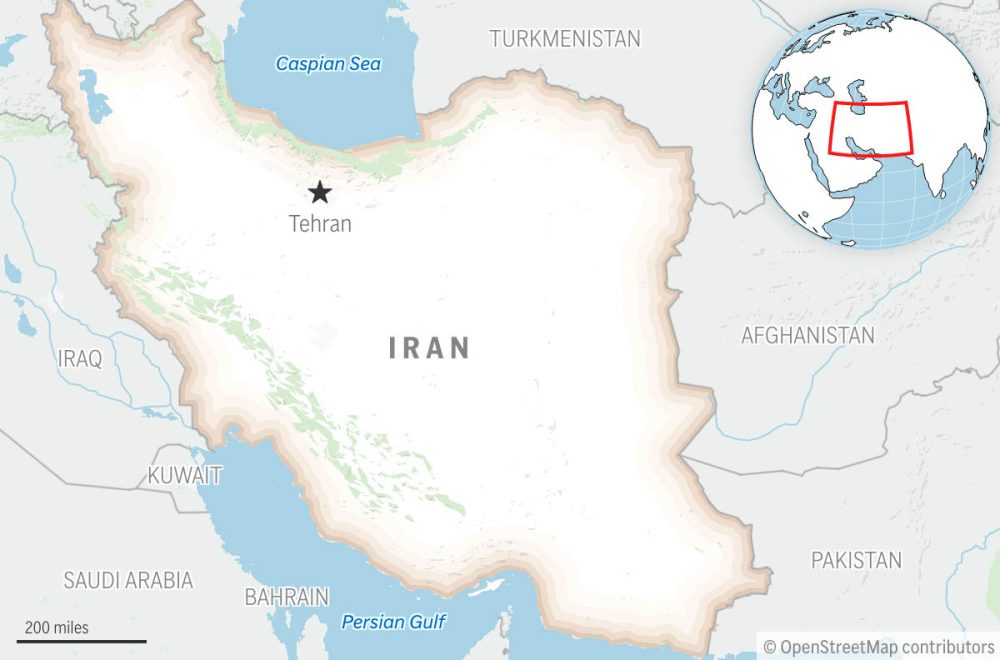
    Energy markets remained focused on fluctuating peace negotiations between the U.S. and Iran. Oil prices jumped more than 4% Monday following Iranian reports that peace discussions had stalled, though American officials later challenged this claim. Brent crude stayed below $100 per barrel, responding to news developments as military actions continued in the Gulf region.

    The fragile ceasefire between Israel and Lebanon appeared increasingly unstable after Hezbollah, the Iranian-supported militant organization currently fighting Israel, announced Thursday it would not honor the agreement terms.

    Despite these geopolitical tensions, markets showed relatively little concern even as the risk of a major energy shortage intensified due to rapidly declining global oil inventories. U.S. gasoline reserves have dropped at nearly record speed just as summer driving season approaches.

    China has emerged as a stabilizing factor in global energy markets, with its seaborne crude oil imports falling to nearly 10-year lows in May. This helped Asia adapt to losing at least 10 million barrels daily from Strait of Hormuz blockades, though questions remain about the sustainability of this trend.

    Interestingly, more oil appears to be moving through the contested strait through unofficial channels, with increasing numbers of vessels transiting “under the radar” of satellite monitoring systems. Rather than signaling a return to normal operations, these covert shipments may preview the opaque energy market structure likely to emerge from the Iran conflict.

    Domestic employment data painted a mixed picture this week. Tuesday’s JOLTS report revealed job openings increased by the largest amount in five years during April, while private sector employment exceeded forecasts with 122,000 new positions added in May.

    However, initial weekly unemployment claims unexpectedly rose 6.1%, and corporate layoff announcements jumped 11% in May according to Challenger, Gray & Christmas data, with nearly 40% of those job cuts attributed to artificial intelligence implementation.

    Attention now turns to Friday’s May nonfarm payrolls report, where a projected net gain of 85,000 jobs would represent a strong result compared to earlier pessimistic predictions.

    This complex employment landscape could present challenges for new Federal Reserve Chair Kevin Warsh ahead of the central bank’s upcoming meeting. His policy direction may differ from previous expectations, particularly given persistent inflation pressures.

    Beyond Iran-related energy costs threatening global price increases, the current artificial intelligence investment surge appears likely to create short-term inflationary pressure, even if AI proves deflationary over time.

    The coming summer months may prove challenging across multiple economic fronts.

  • Investment Funds See Massive Weekly Gains Driven by AI Technology Surge

    Investment Funds See Massive Weekly Gains Driven by AI Technology Surge

    Investment funds worldwide experienced their strongest weekly performance in three weeks during the period ending June 3, as artificial intelligence enthusiasm and impressive technology sector earnings drove investor confidence to new heights.

    Data from LSEG Lipper reveals that stock funds globally pulled in $21.44 billion in net investments during the week, marking the highest total since May 13.

    Technology companies Dell and HP delivered exceptional financial results, with their stock prices jumping 42.6% and 7.1% respectively throughout the week.

    The technology sector’s strong performance pushed the MSCI World Index to an all-time peak of 1,138.3 during the early part of this week.

    European investment funds dominated regional performance, capturing $11.16 billion in net investments for the week. American funds drew $7.43 billion while Asian funds brought in $760 million in net inflows.

    Technology sector funds received the largest investor interest, attracting $9.02 billion in their strongest weekly performance since May 13. Industrial sector funds and metals and mining investments also performed well, gaining $1.61 billion and $747 million respectively.

    Bond funds worldwide continued their positive streak, drawing $24.23 billion for their ninth consecutive week of growth.

    Dollar-based medium-term bond funds attracted $3.13 billion, while short-term bond funds and high-yield bond investments brought in $2.89 billion and $2.53 billion respectively.

    Money market funds worldwide saw massive interest, pulling in $159.83 billion in net investments, representing the largest weekly total since January 7.

    However, gold and precious metals funds experienced their third straight week of losses, with investors withdrawing $1.94 billion.

    Emerging market equity funds faced continued challenges, losing $2.42 billion in their sixth consecutive week of net withdrawals. Bond funds in these markets showed resilience, attracting $787 million in net investments, according to data covering 28,972 funds.

  • How Tax Loopholes Are Born, Used, and Eventually Eliminated

    How Tax Loopholes Are Born, Used, and Eventually Eliminated

    A financial journalism team has documented the complete journey of how tax loopholes emerge and are ultimately eliminated by authorities.

    The investigation follows the entire process from the initial creation of these tax strategies through their discovery by financial professionals and their widespread exploitation, culminating in their eventual closure by regulators.

  • Iraq War Veteran Restores Japanese Garden on West LA VA Campus

    Iraq War Veteran Restores Japanese Garden on West LA VA Campus

    While the VA medical facility in West Los Angeles has faced years of disputes and construction setbacks, an Iraq War veteran has dedicated himself to restoring a Japanese garden situated within the sprawling campus grounds.

    The veteran’s efforts to rehabilitate the garden have persisted throughout the facility’s troubled period, providing what appears to be a peaceful refuge amid the ongoing institutional challenges.

  • Teachers Say AI Will Transform Education More Than Internet or Computers

    Teachers Say AI Will Transform Education More Than Internet or Computers

    Educators across the country believe artificial intelligence will fundamentally change education in ways that surpass the transformative effects of the internet and computers, according to a recent survey conducted by NPR and Ipsos.

    The polling data shows that numerous teachers have begun incorporating AI technology into their daily routines, using these digital tools to streamline their workload and enhance the quality of their instructional materials.

    Despite this growing adoption, the survey reveals a significant concern among educators. The majority of teachers who participated in the study expressed apprehension about how artificial intelligence might negatively affect students’ ability to develop and maintain critical thinking skills.

    The findings highlight the complex relationship educators are navigating as they balance the potential benefits of AI technology with worries about its long-term impact on student learning and cognitive development.

  • Flesh-Eating Fly Found in Texas Calf Raises Livestock Concerns

    Flesh-Eating Fly Found in Texas Calf Raises Livestock Concerns

    Officials have confirmed the discovery of New World screwworm in a Texas calf, marking the return of a dangerous parasite that agricultural authorities eliminated from the United States during the 1960s.

    The parasitic insect, known for consuming living tissue, represents a significant danger to livestock operations nationwide. Agricultural experts are closely monitoring the situation as the cattle industry faces potential widespread impacts from this unwelcome reappearance.

  • British Military Leader Says Time Running Short to Strengthen Defense Against Russia

    British Military Leader Says Time Running Short to Strengthen Defense Against Russia

    Britain’s highest-ranking military officer issued an urgent warning Friday that the nation is running short on time to strengthen its defenses against escalating Russian threats, as a critical defense spending plan remains stalled after months of delays.

    Chief of the Defence Staff Richard Knighton expressed alarm about Russia’s increasingly aggressive posture during an interview with BBC Radio. “Russia is definitely raising the stakes and risks crossing a line,” Knighton stated. “We need to spend more on defence and do it faster.”

    The delayed Defence Investment Plan is designed to outline funding for military hardware and services needed to bring Britain’s armed forces to “warfighting readiness.” However, news reports indicate the plan has been stuck in limbo since last year due to disagreements over spending within the government.

    During a Friday visit to a drone manufacturing facility, Prime Minister Keir Starmer announced the plan would be released prior to the July 7 NATO summit, following intensive collaboration between government officials and military leadership.

    “It is no exaggeration to say that we’re living in more dangerous and volatile times than at any time in my life,” Starmer declared.

    U.S. President Donald Trump, who has consistently urged Starmer and other European allies to increase defense expenditures and reduce dependence on Washington for continental security, is expected to participate in the upcoming summit.

    According to Knighton, the security risks and threats facing Britain have reached levels not seen since the Cold War era, requiring corresponding increases in defense investment.

    “The challenge for ministers is to make those difficult trade-off decisions,” he explained.

    News outlets report that military leadership has informed Starmer of a £28 billion funding gap over the coming four years, which sources say is responsible for the investment plan’s postponement.

    While Starmer has committed to the most significant sustained defense spending increase since the Cold War, targeting 3% of national output during the next parliament, critics argue he has failed to deliver on these commitments.

    George Robertson, who held positions as Britain’s defense secretary in the 1990s and later as NATO’s chief, criticized Starmer in April, stating there was a disconnect between his words and actions and that he was “not willing to make the necessary investment” in defense.

    Knighton described how Russia has intensified its threatening behavior through increased violations of British airspace and constant “probing, challenging, testing” of defense systems, while also conducting cyberattacks, sabotage operations, and technology theft attempts.

    “We do need to step up and enhance our capability as the threats from potential adversaries grow,” he emphasized.

  • May Jobs Data to Shape New Fed Chief Warsh’s First Policy Meeting

    May Jobs Data to Shape New Fed Chief Warsh’s First Policy Meeting

    The Federal Reserve’s diminishing worries about employment, which earlier this year drove many officials to support lowering interest rates, face a crucial test Friday when new employment figures are released. The data will also set the stage for Kevin Warsh’s first policy discussions as the new leader of the nation’s central bank.

    Reuters polling shows economists anticipate employers added 85,000 positions in May, down from April’s surprisingly robust increase of 115,000 but sufficient to maintain the jobless rate at 4.3%.

    Following a monthly average of less than 10,000 new positions throughout 2025, with hiring hampered by uncertainty surrounding import tariffs, the Trump administration’s immigration enforcement and economic prospects, job creation during 2026’s initial four months has averaged 76,000. While this would have represented weak performance in previous years, given the immigration policy changes, it has maintained relatively stable unemployment levels.

    This performance has also shifted interest rate expectations away from additional reductions, with influential policymakers like Fed Governor Christopher Waller indicating they now view the employment situation as largely steady and consider fighting stubbornly high inflation the Fed’s primary focus – a perspective that may represent the majority position as Warsh leads his first policy session on June 16-17.

    “I can no longer rule out rate hikes further down the road if inflation does not abate soon,” Waller stated in remarks last month that marked a decisive move away from employment concerns that had led him to support rate reductions in 2025 and advocate for them through early this year when he was also being considered for Fed leadership. “Recent jobs data show that the labor market appears to be stabilizing and the unemployment rate is fairly low and stable.”

    This reasoning has gained traction among Fed policymakers recently. Without a significant negative development in Friday’s employment report or inflation figures due June 10, Warsh may confront a challenging decision in two weeks.

    Warsh, who succeeded former Fed Chair Jerome Powell in mid-May, contended during his nomination process by President Donald Trump that interest rates could decline because the president’s policies and artificial intelligence expansion would generate higher productivity and accelerated growth while slowing inflation.

    Current data trends differently, with inflation appearing stuck one percentage point or more above the Fed’s 2% goal and heading toward a sixth consecutive year exceeding that benchmark. The persistence of these price pressures has made Warsh’s colleagues increasingly concerned about potential damage to the central bank’s credibility.

    External observers also anticipate elevated inflation continuing longer. The International Monetary Fund now projects inflation won’t reach the Fed’s 2% target until late 2027 rather than mid-next year due to effects from the U.S.-backed conflict with Iran.

    “So we’ve now delayed a bit further the return to target,” IMF spokesperson Julie Kozack stated Thursday. “We do see sort of upside risk to inflation, and that it implies that the Fed’s policy actions will need to proceed with caution and will need to be carefully calibrated to incoming data.”

    Three Fed policymakers opposed the April 28-29 meeting outcome, favoring a shift toward a more aggressive stance that would enable rate increases rather than suggesting cuts as the next likely move. Waller has indicated he now supports this approach and other policymakers have spoken more openly about potentially tightening policy – contrary to Trump’s expectations that rates will fall under Warsh.

    Market participants expect a rate increase by early next year, with roughly even odds the Fed will act at its December 8-9 meeting, according to CME Group’s FedWatch tool.

    Comments by Fed officials before this month’s meeting stressed “a reduced focus on labor market risks and a much heavier emphasis on inflation,” with rate increases likely later this year even if inflation simply holds at current levels, Stephen Brown, chief North America economist for Capital Economics, wrote in analysis. “For Warsh in particular, it remains to be seen whether he will adopt a less dovish tone than was the case when he was seeking the nomination.”

    The situation is delicate given Trump’s expectations, pressure from some of Warsh’s colleagues for tougher monetary policy, and November’s U.S. midterm elections that may depend on economic conditions.

    Some current inflation stems from the Iran conflict, now in its fourth month and causing an oil shock that continues affecting the economy. Benchmark crude prices have declined recently, but traffic through the vital Strait of Hormuz near Iran remains disrupted and a conflict resolution has not been achieved.

    In economic analysis from the Fed’s 12 regional districts released Wednesday, business and community contacts described the lasting impact of surging oil prices that appears to have encouraged other price increases as executives transfer higher costs for items like fertilizer, shipping, and metals to consumers.

    Employment appeared stable even as companies maintained a cautious “low-hire, low-fire” approach.

    “The big question now is do we stay patient?” Kansas City Fed President Jeffrey Schmid asked Thursday at an economic forum in Oklahoma. “Our inflation numbers have probably crept up into the 3.50% range, which nobody likes. Is it temporary … Or do we act? Do we say, ‘okay, now it’s time to raise rates a quarter (of a percentage point) or two and see if we can’t tamp this thing down?’”

  • Federal Appeals Court to Review Trump’s Controversial White House Ballroom Project

    Federal Appeals Court to Review Trump’s Controversial White House Ballroom Project

    A federal appeals court will decide Friday whether the Trump administration can move forward with a controversial $400 million ballroom project at the White House, in a legal battle that tests the boundaries of presidential power.

    The dispute centers on the administration’s decision to demolish the East Wing of the White House complex and replace it with a massive 90,000-square-foot ballroom without obtaining Congressional authorization.

    The East Wing historically served as workspace for the first lady and her staff within the White House grounds in Washington.

    Last year, the National Trust for Historic Preservation filed a lawsuit challenging the project after the administration demolished the East Wing in October 2025 and started construction on the ballroom facility.

    The ballroom initiative represents part of a larger effort by the Republican leader to transform the architectural landscape of government buildings and monuments throughout central Washington.

    The case will be argued at 9:30 a.m. EDT before a three-judge panel of the U.S. Court of Appeals for the District of Columbia Circuit, a influential federal court positioned just below the Supreme Court.

    U.S. District Judge Richard Leon, who was nominated by Republican former President George W. Bush, has issued two separate orders halting above-ground construction while permitting underground work to proceed.

    Leon ruled that no federal law even “comes close to giving the President” the necessary authority to build the ballroom without Congressional approval.

    The appeals panel reviewing the administration’s challenge consists of Democratic-appointed D.C. Circuit judges Patricia Millett and Bradley Garcia, along with Trump-appointed Judge Neomi Rao. Last month, the appeals court issued an order permitting construction to move forward during the ongoing litigation without deciding the case’s underlying merits.

    The administration has defended the ballroom project as essential for national security, pointing to recent assassination attempts against Trump.

    “The East Wing Project answers that critical security need, and ensures that the President can fulfill his constitutional duties in a safe and heavily secured facility,” the Justice Department argued to the appeals court in May.

    Historic preservation advocates dispute this reasoning. The National Trust for Historic Preservation argues that the D.C. Circuit and U.S. Supreme Court have never permitted a president to “usurp powers vested in Congress by the Constitution based on nothing more than his claim of necessity.”

    In court documents, the organization stated that “the public has a strong interest in pausing a project that will irreparably damage what is perhaps the most significant historic site in the country.”

    Trump’s broader redevelopment plans also include constructing a 250-foot arch near the National Mall, the landscaped area stretching between the U.S. Capitol and the Lincoln Memorial, plus renovating the Kennedy Center performing arts facility.

    A federal judge issued an order last week requiring Trump to remove his name from the Kennedy Center building and preventing his plans to shut down the venue for renovations.

    Trump has announced that his planned ballroom is expected to be completed around September 2028.

  • Supreme Court Upholds Federal Agency Powers in FCC and SEC Cases

    Supreme Court Upholds Federal Agency Powers in FCC and SEC Cases

    The nation’s highest court delivered twin victories to federal regulators Thursday, reinforcing the authority of two key agencies while maintaining previously established boundaries on government oversight.

    In separate decisions, the nine justices sided with both the Federal Communications Commission and Securities and Exchange Commission, turning away attempts to further restrict regulatory powers beyond limits already in place.

    The court’s conservative majority issued Thursday rulings that supported the FCC’s penalty system and upheld the SEC’s extensive authority to reclaim unlawful profits through a financial tool known as disgorgement.

    Georgetown University law professor David Super characterized the outcomes as “small, largely technical wins” for both agencies.

    “These cases should be understood as the court telling Congress and administrative agencies that, if they adhere to the rigid limits on public regulation in its prior decisions, the court will not come back and move the goalposts,” Super said.

    President Donald Trump’s administration supported both agencies throughout the legal proceedings.

    WIRELESS CARRIERS DEFEATED

    The FCC prevailed in an 8-1 decision that dismissed a legal challenge from telecommunications giants AT&T and Verizon. The dispute centered on whether the agency’s internal enforcement system violates constitutional jury trial rights, following a 2024 Supreme Court decision that restricted the SEC’s in-house proceedings in SEC v. Jarkesy.

    The justices Thursday dismissed arguments from AT&T and Verizon that the Jarkesy decision should apply similarly to FCC operations.

    However, the court emphasized that financial penalties from the agency, called forfeiture orders, don’t prevent companies from challenging the fines in court.

    “The court didn’t take the opportunity to expand the reach of its prior decision in Jarkesy, but it also stressed that companies have no legal obligation to comply with the FCC’s forfeiture orders until a jury weighs in,” University of Michigan Law School professor Daniel Deacon said.

    Deacon expressed no surprise at either the result or the Trump administration’s defense of agency authority.

    “The Trump administration knows that it can use the administrative state for its own ends, and it hasn’t uniformly opposed agencies’ claims to authority,” Deacon said.

    SEC AUTHORITY PRESERVED

    A unanimous 9-0 decision strengthened the SEC’s disgorgement powers, supporting an expansive interpretation of one of the financial watchdog’s primary enforcement tools.

    The central question involved whether the agency must demonstrate that victims experienced financial harm, or pecuniary loss, before seeking the return of illegal profits.

    Defendant Ongkaruck Sripetch had urged the court to expand a previous ruling while challenging a court order requiring him to return over $3 million in unlawful gains and interest from a financial fraud case. The 2020 Liu v. SEC decision had restricted disgorgement to net profits from the questionable conduct.

    Thursday’s ruling determined that the Liu decision didn’t support Sripetch’s challenge against the SEC.

    Jose Lopez, an attorney at Dorsey & Whitney and former SEC lawyer, said the court’s decision “preserved one of the SEC’s most potent weapons in its enforcement arsenal.”

    The court has previously limited federal agency authority through several significant rulings.

    Recent years have seen the court establish a conservative legal theory called the major questions doctrine, granting judges broad authority to strike down executive agency actions with “vast economic and political significance” unless Congress clearly authorized them.

    In another setback for federal regulatory authority, the court in 2024 eliminated a landmark 1984 precedent that had deferred to U.S. agencies when interpreting the laws they enforce. This principle, known as “Chevron deference,” had faced long-standing opposition from conservatives and business groups.

    Brianne Gorod, chief counsel at the Constitutional Accountability Center, a liberal legal organization that supported the SEC and FCC in their cases, described Thursday’s decisions as victories for the regulators and “everyone who benefits from these agencies being able to do their jobs.”

    “While this court has a history of favoring big business interests and making it more difficult for federal government agencies to do their jobs, today’s decisions are a reminder that it’s not always possible to predict what this court will do,” Gorod said.

  • Construction Closes Right Turn Lane at Wescoats and Savannah Roads

    Construction Closes Right Turn Lane at Wescoats and Savannah Roads

    Drivers should expect delays at the intersection of Wescoats Road and Savannah Road due to ongoing construction work that has forced the closure of a right turn lane.

    The lane closure is scheduled to remain in place until 12 PM today, according to traffic officials.

    Motorists are advised to plan alternate routes or allow extra travel time when passing through the area during the construction period.

  • Former Spirit Airlines Workers Struggle to Find New Jobs After Carrier Collapse

    Former Spirit Airlines Workers Struggle to Find New Jobs After Carrier Collapse

    Travis Arcamone received recognition as flight attendant of the year at Spirit Airlines’ Orlando, Florida location in April. Just one month afterward, he found himself unemployed when the airline went through a second bankruptcy and shut down in early May.

    The collapse of Spirit has created a challenging job market for thousands of former workers seeking employment in an aviation sector where finding new positions can require several months. Airlines typically establish fixed annual quotas for pilot and flight attendant recruitment and have already completed hiring for the busy summer travel period. The industry faces immediate capacity reductions due to increasing jet fuel expenses while simultaneously preparing for future expansion.

    According to Sara Nelson, president of the Association of Flight Attendants-CWA, AFL-CIO, several hundred of Spirit’s 3,500 flight attendants may need four to five months to begin working at different airlines, even under optimal circumstances.

    Arcamone, who lost his position just one month before reaching his ninth year with Spirit, has taken a position selling automobiles while continuing his search for aviation opportunities.

    Aviation professionals face distinct challenges compared to other sectors, as newly hired pilots and flight attendants lose their accumulated seniority and begin at entry-level compensation rates, sacrificing control over work schedules and base assignments.

    “My nearly decade of experience at Spirit might help me get a job somewhere else, but it means absolutely nothing when it comes to how good that job will be when I walk in the door,” a former Spirit pilot explained to Reuters, requesting anonymity to protect employment opportunities.

    “I’ll be a peer to someone who has never flown a jet before,” the pilot added, representing one of approximately 1,800 pilots employed by Spirit when operations ceased.

    A class-action legal case was initiated by former Spirit employees last month, claiming the company failed to provide adequate termination notification. The lawsuit seeks 60 days of compensation and benefits for roughly 17,000 workers, according to their legal representative. Spirit must file a response by mid-July. During court proceedings, a company attorney stated the airline provided notification as quickly as possible.

    INDUSTRY RESPONSE

    Bureau of Labor Statistics data shows approximately 130,000 flight attendants in the United States receive average annual compensation of $77,440, while just over 100,000 airline pilots, copilots, and flight engineers earn an average yearly salary of $288,650.

    Leading airlines have expressed openness to hiring displaced Spirit personnel, though recruitment opportunities remain constrained, particularly for flight attendants.

    Airlines generally establish recruitment strategies at the beginning of each fiscal year based on anticipated retirements, fleet expansion, and operational requirements, which limits how quickly they can increase hiring efforts. Certain positions are connected to busy travel seasons, creating narrow recruitment windows, while unpaid training periods delay regular income.

    United Airlines, planning to recruit 1,300 pilots in 2026, reported receiving 2,800 applications from former Spirit workers for different positions. Delta Air Lines announced intentions to hire hundreds of pilots and flight attendants during 2026.

    Most other domestic airlines declined to reveal specific hiring plans, citing competitive considerations.

    American Airlines reported that 2,000 former Spirit employees have submitted job applications, while Southwest Airlines created a specialized website for Spirit workers to examine available positions. Frontier Airlines indicated it will continue recruiting former Spirit staff as positions become available, and JetBlue Airways announced a temporary hiring suspension.

    The flight attendants’ union noted that airlines have reduced training programs or suspended recruitment, creating additional obstacles for quickly integrating displaced workers.

    “Some of these airlines had been doing weekly classes of around 100 people per week. That has been cut back at the major airlines to 30 every other week or so,” Nelson explained.

    Pilots may find returning to cockpit duties somewhat easier as airlines plan long-term capacity growth and prepare for upcoming retirement waves. Those with specialized qualifications such as check airmen — authorized to evaluate, train, and certify other pilots — or simulator instructors are expected to face higher demand.

    However, pilots face significant financial consequences unless they obtain uncommon direct-entry captain positions.

    “It’s a huge pay cut and a huge change from your previous quality of life,” explained Taylor Brown, a former Spirit pilot who departed the struggling airline in October for a position with UPS. UPS indicated to Reuters that current pilot staffing meets their needs.

  • San Antonio’s ‘Spurs Nuns’ Blend Faith and Basketball in NBA Finals Run

    San Antonio’s ‘Spurs Nuns’ Blend Faith and Basketball in NBA Finals Run

    SAN ANTONIO (AP) — Before the opening game of the NBA Finals, Victor Wembanyama briefly left the basketball court to receive greetings from several supporters wearing San Antonio Spurs uniforms, then lowered his head to participate in a brief prayer with them.

    These supporters are the Salesian Sisters of St. John Bosco.

    During basketball games, they go by the name Spurs Nuns.

    While New York boasts celebrity superfans like Ben Stiller, Tina Fey, and Tracy Morgan, San Antonio features a collection of nuns who don Spurs uniforms over their religious clothing. This connection spans approximately two decades, and the sisters believe it serves their purpose perfectly.

    “We’re serving the poor and the young,” said Sr. Bernadette Mota, the director of the department of mission advancement for the Salesian Sisters. “And in order to reach the young where they’re at, you have to love what they love and then they’ll love who you love. So, we have that affinity with the Spurs because it gives us an avenue to do our mission with the young people that we serve.”

    This unusual story began in an extraordinary manner.

    According to the account, approximately twenty years ago, some retired sisters — who were Texas natives and devoted Spurs supporters — would follow the games through television or radio broadcasts, with some even watching from hospital beds. They would root for every player and coach Gregg Popovich. However, when Popovich appeared frustrated during games, several sisters decided to send him correspondence.

    “They would write to Coach Popovich and let him know when they thought he was he doing great and let him know when he lost his temper — but they were really supporting him,” Mota said. “He’s the one that actually responded back to them, thanking them for their support for him and for the Spurs. It was really just a very organic conversation that started all of this.”

    Indeed, the sisters would gently correct Pop when he misbehaved.

    “They would, in a nice way, in a very nice way,” Mota said. “They’d be like, ‘Coach, you lost your temper there, come on, we’re praying for you, you can do better.’”

    Popovich and the Spurs have maintained their connection with the sisters ever since. Popovich’s deceased wife Erin, who passed away in 2018, also maintained strong relationships with the sisters and supported their work. The partnership has benefited both sides; the Spurs enjoy having the sisters attend games, and publicity about the nuns’ activities beyond basketball has resulted in numerous people volunteering to support their cause.

    “We’ve had a number of individual people reach out and they’ve been donating anywhere from $10 to $100 and we’ve had a few ones who have larger capacity reach out, too,” Mota said. “All of this is divine providence, God’s gift, because we’re actually very much in need. Our mission, we rely on the generosity of people who are our partners and collaborators in our mission.”

    The sisters represent just one fan organization that the Spurs have welcomed. This season also introduced the Jackals — a supporter group conceived by Wembanyama with goals of recreating the atmosphere found at European soccer games, featuring coordinated cheers, percussion, and similar activities throughout contests.

    The nuns offer prayers. The Jackals sing “Olé, Olé, Olé.”

    Different methods, identical goals.

    “I’ve known for years that the Spurs community had this strength in them,” Wembanyama said. “Now to finally see it being channeled into something organized and efficient and effective, it’s a great joy.”

    Joy. That’s the same term the sisters employ.

    Those within the Spurs organization certainly observed that the sisters provided Luke Kornet with a special blessing during the Western Conference finals, and he subsequently made an amazing defensive block late in the fourth quarter of Game 7 in Oklahoma City, helping secure San Antonio’s victory in that contest and their advancement to this championship series.

    Divine intervention? Perhaps.

    The sisters also recognize that Pope Leo XIV’s prayer intention for June focuses on the importance of sports and their ability to foster peace and respect worldwide.

    “I don’t know if his people who helped him out in terms of creating prayer intentions were also in tune with what’s going on with the sisters and the San Antonio Spurs,” Mota said. “Maybe, maybe not. I have no idea. But I just thought it was pretty awesome that his prayer intention for June is for sports.”

  • Construction Closes Eastbound Savannah Road Lane Until Noon

    Construction Closes Eastbound Savannah Road Lane Until Noon

    Motorists traveling eastbound on Savannah Road should expect delays and plan alternate routes as construction work has forced the closure of one lane.

    The eastbound lane remains blocked between Bayview Drive and Wescoats Road, with the restriction expected to remain in place until 12 PM today.

    Drivers are advised to allow extra travel time and exercise caution when navigating through the construction zone.

  • Royal Watchdog: Andrew Mountbatten-Windsor Profited from Subletting Estate Cottages

    Royal Watchdog: Andrew Mountbatten-Windsor Profited from Subletting Estate Cottages

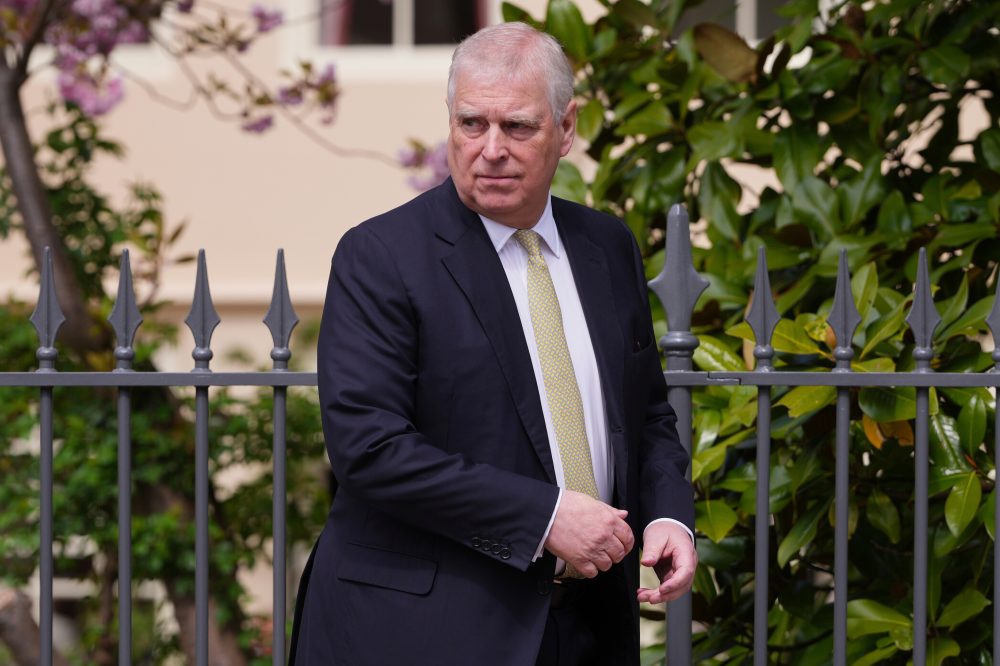
    LONDON (AP) — Andrew Mountbatten-Windsor generated income by subletting three cottages located on an estate where he resided without paying rent for twenty years, a British government spending oversight report revealed Friday.

    The National Audit Office document also revealed that his daughters, Princess Beatrice and Princess Eugenie, reside in palace properties with controlled rents that are covered by their uncle, King Charles III.

    According to the audit office findings, Andrew Mountbatten-Windsor earned money from leasing the cottages situated on the Royal Lodge property, where he lived near Windsor Castle for more than two decades. Documentation from a 2003 lease agreement indicates he paid only a token amount called a “peppercorn rent” for the estate, which contained a mansion with 30 rooms and eight cottages, with permission to sublet three of them.

    The report did not specify the rental income amount, an exclusion that Margaret Hodge, a Labour member of the House of Lords and former head of Parliament’s Public Accounts Committee, found troubling.

    “It’s shocking that the National Audit Office was not able to establish how much money Andrew Mountbatten-Windsor secured from the properties he let,” she said.

    Lawmakers requested the audit office investigation after Mountbatten-Windsor lost his royal titles and was removed from Royal Lodge by his brother, the king, due to revelations regarding his association with the late convicted sex offender Jeffrey Epstein. Mountbatten-Windsor relocated this year to the king’s Sandringham Estate in eastern England.

    In February, the 66-year-old former prince was detained and questioned by authorities regarding allegations of misconduct in public office. Mountbatten-Windsor has consistently denied any wrongdoing and faces no charges.

    The audit office findings indicate that 11 working royals receive complimentary housing in palaces as compensation for their official responsibilities. This group includes the king and Queen Camilla, Prince William and his wife Catherine, and the king’s youngest brother, Prince Edward, and his wife Sophie.

    William and Kate maintain a separate family residence near Windsor, paying annual rent of 307,200 pounds (approximately $413,000).

    Eugenie’s cottage rent at Kensington Palace and Beatrice’s apartment rent at St. James’s Palace are calculated as a percentage of market value, ranging between 50% and 68% in recent years. The Privy Purse, the monarch’s personal funds, covers both rental payments.

    Neither daughter is classified as a “working” royal with public responsibilities, and both maintain employment outside the royal family.

    Buckingham Palace stated the audit office report “is in line with the royal household’s commitment to transparency. We hope that the findings will help correct, clarify or contextualize a number of points regarding royal properties.”

    Monarchy critics pointed to these discoveries as proof the royal family fails to cover its expenses.

    “It shows an absolute total contempt for the taxpayer, not only that Andrew was able to have a peppercorn rent for a gigantic property, but then to make potentially millions on the side from subletting properties,” said former Liberal Democrat lawmaker Norman Baker, a longtime critic of royal finances.

    Mountbatten-Windsor appears in millions of pages of Epstein-related documents released by the U.S. Department of Justice in January, demonstrating how the wealthy financier leveraged an international network of influential contacts to gain power and sexually exploit young women and girls.

    British authorities are investigating allegations that Mountbatten-Windsor shared confidential trade information with the disgraced financier during his tenure as U.K. trade envoy from 2001 to 2011. Investigators indicate they may expand their probe to include sexual misconduct allegations and have requested witnesses to step forward.

    Mountbatten-Windsor has seldom appeared publicly since relocating to the Sandringham Estate, located about 100 miles (160 kilometers) north of London. He was photographed Thursday in a vehicle displaying a large facial bruise.

    The Times of London reported, without naming sources, that the bruise resulted from a “nonserious medical condition.”

  • Devoted World Cup Supporters Skip Tournament Over High Costs, Political Concerns

    Devoted World Cup Supporters Skip Tournament Over High Costs, Political Concerns

    Soccer enthusiasts typically travel across the globe to witness their national teams battle on the world’s biggest sporting platform, the World Cup. They gather in bars and supporter zones, chanting songs and discussing championship predictions.

    However, this year presents a different scenario for devoted followers, who claim tournament organizers have created the most unwelcoming World Cup atmosphere they’ve encountered. High ticket costs, expensive intercity transportation, and worries about U.S. entry procedures have led some to remain in their home countries.

    Mike Wilson, an IT worker based in London, has attended four World Cups during the last two decades. This summer, he plans to stay in Europe and view portions of the competition from a beach in Portugal.

    Emiliano Becerra, an Argentine physician, typically supports his team throughout each elimination phase. This tournament, he’ll watch two initial games before returning home.

    Peter Bergakker, a Dutch-born finance manager, traveled to South Africa to witness the Netherlands compete in the 2010 World Cup championship match. However, regardless of how far the “Oranje” progress this summer, he stated he won’t journey to the U.S.

    The precise number of supporters choosing to stay away remains unknown, but concerning indicators exist.

    Hotel reservations have been weaker than anticipated in numerous U.S. host cities. Additionally, the president of the travel agency association in soccer-enthusiastic Uruguay reported organizing tour packages for approximately 3,000 supporters, substantially fewer than those who attended recent World Cups.

    The demographic of supporters capable of traveling and taking extended time off work to support their teams during the World Cup naturally tends toward the affluent. However, past tournaments remained within reach for enthusiasts who, in many instances, would save for years to afford their flights and game tickets.

    Four years earlier, lower-category Category 3 tickets for group stage games cost $69. This year, FIFA has sold them for up to $265.

    The previous two tournaments in Russia and Qatar provided match attendees with complimentary transportation between host cities, although many games were significantly closer than the extensive area encompassed by the 16 stadiums hosting matches throughout the U.S., Canada and Mexico.

    While supporters at those events were prohibited by FIFA from selling their tickets on the official resale platform above face value, the sports governing organization has adopted a different strategy this time — permitting fans to resell tickets at any price they choose, with FIFA collecting 30% in fees during the process. FIFA did not respond to a comment request Thursday but has previously justified ticket prices as reflecting “record-breaking” demand.

    Tomonori Akutsu, who resides outside Tokyo, said if he had understood how costly this tournament would be when he began planning, he might have reconsidered attending his sixth consecutive World Cup.

    Without doubt, he believes, the U.S. has been the poorest host, and tournament organizers have shown a “complete lack of hospitality in every aspect,” referencing elements like ticket prices, an inflated resale market, expensive hotel rates and fan festivals that charge admission.

    “Simply, my impression is ‘this is America,’ the ultimate capitalism,” Akutsu said.

    Becerra, from Argentina, paid $1,100 to watch Argentina defeat France in the 2022 final in Qatar. For the previous three World Cups, he supported Argentina through the knockout phases.

    Not this time.

    This year, he paid even more — $1,200 — for a resale ticket to watch Argentina’s game against low-ranked Jordan in Dallas.

    “It’s absolutely crazy – it’s just a group stage match,” said Becerra, a 64-year-old ophthalmologist who lives in Neuquén, in northern Patagonia.

    Becerra will return home before the knockout stage starts. The prices, he said, are “just not possible for me.”

    Wilson, the IT specialist from England, said he and his friends chose to skip this summer’s tournament because they couldn’t justify paying the prices they were seeing.

    Wilson had never paid more than $200 for any World Cup match, a price that, on the resale market, barely purchases a nosebleed seat at a group stage match between two obscure teams. Instead, he and his friends have reserved a Portugal vacation.

    For Wilson, the World Cup is more about the atmosphere than the matches.

    “That’s the great thing about these tournaments: You’re sitting at a hostel, chatting with U.S. fans, and then you go to a bar up the road and there are loads of Chileans who have just taken over the place,” Wilson said, recalling a memorable night in Johannesburg in 2010. “It’s stuff like that which makes the World Cup. But now they’ve just priced everyone out.”

    Mark Doidge, a sociologist at England’s Loughborough University, said World Cups have long been characterized by their traveling supporters, pointing to Colombia’s famous “Birdman” and the sea of St. George’s crosses at every England match. Rising costs, he said, risk losing exactly those fans.

    “Most of those buying expensive tickets are not those passionate fans, but wealthy people paying for an experience,” he said.

    There is at least one group of supporters that appears determined to come regardless of the cost: the Scots, who are eager to see their team compete in their first World Cup in 28 years.

    Campbell Lewis and his friends began booking refundable accommodations across the U.S. as soon as Scotland qualified last year before prices rose.

    With tens of thousands of Scottish fans expected to attend, tickets for their team’s matches have proven harder to obtain.

    But after prices began to drop in recent weeks, Lewis bought two tickets for Scotland’s second match for him and his 10-year-old son. He and his friends are still waiting until the final days to get tickets to the team’s opener against Haiti, though. As of Thursday, the cheapest resale ticket for that match outside Boston exceeded $600.

    “For a lot of Scottish people of my generation, this is a once-in-a-lifetime thing,” he said. “We were all kids the last time we qualified. And even though the prices have gotten out of hand, there’s just this determination that we want to go.”

    U.S. entry requirements may also be limiting international visitors.

    Unlike Russia in 2018, which waived visa requirements for ticketholders, and Qatar in 2022, which streamlined entry for fans, many traveling to the U.S. still face strict visa requirements. Until the U.S. reversed course last month, ticket-holding fans from Algeria, Cape Verde, Ivory Coast, Senegal and Tunisia were even going to have to pay as much as $15,000 in bonds to enter the country.

    Carlos Pera, president of Uruguay’s travel agency association, recently told Uruguay’s Subrayado that U.S. visa requirements were among the reasons fewer Uruguayans are making the trip this year.

    U.S. officials have pushed back on concerns about visitors encountering an unwelcome environment, and the White House’s World Cup task force has highlighted efforts to prioritize visa interviews for fans with tickets. Andrew Giuliani, who leads the task force, dismissed concerns Thursday that traditional traveling supporters may be staying away.

    “We want superfans and first-time visitors alike to know: America welcomes you to what will be the greatest World Cup yet,” he said in a statement.

    For some fans, however, the concern goes beyond visas and cost.

    Bergakker, a 48-year-old Dutch financial controller who lives near Heidelberg, Germany, said President Donald Trump’s “hostile” approach toward European allies has changed his view of traveling to the U.S.

    Bergakker has attended two World Cups and four European Championships and said he is extremely susceptible to “Oranjekoorts” — the orange fever that grips Dutch fans as a tournament progresses.

    A deep Netherlands run usually would be all it takes to get him on a plane, no matter the price of tickets. But Bergakker said he worries his criticism of Trump on social media could lead to problems at the border, a concern the White House rejected. A spokesperson said Thursday that a Customs and Border Protection proposal to scrutinize World Cup visitors’ social media accounts was never enacted.

    Still, Bergakker said that as long as Trump is president, “this Oranje fan won’t be visiting.”

  • Hungary Set to Introduce Anti-Corruption Laws to Unlock EU Funds

    Hungary Set to Introduce Anti-Corruption Laws to Unlock EU Funds

    Hungary’s parliament will receive new anti-corruption legislation next week that officials say is essential for accessing billions in suspended European Union funding, according to Transport and Investment Minister David Vitezy’s announcement Friday.

    The legislative package comes after Prime Minister Peter Magyar defeated longtime nationalist leader Viktor Orban in April elections and subsequently obtained 16.4 billion euros ($19.1 billion) in May based on commitments to eliminate Orban-era policies the EU considered harmful to democratic institutions.

    Financial markets have responded positively to Magyar’s European Union-friendly approach and his commitment to prepare Hungary for euro adoption before 2030, with the forint currency and government bonds showing significant gains.

    “This will be a comprehensive anti-corruption bill that also improves the transparency of Hungarian public life,” Vitezy explained to reporters. “This represents the rule-of-law criteria that will allow us to bring the EU funds home.”

    The minister indicated the new laws would unlock access to 10 billion euros from the EU’s pandemic recovery program for transportation and clean energy initiatives, plus additional support for small enterprises and affordable housing development.

    Under the proposed changes, Hungary’s Integrity Authority anti-corruption agency would receive expanded authority, while public officials would face stricter asset disclosure requirements with potential prison sentences of up to two years for violations, Vitezy detailed.

    The government plans to allocate approximately 3.5 billion euros in EU recovery funding to the state development bank MFB for project financing while ensuring no funding is lost before the late August deadline, he added.

    According to Vitezy, Hungary will also receive credit for 2.6 billion euros in previously self-funded investments through EU reimbursement, providing the government additional budget flexibility following deficit increases from substantial pre-election expenditures during Orban’s tenure.

    Railway and transportation infrastructure improvements will receive 4.2 billion euros from EU cohesion funds, while higher education will benefit from an additional 2.2 billion euros that had been suspended due to concerns about academic freedom restrictions, Vitezy concluded.

  • 5 Azerbaijani Citizens Die in Sea of Azov Ship Attacks

    5 Azerbaijani Citizens Die in Sea of Azov Ship Attacks

    Azerbaijan’s Foreign Ministry announced Friday that five citizens of the country died and three more were wounded during attacks on two cargo ships in the Sea of Azov.

    The ministry, responding to inquiries about the vessels struck in Taganrog Bay, confirmed that a total of 25 Azerbaijani nationals were working aboard the ships as crew members, though the vessels themselves are not owned by Azerbaijan.

    Ukraine claimed responsibility for the attacks earlier Friday, stating that its unmanned aircraft had targeted five ships operating in the ports of Mariupol and Berdyansk, along with vessels in coastal waters under Russian control.

    Robert Brovdi, the commander of Ukrainian drone forces, issued a statement saying his aircraft struck dry cargo vessels and a tanker that were participating in “stealing” Ukrainian grain and moving military cargo and fuel, with the ships’ names covered over and their radar systems disabled.

  • German Officials Investigate Boeing 787 Nose Gear Collapse at Frankfurt Airport

    German Officials Investigate Boeing 787 Nose Gear Collapse at Frankfurt Airport

    Aviation safety officials in Germany have initiated a formal investigation following the failure of front landing gear on a Boeing 787 aircraft that occurred Thursday while the plane was stationed at Frankfurt airport, a spokesperson for the German Federal Bureau of Aircraft Accident Investigation confirmed.

    The investigation team expects to release a preliminary report within approximately eight weeks, with a comprehensive final report anticipated in roughly one year, the spokesperson stated.

    Lufthansa, the airline operating the aircraft, confirmed that multiple crew members and ground personnel sustained minor injuries and required hospitalization following the incident. Two Lufthansa workers who received brief hospital treatment on Thursday were discharged the same day.

    The airline indicated that the affected Boeing 787-9 aircraft will undergo repairs once the investigation concludes.

    No passengers had boarded the plane when the incident took place.

    The nose gear collapse happened at 12:45 p.m. (1045 GMT) on Thursday, affecting a flight scheduled to travel to Los Angeles operating as flight LH450.

    The Boeing 787-9 represents a recent fleet addition for the Lufthansa Group, which has announced plans to systematically retire older, less fuel-efficient aircraft while streamlining its overall fleet composition.

  • Global Food Costs Drop Slightly in May But Remain Near Three-Year Peaks

    Global Food Costs Drop Slightly in May But Remain Near Three-Year Peaks

    International food costs experienced a minor decline in May compared to the previous month, though prices continue hovering near three-year peaks, according to data released Friday by the United Nations Food and Agriculture Organization.

    The organization’s Food Price Index, which tracks price movements in a collection of internationally traded food products, reached 130.8 points during May. This represents a 0.2% decrease from April’s adjusted figure of 131.0 points, while showing a 2.9% increase compared to the same period last year.

    Even with the slight downward adjustment to April’s numbers, the index stayed close to its peak level since January 2023 and remained 18.4% under its March 2022 high point.

    Grain costs increased by more than 2.6% during the month, with wheat prices climbing for the fourth consecutive month due to reduced export harvest expectations, including in the United States, and rising fuel and fertilizer expenses connected to the Iran conflict.

    The agency reported that corn prices also received support from increased import demand and reduced supply availability in Brazil and the U.S.

    Meanwhile, vegetable oil costs dropped 4.6% from the previous month, marking their first monthly decrease this year, as declining palm and soy oil prices exceeded increases in rapeseed and sunflower oil. Following five months of consecutive growth, international palm oil prices fell, reflecting expectations of reduced global import demand and uncertainty in crude oil markets.

    However, vegetable oil prices remained more than 20% higher than last year on average, as increased energy costs following the effective closure of the Strait of Hormuz boosted demand for biofuels produced from organic materials, such as oil-rich plants.

    Sugar costs surged 7.5% from the previous month to 95.1 points, though they stayed 13.1% below their level from a year ago. The rise was primarily caused by worries over an expected tightening of global sugar supplies in upcoming months.

    In a separate report on cereal supply, the organization stated it anticipates world cereal production — including rice in milled equivalent — to contract 2% in 2026/27 to 2.98 billion tons.

    Output of all major cereals is expected to decrease, though for many from record levels achieved in 2025, with the largest year-over-year reduction in percentage terms projected for wheat and the smallest for corn and barley.

  • Himalayan Kingdom Offers Cash Payments to Boost Declining Birth Rates

    Himalayan Kingdom Offers Cash Payments to Boost Declining Birth Rates

    The small Himalayan nation of Bhutan has launched a financial incentive program aimed at reversing its declining birth rates by offering monthly payments to families who have more children.

    Located between China and India in the eastern Himalayas, the kingdom with a population under 800,000 will provide families with monthly payments of 10,000 ngultrums (approximately $105) for each third child and any additional children born on or after June 4, 2026, continuing until the child reaches age three, according to a government announcement made Thursday.

    The program will also extend benefits to eligible third and subsequent children who were born prior to that date but have not yet reached three years of age when the policy takes effect.

    Cabinet Secretary Kesang Deki explained that the financial support would apply to families regardless of how many children they have beyond the second child. “They can have three, four, five, six or seven children,” she stated to Reuters on Friday.

    Government data reveals that annual births in Bhutan have dropped from 11,001 in 2015 to 8,153 in 2024, representing approximately a 26% decrease, while the total fertility rate has fallen to nearly the replacement level of 2.1 children per woman during this timeframe.

    According to the government statement, the combination of a shrinking and aging population along with emigration poses significant challenges for Bhutan’s workforce, communities, and economic growth over the long term.

    Many young people from Bhutan are looking for opportunities in other countries, particularly Australia, as economic dissatisfaction grows within the landlocked Buddhist nation.

    The government described the new initiative as demonstrating its “commitment to the welfare of mothers, children, and families, and to the long-term sustainability of Bhutan’s population.”

    In a similar move, the neighboring Indian state of Sikkim introduced incentives in 2023 including year-long maternity leave for women, month-long paternity leave for men, and financial assistance for those pursuing in-vitro fertilization.

    Bhutan has gained recognition for creating the Gross National Happiness index, an innovative economic measurement that incorporates elements typically overlooked by traditional gross domestic product calculations, including recreation and emotional well-being.

  • Senate Approves $70B Immigration Enforcement Funding After Weeks of Delays

    The U.S. Senate voted to approve a $70 billion funding package for President Donald Trump’s immigration enforcement operations during the early hours of Friday morning, following weeks of legislative delays and strong opposition to an unrelated $1.776 billion settlement fund that nearly prevented the bill from moving forward.

    The legislation provides financial support for the president’s immigration enforcement agencies, though the path to passage proved challenging due to controversy surrounding the separate settlement fund provision that generated fierce criticism from lawmakers.

  • Weekly News Quiz Tests Your Knowledge of Current Events

    A weekly news quiz is putting readers’ current events knowledge to the test, focusing on recent developments involving prominent figures and organizations.

    The quiz covers a range of newsmakers who captured attention this week, including George Santos, Serena Williams, and Peabo Bryson. Also featured are recent stories involving Kalshi and United Airlines.

    The interactive quiz asks participants whether they’ve been keeping up with the latest headlines and major developments across different sectors.

  • World Cup Sticker Collecting Craze Grows in America

    A cherished World Cup ritual that has captivated fans across Europe and Latin America for decades is finally taking hold in America. The practice of gathering and trading collectible stickers is experiencing unprecedented growth in the United States.

    The passion for these collectibles has been growing gradually among American soccer enthusiasts, but this year marks a significant milestone in the hobby’s popularity. The excitement surrounding these trading cards has reached new heights as anticipation builds for the upcoming tournament.

    This collecting phenomenon represents more than just a hobby – it’s become an integral part of the World Cup experience for millions of fans worldwide, and American supporters are now joining this global tradition in record numbers.

  • Your Delmarva Forecast: Friday, June 5th

    Your Delmarva Forecast: Friday, June 5th

    Good morning, Delmarva! We’re looking at another beautiful summer day across the peninsula with mostly sunny skies and temperatures climbing to a toasty 92 degrees. A gentle west wind at 5 to 10 mph will provide just a touch of relief from the heat, so it’s a great day to hit the beaches or enjoy outdoor activities – just remember that sunscreen and plenty of water! Tonight brings mostly clear skies with temperatures dropping to a comfortable 68 degrees – perfect for evening plans or dining al fresco. Saturday continues the sunny trend with temperatures reaching 94 degrees, making it the hottest day of the weekend. However, Saturday night brings a change as we’ll see our first chance of showers and thunderstorms rolling through the area with lows around 71 degrees. This could provide some welcome relief from the heat and help cool things down for Sunday. Enjoy this gorgeous Friday, stay hydrated in the heat, and keep an eye on the sky Saturday evening. I’m your TV Delmarva meteorologist – stay safe and have a wonderful day!
  • Construction Closes Right Turn Lane on Stanton Road at Newport Pike

    Construction Closes Right Turn Lane on Stanton Road at Newport Pike

    Motorists traveling through the intersection of Stanton Road and West Newport Pike should plan for potential delays today due to ongoing construction work.

    The right turn lane at this location is currently closed to traffic and will remain inaccessible until 4 PM, according to traffic officials.

    Drivers are advised to allow extra travel time and consider alternate routes if possible while crews complete their work in the area.

  • High Court Decision Leaves Few Options to Shield Minority Voting Power

    High Court Decision Leaves Few Options to Shield Minority Voting Power

    Following a significant Supreme Court decision, advocates for protecting the voting power of racial minorities find themselves with fewer tools at their disposal.

    The ruling has substantially narrowed the pathways available to safeguard minority voting rights, leaving activists and lawmakers to explore alternative approaches at the state level.

    Among the remaining options are state-level voting rights legislation and strategic redistricting efforts, particularly in states with Democratic leadership. These approaches represent some of the few mechanisms still available to protect the electoral influence of minority communities.

    The Supreme Court’s decision has effectively weakened federal protections that previously served as key safeguards against racial discrimination in voting and redistricting processes.

  • Teachers Say AI Will Transform Education More Than Internet or Computers

    A recent survey conducted by NPR and Ipsos reveals that the majority of K-12 educators believe artificial intelligence will fundamentally transform education in ways that surpass the revolutionary changes brought by the internet or personal computers.

    The polling data indicates that while numerous teachers have begun incorporating AI tools into their daily routines to increase efficiency and reduce workload, there remains significant concern about the technology’s potential drawbacks.

    Most educators surveyed expressed worry that artificial intelligence could hinder students’ development of critical thinking abilities and their capacity for independent reasoning. This concern highlights the ongoing debate about balancing technological advancement with traditional learning methods that foster analytical skills.

    The findings suggest that while teachers recognize AI’s potential to streamline administrative tasks and enhance certain aspects of instruction, they remain cautious about its broader implications for student learning and cognitive development.

  • Scientists Finally Detect Wind From Milky Way’s Central Black Hole After 50 Years

    Scientists Finally Detect Wind From Milky Way’s Central Black Hole After 50 Years

    Following half a century of research efforts, scientists have successfully identified wind flowing from the massive black hole located at our galaxy’s core, revealing it produces more of a mild cosmic breeze than the violent storms observed elsewhere in the universe.

    Researchers utilized observations from Chile’s ALMA telescope along with NASA’s Chandra X-ray Observatory to examine the space surrounding the black hole known as Sagittarius A*, abbreviated as Sgr A*.

    The team identified an enormous cone-shaped hollow region containing hot, electrically charged gas next to Sgr A*, which they determined was carved out by wind flowing from the black hole that either displaced or heated the cold gas previously occupying that area. According to the researchers, only a supermassive black hole could generate the energy required to form such a cavity.

    These cosmic objects possess incredibly dense matter with gravitational pull so powerful that light cannot escape their grasp. Most galaxies contain a supermassive black hole at their center that draws in surrounding gas and materials.

    Researchers theorized decades ago that any active supermassive black hole would naturally eject some gas and materials into space due to fundamental physics – either as outward-flowing wind or concentrated jets. While they had previously observed this phenomenon in countless supermassive black holes throughout other galaxies, scientists had been unable to prove that Sgr A* exhibited similar behavior until now.

    “This discovery resolves a half-century-old mystery,” said Lena Murchikova, a professor of physics and astronomy at Northwestern University in Illinois and co-leader of the study published this week in the Astrophysical Journal Letters.

    Sgr A* contains approximately 4 million times our sun’s mass and sits roughly 26,000 light-years away from Earth. One light-year equals the distance light covers in a year – 5.9 trillion miles (9.5 trillion km). Compared to similar objects in other galaxies, it ranks as less massive and currently exists in a relatively calm phase.

    The pointed end of the cone-shaped cavity begins near Sgr A* and spreads outward. Though researchers cannot determine the cavity’s complete size since it extends beyond their observation range, Murchikova estimated it might stretch approximately 6.5 light-years in length.

    Due to Sgr A*’s current peaceful condition, the wind it produces lacks the intensity observed from other supermassive black holes. Northwestern University astronomer and study co-leader Mark Gorski compared its winds to Earth’s weather patterns.

    “It is a gentle breeze coming from our supermassive black hole. It doesn’t appear to be strong enough to drastically restructure the galactic center,” Gorski said.

    “Supermassive black holes spend most of their time in this quiet, gentle state. However, sometimes they go through outbursts ranging from thunderstorms to the most violent of hurricanes. Their most intense winds or jets can completely disrupt their host galaxies and regions well beyond,” Gorski said.

    When gas and other materials spiral toward a black hole, they approach light speed, generating sufficient energy and pressure to launch some material outward.

    “While some gas keeps falling in, other gas is ejected. In fact, more of the gas is ejected than falls into the black hole. This ejected gas is the wind we are talking about,” Murchikova said. “When we look at distant galaxies far-far away, it is much easier to see violent phenomena. We see huge, powerful jets ripping through the galaxy and everything else in their path. We see violent winds ejecting nearly all gas from their galaxies.”

    The distinction between a jet and wind relates purely to shape.

    “Jets are narrow and don’t expand very much as they leave their source, often producing a beam of matter. Winds, however, are wider and expand as they leave their source. It’s almost like the difference between a laser pointer and a flashlight,” Gorski said.

  • New Zealand PM Plans Direct Talks with China Over Lawmaker Travel Restrictions

    New Zealand PM Plans Direct Talks with China Over Lawmaker Travel Restrictions

    New Zealand’s Prime Minister Christopher Luxon announced Friday that his government plans to directly address what he called China’s “entirely inappropriate” decision to ban four legislators from Chinese territory following their visit to Taiwan.

    Four New Zealand parliament members – Laura McClure, David Wilson, and Maureen Pugh from the centre-right coalition, plus Duncan Webb from the Labour party – spent five days in Taipei last month.

    Following their trip, the Chinese embassy notified the legislators through an email from the Office of the Clerk that they were prohibited from entering China, Hong Kong and Macau for one year, according to parliamentary administration officials.

    Speaking to reporters during his trip to Australia where he plans to meet with his counterpart Anthony Albanese, Luxon defended the lawmakers’ right to travel independently.

    “We think it’s entirely inappropriate, the reaction that we’ve seen from the Chinese. We will raise that with them ourselves,” Luxon stated, emphasizing that the backbenchers were not acting as official government representatives in Taiwan and should be “free to see who they want to see.”

    The diplomatic tension comes despite generally stable relations between New Zealand and China in recent years, with China serving as New Zealand’s top trading partner. However, Wellington has become increasingly vocal about Beijing’s growing presence in the Pacific region.

    High-level officials from both nations have conducted numerous visits over the past three years, including Luxon’s own trip to China in 2025.

    The dispute centers around Taiwan’s contested status, as China considers Taiwan part of its territory and has not dismissed using military force to gain control of the island. Taiwan’s leadership disputes Beijing’s territorial claims.

    A New Zealand parliament official confirmed Thursday that a meeting occurred with Chinese embassy representatives but declined to share specifics. Foreign Minister Winston Peters directed New Zealand diplomatic staff in both Beijing and Wellington to address the issue with Chinese officials.

    Australia has indicated it will also express concerns through the Chinese embassy in Canberra and Beijing.

    While Luxon appreciated Australia’s backing, he characterized the dispute as a “nation-to-nation” matter between New Zealand and China.

    He indicated he would emphasize New Zealand’s “one China policy” stance, which recognizes Beijing as the legitimate government and acknowledges its Taiwan claims without formally endorsing them.

  • Heated Trump-Netanyahu Phone Call Exposes Tensions Over Middle East War

    Heated Trump-Netanyahu Phone Call Exposes Tensions Over Middle East War

    A contentious telephone conversation between the U.S. president and Israeli prime minister has brought their behind-the-scenes disagreements into the public spotlight, creating political complications for the Israeli leader as he faces a challenging election cycle.

    The heated exchange, which was initially reported by media outlets and later acknowledged by Trump, featured the president calling the prime minister “fucking crazy” during discussions about Israeli military operations in Lebanon.

    Israeli government sources, who requested anonymity, described the conversation as one of the most confrontational exchanges between the two leaders. One source indicated that the public disclosure of the call has politically harmed Netanyahu as the country prepares for national elections.

    The news website Axios first revealed details of the conversation on Monday, reporting that Trump angrily challenged Netanyahu regarding Israeli threats to resume bombing campaigns in Beirut’s southern neighborhoods. “Everybody hates you now. Everybody hates Israel because of this,” Trump was quoted as saying.

    The American president instructed Netanyahu to avoid targeting Beirut after Iran indicated that Israeli military actions in Lebanon were hampering diplomatic efforts to conclude the conflict, which started with combined U.S.-Israeli operations and has become unpopular with American voters.

    A high-ranking Israeli official explained to Reuters that Netanyahu had emphasized to Trump that any suspension of Israeli military plans against Beirut would only be viable if Hezbollah ceased its attacks on northern Israel. The official noted that Trump was open to this perspective.

    After their conversation, Trump announced that Israel and Hezbollah had reached an agreement to halt hostilities, leading to criticism from Netanyahu’s political adversaries and some members of his own administration who accused him of surrendering Israeli independence to American pressure.

    “A total protectorate,” said opposition leader Yair Lapid, suggesting Netanyahu had put Israel in the position of an American client state.

    While Netanyahu, Israel’s longest-serving prime minister, has frequently disagreed with both Republican and Democratic U.S. administrations, Israel has maintained its position as Washington’s primary Middle Eastern partner.

    Nimrod Goren, the president of Mitvim, an Israeli think tank, said “the differences are now very public”, unlike in the past when they were usually quietly managed behind closed doors.

    Speaking to the New York Post on Wednesday, Trump acknowledged he was “a little bit perturbed” by Netanyahu’s continued attacks on Lebanon, while adding: “We’ve worked very well together.”

    Trump’s choice to participate with Israel in military strikes against Iran on two separate occasions within a year seemed to represent a significant achievement for Netanyahu, who had spent years encouraging Washington to employ military force to stop Tehran’s nuclear ambitions.

    However, Trump has also implemented several policies that many Israelis view as contrary to their country’s interests, including terminating U.S. military operations against Yemen’s Iran-supported Houthis, removing sanctions from Syria’s President Ahmed al-Sharaa, and directing a cessation of Israel’s 12-day conflict with Iran in June 2025.

    While the United States and Israel jointly initiated the military campaign against Iran in February, Israel has not participated directly in U.S.-Iran negotiations to end the conflict. These discussions have been facilitated through Pakistan, an unusual mediator that maintains no official diplomatic relations with Israel.

    The conflicts with Iran and Hezbollah have received broad support in Israel, including from supporters of Netanyahu’s political opponents, with much of the population favoring continued military action.

    This contrasts sharply with American sentiment, where many voters—including members of Trump’s conservative constituency—oppose the war.

    Trump has consistently stated that the U.S. is approaching an agreement with Iran to end the hostilities. Tehran maintains that any settlement must include Israel stopping attacks on its partner Hezbollah in Lebanon.

    “We are basically being forced to stop,” said Israeli pollster Mitchell Barak. “We don’t have a say in this anymore.”

    At the beginning of this year’s conflict with Iran, Netanyahu declared that the Iranian government would be overthrown and its nuclear and missile capabilities eliminated. He has also stated that Hezbollah, which launched attacks against Israel in March supporting Iran, must be disarmed in southern Lebanon. None of these objectives have been accomplished.

    Current domestic polling consistently indicates that Netanyahu’s coalition government, described as the most right-wing in the nation’s history, would be unable to secure a majority in the next election.

    According to Goren, Netanyahu is attempting to satisfy Trump’s requirements because the Israeli leader will require the president’s backing as elections approach, including a potential visit by the American leader to Israel. Prior to the Iranian conflict, Trump was widely anticipated in Israel to visit in April to receive the country’s highest civilian award. His most recent visit occurred in October.

    Some Israelis expressed discomfort with the degree to which Trump appears capable of influencing Israeli military choices, Goren noted. Conversely, in the U.S., some Trump critics argue that Netanyahu wields excessive influence over American foreign policy.

    Itamar Ben-Gvir, Netanyahu’s national security minister said on Thursday that there are times when an Israeli leader must know how to say “no” even to the U.S. president.

    Nadav Shtrauchler, a former Netanyahu adviser, said the Israeli premier was counting on Trump’s support in the election.

    “The way the war (with Iran and Hezbollah) will end will affect, more than anything, the result of the election.”

    Trump has frequently offered public praise for Netanyahu and has openly urged Israel’s president to grant clemency to the prime minister, who faces corruption-related charges in Israeli courts.

    Yet Trump has also publicly stressed how much Israel depends on Washington, according to his view, and has used profanity previously when discussing Israel, including publicly stating last year that Israel and Iran “don’t know what the ​fuck they are doing.”

    Netanyahu, for his part, characterizes Trump as “the greatest friend Israel has ever had in the White House”, providing the type of public recognition that appeals to the Republican president, who is recognized for valuing personal devotion and approval.

    Since the U.S. and Israel began their war with Iran, Netanyahu has occasionally mentioned that he communicates with Trump nearly every day, often describing their relationship to the Israeli public as a partnership between equals who collaborate on decisions.

    When questioned about the call during a CNBC interview on Wednesday, Netanyahu compared the situation to the “best of families” where there have occasionally been “tactical disagreements” with the U.S. president.

    A U.S. official informed Reuters that the phone conversation was among several in which the president has been very straightforward with Netanyahu, but emphasized that the two remain friends and close partners.

    “Their conversations are pretty direct,” the official said.

    Both the official and another Israeli source familiar with the U.S.-Israel relationship rejected any indication of a substantial shift in the relationship between Netanyahu and Trump.

    Nevertheless, the Israeli source admitted that the disclosure of the call—and Trump’s later confirmation of it—was unhelpful to Netanyahu before an election he is projected to lose.

    Shtrauchler, the former adviser to Netanyahu, argued that the perception of a disagreement with Trump was exaggerated and that the two leaders still seem to agree on most significant matters.

    However, a sudden conclusion to the conflicts with Iran and Hezbollah would create a “huge problem” for Netanyahu, he noted, as many Israelis would view it as Trump having pressured him into submission.

    “No one wants here to feel like we are another star on the (U.S.) flag. We want to feel independence,” Shtrauchler said.

  • UN: Middle East Crisis Drives Millions Toward Starvation Worldwide

    UN: Middle East Crisis Drives Millions Toward Starvation Worldwide

    The ongoing Middle East conflict is driving millions of people toward severe hunger as escalating fuel and transportation expenses cause food costs to soar, according to the U.N. World Food Programme’s Friday announcement. The crisis is further complicated by funding shortages that are forcing humanitarian organizations to reduce their operations.

    Regional warfare erupted following joint U.S.-Israeli military actions against Iran in February, creating widespread disruption from the Gulf region extending into Lebanon. Critical maritime passages, including the Strait of Hormuz, have been affected, compelling ships to find alternate routes and severely limiting worldwide energy distribution and supply networks.

    The WFP projected in March that up to 45 million individuals could experience acute food insecurity should oil prices stay near $100 per barrel through June. This prediction is becoming reality, the organization reported, as benchmark crude oil has remained above that threshold since early March began.

    Communities in Afghanistan, Somalia and Sri Lanka are experiencing the most severe impacts, confronting increased challenges from elevated fuel expenses, food cost increases, reduced incomes and interrupted commerce.

    Somalia is projected to have 6.5 million residents – approximately one-third of its total population – experiencing severe hunger by 2026, while Afghanistan may see 17.4 million people impacted, according to WFP data. The crisis is expected to intensify, with another 2.5 million Somalis and 2.3 million Afghans potentially facing food insecurity if current disruptions continue. Both nations depend heavily on energy and food imports.

    This Middle East emergency occurs during a significant funding crisis for humanitarian organizations. The WFP anticipates serving 1.5 million fewer individuals worldwide in 2026, with an additional 9 million people losing assistance if conditions persist for six months.

    Afghanistan has seen fuel price increases drive aid transportation expenses up by as much as five times normal costs, while delivery timeframes have extended from 10 days to as long as 75 days as vehicles must utilize alternative routes, the WFP reported.

    Somalia faces rising jet fuel costs that are increasing operational expenses for the United Nations Humanitarian Air Service – the sole safe method for reaching remote locations, according to the WFP.

  • Naval Drone Explodes at Romanian Port Near Ukraine Border

    Naval Drone Explodes at Romanian Port Near Ukraine Border

    BUCHAREST, June 5 – A naval drone similar to those deployed in the ongoing Ukraine conflict exploded Friday at Romania’s Constanta port on the Black Sea, causing no injuries but prompting immediate safety measures, according to the country’s defense ministry.

    Authorities ordered the evacuation of the port facility and issued warnings for residents along Romania’s Black Sea coastline to seek shelter. Two helicopters conducted aerial surveillance of the surrounding area to search for any additional drones, deputy Interior Minister Raed Arafat reported.

    “We now know there is the risk of self-detonation, we have … evacuated in case there are more drones,” Arafat stated.

    “We are not panicking, the measures are purely preventative.”

    This detonation occurred one week following an incident where a Russian drone struck an apartment complex in Galati, a southeastern Romanian city located near Ukraine’s border, wounding two individuals. That event marked the first instance during the Russia-Ukraine conflict where a drone impacted a heavily populated area within a NATO member nation.

    As both a NATO and European Union member nation, Romania maintains a 650-kilometer (400-mile) boundary with Ukraine. The defense ministry reports that 28 violations of Romanian airspace by Russian drones have occurred since Moscow initiated attacks on Ukrainian Danube River ports.

    Debris from Ukrainian drones has also fallen within Romanian borders.

  • Senate Passes $70B Funding for Immigration Enforcement Operations

    Senate Passes $70B Funding for Immigration Enforcement Operations

    WASHINGTON, June 5 – The U.S. Senate voted Friday to approve legislation that would allocate $70 billion in additional funding for immigration law enforcement activities, including President Donald Trump’s deportation initiatives.

    The measure now awaits consideration by the House of Representatives before it can become law.

  • United Nations Doubles Aid Request for Lebanon as Conflict Continues

    United Nations Doubles Aid Request for Lebanon as Conflict Continues

    The United Nations announced Friday it will double its financial assistance request for Lebanon as humanitarian crises worsen during the ongoing regional conflict now in its fourth month.

    The conflict expanded to include Lebanon in early March after the Tehran-backed Hezbollah militia launched rocket attacks against Israel in support of Iran, which was facing U.S.-Israeli strikes. This action triggered a significant Israeli military response involving both air strikes and ground operations.

    Lebanese officials report that Israeli attacks have resulted in more than 3,500 deaths since March 2, though their figures do not separate military personnel from civilian casualties.

    Israeli authorities state that Hezbollah attacks have claimed the lives of 26 soldiers and four civilians on their side since the March escalation began.

    The U.N. will work with Lebanon’s government Friday to launch an updated aid request seeking an extra $331.5 million to assist 1.4 million affected individuals, raising the complete appeal to $639.9 million.

    As of May 31, the organization had collected $185.9 million toward its goals.

    “In the past three months, communities across Lebanon have faced an appalling situation due to the escalation of hostilities,” stated U.N. Resident and Humanitarian Coordinator Imran Riza, highlighting significant casualties, mass population displacement and severe infrastructure destruction.

    “The toll on civilians is alarming and worsening by the day,” Riza added.

  • Japanese Yen Weakens as Dollar Strengthens Amid Middle East Tensions

    Japanese Yen Weakens as Dollar Strengthens Amid Middle East Tensions

    The Japanese yen approached the critical 160-per-dollar level on Friday, prompting stern warnings from officials, while the dollar maintained strength ahead of important U.S. jobs data and Middle Eastern conflicts supported safe-haven currency demand.

    Diplomatic efforts between the U.S. and Iran remain deadlocked, and renewed conflict this week has pushed oil prices above $90 per barrel, creating concerns about global economic growth.

    Japan’s currency was heading toward its fourth consecutive weekly decline versus the dollar, reversing earlier gains from government intervention in late April and early May. By Friday’s close, the yen was approaching the 160-per-dollar threshold that has previously triggered official action, leading Finance Minister Satsuki Katayama to issue another warning that Japan stands prepared to act at any moment and maintains the authority to take “decisive action” against extreme market swings. The currency traded at 159.93 per dollar.

    “Markets are probably a bit reluctant to try to test the BOJ too much” before the U.S. nonfarm payrolls report later Friday, given that officials have demonstrated renewed readiness to step in, according to Khoon Goh, head of Asia research at ANZ.

    Even with intervention risks present, traders have established their most significant negative yen positions since July 2024 in recent weeks. Absent substantial changes in Japan’s interest rate and economic growth prospects, market watchers believe there’s limited reason to reverse those bets, currently valued at approximately $9 billion based on LSEG information.

    Japan’s central bank is broadly anticipated to increase interest rates this month, as higher energy import expenses contribute to inflationary pressures. Financial markets also indicate a potential second rate increase before year’s end.

    The dollar emerged as the week’s strongest performer in currency markets, climbing roughly 0.4% against a collection of major currencies and approximately 1.3% during the past month. It has benefited from robust U.S. economic indicators, anticipation of Federal Reserve rate increases, and safe-haven buying amid worries about elevated energy costs affecting importing nations like the euro zone, Japan and China.

    The U.S. economic surprise index from Citi reached a three-year peak as employment, consumer spending and business activity figures exceeded predictions, rekindling the “American exceptionalism” theme. U.S. 10-year Treasury yields have climbed 50 basis points since the Iran conflict began, outpacing other major economies except Britain where yields increased 66 basis points.

    “The U.S. is still providing positive economic surprises … with two-year yields north of 4%, you end up with a scenario where suddenly the conditions for the dollar remain reasonably supportive. And conversely, from a euro perspective, the perpetuation of elevated energy prices remains a drag on activity there,” said Jeremy Stretch, CIBC Capital Markets head of G10 FX.

    The euro, which dropped 1% over the past month despite projections of up to three European Central Bank rate hikes this year, rose 0.2% Friday to $1.1634. The pound increased slightly to $1.345.

    Financial markets now focus on U.S. nonfarm payrolls data scheduled for later in the day. A Reuters survey predicted an 85,000 job increase in May following April’s 115,000 gain, with unemployment expected to hold steady at 4.3%.

  • Murder Trial Begins for Teen in Fatal Stabbing at Texas Track Meet

    Murder Trial Begins for Teen in Fatal Stabbing at Texas Track Meet

    Court proceedings have begun for a teenager charged with first-degree murder in connection with the deadly stabbing of another student at a track and field event in Frisco, Texas last year.

    The defendant, a Black teenager, is facing the serious charges after allegedly killing a white teenager during the athletic competition. The case has generated considerable public interest as it moves through the legal system.

  • Rescuer Meets Again With Man He Pulled From Water Three Decades Later

    Rescuer Meets Again With Man He Pulled From Water Three Decades Later

    A heartwarming reunion has taken place between a rescuer and the person whose life he saved more than three decades ago.

    The two individuals, who first met under dramatic circumstances when one was just a child in danger of drowning, have now reconnected as adults. The rescue took place at a pond more than 30 years ago, when the victim was still a young boy.

    The reunion represents a touching conclusion to a story that began with a life-saving act of heroism decades earlier. The boy who was pulled from the water has now grown into adulthood, allowing both men to meet again under much happier circumstances.

  • Service Workers in Tourist Hotspots Struggle with Rising Housing Costs

    Service Workers in Tourist Hotspots Struggle with Rising Housing Costs

    Service industry employees in sought-after vacation destinations are finding themselves pushed out of local housing markets as living expenses continue to climb. Popular coastal regions such as the Florida Keys are experiencing a crisis where workers can no longer afford to live in the communities where they are employed, creating significant challenges for those trying to balance their budgets.

  • Former Trump National Security Adviser Bolton Admits Guilt in Classified Info Case

    Former Trump National Security Adviser Bolton Admits Guilt in Classified Info Case

    John Bolton, who served as President Trump’s national security adviser and has since become an outspoken opponent of the former president, has reached an agreement to enter a guilty plea for improperly handling classified materials.

  • Michigan Eliminates In-Person Sessions for School Vaccine Exemptions

    Michigan Eliminates In-Person Sessions for School Vaccine Exemptions

    Parents in Michigan previously had to complete mandatory in-person educational sessions before they could exempt their children from required school vaccinations. However, the state has now eliminated this requirement following heightened debate and resistance that emerged after the pandemic.

  • Congo Radio Station Battles Ebola Misinformation as Outbreak Spreads

    Congo Radio Station Battles Ebola Misinformation as Outbreak Spreads

    BUNIA, Congo (AP) — An uncommon strain of Ebola known as Bundibugyo has caught residents of Congo off guard after silently circulating for weeks before detection. When officials declared the health emergency in May, hundreds of suspected infections had already emerged, though many community members rejected the announcement as part of a “Western conspiracy.”

    Congo’s health officials revealed the latest Ebola crisis on May 15. By Wednesday’s count, the disease had claimed 62 lives among 363 laboratory-confirmed infections. However, the response effort faces obstacles including public doubt, violence targeting medical personnel, and false information.

    Vérité Johnson, who works as a journalist and editorial secretary for Radio Télévision Mont Bleu in Bunia — the main city of eastern Ituri province where infections are clustered — launched a special program to counter false claims.

    This radio broadcast has become a crucial resource for reaching community members who lack accurate information or question the reality of Bundibugyo.

    The 45-minute daily broadcast airs at 10 a.m., warning listeners about health risks while regularly hosting medical experts who share current information and respond to listener concerns. Musical segments about the disease play throughout the day, and community members can phone in with their questions.

    “So far, there’s still a layer of resistance within the population, and that’s where the media plays an important role,” Johnson said.

    Public opposition to health measures during disease emergencies frequently occurs in Congo, which faces its 17th Ebola crisis since scientists first discovered the virus there in 1976. Currently, no licensed vaccine or treatment exists for the Bundibugyo strain, creating additional anxiety.

    False claims, typically stemming from anxiety and incorrect information, prevent community members from following health guidance or getting medical care during disease emergencies, according to health authorities. Citizens often learn about illnesses through news reports while officials and global partners rush to control the situation.

    Certain community members claim diseases like Ebola are exaggerated by people seeking financial gain.

    “They don’t separate people who have Ebola from those who have the flu at the hospital. Given the manner in which people are treated, we deduce it is about money,” said Samson Gerson, 52-year-old Bunia resident and father of seven children. “I can never take the vaccine, I prefer to die because if the vaccine arrives, it can scare us even more.”

    Experts indicate that some Congo residents have accepted false information because they distrust the medical system and because certain local leaders haven’t actively participated in disease control efforts.

    “What is key is to involve the local actors at all levels. If we try to impose what we think is right to the community, we are running towards failure,” said Basile Rambaud, emergency programs director for Mercy Corps in Congo. “If people do not trust the response, they end up delaying to seek care, rejecting protective measures, or avoiding working with health teams, giving the virus more time to spread.”

    People in Ituri province have carried out no fewer than three assaults on medical facilities, insisting on retrieving bodies of dead patients. Several individuals suspected of having Ebola departed the facilities during these incidents, and medical staff lost track of where they went.

    “We don’t even know what the body of a person who died of Ebola looks like, but we just see images and montages on our phone,” said Bunia resident Chantal Francine, who expressed doubts over the reported deaths.

    The disease has quickly expanded from three original health districts to 24, according to World Health Organization Director-General Tedros Adhanom Ghebreyesus, who said Wednesday that the virus “had a big start.”

    Specialists and WHO representatives have cautioned that the statistics may not show the epidemic’s actual size since weeks of testing for an incorrect strain delayed virus containment efforts.

    The health crisis has worsened due to continuing military conflict between Congo’s government and the Rwanda-backed M23 rebel group, plus attacks by the Islamic State-affiliated group the Allied Democratic Force, which killed 16 people in Beni territory in North Kivu on Tuesday.

    Violence from both organizations has forced massive population movements from conflict zones, authorities reported.

    Even with the expanding Bundibugyo crisis and circumstances that help the disease spread, Johnson stated that Radio Télévision Mont Bleu keeps delivering essential facts to residents.

    “Everyone is free to think what they want, but the information remains the same. The epidemic is here,” Johnson said.

  • Woman Seeks Bail in Australia on Charges of Enslaving Teen in Syria

    Woman Seeks Bail in Australia on Charges of Enslaving Teen in Syria

    MELBOURNE, Australia — A defense attorney told an Australian court Friday that her client charged with enslaving a Yazidi teenager in Syria would accept electronic ankle monitoring and religious counseling as conditions of bail.

    Zeinab Ahmad, 31, pursued her bail request in Melbourne Magistrates’ Court on charges of slavery. The proceedings took place Thursday and Friday, with continuation scheduled for June 15 when defense lawyer Grace Morgan plans to call a police witness.

    The mother of three would reside with her daughter at her uncle Abraham Abbas’s Melbourne residence. The mechanic expressed his contempt for the Islamic State group during court testimony.

    “They’re evil and they don’t represent anything to do with Islam at all,” Abbas said.

    Ahmad and her 53-year-old mother Kawsar Ahmad, also identified as Kawsar Abbas, have remained in custody on slavery charges since arriving back in Australia last month from a Syrian refugee camp alongside other Australian women and children connected to IS.

    A Yazidi woman claims she was held in slavery at the Ahmad family residence during 2017 and 2018 in Raqqa, Syria, which was then an IS stronghold. The alleged victim also claims she suffered rape and beatings from the defendants’ husband and father Mohammed Ahmad, who remains imprisoned in Iraq.

    Morgan informed the court her client would accept religious counseling if released through a police-administered program involving a council of imams designed to combat violent extremism.

    Ahmad would also submit to what’s known as a control order featuring requirements such as electronic ankle monitoring and phone surveillance.

    Courts typically impose these orders on convicted terrorists nearing the completion of prison sentences who still present an unacceptable public threat. The orders limit an individual’s behavior, travel and communications for a designated timeframe.

    Two police officers testified Friday that such orders cannot legally substitute for or supplement bail conditions.

    Detective Senior Constable Marc Clendenning, who leads the investigation, stated that electronic monitoring of Ahmad’s location and communications would not reduce the risk to acceptable levels.

    “There’s a lot of unknown information about the accused’s ideology,” Clendenning said.

    “The fact of being under Islamic State for over a decade, no conditions of that nature would ameliorate the risk,” he added.

    Three generations of Ahmad family members relocated from Melbourne to Syria through Turkey between 2013 and 2014.

    Morgan contended that since Victoria state has never previously prosecuted such slavery charges, the trial would require more time than typical criminal cases.

    Detective Sgt. Matt Archer, who supervises the Joint Counter Terrorism Team, disagreed that it would necessarily extend beyond other prosecutions but acknowledged that first-time offenses create certain legal complications.

    Australian authorities located the woman who claims she was enslaved in the Kurdish region of northern Iraq in 2019. Officials were unable to electronically record her interview regarding her accusations against the Ahmad family, but she submitted a written statement, according to prosecution materials.

    Morgan questioned how defense attorneys could obtain all necessary evidence and documentation through the Kurdistan Regional Government, which governs Iraq’s semi-autonomous region.

    Ahmad faces two crimes against humanity charges: enslavement and use of a slave. Each charge carries a maximum sentence of 25 years imprisonment.

  • Norwegian Crown Princess Added to Lung Transplant Waiting List

    Norwegian Crown Princess Added to Lung Transplant Waiting List

    The Norwegian royal family announced Friday that Crown Princess Mette-Marit has been added to the nation’s lung transplant waiting list due to worsening health conditions.

    The 52-year-old royal, married to Crown Prince Haakon who is next in line for Norway’s throne, received a diagnosis of pulmonary fibrosis six years ago in 2018. This chronic condition creates scar tissue in the lungs, which reduces the body’s ability to absorb oxygen effectively.

    Medical officials at Oslo University Hospital indicated in December that the timing for a transplant procedure was drawing near, though at that point the crown princess had not yet been added to Norway’s recipient waiting list.

  • Foxconn Boosts Second Quarter Financial Projections Above Earlier Estimates

    Foxconn Boosts Second Quarter Financial Projections Above Earlier Estimates

    The Taiwan-based technology manufacturer Foxconn announced Friday that its financial performance for the second quarter will surpass the company’s earlier projection of “significant” growth.

    The company, which serves as Nvidia’s largest server manufacturer and Apple’s primary iPhone assembly partner, traditionally avoids releasing specific numerical projections for its financial outlook.

  • Albanian Protesters Rally Against Kushner Resort Project Near Protected Wildlife Area

    Albanian Protesters Rally Against Kushner Resort Project Near Protected Wildlife Area

    Massive crowds filled the streets of Albania’s capital city Thursday evening in the week’s largest demonstration against a proposed $1.6 billion luxury development connected to Jared Kushner’s investment company near an ecologically important section of the Adriatic coastline.

    Kushner’s investment firm Affinity Partners is spearheading the massive project, which would span an Albanian island and an undeveloped coastal area adjacent to the Vjosa-Narta protected region. This southern wetland serves as crucial habitat for flamingos, seals and nesting sea turtles.

    Environmental advocates are fighting the development, arguing it would impact several hundred hectares of unspoiled beaches and disrupt thousands of flamingos that breed and migrate through the region annually.

    Construction preparation and heavy equipment arriving at the Vjosa-Narta location sparked local demonstrations last week, which escalated into major street rallies in the capital city.

    Demonstrators assembled once more outside Albania’s Prime Minister Edi Rama’s office Thursday evening, carrying pink inflatable flamingos while shouting “revolution” and “stop the project.” One sign demanded: “Edi Rama, resign.”

    “Albania is not for sale. Albania belongs to the Albanian people and we decide what we want to do here. It’s not that some corrupt politicians who run Albania can decide what they can do with our property, with the Albanian heritage, the natural heritage, a cultural heritage,” said Lindita Komani, a writer who joined the protests.

    Prime Minister Rama has supported the development. Project developers have stated their commitment to “responsible stewardship and environmental enhancement.”

    Albania’s Economy and Innovation Minister Delina Ibrahimaj announced Thursday that environmental impact studies are currently being prepared for the proposed development, which must fully meet environmental regulations and protect local ecosystems.

    She noted that European environmental standards and Albanian legislation offer legal protections against developments that could damage the protected lagoon and surrounding wildlife areas, according to Albania’s state news agency ATA.

    Kushner revealed plans for the resort development in 2024 as part of a broader investment portfolio that also involved a former military facility in Belgrade, Serbia’s capital. He abandoned the Serbian project last year after facing public demonstrations.

  • Chinese State Media Plans $162M AI System to Spread Xi Jinping’s Ideology

    Chinese State Media Plans $162M AI System to Spread Xi Jinping’s Ideology

    A Chinese state media company plans to spend more than $162 million developing an artificial intelligence system designed to promote President Xi Jinping’s political ideology, according to stock exchange documents filed this week.

    Xinhuanet, which operates under China’s official Xinhua news agency, described the initiative as an ‘authoritative’ AI platform called ‘Xinhua Yudian,’ or Xinhua lexicon. The system will function as ‘an intelligent agent for learning, researching, and disseminating Xi Jinping Thought on Socialism with Chinese Characteristics for a New Era,’ company officials stated.

    The AI platform will be guided by mainstream values and focused on ‘spreading the positive voice,’ while delivering current events and political news to users struggling with information overload and ‘a dilemma of trust in distinguishing truth from falsehood,’ according to the filing.

    This technology initiative aligns with China’s comprehensive ‘AI+’ strategy introduced in March, which aims to integrate artificial intelligence throughout the nation’s economy. The project also builds on earlier digital campaigns to expand official state ideology’s influence among tech-savvy young people.

    Chinese authorities previously launched a successful propaganda application called ‘Xuexi Qiangguo’ in 2019, which translates to ‘Study to make China strong.’ The app became so popular after its debut that it temporarily surpassed WeChat and the Chinese version of TikTok as the top download on Apple’s China app store.

    The planned AI system will present key elements of Xi’s speeches to users, functioning as a politically sensitive reference tool to ensure that citations of Xi’s statements ‘in official document writing and policy interpretation are accurate and error-free.’

    Built using the state news agency’s ‘pure and clean’ information database, the artificial intelligence platform will help broadcast the party’s message across all areas of Chinese society, providing additional support for ‘consolidating the ideological and public opinion foundation,’ company representatives explained.

  • French Government Calls Emergency Meeting Over Missing Child Case

    French Government Calls Emergency Meeting Over Missing Child Case

    PARIS, June 5 – France’s Prime Minister Sebastien Lecornu called an urgent meeting Friday with the interior minister, justice minister and other officials following intense public criticism over a missing child case that has exposed serious flaws in the judicial system, according to government officials.

    An 11-year-old girl named Lyhanna disappeared from the small southern French community of Fleurance on May 29 after leaving her middle school that afternoon.

    The man arrested in connection with her disappearance – who is the father of one of Lyhanna’s classmates – had previously been the target of multiple sexual assault complaints involving children.

    Politicians across the political spectrum, from far-right leader Jordan Bardella to Green party leader Marine Tondelier, have pointed to this case as evidence of serious problems in France’s justice system and its failure to shield women and children from sexual violence.

    “We have a family who is mourning. We cannot forget that,” said Gregory Bobbato, the mayor of Fleurance, during a television interview with BFM. “It’s a real dysfunction of the state, of France.”

    Community members organized massive search efforts involving hundreds of volunteers after Lyhanna’s disappearance. On Thursday, officials announced they had discovered a body that is currently being identified.

    “As a minister, I am terrified, and as a father, even more so, by this despicable tragedy that is unfolding,” French justice minister Gerald Darmanin told reporters Thursday evening.

    Darmanin announced that both the justice ministry and interior ministry will launch a combined investigation into the system failures that allowed the complaints against the suspect to go unaddressed, including a local prosecutor’s request for an investigation that was never carried out.

    The minister promised that investigation results will be released publicly and appropriate measures will be implemented.

  • Construction Shuts Down Capitol Trail Lanes Near Route 273 Overnight

    Construction Shuts Down Capitol Trail Lanes Near Route 273 Overnight

    Motorists traveling eastbound on Capitol Trail should expect lane restrictions overnight as construction crews work between Route 273 and E. Cleveland Avenue.

    The left lane and left turn lane will be blocked to traffic until 6 AM while the construction work is completed.

    Drivers are advised to plan alternate routes or allow extra travel time when navigating through the work zone area.

  • Capitol Trail Construction Closes Lanes Overnight Near Route 273

    Capitol Trail Construction Closes Lanes Overnight Near Route 273

    Drivers using westbound Capitol Trail should expect delays overnight as construction crews work between E. Cleveland Avenue and Route 273.

    The left lane and left turn lane are currently blocked and will remain closed until 6AM due to ongoing construction activities in the area.

    Motorists are advised to plan alternate routes or allow extra travel time when using this section of Capitol Trail during the closure period.

  • SpaceX IPO Materials Blocked in China and Hong Kong Amid $75B Public Offering

    SpaceX IPO Materials Blocked in China and Hong Kong Amid $75B Public Offering

    Investors in China and Hong Kong are finding themselves locked out of what could become the largest initial public offering in history, as SpaceX’s website and investment materials remain inaccessible in those regions.

    Elon Musk’s rocket and satellite company is seeking to raise $75 billion through its public stock offering, which would establish a company valuation of $1.75 trillion and immediately place it among the ten most valuable firms trading on U.S. exchanges.

    The aerospace company launched its investor marketing campaign Thursday in New York, posting IPO documentation on its corporate website. While the materials can be viewed by users across most major Asian markets, a review revealed that access remains blocked for those in mainland China and Hong Kong.

    Investment professionals and individual investors typically rely on these marketing materials to evaluate the business fundamentals and financial performance of companies preparing to go public, helping them make informed decisions about potential investments.

    The reason behind the website restrictions for SpaceX, which operates in rockets, satellites, and artificial intelligence, remains unclear, as does the timeline for when the blocks were implemented.

    SpaceX has not responded to requests for comment made outside regular U.S. business hours.

    Representatives from the major financial institutions leading the IPO – Bank of America, Citigroup, Goldman Sachs, JPMorgan, and Morgan Stanley – also have not provided immediate responses to inquiries.

    The SpaceX public offering has attracted worldwide attention and could mark the first time a U.S. company debuts on the stock market with a valuation exceeding $1 trillion, instantly making it one of the globe’s most valuable publicly traded corporations.

    Beyond the prominent Wall Street investment banks, Japan’s Mizuho and Australia’s Macquarie Capital are handling the IPO marketing efforts across the Asia Pacific region, according to presentation materials.

    Users attempting to visit the company’s website and access marketing documents from both mainland China and Hong Kong encounter an “Error 1009” message.

    According to web security company Cloudflare, this error typically indicates that the website operator “has banned” access from the specific country or region associated with the user’s internet address.

    Francis Fong, honorary president of the Hong Kong Information Technology Federation, explained that such blocking measures are generally implemented as corporate decisions.

    Fong noted that while Hong Kong users have experienced restricted access to certain U.S. government websites in recent years, such limitations are uncommon for major private companies.

    Musk enjoys significant recognition in China, the world’s second-largest economy, where his Tesla electric vehicle company’s success has made him among the most well-known foreign business leaders.

    Earlier this year in February, two Democratic senators from the U.S. called on the Pentagon to conduct an immediate examination of SpaceX following allegations that Chinese investors had covertly obtained ownership stakes in the privately held rocket manufacturer, raising concerns about potential national security implications.

  • Peru Holds Presidential Runoff Sunday as Crime Crisis Grips Nation

    Peru Holds Presidential Runoff Sunday as Crime Crisis Grips Nation

    Citizens of Peru will head to polling stations Sunday to select their nation’s ninth leader in a single decade, choosing between a conservative candidate whose father previously held the presidency and a nationalist lawmaker.

    In April’s initial voting round, Keiko Fujimori and Roberto Sánchez emerged victorious over 33 competing candidates by pledging to address escalating criminal activity, which has become the primary concern for citizens witnessing murder rates climb twofold and extortion incidents skyrocket throughout this decade. However, neither candidate secured even 20% of voter support.

    Sunday’s final results are anticipated to show a close race, with the ultimate winner potentially remaining unknown for several days. Election officials required over a month to formally announce that Fujimori — whose late father Alberto Fujimori was a former president later convicted of crimes — and Sánchez — who supports imprisoned former President Pedro Castillo — had won the April 12 primary.

    Peruvian law requires citizens between 18 and 70 years old to participate in elections. Registration records show more than 27 million eligible voters, with approximately 1.2 million expected to submit ballots from overseas locations, primarily from the United States and Argentina.

    A significant portion of these voters has indicated uncertainty about their choice.

    “There is a large group of undecided voters … I think that’s where the emotionally driven anti-votes will play out the final battle,” political analyst Iván García said.

    The primary worry among Peruvians centers on increasing criminal activity, especially extortion schemes, which have sparked numerous public demonstrations. Research conducted in 2025 by the state’s National Institute of Statistics and Informatics revealed that 84% of urban respondents expressed fear of becoming crime victims within the next year.

    Specialists link the growing influence of criminal organizations in Peru to revenue generated by long-established gangs involved in unauthorized gold extraction operations in the Andes and Amazon regions. During 2025, Peru shipped 100 tons of illegally extracted gold, nearly matching the volume of legitimately mined gold exports.

    Over the past five years, extortion reports nationwide have increased five times, totaling 28,948 incidents last year, while murders have doubled to reach 2,226 in 2025, based on government statistics.

    The Ministry of Economy calculated in July that criminal activity costs Peruvians approximately $5 billion each year. This amount encompasses government investment in law enforcement operations as well as private expenditures on security cameras and protection services.

    Despite crime issues and political turmoil caused by frequent presidential changes — with three leaders since October alone — Peru’s economy has remained resilient. Benefiting from its position as the globe’s second-largest copper producer, the nation achieved over 3% economic expansion in both 2024 and 2025.

    At age 51, Fujimori is making her fourth bid for the presidency.

    During her campaign, she has vowed to address crime with strict enforcement measures. Her platform includes deploying technology to monitor extortion activities, militarizing national borders, and expanding police and military presence in dangerous zones. She has also stated that incarcerated individuals will be mandated to work and “repay society.”

    During the sole pre-runoff debate, Fujimori supported her father’s administration and vowed to eliminate crime similar to his victory over the Shining Path terrorist organization.

    She told voters that should she win, they will see “cheaper chicken, affordable gas cylinders, reasonably priced fertilizers for your crops” and will “return home safe and sound.”

    Recently, Fujimori has also worked to moderate her hard-line crime stance through friendly outreach to past political opponents, including former President Pedro Kuczynski, who beat her in 2016.

    Kuczynski stepped down in 2018 following removal demands led by Fujimori’s political party, to whom she later offered an apology for creating instability.

    “I know that throughout my political life I have made mistakes, and I have learned from them,” Fujimori said during the debate.

    Sánchez, a former government minister, has worked to calm investor worries about his candidacy by stating he will not seize assets belonging to international companies extracting minerals or gas from Peru.

    He has also committed to fighting police corruption and advancing reforms allowing military involvement in security operations.

    During the debate, Sánchez, who enjoys strong support among rural communities, indicated openness to “all options to generate jobs and progress” while highlighting his backing of Chinese investment.

    He told The Associated Press that he will seek to renegotiate mining contracts, including the one for Las Bambas, one of the world’s largest copper mines, controlled by the Chinese state-owned company Minmetals.

    The 57-year-old candidate, who wears a wide-brimmed peasant hat given to him by Castillo, has also separated himself from ultranationalist ally Antauro Humala — a former military officer and brother of the imprisoned former President Ollanta Humala — who proposes applying the death penalty in corruption cases.

  • Brazilian rainforest community prepares World Cup street celebration

    Brazilian rainforest community prepares World Cup street celebration

    MANAUS, Brazil — Deep in the Brazilian Amazon, locals and business owners are buzzing with excitement as the World Cup approaches.

    Community members are transforming Rua 3, a downtown Manaus street, where an outdoor celebration fills the air with Brazilian melodies. Giant flags showcasing all 48 nations competing in the soccer championship have been painted directly onto the roadway, while matching banners made from paper and string create a colorful overhead display.

    Local residents express their desire to gather under these decorations to view matches once the competition begins on June 11.

    “The rain prevented us from finishing the work. But now summer has arrived and we can finish, complete the work calmly … and cheer for the national team,” said Aldri Tavares Castro, 42, a visual artist.

    Young people are lending a hand with the project, scaling ladders to connect banners while others kick soccer balls on the pavement as tourists arrive to photograph and experience the festive atmosphere.

    “The residents unite for a cause,” said Ezequiel Pedro da Silva Filho, 62, a school administrator and also the Rua 3 organizer. He and fellow Manaus community members plan to gather beneath the colorful display to watch Brazil’s World Cup competition, beginning with their opening Group C match against Morocco on June 13.

  • Alaska Arctic Wildlife Refuge Oil Lease Sale Scheduled Despite Opposition

    Alaska Arctic Wildlife Refuge Oil Lease Sale Scheduled Despite Opposition

    JUNEAU, Alaska (AP) — Federal officials will conduct another oil and gas lease auction Friday for Alaska’s Arctic National Wildlife Refuge, marking the latest effort in the administration’s campaign to expand energy development in the state.

    Environmental advocates opposing drilling activities in the refuge’s coastal plain have highlighted the limited corporate participation in previous auctions and the ongoing environmental changes affecting Alaska’s northern regions as evidence that the area should remain protected from energy extraction. However, development proponents view the coastal plain, which spans an area comparable to Delaware’s size, as an unexploited energy source that could enhance domestic oil output while creating employment opportunities and generating revenue.

    Earlier this year, a group of environmental organizations delivered correspondence to executives at 11 oil companies, including major Alaska operators ConocoPhillips and Hilcorp, requesting they avoid participating in the upcoming auction. The correspondence highlighted continuing legal challenges to the leasing program that began during President Donald Trump’s initial administration and cautioned about “financial, operational and reputational risks.”

    The correspondence, endorsed by organizations such as The Wilderness Society, Sierra Club and Earthjustice, described the refuge as a premier location within the nation’s public land network and noted widespread public support for its preservation, “making any action there especially visible and consequential.”

    Megan Olson, a spokesperson for ConocoPhillips Alaska, stated the company does not reveal its lease sale strategies. A Hilcorp representative did not provide a response when contacted for comment.

    The current administration has demonstrated significant focus on Alaska, with last year’s congressional tax and spending legislation containing requirements for lease auctions in three state regions. Beyond the refuge’s coastal plain, leasing opportunities have been made available in the National Petroleum Reserve-Alaska and Cook Inlet, a mature production area that has supplied natural gas to Alaska’s largest population center for many years.

    The Cook Inlet auction in March attracted no bidders. However, the first National Petroleum Reserve-Alaska sale since 2019 drew hundreds of bids from major oil corporations, despite ongoing legal challenges to the leasing program. The administration has worked to make additional reserve lands available for drilling while reducing environmental protections. ConocoPhillips Alaska is currently advancing the substantial Willow oil development within the petroleum reserve.

    Across Alaska’s expansive, oil-rich North Slope, the major production areas of Prudhoe Bay and Kuparuk are situated between the National Petroleum Reserve-Alaska and the Arctic National Wildlife Refuge.

    The Alaska Industrial Development and Export Authority, a state corporation, currently maintains leases within the refuge, though no active drilling operations exist. The U.S. Geological Survey has projected the coastal plain may hold between 4.25 billion and 11.8 billion barrels of extractable oil, though detailed information about the oil’s quantity and grade remains limited.

    The coastal plain, which borders the Beaufort Sea in northeastern Alaska, contains rolling terrain and tundra that serves as habitat for various wildlife including musk oxen and migratory birds. The Gwich’in people consider it sacred territory, as the caribou herds essential to their way of life give birth there. Representatives from Gwich’in communities near the refuge have committed to ongoing resistance against drilling activities.

    However, certain Alaska Native communities have supported development initiatives and consider them vital to the regional economy.

    Nagruk Harcharek, president and CEO of Voice of the Arctic Iñupiat, an advocacy organization representing leaders from Alaska Native communities across the North Slope, explained there’s an established tradition of harmonizing development with culturally significant activities like subsistence hunting. Responsible development represents a crucial aspect of self-determination, especially for Kaktovik residents, the sole community located within the refuge boundaries, who favor drilling activities, he noted.

    Kaktovik community members conduct hunting and fishing activities on the coastal plain and “will be a big part of whatever project moves forward in making sure that all of those resources are protected and that their people are taken care of,” he stated.

  • SpaceX IPO Expected to Make Waves on Wall Street Next Week

    SpaceX IPO Expected to Make Waves on Wall Street Next Week

    Financial markets are preparing for a busy week ahead, with Elon Musk’s rocket company SpaceX set to make its stock market debut in what could become one of the largest initial public offerings in recent history.

    The space exploration and satellite firm is scheduled to begin trading on the Nasdaq exchange on June 12, with plans to raise a massive $75 billion and target a company valuation of $1.75 trillion. If successful, the offering would position SpaceX among the ten most valuable publicly traded companies in the United States.

    Market analysts expect the SpaceX launch to be the first of several major tech company debuts, with artificial intelligence companies OpenAI and Anthropic also preparing for public listings. Anthropic announced on June 1 that it had privately submitted paperwork for a U.S. stock offering.

    Meanwhile, central banking decisions are drawing attention overseas. The European Central Bank appears ready to raise interest rates by 25 basis points on Thursday, making it the first major central bank to hike rates since the Iran conflict began. Officials view the expected rate increase as “insurance” against inflation rather than the beginning of an aggressive tightening cycle.

    The 2026 FIFA World Cup begins Thursday across Mexico, Canada and the United States. While the tournament is expected to boost revenues for beverage makers like Molson Coors and Heineken, sports gear companies such as Adidas, and travel-related businesses, economists say the overall economic impact tends to be temporary. Goldman Sachs’ prediction model gives Spain a 26% chance of winning, followed by France, Argentina and Brazil.

    Oil markets are watching for OPEC+ ministers to meet Sunday and likely approve increased production targets for July. The group has signaled it plans to continue normal operations despite ongoing Middle East tensions. Oil prices dropped more than 19% in May amid hopes for diplomatic progress.

    Economic data from China is also on tap, with May trade figures due Tuesday and inflation numbers expected Wednesday. Investors want to see how Asia’s largest economy has handled the third month of the Iran conflict.

    Back in the U.S., monthly consumer price data will be closely watched as investors monitor inflation concerns tied to higher energy costs. Technology company Oracle’s earnings report will also keep focus on the artificial intelligence investment trend.

  • Australian Data Center Company Plans $30B Investment in India

    Australian Data Center Company Plans $30B Investment in India

    A major Australian data center company revealed plans Friday to pour $30 billion into India’s technology infrastructure over the coming four years, targeting the construction of 5 gigawatts worth of new data center facilities across the South Asian country.

    AirTrunk, which operates from Sydney and receives financial backing from Blackstone and Canadian Pension Plan Investment Board, made its entry into India’s market this past April through acquiring Lumina CloudInfra.

    The company currently has 600 megawatts worth of capacity projects in development across Mumbai, Chennai and Hyderabad, but plans to significantly expand this portfolio through the massive new investment commitment.

    Following a Friday meeting with Prime Minister Narendra Modi, Chief Executive Robin Khuda described India as among the Australian firm’s most important long-term investment targets.

    “One of the strongest messages we took away from this week was a genuine sense of urgency. There is a recognition that AI investment is a global race and that capital will flow to places that are prepared to compete for it,” Khuda said.

    “Every market has strengths and challenges. What investors consistently look for is certainty, coordination and speed.”

    India has positioned itself as an attractive destination for artificial intelligence development by providing tax incentives to international companies that operate through local data centers.

    Major Indian business groups are also ramping up their technology infrastructure investments, with Reliance and Adani announcing commitments of approximately $110 billion and $100 billion respectively in February.

  • Chinese Students Skip College Entrance Exam as Job Market Struggles

    Chinese Students Skip College Entrance Exam as Job Market Struggles

    Registration numbers for China’s demanding national university entrance examination have plummeted this year, with 450,000 fewer students signing up compared to last year, bringing the total to 12.9 million test-takers.

    The Ministry of Education released these statistics on Wednesday, showing the second straight year of declining participation in the exam scheduled to start Sunday. This follows a decrease of 70,000 registrations in the previous year from 2024.

    The drop reflects both a shrinking population of college-aged youth and deteriorating employment conditions, with joblessness among 16 to 24-year-olds surpassing 16%. Economic experts anticipate unemployment rates will climb further when a record 12.7 million college graduates flood the job market this summer.

    Education officials did not address the falling registration numbers but stated they would “resolutely crack down on illegal and irregular activities such as false publicity, high fees, organising fraud or cheating.”

    The trend shows growing student preference for vocational training programs that typically lead directly to employment. Local news outlets reported hundreds of parents lined up at a Beijing trade school in May competing for only 30 openings. Shanghai’s vocational institutions have experienced a 15% jump in enrollment over the past three years.

    The challenging job climate became evident when over 700 people applied for just two shepherd positions in remote grasslands south of Mongolia. Chinese farm owner Zuo Xiaoyong’s online job posting attracted 59 million views on Weibo, China’s version of X, within hours and drew applications from urban professionals in major cities like Shanghai and Chongqing, factory employees nationwide, and college graduates.

    This massive response underscores the mounting pressure in the nation’s employment sector.

    For students taking this year’s examination, education authorities have implemented enhanced security protocols, including “intelligent screening systems to prevent high-tech cheating involving devices such as mobile phones and smart glasses.”

  • Computing Company Raspberry Pi Boosts Profit Outlook on AI Demand Surge

    Computing Company Raspberry Pi Boosts Profit Outlook on AI Demand Surge

    A British single-board computing manufacturer announced Friday it has upgraded its profit expectations for the full year 2026, citing robust artificial intelligence-driven demand that is projected to push adjusted core earnings “significantly ahead” of what analysts had predicted.

    The firm anticipates first-half core earnings will reach a minimum of $38 million, alongside unit deliveries surpassing 4 million during the six-month period concluding June 30. This strong showing is attributed to increased shipment volumes, an advantageous product portfolio, and stockpiled inventory from fiscal year 2025.

    The computing company cautioned, however, that per-unit profit margins will likely decline during the latter half of the year as memory chip reserves dwindle. Officials indicated the company plans to utilize debt financing for strategic memory component acquisitions to ensure adequate supply during what they described as an exceptional shortage caused by skyrocketing artificial intelligence demand.

  • Apollo Global Management Withdraws $2B Bid for British Company Bodycote

    Apollo Global Management Withdraws $2B Bid for British Company Bodycote

    A major American investment firm has walked away from a multi-billion dollar acquisition deal involving a British industrial company, according to announcements made Friday by both organizations.

    Apollo Global Management confirmed it will not proceed with a formal takeover bid for Bodycote, a thermal processing services firm based in the United Kingdom. The proposed deal was valued at £1.52 billion, equivalent to approximately $2.04 billion.

    Last month, the alternative asset manager had put forward a conditional cash proposal following multiple earlier attempts to engage the company. The offer of 885 pence per share represented a substantial premium of nearly 27% above market value, causing Bodycote’s stock price to jump significantly.

    Apollo provided no explanation for abandoning the acquisition attempt. Under British regulations governing corporate takeovers, the firm is now prohibited from making another bid for the next six months, except under certain specified circumstances.

    “Apollo continues to hold Bodycote and its management team in high regard, is appreciative of the discussions with them and Bodycote’s board of directors,” the group said in a statement.

  • Film and TV Actors Ratify New 4-Year Deal with Studios

    Film and TV Actors Ratify New 4-Year Deal with Studios

    Television and movie performers have overwhelmingly endorsed a new four-year agreement with studios and streaming platforms, following negotiations that union leaders say secured safeguards against digitally-created actors using artificial intelligence technology.

    The approval was anticipated and contract talks proceeded smoothly without threats of work stoppages, but the ratification ensures the entertainment industry won’t face a repeat of the damaging 2023 strikes by actors and writers.

    Over 90% of Screen Actors Guild-American Federation of Television and Radio Artists members who participated endorsed the agreement, with approximately 19% of qualified members submitting votes.

    Similar to the Writers Guild of America, which ratified their own agreement on April 24, the performers’ contract extends for four years rather than the typical three-year term, adding another level of workplace stability to the industry.

    SAG-AFTRA president Sean Astin stated in a release that the agreement “delivers meaningful gains in compensation, strengthens protections around artificial intelligence and digital identity, reinforces the long-term security of members’ benefit plans and recognizes the realities of how performers work today.”

    The agreement stipulates that artificial intelligence performers must provide “significant additional value” beyond what a live actor or digital recording of them could offer before producers can utilize them. Union officials believe this requirement and other clauses will limit AI actor usage.

    The Alliance of Motion Picture and Television Producers, representing a group of Hollywood’s leading studios, streaming services and production companies, praised the union for the ratification.

    “SAG-AFTRA’s leadership brought a genuine commitment to partnership, and together with the WGA agreement, these deals demonstrate what is possible when the industry works toward practical solutions,” the alliance stated.

    Alliance negotiators have been conducting contract discussions with the Directors Guild of America since May 11. These talks mark the first negotiations under new DGA president Christopher Nolan. That agreement expires June 30.

  • European Union Leaders Meet in Montenegro to Discuss Balkan Expansion Plans

    European Union Leaders Meet in Montenegro to Discuss Balkan Expansion Plans

    TIVAT, Montenegro (AP) — Top officials from the European Union and Balkan nations convened Friday in Montenegro to explore expanding the EU to encompass regional countries, viewed as crucial territory for addressing security and economic challenges from Russia and China.

    The EU-Western Balkans conference, taking place in the coastal Adriatic town of Tivat, brings together European officials including France’s President Emmanuel Macron, Germany’s Chancellor Friedrich Merz, and Italy’s Premier Giorgia Meloni, alongside leaders from other Balkan EU hopefuls and European Commission President Ursula von der Leyen.

    Central to discussions will be Montenegro’s EU membership bid. This small, mountainous former Yugoslav republic celebrated the 20th anniversary last month of declaring independence from its union with neighboring Serbia.

    Following its 2017 NATO membership, the nation of 623,000 residents has set an ambitious goal of becoming the EU’s 28th member state by 2028. The slogan “28 by 28” appears on aircraft belonging to Montenegro’s national carrier.

    Brussels has established a working group to prepare Montenegro’s membership agreement — indicating that joining the bloc is achievable. The country leads other regional candidates including Albania, Bosnia-Herzegovina, Serbia, Kosovo and North Macedonia.

    These nations are progressing through various phases of the membership process, with the EU recently pushing for reforms among candidate countries due to concerns over expanding Russian and Chinese influence.

    Prospective members must align their legislation across 35 policy sectors or “chapters,” covering everything from judicial standards to agricultural and fisheries regulations. All 27 current EU nations must approve opening each chapter and closing it afterward.

    Ukraine and Moldova also rank among roughly ten nations seeking to join the organization. Iceland plans an August referendum on whether to submit an application.

    European Council President Antonio Costa will lead the summit. During his Western Balkans tour this week, he has stressed the bloc’s commitment to expansion.

    With conflicts ongoing in Ukraine, Iran and the Middle East, and questions surrounding Europe’s security as the United States appears less dedicated to NATO partnerships, EU nations have prioritized strengthening military capacity and defending against an increasingly hostile Russia.

    Following his Thursday meeting with Serbian President Aleksandar Vucic, Costa stated that amid “global geopolitical uncertainty and economic instability,” EU expansion is “not just an opportunity. It is a geostrategic necessity for Europe.”

    Faruk Bašić, who researches at the Brussels Institute for Geopolitics, predicted the summit will accelerate Montenegro’s 2028 membership timeline while establishing new measures to prevent member states from violating EU principles.

    This marks the first EU leaders’ gathering since Viktor Orbán’s surprising April defeat. Hungary’s former Russia-aligned prime minister spent 16 years undermining EU democratic and rule-of-law standards while building relationships with other authoritarian leaders.

    Learning from Orbán’s democratic deterioration and his frequent use of European Council vetoes, the EU is developing alternative approaches using financial sanctions or limited single market access to pressure new members toward reform and compliance with bloc standards, Bašić explained.

    “The EU is trying to find a way how to admit a country that isn’t fully ready to be admitted without losing the ability to hold it accountable after the fact,” he said, referencing Ukraine’s membership application as well as Western Balkan nations like Serbia and Kosovo.

  • Senate Works Through Night on Immigration Funding Amid Trump Settlement Dispute

    Senate Works Through Night on Immigration Funding Amid Trump Settlement Dispute

    WASHINGTON — Senators are conducting an all-night session to advance legislation funding President Donald Trump’s immigration enforcement operations while Democrats and certain Republicans attempt to insert provisions permanently preventing Trump from establishing a $1.776 billion settlement fund.

    During Thursday’s proceedings, Republicans defeated a Democratic proposal to eliminate the fund, designed to provide compensation to the president’s supporters who claim they faced political persecution. However, additional amendments were expected overnight, with Republican Sen. Bill Cassidy of Louisiana announcing plans for another attempt to stop the settlement.

    These amendment votes tested party loyalty and posed risks to the immigration spending legislation, as multiple Republicans have consistently opposed the fund. The initial settlement vote remained open for approximately three hours while several GOP senators deliberated their positions.

    “I feel optimistic that we’ll get there in the end,” Senate Majority Leader John Thune, R-S.D., stated Thursday evening, though he admitted uncertainty about the voting outcomes.

    For weeks, Thune has urged GOP colleagues to maintain focus on funding Immigration and Customs Enforcement and Border Patrol, which Democrats have obstructed since early this year, while avoiding additional provisions that might complicate approval.

    Should an amendment restricting the settlement succeed, Thune indicated it would create difficulties when transmitting the legislation to the House. Such action could also trigger a White House veto of the immigration spending measure, which has otherwise united Trump and Republicans.

    When the Senate previously modified a Homeland Security funding package in March, the House rejected the changes and adjourned.

    Trump’s judgment fund, established through a settlement resolving his lawsuit against the IRS regarding leaked tax returns, has frustrated numerous Republican senators.

    Acting Attorney General Todd Blanche announced this week that the fund would not proceed. However, Trump, who has clashed with Senate Republicans recently, created fresh uncertainty about the settlement’s status Wednesday afternoon — immediately after the Senate voted to begin immigration bill debate — when he informed reporters the settlement is “very important” and stated “I don’t know” whether it remains dormant or canceled.

    “I’d have to ask the lawyers,” he commented.

    The Senate defeated a second amendment Thursday from Republican Sen. Thom Tillis of North Carolina that would have similarly prohibited the settlement fund while transferring funds to a separate anti-fraud program at the Department of Justice. Most Democrats opposed the amendment, ensuring its failure, though over 10 Republicans backed it.

    Tillis argued the settlement fund, which could potentially benefit Trump supporters who assaulted police and stormed the Capitol on Jan. 6, 2021, creates political problems for the party.

    “If Blanche says this is largely inoperative, why not use this moment to codify that?” Tillis questioned. “Otherwise, you’re exposing every one of our members who are in cycle to having to deal with this between today and Election Day, and that makes no sense for something that the DOJ says they’re not moving forward with.”

    Republican voting patterns on future amendments remained uncertain.

    Cassidy, who lost reelection last month after Trump supported his primary challenger, confirmed plans to propose an amendment banning settlement payouts. He informed reporters he might also introduce an amendment blocking a separate settlement component granting Trump and his family immunity from IRS audits.

    Multiple Republican senators expressed support for the concept but required review of final language before deciding. Sen. John Cornyn, who also lost reelection last month following Trump’s endorsement of his opponent, said he supports the “thrust of it” but would await the amendment text. Republican Sen. John Curtis of Utah expressed similar sentiments.

    Thune stated his belief that the final legislation should pass without settlement prohibition language.

    “This is about border funding,” Thune explained. “It’s about law enforcement, it’s about ICE and CBP. So I’m trying to, you know, keep it about the main thing.”

    Democrats continued proposing amendments throughout the night, addressing Trump’s tariffs, his conflict with Iran, and his immigration enforcement operations.

    “Amendment after amendment, vote after vote, Republicans are going to have to answer to the American people,” Senate Democratic leader Chuck Schumer declared at the day’s start.

    Approving the approximately $70 billion measure funding ICE and Border Patrol would conclude the Democratic blockade that demanded policy modifications following fatal shootings of two protesters by federal agents in January. The legislation would provide three-year funding through Trump’s term conclusion.

    Senate Republicans are employing complex procedural tactics to circumvent the filibuster and approve the budget legislation without Democratic support. However, bringing the bill to the Senate floor required weeks as Republicans addressed various passage obstacles created by Trump and the White House — including a $1 billion proposal for White House security and Trump’s ballroom that they ultimately abandoned, plus intense bipartisan opposition to the settlement fund.

    Democrats maintain that any Homeland Security Department funding should impose restrictions on federal immigration authorities, including improved officer identification and increased judicial warrant usage, among other demands.

    Following federal agents’ shooting of Renee Good and Alex Pretti in Minneapolis, Trump accepted a Democratic request separating the Homeland Security bill from broader spending legislation that became law. Bipartisan negotiations stalled, and department funding expired in mid-February without agreement on Trump administration immigration enforcement modifications.

    Congress eventually funded remaining Homeland Security Department operations in late April with Democratic backing, but ICE and Border Patrol continued operating without regular funding.

  • Experts Say New Trump Tariffs Won’t Combat Forced Labor Worldwide

    Experts Say New Trump Tariffs Won’t Combat Forced Labor Worldwide

    President Donald Trump’s administration has unveiled plans for new tariffs targeting 60 nations that Washington claims aren’t doing enough to eliminate forced labor from their trade goods, but specialists and advocacy organizations warn the approach may backfire in the fight against modern slavery.

    The proposed import duties of 10% to 12.5% represent the administration’s newest trade action, emerging from a Section 301 investigation into unfair trade practices by the U.S. Trade Representative’s office. The initiative aims to reinstate Trump’s emergency tariffs after the U.S. Supreme Court overturned them in February.

    However, trade specialists and human rights advocates question whether this strategy will meaningfully address widespread problems including child labor, forced labor, and other exploitative work conditions throughout global supply chains.

    “The essence of this new measure has very little or anything to do with forced labour. It’s just a new justification for trade tariffs,” said Ram Ben Tzion, co-founder and CEO of digital shipment-vetting platform Publican.

    Data from the International Labour Organization shows 27.6 million individuals currently work under forced labor conditions globally – representing a 2.7 million increase since 2016. Export-focused industries including manufacturing, construction, agriculture, fishing, and mining account for nearly half of all private sector forced labor situations.

    The administration’s case against the European Union has attracted significant attention, given the trade relationship between the two partners. Washington’s report criticized the EU’s Forced Labour Regulation, scheduled to take effect in December 2027, arguing it establishes stricter evidence requirements than American standards and mandates officials demonstrate substantial concern before taking action.

    European Commission officials called the tariffs unjustified while reaffirming their dedication to last year’s trade agreement with Washington that limits U.S. tariff rates on most EU products to 15%.

    The international human rights organization Walk Free has determined that no G20 nation is adequately addressing forced labor relative to their economic capacity. According to Walk Free’s findings, the U.S. ranks among the top 10 countries with the highest numbers of people living under modern slavery conditions.

    Andrew Wilson, Deputy Secretary-General of the International Chamber of Commerce, expressed concern about what he called the “arbitrary nature” of the proposed tariffs.

    “It doesn’t make sense if the object of this is to enhance controls on modern slavery,” Wilson stated, noting that planned EU measures would eventually surpass U.S. regulations once implemented. “The EU regime may ultimately have broader market reach because it covers imports, products sold in the EU, and exports from the EU.”

    Sebastian Ruenz, an ESG and supply chain specialist at law firm Taylor Wessing, disputed Washington’s characterization of EU frameworks as inadequate. The EU prohibition applies to forced labor products from any global location, regardless of their country of origin.

    “It will be structurally far more comprehensive than the U.S. law,” Ruenz explained, highlighting that Germany’s Supply Chain Due Diligence Act and France’s comparable legislation have already created national forced labor standards.

    Even advocates who generally support import restrictions as tools against modern slavery expressed doubts about tariffs designed around trade volumes rather than exploitation severity achieving substantial progress.

    Hélène de Rengerve, senior advocate for corporate accountability at Human Rights Watch, pointed out that the most severe forced labor systems – including state-imposed programs in China’s Xinjiang region, Turkmenistan’s cotton industry, and North Korea – aren’t the main focus of these tariffs, which instead reflect trade volumes and geopolitical factors.

    “It is also not clear how will this be an incentive to actually improve the situation,” de Rengerve said. “It might even create more political resistance in some countries. I fear it might be counterproductive to the objective of fighting forced labour.”

  • Boeing Considers Boosting 737 Production to Match Airbus Output Levels

    Boeing Considers Boosting 737 Production to Match Airbus Output Levels

    Aircraft manufacturer Boeing is considering plans to significantly increase monthly production of its most popular 737 aircraft, according to a Thursday report from the Air Current.

    The company is developing strategies and evaluating whether its supply partners could handle boosting manufacturing of its single-aisle planes to approximately 70 units each month, sources with knowledge of the situation told the publication.

    Such an ambitious manufacturing goal would challenge the strength of Boeing’s supplier network and move the company’s production objectives much closer to competitor Airbus’s manufacturing targets for its comparable single-aisle aircraft lineup.

    According to the report, these evaluations remain in preliminary phases and the increased production rate might not be implemented.

    Last month, the American aircraft manufacturer announced it would increase 737 MAX production to 47 units monthly, up from 42, following discussions with the U.S. Federal Aviation Administration.

    “We’re off and rolling at the 47 rate, and we should be there in the next couple months,” CEO Kelly Ortberg stated during the Bernstein conference in May.

    Boeing representatives directed inquiries to Ortberg’s previous conference statements when asked for additional comment.

    Airbus has maintained long-standing goals of producing 75 A320neo-family aircraft monthly but has consistently delayed this timeline due to supply chain challenges. The company now projects reaching 70-75 monthly units by late 2027, with intentions to maintain steady production at 75 units afterward.

    Currently, Airbus manufactures approximately 60 single-aisle jets per month on average.

  • Coach’s Challenge Backfires in Stanley Cup Final, Leads to Momentum Shift

    Coach’s Challenge Backfires in Stanley Cup Final, Leads to Momentum Shift

    RALEIGH, N.C. — An unsuccessful coach’s challenge by John Tortorella became a pivotal turning point during Game 2 of the Stanley Cup Final on Thursday evening.

    The Vegas Golden Knights thought they had found the back of the net with five minutes remaining in regulation time, but referee Jean Hebert immediately disallowed the goal, ruling goaltender interference. Hebert declared that he and his fellow on-ice officials believed Ivan Barbashev had pushed Carolina Hurricanes netminder Frederik Andersen while forcing the puck into the goal.

    Following some consideration, Tortorella chose to challenge the ruling, and officials along with the on-site NHL situation room quickly upheld the original no-goal decision. Carolina converted on the resulting power play just 25 seconds afterward and ultimately prevailed 4-3 in overtime to even the series.

    “I saw a loose puck in front of Freddie,” Tortorella said. “Our player stabbed it, didn’t move the goalie and it goes through him into the other side. I’d challenge it 10 out of 10 times.”

    The review focused exclusively on goalie interference and had no connection to whether the whistle had blown before the puck entered the net.

    “The ruling on the play was goaltender interference,” executive vice president and director of officiating Stephen Walkom told a pool reporter. “He waved it (off) immediately. He believed that it was under the goalie, and the Vegas player went after the puck and interfered with the goalie and his ability to freeze the puck and waived it off immediately.”

    Mark Jankowski had evened the score for the Hurricanes just moments before after Logan Stankoven began the rally from a 2-0 deficit. On Carolina’s bench, players and coach Rod Brind’Amour remained uncertain about how the review would conclude.

    “Obviously, you’re hoping for the best,” center Sebsastian Aho said. “You can’t really control it. I didn’t have a really good view of it, so I had no clue. So, I was just hoping for the best.”

    Brind’Amour chose not to challenge a potential goalie interference situation in Game 1 on Tuesday evening because multiple factors were involved. His judgment proved correct once more.

    “It happened to us in I guess the first game: When it’s called a goal or no goal on the ice, it better be 100% to challenge it,” Brind’Amour said. “That’s the rule we go by. So, they called no goal on the ice, so that’s kind of how I think it worked out. I don’t know. I don’t know what the explanation is. It looked like he had it covered, and then all of a sudden it was in the net. I don’t know. I haven’t really looked at it. I was just happy that it went our way.”

    Andersen stretched to his limit to make a paddle save against Barbashev’s initial attempt. A scramble developed near the crease as players lunged for the puck, trying either to score or prevent a goal.

    “To me, it felt like a no goal,” Hurricanes captain Jordan Staal said. “Obviously, I’m on the other side, but I’m sure they have a different opinion. My gut was like, ‘Man, there’s no way.’ What an incredible effort my Freddie just staying with that one and finding a way to get a piece of that. I was flopping everywhere. I didn’t know what was going on. Freddy just stuck with it. The guy’s an absolute animal. That was a pretty crazy play and obviously a game-changer for us.”

    A failed coach’s challenge results in a two-minute minor penalty. Vegas had successfully killed all four previous Carolina power plays in the series up to that moment.

    “I’m not sure how they go about their thought process, Brind’Amour said. “They’ve obviously killed all the penalties. That’s a big one.”

    Staal ensured the Golden Knights couldn’t kill this penalty, deflecting defenseman Shayne Gostisbehere’s shot from the point for Carolina’s eighth power play goal of the playoffs. Seth Jarvis added the ninth with his overtime winner, though the extra period might never have occurred without Tortorella’s challenge.

    “You’d like to make them pay every time,” Aho said. “It’s a big swing because the other option is going down a goal. But other than that, every time you get a power play, you’re trying to score. So, it’s not that different, but obviously it was a big swing.”

  • Golden Knights Defenseman Injured by Puck to Face in Stanley Cup Game

    Golden Knights Defenseman Injured by Puck to Face in Stanley Cup Game

    RALEIGH, N.C. — Vegas Golden Knights defenseman Brayden McNabb was forced to exit Game 2 of the Stanley Cup Final on Thursday night after being struck in the face by a puck.

    McNabb was hit directly in the face by a slap shot from Carolina’s Nikolaj Ehlers during the first period. The defenseman immediately dropped his stick, fell to the ice, and clutched his nose before skating off and heading to the locker room.

    “It’s a scary play,” forward Brett Howden said. “You never want to see that. Just hope he’s doing all right. We haven’t seen him yet but hope he’s doing OK.”

    McNabb was unable to return to action, forcing Vegas to continue the game with only five defensemen available.

    “You lose a guy like Nabber who logs heavy minutes, such a good teammate, plays the game so hard, it’s tough,” captain Mark Stone said. “They battled as hard as they could.”

    Coach John Tortorella said “they played well” and had no update when asked about McNabb’s condition after the Hurricanes’ overtime victory that tied the series.

    The injury came after McNabb recorded the first three-assist game of his NHL career in Game 1. He is among three original Golden Knights players who have remained with the franchise throughout its nine-year history and are appearing in the final for a third time.

    “Any time you see that happen to a teammate, especially to a guy like Nabber who is a huge part of this team, a leader, it’s tough,” fellow D-man Noah Hanifin said. “It’s hard to see that happen to any guy on the ice. We’re just hoping for the best for him.”

    The Golden Knights had restored their complete, healthy roster for the series opener when Jeremy Lauzon returned from injury. However, that full lineup was short-lived.

    If McNabb cannot play in Game 3 on Saturday, either Ben Hutton, a left-handed shooter, or Kaedan Korczak, who had been filling in for Lauzon, is expected to take his place.

  • Record Bug Bust: Breeder Caught with 100,000 Illegal Cockroaches in Australia

    Record Bug Bust: Breeder Caught with 100,000 Illegal Cockroaches in Australia

    Australian environmental officials announced Friday they had confiscated more than 100,000 prohibited live cockroaches from a commercial breeder in what authorities describe as the nation’s biggest seizure of exotic invertebrates ever recorded.

    The massive collection of Madagascar hissing cockroaches and dubia cockroaches, valued at 200,000 Australian dollars ($142,000), was taken from a breeder operating in Bathurst, New South Wales state, during a May operation, the Department of Climate Change, Energy, Environment and Water reported.

    Madagascar hissing cockroaches rank among the planet’s largest cockroach species, growing to lengths of 2 to 3 inches. Department photographs revealed glossy, brown creatures exceeding the size of human fingers.

    These exotic insects dwarf Australia’s native cockroach species, which typically measure just 0.9 to 1.4 inches long. The continent’s subtropical climate conditions support cockroach populations, with hundreds of different species calling Australia home.

    Local snake catcher Stefanie Lesser explained to the Australian Broadcasting Corp. that these oversized exotic varieties were probably marketed as economical food for reptiles since their substantial size reduced the quantity needed per feeding. Department officials recommended pet owners choose crickets or wood roaches as alternative food sources for their lizards.

    Australian law prohibits importing both Madagascar hissing and dubia cockroaches. The insects cannot be legally possessed, bred, or sold regardless of how someone acquired them, according to departmental statements.

    The country maintains rigorous border security measures designed to safeguard its farming industries and indigenous wildlife from invasive pest problems. Individuals caught smuggling undeclared or prohibited animals, insects, or plant materials face substantial monetary penalties.

    These foreign cockroach species “have not been subject to an environmental risk assessment” and could potentially transmit diseases or threaten local wildlife populations, officials explained. Authorities warned they would pursue legal action against anyone found possessing these invertebrates.

    A department spokesperson confirmed no criminal charges were filed against the Bathurst breeder. Officials stated the confiscated cockroaches would be destroyed.

  • Asian Markets Plummet as AI Chip Stocks Trigger Global Selloff

    Asian Markets Plummet as AI Chip Stocks Trigger Global Selloff

    Stock markets throughout Asia experienced significant losses Friday, with South Korea’s primary index plummeting more than 5% following steep drops in major artificial intelligence companies on Wall Street.

    Futures trading in the United States also showed declines.

    Thursday’s trading session on Wall Street saw computer chip manufacturer Broadcom experience a 12.6% decline after the company issued forecasts that disappointed investor expectations, sparking worries about the broader artificial intelligence and technology industries.

    Memory chip producer Micron Technology saw its shares fall 7.7%, while cybersecurity firm CrowdStrike Holdings declined 3.8%.

    Despite these losses, the S&P 500 benchmark managed to rise 0.4% and the Dow Jones Industrial Average climbed 1.7% to reach a new record. The technology-focused Nasdaq composite slipped 0.1%.

    However, Asian investors sold off major AI-related stocks, with South Korea’s SK Hynix tumbling 8.4% and Samsung Electronics losing 5.4%.

    The Kospi index dropped 5.1% by midday trading to reach 8,185.62. This index has approximately doubled over the past year, boosted by gains in major technology companies.

    Japan’s Nikkei 225 decreased 1.4% to 66,532.35, with technology stocks leading the downturn, despite official data revealing that Japan’s real wages increased for the fourth consecutive month. Chip equipment manufacturer Tokyo Electron saw its shares decline 7.2%.

    Hong Kong’s Hang Seng fell 0.8% to 25,047.83, while the Shanghai Composite index rose 0.4% to 4,075.31.

    Australia’s S&P/ASX 200 dropped 0.5% to 8,639.50.

    Taiwan’s Taiex lost 1.5%, while India’s Sensex gained 0.2%.

    Petroleum prices found stability after Thursday’s declines. Brent crude, the international benchmark, increased 0.4% to $95.42 per barrel. It had fallen to approximately $95.03 per barrel Thursday, compared to roughly $70 per barrel before the conflict began in late February.

    U.S. crude benchmark traded 0.1% higher at $93.15 per barrel.

    Robust corporate earnings and enthusiasm surrounding AI demand have helped drive some stock markets to record levels, despite ongoing disruptions from the Iran war. Oil prices remain pressured as the Strait of Hormuz, a critical waterway for global oil and natural gas shipments, stays effectively blocked, and the war-related energy crisis threatens to hamper economic growth and increase inflation across many nations.

    American and Iranian negotiators achieved a preliminary agreement last week to extend their ceasefire, but the deal remains unfinished, while developments in Lebanon have raised questions about prospects for a lasting resolution to the conflict.

    Thursday saw the Iran-backed Lebanese militant organization Hezbollah refuse the most recent ceasefire agreement between Lebanese and Israel governments.

    “While there are few signs of progress in US-Iran talks, the oil market continues to trade on expectations of an imminent deal that would resume flows through the Strait of Hormuz,” ING commodities strategists Warren Patterson and Ewa Manthey wrote in a report.

    Expectations regarding the U.S.-Iran negotiations may have been “overly optimistic,” they said.

    In early Friday currency trading, the U.S. dollar declined to 159.97 Japanese yen from 160.03 yen. The euro traded at $1.1614, up from $1.1610.

  • Japanese Official Warns Nation Could Become ‘AI Colony’ Without Tech Progress

    Japanese Official Warns Nation Could Become ‘AI Colony’ Without Tech Progress

    A top Japanese technology official issued a stark warning Friday that the nation faces the risk of becoming an “AI colony” unless it accelerates its artificial intelligence development efforts.

    Digital Minister Hisashi Matsumoto delivered the cautionary message while supporting proposed legislation that would modify Japan’s data privacy regulations. The changes would permit artificial intelligence companies to use personal information, including medical and criminal records, for training their systems without obtaining consent from individuals.

    “I hope many Japanese people understand that we need to press ahead with AI development, or we’ll end up becoming an ‘AI colony’,” Matsumoto stated.

    The minister emphasized the urgency behind the proposed legal changes during a news conference. “The point of this change is that, with AI development moving so fast, Japan can’t afford to fall behind,” he explained to reporters.

    Opposition political groups have raised objections to the government-sponsored legislation, expressing worries about potential data security breaches. The measure successfully cleared the lower chamber of parliament last week and is currently under consideration in the upper house.

    Japanese leadership has intensified initiatives to bolster domestic artificial intelligence capabilities through various means including financial subsidies, strategic purchasing programs, and regulatory adjustments. These efforts come as the nation navigates an increasingly competitive global technology landscape dominated by the United States and China.

    The country has pursued partnerships with American technology firms including Microsoft and OpenAI while simultaneously supporting domestic companies such as SoftBank, Sakura Internet, and semiconductor manufacturers to expand locally-developed AI systems and computing infrastructure.

    Japan’s determination to maintain competitiveness in artificial intelligence development mirrors similar concerns among governments globally, as nations worry about technological dependence on foreign entities. This week, the European Union announced a comprehensive technology independence initiative aimed at strengthening domestic cloud computing, AI, and semiconductor sectors while reducing reliance on American technology companies.

  • German Auto Industry Struggles as Global Market Pressures Mount

    German Auto Industry Struggles as Global Market Pressures Mount

    A recent analysis shows German automobile manufacturers faced significant challenges during the opening months of 2024, experiencing revenue drops while international rivals posted growth.

    Global automotive industry revenues climbed 2% during the first quarter, with Japanese and American companies driving the increase, according to research released Friday by EY. However, German automakers bucked this trend, recording a 4% drop in revenue.

    “The entire German automotive industry is undergoing a profound structural transformation,” said Constantin Gall, an EY sector specialist. He pointed to declining performance in crucial markets including the U.S. and China, along with expensive excess production capacity, substantial software development costs, and challenges transitioning to electric vehicle production.

    Additional uncertainty stems from the Iran crisis, which analysts expect will drive up fuel costs and inflation, potentially reducing European consumer demand.

    Gall predicts German automakers will continue facing headwinds, stating: “2026 will be another crisis year for the automotive industry.”

  • Nvidia Chief Executive Identifies Robotics as South Korea’s Next Big Industry

    Nvidia Chief Executive Identifies Robotics as South Korea’s Next Big Industry

    The chief executive of technology company Nvidia told journalists on Friday that he believes robotics will emerge as South Korea’s next significant industry sector.

    Jensen Huang made these comments while speaking with members of the press following his arrival at Gimpo airport in South Korea, where he had flown in from Taiwan.

    During his visit to the country, Huang indicated he has arranged meetings with several major Korean corporations, including Hyundai, LG, SK, Samsung and Naver.

    When asked by reporters about whether he had brought any gifts to Korea, Huang responded: “Did I bring any gifts for Korea? I brought a lot of business for Korea.” He also mentioned: “I have some surprises.”

  • Hurricanes Force Stanley Cup Final Tie with Dramatic OT Win Over Vegas

    Hurricanes Force Stanley Cup Final Tie with Dramatic OT Win Over Vegas

    RALEIGH, N.C. — Carolina Hurricanes players had been saying all along that their star players and power-play unit would eventually deliver crucial performances.

    It appears they were correct.

    The timing couldn’t have been better, as it allowed the Hurricanes to stay alive in their Stanley Cup Final matchup with the Vegas Golden Knights.

    Seth Jarvis fired a one-timer beyond Carter Hart during a power play 3:56 into overtime — a pivotal moment for both Jarvis and a special teams unit that had struggled during the postseason — propelling the Hurricanes to a 4-3 victory over the Vegas Golden Knights on Thursday evening. The win capped a remarkable evening that saw Carolina down 2-0 heading into the final period and appearing outplayed, before mounting a comeback with three straight goals, then regrouping after surrendering a late equalizer that sent the game to extra time.

    More significantly, the Hurricanes transformed what could have been a devastating 0-2 series hole after dropping both home games into a deadlocked series as they prepare to travel west following this dramatic shift in momentum.

    Carolina’s man-advantage unit had managed only 7 goals in 58 opportunities (12.1%) entering Thursday’s contest after finishing fourth during the regular season with a 24.9% success rate. However, that same unit delivered twice when it mattered most on Thursday, beginning when captain Jordan Staal deflected Shayne Gostisbehere’s shot past Carter Hart from near the crease to give Carolina a 3-2 advantage with the extra man.

    Jarvis then provided the decisive strike, marking just his fourth playoff goal for the top-line player who paced the team with 32 goals during the regular season.

    After connecting from the left circle, he glided toward the blue line and dropped to one knee, sliding across the ice as his teammates poured over the boards in an emotional celebration.

    The third contest of this best-of-seven series takes place Saturday in Las Vegas.

  • Pope Leo XIV Plans Visits to European Migration Crisis Centers

    Pope Leo XIV Plans Visits to European Migration Crisis Centers

    Pope Leo XIV plans to address one of Europe’s most contentious issues by traveling to two major migration centers — Spain’s Canary Islands next week and Italy’s Lampedusa island in early July.

    These isolated European territories have faced overwhelming challenges as tens of thousands of primarily African migrants arrive via some of the globe’s most dangerous sea routes. Despite declining numbers this year, particularly in the Canaries, migration remains a divisive political issue in these traditionally Catholic nations.

    Catholic leaders and migrants anticipate the papal visits will redirect focus toward compassion and assistance rather than polarizing political arguments that divide both conservative and liberal factions.

    “Stuck in the middle are the migrants,” said the Most Rev. José Mazuelos, the bishop of Canarias, whose diocese includes several of the islands. “So the church says, ‘Let’s give them a face, because we’re talking about people, not numbers.’”

    One such person is Eslim Jallow, 27, who left Gambia with his younger brother seeking better opportunities and reached the Canary Islands in 2023. Initially facing difficulties adjusting, Jallow mastered Spanish, completed training programs, and now works as a programmer and web developer in Las Palmas de Gran Canaria.

    “Perhaps the pope will change the way in which people here look at immigrants,” Jallow said. “Immigrants should be treated with dignity and respect, not ignored.”

    Though not Catholic himself like most arriving migrants, he believes Leo “speaks for us, he reminds the world we are also human beings.”

    Supporting migrants worldwide was central to Pope Francis’s mission. His first pastoral journey outside Rome brought him to Lampedusa in 2013, and three years later he returned from the Greek island of Lesbos with twelve Syrian Muslim refugees.

    Pope Leo has maintained the Catholic Church’s commitment to advocating humane treatment of migrants internationally, including condemning mass deportations in his native United States.

    “Pope Leo is signaling how important immigration is to him by doing these two trips early in his papacy,” said Michele Pistone, a Villanova University professor who leads its new center on immigration.

    Leo’s Canary Islands itinerary includes a June 11 visit to Gran Canaria’s port of Arguineguín to honor thousands of migrants who perished or vanished during their journeys. The following day, he will meet with migrants at a Tenerife camp.

    The island chain became the center of a humanitarian emergency in 2024 when nearly 47,000 migrants from North and West Africa arrived, including thousands of unaccompanied children.

    Similar to Jallow, half landed on El Hierro island — almost tripling its population, according to the Most Rev. Eloy Santiago, bishop of Tenerife, whose diocese encompasses the smaller island. Resources reached critical limits despite most migrants staying only briefly.

    “If a boat arrives, the couple of local doctors have to go out running to take care of them, and then the local residents who had their medical appointments can’t have them,” Santiago said.

    Catholic organizations join others in assisting migrants from their first moments stepping off overcrowded, unsafe boats.

    While arrivals have dropped significantly this year due partly to enhanced African coastal controls, the greatest challenge persists — supporting those who arrived as minors under state care but face homelessness at 18, typically without employment opportunities or assistance.

    Jallow worries about his younger brother’s future when he becomes an adult next year. The brother has been paralyzed from the neck down following an accident shortly after arriving in the Canaries and resides in a Catholic hospital in Las Palmas.

    Caya Suárez, secretary general for the Catholic charity Caritas in the Canaries, has witnessed how migrants aging out of care become extremely vulnerable.

    “That’s a very bad moment, even though they’d been waiting for it with hope, because they see they are still stuck without alternatives,” she said.

    Caritas assists young adults in securing housing and employment, she explained. The organization has also relocated some young migrants to Madrid, a small village in the predominantly rural Galicia region, and other mainland locations with parish support, even as other Spanish regional governments resist accepting underage migrants.

    Many Canary Islands residents feel abandoned to handle an impossible situation — extending already strained resources for migrants who expected economic opportunities and European Union travel freedom but instead face homelessness while struggling to send money home and find ways to leave.

    Combined with perceptions that national and European institutions view this as solely an “island problem,” the circumstances create growing frustration even among generous islanders historically accustomed to migration connections with Latin America, according to the Canaries’ bishops.

    “The pope’s word can help so that in the middle of this fatigue, people can buck up again because they see they are supported,” said Santiago, who was born and ordained a priest on the islands.

    Nationally, Spain’s Catholic Church has endorsed new legislation granting temporary residency permits to potentially over half a million undocumented foreigners, many from Latin America.

    These individuals frequently work in hospitality, farming, and elderly care, strengthening the economy according to Prime Minister Pedro Sánchez’s socialist government — and the church.

    “In the matter of immigration, the church’s position gets into a head-on collision with the position of the right,” said Pablo Simón, a political science professor at University Carlos III in Madrid.

    This has created tension between the church and far-right parties like Vox in Spain, which has criticized church immigration positions despite frequently framing anti-migrant messaging in religious language.

    The Rev. Fernando Redondo, who leads the migration department of the Spanish bishops’ conference, said the church’s position aligns with Christian teachings to welcome strangers. However, he noted the need for better understanding among faithful who believe migrants take jobs or exploit welfare systems.

    “We have a big challenge, which is raising awareness among our faithful … that from the viewpoint of faith, to welcome a migrant person is to welcome Christ himself,” Redondo said. “Then, of course, there needs to be ways, proper social and political ways, so that migration doesn’t become a total mess.”

    In the Canaries, ordinary citizens have confronted life-threatening chaos firsthand — fishermen providing water to migrants on makeshift rafts, beachgoers rushing into water to assist landing migrants, volunteers greeting them in over a dozen languages.

    Yet they have also witnessed successful integration, such as in a declining mountain village that revitalized after opening a center for three dozen migrant children, creating employment and filling the school — and the local church’s annual feast day procession.

    Many therefore anticipate Leo delivering a straightforward but essential message of reconciliation focusing on affected individuals rather than politics.

    “The pope doesn’t support this slogan of ‘let’s go, open doors for the whole world here.’ Nobody supports that,” Mazuelos said. “When here comes a gentleman in a wooden boat after five days in the Atlantic, what are we supposed to do, kick him back? We’ve got to find a way to welcome him.”

  • Photo Gallery Captures Week of Protests and Elections Across Latin America

    Photo Gallery Captures Week of Protests and Elections Across Latin America

    May 29 – June 5, 2026

    A new photo gallery captures a week of significant events across Latin America and the Caribbean, showcasing demonstrations and political developments throughout the region.

    In Buenos Aires, Argentina, thousands of people took to the streets in demonstrations against femicide. Meanwhile, elderly citizens gathered in Caracas, the capital of Venezuela, demanding improved healthcare and retirement benefits. In Mexico City, educators held rallies seeking increased wages, and Chilean students engaged in confrontations with law enforcement while opposing proposed reductions to education funding.

    Political activity was also prominent during this period. Citizens in Colombia participated in the initial round of presidential voting, while Peru made preparations for an upcoming runoff election. Mexico continued its preparations to serve as host nation for the 2026 FIFA World Cup.

    The photo collection was assembled by photojournalist Marco Ugarte, who is based in Mexico City.

  • CBS Reporter’s Epic Boss Confrontation Sparks Workplace Fantasy Dreams

    CBS Reporter’s Epic Boss Confrontation Sparks Workplace Fantasy Dreams

    NEW YORK (AP) — Scott Pelley’s career at CBS already included international assignments, prestigious awards, and a substantial salary that most could only dream of. Now the veteran journalist has achieved something else that stirs workplace envy: publicly confronting his superiors in spectacular fashion.

    The “60 Minutes” reporter delivered a blistering criticism of CBS leadership during a recent staff meeting, challenging his supervisors’ qualifications and decisions. While this confrontation reportedly led to his termination, it represented the kind of workplace rebellion that employees across the country fantasize about but rarely execute.

    “That’s the American dream — to be able to tell off your boss and walk out the door,” says Zach Tyra, a 40-year-old data analyst from Jones, Oklahoma, who found a kindred spirit in the newsman, recalling his own experience with a former boss he said was clueless. “I couldn’t do what Scott Pelley did because I didn’t have the safety net or the resources or the network that he has. I couldn’t tell my boss to stick it. I just had to sit there and eat it.”

    While Pelley delivered his criticism in the polished tone of a seasoned broadcaster, his bold confrontation resonated with countless workers who have experienced frustration with incompetent management turning their professional lives into daily struggles.

    “It’s also kind of weird, like, Pelley isn’t some blue-collar hero. There’s a wide gap between, like, Pelley and your local everyday guy down at the hardware store,” Tyra says. “But I think everyone can relate to standing up for what they believe.”

    The dramatic confrontation occurred during a Monday staff meeting with the new executive producer of “60 Minutes,” Nick Bilton, brought aboard by Bari Weiss, who became CBS News’ editor-in-chief in October. The correspondent reportedly grilled Bilton about the firings last week of Bilton’s predecessor, Tanya Simon, and correspondents Sharyn Alfonsi and Cecilia Vega, accusing management of “murdering” the program, a revered cornerstone of TV journalism and a mainstay of Sunday nights for nearly six decades.

    “She has no qualifications for her job,” Pelley said of Weiss, according to the media news site Status, which reported he then turned his ire at Bilton. “You have slender qualifications for this job.”

    In firing Pelley, Bilton called his outburst an “ambush” of “remarkable incivility and contempt.” But, with Pelley becoming a proxy for the American worker, others cheered.

    Parry Headrick, who runs a public relations firm in Boston, was immediately transported to his days as a young reporter at a small newspaper, where he had been carefully chronicling the trials of people who fell ill from what was believed to be exposure to toxic waste.

    He had earned the trust of one family only to find editors plastered a headline on the story that reduced the sick child to a “toxic boy” and caused Headrick to lose all faith in his bosses. He screamed at the paper’s publisher and editor-in-chief before quitting.

    “I lost my goddamn mind when they did that. And the story with Pelley resonated so hard specifically because of that,” says 57-year-old Headrick, who thinks many people can see Pelley’s point of view. “There exists in most Americans the desire to speak truth to power.”

    That such an outburst arose in the news business may be no surprise; journalists pride themselves as a truth-to-power, voice-for-the-voiceless bunch. Staff meetings with reporters sassing editors are common, and in newsrooms everywhere, managers have been subjected to the type of tough questions they pay their people to ask others.

    The line separating acceptable discourse with fireable offense is as different in each workplace as the settings themselves, whether a dive bar or diocesan chancery.

    “In the real world, there are layers of politeness and cordiality that don’t really exist in journalism,” says Headrick, who cheered Pelley “pushing back on something larger.”

    Clare Haynes had a middle-management role at a nonprofit when she had her Pelley moment two decades ago. She was three weeks into a job where she thought she’d been brought aboard to institute changes that would achieve an innovative work culture. But every suggestion she made was dismissed. Her boss said his boss wouldn’t buy the idea.

    “Are you saying you’re too weak to ask?” she snapped. His mouth fell open. He stared at her silently for a full minute.

    Haynes survived, lasting three more years at the firm, but things were never the same.

    “I didn’t lose my job, but I paid the price, being seen as maverick,” says 55-year-old Haynes, of Royal Leamington Spa, England, who now runs a coaching firm that trains executives how to handle difficult workplace conversations.

    Johan Konst was working at a Swedish media company when he felt pushed to the limit seven years ago. After years of high-stress, hard-selling days pushing advertising he didn’t believe in, he finally said his piece, delivering a blunt, profanity-dotted message to his boss.

    He was promptly shown the door.

    “It’s the best thing that ever happened to me,” says 34-year-old Konst, of Amsterdam, who walked away with a nice severance check. “At some point, this had to happen.”

  • Nevada GOP Primary Tests Trump’s Influence in Congressional Race

    Nevada GOP Primary Tests Trump’s Influence in Congressional Race

    RENO, Nev. — For the first time in a decade and a half, Nevada’s sole Republican House seat is up for grabs, setting up a primary battle that will gauge whether GOP voters prefer seasoned political experience or fresh faces with President Donald Trump’s endorsement.

    After Republican Rep. Mark Amodei declared his retirement this year, an opportunity emerged in the state’s 2nd District, encompassing all of northern Nevada. Former state Sen. James Settelmeyer has gained support from Amodei and Republican Gov. Joe Lombardo, while retired Lt. Col. David Flippo — who lacks elected office experience but secured Trump’s endorsement along with key MAGA movement figures — presents the alternative. Voters head to the polls Tuesday.

    The district heavily favors Republicans in voter registration, and political observers are monitoring the contest for insights into Trump’s ongoing sway over party members as he navigates the latter portion of his final presidential term. Nevada Democrats acknowledge the challenging path ahead but plan to compete for the seat, believing Flippo might prove more vulnerable due to his Trump connections potentially alienating independent voters in swing county Washoe, which includes Reno.

    With nearly twenty years of legislative and state government experience, Settelmeyer emerged as an early favorite upon joining the race. However, Flippo rapidly drew attention after switching from a southern Nevada congressional campaign. He established residency by renting a home to pursue the seat and brought endorsements from prominent conservative organizations like Turning Point Action, established by the late political activist Charlie Kirk.

    Following both candidates’ efforts to demonstrate their Trump connections, the former president endorsed Flippo last week. Settelmeyer had previously served as a co-chair of Trump’s 2024 Nevada campaign.

    “I love the State — The People are special! I will never let you down and, with David Flippo, I am just adding to that Statement,” Trump wrote on his social media platform.

    Both candidates have concentrated on economic issues, water resources, and land management — particularly significant in Nevada where federal ownership encompasses most of the state’s territory — and share similar policy positions. Consequently, their backgrounds and personal qualities have become central campaign themes.

    Financial adviser Flippo joined the race after prominent Nevada conservative leaders chose not to run, arguing the contest required a “strong conservative.”

    His campaign strategy has targeted Settelmeyer’s legislative history, particularly his support for legislation permitting undocumented immigrants to obtain driver’s licenses.

    “I’m strong on my values, I’m stronger on the conservative principles, and I don’t have the voting record,” Flippo stated in a recent interview.

    However, Settelmeyer contends his legislative background demonstrates his grasp of state issues and governance capabilities. His service spans both the Senate and Assembly, plus his role as director of the Nevada Department of Conservation and Natural Resources. He has committed to maintaining regular travel between Nevada and Washington, following Amodei’s example.

    “It’s just very important that at the end of the day, that northern Nevada chooses a northern Nevadan to go to DC to represent northern Nevada,” Settelmeyer told a small gathering in Washoe Valley recently.

    He has reinforced this theme by highlighting Flippo’s recent relocation to the district and absence of political experience. Flippo previously competed in the Republican primary for Nevada’s 4th District in 2024 but was unsuccessful.

    “Twenty years ago, we would have said this race is probably a shoe-in for the more experienced candidate,” observed Jeremy Gelman, a political science professor at the University of Nevada in Reno. “The way Republican primary politics have evolved, that’s not the case anymore.”

    Amodei’s effectiveness stemmed partly from his ability to advance Trump’s priorities while occasionally challenging him, noted Fred Lokken, political science professor at the Truckee Meadows Community College in Reno.

    He became the first House Republican to endorse an impeachment inquiry into Trump in 2019, though he eventually opposed impeachment. He criticized Trump’s immigration enforcement actions in Minnesota this year and resisted proposals to eliminate public broadcasting funding in 2025.

    Trump’s influence proved decisive in recent Senate primaries in Louisiana and Texas, Gelman noted. The former president appears focused on identifying allies who will advance his priority agenda during his term’s final two years, likely viewing Flippo as more reliable given his campaign’s emphasis on national issues.

    Flippo has secured backing from national Republicans closely tied to Trump’s “Make America Great Again” movement, including former Rep. Matt Gaetz and the Freedom Caucus Fund, the political action committee representing the hard-right conservative House Republican faction. In his endorsement, Trump highlighted that Flippo has support from “the most Highly Respected MAGA Warriors in Nevada.”

    Settelmeyer’s campaign responded that northern Nevada voters “deserve a representative who knows our issues, understands our communities, and has the experience to represent them in Washington, not someone who only moved here when a political opportunity opened up.”

  • Maine Senate Candidate Faces Rally Amid Personal Controversies

    Maine Senate Candidate Faces Rally Amid Personal Controversies

    PORTLAND, Maine — Democratic U.S. Senate hopeful Graham Platner plans to stage his first significant campaign event Friday evening while facing ongoing scrutiny over his conduct with women.

    His campaign dealt with revelations last weekend regarding sexually explicit communications Platner allegedly sent to multiple women during his marriage. Thursday brought additional reporting from The New York Times about his romantic history, with some former partners describing him in positive terms while others characterized him as unpredictable and demeaning.

    One former partner accused Platner of physically restraining her arm during a dispute and confining her to a room. Platner has denied this claim.

    With Maine’s primary election scheduled for Tuesday and Democrats eager to unite behind a nominee capable of unseating Republican Sen. Susan Collins this fall, there has been minimal indication that voters or political supporters are distancing themselves from Platner, who has presented himself as a flawed individual seeking redemption.

    Some have dismissed the text message reports as personal business that should remain between spouses. Others contend that the Democratic Party’s need to regain Senate control from Republicans is too critical to abandon candidates with imperfections.

    However, concerns persist about whether additional damaging information about Platner might surface before November’s general election.

    “I think a lot of people are afraid,” said Deb Dagnan, chair of Maine’s Piscataquis County Democrats. “They’re waiting for the other shoe to drop after he gets the nomination. Then what do we do?”

    Platner represents a crucial component of Democratic efforts to reclaim Senate control this cycle. However, he has faced persistent controversies including disclosure of a previously concealed tattoo featuring Nazi imagery, a record of provocative social media posts, and the recent messaging allegations.

    Despite these issues, Platner’s high-profile endorsers have maintained their support, including Sens. Bernie Sanders, Elizabeth Warren and Ruben Gallego. Platner is set to appear in Bar Harbor Friday evening alongside progressive Rep. Ro Khanna of California, plus Democratic nominees for U.S. House and governor, for a voter mobilization event in the coastal community.

    The gathering occurs just days before the state’s June 9 primary contest, where Platner is anticipated to claim the Democratic nomination. His leading challenger, Gov. Janet Mills, ended her campaign in late April.

    He faces renewed examination following reports that he and spouse Amy Gertner have experienced marital strain and pursued counseling after he reportedly sent sexually explicit messages to other women.

    The Wall Street Journal reported that Gertner informed the campaign in August about the messages, which she discovered on his device last year, to ensure they wouldn’t damage the campaign. Platner’s team reportedly concluded the texts were private matters being addressed by the couple, who wed in 2023.

    Genevieve McDonald, a former campaign staffer for Platner, told The Associated Press that the candidate was “sexting multiple women while married” and that “the campaign tried to assess that as an election vulnerability.”

    Following the story’s publication, Platner released a five-minute video recorded by Gertner, who avoided directly addressing her husband’s alleged texts but called the broader media attention “gossip” and noted “being married is hard.”

    Gertner’s candid remarks about working through marital challenges have connected with some women, who express outrage that a former campaign worker would violate confidentiality and believe the matter should remain between the spouses.

    “It’s none of my business as far as I’m concerned,” said Joanne Mason, a local Democratic leader from south-central Maine. “And I would hope that people wouldn’t judge any one person on their own private marriage.”

    Valerie Tate, a Democrat from Belfast, praised Gertner’s openness about addressing their mental health and relationship challenges.

    “That is not a scandal,” Tate wrote in an email. “That is integrity. Personal growth is not a disqualification from public life. For many of us, it is precisely what made us worthy of it.”

    Nevertheless, Tate acknowledged lingering unease. As the public continues learning about Platner’s background, there remains possibility that something could emerge as a deal-breaker for voters.

    “Of course, there is that concern as there would be in any race with somebody we don’t know all the dramas and the journeys they’ve been on,” she wrote. “Something could come out that would be disqualifying.”

    This marks another chapter in Platner’s pattern of facing questions about his history. He previously had a tattoo associated with Nazi symbolism, which he covered after launching his campaign.

    Platner has claimed he was unaware of the tattoo’s significance. However, a former girlfriend informed the Times he made jokes about it being a Nazi symbol and referred to it as “my Totenkopf.”

    Platner’s past Reddit activity has also drawn scrutiny, including posts that minimized military sexual assaults and contained homophobic language, for which he has expressed regret.

    Having never served in elected office, Platner has built a direct-speaking, progressive, populist campaign centered on issues including economic inequality, healthcare access barriers, and housing affordability. His approach has drawn thousands to rallies and events while generating millions in campaign contributions to amplify his message.

    “People want somebody new,” said Paige Zeigler, a former Maine Democratic lawmaker and head of the Waldo County Democrats, explaining Platner’s continued strength. “They want somebody that they feel that they can embrace. And Platner is riding that wave.”

  • May Job Growth Expected to Slow as Labor Market Remains Sluggish

    May Job Growth Expected to Slow as Labor Market Remains Sluggish

    WASHINGTON — The nation’s employment sector has emerged from a difficult period, yet continues moving forward at a sluggish pace, leaving young workers and job hunters feeling discouraged.

    Economic forecasters surveyed by FactSet anticipate the Labor Department will announce Friday that employers across private companies, nonprofits, and government sectors created 105,000 new positions in May. While this figure represents decent progress given recent modest employment trends, it marks a decline from April’s 115,000 job additions.

    Employment growth has recovered this year following a disappointing 2025, demonstrating surprising strength despite economic instability and severely elevated energy costs stemming from the Iran war.

    The unemployment rate is projected to hold steady at 4.3% for May, according to FactSet projections. However, even with improvements since last year, job creation remains significantly below the surge that occurred after pandemic restrictions ended.

    Employees, job hunters, and business owners find themselves trapped in an uncomfortable “no-hire, no-fire” employment environment. “Those who have jobs are clinging to them, while those without are left wanting,” wrote Diane Swonk, chief economist at the tax and consulting firm KPMG, in analysis released before the employment report. “The result is a sense of being frozen or left in a sort of labor market purgatory.”

    Numerous young adults face difficulties entering a stalled job market. Workers who have lost their positions also encounter challenges returning to employment. Over 25% of unemployed individuals in April had been without work for more than six months, an increase from under 20% two years earlier.

    With diminished opportunities, Americans hesitate to leave current positions to pursue better options elsewhere. The number of people voluntarily leaving jobs fell to its lowest point since August 2020’s concerning period when COVID-19 was spreading widely.

    During the previous year, businesses created just 9,700 positions monthly, the smallest increase outside a recession since 2002.

    Employment has improved this year, generating an average of 76,000 new positions monthly from January through April. Substantial tax refunds resulting from President Donald Trump’s 2025 tax legislation have boosted the economy, balancing out higher energy costs since the United States and Israel launched attacks on Iran in late February. However, most refunds have been saved, and gas prices continue exceeding $4 per gallon.

    Medical sector companies have been supporting the employment market.

    During the past year, they have created over 456,000 positions while all other American employers combined have eliminated 205,000 jobs.

    Martha Gimbel and Ryan Nunn from Yale University’s Budget Lab observe that robust healthcare employment growth is expected as Americans age and require more medications and medical visits. The sector’s job expansion aligns with Labor Department forecasts from ten years ago. “The question is not why healthcare has kept hiring—it is why other industries have not,” they stated in research released Tuesday, proposing that an immigration enforcement campaign reducing foreign-born workers might explain this trend.

    At minimum, the United States requires fewer new positions than previously needed. Decreased immigration and increasing Baby Boomer retirements mean fewer people seek employment. Consequently, the break-even threshold—new jobs needed to maintain stable unemployment—has likely fallen to nearly zero from the typical 155,000 monthly additions required two or three years ago, a Federal Reserve analysis indicates.

    Some experts worry artificial intelligence will eliminate entry-level positions. However, economists Gregory Daco and Lydia Boussour from tax and consulting firm EY-Parthenon noted Tuesday that AI “adoption is proving more gradual and costly than many anticipated. Firms are increasingly using AI to enhance productivity and control labor costs.” Yet AI has decreased hiring rather than “triggering broad-based layoffs.”

    A recent Federal Reserve Bank of New York study identified another factor behind young people’s difficulty securing post-graduation employment: remote work expansion. Companies appear hesitant to hire recent graduates for home-based positions because training and mentoring becomes more challenging without office presence.

  • May Jobs Report Shows Continued Growth Despite Economic Uncertainty

    May Jobs Report Shows Continued Growth Despite Economic Uncertainty

    Employment experts anticipate that the United States added jobs at a more measured pace during May, following two consecutive months of robust hiring activity, though the rate would likely continue reflecting steady labor market conditions.

    Economic analysts expected the Labor Department’s highly anticipated employment data released Friday to show that the ongoing Middle East conflict, which has driven up inflation through rising oil costs, has not yet significantly affected employment trends.

    Government financial support through tax and tariff refund programs has strengthened business earnings and enabled companies to avoid widespread workforce reductions, according to analysts.

    Companies have remained hesitant to expand their workforce while navigating uncertainty, initially from sweeping tariffs implemented last year and currently from the U.S.-Israeli conflict with Iran. Minimal job cuts are stabilizing the employment market, maintaining what analysts describe as a “slow-hire, slow-fire” balance that allows the Federal Reserve flexibility to maintain current interest rates while observing inflation effects from the conflict.

    “I’m a bit surprised that things have held up as long as they have, but there’s a couple of things that are playing out, tariff and tax refunds, those two factors, at least so far, have been sufficient to offset the higher gasoline and fuel prices,” stated Brian Bethune, an economics professor at Boston College.

    “Tariff refunds, which are playing out probably to the tune of $150 to $200 billion, support corporate profits, so corporations are not really under severe pressure. The environment remains positive, although not terrific.”

    Employment outside of farming sectors likely grew by 85,000 positions last month following an increase of 115,000 in April, according to a Reuters economist survey. Projections for employment growth varied from 50,000 to 125,000. Job numbers jumped by 185,000 in March. May’s expected increase would exceed the monthly average of 76,000 recorded this year.

    Analysts anticipated minimal adjustments to previous employment figures after the Bureau of Labor Statistics updated its “birth-death” calculation method used to estimate job changes from business openings and closures during specific periods.

    Economic experts calculated that the economy requires between zero and 50,000 new positions monthly to match working-age population growth. This threshold has decreased due to immigration restrictions that have reduced available workers, limiting unemployment rate increases.

    The jobless rate was projected to remain at 4.3% for three consecutive months, though some economists thought it might increase to 4.4%, which wouldn’t alter the stable labor market outlook. The workforce has decreased by approximately 500,000 since February, and recovery was possible, potentially raising unemployment figures.

    Financial markets anticipate the central bank will maintain its primary overnight interest rate between 3.50%-3.75% through next year. The Supreme Court eliminated the tariffs in February and various companies have requested refunds. Business earnings rose by $40.4 billion during the first quarter and have increased since the second quarter of 2025.

    The Middle East situation, now in its fourth month, has increased gasoline costs by over 40%. Price increases reached their fastest rate in three years during April, according to last week’s government data.

    Considering oil market volatility, recruitment remains limited, and historically minimal layoffs contribute significantly to employment growth. The Fed’s Beige Book report Wednesday observed that “hiring remained selective and primarily focused on critical roles or attrition replacement” during May.

    “The stability is going to persist, but we’re not betting on a strong rebound,” explained Stephen Douglass, chief economist at NISA Investment Advisors. “The risk is tilted toward the unemployment rate creeping higher over the next 12 months or so, and that will be enough to get the Fed to deliver a few more cuts after the war is resolved conclusively.”

    The expected employment growth slowdown last month would reflect diminishing benefits from good weather conditions in April. A work stoppage by 4,000 Harvard Graduate Students Union members was also anticipated to limit job increases. Transportation sector losses following federal restrictions on commercial driving permits for non-citizens were likely, with analyst estimates around 10,000 monthly.

    Additional federal workforce reductions are expected. The administration launched an extensive effort last year to reduce government employment as part of restructuring plans. However, some agencies have recently begun rebuilding their staff numbers.

    Economists disagreed on when Spirit Airlines’ bankruptcy would appear in employment statistics. The healthcare field was expected to continue supporting job numbers due to population aging. Growth was anticipated in leisure and hospitality sectors, partially connected to early preparations for soccer World Cup events.

    Economists at JPMorgan observed that recent hiring acceleration focused on industries employing significant numbers of non-citizens and believed this trend could continue.

    “Although immigration enforcement remains high, it is not in the headlines as much these days, and immigrants at risk of deportation could have become more focused on finding work given limited savings,” they noted.

  • Chicago Cubs Stage Dramatic 9th-Inning Rally to Beat Athletics 7-6

    Chicago Cubs Stage Dramatic 9th-Inning Rally to Beat Athletics 7-6

    The Chicago Cubs pulled off a stunning comeback Thursday night, erasing a five-run deficit with four runs in the final inning to defeat the Athletics 7-6 in dramatic fashion.

    Dansby Swanson came through with the game-tying hit while Pete Crow-Armstrong delivered the walk-off single that sealed the victory for Chicago, who had struggled recently with only three wins in their previous 17 contests.

    Crow-Armstrong also contributed a solo home run earlier in the game, while Ian Happ powered a two-run homer and drove in three runs total for the Cubs.

    The Athletics received strong offensive performances from Shea Langeliers, who connected for two home runs including a rare inside-the-park blast. Tyler Soderstrom and Jonah Heim also homered for the visiting team, but their efforts weren’t enough to complete a series sweep.

    The ninth-inning collapse fell on Joel Kuhnel (1-2), who couldn’t preserve a three-run advantage for the Athletics. Michael Busch started the rally with a leadoff double and came around to score on Happ’s one-out double, cutting the deficit to 6-4. Nico Hoerner followed with a base hit to put runners at first and third.

    After Hoerner was caught stealing for the second out, Moises Ballesteros managed an infield hit that brought Happ home. Pinch-hitter Seiya Suzuki then reached base safely with another single to left field.

    Swanson’s clutch hit to center field off Luis Medina evened the score at 6-6, setting the stage for Crow-Armstrong’s soft single to right field that brought Suzuki home with the winning run.

    Ryan Rolison (4-1) earned the victory after throwing 1 2/3 scoreless innings and recording three strikeouts for Chicago.

    Athletics starter J.T. Ginn turned in a quality performance, allowing just one run on two hits across six innings while striking out eight and walking one batter.

    Chicago’s Shota Imanaga endured his worst outing of the season, surrendering a career-high four home runs over six-plus innings. He was charged with six runs on six hits while striking out five and walking one.

    The game remained scoreless through three innings before Langeliers opened the scoring in the fourth with an opposite-field drive that barely cleared the ivy-covered wall in right-center field.

    The Athletics extended their lead in the sixth when Williams drew a walk with one out and scored on Henry Bolte’s double to left-center field.

    Langeliers added to his night with two outs when he lifted a fly ball to center field that Crow-Armstrong misjudged completely. The outfielder stood motionless with his arms outstretched as the ball landed roughly 30 feet behind him, allowing Langeliers to circle the bases for an inside-the-park home run.

    The Cubs finally got on the scoreboard in the bottom of the sixth when Crow-Armstrong crushed an 0-2 slider from Ginn into the right field seats.

    The Athletics appeared to put the game away in the seventh inning when Soderstrom launched the fifth pitch from Imanaga over the left-center field wall. Two pitches later, Heim followed with his own blast to center, giving the visitors a commanding 6-1 advantage.

    Chicago responded immediately in their half of the seventh against reliever Scott Barlow. Alex Bregman led off with a double, and Happ followed with a towering 446-foot home run to right field that brought the Cubs within three runs and set up their eventual comeback.

  • Chinese President Plans First North Korea Visit in Nearly Seven Years

    Chinese President Plans First North Korea Visit in Nearly Seven Years

    China’s top leader will make a state visit to North Korea early next week, marking his first journey to the neighboring nation in almost seven years, officials from both countries confirmed Friday.

    The diplomatic trip comes just one day after North Korea revealed a new nuclear facility designed to produce bomb-making materials. Analysts believe the timing of the facility’s disclosure suggests North Korea’s leader is working to strengthen his nation’s nuclear credentials before the Chinese leader’s arrival.

    State media from both nations reported the visit will span Monday through Tuesday. The Chinese leader’s previous trip to North Korea occurred in June 2019.

    This visit follows recent separate meetings the Chinese leader held with U.S. President Donald Trump and Russian President Vladimir Putin in Beijing just weeks ago.

    North Korea’s leader has recently focused on strengthening ties with Russia, providing military personnel and weapons to assist in Russia’s conflict with Ukraine. However, he has also been working to improve relations with China, which serves as North Korea’s primary trading partner and source of aid.

    The two leaders met in Beijing during September, where they committed to mutual support and increased cooperation. The North Korean leader was visiting China’s capital to participate in a military parade alongside other international figures, including Putin.

    Military officials in South Korea have identified the newly revealed nuclear facility as a uranium enrichment plant. During his tour of the facility, the North Korean leader announced intentions to strengthen his country’s nuclear capabilities “at an exponential rate.”

    According to experts, the North Korean leader seeks global acknowledgment of his country’s nuclear status to pressure for the removal of U.N. economic sanctions. Analysts suggest he ultimately aims to engage in arms reduction negotiations with the U.S. to secure benefits in exchange for partially reducing his nuclear arsenal.

    Trump has consistently indicated interest in restarting diplomatic talks with the North Korean leader, but North Korea has responded that the U.S. must first abandon its requirement for North Korea to eliminate its nuclear weapons before negotiations can begin.

    Both Russia and China, which hold veto power on the U.N. Security Council, have previously blocked efforts by the U.S. and other nations to strengthen international sanctions against North Korea, despite its prohibited weapons testing.

    During their Beijing meeting last month, Putin and the Chinese leader voiced their opposition to “foreign policy isolation, economic sanctions, military pressure and other methods of creating threats to the security” of North Korea, according to a Kremlin statement.

    Adopting concepts of a “new Cold War” and a multipolar world order, the North Korean leader has pursued a more aggressive foreign policy approach by strengthening relationships with nations that are in conflict with the United States.

  • Manhattan Congressional Candidates Clash Over Tech Industry Influence

    Manhattan Congressional Candidates Clash Over Tech Industry Influence

    NEW YORK (AP) — A contentious debate erupted Thursday evening among Democratic candidates seeking a highly sought-after Manhattan congressional seat, with tensions flaring over technology industry influence and which contender could best challenge President Donald Trump.

    State lawmaker Alex Bores found himself at the center of the attacks, facing criticism over his artificial intelligence regulatory proposals that have triggered significant industry expenditures both opposing and supporting his candidacy.

    Early in the debate, state Assembly Member Micah Lasher accused Bores of being influenced by major technology corporations backing his campaign.

    “Alex only wants to tell you half the story, about one AI company that’s spending millions to defeat him, and that’s bad,” Lasher said. “But he’s not telling you the story about Anthropic, which is spending a million dollars to elect him, or a crypto billionaire who is spending $3.5 million to send him to Congress,” Lasher continued.

    Shortly afterward, Jack Schlossberg, the grandson of former President John F. Kennedy, echoed similar concerns, contending that Bores’ proposed artificial intelligence regulation “is a dream come true” for tech companies because it would give them too much control.

    Bores responded: “With friends like these, who needs Republicans?”

    “The Trump disinformation is coming from inside the party,” said Bores, a former data scientist at the tech firm Palantir who says he quit after it signed a deal to help the first Trump administration with immigration enforcement.

    The televised forum, broadcast by local cable channel PIX11, occurred just weeks before the June 23 primary election for the District 12 congressional position that will be left open by retiring U.S. Rep. Jerry Nadler. The constituency encompasses affluent neighborhoods surrounding Central Park and Times Square in Midtown Manhattan. The seat is viewed as securely Democratic, making the Democratic primary the decisive competition.

    Following Nadler’s retirement announcement, numerous Democrats launched campaigns, though the field of contenders has somewhat narrowed.

    Nadler has endorsed Lasher, a former staffer who has held several behind-the-scenes posts in New York government before becoming a lawmaker in the state Assembly.

    Schlossberg, whose zany social media antics and Kennedy lineage brought national eyes to the race, has cast himself as an fresh face to a party searching for stars during Trump’s second term.

    George Conway, who was once married to former Trump adviser Kellyanne Conway before becoming a leading antagonist of the president, is running a campaign centered on removing Trump from office.

    Bores entered the race without the fanfare of a Kennedy or a Conway but has since become a major player after an artificial intelligence-aligned group started spending to hobble his campaign. The spending has seemed to elevate his campaign, rather than damage him, helping Bores frame himself as the candidate who wants to regulate a technology that has unnerved many Americans worried about impacts such as job losses.

    During the entire debate, Bores, who sponsored state legislation to require major AI developers to report dangerous incidents to the state, defended against criticism.

    Following one heated exchange, he attempted to respond but was interrupted when the program broke for advertisements. Three of the five commercials focused on Bores, demonstrating the heavy spending surrounding the contest.

    The opening advertisement, funded by the AI-backed Think Big PAC, alleged Bores was “bought and sold” by corporate interests. The next two advertisements supported Bores, with one featuring a robotic voice that identified itself as “the AI super PAC funded by Trump’s megadonors designed to destroy Alex Bores,” and the other casting Bores as a champion of the working class.

    “You’ve seen tonight that I’m nothing like the incessant text and mailers and TV ads that are being sent out to demonize me. But I am terrifying to Trump’s megadonors and apparently to my opponents as well,” Bores said when the debate resumed.

    Conway, meanwhile, lamented the combative nature of the night.

    “What we saw here tonight was something that Democrats sometimes do a little too well, which was a circular, or really a triangular firing squad, and I think that’s a shame,” he said.

  • Malaysian PM Faces Political Test as Two States Schedule Early Elections

    Malaysian PM Faces Political Test as Two States Schedule Early Elections

    Malaysian Prime Minister Anwar Ibrahim’s governing alliance confronts a critical examination of public confidence following announcements this week that two states will hold unexpected elections, raising questions about potential early national voting.

    Coalition partners of Anwar control the state governments in Negeri Sembilan and Johor, where legislative bodies were disbanded on Friday and Monday respectively, triggering elections that must occur within two months.

    Although these regional contests won’t directly affect Anwar’s parliamentary majority at the national level, substantial defeats could damage his coalition’s standing before the next general election scheduled for early 2028. Last month, Anwar indicated he might call an early national vote if disagreements within his government continue expanding.

    Officials from Anwar’s office had not responded to requests for comment by Friday.

    Anwar’s governing partnership, comprising his Pakatan Harapan group, former opponent Barisan Nasional, and several smaller parties, has experienced disagreements over approaches to ethnic and religious matters in the diverse, predominantly Muslim nation. Progressive coalition members have expressed dissatisfaction with the gradual implementation of reform measures.

    The prime minister has also faced demands from the previously powerful United Malays National Organisation, a Barisan component, regarding its campaign for royal clemency for former prime minister and UMNO chief Najib Razak, who received a prison sentence in 2022 for his involvement in the massive 1MDB financial scandal.

    Pakatan currently controls Negeri Sembilan state, where voting wasn’t scheduled until late 2028, while Barisan oversees Johor, where elections weren’t expected until next year.

    Highlighting coalition strains, Barisan announced it will compete in Johor’s state elections alone, without Pakatan backing. In Negeri Sembilan, Pakatan plans to field candidates for all 36 available positions, having secured 17 seats in the previous state contest.

    Two additional states, Malacca and Sarawak, must also conduct elections in upcoming months. The Election Commission, responsible for scheduling state voting, has noted that an early general election would enable simultaneous state contests, reducing expenses.

  • Australian Financial Watchdog Probes KPMG Partners in Data Misuse Scandal

    Australian Financial Watchdog Probes KPMG Partners in Data Misuse Scandal

    Australia’s financial watchdog announced Friday it has begun a formal investigation targeting three KPMG partners following whistleblower accusations that the accounting giant improperly accessed confidential client information to secure profitable audit deals.

    The Australian Securities and Investments Commission revealed it started preliminary inquiries into KPMG in April before escalating to a full investigation following last week’s departure of the company’s chief executive and head of auditing.

    “We have commenced our formal investigation earlier this week and I should also make clear that we have issued multiple compulsory notices throughout that period to KPMG,” ASIC Chair Sarah Court testified before a Senate committee Friday.

    “There are three registered company auditors that are currently within the scope of what we were looking at, but I have to say this is an ever-moving feast at the moment as more information comes our way. So I don’t know that will be the end of it.”

    KPMG representatives did not provide immediate comment when contacted.

    The controversy began in March when Deborah O’Neill, a senator from Australia’s ruling Labor party, presented whistleblower accusations of wrongdoing at KPMG to parliament. The allegations included claims that private board documents from real estate firm Lendlease were inappropriately utilized to support proposals for significant audit contracts with Westpac, a major bank, and Dexus, a property company.

    While KPMG completed an internal review of these accusations, the firm found no evidence of wrongdoing. The company has now hired law firm Allens to perform an independent external review.

    Court expressed “deep concerns” regarding the alleged misconduct but noted that ASIC lacks authority to directly regulate the firm because of its partnership structure, limiting oversight to individual auditors only.

    ASIC CEO Scott Gregson stated the regulatory agency has also requested guarantees from KPMG that no partners connected to the controversy are working on the regulator’s current contracts with the firm.

    The Reserve Bank of Australia’s Governor Michele Bullock revealed Thursday that KPMG operated a whistleblower program for the central bank under a contract valued at A$10,000 ($7,121) annually.

    “I don’t think we’ll be reappointing them to the whistleblower service,” she told a Senate committee hearing.

    Bullock added that another KPMG contract for managing international employee recruitment would also be put out for new bids.

  • Chinese Leader Xi Jinping Plans First North Korea Visit in Seven Years

    Chinese Leader Xi Jinping Plans First North Korea Visit in Seven Years

    Chinese President Xi Jinping will travel to North Korea from June 8 to 9, according to state news agency Xinhua’s announcement Friday, marking his first visit in nearly seven years as China works to strengthen relationships with Pyongyang.

    The trip comes after Xi recently hosted separate summits in Beijing with U.S. President Donald Trump and Russian President Vladimir Putin last month. Trump, who held three meetings with North Korean leader Kim Jong Un during his first term, has previously indicated willingness to meet with the North Korean leader again.

    Kim attended a large-scale military parade in Beijing last September, making the journey to China’s capital aboard his distinctive green armored train.

    China has been working to bring Pyongyang — its sole formal treaty ally — back into closer alignment after COVID-19 restrictions halted diplomatic exchanges and the North Korean leader strengthened ties with Moscow through military support, including troops and weapons for Russia’s invasion of Ukraine.

  • Dover Police Search for Missing 77-Year-Old Woman

    Dover Police Search for Missing 77-Year-Old Woman

    Dover Police have activated a Gold Alert as they search for a 77-year-old woman who vanished from her home Thursday evening.

    Marie Gabrielle was last spotted leaving her Blue Beach Drive residence around 6:25 p.m. on June 4th, 2026, according to authorities. She was traveling on foot at the time of her disappearance.

    When Gabrielle was last observed, she had on a pink tank top, a black and white skirt, a pink and white bonnet, and white sandals, police reported.

    According to the Dover Police Department, Gabrielle potentially suffers from a medical condition that could impact her health and safety without proper supervision.

    Anyone with information about Gabrielle’s location is urged to contact the Dover Police Department at 302-736-7111.

    The case has been assigned incident number 50-26-17. Lieutenant Mark Hoffman serves as the Public Information Officer for this investigation and can be reached at [email protected].

  • Stock Market Hits Records as Oil Prices Drop, Supreme Court Rules on Major Cases

    Stock Market Hits Records as Oil Prices Drop, Supreme Court Rules on Major Cases

    Wall Street experienced significant gains Thursday as declining oil prices and lower bond yields provided relief to investors. The Dow Jones Industrial Average jumped 1.7% to reach a new record high, while the S&P 500 climbed 0.4% for its tenth positive day in the past eleven trading sessions, recovering from Wednesday’s drop from its peak. The Nasdaq composite edged down 0.1%. Banking stocks and smaller companies drove much of the rally after crude oil dropped nearly 3% and Treasury yields decreased. These gains offset declines in several major artificial intelligence stocks, which fell despite strong earnings from Broadcom.

    In a significant legal decision, the Supreme Court ruled 8-1 in favor of the Trump administration regarding federal oversight of telecommunications firms. The ruling Thursday maintained a crucial enforcement mechanism for the Federal Communications Commission. Verizon and AT&T had contested multi-million dollar fines levied after regulators found the companies failed to protect customer location information. The telecommunications giants argued the FCC’s procedures violated constitutional standards and sought to expand recent Supreme Court decisions that have curtailed federal agency authority. However, the court rejected their arguments, even as the administration indicated companies wouldn’t need to immediately pay the penalties.

    A dangerous agricultural pest has returned to threaten America’s $113 billion cattle sector for the first time in over fifty years. The New World screwworm fly, whose flesh-consuming larvae pose serious risks to livestock, has been detected in south Texas. Officials confirmed the infestation in a three-week-old calf located in La Pryor, roughly 100 miles southwest of San Antonio. Federal and state authorities had been working to prevent the parasite from entering Texas following its emergence in southern Mexico in late 2024. Previously, the pest had been confined to Panama for many years. The United States eliminated this threat in the early 1970s through a program that bred sterile male flies and released them from aircraft to mate with wild females, and millions are now being deployed weekly in this renewed effort.

    President Donald Trump unveiled a nearly $700 million initiative Thursday aimed at revitalizing America’s coal sector. The plan would provide funding for coal-fired power facilities and coal export operations. According to a White House official, the administration will invoke Cold War-era national defense legislation to support thirteen coal plants nationwide and assist in constructing new facilities in Alaska and West Virginia. These would mark the first new American coal plants built since 2013. The funding will also help reactivate a coal plant in Maryland and support development of a long-delayed coal export facility in Oakland, California. Environmental groups criticized the proposal, stating it would “put polluters first” and endanger public health.

    Tyco Fire Products has reached a $10 million agreement with Wisconsin to resolve claims over PFAS chemical contamination that affected the state’s water supply for decades. The state’s governor and attorney general, both Democrats, revealed the settlement Thursday. Gov. Tony Evers described the agreement as a “historic and important milestone” in efforts to secure clean water access. The resolution addresses contamination from firefighting foam that polluted northeast Wisconsin’s water systems. This settlement occurs as communities nationwide grapple with PFAS pollution. These substances are commonly called “forever chemicals” due to their persistence in groundwater and environmental systems.

    American unemployment benefit applications reached their highest point in four months last week, though layoffs continue at historically low levels despite economic concerns related to the Iran conflict. Applications for the week ending May 30 rose by 13,000 to 225,000, the Labor Department announced Thursday. This represents the peak level since early February, before American and Israeli military actions against Iran began, yet remains at historically modest levels. Weekly unemployment filings serve as an indicator of American layoffs and provide near real-time insight into employment market conditions.

    The Supreme Court unanimously supported a broad interpretation of Securities and Exchange Commission powers to recover fraudulent profits Thursday. The justices ruled against Ongkaruck Sripetch, who had pleaded guilty to selling unregistered securities in a high-risk penny stock scheme. The Los Angeles resident had contested a court directive to repay over $3 million, including interest. The central question was whether the SEC needed to demonstrate that individual investors suffered losses from purchasing the securities. The Supreme Court determined such proof was unnecessary.

    Indian Prime Minister Narendra Modi conducted discussions with Venezuela’s acting President Delcy Rodriguez Thursday as India has boosted Venezuelan crude oil purchases in recent months. Rudrendra Tandon, a senior foreign ministry official, indicated the talks emphasized strengthening energy partnerships as New Delhi aims to expand relationships with the oil-rich country following global energy supply disruptions from the Iran war. Venezuela has emerged as India’s third-largest crude oil provider in recent weeks. Rodriguez plans to tour Indian energy, pharmaceutical, and automotive facilities during her visit.

    The average American long-term mortgage rate decreased this week from its nine-month peak, providing welcome news for potential homebuyers. Mortgage purchaser Freddie Mac reported Thursday that the standard 30-year fixed mortgage rate dropped to 6.48% from the previous week’s 6.53%. The current average stays below the 6.85% rate from one year ago. Declining mortgage rates enhance homebuyers’ purchasing capacity. Multiple factors influence mortgage rates, including Federal Reserve policy decisions and bond market investors’ economic and inflation expectations.

  • Sports Update: Golden Knights Lead Stanley Cup Final, NBA Finals Heat Up

    Sports Update: Golden Knights Lead Stanley Cup Final, NBA Finals Heat Up

    The Vegas Golden Knights have positioned themselves well in the Stanley Cup Final, holding a 2-0 advantage over the Carolina Hurricanes through two periods of their second matchup. Brett Howden powered the Golden Knights’ offense with a pair of goals, bringing his playoff total to a series-leading 13 scores as Vegas pursues back-to-back wins in the championship series.

    The Golden Knights faced a setback when defenseman Brayden McNabb suffered an injury midway through the opening period. McNabb was struck in the face by a slap shot from Nikolaj Ehlers, immediately left the ice, and did not return for the second period. The series continues Saturday when the teams head to Las Vegas for the third game.

    In basketball news, the NBA has issued lifetime bans to two individuals following a court invasion during the opening game of the NBA Finals. One person was taken into custody after rushing onto the playing surface and apparently taking a photograph with Victor Wembanyama during the fourth quarter of Wednesday’s matchup between San Antonio and New York. The Spurs center seemed unaffected by the disruption. League officials have not revealed the second person’s involvement in the incident.

    A separate situation arose in the game’s closing moments when New York’s Jalen Brunson appeared disturbed by comments from a courtside spectator. Commissioner Adam Silver confirmed the league is investigating what was communicated to Brunson during that exchange.

    New York City has erupted in celebration as the Knicks reach their first NBA Finals in nearly three decades. The enthusiasm spans from Bay Ridge to the Bronx, with skyrocketing ticket costs and packed venues at Madison Square Garden. Thousands gathered outside the arena to witness the Knicks’ 105-95 triumph over San Antonio in the series opener.

    Brooklyn establishments overflowed with fans, and “Knicks in Four” cheers rang out past midnight following the victory. Central Park hosted a complimentary viewing event, with similar celebrations occurring throughout all five boroughs of the city.

    President Donald Trump has announced plans to attend an upcoming NBA Finals contest in New York to support his hometown team. The president revealed Thursday he has accepted an invitation from Knicks owner James Dolan, with Monday’s third game as his target date for attendance. Trump, a longtime sports enthusiast and New York native, watched portions of the Knicks’ opening win against San Antonio and described the team as “dominant.” League officials believe Trump would become the first sitting president to witness an NBA Finals game in person.

    At the Memorial Tournament in Dublin, Ohio, defending champion Scottie Scheffler faces an uphill battle after a challenging opening round. Windy conditions at Muirfield Village contributed to Scheffler’s 73, placing him six strokes behind the leaders as he seeks his third consecutive title at the event.

    Four players share the top spot: Tommy Fleetwood, Wyndham Clark, U.S. Open champion J.J. Spaun, and Ryan Gerard, all posting scores of 67. Only seven competitors managed to break 70, while 22 players finished under par. Gerard’s round included just five pars in what he described as a wild day. Scheffler expressed particular frustration at the 16th hole when shifting winds caused his ball to find the water.

    FIFA has implemented a last-minute policy change prohibiting World Cup attendees from bringing refillable water containers into the tournament’s 16 venues across North America. Many stadiums offer minimal protection from sun exposure, making the decision controversial among fan groups.

    The England supporters organization Free Lions criticized the move, stating FIFA had previously assured fans they could carry empty plastic bottles to fill with complimentary water at a tournament where extreme heat is anticipated. FIFA justified the restriction as necessary “to prevent risk and injury to players and attendees” from thrown bottles, promising water pricing consistent with other stadium events.

    Iranian national team players have opened up about the challenges of World Cup preparation amid ongoing tensions with the host nation, creating an unprecedented tournament situation. Two team members discussed their efforts to maintain soccer focus despite political distractions.

    Midfielder Saeid Ezatolahi, 29, acknowledged the difficulty of balancing political circumstances while preparing for his third World Cup appearance. The squad has been training in Turkey and plans to relocate to Tijuana, Mexico, due to visa complications. First-time World Cup participant Mohammad Ghorbani stressed the significance of representing their nation, saying the team hopes to deliver happiness and pride to Iranian supporters.

    The Green Bay Packers have secured another key receiver with a contract extension for Christian Watson. The team announced Thursday they had reached terms with Watson without revealing specifics, but a source familiar with the agreement told The Associated Press the 27-year-old receiver signed a four-year, $110.5 million extension running through 2030, including a $31 million signing bonus.

    This continues the Packers’ strategy of locking up their top pass-catchers, following Jayden Reed’s April extension worth $50.25 million in new money with $20 million guaranteed over three years.

    Dallas Cowboys receiver George Pickens remains absent from voluntary offseason activities, though coach Brian Schottenheimer reports positive communication with the player. Pickens signed his $27.3 million franchise tag over a month ago but has not joined team workouts.

    The Pro Bowl selection isn’t obligated to participate until mandatory minicamp from June 16-18. Pickens delayed signing the one-year deal for two months; the contract triples the 25-year-old’s earnings from his four-year rookie agreement while he “takes care of his business,” according to Schottenheimer.

    The NCAA stands ready to expand Division I athlete eligibility from four competitive seasons to five while establishing age restrictions. This addresses a debate that has persisted since college athletics began, when participation length and age requirements have remained contentious issues.

    Historical examples include Walter Camp, known as football’s founding father, who was in his seventh playing season at Yale when injury ended his 1882 campaign. Amos Alonzo Stagg was 27 during his fifth season in 1889. The proposed rule modification aims to address concerns about increasingly older team rosters.

  • GOP Senators Clash Over Trump’s $1.8B Settlement Fund During Late-Night Session

    GOP Senators Clash Over Trump’s $1.8B Settlement Fund During Late-Night Session

    WASHINGTON — GOP senators rejected multiple proposed changes Thursday night while working to approve funding for President Donald Trump’s immigration enforcement operations, including turning down a Democratic proposal to permanently prevent Trump from establishing a $1.776 billion settlement fund for allies claiming government persecution.

    However, Republicans continued facing numerous proposed amendments before the legislation could move forward, creating a challenge for party solidarity that extended deep into the evening. The most significant danger to the bill may come from another proposal to prohibit the settlement fund — this one from Republican Sen. Bill Cassidy of Louisiana, who was defeated for reelection last month following Trump’s endorsement of his primary challenger.

    “I feel optimistic that we’ll get there in the end,” Senate Majority Leader John Thune, R-S.D., stated Thursday evening, though he admitted uncertainty about how the voting would unfold.

    Thune has spent weeks urging GOP senators to maintain the bill’s focus on funding for Immigration and Customs Enforcement and Border Patrol, which Democrats have prevented since early this year, while avoiding additional provisions that might complicate approval.

    Should a settlement-limiting amendment succeed, Thune explained, it would create difficulties when sending the bill to the House. It might also trigger a White House veto of the immigration spending legislation, which has otherwise brought Trump and Republicans together.

    When the Senate suddenly modified a Homeland Security funding package in March, the House simply rejected it and adjourned.

    The judgment fund, established through a settlement resolving Trump’s lawsuit against the IRS regarding his leaked tax returns, has frustrated numerous Republican senators.

    Acting Attorney General Todd Blanche announced this week that the fund would not proceed. However, Trump, who has disagreed with Senate Republicans recently, created fresh uncertainty about the settlement’s status Wednesday afternoon — immediately after the Senate voted to begin immigration bill discussions — when he informed reporters that the settlement is “very important” and stated “I don’t know” whether it has been terminated or postponed.

    “I’d have to ask the lawyers,” he said.

    The Democratic proposal to eliminate the fund, the day’s initial vote, remained open for approximately three hours while Cassidy, Jon Husted of Ohio and Dan Sullivan of Alaska delayed their decisions. Ultimately, Cassidy opposed the Democratic motion while the other two GOP senators — both facing reelection this year — supported it.

    Senators rejected a second proposal from Republican Sen. Thom Tillis of North Carolina that would similarly prohibit the settlement fund while transferring the money to a separate anti-fraud fund at the Department of Justice. Most Democrats opposed the amendment, ensuring its failure, though more than 10 Republicans backed it.

    Tillis argued the settlement fund, which could potentially benefit Trump supporters who assaulted police and attacked the Capitol on Jan. 6, 2021, represents a political burden for the party.

    “If Blanche says this is largely inoperative, why not use this moment to codify that?” Tillis questioned. “Otherwise, you’re exposing every one of our members who are in cycle to having to deal with this between today and Election Day, and that makes no sense for something that the DOJ says they’re not moving forward with.”

    Republican voting intentions on additional amendments remained uncertain.

    Cassidy, who spent the day consulting with the Senate parliamentarian, confirmed he still intended to propose an amendment banning settlement payouts. He informed reporters he might also suggest an amendment blocking a separate settlement provision granting Trump and his family immunity from IRS audits.

    Multiple Republican senators expressed support for the concept but said they needed to review the final wording before deciding. Sen. John Cornyn, who also lost reelection last month after Trump endorsed his opponent, said he supports the “thrust of it” but would await the amendment. Republican Sen. John Curtis expressed similar sentiments.

    Thune acknowledged uncertainty about whether the final bill could pass without some settlement prohibition.

    “We’re going to find out soon enough,” he said Thursday evening.

    Democrats scheduled additional votes throughout the night, covering Trump’s tariffs, his conflict with Iran and his immigration enforcement initiatives.

    “Amendment after amendment, vote after vote, Republicans are going to have to answer to the American people,” Senate Democratic leader Chuck Schumer declared.

    Approving the approximately $70 billion bill funding U.S. Immigration and Customs Enforcement and the Border Patrol would conclude the Democratic blockade, which demanded policy modifications following the fatal shootings of two protesters by federal agents in January. The legislation would provide agency funding for three years, covering Trump’s entire term.

    Senate Republicans are employing a complex procedural strategy to bypass the filibuster and approve the budget legislation without Democratic support. However, bringing the bill to the Senate floor required weeks as Republicans addressed various passage obstacles created by Trump and the White House — including a $1 billion White House security proposal they ultimately abandoned and the intense bipartisan opposition to the settlement fund.

    Democrats maintain that any Homeland Security Department funding bill should impose restrictions on federal immigration authorities, including improved officer identification and increased judicial warrant usage, among other demands.

    Following federal agents’ shooting of Renee Good and Alex Pretti in Minneapolis, Trump agreed to a Democratic request separating the Homeland Security bill from a larger spending measure that became law. However, bipartisan negotiations stalled, and department funding expired in mid-February without agreement on Trump administration immigration enforcement changes.

    Congress eventually funded the remaining Homeland Security Department at April’s end with Democratic backing. But ICE and Border Patrol continued without regular funding, prompting Republicans to launch a new effort providing three years of agency funding without Democratic votes.

  • Nuclear Watchdog Unable to Inspect Iran Facilities Due to Ongoing Conflict

    Nuclear Watchdog Unable to Inspect Iran Facilities Due to Ongoing Conflict

    VIENNA (AP) — International nuclear monitors have been blocked from accessing Iranian nuclear sites impacted by ongoing warfare since June, according to a classified document from the U.N. nuclear oversight body that was distributed to member nations and obtained Thursday by The Associated Press.

    The International Atomic Energy Agency stated it “cannot provide any information on the current size, composition or whereabouts of the stockpile of enriched uranium in Iran or whether Iran has suspended all enrichment-related activities.”

    The IAEA cautioned that it was “unable to discharge its safeguards responsibilities” required under the Safeguards Agreement of the Nuclear Non-Proliferation Treaty, emphasizing that Tehran’s compliance with Treaty obligations is “indispensable and urgent.”

    Since February’s previous report, IAEA inspectors have only been able to examine one Iranian nuclear site — the Bushehr nuclear power plant, which they visited June 1-3. The facility’s operational reactor utilizes Russian-supplied uranium enriched to 4.5%, the minimal concentration required for electricity production at such installations.

    This classified assessment emerges amid escalating Middle East tensions.

    Iranian drones severely struck a passenger terminal at Kuwait’s primary airport Wednesday, resulting in one death and injuring dozens while temporarily shuttering the facility — marking another episode in the ongoing exchange of strikes between Iran and the U.S. that challenges a tenuous ceasefire.

    The IAEA reports Iran possesses 440.9 kilograms (972 pounds) of uranium enriched to 60% purity — requiring only minor technical advancement to reach weapons-grade concentrations of 90%.

    This stockpile could enable Iran to construct up to 10 nuclear weapons if it chose to militarize its program, IAEA director general Rafael Grossi cautioned in a recent AP interview. He emphasized this doesn’t indicate Iran currently possesses such weapons.

    Nuclear material enriched to such high levels typically requires monthly verification under IAEA protocols.

    The assessment noted Grossi’s continued “full support to the negotiations underway aimed at finding a mutually acceptable solution to issues related to Iran’s nuclear programme, and his readiness … to support an eventual agreement.”

    Diplomatic discussions have continued for weeks as intermediaries pursue a more lasting ceasefire in the conflict, now entering its fourth month. These efforts face increasing pressure from Israel’s expanding confrontation with Iran-supported Hezbollah forces in Lebanon.

    Iran continues controlling the Strait of Hormuz — a vital passage for global oil and natural gas shipments plus related commodities like fertilizer — while the U.S. maintains its embargo of Iranian ports. International energy costs stay elevated, with conflict impacts extending far beyond the immediate region.

  • Armed attackers abduct 7 students from residence in Nigeria

    Armed attackers abduct 7 students from residence in Nigeria

    Armed attackers stormed a student residence in Nigeria’s northwest region and abducted seven students, according to local police authorities.

    The raid took place in the early morning hours on Wednesday in Kaura Namoda, located in Zamfara state, which has been plagued by ongoing conflict, police spokesman Yazid Abubakar reported in an official statement. One student managed to flee during the attack and is now being held in protective custody.

    According to the police spokesman, authorities are uncertain about the location where the abducted students were transported, though rescue operations are currently in progress to locate the six remaining victims.

    The region of Zamfara has become a center of activity for criminal organizations that conduct kidnapping operations to collect ransom payments, with student abductions becoming more frequent throughout Nigeria in recent years.

    Research conducted by local news organization Premium Times revealed that no fewer than 1,900 students have been taken from 20 educational institutions since the large-scale 2014 kidnapping of more than 200 female students from Chibok in Borno state.

  • World’s Tallest Bridge Transforms Remote Chinese Communities

    World’s Tallest Bridge Transforms Remote Chinese Communities

    GUIZHOU, China — A colossal suspension bridge in China’s southwestern mountains has transformed into more than just a spectacular photo opportunity for visitors. While tourists flock to capture social media moments at the impressive structure, local communities are experiencing something much more significant: dramatically reduced travel times and unprecedented connectivity through high-speed internet infrastructure investments.

    Standing 625 meters (2,050 feet) above the valley floor, the Huajiang Grand Canyon Bridge in Guizhou province holds the distinction of being the planet’s tallest bridge. The massive structure spans 2,890 meters (9,482 feet) across the canyon, featuring a central span measuring 1,420 meters (4,660 feet).

    Following its September 2025 opening, the bridge has attracted thousands of visitors to the previously isolated region, where telecommunications companies are simultaneously developing advanced 5G network capabilities. This tourism boom has sparked the creation of numerous local enterprises, including retail shops, dining establishments, and guest accommodations designed for travelers.

    The Associated Press participated in a recent media expedition to explore the area’s transformation.

    China’s expansion of transportation networks and digital infrastructure into isolated regions has delivered significant benefits to surrounding communities through enhanced internet connectivity. Tianlong Tunpu, a historic settlement with over six centuries of history situated more than 100 kilometers (60 miles) from the bridge, exemplifies these improvements.

    Founded as a military garrison during the Ming Dynasty era, this ancient community is renowned for its distinctive Dixi opera performances. These theatrical productions feature military narratives, elaborate wooden masks, and unique performance techniques that distinguish them from other Chinese opera traditions.

    Local inhabitants report increasing visitor numbers, attributing part of this growth to social media platforms that enable them to showcase their community to broader audiences.

  • President Trump Set to Attend NBA Finals Games in New York Next Week

    President Trump Set to Attend NBA Finals Games in New York Next Week

    President Donald Trump has confirmed his plans to be in attendance for upcoming NBA Finals matchups in New York after receiving an invitation from Knicks owner James Dolan.

    When asked Thursday about attending the championship series featuring the Knicks versus the San Antonio Spurs, Trump responded: “The answer is yes. (Dolan) has invited me, and I’m going. I’ll be there. It could be Monday (for Game 3). Maybe I’ll do both (with Game 4 on Wednesday).”

    NBA commissioner Adam Silver acknowledged that having the president in attendance will necessitate additional security measures at Madison Square Garden, though he doesn’t expect it to take away from the games themselves.

    “I am sure there will be announcements about coming early,” Silver commented, “but I think fans are very understanding of that. They recognize that it adds to the bigness of the event.”

    Should Trump attend, he would make history as the first sitting president to watch the NBA Finals. The most recent sitting president to attend a regular-season NBA contest was Barack Obama in 2015.

    “I think sports in particular is something where we can emphasize what we have in common, not what pulls us apart,” Silver noted. “It creates a sense of belonging. We’re seeing that in New York and I think President Trump is very much a New Yorker and I’m thrilled that yet another New Yorker wants to participate in the enthusiasm and the joy around this Knick team.”

    Trump revealed that Dolan had previously offered him tickets to Game 5 of the Eastern Conference finals last month, but the Knicks completed a four-game sweep of the Cleveland Cavaliers to reach their first NBA Finals appearance since 1999.

    The Knicks are once again facing the Spurs, the same team they met in 1999. San Antonio won that series and is now working to deny New York their first championship since 1973.

    New York captured a 105-95 victory over the host Spurs on Wednesday, extending their winning streak to 12 games. They have the opportunity to take a 2-0 series advantage on the road Friday in the best-of-seven format.

    “(The Knicks) find a way to do it,” Trump said Thursday. “They’re really great, a great team. I’m happy for Jim (Dolan) because Jim has really been fighting hard to produce such a team.”

    Throughout his presidency, Trump has been a regular attendee at major sporting events, including the Super Bowl, U.S. Open tennis tournament, Ryder Cup and Daytona 500 across his two terms in office. Most recently, he attended a UFC event at Madison Square Garden in November 2024.

    Trump’s connection to New York runs deep, having been a longtime resident, and he maintains relationships with both the franchise and Dolan, who also manages the venue and the NHL’s New York Rangers.

    “Before he ever ran for office, he was a big Knicks fan,” Silver said regarding Trump. “I’ve been with the league for a long time. I was there at many Knicks games with him in the old days. He attended many of our drafts when they used to take place at Madison Square Garden, and he actually appeared in one of our ‘I love this Game’ spots when I was running NBA entertainment years ago” (in 2004).

  • Hart’s All-Around Play Leads Knicks Past Spurs in NBA Finals Game 1

    Hart’s All-Around Play Leads Knicks Past Spurs in NBA Finals Game 1

    SAN ANTONIO — While Jalen Brunson showed tremendous determination in New York’s opening NBA Finals win, veteran utility player Josh Hart ranks as the second most crucial performer in the series’ opening contest.

    The 6-foot-5 Hart managed just three points on 1-of-5 shooting. However, he dominated the boards with 15 rebounds while adding six assists and four steals in New York’s 105-95 triumph over the home team San Antonio Spurs. Hart is eager to continue his impact when the teams meet again Friday evening for Game 2.

    The 31-year-old Hart grabbed three more boards than any other player on the court, including San Antonio’s 7-foot-4 Victor Wembanyama.

    “His energy is just relentless, it doesn’t stop,” Brunson said Thursday of Hart, his former college teammate at Villanova. “I mean, he eats candy all the time. That tells you who he is. He’s a big kid with an absurd amount of energy.”

    Hart’s impact proved valuable as New York extended its playoff victory streak to 12 games, matching the second-longest run in NBA history.

    Hart posted averages of 12.0 points, 7.4 rebounds and 4.8 assists across 66 regular-season contests. His playoff statistics show 10.9, 9.1 and 4.7, respectively.

    Hart, however, focuses solely on statistics when discussing wins and losses.

    “It takes humility and just a willingness to sacrifice,” Hart said. “We’re in the NBA Finals — there’s millions of people watching. It’s easy to get wrapped up in human nature of wanting to get recognition, wanting to score the ball, wanting to show people what you can do on the biggest stage.

    “That’s not everyone’s calling and not everyone’s assignment. I know for me, that’s not really my assignment. It takes a little bit of time to find that humility.”

    Knicks coach Mike Brown appreciates having such a selfless player like Hart on his roster.

    “He rebounded the basketball. He was great,” Brown said. “He was great on the weak side defensively. He impacted the game in so many different ways for us. When you look at what he shot from the field, you wouldn’t think that he was probably the most impactful guy on the game last night.”

    Brunson served as the offensive catalyst, scoring 13 of his 30 points during the fourth quarter. Brunson also battled through injuries — right knee, left ankle — suffered during the opening half.

    New York finished Game 1 with an 11-0 surge to leave San Antonio stunned on their home court.

    San Antonio managed only 6-of-21 shooting and turned the ball over five times while getting outscored by 10 points in the fourth quarter.

    The Spurs roster includes numerous players experiencing their first NBA Finals, but coach Mitch Johnson rejected the idea that inexperience caused their late-game struggles.

    “Old teams make bad decisions, too, at the end of games,” Johnson said. “It’s looking at a picture, understand if you see that moving forward, whatever that pattern is, whatever led to that situation, if you can recognize it and make a better decision next time or understand maybe where there’s a better opportunity to look for an advantage, we’ll try to help them with that.”

    The most telling indicator of their loss was Wembanyama’s 6-of-21 field goal performance. The French star also turned the ball over six times.

    He insisted he didn’t feel overwhelmed by the pressure of his debut on basketball’s biggest stage. Wembanyama also received a message from legendary director of basketball operations Gregg Popovich regarding his showing.

    “In the big lines, it was that I’ve been bad and I’m better than this,” Wembanyama said of what Popovich’s message entailed.

    Wembanyama still managed 26 points, 12 rebounds and three blocked shots.

    One San Antonio player who struggled was De’Aaron Fox, who managed seven points on 3-of-13 shooting while frequently guarding Brunson.

    Fox acknowledged the obvious Thursday — his shooting must improve — while emphasizing that Wednesday’s contest represents just one defeat.

    “We know it’s a long series,” Fox said. “Obviously you want to win every game that you have on your home court, but it’s not the way it happens every day. We try to go in and fix the things we need to fix. Obviously we want a different outcome.”

  • Markets Fall as Tech Rally Fades, Middle East Tensions Rise

    Markets Fall as Tech Rally Fades, Middle East Tensions Rise

    Markets across Asia tumbled Friday as investors stepped back from technology investments and adopted a cautious stance heading into the weekend, concerned about rising tensions in the Middle East while diplomatic efforts between the United States and Iran remain stalled.

    The Iran-supported Hezbollah militia turned down a fresh ceasefire proposal in Lebanon Thursday, while Israel announced it would keep its military forces in the country. This development has complicated efforts by U.S. President Donald Trump to end the conflict and negotiate a peace agreement with Tehran.

    At the same time, the artificial intelligence boom that had lifted markets earlier this week came to an abrupt halt after chipmaker Broadcom delivered disappointing financial results.

    These developments pushed MSCI’s comprehensive Asia-Pacific stock index (excluding Japan) down 1.6% during early trading hours. South Korea’s technology-focused Kospi index plummeted more than 6%, while Japan’s Nikkei dropped 1.3%.

    “(It) seems like quite a risk-off today,” said Charu Chanana, chief investment strategist at Saxo.

    “Korea has been one of the biggest beneficiaries of the AI memory supercycle, so when Broadcom disappointed on AI expectations, investors quickly de-risked the whole semiconductor chain.

    “The issue is not that AI demand has disappeared – it is that expectations had become extremely high, and even good numbers are no longer enough unless guidance keeps moving higher.”

    U.S. market futures also showed weakness, with Nasdaq futures dropping 1% and S&P 500 futures declining 0.5% following a volatile session on Wall Street the previous day. European market futures showed similar weakness, with EUROSTOXX 50 futures down 0.2%, DAX futures falling 0.5%, and FTSE futures remaining unchanged.

    CRUDE OIL POISED FOR WEEKLY GAINS

    Energy markets showed minimal movement Friday as investors waited for developments in U.S.-Iran diplomatic discussions, though crude prices were positioned for weekly increases due to earlier conflict-related supply concerns.

    Brent crude futures held steady at $95 per barrel and appeared headed for a weekly increase exceeding 3%, while U.S. crude slipped 0.3% to $92.73 per barrel but remained on course for a weekly gain surpassing 6%.

    Kristian Kerr, head of macro strategy at LPL Financial, warned that markets were failing to grasp the challenges involved in returning shipping operations through the Strait of Hormuz to normal levels, even if Washington and Tehran successfully negotiate an agreement.

    “Any early increase in barrels is likely to come from already produced crude, including crude sitting on stranded or floating vessels and Iranian cargoes in storage, rather than a sustained restart in production or exports,” he said.

    “In other words, this is more about clearing existing bottlenecks than reflating the supply base.”

    ATTENTION TURNS TO EMPLOYMENT DATA

    Currency markets saw the dollar positioned for a 0.5% weekly increase, bolstered by Middle East instability.

    The Japanese yen remained weak near the 160 per dollar mark, trading at 159.96, as Japanese authorities intensified their warnings about the struggling currency, keeping market participants alert for potential government intervention.

    Friday’s data revealed that Japan’s foreign currency reserves decreased by $77 billion during May.

    Among other major currencies, the euro traded at $1.1611, while the British pound remained relatively stable at $1.3421.

    Market attention now shifts to the highly anticipated U.S. nonfarm payrolls report scheduled for release later Friday.

    Economic forecasters predict a robust employment increase of 85,000 positions, with the unemployment rate expected to hold at 4.3%. Results exceeding expectations would likely reduce speculation about potential Federal Reserve interest rate increases.

    Gold prices edged lower, with spot gold declining 0.2% to $4,465.23 per ounce.

  • German Far-Right Leader Meets Putin Advisor Despite Government Warnings

    German Far-Right Leader Meets Putin Advisor Despite Government Warnings

    A leading figure from Germany’s far-right Alternative for Germany party has conducted meetings with high-ranking Russian officials, including sanctioned energy executives and advisors to Russian President Vladimir Putin.

    Markus Frohnmaier, who serves as the AfD’s parliamentary foreign policy spokesperson, participated in Putin’s signature economic summit in St Petersburg despite explicit warnings from Germany’s foreign ministry, which stated it “explicitly advised the AfD against these trips”.

    Through posts on social media platform X, Frohnmaier revealed he had conducted meetings with Gazprom CEO Alexei Miller and Kirill Dmitriev, Putin’s special envoy for investment and economic cooperation, during Wednesday’s events.

    All three individuals – Dmitriev, Miller and Gazprom – face Western sanctions related to Russia’s military conflict in Ukraine.

    Frohnmaier, who has consistently advocated for Germany to restore diplomatic ties with Russia for energy supply purposes, indicated the discussion with Miller centered on pipeline infrastructure and complete restoration of Russian gas shipments to Germany.

    “Germany is caught in a severe economic downward spiral, and a key driver of this is the high cost of energy,” Frohnmaier stated.

    “That is why all options must be put back on the table, including the recommissioning of Nord Stream and the resumption of trade relations with Russia.”

    Gazprom officials also verified the meeting occurred with Frohnmaier.

    “Looking forward to building a great FUTURE together with AfD, Germany’s most popular party,” Dmitriev posted on his X account.

    Germany’s economic foundation relied heavily on affordable Russian energy resources for many years. Before Moscow’s military action in Ukraine began, Russia provided more than one-third of crude oil imports and over half of natural gas supplies.

    The nation has faced significant challenges recovering from the disruption caused by the Nord Stream pipeline shutdown, which suffered damage from explosions in September 2022, forcing Berlin to seek alternative energy sources urgently.

    The blasts damaged both pipelines in Nord Stream 1. Nord Stream 2, which was completed in 2021, maintains one undamaged pipeline, but Germany suspended the project and operations never commenced.

    Russian officials have blamed Ukraine for the pipeline attack, though Kyiv has consistently rejected any responsibility.

    Current polling data indicates the AfD, presently the main opposition party in parliament, is gaining ground against Chancellor Friedrich Merz’s conservatives, who maintain a coalition with the centre-left Social Democrats.

    With two significant state elections approaching in eastern Germany this September, the AfD aims to secure governmental control for the first time in Saxony-Anhalt, while polling suggests the party could capture the most votes in Mecklenburg-Vorpommern.

    The party, which has also achieved notable success in recent western German elections, has criticized Merz’s robust Ukraine support and indicates it would seek to rebuild diplomatic ties with Moscow.

    “At a time when many seem more comfortable with confrontation than conversation, genuine dialogue matters more than ever,” Frohnmaier posted on X following his meeting with Dmitriev.

  • Japanese Yen Weakens as Middle East Tensions Boost Dollar Strength

    Japanese Yen Weakens as Middle East Tensions Boost Dollar Strength

    HONG KONG, June 5 (Reuters) – Japan’s currency approached a crucial 160-per-dollar threshold on Friday, triggering warnings from Japanese authorities, as the American dollar gains strength from Middle Eastern conflict concerns driving investors toward safer assets.

    The yen dropped to the significant 160-per-dollar benchmark during early trading hours, reaching this level for three consecutive sessions despite official cautionary statements from authorities. Market observers widely regard the 160 threshold as a potential trigger point for government market intervention.

    Finance Minister Satsuki Katayama stated Friday that Japan stands prepared to act appropriately whenever necessary regarding foreign exchange matters and maintains authority to implement “decisive action” to counter extreme market volatility.

    The Japanese currency now faces its fourth consecutive week of losses, a pattern unseen since February, essentially eliminating intervention-driven gains accumulated over recent weeks at an expense of $73 billion.

    “The critical question remains whether officials are willing to resume their battle against formidable macro headwinds” including elevated energy prices, robust U.S. data, and higher yields, wrote Tony Sycamore, market analyst at IG.

    Earlier intervention attempts in late April produced only temporary effects, he noted, adding that the dollar would require sustained weakness below 155 to meaningfully challenge the current upward trajectory.

    Japanese real wages increased 1.9% in April compared to the previous year, according to Friday’s government statistics, representing the fourth straight month of growth. The Bank of Japan, scheduled to examine interest rates June 15-16, views consistent wage and price increases as fundamental requirements for additional rate increases.

    Sources informed Reuters that the BOJ anticipates raising interest rates unless significant Middle East conflict escalation disrupts markets, as rising fuel expenses from energy disruptions contribute to growing economic price pressures.

    MIDDLE EAST CONFLICTS STRENGTHEN DOLLAR APPEAL

    U.S. President Donald Trump’s initiatives to end Middle Eastern fighting and establish peace with Tehran encounter new challenges after Iran-backed Hezbollah militia dismissed a fresh Lebanese ceasefire Thursday while Israel announced it would maintain troop presence in the country.

    This week’s renewed hostilities, including confrontations between Iranian and American forces, have driven Brent futures solidly above $90 for weekly gains while supporting dollar strength through safe-haven investment flows.

    The euro remained at $1.1612, gaining 0.02% during Asian trading, while sterling held steady at $1.34228. Both currencies approach minor weekly decreases.

    The risk-sensitive Australian dollar declined 0.1% to $0.71265, and the New Zealand dollar stayed flat at $0.5867 despite a 2% weekly increase.

    The dollar index, measuring the greenback against multiple currencies including the yen and euro, showed minimal change at 99.434, tracking toward a 0.5% weekly gain.

    Regarding upcoming data, markets eagerly anticipate nonfarm payroll figures scheduled for release later globally. A Reuters economist survey projected an 85,000 job increase for May, slower than April’s 115,000 rise. The unemployment rate forecast remains unchanged at 4.3%.

  • Maine Senate Candidate Faces Allegations of Physical Abuse from Former Partners

    Maine Senate Candidate Faces Allegations of Physical Abuse from Former Partners

    A U.S. Senate hopeful from Maine is facing serious accusations from former romantic partners who claim he engaged in physically aggressive behavior during their relationships over a decade ago.

    According to a recent New York Times investigation, Lyndsey Fifield has accused Graham Platner of repeatedly gripping her forcefully enough to create bruises, yanking her out of a taxi by her wrist, and in one particularly troubling episode, forcing her arm behind her back before pushing her into a bedroom and preventing her from leaving the room. Fifield, who works as a conservative activist, told the newspaper that while Platner never struck or punched her during their approximately two-year relationship beginning in 2013, these encounters left her frightened and disturbed. At the time, Platner was attending George Washington University after completing his military service.

    The Times investigation examined Platner’s romantic history, interviewing multiple former partners who offered varying perspectives – some spoke favorably of him while others described patterns of insulting language, unpredictable behavior, or infidelity.

    A second woman, Jenny Racicot, shared her own troubling experiences with the publication. Racicot, who identifies as a Maine Democrat, said she had an on-and-off relationship with Platner from 2019 to 2021. She recounted an incident in 2021 when Platner arrived at her residence intoxicated despite her explicit request that he not visit. She characterized his actions as “reckless” and “unsettling.”

    The 41-year-old oyster farmer and military veteran, who is expected to secure victory in Tuesday’s Democratic primary, has categorically rejected claims of violent behavior in his response to the Associated Press. The Times reported that he refused their interview requests.

    “Throughout this campaign, I’ve been open about what was a very dark period of my life where I struggled with undiagnosed PTSD, too often self medicated with alcohol, and was a far from perfect boyfriend. I take responsibility for all of that, and wish I had been better,” the statement said. “Any characterization beyond that is false, and I believe, politically motivated. I’m not proud of who I was then, but I am proud of the work I’ve done since, and the movement we are building in Maine.”

    The Associated Press was unable to contact either Fifield or Racicot for additional comment.

    Platner has gained significant attention throughout Maine with his powerful speaking style and progressive political positions. Despite having no prior experience in elected office, he has built his campaign around working-class concerns including expensive housing and healthcare costs. His expected matchup against Republican Sen. Susan Collins this November represents a crucial opportunity for Democrats seeking to regain Senate control.

    Describing a specific incident, Fifield told the newspaper that during arguments involving alcohol, Platner could become physically rough. She detailed one episode where he forced her arm behind her back, pushed her into a bedroom, and held the door shut from the outside, trapping her inside.

    “It hurt,” she told the paper, adding: “It didn’t cause an injury, it didn’t break my arm.”

    During a Thursday evening appearance on MS NOW, Platner directly contradicted Fifield’s account of being forced into a room, telling host Chris Hayes that her version of events was untrue. He suggested the accusations stemmed from political motivations.

    “There are things in this that I absolutely will take responsibility for and have been speaking about openly for months,” Platner said. “But those serious allegations are just not true.”

    In her Times interview, Fifield firmly rejected any suggestion that political considerations influenced her decision to come forward.

    This latest controversy follows recent public disclosure that Platner sent sexually explicit messages to multiple women during his marriage.

    Additional questions have emerged regarding a skull tattoo that experts recognize as a Nazi symbol. Platner claims he was unaware of its meaning until several weeks after launching his campaign, at which point he had it modified with a different design. He maintains he was ignorant of the tattoo’s significance.

    However, Fifield told the Times that he made jokes about its Nazi connections and referred to it as “my Totenkopf.”

    During his MS NOW appearance, Platner once again insisted he was unaware of his tattoo’s meaning.

    Notable supporters including independent Vermont Sen. Bernie Sanders have maintained their backing despite these revelations. As of Thursday, no prominent Democratic figures had publicly withdrawn their endorsements.

    U.S. Rep. Ro Khanna, a California Democrat scheduled to join Platner at a Maine campaign event Friday, condemned the behavior described in the Times as “wrong and toxic,” but added, “Graham has acknowledged that and sought redemption. The people of Maine deserve a senator who is going to stand up to the billionaire class, against genocide, and for the working class.”

    Platner has also faced scrutiny over previous Reddit posts that minimized military sexual assaults and contained homophobic language, issues for which he has issued apologies.

    His campaign has survived these earlier controversies in what was previously viewed as a highly competitive Democratic primary before Gov. Janet Mills withdrew from the race in late April citing insufficient campaign funding.

  • Peru Presidential Race Tightens as Runoff Election Approaches

    Peru Presidential Race Tightens as Runoff Election Approaches

    A recent survey by Ipsos reveals that Peru’s presidential runoff election has become a dead heat between the two remaining candidates ahead of Sunday’s decisive vote.

    The leftist contender Roberto Sanchez, who has connections to the previously removed and imprisoned former President Pedro Castillo, has narrowed the gap considerably and now holds 43.8% support according to the polling data released Thursday. His opponent, conservative candidate Keiko Fujimori, whose father previously served as president, captured 43.2% of voter intentions in the same survey.

    The numbers show a dramatic shift from Ipsos polling conducted on May 31, which had Fujimori leading with 38% compared to Sanchez’s 35%, while 27% of respondents remained undecided at that time.

    Key details from the latest polling:

    • The survey was completed on June 3 with a margin of error of plus or minus 2.1%, according to sources familiar with Ipsos methodology.

    • Approximately 13% of those polled indicated they would submit blank or invalid ballots.

    • Fujimori, making her fourth presidential bid and known for her pro-market positions, secured victory in the initial round of voting on April 12 with 17.18% of the vote.

    • Sanchez finished as the runner-up in that first round, earning 12.03% of votes cast.

    Sanchez has recently adjusted his campaign approach, softening his rhetoric as the runoff approaches.

    Peruvian election law prohibits the publication of polling results during the final week before a presidential election, though surveys may still be conducted as long as domestic news outlets do not report the findings.

  • IMF Names New Venezuela Mission Chief, Bloomberg Reports

    IMF Names New Venezuela Mission Chief, Bloomberg Reports

    The International Monetary Fund has chosen Alvaro Piris Chavarri to serve as its new mission chief for Venezuela, Bloomberg News reported Thursday, according to sources with knowledge of the decision.

    When contacted by Reuters, the IMF declined to provide comment on personnel matters.

    Piris currently holds the position of assistant director within the IMF’s African Department and serves as mission chief for Ethiopia, the IMF confirmed. His background includes heading IMF missions in Mozambique, Lebanon and China.

    This selection follows Venezuela’s announcement last month that it would begin restructuring efforts after defaulting on its external debt in 2017. Analysts believe the total amount owed, which includes unpaid bonds, arbitration awards and accumulated interest, surpasses $150 billion.

    Venezuela is working to rejoin the global financial community after reestablishing connections with the IMF and World Bank, relationships that were halted in 2019 due to disagreements over government recognition.

    The IMF confirmed it is exploring a pathway toward conducting an “Article IV” consultation with Venezuela, indicating that engagement with Caracas is progressing toward standard economic oversight.