
The nation’s highest court delivered twin victories to federal regulators Thursday, reinforcing the authority of two key agencies while maintaining previously established boundaries on government oversight.
In separate decisions, the nine justices sided with both the Federal Communications Commission and Securities and Exchange Commission, turning away attempts to further restrict regulatory powers beyond limits already in place.
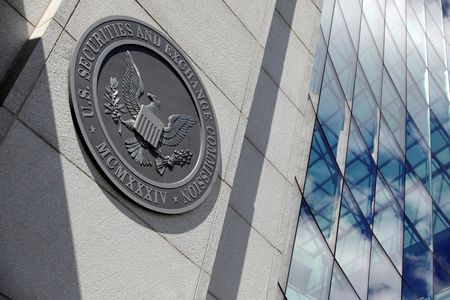
The court’s conservative majority issued Thursday rulings that supported the FCC’s penalty system and upheld the SEC’s extensive authority to reclaim unlawful profits through a financial tool known as disgorgement.
Georgetown University law professor David Super characterized the outcomes as “small, largely technical wins” for both agencies.
“These cases should be understood as the court telling Congress and administrative agencies that, if they adhere to the rigid limits on public regulation in its prior decisions, the court will not come back and move the goalposts,” Super said.
President Donald Trump’s administration supported both agencies throughout the legal proceedings.
WIRELESS CARRIERS DEFEATED
The FCC prevailed in an 8-1 decision that dismissed a legal challenge from telecommunications giants AT&T and Verizon. The dispute centered on whether the agency’s internal enforcement system violates constitutional jury trial rights, following a 2024 Supreme Court decision that restricted the SEC’s in-house proceedings in SEC v. Jarkesy.
The justices Thursday dismissed arguments from AT&T and Verizon that the Jarkesy decision should apply similarly to FCC operations.
However, the court emphasized that financial penalties from the agency, called forfeiture orders, don’t prevent companies from challenging the fines in court.
“The court didn’t take the opportunity to expand the reach of its prior decision in Jarkesy, but it also stressed that companies have no legal obligation to comply with the FCC’s forfeiture orders until a jury weighs in,” University of Michigan Law School professor Daniel Deacon said.
Deacon expressed no surprise at either the result or the Trump administration’s defense of agency authority.
“The Trump administration knows that it can use the administrative state for its own ends, and it hasn’t uniformly opposed agencies’ claims to authority,” Deacon said.
SEC AUTHORITY PRESERVED
A unanimous 9-0 decision strengthened the SEC’s disgorgement powers, supporting an expansive interpretation of one of the financial watchdog’s primary enforcement tools.
The central question involved whether the agency must demonstrate that victims experienced financial harm, or pecuniary loss, before seeking the return of illegal profits.
Defendant Ongkaruck Sripetch had urged the court to expand a previous ruling while challenging a court order requiring him to return over $3 million in unlawful gains and interest from a financial fraud case. The 2020 Liu v. SEC decision had restricted disgorgement to net profits from the questionable conduct.
Thursday’s ruling determined that the Liu decision didn’t support Sripetch’s challenge against the SEC.
Jose Lopez, an attorney at Dorsey & Whitney and former SEC lawyer, said the court’s decision “preserved one of the SEC’s most potent weapons in its enforcement arsenal.”
The court has previously limited federal agency authority through several significant rulings.
Recent years have seen the court establish a conservative legal theory called the major questions doctrine, granting judges broad authority to strike down executive agency actions with “vast economic and political significance” unless Congress clearly authorized them.
In another setback for federal regulatory authority, the court in 2024 eliminated a landmark 1984 precedent that had deferred to U.S. agencies when interpreting the laws they enforce. This principle, known as “Chevron deference,” had faced long-standing opposition from conservatives and business groups.
Brianne Gorod, chief counsel at the Constitutional Accountability Center, a liberal legal organization that supported the SEC and FCC in their cases, described Thursday’s decisions as victories for the regulators and “everyone who benefits from these agencies being able to do their jobs.”
“While this court has a history of favoring big business interests and making it more difficult for federal government agencies to do their jobs, today’s decisions are a reminder that it’s not always possible to predict what this court will do,” Gorod said.