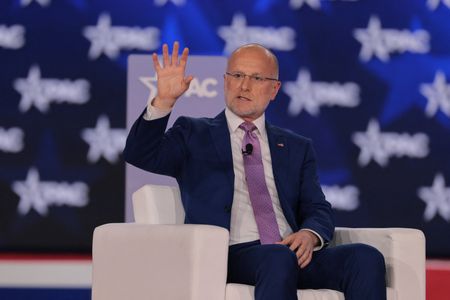
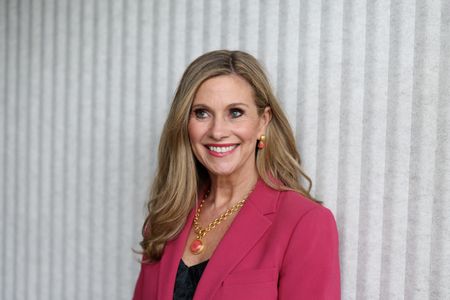
The Equal Employment Opportunity Commission is undergoing a significant transformation in its mission and priorities under the leadership of Andrea Lucas, who was appointed by former President Trump to chair the federal agency.
Lucas has established a new direction for the EEOC, marking a departure from the organization’s traditional focus on safeguarding vulnerable and underrepresented employees in the workplace.
The agency, which was established during the Civil Rights movement to combat workplace discrimination, is now operating under a different set of priorities that represent a shift from its historical mission of protecting marginalized workers.
This change in direction reflects broader policy shifts within federal agencies as new leadership implements different approaches to civil rights enforcement and workplace protection.
Soccer enthusiasts will have one last opportunity to secure World Cup tickets as FIFA launches its final ticket sales phase this Wednesday.
The world soccer governing body is releasing its remaining inventory of tickets for the upcoming tournament, marking the last official chance for fans to purchase seats through FIFA’s authorized channels.
According to FIFA officials, this final sales round comes with important considerations for potential buyers. Ticket prices and availability will vary significantly, and the organization is cautioning fans that high demand could work against those hoping to score last-minute deals.
The final ticket release follows previous sales phases that have seen intense competition among soccer fans worldwide trying to secure their spots at the prestigious tournament.
FIFA representatives emphasize that this Wednesday launch represents the absolute final opportunity to purchase official World Cup tickets directly from the organization, making it a critical moment for fans who have been waiting to attend the matches.
Autonomous naval vessel manufacturer Saronic Technologies announced Tuesday it has successfully completed a massive $1.75 billion investment round, pushing the company’s worth to $9.25 billion – more than twice its previous valuation.
The dramatic increase in value reflects a broader trend of soaring investor interest in defense technology companies, particularly as the Trump administration signals plans to redirect military funding toward innovative firms capable of delivering advanced technology faster and cheaper than traditional defense contractors.
The rapid growth is striking – Saronic secured $600 million just last month at a $4 billion company value. Similarly, drone manufacturer Anduril Industries is seeking to reach a $60 billion valuation in its upcoming funding round.
To put this in perspective, established defense giant Huntington Ingalls, which serves as the military’s primary shipbuilder with 44,000 employees, currently holds a market value of $15 billion.
The Navy awarded Saronic a $392 million contract in December for production of its 24-foot Corsair autonomous vessels. The company’s Austin manufacturing facility now has capacity to produce thousands of these units annually.
Saronic’s roadmap includes expanding its fleet offerings from the compact Corsair to the larger 180-foot Marauder vessel, with plans for additional surface and underwater craft. Following previous funding, the company acquired a Louisiana shipyard in Franklin for Marauder construction.
The new capital will fund expansion of manufacturing operations across Louisiana, Texas, and additional locations. Saronic is also developing an advanced shipbuilding facility concept called “Port Alpha.”
Kleiner Perkins spearheaded the investment round, bringing together new investors including Advent International, Bessemer Venture Partners, DFJ Growth, and BAM Elevate. Previous backers Andreessen Horowitz, 8VC, Caffeinated Capital, Elad Gil, and Franklin Templeton also participated.
The company reports its workforce has grown beyond 1,300 employees.
HAMBURG, Germany — German authorities report a woman was attacked by a wolf Monday evening in a busy shopping district of Hamburg, marking what officials believe is the first recorded incident of its kind since wolves made their comeback to the country nearly three decades ago.
Emergency responders transported the victim to a local Hamburg medical facility following the unprecedented encounter, according to reports from the German news service dpa. Details about the woman’s medical status remained unavailable Tuesday, and law enforcement has not disclosed the location or extent of her injuries. The circumstances that led to the attack remain unclear.
The incident occurred in a commercial district close to Altona station, located west of Hamburg’s central area. Later that same evening, law enforcement officers retrieved the wolf from the Binnenalster lake in the heart of the city after receiving multiple reports of the animal’s presence there and at various other locations throughout Hamburg. Media outlets reported the wolf was subsequently moved to a containment facility on the city’s outskirts.
Authorities suspect the wolf responsible for the attack is likely the same animal spotted over the weekend in Blankenese, a Hamburg suburb. Wildlife specialists theorize the creature is a juvenile wolf seeking its own territory that inadvertently entered the urban area. Hamburg’s regional administration emphasized that wolves typically steer clear of human and canine contact, and noted that the unfamiliar city setting would create significant stress for the animal.
According to Germany’s Federal Agency for Nature Conservation, this represents the first documented case of a wild wolf attacking a human since these animals returned to German territory following a 150-year absence that ended nearly 30 years ago, dpa reported.
However, wolf attacks targeting farm animals across Europe have increasingly troubled agricultural communities for years. In the previous year, the European Parliament approved changing the wolf’s classification from “strictly protected” down to “protected.”
Just last week, Germany’s national legislature gave final authorization to new laws that will make it simpler for authorities to eliminate wolves that attack or injure farm animals.
Arizona outfielder Corbin Carroll put on an offensive showcase, blasting a home run and recording a triple while driving in four runs as the Diamondbacks held off a late Detroit comeback to defeat the Tigers 9-6 in Phoenix on Monday night.
Carroll got Arizona rolling early with an RBI triple in the opening frame, then followed up with a three-run blast in the second inning to stake his team to a commanding 5-0 advantage against Justin Verlander, who was making his Detroit debut after returning to the organization on a one-year deal following his departure in 2017.
The veteran right-hander Verlander (0-1) struggled in his Tigers homecoming, surrendering six hits and five earned runs across 3 2/3 innings of work. The former Cy Young Award winner from 2011 had spent his first 13 major league seasons in a Detroit uniform.
Arizona starter Michael Soroka (1-0) delivered five shutout innings while matching his career-best with 10 strikeouts in his first outing for the Diamondbacks, who bounced back from being swept by Los Angeles in their season-opening series to capture their home opener. Soroka achieved an “immaculate inning” in the fifth frame, retiring three consecutive batters on exactly nine pitches. Paul Sewald closed out the victory with a perfect ninth inning to record his first save.
White Sox 9, Marlins 4
Miguel Vargas launched a grand slam and finished with six RBIs while Austin Hays connected on a three-run homer as Chicago captured its first victory of the season with a road win over Miami.
Japanese star Munetaka Murakami, who became the first player in White Sox history to homer in his initial three games, went 1-for-5 as his home run streak came to an end. Chicago rebounded after dropping three consecutive contests. Davis Martin (1-0) scattered five hits and three runs across five innings for the victory.
Miami suffered its first defeat following a three-game season-opening sweep. The Marlins received offensive contributions from Liam Hicks, who delivered a two-run homer and added an RBI single. Chris Paddack (0-1) made his Miami debut but struggled, yielding eight hits and eight runs in four innings.
Rockies 14, Blue Jays 5
Troy Johnston connected on a two-run homer to spark a seven-run sixth inning explosion as Colorado claimed its first victory in four games this season with a road triumph over Toronto.
Ezequiel Tovar collected three hits and three RBIs while TJ Rumfield contributed three hits and two RBIs for the Rockies. Braxton Fulford added a solo homer and an RBI single. Relief pitcher Chase Dollander (1-0) earned the win despite allowing four runs, five hits and two walks while striking out five over four innings.
Davis Schneider homered twice for Toronto while George Springer, Andres Gimenez and Kazuma Okamoto each added solo shots in the Blue Jays’ first loss in four games this season. Toronto starter Cody Ponce injured his right knee attempting to field Jake McCarthy’s grounder in the third inning and required assistance leaving the field.
Astros 8, Red Sox 1
Jose Altuve connected twice and Lance McCullers Jr. took a shutout into the seventh inning of his season debut as Houston dominated visiting Boston.
Yordan Alvarez and Brice Matthews also homered for the Astros, who captured their third consecutive victory after losing their first two games. Altuve recorded his 15th career multi-homer game and went 4-for-4 with a walk and four runs scored. McCullers (1-0) permitted one run on four hits with nine strikeouts over seven innings.
Houston jumped on Ranger Suarez (0-1) in his Boston debut. The southpaw gave up four runs on seven hits in 4 1/3 innings.
Mariners 2, Yankees 1
Cal Raleigh delivered a walk-off single in the ninth inning to give Seattle a victory over visiting New York.
Seattle reliever Matt Brash (1-0) threw a scoreless inning for the win. Luis Castillo tossed six shutout innings with seven strikeouts as the Mariners improved to 3-2.
Ryan Weathers went 4 1/3 innings and allowed one run on four hits in his Yankees debut. New York suffered its first loss after winning three straight.
Additional Games
In other action around the majors: Cincinnati’s Chase Burns threw five one-hit innings with seven strikeouts in his first major league victory, a 2-0 win over Pittsburgh; Washington routed Philadelphia 13-2 behind Luis Garcia Jr.’s three RBIs; Kansas City defeated Minnesota 3-1 in their home opener; Atlanta shut out Oakland 4-0; Chicago Cubs beat the Angels 7-2; Texas topped Baltimore 5-2; Tampa Bay rallied past Milwaukee 3-2; the Mets edged St. Louis 4-2; San Francisco defeated San Diego 3-2; and Cleveland handed the defending champion Dodgers their first loss of the season, 4-2.
BRUSSELS – The European Union’s top energy official is warning member nations to get ready for extended turmoil in energy markets caused by the war involving Iran.
EU Energy Commissioner Dan Jorgensen sent a letter dated March 30 to energy ministers across the bloc, advising them to begin preparations for what could be lasting market disruptions. The correspondence was obtained ahead of an emergency ministerial meeting scheduled for Tuesday.
The ongoing Middle East conflict has severely impacted global energy costs, with European gas prices skyrocketing more than 70% since the U.S.-Israeli military action against Iran commenced on February 28. Europe’s substantial dependence on energy imports makes the continent particularly vulnerable to price volatility stemming from regional conflicts.
While the closure of the critical Strait of Hormuz shipping lane hasn’t directly affected Europe’s crude oil and natural gas deliveries – since most of these resources come from non-Middle Eastern suppliers – Brussels remains deeply worried about other energy products.
Jorgensen highlighted immediate concerns regarding Europe’s access to refined petroleum goods, including jet fuel and diesel. These products face potential supply constraints that could impact the continent’s energy security.
The commissioner’s letter outlined several recommendations for member states during this uncertain period. Nations should refrain from implementing policies that would boost fuel usage, restrict petroleum product trading, or discourage production at European refineries processing these critical materials.
“Member States are encouraged to defer any non-emergency refinery maintenance,” Jorgensen wrote in his communication to ministers.
The emergency meeting comes as European leaders grapple with energy security challenges that echo previous disruptions caused by geopolitical tensions in key energy-producing regions.
Iranian judicial authorities are threatening capital punishment and complete property confiscation for citizens suspected of espionage or collaboration with adversarial nations, according to a judiciary spokesperson’s announcement on March 31st.
The official stated that individuals who share photographs or video footage potentially useful for enemy targeting operations may face charges of intelligence collaboration under the enhanced legislation.
Over 1,000 individuals have been detained during the past month on allegations including recording footage at strategic sites, distributing anti-regime material on social media platforms, and engaging in enemy collaboration, according to Iranian news outlets.
The ongoing military confrontation between Iran and both the United States and Israel began February 28th, subsequently expanding throughout the Middle East region, resulting in thousands of casualties while disrupting global energy markets and economic stability.
The judicial representative explained that the strengthened statute, enacted in the previous year, covers operational activities, intelligence work, and specific media actions considered supportive of antagonistic governments, particularly the United States and Israel.
Citizens who spread panic through false information could receive imprisonment, with enhanced penalties during periods of armed conflict, the spokesperson cautioned.
Approximately 200 formal charges have been filed in related cases, with authorities collaborating with security agencies to locate and confiscate assets connected to accused individuals, emphasizing zero tolerance in law enforcement, the official added.
Russian authorities are intensifying efforts to block Virtual Private Networks, the digital tools that millions of citizens rely on to circumvent government internet restrictions and censorship, according to the country’s top digital official.
The announcement comes amid what international diplomats have dubbed Russia’s “great crackdown” on digital freedoms, which has included blocking mobile internet access and disrupting major messaging platforms while expanding government authority to shut down mass communications.
“The task is reduce VPN usage,” stated Digital Minister Maksut Shadayev through the state-supported messaging platform MAX on Monday evening. He added that his department is working to implement these restrictions while attempting to minimize disruption for users.
Shadayev revealed that officials have made decisions to limit access to several unnamed foreign platforms, though he provided no specific details about which services would be affected.
Following Russia’s 2022 military action in Ukraine, the government enacted the most restrictive censorship measures witnessed since the Soviet era, strengthening oversight and expanding the authority of the Federal Security Service, which succeeded the Soviet KGB.
Recent months have seen authorities escalate these measures significantly, blocking WhatsApp entirely, reducing Telegram’s functionality, and repeatedly disrupting mobile internet service in Moscow and other major cities and regions throughout the country.
Government officials justify these actions by claiming foreign platforms have violated Russian law and that mobile internet limitations are essential for defending against large-scale Ukrainian drone attacks.
Data from the Kommersant newspaper indicates that by mid-January, Russian authorities had blocked over 400 VPN services, representing a 70% increase from the end of the previous year.
However, the situation has become an ongoing battle between authorities and users: each time officials disable one VPN service, replacement options quickly emerge, and many young Russians reportedly switch between different VPN providers on a daily basis to maintain access.
A leading European satellite internet company is pursuing a partnership with India’s space program as it works to expand its rocket launch capabilities beyond current providers like SpaceX.
Eutelsat, which competes directly with Elon Musk’s Starlink service, has entered discussions with India’s Space Research Organisation (ISRO) regarding future satellite deployments, according to company CEO Jean-François Fallacher. The French executive, who has led the organization since June, confirmed the ongoing negotiations during a recent interview, though he noted that no agreement has been finalized.
The potential partnership discussions have not been previously disclosed publicly. ISRO officials have not yet responded to requests for comment about the talks.
This development comes as France and India have strengthened their cooperation across multiple sectors, including defense, space technology, and maritime security. India recently committed to purchasing French military aircraft, and last year French President Emmanuel Macron advocated for increased space collaboration between the nations. Macron characterized dependence on non-European launch providers as “madness.”
Eutelsat’s current structure resulted from a 2023 combination with OneWeb, a London-based satellite internet company that had been financially supported by both British and Indian investors, including India’s Bharti group.
The merged organization faced significant challenges when Russia’s invasion of Ukraine cut off access to Soyuz rocket services. Since then, the company has depended on SpaceX’s Falcon 9 rockets and Europe’s Ariane launch vehicles. Additionally, Eutelsat has arranged a contract with MaiaSpace, a French company developing Europe’s first reusable small-scale launcher.
Fallacher traveled to New Delhi in February as part of President Macron’s official visit, where he met with India’s telecommunications minister and regulatory officials to explore market entry opportunities.
“We are preparing for the future, because launch capacity needs to be prepared very much in advance,” Fallacher explained. “India is a huge country … so getting market access is strategic.”
ISRO previously launched 72 OneWeb satellites using its LVM3 rocket system before the companies merged. These refrigerator-sized satellites deliver high-speed internet connectivity to government agencies and commercial clients.
India is currently restructuring its space sector strategy, transferring routine manufacturing and commercial operations to private companies while allowing ISRO to concentrate on cutting-edge research and exploration missions. Government projections estimate India’s domestic space industry could reach approximately $44 billion in value by 2033.
Regarding Eutelsat’s financial position, Fallacher stated the company has secured complete funding through 2031. The organization currently operates 650 satellites and anticipates expanding to over 1,000 units “very soon,” according to the CEO. Airbus is constructing 440 additional satellites, while a planned OneWeb enhancement for the European Union’s IRIS² initiative will further expand the fleet.
When asked about comparisons to Starlink’s 10,000-satellite network, Fallacher emphasized that Eutelsat would expand as market demands require.
“It’s not a question of number of satellites, because when you are higher in space, you need fewer satellites. As soon as it’s becoming a limitation, we will order new satellites and we will grow the constellation,” he stated.
The company secured its financial stability through a 5 billion euro ($5.7 billion) refinancing arrangement last year, which positioned the French government as the largest shareholder.
“We will not come back next year or the year after to request additional funding from the market,” Fallacher assured.
Eutelsat projects spending approximately 2 billion euros to purchase and deploy its 440 planned satellites by 2030. Launch services typically represent 30% to 40% of total program expenses.
Educational institutions aren’t the only places implementing cellphone restrictions anymore. The movement to disconnect from mobile devices is now reaching bars and restaurants nationwide.
Dining and drinking establishments are embracing the digital detox trend, creating phone-free environments for their patrons. These businesses are encouraging customers to put away their devices and focus on in-person conversations and experiences.
The shift represents a growing response to concerns about technology’s impact on social interaction and the dining experience.
Community volunteers in areas experiencing heightened immigration enforcement activity have organized group escorts to help students safely reach their schools.
These volunteer-led initiatives, which organizers have dubbed ‘walking buses,’ involve adults accompanying groups of children on foot to ensure they can continue attending classes despite ongoing federal immigration operations in their neighborhoods.
The grassroots effort has emerged as a response to increased U.S. Immigration and Customs Enforcement activities in various communities across the country, with local residents stepping up to provide safe passage for students who might otherwise face barriers getting to school.
The leader of the Cherokee Nation recently discussed his ongoing disputes with Oklahoma’s state government over tribal sovereignty and Native American rights.
Chuck Hoskin Jr., who serves as Principal Chief of the Cherokee Nation, sat down with NPR’s Steve Inskeep to address his current conflicts with Oklahoma’s governor and the broader challenges facing tribal communities nationwide.
The conversation highlighted the continuing tensions between state and tribal governments over issues of sovereignty and self-governance that affect Native American communities across the country.
Transportation Security Administration workers have begun collecting their delayed paychecks, marking the first time they’ve been compensated since the Department of Homeland Security shutdown commenced more than six weeks ago.
The back pay distribution comes as relief for security personnel who have been working without compensation throughout the extended government closure. However, airport operations continue to face challenges, with lengthy security checkpoint delays persisting at various airports across the country.
A seasoned Transportation Security Administration officer walked away from his career after nearly a decade of service when a federal government shutdown left him working without receiving his paycheck.
Robert Echeverria, who spent nine years screening passengers at Salt Lake City Airport, made the difficult decision to seek employment elsewhere when the partial government closure meant TSA workers continued reporting to their posts despite not being paid.
In an interview with NPR correspondent Leila Fadel, Echeverria explained the circumstances that led to his departure from the federal security agency, highlighting how the financial strain of unpaid labor during the shutdown ultimately drove him to pursue other career opportunities.
Listen to the Morning Delmarva Farm Report Update — March 31, 2026
DELMARVA — Spring planting conditions across Delmarva are shaping up favorably as March draws to a close. Soil temperatures have climbed into the mid-50s in most areas, putting growers on track for an on-time or slightly early corn planting window.
Extension agents report moisture levels remain adequate after last week’s rainfall, though some heavier clay soils on the Eastern Shore are still drying out. Equipment has been rolling in Sussex and Caroline counties where fieldwork picked up over the weekend.
Fertilizer prices have eased slightly from their February highs.
Markets
Corn futures opened Tuesday morning at $5.32/bu, down 3 cents. Soybeans traded at $12.18, up 5 cents. Wheat stood at $6.47/bu, down 2 cents.
Locally, Delaware cash corn is running $5.15/bu. Soybeans are trading at $12.00 at Delmarva elevators.
Forecast
Tuesday offers ideal conditions for fieldwork with sunny skies and highs around 77°F. Southwest winds are expected at 10-15 mph. Tonight will stay dry with lows near 60°F under partly cloudy skies.
Wednesday starts partly sunny but storms move in by afternoon and continue through Wednesday night. Growers are advised to complete field tasks Tuesday if possible, as rain totals could reach 0.5-1 inch, putting fieldwork on hold mid-week.
This article is based on the Delmarva Farm Report Update Morning Edition, March 31, 2026. Hosted by Tom Bradley.
A massive humpback whale measuring between 39 and 49 feet has successfully escaped from shallow waters where it had been trapped along Germany’s Baltic Sea coast since the weekend.
The marine mammal broke free Monday evening from waters near Wismar, a German port city, according to regional authorities. Initially swimming toward the harbor, the whale changed course and headed for open waters. Marine experts reported no additional whale sightings Tuesday morning.
Rescue teams had previously worked to free the enormous creature from an underwater sandbank at Timmendorfer Strand, a resort community in the area, using heavy excavation equipment. Despite the successful initial rescue, the apparently weakened whale soon found itself in difficulty again, though in slightly deeper waters. Officials decided to give the animal space and time to regain strength naturally.
The whale’s plight captured widespread attention across Germany, drawing large crowds to shorelines while news outlets provided continuous coverage and live video streams of the rescue efforts.
However, the whale remains far from where it belongs and must navigate an enormous distance to reach the Atlantic Ocean via the North Sea.
“The whale swimming free yesterday is a first very good sign, but the way to the North Sea is still long and we can only keep our fingers crossed that it makes it there,” Burkard Baschek, the scientific director of the Ocean Museum Germany and the scientific coordinator of the rescue effort, told ZDF television.
Baschek explained that guiding the whale on its journey spanning several hundred miles would not be feasible, citing whales’ diving capabilities. “That means that in principle we can only hope that it will make it under its own steam,” he added.
Marine biologists have not placed a tracking device on the whale due to its deteriorated skin condition, caused by extended exposure to the Baltic Sea’s lower salt levels compared to ocean waters.
The whale was initially observed in the area on March 3.
Experts remain uncertain about what caused the whale to enter Baltic waters. Some marine biologists suggest the animal may have become disoriented while pursuing a school of herring or during its migration route.
KYIV, Ukraine — A delegation of twelve European foreign ministers arrived in Ukraine’s capital Tuesday, traveling by train to commemorate the fourth anniversary of Russian war crimes committed in the nearby town of Bucha.
The high-level diplomatic mission comes as American-led peace negotiations remain stalled and Washington’s focus has shifted toward Middle Eastern conflicts, prompting European nations to intensify efforts to maintain international attention on what has become Europe’s largest land conflict in decades, now entering its fifth year.
Ukrainian Foreign Minister Andrii Sybiha welcomed the European delegation, acknowledging what he called the “grim anniversary” of the horrific crimes that shocked the world four years ago.
Russian forces quickly seized control of Bucha following their February 24, 2022 invasion of Ukraine, maintaining occupation for approximately one month. After Ukrainian forces reclaimed the community, they discovered over 400 bodies left behind from Russia’s systematic killing campaign.
“Such a strong European presence (in Ukraine) on this day demonstrates that justice for this and other Russian atrocities is inevitable,” Sybiha wrote on X. “Comprehensive accountability for Russian crimes is vital to restore justice in Europe.”
Tuesday’s discussions between EU representatives and Ukrainian officials centered on reaffirming Europe’s commitment to pursuing accountability for Russia’s invasion and subsequent war crimes.
During her journey to Kyiv, EU foreign policy chief Kaja Kallas emphasized the critical need to prosecute both military commanders who issued execution orders and soldiers who carried out the killings in communities like Bucha.
“One of the things that is really necessary is accountability. Otherwise, you have revenge and retaliation,” Kallas stated. “If you don’t see people doing this to your family held accountable, you will want revenge.”
The ongoing Iran conflict has become Washington’s primary concern, potentially redirecting crucial military resources that Ukraine desperately needs, including air defense systems, while simultaneously boosting Russia’s economy through elevated energy prices.
“We can’t let it (the Ukraine war) slip off the table,” Kallas warned. “We are the ones who have to keep this up because nobody else does.”
American-facilitated peace talks have reached an impasse, with no clear timeline for resumption as the Middle East crisis continues to dominate international attention.
BANGKOK (AP) — The globally popular Eurovision music competition will debut its inaugural Asian version in Thailand’s capital city this November.
Eurovision Song Contest Asia 2026 will feature performers from a minimum of 10 Asian nations: Thailand, South Korea, the Philippines, Vietnam, Malaysia, Cambodia, Laos, Bangladesh, Nepal and Bhutan. Additional countries are anticipated to participate before the November finale.
Contest director Martin Green stated in Tuesday’s announcement: “As we mark the 70th anniversary of the Eurovision Song Contest, it feels especially meaningful to open this next chapter with Asia, a region rich in culture, creativity and talent.”
Thailand Tourism Authority representative Chuwit Sirivajjakul explained that Bangkok serves as an ideal host city because it “has always been a place where cultures come together, where music fills the air, and where celebration is part of everyday life.”
The primary competition, organized by the European Broadcasting Union, attracts over 100 million viewers annually.
The 2025 main event featuring 35 nations will take place in Vienna this May. However, Iceland, Ireland, the Netherlands, Slovenia and Spain are refusing to participate due to disagreements regarding Israel’s involvement.
While the competition aims to prioritize pop music over politics, it has frequently become entangled in global conflicts. Russia faced expulsion in 2022 following its comprehensive invasion of Ukraine.
The Israel-Hamas conflict in Gaza has also created controversy, sparking demonstrations outside venues and prompting organizers to restrict political displays.
Similar political tensions might surface in the Asian version, particularly given that Thailand and Cambodia experienced fatal border confrontations on two occasions last year.
For the first time in nearly two years, American motorists are facing gasoline prices that have climbed above $4 per gallon nationwide, driven by international conflicts that have sent fuel costs skyrocketing globally.
Data from AAA shows the nationwide average for regular unleaded gasoline reached $4.02 on Tuesday — representing an increase of more than one dollar since before the current Middle East war started. The last occasion drivers across the country faced such steep pump prices was almost four years ago during the aftermath of Russia’s attack on Ukraine.
These figures represent a countrywide average, which means motorists in certain regions have already been experiencing costs well above $4 per gallon for some time. Regional variations occur due to multiple elements including proximity to refineries and differences in state taxation.
The joint military action by the United States and Israel against Iran, which commenced February 28, has caused crude oil costs — gasoline’s primary component — to experience dramatic increases and volatile swings. The military conflict has created significant disruptions to supply networks and prompted production reductions from key oil-producing nations throughout the Middle East region.
These elevated fuel expenses are affecting both individual consumers and commercial enterprises, particularly as many families already struggle with broader affordability challenges. When drivers must allocate more money toward essential expenses like gasoline, they often must reduce spending in other areas of their budgets.
Costlier fuel can create a ripple effect that drives up additional expenses, from household utility costs to everyday consumer goods pricing.
Market experts highlight groceries as particularly vulnerable in the near term, since food retailers must replenish inventory regularly and may face price increases as their transportation expenses accumulate.
Shipping and package delivery operations have also felt the impact. The United Postal Service has announced plans to implement a temporary 8% surcharge on certain popular services, including Priority Mail.
Diesel fuel, which powers numerous freight and delivery vehicles, currently averages $5.45 per gallon — a significant jump from approximately $3.76 per gallon before the conflict began, according to AAA figures.
Should the military conflict continue, these prices could climb even further. Most oil tanker traffic through the crucial Strait of Hormuz, which typically handles about one-fifth of global oil shipments, has stopped completely. This has forced major regional producers to reduce output since they cannot transport their crude oil to buyers. Additionally, military strikes by Iran, Israel, and the United States have targeted petroleum facilities, intensifying supply worries.
Seeking to provide some market relief, the International Energy Agency has committed to releasing 400 million barrels from member countries’ emergency oil reserves. This includes contributions from the United States, even though Trump initially questioned the necessity of tapping strategic reserves.
The Trump administration has also relaxed sanctions to allow additional oil supplies from Venezuela and temporarily from Russia. The White House announced it would suspend maritime shipping restrictions under the Jones Act, a law dating back more than a century, for a 60-day period.
Whether these measures will provide consumer relief remains uncertain, as numerous variables influence gasoline pricing.
Since refineries purchase crude oil in advance, some facilities may continue operating with higher-priced oil for an extended period, and any new supply will need time to reach consumers.
Although rising crude costs are the main factor behind current price surges, American gasoline prices typically experience seasonal increases during this period. More motorists begin traveling and attempt to fill their tanks when possible, creating increased demand. Warmer temperatures also trigger the switch to summer-blend gasoline, which costs more to manufacture than winter formulations.
The United States, despite being a net petroleum exporter, has not experienced as severe price shocks as other global regions that depend more heavily on Middle Eastern fuel imports, particularly Asian countries. However, this does not shield America from price volatility.
Petroleum operates as a globally-traded commodity. Most American production consists of light, sweet crude oil — but refineries along the Eastern and Western coastlines are primarily configured to process heavier, sour crude varieties. Consequently, the country still requires imports.
Previous geopolitical tensions have disrupted oil distribution and contributed to gasoline price spikes. The American average for regular gasoline reached its peak of over $5 per gallon in June 2022, nearly four months following the start of the Ukraine conflict when world leaders implemented sanctions against Russia, a major oil producer.
Pump prices eventually declined from that record high. Prior to Tuesday’s increase, AAA data shows the national average had remained under the $4 threshold since mid-August 2022.
Military officials from two Baltic nations reported detecting suspicious drone activity along their borders with Russia during the overnight hours, marking the latest in a series of airspace incidents affecting NATO’s eastern territories.
Estonian defense officials announced Tuesday morning that they had identified what they termed “potentially dangerous air activity” both within and beyond the nation’s airspace boundaries during the night.
“A preventive threat notification was sent out,” military officials stated, adding that the danger had subsequently subsided.
Colonel Uku Arold, a spokesperson for Estonia’s defense forces, told the country’s public broadcasting network ERR that it was “highly likely that Ukrainian drones that went astray were involved.”
Defense authorities did not respond to requests for additional information.
In recent weeks, Ukraine has intensified its drone operations against Russian oil processing facilities and export infrastructure, with some targets located near Russia’s borders with Baltic states and Finland, as part of efforts to undermine Moscow’s wartime economic capabilities.
According to ERR, wreckage from at least one unmanned aircraft was discovered in Estonia’s Tartu county, while officials continue investigating reports of additional debris findings.
Meanwhile, Latvia’s military forces issued their own statement confirming they had spotted a foreign drone near the Latvian-Russian border on Monday evening. Officials emphasized that the aircraft remained outside Latvian airspace.
Finnish authorities revealed Monday that a Ukrainian drone that went down in Finland on Sunday was carrying an unexploded warhead when it crashed.
Danish jewelry company Pandora announced Tuesday it has launched a new distribution facility in Ontario, Canada as part of a strategy to minimize exposure to costly US import duties.
The new warehouse facility in Mississauga will allow the company to fulfill online orders for Canadian customers directly, eliminating the previous practice of routing these shipments through American distribution centers that required passage through US customs checkpoints.
The jewelry brand, famous for its customizable charm bracelets, manufactures all of its products at two production facilities located in Thailand and has faced financial pressure from increased import tariffs implemented during Donald Trump’s presidency.
Company officials have projected that US tariff policies will reduce Pandora’s operating profit margin by 1.5 percentage points by 2026.
According to a company statement, Canada represents one of Pandora’s most rapidly expanding markets, and the new distribution center – managed by logistics company GXO Logistics – will accelerate delivery times for Canadian customers.
British Prime Minister Keir Starmer has issued a two-day deadline for England’s resident doctors’ union to reconsider its rejection of a compensation and staffing agreement, cautioning that upcoming work stoppages will damage both medical professionals and the patients they serve.
In an opinion piece published in the Times newspaper, Starmer criticized the British Medical Association for making a “reckless” choice by declining to allow its membership to vote on the government’s proposal while simultaneously declaring six days of work stoppages scheduled for April.
England’s resident doctors, previously called junior doctors, plan to stop work from April 7 through April 13 following the BMA’s announcement last week that the administration’s proposal did not adequately address ongoing salary deterioration and personnel shortages within the National Health Service.
According to Starmer, the government’s proposal would have provided a salary increase exceeding inflation rates for the current year and brought total compensation improvements to approximately 35% across three years, along with changes to advancement structures intended to better recognize professional experience.
“That is why walking away from this deal is the wrong decision. It is a reckless decision,” Starmer stated in Monday’s newspaper column. “And doing so without even giving resident doctors themselves the chance to vote on it makes it even worse.”
The proposed agreement also featured coverage of required examination costs, which can total thousands of pounds during training periods, plus the establishment of up to 4,500 new specialty training positions over three years.
“If this deal is not put to a vote, those opportunities will be lost,” Starmer declared, pressing the committee to allow members input and submit the proposal for voting.
The BMA, representing approximately 55,000 resident doctors who comprise nearly half the medical workforce, has maintained that the suggested salary boost fell short of inflation rates and that the gradual implementation of advancement changes could secure additional real-value decreases.
Jack Fletcher, who leads the BMA’s resident doctors’ committee, responded to Starmer’s criticism by saying the disagreement was “not about arbitrary cut-offs,” noting that any time limit would disappear once a believable and lasting proposal became available.
Fletcher indicated the union planned to restart discussions with the government on Tuesday, hoping to achieve an agreement that might still prevent the strikes.
STOCKHOLM – Sweden experienced its most significant drop in deadly violence in more than a decade last year, according to new government data released Tuesday, as law enforcement officials deployed enhanced tactics to combat gang-related crime that has troubled the Nordic nation for two decades.
Data from Sweden’s National Council for Crime Prevention reveals that 84 individuals lost their lives to homicide and manslaughter in 2025, marking a decrease from 92 fatalities recorded in 2024 and representing a substantial decline from the 2020 peak of 124 deaths.
“The development of the number of cases of deadly violence in 2025 represented the second straight year of decline and was at the lowest level since 2012,” BRA said in a statement.
These encouraging numbers provide political momentum for the conservative administration that secured victory in 2022 elections by pledging to address organized criminal activity, which had driven firearm-related fatalities to Europe’s highest rates.
However, the crime prevention council noted that a devastating mass shooting incident in February 2025 – unconnected to gang activity – resulted in 10 deaths and significantly influenced the year’s overall violence statistics, representing nearly 25 percent of all gun-related deaths.
With national elections scheduled for September, public safety remains a priority concern for Swedish voters, despite shooting incidents declining by more than half since 2022.
Law enforcement leaders and government officials point to innovative strategies, expanded funding, and broadened authority – including comprehensive surveillance legislation – as key factors driving the reduction in criminal violence.
Recent policy changes encompass protected identities for certain court witnesses, expanded electronic monitoring capabilities, harsher criminal penalties, and designated safety zones allowing officers to conduct searches without requiring probable cause.
Police officials report these enhanced measures have enabled them to confiscate criminal organizations’ resources more effectively and improve their ability to prevent shooting incidents.
Firearms remained the primary method in violent deaths, claiming 42 lives during 2025, representing a decrease of three victims from the previous year’s total.
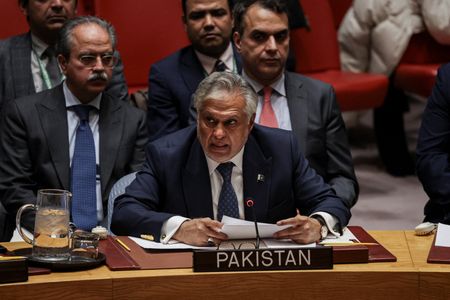
BEIJING – Pakistan’s top diplomat is scheduled to meet with China’s foreign minister on Tuesday, with Iran’s current situation expected to be a key topic of discussion, according to Chinese foreign ministry officials.
A ministry spokesperson revealed during a press briefing that both nations maintain aligned perspectives on significant international and regional matters.
The diplomatic meeting comes as part of ongoing cooperation between the two countries on foreign policy issues.
MAKURDI, Nigeria – When US foreign aid cuts threatened to leave thousands of HIV patients without access to crucial medications, volunteer health workers in Nigeria took matters into their own hands, walking from house to house to ensure people stayed alive.
Josephine Angev, a 40-year-old volunteer, spent months last year traveling through rural communities in Nigeria’s Benue State, helping HIV patients maintain access to antiretroviral drugs that keep the virus suppressed and prevent transmission to others.
Angev is among dozens of volunteer “HIV champions” who conducted personal visits to bring patients back into medical care when medication access was interrupted, serving people whose condition often carries social stigma and shame.
Many patients were unaware of the dangers of stopping their treatment. “They don’t understand the implications,” Angev explained.
When people with HIV discontinue antiretroviral medications that control the virus, it resurges in their system. This creates risk for HIV-related health complications within months and enables virus transmission to others.
Angev made repeated visits to a 65-year-old woman who had ceased taking her medication when her supply was exhausted. The woman subsequently became sick. Through Angev’s persistent efforts, she has resumed her drug regimen and is now healthy.
This case illustrates how individuals managed during the aftermath of aid reductions that disrupted global HIV programs in 2025. Additional wealthy nations followed the US in reducing aid, forcing countries dependent on such assistance to find alternative solutions.
Nigeria responded within six weeks by announcing a $200 million health funding package that included HIV programs. The US government also granted a waiver for “life-saving” aid in February 2025, including antiretroviral medications. However, volunteers played a crucial role in filling service gaps.
Dinah Adaga oversees the volunteer network in Benue State. “If we couldn’t reach someone by phone, we went to their house – we traced the address and knocked on their door,” she explained.
A 41-year-old mother described feeling hopeless when learning about the aid reductions, worried that medications would become too expensive. Volunteers helped reconnect her with treatment in November.
“These drugs mean a lot to me. My future depends on them. I have three daughters, and they’re all doing well… They are all (HIV) negative. I’m the only one who is positive. So I believe the drugs were truly made for people like me,” she stated.
President Donald Trump’s 90-day suspension of foreign aid beginning January 20 last year created immediate consequences in Nigeria.
The US had covered approximately 90% of Nigeria’s HIV treatment expenses and supported healthcare personnel. In subsequent months, patients and advocacy organizations reported that medication distribution systems collapsed.
Patients could only obtain supplies lasting one to two weeks instead of six months from major medical facilities. In Makurdi, Benue’s capital city, all 10 treatment facilities shut down for one month, and the World Health Organization cautioned that medications might be depleted.
A network of volunteers intervened, operating as part of Afrocab, a continent-wide community support organization. They reconnected people with care facilities once they reopened with new funding sources, and addressed false information that had circulated about prayer-based “cures.” They encouraged expectant mothers to return to prenatal care to safeguard their babies.
Between June and December 2025, the volunteers brought more than 1,000 people in Benue, including 95 children under age five, back into medical care – representing everyone they estimate who had discontinued treatment in February and March.
“We have not received reports of people dying from not accessing antiretrovirals… that’s, for us, a good sign,” stated Krittayawan Boonto, UNAIDS country director in Nigeria.
Nigeria has approximately two million people living with HIV, among the world’s highest totals. Benue, a state with 4.25 million residents, has slightly over 200,000 people receiving treatment, according to Afrocab estimates.
Immediately following the aid suspension, a UNAIDS monitoring system indicated 200,000 fewer Nigerians were receiving treatment. However, by year-end 2025, data revealed 1.7 million people on treatment, a modest increase from 2024’s 1.6 million.
A US State Department representative said the number receiving medications was “very similar” at the end of 2025 compared to 2024. “The narrative suggesting widespread HIV treatment loss… is inaccurate, misleading and irresponsible,” they added.
Nigeria’s government did not respond to requests for comment.
Global health organizations and the Nigerian government have warned that HIV prevention services experienced more severe and prolonged impacts.
Bright Oniovokukor, who coordinates the Civil Society for HIV/AIDS in Nigeria, reported that people accessing drugs to prevent HIV infection decreased from 43,000 in November 2024 to below 6,000 in April 2025, while condom distribution fell by 55%.
Conditions have improved since then, but any interruption in prevention leads to increased cases, explained Dr. Oluwafunke Odunlade, HIV unit head at WHO Nigeria. Testing was also affected, meaning cases may have been overlooked: preliminary data showed that more than one million fewer people received HIV testing in 2025 compared to 2024.
Currently, the US and Nigeria are finalizing details of a health agreement for 2026-2030 that was signed in December, under which the US will provide $2.1 billion and Nigeria $3 billion.
The agreement prioritizes HIV response and commits to enrolling more patients in treatment programs, with Nigeria assuming complete funding responsibility over the next five years.
The US has indicated that only workers “formally recognised within government structures” will receive funding, and the agreement emphasizes “a strong emphasis on Christian faith-based healthcare providers,” reflecting broader US efforts to support Nigeria’s Christian population, which faces threats from Islamist violence.
In Benue, Angev will continue her volunteer work. “It can be exhausting, but we do it so lives that might have been lost are instead restored. And when you see them living better lives and truly changed, that’s when you feel happy,” she said.
Japan has activated its first long-range missile system at a military installation in the country’s southwest, officials announced Tuesday, representing a major expansion of the nation’s offensive military capabilities.
The enhanced Type-12 land-to-ship missile system, manufactured by Mitsubishi Heavy Industries, went into operation at Camp Kengun located in Kumamoto prefecture.
Defense Minister Shinjiro Koizumi addressed reporters about the significance of this development. “As Japan faces the most severe and complex security environment in the postwar era … it is an extremely important capability to strengthen Japan’s deterrence and responsiveness,” Koizumi stated. “It demonstrates Japan’s firm determination and capability to defend itself.”
The modernized Type-12 system can strike targets approximately 1,000 kilometers (620 miles) away, a dramatic increase from the original version’s 200-kilometer (125-mile) capability that now puts mainland China within striking distance.
This missile deployment provides Japan with “standoff” strike capabilities, allowing the country to attack enemy launch sites from distant positions. This represents a departure from Japan’s historically defensive-only military doctrine maintained under its pacifist constitution.
Local citizens who oppose having the weapons stationed near civilian neighborhoods held demonstrations outside Camp Kengun, arguing the deployment could heighten regional tensions and make their community a potential target for adversaries.
On the same day, military officials also activated a hypersonic glide vehicle system at Camp Fuji in Shizuoka prefecture, located west of Tokyo. This new weapons platform was specifically designed for defending Japan’s island territories. Military planners expect to install additional Type-12 missiles and hypersonic systems at various sites across Japan, including northern Hokkaido and southern Miyazaki, with completion targeted for March 2028.
Japan’s military expansion also includes plans to equip the destroyer JS Chokai with American-made Tomahawk cruise missiles capable of reaching targets 1,600 kilometers (990 miles) away later this year, with seven additional destroyers scheduled to receive the same weapons.
Japanese officials view China as the primary regional security challenge and have been strengthening defenses on southwestern islands near the East China Sea in recent years.
Prime Minister Sanae Takaichi’s administration approved a record-breaking defense spending plan in December exceeding 9 trillion yen ($58 billion) for the fiscal year starting in April, focusing on counter-strike capabilities and coastal defenses using cruise missiles and autonomous weapons systems.
Last June, Japan detected two Chinese aircraft carriers operating simultaneously near remote Japanese Pacific islands for the first time, raising Tokyo’s concerns about Beijing’s expanding military presence beyond its territorial boundaries.
Defense officials established a specialized office last week dedicated to monitoring China’s Pacific naval activities.
Regional tensions have intensified following Takaichi’s November declaration that any Chinese military assault on Taiwan could justify Japanese military intervention.
A major artificial intelligence infrastructure company announced Tuesday it will build a massive data center in Finland valued at more than $10 billion, marking another significant step in the growing demand for AI computing power across Europe.
Nebius Group, headquartered in Amsterdam, revealed plans for the 310-megawatt facility that will rank among the continent’s largest AI data centers. The project represents the company’s 10th location as it rapidly expands its European operations.
Construction is already underway in Lappeenranta, a city located near Finland’s eastern border with Russia, with Finnish developer Polarnode handling the build. The massive facility is scheduled to become operational in stages beginning in 2027.
The announcement comes after Nebius secured major contracts totaling more than $40 billion with technology giants Microsoft and Meta. However, company officials emphasized the new Finnish location will serve multiple purposes for AI model training and application deployment, rather than being dedicated to a single customer.
Polarnode CEO Mikko Toivanen described the project as one of Finland’s most significant infrastructure developments to date, noting it will strengthen European data sovereignty.
Finland has emerged as a preferred destination for data center development due to several key advantages, including affordable energy costs, abundant renewable electricity sources, and a naturally cold climate that significantly reduces cooling expenses.
Officials found Lappeenranta particularly attractive because of rapid land availability and existing electrical grid capacity. “We think that the broader ecosystem environment is also very favourable here,” Chief Communications Officer Tom Blackwell explained.
This Finnish facility will become Nebius’ largest operation outside the United States, exceeding the 240-megawatt project the company announced near Lille, France, just last month. The company currently operates its biggest European facility in Finland as well – a 75-megawatt center in Mantsala.
CEO Arkady Volozh stated the Lappeenranta location will provide a “significant contribution” toward the company’s ambitious capacity targets, which include securing over 3 gigawatts of contracted capacity before the end of this year.
The scale of the operation is enormous – the facility will consume enough electricity to power approximately 500,000 Finnish homes and will eventually represent roughly 10 percent of Nebius’ total contracted capacity worldwide.
The Vegas Golden Knights broke their three-game skid Monday evening, defeating the Vancouver Canucks 4-2 in John Tortorella’s first game behind the bench in Las Vegas.
Reilly Smith netted the decisive goal in the final minutes of the second period, while goaltender Adin Hill stopped 22 shots to secure the victory for Vegas (33-26-16, 82 points). The win moved the Golden Knights within a single point of Edmonton for second place in the Pacific Division standings.
Tortorella stepped into his role after the organization dismissed Bruce Cassidy on Sunday. The seasoned bench boss, now in his 24th NHL season, recorded his 771st career victory, placing him ninth among all-time coaching wins.
Additional scoring for Vegas came from Rasmus Andersson, Shea Theodore, and Cole Smith. The triumph marked just their second victory in eight contests.
Vancouver (21-45-8, 50 points) extended their losing streak to six games despite goals from Evander Kane and Brock Boeser. Kane reached a milestone, appearing in his 1,000th NHL contest. Goalie Kevin Lankinen recorded 30 stops in the losing effort.
The Canucks struck first when Kane converted on a 2-on-1 opportunity with Jake DeBrusk at 12:19 of the opening frame, burying a backhand attempt.
Vegas answered in the middle period as Andersson converted a Tomas Hertl feed, tapping the puck into an open net for his third tally in four outings.
Boeser restored Vancouver’s advantage on the power play, redirecting Filip Hronek’s point shot over Hill’s right shoulder from the high slot.
The Golden Knights seized control late in the second with two goals in a 77-second span. Theodore broke away and beat Lankinen with a wrist shot from the slot on the blocker side. Smith followed by converting a Brayden McNabb cross-ice pass, one-timing the puck off Lankinen’s glove and into the net.
With Vancouver pressing for the equalizer after pulling Lankinen with 2:15 remaining, Cole Smith iced the victory with an empty-net goal from the right boards with 1:10 left on the clock, marking his first goal as a Golden Knight.
At 41 years and 90 days old, LeBron James etched his name deeper into basketball history Monday night, setting a new age record for triple-doubles while powering the Los Angeles Lakers to a dominant 120-101 victory over the Washington Wizards.
The basketball legend achieved his 125th career triple-double by recording 21 points, 10 rebounds, and 12 assists, breaking his own previous age milestone of 41 years and 79 days. This marked James’ third triple-double performance this season.
The Lakers received strong support from Austin Reaves, Jaxson Hayes, and Luke Kennard, who each contributed 19 points to the winning effort. Los Angeles improved to 49-26 on the season and has now captured 15 victories in their last 17 contests. The team played without Luka Doncic, the NBA’s top scorer, who served a one-game suspension for accumulating technical fouls.
Hayes delivered a perfect shooting performance, connecting on all eight field goal attempts, while Kennard was nearly flawless from beyond the arc, hitting 4 of 5 three-point shots. The remaining Lakers struggled from long range, managing just 3 of 19 attempts from three-point territory.
Washington’s scoring was led by Will Riley with 20 points, followed by Justin Champagnie’s 18 points and Tristan Vukcevic’s 14-point contribution. The Wizards fell to 17-58 and have now dropped 19 of their previous 20 games.
Los Angeles opened strong with an 11-4 advantage after James finished an alley-oop pass from Reaves, but Washington fought back to take a 26-25 first-quarter lead on Jamir Watkins’ dunk with just 0.2 seconds left on the clock.
The Wizards extended their lead to 31-27 following a three-pointer by Jaden Hardy, but the Lakers responded with the first of two decisive 11-0 runs during the second quarter that essentially decided the outcome.
Washington struggled offensively in the second period, converting only 7 of 24 field goal attempts and managing just 1 of 10 from three-point range. The Lakers capitalized by attacking the interior effectively, with Hayes leading the charge with nine points and five rebounds during the quarter, helping Los Angeles build a commanding 65-44 halftime advantage.
The Lakers pushed their lead to 72-48 early in the third quarter, threatening another blowout loss for Washington, which had suffered a 35-point defeat at Portland the previous day.
The Wizards showed resilience with a 9-0 scoring run that cut the deficit to 81-71 after a Champagnie basket. They trailed 91-77 entering the final quarter.
Los Angeles put the game away with a devastating 13-1 run spanning just 1 minute and 44 seconds in the fourth quarter, expanding their lead to 114-84 and sealing the comprehensive victory.
Swedish automaker Volvo Cars announced Tuesday its decision to transform approximately $274 million in outstanding debt from electric vehicle manufacturer Polestar into equity shares, supporting plans to manufacture Polestar 3 vehicles at its South Carolina manufacturing facility.
The automotive company plans to execute an additional debt-to-equity conversion worth roughly $65 million during the second quarter of 2026, following a similar $300 million transaction by parent company Geely Holding.
After completing these conversions, Volvo Cars will maintain approximately 19.9% ownership in Polestar. The Swedish manufacturer previously held majority control of the electric vehicle brand before transferring most of its stake to Geely in 2024.
This financial restructuring highlights the growing collaboration between Volvo Cars and Polestar, with both companies controlled by Chinese conglomerate Geely Holding. The parent company seeks to reduce operational expenses, expand production capabilities, and optimize manufacturing resources across its automotive portfolio.
In a related development announced Monday, Volvo Cars will serve as the sole European distributor for Lynk & Co vehicles, another automotive brand within the Geely family of companies.
Vietnam’s biggest conglomerate has asked its government to abandon plans for constructing the nation’s most massive natural gas power facility, citing escalating fuel expenses due to the ongoing Iran conflict, according to newly obtained documents.
Vingroup submitted the March 25 request approximately two weeks following U.S. energy giant GE Vernova’s announcement that it had been chosen to provide turbines and generators for the massive 4.8 gigawatt liquefied natural gas facility.
The Vietnamese conglomerate, which leads the country in market value but remains new to energy ventures, refused to provide comments. Vietnam’s industry ministry and GE Vernova have not responded to inquiries.
This document represents among the earliest concrete evidence that natural gas projects may face cancellation or delays because of the ongoing military conflict.
New Zealand’s Prime Minister Christopher Luxon similarly stated this week that a proposed LNG terminal would proceed only with solid financial justification.
VinEnergo, Vingroup’s energy division, began construction on the proposed facility in Haiphong, a northern port city, last September. The initial 1.6 GW section was scheduled for completion by 2030.
Natural gas prices have skyrocketed 85% since late February when the United States and Israel conducted military operations against Iran, effectively shutting down the Strait of Hormuz to most maritime traffic. This critical shipping lane typically handles approximately one-fifth of worldwide LNG transportation.
The situation has worsened due to infrastructure damage at Qatar’s liquefaction facilities, removing 12.8 million tons annually of the fuel from global markets for three to five years.
In its proposal, Vingroup emphasized that recent events demonstrate “the significant risk of high fuel prices for LNG power projects.”
The company calculated that the completed plant would require approximately 5 million metric tons of LNG annually, with import costs ranging from $3.5 to $3.8 billion, potentially “create significant pressure on the economy’s foreign exchange needs.”
Vietnam, under communist leadership, continues rapid development with substantial industrial energy demands, primarily from international corporations and their suppliers producing export goods.
The country activated its first two LNG facilities last year. With Haiphong’s initial phase included, Vietnam aims to operate 16 plants by 2030 with total capacity reaching 24.1 GWs, positioning LNG as a primary power source.
Rather than proceeding with the gas-powered facility, Vingroup requested the industry ministry evaluate an investment proposal for a combined renewable energy project featuring battery energy storage systems. These storage systems capture electricity from renewable sources and release it during high-demand periods to maximize efficiency.
While the document didn’t identify specific renewable energy types, it estimated the battery storage project would cost approximately $25 billion, presenting a viable substitute for the gas plant with proper transmission infrastructure.
However, the company acknowledged this alternative would cost nearly five times more than the original LNG facility. Vingroup also recommended the ministry develop a “suitable electricity pricing mechanism.”
VinEnergo was founded in March 2023 but has rapidly initiated multiple energy developments.
SEATTLE — An advertisement featuring Aaron Judge and Cal Raleigh played on the T-Mobile Park videoboard as the Yankees slugger took batting practice before Monday night’s game between New York and Seattle.
Judge, the defending AL MVP, batted second in the Yankees lineup, while Raleigh — who finished second in MVP voting last season after launching 60 home runs, a record for catchers — found himself on the bench for the series opener.
Despite being benched and starting the season with just two hits in 15 at-bats along with 10 strikeouts, Raleigh emerged as the game’s hero. He entered as a pinch-hitter in the seventh inning and delivered a walk-off single down the first-base line in the ninth, securing a 2-1 victory for Seattle.
“I was just looking for something hard over the heart of the plate,” Raleigh explained. “It cut in on my hands a little bit, but I was able to keep it fair.”
Mariners manager Dan Wilson explained his decision to rest Raleigh, who participated in three World Baseball Classic games for Team USA, saying he wanted to manage the catcher’s workload early in the season.
“Coming out of spring training, he had sort of a shorter spring training in a lot of ways,” Wilson noted. “And, didn’t want to spike his workload too much.”
During his outstanding 2025 campaign, Raleigh set career highs with 159 games played and 705 plate appearances while leading the American League with 125 RBIs. Judge, speaking with The Associated Press before arriving in Seattle, praised Raleigh’s dedication after they were teammates during the WBC.
“Greatness leaves a trail,” Judge commented. “Just how he controls himself, how he controls that pitching staff, he’s going to have another great year, that’s for sure.”
Despite his remarkable previous season, the 29-year-old Raleigh experienced a slow start in 2025 as well. His batting average didn’t reach .200 until his 10th game, and he didn’t begin his home run surge until mid-April.
This history helps explain why Raleigh remains calm about his current struggles and those of teammates Josh Naylor (0 for 19) and Julio Rodríguez (1 for 19).
“It’ll be OK. I know a lot of people in that locker room, a lot of guys across the league are fighting the same thing,” Raleigh said. “They’re trying to find timing. And, it’s under a microscope more so now than it is in the middle of a season just because it’s the start of the season, everybody’s excited.”
Cleveland Guardians manager Stephen Vogt, a former major league catcher for a decade, believes Raleigh’s hitting achievements overshadow his complete skill set. Vogt considers him the premier two-way catcher in baseball today, though he cautions against unrealistic expectations following last year’s historic performance.
“For him to hit 60 homers again is unrealistic,” Vogt stated. “I think if anybody’s expectation is 50-plus homers for anyone, it’s just not realistic. But, I think Cal’s still a great offensive player, and I think he’s going to have another great year.”
While matching Babe Ruth’s 1927 record of 60 home runs — which stood for 34 years — may be unlikely, Raleigh has reached at least 30 homers in each of the past three seasons. The Mariners hope their All-Star catcher can maintain that level of production in 2026.
Wilson revealed that Seattle carefully tracked Raleigh’s workload last season, monitoring for any decline in performance. However, his production never wavered, and he didn’t miss his first start at catcher or designated hitter until the team’s 35th game.
This year, Wilson has adopted a more preventative strategy — and saw immediate benefits.
“We’re trying to assess this as we go and make sure that we don’t put him in a tough spot,” Wilson explained. “I think he’s a hard guy to get out of the lineup because he wants to be in there so badly. But, I think it just felt like today was a good day to get him some rest.”
SAO PAULO (AP) — While the ongoing conflict involving Iran continues to disrupt oil markets worldwide, Brazil has found protection through an innovative solution that’s both cost-effective and eco-friendly: millions of motorists can select between pure sugarcane ethanol or gasoline mixed with 30% biofuel when they visit gas stations.
The South American nation’s extensive fleet of flexible-fuel vehicles — cars that operate on any mixture of ethanol and gasoline — represents an unparalleled program in terms of size. This initiative, which began in 1975 under Brazil’s former military government, has successfully adapted during democratic rule to decrease reliance on imported petroleum.
Currently, as the ongoing Middle East crisis involving Iran, the United States and Israel continues into its fifth week, countries including India and Mexico are examining Brazil’s approach as a model for achieving energy independence.
While motorists across the globe experience significant cost increases, Brazilian fuel prices climbed only 5% in March — a stark contrast to the 30% surge seen in America. Experts partially attribute this price stability to an established domestic biofuel sector that enables the nation to weather international tensions with little threat of fuel supply disruptions.
“Brazil is much better prepared than most countries because it has a viable alternative of this nature,” said Evandro Gussi, president of the Brazilian Sugarcane Industry Association, UNICA.
The circumstances are especially favorable given that Brazil’s upcoming sugarcane season, starting in April’s first half, is projected to yield a record 30 billion liters of ethanol — representing 4 billion liters more than the previous year. “That increase alone is equivalent to the total amount of gasoline Brazil imported in all of last year,” Gussi noted.
Although Brazil ranks as a significant crude oil producer and exporter, the country continues importing petroleum to satisfy domestic refined fuel needs. Brazil currently obtains oil from the United States, Saudi Arabia, Russia and nearby Guyana.
Nevertheless, ethanol has emerged as a cornerstone of everyday transportation. During 2025, ethanol sales reached 37.1 billion liters, based on data from the state-operated Energy Research Company. While it remains slightly behind diesel and gasoline in overall energy consumption, ethanol’s availability at all service stations offers Brazilians both psychological comfort and economic protection.
Brazil’s biofuel industry success centers in Sao Paulo state, the nation’s manufacturing and farming hub.
Operations there combine advanced, export-focused large-scale farms with smaller family-run businesses like Bom Retiro farm, established in 1958, where several dozen employees are currently preparing to harvest their 40-square-kilometer property spanning nearly 10,000 acres.
The country’s biofuel technology has benefited from extensive government-funded research. The Science Development Center for Ethanol at Unicamp university in Campinas, located near Sao Paulo, represents one such facility. Coordinator Luis Cortez explains that Brazil’s program possesses distinct benefits that other countries cannot replicate.
“We have flexibility in ethanol production, in vehicle engines and from the federal government, which sets the percentage of ethanol in the fuel blend,” said Cortez. “We have flexibility at three levels.”
He maintains that this research investment ultimately creates benefits for consumers at service stations.
Data from the Brazilian Association of Fuel Importers shows that gasoline processed by state-owned Petrobras — containing biofuel additives — costs 46% less than imported alternatives, saving 1.16 Brazilian reals ($0.22) per liter. Petrobras diesel similarly sells at refineries for 63% below international prices.
Although the potential closure of the Strait of Hormuz hasn’t dramatically affected Brazil’s gasoline sector, the country faces challenges with increasing diesel costs. This occurs because diesel relies heavily on imported crude oil and contains lower biofuel percentages.
In contrast to the sugarcane-ethanol achievement, Brazil’s biodiesel production, primarily derived from soybeans, comprises just 14% of diesel mixtures. This percentage may reach the same 30% level used in gasoline blends only by 2030, pending research advances and technological progress, meaning the current conflict has created immediate consequences.
Brazilian diesel costs jumped over 20% in March, leading President Luiz Inácio Lula da Silva to suggest import subsidies lasting through May. Government data indicates Brazil must purchase 20% to 30% of its diesel monthly, with most supplies coming from Russia.
Brazilian officials report the country imported nearly 17 billion liters of diesel during the past year.
For 80-year-old President Lula, who seeks reelection this October, maintaining stable diesel prices remains essential to avoid trucker protests and control food price inflation.
UNICA president Gussi revealed that since the recent Iran conflict began, multiple world leaders have contacted him regarding Brazil’s biofuel sector. Mexican President Claudia Sheinbaum expressed interest earlier this month in Petrobras’ methods for producing ethanol from agave, a widely cultivated plant in Mexico.
“The best news, even in the midst of a situation like the one we are experiencing, is that this solution has a significant level of replicability,” Gussi said.
PALU, Indonesia — Search and rescue operations in Indonesia concluded successfully Tuesday morning when teams located 21 survivors floating on a makeshift raft, one day after their passenger vessel went down in turbulent ocean conditions.
Muhammad Rizal, director of the Palu city search and rescue operations center, confirmed that all individuals aboard the vessel were recovered alive. Initial reports indicated 27 people were unaccounted for, but survivors clarified that six passengers listed on the ship’s roster had canceled their travel plans before departure.
The survivors, consisting mainly of fishing industry workers, were discovered on their raft approximately 46 kilometers (29 miles) away from the location where their vessel sank in waters north of Taliabu Island.
The vessel Nazila 05 had left port on Taliabu island in North Maluku province shortly after sunset on Sunday, heading toward Kema in North Sulawesi province, according to Rizal.
Rizal explained that the Nazila 05 regularly carried tourists and served the local community as both a fishing boat and small passenger transport.
According to statements from the vessel’s owner to authorities, the ship’s captain reported that the Nazila 05 went under after powerful waves damaged the front section during severe weather conditions, with all crew members successfully evacuating to a smaller boat before the main vessel submerged, Rizal noted.
Family members informed officials that the survivors had secured themselves to a raft, prompting the National Search and Rescue Agency, known as Basarnas, to dispatch a rescue ship toward the projected drift location at first light Tuesday, where the raft was expected to be floating in rough seas.
“All survivors located by rescuers will be taken to a nearby city of Gorontalo,” Rizal said in a video statement.
The rescue mission deployed two rescue ships and received support from area fishing boats, Basarnas reported.
As an island nation containing over 17,000 islands, Indonesia relies heavily on watercraft for transportation between locations. Maritime incidents happen regularly due to insufficient safety regulations and vessel overcrowding issues.
DUBAI, United Arab Emirates — American military forces conducted what appears to be a major strike against Iran’s central city of Isfahan in the early morning hours Tuesday, creating enormous explosions visible from great distances, while Iranian forces retaliated by attacking a fully-loaded Kuwaiti oil vessel in Persian Gulf waters.
These escalating strikes demonstrate how fierce the month-long conflict between the United States, Israel, and Iran has become, with Tehran continuing to block the strategically important Strait of Hormuz and cutting off crucial global oil shipping lanes, causing petroleum costs to spike dramatically and creating chaos in international markets.
President Donald Trump, who continues to claim diplomatic negotiations toward ending hostilities are making headway, posted footage of the Isfahan assault on social media, showing bright explosions illuminating the darkness. The targeted city houses one of three locations previously bombed by American forces in June and likely contains significant quantities of Iran’s highly enriched uranium materials stored underground.
Separately, Israeli officials reported that four additional soldiers lost their lives during their Lebanese military operation, along with two more United Nations peacekeeping personnel, leading the U.N. Security Council to call an urgent meeting for Tuesday evening.
International Brent crude oil pricing reached approximately $107 per barrel during morning trading sessions, marking a more than 45% increase since military actions began February 28 when American and Israeli forces first attacked Iranian targets.
Iran’s control over the Strait of Hormuz, the critical waterway connecting the Persian Gulf through which one-fifth of global oil moves during normal times, has caused worldwide petroleum prices to climb, along with Tehran’s strikes against regional energy facilities throughout the Gulf area.
Responding to increasing frustration from Arab Gulf nations, Iranian Foreign Minister Abbas Araghchi stated Tuesday that Tehran only aims at American military personnel. Multiple countries have been urging Washington to continue military operations until Iran’s armed forces are completely eliminated.
“Our operations are aimed at enemy aggressors who have no respect for Arabs or Iranians, nor can provide any security,” Araghchi wrote on X. “High time to eject U.S. forces.”
However, civilian targets remained under attack as an Iranian unmanned aircraft struck the Kuwaiti tanker in waters near Dubai, igniting fires that emergency crews later extinguished, according to Dubai Media Office statements.
Four Dubai residents sustained injuries when fragments from a destroyed drone crashed into a neighborhood area.
Warning sirens activated across Bahrain, while Saudi Arabia’s Defense Ministry reported intercepting three ballistic rockets aimed at Riyadh, with falling debris from a destroyed drone southeast of the capital causing minor property damage to six residential buildings.
Alert signals also sounded in Jerusalem with loud blasts heard shortly after Israeli military officials warned of incoming Iranian missile attacks.
Israel and the United States launched fresh bombing campaigns against Iran, striking Tehran during early morning hours.
The footage Trump shared appeared to document a massive assault on Isfahan, where NASA fire-detection satellites indicate the blasts occurred near Mount Soffeh, a location believed to contain military installations. Iranian officials have not yet acknowledged the attack.
Satellite imagery captured just before June’s 12-day conflict between Iran and Israel suggests Tehran moved a truck containing highly enriched uranium to its Isfahan nuclear complex.
The photograph from an Airbus Defense and Space Pléiades Neo satellite depicts a vehicle carrying 18 blue containers entering a tunnel at the Isfahan Nuclear Technology Center approximately two weeks before U.S. forces bombed the location.
Intelligence experts concluded the truck probably transported most or all of Iran’s uranium stockpile enriched to 60% purity levels. This represents a brief technical process away from weapons-grade concentrations of 90%.
Trump stated this week that “great progress is being made” in negotiations with Iran to cease military activities. However, he warned that without a deal reached “shortly,” and if the Strait of Hormuz remains closed, America would expand its campaign by “completely obliterating” electrical facilities, oil installations, Kharg Island and potentially desalination plants.
The United States has deployed 2,500 Marines to the region with additional forces en route, while ordering 1,000 paratroopers to the conflict zone.
Trump has publicly discussed potentially attempting to capture Kharg Island, Iran’s primary oil export terminal, and Iran has accused America of using diplomatic discussions to delay while positioning more military personnel.
U.S. forces have already struck military positions on Kharg Island. Iran has warned it will launch ground invasions of Gulf Arab nations and place mines throughout the Persian Gulf if American troops enter Iranian territory.
During Trump’s second presidency, the United States has twice attacked Iran while high-level peace talks were ongoing, including the February 28 strikes that initiated the current war.
The U.N. Security Council scheduled Tuesday’s emergency session after officials reported three peacekeepers in southern Lebanon had died within a 24-hour period.
The United Nations peacekeeping mission in the area where Israel is fighting Iran-supported Hezbollah forces did not identify who was responsible for the fatalities.
Iranian authorities report more than 1,900 casualties within their borders, while 19 deaths have been confirmed in Israel.
Twenty-four people have died in Gulf states and the occupied West Bank. Lebanese officials said over 1,200 people have been killed, with more than 1 million displaced from their homes.
Ten Israeli soldiers have been killed in Lebanon, including the four announced Tuesday, while 13 U.S. military personnel have died in the conflict.
American conservative leaders are keeping a close eye on Hungary’s upcoming parliamentary election on April 12, where Prime Minister Viktor Orban faces his most challenging political fight in over a decade.
For years, U.S. conservatives have held up Orban as an example of how Western politicians can implement strict immigration controls, challenge international organizations, and combat what they call “woke” ideology while maintaining electoral success.
However, polling data indicates that after 16 years in office, Orban’s Fidesz party is struggling against center-right challenger Peter Magyar and his Tisza party. Most independent surveys show Magyar holding a lead over the incumbent prime minister.
A potential loss for Orban would send shockwaves beyond Hungary’s borders, undermining a governing model characterized by strong nationalism and weakened democratic oversight that some American conservatives have promoted as a template for Western nations.
Magyar, age 45, has campaigned across hundreds of Hungarian communities, frequently delivering speeches from a truck decorated with the country’s national colors. The lawyer and European Parliament member has focused his message on economic concerns including stagnant wages, increasing food costs, and declining public services while promising to address corruption and restore democratic institutions.
His campaign has resonated particularly well with younger Hungarian voters, who appreciate his focused messaging and effective use of social media platforms.
Orban, 62, has characterized his opponent as an unreliable choice who would submit to European Union pressure and involve Hungary in the conflict in Ukraine. The longtime leader maintains friendly relations with Russia and opposes providing aid to Ukraine. Campaign materials throughout Budapest promote Fidesz as “The Safe Choice.”
Five political experts believe that even prominent American support, including Donald Trump’s endorsement and a scheduled visit from Vice President J.D. Vance on April 7-8, will have minimal impact on the election outcome since voters are primarily concerned with domestic economic issues.
Trump has described Orban as “a truly strong and powerful leader,” and Budapest has hosted conferences where American conservative figures study his political strategies.
The Hungarian leader’s approach to governance, which he calls “illiberal democracy,” shares similarities with Trump-era policies including strict immigration enforcement, rejection of liberal institutions, opposition to global organizations, and criticism of media outlets, universities, and advocacy groups. Orban became the first European leader to support Trump’s 2016 presidential campaign.
During Barack Obama’s presidency, Washington frequently criticized Orban’s government for undermining democratic principles, including judicial independence and media freedoms, but such criticism diminished after Trump took office.
Orban’s willingness to oppose the European Union has also attracted American conservative supporters. He has consistently challenged the bloc, particularly by opposing Ukraine’s membership application and maintaining ties with Russia. Magyar has promised to distance Hungary from Moscow and strengthen Western relationships.
In a previous Reuters interview, Magyar stated that voters must decide between “Europe and development, or a continuation of ’16 years of decline.’”
On his Truth Social platform, Trump has praised Orban for helping achieve “new heights of cooperation and spectacular achievement” between the United States and Hungary. A White House spokesperson confirmed that Trump considers Orban “a close partner, respected leader, and a winner for the people of Hungary – a great ally to the United States.”
Despite this praise, the Trump administration has not provided Orban with the same level of economic support given to other allies like Argentine President Javier Milei, who received billions in U.S. assistance last year.
Following a November White House meeting, Orban claimed he had secured a U.S. “financial shield” for Hungary’s economy, but Trump later denied making such an offer. Secretary of State Marco Rubio’s February 16 visit to Budapest yielded only vague promises about “finding ways to provide assistance” if needed.
“We’re hitting a ceiling (on) what the Americans are willing to really offer,” said Zsuzsanna Vegh, a political analyst at the German Marshall Fund of the United States. “That may signal a level of uncertainty about whether Orban will really win. Trump might not want to be seen supporting a loser.”
International observers from the Organization for Security and Cooperation in Europe found Hungary’s 2022 general election, which Orban won decisively, to be free but not fair due to extensive state-funded advertising and media bias favoring Fidesz. Changes to election laws under Orban’s leadership have enabled his party to secure supermajorities with less than half the popular vote.
Vance’s upcoming visit demonstrates Orban’s position within Trump’s global conservative network, highlighted by two March conferences in Budapest featuring right-wing politicians and activists from multiple countries.
Even Orban supporters question whether international endorsements will influence voters. “Domestic issues will determine voter intentions,” said Zoltan Kiszelly, a political analyst at the pro-Orban think tank Szazadveg.
A March 21 CPAC Hungary conference included Argentine President Milei, German far-right leader Alice Weidel, and Republican congressmen Russ Fulcher of Idaho and Andy Harris of Maryland. During the event, conservative media personality Dave Rubin acknowledged feeling “trepidation” among attendees, while Harris warned of “vandals” threatening Christian values and urged Hungarians to “throw the vandals out and shut the gate,” declaring that “the future of Western, Christian, free civilization depends on it.”
Harris told Reuters that Orban’s leadership “led the way for the victory of many right-of-center leaders in Europe. Of course, that put a political target on him.”
Two days later, Orban met with leaders from at least 10 European far-right parties, including France’s Marine Le Pen and the Netherlands’ Geert Wilders. Their alliance, Patriots for Europe, established by Orban and allies in 2024, now ranks as the third-largest group in the European Parliament.
Kiszelly suggested his American conservative contacts remain confident despite polling challenges, drawing lessons from Trump’s 2024 victory about the unreliability of surveys. He attributed Orban’s apparent deficit to “pro-opposition pollsters” and cited polling by McLaughlin & Associates, a firm associated with Trump, showing Fidesz leading Tisza by six points.
According to Kiszelly, such a margin would allow Fidesz to govern independently or with support from the far-right Our Homeland party. “The opposition has no chance,” he stated.
However, most polling suggests a different outcome, favoring a challenger who appeals to voters in areas traditionally dominated by Fidesz.
Magyar represents a departure from typical liberal opposition figures. Campaigning with the motto “Now or never,” his party supports strict immigration controls, traditional family values, and nationalism – positions historically associated with Orban’s platform. Notably, his surname translates to “Hungarian.”
Signs of electoral pressure have emerged on the campaign trail. Orban faced heckling at a recent rally in Gyor, an unusual occurrence for a leader whose events are typically carefully managed. Appearing unsettled by the disruption, he accused the protesters of “not standing with Hungarians.”
Pharmaceutical companies are holding back the release of new medications across Europe as they navigate uncertainty surrounding President Trump’s drug pricing initiatives, according to industry leaders and recent market data.
The Trump administration has been working to reduce prescription drug costs for American consumers, who typically face much higher prices than patients in other developed nations. The president has criticized the industry for treating U.S. consumers unfairly and has proposed linking American drug prices to what other countries pay, particularly in Europe – a strategy called most-favored-nation pricing.
This policy shift has prompted pharmaceutical companies to delay introducing certain medications in European markets, where healthcare spending remains lower, to prevent undermining prices in the massive $700 billion American market. The situation has created challenging decisions for company leaders and European healthcare officials.
“We’re seeing first signs of delayed introductions into Europe,” stated Stefan Oelrich, who serves as president of the European Federation of Pharmaceutical Industries and Associations and holds a senior position at Bayer.
Oelrich attributed the delays to “a consequence of uncertainty around what that ultimately does to U.S. pricing.”
Market research company GlobalData reports that new medication launches in Europe have dropped significantly since the United States implemented international reference pricing in May. This data supports statements from industry leaders and government officials.
According to GlobalData’s analysis, drug launches in European Union markets decreased by approximately 35% during the 10 months following Trump’s executive order, compared to the preceding 10-month period. By postponing launches at lower EU prices, companies may be able to maintain higher U.S. prices for extended periods.
European governments typically negotiate medication prices for their national health systems, which keeps costs controlled. The United States operates a more complex system where pharmaceutical companies negotiate prices with insurance companies, pharmacy benefit managers, and other entities, while also providing rebates and discounts from listed prices.
Lionel Collet, who leads France’s HAS health authority, reported that pharmaceutical companies are increasingly postponing decisions regarding France’s early-access program, which permits patients to receive certain medications before official approval. Applications for early access prior to marketing approval have declined substantially over the past year.
“The arrival of Trump has altered companies’ strategy of how they put products on the market,” Collet explained, noting that HAS early-access decisions dropped to 10 last year from 25 in 2024.
France ranks among Europe’s lowest-priced medication markets, with prices approximately one-third of United States levels, according to Collet. Pricing in France and Germany typically influences how other European nations establish their own prices.
“Manufacturers all talk to me about Trump, since the autumn. It’s all about the policy in the U.S. and what it means for Europe,” Collet said.
American pharmaceutical company Insmed announced in February that it was postponing the German launch of its anti-inflammatory medication Brunspri due to uncertainty regarding U.S. pricing strategies.
“We want clarity on the MFN policies,” CEO William Lewis explained during an earnings call. “It seems to us that the prudent thing to do is to sort of put things on hold until we know what that’s going to look like.”
The medication received European approval in November but has not yet launched in the region. The company immediately began selling it in the United States after receiving FDA approval in August. More than 90% of drugs approved in 2025 first launched in the U.S., with most remaining unavailable elsewhere.
Leadership at Swiss pharmaceutical companies Roche and Novartis, as well as Britain’s AstraZeneca, have recently criticized European drug pricing and innovation incentives, advocating for increased spending.
AstraZeneca executive Ruud Dobber warned that Europe risks falling behind the United States and China due to government approaches to valuing medications.
Europe allocates approximately 1% of GDP to pharmaceuticals, compared to 2% in the United States and 1.8% in China. The region has lost ground in research and development investment, clinical trials, and innovative therapy launches, according to lobby group EFPIA.
Some companies have withdrawn their medications from European markets entirely. California-based Amgen removed its cholesterol medication Repatha from Denmark, citing prices and a “changed environment,” without directly referencing MFN policies. Indivior withdrew anti-addiction drugs Subutex and Suboxone from Sweden and other markets, also without directly citing U.S. pricing concerns.
Boston-based healthcare attorney Ron Lanton explained that uncertainty surrounding U.S. pricing benchmarks and enforcement is creating complications for companies with their investors.
“You have to tell your shareholders exactly how much money you expect to earn from this new launch. And none of that’s clear,” Lanton said. He noted that launching drugs in Europe has stalled because it’s like “playing a game of chess” wearing a “blindfold.”
“I’m not surprised that things are going to be launched a lot slower,” he concluded.
KYIV, Ukraine – European Union foreign policy chief Kaja Kallas and multiple EU foreign ministers traveled to Ukraine’s capital on Tuesday to commemorate the fourth anniversary of the Bucha massacre while demonstrating continued support for the war-torn nation. The diplomatic visit occurs as the European bloc faces internal disputes regarding stalled aid packages.
Ukraine’s Foreign Minister Andrii Sybiha welcomed Kallas and the delegation of high-ranking European officials at Kyiv’s main train station Tuesday morning. Sybiha emphasized that such significant European representation proved that accountability for Russian war crimes would ultimately prevail.
“Today, we commemorate the grim anniversary of the Bucha massacre,” Sybiha wrote on his Telegram account. “Comprehensive accountability for Russian crimes is vital to restore justice in Europe. And today, we will advance accountability efforts.”
This week marks four years since Ukrainian forces liberated Bucha, a town located approximately 25 kilometers from Kyiv, revealing horrific war crimes committed there. Russian forces killed over 400 civilians in the community during their occupation. Russia has consistently rejected responsibility for the killings and claimed Ukraine fabricated the evidence.
Military officials have opened an administrative investigation following an incident where two Apache attack helicopters flew close to the residence of musician Kid Rock during what was described as a training exercise.
The AH-64 Apache aircraft were conducting routine training operations when they descended to hover near the performer’s hillside property. During the encounter, Kid Rock, who has been a vocal advocate for President Donald Trump, was observed giving a salute to the helicopter crews.
The Army confirmed that an administrative review is now underway to examine the circumstances surrounding the incident. The investigation will look into whether proper protocols were followed during the training mission that brought the military aircraft into close proximity to the entertainer’s home.
This incident has drawn attention due to Kid Rock’s high-profile political support and the unusual nature of military helicopters hovering near a celebrity’s residence during what was supposed to be a standard training operation.
Officials in Florida gave the go-ahead Monday for an airport to bear President Donald Trump’s name, with the decision coming just hours before Trump announced his vision for a high-rise presidential library in Miami.
The airport naming approval represents another honor for the president in his home state, while the library project promises to create a distinctive skyline addition to South Florida’s largest city.
Trump disclosed details about the planned Miami tower that will eventually house his presidential materials and exhibits, marking a departure from traditional presidential library designs with its skyscraper format.
MELBOURNE, Australia — Australia’s internet safety regulator announced Tuesday it may pursue legal action against major social media companies, claiming Facebook, Instagram, Snapchat, TikTok and YouTube have failed to adequately enforce the nation’s groundbreaking ban on users under 16.
Legal experts suggest Australian courts will ultimately determine what constitutes reasonable enforcement measures under the legislation that became effective December 10, which requires platforms to block minors from creating accounts.
eSafety Commissioner Julie Inman Grant issued her initial enforcement assessment Tuesday following the law’s implementation, which mandated 10 social media services eliminate all Australian account holders below age 16.
The assessment revealed that although 5 million Australian accounts were shut down, significant numbers of children continue maintaining existing accounts, establishing new profiles, and circumventing the platforms’ age verification procedures.
Inman Grant stated her agency holds “significant concerns about the compliance” of five out of the 10 platforms examined. Her department is compiling evidence showing these companies failed to implement “reasonable steps” to block underage account creation.
Judicial authorities could impose penalties reaching 49.5 million Australian dollars ($33 million) for widespread compliance violations. The eSafety office plans to determine whether to pursue litigation against any platform by mid-2025.
Social media services not facing investigation include Reddit, X, Kick, Threads and Twitch.
Communications Minister Anika Wells accused the five targeted platforms of intentionally avoiding compliance with Australian regulations.
“Social media platforms are choosing to do the absolute bare minimum because they want these laws to fail,” Wells stated to news media.
“This is the world-leading law. We’re the first in the world to do it. Of course they don’t want these laws to work because they want that to be a chilling effect on the dozen countries that have come out since Dec. 10 to follow Australia’s step,” she continued.
The safety agency documented “poor practices” including platforms permitting endless attempts to bypass age verification systems and encouraging users to retry verification even after declaring themselves underage.
Meta, the parent company of Facebook and Instagram, told The Associated Press it remains dedicated to following Australia’s social media restrictions. “We’ve also been clear that accurately determining age online is a challenge for the whole industry,” the company stated.
Snap Inc. reported it has disabled 450,000 accounts under the new law and continues blocking additional accounts daily.
“Snapchat remains fully committed to implementing reasonable steps under the legislation and supporting its underlying goal of improving online safety for young Australians,” a Snap spokesperson said.
TikTok refused to provide comment Tuesday, while Alphabet Inc., YouTube and Google’s parent company, did not respond immediately to requests for statement.
Lisa Given, an information technology specialist at RMIT University in Melbourne, predicted courts will determine whether platforms have implemented “reasonable steps” to exclude minors.
“If a tech company has said: look, we put in age assurance, we’ve done all these steps. That’s reasonable. Even though the aged assurance technologies are flawed, whose fault is that? Should they be held accountable for a piece of technology that is not 100% and likely not going to be 100% foolproof any time soon?” Given explained.
“That’s really the crux of it: what the courts will deem reasonable,” she concluded.
A beloved canine who made history as the first dog ever welcomed into the Surfer’s Hall of Fame has passed away following a fight with cancer.
Sugar, a 16-year-old rescue dog from California’s Huntington Beach, died Monday while being held by her owner, according to an announcement on her social media account. The remarkable pup had claimed five world championship titles in dog surfing competitions.
“She lived to put smiles on faces, volunteer, to send it !! to change dog surfing forever !!! thank you for loving Sugar,” the post said. “Good bye my Sugar., i can’t believe in writing this .. i’m going to miss you so much.”
Originally discovered as a homeless stray, Sugar developed an extraordinary passion for ocean waves that transformed the sport of canine surfing. Crowds would gather to witness the small white dog, wearing her safety vest, expertly navigating her board through rolling waves toward the beach. Sometimes her owner Ryan Rustan would join her on the water, while other times she rode solo.
Earlier this year, Sugar achieved legendary status when her paw prints were permanently preserved in cement alongside those of celebrated human surfers at Huntington Beach’s hall of fame induction.
“This is just incredible. Dreams do come true even for a surfing dog and guys like me,” Rustan said at the ceremony.
Beyond her surfing achievements, Sugar dedicated her time on land to supporting military veterans through therapy work. The city of Huntington Beach honored her memory on social media, calling her a community icon whose loss is deeply felt.
“From inspiring the surfing world to advocating for rescue dogs and bringing comfort to veterans as a therapy dog, her impact reached far beyond the shoreline,” the post said.
HONG KONG (AP) — Asian markets experienced widespread declines Tuesday while petroleum prices remained relatively stable as uncertainty persists regarding potential de-escalation of the ongoing Iran conflict.
Japan’s Nikkei 225 declined 1.2% to close at 51,245.50. The index has seen its year-to-date gains completely erased by losses that began when the Iran conflict started on February 28.
South Korea’s Kospi experienced a sharp 3.4% drop to 5,097.11. Hong Kong’s Hang Seng decreased 0.5% to 24,624.55, and China’s Shanghai Composite index slipped 0.4% to 3,908.28.
Australia’s S&P/ASX 200 bucked the trend with a 0.7% gain, while Taiwan’s Taiex dropped 2.2%.
Early Tuesday trading showed U.S. futures climbing nearly 1%.
As the Iran conflict enters its fifth week, Middle Eastern attacks persist with no definitive resolution in sight. Brent crude futures dipped less than 0.1% to $107.36 per barrel Tuesday, while U.S. benchmark crude gained 0.1% to $102.94 per barrel.
Petroleum prices have soared throughout March, with Brent crude climbing more than 40% since the Iran conflict began.
Tuesday brought news of a drone strike on a Kuwaiti oil tanker in Dubai waters, sparking a fire. Officials report that U.S. Gulf allies are privately pressing the White House, arguing that Iran hasn’t been sufficiently weakened and encouraging President Donald Trump to continue military action. Trump has indicated the U.S. is engaged in negotiations with Iran’s parliamentary speaker, though Iran has denied any such discussions are taking place.
The Strait of Hormuz continues to be a critical concern for global energy supplies, as maritime traffic disruptions affect the waterway through which approximately one-fifth of the world’s oil typically flows. Secretary of State Marco Rubio stated that Trump has “options available” to respond to Tehran’s threats regarding strait control, following reports that Iran has essentially established a “toll booth” in the area.
Monday’s Wall Street session produced mixed results. The S&P 500 fell 0.4% to 6,343.72, the Nasdaq composite dropped 0.7% to 20,794.64, while the Dow Jones Industrial Average managed a 0.1% gain to 45,216.14.
Food distributor Sysco saw shares plummet 15.3% following its announcement of a $29 billion acquisition of supplier Jetro Restaurant Depot.
Early Tuesday precious metals trading showed gains across the board. Gold prices increased 0.7% to $4,587.80 per ounce, while silver jumped 2.4% to $72.25 per ounce.
Currency markets showed the U.S. dollar trading at 159.61 Japanese yen, down from 159.71 yen. The euro strengthened to $1.1472 from $1.1465.
Military operations in southern Lebanon have resulted in the deaths of United Nations peacekeepers and Israeli forces, authorities confirmed Tuesday, while President Donald Trump and Iranian leadership made conflicting claims regarding potential diplomatic talks to resolve their ongoing conflict.
Israeli forces are conducting operations aimed at removing Hezbollah fighters from southern Lebanon, following repeated rocket and drone attacks launched across the border. Israeli leadership indicates this military campaign may develop into an extended occupation of the region.
An emergency United Nations Security Council meeting has been scheduled after three UN peacekeeping personnel were fatally wounded in southern Lebanon within a 24-hour period, though the responsible party remains unclear. Israeli military sources reported Tuesday morning that four additional Israeli soldiers had died during the offensive operations.
In an interview published Monday by the New York Post, President Trump stated that the United States is conducting negotiations with Mohammad Bagher Qalibaf, Iran’s parliamentary speaker. The former Revolutionary Guard leader had previously been suggested as a potential diplomatic contact for Washington, but he has rejected claims that Iran is engaging in talks with America and characterized Pakistan-mediated discussions as merely concealing U.S. military positioning.
Trump additionally warned of massive strikes against Iran’s energy infrastructure and critical facilities, including water desalination systems, unless a peace agreement is achieved “shortly.”
Financial markets showed modest gains during volatile Monday trading sessions as petroleum prices continued rising amid uncertainty about the conflict’s duration.
The Thai cargo vessel operator whose ship was damaged by projectile fire near the Strait of Hormuz announced that search crews successfully boarded the disabled vessel but could not find three missing sailors.
The Mayuree Naree sustained damage after being struck north of Oman earlier this month.
Precious Shipping Co., Ltd informed the Stock Exchange of Thailand on Monday that searchers examined all reachable sections of the Mayuree Naree “under challenging conditions, including the presence of fire damage, residual smoke, and flooding in the engine room.” The company stated that relatives of the three missing crew members received appropriate notification.
Satellite imagery captured shortly before the 12-day Iran-Israel war in June indicates Tehran moved a truck carrying highly enriched uranium to its Isfahan nuclear complex.
The Airbus Defense and Space Pléiades Neo satellite photograph shows a truck carrying 18 blue containers entering a tunnel at the Isfahan Nuclear Technology Center on June 9, 2025. Hostilities commenced June 13, and American forces bombed the Isfahan facility along with two additional nuclear sites on June 22.
François Diaz-Maurin, a researcher with the Bulletin of Atomic Scientists, determined the truck probably transported 18 secure containers holding up to 534 kilograms (1,177 pounds) of uranium enriched to 60% purity. This represents a brief technical process away from weapons-grade 90% enrichment levels.
“This calculation suggests that Iran could have transferred all of its stockpile of highly enriched uranium to Isfahan via the truck seen in the satellite image,” Diaz-Maurin stated in his assessment.
The Washington-based Institute for Science and International Security similarly concluded the vehicle was moving highly enriched uranium. French publication Le Monde initially disclosed the satellite images.
Iran’s foreign minister declared early Tuesday that Tehran’s military strikes against Gulf Arab nations exclusively target American forces, despite attacks affecting civilian infrastructure across the region.
Iranian Foreign Minister Abbas Araghchi’s statements, directed toward Saudi Arabia, come as increasing Gulf Arab frustration encourages those nations to support America’s continued military engagement.
“Iran respects the Kingdom of Saudi Arabia and considers it a brotherly nation,” Araghchi posted on X, including a photograph allegedly showing damage to an American aircraft at Prince Sultan Air Base in the kingdom. “Our operations are aimed at enemy aggressors who have no respect for Arabs or Iranians, nor can provide any security. … High time to eject U.S. forces.”
PHOENIX — In his inaugural appearance with the Arizona Diamondbacks Monday evening, right-handed pitcher Michael Soroka accomplished a rare baseball feat by striking out three consecutive Detroit Tigers batters using exactly nine pitches during the fifth inning.
The 28-year-old hurler efficiently dispatched Javier Baez, Kerry Carpenter and Gleyber Torres, finishing with a 95 mph fastball that sailed past Torres for his tenth strikeout of the night, matching his personal best for a single game.
This marked Soroka’s debut performance for Arizona following his signing of a one-year contract worth $7.5 million this past offseason. The Canadian pitcher, who represented his country in the World Baseball Classic, joined an exclusive group within the organization.
Only three other Diamondbacks hurlers have achieved this nine-pitch, three-strikeout accomplishment: Hall of Famer Randy Johnson in 2001, Byung-Hyun Kim the following year, and Wade Miley in 2012.
Soroka earned All-Star recognition while playing for Atlanta in 2019, but consecutive Achilles tendon injuries derailed his career, forcing him to miss nearly the entire 2020 campaign and sit out completely during 2021 and 2022.
History is repeating itself in women’s college basketball as the identical quartet of teams has secured spots in the Final Four for back-to-back seasons.
The four number one seeds – University of Connecticut, UCLA, University of Texas, and University of South Carolina – have all punched their tickets to the championship weekend once again, marking only the second occurrence in the sport’s history where the exact same teams reached the final four in consecutive years.
This remarkable achievement showcases the sustained excellence and dominance of these four basketball programs, as they continue to separate themselves from the rest of the field in women’s college basketball.
Jon Stanley counts himself lucky compared to many people battling bipolar disorder. Following a severe manic episode nearly four decades ago that left him unclothed in a Manhattan delicatessen, believing electrical currents were surging through the ground beneath him, he finally found a medication combination that worked.
Many patients endure much longer journeys to find effective treatment. Mental health care like his was described as “more art than science” by doctors at the time, the retired attorney recalls. Physicians would cycle through different medications hoping something would prove effective. This challenging experience motivated his deceased parents, Ted and Vada Stanley, to contribute hundreds of millions during their lives toward research for bipolar disorder and schizophrenia treatments.
Their charitable mission lives on through a fresh commitment to a biomedical partnership dedicated to understanding these conditions and developing new therapies. The Stanley Family Foundation revealed an additional $280 million donation to the Stanley Center for Psychiatric Research at Broad Institute this month, pushing their total support for the Massachusetts-based organization beyond $1 billion.
This commitment demonstrates their confidence in the institute’s collaborative methodology and Jon’s dedication to fulfilling his billionaire retailer father’s vision for using the wealth generated from his collectibles business.
“He said he wanted his ‘Manhattan Project,’” Jon remembered. “And so, the only question was: who was gonna be Oppenheimer?”
The Broad Institute began operations in 2004 to address disease research by combining expertise from MIT, Harvard, and additional researchers. It has drawn notable philanthropists including original donors Eli and Edythe Broad, plus former Google CEO Eric Schmidt and his spouse Wendy.
The Stanley family’s contributions have been directed almost entirely to the Broad Institute — an extraordinary concentration of resources to a single organization. This unexpected new funding supports seven more years of research into how these disorders emerge. Through cutting-edge DNA sequencing technology, researchers aim to speed development of new treatments, explains Ben Neale, co-director of the Broad Institute’s Stanley Center for Psychiatric Research.
“We’ve made major discoveries of genes that dramatically increase the risk of developing these illnesses,” Neale stated. “We know we only have a small fraction of what is out there to be discovered.”
Jon was raised along Connecticut’s coastline as his father’s consumer products business, MBI, achieved greater success. The wealth “kept getting bigger,” he noted. However, his father made clear early on that he planned to donate most of their fortune.
Their philanthropic focus crystallized when Jon developed bipolar disorder at age 19. His first manic episode occurred during a London educational program while he was a Williams College student. He entertained fantasies of earning millions by establishing student housing for Americans studying overseas. Instead, he quickly exhausted his funds, swinging from mania into depression.
His condition deteriorated further upon returning to his Massachusetts liberal arts campus. During a New York City visit, he alarmed his girlfriend with paranoid remarks about secret agents tracking him. After wandering Manhattan for three days without money, he ended up in a delicatessen where he felt phantom electrical shocks attacking his body.
“So, I did the logical thing: I took my clothes off. And that’s how the cops found me,” Jon explained.
He spent six weeks in a psychiatric facility in 1987, sometimes placed in the “rubber room.” Lithium, which had already been prescribed, proved ineffective alone. Adding an anticonvulsant medication called Tegretol provided the solution.
Neither medication was originally designed for bipolar treatment. Doctors also lacked the genetic knowledge of the disease available today — including its shared risk factors with schizophrenia, an understanding advanced by the Broad Institute.
Jon’s parents were determined to change this situation.
Yet Jon emphasized his father didn’t “just start writing checks everywhere.”
His parents initially established the Stanley Medical Research Institute. As Ted grew older, Jon said he chose to direct nearly everything to the Broad Institute. Ted had grown frustrated with traditional academic research models where professors piece together grants, working independently on similar projects within a funder’s scope. He preferred concentrating all resources in one place.
“We give all the money to Broad and they’re all looking at the one problem,” he explained. “It’s much more like a wartime economy.”
His father committed $825 million total. But stock market investments for his charitable funds performed better than anticipated, creating additional money to donate.
Jon, serving as one of three Stanley Family Foundation trustees, had no hesitation about Broad receiving more funding. He views it as his duty to pursue “what my dad would want if he was here.”
“He didn’t think he needed all that he made,” Jon said. “But he was very interested in making more so he could give it away. So, who am I to overrule what he thought?”
While mental illness research funding might seem substantial, experts warn that combined government, private industry, and philanthropic support remains inadequate compared to the burden these diseases create.
Federal funding provided over $2 billion annually for mental health research from 2019-2024. However, studies indicate schizophrenia alone costs the United States more than $300 billion yearly — partly due to fragmented care systems that fail to treat patients proactively enough, according to Sylvie Raver, a senior director at the Milken Institute’s Science Philanthropy Accelerator for Research and Collaboration.
Raver noted declining support for serious mental illness research at the National Institutes of Health. Current funding tends to be compartmentalized and doesn’t necessarily address the needs of affected families like the Stanleys.
“When you marry capacity, like what the family has, and understanding and personal resonance with the topic, like they have as well, philanthropy is really primed to do exciting things,” said Raver, who oversees brain disease and mental health portfolios.
Pharmaceutical companies, another research funding source, must balance shareholder profit obligations with bringing products to market. Neale noted that private industry’s struggles developing effective drugs has dampened their interest in this field.
These represent “some of the most difficult problems in all of medicine,” he acknowledged.
“We don’t even understand where the fundamental pathology is, the thing that’s giving rise to the illness,” he said.
Neale hopes nonprofit researchers will energize the broader field. His objective for the coming decade is launching clinical trials for schizophrenia and bipolar disorder treatments. Falling short would mean “we will have failed.” His team will also recruit sufficient numbers of bipolar patients carrying genetic variants to determine whether their mutations are significant.
The more they demonstrate what’s achievable, Neale said, the more participants they’ll attract to their mission.
Jon, a founding board member of the Treatment Advocacy Center nonprofit, has enough experience to temper his excitement about potential breakthroughs. His family’s trust in the Broad Institute comes not from its achievements, but its methodology.
“It’s not just shaking a test tube and seeing if it turns blue or red,” Jon said. “They’ll notice things and analyze the data in a way that, even if it doesn’t work, they’ll learn something.”
ULAANBAATAR, Mongolia — Parliament in Mongolia has approved Uchral Nyam-Osor to serve as the nation’s third prime minister within a 12-month period, as lawmakers attempt to break through legislative gridlock during a time of growing economic challenges for the resource-rich, landlocked nation.
The new leader emphasized the need for political cooperation, stating that internal conflicts have worsened external difficulties facing the country.
“As others unite to confront crises, we cannot afford political infighting that weakens our economy,” he addressed parliament members.
During Monday evening’s vote, 107 out of 126 parliament members participated, with 88 lawmakers backing Uchral’s appointment — representing 82.2% support — paving the way for the 39-year-old to assume leadership.
Previously serving as minister of digital development and communications, Uchral championed transparency initiatives and digital government programs. Prior to his political career, he gained public recognition performing hip-hop music under the name “Timon.”
The new prime minister has established himself as a modernization advocate, working to update Mongolia’s regulatory framework and simplify permit processes left over from the nation’s Soviet period. The country shifted to democratic governance in 1990 following years of single-party Communist control.
His selection occurs as international investors express growing worries about Mongolia’s governmental instability, constantly shifting policies, and problems with corruption and regulatory uncertainty.
Parliament viewed Uchral as a middle-ground choice between competing groups within the Mongolian People’s Party — some supporting the president and others backing former prime minister Oyun-Erdene Luvsannamsrai.
The opposition Democratic Party’s boycott and internal conflicts within the governing party had prevented parliament from achieving the necessary attendance for voting during the legislative session that started approximately two weeks earlier.
Former Prime Minister Zandanshatar Gombojav, who had served for nine months, tendered his resignation on Friday to address the political crisis. He also faced pressure due to corruption charges against one of his top cabinet officials.
Zandanshatar, who maintains close ties with the president, had succeeded Oyun-Erdene, who served as prime minister for four years before stepping down last June following a parliamentary confidence vote defeat. All three leaders belong to the Mongolian People’s Party.
Manufacturing activity in China showed improvement during March, breaking a two-month streak of decline, according to government statistics released Tuesday. Economic experts remain cautious about future prospects due to potential energy supply challenges stemming from the ongoing Iran conflict.
China’s National Bureau of Statistics announced that the official manufacturing purchasing managers index climbed to 50.4 in March, up from February’s reading of 49. This figure exceeded analyst predictions and marked the highest level recorded in twelve months. The PMI scale runs from 0 to 100, with readings above 50 signaling sector growth.
Although the March data reflects the period following the start of the Iran war on February 28, economists believe the full effects of rising energy prices have yet to materialize. “So far supply disruptions have not occurred in a material way,” said Jacqueline Rong, Chief China Economist, BNP Paribas, a French bank.
China’s economic challenges extend beyond international conflicts, as the nation continues to grapple with a persistent real estate downturn that has lasted several years. This housing market decline has dampened both consumer spending and business investment throughout the country. As the globe’s second-largest economy, China has increasingly depended on international sales, particularly to Southeast Asian and European markets, which helped generate a record-breaking $1.2 trillion trade surplus last year despite elevated U.S. tariffs.
The nation’s export-driven economic strategy faces potential obstacles as the Iran conflict threatens to increase energy expenses and disrupt global supply networks. Maritime shipping through the Strait of Hormuz, a critical passage for approximately 20% of worldwide oil transport, has been severely restricted.
The severity of economic consequences will largely depend on the duration of Middle Eastern energy supply interruptions, according to BNP Paribas economist Rong. “If it is months, rather than weeks, then the supply disruptions, not just from oil, but also from the shortage of many chemical products — such as rare gases — would manifest itself in disrupting industrial production and services,” she said.
Chinese export performance could also decline if worldwide economic growth suffers significantly from the energy crisis, Rong noted. Higher global inflation rates, for instance, might reduce international demand for Chinese manufactured goods.
In early March, Chinese government officials announced an economic growth objective of 4.5% to 5% for the current year, representing a modest reduction from last year’s “around 5%” target and marking the most conservative growth goal since 1991.
Currently, China’s economy “appears to have weathered” the energy disruption from the Iran conflict relatively well, according to Zichun Huang, China economist at Capital Economics, in a recent research analysis. However, she warned that “it is likely that the fallout from the Iran war will grow over the coming months.”
As Chinese exports to the United States, its primary trading partner, have decreased in recent months, economists are monitoring developments in diplomatic relations between Washington and Beijing ahead of an anticipated meeting between U.S. President Donald Trump and Chinese leader Xi Jinping scheduled for May.
Some economic analysts suggest that reduced U.S. tariffs following a recent Supreme Court decision against Trump’s comprehensive global tariff policies might provide a modest boost to Chinese exports and manufacturing activity.
For more than three decades, Antonio Bustamante has displayed a watercolor portrait of César Chavez in his Yuma, Arizona law office. During his youth, Bustamante felt inspired by the labor organizer and worked to mobilize workers before becoming part of Chavez’s security detail.
Now, like countless others, Bustamante faces the difficult task of reconciling his admiration for Chavez with recent accusations that the leader sexually abused women and girls.
“I’m trying to figure out how emotionally and intellectually I’ll be able to understand my perception of him as an extremely good man,” Bustamante said, his voice heavy with emotion, “compared to these things that are said he did.”
Chavez gained nationwide recognition for his work organizing agricultural laborers. Working alongside Dolores Huerta — who is also alleged to be among his victims — he established the United Farm Workers union, conducted hunger strikes, organized grape boycotts with Filipino agricultural workers, and ultimately forced growers to negotiate improved wages and working conditions for Mexican American laborers.
Almost two weeks have passed since The New York Times published detailed sexual abuse allegations, and communities and advocacy organizations nationwide continue grappling with how Chavez should be remembered. His name and likeness have already been removed from monuments, street signs and murals across the nation.
Bustamante learned about the allegations when a longtime friend contacted him about the forthcoming news report. He said what immediately came to mind were the faces of others who had known and respected Chavez, and “how their eyes would be devastated.”
“We were looked down upon by society, we were Mexicans,” Bustamante said, remembering the first time he heard Chavez speak outside the Arizona Capitol in 1972 as he began a hunger strike. He “gave us worth, and for young people that was everything.”
Some of Bustamante’s acquaintances have now removed Chavez images from their homes. In his community, Bustamante compared it to rejecting Catholicism and taking down photographs of the pope.
Many view this situation as evidence that movements shouldn’t center around one individual leader.
Teresa Romero, president of United Farm Workers, acknowledged the unavoidable contradiction between Chavez’s achievements and the allegations.
“We have in one hand César Chavez, the man who committed horrible acts that we’re not going to justify,” Romero said. “On the other hand, we have César Chavez, the organizer who brought thousands and thousands of people together to be able to work for farm workers, and improve their lives and working conditions.”
Romero noted that unfortunately, both aspects came from the same individual.
Sehila Mota Casper, executive director of Latinos in Heritage Conservation, emphasized that the farmworker movement was always powered by collective action.
“The rights and protections that came from it belongs to the people that built it,” she said. “It wasn’t just one individual.”
This viewpoint, she explained, provides a path forward: acknowledging Chavez’s contributions while not allowing them to eclipse the work of others, including Huerta, and the obstacles they overcame.
Organizations like the nonprofit Voto Latino adopted a similar position, stating, “The women who organized, marched, and sacrificed alongside farmworkers carried this movement on their backs.”
The allegations also triggered immediate public responses. Within days, statues were taken down and celebrations were canceled or renamed, including events connected to the federal César Chavez Day on March 31.
Political figures from both parties have denounced the alleged abuse. Some Republicans, including Texas Gov. Greg Abbott, referenced it as part of broader criticism of Chavez’s progressive legacy.
Abbott announced that Texas — a state containing dozens of Confederate monuments — would no longer observe César Chavez Day, stating the allegations “undermine the narrative that elevated Chavez as a figure worthy of official state celebration.”
Meanwhile, organizations like the nonpartisan Latino Victory Project, which focuses on developing Hispanic political leadership, argued this current situation should not overshadow ongoing civil rights struggles.
“Those legacies are unchanged,” said Paul Ortiz, a labor history professor at Cornell University and director of graduate studies for Latino Studies. “And those legacies are all about people power.”
Bustamante believes there will always be questions surrounding Chavez’s name going forward.
“Does that take away the greatness of what his accomplishments were, the meaning of them? No, it doesn’t,” he said. “But can we look past that to honor him? That’s the tough part.”
Motorists using Route 896 near its intersection with Old Baltimore Pike will encounter periodic lane restrictions overnight as construction crews continue work in the area.
According to the Delaware Department of Transportation, drivers should expect intermittent lane closures at this location until 5:00 AM. The temporary restrictions are necessary to allow workers to safely complete ongoing construction activities.
DelDOT advises drivers to use caution when traveling through the work zone and to allow extra time for their commute. Traffic may experience delays during active construction periods.
ATLANTA — DNA collection from convicted criminals has become routine practice across America’s justice system over the last thirty years, with many states now extending that practice to individuals arrested for serious offenses.
Pending Georgia legislation awaiting final approval would expand this practice significantly by mandating DNA collection from individuals facing minor misdemeanor charges — but exclusively when federal immigration officials have requested their detention. This could affect immigrants who may never face deportation.
Should the measure pass, Georgia would join just two other states that specifically target immigrants suspected of being in the country illegally for genetic material collection that wouldn’t apply to others. Florida enacted similar legislation in 2023, while Oklahoma authorized comparable DNA collection from undocumented immigrants in 2009, though implementation depends on available funding.
This legislative push coincides with President Donald Trump’s administration working to broaden DNA and biometric data use in immigration enforcement as part of plans to remove millions of people from the United States.
“It is one example of something we are seeing across the landscape, which is government actors at all levels vacuuming up DNA in all available contexts,” said Stevie Glaberson, director of research and advocacy at the Center on Privacy and Technology at Georgetown University law school.
The FBI established the National DNA Index System in 1998 to consolidate DNA samples from federal, state and local agencies. The system has expanded dramatically and currently holds over 26 million DNA profiles, primarily from individuals with criminal convictions.
Federal legislation from two decades ago permitted the attorney general to extend DNA collection to arrested individuals and noncitizens held under federal authority. However, exceptions granted by federal officials meant few immigrants underwent DNA collection.
This shifted in 2020 during Trump’s initial presidency when a Department of Justice regulation eliminated much of that flexibility. Subsequently, over five years, the Department of Homeland Security incorporated DNA profiles from more than 2.6 million detainees into the national database, according to Center on Privacy and Technology research.
The department declined to provide information to The Associated Press regarding what percentage of detained immigrants have had DNA collected during Trump’s current term.
However, the department seeks expanded authority. A proposed regulation would permit DNA collection, including from U.S. citizens, to establish family connections in immigrant benefit proceedings.
While numerous states gather DNA from felony arrestees, only 10 states collect it from certain misdemeanor arrests, such as sex crimes, and none collect it from all misdemeanor arrests, based on Associated Press analysis of Boise State University Department of Criminal Justice data.
Under Florida and Oklahoma statutes, any arrest could trigger DNA collection for immigrants subject to federal detainer requests. Officials from the Florida Department of Law Enforcement and Oklahoma State Bureau of Investigation did not respond to inquiries about implementation of these laws.
The Georgia proposal would mandate DNA collection from immigrants charged with any misdemeanor or felony if U.S. Immigration and Customs Enforcement has issued a detainer request but hasn’t collected the individual within 48 hours.
Republican state Sen. Tim Bearden, the bill’s sponsor, characterized the measure as a crime-solving tool.
“Technology is changing quickly, and DNA is one of those things that help us tremendously when we’re trying to make sure to bring justice to victims in this state and across this country,” Bearden said at a March hearing.
The Department of Homeland Security stated that “partnerships with law enforcement are critical to having the resources we need to arrest criminal illegal aliens across the country.”
A 2024 Georgia statute requires local law enforcement cooperation with federal authorities to identify and detain undocumented immigrants or face state funding loss. This year’s proposal would expand upon that requirement.
Legal experts warn it could lead to DNA collection from immigrants detained for minor infractions. Traffic violations treated as civil matters in other states are classified as misdemeanors in Georgia, making them subject to the proposed law, according to Mazie Lynn Guertin, executive director and policy advocate with the Georgia Association of Criminal Defense Lawyers.
“We don’t think that swabbing a person who’s committed a traffic violation is a boon for public safety,” Guertin said. “The correlation between a broken tail light and a crime that’s solvable with DNA is pretty attenuated in most cases.”
Individuals subject to federal immigration detainer requests aren’t necessarily undocumented or deportable, as they may subsequently demonstrate legal status, noted Kyle Gomez-Leineweber, policy director for Common Cause Georgia. Yet such individuals could face DNA collection under the Georgia proposal.
“What this really does is it creates a two-tiered system where some of the DNA would be collected based off of the perception of an individual’s immigration status,” said Gomez-Leineweber.
In 2013, the U.S. Supreme Court validated a Maryland statute permitting DNA collection from individuals charged with — but not convicted of — certain serious crimes. That law allows database inclusion after probable cause determination for detention, requiring deletion if no conviction follows.
The Maryland decision frequently serves as justification for expanded DNA collection. However, some immigrant advocates question whether civil immigration detainers satisfy the probable cause standard necessary for constitutional DNA collection under the Fourth Amendment’s protection against unreasonable searches and seizures.
“There doesn’t appear to be any kind of meaningful justification for states to step in to require the collection of DNA — of genetic material — from noncitizens in their custody who have merely been accused of a crime, even a low-level crime,” said Jorge Loweree, managing director of the American Immigration Council. “It seems like this is just an effort to increase the surveillance of noncitizens.”
WASHINGTON — Internal divisions within the Democratic Party are threatening their efforts to reclaim control of the U.S. Senate.
Senate Minority Leader Chuck Schumer finds himself at odds with fellow Democratic senators over candidate selection in critical upcoming races. While Schumer has endorsed Governor Janet Mills in Maine’s pivotal contest, several of his Senate colleagues are supporting challenger Graham Platner, directly challenging Schumer’s electoral strategy. This pattern is emerging in other competitive states like Michigan and Minnesota, where progressive lawmakers are rallying behind anti-establishment contenders.
The disagreement extends beyond individual campaigns to fundamental questions about Democratic Party direction following Donald Trump’s second presidential victory and whether current leadership should continue.
“Clearly there’s a disagreement of strategy here,” stated New Mexico Senator Martin Heinrich, who has endorsed Platner.
Heinrich further explained that “the business-as-usual calculation for what is going to be successful in a given election cycle does not necessarily, in my view, meet the moment.”
These internal tensions stem from Democratic voter frustration following the recent presidential election, where President Joe Biden initially sought re-election despite widespread age-related concerns before withdrawing and endorsing Vice President Kamala Harris, who ultimately lost to Trump.
Nan Whaley, an Ohio Democratic strategist who previously ran for governor, characterized the current debate as transcending traditional progressive versus moderate lines.
“It’s really about, who do you trust? Establishment or not establishment,” she explained. “And frankly, the establishment hasn’t given us a lot to trust these past few years.”
In Maine’s race, Schumer and the Democratic Senatorial Campaign Committee have supported Mills, a 78-year-old moderate serving her second gubernatorial term.
Platner, who works as both a veteran and oyster farmer, secured Senator Bernie Sanders’ endorsement within days of announcing his candidacy. His campaign has gained traction despite facing questions about previous controversial statements and a tattoo that resembles Nazi imagery.
Recent weeks have brought additional endorsements for Platner from Heinrich, Arizona Senator Ruben Gallego, and Massachusetts Senator Elizabeth Warren as his Capitol Hill support grows. Heinrich and Rhode Island Senator Sheldon Whitehouse even hosted a fundraising event for his campaign.
Gallego, a freshman senator who won a competitive race in 2024, minimized the significance of these endorsements as criticism of party leadership.
“Senate leadership didn’t back me at the beginning. So I didn’t take that as a critique,” Gallego commented.
Michigan’s primary presents another contentious battle featuring three prominent candidates. State Senator Mallory McMorrow has declared she would not support Schumer for caucus leader if Democrats regain the majority, earning endorsements from four senators.
Abdul El-Sayed, campaigning from a more progressive position, has received Sanders’ backing while also promoting an anti-establishment message.
U.S. Representative Haley Stevens has aligned herself with establishment figures, collaborating with a former DSCC executive director and gaining support from two senators.
Democratic strategist Lis Smith characterized the endorsements in states like Maine and Michigan as “as much as a rebuke of Schumer as it is an endorsement of these candidates.”
“It’s pretty uncommon for sitting senators to endorse against the Senate leader,” Smith observed. “Senators are reading the tea leaves and are getting feedback from the grassroots that they are dissatisfied with Schumer’s performance as leader.”
Minnesota’s open-seat contest has similarly become a referendum on party direction. Representative Angie Craig represents the centrist option in the primary, with endorsements from House Democratic Leader Hakeem Jeffries and Representative Nancy Pelosi. Lieutenant Governor Peggy Flanagan, the more progressive alternative, has garnered support from Sanders, Warren, and others, including Minnesota Senator Tina Smith, who is leaving the seat.
“She understands that right now what we need are fierce fighters, people who are willing to stand up to the status quo,” Smith said in her endorsement.
Some friction dates back to March 2025, when Schumer joined Republicans in ending a government shutdown, prompting criticism from Democrats who felt he failed to adequately resist Trump’s agenda.
Later that year, Democrats maintained unity during a record-breaking shutdown battle, helping restore credibility with activists and progressives. However, divisions reemerged when moderate Democrats eventually aligned with Republicans, reigniting frustration with party leadership despite Schumer’s opposition to the move.
Since assuming Senate leadership in 2017, Schumer’s electoral performance has shown mixed results. He guided Democrats back to majority status in 2020 and increased their numbers in 2022, but suffered losses in both 2018 and 2024.
“Leader Schumer’s North Star is taking back the Senate and is pursuing a path to do just that,” said Allison Biasotti, Schumer’s spokesperson.
This cycle, he has recruited prominent candidates for challenging Senate races in Alaska, Ohio, and North Carolina. Maeve Coyle, DSCC communications director, credited Schumer with creating “a path to win a Democratic Senate majority this cycle” through his recruitment efforts.
“Senate Democrats overperformed in the last four election cycles and in 2026, we will win seats and flip the majority,” she added.
David Axelrod, former chief strategist for President Barack Obama, noted that serving as Senate leader presents constant challenges, and that Schumer “has been under fire for some time, particularly from progressives in the party.”
According to Axelrod, Schumer’s leadership tenure is likely tied directly to the 2026 midterm results.
“There’s questions as to whether he’ll run in 2028. There’s even questions as to whether he might be challenged as leader,” he said. “I think the results of this election may impact that.”
Currently, Schumer’s caucus maintains tentative support for his leadership. No members have explicitly demanded his resignation. However, dissatisfaction persists, with some openly questioning whether the party requires new direction.
“How people did politics in the 1990s is going to feel different than in the 2020s,” Heinrich noted.
MINNEAPOLIS (AP) — The Boss returned Tuesday evening to the city he immortalized in song, launching his newest American concert tour with a politically charged performance at Target Center.
Bruce Springsteen and the E Street Band opened their “Land of Hope & Dreams American Tour” in Minneapolis, where the legendary musician debuted his protest anthem “Streets of Minneapolis” earlier this year following deadly confrontations between federal immigration officers and local residents Renee Good and Alex Pretti.
In a Wednesday interview with the Minnesota Star Tribune, Springsteen made clear his intentions for the tour. “This tour is going to be political and very topical about what’s going on in the country,” the New Jersey musician stated. “Minneapolis and St. Paul, that was the place that I wanted to begin it, and I wanted to end it in Washington.”
Speaking to a New York audience at a “Democracy Now!” anniversary event on March 23, Springsteen outlined his tour route, which includes stops in Portland, Oregon, and Los Angeles – “two other cities where they had to deal with ICE, ICE’s terror.” The tour concludes May 27 in the nation’s capital, where he promised to deliver pointed remarks aimed at the current administration.
The rock icon’s tribute song emerged during widespread protests as thousands of Minnesota residents demonstrated against federal immigration actions. Springsteen performed an acoustic version at Saturday’s massive “No Kings” rally at the state Capitol in St. Paul, addressing an estimated crowd of 100,000 people according to Minnesota State Patrol.
“This past winter, federal troops brought death and terror to the streets of Minneapolis,” Springsteen declared to the assembled crowd. “Well, they picked the wrong city. The power and the solidarity of the people of Minneapolis, of Minnesota, was an inspiration to the entire country. Your strength and your commitment told us that this is still America, and this reactionary nightmare, and these invasions of American cities will not stand.”
The accompanying music video for “Streets of Minneapolis” documented what the Trump administration described as its most extensive immigration enforcement operation nationwide, involving 3,000 federal agents deployed to the Twin Cities area.
“We’ll take our stand for this land/And the stranger in our midst/We’ll remember the names of those who died/On the streets of Minneapolis,” Springsteen’s lyrics proclaimed.
The powerful video footage included scenes of heavily armed tactical officers, featuring operation commander Greg Bovino, who was subsequently reassigned from Minneapolis and is now planning retirement. One particularly striking image showed 5-year-old Liam Conejo Ramos in his bunny hat and Spider-Man backpack, encircled by immigration agents – a photograph that sparked international condemnation.
Additional footage captured spontaneous memorial sites established where Good and Pretti lost their lives, combined with final moments of their fatal encounters with federal officers. The video reached its peak with scenes of massive street demonstrations where Minneapolis residents chanted “ICE Out!”
The ongoing animosity between Springsteen and President Trump has intensified over recent years. During his European performances last year, the musician condemned the Trump administration as “corrupt, incompetent and treasonous,” while characterizing Trump as an “unfit president” heading a “rogue government” filled with officials who have “no concern or idea for what it means to be deeply American.”
President Trump has responded with his own harsh criticism, labeling Springsteen a “dried out prune of a rocker” in social media posts. “Never liked him, never liked his music or his Radical Left Politics and, importantly, he’s not a talented guy — just a pushy, obnoxious JERK,” Trump wrote online.
This politically motivated tour continues Springsteen’s decades-long tradition of socially conscious performances, echoing his 1984 “Born in the U.S.A.” tour launch in St. Paul. That album’s frequently misinterpreted title track actually served as a Vietnam veteran’s bitter commentary on his war experience and homecoming.
Picture a classroom that looks like it’s straight from decades past: students hunched over vintage typewriters, the familiar ding marking the end of each typed line.
At Cornell University, German language professor Grit Matthias Phelps has implemented this throwback approach once per semester to combat her students’ reliance on artificial intelligence and digital tools. Her analog exercise eliminates computer screens, translation software, spell-check programs, and backspace keys.
Phelps launched this unique assignment in spring 2023 after becoming increasingly concerned that her students were depending on AI programs and online translation services to produce flawless homework submissions.
“What’s the point of me reading it if it’s already correct anyway, and you didn’t write it yourself? Could you produce it without your computer?” said Phelps.
Her goal was to give students a taste of academic life before the digital revolution transformed education. After scouring thrift stores and online marketplaces, she assembled several dozen vintage manual typewriters for what her course outline describes as an “analog” project.
While typewriters haven’t necessarily sparked a widespread renaissance beyond Cornell, this initiative reflects a growing national movement toward traditional testing approaches, including handwritten in-class examinations and verbal assessments designed to circumvent AI assistance on computer-based work.
During a recent analog class session, students discovered typewriters waiting at their desks, featuring both German and standard QWERTY keyboard layouts.
“I was so confused. I had no idea what was happening. I’d seen typewriters in movies, but they don’t tell you how a typewriter works,” said Catherine Mong, 19, a freshman in Phelps’ Intro to German class. “I didn’t know there was a whole science to using a typewriter.”
Much like operating a rotary telephone, these manual machines seem straightforward but prove challenging for today’s smartphone-savvy students. Phelps walked them through the process: inserting paper by hand, pressing keys firmly without smudging the ink, and understanding that the bell indicates line completion and the need to manually advance the carriage. (“Oh,” remarked one student, “that’s why it’s called ‘return.’”)
“Everything slows down. It’s like back in the old days when you really did one thing at a time. And there was joy in doing it,” said Phelps, who enlists her 7 and 9-year-old children as “tech support” to ensure students keep their phones tucked away.
The exercise teaches far more than just typewriter mechanics, which is precisely Phelps’ intention.
“It dawned on me that the difference with typing on a typewriter is not just how you interact with the typewriter, but how you interact with the world around you,” said computer science major Ratchaphon Lertdamrongwong, a sophomore, whose class had to write a critique of a German movie they’d watched.
Without digital screens generating constant alerts and distractions, and lacking immediate access to online information, Lertdamrongwong found himself turning to fellow students for assistance—something Phelps actively promotes.
“While writing the essay, I had to talk a lot more, socialize a lot more, which I guess was normal back then,” Lertdamrongwong said, referring to the typewriter era. “But it’s drastically different from how we interact within the classroom in modern times. People are always on a laptop, always on the phone.”
The absence of a delete function and error correction capabilities made him approach his writing more thoughtfully and deliberately.
“This might sound bad, but I was forced to actually think about the problem on my own instead of delegating to AI or Google search,” he said.
Many students discovered their pinky fingers lacked the strength for proper touch-typing, leading them to hunt and peck with their index fingers at a much slower pace.
Mong faced an additional obstacle with a recently fractured wrist, forcing her to type single-handed. The self-proclaimed perfectionist initially felt frustrated seeing her work marred by irregular letter spacing and spelling errors. (Phelps instructed students to backspace and type ‘X’s over mistakes.)
“This thing I handed in had pencil marks all over it and definitely did not look clean or finished. But it’s part of the process of learning that you’re going to make mistakes,” said Mong, who described the poetry-typing assignment as “fun and challenging.”
She eventually embraced the imperfect spacing and experimented with the page’s visual elements, creating indentations and line breaks reminiscent of poet E.E. Cummings’ style. The process required multiple sheets and numerous attempts, all of which Mong kept as mementos.
“I’m probably going to hang them on my wall,” Mong said. “I’m kind of fascinated by typewriters. I told all my friends, I did a German test on a typewriter!”
A critically endangered whale species found nowhere else on Earth may face extinction due to proposed expanded oil and gas operations in the Gulf of Mexico, according to marine scientists.
The Rice’s whale population, estimated at fewer than 100 individuals and possibly as low as 50, spends its entire lifecycle in Gulf waters where multiple threats already endanger their survival. Marine biologists warn that increased drilling activity could expose these mammals to deadly vessel collisions, acoustic disruption, petroleum contamination, and climate-related habitat changes.
With energy costs soaring due to the Iran conflict, Defense Secretary Pete Hegseth has cited national security concerns while requesting waivers from endangered species protections that currently prohibit harming listed animals.
The Interior Department is scheduled to review this request Tuesday during a rare convening of the Endangered Species Committee, commonly called the “God Squad” for its authority to greenlight federal projects that could cause species extinction. The department has not yet responded to requests for comment.
Scientists identified the Rice’s whale as a separate species only in 2021. These marine mammals inhabit a confined region in the Gulf’s northeastern section, typically in waters ranging from 100 to 400 meters in depth.
The whales exhibit highly specialized feeding patterns, making demanding dives to the seafloor during daylight hours to hunt silver-rag driftfish, then surfacing to rest at night. This behavior makes them “quite living on the edge,” according to Jeremy Kiszka, a biological sciences professor at Florida International University.
Kiszka explained that their exhausting diving routine for specific prey, combined with nighttime surface vulnerability to ship strikes, creates multiple risk factors that drilling expansion could worsen.
“Noise could disrupt the whales’ foraging behavior, while increased global warming — tied to the burning of fossil fuels, including oil and gas — could change where their prey fish live,” Kiszka said. Environmental contamination poses another serious threat, with researchers believing a substantial portion of the already tiny population perished in the 2010 Deepwater Horizon disaster.
“What we see today is just a species … that is unlucky in many ways: small home, specialized diet and living in a place that is not easy in the first place,” Kiszka said, referencing extensive human impacts on their habitat.
Letise LaFeir, chief of conservation and stewardship at the New England Aquarium, noted that many climate effects are already “baked in” and will continue even if fossil fuel use ended immediately.
The Trump administration’s proposal “is just compounding the immediate risks locally and the longer term risks,” LaFeir said.
While government documents specifically reference Rice’s whales, scientists emphasize that other protected species would also face increased dangers from spills and related hazards.
“The ocean is connected, so when there is this kind of action somewhere else, it does have implications across the waters,” LaFeir said.
She pointed to hundreds of sea turtles, including endangered Kemp’s Ridley and loggerhead species, that undergo annual rescue and rehabilitation before being released into Atlantic waters, eventually migrating to Gulf nesting areas.
Michael Jasny, who directs the Natural Resources Defense Council’s marine mammal protection project, warned of widespread ecological consequences.
“It’s … sea turtles, it’s manatees, it’s whooping cranes, it’s various seabirds, it’s Rice’s whales, it’s sperm whales, it is endangered corals,” he said. “It is every endangered or threatened species in the Gulf of Mexico.”
Congress created the Endangered Species Committee in 1978 to provide exemptions from conservation laws when cost-benefit analyses demonstrate that projects serve essential national or regional economic interests.
The seven-person panel includes the Interior Secretary, five additional federal officials, and one shared vote representing affected states. Approval requires five supporting votes.
The committee has granted exemptions only twice in its history. The first involved dam construction on Platte River habitat critical to whooping cranes, though negotiated agreements ultimately produced ecosystem improvements. The second authorized logging in northern spotted owl territory, but environmental groups successfully challenged the decision in court, arguing political interference and procedural violations, leading to withdrawal of the request.
Jasny expressed concern that the Trump administration seeks to weaken rigorous review processes and “turn this … into a thing that could be invoked at any time, almost for any purpose.”
He questioned whether Gulf drilling approval could set precedent for other regions, asking, “why not California? Why not Alaska?”
“If you can declare an emergency to just kill sea turtles and manatees and whales in the Gulf, you know no species is safe,” he warned.
Israeli defense forces confirmed Tuesday that four military personnel lost their lives while two additional soldiers sustained injuries during active fighting in southern Lebanon.
The military announcement on March 31 detailed the casualties that occurred during ongoing combat operations in the southern region of Lebanon.
Two prominent U.S. Senators have confronted the head of the Federal Communications Commission regarding his decision to greenlight a major broadcasting industry merger, according to a Bloomberg News report released Monday.
Senators Ted Cruz and Maria Cantwell directed their concerns toward FCC Chairman Brendan Carr, expressing disapproval of his choice to authorize Nexstar’s acquisition of Tegna.
The report regarding the senators’ challenge to the FCC chief has not been independently confirmed by Reuters at this time.
Governor Gavin Newsom of California issued an executive order Monday establishing new requirements for companies that want to do business with the state, mandating they implement protections against artificial intelligence misuse that could generate illegal material, create harmful bias, or violate civil rights.
Under the new directive, state agencies must add watermarks to any images or videos created using artificial intelligence technology, following state-issued guidelines designed to combat misinformation. The order also addresses federal security concerns by allowing California to conduct independent evaluations of companies flagged as supply chain risks by the federal government, potentially keeping them as contractors if the state determines they pose no threat.
The timing of this order follows the Pentagon’s recent decision to designate artificial intelligence company Anthropic as a formal supply-chain security risk, preventing government contractors from utilizing the firm’s technology in military-related work.
California’s Department of General Services and Department of Technology have been given 120 days to develop recommendations for new vendor certification requirements related to AI technology. These certifications would enable companies to demonstrate responsible artificial intelligence governance and public safety protections.
The executive order reflects California’s commitment to maintaining an independent regulatory approach, despite pressure from some Republican legislators to align with federal oversight and regulations.
Earlier this year in February, California Attorney General Rob Bonta explained in a Reuters interview that his office is building internal capabilities through its “AI oversight, accountability and regulation program.”
In a hard-fought opening round match at the Charleston Open on Monday, Yulia Putintseva of Kazakhstan overcame New Zealand’s Lulu Sun with a 7-6 (6), 6-2 victory after navigating a challenging first-set tiebreaker.
The opening set featured no service breaks through regulation play, and the tiebreaker remained deadlocked through nine points. Sun managed to secure a mini-break and held two opportunities to claim the set, but Putintseva fought back to erase both chances and won the final two points to take the set. The Kazakhstani player then dominated the closing stages, capturing the match’s last four games. Her prize for advancing will be a Wednesday second-round clash against top-seeded defending champion Jessica Pegula.
While no seeded competitors took the court Monday, the Charleston clay courts featured two matchups between American players. McCartney Kessler came from behind to defeat lucky loser Elvina Kalieva 4-6, 6-3, 6-3, and Alycia Parks mounted a comeback victory over Mary Stoiana 2-6, 6-4, 6-1 in the day’s final contest.
Additional first-round results saw Katie Volynets rally past Germany’s Eva Lys 5-7, 6-2, 6-0, while Ukraine’s Danaya Yastremska defeated Russia’s Anastasia Zakharova 7-5, 6-2. Florida’s 19-year-old Akasha Urhobo advanced when Argentina’s Solana Sierra retired while trailing 7-5, 3-0. Mexico’s Renata Zarazua dominated Sloane Stephens 6-2, 6-0, Bulgaria’s Viktoriya Tomova beat Jen Brady 6-4, 6-3, Hungary’s Anna Bondar edged Czechia’s Darja Vidmanova 7-5, 7-5, and Croatia’s Donna Vekic outlasted Australia’s Ajla Tomljanovic 3-6, 6-1, 6-4.
Meanwhile, at the Copa Colsanitas tournament in Bogota, Colombia, both seeded players competing on opening day advanced but in contrasting styles. Fourth-seeded Tatiana Maria, age 38, cruised past Colombian wild card Valentina Arias 6-2, 6-1, while eighth-seeded Panna Udvardy of Hungary navigated a roller-coaster match against Colombia’s Maria Torres Murcia, winning 6-1, 1-6, 6-0.
In an all-American encounter, 17-year-old Californian wild card Julieta Pareja defeated Elizabeth Mandlik 6-3, 6-3. Other results included Poland’s Katarzyna Kawa routing France’s Carole Monnet 6-1, 6-0, Greece’s Despina Papamichail beating Russia’s Anastasia Tikhonova 6-3, 6-1, and Argentine wild card Julia Riera defeating French qualifier Selena Janicijevic 7-6 (5), 6-1.
Energy markets experienced a dramatic turnaround during Tuesday’s Asian trading session, with crude oil prices falling after earlier gains, following reports that President Donald Trump indicated to his staff he may be prepared to halt military operations against Iran without requiring immediate reopening of the Strait of Hormuz.
Brent crude futures for May delivery dropped $1.22, representing a 1.08% decline to $111.56 per barrel as of 0210 GMT, despite climbing 2% earlier in the trading day. The May contract reaches expiration Tuesday, while the more actively traded June contract stood at $105.76.
West Texas Intermediate futures for May fell 98 cents, or 0.95%, to $101.90 per barrel after reaching their highest levels since March 9 during early trading hours.
Market experts indicated the price decline represents a short-term response to potential conflict resolution, though substantial pricing changes would require complete restoration of shipping through the Strait of Hormuz.
According to a Wall Street Journal report published Monday citing administration sources, Trump informed his advisers he would consider ending the military operation against Iran while potentially delaying the waterway’s reopening to a future date.
Just one day earlier, Trump issued a stern warning that the United States would “obliterate” Iran’s energy infrastructure and petroleum facilities if Tehran failed to reopen the strategic waterway.
Iran’s effective blockade of the Strait of Hormuz, a critical passage that normally handles approximately one-fifth of worldwide oil shipments and substantial liquefied natural gas transport, has driven Brent futures up 59% throughout March, marking their largest monthly increase on record. WTI has similarly risen 58% this month, the steepest gain since May 2020.
“While diplomatic signals remain mixed, the ground reality suggests that uncertainty will persist,” stated Sugandha Sachdeva, founder of SS WealthStreet, a New Delhi-based research firm.
“Even in the event of de-escalation, restoring damaged infrastructure will take time, keeping supply tight,” Sachdeva added.
Demonstrating ongoing threats to maritime energy transportation amid the conflict involving Iran, the U.S., and Israel, Kuwait Petroleum Corp announced Tuesday that its fully loaded crude tanker Al Salmi, with capacity for up to 2 million barrels, sustained damage from what officials described as an Iranian attack at a Dubai port facility. Authorities also expressed concerns about possible environmental contamination in the region.
Over the weekend, Yemen’s Iran-backed Houthi forces launched missile attacks targeting Israel, sparking renewed worries about potential disruptions to the Bab el-Mandeb strait, the narrow passage connecting the Red Sea and Gulf of Aden that serves as a vital shipping corridor between Asia and Europe through the Suez Canal.
Saudi Arabia has redirected its crude exports through this route, with shipments rerouted from the Gulf to the Red Sea facility at Yanbu reaching 4.658 million barrels daily last week according to Kpler data, representing a significant increase from the average 770,000 barrels per day recorded in January and February.
In domestic developments, U.S. crude oil inventories were projected to have decreased last week, alongside reductions in distillate and gasoline stocks, according to a preliminary Reuters survey released Monday.
“Contradictory statements and signals on the state of the war are flying thick and fast and truth and facts are the biggest casualty,” commented Vandana Hari, founder of oil market analysis provider Vanda Insights.
“Crude is likely to continue being whiplashed and directionless,” Hari concluded.
Iranian forces launched an attack Monday that set fire to a massive oil tanker loaded with crude off the coast of Dubai, while President Donald Trump issued stark warnings about destroying Iran’s energy infrastructure if shipping lanes remain blocked.
The assault targeted the Al-Salmi, a Kuwait-flagged vessel capable of transporting approximately 2 million barrels of oil valued at over $200 million based on current market rates. This marks another episode in an ongoing series of attacks against commercial shipping using missiles and explosive drones throughout the Gulf region and Strait of Hormuz, following U.S. and Israeli military actions against Iran on February 28.
Dubai officials later confirmed they successfully extinguished the blaze caused by the drone strike, with no casualties reported. Kuwait Petroleum Corp, which owns the vessel, announced efforts to evaluate the damage while cautioning about potential environmental spillage.
The month-long regional conflict has expanded throughout the Middle East, resulting in thousands of deaths, energy supply disruptions, and threats to global economic stability. Oil markets responded immediately to news of the tanker attack, with prices experiencing another surge.
Rising fuel costs have begun impacting American families’ budgets and created political challenges for Trump and the Republican Party before November’s midterm elections, despite campaign promises to reduce energy expenses and boost domestic oil and gas output.
Monday marked a milestone as U.S. gasoline prices exceeded $4 per gallon for the first time in over three years, according to GasBuddy data, driven by constrained global supplies that pushed American crude above $101 per barrel.
Military escalation continues on multiple fronts, with Iran-supported Houthis joining the conflict by launching missiles and drones toward Israel in recent days. Turkey reported intercepting an Iranian ballistic missile that had crossed into Turkish airspace using NATO defense systems.
Israeli forces conducted missile attacks on what they described as military facilities in Tehran and Hezbollah infrastructure in Beirut, leaving dark smoke visible across Lebanon’s capital city. The violence has claimed the lives of three Indonesian UN peacekeepers in southern Lebanon during two separate incidents.
Elite soldiers from the U.S. Army’s 82nd Airborne Division have begun deploying to the Middle East, according to two U.S. officials who spoke to Reuters Monday. This reinforcement could provide Trump with additional military options, including potential operations within Iranian borders, even as diplomatic discussions with Tehran continue.
White House press secretary Karoline Leavitt indicated Trump seeks an agreement with Tehran before his April 6 deadline, which extends an earlier timeframe he established for Iran to reopen the Strait of Hormuz. This critical waterway typically handles about one-fifth of global oil and liquefied natural gas shipments.
Leavitt noted that negotiations with Iran are advancing, observing that Tehran’s public statements contrast with their private communications to American officials.
The Wall Street Journal subsequently reported that Trump has informed advisers he would consider ending military operations against Iran even if the strait remains mostly blocked, potentially postponing the complex task of fully reopening it.
Iran acknowledged Monday it had received American peace proposals through intermediary nations, following Sunday discussions between foreign ministers from Pakistan, Egypt, Saudi Arabia, and Turkey.
Iranian Foreign Ministry spokesperson Esmaeil Baghaei characterized the proposals as “unrealistic, illogical and excessive.”
“Our position is clear. We are under military aggression. Therefore, all our efforts and strength are focused on defending ourselves,” he stated during a press conference.
Following Baghaei’s comments, Trump announced the U.S. was negotiating with a “more reasonable regime” to conclude the Iranian conflict while issuing fresh warnings regarding the Strait of Hormuz.
“Great progress has been made but, if for any reason a deal is not shortly reached, which it probably will be, and if the Hormuz Strait is not immediately ‘Open for Business,’ we will conclude our lovely ‘stay’ in Iran by blowing up and completely obliterating all of their Electric Generating Plants, Oil Wells and Kharg Island,” Trump posted on social media, also threatening Iranian desalination facilities.
The White House revealed Trump is exploring requests for Arab nations to finance the conflict’s costs. “It’s an idea that I know that he has and something that I think you’ll hear more from him on,” Leavitt responded when asked about the concept.
Trump’s administration has submitted a request for an additional $200 billion in war funding, though the proposal encounters significant resistance in Congress, which must authorize new expenditures.
JAKARTA – Indonesian government officials have called in representatives from tech giants Meta and Google following their failure to follow new social media regulations designed to protect children, according to a statement released Tuesday by the country’s Communications and Digital Minister.
The Southeast Asian nation implemented comprehensive rules last week requiring social media companies to shut down accounts belonging to users under age 16 on platforms classified as high-risk for young people.
Communications and Digital Minister Meutya Hafid described Meta and Google as “two business entities that are non-compliant with the law” during a video announcement. She confirmed that officials from both companies were called in Monday to “undergo checks” regarding their adherence to the new youth protection measures.
According to Hafid, both technology companies have resisted the protective measures since they were first proposed. The minister warned that platforms refusing to implement the required safeguards could face penalties or complete blocking within Indonesia.
Neither Google nor Meta provided immediate responses when contacted for comment Tuesday. However, both corporations stated last week that they had established protective measures for younger users on their platforms.
The Indonesian government has also issued warnings to two additional platforms – gaming platform Roblox and TikTok, which is owned by Chinese company ByteDance. Hafid indicated that these companies must achieve full compliance or risk facing similar summons. Representatives from TikTok and Roblox have not yet responded to requests for comment.
The protective regulations aim to shield young people from cyberbullying incidents and social media addiction, according to Indonesian officials. These measures follow similar action taken by Australia last year, where lawmakers banned certain social media access due to concerns about negative impacts on young people’s mental health.
Indonesian authorities classify platforms as high-risk based on several factors, including opportunities for users to communicate with strangers, addictive features, and potential psychological dangers.
Recent data from the Indonesia Internet Service Providers Association shows that internet usage has reached 80.66% of the population in 2025. Among “Gen Z” users between ages 13 and 28, internet penetration climbs to 87.8%.
Minister Hafid noted that approximately 70 million children under 16 currently live in Indonesia, highlighting the scope of the new protective measures.
The head of Hong Kong-based Cathay Pacific Airways announced Monday that preserving flight schedules remains the company’s immediate focus, stating that reducing service would only happen as a “last resort” despite escalating jet fuel expenses tied to Middle Eastern tensions.
Chief Executive Ronald Lam revealed that his airline has experienced growing interest in extended routes to North America, Europe and Australia following the outbreak of U.S.-Israeli tensions with Iran last month, which has dramatically decreased air traffic through Middle Eastern hubs.
Speaking at a Seattle ceremony marking the launch of the carrier’s new Seattle-Hong Kong route, Lam acknowledged seeing increased bookings on specific flight paths. “We do see some slight surge in demand on certain routes,” he explained to Reuters. “But I think the cost, the jet fuel cost situation is also concerning.”
The airline executive warned that current passenger and freight demand levels would not remain in a “sustainable situation” should jet fuel prices continue at twice their pre-conflict rates for an extended period.
While Cathay Pacific has implemented substantial fuel surcharges to offset rising expenses similar to other carriers, the company has avoided reducing flight capacity – a step already taken by competitors such as United Airlines, Scandinavia’s SAS and Air New Zealand.
BEIJING – Chinese officials announced Tuesday that corruption charges have been filed against a high-ranking former securities official.
Wang Jianjun, who previously held the deputy leadership role at China’s securities watchdog agency, now faces bribery allegations, according to the state-run Xinhua news service.
Government investigators concluded that Wang exploited his official position and authority to “secure benefits,” Xinhua reported in its Tuesday announcement.
The prosecution represents the latest development in China’s ongoing efforts to root out corruption among government and regulatory officials.
BANGKOK, March 31 – King Maha Vajiralongkorn of Thailand has given his royal approval to Prime Minister Anutin Charnvirakul’s cabinet selection, as announced in Tuesday’s Royal Gazette publication.
This royal endorsement enables the cabinet members to participate in a swearing-in ceremony before the monarch and subsequently present their policy agenda to parliament before officially assuming their ministerial duties.
As anticipated, several key officials will continue in their current roles, including Finance Minister Ekniti Nitithanprapas, Commerce Minister Suphajee Suthumpun, and Foreign Minister Sihasak Phuangketkeow.
In a notable change, Akanat Promphan, who previously served as Industry Minister, will take over the energy portfolio from Auttapol Rerkpiboon, the former chief executive of PTT.
During weekend remarks, Anutin indicated that his new administration would assume full operations by April.
Countries throughout Asia are racing to secure Russian petroleum as energy shortages worsen following a month-long conflict involving Iran that has eliminated approximately 20% of global oil production.
The majority of petroleum from the largely closed Strait of Hormuz was destined for Asian markets, which have been most severely affected by recent energy disruptions. This past weekend, Iranian-supported Houthi forces joined the fighting, creating additional threats to maritime transport.
To help stabilize worldwide petroleum supplies, the United States has temporarily lifted restrictions on Russian oil shipments currently in transit — initially for India, then expanding to all countries.
Asian demand is climbing while Russia earns billions in revenue. However, energy experts warn Moscow’s ability to increase crude oil exports is limited, as the country is already shipping at levels near its historical maximum.
Furthermore, Russia’s ongoing four-year invasion of Ukraine and recent Ukrainian drone strikes against Russian energy infrastructure are damaging its export capacity.
According to Muyu Xu, a senior petroleum analyst at global trade data company Kpler, the window of opportunity for Asian nations facing energy shortages is brief and narrowing.
“The real problem is how much cargo is still available in this market,” she stated.
Prior to the Iranian conflict, China, India and Turkey served as the primary buyers of Russian petroleum, ignoring Western sanctions in exchange for significant price reductions.
American and European Union restrictions were designed to economically weaken Russia following its Ukrainian invasion.
However, the U.S. sanction exemption triggered intense activity among energy-starved Southeast Asian nations. This month, the Philippines, Indonesia, Thailand and Vietnam expressed renewed interest in Russian petroleum.
Manila, a longtime American partner, purchased Russian crude for the first time in five years — just days after declaring an energy crisis.
Additional countries may follow suit, but they will face competition with China and India for approximately 126 million barrels currently being shipped, according to Kpler data.
India alone requires between 5.5 million and 6 million barrels daily.
Energy analysts believe Russia is unlikely to dramatically increase exports. March shipments reached about 3.8 million barrels daily, higher than February’s 3.2 million but still below the mid-2023 maximum of 3.9 million.
Xu explained that the current situation demonstrates how rapidly international politics can change — often influenced by a small number of leaders — making long-term planning difficult for nations. She noted that “right now, really the priority is to ensure your supply and all the other considerations are secondary.”
Southeast Asian nations competing for the decreasing amount of Russian petroleum at sea likely hope the United States will extend its sanction waiver past April, Xu noted.
These countries have few alternatives, and more reliable sources — such as petroleum from the United States, South America or West Africa — are too distant for Asia, meaning deliveries would take months to arrive. This situation leaves developing nations struggling to meet their needs.
Philippine airlines are considering fuel restrictions. Emergency financial assistance is being distributed to those most affected, including transportation workers. Most days see gas station lines extending for blocks.
The country of 117 million people serves as an early indicator for Southeast Asia.
Before the conflict, the Philippines depended on the Middle East for nearly 97% of its maritime oil imports, based on Kpler information. The energy emergency declaration represents a “new frontier” in scope and severity, according to Kairos Dela Cruz from the Institute for Climate and Sustainable Cities.
“It will definitely drive people down even further in the poverty line,” he explained.
To address energy shortages, the Philippines imported crude petroleum, marking the first such purchase since 2021. Other Southeast Asian countries are considering similar measures.
Vietnamese Prime Minister Pham Minh Chinh’s March 23 trip to Russia included petroleum and natural gas cooperation agreements, along with nuclear energy partnerships, as increasing diesel costs begin affecting Vietnam’s manufacturing industry.
Indonesian officials stated “all countries are possible” partners as they build up reserves. This includes Russia and the small oil-rich nation of Brunei, according to Indonesian Energy Minister Bahlil Lahadalia.
“When you don’t have any other options, all options are on the table,” explained Putra Adhiguna from the Jakarta-based Energy Shift Institute.
While considering similar actions, Thailand is not as urgently affected as the Philippines, said Jitsai Santaputra from energy consulting firm The Lantau Group in Bangkok. She added that Thailand will likely observe developments as long as impacts remain manageable.
However, effects are expanding.
Thai fuel prices increased on March 26 after price controls and subsidies ended, with most fuels rising approximately 20 U.S. cents per liter and diesel climbing roughly 18% — affecting industry and transportation while threatening to increase costs of other products.
Disregarding Western sanctions, China and India were significant Russian petroleum buyers before the U.S. and Israel attacked Iran on February 28.
India gained an extra benefit by having U.S. restrictions on Russian petroleum lifted about one week before other nations.
“They took that chance and snapped up quite many cargoes,” Xu said. When U.S. President Donald Trump permitted other countries to purchase, she explained it was “already a bit too late because most of the cargo had already been ordered” by China and India.
Despite this advantage, Kpler data indicates India’s Russian petroleum imports likely cannot compensate for lost Middle Eastern supplies.
Indian imports from Russia increased to approximately 1.9 million barrels daily in March, up from about 1 million barrels before the Iranian conflict. Prior to that fighting, India imported around 2.6 million barrels per day from Middle Eastern sources.
This may prove insufficient with approaching peak summer energy demands — driven by travel, farming and shipping requirements — particularly as emergency reserves decline, according to Duttatreya Das from research organization Ember. He noted that short-term purchases cover only several days of supply, making any shortage difficult to address without additional shipments from the United States or Canada.
“I don’t know how the shortfall will be met,” he said.
Despite ranking as the fifth-largest petroleum producer and promoting renewable energy, China maintains strong oil demand from its 1.4 billion citizens. However, the country has also accumulated massive oil reserves.
China possesses approximately 1.2 billion barrels of domestic crude stockpiles, Kpler estimates. This represents nearly four months of total maritime crude imports, providing protection against short-term war impacts.
China obtained about 13% of its maritime crude from Iran, according to Kpler, and roughly 20% from Russia, reported financial data company LSEG.
With substantial reserves and financial resources, analysts suggest some Russian shipments intended for China could be redirected to more desperate nations.
“Russia emerges as a major winner from the entire conflict,” said Sam Reynolds from the U.S.-based Institute for Energy Economics and Financial Analysis. Given the energy crisis, delivery speed and temporarily reduced prices, he stated Asia has “a much larger incentive to import Russian oil.”
“We can argue whether there’s a moral dilemma there, but I think it’s a reflection of the fact that countries are going to do whatever they need to to protect their energy security,” he concluded.
WASHINGTON — Florida officials gave the green light Monday for Palm Beach International Airport to bear President Donald Trump’s name, while Trump simultaneously released architectural plans for a towering presidential library in Miami.
Governor Ron DeSantis put his signature on legislation Monday permitting the airport to become the President Donald J. Trump International Airport. The rebrand will officially occur in July, transforming the facility located close to Trump’s Mar-a-Lago property.
On the same day, Trump shared a promotional video on social media displaying what appear to be computer-generated images of his planned presidential library. The dramatic presentation, accompanied by stirring music, showcases a striking high-rise that would join Miami’s downtown skyline, featuring Trump’s distinctive gold lettering characteristic of his other properties.
The presentation includes sweeping views of both the building’s exterior and interior spaces, featuring a presidential aircraft positioned in the entrance hall next to a golden escalator reminiscent of the one Trump descended during his 2015 campaign launch. Additional footage reveals a massive ballroom similar to one he’s designing for the White House, a mock Oval Office, rooftop green spaces, and a large golden Trump statue.
Design credits in the video point to Bermello Ajamil, a Miami architectural company. Trump shared the footage without additional commentary, only providing a link to the library’s new website. The site currently displays “coming soon” along with a donation portal.
White House representatives did not immediately provide comment regarding the library plans.
Miami Dade College donated approximately three acres of valuable downtown property for the proposed library. A legal challenge to the donation was thrown out by a judge in December, who rejected claims that the college board failed to provide adequate public notification. The donated land carries an estimated worth exceeding $67 million.
Eric Trump, the president’s son, has previously described the library as destined to be “one of the most beautiful buildings ever built” and “an Icon on the Miami skyline.”
Following his return to office, Trump has pursued having his name attached to various American landmarks and institutions, including the U.S. Institute of Peace, the Kennedy Center for performing arts, and even U.S. currency.
In Palm Beach, officials recently renamed a roadway connecting the airport to Trump’s residence as Donald J. Trump Boulevard.
Toronto’s hockey organization announced Monday they will be separating from general manager Brad Treliving following almost three years with the franchise.
Treliving assumed his position in May 2023. Despite achieving strong standings in his first two seasons, which included capturing first place in 2024-25, the team has struggled significantly this year and is no longer in playoff consideration.
During the previous campaign, Toronto successfully advanced past the first round of playoffs by defeating the Ottawa Senators. However, this season finds the team sitting 14th among 16 Eastern Conference squads.
Keith Pelley, president and CEO of Maple Leaf Sports and Entertainment, released a statement explaining the decision. “Throughout the course of this season, there has been deep analysis into both the current state of the Maple Leafs organization and the direction needed to achieve the ultimate goal of delivering a Stanley Cup championship to the city,” Pelley stated. “Brad Treliving is a man that we all have deep respect and appreciation for, both as a hockey executive and as a person, but it was determined that the club must chart a new course under different leadership.”
Pelley continued: “The organization is grateful for all that Brad has contributed in his nearly three years with the Maple Leafs and we wish him and his family the very best.”
Under Treliving’s management, the team compiled a 129-82-27 record during regular season play and went 10-10-0 in postseason games throughout his time with the organization.
Global financial markets experienced significant turbulence Tuesday as crude oil headed toward unprecedented monthly gains while Asian stock indices prepared for their sharpest losses in two years, driven by escalating Middle East conflict concerns.
Energy markets saw dramatic movements with Brent crude futures climbing approximately 2% to reach $114.98 per barrel, positioning the commodity for a remarkable 59% monthly increase – the highest gain ever recorded. Meanwhile, U.S. crude oil advanced 1.8% to $104.73 per barrel, tracking toward a roughly 56% monthly surge, marking the steepest rise in nearly six years.
The sustained warfare has created widespread anxiety among investors about potential inflationary pressures and economic slowdown risks. Bond markets faced their most significant monthly decline in recent months due to shifting expectations regarding global interest rate policies, while the U.S. dollar achieved its strongest performance in eight months.
Market analysts noted the transition from headline-driven trading to genuine risk aversion. “It appears markets have gone from just mechanically trading headlines … into a little bit more of a fear mode, taking risk off the table,” explained Vishnu Varathan, who serves as Mizuho’s head of macro research for Asia ex-Japan.
Varathan added that investor sentiment shifted from earlier optimism about conflict resolution to growing concerns about extended warfare: “That partly might have to do with the transition from earlier thinking that there’s a good chance of Trump being able to control the timeline and/or your TACO trade, to now beginning to be concerned or fearing a more prolonged conflict.”
Some market optimism emerged following Wall Street Journal reports suggesting President Trump expressed willingness to conclude military operations against Iran despite potential continued disruption of the Strait of Hormuz shipping lane.
This development helped reverse early losses in U.S. futures markets, with Nasdaq contracts gaining 0.34% and S&P 500 futures advancing 0.4%. European markets also showed improvement, with EUROSTOXX 50 futures rising 0.15% and DAX futures climbing 0.26%.
Asian markets bore the brunt of the uncertainty, with MSCI’s comprehensive Asia-Pacific index excluding Japan dropping 0.55% and positioned for a monthly decline exceeding 12% – the most severe downturn since September 2022. Japan’s Nikkei index fell 0.93% and appeared set for a 12.6% monthly loss, while South Korea’s Kospi prepared for a monthly drop surpassing 17%, representing the largest decline since 2008.
Energy price concerns particularly impact Asian economies due to their heavy dependence on Middle Eastern oil supplies, creating additional economic pressure across the region.
Thomas Mathews, Capital Economics’ head of markets for Asia-Pacific, emphasized inflation as the primary immediate concern: “I think inflation will be the bigger near-term concern for global markets.” However, he warned of broader economic implications if current trends continue: “But if oil prices don’t fall back over the next few months, we will probably have to start thinking about growth too.”
The inflation threat prompted investors to increase expectations for interest rate increases across major central banks this year, creating significant pressure on bond markets. Federal Reserve expectations shifted dramatically, with markets now anticipating unchanged rates this year compared to previous expectations of more than 50 basis points in rate reductions before the conflict began.
Federal Reserve Chair Jerome Powell indicated Monday that the central bank would monitor the war’s economic and inflationary impacts, noting that policymakers typically look beyond temporary shocks like oil price spikes.
U.S. Treasury yields stabilized Tuesday, though two-year yields remained on track for a monthly increase exceeding 40 basis points – the largest jump since October 2024. The benchmark 10-year yield similarly advanced approximately 37 basis points during March, marking the most substantial monthly gain since December 2024.
Currency markets reflected the flight to safety, with the dollar heading toward its most significant monthly advance since July. The greenback emerged as a preferred safe-haven asset amid ongoing warfare, rising roughly 2.9% against a basket of major currencies this month.
The euro, trading at $1.1474, faced a nearly 3% monthly decline while the British pound dropped more than 2% in March. The Japanese yen remained near critical levels at 159.93 per dollar, just below the psychologically important 160 threshold.
Precious metals markets showed mixed results, with spot gold climbing 0.6% to reach $4,538.07 per ounce as investors sought alternative safe-haven assets.
According to a Wall Street Journal report published Monday, President Donald Trump has informed his advisors that he would consider concluding military operations against Iran even if the strategically important Strait of Hormuz waterway remains mostly blocked to shipping traffic.
The newspaper cited administration sources who said Trump would be willing to postpone the complicated mission of reopening the crucial shipping lane for a future time rather than continue the current military engagement.
Reuters has not been able to independently confirm the details of this report.
Motorists using Route 40 near the Delaware Route 72 intersection are experiencing periodic lane restrictions tonight as construction crews continue their work in the area.
According to DelDOT, the lane closures are intermittent and will remain in effect until 12:00 AM. Drivers are advised to expect delays and consider alternate routes if possible during the construction period.
The temporary traffic pattern is part of ongoing roadwork being conducted along this section of Route 40. Officials have not specified the exact nature of the construction project or when the work is expected to be completed.
Motorists traveling on southbound Route 896 should expect periodic lane restrictions between Welsh Tract Road and the Cobble Creek Curve area until 5 a.m., according to Delaware Department of Transportation officials.
The intermittent lane closures are currently affecting traffic flow along this stretch of the highway. DelDOT is managing the temporary restrictions as work continues in the area.
Drivers are advised to plan for potential delays and exercise caution when traveling through the affected zone during overnight hours.
Motorists traveling on southbound Interstate 95 near US Route 202 will encounter periodic lane restrictions tonight as construction crews continue their work in the area.
The Delaware Department of Transportation reports that lanes will be intermittently closed until 1:00 AM as part of ongoing construction activities.
Drivers are advised to plan for potential delays and consider alternate routes if possible during the affected hours.
A major acquisition deal was announced Monday as American Exchange Group (AXNY) reached an agreement to purchase sustainable footwear company Allbirds in a $39 million transaction that encompasses all company assets and debts.
The shoe manufacturer will submit a proxy statement to shareholders no later than April 24, requesting approval for the asset transfer and the company’s subsequent closure and liquidation process.
Following the announcement, Allbirds stock jumped approximately 32% to reach $3.92 during after-hours trading.
The deal is scheduled to finalize during the second quarter of 2026, with shareholders expected to receive their portion of remaining funds after liquidation costs are deducted sometime in the third quarter.
Allbirds Chief Executive Officer Joe Vernachio expressed optimism about the transition in his public statement: “This next chapter with AXNY builds on the foundational work already completed and sets up the brand to thrive in the years ahead.”
TD Cowen has been selected to provide financial advisory services for the transaction, while Holland & Hart LLP will handle legal representation for Allbirds throughout the acquisition process.
A massive Australian retirement fund worth $240 billion is stepping up its global investment activity, purchasing more stocks and bonds in volatile markets affected by ongoing Middle East conflicts.
The Australian Retirement Trust, the nation’s second-largest pension fund managing A$350 billion in assets, has shifted from its typical weekly trading pattern to daily transactions, according to senior portfolio manager Jimmy Louca.
The fund operates with a flexible investment approach that allows managers to buy and sell assets through an internal trading operation based on changing market values across different regions and countries.
“Whereas in something like this, we’re trading almost every day, and this drawdown is still early and still going … If (the decline) picks up we will pick up our activity to take advantage of cheaper assets,” Louca explained during a recent interview.
Australian pension funds, called superannuation funds domestically, have emerged as significant global investment players with approximately A$4.5 trillion under management. An increasing share of this capital is being invested in international markets.
The retirement trust has expanded its stock holdings over recent weeks, with Louca noting particular focus on regions hit hardest by the current crisis. “But we’ve increased them more in those markets that have been impacted more from this crisis – which is mostly energy importers, given we know that they’re the ones that’ll turn around the most once there’s a resolution and provide the most attractive entry points at the moment,” he stated.
Japan and Europe represent key target markets where the fund has boosted its positions, specifically favoring Japanese financial companies and European defense industry stocks.
Market performance data shows Japan’s Nikkei index is tracking toward a 12% decline for March, marking its steepest drop since 2008. Meanwhile, Australia’s primary S&P/ASX 200 benchmark has fallen 8.2% due partly to mining stock selloffs, approaching its largest monthly decrease since 2022.
The fund has also expanded its British and Australian bond investments, where interest rates have climbed as global investors recalibrate expectations for future rate increases amid anticipated inflation spikes related to the Iran situation.
British government bond markets have experienced their worst monthly performance since 2022, with two-year yields jumping 96 basis points since the conflict began as investors prepare for potential rate hikes.
Performance data indicates the Australian Retirement Trust delivered a 9.6% annual return in its balanced portfolio, surpassing the sector average of 8.8% through December, based on the latest available SuperRatings figures.
BEIJING, March 30 – Chinese officials have unveiled the World Data Organisation, a new international body designed to foster coordinated data development and management practices worldwide, state broadcaster CCTV reported.
The newly formed organization seeks to eliminate obstacles created by varying data regulations across nations through building industry-wide agreement and assisting international corporations in lowering their regulatory compliance expenses.
The group also plans to create comprehensive systems by implementing data solutions in real-world applications including healthcare, educational institutions, and power generation to advance project development and industrial advancement.
According to Tan Tieniu, who serves as chairman of the World Data Organization, the swift growth of artificial intelligence has transformed data into a primary engine for economic expansion, establishing the necessity for an internationally acknowledged forum to tackle data-related issues.
The organization has already gathered more than 200 participants representing over 40 nations worldwide.
Member organizations encompass corporations, academic institutions, research centers, global organizations, and banking institutions spanning sectors including financial services, healthcare, energy production, internet technology, and automotive manufacturing.
SACRAMENTO, Calif. — A California sheriff running for governor has temporarily halted his investigation into alleged election irregularities after facing increasing legal pressure from state officials and voting rights advocates.
Riverside County Sheriff Chad Bianco, a Republican candidate for governor, announced Saturday that his department was suspending the inquiry due to what he called “politically motivated lawsuits and court filings.”
The decision follows legal action initiated last week by Democratic state Attorney General Rob Bonta and the UCLA Voting Rights Project, both challenging Bianco’s jurisdiction over voting materials.
Bianco had maintained that his investigation and the confiscation of more than 650,000 November election ballots was lawful and had received approval from a local judge. Even after Bonta’s office directed him to cease operations, the sheriff continued by collecting additional ballots from county election facilities last week.
Attorney General Bonta’s office announced Monday it would proceed with legal filings in both the California Supreme Court and superior court.
“Our focus is on what the Sheriff does, not what he says,” a spokesperson said in a statement.
The UCLA Voting Rights Project filed a separate petition Monday representing multiple Riverside County residents, requesting the state’s highest court to compel Bianco to return the seized ballots during ongoing litigation.
“Our election law is clear that voted ballots are to remain in the custody of election officials, and nothing the sheriff has presented changes that basic rule,” said Sonni Waknin, an attorney with the organization.
The controversy began in February and intensified recently when Bianco confiscated 1,000 containers of voting materials while investigating concerns raised by a local citizen organization regarding ballot tallies from a November 2025 redistricting special election. County election administrators informed the Board of Supervisors last month that these concerns lacked merit. Despite orders from Bonta to cease the investigation, Bianco obtained an additional 426 ballot containers last week.
This ballot examination occurs as President Donald Trump continues to question 2020 election outcomes, pointing to unproven fraud claims. Trump’s administration has recently confiscated ballots and documentation from a Georgia election facility. Several Republican officials have adopted similar rhetoric regarding voting procedures in their respective states.
Motorists nationwide are facing sticker shock at the pump as fuel costs have climbed beyond the $4 per gallon threshold for the first time since early 2021, according to monitoring data released Monday.
GasBuddy, a service that tracks fuel pricing across the country, reported that the national average for regular gasoline has breached this significant price point as military operations involving the United States, Israel, and Iran continue to disrupt international energy markets.
The escalation in fuel costs marks a dramatic shift from recent years, with the ongoing Middle Eastern conflict creating uncertainty in global oil supplies and driving prices upward at filling stations from coast to coast.
A South Korean battery manufacturer has announced plans to provide more than $1 billion in financing to its joint venture with a major automaker, according to regulatory documents filed Monday.
Samsung SDI disclosed it will extend a loan worth 1.6 trillion won, equivalent to approximately $1.05 billion, to StarPlus Energy, the battery production partnership it operates with automotive giant Stellantis.
According to the regulatory filing, the substantial loan will support capital investment activities for the joint venture.
The funding announcement follows recent industry reports suggesting Stellantis may be considering an exit from the American battery manufacturing partnership with Samsung SDI. These reports emerged as the automaker adjusts its electric vehicle strategy.
The speculation about a potential exit came after Stellantis reported massive writedowns exceeding $26.5 billion, which significantly impacted the company’s stock value. The losses reflect broader challenges facing traditional car manufacturers as they navigate the transition to electric vehicles.
On Monday morning, Samsung SDI stock prices rose 0.6 percent, bucking the trend of South Korea’s main stock index, which dropped 2.6 percent during the same trading period.
Currency markets are witnessing the U.S. dollar’s most substantial monthly climb since July, as ongoing Middle Eastern conflicts send oil prices soaring and heighten concerns about a potential worldwide economic downturn.
The greenback expanded its gains across most currency pairs overnight Tuesday, with the notable exception of the Japanese yen, where renewed intervention warnings from Tokyo officials have made traders cautious about pushing the yen beyond 160 per dollar.
Japan’s currency, which reached its lowest point since July 2024 just one day prior, was trading at 159.81 during Tuesday’s Asian session, marking a roughly 2.4% monthly decline due to Japan’s vulnerability to rapidly climbing energy costs. The yen showed minimal reaction to data revealing a slight deceleration in Tokyo’s inflation rate this month.
European currency struggled as the euro dropped 0.3% overnight and appears set for approximately a 3% monthly decline, while both Australian and New Zealand dollars tumbled to their lowest levels in several months.
The Australian currency, which had maintained relative stability for most of March, began showing significant weakness in recent trading sessions as market attention shifted from inflation concerns to global economic growth worries.
Australia’s dollar reached a two-month bottom of $0.6834 overnight before recovering slightly to $0.6844 during Asian morning hours. New Zealand’s currency has similarly deteriorated, hitting a four-month low of 57 cents on Monday and trading near $0.5716 subsequently.
South Korea’s won dropped to its weakest position since 2009.
The U.S. dollar index reached its highest level since May of last year on Monday at 100.61, representing a 2.9% gain throughout March and marking the steepest monthly increase since the previous July.
President Donald Trump issued a warning Monday that the United States would destroy Iran’s energy facilities and oil infrastructure if Tehran fails to keep the Strait of Hormuz open, following Iran’s dismissal of U.S. peace proposals as “unrealistic” and its missile attacks on Israel.
Kuwait reported Tuesday that an Iranian strike hit a fully-loaded Kuwaiti oil tanker while it was docked at Dubai, according to Kuwait’s state news agency KUNA, causing oil prices to climb higher.
“Barring any clear, conciliatory messages from the Iranian side, it is hard to see the dollar handing back this month’s gains anytime soon,” said Chris Turner, ING’s global head of markets.
Federal Reserve Chairman Jerome Powell downplayed the possibility of immediate interest rate increases on Monday, reinforcing the U.S. central bank’s cautious stance and stating that inflation expectations appear stable beyond the near term.
While Powell’s comments drove short-term bond yields down and eliminated market expectations for any U.S. rate hikes this year, they failed to significantly weaken the dollar, which typically benefits from safe-haven demand when global growth prospects appear dim.
Traditional safe-haven assets including bonds and gold have both underperformed since the conflict began, and with the yen struggling to attract investors, warnings from the Swiss National Bank about combating currency strength have deterred investors from using the Swiss franc as a refuge.
The dollar has gained nearly 4% against the franc this month, reaching 0.80 francs. European inflation data and Chinese manufacturing surveys are scheduled for release later in the trading session.
SYDNEY – The Reserve Bank of Australia’s board members have expressed uncertainty about future monetary policy direction following their closely divided decision to increase interest rates in March, according to meeting minutes released Tuesday.
Board members reached consensus that predicting the trajectory of interest rates with confidence has become impossible, particularly given ongoing uncertainties surrounding Middle Eastern conflicts and their potential economic ramifications.
The meeting minutes revealed concerns about extended conflict duration, stating: “A longer conflict could have a material bearing on both inflation and economic activity. Members therefore acknowledged that future policy decisions would require the board to balance its two objectives carefully.”
The central bank’s March decision increased rates by 25 basis points to 4.1%, marking the most divided vote since the RBA began publishing voting records last year. The 5-4 split in favor of the increase reversed two of three rate cuts implemented in 2025.
Financial markets currently assign a 60% probability to another rate increase in May, anticipating an additional 65 basis points of tightening throughout the year.
Following February’s unanimous rate increase, policymakers determined that monetary policy remained insufficiently restrictive. While all board members concurred that additional tightening would likely prove necessary, disagreement emerged regarding appropriate timing.
The five members supporting the March increase believed Middle East tensions would further constrain the economy’s already limited supply capacity while potentially destabilizing inflation expectations. They emphasized demonstrating clear commitment to achieving inflation targets.
Central bank projections indicate that oil prices sustained around $100 per barrel would push Australia’s headline inflation to approximately 5% during the June quarter, up from February’s 3.7% consumer price inflation rate.
The pro-increase faction acknowledged monitoring downside demand risks closely, noting in the minutes: “These members conceded it would be important to monitor downside risks to future demand closely… They noted that the board’s ability to respond effectively to a more material contraction in aggregate demand, should it occur, would not be impaired (by raising rates).”
The four dissenting members pointed to weakening household spending patterns and questioned whether labor market conditions had actually tightened recently. They favored delaying action until Middle East conflict effects became more apparent.
Toronto Blue Jays pitcher Cody Ponce was transported off the field via cart Monday evening after sustaining what appeared to be a right leg injury during his debut with the team.
The incident occurred in the third inning as Ponce attempted to field a grounder during Toronto’s matchup with the Colorado Rockies. The pitcher collapsed in obvious discomfort while a Colorado runner crossed home plate to score.
Medical staff assisted the 31-year-old right-hander onto the cart before removing him from the game. The injury marked a disappointing end to what was not only Ponce’s first game as a Blue Jay, but also his return to Major League Baseball after a three-year absence.
Following his departure from MLB in 2021, Ponce spent time playing professional baseball in both Japan and South Korea before returning to the major leagues.
During his previous MLB tenure with the Pittsburgh Pirates from 2020-2021, Ponce compiled a 1-7 record with a 5.86 earned run average across 20 total appearances, which included five starts.
Relief pitcher Louis Varland took over pitching duties following Ponce’s departure from the contest.
Delaware Department of Transportation officials are alerting drivers about ongoing construction work that has temporarily shut down the left lane at Exit 1A on southbound Interstate 95.
The lane closure is scheduled to remain in effect until 5 a.m., according to DelDOT traffic reports. Motorists using this exit should plan for potential delays and consider alternate routes if possible.
Construction crews are working overnight to minimize disruption to daytime traffic patterns. Drivers are advised to exercise caution when approaching the work zone and to merge safely into available lanes.
SAN ANTONIO (AP) — Chicago Bulls management released guard Jaden Ivey on Monday following controversial anti-LGBTQ statements and religious commentary he shared through Instagram videos.
In the social media posts, Ivey criticized the NBA’s support of Pride Month, stating: “They proclaim Pride Month in the NBA. They proclaim it. They show it to the world. They say come join us for Pride, for Pride Month to celebrate unrighteousness. They proclaim it. They proclaim it on the billboards. They proclaim it in the streets. Unrighteousness. So how is it that one can’t speak righteousness? How are they to say that this man is crazy?”
Bulls head coach Billy Donovan addressed the situation before Monday’s matchup against San Antonio, emphasizing that the team employs people from “all different walks of life” and that Ivey’s statements are inconsistent with organizational principles.
“Everybody comes with their own personal experiences, but one is we’ve got to all be professional,” Donovan explained. “I think there’s got to be a high level of respect for one another, and we’ve got to help each other and then be accountable to those standards.”
This season, Ivey has been open about his struggles with mental health issues, including depression. Recently, he began sharing extended religious commentary through Instagram videos.
In another post, Ivey questioned: “How is it when the gospel is preached that people hate it? That people don’t want to hear it? And they think it’s strange when someone preaches the gospel, the true gospel?”
The Bulls obtained Ivey through a multi-team transaction with Detroit on February 3rd. His contract was set to expire at season’s end.
Team officials had already ruled him out for the rest of the campaign last week due to ongoing left knee soreness that has kept him off the court since February 11th. Across 37 games this season, including four appearances with Chicago, he posted 8.5 points per game.
“I don’t want to get into what he put out there, but certainly, I hope for him he’s okay,” Donovan commented. “I’ve had conversations with Jaden and he’s always been about rehabbing his knee and trying to get on the court and wanting to play. But I think organizationally, there are certain standards we want to have as an organization and try to live up to those each and every day.”
WASHINGTON — Legal representatives for California Representative Eric Swalwell issued a formal cease-and-desist order on Monday, instructing FBI Director Kash Patel to immediately stop any efforts to make public documents from a years-old investigation that involved the congressman and an alleged Chinese spy. The inquiry concluded without any criminal charges being filed.
The legal notice warns Patel that releasing these investigative records would violate federal statutes and established Justice Department protocols. Swalwell’s legal team has given the FBI director three days to confirm he will honor their request and cautioned that continued attempts to make the files public will trigger litigation.
“The Congressman has never been accused of wrongdoing in that matter and your attempt to release the file is a transparent attempt to smear him and undermine his campaign for Governor of California,” stated the legal notice from Swalwell’s lawyers, Sean Hecker and Norm Eisen. “Your actions threat to expose you, others at the FBI and the FBI itself to significant legal liability. Indeed, disclosure of the investigative file would violate federal law in several respects.”
According to initial reporting by The Washington Post, Patel has instructed FBI personnel to examine and redact materials from the investigation in preparation for public release, which represents an unusual departure from standard Justice Department practice of keeping criminal investigation records confidential when no charges result. FBI officials have not responded to requests for comment on Monday, though they previously told the Post that the bureau “prepares documents for numerous different reasons.”
The federal investigation focused on Swalwell’s connections to Christine Fang, a suspected Chinese operative who became involved with Swalwell’s political activities during his initial congressional campaign in 2012 and helped with fundraising efforts for his 2014 race.
Law enforcement officials informed Swalwell about their concerns and provided Congress with information about Fang in 2015, after which Swalwell states he ended all communication with her. No accusations of misconduct were made against him, and a House Ethics Committee review that began in 2021 concluded two years later without taking any action.
Swalwell has been a prominent opponent of President Donald Trump and was selected as one of the House impeachment managers during Trump’s second impeachment proceedings in his initial presidency. He has also had public disagreements with Patel, who included Swalwell among dozens of Trump critics mentioned in his 2023 publication titled “Government Gangsters.”
The National Basketball Association’s Board of Governors has given the green light to transfer ownership of the Portland Trail Blazers from Paul Allen’s estate to an investment group headed by Tom Dundon, who currently owns the Carolina Hurricanes, the league confirmed Monday.
The deal, worth roughly $4.25 billion, will be completed in two phases. The first portion, representing 80.1% of the franchise, will be finalized this week with a March 31 deadline, while the final 19.9% will change hands no later than September 1, 2028, according to various media reports.
The franchise will continue operating in Portland under the new ownership structure, with Dundon taking on the role of the Trail Blazers’ governor.
The ownership consortium includes several individuals with Oregon ties. Sheel Tyle, who established the Portland-based company Collective Global, is part of the group. Peggy Cherng, whose family operates the Panda Express restaurant chain and who studied at Oregon State University, is also involved.
Additional members of Dundon’s investment team include Marc Zahr, who serves as co-president of Chicago-based investment company Blue Owl, and Stanley Middleman, the founder and chief executive of Freedom Mortgage who also holds a partial ownership stake in the Philadelphia Phillies.
The new ownership faces several significant challenges moving forward.
The Trail Blazers, historically a consistent playoff contender, compiled a disappointing 117-211 record (.357 winning percentage) across four seasons with head coach Chauncey Billups at the helm. Billups was placed on indefinite suspension in October amid charges related to money laundering and wire fraud conspiracy connected to a federal gambling investigation. While technically still employed by the organization, Billups is not anticipated to return to his coaching duties.
With interim head coach Tiago Splitter leading the team this season, Portland sits at 38-38 with six contests left on their schedule and has secured a spot in the play-in tournament. The franchise’s sole NBA title came in 1977 when Bill Walton anchored the team and Jack Ramsay served as head coach.
The team’s home venue, the Moda Center, which first opened its doors in 1995, requires significant upgrades or complete replacement and represents a key component in revitalizing Portland’s Rose Quarter district.
Earlier this month, Oregon’s state Senate gave approval to a $365 million arena renovation plan funded through income tax collections. Furthermore, both Multnomah County and Portland Mayor Keith Wilson have committed financial support for the project, though these proposals still require approval from city council members. No timeline has been established for the council vote.
Allen, who co-founded Microsoft and amassed a fortune worth billions, acquired the Trail Blazers for $70 million in 1988. Following his death in 2018, his estate was instructed through his will to sell the basketball team to generate funds for charitable causes.
The Allen estate also maintains ownership of the NFL’s Seattle Seahawks and holds a 25% interest in Major League Soccer’s Seattle Sounders.
The National Football League announced Monday that American Express will serve as its new official payments partner through a multi-year agreement that begins with the 2026 season.
This partnership will provide American Express customers with exclusive privileges including early ticket access, unique on-site experiences, and special benefits for select NFL events both domestically and internationally, supporting the league’s ongoing global expansion efforts.
Cardholders will receive advantages connected to premier NFL occasions such as the Super Bowl, NFL Draft, and international games operated by the league. These benefits encompass presale ticket opportunities, exclusive promotions, and branded experiences at high-profile events.
Starting Tuesday, American Express customers can access early ticket sales for the September 10, 2026 NFL matchup in Melbourne featuring the Los Angeles Rams versus the San Francisco 49ers.
This collaboration reflects American Express’s growing investment in sports marketing, which the company considers fundamental to its brand approach. The financial services firm reports its sports partnerships now encompass over 50 leagues, teams, venues, and major sporting events worldwide.
The agreement replaces Visa, which concluded its 30-year NFL sponsorship relationship when its contract ended this month. Financial details of the new deal remain undisclosed.
“The NFL partnership was a natural extension” of the company’s current sports portfolio and will enable them to provide cardholders with enhanced exclusive access and football-related benefits, stated American Express Chief Marketing Officer Elizabeth Rutledge.
During this year’s NFL Draft in Pittsburgh, American Express will operate a public fan activation while providing eligible cardholders with priority access to certain league experiences, lounge reservations, and exclusive retail opportunities at the venue.
The company plans to introduce the NFL Extra Points American Express credit card later this year in the United States, issued through Comenity Capital Bank, offering fans rewards connected to NFL purchases and experiences.
American Express currently maintains individual partnerships with multiple NFL teams, including the Atlanta Falcons, New York Giants, New York Jets, and Miami Dolphins.
Two civilians lost their lives and over 20 others sustained injuries during Monday’s Russian military strikes targeting multiple Ukrainian regions, according to local government officials.
In the Poltava region of central Ukraine, debris from destroyed drones resulted in one death and three injuries while causing significant damage to a residential high-rise building, regional governor Vitaliy Diakivnych announced via Telegram.
The neighboring Dnipropetrovsk region experienced both drone assaults and artillery bombardments that claimed one life near Nikopol, Regional Governor Oleksandr Ganzha reported on Telegram. The attacks wounded two residents in Nikopol itself and an additional 12 people across the broader region.
In the northern Sumy region along the Russian border, Moscow’s forces deployed glide bombs in two separate strikes that wounded 13 individuals, including a 6-year-old child, according to regional governor Oleh Hryhorov. The bombardment damaged 15 residential properties.
High-ranking Russian military commanders have previously stated their intention to establish buffer zones within both Sumy and the neighboring northeastern Kharkiv region.
Reuters was unable to independently confirm these reports.
A major railroad industry organization filed a federal lawsuit Monday aimed at stopping New Jersey from enforcing new safety regulations that the group claims exceed state authority and interfere with federal oversight of rail operations.
The Association of American Railroads submitted the legal challenge in Trenton’s federal courthouse, targeting Senate Bill 3389, which former Democratic Governor Phil Murphy signed before leaving office in January.
The industry group is contesting five key parts of the legislation, including a mandate for two-person crews on trains transporting dangerous materials and establishment of a state-run “wayside detector” system to track wheels, cars and railway infrastructure. The law also grants union representatives access to railroad facilities for safety inspections.
According to the trade organization, “New Jersey is impermissibly attempting to assert its own regulatory authority over an area Congress has placed under exclusive federal control,” which constitutes an unconstitutional “taking” of property.
The lawsuit names New Jersey Attorney General Jennifer Davenport and Transportation Commissioner Priya Jain as defendants. Both offices declined to provide immediate responses after business hours.
The legal action requests a court order preventing enforcement of the New Jersey legislation.
Industry opponents frequently claim railroads prioritize reduced regulation to maximize profits.
The association speaks for major Class I U.S. railroad companies, including BNSF (owned by Berkshire Hathaway), Canadian National Railway, Canadian Pacific Kansas City, CSX, Norfolk Southern and Union Pacific.
According to the lawsuit, both CSX and Norfolk Southern have operations within New Jersey.
A vehicle collision at the intersection of US Route 13 and Delaware Route 6 has resulted in the closure of multiple traffic lanes, according to the Delaware Department of Transportation.
The crash has created significant traffic delays for motorists traveling through this busy intersection. DelDOT officials are advising drivers to expect delays and consider alternate routes while emergency crews work to clear the scene.
Authorities have not yet released information about the cause of the accident or whether anyone was injured in the collision. The timeline for reopening the affected lanes remains unclear.
This is a developing story and updates will be provided as more information becomes available from DelDOT and local emergency responders.
President Donald Trump issued stark warnings Monday about potential attacks on Iran’s critical water and energy infrastructure, including facilities that produce drinking water from seawater. Military experts caution that such actions could spark a humanitarian crisis throughout the drought-stricken Middle East region.
Writing on Truth Social, Trump declared that unless a peace agreement emerges “shortly” and the crucial Strait of Hormuz shipping lane reopens immediately, “we will conclude our lovely ‘stay’ in Iran by blowing up and completely obliterating all of their Electric Generating Plants, Oil Wells and Kharg Island (and possibly all desalinization plants!), which we have purposefully not yet ‘touched.’”
Security analysts express greater concern about potential Iranian counter-attacks than Trump’s initial threats. While Iran depends minimally on desalinated water, neighboring Gulf nations rely on these facilities for most of their freshwater supply.
Dozens of water treatment facilities line the Persian Gulf shoreline, placing systems that serve millions of residents within striking distance of Iranian rockets and unmanned aircraft. Major metropolitan areas including Dubai and Abu Dhabi in the United Arab Emirates, plus Qatar’s capital Doha, could not maintain their current population levels without these installations.
“Desalination facilities are oftentimes necessary for the survival of the civilian population and intentional destruction of those types of facilities is a war crime,” stated Niku Jafarnia, who conducts research for Human Rights Watch.
Iran faces its fifth consecutive year of severe drought conditions, with some domestic news outlets reporting that water storage facilities serving Tehran hold less than 10% of normal capacity. Satellite imagery examined by The Associated Press confirms significantly reduced reservoir levels. The nation continues to depend primarily on rivers, lakes and declining underground water sources.
Israeli air attacks on March 7 targeted fuel storage sites around Tehran, creating thick smoke and acidic precipitation. Specialists cautioned that contamination could affect soil and portions of the city’s water infrastructure.
“Attacking water facilities, even one, could end up being harmful to the population in such a severe water scarcity context,” Jafarnia explained.
Prior to the military conflict that Israel and the United States initiated on February 28, Iran had been working rapidly to build more desalination capacity along its southern coastline and transport treated water to interior regions. However, infrastructure limitations, power costs and international economic restrictions have severely hampered expansion efforts.
Kuwait obtains approximately 90% of its drinking water through desalination, while Oman relies on the technology for roughly 86% and Saudi Arabia for about 70%. The process eliminates salt from ocean water, typically by forcing it through extremely fine filters using reverse osmosis technology, creating the freshwater that supports cities, tourism, manufacturing and some farming in one of Earth’s most arid regions.
Even facilities connected to national power networks with alternative supply options face risks of cascading failures across linked systems, according to David Michel, who serves as senior fellow for water security at the Center for Strategic and International Studies.
“It’s an asymmetrical tactic,” he noted. “Iran doesn’t have the same capacity to strike back … But it does have this possibility to impose costs on the Gulf countries to push them to intervene or call for a cessation of hostilities.”
Water treatment plants contain numerous components including intake structures, processing equipment and power sources, with disruption to any element capable of halting operations, explained Ed Cullinane, Middle East editor at Global Water Intelligence, an industry publication.
“None of these assets are any more protected than any of the municipal areas that are currently being hit by ballistic missiles or drones,” Cullinane observed.
The Gulf region exports roughly one-third of global crude oil, with energy sales forming the foundation of national economies. Combat operations have already stopped tanker movement through vital shipping channels and interrupted port operations, compelling some producers to reduce exports as storage facilities reach capacity.
“Everyone thinks of Saudi Arabia and their neighbors as petrostates. But I call them saltwater kingdoms. They’re human-made fossil-fueled water superpowers,” said Michael Christopher Low, who directs the Middle East Center at the University of Utah. “It’s both a monumental achievement of the 20th century and a certain kind of vulnerability.”
Trump’s statements came amid escalating violence, with Tehran attacking a major water and power facility in Kuwait and an Israeli oil processing plant coming under fire, while American and Israeli military units launched fresh strikes against Iran.
A 2010 Central Intelligence Agency assessment cautioned that strikes on desalination infrastructure could create national emergencies in multiple Gulf states, with extended outages potentially lasting months if essential equipment suffered damage. The document noted that over 90% of the Gulf’s desalinated water originates from just 56 facilities, stating that “each of these critical plants is extremely vulnerable to sabotage or military action.”
Saudi Arabia and the UAE have constructed pipeline systems, water storage facilities and other backup measures intended to provide protection during brief interruptions. However, smaller nations including Bahrain, Qatar and Kuwait maintain fewer reserve supplies.
Desalination expansion has accelerated partly because climate change is worsening drought conditions throughout the region. The facilities themselves consume enormous amounts of energy and produce substantial carbon emissions, while their coastal positions leave them exposed to severe weather and ocean level increases.
During Iraq’s 1990-1991 occupation of Kuwait, withdrawing Iraqi military units sabotaged electrical stations and water treatment plants, Low recalled, while millions of barrels of petroleum were intentionally spilled into the Persian Gulf, threatening seawater intake systems used by desalination facilities across the area.
Emergency crews worked quickly to position protective barriers around intake valves at major installations, but the damage left Kuwait mostly without fresh water and reliant on emergency water shipments. Complete restoration required several years.
In recent years, Yemen’s Iran-supported Houthi forces have attacked Saudi desalination installations as regional tensions increased.
International humanitarian law, including sections of the Geneva Conventions, forbids attacking civilian infrastructure essential to population survival, including drinking water systems.
Federal authorities are examining whether two sisters holding prominent political positions in New York accepted illegal payments connected to city funding for migrant shelter operations, according to search warrant documents obtained by news outlets.
The investigation targets Brooklyn Democrat Councilmember Farah Louis and her sister Debbie Louis, who works as Governor Kathy Hochul’s assistant secretary for New York City intergovernmental affairs. The March 19 search warrant also identifies Edu Hermelyn, married to state Assembly member and Brooklyn Democratic Party chair Rodneyse Bichotte Hermelyn.
Governor Hochul’s office confirmed that Debbie Louis was suspended from her position last week following the discovery of the federal corruption probe. Attempts to reach Louis for comment were unsuccessful, and neither Farah Louis nor Edu Hermelyn responded to requests for statements.
According to the warrant documentation, investigators are examining whether the three individuals received compensation for actions benefiting BHRAGS Home Care Inc., a Brooklyn company that previously specialized in home healthcare services.
The company secured its initial emergency migrant shelter contract in 2022 when asylum seekers began arriving in large numbers throughout the city. Since then, BHRAGS has obtained more than twelve contracts for homeless assistance programs valued at over $200 million combined.
Roberto Samedy, the executive director of BHRAGS, declined to provide comment through his legal representative.
Brooklyn’s U.S. attorney’s office also refused to discuss the ongoing investigation.
Legal experts note that search warrant approval does not guarantee criminal charges will follow, but indicates investigators convinced a federal magistrate that evidence gathering was warranted.
All three individuals under scrutiny maintain significant roles within Brooklyn’s Democratic organization, which has encountered multiple controversies recently.
Hermelyn previously worked as a senior advisor to former New York City Mayor Eric Adams but stepped down amid concerns that his Brooklyn district leadership role created conflicts with city employment regulations.
Following his departure from city government, he provided consultation services to former Governor Andrew Cuomo during his unsuccessful mayoral campaign.
Former President Joe Biden and First Lady Jill Biden have welcomed two new four-legged family members to their Delaware residence, bringing home black Labrador-mix siblings they’ve named Boo and Scout.
A Delaware-based animal welfare organization facilitated the adoption, which was announced Monday along with a heartwarming photograph showing the Bidens posing with their new puppies alongside their cat, Willow.
According to Humane Animal Partners, the organization connected the Bidens with these particular dogs after learning the couple was seeking two black Labrador retrievers. The sibling puppies, previously called Linda and Rocky, had been saved from an overcrowded Tennessee shelter facility.
During their White House years, the Bidens were recognized for having German shepherds, though two of those dogs were relocated following biting episodes. Major was moved to live with family friends in 2021 after incidents involving Secret Service agents and White House personnel, while Commander was removed two years afterward.
Joe Biden had received Commander as a present from his brother James in December 2021.
In a recent conversation with The Associated Press, Jill Biden revealed that she and the former president chose not to bring Major and Commander back after departing the White House.
The couple also lost their German shepherd Champ in 2021 when he passed away at 13 years old.
Staff members at the animal welfare organization specifically selected Boo and Scout for the Biden family. “Our team intentionally brought them to HAP because we believed they would be a great fit for the Bidens and their home,” stated Patrick Carroll, CEO of Humane Animal Partners.
The organization noted that the Bidens initially brought the puppies home on a trial arrangement before finalizing the adoption process.
Motorists traveling on Route 1 should expect delays as construction work has forced the closure of the northbound left lane between Paynter Lane and Broadkill Road.
According to the Delaware Department of Transportation, the lane restriction will remain in place until 6:00 AM. Drivers are advised to plan alternate routes or allow extra travel time when heading through this area.
The construction activity is affecting traffic flow in the northbound direction only, with the closure specifically impacting the left travel lane of the highway.
Australia’s internet safety watchdog announced Tuesday it is examining five major social media companies for possible violations of the nation’s pioneering law prohibiting users under age 16 from accessing their platforms.
The investigation represents the government’s first public review of how well companies are following the groundbreaking legislation, which is drawing attention from lawmakers worldwide. Poor enforcement could weaken support for similar age restrictions being considered by other governments.
Julie Inman Grant, who leads the eSafety Commission, identified Meta’s Facebook and Instagram, along with Snapchat, TikTok and Google’s YouTube as the platforms under scrutiny. Her agency is collecting evidence for potential penalties against these companies.
“While social media platforms have taken some initial action, I am concerned through our compliance monitoring that some may not be doing enough to comply with Australian law,” Inman Grant stated.
“We are now moving into an enforcement stance,” she continued.
The Australian legislation allows regulators to impose penalties reaching A$49.5 million (approximately $34 million) on companies that fail to comply. Officials noted Tuesday that violating platforms also risk significant damage to their public reputation.
The safety commission discovered significant shortcomings in how platforms are implementing the youth ban. These include asking children who previously indicated they were under 16 to verify their age again, permitting multiple attempts at age verification until users achieve a result showing they’re over 16, inadequate systems for reporting underage accounts, and weak protections against new sign-ups by minors.
Each platform has received notification about specific problems and expectations for addressing these issues, according to the regulator.
TikTok refused to provide comment on the investigation, while representatives from Meta, Snap and Google did not respond immediately to requests for statements.
Several high-scoring college basketball players have announced their intentions to enter the transfer portal when it opens on April 7, according to multiple reports.
Georgia’s leading scorer Jeremiah Wilkinson, who averaged 17.4 points per game this season, will enter the portal according to his representatives who spoke with On3 on Monday.
The 6-foot-1 guard completed his sophomore year at Georgia after transferring from Cal, where he earned ACC Sixth Man of the Year honors for 2024-25 during his freshman campaign. Across 63 career games, Wilkinson has averaged 16.3 points, 2.0 rebounds and 1.6 assists per game.
During his time with the Bulldogs, Wilkinson converted 35.7% of his three-point attempts while contributing 2.0 rebounds and 1.7 assists across 31 games with 21 starts. He made 79 three-pointers and recorded 49 steals this season, concluding with a 30-point performance in Georgia’s first-round NCAA Tournament defeat to Saint Louis, where he went 7-for-15 from beyond the arc.
The transfer portal window runs from April 7-21, though many players are announcing their decisions early.
Butler guard Finley Bizjack, who ranked third in Big East scoring with 17.1 points per game, will also enter the portal while exploring NBA draft possibilities, according to On3.
Bizjack earned All-Big East third-team recognition after shooting 42.6% from the field and 34.9% from three-point range while adding 2.5 assists and 2.2 rebounds per game. Over three seasons with Butler, he compiled averages of 10.4 points and 2.1 rebounds in 98 games with 61 starts, shooting 36.1% from three-point territory.
Butler recently underwent a coaching transition, with former Butler standout Ronald Nored taking over for retiring coach Thad Matta.
Louisville freshman Sananda Fru, a German big man, plans to enter the portal following his first collegiate season, multiple outlets reported.
The 6-11 forward shot an exceptional 75.3% from the field, including 76.5% on two-point attempts, for the Cardinals. Fru contributed 9.0 points, 6.1 rebounds and 1.4 blocks per game across 35 appearances with 29 starts, playing 22 minutes per contest.
Colorado forwards Sebastian Rancik and Bangot Dak, the team’s third and fourth-leading scorers respectively, have also decided to transfer, according to reports.
Rancik produced 12.3 points and 5.6 rebounds per game in 29 games with 26 starts, while the 7-foot Dak averaged 11.5 points, 6.5 rebounds and 1.6 blocks across 32 games with 30 starts.
Their departures follow Colorado’s top scorer, freshman guard Isaiah Johnson who averaged 16.9 points per game and was reported Friday to be portal-bound. The exodus leaves Colorado potentially short-handed for this week’s College Basketball Crown.
Ohio State forward Devin Royal announced Sunday he will explore the transfer portal after three years with the program.
Royal started for the Buckeyes for the second consecutive season, averaging 13.7 points per game, matching his previous season’s output. Through 96 career games with 59 starts, he has averaged 10.6 points and 4.9 rebounds per game. This past season, Royal expanded his range, making 31 of 98 three-point attempts across 32 games.
Jackson State guard Daeshun Ruffin, Division I’s fifth-leading scorer and SWAC Player of the Year, confirmed to The Field of 68 his portal intentions.
Ruffin averaged 23.3 points, 5.3 assists, 2.8 rebounds and 1.6 steals per game across 28 starts in his second season with the Tigers. He previously appeared in 25 games over two seasons at Ole Miss from 2021-23. Throughout his career, the scoring guard has averaged 17.0 points, 4.3 assists, 2.5 rebounds and 1.6 steals, though he requires an NCAA waiver for next season’s eligibility.
Montana’s Money Williams, a two-time All-Big Sky selection, has decided to transfer from the program.
Williams led the Big Sky and ranked 22nd nationally with 20.6 points per game this season, also contributing 4.7 assists and 4.3 rebounds per contest. Over 81 games with 60 starts for the Grizzlies, he averaged 16.3 points, 3.9 rebounds and 3.8 assists per game.
Saint Mary’s center Andrew McKeever, who topped the West Coast Conference in rebounding, will enter the portal with two years of eligibility remaining.
The 7-3, 285-pound McKeever averaged 8.2 points and 9.2 rebounds per game in 33 games with 10 starts for the Gaels. KenPom.com ranked him second nationally in offensive rebounding rate. His decision follows longtime Saint Mary’s coach Randy Bennett’s departure to Arizona State.
Missouri’s Anthony Robinson II will enter the portal after spending three years with the program.
Robinson started 31 games in 2024-25 before losing his starting position midway through this season, finishing with 33 games and 19 starts. He averaged 8.9 points, 3.1 rebounds, 3.0 assists and 1.6 steals this year, bringing his career averages to 7.4 points, 2.7 rebounds, 2.5 assists and 1.7 steals through 96 games with 50 starts for the Tigers.
A financial representative working for Defense Secretary Pete Hegseth reportedly sought to make a substantial investment in defense industry stocks during the weeks before a joint U.S.-Israeli military operation targeting Iran, according to a Monday report from the Financial Times.
The broker, working through Morgan Stanley, reached out to investment giant BlackRock during February regarding a multimillion-dollar purchase of the company’s Defense Industrials Active ETF, the report stated. This contact occurred shortly before Washington launched its military response against Tehran, according to three sources with knowledge of the situation cited by the Financial Times.
Drivers traveling north on Coastal Highway should expect delays this afternoon as construction crews have blocked off the left lane between Paynter Drive and Broadkill Road.
The Delaware Department of Transportation reports the lane restriction on Route 1 northbound will stay in effect until 3 PM today. Motorists are advised to use caution in the work zone and allow extra travel time.
The affected stretch runs from Paynter Drive to the intersection with Route 16, also known as Broadkill Road. Traffic is being funneled into the remaining right lane during the construction period.
Israel’s legislative body voted Monday to enact capital punishment for individuals who commit deadly terrorist attacks, with lawmakers approving the controversial measure by a margin of 62 to 48 votes despite significant political opposition and pressure from international allies.
The bill, which completed its second and third readings on March 30, 2026, establishes that “a terrorist who intentionally caused the death of a person as part of a terrorist act – his sentence is death.”
Prime Minister Benjamin Netanyahu cast his vote supporting the measure, even though the bill was expected to secure enough votes without his backing. The opposition Israel Beiteinu party supported the legislation, while United Torah Judaism, a member of the governing coalition, opposed it. Following the vote, National Security Minister Itamar Ben Gvir, who helped initiate the proposal, declared: “We are making history.”
Under the new statute, capital punishment becomes required in specific circumstances and eliminates the need for judges to reach a unanimous verdict. The law specifies that the Israel Prison Service will conduct executions by hanging within 90 days, with no option for presidential clemency.
Government sources indicated the statute will face review by the High Court of Justice.
Legal scholars have identified several constitutional concerns, including the automatic nature of the death sentence and clauses preventing pardons, along with disparities in how the law applies to Israeli citizens versus cases in the West Bank.
Opposition leader Yair Lapid criticized the legislation, stating: “This law will not lead to a single execution. Not in Gaza, not in Judea and Samaria, not of terrorists, and not of anyone else. It is deliberately written without filters and without balances, for one purpose only: to ensure that it will be struck down.”
According to N12 news, high-ranking European officials conducted emergency discussions with Israeli representatives in an attempt to block the legislation, threatening potential sanctions and the suspension of trade deals, technological partnerships, scientific collaboration, and diplomatic relations.