Air travelers heading to San Francisco International Airport should brace for significant delays over the coming six months after federal aviation officials dramatically reduced the number of planes allowed to land each hour.
The Federal Aviation Administration announced Tuesday it is cutting hourly arrivals from 54 aircraft down to just 36 – a reduction of one-third that officials expect will delay approximately 25% of incoming flights by at least 30 minutes.
The sharp reduction stems from two factors: a six-month runway repaving project and new safety regulations specific to the California airport. Aviation authorities determined that the airport’s long-standing practice of simultaneously landing aircraft on parallel runways separated by only 750 feet poses too great a risk given the busy surrounding airspace.
“Officials decided that SFO’s longstanding practice of landing two planes at the same time on closely spaced parallel runways that are just 750 feet apart — along with congested airspace — was too dangerous,” explained FAA spokesman Ian Gregor, who could not explain why the simultaneous landing procedure had previously been permitted.
The airport operates using two sets of parallel runways. Construction work has taken the north-south runways out of service, accounting for nine of the 18 hourly flight reductions. Safety concerns about the remaining runways prompted officials to eliminate the other nine hourly arrivals.
While a fatal collision between an Air Canada aircraft and fire truck occurred at New York’s LaGuardia Airport in March, federal officials emphasized that San Francisco’s new restrictions address problems unique to that facility, including the proximity of its parallel runways and complex regional airspace shared with multiple nearby airports.
Airlines are still determining how to respond to the capacity cuts. United Airlines representatives said the carrier is evaluating whether schedule adjustments will be necessary. Alaska Airlines reported the situation remains fluid, with 15 departing flights experiencing delays Monday but none facing delays Tuesday.
The San Francisco Bay region is served by multiple airports, including San José Mineta International Airport and Oakland San Francisco Bay Airport, along with several smaller facilities.
Airport officials have not yet announced how they plan to manage the expected delays and passenger disruptions.
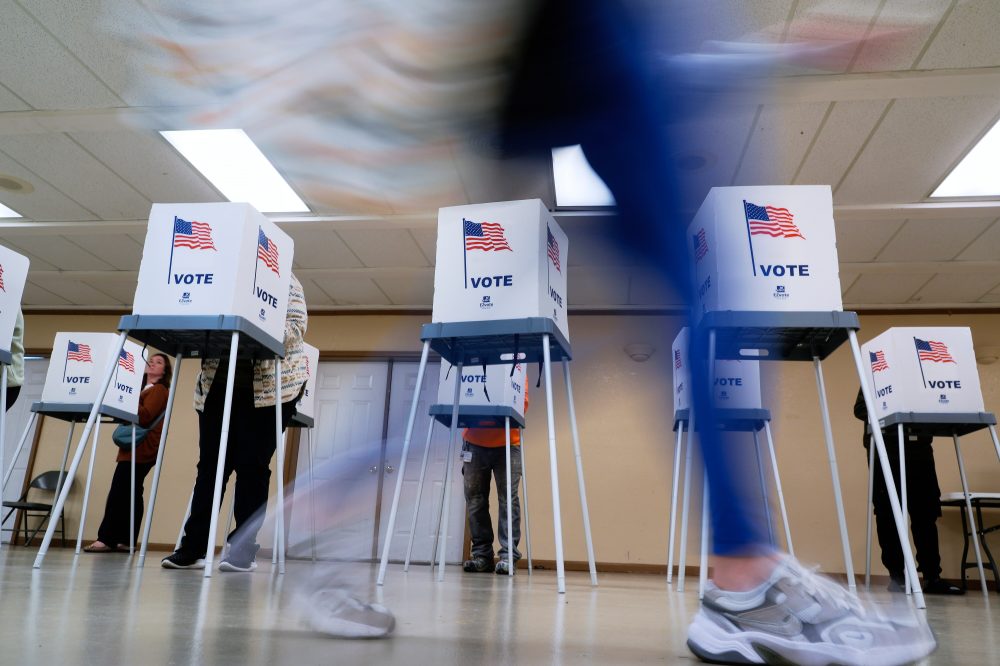
WASHINGTON — President Donald Trump issued an executive order Tuesday establishing a federal database of eligible voters across all states, a directive that legal experts anticipate will face immediate court challenges as the administration pushes for tighter voting restrictions before upcoming midterm elections.
The directive instructs the Department of Homeland Security to collaborate with the Social Security Administration in developing verified voter rolls for every state, the White House announced. Additionally, the order attempts to prohibit the U.S. Postal Service from delivering absentee ballots to individuals not appearing on each state’s authorized voter registry, though experts question whether the president possesses authority over postal operations.
The executive order also mandates that voting ballots include secure envelopes featuring unique tracking barcodes, according to the document initially disclosed by the Daily Caller.
“The cheating on mail-in voting is legendary. It’s horrible what’s going on,” Trump stated while signing the directive, reiterating his unsubstantiated claims regarding mail-in ballot fraud. “I think this will help a lot with elections.”
Legal challenges are anticipated following Tuesday’s action as the president continues efforts to influence state-administered elections.
Trump’s initial election-related executive order from March 2025 attempted comprehensive reforms to election procedures nationwide, including mandating documentary citizenship proof for federal voter registration and requiring mailed ballots to arrive at election offices by Election Day. Courts have largely halted these provisions following lawsuits from voting advocacy organizations and Democratic state attorneys general, who contend the measures represent unconstitutional federal overreach that would prevent many citizens from voting.
During a February podcast interview with a conservative host, Trump expressed his desire to “take over” elections in Democratic-controlled regions, citing fraud allegations that multiple audits, investigations and judicial proceedings have disproven.
David Becker, a former Justice Department attorney who directs the Center for Election Innovation and Research, said Tuesday’s voting directive demonstrates Trump hasn’t absorbed lessons from his earlier unsuccessful attempts to control elections.
“The Constitution is very clear — the president has no power over elections in the states,” Becker explained. “This will be blocked as soon as lawyers can get to the courthouse.”
Becker noted that the U.S. Postal Service operates under a board of governors, preventing presidential control over mail delivery decisions.
“If Trump signs an unconstitutional Executive Order to take over voting, we will sue,” declared Marc Elias, a voting rights attorney and Democracy Docket founder, in a social media statement. “I don’t bluff and I usually win.”
American elections operate through a decentralized system rather than federal administration. Thousands of local jurisdictions manage voting processes, from small townships to large urban counties serving more voters than entire states. The Constitution’s Elections Clause grants Congress authority to “make or alter” election rules for federal positions but establishes no presidential power over election management.
The Trump administration has initiated what it characterizes as a comprehensive effort targeting alleged voter fraud, which has been the focus of false statements from Trump and supporters for years. The Justice Department has spent months requesting detailed voter registration records from states as part of what officials describe as election security efforts, filing lawsuits when state officials decline to provide the information.
FBI agents seized ballots in January from a Georgia county election office that has featured prominently in right-wing conspiracy theories surrounding Trump’s 2020 election defeat. Attorney General Pam Bondi recently appointed Daniel Bishop, the chief federal prosecutor for North Carolina’s Middle District, as a “special attorney” authorized to investigate and prosecute nationwide cases “relating to the integrity of federal elections,” according to the appointment document.
The Department of Homeland Security’s SAVE system for confirming citizenship and immigration status has faced criticism from voting rights organizations over flawed outcomes from unreliable databases and privacy issues. States can perform bulk SAVE searches using Social Security numbers, but most states don’t collect complete Social Security numbers during voter registration, the Brennan Center for Justice reports. While the Trump administration updated the system last year, legal challenges continue alleging that SAVE dependence creates citizenship verification errors affecting qualified voters.
The president frequently criticizes mail-in voting, claiming the practice involves widespread fraud while urging lawmakers to approve comprehensive election legislation restricting it. Trump’s fraud allegations lack foundation; a 2025 Brookings Institution study determined mail voting fraud occurred in just 0.000043% of total mail ballots cast, approximately four instances per 10 million mail ballots.
Trump has personally utilized mail ballots, including last week in local Florida elections. White House officials state Trump opposes universal mail-in voting rather than individual voters who require alternative voting methods for circumstances like travel or military service.
Families who lost loved ones in two deadly Boeing 737 Max crashes have been dealt a legal setback after a federal appeals court rejected their attempt to revive criminal charges against the aerospace giant.
The families’ legal team contended that Justice Department officials failed to adequately include them in discussions before striking an agreement with Boeing in 2024 that resulted in the dismissal of criminal conspiracy charges. Those charges were based on accusations that Boeing deceived federal aviation officials about a flight control system connected to the disasters that claimed 346 lives.
On Tuesday, three judges on the 5th U.S. Circuit Court of Appeals unanimously ruled against the families’ assertion that federal prosecutors violated the Crime Victims’ Rights Act, determining they could not restart the criminal proceedings.
Family attorney Paul Cassell criticized the court’s decision as “badly flawed.”
“Today’s ruling means that Boeing escapes criminal justice accountability for killing 346 people,” Cassell stated Tuesday. “The victims’ families were never given a meaningful opportunity to shape the negotiations between the Justice Department and Boeing, dating back to 2020.”
Boeing declined to comment Tuesday, though during appellate arguments in New Orleans last month, company lawyer Paul Clement noted that more than 60 other families “affirmatively supported” the agreement while dozens more raised no objections.
“Boeing deeply regrets” the tragic crashes, Clement had stated, adding the company “has taken extraordinary steps to improve its internal processes and has paid substantial compensation” to victims’ families.
The settlement enabled Boeing to sidestep prosecution by agreeing to pay or invest an additional $1.1 billion in penalties, victim compensation, and internal safety improvements.
During the same court proceedings, government lawyers maintained they had “solicited and weighed the views of the crash victims’ families as it’s decided whether and how to prosecute the Boeing Company” over multiple years.
The fatal accidents occurred within five months of each other between 2018 and 2019, killing everyone aboard both aircraft — a Lion Air jet that crashed into waters near Indonesia and an Ethiopian Airlines plane that went down in a field moments after departure.
The legal proceedings have followed a complex path. Justice Department officials initially filed fraud charges against Boeing in 2021 but agreed to defer prosecution in exchange for a financial settlement and compliance commitments.
Federal prosecutors later concluded in 2024 that Boeing had breached that arrangement, leading the company to agree to enter a guilty plea. However, U.S. District Judge Reed O’Connor in Texas, who had supervised the case for years, rejected that plea agreement and ordered both parties back to the negotiating table.
The Justice Department returned in May with a revised deal and requested complete withdrawal of the criminal charge, which O’Connor granted in November. Justice officials argued that proceeding to trial risked a jury acquittal that would leave Boeing facing no additional consequences.
When dismissing the case, O’Connor determined that federal prosecutors had not acted improperly and had fulfilled their responsibilities under the Crime Victims’ Rights Act while explaining their reasoning.
O’Connor also noted that legal precedent prevented him from blocking the dismissal simply because he questioned whether the government’s new Boeing agreement truly served public interests.
The legal dispute focused on software that Boeing created for the 737 Max, which carriers started operating in 2017. Boeing marketed it as an upgraded version of its 737 series that would require minimal additional pilot instruction.
However, the Max incorporated substantial modifications that Boeing minimized — particularly an automated flight control feature designed to compensate for the aircraft’s enlarged engines. Boeing omitted mention of this system from flight manuals, leaving most pilots unaware of its existence.
In both fatal incidents, this software repeatedly forced the aircraft’s nose downward due to incorrect sensor data, and pilots from Lion Air and Ethiopian Airlines could not regain aircraft control. Following the Ethiopian crash, aviation authorities grounded the planes globally for 20 months.
Investigators determined that Boeing failed to notify crucial Federal Aviation Administration officials about software modifications before regulators established pilot training standards for the Max and approved the aircraft for commercial service.
“One can only hope that another Boeing crash won’t be the outcome of this badly flawed ruling,” family attorney Cassell stated Tuesday.
Good evening, Delmarva! We’re wrapping up Tuesday with pleasant partly cloudy skies and mild temperatures holding steady around 65 degrees tonight. Do expect some breezy conditions though – southwest winds are gusting up to 30 mph, so secure any loose outdoor items.
Wednesday starts off beautifully with mostly sunny skies and temperatures climbing to a warm 83 degrees – perfect spring weather! However, don’t let that sunshine fool you. We’re tracking a weather pattern that will bring increasing storm chances as we head into Wednesday afternoon and evening. Those showers and thunderstorms will likely continue through Wednesday night as temperatures drop to a cooler 52 degrees.
The unsettled weather pattern continues into Thursday with lingering rain shower chances and temperatures rebounding to around 60 degrees. It’s definitely a good time to keep that umbrella handy and maybe move any outdoor plans to earlier in the day Wednesday.
Stay weather-aware, Delmarva, and have a wonderful evening! We’ll keep you updated on any changes to the storm timing.
WASHINGTON – During a Tuesday meeting with reporters, President Donald Trump announced that federal authorities will need to intervene in Los Angeles when the World Cup takes place, citing concerns about preventing criminal activity and maintaining order.
Speaking from the Oval Office, Trump stated: “We’re gonna have to do something when it comes World Cup time, and we’re gonna have to force ourselves upon them, which we have the right to do, because we don’t want to have any crime, we don’t want to have any problems.”
The president has previously implemented law enforcement crackdowns in multiple cities, including deploying hundreds of federal agents and thousands of military personnel to Washington, D.C.
The international soccer tournament, which ranks among the world’s most watched sporting competitions, is scheduled to take place during June and July of this year. The event will span three nations: the United States, Canada, and Mexico.
Representatives from both the Los Angeles mayor’s office and California’s governor have not yet provided responses to media inquiries about Trump’s announcement.
WASHINGTON – Former President Donald Trump indicated Tuesday that American military operations targeting Iran could conclude within a matter of weeks.
Speaking to members of the press at the White House, Trump stated, “We’ll be leaving very soon,” and elaborated that such a departure might occur within a two to three week timeframe.
The comments came as Trump addressed reporters about the ongoing military situation involving Iran.
Former President Donald Trump issued an executive order Tuesday directing his administration to implement stricter controls over mail-in voting procedures across the United States.
The directive instructs federal agencies to compile lists of verified American citizens qualified to vote in every state. Under the new requirements, absentee ballots would only be distributed to individuals appearing on each state’s authorized mail-in voting registry.
Additionally, the order mandates that all mail-in ballots must use secure envelopes featuring distinctive tracking barcodes for monitoring purposes.
Legal experts anticipate swift court challenges to any federal attempt to modify state-controlled electoral processes.
Trump has consistently maintained his unfounded assertion that his 2020 presidential loss resulted from extensive voting irregularities. He continues advocating for stricter mail-in voting regulations before November’s midterm elections, where Republicans will work to maintain their slim congressional control.
Despite his public criticism of mail-in voting, Trump recently voted by mail in a Florida special election. When questioned about this apparent contradiction, he explained he voted absentee “because I’m president” and “I had a lot of different things” to handle.
This latest action follows Trump’s previous executive directives instructing federal departments to assist states in confirming voter citizenship status and attempting to prevent states from tallying mail ballots arriving after Election Day – moves that directly challenge traditional state authority over election administration.
AT&T has finalized a major agreement valued at approximately $2 billion to enhance the federal emergency communications network known as FirstNet, according to a government agency announcement made Tuesday.
Under the terms of this arrangement, the telecommunications giant will contribute roughly $1 billion toward system improvements while simultaneously generating $1 billion in savings for the program through rate reductions, the National Telecommunications and Information Administration reported.
AT&T originally secured the 25-year contract to construct FirstNet back in 2017, following recommendations from a federal commission that called for establishing such a network in response to the September 11th terrorist attacks.
FirstNet serves as a crucial communication platform enabling first responders including emergency medical teams, fire departments, and law enforcement to share essential information through a unified network. Currently, more than 31,000 agencies across the United States rely on this system.
According to the telecommunications agency, this new arrangement became feasible following President Donald Trump’s executive directive issued earlier in 2025, which instructed federal departments to conduct comprehensive reviews of existing contracts.
“This agreement-in-principle… reflects AT&T’s ongoing dedication to our public-private partnership,” stated Wes Anderson, who serves as AT&T’s President of Public Sector operations.
Motorists traveling on Interstate 495 northbound are experiencing delays this morning due to a broken down vehicle near the Christina River Bridge.
The right lane of northbound I-495 remains blocked as authorities work to remove the disabled vehicle from the roadway. Drivers are advised to expect slower traffic conditions and consider alternate routes if possible.
DelDOT crews are on scene working to clear the obstruction and restore normal traffic flow to the area.
The Goldey-Beacom Lightning continued their hot streak Saturday afternoon, defeating Lincoln University 11-4 in Central Atlantic Collegiate Conference action at Doyle Field in Hockessin.
The victory marks the Lightning’s sixth consecutive win, powered by a dominant pitching performance from senior Kory Williams of Pennsauken, New Jersey. Williams struck out a career-high 12 batters to lead his team to the conference triumph.
Offensively, the Lightning received strong contributions from multiple players. Freshman Shawn Roy from New Castle connected for three hits in the contest, while sophomore Zach Smethers of Nazareth, Pennsylvania, delivered a crucial two-run home run to help secure the victory.
The win keeps Goldey-Beacom’s momentum rolling as they continue their successful run through conference play at their home field in Hockessin.
The nation’s highest court is preparing to hear oral arguments in a significant constitutional challenge that could reshape American citizenship laws. The case centers on the Trump administration’s effort to strip birthright citizenship from children born on U.S. soil to parents without legal immigration status.
The legal battle, officially titled Trump v. Barbara, represents a direct challenge to the longstanding interpretation of the 14th Amendment, which has traditionally granted automatic citizenship to anyone born within American borders.
At the heart of this constitutional dispute are the individual plaintiffs whose personal stories have become the foundation for this landmark legal challenge. The case could potentially affect millions of American-born children whose parents lack documented immigration status.
This Supreme Court decision will likely have far-reaching implications for immigration policy and constitutional law, as justices weigh arguments about one of America’s most fundamental principles of citizenship.
The next time you explore Charlotte, North Carolina’s outdoor trails on foot or bicycle, remember that dedicated community volunteers likely created and care for the path beneath your feet.
These unsung heroes form the backbone of the area’s trail system, donating countless hours to build new routes and keep existing pathways in excellent condition for outdoor enthusiasts throughout the region.
Their efforts are featured as part of an ongoing series highlighting community helpers who make a difference in their neighborhoods.
SALISBURY, Md. – Salisbury University’s nationally-ranked baseball squad delivered a dominant performance Tuesday, crushing the Marymount University Saints 10-2 at Donnie Williams Sea Gull Baseball Stadium.
The Sea Gulls, currently sitting at ninth in national rankings, launched three home runs while receiving another stellar mound performance from pitcher Aidan Brinsfield to secure the convincing victory over their Virginia opponents.
The offensive explosion and quality pitching combined to give Salisbury a commanding win in front of their home crowd, continuing their strong season performance.
Listen to the Evening Delmarva Farm Report Update — March 31, 2026
DELMARVA — Spring fieldwork is ramping up across Delmarva as growers take advantage of warm, dry conditions this week. Soil temperatures are running 5 to 7 degrees above normal for late March, allowing early corn planting in Sussex County and parts of the Eastern Shore.
Extension agronomists say fields that were worked last week are drying down nicely, though some low-lying areas still need another few days. The window looks good through Wednesday before rain moves in Wednesday night.
Markets
Corn futures closed at $5.18 per bushel, down $0.03. Soybeans settled at $11.72, up $0.05. Wheat finished at $6.41, gaining $0.02 on the session.
Locally, cash corn is running $4.90 in Laurel, while soybeans are bringing $11.25 at Salisbury elevators.
Forecast
Tuesday evening brought pleasant conditions with temperatures around 76 degrees under mostly sunny skies. Southwest winds at 15 miles per hour.
Tuesday night will stay mild, dropping to 60 degrees with partly cloudy conditions. Wednesday looks good for fieldwork with mostly sunny skies and highs reaching 78 degrees.
However, showers and thunderstorms are expected to move through Wednesday night. Rainfall could impact any late planting plans through Thursday.
This article is based on the Delmarva Farm Report Update Evening Edition, March 31, 2026. Hosted by Tom Bradley.
Defense officials have offered varying and at times conflicting rationales for potential military action against Iran, with the messaging also differing markedly from rhetoric used in previous conflicts.
Defense Secretary Pete Hegseth has been incorporating religious language and terminology during Pentagon briefings when discussing the possibility of armed conflict with Iran, representing a notable shift in how military leadership communicates about potential warfare.
The justifications presented by government officials for engaging in hostilities with Iran have lacked consistency, with some explanations contradicting others that have been offered publicly.
NEW YORK (AP) — Stock markets struggled during the opening months of the year, but everything changed when warfare erupted.
Brent crude oil has climbed beyond $100 per barrel for the first time since summer 2022, while gas prices have skyrocketed. This marks a sharp departure from an extended stretch when oil costs remained mostly within the $60 to $70 range.
At the start of 2026, global markets were primarily focused on artificial intelligence concerns — questions about corporate overspending on AI technology and which businesses might become outdated. Today, investor focus has shifted entirely to the duration of Iran’s conflict, potential inflation spikes, and economic consequences. Major market indices like the S&P 500 have experienced wild daily fluctuations.
The conflict’s unpredictability creates challenges for Federal Reserve interest rate policy. The Fed maintained steady rates this year following three reductions in late 2025. Lower rates would boost economic activity but might fuel inflation, while higher rates could control price increases at the cost of economic expansion.
Market volatility surged throughout March as the Iran conflict unfolded:
Energy prices have driven dramatic U.S. stock market movements since hostilities began. Brent crude, representing roughly three-quarters of global oil benchmarks, has jumped from approximately $70 per barrel to peaks of $119. Market sentiment has oscillated between optimism for swift conflict resolution and fears that extended fighting will disrupt Persian Gulf energy supplies, potentially triggering severe inflation.
By late February, motorists across much of America were paying less than $3 per gallon. By Tuesday, national averages exceeded $4 for the first time since 2022.
Diesel fuel increases have been even more dramatic, with current averages reaching $5.45 per gallon compared to roughly $3.76 before fighting started, according to AAA data.
“Americans (are) spending hundreds of millions of dollars more on gasoline every day,” said Patrick De Haan, the head of petroleum analysis at fuel-tracking service GasBuddy.
American stock markets entered 2026 following three consecutive years of solid performance. Many overseas markets had outperformed U.S. exchanges in 2025 after lagging for several years.
The S&P 500 dropped nearly 4.6%, marking its poorest quarterly showing since 2022. The technology-heavy Nasdaq composite closed Thursday down more than 10% from its October record high, a decline steep enough for Wall Street professionals to label it a “correction.”
Energy companies have emerged among the S&P 500’s top performers for both the month and quarter. Exxon Mobil recorded its biggest quarterly increase, according to FactSet data. Occidental Petroleum and Valero Energy also posted strong results.
The month concluded with another significant market swing upward on renewed speculation that hostilities might end sooner than anticipated. However, similar optimism has emerged and disappeared multiple times during the conflict.
Investors usually turn to bonds and similar safe investments when global events threaten economic stability. However, inflation concerns from rising energy costs have triggered bond sell-offs and corresponding yield increases.
The 10-year Treasury yield stood at just 3.97% in late February but expanded to 4.44% before retreating slightly. This increase has elevated mortgage rates and other borrowing costs for American consumers and businesses. Market traders now see minimal probability of Federal Reserve rate cuts this year.
Future developments remain difficult to forecast. President Donald Trump has alternated between discussing conflict resolution and threatening to escalate by targeting Iran’s energy infrastructure. Iranian officials have dismissed Trump’s claims regarding diplomatic progress.
Iran continues controlling the Strait of Hormuz, the Persian Gulf waterway through which one-fifth of global oil moves during peaceful periods. Analysts expect continued heightened volatility in energy and stock markets as long as this situation persists.
JOHANNESBURG (AP) — Drivers across South Africa flocked to fuel stations Tuesday evening as the nation braced for unprecedented gasoline and diesel price jumps scheduled to begin at midnight, driven by ongoing Middle East conflicts affecting worldwide energy markets.
Finance Minister Enoch Godongwana attempted to soften the blow by announcing a 3 rand ($0.18) reduction in fuel taxes per liter on Tuesday, though the relief proved insufficient to prevent sticker shock.
The diesel price surge of 7.51 rand ($0.44) represents the largest single increase in the country’s history, while gasoline climbed 3.06 rand ($0.18), creating widespread concern throughout the southern African nation.
By evening hours Tuesday, multiple fuel stations in eastern Johannesburg had exhausted their supplies of both diesel and gasoline, forcing operators to turn customers away. Other locations offered only gasoline while denying service to diesel customers, with lengthy queues forming at remaining stations with available fuel.
According to Godongwana, the continuing Middle Eastern warfare has elevated risks within international energy markets while applying significant pressure to South Africa’s domestic fuel costs.
The temporary fuel tax reduction for April, implemented before new pricing adjustments are announced in March, will result in lost government tax collections exceeding 6 billion rand (more than $351 million).
Distribution challenges and operational disruptions have compounded the nation’s fuel crisis, with numerous stations running completely dry while others implemented purchase limits ranging from 30 to 50 liters (8 to 13 gallons) per vehicle.
“Even after fuel levies were reduced, these are the largest increases in recent history and would be devastating for consumers,” said Theuns Du Buisson, an economic researcher at the Solidarity Research Institute.
Du Buisson warned that the price jumps, particularly the record-breaking diesel increase, would severely impact logistics and transportation expenses, creating ripple effects on inflation in upcoming months.
Since most South Africans depend on public transportation including minibus taxis and buses, low-income families will likely bear the heaviest burden from these increases, Du Buisson explained.
Public bus operations in Pretoria, the capital city, experienced disruptions Tuesday due to fuel shortages affecting municipal bus facilities, according to city officials.
JetBlue Airways has implemented new baggage fee increases of up to $9 as the airline grapples with dramatically higher fuel costs stemming from the Middle East conflict involving Iran.
The updated pricing structure became effective this past Monday. Economy travelers on domestic routes will now pay $39 for their first checked bag during regular travel periods, representing a $4 increase from the previous $35 fee. During busy travel seasons including spring break in April, summer months, and major holidays, the cost jumps to $49 — up $9 from the former $40 charge, according to the airline.
Second bag fees have also climbed, rising from $50 to $59 during standard periods and from $60 to $69 during high-demand travel times.
In a statement provided to The Associated Press on Tuesday via email, the New York JFK-based carrier explained that increasing prices for optional services “used by select customers” helps the company maintain competitive base ticket prices.
“While we recognize that fee increases are never ideal, we take careful consideration to ensure these changes are implemented only when necessary,” JetBlue stated.
The aviation industry worldwide is facing mounting operational costs as jet fuel prices have skyrocketed nearly 85% since Iran’s conflict commenced on February 28. The ongoing situation has reduced maritime traffic through the Strait of Hormuz, a critical waterway handling one-fifth of global oil transport. Additionally, airspace restrictions across portions of the Middle East have intensified cost pressures by requiring airlines to use longer flight paths that consume additional fuel.
Jet fuel represents one of airlines’ largest operational expenses, generally comprising approximately 25% of total operating costs. According to Argus Media’s tracking data, jet fuel averaged $4.62 per gallon on Monday, a dramatic increase from $2.50 the day prior to the conflict’s start. The energy intelligence firm monitors pricing across major aviation centers including Chicago, Houston, Los Angeles, and New York.
Several international carriers have already implemented fuel surcharges or raised base fares in response to these pressures. Aviation industry experts anticipate U.S. airlines will transfer portions of their increased fuel expenses to passengers through additional fees like baggage charges and seat upgrade costs.
JetBlue noted that certain passenger categories will continue receiving complimentary first bag checking, including holders of the airline’s co-branded credit cards and loyalty program members who have achieved specific status levels. The majority of passengers on transatlantic flights will also maintain free first bag privileges, the carrier confirmed.
Iran’s strategy of blocking Strait of Hormuz access to vessels from nations it considers hostile has created volatile crude oil pricing, subsequently driving up fuel costs. Earlier this month, executives from Delta Airlines, American Airlines, and United Airlines disclosed that elevated jet fuel prices have already contributed approximately $400 million in additional operating expenses.
HARRISBURG, Pa. — The University of Pennsylvania has been directed by a federal court to provide employee records to federal investigators examining allegations of antisemitic workplace discrimination, according to a Tuesday ruling.
U.S. District Judge Gerald Pappert ruled that the university must comply with demands from the U.S. Equal Employment Opportunity Commission for information about Jewish staff members on campus. However, the judge clarified that individual employees retain the right to decline participation in the federal inquiry.
“The agency needs the opportunity to talk to them directly to learn if they have evidence of discrimination,” Pappert stated in his decision.
While largely supporting the federal subpoena, the judge established certain limitations. The university will not be required to disclose workers’ memberships in Jewish-related organizations or provide details about three specific groups, according to the ruling.
University officials had not responded to requests for comment regarding the court’s decision as of Tuesday evening.
Motorists using Route 495 northbound should expect delays today as construction work has reduced traffic to a single lane between the Christiana Mall area and Claymont.
According to DelDOT traffic information, the lane restriction began earlier today and is expected to continue until 5 PM this evening.
Drivers are advised to allow extra travel time and consider alternate routes if possible to avoid potential backups in the construction zone.
Wall Street experienced a dramatic turnaround Tuesday, with major indices posting their strongest gains since spring as investor sentiment shifted toward optimism regarding a potential resolution to the Iran conflict. The S&P 500 jumped 2.9% in what marked its most significant single-day increase since May, while the Dow Jones Industrial Average climbed 1,125 points or 2.5%. The Nasdaq composite posted an even stronger 3.8% rally. Just one day earlier, concerns over the ongoing conflict had pushed the S&P 500 more than 9% below its record high established earlier this year. Market gains accelerated as crude oil prices retreated, which also contributed to declining bond yields.
Meanwhile, American drivers are facing their highest fuel costs in two years, with gasoline prices crossing the $4 per gallon threshold nationwide. AAA reports the current national average sits at $4.02 for regular unleaded, representing more than a dollar increase since the Iran war commenced on February 28. This surge marks the steepest monthly price jump in the organization’s recorded history. The escalating fuel costs are expected to strain household budgets, potentially forcing families to reduce spending in other areas. Additionally, businesses confronting higher transportation expenses may pass those costs along to consumers through increased prices on everyday items including groceries.
Despite the mounting energy costs stemming from the Middle East conflict, American consumer confidence showed a slight improvement in March. The Conference Board announced Tuesday that its consumer confidence index edged up to 91.8 from February’s reading of 91. While the headline figure remained relatively stable, the organization noted growing pessimism in other survey components, particularly regarding inflation expectations. Survey participants increasingly mentioned concerns about oil, gas, and war, with 12-month inflation expectations jumping to levels not seen since August 2025.
The U.S. labor market showed additional signs of cooling as job openings dropped to 6.9 million in February, down from January’s 7.2 million positions. The Labor Department’s Job Openings and Labor Turnover Summary revealed that layoffs increased while voluntary job departures declined. The decrease in workers voluntarily leaving their positions typically signals reduced confidence in finding better employment opportunities or improved compensation elsewhere.
In Ohio, a federal jury reached an impasse in the corruption trial of two former FirstEnergy Corporation executives connected to a $60 million bribery scheme. Jurors in Akron declared they could not reach a unanimous verdict regarding former CEO Chuck Jones and ex-senior vice president Michael Dowling. The pair faced charges including felony corruption, bribery, conspiracy, and aggravated theft for allegedly paying $4.3 million to Sam Randazzo, who was set to chair the Public Utilities Commission of Ohio. Prosecutors argued the payment constituted bribery for regulatory and legislative favors, while defense attorneys characterized it as a legitimate legal settlement. The presiding judge indicated she would rule on a mistrial motion at a later date.
In international political news, Brazilian President Luiz Inácio Lula da Silva announced he will retain current Vice President Geraldo Alckmin as his running mate for October’s general election. Despite pressure to select a partner from a larger right-wing party, the leftist president chose to maintain his alliance with the former São Paulo state governor. During Tuesday’s Cabinet meeting, Lula confirmed that Alckmin will step down from his ministerial position to comply with Brazil’s electoral requirements for the upcoming nationwide vote.
Professional golfer Tiger Woods displayed clear signs of impairment following his recent vehicle accident in Florida, according to a newly released law enforcement report.
The Martin County Sheriff’s Office documented that Woods appeared with dilated pupils, bloodshot and glassy eyes when deputies arrived at the crash scene. According to the report made public Tuesday, the golf star moved slowly and appeared lethargic while speaking with officers, and was perspiring during questioning. Deputies discovered hydrocodone tablets on Woods during their investigation. Woods informed officers he had consumed prescription drugs earlier that morning. Both drivers involved in the incident escaped without injuries. Representatives from Excel Sports, Woods’ management company, have not returned requests for comment.
The incident has once again thrust Woods into negative headlines as golf’s premier tournament, the Masters, approaches. The crash and subsequent DUI arrest have brought his career legacy back into scrutiny. According to Tuesday’s incident documentation, Woods was traveling at excessive speed when his SUV overturned on Friday. Law enforcement reports indicate he declined to provide a urine sample for testing. Woods explained to deputies that he had been looking at his mobile device and adjusting his vehicle’s radio system before the accident occurred. He acknowledged taking prescribed medication that morning, and officers located hydrocodone pills during their search. Woods must appear in court on April 23rd. Golf industry officials and corporate sponsors with financial interests in Woods have remained silent about the situation.
In other professional sports news, the National Football League has implemented a temporary rule change for the upcoming season. The league’s competition committee approved a one-year measure allowing New York’s replay center to overturn obvious errors made by field officials during games, specifically in preparation for potential work stoppages involving the NFL Referees Association. This announcement came Tuesday during the league’s yearly meetings in Phoenix. The NFL plans to recruit and prepare substitute officials in coming weeks due to stalled contract negotiations with the referees’ union, according to sources familiar with the talks.
European soccer saw dramatic playoff action as Italy fought to avoid missing a third consecutive World Cup. The four-time champion nation faced Bosnia and Herzegovina in qualifying playoffs, with the match extending to overtime tied 1-1 and Italy playing with ten players. Italy failed to qualify for the previous two World Cups after playoff losses to Sweden and North Macedonia, and hasn’t participated in soccer’s biggest tournament since 2014. In other Tuesday playoff results, Sweden defeated Poland 3-2 and Turkey beat Kosovo 1-0 to secure their World Cup spots. The Czech Republic and Denmark also went to extra time with a 1-1 deadlock.
FIFA President Gianni Infantino met with Iran’s national soccer team in Turkey, pledging continued support for their World Cup preparations. During the team’s warmup match against Costa Rica, Iranian players and officials displayed photographs of children reportedly killed in U.S. and Israeli military strikes since February 28th while their national anthem played. Infantino posted on social media that FIFA would maintain support to ensure optimal preparation conditions for the tournament, which will be co-hosted by the United States, Canada, and Mexico.
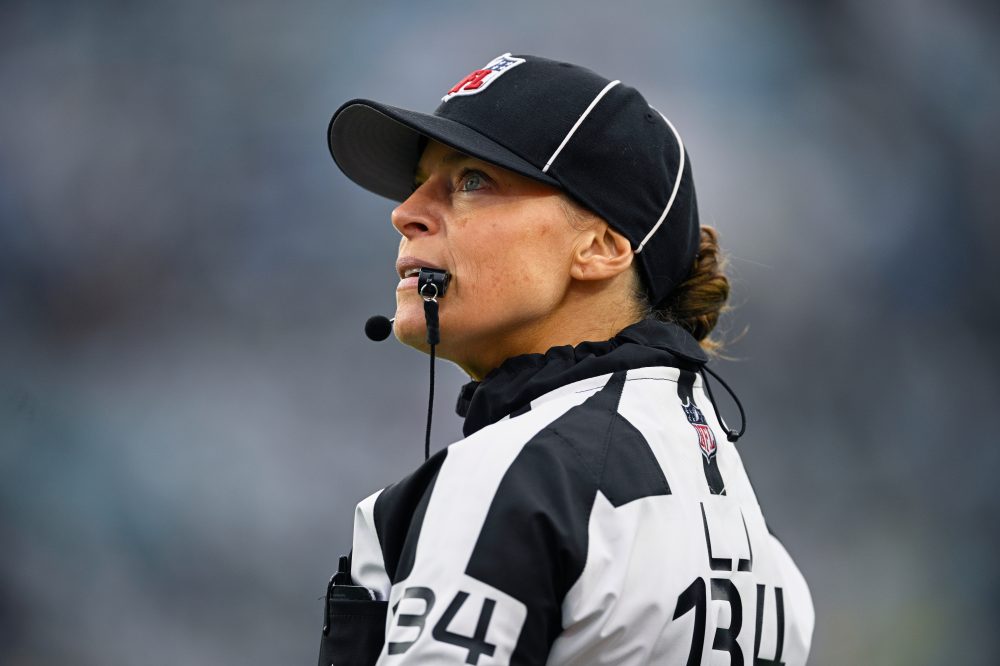
A groundbreaking female NFL official has filed a federal lawsuit against the league, alleging gender discrimination during her employment from 2022 to 2025. Robin DeLorenzo, one of the first three women to officiate NFL games, claims she endured gender-based criticism, humiliation, and outright hostility throughout her tenure. Her Manhattan federal court filing, submitted Friday, seeks reinstatement and unspecified monetary damages. NFL representatives stated DeLorenzo was dismissed due to three seasons of poor performance and characterized her lawsuit as without merit. The NFL Referees Association has not responded to comment requests.
Las Vegas Raiders head coach Klint Kubiak expressed his preference that rookie quarterback Fernando Mendoza not start immediately if circumstances allow. The Raiders are anticipated to select the Heisman Trophy winner with the first overall draft pick next month. Mendoza guided Indiana to its inaugural national championship and emerged as the clear favorite for the top selection. Currently, Aidan O’Connell remains the only other quarterback on the Raiders roster after the team traded away Geno Smith and Kenny Pickett. Veteran free agents Kirk Cousins, Jimmy Garoppolo, and Russell Wilson remain available.
The NCAA women’s basketball tournament, despite numerous lopsided games, has reached its Final Four with the expected teams advancing. For the first time since 1996, the same four teams returned to the Final Four from the previous year, and for the first time since 2018, all top seeds advanced this far. Friday’s opening semifinal in Phoenix features South Carolina against UConn in a rematch of the 2025 championship game. Texas will face UCLA in the second semifinal, with the title game scheduled for Sunday.
UConn guard Braylon Mullins has become college basketball’s newest sensation after his game-winning shot against Duke, bringing excitement to his hometown of Greenfield, Indiana. The typically quiet community of 25,000 residents celebrated their local hero’s clutch performance. The 19-year-old freshman standout from Greenfield-Central has helped UConn reach its third Final Four in four seasons. Saturday’s semifinal against Illinois will take place at Lucas Oil Stadium in Indianapolis, just 25 miles from Mullins’ hometown.
The world’s tallest college basketball player is changing schools. Florida’s Olivier Rioux, standing 7-foot-9 and holding the Guinness World Record as the world’s tallest teenager, announced his entry into the transfer portal, which officially opens April 7th. The 20-year-old Canadian center, despite being the most recognizable athlete on Florida’s campus, played limited minutes during his two seasons with the Gators. In 15 total minutes of action, he recorded seven points, six rebounds, and one assist. The sophomore is seeking increased playing opportunities at his next destination.
The Lebanese militant organization Hezbollah launched more than 50 rockets and drones targeting Israel’s Upper Galilee region Tuesday evening, leaving three people wounded and causing damage to the area, according to emergency officials. The northern assault occurred hours after separate Iranian attacks struck central Israel earlier in the day, injuring at least nine additional people.
Israeli emergency medical service Magen David Adom reported that debris from the evening bombardment landed close to a residential structure on a kibbutz. Among the three people who sustained minor injuries was a 6-year-old child. Medical personnel transported two of the victims to a local medical facility for care.
The evening rocket barrage came after morning launches from Iran that included cluster munitions hitting various targets, resulting in casualties and structural damage across central Israel.
In the city of Bnei Brak, six individuals suffered minor injuries from the blast impacts, including one woman who was wounded by flying glass shards. First responders pulled a mother and her two children to safety after part of a building’s roof caved in during the attack. Three other people were also hurt at that same location.
Tuesday’s events represented an escalation of violence affecting both Israel’s northern border region and its central areas, with emergency crews dispatched to numerous locations throughout the targeted zones.
The National Football League’s competition committee has established a temporary regulation for the coming season that enables the New York-based replay center to overturn “clear and obvious mistakes made by on-field officials that impact the game” should a work stoppage occur with the NFL Referees Association.
This regulation was among several rule modifications announced during Tuesday’s league annual meetings in Phoenix.
According to two sources familiar with the situation who requested anonymity due to the confidential nature of the talks, the NFL plans to recruit and prepare substitute officials in the coming weeks following unsuccessful contract negotiations with the referees’ union.
Contract discussions between the league and the NFL Referees Association have been ongoing since summer 2024, with the existing collective bargaining agreement set to expire on May 31.
The NFL’s previous experience with substitute officials resulted in league-wide embarrassment when a missed call and on-field chaos during a nationally televised game ultimately ended a lockout that damaged the opening three weeks of the 2012 season.
An additional rule modification approved Tuesday enables the New York replay center to collaborate with field officials regarding potential ejections for both aggressive football-related actions and non-football conduct that wasn’t flagged during play.
This adjustment follows an incident last season when Pittsburgh wide receiver DK Metcalf avoided ejection during a game in Detroit after engaging in a confrontation with a taunting spectator. Since the field officials missed Metcalf’s swipe at the fan and didn’t issue a penalty, the replay center couldn’t remove him from the game.
While the league later imposed a two-game suspension on Metcalf, he continued playing during that contest.
The committee also approved three modifications to kickoff regulations, including allowing the kicking team to announce an onside kick attempt at any point during the game, independent of the current score. Under previous rules, only teams that were behind could execute onside kicks.
New York City has lifted its ban on TikTok for government use, nearly three years after joining other municipalities nationwide in blocking the Chinese-owned platform from official devices due to security worries.
Mayor Zohran Mamdani, known for his social media presence, announced the policy change directly on TikTok Tuesday with the message: “TikTok, we’re back.”
City departments can now resume posting content on the popular video platform, provided they follow new cybersecurity protocols outlined in a Tuesday memo from municipal technology officials.
The original ban was implemented by former Mayor Eric Adams in 2023, mirroring actions taken by federal authorities and numerous states concerned that ByteDance, TikTok’s parent company, might provide user information to Chinese officials.
TikTok previously dismissed such worries as baseless. New York City authorities at that time cited potential risks to municipal computer networks as justification for the restriction.
NYC Cyber Command, the agency responsible for protecting city digital infrastructure, explained in Tuesday’s memo that the policy shift aims to expand communication channels with residents.
“The Mamdani administration is committed to using every tool in our toolbox to communicate with New Yorkers,” NYC Cyber Command wrote. “At a moment when people are turning to city government for information about free services, emergency situations, upcoming events, and more, we want to open up new avenues of communication with the public and help deliver the information New Yorkers need.”
Under the new guidelines, city departments must use dedicated devices exclusively for TikTok that cannot access confidential information, email systems, or other internal networks. Additionally, agencies must create accounts using official credentials rather than personal email addresses and assign specific employees to manage the platform.
TikTok representatives did not respond to requests for comment Tuesday.
The 34-year-old Mamdani has built his political brand partly through engaging social media content, with his informative videos gaining widespread attention online during his campaign and tenure as mayor.
The official mayoral TikTok account, inactive since the prohibition began, now features several new posts.
Recent content includes Mamdani promoting his “rental rip-off hearings” where tenants can voice complaints about substandard housing conditions. Another video features the mayor with New York Liberty basketball player Natasha Cloud announcing a bracket-style contest allowing residents to vote on small neighborhood improvements, such as repairing damaged basketball hoops.
The Salisbury City Council has announced modifications to their regular meeting calendar that will take effect starting April 1, 2026.
Beginning next month, council sessions will be scheduled for the second and fourth Monday of every month, according to a notice released by Deputy City Clerk Hannah Long on March 31, 2026. The announcement notes that some exceptions may apply to this new bi-weekly schedule.
Residents can access the complete updated meeting calendar through the city’s official website, where a PDF document containing the full 2026 schedule has been posted for public reference.
The notice includes standard provisions allowing council members flexibility in their operations. Officials retain the authority to modify meeting agendas when circumstances require changes, and they may enter closed executive sessions as allowed under Maryland state law section 3-305(b) of the Annotated Code.
The schedule change represents an adjustment to how the council conducts its regular business throughout the remainder of 2026.
Motorists traveling on northbound Route 72 should be aware of a lane restriction near Dawson Drive due to emergency utility repairs currently underway.
The right lane has been shut down to allow crews to address the urgent utility issue, according to DelDOT traffic reports. Drivers are advised to exercise caution when passing through the work zone and should anticipate possible delays.
No timeline has been provided for when the lane will reopen to traffic. Commuters may want to consider alternate routes if possible while the emergency repairs continue.
VATICAN CITY — During Christianity’s most sacred week, Pope Leo XIV shared his hopes Tuesday that military operations between the US-Israel alliance and Iran might conclude before Easter celebrations begin.
Speaking with journalists as he departed the papal residence at Castel Gandolfo near Rome, the American-born pontiff referenced recent statements from the White House.
“I’m told that President Trump has recently stated that he would like to end the war,” Leo said. “I hope that he’s looking for an off-ramp.”
The Pope continued his appeal for de-escalation, stating: “Hopefully he’s looking for a way to decrease the amount of violence, of bombing, which would be a significant contribution to removing the hatred that’s being created, that’s increasing constantly in the Middle East and elsewhere.”
Leo’s message emphasized the need for global leaders to pursue diplomatic solutions and seek “ways to reduce the amount of violence,” allowing “peace, especially at Easter, might reign in our hearts.”
The papal comments occurred during Holy Week, Christianity’s most revered time period.
“It should be the holiest time of the year. It is a time of peace, a time of reflection. But as we all know, again, in the world, in many places we are seeing so much suffering, so many deaths, even innocent children,” the Pope observed. “We constantly make the call for peace, but unfortunately, many people want to promote hatred, violence, war.”
During Palm Sunday services, Leo declared that divine prayers go unanswered for those who wage war or invoke religious justification for violence, while offering special prayers for Middle Eastern Christians during Mass at St. Peter’s Square.
Religious rhetoric has emerged from multiple parties in the Iranian conflict. American leadership, particularly Defense Secretary Pete Hegseth, has referenced Christian beliefs to frame the military action as a faithful nation defeating enemies through armed force.
Similarly, Russia’s Orthodox leadership has characterized their Ukrainian invasion as a sacred battle against what they view as a morally corrupted Western civilization.
Throughout the remainder of Holy Week, Leo will participate in traditional ceremonies including the Holy Thursday foot-washing ritual at St. John Lateran basilica, where papal predecessors have maintained this custom for generations. Friday’s schedule includes leading the Good Friday procession at Rome’s Colosseum, honoring Christ’s suffering and death, with the Pope personally carrying the cross. Saturday evening features the Easter Vigil service, where Leo will baptize new Catholic converts, followed by Easter Sunday commemorating Jesus’s resurrection.
The Pope will conduct Easter Sunday Mass at St. Peter’s Square before delivering his Easter message from the basilica’s balcony.
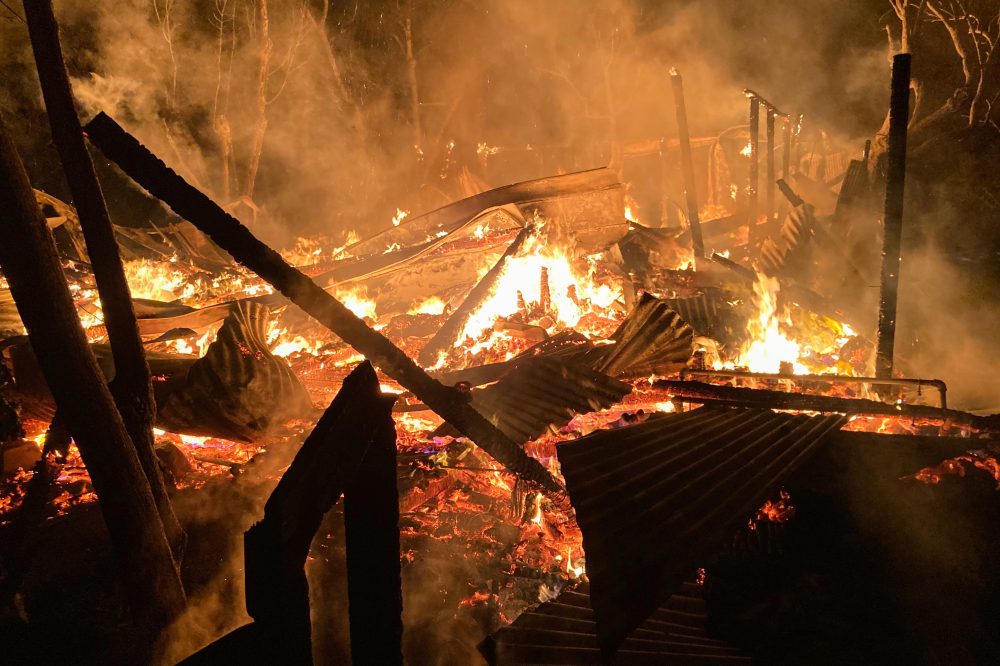
An ironic twist of fate struck practitioners at California’s Tassajara Mountain Zen Center when flames consumed their meditation hall during the final weeks of a three-month spiritual retreat dedicated to studying life’s temporary nature.
The blaze erupted in the building’s attic on March 26, completely destroying the wooden meditation hall and causing damage to the adjacent library. However, quick thinking by monks and staff members prevented the flames from spreading to dozens of other buildings on the property.
Michael McCord, president of the San Francisco Zen Center that operates the retreat, credited the presence of David Zimmerman for limiting the destruction. Zimmerman, a former director at Tassajara with extensive firefighting experience at the location, happened to be leading a retreat when the emergency occurred. He belongs to a legendary group known as ‘fire monks’ who courageously defended the sacred grounds during blazes in 2008 and 2021, even defying evacuation orders.
Working under Zimmerman’s direction, the team used garden hoses and water buckets to control the flames while waiting for volunteer firefighters to navigate the treacherous one-hour journey up a narrow mountain dirt road without safety barriers.
The Cachagua Fire Department praised their efforts on social media, stating: ‘The staff at Tassajara Mountain Zen Center should be incredibly proud, their initial fire attack efforts helped keep the fire contained, buying critical time for responding apparatus to arrive and preventing further damage.’
While losing their cherished meditation space brings sadness to monks and visitors from across the globe, McCord noted the incident serves as a powerful lesson in impermanence – a core Buddhist teaching that all things eventually fade away.
‘We’d like the Zen center to always be here, and the people to be here,’ he explained. ‘But Buddhist teachings tell us that everyone we love and everything we appreciate will eventually go away. It’s not meant to induce fear or anxiety, but to teach us that we need to treasure and take good care of what we have now.’
Officials won’t know the full extent of losses until they examine the debris. Beyond the structure itself, the flames claimed meditation cushions, altar pieces, and special bowls used during ceremonial meals by Zen monks.
Several irreplaceable sacred artifacts may also be lost or damaged, including a 2,000-year-old Buddha statue from the ancient Gandhara civilization that survived a previous electrical fire in 1978. Also buried in the wreckage are a century-old Japanese bell and a fish-shaped wooden drum called mokugyo used during chanting ceremonies.
‘We are eager to see if these items can be salvaged from the rubble and repaired,’ McCord said. ‘Right now, we’re receiving an outpouring of support from around the world. People are really sad. But we’re relieved no one was injured.’
Author Colleen Morton Busch, who documented the monastery’s firefighting history in her 2011 book ‘Fire Monks,’ described these defenders as ordinary people rather than professional firefighters or athletic heroes.
‘They are humble people who share a deep love of Tassajara and have this incredible ability to stay calm and clear-headed — to pause and think what’s appropriate and possible at this moment,’ she observed. ‘That’s cultivated through the practice of meditation.’
Established in 1967, Tassajara holds the distinction of being America’s oldest Japanese Buddhist Soto Zen monastery and the first such facility built outside Asia. Its name comes from an Indigenous Esselen term meaning ‘where meat is hung to dry.’
Weather conditions make the center unreachable during winter months, and it remains closed to visitors from September through April while serving as a training facility for Zen students.
Despite the setback, McCord expressed hope that the center can still welcome summer visitors who come to enjoy the natural hot springs.
Fire has long threatened the remote location, though McCord explained that Indigenous Esselen people traditionally managed the chaparral landscape through controlled burns every quarter-century.
‘There are flowers in that land that bloom only after a fire,’ said McCord, who spent several years at the site during his monk training. ‘The seeds pop out of the pods with the heat of the fire like popcorn. It’s part of the ecology of those grasslands.’
Busch reflected that Tassajara’s isolated beauty, while providing spiritual benefits, also creates inherent dangers.
‘When you’re there it’s all really simple, pared down and fundamental,’ she said. ‘You hear the creek, the birds. All your senses get rebooted in a way.’
A federal court has determined that President Trump’s executive directive to eliminate government funding for National Public Radio and the Public Broadcasting Service violates constitutional protections for free speech.
The judge concluded that the presidential order represents unconstitutional viewpoint discrimination, which is prohibited under First Amendment law. The ruling specifically addresses the boundary between government funding decisions and constitutional free speech guarantees.
The court’s decision centers on the principle that government entities cannot withdraw funding based on disagreement with the editorial perspectives or content produced by media organizations.
Iraqi security forces are conducting an intensive search operation after freelance American journalist Shelly Kittleson was taken by unknown individuals in central Baghdad on Tuesday, according to Iraqi officials.
Kittleson, who writes for Al-Monitor and has covered conflicts across Iraq, Syria, and Afghanistan, was seized near the Baghdad Hotel on Al-Sa’doun Street, local reports indicate. Iraqi security personnel responded rapidly using what officials characterized as reliable intelligence information to begin tracking her captors.
During the search efforts, authorities located a vehicle they believed was connected to the abduction. The car flipped over when those inside tried to escape, leading to the arrest of at least one suspect. However, Kittleson was not in the vehicle and her current location is still undetermined.
Different versions of how the abduction occurred have emerged. Some sources report armed men took her in daylight hours, while other accounts describe individuals wearing masks and civilian clothing conducting the operation, leading to questions about potential connections to local armed groups. So far, no organization has taken credit for the incident.
A US government representative confirmed American officials are informed about the situation and are working alongside Iraqi authorities in ongoing efforts to bring about her safe return. The incident brings to mind the 2023 abduction of researcher Elizabeth Tsurkov in Baghdad, which underscored the dangers that armed factions present in Iraq’s capital city.
Kittleson, who holds American citizenship and lives in Rome, had allegedly received warnings about traveling to Iraq before making this trip.
Israeli Prime Minister Benjamin Netanyahu declared Tuesday that his nation has fundamentally transformed the regional power dynamic with Iran through ongoing military operations, speaking during a televised address where he did not accept reporter questions.
“We have enormous, tremendous achievements. There are also painful costs,” Netanyahu stated, referencing recent military losses. “Just yesterday we lost four of our finest sons. I extend condolences to the families. We all embrace the families and our wounded heroes, in body and spirit. We are one people.”
The Prime Minister described how Israel’s military campaign has substantially diminished Iran’s influence across the Middle East and damaged its military strength. “We are systematically crushing the Iranian regime,” Netanyahu declared, explaining that Tehran had previously aimed “to annihilate us and take control of the Middle East.”
According to Netanyahu, Iran had poured approximately $1 trillion into its military objectives across the region. “That trillion has gone down the drain,” he stated, claiming Israel had struck “10 blows to the axis of evil” throughout what he characterized as the “war of resurgence.”
“The campaign is not yet over, but against the 10 blows our enemies have absorbed, we have achieved 10 tremendous accomplishments,” Netanyahu continued. “We have created a strategic reversal. Before the two operations, Iran sought to choke us—today we are choking them. Their regime is weaker than ever.”
The Israeli leader mentioned ongoing coordination with the United States and suggested potential diplomatic breakthroughs ahead. “We have created conditions for expanding alliances and the circle of peace. I hope that soon I will be able to tell the citizens of Israel about our new alliances.”
Netanyahu emphasized that Israel has weakened fundamental terrorist infrastructure in the region. “We have undermined the foundations of the terror regime,” he said. “We have shaken the regime, and I say that sooner or later — the regime will fall.”
“It is true, they still have the ability to threaten us—but they can no longer threaten our existence,” he added, speaking about Iran and its allied groups throughout the region.
The Prime Minister noted that Israel has created security buffer zones outside its borders in Gaza, Syria, and Lebanon, while expressing gratitude to citizens and military personnel. “Israel has become a regional power, and in certain areas, even a global power,” Netanyahu concluded.
TORONTO (AP) — Canadian diplomat and human rights champion Stephen Lewis passed away Tuesday at age 88, following an eight-year fight against stomach cancer, according to an announcement from The Stephen Lewis Foundation.
Lewis served as Canada’s United Nations ambassador and later took on several high-profile UN roles, including special adviser to former Secretary-General Kofi Annan during his distinguished international career.
His son Avi Lewis was just elected to lead Canada’s New Democratic Party this past Sunday, continuing the family’s political legacy.
Throughout his career, Lewis dedicated himself to advocating for human rights, women’s equality, and supporting African families affected by the AIDS crisis, using his powerful speaking and writing abilities as his primary tools for change.
“Stephen spent the last eight years of his life battling cancer with the same indomitable energy he brought to his lifelong work: the unending struggle for justice and dignity for every human life,” his family stated following his passing.
“The world has lost a voice of unmatched eloquence and integrity,” the family added.
Known throughout Canada as a gifted writer and speaker, Lewis spent decades advocating for the poor and marginalized, raising awareness about climate change dangers, and condemning violence against women and children globally.
His political career began with the federal New Democratic Party, leading to his election to Ontario’s legislature in 1963 when he was just 26 years old. He assumed leadership of the provincial NDP in 1970, guiding the party to official opposition status by 1975. Following electoral losses in 1978, he stepped down from party leadership to pursue careers in media commentary, lecturing, and labor arbitration.
Prime Minister Brian Mulroney selected Lewis as Canada’s UN ambassador in 1984, a position he maintained for four years. Subsequently, he served as special adviser to the UN secretary-general on African matters until 1991, followed by roles as UNICEF deputy director from 1995 to 1999, and UN special envoy for AIDS in Africa from 2001 to 2006.
Current Canadian Prime Minister Mark Carney expressed his condolences, stating he “joined Canadians in mourning the loss of Stephen Lewis, a pillar of compassionate leadership in Canadian democracy and a renowned global champion for human rights and multilateralism.”
“As a member of Ontario’s legislature, leader of the Ontario New Democratic Party, and Canada’s ambassador to the United Nations, Mr. Lewis moved millions with his appeals for a compassionate and just society,” Carney remarked.
According to Carney, Lewis played a crucial role in establishing Canada as a principled opponent of South African apartheid and maintained that accessible healthcare was essential for poverty reduction and economic development.
Lewis was married to journalist and activist Michele Landsberg. The Toronto-based couple raised three children: Ilana Landsberg-Lewis, Jenny Leah Lewis, and Avi Lewis, who is married to author Naomi Klein.
NASHVILLE, Tenn. — Two Army Apache helicopter crews have been grounded from flight duties after making an unscheduled stop at entertainer Kid Rock’s Nashville residence over the weekend, military officials announced Tuesday.
The AH-64 Apache crews are prohibited from flying while military officials conduct an administrative investigation into Saturday’s incident, according to U.S. Army spokesperson Maj. Montrell Russell. Russell explained that grounding crews during such reviews is standard protocol, though discretionary.
The musician, known for his vocal support of President Donald Trump, shared his perspective with WKRN-TV on Monday, explaining that aircraft from Fort Campbell’s 101st Airborne frequently pass over his property. Kid Rock emphasized his strong military support, noting his overseas performances for service members in Iraq, Afghanistan and other locations.
“I think they know this is a pretty friendly spot,” he said. He mentioned attending Thanksgiving at Fort Campbell with Vice President JD Vance and recalled conversations with pilots: “I’ve talked to some of these pilots. I’ve told them, ‘You guys see me waving when you come by the house?’ I’m like, ‘You guys are always welcome to cruise by my house, any time.’”
The entertainer documented the encounter in two brief social media videos showing the military aircraft hovering beside his pool area while he applauded, saluted and raised his fist skyward. One video included commentary criticizing California Governor Gavin Newsom, a frequent Trump opponent.
The footage captured Kid Rock positioned near a Statue of Liberty replica and pool signage reading “The Southern White House.” His hillside Nashville residence was constructed to mirror the White House’s appearance.
According to Maj. Jonathon Bless, public affairs officer for the 101st Airborne Division, the helicopters were conducting training exercises when they diverted to Kid Rock’s property. The same aircraft also flew over an anti-Trump demonstration called “No Kings” in downtown Nashville, though Bless clarified their flight path was unrelated to the protest.
Kid Rock expressed enthusiasm about the military visit, calling it “really cool” that the crews took time to hover at his residence.
“If it makes their day a little brighter for their service to our country, protecting us, I think that’s a great thing,” he said.
When questioned about potential consequences for the flight crews, he remained optimistic: “I think they’re going to be all right. My buddy’s the commander in chief.”
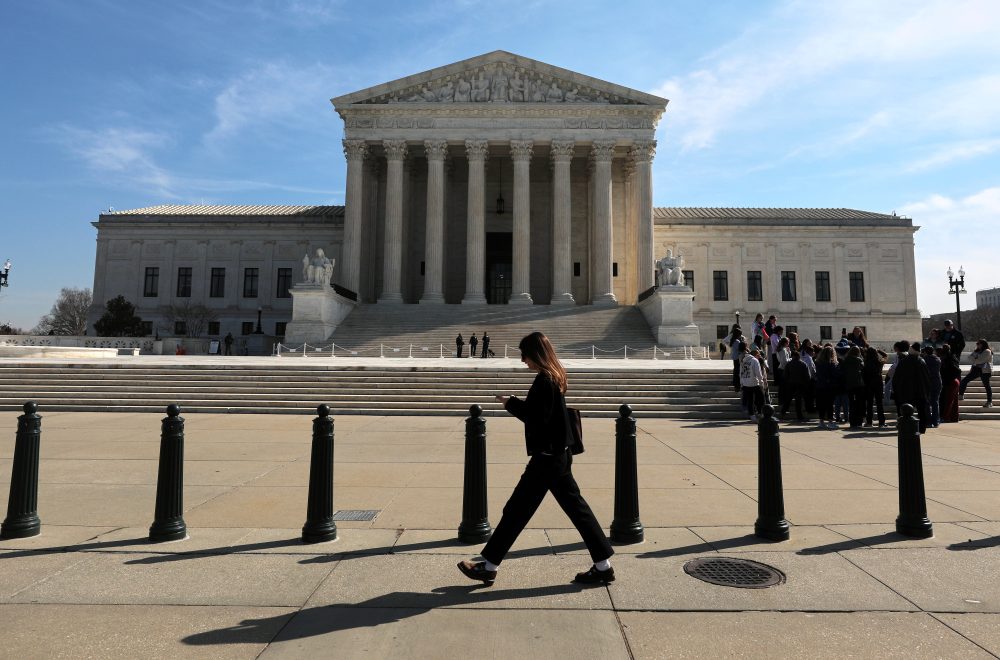
WASHINGTON — During oral arguments Tuesday, U.S. Supreme Court justices appeared inclined to side with a Black Mississippi death row prisoner who alleges racial discrimination influenced his jury selection.
The high court is considering an appeal from Terry Pitchford, whose case bears striking resemblances to another Black Mississippi death row defendant whose murder conviction was reversed by the Supreme Court seven years ago.
Pitchford received a death sentence for his involvement in a grocery store owner’s murder in northern Mississippi. His jury included just one Black member after prosecutor Doug Evans, now retired and known for systematically removing Black potential jurors, dismissed four other African American candidates.
Four decades ago in Batson v. Kentucky, the Supreme Court established that prospective jurors cannot be removed based on race, creating procedures for trial judges to assess discrimination claims and evaluate prosecutors’ race-neutral justifications.
The central question in Pitchford’s appeal concerns whether his defense attorneys adequately challenged Judge Joseph Loper’s decisions and if Mississippi’s highest court reasonably determined they had failed to do so.
Justice Brett Kavanaugh indicated he believed one of Pitchford’s attorneys had raised proper objections. Referencing the trial record, Kavanaugh observed, “She’s trying to make the objections right there.”
Multiple justices agreed that both the presiding judge and defense counsel performed poorly during jury selection.
“This is the most timid and reticent defense counsel that I have ever encountered,” Justice Samuel Alito remarked.
However, Alito also criticized Judge Loper for accepting Evans’ explanations without properly examining whether racial bias motivated the dismissals. “The judge didn’t handle this the way it should have been handled,” Alito stated.
In 2019, the Supreme Court reversed Curtis Flowers’ death sentence and conviction due to what Kavanaugh characterized as a “relentless, determined effort to rid the jury of Black individuals.”
Mississippi Solicitor General Scott Stewart attempted to differentiate Pitchford’s situation from the Flowers case.
“In Flowers versus Mississippi, this Court faced an extraordinary case and ruled against the state,” Stewart argued. “This case is also extraordinary but in a very different way that requires a very different result.”
The Supreme Court might rule in Pitchford’s favor while allowing lower courts to determine whether his conviction warrants reversal.
Pitchford, currently 40 years old, was 18 when he and an accomplice planned to rob Crossroads Grocery near Grenada in northern Mississippi. His companion fired three fatal shots at store owner Reuben Britt but avoided death penalty eligibility due to being under 18. Pitchford faced capital murder charges and received a death sentence.
The legal proceedings have continued for two decades. In 2023, U.S. District Judge Michael P. Mills vacated Pitchford’s conviction, determining that the trial judge failed to provide defense attorneys adequate opportunity to challenge the prosecution’s improper dismissal of Black jurors.
Mills indicated his decision was influenced partly by Evans’ conduct in previous cases. A three-judge panel from the 5th U.S. Circuit Court of Appeals unanimously overturned Mills’ ruling.
During his exchange with Stewart, Kavanaugh commended Mills’ case management. “Mills is a very experienced district judge. He had been a former Mississippi Supreme Court justice. He knows what he’s doing. He read the record entirely differently than you did,” Kavanaugh noted.
SMYRNA – Delaware residents seeking state services in Smyrna will have a new location to visit starting April 21, 2026, when the Smyrna State Service Center moves to upgraded quarters.
The service center will transition from its current leased space at 200 South DuPont Boulevard to a refurbished area within the historic Prickett Building, located on the Delaware Health and Social Services campus.
State officials say the move to the government-owned facility will create a more inviting and accessible space for Delaware residents who rely on essential state services. The historic Prickett Building is undergoing renovations to accommodate the relocated center.
The relocation represents the state’s effort to improve service delivery while moving operations into state-owned property rather than leased commercial space.
The University of Delaware Blue Hens women’s lacrosse squad will welcome Saint Joseph’s to campus this Wednesday afternoon, with officials announcing a schedule change for the matchup.
The contest, originally set for a different time, has been moved up to a 1 p.m. start. The timing adjustment affects the midweek conference battle between the two teams.
Fans planning to attend the home game should note the earlier start time when making their plans for Wednesday’s action at the university’s lacrosse facility.
A federal district court judge has ruled that President Trump’s executive order eliminating funding for National Public Radio and the Public Broadcasting Service violates First Amendment protections.
The judicial decision addresses the constitutional implications of the administration’s directive to cut federal support for the public broadcasting organizations.
The court’s finding centers on free speech protections, determining that the government’s action to withdraw financial backing from NPR and PBS crosses constitutional boundaries regarding freedom of expression.
This ruling comes as part of ongoing legal challenges to various executive orders issued by the Trump administration affecting media and broadcasting entities.
Athletes who were wrongly directed during a crucial qualifying event will receive another opportunity to compete on the world stage, officials announced.
The United States plans to significantly expand its women’s half marathon team for the upcoming world championship after what authorities describe as an extraordinary situation during the Atlanta Half Marathon on March 1.
During the race, an official vehicle mistakenly guided the front-running competitors away from the correct route, disrupting what should have been a straightforward qualifying event. Among those affected was Jess McClain, who appeared positioned to win before being led astray.
To address this unusual circumstance, U.S. officials will almost double the size of their women’s contingent for the world championship competition. This decision ensures that athletes who lost their chance due to the course error will still have the opportunity to represent Team USA on the international stage.
The incident highlights the critical role that race organization plays in competitive athletics, where split-second decisions and precise navigation can determine championship dreams.
CAPE CANAVERAL, Fla. — NASA is experiencing smooth preparations Tuesday as the space agency gets ready to send astronauts on their first lunar journey in more than 50 years, following several weeks of technical setbacks including fuel leaks and other complications.
Space agency officials confirmed that the massive moon rocket is performing well at the launch pad, while meteorologists are predicting favorable launch conditions with an 80% chance of good weather.
“Everybody’s pretty excited and understands the significance of this launch,” said senior test director Jeff Spaulding.
The Artemis II mission will carry four crew members who are set to become the first people to visit the moon since the Apollo 17 mission in 1972. The astronauts will travel around the moon in a flyby mission without attempting to land or enter lunar orbit before returning directly to Earth.
This represents NASA’s closest approach to actually launching the Artemis II mission. Technical problems including hydrogen fuel leaks initially delayed the flight from February to March, and subsequent issues with blocked helium lines pushed the launch window to April. NASA only has a limited number of days each month when conditions align properly for sending the crew of three Americans and one Canadian on their lunar journey.
With launch teams expressing confidence that these technical challenges have been resolved, they are preparing to start loading fuel into the towering 32-story Space Launch System rocket Wednesday morning ahead of an evening departure.
When audiences head to theaters Wednesday for “The Super Mario Galaxy Movie,” they’ll find familiar elements from the beloved video game alongside some unexpected twists. The film delivers what fans anticipate: the cosmic Princess Rosalina makes her debut, complete with scenes where she tells bedtime stories to her glowing star companions called Lumas. The plot whisks Princess Peach, Mario, Luigi and Toad beyond the Mushroom Kingdom into outer space, where characters zip between planets using launch stars—a concept that will resonate with anyone who played the 2007 Nintendo game.
The movie’s most surprising revelation centers on Bowser (Jack Black returns as the voice) and his overlooked son Bowser Jr. (voiced by Benny Safdie), who both turn out to be artists. The father figure uses painting as emotional therapy while remaining prisoner-sized in Princess Peach’s castle, still miniaturized from the previous film’s events. Meanwhile, Bowser Jr.—completely absent from the first movie—creates destructive art as part of his galaxy conquest scheme to earn his father’s approval. Despite being largely absent during his son’s upbringing, Bowser made their limited time together memorable with elaborate puppet shows and theatrical bedtime story presentations.
Family themes extend beyond the villain duo, as Princess Peach (Anya Taylor-Joy) grapples with questions about her past. Fortunately, Mario (Chris Pratt) and Luigi (Charlie Day) avoid heavy emotional storylines and simply enjoy the adventure. Producers Shigeru Miyamoto, Mario’s creator, and Chris Meledandri from Illumination appear dedicated to maintaining the franchise’s lighthearted spirit while crafting a reasonably engaging narrative.
Directors Aaron Horvath and Michael Jelenic, returning from the first film, along with screenwriter Matthew Fogel, recognize that Super Mario movie audiences aren’t seeking complex character development or harsh realism. The video game series offers pure escapism—a vibrant fantasy realm where space feels welcoming rather than threatening, filled with sparkle and amazement. Unlike the notorious 1993 film that featured disturbing violence, this version focuses on the joy of exploring locations like the Gateway Galaxy or navigating spinning fire obstacles.
New voice talent joins the cast, including Brie Larson as Rosalina, though her performance sounds remarkably similar to Taylor-Joy’s Princess Peach. Donald Glover voices Yoshi, bringing chaotic energy that makes him an entertaining and likely popular addition. The film doesn’t strictly adhere to the Galaxy games’ specific worlds, which some devoted fans have criticized as overly rigid thinking for this type of adaptation. One standout sequence cleverly combines Mario’s classic 2D pixelated appearance with the stunning 3D animation of contemporary versions.
The movie does carry an unavoidable commercial undertone, existing partly to generate additional revenue through games, toys, and future theme park attractions. It also capitalizes heavily on its predecessor’s massive success. The Lumas obsess over tales of the heroic plumber brothers, as do the Toads—one even sports Mario-themed sleepwear and carries a Mario figurine, raising obvious questions about the merchandise’s origin within their world. Bowser Jr.’s bedroom overflows with villain-themed toys and matching bedding.
While acknowledging that merchandise appeals to younger moviegoers, when these commercial elements become woven into the actual plot, they become distracting. These moments pull viewers away from the magical escape and back toward thoughts of corporate marketing strategies.
“The Super Mario Galaxy Movie,” distributed by Universal Pictures and opening Wednesday, carries a PG rating for mild violence, action sequences, and crude humor. The film runs 98 minutes and earns two and a half stars out of four.
A groundbreaking female NFL referee has filed a federal discrimination lawsuit against the league, alleging she endured years of gender-based mistreatment before losing her job last month.
Robin DeLorenzo, who made history as one of the first three women to referee NFL games, filed the complaint in Manhattan federal court on Friday. She claims the league subjected her to discriminatory scrutiny, harassment, and hostile treatment throughout her tenure from 2022 to 2025.
The legal action seeks her reinstatement as an official plus unspecified monetary damages. Neither the NFL nor the NFL Referees Association responded immediately to requests for comment.
DeLorenzo’s journey to professional football began with encouragement from her father, who helped guide her through high school and college officiating ranks. In a 2023 NFL.com interview, she recalled the emotional moment when the league’s senior vice president of officiating allowed her father to share the promotion news.
“Once he gave me the news, my dad and I just stared at each other crying for about five minutes,” DeLorenzo told NFL.com. “It was the most magical night.”
However, the lawsuit paints a starkly different picture of her NFL experience. The longtime New Jersey resident claims problems began immediately when she received men’s uniforms and was instructed to display her ponytail through her hat’s back opening, apparently to emphasize her gender on the field. The constant focus on her appearance eventually made her consider cutting her hair, according to court documents.
The legal filing details a particularly embarrassing incident during training camp when a crew chief allegedly told then-Pittsburgh Steelers Coach Mike Tomlin that DeLorenzo should perform like rookie players by singing publicly. The lawsuit states she was forced to give what she called “an utterly humiliating singing performance” before Steelers players, her male colleagues, and supervisors who recorded the event despite promising not to.
Court papers allege that her crew chief, who had previously faced accusations of mistreating another female employee, continued harassing her with profanity and inappropriate comments throughout the following weeks. By season’s end, he reportedly refused to communicate with her at all.
In 2024, despite union objections, DeLorenzo was required to participate in training designed for entry-level college officials – a mandate never imposed on male referees, the lawsuit claims.
“It was a male power play that served its purpose of humiliating plaintiff, shattering her confidence, and significantly hindering her NFL career,” the legal document states.
The league terminated DeLorenzo’s employment on February 18, 2025.
Her legal team argues she spent two decades climbing the officiating ladder, “breaking barriers, making history, and outperforming expectations at every level” only to encounter “hostility, retaliation, and systemic inequality” in a league that publicly promotes women’s opportunities.
The lawsuit contends that rather than supporting one of its few female officials, the NFL allowed “unchecked harassment,” provided unequal resources compared to men, and manipulated her training and evaluation processes before ending her career based on assessments from those who allegedly discriminated against her.
According to the filing, the damage to DeLorenzo’s career cannot be undone, while the emotional and professional harm she suffered has been enormous.
Attorneys representing Nobel Peace Prize winner Narges Mohammadi report that the imprisoned Iranian human rights advocate may have experienced a heart attack while incarcerated.
The 53-year-old activist’s legal team and sister met with her at Zanjan Prison in Iran’s northwest region on Sunday, according to her French attorney Chirinne Ardakani, who spoke with The Associated Press following briefings from the Iranian lawyers present at the visit.
“When my colleagues saw her, they were shocked because she was very pale and had lost a lot of weight, and she was not alone but aided by a nurse,” Ardakani stated.
Ardakani explained that Mohammadi reported fellow prisoners informed her she remained unconscious for more than an hour on March 24. Following a subsequent medical evaluation at the prison’s health facility, a physician indicated she likely experienced a cardiac event.
“She said she has since been having chest pain more than once a day and she has breathing difficulties and that she is in a very bad state,” Ardakani explained.
Prison authorities have refused to allow Mohammadi’s transfer to a hospital or permit visits with her heart specialist. A correctional officer remained present during the entire brief meeting with her attorneys.
Direct contact with her Iranian legal representatives was unavailable, as they typically avoid media interactions. Government-imposed internet restrictions have severely limited communications throughout the country. Ardakani noted that unauthorized contact with foreign press can result in criminal charges carrying potential 10-year prison sentences.
The human rights attorney received the Nobel Peace Prize in 2023 while behind bars. She was taken into custody in December while visiting Mashhad in eastern Iran and received an additional seven-year prison term.
Her husband, Taghi Rahmani, informed The Associated Press last month that her condition was deteriorating, partly due to physical assault during her December arrest. He described how multiple attackers struck and kicked her head, neck, and torso.
Before her December 12 detention, Mohammadi was already serving a 13-year, nine-month sentence for charges including conspiracy against national security and anti-government propaganda. She had been temporarily released on medical furlough since late 2024.
Throughout her temporary freedom, Mohammadi continued her advocacy work through public demonstrations and international media engagements, including protests outside Tehran’s infamous Evin Prison where she was previously held.
A Revolutionary Court in Mashhad imposed the additional seven-year sentence in February. These specialized courts routinely deliver judgments with minimal opportunity for defendants to challenge accusations.
Supporters indicate Mohammadi has pre-existing cardiac issues and previously suffered multiple heart attacks during imprisonment before requiring emergency surgical intervention in 2022.
“We are very worried that the regime is seeking to exhaust (Mohammadi), to wear her down, slowly killing her,” Ardakani expressed. She noted visible bruising remained on Mohammadi’s body more than three months following her violent arrest.
The Nobel committee issued a statement last month denouncing the “ongoing life-threatening mistreatment” of Mohammadi.
Mohammadi became the fifth individual to receive the Nobel Peace Prize while imprisoned in 2023, elevating her advocacy for the widespread demonstrations that erupted across Iran following Mahsa Amini’s death. Amini died after arrest by morality police for allegedly improper headscarf compliance.
Her Nobel selection infuriated Iran’s conservative Shiite leadership, which extended her incarceration and later deployed guards to physically attack her and other protesting inmates at Evin Prison.
Despite these challenges, Mohammadi maintained her resistance, including calls to boycott the 2024 election won by President Masoud Pezeshkian. She expressed confidence that public pressure would eventually bring governmental change to Iran.
Early Tuesday morning, reports indicated an airstrike targeted a Shiite religious facility in Zanjan, located approximately two miles from Mohammadi’s current detention center.
Iraqi authorities confirmed Tuesday that an American freelance reporter was abducted in Baghdad, prompting an intensive search operation by security forces to locate her captors.
The victim has been named as Shelly Kittleson, a freelance correspondent, according to one of the publications she writes for.
Iraq’s interior ministry released a statement confirming that a foreign correspondent had been taken, though they did not initially reveal the person’s identity.
Two Iraqi security sources, speaking anonymously due to restrictions on public statements about the case, confirmed the abducted reporter is an American woman.
According to these sources, the abduction involved two vehicles. During the chase by authorities near Al-Haswa in Babil province, located southwest of Baghdad, one vehicle crashed and was captured. However, the reporter had already been moved to a second car that successfully escaped.
The interior ministry stated that law enforcement agencies initiated a comprehensive operation to locate the abductors, “acting on precise intelligence and through intensive field operations” following the interception of a kidnapper’s vehicle that overturned during their escape attempt.
Authorities successfully detained one individual and confiscated one of the cars used in the crime, though additional suspects remain free, according to the official statement.
The security sources revealed that Kittleson was taken from Baghdad’s center, specifically on Saadoun Street. They noted that warnings were distributed to all security checkpoints, which led to the pursuit as the kidnappers traveled southwest toward Babil province.
Al-Monitor, a Middle Eastern news organization, confirmed that Kittleson, who contributes articles to their publication, was the journalist taken Tuesday in Baghdad. The outlet expressed being “deeply alarmed” by her abduction.
“We call for her safe and immediate release,” their statement declared. “We stand by her vital reporting from the region and call for her swift return to continue her important work.”
Kittleson has worked as a regional freelance correspondent for many years, providing extensive coverage from both Syria and Iraq.
A representative from the U.S. Embassy in Baghdad refused to provide comment.
The U.S. State Department issued a statement saying, “The Trump Administration has no higher priority than the safety and security of Americans” and confirmed they are “tracking these reports.”
“Due to privacy and other considerations, we have nothing further to share at this time,” their statement continued.
Whether this kidnapping connects to the current regional conflict remains unclear, though Iranian-supported militias in Iraq have consistently targeted American installations since the U.S.-Israeli conflict with Iran began.
Following the war’s outbreak, the U.S. embassy has issued warnings about abduction dangers and encouraged American citizens to depart the country.
Iraqi militant groups have also taken foreign nationals captive prior to the current conflict.
Elizabeth Tsurkov, a Princeton University graduate student holding both Israeli and Russian passports, vanished in Baghdad during 2023. Following her release to U.S. officials in September 2025, she revealed that the Iranian-affiliated Iraqi group Kataib Hezbollah had held her captive.
The organization never formally acknowledged responsibility for her kidnapping.
NICOSIA, Cyprus (AP) — Europe’s energy chief delivered sobering news Tuesday, cautioning that the dramatic surge in fuel costs triggered by the Iran conflict will persist long after any potential peace agreement.
EU Energy Commissioner Dan Jørgensen emphasized that while the 27-nation European Union isn’t facing immediate fuel shortages, the bloc is grappling with strained diesel and jet fuel availability plus growing limitations in worldwide gas markets that are pushing electricity costs higher.
“What I find extremely important is to state as clearly as I can, that even if that peace is here tomorrow, still we will not go back to normal in a foreseeable future,” Jørgensen stated during a press briefing following discussions among EU energy ministers.
The commissioner revealed that European officials are developing a comprehensive package of relief measures to help households and companies cope with massive energy cost increases that have sent gas prices soaring 70% and oil climbing 60% across Europe. The conflict has added 14 billion euros to the EU’s fossil fuel import expenses, Jørgensen reported.
He stressed the need for unified action among all member nations to “avoid fragmented national responses and disruptive signals to the markets.”
The upcoming relief package, which Jørgensen promised would be announced “quite soon,” will feature options to help countries separate gas pricing from electricity rates. Officials are also considering an electricity tax reduction proposed by Commission President Ursula von der Leyen.
While Jørgensen doesn’t anticipate a repeat of 2022’s natural gas emergency that generated enormous profits for energy companies during price spikes, he noted that a temporary “windfall tax” on such firms remains “a possibility.”
The commissioner highlighted current “good opportunities” for member countries to provide financial assistance to vulnerable populations and industries experiencing “extraordinary stress,” promising the Commission would make “these possibilities even simpler and wider.”
Jørgensen also urged EU nations to adopt the International Energy Agency’s 10-step conservation plan, which features remote work policies, lower highway speed limits, enhanced public transportation, and expanded carpooling programs.
The EU maintains its prohibition on Russian gas imports, designed to decrease Moscow’s energy influence and eliminate funding for Russia’s Ukrainian military campaign. Russian gas dependency has plummeted from 45% before the conflict to just 10% currently, with plans to reach zero once alternative suppliers increase deliveries, particularly from America. European leaders are exploring new energy partnerships with Azerbaijan, Algeria, and Canada, along with smaller producers globally.
Jørgensen cautioned against repeating “the mistakes of the past allowing Putin to weaponize energy against us and blackmail member states.” He declared it “would be totally unacceptable” for the EU to continue purchasing energy that would “indirectly help finance the terrible war that Putin is conducting in Ukraine.”
PORT-AU-PRINCE, Haiti (AP) — Caribbean nation Haiti unveiled strict budget-cutting measures Tuesday in response to rising global oil costs and supply disruptions caused by ongoing conflict in Iran.
The cash-strapped government has prohibited purchasing any new vehicles, mandated reductions in fuel spending across public agencies, and restricted international travel to only essential trips that must receive approval from the prime minister.
Additionally, security details will be reduced to just one vehicle per convoy in a nation where criminal organizations have seized control of roughly 90% of Port-au-Prince, the capital, along with large portions of the countryside.
Prime Minister Alix Didier Fils-Aimé authorized the new policies in an official statement, explaining they would help the administration “to anticipate serious repercussions on the already fragile macroeconomic balance and public finances in particular.”
“The government has no choice but to further reduce state spending,” the statement said.
Economic hardship throughout Haiti has worsened as criminal gangs have expanded their territorial control following the July 2021 killing of President Jovenel Moïse.
Nations worldwide have implemented various responses to the ongoing conflict, with some adopting four-day work schedules to conserve resources.
HAVANA (AP) — Cuban residents who have been forced to carry bags stuffed with cash due to severe inflation received some assistance Wednesday as the country launched two new high-value banknotes into circulation.
The Central Bank of Cuba released the new 2,000 and 5,000 peso bills, worth approximately $4 and $10 respectively, following their announcement Tuesday on the official government platform Cubadebate.
These bills mark a historic milestone as the first Cuban paper money to showcase women. The violet and pink 2,000 peso bill displays Mariana Grajales, an independence movement patriot and mother to multiple Cuban heroes. The blue 5,000 peso note honors Celia Sánchez, a guerrilla combatant who worked closely with former leader Fidel Castro.
According to Cubadebate, the new currency will “facilitate cash transactions, respond to the real needs of an economy that demands large amounts of cash… reduce the costs of cash logistics, and improve operational efficiency during the current period of inflation.”
Previously, the 1,000 peso bill represented the largest denomination available, but escalating inflation since 2001 has left citizens struggling with bulky stacks of money that exceed wallet capacity.
While government officials have encouraged electronic banking and transfers, cash remains the preferred payment method for many Cubans.
Official data shows annual inflation reached 14% by the end of last year. Price surges over the past five years — which hit a peak of 77% in 2021 — coupled with sharp drops in the nation’s economic output have dramatically affected everyday life.
The island nation faces a deep economic downturn stemming from the coronavirus pandemic, a 2021 monetary overhaul that triggered massive inflation, and expanded U.S. economic sanctions designed to pressure Cuba toward political and economic reforms.
BULVERDE, Texas — Authorities revealed Tuesday that a 15-year-old high school student was experiencing significant academic difficulties before he wounded a teacher with gunfire and then took his own life on Monday morning.
The tragic incident unfolded at Hill Country College Preparatory High School in Bulverde, where investigators from the Comal County Sheriff’s Office continue their examination of the circumstances. Law enforcement officials have confiscated multiple electronic devices from the teenager’s residence as they work to understand his motivations and the events leading up to the violence.
The attack left one teacher wounded, who remains under medical care at a local hospital. Sheriff’s officials have not disclosed details about her current medical status or the extent of her injuries. No additional casualties occurred during the incident at the school located in the expanding community near San Antonio.
According to investigators, the teenager brought a .357 revolver from his residence to carry out the shooting.
School officials confirmed the student was experiencing academic failure across multiple courses. The institution, operating under the Comal Independent School District, specializes in college preparatory education and academic excellence, as described on the district’s official website.
The campus, serving approximately 250 students, implemented emergency lockdown procedures shortly after 8:30 in the morning. School administrators evacuated students via bus transportation to a neighboring middle school facility, where anxious parents formed lengthy queues — some offering prayers — while awaiting reunion with their children.
District officials suspended Tuesday classes but arranged for professional counseling services to support students and their families during this difficult time.
WASHINGTON — A federal court has temporarily blocked the Trump administration’s massive White House renovation project after a judge ruled Tuesday that the president likely overstepped his authority in proceeding with the $400 million ballroom construction.
U.S. District Judge Richard Leon issued a preliminary injunction stopping President Donald Trump’s ballroom project, which involved tearing down the East Wing of the White House. The ruling came after the National Trust for Historic Preservation filed suit seeking to pause the controversial renovation.
Judge Leon, appointed by former Republican President George W. Bush, determined in his decision that “the National Trust is likely to succeed on the merits because no statute comes close to giving the President the authority he claims to have.”
“The President of the United States is the steward of the White House for future generations of First Families. He is not, however, the owner!” Leon wrote in his order.
The preservation organization had requested the court to stop construction until the project receives proper independent evaluations and Congressional authorization.
Trump revealed the ballroom plans during the summer months. Construction began quickly, with the East Wing demolished by the end of October to clear space for the proposed venue, which Trump stated would accommodate 999 guests. The administration claimed the massive 90,000-square-foot ballroom would be funded through private contributions, including donations from Trump personally.
The president moved forward with demolition and construction without first consulting two required federal oversight bodies — the National Capital Planning Commission and the Commission of Fine Arts. Both panels have been filled with Trump appointees and supporters.
Maryland’s ambitious forest restoration effort has made significant progress since launching in 2021, but organizers say much more work remains to achieve their target. The state’s 5 Million Trees initiative has successfully established over 1.5 million native trees throughout Maryland, yet 3.5 million additional plantings are still needed to reach the 2031 deadline.
State officials are encouraging residents to join the conservation effort by participating in tree planting activities and documenting their contributions through the program’s registration system. Citizens can get involved through existing assistance programs for property owners and communities, collaborate with local forestry experts to start new projects, or seek guidance from professional foresters.
Isaac Whitmore, who coordinates the 5 Million Trees program for the Maryland Forest Service, emphasized the environmental benefits of the initiative. “Trees help fight climate change, absorb carbon, provide clean oxygen, and improve air quality in urban and rural areas,” Whitmore explained. “They also reduce urban heat, support wildlife habitat, and improve water quality in local waterways and the Chesapeake Bay.”
Optimal Planting Seasons
Spring offers ideal conditions for tree establishment, providing young saplings with favorable growing conditions as the season progresses. Warmer temperatures and increased daylight hours stimulate active root and leaf development, helping trees establish themselves more effectively. The season’s regular rainfall patterns also minimize the need for constant watering. Autumn presents another suitable planting window, as moderate temperatures reduce plant stress while soil warmth continues to encourage root growth.
Qualifying Tree Requirements
For plantings to contribute toward the 5 Million Trees objective, they must satisfy specific guidelines:
• Trees must have been planted after July 1, 2021. Previously planted trees may qualify for registration, and those with large-scale plantings can contact Isaac Whitmore at [email protected] for registration assistance.
• Plantings must support afforestation efforts in locations historically lacking tree coverage.
• Only Maryland native species qualify, including more than 60 varieties listed on the program’s recommended species guide.
At least 10% of all plantings must occur in urban underserved communities as outlined in Maryland’s Tree Solutions Now Act of 2021. The program emphasizes planting in disadvantaged urban neighborhoods, particularly those that:
• Were historically redlined or classified as hazardous by the Home Owner’s Loan Corporation
• Experience unemployment rates exceeding the state average
• Have median household incomes at or below 75% of Maryland’s average
• Are situated within housing project areas
Residents can use an interactive online mapping tool to identify qualifying urban underserved locations. When uncertain about project eligibility, citizens can consult their local tree planting specialists to determine if their efforts count toward the 5 Million Trees goal. The Maryland Forest Service offers support to both public and private landowners interested in tree planting initiatives.
Urban Participation Opportunities
Multiple programs welcome urban participants:
• The Marylanders Plant Trees coupon program offers $25 discounts on tree purchases of $50 or more from participating nurseries.
• Tree-Mendous Maryland assists citizens in restoring tree coverage on public lands and community open spaces throughout the state.
• The Chesapeake Bay Trust’s Urban Trees Award Program distributes grants funding tree planting projects in urban, underserved communities.
• The Maryland Urban and Community Forestry Council awards grants to community organizations for tree planting and educational initiatives in urban forests. This council also funds MDOT Transportation Reforestation Grants supporting tree replanting where canopy was removed for transportation infrastructure development.
• The Backyard Buffer Program supplies free seedlings to homeowners creating native tree and shrub buffers protecting streams and waterways.
Rural Landowner Resources
• Healthy Forest, Healthy Waters represents a collaboration between the Maryland Forest Service and Alliance for the Chesapeake Bay, offering technical assistance to public and private property owners. Afforestation projects covering one acre or larger include three years of maintenance at no cost to landowners.
• Forest Stewardship Assistance provides technical and financial support helping landowners manage and maintain their forests. Forest stewards help landowners access programs including the Woodland Incentive Program (financial assistance for private, non-industrial woodland owners with 5 to 1,000 acres), Environmental Quality Incentives Program (multi-agency assistance improving agricultural and woodland practices), and Conservation Reserve Enhancement Program (supporting forest buffers and wetlands on farmland to protect wildlife and enhance water quality).
• Maryland Agricultural Water Quality Cost-Share Program offers farmers grants covering up to 100% of costs for installing best management practices preventing erosion, managing nutrients, and protecting water quality.
• Maryland’s Conservation Buffer Initiative provides farmers with incentive payments for planting streamside buffers on agricultural land to improve local stream health and Chesapeake Bay conditions.
• The Western Maryland Resource Conservation and Development Council develops and maintains resource conservation programs enhancing social, economic, and environmental development in Garrett, Allegany, Washington, and Frederick counties.
Citizens can monitor the 5 Million Trees initiative’s progress through the program website or by following DNR on Facebook.
The Worcester County Board of Electrical Examiners has called off their regularly scheduled meeting that was set for April 14, 2026.
The session was originally planned to convene at 3:00 p.m. in Meeting Room 1102 at the Worcester County Government Center, located at 1 West Market Street in Snow Hill, Maryland.
County officials posted the cancellation notice on March 31, 2026, informing the public that the electrical board would not be gathering as previously announced.
An agenda had been prepared for the April meeting, but with the cancellation, any business items will presumably be addressed at a future date.
The Board of Electrical Examiners typically handles licensing and regulatory matters related to electrical work within Worcester County.
WILMINGTON — Governor Matt Meyer and state leadership unveiled two educational videos today focused on informing Delaware residents about their fundamental civil rights during encounters with federal immigration officers.
The educational materials encourage Delaware citizens to understand their legal protections and were developed as part of a “Know Your Rights” campaign launched by state officials.
The videos emphasize the constitutional protections available to all Delaware residents when interacting with federal law enforcement agencies, particularly those involved in immigration enforcement activities.
State leaders say the initiative represents an effort to ensure residents are properly informed about their legal rights and protections under federal and state law during any encounters with federal authorities.
Delaware Governor Matt Meyer and state officials have introduced new educational materials designed to help residents understand their constitutional protections during encounters with federal immigration enforcement.
The initiative includes instructional videos produced in both English and Spanish, along with a dedicated state website that provides accessible information about civil liberties. The campaign operates under the “Know Your Rights” banner and aims to ensure Delaware families are informed about their legal protections.
The educational resources were unveiled today in Wilmington, marking the state’s effort to provide clear guidance to residents who may face interactions with federal immigration authorities. The materials emphasize the fundamental civil rights that apply to all Delaware residents regardless of their immigration status.
The new webpage serves as a central hub for accessing these educational tools, making it easier for residents to find reliable information about their constitutional protections. State officials designed the bilingual approach to reach Delaware’s diverse communities and ensure language barriers don’t prevent access to this crucial information.
A prominent British digital banking firm announced Tuesday it will withdraw from the American market as part of a strategic realignment toward its home country and European operations.
Monzo, the UK-based mobile banking company, revealed its decision to shut down U.S. services in order to concentrate resources on markets where it sees greater growth potential.
“With a fast-growing customer base of 15 million in the UK and the growth opportunity our European banking licence creates, we’re making a deliberate, strategic decision to focus on scaling in our home market and Europe and to step away from the US,” the company stated.
According to Bloomberg News, which initially broke the story, the banking firm will halt new customer registrations and eliminate roughly 50 jobs as part of the closure process.
Current American account holders will be able to maintain access to their banking services until June, Bloomberg reported, citing an unnamed source with knowledge of the situation.
The withdrawal represents a significant shift for the digital bank, which had been attempting to establish a foothold in the competitive U.S. financial services market.
NEW YORK — National Hockey League teams will no longer be able to exploit a loophole that allowed them to hide injured players until the playoffs began, then suddenly activate high-priced talent without salary restrictions.
Beginning with this year’s postseason, every game lineup must comply with salary cap limits that previously didn’t exist during playoff competition. To help teams manage this new requirement, the league has introduced a specialized calculator within the SAP-NHL Front Office App that executives have utilized for over a year.
“Once we were going to cap-compliant rosters for playoff games, we needed something that would enable us to do it in real time,” Commissioner Gary Bettman told The Associated Press. “It was an issue that a lot of people were concerned about. I’m glad we were able to solve it conceptually, and I’m glad that SAP and Central Registry were able to create a tool that made it realistic for teams to comply with this in real time.”
This regulation modification stems from the collective bargaining agreement negotiated with the players association last summer. The change addresses longstanding grievances about the long-term injured reserve workaround, which allowed multiple franchises to acquire expensive players at trade deadlines and make extended playoff appearances, including Stanley Cup victories.
Following Carolina’s 2021 second-round elimination by Tampa Bay, Dougie Hamilton notably stated, “We lost to a team that’s $18 million over the cap.”
According to the collective bargaining agreement terms, organizations aren’t required to keep their complete playoff squad beneath the salary ceiling, but the combined annual wages of active skaters and goaltenders for each contest cannot surpass $95.5 million.
The strategic planning application, which The Associated Press received a preview of, enables users to experiment with different lineup combinations to verify salary cap compliance. The Edmonton Oilers, as an example, must address Leon Draisaitl’s $14 million salary cap impact when the star player returns from his current injury that will keep him out through the regular season’s conclusion.
“You do it and it tells you if it doesn’t work, and it lets you pick and choose and substitution,” Bettman said. “It’s absolutely ingenious.”
Originally designed for iPad devices, the application became available on iPhones in December. The playoff salary calculator that the league officially announced Tuesday has been accessible since early February, just prior to the roster freeze before the Olympic break. NHL VP of Digital Business Development Chris Foster reported that utilization has grown substantially among all 32 franchises.
“Introducing on iPhone, the playoff cap projector — those weren’t in our original timelines,” Foster said, acknowledging the scenario-building was first considered a trading and free agency tool before the CBA changes came about. “We quickly shifted. It’s a credit to our Central Registry group. They flagged right away this is going to be needed, and we knew it was coming before the teams really knew about it, so it was their leadership that helped drive this change in the roadmap.”
Daniel Beringer, SAP’s Global Head of Technology and Innovation, explained that converting contract information from traditional paper binders into digital format required significant effort, but now allows for rapid real-time modifications.
“I would argue if the commissioner would ask for an app for his new Apple Watch, he could get that in a week or two now,” Beringer said. “It’s getting easier and easier to have additional functionality.”
PHOENIX (AP) — Las Vegas Raiders head coach Klint Kubiak hopes Fernando Mendoza won’t be thrown into the starting role immediately if the team drafts him.
Las Vegas is anticipated to choose the Heisman Trophy champion with the top selection in next month’s NFL draft. Mendoza guided Indiana to their inaugural national title and has emerged as the clear frontrunner for the first overall pick.
“Ideally, you don’t want him to start from day one,” Kubiak said Tuesday. “You’d love him to be able to learn behind somebody. That’s in a perfect world. It doesn’t always work out that way. Sometimes they have to play from day one and it’s our job as coaches to get them ready to go. I think it does help the player if they can sit behind a mature adult and watch how they run the show.”
Aidan O’Connell remains the sole quarterback on Las Vegas’ roster following trades involving Geno Smith and Kenny Pickett. Available free agents include Kirk Cousins, Jimmy Garoppolo and Russell Wilson.
Kubiak, previously the offensive coordinator for Super Bowl-winning Seattle, took over from Pete Carroll with plans to revitalize a franchise that hasn’t secured a playoff victory since their AFC championship appearance after the 2002 campaign.
The foundation begins with securing a cornerstone quarterback.
“He’s a national champion, he’s a winner,” Kubiak said of Mendoza. “He’s quick. He’s intelligent.”
Defensively, Las Vegas retained five-time Pro Bowl pass rusher Maxx Crosby after his proposed trade to Baltimore collapsed due to a failed physical examination.
Kubiak acknowledged his positive reaction when general manager John Spytek informed him about the cancelled transaction.
“We got Maxx back. Are you kidding me? That’s great. Our team just got better,” Kubiak said.
Crosby returned to the team’s training facility the following day to continue knee rehabilitation, and Kubiak frequently encounters him there.
“We’re happy to have Maxx back on the team. He’s the best player on our defense,” Kubiak said. “He’s going to be a leader on our team and a guy that we’re counting on to go win a lot of games with him.”
Baltimore coach Jesse Minter expressed the organization’s enthusiasm about potentially acquiring Crosby and their disappointment when negotiations collapsed. The Ravens quickly adjusted by signing 2024 All-Pro pass rusher Trey Hendrickson.
“So much respect for Maxx,” Minter said. “Tons of respect for him as a player and the Raiders as an organization.”
New York Jets coach Aaron Glenn maintains elevated expectations for Smith, who endured a difficult season with Las Vegas after reconnecting with Carroll.
The 35-year-old quarterback topped the league with 17 interceptions and posted a 2-13 record in Las Vegas last year. He earned Pro Bowl selections in Seattle during 2022 and 2023 after taking over for Wilson.
“I just feel like he’s the guy who’s gonna lead us to the promised land,” Glenn said.
New York holds the NFL’s longest current playoff absence at 15 seasons.
Cleveland is providing Deshaun Watson a chance to compete for the starting position alongside Shedeur Sanders and Dillon Gabriel, optimistic he could become another quarterback to engineer a remarkable comeback.
Sam Darnold transformed from castoff to leading Seattle to a Super Bowl championship.
“There are a lot of quarterbacks who — it seems to be kind of the theme in the NFL — either started or did not start well and then take their team to a Super Bowl championship, right?” Browns owner Jimmy Haslam told reporters. “And what a great story that is for Sam Darnold. Deshaun started great, and the year before we signed him, he was rated the second-best quarterback in the NFL. And then the suspension and the injuries and all that piled up. Can he come back from that? He certainly had the ability at one point in time, and we’re cautiously optimistic. But we’ll see.”
Watson is completing the final year of a $230 million, five-year fully guaranteed deal that has proven catastrophic for the franchise. He’s appeared in only 19 games with a 9-10 record. Watson hasn’t competed since 2024 following two ruptures of his right Achilles tendon.
New Cleveland coach Todd Monken stated he won’t distribute practice repetitions equally, instead adjusting daily based on player performance. This approach means Sanders, who concluded last season as the starter, might begin with the majority of snaps. Monken noted Sanders has maintained a consistent presence at team facilities during the offseason.
Denver coach Sean Payton joins those questioning whether NFL players belong on Team USA’s men’s flag football squad.
“I’ll be surprised if there’s one NFL player on that roster,” Payton said.
He led one of two teams that finished 0-3 in a round-robin competition against the men’s national squad on March 21.
A source with knowledge of the negotiations confirmed Tuesday that the Seattle Mariners have finalized a historic $95 million, eight-year contract with rising star Colt Emerson.
This groundbreaking agreement, beginning with the current season and featuring a club option extending through 2034, sets a new record as the most lucrative contract awarded to any player prior to their major league debut.
The individual providing this information requested anonymity since the organization has not yet made an official announcement regarding the signing.
Seattle chose the promising 20-year-old infielder as their 22nd selection during the 2023 draft. Baseball America recognized Emerson’s potential by ranking him seventh among all prospects heading into this season.
During his brief stint with Triple-A Tacoma this year, Emerson posted impressive numbers, hitting .357 with one home run, one double, and achieving a perfect 1.000 OPS across three contests. His spring training performance with the Mariners included 18 appearances where he compiled a .268 batting average, connected for two home runs, drove in eight runs, and maintained an .828 OPS.
CLEVELAND (AP) — In what may be the most unusual real estate posting ever, the Cleveland Cavaliers’ home venue has appeared on Redfin as a property listing.
Rocket Arena was posted Tuesday on the real estate platform, showcasing the massive 823,000-square-foot downtown Cleveland venue that seats 19,432 fans and features 118 restrooms along with what the listing describes as “an open-concept design built to bring people together.”
The facility, which first opened its doors in 1994, serves as home base for the Cavaliers and will also house a WNBA franchise starting in 2028, plus an American Hockey League team.
The creative marketing approach by Redfin and the Cavaliers aims to draw attention to a special open house and garage sale event planned for Thursday at the arena, though the venue itself is not actually on the market. A massive 46-foot yard sign advertising the open house has been erected outside the building.
The collaboration makes sense given business connections between the companies. Redfin joined Rocket Companies in July, while Cavaliers owner and chairman Dan Gilbert founded and chairs the board of Rocket.
HARARE, Zimbabwe — Violence erupted during a public parliamentary session in Zimbabwe’s capital on Tuesday as lawmakers heard testimony about proposed constitutional changes that could keep the nation’s 83-year-old president in office longer.
The meeting at a Harare sports facility became chaotic when supporters of extending the presidential term physically assaulted prominent human rights attorney Doug Coltart, leaving him injured. The attackers damaged his eyeglasses, stole his mobile phone, and left him with bruises as he attempted to leave the venue.
Coltart was among several critics who walked out of the session to protest the intimidating atmosphere that dominated the proceedings. Supporters of the term extension pushed and struck him while shouting their backing for the constitutional changes.
The proposed modifications would permit President Emmerson Mnangagwa, who previously served as a guerrilla fighter, to continue governing for an additional two years past his scheduled departure in 2028. The changes would also transfer presidential selection authority from voters to Parliament and extend both presidential and legislative terms from five to seven years.
These nationwide hearings represent a required procedural step before parliamentary members cast their votes on the legislation, although public feedback does not legally bind Parliament’s decision.
According to Tendai Biti, who leads the Constitutional Defenders Forum opposing these proposals, critics at multiple hearings that started Monday across Zimbabwe faced hostile crowds who shouted them down, intimidated speakers, or prevented them from participating entirely.
Biti, who previously served as finance minister, gained his freedom on bail last week following his detention for allegedly conducting an unauthorized gathering against the amendments.
Earlier this month, another opposition leader required hospitalization after unidentified attackers beat him following a meeting about the proposed changes. The victim claimed police officers carried out the assault, though law enforcement denied involvement and stated the gathering had been prohibited.
Government officials have dismissed claims they are silencing opposition voices, maintaining that the reform process follows legal procedures. While Mnangagwa has stated he plans to leave office when his second term concludes in 2028, he has not publicly criticized his ruling ZANU-PF party’s efforts to extend his presidency.
Mnangagwa assumed leadership following a widely supported military takeover in 2017 that removed Zimbabwe’s long-serving ruler, the late Robert Mugabe. He subsequently secured victory in contested elections during 2018 and 2023, both of which drew criticism from international rights organizations for alleged suppression of opposition candidates and their supporters.
Opposition voices maintain that any attempt to lengthen presidential terms must receive voter approval through a nationwide referendum.
Former President Donald Trump has released initial architectural designs for his upcoming presidential library, which will be built on premium real estate donated by Miami Dade College.
The renderings mark the first public glimpse of what Trump’s presidential library will look like when completed. The facility is set to occupy a strategic location in Miami on land gifted by the educational institution.
The architectural plans showcase Trump’s vision for preserving his presidential legacy through this dedicated library space. Like other presidential libraries, it will serve as a repository for documents, artifacts, and materials from his time in office.
Miami Dade College’s donation of the prime property represents a significant contribution to the project, providing an ideal setting for the future library in South Florida.
The resolution of Prince Harry’s remaining legal battle with British newspapers may depend on whether a judge finds a private investigator credible, after the detective previously confessed to surveillance activities targeting the royal family member.
During closing arguments Tuesday, an attorney representing the Daily Mail’s publisher argued that the lawsuit filed by the Duke of Sussex alongside celebrities like Elton John, Sadie Frost, and Elizabeth Hurley falls apart based on testimony from investigator Gavin Burrows, who denied conducting surveillance work for the newspaper or its sister publication, the Mail on Sunday.
In his final argument, defense attorney Antony White stated that a document Burrows supposedly signed — which he later rejected — claiming he “must have done hundreds of jobs” for the Mail from 2000 to 2005 had sparked the legal action.
However, Burrows, who previously expressed regret to Harry in a BBC program for aggressively pursuing him for tabloids during his teenage years, testified he never performed such activities for the Mail. He claimed the document was created by the plaintiffs’ legal representatives and his signature was falsified.
Throughout the 11-week High Court proceedings, Judge Matthew Nicklin repeatedly questioned the plaintiffs’ attorney about the case’s viability if Burrows’ original statement was dismissed. The judge will deliver a written decision at a later date.
Lawyer David Sherborne argued that substantial additional evidence exists showing the newspapers engaged in illegal information collection, including employing other investigators, reporters, and freelance journalists to hack phones, intercept voicemails, and gather information through fraudulent means.
Harry and six additional plaintiffs are pursuing “a substantial award of damages, including aggravated damages,” according to Sherborne. Legal expenses alone are estimated to approach 40 million pounds ($52 million).
This trial represents the concluding phase of Harry’s extended conflict with British tabloid media. He seeks to make newspapers answerable for previous misconduct and transform what he has characterized as a harmful media landscape.
Harry and fellow plaintiffs are pursuing legal action against Associated Newspapers Ltd. for privacy violations. Additional plaintiffs include anti-racism campaigner Doreen Lawrence, former politician Simon Hughes, and John’s spouse, David Furnish.
They allege the publications engaged in “clear, systematic and sustained use of unlawful information gathering” spanning two decades to conduct surveillance on them.
Associated Newspapers rejected the accusations as “preposterous,” maintaining that approximately 50 disputed articles relied on legitimate sources, including friends, royal staff members, and publicists who voluntarily provided information to journalists. The company also argued that claims reaching back to the 1990s were submitted beyond acceptable time limits.
While Sherborne claimed payment records to private investigators corresponded with publication dates of questioned articles, White dismissed this as speculation and argued the case depended too heavily on assumptions.
Harry testified early in the January trial that media intrusions made him “paranoid beyond belief,” damaged his relationships, and affected his mental well-being.
During cross-examination, he adopted a protective stance and became emotional, stating that tabloids had made his wife Meghan’s life “an absolute misery.”
Harry has connected his media hostility to his mother Princess Diana’s death, who died in a 1997 automobile accident while being chased by photographers, and to what he describes as continuous press harassment of his wife that influenced their choice to reduce royal responsibilities and relocate to the United States in 2020.
Harry previously secured a favorable ruling in a phone hacking case against the Daily Mirror’s publisher and received a settlement and apology from Rupert Murdoch’s Sun and the now-closed News of the World.
The Mail trial has proceeded differently from the Mirror case, featuring significantly more current and former journalists and editors testifying to deny using illegal methods for stories about Harry’s numerous relationships — particularly regarding former girlfriend Chelsy Davy — his godfather responsibilities, and his deceased mother.
Several reporters identified their sources and challenged Harry’s claim that his “social circles were not leaky.”
“They were not all tight lipped,” said Katie Nicholl, a former Mail on Sunday editor, regarding Harry’s associates. “I had very good sources in the inner circle.”
HAVANA — In a crumbling Havana neighborhood, Yuneisy Riviaux faces a reality she never thought possible: watching her young daughters go hungry because there simply isn’t enough food.
The 42-year-old mother, currently without work, shares a deteriorating home with multiple families after the building’s upper level caved in years earlier. As she holds her 2-year-old daughter Seinet, Riviaux describes their desperate situation.
“Things have been going very, very badly for me,” Riviaux explained. “Some days I manage to get food.”
“But other times I can’t — like right now, when I have to bite my lip and swallow my tears because I don’t have lunch for the girls.”
Cuba’s worsening financial collapse, now in its sixth year and made worse by energy sanctions implemented during Donald Trump’s presidency, has hit families like Riviaux’s the hardest. Constant power outages, reductions in government food distributions, and critical shortages of clean water and medical supplies have made survival a daily struggle for Riviaux, her 61-year-old husband Cristóbal Estrada, and their two children.
Earlier that morning, Estrada had prepared breakfast for their 7-year-old daughter Edianet: a slice of rationed bread topped with a small amount of butter — a rare treat given to the family by a passing tourist exploring their neighborhood.
After taking Edianet to school, Estrada began the challenging journey to Cotorro, roughly 12 miles away, hoping to collect food and financial assistance from family members. The nationwide power failure on March 21 had destroyed all the perishable items in their refrigerator.
“He has to see if he can find a ride, a bus or whatever it takes to get there,” Riviaux said.
Cuba’s transportation network has nearly ground to a halt due to fuel shortages after the United States blocked oil shipments to the island following January’s attack on Venezuela — Cuba’s primary petroleum source. The island only produces about 40% of its required crude oil.
These fuel shortages have triggered nationwide blackouts that have frustrated Cubans already dealing with years of hardship. The lack of gasoline and essential supplies has devastated healthcare facilities and caused dramatic increases in food costs and availability problems.
Mexico previously provided oil to Cuba during the island’s ongoing energy struggles, but stopped these deliveries when faced with potential US trade penalties, now limiting assistance to humanitarian supplies only.
This Tuesday, a Russian oil tanker arrived at Cuba’s Matanzas port carrying 730,000 barrels of petroleum after the Trump administration allowed the delivery despite the US energy blockade — the first such shipment in three months. However, energy analysts estimate this supply will only meet the island’s diesel requirements for approximately nine to ten days.
Riviaux and Estrada previously operated a small vendor stand outside their residence, selling drink mixes and basic packaged goods.
However, in February, Estrada became seriously ill and required hospitalization for a collapsed lung. The medical expenses proved financially devastating as the couple exhausted their savings purchasing medications on the illegal market when government-subsidized pharmacies had no supplies available.
“We had to sacrifice that business to buy the medicine and save his life,” Riviaux said.
Currently, Riviaux sells sweet baked goods prepared by her sister whenever they can obtain flour — an item not included in the limited monthly government rations that provide rice, beans, sugar, cooking oil, coffee, and daily bread.
Cuba’s previously celebrated universal healthcare system has deteriorated so severely that it cannot deliver basic medical services. Medical facilities face enormous backlogs, with approximately 96,000 surgical procedures delayed, including 11,000 for pediatric patients, based on local government and United Nations data.
Almost 5 million citizens with ongoing medical conditions cannot access necessary medications, while critical treatments including cancer radiation therapy and kidney dialysis have been suspended for 16,000 and 2,800 patients respectively.
The United Nations announced a $94 million emergency assistance program this week to address what officials described as a “life-threatening” situation for Cuban citizens. Francisco Pichón, the UN’s resident coordinator in Cuba, noted the appeal follows Cuba’s historical leadership in Latin American maternal healthcare and immunization programs — achievements now seriously threatened.
By midday, with her husband still away, Riviaux had no option but to feed her 2-year-old a piece of bread and the family’s remaining milk — a donation from Mexico. Riviaux went without eating. Her 7-year-old continues receiving free school meals, as classes persist despite the national emergency.
Riviaux looks back wistfully to the period before the COVID-19 pandemic, when she recalls “Cuba had everything.”
“I know the pandemic hit the whole world, but it hit us much harder,” she said.
Before the pandemic, each family’s ration booklet included rice, beans, daily milk for children, sugar, oil, chicken, ground meat, and approximately 30 food and hygiene items. These supplies typically lasted about 20 days, requiring families to purchase additional items from private businesses using currency tied to the US dollar.
Enhanced US sanctions that began during Trump’s first term, combined with tourism’s collapse during the pandemic and Cuba’s unsuccessful economic strategies, created a severe recession.
Cuba’s economic output has dropped 15% during the past six years, causing a massive population exodus. The island lost over 1 million residents — roughly 10% of its total population — in 2024 alone.
Following the US capture of Venezuelan President Nicolás Maduro, Trump has intensified his statements about Cuba, initially suggesting a “friendly takeover” and recently telling conservative Latin American allies he would “take care” of Cuba after concluding the conflict with Iran.
Riviaux acknowledged that despite attempting to avoid political discussions, Trump’s aggressive language has caused her significant concern.
“We heard the news that Trump wanted to take over. What will happen if the U.S. gets involved?” she questioned as her husband returned late that afternoon.
He brought plantains, chicken, and sufficient money to purchase a kilogram of rice from a neighboring vendor — providing small comfort during an unpredictable week.
MADISON, Wis. — A panel of three Wisconsin judges on Tuesday rejected a legal challenge from Democratic voters who wanted to force new congressional district boundaries in the key swing state before November’s elections.
The ruling may be taken to Wisconsin’s liberal-majority Supreme Court, though whether that court could act quickly enough to impact this year’s races remains uncertain. A separate redistricting lawsuit is also moving through the courts but won’t reach trial until April 2027.
These legal battles unfold as President Donald Trump pursues redistricting fights nationwide to help Republicans maintain their narrow House control after November.
The judicial panel stated in their decision they found “no basis to find the current congressional map invalid.” They explained the case needed dismissal because only Wisconsin’s Supreme Court holds authority to decide on map changes.
However, the judges emphasized they were “not endorsing the current congressional map” when throwing out the case.
“Rather, we, as circuit court judges, do not have the authority to read into a Wisconsin Supreme Court case an analysis that it does not contain,” the judges ruled.
GOP officials celebrated the outcome.
“This is a significant win for Republicans and a yet another blow to desperate Democrats who wanted to reshape the electoral landscape,” said Zach Bannon, spokesperson for the National Republican Congressional Committee. “By keeping Wisconsin’s current district lines in place for 2026, Republicans are in a strong position to build on our momentum to retain and grow our House majority.”
Wisconsin’s Supreme Court directed these redistricting cases to the three-judge panel last November despite Republican opposition. This marked the initial use of this procedure under legislation Republicans passed in 2011.
The rejected lawsuit claimed existing maps unfairly harm Democrats by concentrating large numbers of Democratic voters into two districts while splitting other Democratic communities across six GOP-leaning districts.
Before Republicans redrew congressional boundaries in 2010, Democrats controlled five House seats versus three for Republicans. Currently, Republicans occupy six of Wisconsin’s eight House seats, with only two considered truly competitive races.
These congressional boundaries, derived from 2010 maps, received approval from the state Supreme Court when conservative justices held the majority. The U.S. Supreme Court refused to block these maps in March 2022.
Democrats particularly want to challenge Republican Rep. Derrick Van Orden’s western Wisconsin seat, as he’s a strong Trump ally. Van Orden claimed victory in 2022 after longtime Democratic Rep. Ron Kind stepped down, then won reelection in the 3rd District during 2024.
The other Democratic target is southeastern Wisconsin’s 1st District, where Republican Rep. Bryan Steil has served since 2019. Recent map adjustments made this district more competitive while maintaining Republican advantages.
Next year’s scheduled lawsuit comes from a bipartisan group of business leaders, though that case also faces a pending dismissal motion.
Wisconsin Business Leaders for Democracy contends in their legal filing that the state’s congressional maps violate constitutional principles through anti-competitive gerrymandering. Their lawsuit points out that winning candidates across all eight districts have averaged victory margins near 30 percentage points since these maps took effect.
WASHINGTON — A federal court has issued a permanent injunction preventing the Trump administration from carrying out a presidential order that would have eliminated government funding for NPR and PBS.
U.S. District Judge Randolph Moss issued his decision Tuesday in Washington, declaring that President Trump’s executive directive to halt funding for the public broadcasting organizations violates constitutional law and cannot be enforced. In his ruling, Moss stated that First Amendment free speech protections prohibit this kind of viewpoint-based discrimination and retaliatory action.
“It is difficult to conceive of clearer evidence that a government action is targeted at viewpoints that the President does not like and seeks to squelch,” wrote Moss, who was nominated to the bench by President Barack Obama, a Democrat.
During a press conference last year, Trump expressed his desire to eliminate funding for NPR and PBS, claiming both organizations show bias toward Democratic viewpoints.
In their legal challenge, NPR argued that the Corporation for Public Broadcasting infringed on their First Amendment rights by moving to terminate their access to congressionally allocated grant funding. The organization also contended that Trump, a Republican, sought to retaliate against them based on their news coverage.
Following congressional defunding last August, the Corporation for Public Broadcasting announced plans to begin shutting down operations.
A federal grand jury has brought serious criminal charges against the former leader of Arkansas’s medical oversight board, alleging he orchestrated a scheme to illegally sedate psychiatric patients for financial gain.
Dr. Brian Hyatt, who previously served as chairman of the Arkansas State Medical Board, faces federal kidnapping and drug distribution charges stemming from his alleged actions at a Springdale psychiatric facility. Prosecutors claim Hyatt administered powerful sedatives to patients without proper medical reasons, keeping them hospitalized longer to maximize insurance reimbursements.
The indictment, handed down in early March and made public Monday, details alleged misconduct at Northwest Medical Center Behavioral Health Unit spanning from 2018 to 2022. During this period, Hyatt’s medical company held a contract to deliver psychiatric care at the facility.
Seven additional healthcare workers face related charges in connection with the alleged scheme. Some staff members are accused of staying silent about the misconduct to protect their jobs, according to the indictment. These employees allegedly falsified medical documentation, using standard template notes rather than accurate patient assessments to hide the lack of proper treatment.
The charges against other workers include more direct involvement in patient abuse. Federal prosecutors allege at least one employee deliberately broke a patient’s collarbone while physically restraining her to force compliance with unneeded procedures. Additional staff members allegedly employed threats and physical violence to coerce patients into accepting unnecessary treatments while preventing victims from reporting the abuse.
Those convicted could face life imprisonment, along with up to five years of court supervision and fines reaching $250,000.
As of Monday evening, no legal representation had been publicly identified for Hyatt or the seven co-defendants. The Arkansas State Medical Board has not responded to requests for comment regarding the charges.
Military officials in Burundi report that loud explosions that shook the commercial capital of Bujumbura on Tuesday stemmed from an electrical malfunction at a weapons storage facility within a military installation.
The powerful blasts echoed throughout the city, creating massive smoke clouds visible across the skyline while frightened citizens rushed indoors for safety.
Social media users posted videos and photos capturing the dramatic explosions, showing thick smoke and flames in the distance, though Reuters was unable to confirm whether these images were authentic.
“A serious electrical accident at the (army) ammunition depot in Musaga is the cause of the explosions currently being heard in the economic capital, Bujumbura,” military spokesman Gaspard Baratuza told Reuters when asked about the incident.
Baratuza called on citizens to remain composed and stay away from the affected area, noting that emergency response crews were working to handle the crisis.
Palestinian families in the West Bank are expressing deep anxiety about the safety of their imprisoned loved ones following Israel’s passage of new legislation that establishes capital punishment as the standard sentence for Palestinians found guilty of fatal attacks.
The legislation, approved by Israeli lawmakers late Monday evening, technically applies to all citizens but specifically targets attacks described as those “negating Israel’s existence” – language that critics argue makes it highly unlikely to affect Jewish Israelis.
Legal scholars anticipate Israel’s Supreme Court will overturn the measure after civil rights organizations file their expected challenge, noting the law conflicts with international agreements. The U.N. human rights chief stated Tuesday that the legislation breaches international humanitarian law.
Under the new statute, condemned individuals would face execution specifically through hanging within 90 days of sentencing, with no opportunity for clemency. Legal experts suggest the hanging provision was included due to concerns that Israeli physicians would decline to participate in lethal injection procedures.
While judges retain discretion to impose life imprisonment instead of execution in undefined “special circumstances,” the law otherwise mandates capital punishment.
The Israeli human rights organization B’Tselem reports that West Bank military tribunals, which exclusively handle Palestinian cases, achieve conviction rates of 96% and have documented histories of coercing confessions through pressure or torture – allegations Israel disputes.
Family members of Palestinian detainees gathered for a demonstration in Ramallah Tuesday, demanding the death penalty statute be rescinded.
“I am afraid for my son and for all the prisoners. The news came down like a thunderbolt on the prisoners’ families,” said Maysoun Shawamreh, whose 29-year-old son Mansour faces attempted murder charges.
Abdel Fattah al-Himouni’s son Ahmed awaits trial for his alleged role in an October 2024 combined shooting and stabbing incident at a light-rail station near Tel Aviv that claimed seven lives, including a woman holding her infant.
Al-Himouni expressed concern his son could now face execution if convicted and questioned whether a fair trial would be possible. “I appeal to human rights organizations to pressure the Israeli government so this law does not come into effect,” said al-Himouni.
The 1949 Fourth Geneva Convention, which Israel has signed, requires that death row inmates retain petition rights for pardons and mandates at least six months between sentencing and execution.
Mordechai Kremnitzer, a legal scholar with the Israel Democracy Institute, characterized the law as “a clear case that invites the Supreme Court to strike it down.”
“The likelihood of executions in the near future is not very high,” Kremnitzer explained, noting that judges typically oppose capital punishment as it conflicts with both universal and Jewish moral principles.
The measure has generated international condemnation of Israel, which already faces criticism for escalating settler violence against Palestinians in the West Bank and its military operations against Hamas in Gaza.
Israeli settler attacks on Palestinians in the West Bank seldom result in military court charges. The monitoring group Yesh Din reports the most recent case of an Israeli citizen being indicted for killing a Palestinian involved a 2018 incident.
In Israel’s civilian court system, where Palestinians may also face trial, the law similarly mandates death or life imprisonment for homicides intended to “negate Israel’s existence” – terminology unlikely to apply to Jewish defendants.
“That’s how the law will only apply to Palestinians,” explained attorney Debbie Gild-Hayo of The Association for Civil Rights in Israel, which has petitioned the Supreme Court challenging the measure.
Suhad Bishara, whose organization Adalah jointly filed the appeal with ACRI, argued that “military courts have no basic guarantees for a fair trial” and questioned whether Israel’s parliament has authority to create laws for occupied territories.
Palestinian Authority prisoners’ minister Raed Abu al-Hummus estimates 45 to 47 Palestinian detainees currently awaiting murder sentencing could face execution if the law takes effect.
ACRI clarified the statute would only apply to future killings, not past cases, and would not affect the hundreds of Hamas fighters involved in the October 7, 2023 attack that killed 1,200 people in southern Israel, since parliament continues developing the legal framework for their trials.
Israel’s far-right politicians celebrated the legislation as fulfilling a key 2022 campaign promise by National Security Minister Itamar Ben-Gvir. His Jewish Power party contends capital punishment will discourage Palestinians from conducting deadly attacks against Israelis or attempting kidnappings to secure prisoner exchanges.
However, Amnesty International, which monitors global death penalty implementation, states “there is no evidence that the death penalty is any more effective in reducing crime than life imprisonment.”
FIFA President Gianni Infantino made an unexpected appearance at Iran’s soccer match on Tuesday, demonstrating his commitment to ensuring the nation competes in the upcoming World Cup despite ongoing disputes over where their games will be held.
The FIFA leader watched Iran defeat Costa Rica 5-0 in a friendly match held in Turkey, using the opportunity to address concerns about the team’s tournament participation amid escalating Middle East conflicts.
Iranian officials have been working to move their World Cup games from United States venues to Mexico, pointing to American military actions supporting Israel in the regional conflict as their reasoning for the requested change.
The Iranian soccer federation announced earlier this month that they were negotiating with FIFA about switching venues, while Iran’s Sports Ministry has prohibited national and club teams from traveling to nations they view as hostile.
Despite these complications, FIFA has stated it expects all qualified teams to participate according to the schedule released in December.
“I am very pleased that the Iran national team is currently holding its training camp… We have only one plan for this team. Iran has qualified for the World Cup and will play in the tournament,” Infantino told Iranian media outlets at the match in Antalya.
“Personally, I will do whatever I can to make sure everything is in order.”
Iran earned their World Cup spot by excelling in Asian qualifying matches last March and is set to face Belgium, Egypt and New Zealand in Group G, with all three games currently scheduled for American cities – two in Los Angeles and one in Seattle.
During his address to the Iranian players, Infantino emphasized his support while avoiding political discussions, stating they were “not pursuing politics.”
President Donald Trump recently commented that while Iran’s team could play in America, it might pose risks to their “life and safety.”
“From now until the World Cup, I will do whatever I can to support the Iran national team,” Infantino declared.
“If you want to organise a training camp or if there is any matter related to activities outside the country, whatever it is, I will help.”
“Whenever you want, please stay in contact. I am at your service and will help with anything you need.”
Two Indonesian peacekeepers serving with the United Nations died Monday when an explosive device detonated along their convoy route in southern Lebanon, according to preliminary investigation results released by UN officials on Tuesday.
The fatal incident occurred near the village of Bani Hayyan, where the roadside explosion also left two additional soldiers injured. This tragedy followed another deadly attack just hours earlier, when a third Indonesian peacekeeper lost his life Sunday night after a projectile struck close to a UN position.
Speaking at a UN Security Council session focused on Lebanon, Jean-Pierre Lacroix, who oversees UN peacekeeping operations, announced that investigators are working to understand the full details of these attacks. “UNIFIL is conducting investigations to determine the circumstances of these reprehensible developments,” Lacroix stated.
The violence comes as fighting between Israel and the Lebanese militant organization Hezbollah intensified following the outbreak of renewed conflict on March 2nd.
Israel’s UN representative Danny Danon pointed fingers at Hezbollah for the peacekeepers’ deaths, claiming the organization fires rockets from civilian areas adjacent to UN facilities. This practice, he argued, “putting peacekeepers directly in the line of fire.”
When asked to respond to Danon’s accusations, UNIFIL spokesperson Kandice Ardiel replied: “We invite them to share their evidence with our investigative team.”
UN spokesperson Stephane Dujarric confirmed during a press briefing that the Bani Hayyan attack involved a “roadside bomb, most likely an IED,” referring to an improvised explosive device.
UN Secretary-General Antonio Guterres issued a strong condemnation of the attacks, describing them as “grave violations of international humanitarian law… and may amount to war crimes.” He emphasized that “There will need to be accountability” for these incidents.
Indonesia’s foreign ministry responded Tuesday with its own harsh criticism, condemning the attacks “in the strongest terms” while noting the worsening security situation across the region. The ministry specifically cited ongoing Israeli military actions as creating serious dangers for UN peacekeeping personnel stationed in Lebanon.
During the Security Council meeting, U.S. representative Mike Waltz highlighted the long history of peacekeeper casualties, noting that since 1978, more than 300 UNIFIL personnel have died. This record, he argued, means the council “must think very carefully about the effectiveness of this effort.”
“We can help refocus international efforts on supporting Lebanese state institutions, reducing risk to peacekeepers, and pressing Hezbollah and Iran to cease their destabilizing activities,” Waltz added.
The peacekeeping mission faces a scheduled conclusion, with the Security Council having decided that UNIFIL operations will end in late 2026, followed by complete withdrawal in 2027. Current deployment numbers show 7,505 peacekeepers from 47 different countries serving in the mission as of March.
DOVER, Del. – Delaware’s Division of Historical and Cultural Affairs has filled two important leadership roles within the state agency responsible for safeguarding the First State’s rich historical legacy.
The department announced it has brought on board new personnel to serve as Deputy Director and Communications Manager, with the latter also handling Public Information Officer duties.
These appointments represent significant additions to the division’s management team as the agency continues its mission to protect and promote Delaware’s distinctive cultural and historical resources.
The Division of Historical and Cultural Affairs operates as a state government entity dedicated to the preservation of Delaware’s unique historical heritage and cultural assets.
A prominent Texas megachurch founder completed his jail sentence Tuesday and was released from an Oklahoma facility where he served six months for sexually abusing a child decades ago.
Robert Preston Morris, age 64, walked out of custody shortly after midnight Tuesday, according to Osage County Sheriff’s Captain Matt Clark.
Last year, Morris entered guilty pleas to five charges of lewd or indecent conduct with a minor as part of a negotiated agreement that resulted in a 10-year suspended sentence. The deal required him to serve the initial six months behind bars at the Osage County Jail.
The criminal acts occurred starting in 1982 when Morris was working as a traveling evangelist and stayed with a family in Hominy, Oklahoma. The victim was just 12 years old at the time, according to Oklahoma Attorney General Gentner Drummond, whose office handled the prosecution.
Morris had served as senior pastor at Gateway Church, located in Southlake near Dallas-Fort Worth, where he oversaw one of America’s largest megachurches. He stepped down from his leadership role in June 2024 after the victim’s accusations surfaced publicly. An Oklahoma grand jury later issued an indictment against him.
As part of his sentence, Morris is required to register as a sex offender and will remain under supervision by Texas authorities through an interstate agreement. The court also ordered him to cover his incarceration costs, including any medical bills, and provide financial restitution to the victim.
The survivor, Cindy Clemishire, now in her 50s, was not available for comment Tuesday. However, when Morris received his sentence, she stated that “justice has finally been served, and the man who manipulated, groomed and abused me as a 12-year-old innocent girl is finally going to be behind bars.” The Associated Press generally does not identify individuals who report sexual assault unless they choose to speak publicly, as Clemishire has done.
Through his lawyer Bill Mateja, Morris issued a public apology Tuesday to Clemishire and her family while commending their bravery in speaking out.
“What I did to Cindy decades ago was wrong. There is no other word for it, and there is no excuse for it. I am deeply sorry,” Morris stated. “I have carried the weight of that wrong for a very long time, and I am grateful — genuinely grateful — that the Clemishires had the courage to bring this into the light.
“Many years ago, I sought their forgiveness privately, and as Cindy’s father recently noted, he extended that grace to me — a grace I did not deserve and have never taken for granted.”
Morris established Gateway Church in 2000 and became involved in political circles, including a previous role on President Donald Trump’s evangelical advisory committee. The church welcomed Trump to its Dallas location in 2020 for discussions about race relations and economic issues.
Brazilian President Luiz Inácio Lula da Silva announced Tuesday his decision to retain Vice President Geraldo Alckmin as his vice presidential candidate for the upcoming October election.
The 80-year-old leftist leader faced pressure from political allies to select a running mate from a larger right-wing party, but ultimately chose to stand by the former São Paulo state governor.
Alckmin, 73, represents the center-right and previously challenged Lula in the 2006 presidential race, which he lost. He currently serves as the nation’s industry minister alongside his vice presidential duties.
According to Brazil’s election regulations, Alckmin must resign from his Cabinet position to qualify as a candidate. “Our partner Alckmin will have to leave the Industry Ministry. He will have to leave because he will be candidate for vice president once again,” Lula announced during a Cabinet session in Brasília.
Brazilian electoral rules require government ministers to step down by April 4 if they plan to seek office in the October general election. Multiple other Cabinet members are expected to resign to pursue various political positions.
Alckmin’s conservative background proved valuable in Lula’s tight 2022 victory over former President Jair Bolsonaro. This election cycle, Lula is anticipated to face Senator Flávio Bolsonaro, the former president’s son. Current polling indicates a closely contested race between the two candidates.
Known to many Brazilians as “Dr. Alckmin,” the mild-mannered Catholic politician led Brazil’s most prosperous state on three separate occasions. His 2006 presidential bid ended in a decisive runoff defeat to Lula. In 2018, despite beginning as the frontrunner, he suffered an early elimination in the first round to political newcomer Bolsonaro, who subsequently defeated Workers’ Party nominee Fernando Haddad.
For the 2022 election, Alckmin switched his party affiliation to the Brazilian Socialist Party to join Lula’s ticket, abandoning the center-right Brazilian Social Democracy Party he had helped establish thirty years earlier.
As vice president, Alckmin has played a significant role in Lula’s government, particularly in trade negotiations with the United States and in finalizing the agreement between the Mercosur trade bloc and the European Union.
DENPASAR, Indonesia — Indonesian immigration officials have detained a Scottish national believed to be a high-ranking member of a global criminal organization, law enforcement announced Tuesday.
Steven Lyons, 45, was apprehended by immigration personnel at Ngurah Rai International Airport on Saturday after arriving from Singapore, confirmed Untung Widiyatmoko, who leads Indonesia’s Interpol division.
Airport systems had identified Lyons through an Interpol Red Notice requested by Spanish authorities. These notices serve as international alerts asking law enforcement agencies worldwide to locate and arrest individuals for potential extradition.
Widiyatmoko informed media in Denpasar, Bali’s capital city, that Lyons faces charges in both Spain and Britain for organized criminal activity, narcotics trafficking, and financial crimes. Officials plan to transfer him to Spain on Wednesday.
Spanish authorities have pursued Lyons for approximately two years following a homicide investigation that began in 2024. Bali Police Chief Daniel Adityajaya explained that the capture resulted from collaborative efforts between Spanish and Scottish law enforcement agencies.
Widiyatmoko stated that investigators believe Lyons operated a criminal network utilizing fake businesses to launder money throughout Europe and Middle Eastern nations, including Spain, Scotland, England, Dubai, Qatar, Bahrain and Turkey.
Law enforcement agencies in Scotland and Spain conducted coordinated raids last week related to Lyons’ case, leading to several additional arrests with assistance from Europol, the European Union’s law enforcement coordination agency, along with authorities in Turkey, the Netherlands and the United Arab Emirates.
Reports from Scottish news outlets indicate Lyons escaped a 2006 Glasgow shooting that claimed his cousin’s life, subsequently relocating to Spain before establishing residence in Dubai. In May of last year, his brother and another associate were fatally shot in what authorities suspect was a gang-related attack at a coastal bar in Fuengirola, located in southern Spain.
Bugie Kurniawan from Bali’s immigration department revealed that Lyons traveled with two other individuals who remain on the island. While Spanish Interpol officials have identified these companions as suspected members of the same criminal organization, no arrest warrants have been issued for them.
WASHINGTON — President Donald Trump and First Lady Melania Trump made their way to the Kennedy Center on Tuesday evening for the opening night performance of the musical ‘Chicago,’ marking what may be among their final opportunities to attend a show before the venue shuts down for renovations this July.
This marks the couple’s first joint appearance at the Kennedy Center since they attended the January premiere of the documentary ‘Melania.’ The president previously drew mixed reactions from audiences when he attended last summer’s opening of ‘Les Misérables,’ where he faced both applause and jeers from attendees.
The musical ‘Chicago,’ which takes place during the 1920s era, serves as a sharp commentary on how entertainment industries and news media transform lawbreakers into household names.
Performances of ‘Chicago’ are scheduled to continue at the Kennedy Center Opera House until April 5. The venue has also planned to present comedian Bill Maher with the Mark Twain Prize for American Humor on June 28, another event the president might choose to attend.
Following his return to the presidency in January 2025, the Republican leader has exercised significant control over the performing arts center, removing its former management and installing his own chosen board of trustees, who subsequently appointed him as chairman.
The new board implemented a name change for the Kennedy Center and authorized the two-year shutdown, decisions that came after numerous high-profile artists, musicians and performance groups canceled their appearances in protest of Trump’s takeover of the historic venue. Both the renaming and the planned closure have sparked legal challenges that remain unresolved.
While presidents typically manage multiple responsibilities simultaneously, Trump’s decision to attend Tuesday’s musical premiere follows White House explanations that conflicts in Iran and other pressing national issues prevented him from traveling to the Conservative Political Action Conference held in the Dallas suburbs over the weekend.
Trump has been a regular presence at previous CPAC events, and White House press secretary Karoline Leavitt emphasized that he continues to ‘love’ the gathering and maintains ‘a very good relationship with the great people who run it.’
‘It was just simply for scheduling purposes this year, with it being in Texas, it was best for the president’s schedule and what he has on his plate right now not to go,’ she explained during Monday’s press briefing with reporters.
Rather than attending CPAC, Trump remained at his Mar-a-Lago property in Palm Beach, Florida, over the weekend, where he visited his golf course on both Saturday and Sunday.
AKRON, Ohio — Two former FirstEnergy Corporation executives remain in legal limbo after jurors announced Tuesday they could not agree on a verdict in their corruption trial tied to a massive $60 million bribery operation.
Former CEO Chuck Jones and former senior vice president Michael Dowling faced charges related to their alleged participation in a scheme to illegally influence politicians in exchange for a $1 billion nuclear plant bailout and other benefits.
After deliberating for more than eight days following a six-week trial, the jury informed Summit County Common Pleas Judge Susan Baker Ross they had reached an impasse. The jurors had previously sent multiple requests for clarification to the judge, who had earlier instructed them to continue their discussions when they first reported being unable to reach consensus.
Judge Ross indicated she would permit attorneys to speak with jurors if they chose and would meet with legal teams to determine whether to declare a mistrial. “Let me kind of regroup here,” she said.
Ohio Attorney General Dave Yost, a Republican, released a video statement declaring his office’s intention to pursue the case again. “The state of Ohio can and will retry these defendants. Justice needs to be done,” Yost said.
Defense attorney John McCaffrey, representing Dowling, announced plans to file “a motion for judgement of acquittal.”
The jury’s inability to decide represents an unusual setback for prosecutors, who previously obtained FirstEnergy’s acknowledgment of funding the bribery operation and secured a 20-year prison sentence for former Ohio House Speaker Larry Householder, who coordinated the corrupt scheme.
Householder’s operation involved installing political allies, gaining control in the legislature, enacting the nuclear bailout legislation, and then launching underhanded tactics to prevent a public referendum from overturning it.
However, the charges against Jones and Dowling presented more complex legal questions. Prosecutors accused them of felony corruption, bribery, conspiracy and aggravated theft for providing $4.3 million to someone not yet holding an influential position, though he was positioned to gain such power.
The government’s case centered on allegations that Jones and Dowling illegally paid Sam Randazzo, who was set to become chair of the Public Utilities Commission of Ohio, to secure legislative and regulatory advantages. Prosecutors particularly focused on his support for House Bill 6, the $1 billion rescue package for two deteriorating FirstEnergy-connected nuclear facilities at the heart of the corruption scandal.
Defense lawyers portrayed Randazzo as “a thief” and “a con man” who alone misused FirstEnergy funds. They contended the $4.3 million represented a legitimate legal settlement for consulting work Randazzo performed for the Akron-based utility company, arguing he was solely responsible for any improper use of the money. Randazzo, originally charged with Jones and Dowling, took his own life after entering a not guilty plea.
Jones’ lawyer, Carole Rendon, argued Tuesday that insufficient evidence existed to support the primary bribery charge against her client and requested a mistrial declaration.
The trial’s most prominent witness was U.S. Senator Jon Husted, formerly Ohio’s lieutenant governor, who testified about attending a crucial December 18, 2018 dinner. Present at the meeting were Husted, then-Governor-elect Mike DeWine, Jones, Dowling, and Josh Rubin, who served both as a campaign adviser to the governor and as a FirstEnergy lobbyist.
According to evidence presented in court, Rubin had counseled the executives earlier that day on strategies for influencing DeWine regarding the company’s preferred candidate to lead the PUCO, as detailed in text messages included in the criminal complaint.
Rubin warned them against telling DeWine about their planned visit to Randazzo’s home following the dinner. Later, Randazzo sent Dowling a text message listing dollar amounts for 2019 through 2024, totaling “4,333,333.” Dowling responded: “Got it, Sam. Good seeing you as well. Thanks for the hospitality. Cool condo.”
The following day, Jones also messaged Randazzo, writing: “We’re going to get this handled this year, paid in full, no discount. Don’t forget about us or Hurricane Chuck may show up on your doorstep! Of course, no guarantee he won’t show up sometime anyway.”
Randazzo replied: “Made me laugh — you guys are welcome anytime and anywhere I can open the door. Let me know how you want me to structure the invoices. Thanks.”
Drivers traveling south on Route 13 in Sussex County should expect delays today as the Delaware Department of Transportation has temporarily shut down the right turn lane for construction activities.
The lane closure affects the stretch of southbound Sussex Highway between Cart Branch Circle and Market Street (Route 16), with work expected to continue until 3 PM this afternoon.
Motorists are advised to plan for extra travel time and use caution when navigating through the construction zone. DelDOT crews are actively working in the area to complete necessary roadway improvements.
Federal law enforcement agents will be deployed at a Marine Corps graduation ceremony this Friday at Parris Island, South Carolina, in what officials say is an unprecedented security measure for the military installation.
According to an announcement posted on the Marine base’s website, this marks the first instance in recent years that federal agents have been assigned to support entry operations at the facility.
Media reports from NBC News indicate that Immigration and Customs Enforcement officers may be positioned outside the graduation ceremonies to check whether relatives of graduating Marines have proper immigration documentation.
However, the Department of Homeland Security stated on social media platforms that ICE will not conduct arrests during the event. The agency did not provide additional details when contacted for further information about their involvement.
The official notice from Parris Island did not specify which federal agencies would be involved, stating only that the personnel would handle security and operational support.
“Due to increased force protection measures and to expedite enhanced base access procedures, federal law enforcement personnel will be present at installation access points during Recruit Family and Graduation Days,” the announcement stated.
Friday’s ceremony will honor Marines completing their intensive 13-week boot camp at the South Carolina training facility.
The Parris Island depot serves as one of two primary training centers for Marine recruits, alongside a facility in San Diego, California. The West Coast location, which also hosts graduation ceremonies on Friday, has not announced similar federal law enforcement deployment on its website.
Each year, approximately 20,000 new Marines complete their training at Parris Island, where military instruction has taken place since 1915.
“While the Marine Corps routinely coordinates with federal partners on security matters, this is the first time in recent memory that federal law enforcement agencies have supported base access operations at Parris Island in this capacity,” a base representative told NBC News.
Marine Corps officials at Parris Island have not yet responded to requests for additional comment about the security arrangements.
The American Heart Association issued fresh dietary recommendations Tuesday that highlight the importance of consuming vegetables, fruits, and whole grains while encouraging people to choose plant-based proteins instead of meat and switch from full-fat to low-fat dairy products.
The guidance comes as President Donald Trump’s administration earlier this year unveiled federal dietary recommendations encouraging Americans to increase protein consumption from both animal and plant sources, while promoting full-fat dairy products.
The heart association’s approach differs significantly from the federal government’s endorsement of beef tallow and red meat consumption. Instead, the AHA advocates for plant-based protein sources including legumes, nuts, and seeds, selecting fat-free or low-fat dairy options, and when eating red meat, choosing lean portions while avoiding processed varieties and keeping serving sizes small.
The Trump administration, along with Health Secretary Robert F. Kennedy Jr.’s “Make America Healthy Again” initiative, has concentrated on eliminating synthetic dyes, chemical additives, ultraprocessed foods, and reducing sugar and seed oil consumption.
The heart association’s recommendations also encourage Americans to select unsaturated fat sources, steer clear of ultraprocessed foods, and reduce added sugar consumption in both drinks and meals.
The organization advised people to cook with little to no salt and restrict alcohol consumption.
The dietary guidance states that children should start following heart-healthy eating patterns beginning at age one.
As the country’s oldest and largest volunteer organization focused on combating heart disease and stroke, the AHA updates its dietary recommendations approximately every five years to support cardiovascular wellness.
Investment firm Irenic Capital Management announced Tuesday it has taken a substantial position in Snapchat’s parent company, claiming the social media platform could reach a valuation five times higher than its current worth through strategic changes.
In a letter to Snapchat co-founder and CEO Evan Spiegel, Irenic portfolio manager Adam Katz stated the company “should be worth a lot more than $7 billion.” Katz suggested that implementing Irenic’s recommended changes could boost the company’s value to approximately $35 billion.
The investment firm disclosed it now holds an economic stake of about 2.5% in the company’s Class A shares.
Irenic, known for successfully driving changes at technology and aerospace companies, is pushing Snapchat to either sell off or close down Specs, its augmented-reality glasses division. The firm also recommended workforce reductions to lower expenses and increased stock buybacks at current discounted prices.
“Snap should not continue doing what it has been doing. It’s not working,” Katz wrote in his letter. “And we’re not telling you anything you don’t know already.”
The market responded favorably to the news, with Snapchat’s shares climbing more than 12% during Tuesday’s trading session, which marked the final day of the quarter. However, the stock has still declined 45% since January.
While Katz praised management for creating a popular social media platform, he added “we think you have a second act,” emphasizing opportunities for improved artificial intelligence implementation.
Bloomberg first reported on Irenic’s investment position before the firm made its letter public.
Snapchat responded that it maintains dialogue with all investors and values their input. “We’ve taken steps to improve performance, strengthen free cash flow, and offset dilution, and will continue to evaluate actions that drive long-term value for all stockholders,” stated Chairman Michael Lynton.
The company previously announced plans to repurchase up to $500 million in Class A shares and has formed a partnership with Perplexity AI to add conversational search capabilities to its platform.
Apple is currently developing an enhanced version of its Siri virtual assistant that will enable users to make multiple requests within a single command, according to a Bloomberg News report released Tuesday.
The new capability is being integrated into the upcoming iOS 27, iPadOS 27, and macOS 27 operating systems, which are anticipated to debut later this year, Bloomberg reported, referencing sources with knowledge of the development.
Apple has not yet provided a response to requests for comment regarding the report.
The tech giant has been working on an upgraded Siri that incorporates technology from Alphabet’s Gemini AI model, with plans for a release this year. The company is expected to reveal the enhanced Siri along with new Apple Intelligence features during its Worldwide Developers Conference scheduled for June 8.
This Siri enhancement represents a key component of Apple’s efforts to compete with other major technology companies in the artificial intelligence sector, following the tepid response to its initial Apple Intelligence launch in 2024.
Media reports indicate that Apple intends to transform Siri into its first AI chatbot, internally referred to as Campos. This new system will be deeply integrated into iPhone, iPad, and Mac operating systems and will take the place of the existing Siri interface.
Additionally, Apple is reportedly exploring options to make Siri compatible with competing AI services beyond its current collaboration with ChatGPT, according to recent media coverage.
Drivers in New Castle County should prepare for overnight highway disruptions as the Delaware Department of Transportation plans to shut down multiple ramps for maintenance work.
Five connecting ramps linking Route 141 and Route 52 will be temporarily closed while crews install chevron signage and additional directional markers. The construction schedule spans three consecutive nights beginning Tuesday, April 7th.
Work crews will operate from 9:00 PM until 5:00 AM each night, continuing through Wednesday, April 8th, and concluding Thursday night, April 9th.
Transportation officials are advising drivers to plan alternate routes and allow extra travel time during the affected hours. Officials warn that some traffic delays are anticipated in the surrounding area while the sign installation project is underway.
The nation’s highest court has overturned Colorado’s prohibition on conversion therapy, dealing a significant blow to efforts aimed at protecting LGBTQ+ youth from the controversial practice.
In their decision, the justices determined that Colorado’s legislation constituted viewpoint-based speech regulation, effectively striking down the state’s attempt to ban the disputed therapeutic approach.
The ruling represents a major legal setback for advocates who have pushed for similar protective measures across multiple states, arguing that conversion therapy can cause psychological harm to minors.
Colorado had joined numerous other states in attempting to restrict mental health professionals from engaging in practices designed to change a person’s sexual orientation or gender identity.
The court’s decision is expected to influence similar legislative efforts in other jurisdictions and may prompt renewed legal challenges to existing conversion therapy bans nationwide.
Delaware environmental and health officials have unveiled comprehensive new strategies to tackle dangerous chemical contamination threatening the state’s water, environment, and residents’ health.
The Department of Natural Resources and Environmental Control, working alongside the Division of Public Health and Department of Agriculture, announced the rollout of two major initiatives: a Strategic Framework for Contaminants of Emerging Concern and the state’s first-ever PFAS Implementation Plan, both targeting 2026 implementation.
These companion documents outline a unified, research-driven strategy for detecting, evaluating, and minimizing dangers posed by a wide range of chemical substances that pose risks to Delaware’s natural resources, water systems, agricultural products, and community wellness.
The coordinated effort represents Delaware’s most comprehensive approach yet to addressing emerging chemical threats that have increasingly concerned environmental and health experts statewide.
SALISBURY, Md. – A standout performer from Salisbury University’s track and field team has captured a prestigious conference honor for his outstanding indoor season performance.
Kai Smith has been selected as the Coast-to-Coast Indoor Male Athlete of the Year for the 2025-26 campaign, marking a significant achievement for the Sea Gulls athletics program.
The recognition comes after Smith’s exceptional showing at the Division III Indoor National Championships, where he secured All-American status in a pair of competitions. This dual honor contributed to his selection for the conference’s top individual award.
Smith’s achievement highlights the continued success of Salisbury University’s track and field program, adding another notable accolade to the team’s growing list of accomplishments this indoor season.
Israeli military officials confirmed that four soldiers died during fierce fighting with Hezbollah militants in southern Lebanon Monday evening, as border operations continue in the region.
Military authorities have identified three of the deceased service members as Captain Noam Madmoni, age 22, from Sderot; Staff Sergeant Ben Cohen, age 21, from Lehavim; and Staff Sergeant Maxsim Entis, age 21, from Bat Yam. All three belonged to the Nahal Brigade’s Reconnaissance Unit. Officials have not yet disclosed the identity of the fourth fallen soldier.
Military investigators report the confrontation took place Monday evening in southern Lebanon’s western region, where reconnaissance troops spotted a group of Hezbollah fighters. The Israeli soldiers confronted the militants in close-quarters combat, opening fire and striking multiple targets.
The firefight resulted in four Israeli fatalities. Three other soldiers sustained injuries – one critically wounded, with another soldier and a reservist suffering moderate wounds. Medical teams transported all injured personnel to hospitals, and military officials contacted the families of those affected.
As troops worked to remove the wounded from the battlefield, Hezbollah forces launched an anti-tank missile at Israeli positions. Military sources say the missile strike caused no further casualties.
Israeli forces retaliated with tank bombardments and aerial attacks against Hezbollah positions in the surrounding area.
The military stated that troops located and confronted terrorist groups as part of continuing missions in southern Lebanon. The Nahal Brigade operates within the 162nd Division’s command structure during efforts to gain military control of the border zone.
Syrian Internal Security Forces have arrested former Major General Muhammad Mansoura in Jableh, located in Latakia governorate, and brought him to Damascus for questioning.
Information from The Media Line reveals that authorities have launched a formal investigation into Mansoura and are ready to accept any complaints or legal actions brought against him.
Mansoura stands out as a key security official who occupied critical roles within Syria’s former government structure. From 2005 through 2016, he directed Syria’s Political Security Directorate, which ranked among the most powerful security organizations under the Interior Ministry.
Throughout his career, he occupied various security leadership roles, including directing the military intelligence division in Syria’s Jazira region from Qamishli, leading the Palestine branch in Damascus, and serving as deputy to Major General Ghazi Kanaan.
Born in 1950 in the village of Ain Qubiya within Latakia governorate’s Hamam al-Qarahleh subdistrict, Mansoura achieved the rank of major general. Sources suggest he managed security operations involving Arab-Kurdish relations in the Qamishli region and supervised issues related to Kurdish political groups and military forces during his time there.
Allegations have connected his name to weapons trafficking and corruption charges, along with claims of connections to the Kurdistan Workers’ Party and its Syrian political affiliates. Mansoura has not responded publicly to these accusations.
This arrest occurs as pressure mounts within Syria to examine suspected violations and misconduct by the previous security establishment. These calls represent part of a comprehensive transitional justice movement that encompasses truth-seeking, legal responsibility, victim compensation, and protecting historical records—measures considered crucial for the nation’s political and social healing.
This action follows dramatic transformations in Syria after Bashar Assad’s government collapsed in late 2024, marking an end to an era characterized by oppression, violations, and security agencies controlling civilian life.
The pursuit of former security and military leaders represents a component of the wider transitional justice initiative, encompassing accountability measures, truth revelation, and safeguarding victims’ rights and collective memory.
Military forces worldwide are grappling with the growing threat of drone warfare, and one Israeli company believes it has found an innovative solution. Rather than developing specialized anti-drone weapons, Israel Weapon Industries (IWI) has created a system that enhances conventional rifles where it matters most – at the trigger.
The company’s new Arbel technology integrates computer processing directly into standard firearms, enabling military personnel to achieve rapid, accurate strikes against small tactical drones during fleeting engagement opportunities. This approach allows soldiers to deliver multiple precise shots in the critical seconds when unmanned targets briefly become visible before vanishing again.
A journalist from The Media Line recently toured IWI’s advanced facility to examine how this anti-drone technology functions. The system represents a shift away from creating entirely new weapon platforms, instead focusing on upgrading existing military rifles with enhanced firing capabilities.
The technology addresses a key challenge in modern warfare: the difficulty of neutralizing small, fast-moving drones with traditional shooting methods. By incorporating computational assistance into the trigger mechanism, the Arbel system aims to improve soldiers’ effectiveness against these increasingly common battlefield threats.
Three United Nations peacekeepers from Indonesia died this week in southern Lebanon during separate attacks, marking some of the most dangerous conditions the international mission has faced as it prepares to conclude operations next year.
The UN Interim Force in Lebanon, known as UNIFIL, has maintained a presence in the region since 1978, weathering multiple conflicts including the current war between Israeli forces and Hezbollah militants that erupted in 2024.
According to UN Security Council decisions, the peacekeeping mission will end operations by late 2026 and complete its withdrawal in 2027. The force currently includes 7,505 personnel from 47 different countries.
Two of the Indonesian peacekeepers died Monday when a roadside bomb struck their convoy near the town of Bani Hayyan, according to preliminary investigation findings released by the head of UN peacekeeping operations.
Israel’s UN ambassador claimed that Hezbollah explosive devices were responsible for that attack. UNIFIL spokesperson Kandice Ardiel responded by asking Israel to “share their evidence with our investigative team.”
Hezbollah has not yet responded to requests for comment about the allegations.
The third peacekeeper was killed Sunday when a projectile struck a UNIFIL base close to the village of Adchit al-Qusayr. That incident remains under investigation.
During the 2024 conflict, UNIFIL facilities were repeatedly hit by fire from both sides, though no peacekeepers died in those earlier incidents.
Ardiel described “a great deal of violence” occurring around UNIFIL positions, explaining: “There are projectiles being launched back and forth between the Israel Defense Forces and non-state actors, presumably Hezbollah.”
The most recent peacekeeper death prior to this week occurred in 2022, when an Irish soldier was killed after his vehicle came under fire in southern Lebanon. A Lebanese military court later convicted six Hezbollah members in connection with that killing.
UNIFIL was originally established in 1978 following Israel’s invasion of Lebanon to combat Palestinian militant groups in the south. The mission’s initial goals included verifying Israel’s withdrawal and assisting Lebanon in restoring government control over the area.
As the Palestinian threat to Israel decreased, Hezbollah emerged as a new hostile force following Israel’s 1982 invasion of Lebanon.
Following a 2006 conflict, UN Resolution 1701 significantly expanded UNIFIL’s responsibilities to include ceasefire monitoring, supporting Lebanese army deployment in the south, and assisting with enforcement of illegal weapons restrictions.
“UNIFIL’s mission is to monitor the situation and report on violations of Resolution 1701,” Ardiel explained, noting: “The active conflict has changed what we’re able to do as we’re no longer able to go out and patrol.”
Unlike in 2024 when Israel requested peacekeepers to abandon their positions, no such demand has been made this time, she said. “But of course, they continue to reiterate that they consider this a dangerous situation” and that peacekeepers “should stay out of the way.”
Israeli military officials stated they are coordinating with UNIFIL and have urged “different uninvolved forces and civilians to get out of harm’s way” following Hezbollah attacks.
The decision to end UNIFIL’s mission comes after the 2024 war dramatically altered Lebanon’s power structure, significantly weakening Hezbollah while a new Lebanese government has taken office and begun efforts to peacefully disarm the group, starting in southern regions.
The U.S. ambassador to the UN cited a “radically different” security situation in Lebanon when agreeing to a French-proposed resolution in August that extended UNIFIL’s mandate “for a final time.” Israel’s UN ambassador argued at that time that UNIFIL had “failed in its mission and allowed Hezbollah to become a dangerous regional threat.”
One of Israel’s current objectives is establishing and maintaining security control over the territory between the border and the Litani River, which encompasses UNIFIL’s operational area.
London Mayor Sadiq Khan has requested that British diplomatic officials worldwide help combat false information about his city that has been promoted by President Donald Trump.
Speaking to Reuters after meeting with British diplomats, ambassadors and high commissioners on Tuesday, Khan expressed concern about what he termed misleading claims being spread about London.
Trump has previously criticized Khan, whom he has labeled a “terrible mayor,” and has made various statements about London, claiming crime rates are extremely high and suggesting the city wants to implement Islamic law.
Khan acknowledged that London isn’t without problems but emphasized that it remains secure and is actually safer than many major American cities. The mayor, who made history in 2016 as London’s first Muslim mayor and has since won two additional elections, cited recent crime statistics to support his position.
According to Khan, London achieved its lowest homicide rate per capita on record last year, while incidents of phone theft have also decreased recently.
“A lot of this misinformation, disinformation and lies comes from the United States of America,” Khan stated. “It’s really important to counter the propaganda coming from President Trump.”
The White House has not responded to requests for comment regarding Khan’s statements.
Khan emphasized the need to better challenge false narratives that circulate globally. “One of the things that we’ve got to do better is to rebut these lies that exist across the globe,” he said, stressing that diplomatic personnel need accurate information to counter misconceptions about London.
The mayor expressed worry that such false claims spreading through social media platforms might discourage tourism, investment, residency, and educational opportunities in London, potentially damaging the city’s economic future.
The diplomatic meeting included representatives from multiple countries, including the United States, United Arab Emirates, and Japan, along with officials from London’s Metropolitan Police.
The ongoing public dispute between Trump and Khan began around 2017, when Khan criticized Trump’s proposed travel restrictions targeting several predominantly Muslim nations.
Several major European allies are limiting American military access to their territory during the ongoing conflict with Iran, creating friction within NATO as President Trump publicly criticizes partner nations for their lack of cooperation.
Sources revealed Tuesday that both France and Italy have recently declined to support certain US-Israeli military activities, marking a shift in European participation since the conflict began February 28.
Trump took to Truth Social to express his frustration with France’s decision, writing: “The Country of France wouldn’t let planes headed to Israel, loaded up with military supplies, fly over French territory. France has been VERY UNHELPFUL with respect to the ‘Butcher of Iran,’ who has been successfully eliminated! The U.S.A. will REMEMBER!!!”
French officials responded with surprise to Trump’s post, stating their actions align with policies established at the conflict’s beginning. However, diplomatic sources confirmed this was France’s first refusal to allow Israeli aircraft carrying American weapons to cross its airspace since hostilities commenced.
Italy similarly restricted access last week when it prevented US military planes from landing at Sicily’s Sigonella air base before continuing to Middle East operations. The Corriere della Sera newspaper reported that “some U.S. bombers” had planned to use the eastern Sicily facility as a stopover.
Italian Defense Minister Guido Crosetto downplayed any policy changes or tensions with Washington, explaining on social media that American bases remain operational but require special authorization for activities beyond existing agreements.
Spain has taken the strongest stance among European nations, completely closing its airspace to US aircraft participating in Iranian operations. Prime Minister Pedro Sanchez has emerged as one of the most outspoken opponents of American and Israeli military actions.
Spanish Defense Minister Margarita Robles stated her country will only permit base usage for NATO collective defense purposes. Foreign Minister Jose Manuel Albares dismissed concerns about potential retaliation, telling state television: “We fear absolutely nothing. How could a country possibly fear anything for upholding international law, world peace and the United Nations Charter?”
Trump also targeted Britain in his social media criticism, despite the upcoming state visit by King Charles and Queen Camilla scheduled for late April. He posted: “All of those countries that can’t get jet fuel because of the Strait of Hormuz, like the United Kingdom, which refused to get involved in the decapitation of Iran, I have a suggestion for you: Number 1, buy from the U.S., we have plenty, and Number 2, build up some delayed courage, go to the Strait, and just TAKE IT.”
Germany, which hosts Ramstein – America’s largest European military installation – initially indicated no restrictions on base usage early in the conflict. However, debate has emerged following comments by President Frank-Walter Steinmeier questioning the war’s legality.
The restrictions highlight growing divisions within the NATO alliance over the month-long Iranian conflict, with European partners increasingly reluctant to provide military support for operations they view as potentially destabilizing.
Anglers in Maryland waters can now target striped bass on a catch-and-release basis throughout April under new 2026 regulations that took effect this week. The change marks the first time since 2019 that April catch-and-release fishing has been permitted in Maryland’s portion of the Chesapeake Bay.
State officials restructured the fishing calendar to move the summer heat closure to cover all of August, replacing the previous split closure periods that had banned all striped bass targeting from April 1 through May 15.
The revised schedule aims to streamline regulations while maintaining conservation goals and providing additional recreational fishing access, according to state fisheries managers.
Maryland’s 2026 striped bass recreational season now operates on this timeline: catch-and-release fishing from January 1 through April 30, harvest season from May 1 through July 31, complete closure during August, harvest resuming September 1 through December 5, and catch-and-release fishing again from December 6 through December 31.
Key spawning waterways will continue receiving protection through closures from March 1 to May 31. These restricted areas encompass the Choptank, Chester, Manokin, Nanticoke, Patuxent, Transquaking, and Wicomico rivers, plus the Upper Bay spawning grounds including Susquehanna Flats. Detailed maps and closure information are available on the DNR website.
The Potomac River Fisheries Commission maintains separate management authority over striped bass fishing in the main stem Potomac River.
When harvest becomes legal on May 1, fishermen may retain one striped bass daily per person, measuring between 19 and 24 inches in length.
Wildlife officials urge catch-and-release participants to employ fish-friendly techniques including reduced handling time and minimal air exposure to improve survival rates.
Gear restrictions currently applied in March will extend through May 15 to reduce fish mortality during April and early May fishing. These regulations ban stinger hooks, restrict trolling to six rods maximum, and mandate barbless hooks for trolling operations.
East Coast striped bass management requires coordination among states following the Interstate Fishery Management Plan. The Atlantic States Marine Fisheries Commission’s Striped Bass Board approved Addendum III to Amendment 7 in 2025, permitting Maryland to modify its Chesapeake Bay recreational season structure. Scientists designed the seasonal adjustments to avoid increasing overall striped bass mortality rates.
Maryland’s previous two-year approach completely prohibited Bay striped bass targeting from April 1 to May 15 and July 16 to July 31, with additional tributary-specific closures.
State resource managers determined that April catch-and-release fishing poses minimal risk to breeding populations due to cooler water temperatures. Officials selected August for the complete closure because elevated summer water temperatures increase the likelihood of accidental fish deaths during catch-and-release fishing. The modification underwent more than a year of review including extensive public input and evaluation of thousands of submitted comments.
Striped bass fishing ranks among Maryland’s most sought-after recreational activities. Federal Bureau of Economic Analysis outdoor recreation data indicates that recreational fishing and boating contributed approximately $701.5 million in economic value to Maryland during 2024.
Ocean-based recreational striped bass fishing operates year-round with different regulations, allowing harvest of one fish daily within the 28-inch to 31-inch size range.
BEIRUT (AP) — More than a month after the United States and Israel began military operations against Iran on February 28, the Trump administration maintains it has nearly “obliterated” the Islamic Republic’s armed forces. Last week, Defense Secretary Pete Hegseth stated that “never in recorded history has a nation’s military been so quickly and so effectively neutralized.”
However, following weeks of intense American-Israeli air campaigns, Iran’s weakened military continues to pose a persistent threat. The country’s ongoing attacks on Israel and neighboring Gulf states are creating regional instability and generating significant economic and political consequences.
Iranian missiles keep breaching Israeli air defenses and causing civilian casualties. Low-cost unmanned aircraft evade neighboring countries’ defensive systems, damaging the Gulf Arab states’ reputation for security while injuring American service members. Tehran’s warnings to target petroleum vessels in the Strait of Hormuz are restricting shipping traffic and driving up fuel costs worldwide.
President Donald Trump has pursued diplomatic talks while issuing severe threats, aiming to secure Iran’s enriched uranium supplies and force the reopening of the Strait of Hormuz. According to analysts, Iran’s strategy involves enduring the current fighting long enough to pressure Washington into seeking a resolution.
“Their strategy is to try to cause sustained pain and to drive up the costs of the war for the U.S.,” said Kelly Grieco, an expert in U.S. military strategy and operations who is a senior fellow at the Washington-based Stimson Center think tank.
From the opening day of the American-Israeli air offensive, leaders from both nations have consistently highlighted a significant reduction in Iran’s ballistic missile launches as evidence their campaign to eliminate launch sites and weapon supplies was succeeding.
Joint Chiefs Chairman General Dan Caine reported to journalists on March 4 that Iran’s “ballistic missile shots fired are down 86% from the first day of fighting and their one-way attack drone shots are down 73%.” During a media briefing two weeks afterward, Hegseth announced that Iran’s ballistic missile attack frequency had decreased “90% since the start of the conflict.”
This Tuesday, Hegseth informed Pentagon reporters that Iran had launched its “lowest number” of missiles and drones in the previous day, although neither he nor Caine provided updated statistics. Trump posted on Truth Social Tuesday that “Iran has been, essentially, decimated.”
Independent tracking by Armed Conflict Location & Event Data (ACLED), an American organization monitoring global conflicts, supports assertions of reduced Iranian attacks.
March 1, the conflict’s second day, saw Iran execute nearly 100 strikes. The following day, attacks fell to 53 and remained at similar levels for several days. ACLED information indicates Iran hasn’t exceeded 50 strikes daily since March 6, spanning three and a half weeks. Under ACLED’s system, a “strike” may encompass multiple individual attacks at the same location on one day.
Iran has averaged 30 daily strikes over the past three weeks, occasionally increasing its attack frequency.
“That makes me question whether it’s a capacity issue or a strategy issue,” Grieco said of the initial decline in Iran’s strike rate. Iran may be conserving its missiles and drones rather than experiencing ammunition shortages.
ACLED findings reveal approximately 40% of Iran’s regional attacks are penetrating air defenses, indicating stress on American and Israeli interceptor supplies. Iran has deployed fewer missiles while increasing difficult-to-intercept low-altitude drones.
“We are vaporizing billions of dollars in long-range anti-missile defenses, which are scarce national resources,” said Tom Karako, the director of the Missile Defense Project at the Washington-based Center for Strategic and International Studies.
Karako warned that America and Israel risk depleting interceptors before eliminating Iran’s remaining missile stockpiles and mobile launchers — a goal proving “maddeningly difficult.”
More than a month into the conflict, Trump administration representatives continue referencing the initial 72 hours when discussing Iran’s diminished capabilities.
“A good percentage of Iranian missiles, at least half of the arsenal, is stored in very hardened facilities that are not easily reachable with air power,” said Farzin Nadimi, an expert on the Iranian missile program at The Washington Institute. “It looks like the Americans and the Israelis have been underestimating some level of complexity.”
Despite Hegseth’s description of Iranians as “flailing recklessly” through attacks on civilian and energy infrastructure throughout the Arabian Peninsula, analysts believe Tehran has carefully calibrated its timing and target selection for maximum impact.
“They have been able to strike targets more efficiently and therefore use fewer missiles to achieve the same result,” Nadimi said.
Iran has increasingly focused its attacks on critical infrastructure including oil pipelines and water treatment facilities across the Persian Gulf, attempting to force American concessions. The United Arab Emirates and Kuwait have suffered the heaviest damage. Last week, Iranian ballistic missiles and drones targeted a Saudi military base, injuring over two dozen American troops and damaging aircraft.
“In this asymmetrical war, the most important thing for Iran is attack the world economy in hopes of coercing the U.S. to stop,” said Assaf Orion, a retired Israeli brigadier general and senior researcher at the Institute for National Security Studies. This economic warfare has become more significant to Iran than targeting Israel, which considers this conflict existential and won’t be deterred, he explained.
Iran’s ability to maintain current retaliation levels remains uncertain, given limited American and Israeli intelligence regarding Iran’s missile and drone inventories.
Military analysts from both countries provide different estimates of remaining weapons but agree Iran likely retains thousands of inexpensive, domestically-produced drones capable of threatening American allies, even if much of its medium-range ballistic missile capacity has been eliminated.
“Iran built itself to be able to ride a war like this out,” said Karako. “It has been preparing for this.”
KABUL, Afghanistan — Deadly storms and flooding across Afghanistan claimed 14 additional lives during the past day, officials announced Tuesday, pushing the five-day casualty count to 42 fatalities as meteorologists predict continued severe weather ahead.
Afghanistan’s National Disaster Management Authority reported that 66 people have sustained injuries during the five-day period, as powerful thunderstorms and torrential rainfall impacted nearly all provinces throughout the nation. The severe weather has spawned dangerous flooding, deadly landslides, and fatal lightning incidents. Officials warned that additional heavy precipitation is expected to sweep across Afghanistan during the next 72 hours.
The United Nations Office for the Coordination of Humanitarian Affairs in Afghanistan posted on X that their initial field assessments indicated 19 fatalities and impacts to more than 900 households from the flooding. UN officials noted that damage evaluations remain underway and casualty numbers may be revised.
Earlier this year in January, dangerous snowstorms and sudden flooding resulted in dozens of deaths nationwide.
The country faces extreme susceptibility to severe weather conditions, where snow accumulation and intense rainfall create sudden flood events that frequently claim dozens or even hundreds of lives simultaneously. During 2024’s spring season, rapid flooding killed more than 300 people.
Years of warfare, combined with inadequate infrastructure, economic hardship, forest destruction, and worsening climate impacts have magnified the devastation from such natural disasters, especially in isolated regions where residences constructed from mud provide minimal defense against rapid flooding or heavy snow.
During the most recent 24-hour period, the extreme weather partially or completely demolished 476 residences, the national disaster authority reported Tuesday. Commercial properties, farmland, and water distribution systems also sustained damage, impacting 603 households.
America’s highest court is examining whether President Donald Trump has the authority to strip citizenship rights from children whose parents lack legal immigration status or hold temporary permits when born on U.S. soil.
Wednesday’s legal challenge centers on an executive directive Trump issued during his second term’s opening day, targeting the elimination of automatic citizenship—a constitutional protection extending to virtually all individuals born within American borders.
Although this citizenship guarantee has remained a cornerstone of American law for more than 150 years, such policies are uncommon globally.
This automatic citizenship concept operates under the legal doctrine known as jus soli, meaning “right of soil.”
America established this constitutional right following the Civil War, primarily to secure citizenship for formerly enslaved individuals.
“All persons born or naturalized in the United States and subject to the jurisdiction thereof, are citizens of the United States,” according to the 14th Amendment.
The late 19th century saw courts extend this citizenship right to immigrant children.
The landmark case involved Wong Kim Ark, an American-born individual with Chinese immigrant parents, who filed suit after being barred from reentering the United States following international travel. The nation’s top court ultimately determined that the constitutional amendment grants citizenship to all U.S.-born individuals, regardless of their parents’ immigration standing.
Currently, only limited exceptions exist to this birthright rule, including children born to diplomatic personnel from foreign nations.
Approximately three dozen nations worldwide, predominantly located throughout the Americas, provide automatic citizenship to children born within their borders.
The majority of global nations operate under jus sanguinis, or “right of blood,” where children inherit citizenship through their parents’ nationality rather than their birthplace.
All 27 European Union member nations, for instance, do not provide automatic, unrestricted citizenship to children born within their territories to non-citizen parents. Similar policies exist throughout most of Asia, the Middle East, and Africa.
Certain nations employ mixed approaches, considering factors like parentage, residency duration, and ethnic background when determining childhood citizenship.
Australia maintained birthright citizenship until 1986, when new rules required at least one parent to hold Australian citizenship or permanent residency for children to gain automatic citizenship.
Germany moved in the opposite direction, updating its citizenship regulations in 2024.
Previously, German citizenship by birth required German parentage. Under 2024 changes, children born in Germany to foreign parents automatically receive German citizenship when one parent has maintained legal residence for over five years with unlimited residency rights.
German officials liberalized these laws because “studies have shown that the education prospects of children and teenagers with a migration background are better, the sooner they were granted German citizenship,” according to government statements.
American birthright citizenship opponents focus on specific constitutional language: “subject to the jurisdiction thereof.”
This wording, they contend, allows the United States to refuse citizenship to children born to women without legal immigration status.
Multiple judges have rejected the administration’s position, with various courts repeatedly suspending the executive order.
Wednesday’s case originated from New Hampshire, where a federal district judge determined the directive “likely violates” both constitutional and federal legal standards.
Lebanon’s government is making contingency plans for a scenario where hundreds of thousands of citizens displaced by Israeli military operations may be permanently unable to return to their communities, according to the country’s social affairs minister.
Minister Haneen Sayed made these remarks following statements from Israeli Defense Minister Israel Katz, who announced plans to demolish all residential structures near Lebanon’s border with Israel and prevent 600,000 people who evacuated southern Lebanon from going back to their towns.
The conflict has forced more than one million Lebanese citizens from their residences, while another 1,200 have lost their lives in Israeli military strikes since March 2, when the Lebanese militant organization Hezbollah entered the regional war by launching attacks into Israel.
“Long-term displacement is something we are concerned about, of course. We hope it does not happen, but as a government, we have to prepare and think about it,” Sayed stated during her Tuesday interview.
Lebanese officials are exploring various solutions, including rental assistance programs and identifying “physical places where people might go,” though the government has no immediate plans to build refugee camps, the minister explained.
“And it all depends on how much of a land grab the Israelis will insist on, and of course, it’s totally unacceptable for us. I mean, this is a huge violation of our sovereignty, and we will do everything we can to ensure that this doesn’t happen, whatever we have in our means,” Sayed emphasized.
Israeli officials have indicated they plan to maintain military control over southern Lebanon extending to the Litani river, located approximately 30 kilometers north of the Israeli-Lebanese border. This territory represents nearly ten percent of Lebanon’s total landmass.
HUMANITARIAN AID FALLS SHORT OF REQUIREMENTS
Currently, approximately 136,000 displaced individuals are housed in group shelters, while the remaining population stays with family members or, in limited instances, lives without shelter.
Extended displacement could spark social unrest among Lebanon’s varied population groups, as existing political and religious divisions have intensified due to Hezbollah’s involvement in the broader regional conflict.
“We already have a very large number, and the space is getting tighter in terms of where people can go,” Sayed noted.
Several communities that previously welcomed displaced families during the 2024 Hezbollah-Israel conflict, including offering schools and government facilities, have shown less willingness to help during the current crisis, she reported.
“This is another challenge – ensuring the social cohesion, making sure that people still love each other, if you will. And I mean, I fundamentally do believe the Lebanese have that. And with most of the examples, fantastic examples of the hospitality all over. But at the same time, people’s resources are stretched,” the minister said.
Sayed’s department is attempting to develop three-month advance planning to ensure displaced families receive essential services, but insufficient funding continues to pose difficulties.
The 2024 conflict, which lasted slightly more than two months, saw the United Nations collect $700 million for Lebanon’s humanitarian response, while various nations provided over 110 cargo flights of assistance, according to Sayed.
As Lebanon enters the second month of renewed fighting, it has obtained only $30 million from the UN’s current funding request, with an additional $60 million pledged by international donors. Just seven assistance flights have been delivered.
“We’re not even close. In the last war, within the first month, there must have been at least 50 flights that had already come in,” Sayed observed.
She explained that some of Lebanon’s regular Gulf state donors are now directly involved in the conflict in ways they weren’t during 2024, and noted that rising oil costs are reducing the effectiveness of available aid.
The minister indicated that current assistance covers roughly 30 percent of her ministry’s requirements.
“Of course, we’re trying all our efforts to make sure that we can at least cover all those that are in shelters. And then the other question, of course, will be the timing. I mean, how long this will last?”
Billionaire investor Warren Buffett refuses to guarantee he will continue his massive yearly contributions to the Gates Foundation after recent revelations about Bill Gates’ connections to convicted sex offender Jeffrey Epstein.
During his first television appearance since leaving his role as Berkshire Hathaway’s CEO in January, the 95-year-old Buffett revealed to CNBC that he hasn’t spoken with Gates since February, when the Justice Department made public documents showing Gates and Epstein held multiple meetings about charitable work after Epstein’s 2008 conviction on Florida prostitution charges.
Buffett, who still serves as Berkshire’s chairman, started distributing his wealth in 2006 and has contributed over $47 billion in company stock to the Gates Foundation since then.
His typical pattern involves giving Berkshire shares to the foundation and four family-related charities each year around mid-year, plus additional November donations to the family charities. His 2024 contribution to the Gates Foundation exceeded $4.5 billion.
When questioned about whether his Gates Foundation contributions would persist, Buffett responded: “I’ll wait and see what unfolds. I’m learning things I didn’t know.”
The foundation hasn’t yet provided comment on Buffett’s statements. In February, the organization stated that Gates “took responsibility for his actions” during an employee town hall where the Microsoft co-founder addressed his Epstein associations.
Buffett announced in 2024 that his Gates Foundation donations would cease upon his death, with 99.5% of his remaining assets transferring to a charitable trust managed by his children.
The New York Times reported that Buffett had developed concerns about the foundation’s expansion and its decreased willingness to pursue risky initiatives that might yield greater philanthropic impact.
The Justice Department documents contained photographs showing Gates with Epstein, along with images featuring women whose identities were concealed.
Gates has maintained that his interactions with Epstein were strictly philanthropic in nature and acknowledged meeting with him was an error. He has also rejected claims of any contact with victims of the financier’s sexual crimes.
This month, Vanity Fair reported that Epstein seemingly facilitated a “large portion” of $8 million in Gates Foundation grants distributed between 2013 and 2019 to a think tank focused on global peace and security issues, but potentially linked to obtaining visas for young Eastern European women.
The foundation told Vanity Fair that Epstein played no role in their grant approval procedures.
Speaking to CNBC, Buffett expressed no regret about his foundation donations but stated he wished “certain things hadn’t happened.”
He also voiced amazement at how Epstein deceived numerous individuals before his July 2019 arrest on sex-trafficking charges. Epstein died the subsequent month while held in a Manhattan detention facility.
“I don’t see how anybody could have pulled that off,” Buffett commented. “This guy found people’s weaknesses … It is ruining one person after another.”
National rough rice inventories have grown by 3 percent when compared to March 2025 figures, according to newly released federal agricultural data.
The National Agricultural Statistics Service published the inventory numbers as part of its regular commodity tracking efforts, providing insight into rice supply levels across the country.
The modest increase in stockpiles reflects ongoing market conditions in the rice industry, with the data serving as a key indicator for agricultural economists and industry stakeholders monitoring grain supplies.
American farmers are preparing for notable changes in their crop production plans for the 2026 growing season, according to new data from the U.S. Department of Agriculture’s National Agricultural Statistics Service.
The latest planting intentions report reveals that farmers nationwide plan to reduce corn acreage by 3 percent compared to the previous year. Meanwhile, soybean producers are moving in the opposite direction, with intended plantings up 4 percent from 2025 levels.
Wheat growers are also scaling back their operations, with total wheat acreage expected to decline by 3 percent. Cotton farmers, however, are bucking the trend toward reduced plantings, with acreage intentions showing a 4 percent increase over last year’s figures.
These planting decisions reflect farmers’ responses to market conditions, weather patterns, and economic factors that influence crop profitability. The annual prospective plantings report serves as an important indicator for agricultural markets and food supply planning.
Agricultural storage facilities across the United States are reporting notable increases in grain inventories, according to new federal statistics released this week.
The latest data shows corn reserves have grown by 11 percent when compared to March 2025 figures. Soybean inventories have similarly expanded, posting a 10 percent increase during the same timeframe.
Wheat stocks have also seen positive growth, though at a more modest 5 percent rise compared to the previous reporting period.
These inventory increases reflect the current state of grain storage and distribution networks throughout the country’s agricultural system.
Israeli military leaders and defense experts find themselves at odds over the scope and duration of operations in southern Lebanon, as ground forces continue reshaping the border region.
The discussion has evolved beyond simply pushing Hezbollah away from Israel’s northern border to considering extended military control of Lebanese territory. With memories of Israel’s previous 18-year presence in the region still fresh, strategists remain split on what measures will actually guarantee security for northern Israeli communities.
Dr. Gabriel Siboni, an IDF reserve colonel and senior researcher at Jerusalem Institute for Strategy and Security, advocates for the most comprehensive approach. When Israeli leadership discusses maintaining a security zone until threats are eliminated, Siboni believes the goal should be crystal clear.
“Removing the threat means that Hezbollah does not exist in Lebanon as a military organization with military capabilities,” Siboni explained to The Media Line. His position represents the most aggressive thinking currently influencing Israel’s northern strategy discussions.
This perspective extends far beyond typical military objectives of restoring deterrence or pushing enemies back from borders. Instead, Siboni envisions completely eliminating Hezbollah’s capacity to function as an armed organization within Lebanon.
Regarding territorial control, Siboni’s vision is equally expansive. Israel must maintain a presence in southern Lebanon, he argues, not just along the immediate border area. “My professional view is that we have to stay on the borders of the Litani River, on the Litani River, and in some points on the east side, even beyond the Litani River,” he stated.
Siboni’s stance puts him among the most hawkish voices currently discussing Lebanon policy. However, he frames his argument through military necessity rather than political ambition. He refuses to avoid the term “occupation,” emphasizing that “occupation is a military term” and that operationally, “we need to occupy, to hold the land” until withdrawal becomes feasible.
His proposed campaign would unfold in distinct phases. Initially, Israel would “occupy, to take hold of the area,” followed by what he calls “purifying the area” through destruction of Hezbollah infrastructure. The final phase involves sustained control preventing Hezbollah’s return.
“All these activities take time,” Siboni noted, adding that Israel must remain “until we think that there is no more threat to our northern villages,” meaning Hezbollah loses all military capabilities.
Siboni sees the October 7 attacks as fundamentally changing Israeli strategic thinking. When asked about shifts in northern doctrine, he confirmed the change “in comparison to what was before Oct. 6, 2023.” He explained that Israel’s current security strategy refuses to allow Hezbollah to build northern threats, with a southern Lebanon security zone being one essential component.
Dr. Harel Chorev from Tel Aviv University’s Moshe Dayan Center offers a more measured perspective. While agreeing that serious action against Hezbollah would require extended, multi-phase operations, he draws clear distinctions between degrading the organization and completely destroying it.
“I don’t think it would be realistic to hope for a full destruction of Hezbollah,” Chorev told The Media Line. This represents a significant departure from Siboni’s maximalist approach.
Chorev’s analysis recognizes Hezbollah as more than just “an Iranian arm,” describing it as “a Shiite Lebanese party, movement, mass movement that represents the desires and motivations of the Shiite sect.” This deeper social and political embedding makes complete eradication far more complex than military rhetoric suggests.
Attempting total destruction would require “the lives of many soldiers” and “an operation that would be extremely expensive, long range, unreasonable in any way,” according to Chorev’s assessment.
Nevertheless, Chorev doesn’t reject the possibility of renewed territorial control. He expects Israel will attempt destroying maximum Hezbollah capabilities while securing “a major part” of southern Lebanon to protect border communities.
However, his vision differs significantly from Siboni’s. “I don’t think it would be in the same pattern as the old security belt,” Chorev explained. “I think it would be something different.” He emphasized that Israel “would love to avoid any stay in Lebanon” but currently sees no viable alternatives.
“None of the Israelis would like a new option of staying in southern Lebanon,” Chorev said. “But the question is always, okay, so what is the alternative?”
Both analysts present renewed Lebanese presence as necessity rather than preference, resulting from strategic failures and post-October 7 intolerance for nearby Hezbollah forces.
Chorev, who served in the 1990s security belt, was particularly emphatic: “No one wants to go back there. They are forcing us to go back there because we cannot bear a situation where Hezbollah and Radwan forces are hanging on our border, threatening our settlements.”
Memories of the previous security zone, which ended with Israel’s May 2000 withdrawal, heavily influence current discussions. Siboni challenges conventional wisdom about that period’s costs.
The earlier presence cost was “not high compared to what we had to pay after October 2023,” Siboni argued, claiming the real strategic failure came when Hezbollah was permitted to rebuild strength.
A future security zone would differ because civilian populations have been relocated northward, eliminating the embedded village environment that complicated previous operations. “Now there will be no population in this area,” Siboni said. “Hopefully, it will be different than before.”
Chorev suggests learning from past mistakes by maintaining mobility rather than static positions, avoiding fixed outposts that make soldiers “sitting ducks.” While acknowledging that effective agreements could eventually allow withdrawal, he remains skeptical based on Hezbollah’s history of using quiet periods for rebuilding.
Both experts reach similar conclusions about Lebanese state capacity but frame them differently. Siboni dismisses possibilities of Lebanese government or military action against Hezbollah by force, concluding that only Israel can dismantle Hezbollah’s capabilities.
Chorev also describes Lebanese government and army as “totally incapable” of military confrontation with Hezbollah. However, he notes recent political shifts in Beirut, including Lebanon’s expulsion of Iranian ambassador Mohammad Reza Sheibani, as reflecting “shared interest and perception of the conflict with Hezbollah.”
Chorev bluntly observed that as long as Israel doesn’t threaten Lebanon as a state, many Lebanese officials “enjoy it” and “encourage it” because Israel performs “the dirty job for them.”
Siboni viewed the ambassador’s expulsion as significant since “Hezbollah is Iran,” calling Lebanese actions against Hezbollah and Iran meaningful. However, he sees this as supplementary to, not replacement for, Israeli force. He also rejects notions of hypothetical Iranian confrontation: “Iran is involved. We are fighting.”
The analytical differences don’t represent simple hawk-versus-moderate divisions. Both accept that previous northern border deterrence models have failed. Their disagreement centers on achievable objectives rather than whether action is necessary.
Chorev doesn’t envision Hezbollah’s complete military disappearance, while Siboni defines this as the only meaningful outcome. For Siboni, anything less leaves fundamental threats unresolved. For Chorev, such ambitions appear unrealistic, with more credible goals involving maximum operational capacity destruction while physically distancing dangers from Israeli communities.
These differences matter for determining any future Lebanese presence duration and justifying political language. Missions defined as temporary prevention can conclude when threats become manageable. Missions targeting Hezbollah elimination may lack clear endpoints.
For northern Israeli residents, the debate carries immediate rather than theoretical urgency. Siboni acknowledges that even with southern Lebanon control, neutralizing Hezbollah’s short-range threats “will take time,” while longer-range capabilities remain problematic. However, he argues the alternative—another cycle of Hezbollah survival, regrouping, and renewed threats—is worse.
“We need to finish the job with Hezbollah and not leave Hezbollah intact so they can recover,” Siboni stated.
Chorev concluded more soberly: “I don’t think there’s such a thing as final,” warning against definitive closure fantasies. Despite damage, Hezbollah remains functional, decentralized, and capable of coordinated operations. The situation isn’t about Israeli preferences, he noted: “None of us would like to be in it. But they left us no choice.”
Israeli forces are already operating in southern Lebanon and advancing. The ultimate outcome remains undetermined, with IDF scope and duration developing in real-time through field operations.