Administrative offices throughout Salisbury will shut down on Friday, April 3, with normal business operations set to return Monday, April 6.
Critical city services such as police, fire department, and emergency response teams will continue their regular schedules without interruption.
The Salisbury Zoo will keep its doors open for visitors, maintaining its usual hours from 9 a.m. until 4:30 p.m.
Garbage pickup that was originally planned for Friday has been moved to Saturday, April 4. City officials recommend residents put their collection bins out Thursday evening to ensure pickup occurs on schedule. Additional details about holiday waste collection schedules can be found at www.salisbury.md/departments/fieldoperations.
Anyone needing immediate city services during the closure should call the Salisbury Police Department’s non-emergency number at 410-548-3165.
Salisbury municipal workers will shut down a section of Truitt Street on Monday, March 30, to install new water infrastructure as the city continues upgrading its aging distribution network.
The water line replacement project will take place in the 100 block of Truitt Street, forcing officials to block vehicle access between East Salisbury Parkway and Grace Street while crews complete the installation.
City officials anticipate the construction will wrap up by approximately 3:30 p.m., assuming favorable weather conditions and no unexpected complications arise during the work.
Utility companies and emergency services have been alerted about the planned infrastructure work, according to city officials.
Salisbury leadership expressed gratitude to area residents for their cooperation during the temporary road restriction.
Across Delaware, military veterans are embracing artistic expression through paintbrushes, drawing tools, and printing plates, finding that creating art with fellow service members offers a uniquely meaningful experience.
The Delaware Division of the Arts has teamed up with the Delaware Office of Veterans Services to launch another series of complimentary eight-week art workshops available throughout the state.
These creative sessions provide veterans with the opportunity to explore various artistic mediums while building connections with others who share similar military experiences. The collaborative nature of the program has proven particularly valuable for participants seeking both creative outlets and community bonds.
The statewide initiative represents an ongoing effort to support Delaware’s veteran community through arts programming, offering accessible creative opportunities at no cost to participants.
Dover Police Department has made available the most recent updates to their registered sex offender database for residents within the city boundaries.
The department’s Sex Offender Enforcement Unit maintains these records as part of ongoing community safety notifications required under state law.
Residents who have questions or need additional information regarding these registry updates are advised to reach out directly to the Dover Police Sex Offender Enforcement Unit for assistance.
The updated information includes photographs and relevant details for individuals currently registered within Dover’s jurisdiction as of March 30, 2026.
American figure skater Ilia Malinin has captured his third consecutive world championship title, taking the top prize at the competition held in Prague on Saturday.
The victory represents a strong comeback for Malinin following his performance at the Olympics earlier in the season, demonstrating his resilience and continued dominance in the sport.
Saturday’s competition in Prague concluded the 2025-2026 figure skating season. With the season now complete, athletes will have the opportunity to participate in touring shows, take time to recover, and develop new competitive programs before the upcoming season begins in July.
Malinin’s third straight world title solidifies his position as one of the sport’s premier competitors and shows his ability to bounce back from setbacks on the international stage.
NASA stands ready to make history by sending astronauts toward the moon for the first time in more than 53 years through its Artemis II mission, marking a pivotal moment in America’s space exploration efforts as the nation works to maintain its leadership position amid increasing competition from China.
Four astronauts – three from the United States and one from Canada – are scheduled to launch Wednesday aboard NASA’s Orion spacecraft atop the Space Launch System rocket for a 10-day journey that will take them around the moon and back. This voyage will carry humans farther into space than anyone has traveled before.
This marks the inaugural crewed flight within NASA’s Artemis program, America’s primary initiative to establish routine lunar missions at an estimated price tag of no less than $93 billion since 2012. Humans haven’t set foot on the moon since the Apollo 17 mission in 1972, an achievement NASA hopes to replicate by 2028 at the challenging lunar south pole region.
The United States remains the sole nation to successfully land people on another world through its six Apollo moon landings, originally motivated by rivalry with the Soviet Union.
China has emerged as a significant technological competitor to the U.S., making consistent advances in its lunar exploration program through recent years with multiple robotic moon missions and plans to land its own astronauts on the surface by 2030. American officials have emphasized the importance of reaching the moon before China.
NASA astronaut Christina Koch, serving as an Artemis II mission specialist, described the moon Sunday as a “witness plate” documenting our solar system’s origins and a pathway to Mars, “where we might have the most likelihood of finding evidence of past life.”
“Many, many countries have recognized the value that there is in exploring further into the solar system, to the moon and on to Mars,” she told reporters. “They recognize that not only can we gain all these extremely tangible benefits, but that we have the opportunity to answer the question that could be the question of our lifetime, which is, are we alone?”
“Answering that question starts at the moon,” she said. “The question is not should we go, but should we lead, or should we follow?”
Using a sequence of progressively sophisticated Artemis missions spanning the coming decade, America seeks to establish guidelines for how nations will function and collaborate on the moon’s surface, where countries and corporations may eventually harvest lunar materials and prepare for far more challenging Mars expeditions.
NASA has partnered with numerous private companies for its lunar program, hoping to foster future commercial moon-based industries whose potential value remains difficult to predict, according to industry experts.
A January PricewaterhouseCoopers analysis projects $127 billion in lunar surface activity revenues by 2050, with investments potentially ranging from $72 billion to $88 billion during that timeframe.
However, government funding will drive corporate lunar strategies and income for the foreseeable future. Commercial moon-based growth independent of government support remains far in the future, according to Akhil Rao, an economist with analysis firm Rational Futures who previously worked as a research economist at NASA.
“NASA did not see a short-run economic value that companies would be able to derive that would allow NASA to be hands-off,” said Rao, who was among a team of economists and space policy staff laid off last year amid the Trump administration’s sweeping federal workforce cuts.
The Artemis II mission will provide a more rigorous evaluation of NASA’s Orion spacecraft and SLS rocket, which completed a comparable uncrewed mission in 2022. The crew will evaluate essential life-support equipment, crew controls, navigation systems, and communications before NASA advances to more complicated missions in subsequent years.
Launch is planned for April 1, though it may occur any day through April 6, depending on Florida weather conditions and potential last-minute technical issues. Following that, another launch opportunity opens April 30, determined primarily by Earth-moon orbital dynamics.
Artemis III, the subsequent mission scheduled for 2027, will feature the Orion capsule connecting in Earth orbit with NASA’s two lunar landing vehicles – Blue Origin’s Blue Moon system from Jeff Bezos and SpaceX’s Starship from Elon Musk. This complex rendezvous will test how the landers will collect astronauts before traveling to the moon’s surface.
NASA’s new administrator, Jared Isaacman, a billionaire private astronaut who has significantly restructured the program with new goals, added this mission to the program in February. His choice delayed the program’s first crewed lunar landing to Artemis IV.
The system is more intricate than the Apollo missions, incorporating multiple NASA-funded companies with the goal of encouraging private competition and commercial activity around the moon. Boeing and Northrop Grumman lead SLS development while Lockheed Martin constructs Orion for NASA.
SpaceX and Blue Origin are creating their own landing vehicles with NASA funding through different contract structures that permit them to market the spacecraft to additional clients.
The dairy sector is witnessing encouraging signs as milk and cheese prices begin to climb back up from previous lows. Industry analysts are reporting measurable gains across various dairy commodities, signaling potential relief for farmers and processors who have weathered challenging market conditions.
This upward trend in pricing represents a significant shift from the volatility that has characterized the dairy market in recent periods. The recovery appears to be broad-based, affecting multiple product categories within the dairy industry.
Market observers suggest this improvement could provide much-needed stability for dairy operations that have struggled with fluctuating revenues. The price increases may also impact grocery store costs for consumers who purchase milk, cheese, and other dairy products regularly.
BEIRUT, LEBANON — The ongoing conflict between Israel and Hezbollah has driven massive numbers of Lebanese civilians into the capital city of Beirut, where they are finding temporary shelter wherever possible.
Lebanese families evacuating from the country’s southern regions and from Dahiyeh — the southern areas of Beirut where Hezbollah maintains its primary operations — have established temporary housing in various locations throughout the city. These include improvised shelters along Beirut’s waterfront promenade, educational facilities converted into emergency housing, athletic venues, and medical facilities.
Complete neighborhoods have been abandoned as residents flee ongoing bombardments and official evacuation notices that have cleared out towns and residential areas. The massive movement of people into Beirut has converted public areas into emergency housing and put significant pressure on the city’s already limited supplies and services.
The images were compiled by Associated Press photography staff.
TALLAHASSEE, Fla. — Tallahassee Memorial Hospital has withdrawn its legal action against a patient who occupied a hospital room for several months following her official discharge, citing that the woman has finally departed the facility.
The medical center had initiated court proceedings earlier this month, seeking a court order to remove the patient from room 373 and requesting authorization for the county sheriff’s department to provide enforcement assistance if needed. The woman had been formally released from medical care in early October.
Monday’s scheduled court hearing was called off after hospital officials submitted paperwork to voluntarily dismiss the case with prejudice.
Hospital representative Sarah Cannon confirmed Monday that the legal matter is now closed because the patient “is no longer at TMH.”
In their court filing, hospital administrators argued that the woman’s continued presence was pulling resources away from caring for other patients who needed medical attention.
The legal documents revealed that the patient had been receiving medical care at the facility before doctors determined she no longer required intensive hospital services, leading to her discharge order on October 6. Hospital staff made multiple attempts to arrange her departure by working with her family members and even providing transportation options.
HAVANA — Cuban officials prepared Monday to welcome a Russian oil tanker under sanctions that transported approximately 730,000 barrels of crude oil to the Caribbean island, representing the nation’s initial such shipment in 2025.
The delivery occurred one day following President Donald Trump’s statement to media that he had “no problem” with Russian vessels providing fuel assistance to Cuba, a nation severely impacted by American oil restrictions.
Conflicting information emerged Monday regarding the precise whereabouts of the Russian vessel Anatoly Kolodkin. Although Russia’s Transport Ministry and Cuban state media outlet Cubadebate reported the ship had reached its destination, maritime tracking systems indicated the tanker remained in Cuban territorial waters with an anticipated arrival at port on Tuesday.
Russian government spokesman Dmitry Peskov confirmed Monday that Moscow had coordinated the fuel delivery with Washington officials beforehand. “Russia сonsiders it its duty not to stand aside, but to provide the necessary assistance to our Cuban friends,” he told reporters.
The vessel is bound for Matanzas port, a crucial facility for the island nation that generates less than 40% of its fuel requirements domestically and depends on foreign imports to maintain electrical power. Energy analysts estimate the incoming cargo could yield approximately 180,000 barrels of diesel fuel, sufficient to meet Cuba’s consumption needs for nine to ten days.
Trump’s administration has pursued more stringent policies toward the Caribbean nation than previous U.S. governments in recent decades, essentially eliminating Cuba’s access to critical petroleum supplies in an attempt to pressure political transformation. The embargo has severely affected Cuban citizens whom Trump and Secretary of State Marco Rubio claim to support, creating widespread hardship.
Nationwide power failures have disrupted daily life for Cubans already enduring prolonged economic difficulties, while fuel shortages and resource scarcity have paralyzed medical facilities and dramatically reduced public transportation services.
Mexico previously provided oil to Cuba as a gesture of support during the island’s energy shortage, but Washington’s tariff threats effectively ended these shipments. Mexico subsequently shifted to delivering humanitarian supplies, including food items and personal care products.
When questioned during Monday’s press conference about Trump’s remarks regarding the Russian tanker, Mexican President Claudia Sheinbaum indicated her nation would maintain aid deliveries and that “work was underway” with Cuban officials for future oil transactions.
Sheinbaum, who has carefully managed relations with Trump to avoid tariff penalties and military intervention against drug cartels, offered limited specifics.
She explained that Cuban private businesses, including hospitality companies, “are looking for private entities willing to supply them with fuel,” and have contacted Mexico’s government-owned petroleum corporation about purchasing crude oil, noting these proposals remain under consideration.
Cuba has remained central to strategic competition between America and Russia spanning multiple decades. Trump dismissed Sunday the notion that permitting the vessel to reach Cuba would benefit Russian President Vladimir Putin.
“It doesn’t help him. He loses one boatload of oil, that’s all it is. If he wants to do that, and if other countries want to do it, it doesn’t bother me much,” Trump said on Sunday. “It’s not going to have an impact. Cuba’s finished. They have a bad regime. They have very bad and corrupt leadership and whether or not they get a boat of oil, it’s not going to matter.”
The United States, European Union, and United Kingdom imposed sanctions on numerous ships, including the Anatoly Kolodkin, used for transporting Russian petroleum following the Ukraine conflict.
MEXICO CITY, March 30 – During her Monday morning news briefing, Mexican President Claudia Sheinbaum stood firm on her nation’s authority to deliver fuel supplies to Cuba, citing both humanitarian needs and commercial interests as valid reasons.
Her statement came just one day following President Donald Trump’s modified position on restricting petroleum deliveries to the Communist nation, while a Russian tanker was making its way toward Havana’s port.
When asked about potential fuel deliveries to Cuba, Sheinbaum told reporters that the Mexican government “always seeks (to send) humanitarian aid, and it is in that context that we will make the decision.”
The Mexican leader did not provide specific details or establish any timeline regarding when her administration might move forward with oil deliveries to the island.
Sheinbaum revealed that Cuban private businesses, including hotel operations, have contacted Mexican officials about buying petroleum products from Pemex, the country’s state-run energy corporation.
Pharmaceutical giant Merck announced Monday that its experimental oral medication achieved impressive results in advanced clinical testing, slashing harmful cholesterol levels by 64.6 percent.
The company revealed the late-stage trial outcomes as it searches for its next major commercial breakthrough in the competitive pharmaceutical market.
The oral treatment represents a significant development in cholesterol management, potentially offering patients a new option for controlling dangerous cholesterol levels that contribute to heart disease and other cardiovascular conditions.
Federal Reserve Chairman Jerome Powell announced Monday that the nation’s central banking system is closely monitoring the private credit industry for potential warning signs, though he emphasized that officials don’t currently see threats capable of destabilizing the broader financial system.
Speaking at a Harvard University event, Powell expressed caution about downplaying potential risks. “I’m reluctant to say anything that suggests that we’re dismissive of the risk,” Powell stated. “We’re looking for connections to the banking system and things that might, you know, result in contagion. We don’t see those right now,” he explained.
Regarding challenges currently facing this less transparent banking sector, Powell acknowledged that “there’ll be people losing money and things like that, but it doesn’t, it doesn’t seem to have the makings of a broader systemic event.”
The Fed chairman characterized private credit as “a relatively small part of a very large asset pool, we’re watching it super carefully,” while noting that regulatory agencies are actively addressing the situation.
Powell revealed that officials are gathering comprehensive information from industry leaders. “We’re also getting the back story from the people who run these organizations and from all the banks,” he said, adding that regulators “are well aware of what the banks’ exposure is.”
MILAN – Italian privacy regulators announced Monday they have levied a substantial financial penalty against Intesa Sanpaolo, the nation’s largest banking institution, following a significant customer data security violation.
The data protection authority imposed a 31.8 million euro fine, equivalent to approximately $36.41 million, on the major financial institution. The security breach compromised personal information belonging to roughly 3,500 bank customers and extended across a two-year timeframe.
The substantial penalty reflects Italian authorities’ commitment to enforcing strict data privacy standards for financial institutions handling sensitive customer information.
Duncan Powell, a senior forward on Providence University’s basketball team, was taken into custody Sunday in Cranston, Rhode Island, facing charges of domestic disorderly conduct, law enforcement officials confirmed.
According to WJAR’s reporting, the 23-year-old athlete’s former girlfriend informed police that Powell physically struck her and issued threats directed at both her and her friends.
Court records show Powell was set to appear for arraignment Monday morning.
The Providence Journal reported that university officials did not provide a response when asked for comment regarding the arrest.
During the current 2025-26 season, Powell has appeared in 22 contests for the Friars, starting five of those games. His statistics include 4.6 points per game, 3.0 rebounds per game, and 16.7 minutes of playing time per contest.
Earlier this year in February, the Big East Conference handed Powell a three-game suspension following a hard foul he committed against St. John’s player Bryce Hopkins, which led to an on-court altercation resulting in six players being ejected from the game.
The 6-foot-8 player from Dallas has transferred multiple times during his college career, beginning at North Carolina A&T from 2021-23, then moving to Sacramento State for the 2023-24 season, followed by Georgia Tech in 2024-25, before arriving at Providence.
Worcester County, Maryland officials have revealed their plans to close all government facilities during the upcoming Easter holiday weekend.
County administrative buildings and offices will be shut down in observance of Good Friday and Easter, giving employees time off for the religious holiday period.
Regular county operations and services are expected to return to normal schedule after the Easter holiday concludes.
Residents should plan accordingly for any county business or services they may need during this closure period.
This Wednesday could mark a pivotal moment in space exploration as NASA’s Artemis II crew prepares for liftoff on humanity’s first crewed lunar mission in over 50 years.
The four-person crew arrived at Kennedy Space Center in Cape Canaveral, Florida on March 27, 2026, ready for their ambitious 10-day journey that will take them around the moon and back to Earth. Commander Reid Wiseman and mission specialist Christina Koch were present as pilot Victor Glover addressed reporters following their arrival.
If successful, this mission will end a decades-long gap in human lunar exploration, as no crew members have traveled to the moon since NASA’s final Apollo missions in the 1970s. The Artemis II flight represents a major milestone in the agency’s broader goal of returning humans to the lunar surface.
The launch window opens Wednesday, weather and technical conditions permitting, as the space agency moves forward with this groundbreaking return to deep space exploration.
BERLIN — Germany’s Chancellor Friedrich Merz discussed the possibility of Syrian refugees returning to their homeland during a meeting Monday with Syria’s interim President Ahmad al-Sharaa, suggesting their skills are crucial for rebuilding efforts following years of devastating civil war.
Syria continues working to reconstruct its economy and infrastructure after a brutal conflict that claimed nearly half a million lives and caused extensive damage before ending with Bashar Assad’s removal from power in December 2024.
The prolonged conflict forced massive numbers of Syrians to seek refuge abroad, with Germany becoming a preferred destination. The country currently houses more than 900,000 Syrian citizens, many of whom have obtained German citizenship in recent years.
Merz’s administration, which assumed power nearly 11 months ago, has prioritized reducing overall migration and increasing deportations of migrants without legal status.
During al-Sharaa’s inaugural visit, Merz stressed Germany’s immediate focus on deporting Syrian criminals. “We have a small group here, but a group that causes us problems, of Syrians who have offended whom we now urgently want to repatriate,” he stated during a press briefing.
“In the longer perspective of the next three years, that … was the wish of President al-Sharaa, about 80% of the Syrians currently living in Germany should return to their homeland,” Merz continued. “We have an interest in those who live here, want to stay and are well-integrated … that these people stay in Germany. But many who are here are needed at home.”
Al-Sharaa did not validate the 80% projection. Instead, he highlighted that Germany’s Syrian population includes “6,000 doctors working in hospitals, and more than a quarter of a million people who pay taxes and contribute actively to the German economy,” calling them “common national assets” for both nations.
“Therefore, we are working with our friends in the German government to establish a circular immigration model that allows skilled Syrians to contribute to the reconstruction of their motherland without giving up their stability and the lives they built here, for those who wish to stay,” al-Sharaa explained.
The Syrian leader also participated in a German-Syrian business roundtable in Berlin while seeking assistance for his nation’s recovery efforts.
“You can count on Germany’s support on the way to a good future,” Merz assured al-Sharaa. “Success is more important than ever in view of the ongoing war in Iran in this region.”
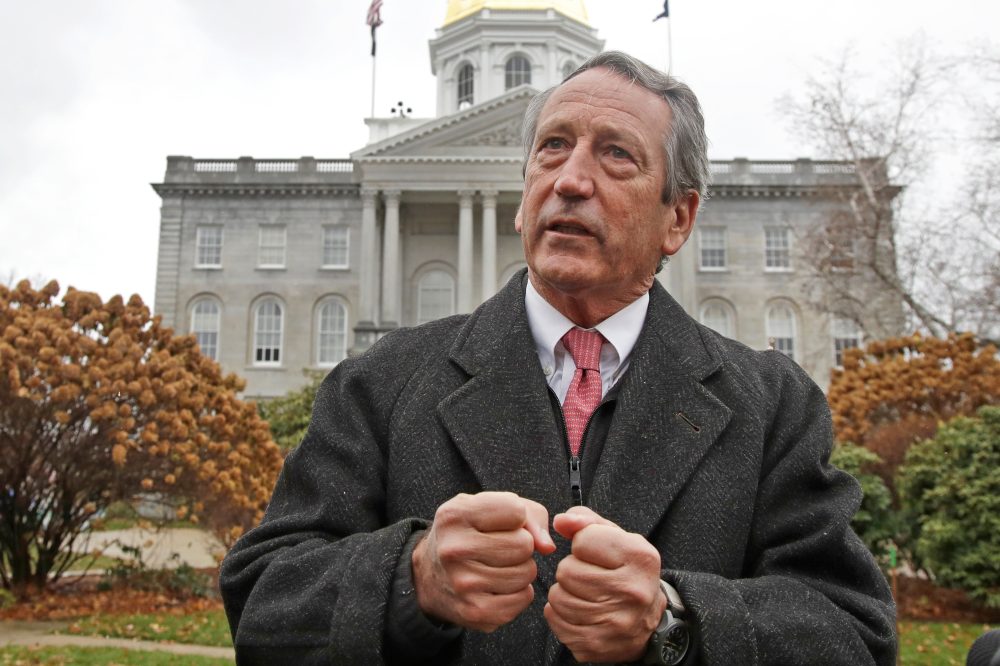
COLUMBIA, S.C. — Former South Carolina Governor Mark Sanford has thrown his hat into the ring once more, seeking to reclaim the congressional seat he previously held before his political career was derailed by a highly publicized extramarital affair in 2009.
The 65-year-old politician submitted his candidacy documents to state election officials with little time to spare, filing just hours before the cutoff for South Carolina’s 1st District Republican primary scheduled for June 9.
Sanford’s political journey began in this very district, where he emerged as an unknown candidate with minimal public recognition. Despite starting as an underdog, he managed to secure second place in the initial primary before ultimately claiming victory in the runoff election. After serving six years in Congress, he successfully mounted a gubernatorial campaign, once again fighting through a competitive primary field before defeating the final Democratic incumbent governor.
However, his eight-year tenure as governor became infamous due to what became known as the “Appalachian Trail” incident — a euphemism for Sanford’s secret trip to Argentina to meet his mistress. During his absence, his spouse, children, and government staff were left without knowledge of his whereabouts.
Despite facing an ethics investigation and widespread demands for his resignation, Sanford refused to step down and completed his gubernatorial term on his own timeline.
Following his gubernatorial exit in 2013, Sanford successfully reclaimed his former House seat by defeating 15 opponents across the primary and runoff elections. He secured two additional complete terms before losing to a Republican rival in 2018 who enjoyed endorsement from then-President Donald Trump.
The district subsequently changed hands to Democratic control that November for the first time in many years, though current GOP Representative Nancy Mace recaptured it in 2020. Mace is now pursuing the governor’s office this election cycle.
Sanford also made a brief presidential bid in 2020, attempting to challenge Trump for the Republican nomination before withdrawing prior to the New Hampshire primary without participating in his home state’s GOP contest.
Attempts to reach Sanford for comment on Monday were unsuccessful. Following his departure from the House, Sanford has maintained control of more than $1.3 million in federal campaign funds, resources he can now deploy in what is already shaping up to be a competitive primary featuring numerous Republican and Democratic contenders.
WASHINGTON — America has officially restored full embassy operations in Venezuela’s capital city of Caracas, marking the end of a seven-year diplomatic absence that began during Donald Trump’s presidency.
State Department officials confirmed Monday that regular embassy functions have resumed in Caracas following the January removal of former Venezuelan President Nicolas Maduro from power. The diplomatic facility required extensive renovations, including addressing mold contamination issues, before staff could return.
While a small group of American diplomatic personnel had been operating from neighboring Colombia and working in Caracas for over a month, the embassy building itself remained closed until this week’s announcement.
According to a State Department statement, the embassy’s return to normal operations represents a significant step forward in the administration’s strategy for Venezuela. “The resumption of operations at U.S. Embassy Caracas is a key milestone in implementing the president’s three phase plan for Venezuela and will strengthen our ability to engage directly with Venezuela’s interim government, civil society, and the private sector,” officials stated.
The department characterized the development as beginning “a new chapter in our diplomatic presence in Venezuela.”
Following weeks of disruption at airports nationwide, Transportation Security Administration officials announced that federal workers are receiving their first paychecks in weeks, with payments beginning as early as Monday.
Several major airport security checkpoints, including facilities in Atlanta and Houston, showed notable improvements in processing times during Monday morning operations.
However, uncertainty remains about when security screening delays will consistently return to standard levels, and questions persist about the duration of federal immigration personnel assignments at airports during the ongoing spring break travel period.
The Department of Homeland Security funding lapse has created widespread travel disruptions and raised concerns about potential airport shutdowns as unpaid TSA personnel began calling out from work. These employees were still recovering from financial hardships following an extended federal government closure last fall.
Screening delays continued exceeding two hours at New York’s LaGuardia Airport on Monday morning. Baltimore-Washington International Airport maintained its recommendation for passengers to arrive three hours ahead of scheduled flights, cautioning that extended wait periods may persist.
Following bipartisan congressional pressure, President Donald Trump directed the Department of Homeland Security on Friday to immediately compensate TSA officers to address the extensive delays affecting air travel. This decision followed Trump’s rejection of bipartisan legislative proposals to fund TSA operations while ongoing negotiations continue with Democrats, who have demanded restrictions on Trump’s immigration enforcement and deportation initiatives before approving additional funding.
Transportation security personnel have worked without compensation since DHS appropriations expired in February. The department’s closure reached 44 days on Sunday, surpassing the previous record of 43 days set during last fall’s comprehensive federal government shutdown.
The funding gap has generated not only passenger delays but also threats of facility closures as financially strained TSA employees stopped reporting for duty. These same workers had previously endured the nation’s most prolonged government shutdown during the fall. Several airports recorded absence rates exceeding 40%, while nearly 500 transportation security officers among the agency’s approximately 50,000-person workforce resigned during the closure.
Immigration and Customs Enforcement personnel were deployed to select airports one week ago to assist with security operations as TSA employee absences increased across the country. The duration of their assignment, according to White House border czar Tom Homan, will depend on how rapidly TSA staff return to their positions. Agency officials stated that TSA “has immediately begun the process of paying its workforce,” with compensation arriving “as early as Monday.”
Organizations with ties to Russia and Iran are turning to digital currencies to fund purchases of affordable military drones and equipment, according to fresh research from blockchain analytics company Chainalysis.
Affordable commercial drones have emerged as crucial tools in conflicts across Ukraine and Middle Eastern regions, but their widespread availability on online shopping platforms makes it difficult for officials to monitor purchasers and determine their intentions.
Although most drone acquisitions still occur through conventional payment methods, procurement networks are showing growing connections to blockchain technology – the public digital record system underlying cryptocurrencies, Chainalysis discovered. This ledger enables investigators to follow transaction paths from start to finish.
Researchers at Chainalysis successfully tracked cryptocurrency flows from individual digital wallets tied to drone manufacturers or paramilitary organizations to purchases of inexpensive drones and parts from online marketplace sellers.
Following Russia’s comprehensive invasion of Ukraine in 2022, pro-Russian organizations have collected over $8.3 million through cryptocurrency donations, with drones listed among the specific items bought using these funds, the research revealed.
Andrew Fierman, who heads national security intelligence at Chainalysis, explained the investigative advantage: “On the blockchain, there’s this incredible opportunity, once you have identified the vendor to see the counterparty activity and make assessments that help clarify that utilization and the intent behind the purchase.”
According to Fierman, Chainalysis successfully connected cryptocurrency transactions ranging from $2,200 to $3,500 with exact pricing for drones and drone parts on online platforms.
“We saw everything from the request for the drones and the parts and how much they were looking to get, and then the pictures showing that they had procured those goods,” he explained.
The study also revealed that groups linked to Iran are utilizing cryptocurrency to acquire drone components and distribute military hardware. Researchers specifically identified a digital wallet connected to Iran’s Islamic Revolutionary Guard Corps making drone part purchases from a supplier based in Hong Kong.
While the overall amount of cryptocurrency connected to drone procurement remains minimal compared to total military expenditures, the research suggests blockchain technology could help authorities better monitor purchases that might otherwise go undetected.
“The blockchain can provide a lot of insight that isn’t necessarily traditionally available,” Fierman noted.
WASHINGTON – Global economic recovery efforts face new threats as warfare in the Middle East creates widespread financial instability, according to a warning issued Monday by the International Monetary Fund.
The international financial institution’s leading economists published findings showing that military actions initiated by the United States and Israel against Iran on February 28 are generating uneven economic shockwaves across the globe while tightening financial markets.
According to the IMF’s analysis, nations closest to the conflict zone are experiencing severe economic disruption, while countries worldwide that were beginning to emerge from past economic challenges now face dimmed prospects for continued recovery.
The global lender emphasized that the economic impact, while widespread, is affecting different regions and sectors unevenly, creating additional complexity for policymakers trying to maintain financial stability.
Food service giant Sysco announced Monday it will acquire wholesale supplier Jetro Restaurant Depot in a massive $29 billion transaction that includes debt, broadening the nation’s largest food distributor’s access to budget-focused independent restaurants.
Sysco’s stock dropped approximately 12% following news that the company plans to fund the purchase through $21 billion in new and hybrid debt, combined with $1 billion in cash and equity. The food distributor currently holds a market value of $39.2 billion.
This major acquisition joins a wave of significant deals across consumer industries, as companies including Unilever, Estee Lauder and Pernod Ricard pursue mergers to achieve greater scale amid weakening demand and elevated operational costs.
The family-owned Jetro Restaurant Depot runs wholesale cash-and-carry operations where buyers pay immediately for products including food items, drinks and takeout packaging. This business model will complement Sysco’s existing delivery services to restaurants, medical facilities and hotels.
Through this acquisition, Sysco gains entry into the profitable cash-and-carry sector, where Restaurant Depot maintains approximately 166 warehouse facilities spanning 35 states nationwide.
“Sysco and Jetro Restaurant Depot will enhance value for small independent restaurants and the consumers they serve by expanding access to more affordable, fresh food products and delivering more choice and convenience,” stated Sysco CEO Kevin Hourican, emphasizing how the merger would reduce costs for additional customers.
Restaurant Depot stockholders will obtain $21.6 billion in cash plus 91.5 million Sysco shares valued at roughly $7.5 billion based on Friday’s closing price, granting them about 16% ownership in the merged entity.
Previously, US Foods abandoned merger discussions with Performance Food, which would have united the country’s second and third-largest foodservice distributors to compete against market leader Sysco while cutting expenses.
In 2015, a federal judge approved the Federal Trade Commission’s petition to halt Sysco’s $3.5 billion US Foods purchase after regulators claimed the deal would establish a dominant company capable of increasing prices for national clients.
During an analyst conference call, Hourican noted “There is minimal overlap between Sysco and Restaurant Depot’s customers.” The company plans to establish over 125 additional Restaurant Depot sites within the next two decades using its extensive supply network.
Sysco anticipates the deal will increase earnings per share by a mid-to-high single-digit percentage during the first year following completion, expected by the third quarter of fiscal 2027.
Credit agency Fitch assigned Sysco a “rating watch negative” status, while Moody’s initiated a review for potential downgrade after the announcement.
The corporation suspended its share buyback initiative while maintaining its annual projections. Sysco, recognized for providing steaks, fish fillets and frozen products to fast-food chains like KFC and Subway, increased its full-year earnings outlook earlier this year as customer demand remained steady despite economic uncertainties.
Philadelphia Eagles General Manager Howie Roseman maintained his evasive stance when questioned about persistent speculation regarding potential trades involving star wide receiver A.J. Brown.
Speaking to media members on Sunday during NFL league meetings in Phoenix, Roseman acknowledged the widespread attention surrounding the situation.
“I understand that there’s interest in the A.J. Brown story. I, unfortunately, don’t have a home under a rock,” he told reporters Sunday at the league meetings in Phoenix.
“But my answer to any question on A.J. Brown is A.J. Brown is a member of the Eagles. From my perspective, anything you ask me about A.J. Brown, I’m going to go right back to that answer. But I understand the interest. I put on TV and I see that there’s interest, but my answer is A.J. Brown is a member of the Philadelphia Eagles.”
This response mirrors Roseman’s cautious approach from January when questioned about the team’s future plans regarding Brown, whose dissatisfaction with Philadelphia’s offensive system has become increasingly apparent during recent seasons.
“It is hard to find great players in the NFL, and A.J. is a great player,” Roseman said two months ago. “I think from my perspective, that’s what we’re going out and looking for when we go out here in free agency, in the draft, just trying to find great players who love football, and he’s that guy.”
Philadelphia faces no immediate pressure to move Brown, despite reports connecting him to the New England Patriots during this offseason. Financial considerations play a significant role, as trading him prior to June 1 would result in a dead salary cap penalty exceeding $40 million, while waiting until after that date reduces the hit to approximately $20 million.
The 28-year-old receiver’s production has declined over the past two seasons, recording an average of 72.5 receptions and 1,041 receiving yards, a notable drop from his impressive 97.0 catches and 1,476 yards per season during his initial two campaigns with Philadelphia from 2022-23.
Multiple reports emerged Monday indicating that NC State University is nearing completion of a deal to bring back alumnus Justin Gainey as the program’s new men’s basketball head coach. Gainey currently serves as associate head coach at the University of Tennessee.
The 49-year-old coach will step into the role vacated by Will Wade, who departed the program last week to return to his previous position at LSU. Wade led the Wolfpack to a 20-14 season record and secured an NCAA Tournament berth during his single year leading the program in Raleigh.
For the last five years, Gainey has been part of Rick Barnes’ coaching staff in Knoxville, where he helped guide the Volunteers to three consecutive Elite Eight appearances in the NCAA Tournament over the past three seasons.
This appointment marks Gainey’s first opportunity as a head coach. The former Wolfpack player suited up for NC State between 1996 and 2000, later building his coaching resume with assistant positions at Elon, Appalachian State, Santa Clara, Arizona, and Marquette before moving to Tennessee in 2021.
Barnes offered high praise for his departing assistant coach when speaking to The Athletic on Saturday. “I hope he gets the job,” Barnes stated. “I don’t think there’s anybody in the country that loves NC State more than Justin Gainey. … A terrific basketball coach. I mean, if you come to our walk-throughs, like today or the other day, he scouted the last game. I don’t say a whole lot because those guys have it.”
The Tennessee coach continued his endorsement, saying, “But Justin has an incredible feel for the game, really understands players. He works at it. Terrific recruiter. Understands the NIL era today. If NC State knew what I knew, they would be begging him to be their next head coach. Because he’s ready not just for NC State, he’s ready to be the head coach of the University of Tennessee or any school in the country. He’s that good.”
During his playing career under coach Herb Sendek, Gainey posted averages of 6.9 points, 2.7 assists, 2.5 rebounds and 1.5 steals across 128 games, starting 103 of those contests for the Wolfpack.
The final sprint of the NBA regular season is now underway.
As of Monday, just 111 games remain on the schedule, meaning 91% of the regular season has been completed. The field for postseason play has largely been determined: Milwaukee, Chicago, Washington, Brooklyn and Indiana have been knocked out of Eastern Conference contention, while Memphis, New Orleans, Dallas, Utah and Sacramento won’t be participating from the Western Conference.
This leaves 20 franchises using the remaining two weeks primarily to jockey for better playoff seeding.
Detroit, Boston, Oklahoma City and San Antonio have already locked up playoff berths, with New York, Cleveland, the Los Angeles Lakers and Denver appearing mathematically certain to join them soon. Houston and Minnesota are also close to securing their spots.
Portland and Golden State have guaranteed themselves play-in tournament positions.
Several key matchups highlight Monday’s slate:
Philadelphia visits Miami in a game where the victor claims the season series tiebreaker. The contest may mark Kyle Lowry’s final appearance as a player in Miami, where he previously starred. The Heat are coming off a disappointing defeat in Indiana on Sunday.
Boston travels to Atlanta for a rematch after defeating the Hawks by seven points on Friday. The Celtics have already reached 50 victories, while Atlanta has won 12 consecutive home games and 15 of their last 17 overall.
Phoenix faces Memphis in a crucial game for the Suns, who need victories to avoid the play-in tournament’s uncertainty.
Chicago meets San Antonio, where the Spurs have compiled an impressive 24-2 record since February 1st while pursuing the top overall seed.
Minnesota visits Dallas seeking to complete a 4-0 season sweep, having won the first three encounters by double-digit margins.
Other notable games include Cleveland at Utah, Detroit at Oklahoma City in a potential No. 1 seed showdown, Washington at the Lakers, and several matchups with play-in implications.
NBC Sports Network and Peacock will broadcast Philadelphia-Miami and Detroit-Oklahoma City on Monday, with Chicago-San Antonio also streaming on Peacock. Tuesday’s NBC and Peacock games feature New York-Houston and Portland-LA Clippers.
According to BetMGM Sportsbook, Oklahoma City leads championship odds at +140, followed by San Antonio (+550), Boston (+600), Cleveland (+900), Denver (+1100) and New York (+1500). Detroit, despite heading toward the East’s top seed, sits at +2500.
The remaining schedule includes all 30 teams playing their 81st games on April 10th and season finales on April 12th. The play-in tournament runs April 14, 15 and 17, with playoff series beginning April 18-19.
Conference semifinals start May 2-4, followed by the draft lottery and combine on May 10-17. Eastern Conference finals begin May 17 or 19 on ESPN and ABC, while Western Conference finals start May 18 or 20 on NBC and Peacock. The NBA Finals tip off June 3rd on ABC.
This season has featured exceptional scoring margins, with 81 games decided by 30 or more points after Sunday’s action, breaking last year’s record of 80 such contests.
Toronto’s 139-87 victory over Orlando on Sunday exemplified these blowouts, marking the second-largest win in Raptors history and biggest loss in Magic franchise history. The game included a remarkable 31-0 Toronto run spanning just 7½ minutes, during which Orlando missed all eight shots and committed 11 turnovers.
High-definition replay technology has transformed how major sporting events are officiated, with referees and umpires increasingly relying on video screens to examine disputed calls.
This technological shift has created a distinctive visual communication system throughout professional sports.
Basketball fans recognize the circular finger motion that players make when requesting a replay review during NBA contests. Football features coaches hurling red challenge flags onto the field, a gesture frequently copied by spectators in the stands.
International sports have developed their own symbols: Soccer players worldwide draw imaginary rectangles in the air to request VAR (Video assistant referee) reviews. Cricket athletes form a “T” shape with their hands to activate the DRS (Decision review system), while umpires respond by tracing a box in the air, similar to soccer officials.
Baseball has introduced its newest gesture to this growing vocabulary: gentle taps on the head.
The Automated Ball-Strike Challenge System has become an official component of MLB games, utilizing camera technology to monitor each pitch and determine if it passes through the strike zone over home plate. While human umpires continue making initial calls, both teams can contest two decisions per game.
Players including batters, pitchers, and catchers can tap their heads several times while verbally requesting a challenge when they believe an incorrect ball-strike call was made. Fans have quickly adopted this signal, performing the head-tapping motion when they disagree with umpire decisions.
“Everyone understands what touching the top of their hat signifies,” Arizona Diamondbacks manager Torey Lovullo explained with a chuckle. “It’s caught on incredibly quickly. I believe it’s beneficial — we all want accurate calls.”
However, these hand signals can sometimes be interpreted as disrespectful behavior.
Tampa Bay Rays infielder Taylor Walls received an ejection during a regular season game last year after disputing a call and tapping his helmet while confronting the umpire. The ABS system was tested experimentally during 2025 spring training but wasn’t permitted in regular season contests.
Walls insisted his gesture was harmless. Home plate umpire Nic Lentz viewed it differently and ejected Walls from the game.
“Players must also give verbal confirmation, which should prevent confusion,” he noted.
Video review expansion across sports has generated new tactical approaches for timing challenges correctly. Quick non-verbal signals often make these systems function effectively.
Numerous NBA franchises assign an assistant coach or staff member to monitor a tablet displaying the television broadcast, enabling rapid play analysis. Players frequently make impulsive choices during intense game moments — spinning their finger in the air when believing their team should challenge a call. (Reality check: Players consistently believe they’re correct.)
However, coaching staffs make the ultimate decisions.
For the New York Knicks, assistant coach Jordan Brink provides guidance to head coach Mike Brown.
“When he signals like this (nodding affirmatively), then you do this (finger twirl). When he signals like this (head shake), then you just think ‘Well…’ and have to apologize to your players,” Brown explained.
Cleveland Cavaliers coach Kenny Atkinson emphasized that “you must maintain self-control” since replay situations typically involve high emotions. Los Angeles Clippers coach Ty Lue couldn’t explain how the finger twirl became basketball’s standard replay symbol, but in his characteristic dry style, admitted its widespread use can be irritating.
“I’m tired of seeing it. Let’s examine that,” Lue commented, prompting laughter from reporters. “College players are doing it now too, it’s everywhere.”
MLB currently employs two replay signals. Managers request reviews of safe-out calls and other rulings by placing hands over their ears, imitating umpires wearing headsets to communicate with MLB’s replay center. This gesture and the ABS head-tap have emerged as traditional baseball hand signals fade away. For over 100 years, catchers used finger signals to call pitches, sometimes employing complex sequences to prevent opposing teams from deciphering upcoming pitches.
Everything changed after the 2017 Houston Astros cheating scandal was revealed in 2020. A system called PitchCom now transmits pitch calls and defensive positioning instructions without manual signals.
“Previously, dugouts used signals to indicate bunt attempts or delayed steals, but now it’s just pressing a few buttons,” Lovullo said.
Despite technological advances, hand signals remain prevalent in sports. Ironically, sophisticated video replay technology has become a primary reason for their continued importance.
JERUSALEM — Israel’s armed forces have taken the unusual step of suspending an entire military battalion after its soldiers attacked a CNN news team in the occupied West Bank, marking an uncommon instance of disciplinary action for troop misconduct.
Military officials announced Monday they were pulling the Netzah Yehuda battalion from active duty following last week’s filmed assault on the television crew.
The Netzah Yehuda unit, composed primarily of ultra-Orthodox troops, has previously been connected to mistreatment of Palestinian residents, including a 2022 incident that resulted in the death of a 78-year-old Palestinian American following his arrest by battalion members.
Following U.S. government protests over that earlier case, Israeli military leadership described the event as “a grave and unfortunate event,” issued a reprimand to one commanding officer, and transferred two additional personnel. Israel subsequently relocated the entire unit away from West Bank operations later that year.
During last week’s confrontation, CNN staff members were working on a story about settler attacks in the West Bank community of Tayasir. Violence by Israeli settlers in the region has escalated dramatically, with United Nations statistics showing at least nine Palestinian fatalities at settler hands this year. Israeli authorities seldom prosecute settlers for violent acts against Palestinians.
Video footage of the encounter shows battalion troops advancing on the news team with weapons drawn while shouting commands. CNN correspondent Jeremy Diamond reported that military personnel placed a producer in a chokehold during the confrontation. The recording quickly spread across social media platforms.
According to Diamond’s account published on CNN’s platform, soldiers held the journalism team and local Palestinians for two hours while expressing settler viewpoints, claiming Israeli ownership of all West Bank territory and labeling Palestinians as terrorists.
Military leadership stated Monday that Netzah Yehuda would remain suspended from current operations and could only return to service following “a process aimed at reinforcing its professional and ethical foundations.”
Rabbi Shaul Abdiel, who maintains ties with the Netzah Yehuda battalion, condemned the military’s disciplinary response during a radio appearance, describing the punishment as “too fast and too collective.”
Advocacy organizations focused on human rights have consistently maintained that Israeli forces face minimal accountability for Palestinian casualties. The situations involving the Palestinian American citizen and the CNN team seem to have drawn heightened scrutiny due to their connection to American individuals and a prominent media outlet.
Several weeks prior to the CNN confrontation, Israeli officials announced they had opened an inquiry into the shooting deaths of four Palestinians, including two minors, one with visual disabilities, during an Israeli military patrol in the neighboring West Bank community of Tammun.
No disciplinary actions have been revealed by Israeli authorities regarding the officers involved in that incident. Local media reports indicate those personnel have not been interviewed as part of any investigation.
Criminals have successfully stolen three priceless masterpieces from a private art museum located in northern Italy’s countryside, according to police reports released Monday.
The overnight break-in occurred between March 22nd and 23rd at the Magnani Rocca Foundation, situated roughly 12 miles outside Parma. Authorities report the perpetrators broke through the main entrance to gain access to the facility.
Three world-renowned works were taken during the crime: Auguste Renoir’s “Fish,” Paul Cézanne’s “Still Life with Cherries,” and Henri Matisse’s “Odalisque on the Terrace.” The stolen artwork carries a value of several million euros.
According to local news outlets, the criminals executed their plan with remarkable speed, completing the entire operation in fewer than three minutes before making their getaway through the museum’s garden area.
The Magnani Rocca Foundation, which opened its doors in 1977, houses an extensive collection assembled by art scholar Luigi Magnani. The museum’s holdings feature additional works by master artists including Dürer, Rubens, Van Dyck, Goya, and Monet.
Museum officials suspect the crime was carried out by a well-organized criminal group, according to local media coverage. The theft was cut short when the facility’s security alarm activated.
Attempts to reach the museum for official comment were unsuccessful, as the facility remains closed on Mondays. No public statement regarding the incident has appeared on the institution’s website.
This latest art theft follows a pattern of major museum heists across Europe, including an October robbery at the Louvre in Paris where criminals made off with jewelry and artifacts valued at $101 million.
A delegation of four US senators visiting Taipei on Monday voiced American backing for Taiwan’s proposed $40 billion defense spending package that remains blocked by opposition lawmakers in the island’s parliament.
The bipartisan group – Democrats Jeanne Shaheen of New Hampshire and Jacky Rosen of Nevada, along with Republicans John Curtis of Utah and Thom Tillis of North Carolina – arrived in Taiwan as part of a broader Asian tour designed to strengthen US partnerships and challenge China’s growing regional influence. The visit comes ahead of a planned May meeting between President Donald Trump and Chinese President Xi Jinping.
The four senators held discussions with Taiwan President Lai Ching-te on Monday, beginning a two-day visit aimed at reinforcing the unofficial relationship between Washington and Taipei.
Beijing considers Taiwan a rebellious territory that must eventually be brought under Chinese control, using military force if needed, and forbids countries with diplomatic relations to China, including America, from maintaining official government ties with Taiwan.
Although the US does not formally recognize Taiwan’s sovereignty, America serves as the island’s primary unofficial ally and weapons supplier.
Extensive American arms transfers to Taiwan are anticipated to be a major discussion point during the upcoming Trump-Xi meeting, with Beijing opposing such military sales.
A representative from China’s Foreign Ministry condemned the congressional delegation’s visit on Monday, calling on America to “handle the Taiwan question prudently and properly, stop all forms of official exchanges with Taiwan, and stop sending any wrong signals to Taiwan independence separatist forces.”
Foreign Ministry spokesperson Mao Ning stated that “China’s position on the Taiwan-related issue is consistent and clear,” adding that “China will take necessary measures to firmly safeguard its sovereignty and territorial integrity.”
Senator Curtis commended Taiwan’s advancement “on strengthening its defense, whole society preparedness and energy security, especially over the last year” during the meeting with President Lai.
“The seriousness is noticed in Washington D.C., and your efforts on the special defense budget are also noticed and supported,” Curtis remarked.
Taiwan’s administration is working to advance the eight-year, $40 billion military spending plan that would fund development of an advanced missile defense network called the “T-dome,” incorporate artificial intelligence into military operations, and expand Taiwan’s domestic defense manufacturing capabilities.
Opposition political parties in Taiwan’s legislature have proposed alternative, smaller defense spending measures, creating the current parliamentary deadlock.
President Lai urged lawmakers to approve the military budget “without delay.”
“I want to reassure you and all of our friends in the United States that my government’s resolve and commitment to enhancing our self-defense capabilities, strengthening Taiwan-U.S. cooperation and ensuring national security remain unwavering,” Lai told the American delegation.
Meanwhile, opposition leader and KMT chairwoman Cheng Li-wun announced Monday that she plans to travel to China next month to encourage “peaceful” cross-strait relations. While Cheng has previously shown interest in meeting Xi Jinping, it remains unclear whether such a meeting is scheduled during her upcoming trip.
Chinese officials refuse direct communication with Lai and have characterized him as a separatist seeking to transform Taiwan into a “powder keg.”
The Supreme Court is set to examine a fundamental question about American identity: who automatically becomes a citizen by being born in the United States?
Former President Trump has argued that birthright citizenship isn’t constitutionally protected as an automatic right. This constitutional challenge will now face examination by the nation’s highest court.
The upcoming case will test whether Trump’s interpretation of citizenship laws can survive judicial review, potentially affecting how the country defines citizenship for future generations.
China Southern Airlines announced Monday it has achieved profitability for the first time in five years, posting earnings of 857 million yuan ($124.01 million) for 2025.
The airline, headquartered in Guangzhou, saw its annual earnings fall within its projected range of 800 million to 1 billion yuan that company officials forecast in January. This marks a dramatic turnaround from the previous year’s deficit of 1.7 billion yuan in 2024.
Among China’s three major government-owned airlines, China Southern stands alone as the only carrier to achieve positive earnings for the full year 2025.
According to the company’s financial report, the aviation sector continues to navigate difficult market conditions, including supply chain constraints and increasing costs for aircraft purchases, aviation supplies, and engine components. However, China Southern managed to enhance its financial performance through strategic adjustments to passenger and freight capacity distribution while implementing stricter expense management practices.
Federal immigration authorities announced Monday that a Mexican national passed away while detained at an Immigration and Customs Enforcement facility in Los Angeles last week.
The individual died on March 25th, according to ICE officials, bringing the total number of deaths in immigration detention facilities to at least 14 during 2026.
Immigration and Customs Enforcement released the information about the custody death on Monday, though additional details about the circumstances surrounding the fatality were not immediately provided.
A summer-like surge of warmth across the Delmarva Peninsula will come to an end Wednesday night as a cold front pushes through the region, bringing a round of showers and a few thunderstorms during the afternoon and evening hours.
Ahead of the front, Wednesday is shaping up to be another unseasonably warm and humid day. Temperatures are expected to climb into the upper 70s to near 80 degrees across much of Delmarva, with some locations potentially challenging daily record highs. The combination of warmth and increasing humidity will create a more unstable atmosphere by late in the day.
That setup will allow for the development of scattered showers and thunderstorms, mainly during the mid to late afternoon and into the evening hours. While a few storms could become locally strong, the overall severe weather threat remains low at this time. Forecast soundings indicate some instability will be present, but wind shear appears limited, which should prevent widespread organized severe storms. Current guidance from the Storm Prediction Center does not highlight the region for severe weather in the Day 3 outlook, reinforcing the limited threat.
Rainfall amounts are expected to be relatively light, generally ranging from a tenth to a half inch, with the higher totals likely staying north and west of the I-95 corridor. No flooding concerns are anticipated given the modest rainfall rates and progressive nature of the system.
Showers may linger into the overnight hours Wednesday before the cold front clears the region, setting the stage for a cooler and less humid air mass heading into the end of the week.
Young anglers across Delaware will have special fishing opportunities coming their way as the state’s Department of Natural Resources and Environmental Control announces the return of youth-focused fishing events.
The environmental agency plans to host fishing activities for children in all three Delaware counties during early April, timing the events to coincide with Earth Month celebrations. Staff members from DNREC’s Aquatic Resources Education Center will lead these outdoor excursions as part of their Take A Kid Fishing! initiative.
The fishing events are strategically scheduled for the first complete week of April, allowing families to participate while many local schools are on their spring break vacation. Each Delaware county will host one dedicated youth fishing event during this timeframe.
The introduction of reviewable ball and strike calls in Major League Baseball has brought unexpected drama to the opening days of the new season.
Despite teams having limited challenges per game and advanced technology backing the decisions, tensions remain high. This was evident when Minnesota’s manager Derek Shelton was thrown out during the ninth inning of Sunday’s game against Baltimore following a disputed pitch review.
The controversial moment came with Baltimore leading by two runs, one runner on base, and one out. When pitcher Ryan Helsley’s 3-2 delivery to Minnesota’s Josh Bell was ruled a ball, Helsley signaled for a challenge by tapping his cap, then repeated the gesture for emphasis. Video review revealed the pitch caught the outside edge of the strike zone, reversing the call and striking out Bell. Shelton’s heated protest resulted in his ejection, and Baltimore secured an 8-6 victory.
Speaking to media after the game, Shelton claimed Helsley didn’t signal for the challenge fast enough.
Saturday’s matchup between Cincinnati and Boston also drew attention, with the Reds winning 6-5 in a game featuring eight Automated Ball-Strike System challenges with CB Bucknor calling balls and strikes. Six of those challenges resulted in overturned calls. Boston exhausted both their challenges before the third inning concluded, while Cincinnati went five-for-five on successful reviews.
While Detroit sent a two-time Cy Young Award winner to the hill on opening day, rookie Kevin McGonigle stole the spotlight with an outstanding debut performance Thursday.
McGonigle, ranked among baseball’s premier prospects, connected on the very first pitch he faced, delivering a bases-clearing double in the opening frame at San Diego. He continued his hot start with hits in his following two plate appearances. With Tarik Skubal pitching effectively, Detroit cruised to an 8-2 triumph.
St. Louis rookie JJ Wetherholt has also made an immediate impact. In just his second major league contest Saturday against Tampa Bay, he delivered a game-winning two-run single in the tenth inning. This heroic moment followed his home run in Thursday’s debut.
New York Mets newcomer Carson Benge earned a roster spot for the season opener and has already gone deep. Cleveland’s Chase DeLauter connected twice in Thursday’s regular season opener, including on his first swing, though he technically debuted during last year’s postseason.
Toronto established a new benchmark by recording 50 strikeouts through their opening three contests, with both Kevin Gausman and Dylan Cease reaching double-digit strikeout totals. The previous mark belonged to whom?
Seattle’s Emerson Hancock delivered six no-hit innings Sunday during an 8-0 shutout victory over Cleveland, fanning nine while issuing just one free pass.
After posting a 4-5 record with a 4.90 earned run average last year, Hancock earned a rotation spot due to Bryce Miller’s injury and made a compelling argument to retain his role with this impressive opening effort.
Thursday’s game between Tampa Bay and St. Louis featured a remarkable sixth-inning turnaround. The Rays plated six runs in the top half to grab a commanding 7-1 advantage, only to trail when the frame concluded.
St. Louis answered with an eight-run explosion in the bottom of the sixth to take a 9-7 lead, which held up for the final margin.
The Cardinals’ rally featured two-run singles from both Nolan Gorman and Nathan Church, followed by sacrifice flies from Wetherholt and Iván Herrera. Alec Burleson, who opened the inning with a base hit, provided the finishing touch with a two-run blast.
Each team sent 11 hitters to the plate during that wild sixth inning.
The answer: Cincinnati’s 2020 squad previously held the strikeout record with 46 through three games, featuring starts from Sonny Gray, Luis Castillo, and Trevor Bauer against Detroit. Ironically, the Reds dropped two of those three contests.
Houston Rockets owner Tilman Fertitta has struck a deal to purchase the Connecticut Sun for a record-breaking $300 million, with plans to relocate the franchise to Houston in 2027, according to sources familiar with the transaction.
The WNBA Board of Governors must still give their approval for both the sale and the relocation. A source who requested anonymity due to the confidential nature of the negotiations confirmed the historic price tag to The Associated Press.
Connecticut will host the franchise for one more season before the team makes its way to Houston, where it will revive the Comets name.
“I would have loved to remain in the region for our fan base and for the fact that I think this region deserves a women’s basketball team,” Connecticut Sun president Jen Rizzotti told the AP. “At the same time, it wasn’t my decision and I’m at a point now where my focus turns to making this the best season we can have and a memorable one for our fans. It’s an opportunity to say thank you to them.”
The sale marks the conclusion of the franchise’s 23-year presence in New England, which began when the team relocated from Orlando in 2003.
Houston had previously shown interest in acquiring the team last year, eventually increasing their offer to $250 million — matching what Cleveland, Detroit and Philadelphia paid for expansion rights. The final $300 million purchase price sets a new record for WNBA team sales.
A competing bid of $325 million from a group headed by Boston Celtics minority owner Steve Pagliuca would have brought the franchise to Boston, but the WNBA effectively prevented that transaction. League officials stated that “relocation decisions are made by the WNBA Board of Governors and not by individual teams.”
The league further explained that other cities had already begun the expansion process and held priority over Boston.
“This decision has always sat at the ownership level and we worked hard as a front office to make us New England’s WNBA team,” Rizzotti said. “Playing and selling out two games in Boston shows this is a market that can support a team at a significant level.”
During a press conference announcing three new expansion franchises, WNBA Commissioner Cathy Engelbert indicated Houston was next in line for a team.
Following Mark Davis’s acquisition of the Las Vegas Aces in 2021, the league has consistently brought in new ownership with NBA connections. The Golden State franchise, which debuted last season, belongs to the Warriors organization. Portland and Toronto are joining the WNBA this season with ownership groups tied to NBA teams.
The upcoming three expansion franchises — Cleveland, Detroit and Philadelphia — will all operate under NBA ownership groups from their respective cities.
Last week’s new collective bargaining agreement requires teams to maintain premium facilities comparable to NBA standards.
Making the announcement at this time provides clarity for potential free agents who could join the Sun next month.
“Morgan (Tuck) started last off season with the rebuild after our old roster turned over,” Rizzotti said of the Sun general manager. “She will now have clarity and strategic decisions regardless where it is if we remained in Connecticut or moving. With this new CBA in place, she can really evaluate the salary cap situation and build around the young core we established.”
The original Houston Comets were founding members of the WNBA and captured the league’s first four championships from 1997-2000. The franchise ceased operations following the 2008 season.
“My family and I are thrilled for the opportunity to bring the Houston Comets back to this incredible city,” Rockets alternate governor Patrick Fertitta said. “Houston has a proud championship history in the WNBA, with banners from the Comets’ four historic championship seasons still hanging in the rafters of Toyota Center. We believe the time is right to begin the next great era of Comets basketball, and we look forward to working with the WNBA as we move through this process.”
The Las Vegas Aces were the last WNBA franchise to change cities when they moved from San Antonio in 2017.
“What I don’t want people to forget is the Mohegan Tribe stepped up when nobody wanted a WNBA team and there were NBA owners folding franchises left and right,” Rizzotti said. “I hope that regardless of people’s feelings around this, they’ll remember that we had a really supportive ownership group that poured into the franchise for over two decades.
“The decision they made now doesn’t erase the fact they were there for the WNBA in a time of need and kept them going when it wasn’t as popular as it is now to have a franchise.”
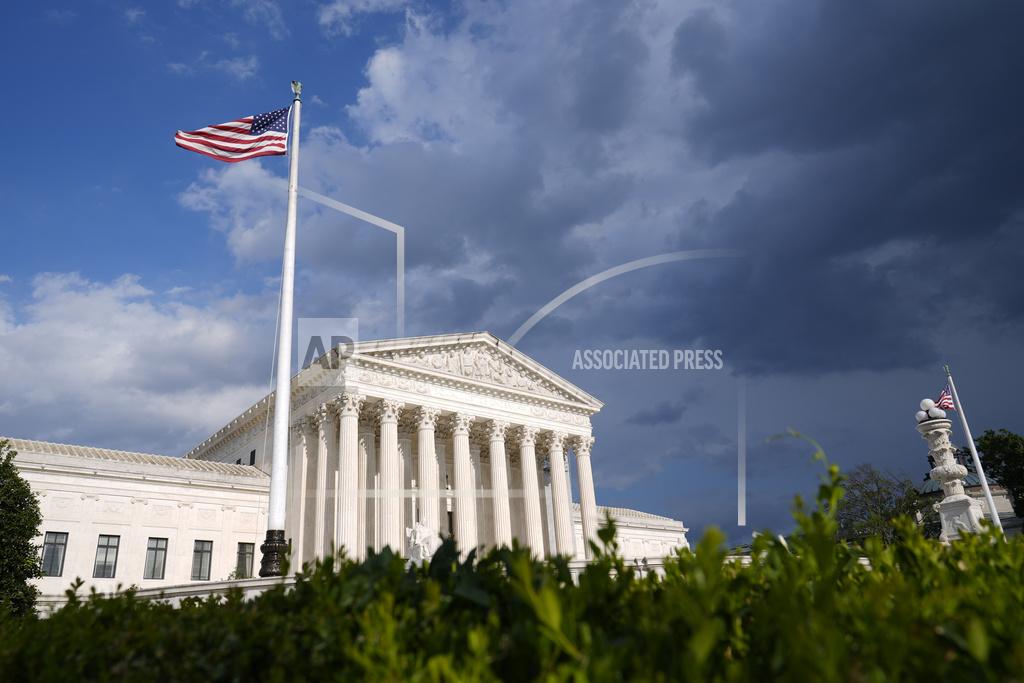
WASHINGTON — On Wednesday, the nation’s highest court examined arguments regarding President Trump’s executive directive that challenges automatic citizenship for certain children born on American soil. The order, issued January 20, 2025, during Trump’s inaugural day back in the presidency, conflicts with the 14th Amendment established after the Civil War and an 86-year-old federal statute that has long been interpreted to grant citizenship to virtually all individuals born within U.S. borders, excluding only children of foreign diplomats and enemy forces. To date, every judicial body that has reviewed this directive has deemed it unlawful and blocked its implementation.
This push to eliminate birthright citizenship represents one component of the Trump administration’s comprehensive immigration enforcement strategy, which encompasses increased deportation operations, reduced refugee admissions, and halted asylum processing at the border.
The matter represents another challenge for the Supreme Court, which has previously permitted certain immigration restrictions to proceed after lower courts initially halted them. The current case originated in New Hampshire, where federal District Judge Joseph N. LaPlante determined the executive order “likely violates” both constitutional principles and existing federal statutes.
The opening language of the 14th Amendment’s Citizenship Clause establishes citizenship for “all persons born or naturalized in the United States, and subject to the jurisdiction thereof.” The legal dispute centers on interpreting the concluding phrase regarding jurisdiction, language that also appears in citizenship legislation from 1940 and 1952.
Trump’s position, outlined in his directive called “Protecting the Meaning and Value of American Citizenship” and supported by certain conservative legal experts, argues that individuals residing illegally or temporarily in the country fall outside U.S. “jurisdiction” and consequently their American-born children should not receive citizenship.
Solicitor General D. John Sauer wrote that the court should utilize this case to correct “long-enduring misconceptions about the Constitution’s meaning.”
Sauer drew parallels between this case and pivotal Supreme Court decisions, including the groundbreaking 1954 Brown v. Board of Education ruling that ended school segregation and the significant 2008 Heller decision that established an individual constitutional right to possess firearms for personal protection.
BEIRUT (AP) — Tehran has openly refused to comply with Lebanon’s demand to remove its ambassador, declaring Monday that the diplomat will remain in his position despite a weekend deadline for his departure. The defiance adds another layer of strain to a nation already caught in the middle of escalating conflict between Israel and the Iranian-supported Hezbollah militia.
Lebanese authorities had designated Ambassador Mohammad Reza Shibani as “persona non grata” in a move designed to reduce Iran’s diplomatic influence and replace him with a lower-ranking charge d’affairs. The Sunday deadline for his departure has now passed without compliance.
“Our embassy in Lebanon is active,” Iranian Foreign Ministry spokesman Esmail Baghaei told journalists. “Our ambassador, following remarks made by relevant Lebanese bodies and the conclusions reached, will continue his mission in Beirut and he is still there.”
Lebanese authorities have not yet responded to requests for comment regarding Iran’s refusal. The next steps Lebanon might take remain unclear, as does the potential impact on diplomatic relations between the two nations. Reports indicate the Iranian ambassador remains within the embassy compound, where diplomatic immunity likely protects him.
The Lebanese militant organization Hezbollah joined the broader Iran conflict by launching attacks against Israel, prompting Israeli forces to invade southern Lebanon and conduct bombing campaigns in parts of Beirut. Lebanese health authorities report more than 1,200 fatalities, with over one million people forced from their homes.
“This morning, the Iranian ambassador is drinking his coffee in Beirut and making a mockery of the ‘host’ country,” Israeli Foreign Minister Gideon Sa’ar said Monday on X. “Lebanon is a virtual country that is effectively occupied by Iran.”
Facing mounting international pressure to neutralize Hezbollah, Lebanon announced earlier this month a prohibition on military operations by both the militant group and Iran’s elite Revolutionary Guard. The ambassador’s expulsion order followed this announcement.
Hezbollah denounced the expulsion as a “reckless and reprehensible measure” and “a clear capitulation to external pressures and dictates.” The organization staged a demonstration near the Iranian embassy in support of the ambassador.
According to a Lebanese diplomatic source, Iran has applied “extreme pressure” over the past week on both the government and Parliament Speaker Nabih Berri, who maintains close political ties with Hezbollah, attempting to overturn the expulsion decision.
Beirut fears that Iran’s decision to link the Lebanese conflict to its negotiations with Washington could undermine Lebanon’s own efforts to disarm Hezbollah, the official explained, requesting anonymity due to protocol requirements.
Hezbollah maintains that Iran serves as a crucial ally, claiming the group acts as a military deterrent against Israel while delivering social services primarily to Lebanon’s Shiite Muslim population.
However, opponents argue that Hezbollah’s armed presence, which represents the strongest military force in the country, along with its autonomous decision-making, undermines Lebanese sovereignty and damages relationships with other Arab nations and Western countries.
This internal division has hampered Lebanon’s attempts to find a resolution to end the ongoing conflict.
Both President Joseph Aoun and Prime Minister Nawaf Salam, despite criticizing Israel’s invasion, have also denounced Hezbollah’s rocket attacks toward Israel in support of Iran, which triggered the current round of fighting.
Prior to the war’s outbreak, Aoun and Salam were working to establish credibility that they could successfully disarm Hezbollah through peaceful means. The militant organization had been weakened by its previous conflict with Israel, creating what many viewed as an opportunity for action. Both leaders assumed power shortly after the last war concluded in November 2024, promising to disarm Hezbollah and all non-governmental armed groups.
Internal Lebanese tensions have intensified, particularly following Foreign Minister Youssef Rajji’s announcement of the Iranian ambassador’s expulsion. Rajji is a strong Hezbollah opponent.
“Don’t play with fire because this fire will burn you, your people, and those behind you,” Mahmoud Qamati, a senior official in Hezbollah’s political bureau, said in a recent fiery address aimed at Rajji, who is a cabinet pick by the Christian Lebanese Forces party, Hezbollah’s bitter rival.
JUBA, South Sudan (AP) — Armed attackers massacred more than 70 people at an illegal gold mining operation near South Sudan’s capital during weekend violence, law enforcement officials reported Monday.
Disturbing footage showing numerous bodies scattered across the ground circulated on social media, while local reporters indicated additional victims likely escaped into surrounding wilderness areas.
The deadly incident occurred at the Jebel Iraq mining location in Central Equatoria State, a site that has previously experienced deadly confrontations between unauthorized miners. South Sudan’s gold extraction industry operates with minimal oversight, allowing regional governments to manage mining operations without federal supervision.
Law enforcement spokesman Kwacijwok Dominic Amondoc promised to provide additional details about the assault once investigators gather more information.
“All I know is that unknown gunmen attacked Jebel Iraq at a gold mine. There are more than 70 dead and many more injured,” he said.
Opposition forces from the Sudan People’s Liberation Movement/Army – In Opposition, known as SPLM/A-IO, issued a statement Monday denouncing the violence and pointing fingers at government military units called the SSPDF.
“Jebel Iraq lies within a zone that is entirely under the exclusive control of the SSPDF. Consequently, full responsibility for the massacre rests with the SSPDF forces that control the area,” a statement from the opposition said.
Military officials declined to provide comment when contacted by the Associated Press.
The Nile Institute for the Study of Human Rights and Transitional Justice, a regional advocacy organization, denounced the bloodshed and demanded improved administration of mineral-rich territories.
“This horrific act represents a grave violation of the fundamental right to life and highlights the continued vulnerability of civilians in areas affected by a weak security presence and unregulated resource exploitation,” the group wrote in a statement.
Rights advocate Edmund Yakani called on leadership to tackle growing conflicts over natural resource access.
“My appeal is to the government to intervene and stop this culture of illegal gold mining across the country,” he said.
TORONTO — The chief executive of Air Canada revealed Monday he plans to step down before year’s end, following widespread criticism over his decision to deliver crash condolences exclusively in English.
Michael Rousseau informed the airline’s board of directors that he intends to retire no later than the conclusion of the third quarter, the Montreal-based carrier announced.
The controversy stems from Rousseau’s response to a fatal aviation accident at LaGuardia Airport in New York earlier this month. Two crew members perished when an Air Canada Jazz aircraft traveling from Montreal struck a fire truck during landing operations.
Among the victims was Antoine Forest, a French-speaking pilot from Quebec, along with Mackenzie Gunther. Rousseau’s video statement expressing sympathy was delivered entirely in English, with French translations appearing only as subtitles.
The language choice sparked immediate outrage in Canada, where both English and French hold official status. Prime Minister Mark Carney condemned the unilingual message as demonstrating poor judgment and insensitivity. Quebec’s provincial leader François Legault and other officials demanded Rousseau’s resignation.
The federal Office of the Commissioner of Official Languages reported receiving hundreds of formal complaints regarding the incident. This latest controversy adds to previous criticism Rousseau has faced for his limited French language abilities.
When Rousseau assumed the airline’s top position in February 2021, he had committed to learning French. However, his promise remained unfulfilled, creating ongoing tension given that Air Canada operates from Quebec, where approximately 80 percent of residents speak French as their primary language.
The linguistic divide reflects Quebec’s complex cultural identity, which has remained a sensitive issue since British forces conquered New France in the 1760s.
Two Republican candidates with different approaches to implementing former President Trump’s election reform priorities will compete Tuesday for Arkansas’ Secretary of State nomination in a primary runoff.
Army veteran Bryan Norris and state Senator Kim Hammer emerged as the leading vote recipients in the March 3 Republican primary, though neither secured enough support to avoid Tuesday’s runoff contest.
The victorious candidate will challenge Democrat Kelly Grappe, who secured her party’s nomination without opposition.
Arkansas’ Secretary of State manages state business registrations and maintains the capitol building and grounds, though the position is most recognized for supervising federal, state and local elections throughout Arkansas.
While both candidates have promoted their alignment with Trump’s election reform goals, Norris and Hammer hold contrasting positions on election management practices. Norris advocates for complete manual ballot counting without automated tabulation systems. Meanwhile, Hammer crafted 2023 legislation mandating that hand-counted ballots work with state tabulation machinery and requiring counties choosing manual counting to cover related expenses.
Complete manual ballot counting has gained popularity among Trump supporters following the former president’s unsuccessful efforts to challenge the 2020 election results. However, subsequent attempts at comprehensive hand-counting have demonstrated the method’s time-intensive nature, high costs, and susceptibility to human mistakes.
Hammer has secured backing from Arkansas’ Republican leadership, including Senator Tom Cotton, Governor Sarah Huckabee Sanders, Lieutenant Governor Leslie Rutledge, Attorney General Tim Griffin, and departing Secretary of State Cole Jester. Norris has gained support from former national security adviser Michael Flynn and MyPillow CEO Mike Lindell, both prominent figures who disputed the 2020 election and remain Trump allies.
When endorsing Hammer, Jester urged Norris to withdraw from the contest due to the candidate’s history of confrontational and profanity-filled social media content. Speaking with KATV, Norris admitted to using “some salty language from time to time” but promised, “you’re never going to hear me talk or speak that way again.”
Norris narrowly led Hammer in the three-candidate primary, with both receiving approximately 34% of votes. Miller County Judge Cathy Hardin Harrison captured roughly 32% of the vote.
Counties where Trump won with 70% or more support in 2024 contributed slightly over half of all primary votes. Norris showed marginally stronger performance than Harrison and Hammer in these stronghold areas, while Hammer performed somewhat better in other regions.
The state’s largest population centers – Pulaski, Benton and Washington counties – generated the highest vote totals in the March 3 primary. Little Rock sits in Pulaski County, where former Vice President Kamala Harris achieved her strongest Arkansas showing in the 2024 presidential race. Despite Pulaski’s status as the most populous county, Benton County typically wields greater influence in Republican primaries, as demonstrated on March 3.
The eventual Republican nominee will enter the general election with significant advantages. Arkansas hasn’t elected a Democratic secretary of state in two decades, and no Democrat has won any statewide position since 2010.
Several Arkansas districts will also select nominees for state Senate and House positions on Tuesday. Republicans maintain commanding majorities in both legislative chambers.
Voting concludes at 7:30 p.m. local time, which translates to 8:30 p.m. Eastern Time.
Participation in Tuesday’s runoff doesn’t require having voted in the March 3 primary. However, voters who participated in the earlier primary must stay within their chosen party’s runoff. Republican primary participants cannot vote in Democratic runoffs and vice versa. Non-partisan primary voters may choose either party’s runoff.
For those who skipped the party primaries, Arkansas Democrats permit any registered voter to participate in Democratic contests, while Republicans prevent registered Democrats from voting in Republican races.
Arkansas had approximately 1.8 million registered voters during the March 3 primary.
The Republican secretary of state primary drew more than 266,000 participants. State Senate District 15’s Democratic primary recorded about 9,300 total votes, while five of six state House districts heading to runoffs each tallied between 4,400 and 5,200 votes. The Democratic primary for state House District 35 was the exception with roughly 1,700 total votes.
During 2022’s statewide office primaries, approximately 52% of Democratic voters and 42% of Republican voters submitted ballots before Election Day.
More than 13,000 statewide Republican runoff ballots were already cast by Thursday.
In March 3’s GOP Senate primary, initial results appeared at 8:32 p.m. Eastern Time, just two minutes after polls closed. The final vote update occurred at 2:04 a.m. Eastern Time with over 99% of votes tallied.
County election administrators across Arkansas typically release complete or nearly complete early and absentee voting results in their first evening update, before reporting any Election Day in-person results.
Following Tuesday’s results, 217 days will remain until the 2026 midterm elections.
WASHINGTON — Courts throughout the nation have consistently rejected President Donald Trump’s directive aimed at eliminating birthright citizenship for babies born to parents who are in the country without legal status or on temporary visas.
The nation’s highest court conducted oral arguments Wednesday regarding the Trump administration’s challenge to a New Hampshire federal judge’s decision, which determined the executive action signed during Trump’s first day back in office “likely violates the Fourteenth Amendment of the Constitution” and existing federal statutes.
Trump’s directive represented one component of his administration’s extensive immigration enforcement strategy, although the citizenship limitations have not been implemented.
The central debate revolves around interpreting the opening sentence of the 14th Amendment’s Citizenship Clause, which grants citizenship to “all persons born or naturalized in the United States, and subject to the jurisdiction thereof.”
The Supreme Court’s three liberal justices have expressed clear opposition to Trump’s directive. Justice Sonia Sotomayor declared in June that “With the stroke of a pen, the President has made a ‘solemn mockery’ of our Constitution,” referencing an 1809 opinion by Chief Justice John Marshall. Sotomayor, alongside Justices Elena Kagan and Ketanji Brown Jackson, opposed a ruling by the court’s six conservative members that restricted federal judges’ ability to issue nationwide injunctions during an earlier phase of this citizenship controversy.
After the high court’s ruling, various judges have detailed their reasoning for considering Trump’s birthright citizenship order unconstitutional, inconsistent with established citizenship principles, contradictory to a 126-year-old Supreme Court precedent, and incompatible with the 14th Amendment’s original 1868 meaning.
These jurists have also explained their rationale for blocking the order’s nationwide implementation, despite the Supreme Court’s injunction restrictions.
The following represents excerpts from judicial opinions and the landmark 1898 Supreme Court case United States v. Wong Kim Ark, which judges reference as the primary precedent supporting their decisions:
Justice Horace Gray authored the majority decision in the 6-2 ruling establishing Wong’s citizenship through American birth: “The real object of the Fourteenth Amendment of the Constitution, in qualifying the words ‘all persons born in the United States’ by the addition ‘and subject to the jurisdiction thereof,’ would appear to have been to exclude, by the fewest and fittest words (besides children of members of the Indian tribes, standing in a peculiar relation to the national government, unknown to the common law), the two classes of cases, — children born of alien enemies in hostile occupation, and children of diplomatic representatives of a foreign state.”
Gray continued: “The fourteenth amendment affirms the ancient and fundamental rule of citizenship by birth within the territory, in the allegiance and under the protection of the country, including all children here born of resident aliens, with the exceptions or qualifications (as old as the rule itself) of children of foreign sovereigns or their ministers, or born on foreign public ships, or of enemies within and during a hostile occupation of part of our territory, and with the single additional exception of children of members of the Indian tribes owing direct allegiance to their several tribes.”
“The amendment, in clear words and in manifest intent, includes the children born within the territory of the United States of all other persons, of whatever race or color, domiciled within the United States,” Gray wrote.
Chief Justice Melville Fuller disagreed, arguing Wong could not claim citizenship because his parents maintained loyalty to the Chinese emperor and weren’t fully “subject to the jurisdiction” of the United States. Justice John Marshall Harlan supported this dissenting view.
“Children born in the United States and subject to its laws are United States citizens,” Sotomayor stated.
She observed that the Trump administration departed from its typical approach of seeking nationwide implementation of the citizenship restrictions. “Why? The answer is obvious: To get such relief, the Government would have to show that the Order is likely constitutional, an impossible task in light of the Constitution’s text, history, this Court’s precedents, federal law, and Executive Branch practice,” Sotomayor explained.
Sotomayor referenced an 1865 dictionary to clarify what being “subject to the jurisdiction” of the United States means. “To be ‘subject to the jurisdiction’ of the United States means simply to be bound to its authority and its laws,” she wrote, citing the American Dictionary of the English Language’s definition of “jurisdiction” as “power of governing or legislating” or “the power or right of exercising authority.”
She characterized the legal question as straightforward. “Few constitutional questions can be answered by resort to the text of the Constitution alone, but this is one. The Fourteenth Amendment guarantees birthright citizenship,” Sotomayor wrote.
However, only the three liberal justices supported her position. Justice Amy Coney Barrett, who penned the majority opinion restricting nationwide injunctions, emphasized the narrow scope of the previous case.
“The principal dissent’s analysis of the Executive Order is premature because the birthright citizenship issue is not before us. And because the birthright citizenship issue is not before us, we take no position on whether the dissent’s analysis is right,” Barrett stated.
U.S. District Judge Joseph N. LaPlante in New Hampshire, whose decision the Supreme Court is reviewing, concluded in July that “The Executive Order likely violates the Fourteenth Amendment of the Constitution” and federal statutes. LaPlante extended his ruling to cover all children nationwide born to mothers present in the United States illegally or temporarily. Refusing citizenship to these children, LaPlante noted, “would render the children either undocumented noncitizens or stateless entirely. … The children would risk deportation to countries they have never visited.”
The following month, U.S. District Judge Deborah Boardman in Greenbelt, Maryland, maintained her original decision favoring immigrant advocacy organizations challenging the order. “The Court reaffirms here its prior finding that ‘the Executive Order flouts the plain language of the Fourteenth Amendment to the United States Constitution, conflicts with binding Supreme Court precedent, and runs counter to our nation’s 250-year history of citizenship by birth.’ The plaintiffs are extremely likely to succeed on the merits of their claim that the Executive Order is unconstitutional,” Boardman determined.
“Perhaps the Executive Branch, recognizing that it could not change the Constitution, phrased its Executive Order in terms of a strained and novel interpretation of the Constitution. The district court correctly concluded that the Executive Order’s proposed interpretation, denying citizenship to many persons born in the United States, is unconstitutional. We fully agree,” wrote Judge Ronald Gould of the San Francisco-based U.S. Court of Appeals for the 9th Circuit in July, with Judge Michael Daly Hawkins concurring. Their case involved multiple state plaintiffs.
Gould argued the executive order misinterprets American history. “The Defendants’ proposed interpretation of the Citizenship Clause relies on a network of inferences that are unmoored from the accepted legal principles of 1868. … The Executive Order attempts to qualify and limit the plain language of the Constitution’s citizenship clause, which by its terms only says that a person born in the United States and subject to its jurisdiction is a citizen, by adding the notion that the person must be a child of a citizen or lawful permanent resident. … We reject this approach because it is contrary to the express language of the Citizenship Clause, the reasoning of Wong Kim Ark, Executive Branch practice for the past 125 years, the legislative history to the extent that should be considered, and because it is contrary to justice,” he explained.
Judge Patrick Bumatay disagreed, stating he would have dismissed the lower court’s decision because he questioned whether the challenging states had legal standing to sue. Bumatay avoided commenting on Trump’s order’s ultimate constitutionality.
Judge David Barron of the U.S. Court of Appeals for the 1st Circuit in Boston authored a comprehensive 100-page opinion for a unanimous three-judge panel in October. “But the length of our analysis should not be mistaken for a sign that the fundamental question that these cases raise about the scope of birthright citizenship is a difficult one,” Barron explained. “It is not, which may explain why it has been more than a century since a branch of our government has made as concerted an effort as the Executive Branch now makes to deny Americans their birthright.”
Referencing the Supreme Court’s Dred Scott decision that denied citizenship to Black Americans and prompted the 14th Amendment’s adoption, Barron observed, “Our nation’s history of efforts to restrict birthright citizenship … has not been a proud one.”
“The ‘lessons of history’ thus give us every reason to be wary of now blessing this most recent effort to break with our established tradition of recognizing birthright citizenship and to make citizenship depend on the actions of one’s parents rather than — in all but the rarest of circumstances — the simple fact of being born in the United States. Nor does the text of the Fourteenth Amendment, which countermanded our most infamous attempt to break with that tradition, permit us to bless this effort, any more than does the Supreme Court’s interpretation of that amendment in Wong Kim Ark, the many related precedents that have followed it, or Congress’s 1952 statute writing that amendment’s words in the U.S. Code,” he concluded.
A noticeable warming trend is underway across the Delmarva Peninsula as a warm front begins lifting north through the region, bringing a mix of increasing clouds, spotty showers, and a significant jump in temperatures through mid-week.
High pressure has shifted offshore to the southeast, allowing a milder and more humid air mass to move in. As the warm front pushes northward today into early Tuesday, skies will turn mostly cloudy with the chance for scattered light showers developing later today and lingering into Tuesday. While a brief rumble of thunder cannot be ruled out overnight, the overall setup remains weak, with minimal impacts expected. Rainfall totals will be light, generally a few tenths of an inch or less, and no severe weather is anticipated.
The more notable story will be the warming temperatures. Highs today will climb into the 60s for most inland locations, with a few spots nearing 70 degrees, though cooler conditions will persist along the immediate coast due to onshore flow. Overnight lows will remain mild, settling into the 50s.
By Tuesday, much warmer air takes hold, with highs surging into the mid to upper 70s across much of Delmarva. The warming trend peaks on Wednesday, when temperatures are expected to reach well into the 80s for many areas. Overnight lows will also turn unseasonably warm, staying in the 60s, creating a noticeably more humid feel.
These temperatures could approach or even challenge record highs for late March, marking a sharp shift from recent cooler conditions. While clouds and a few showers may pass through at times, the dominant theme through mid-week will be spring warmth building across the region.
A South Korean company specializing in artificial intelligence chip technology announced Monday it has successfully secured $400 million in new investment funding, pushing the firm’s overall value to roughly $2.34 billion as it pursues aggressive growth in American markets.
Rebellions disclosed that Mirae Asset Financial Group and the Korea National Growth Fund spearheaded the investment round, which follows a $250 million Series C funding completed in September 2025. The company’s total accumulated funding now reaches $850 million.
With $650 million collected over the previous six months representing more than three-quarters of all funding received to date, company officials said they are beginning an ambitious growth phase. Their strategy centers on American market penetration, increased manufacturing of the Rebel100 platform, and preparations for a potential public stock offering.
Established in 2020, the company specializes in creating neural processing units designed for artificial intelligence inference operations. Company representatives noted that demand for streamlined AI infrastructure continues climbing among cloud service providers, telecommunications companies, and government-sponsored programs, especially throughout the United States.
The government-backed Korea National Growth Fund contributed 250 billion won, equivalent to $165.45 million, marking the first direct government investment through the “K-Nvidia” program.
This “K-Nvidia” initiative, managed jointly by the Financial Services Commission and the Ministry of Science and ICT, seeks to develop a globally competitive semiconductor company as competition intensifies in an industry currently controlled by American corporations like Nvidia.
The substantial investment highlights increasing investor enthusiasm for companies creating alternatives to established AI chip manufacturers, driven by worldwide demand for cost-effective and practical artificial intelligence systems.
Notable investors backing Rebellions include Aramco’s Wa’ed Ventures, Arm, KT, Samsung, SK Hynix, and SK Telecom. The company maintains its primary headquarters in South Korea while operating additional facilities in the United States.
Mirae Asset’s investment portfolio also features SpaceX among its holdings.
Microsoft announced significant enhancements to its artificial intelligence assistant on Monday, introducing technology that enables users to harness several AI models working in tandem during a single task, marking the company’s continued effort to strengthen its AI capabilities and increase user adoption.
The tech giant introduced a new capability called “Critique,” which allows Copilot’s Researcher agent to draw from both OpenAI’s GPT and Anthropic’s Claude models when generating each response, moving away from dependence on just one model.
Under this system, GPT creates the initial response while Claude examines the output for precision and quality before users see the final result, according to Microsoft. The company plans to eventually make this process work both ways, enabling GPT to also review responses generated by Claude.
“Having various different models from different vendors in Copilot is highly attractive – but we’re taking this to the next level, where customers actually get the benefits of the models working together,” Nicole Herskowitz, corporate vice president of Microsoft 365 and Copilot, said in an interview with Reuters.
According to Herskowitz, this multi-model strategy will accelerate user workflows, reduce AI hallucinations where systems create incorrect information, and deliver more dependable results, ultimately enhancing both productivity and quality for customers.
The company is simultaneously introducing “model Council,” which enables users to view and compare responses from various AI models displayed alongside each other. These improvements accompany Microsoft’s broader rollout of its new Copilot Cowork agentic AI tool to participants in its “Frontier” program, which gives customers early access to cutting-edge AI capabilities.
Microsoft had previously introduced Copilot Cowork in testing phase earlier this month, a tool inspired by Anthropic’s popular Claude Cowork product, as the company seeks to capitalize on rising interest in autonomous AI agents.
The software giant continues working to enhance its Copilot assistant to increase user adoption while facing fierce competition from competitors like Google’s Gemini and independent agents such as Claude Cowork.
High-net-worth investors are discovering lucrative opportunities in women’s professional sports, where franchise values are climbing rapidly while still offering more affordable entry points than established men’s leagues like the NFL or Premier League.
What was once viewed as an underdeveloped sector is now attracting serious financial backing as media contracts, corporate partnerships, and fan engagement create a perfect storm of affordable valuations paired with explosive growth prospects.
According to McKinsey consulting firm projections, the women’s sports industry in America will expand at a 16% yearly rate through 2030 – nearly triple the growth pace of men’s athletics – potentially reaching $2.5 billion in annual revenue for rights holders.
This remarkable expansion, bolstered by breakout stars like Indiana Fever’s Caitlin Clark, is capturing attention from sophisticated investors looking for superior long-term gains.
“Valuations are growing very rapidly and there is still plenty of room to grow,” explained Jason Wright, an Ariel Investments partner and former NFL executive.
Wright’s firm has invested in the National Women’s Soccer League’s Denver Summit, which launched its inaugural season this year.
The surge in investor interest becomes clear when examining franchise costs. NWSL expansion fees have skyrocketed from $2 million for Los Angeles’ Angel City FC in 2020 to a staggering $165 million paid by Atlanta’s ownership group for a team launching in 2028, according to Navigate consulting.
Existing teams are experiencing similar value appreciation. Sports analytics platform Sportico now values Angel City at $335 million, representing a 34% increase from just over a year ago when former Disney CEO Bob Iger and journalist Willow Bay acquired controlling interest at a then-record $250 million valuation for women’s sports.
Tommy Nordam Jensen, who leads New York-based women’s sports investment platform Pitch15, believes “well-executed investments in the sector could potentially deliver roughly 2–5x over five to 10 years as the market matures” – returns that are increasingly rare in established men’s leagues.
Broadcasting agreements are strengthening the investment thesis, with the WNBA securing an 11-year media deal worth approximately $200 million per year – more than triple their previous contract, Navigate reports.
The NWSL has experienced similar momentum, with their 2023 broadcasting rights generating around $60 million annually.
Despite this growth, significant valuation disparities remain between men’s and women’s sports. Sportico estimates average WNBA franchise values at roughly $269 million, while NBA teams command about $5.5 billion, even though WNBA playoff viewership rivals NBA regular season numbers.
The Golden State Valkyries leads women’s sports valuations at approximately $500 million, yet this figure pales next to the Dallas Cowboys’ $12.8 billion worth.
“A lot of people talk about women’s sports being ahead of valuations that are justifiable, yet at the same time, if viewership and fan attention are the biggest drivers of value, there is a mismatch in valuation that the market has not yet caught up with,” Wright observed.
Corporate sponsorship dollars are fueling additional growth, with combined WNBA and NWSL partnerships jumping 32.7% year-over-year to reach a record $195 million in 2025, according to SponsorUnited. Major financial institutions including JPMorgan Chase, CashApp, and Ally have become prominent supporters.
This sponsorship expansion is outpacing men’s leagues by more than three times, driven by marketable athletes like Clark, Angel Reese, and Paige Bueckers, who have attracted dozens of brand partnerships.
Nevertheless, McKinsey projects women’s sports will represent only about 2% of America’s total sports market by 2030, creating vast untapped potential at a time when Citi Wealth’s sports finance head Ivo Voynov describes men’s team valuations as essentially “fully priced.”
“The number of people globally who can write multi-billion dollar checks to acquire these (men’s sports) assets is not expanding at the same rate as team valuations,” Voynov noted, highlighting the scale of opportunity remaining in women’s athletics.
Motorists traveling on Interstate 95 northbound are facing major delays after a traffic accident forced authorities to shut down the three right lanes of the highway.
According to DelDOT traffic officials, the lane closures are causing significant backups as emergency crews respond to the crash scene. Drivers are being advised to use alternate routes or expect extended travel times in the area.
Traffic information is being updated as the situation develops, with crews working to clear the roadway and restore normal traffic flow as quickly as possible.
A leading figure in the United Methodist Church is taking a public stance against state legislation that restricts gender transition medical procedures for minors. Bishop Julius Trimble, who leads the denomination’s General Board of Church and Society, has written an article criticizing these legislative measures.
In his statement, Trimble expressed opposition to what he views as government overreach in medical decisions. “As United Methodists, we are called to stand with transgender people, rejecting laws that allow politicians to dictate their health care decisions,” Trimble stated in his article.
The bishop is encouraging United Methodist Church members to back Democratic legislative efforts aimed at reversing the restrictions on gender transition treatments for young people.
A Finnish parliamentarian has been convicted by her country’s highest court following a years-long legal battle over statements she made about homosexuality based on her Christian faith. Paivi Rassanen was found guilty by Finland’s Supreme Court in a narrow 3-2 decision that resulted in approximately $2,000 in fines. The conviction stems from public comments Rassanen made expressing her religious views on homosexuality, which prosecutors argued violated Finland’s hate crime statutes. The case has wound through the court system for several years, with Rassanen mounting multiple appeals. Her legal team indicates they may pursue further action by taking the matter to the European Court of Human Rights.
Global oil markets are experiencing significant turbulence as Middle Eastern conflicts intensify, with Iran’s strategic actions creating ripple effects felt around the world.
The Islamic Republic’s targeting of regional energy facilities, combined with its control over the critical Strait of Hormuz shipping lane, has caused petroleum prices to climb dramatically across international markets. Energy analysts warn that these developments could trigger a worldwide shortage crisis.
The Associated Press has compiled visual documentation showing how these Middle Eastern tensions are impacting energy sectors globally, illustrating the far-reaching consequences of regional conflicts on worldwide fuel supplies.
Houston-based Sysco, America’s biggest food distribution company, has announced plans to purchase Restaurant Depot in a massive transaction valued at more than $29 billion.
The purchase would strengthen connections between Sysco and clients who depend on Restaurant Depot for immediate supply needs through what’s called the “cash-and-carry wholesale” business model.
Sysco currently provides food service to over 700,000 establishments including restaurants, medical facilities, educational institutions, and hotels, delivering everything from dairy products and produce to paper goods. These customers typically place regular orders for items they know they’ll consistently require.
Restaurant Depot operates on a membership basis, allowing independent restaurants and small businesses to access warehouse facilities stocked with products for emergency situations when their regular supply orders fall short.
This rapidly expanding, profitable market sector could result in thousands of dining establishments becoming more dependent on Sysco for their daily operational requirements.
Under the agreement terms, Restaurant Depot stockholders would receive $21.6 billion in cash plus 91.5 million Sysco stock shares. Using Sysco’s March 27, 2026 closing price of $81.80 per share, the total transaction value reaches approximately $29.1 billion.
Restaurant Depot began operations in Brooklyn during 1976. Originally called Jetro Restaurant Depot, this family-owned enterprise has grown into America’s top cash-and-carry wholesale operation.
While leadership teams from both corporations have given their approval to the merger, federal regulators must still sign off on the transaction.
Delaware Department of Transportation officials are alerting drivers to expect delays on a busy stretch of Broadkill Road today due to ongoing construction work.
Traffic flaggers are currently directing vehicles along State Route 16 in the area between Jefferson Road and Coastal Highway. The flagging operation began earlier today and is expected to wrap up by 3 PM this afternoon.
Motorists should plan for potential delays and consider alternate routes if possible while crews complete their work in the area.
Worcester County officials have announced that the Technical Review Committee will hold its next session on Wednesday, April 8, 2026, beginning at 1:00 p.m.
The meeting will take place in the Commissioners Meeting Room located on the first floor of the Worcester County Government Center at 1 West Market Street in Snow Hill, Maryland.
County staff posted the meeting notice on March 30th, and residents can access the official agenda through the county’s website. The agenda document is available as a PDF file for those who wish to review the items that will be discussed during the session.
Members of the public who want to attend can find additional meeting information and return to the county’s full events calendar through the Worcester County government website.
MADRID — Spanish Defense Minister Margarita Robles announced Monday that her country has prohibited American military aircraft from flying through Spanish airspace for operations connected to the Iran conflict, expanding the nation’s resistance to US and Israeli military activities in the Middle East.
The airspace restriction builds upon Spain’s earlier decision to deny the United States access to jointly-operated military installations for the Iran conflict, which Spanish Prime Minister Pedro Sánchez has characterized as unlawful, dangerous and unfair.
According to Robles, the same reasoning that led to the base restrictions now applies to Spanish airspace usage in the conflict.
“This was made perfectly clear to the American military and forces from the very beginning. Therefore, neither the bases are authorized, nor, of course, is the use of Spanish airspace authorized for any actions related to the war in Iran,” Robles explained to journalists. The Spanish publication El Pais initially broke the story about the airspace closure, citing sources within the military.
Under Sánchez’s leadership, Spain has emerged as Europe’s most prominent critic of American and Israeli military operations in the Middle East region.
Following the Spanish government’s refusal to allow US forces to utilize the Rota and Morón military installations in southern Spain, President Donald Trump issued threats to reduce trade relations with Madrid.
Sánchez has also been among the most outspoken European leaders condemning Israel’s military campaign in Gaza.
“I think everyone knows Spain’s position; it’s very clear,” Robles stated, describing the Iran conflict as “profoundly illegal and profoundly unjust.”
PHNOM PENH, Cambodia (AP) — Cambodia’s parliament unanimously passed sweeping legislation Monday designed to combat online fraud operations, with maximum sentences reaching life imprisonment. The government has committed to eliminating these criminal enterprises by April’s end.
Every one of the 112 lawmakers present supported the measure, establishing Cambodia’s inaugural legal structure to address the profitable criminal industry that has made the nation a worldwide center for internet-based crimes.
These fraudulent operations commonly feature fake investment opportunities and romance deceptions that steal tens of billions of dollars annually from people across the globe.
Justice Minister Keut Rith observed that thousands of individuals, particularly from neighboring Asian countries, fall victim to deceptive employment promises and become trapped in fraud facilities under slave-like conditions.
Keut Rith informed parliament members that such criminal activities endanger public safety and severely harm Cambodia’s international standing.
The bill now moves to Senate consideration and requires King Norodom Sihamoni’s final signature.
Operating what authorities classify as a technology fraud facility would result in five to ten years behind bars plus fines up to $250,000. When human trafficking, unlawful detention, or physical harm occurs, sentences increase to 10 to 20 years.
Should a worker perish, which frequently happens during escape attempts, perpetrators could receive 15 to 30 years or life sentences.
Senior Minister Chhay Sinarith, who heads the Commission for Combating Online Scams, recently revealed that officials have investigated 250 suspicious sites since July, closing down 200 of them.
He reported the crackdown generated 79 criminal cases involving nearly 700 leaders and accomplices. During this timeframe, officials have sent home almost 10,000 fraud center employees from 23 nations.
Some experts remain doubtful. Jacob Sims, a visiting fellow at Harvard University’s Asia Center, responded to Chhay Sinarith’s statements by noting that previous enforcement actions frequently fell short because they preserved financial and protective networks, enabling criminal groups to resume operations rapidly.
KABUL, Afghanistan — Officials in Afghanistan reported Monday that deadly weather conditions sweeping across multiple regions have claimed 28 lives and left 49 others wounded during a four-day period of destruction.
According to the Afghanistan National Disaster Management Authority, intense storms accompanied by torrential rains have triggered devastating floods, dangerous landslides, and deadly lightning across numerous provinces. Officials warned the casualty numbers may climb as additional information emerges from affected areas.
The destructive weather pattern has completely demolished 130 residential structures and caused significant damage to an additional 436 homes, disaster management officials reported. Beyond the human toll, the storms have killed over 240 livestock, eliminated 93 kilometers (58 miles) of roadways, and devastated irrigation systems along with farmland. Authorities estimate 1,130 families have experienced impacts from the severe conditions.
This latest disaster follows similar deadly weather events from earlier in the year, when heavy snowfall and sudden flooding claimed numerous lives throughout the nation.
The country faces extreme susceptibility to harsh weather conditions, where snow accumulation and intense rainfall frequently spawn flash floods that can kill dozens or even hundreds at once. Spring flooding alone killed more than 300 people in 2024.
Years of ongoing warfare, combined with inadequate infrastructure, economic hardship, widespread deforestation, and worsening climate change effects have made such disasters more devastating. Rural communities suffer disproportionately, as many residences constructed from mud provide minimal defense against sudden flooding or heavy snow accumulation.
CAPE CANAVERAL, Fla. — The aging workforce that dedicated their lives to landing astronauts on the moon during the Apollo era is excited about NASA’s lunar return through the Artemis program. However, many wish these missions had launched years earlier when more of their colleagues were still living.
The surviving members of NASA’s legendary generation are now in their 80s and 90s, with their numbers steadily declining. From the original 400,000 people who worked on Apollo, so few remain that no special gathering is being organized for the upcoming Artemis II mission, which will send four crew members around the moon as early as April 1. Those living near Florida’s Kennedy Space Center plan to view the launch from their own properties.
“Because it was the first time, there was an energy. There was a passion that probably is not exactly the same today and hasn’t been for a while,” explained Charlie Mars, age 90, who contributed to Apollo’s command and lunar modules and later helped create the American Space Museum in nearby Titusville.
Former engineer JoAnn Morgan remains angry that the final three Apollo lunar missions were scrapped during President Richard Nixon’s administration due to funding reductions, safety worries, and changing national priorities. She was the only woman present in launch control when Apollo 11’s Neil Armstrong, Buzz Aldrin, and Michael Collins blasted off toward the moon in 1969. Three years later, Apollo 17 ended the remarkable period.
“I’m just trying to stay alive so I can see us actually get back and step foot on the moon,” she explained. “I’m 85 and still feeling cheated after 53 years.”
Morgan isn’t alone in her frustration with NASA’s and the country’s slow progress over the decades.
“It’s a good thing I’m not in charge,” Mars commented, “because I would be out there beating the bushes and whipping up on people to get moving.”
A significant change this time involves the numerous women holding important positions. NASA’s Artemis launch director is Charlie Blackwell-Thompson. The Artemis II team features Christina Koch, who achieved the record for the longest individual spaceflight by a woman — spending 328 straight days in orbit.
“It will be even greater when they actually have a woman who plants her boots on the moon,” Morgan stated.
Apollo 16’s Charlie Duke notes that half the global population wasn’t born when he stepped onto the lunar surface in 1972. NASA’s new administrator Jared Isaacman, a technology billionaire who funded his own space trips twice, belongs to that younger generation.
Apollo veterans are encouraged that the 43-year-old Isaacman is speeding up Artemis launch schedules to better mirror Apollo’s pace and safety achievements. Artemis had been moving slowly with flights occurring roughly every three years, which Isaacman considers inadequate.
He’s incorporated an additional test mission in Earth’s orbit to practice connecting with lunar landers before they transport astronauts to the moon’s surface. Last week, he unveiled plans for a lunar base that, combined with numerous moon drones and rovers, is projected to cost $20 billion over seven years.
NASA’s self-proclaimed “moon base guy,” Carlos Garcia-Galan, guarantees “cool cameras” on all equipment to increase public interest.
In the immediate future, the primary objective is defeating China in reaching the lunar surface. NASA targets landing astronauts in 2028, while China aims for 2030.
The United States decisively defeated the Soviet space program in the original moon race, successfully landing 12 astronauts between 1969 and 1972.
John Tribe, 90, who oversaw spacecraft propulsion during Apollo, believes NASA’s updated Artemis strategy is “a whole lot more sensible.”
“The other approach was ridiculous,” Tribe said. “Whether we’re going to beat the Chinese back, I don’t know.”
Apollo 9’s Rusty Schweickart also approves of the redesigned Artemis program. Regarding surpassing Apollo’s excitement level, however, he’s skeptical.
“We can all recall Columbus,” Schweickart wrote in an email, but who remembers “who came along 50 years afterward?”
Duke, one of only four surviving moonwalkers, expects Apollo’s excitement will resurface once Artemis astronauts begin landing, particularly for younger generations who missed the original missions.
“If the first ones are successful and we start landing at the south pole,” Duke said, “I think millions are going to be watching that. I know I will if I’m still here.”
ROME, Ga. — For nearly thirty years living in Georgia’s staunchly conservative northwest region, Kimberly Seals kept her progressive views private. She believed others shared her perspective but had no confirmation until recently.
Her assumptions changed when she witnessed hundreds gathering in Rome on a Saturday to listen to Pete Buttigieg campaign for Democratic congressional hopeful Shawn Harris.
“There’s a lot more people that think like us than we anticipated,” Seals remarked while standing with her husband.
Harris, who combines farming with military service as a retired Army general, seeks to claim the seat vacated by controversial conservative Marjorie Taylor Greene following her January resignation amid tensions with President Donald Trump. His opponent in the April 7 runoff is Clay Fuller, a Republican district attorney, in what appears to be an uphill battle.
Despite the challenging odds, Democrats maintain optimism as early voting starts Monday, buoyed by their party’s stronger-than-predicted performance in recent special elections before November’s midterm contests that will decide congressional control.
“I believe that there is no such thing as a permanently red district or state or town,” stated Buttigieg, who leads President Joe Biden’s transportation department. The former South Bend, Indiana mayor and previous presidential candidate told reporters afterward that “things really are shifting in this country.”
Harris is putting that theory to the test in his second bid for Georgia’s 14th District, hoping that national Democratic momentum and growing Trump skepticism might help overcome the political odds.
Dressed casually in denim and worn orange sneakers recently, Harris walked through a south Rome neighborhood, connecting with voters who immediately recognized him.
Sixty-nine-year-old Phoebe Johnson noted this marked her third encounter with Harris during his door-to-door visits. She praised him for “actually talking about the things that really matters,” including grocery inflation and the economic impact of the Republican president’s trade policies.
Harris explained that unlike his 2024 loss to Greene, more residents now know him personally as Shawn rather than formally as General Harris. His four-decade military career included leading infantry units in Afghanistan before retiring as a brigadier general from the Army National Guard. He currently operates a cattle ranch in Rockmart.
“I went right back to work with my hands and built a cattle farm that I live on every day,” Harris explained. “That says to the hardworking people here in northwest Georgia that Shawn Harris works hard just like them out in the hot sun and I get the results.”
He recalled how Republican veterans who initially helped construct fencing on his property encouraged his political run before learning his party affiliation.
Harris emphasized how his agricultural and military experience connects with blue-collar constituents.
Seventy-six-year-old Odell Battle expressed support, saying Harris “stands for the kind of lifestyle that I like and enjoy.”
“This man is here to serve the community,” Battle added after Harris provided his personal phone number. “It’s not just to get into Washington and forget about us.”
Harris topped the March 10 primary ballot, though while he emerged as the prominent Democrat, Republican votes were divided among multiple contenders. Political analysts from both parties warn against drawing broad conclusions from special elections with limited participation.
“It’s just too solid a red district,” observed conservative analyst and former state Representative Buzz Brockway. “But it might be closer than it should.”
Jay Morgan, who previously led the Georgia Republican Party, suggested the district could become even more conservative, describing Fuller as ideal candidate material.
“You have a guy who’s a stand-up law enforcement guy who is an extremely attractive candidate,” Morgan said. “To have somebody like that follow Marjorie Taylor Greene is just a huge boost for the party.”
Many Republicans felt relieved that Fuller advanced to the runoff instead of former state Senator Colton Moore, a more combative far-right contender whose approach resembled Greene’s style.
“The people of Northwest Georgia stand with President Trump and Clay Fuller,” declared Fuller campaign manager Dabriel Graham.
Floyd County Democratic Chair Vincent Mendes, who works as a chiropractor, reports that several of his Republican clients are contemplating Harris votes. He believes Harris has a legitimate chance because residents are “tired of being a talking point.”
“We’re ready for real representation,” Mendes stated. “We had somebody who was mostly interested in chasing headlines for years.”
Georgia Democratic Party Chair Charlie Bailey anticipates this enthusiasm will benefit candidates statewide during the midterms, particularly as Republicans target Senator Jon Ossoff’s seat.
“This race is critical for Georgia’s 14th District, but it’s even bigger than that,” Bailey said. “Shawn is building momentum right now that will keep growing all the way through November, boosting Democrats at every level of the ticket in North Georgia and beyond.”
Motorists traveling through a section of Wilmington Road should plan for potential delays as construction crews continue their work today.
According to DelDOT, drivers can expect intermittent lane restrictions along Wilmington Road between Baldt Avenue and West 6th Street. The construction-related closures are expected to remain in effect until 5 PM this afternoon.
Officials advise drivers to allow extra travel time when using this route and to consider alternate paths if possible during the affected hours.
Motorists traveling on Withams Road should expect delays today as construction crews continue work that requires periodic lane restrictions.
According to the Delaware Department of Transportation, the roadwork is taking place on the stretch of Withams Road that runs between Ingleside Road and Stafford Avenue. Traffic disruptions from the intermittent lane closures are scheduled to last until 6 PM.
Drivers are advised to plan alternate routes or allow extra travel time when navigating through the construction zone.
Drivers in the Newark area should expect delays on Route 896 northbound this afternoon due to ongoing construction activities.
According to DelDOT traffic officials, the right lane is currently blocked on South College Avenue (Route 896) northbound in the stretch between Welsh Tract Road and South College Avenue. The lane restriction is scheduled to remain in place until 5 PM today.
Motorists are advised to allow extra travel time and use caution when driving through the construction zone. Traffic may be moving more slowly than usual as vehicles merge into the remaining open lane.
Delaware Department of Transportation crews are conducting litter removal operations along a section of Interstate 95 northbound today.
The cleanup work is taking place on the highway shoulder between Marsh Road and the Pennsylvania state line, with crews expected to wrap up their efforts by 4:30 PM this afternoon.
Motorists traveling through the area should exercise caution and be aware of workers operating near the roadway during the cleanup activities.
Delaware Department of Transportation crews are conducting litter removal operations along Interstate 95 northbound this afternoon, working between Marsh Road and the Pennsylvania border.
The cleanup teams will be operating on the highway shoulder until 4:30 PM today. Motorists traveling through the area should exercise caution and be aware of the work crews present along the roadway.
DelDOT regularly conducts maintenance and cleanup operations along major highways throughout the state to keep roadways clear of debris and litter.
Motorists traveling on College Avenue (Route 896) southbound should expect delays this afternoon due to ongoing construction activity.
DelDOT reports that the left lane remains blocked between Plymouth Drive and Ramp H as crews continue their work. The lane restriction is scheduled to remain in place until 5 PM today.
Drivers are advised to allow extra travel time and use caution when passing through the construction zone.
Drivers should expect delays on Robinsonville Road this afternoon as construction crews continue work that requires flag operations to manage traffic flow.
The southbound lanes of Robinsonville Road between Harts Road and Conleys Chapel Road (Route 280B) are being controlled by flaggers due to active construction in the area.
According to DelDOT officials, the flag operation will remain in place until 6 PM today. Motorists are advised to plan for extra travel time or consider alternate routes to avoid potential backups.
The construction work is causing intermittent stops as traffic is guided through the work zone in a controlled manner for the safety of both drivers and construction workers.
The National Football League will begin recruiting and preparing substitute officials in the coming weeks as contract talks with the referees’ union have reached an impasse, according to two sources familiar with the negotiations who spoke to The Associated Press.
The sources requested anonymity Sunday due to the confidential nature of the ongoing discussions.
Contract talks between the NFL and the NFL Referees Association have been ongoing since summer 2024, with the existing collective bargaining agreement set to expire May 31.
While the league has raised its compensation proposal to 6.45% yearly increases over a six-year contract, the referees’ union is demanding 10% annual raises plus an additional $2.5 million for marketing fees, according to the sources.
The NFL wants to link official compensation to job performance, ensuring only top-performing regular season referees receive year-end bonuses from a shared pool.
League officials also seek more authority to place their best referees in playoff games. Under the existing contract, seniority plays a role in determining postseason officiating assignments.
Another NFL priority involves reducing the “dark period” – currently a three-month span from the Super Bowl through May 15 when the league cannot contact game officials. The NFL aims to maintain year-round communication for rules clarification, video analysis, procedural training and relevant committee participation to enhance both game quality and official performance.
While the NFL has offered to employ some referees on a full-time basis, one source indicated the union opposes this change, seeking “full-time pay and part-time hours.”
The NFLRA was not available for immediate comment.
As the league prepares for possible substitute officials, the NFL competition committee has drafted a backup plan allowing the New York replay center to alert field referees about overlooked roughing the passer calls, intentional grounding violations, and actions warranting ejections if penalties had been assessed. Team owners will decide on this proposal during this week’s annual meeting.
The league previously employed replacement referees during the opening three weeks of the 2012 season, leading to numerous errors and controversial decisions, including the infamous “Fail Mary” touchdown ruling.
Motorists traveling on Crossan Road should plan for delays as construction crews are causing periodic lane restrictions in the area.
The roadwork is taking place on Crossan Road in the stretch between Doe Run Road and N Star Road, with workers implementing temporary lane closures as needed throughout the day.
According to DelDOT, these construction-related lane restrictions will remain in effect until 5PM today.
Drivers are advised to allow extra travel time and consider alternate routes if possible to avoid potential delays in the area.
Motorists traveling on Holland Glade Road are experiencing temporary lane restrictions today as construction crews work in the area.
The Delaware Department of Transportation reports that drivers can expect intermittent lane closures along Holland Glade Road in the stretch between Coastal Highway (Route 1) and Hebron Road.
These temporary traffic restrictions are expected to remain in effect until 4 PM today while construction work continues in the area.
Drivers are advised to plan for potential delays and consider alternate routes if possible during the affected timeframe.
Texas OB-GYN Dr. Jacquelyn Means understood the challenges ahead when she became pregnant in her late thirties.
“It is definitely harder on your body. You just feel a lot more fatigued. There are certain complications to watch out for,” explained Means, who welcomed her first child at 37 and her second at 39. “It’s usually going to be fine, but there are things to be aware of.”
Means represents a growing trend across America. Federal statistics reveal that 21% of all U.S. births in 2023 involved mothers aged 35 or older, a significant jump from the 9% recorded in 1990. This “advanced maternal age” category does present elevated health risks for both mothers and infants.
Expectant mothers in this age group face higher chances of developing conditions such as elevated blood pressure and obesity, along with increased susceptibility to pregnancy-related complications. These women also experience higher rates of cesarean deliveries and are more likely to carry twins or babies with certain genetic conditions.
However, medical professionals emphasize that while these risks exist, they remain relatively small and shouldn’t cause excessive concern. Most older mothers experience normal pregnancies, and healthcare providers offer strategies to minimize risks throughout the entire process.
“Moms over 35 can still have a healthy pregnancy and a happy baby,” stated Dr. Michael Warren, who serves as chief medical and health officer for the March of Dimes, an organization dedicated to improving maternal and infant health outcomes.
According to Dr. Ashley Zink, a maternal-fetal medicine specialist at the University of Texas Southwestern, preparing your body for pregnancy is comparable to “building your baby’s first home.”
This preparation includes maintaining established healthy practices such as consuming nutritious meals, exercising regularly, and eliminating harmful habits like tobacco use.
“Make sure those good health habits that you’ve established over the course of your life are still in place,” Warren emphasized. “If you have chronic diseases, make sure those are well-managed. Make sure you’re getting regular preventive medical care.”
Zink stressed the importance of optimal health because pregnancy demands as much physical endurance as running a marathon.
“Your volume of blood expands; it’s harder work for your heart,” she explained. “And just the discomforts of pregnancy — all kinds of things — are a little bit better tolerated if you’re in good physical condition.”
Medical professionals recommend scheduling a pre-conception appointment to address health issues, treat conditions that could impact pregnancy, and ensure current vaccinations.
Healthcare providers also advise obtaining an early pregnancy ultrasound to measure fetal development, confirm delivery dates, and detect multiple pregnancies.
Women beyond age 35 typically produce elevated levels of hormones that stimulate egg production, and may also rely on fertility treatments to conceive. Both factors increase the probability of multiple births, which elevates the risk of complications including early delivery.
Older expectant mothers might also benefit from non-invasive blood screening tests that detect chromosomal abnormalities such as Down syndrome and trisomy conditions. Stanford Medicine Children’s Health data indicates Down syndrome risk increases from approximately 1 in 1,250 for women conceiving at 25 to about 1 in 100 for those conceiving at 40.
When screening results suggest potential issues, physicians may recommend more detailed diagnostic procedures. These include amniocentesis, which involves extracting a small sample of amniotic fluid, or chorionic villus sampling, where placental cells are collected for analysis.
Zink also suggests older patients consider requesting a specialized ultrasound around 32 to 34 weeks of pregnancy.
“It shows us if the placenta is still doing a good job,” she noted. “Do you have normal fluid? Do you have normal growth?”
Late-pregnancy ultrasounds can also identify fetal abnormalities.
“We know that when women are pregnant later in life, there’s an increased risk of birth defects,” Warren said, particularly heart-related defects.
The risk of stillbirth also increases slightly, though it remains quite low overall.
“As the delivery date gets closer,” Warren advised, “it’s so important to be mindful for those cues like fetal movement. Can you still feel the baby moving and kicking?”
Cesarean section rates climb with maternal age, with March of Dimes data from 2022-2024 showing 48% of births to women 40 and older involved surgical delivery. C-section procedures carry significantly higher risks of maternal complications including infection and excessive bleeding compared to vaginal births.
Medical indications for surgical delivery include chronic conditions that make vaginal birth dangerous, such as diabetes or hypertension. Labor complications, including delivering unusually large babies often associated with gestational diabetes, also necessitate C-sections.
Placental complications that can cause dangerous bleeding are also more common among older mothers. While these issues remain relatively rare, placental abruption affects roughly 1 in 100 pregnancies overall.
Means delivered both children naturally but experienced placenta-related complications and developed gestational diabetes during both pregnancies.
Following her daughter’s birth in 2023, retained placental tissue required removal and she needed treatment for postpartum bleeding. A week after her son’s birth last year, severe hemorrhaging required hospital treatment.
“So both of my babies tried to kill me a little bit,” she said with humor. “Once I got past all those bleeding issues, I’ve been fine … And both my kids are super healthy, so I’m thankful for that.”
Drivers traveling on Old Orchard Road southbound are encountering lane restrictions due to ongoing construction work in the area.
The Delaware Department of Transportation reports that the right lane is currently closed to traffic between East Austin Street and Peachtree Lane as crews continue their work.
Motorists are advised to use caution when driving through the construction zone and to expect possible delays during their commute. Drivers should merge safely into the left lane when approaching the work area.
Motorists should expect periodic lane restrictions on Kullen Drive at its intersection with Kenmar Drive as construction crews continue their work through this evening.
According to DelDOT traffic reports, the lane closures will remain in effect until 5:30 PM today. The restrictions are intermittent, meaning lanes will open and close as needed throughout the construction period.
Drivers are advised to allow extra travel time and use alternate routes when possible to avoid potential delays in the area.
Construction work is causing traffic delays on Foulk Road at Annwood Drive, where the right lane has been shut down to vehicles.
According to DelDOT, the lane restriction will remain active until 3 PM today as crews complete their work in the area.
Motorists traveling through the intersection should plan for potential delays and consider alternate routes if possible during the construction period.
Delaware Department of Transportation crews are spending today clearing debris from the center median along US Route 40, working between the junction with US Route 13 and the state line with Maryland.
The litter removal operation is expected to continue until 5 PM today. Motorists traveling this stretch of highway may encounter work vehicles and crews during the cleanup efforts.
The maintenance work covers the median strip along this section of the major east-west corridor that connects Delaware to Maryland’s Eastern Shore.
Jewish families across Delaware and around the world will gather Wednesday evening to begin Passover, a significant week-long spring observance that retells the biblical account of ancient Israelites escaping bondage in Egypt. The holiday centers around family gatherings and community meals where participants recreate the dramatic tale of freedom from oppression.
“Passover is the most observed Jewish holiday in America,” explained Motti Seligson, who serves as director of public relations for Chabad-Lubavitch, an Orthodox Jewish movement. “It’s not a synagogue holiday, although there are services in synagogues. The main parts of Passover are observed at home.”
This year’s observance takes place against a challenging international climate. Concerns include escalating tensions in the U.S.-Israel conflict with Iran, rising antisemitism evidenced by recent attacks on synagogues, internal Jewish community disagreements regarding Israeli policies, and lingering trauma from the Israel-Hamas conflict.
The holiday, called Pesach in Hebrew, starts at sundown Wednesday, April 1. Traditional observance lasts seven days in Israel, while Jewish communities elsewhere may celebrate for either seven or eight days.
During Passover, practicing Jews eliminate certain grains called chametz from their diet, symbolizing how biblical Israelites consumed unleavened bread during their hasty departure from Egypt when there wasn’t time for bread dough to rise properly. Matzo, a flat unleavened cracker, remains acceptable to consume. Most standard breads, pasta dishes, breakfast cereals, baked goods and sweets become forbidden.
Family reunions mark Passover for many Jewish households. They share the Egyptian Exodus narrative during a ceremonial dinner known as the Seder. Participants follow a Haggadah, which serves as a guide for the evening’s prayers and ceremonial activities. Numerous families personalize their Haggadah by adding special songs and readings focused on particular themes, or contributions written by family members.
The Seder table features wine and several meaningful food items. Bitter herbs symbolize the hardship of enslavement; fresh greens signify spring’s arrival; and a lamb shank bone recalls ancient sacrificial practices from biblical times.
Children play central roles in Seder ceremonies. They hunt for the afikomen, a concealed piece of matzo. The evening’s youngest participant poses traditional questions including, “Why is this night different from any other night?”
This year’s Passover arrives as Middle Eastern warfare escalates, with American and Israeli forces conducting extensive bombardments against Iran and allied groups, who have responded with strikes targeting Israel and U.S. military installations throughout the region.
Antisemitic incidents continue causing alarm as increasingly vocal critics from both political extremes attack the U.S.-Israeli partnership, sometimes using rhetoric that condemns not only Zionism but Jewish faith practices. A recent Anti-Defamation League study indicates colleges and universities have strengthened protections for Jewish students while noting continued anti-Jewish sentiment. Recent months saw synagogues in Mississippi and Michigan targeted by an arsonist and gunman respectively. A December Hanukkah gathering in Australia suffered a fatal attack.
Though traditionally centered in homes, many religious congregations organize larger Seder meals to accommodate participants who lack extensive family networks or cannot prepare the elaborate meal themselves, ensuring they have community spaces for celebration.
Numerous Jewish community organizations, cultural institutions and university centers arrange Passover events. Some attendees participate in both community and family Seders on separate evenings.
Several hotels now provide Seder experiences in kosher-compliant environments at vacation destinations. Chabad expects to welcome thousands of participants at community Seders in Thailand, Nepal and other nations favored by travelers.
Whatever the location, Seder rituals encourage participants to personally connect with the biblical narrative. “Tradition teaches us that in every generation, we ought to look upon ourselves as if we personally had gone out of Egypt,” states one Haggadah version. “Therefore, it is our duty to thank the One who performed all the miracles for generations past and present.”
GOMA, Congo — Congolese rapper Clem Cléopâtre energized the audience during the final evening of a three-day women-organized music festival in Goma, delivering powerful verses focused on community unity, peace, and social harmony.
Organizers report that approximately 3,000 attendees participated in “Musika na Kipaji,” marking the seventh consecutive year for this event designed to address gender-based violence while highlighting female artistic talent in music and dance.
Sunday’s crowd moved rhythmically to Cléopâtre’s performance, with audience members joining in song and showing their appreciation while brightly dressed dancers performed alongside her on stage.
The strategically important city of Goma, located in mineral-wealthy eastern Congo, has been controlled by the Rwanda-backed M23 rebel faction since January 2025, following their rapid seizure of major cities throughout the eastern territory. This takeover has triggered intense fighting between the rebel forces and Congo’s national army. United Nations reports indicate that despite peace negotiations spearheaded by U.S. President Donald Trump aimed at resolving the decades-old conflict, hostilities persist with continued use of heavy weaponry.
The ongoing warfare has led to increased incidents of sexual violence, prompting festival organizers to position their event as a platform for women to resist violence and advocate for peace.
“I come from a place where war breaks out at any moment, ever since we were little. And for me, that’s a real motivation,” Cléopatre, one of the many women performers of the night, told The Associated Press. “I encourage young people not to feel alone, especially women, because they are often forgotten, and for me, it’s a real motivation to make music just to prove to these women that they are not alone.”
The fighting has created one of the globe’s most severe humanitarian emergencies, forcing at least 7 million residents of eastern Congo from their homes, yet community members maintain their optimism.
Within a city where violence remains a daily concern, festival participants describe the gathering as increasingly meaningful—a venue where diverse groups can come together to strengthen community connections despite their differences.
“Today, we are all together as young people. A year ago, that was impossible because of the war. Here, we can express our frustration … and see young people united around culture and women,” said Jean Luc Maroy, a festivalgoer.
KYIV, Ukraine — Top Ukrainian officials are pushing back against dismissive remarks from a German defense executive who downplayed the country’s sophisticated drone manufacturing capabilities and made controversial comments about women’s roles in the war effort.
Armin Papperger, who leads the defense contractor Rheinmetall AG as Chairman and CEO, compared Ukraine’s advanced drone development to playing with children’s toys and claimed the devices are manufactured by “Ukrainian housewives.”
“They have 3D printers in the kitchen, and they produce parts for drones,” Papperger stated in remarks published Friday by The Atlantic magazine. “This is not innovation.”
Ukrainian President Volodymyr Zelenskyy called Papperger’s statements “strange” during a Monday response to reporters delivered through WhatsApp voice message.
“If every Ukrainian housewife can really produce drones, then every Ukrainian housewife could also be the CEO of Rheinmetall,” Zelenskyy responded. “I congratulate our defense-industrial complex on being at such a high level.”
The war-torn nation has rapidly emerged as a global leader in manufacturing advanced, combat-proven drone interceptors that offer both affordability and effectiveness.
Following the publication of Papperger’s statements, Ukrainian citizens flooded social media platforms with criticism using the hashtag #MadeByHousewives.
Prime Minister Yulia Svyrydenko defended Ukrainian women’s contributions to resisting Russia’s full-scale invasion that began in February 2022.
“Ukrainian women are indeed an essential part of Ukraine’s war effort and of Europe’s security,” Svyrydenko wrote on X Sunday evening. “They have stepped with courage into many areas once seen as male-dominated, bringing energy, discipline, and determination.”
“And they are doing this while raising our next generation and caring for their families under wartime pressures,” she continued.
Presidential adviser Alexander Kamyshin, who frequently visits defense manufacturing facilities, noted the equal participation of both genders in production.
“They are great housewives, yet they have to work hard in the military factories,” he posted on X. “They deserve respect.”
Rheinmetall issued a response Sunday on X, stating the company maintains “the utmost respect” for Ukrainians battling Russian forces.
“Every single woman and man in (Ukraine) is making an immeasurable contribution,” the company stated. “The innovative strength and the fighting spirit of the Ukrainian people are an inspiration to us.”
MOSCOW (AP) — Moscow ordered a British diplomat to leave the country Monday following espionage accusations that United Kingdom officials dismissed as baseless, marking another escalation in deteriorating relations between Russia and Western nations.
Russia’s Federal Security Service, known as the FSB and serving as the nation’s primary domestic intelligence agency, announced in an official statement that the diplomat was engaged in “intelligence and subversive activities that threaten the security of the Russian Federation.”
According to the FSB, the diplomat attempted to collect “sensitive information” regarding Russia’s economic situation through “unofficial meetings” with Russian specialists, though the agency provided no additional specifics. Officials gave the diplomat a two-week deadline to depart the country.
A representative from the U.K. Foreign, Commonwealth and Development Office responded by stating that “the accusations made today by Russia against our diplomats are complete nonsense.”
“Russia has pursued an increasingly aggressive and coordinated campaign of harassment against British diplomats, pumping out malicious and completely baseless accusations about their work,” the spokesperson said. “The UK does not stand for intimidation of British embassy staff and their families.”
This incident represents the second time this year that Russia has forced out a British diplomatic official, following a similar January expulsion that Britain also characterized as “baseless.” London retaliated in February by withdrawing credentials from a Russian diplomatic representative.
Earlier this year in March, Moscow removed two additional British embassy personnel stationed in the Russian capital over similar espionage claims that the UK rejected as false.
Both Russia and NATO member countries have engaged in numerous reciprocal diplomatic expulsions as international relationships have deteriorated to their worst state since Cold War times, following the Kremlin’s military invasion of Ukraine in February 2022.
WASHINGTON — An immigrant mother from Argentina made securing her newborn son’s U.S. passport a top priority after his birth in Florida last year, viewing the document as proof of his American citizenship.
Now, that 28-year-old woman finds herself at the center of a constitutional battle over President Donald Trump’s executive order attempting to strip citizenship rights from children born on U.S. soil to parents who are in the country without authorization or on temporary status.
“It’s funny because I actually booked him for his passport application appointment even before he was born,” the woman told reporters, speaking anonymously at her attorneys’ request due to concerns about potential government retaliation. Her 7-month-old son slept peacefully during the interview.
“I would say that I am definitely relieved that at least he is protected,” she added.
The nation’s highest court heard oral arguments Wednesday regarding Trump’s January 20 executive order, which challenges long-established interpretations of the 14th Amendment and federal legislation dating back 86 years. The constitutional provision and accompanying laws have traditionally granted citizenship to virtually all individuals born within U.S. borders, with limited exceptions for children of diplomatic personnel and enemy forces.
Federal courts across the country have unanimously declared the executive order unconstitutional and blocked its implementation.
This citizenship challenge represents a key component of the Trump administration’s comprehensive immigration enforcement strategy, which encompasses increased deportation operations, significant cuts to refugee admissions, border asylum suspensions, and elimination of temporary protected status for individuals fleeing unstable conditions in their home countries.
The legal dispute centers on interpretation of the 14th Amendment’s Citizenship Clause, which grants citizenship to “all persons born or naturalized in the United States, and subject to the jurisdiction thereof.” The administration’s argument focuses on the jurisdictional language, which appears in citizenship statutes from 1940 and 1952.
Trump’s position, outlined in his executive order “Protecting the Meaning and Value of American Citizenship” and supported by certain conservative legal experts, contends that individuals present illegally or temporarily fall outside U.S. jurisdiction, therefore disqualifying their American-born children from citizenship.
Solicitor General D. John Sauer argued the court should address “long-enduring misconceptions about the Constitution’s meaning.”
Sauer drew parallels between this case and pivotal Supreme Court decisions like Brown v. Board of Education, which ended school segregation in 1954, and the 2008 Heller ruling establishing individual gun ownership rights.
Justice Sonia Sotomayor previously characterized the administration’s defense as “an impossible task in light of the Constitution’s text, history, this Court’s precedents, federal law, and Executive Branch practice.”
Sotomayor joined her fellow liberal justices in dissenting from a 6-3 conservative majority decision that used an earlier phase of this citizenship dispute to restrict federal judges’ authority to issue nationwide injunctions.
Legal advocates representing expectant mothers challenging the order, along with federal judges who have halted its enforcement, maintain the administration’s constitutional interpretation is fundamentally flawed.
“We have the president of the United States trying to radically reinterpret the definition of American citizenship,” stated Cecillia Wang, the American Civil Liberties Union’s legal director who argued against Sauer Wednesday.
Research conducted by the Migration Policy Institute and Pennsylvania State University’s Population Research Institute indicates the executive order would impact over 250,000 babies born annually in the United States.
Although Trump’s public statements typically emphasize unauthorized immigration, the citizenship restrictions would also affect legal residents, including international students and green card applicants.
The Argentine woman interviewed arrived in America in 2016 on a student visa for college and has since filed for permanent residency.
She recalled experiencing anxiety after the court’s June decision, which raised the possibility that restrictions might be implemented, especially in states like Florida that hadn’t legally challenged Trump’s order. Subsequent lower court rulings maintained the injunction and established the current Supreme Court review.
Beyond typical new mother concerns, she explained, “I never thought that, you know, so close to the end of my pregnancy that I would have to be even thinking about … the executive order and how it would have impacted my baby.”
Despite the legal uncertainty, she remains committed to her American journey as her son began to wake.
“And so nothing that happens, politically or otherwise, would have changed my views of the country, I mean, because it gave me the most beautiful thing I have today, which is my family,” she concluded.
A milestone anniversary this week marks 25 years since The Netherlands broke new ground as the world’s first country to legally recognize marriages between same-sex couples. In the years that followed this historic decision, approximately 40 nations worldwide have enacted similar legislation, with the United States among those countries.
Despite this progress, same-sex marriage recognition remains geographically limited across the planet. Large regions including Eastern Europe, Middle Eastern nations, Far Eastern countries, and the African continent have yet to embrace these legal protections. The acceptance of same-sex marriage continues to be concentrated primarily within Western European countries and nations throughout the Americas.
A space technology company has achieved unicorn status after securing $170 million in new investment, highlighting the intensifying competition to establish artificial intelligence data centers beyond Earth’s atmosphere.
Starcloud, based in Redmond, Washington, reached a $1.1 billion valuation through the funding round led by Benchmark and EQT Ventures. The investment comes as major players like Elon Musk’s SpaceX and Jeff Bezos’ Blue Origin pursue similar orbital computing ambitions.
The startup’s ambitious vision includes deploying an 88,000-satellite network designed to handle massive AI computational demands. The fresh capital will support advanced satellite development, expanded manufacturing capabilities, and future rocket launch agreements as the company prepares for commercial deployment.
“The main customer contracts that are committed are for other spacecraft, particularly Earth Observation and DOW satellites. We are also working on some binding energy offtake agreements with the hyperscalers to be announced in the coming months,” company co-founder and CEO Philip Johnston explained to Reuters.
The space-based computing concept has gained momentum as traditional ground-based data centers struggle with energy demands and capacity limitations from AI workloads. Orbital facilities could tap into nearly constant solar energy availability.
Competition in this emerging sector intensified in February when SpaceX acquired Musk’s AI company xAI and announced plans for a million-satellite orbital data center network. Amazon founder Bezos’ Blue Origin has also signaled interest in similar projects.
Starcloud has already established partnerships with technology giants including Nvidia and cloud divisions of Amazon and Google. The company made headlines in November by launching a satellite equipped with Nvidia’s H100 processor, successfully demonstrating AI training and computational tasks in space for the first time in the industry.
A follow-up mission scheduled for October will feature Amazon Web Services’ AWS Outposts technology platform.
While orbital infrastructure could solve power and real estate constraints facing terrestrial data centers, high launch expenses remain a significant hurdle. However, Johnston expects costs to decrease sufficiently by 2028 or 2029 to make space-based facilities economically competitive with Earth-bound alternatives.
The recent investment brings Starcloud’s total raised capital to $200 million. The company previously secured $34 million from notable investors including Andreessen Horowitz and In-Q-Tel, the venture capital arm of the Central Intelligence Agency.
BRUSSELS, March 30 – The head of the European Council spoke with Pakistan’s leader on Friday about the ongoing conflict involving Iran, describing their conversation as productive.
Antonio Costa, who serves as European Council President, reached out to Prime Minister Shehbaz Sharif to discuss the situation. Costa shared details of their discussion on social media platform X.
“Good call today with the Prime Minister of Pakistan @CMShehbaz Sharif to hear his assessment on the Iran war, as well as the outcome of the recent consultations between the Foreign Ministers of Egypt, the Kingdom of Saudi Arabia, Pakistan and Turkey held in Islamabad,” Costa wrote in his post.
The European official expressed serious concerns about the ongoing nature of the conflict and its worldwide implications.
“The EU is gravely concerned over the prolongation of the war and its increasing global impact,” Costa stated.
Meanwhile, Pakistani officials announced over the weekend that they are making preparations to facilitate diplomatic discussions designed to bring an end to the Iranian conflict. These negotiations are expected to take place within the next several days.
Rising oil prices may breathe new life into a helicopter model that faced serious safety concerns nearly a decade ago, according to the departing chief executive of the world’s largest civilian helicopter manufacturer.
Bruno Even, who is stepping down this week as CEO of Airbus Helicopters after eight years in the role, believes the H225 Super Puma could experience renewed demand as energy companies expand offshore drilling operations in response to higher oil prices.
The H225 faced a major crisis in 2016 when aviation authorities grounded the aircraft for half a year following a fatal accident off the Norwegian coast. In that incident, the helicopter’s main rotor blades broke apart, resulting in the deaths of 13 individuals who were returning from an offshore oil platform.
While operators in countries including Brazil, Nigeria, and various Asian nations have returned to using the redesigned H225, North Sea operators remain hesitant to employ the helicopter, which traces its design origins to the oil crisis of the 1970s.
“It is for clients to decide but I am convinced that in coming years it will continue to increase market share in the offshore market,” Even stated during an interview.
The executive pointed to recent developments in oil markets, noting that prices have climbed dramatically following U.S.-Israeli military actions against Iran that began in late February. This surge has put oil on pace for a record monthly increase, potentially making previously expensive offshore drilling sites more economically viable.
Even suggested that industry trends toward smaller helicopter models might reverse as companies seek aircraft capable of longer-distance missions, particularly as the competing Sikorsky S-92 approaches replacement age.
The H225 production line has remained operational largely due to strong orders for military versions of the aircraft, Even noted.
During Even’s tenure, the company has seen significant improvements in its supply chain reliability, with parts shortages reaching their lowest point in several years by 2025. However, challenges remain with certain suppliers, he acknowledged.
“We still have some suppliers with difficulties and we need to be able to address these,” Even said.
Under Even’s leadership, Airbus Helicopters doubled its order backlog. His successor, Matthieu Louvot, currently serves as Airbus’s strategy chief.
Even’s final years included the public unveiling of the company’s first entirely new aircraft design in ten years: the H140, which is intended to eventually succeed the H135 model commonly used by emergency response services. Both helicopter types will continue to be available, Even confirmed.
The company has also been working on classified development projects, including one previously known as X9 that may become a future replacement for the H145 model. In 2024, Airbus Helicopters purchased property adjacent to its German manufacturing facility where both the H135 and H145 are produced, citing “significant potential” for expansion in company documents.
When asked about secretive research initiatives, Even remained tight-lipped.
“If there are names beginning with X, it’s possibly because they are not meant to be commented on externally,” he remarked.
He emphasized that current demand for the H145 remains robust while acknowledging ongoing innovation efforts.
“That doesn’t mean that, like any self-respecting company, we aren’t working on innovation to be able to launch a programme when the market requires. That’s true for all our portfolio,” Even explained.
Research and development investment has increased since 2023 following an extended period of reduced spending, though the company remains cautious about not undermining sales of established models like the popular H125.
“There isn’t a single day in these eight years that I haven’t thought about the successor to each of our products,” Even reflected.
Regarding potential replacements for the H125, Even identified several key technological areas under consideration.
“It’s a mixture of engines, architecture and hybrid (power). That’s the segment most likely to introduce some electric solutions. I don’t think the conditions are there yet,” he concluded.
Iran announced Monday that its diplomatic representative to Lebanon will stay in Beirut, openly defying Lebanese officials who ordered him to depart the country.
The diplomatic crisis has become a flashpoint in the broader conflict engulfing Lebanon, where Iranian-supported Hezbollah forces are battling Israeli troops. Lebanon’s government has sharply criticized Hezbollah for dragging the nation into the regional conflict on Iran’s behalf and has called for negotiations with Israel.
Lebanon’s Foreign Ministry withdrew diplomatic recognition from ambassador-designate Mohammad Reza Shibani last week, setting a March 29 deadline for his departure. Officials cited violations of diplomatic protocol, saying Shibani had inappropriately commented on Lebanon’s domestic political affairs.
However, influential Lebanese Parliament Speaker Nabih Berri, a prominent Shiite leader allied with Hezbollah, has opposed the ministry’s action and urged Shibani to stay, according to sources close to Berri.
Iranian Foreign Ministry spokesman Esmail Baghaei announced at a press briefing that Shibani would continue his diplomatic duties in Beirut.
“Considering the discussions raised by the relevant Lebanese parties and the conclusions reached, the Iranian ambassador will continue his work as ambassador in Beirut and is still present there,” Baghaei said.
Lebanon’s Foreign Ministry has not issued any public response since the departure deadline expired and did not immediately answer requests for comment.
The Middle Eastern nation became embroiled in warfare on March 2 when Hezbollah launched attacks supporting Iran, prompting Israeli military operations that have resulted in more than 1,200 Lebanese deaths and forced over one million people from their homes.
Lebanese Prime Minister Nawaf Salam, whose government had sought to peacefully disarm Hezbollah, condemned the group’s decision to attack Israel as ignoring the wishes of most Lebanese citizens and has prohibited its military operations.
Israeli Foreign Minister Gideon Saar, who had commended Lebanon’s expulsion order last week, observed Monday that the deadline had passed while the Iranian diplomat remained in place.
“Lebanon is a virtual state that is, in practice, occupied by Iran,” Saar wrote on X, adding that the Iranian ambassador “is sipping his coffee in Beirut, mocking the host ‘country’.”
For dairy operations across America, positive intentions alone won’t cover operating expenses. Profit margins will.
This reality explains why American dairy producers have become environmental stewardship champions through practical business choices that matter beyond public relations – creating genuine competitive advantages that boost productivity, reduce risks, and enhance profitability by placing farmers at the forefront of innovation.
While public conversations about farming sometimes separate environmental responsibility from financial returns, dairy farmers face a different reality. For these operations, environmental stewardship serves as a business approach that enhances efficiency, controls risks, and strengthens American dairy’s competitive position domestically and internationally. Success depends on farmer leadership, economic incentives, and market-based solutions rather than government requirements.
Operational efficiency remains the cornerstone. According to industry leaders, what people now call “regenerative agriculture” represents practices dairy farmers have implemented for decades – the same methods emphasized on family farms for the past half-century.
Advances in animal genetics, feed nutrition, and housing comfort have significantly boosted milk production per animal across generations. Today’s dairy cow produces five times more milk than her counterpart from the World War II era. This allows operations to generate more milk using fewer animals and resources, improving profit margins by lowering feed expenses per production unit. These efficiency gains have simultaneously reduced milk production’s environmental impact, with American dairy farmers achieving a 14.7% reduction in greenhouse gas emissions intensity from farm to gate since 2007.
Waste management demonstrates how environmental stewardship generates financial returns. Precise nutrient application, enhanced storage systems, and data-driven planning help farmers maximize value from existing nutrients. Substituting purchased fertilizer with managed waste reduces input expenses and maintains crop productivity. What some farmers initially viewed as environmental compliance has evolved into what experienced operators always recognized: a valuable asset driven by efficiency.
Anaerobic digesters provide another illustration. While expensive initially, properly sized digesters paired with appropriate revenue sources can recover costs within 5 to 8 years, based on Penn State Extension and AgSTAR studies. Currently, dairy producers commonly receive payments for milk, beef, and energy sales. This represents diversification, innovation, and intelligent stewardship.
The dairy sector’s environmental leadership, encompassing water recycling and LED lighting systems, extends benefits beyond individual farms. Sustainability has become integral to trade discussions as American dairy exports expand. International buyers increasingly evaluate production methods alongside pricing. Thanks to farmer leadership, the U.S. dairy industry maintains a significant advantage.
Environmental stewardship enhances export competitiveness. Because America can produce more milk with fewer cattle, less land, and reduced inputs, U.S. cheese and dairy ingredients compete globally on both cost and credibility.
Comparing with the European Union, America’s largest export competitor, proves instructive. EU dairy producers operate under more restrictive environmental regulations imposing fixed requirements regardless of farm size, location, or economics. These mandates increase costs and discourage innovation, creating compliance-focused mindsets. This contrasts sharply with U.S. dairy’s continuous improvement culture, which flourishes through voluntary, incentive-based approaches allowing farmers to innovate, scale solutions, and improve efficiency while maintaining lower costs and delivering environmental benefits.
American dairy’s ability to demonstrate measurable progress without constraining producers in rigid systems benefits the entire industry – preventing environmental standards from becoming tools to exclude American products or limit the diverse business models supporting dairy farm success.
Stewardship also ensures supply chain dependability. Operations investing in nutrient efficiency, water management, and energy resilience better withstand weather variations and input price shocks. This stability extends through processors to international customers seeking consistency alongside sustainability.
Farmer leadership connects all these elements.
American dairy stewardship achievements are remarkable. Equally important is the methodology – voluntary, incentive-based programs respecting farmers as problem-solvers while avoiding heavy government regulation. Cost-sharing, technical assistance, and market incentives reduce initial risks and preserve farmer flexibility. Farmers select systems matching their herd size, geography, and business model instead of complying with uniform mandates that may not deliver results.
This strategy has enabled dairy farmers to make stewardship profitable while reducing emissions, improving efficiency, and strengthening operations – not through force, but because incentives made economic and business sense.
American dairy farmers have earned domestic and international respect for their stewardship – and certainly earned their livelihoods. They’ve demonstrated how private-sector, incentive-driven solutions generate profits and build trust over decades, positioning them for continued progress if allowed to continue their proven approach.
Industry trends and policy discussions evolve constantly. Throughout these changes, dairy producers continue advancing as stewards because they’re intelligent business owners, innovative thinkers, and responsible operators. They will maintain efficient, productive, and profitable farms while leaving better operations for the next generation.
President Trump is evaluating potential military actions against Iran’s crucial oil infrastructure, specifically targeting Kharg Island’s petroleum export facility.
The commander-in-chief indicated that America could “take the oil in Iran” and revealed he is contemplating deploying American military forces to capture the strategic oil terminal located on Kharg Island.
This consideration comes amid ongoing tensions in the Middle East, with the president exploring various strategic options regarding Iran’s energy sector operations.
Federal Reserve Chairman Jerome Powell will address Harvard University students Monday in what economists are watching closely as the central bank grapples with a challenging economic puzzle.
Powell’s appearance before a basic economics class comes as the ongoing Iran conflict enters its fifth week, pushing U.S. gas prices to approximately $4 per gallon and creating a complex scenario for monetary policy makers.
The Federal Reserve maintained interest rates in their current 3.50%-3.75% range just ten days ago. During that decision, Powell indicated he wanted to see tariff-related price increases calm down before addressing whether the central bank should respond to inflation pressures from the Iran situation with tighter monetary controls.
Market reactions since then have shown growing inflation worries, with Treasury bond yields climbing and University of Michigan data revealing increased consumer price expectations for both short-term and long-term periods. However, other economic indicators, including key market-based measurements, have shown less concern.
The central bank now faces a classic economic challenge: raising interest rates to combat inflation could damage economic growth and employment, while keeping rates steady or lowering them to support jobs could allow prices to spiral upward.
“In a very typical Fed model, the Fed’s not really happy with that choice,” explained Pomona University economics professor Michael Steinberger. “The Fed is truly darned if they do, and darned if they don’t.”
Federal Reserve Vice Chair Philip Jefferson commented Thursday at a Dallas Fed gathering that he believes current policy positions are essentially neutral, neither boosting nor restraining economic activity.
This positioning allows the central bank flexibility to monitor incoming data and determine appropriate next steps, Jefferson noted.
Philadelphia Fed President Anna Paulson expressed concerns Friday to San Francisco Fed researchers about potential lasting inflation impacts from higher oil and fertilizer costs resulting from Hormuz Strait closures.
BMO Economics’ top U.S. economist Scott Anderson shared similar concerns from that conference.
“We are more concerned about the inflation side of the shock at the moment…prices keep going up and up and up, and that definitely starts to affect behavior and decisions, not just at the consumer level but for businesses as well,” Anderson stated.
With inflation exceeding the Fed’s 2% target for five consecutive years, Anderson argued that policymakers “have to be more concerned about the inflationary impact” of current oil market disruptions.
Financial markets have shifted dramatically since the Iran conflict began, moving from expectations of multiple rate cuts this year to now pricing roughly one-third odds of a rate increase by December.
“It’s going to come down to the classic trade-off of what are you more worried about – rising inflation or weaker employment,” said III Capital Management chief economist Karim Basta, suggesting Powell’s Monday remarks may reveal his priorities lean toward addressing inflation.
Basta noted this focus makes sense given current oil prices near $100 per barrel – not high enough to trigger severe recession fears like $150 or $200 levels would, but sufficient to noticeably impact consumer costs.
Regarding potential rate increases, Basta concluded: “They have to be ready to do whatever is needed, and one of the things that possibly could be needed is to raise rates. I think it’s fair that nothing can be ruled out.”
A federal judge in Washington will convene a hearing Monday morning to examine whether the Defense Department has ignored a court directive aimed at protecting journalist access to the Pentagon.
U.S. District Judge Paul Friedman has set the session for 9:30 a.m. EST to consider the New York Times’ motion demanding the Pentagon follow through with his earlier court decision.
Last October, under Defense Secretary Pete Hegseth’s leadership, the Pentagon announced that reporters could face security risk designations and lose their press credentials if they attempted to obtain classified or certain unclassified materials from military personnel without proper authorization.
Among the 56 media organizations that make up the Pentagon Press Association, just one outlet agreed to sign off on acknowledging this policy. Reporters who refused to sign were forced to turn in their press passes to Pentagon officials.
Judge Friedman determined on March 20 that elements of the Defense Department’s credentialing policy infringed upon constitutional protections for news gathering activities and due process rights.
The judge then issued a court injunction demanding the immediate restoration of media credentials for Pentagon reporters.
However, the New York Times, serving as the primary plaintiff in the lawsuit challenging Hegseth’s policy, informed Friedman last week that the Pentagon had failed to follow his directive. Instead, the Times argued, the Defense Department introduced what it termed a new “interim” policy that contradicts the court’s decision.
According to the Times, this policy requires reporters with press passes to have escorts when entering the building, establishes guidelines dictating when journalists may grant source anonymity, and maintains other restrictions that the court order had previously struck down.
In Friday court documents, the Pentagon disputed claims that it violated Friedman’s previous ruling. “The Department was careful to address all of the legal defects that the court perceived in the prior policy,” Pentagon officials stated.
The Pentagon Press Association characterized the Defense Department’s updated regulations as “a clear violation of the letter and spirit” of Friedman’s decision. The association’s membership includes Reuters, the Times, ABC News, Fox News, and numerous other media organizations.
A dramatic surge in fuel costs is setting the stage for what could be the most significant financial challenge facing America’s airline industry since the COVID-19 pandemic began.
United Airlines Chief Executive Scott Kirby recently sent a message to staff members regarding climbing oil prices, but his most striking comment wasn’t about rising expenses or route reductions. Instead, Kirby focused on potential opportunities.
Should fuel costs remain at current elevated levels, Kirby told employees it might present chances “to buy assets, absorb network changes, etc.” — words that suggest United anticipates some competitors may struggle.
This current price surge represents the first genuine financial challenge for domestic airlines since the pandemic’s impact, with financially weaker companies more likely to reduce operations, seek additional financing, or accept greater losses while their stronger competitors continue expanding and capturing larger market shares.
Across Europe and certain Asian markets, the conflict involving Iran has already resulted in altered flight paths, canceled routes, and revised financial forecasts.
United is planning for worst-case scenarios. Kirby revealed the company is running projections with Brent crude reaching $175 per barrel and staying above $100 through 2027. Friday’s Brent trading price was approximately $112.
In such circumstances, United’s yearly fuel expenses would jump by roughly $11 billion — a figure exceeding double the airline’s highest annual profit ever recorded.
According to Airlines for America, jet fuel cost $4.24 per gallon last Thursday, compared to $2.50 just before initial U.S.-Israeli military actions against Iran.
Budget Carriers Face Greatest Risk
Fuel represents approximately 25% of airline operational expenses, and since airlines typically sell tickets weeks or months ahead of travel dates, they remain vulnerable when fuel prices climb faster than ticket prices can adjust.
Moody’s credit rating agency indicated that low-cost and ultra-low-cost airlines would suffer most severely if fuel prices stay high, pointing out that JetBlue, Spirit, and Frontier were already losing money last year before the recent price jump.
If Brent crude had averaged $80 per barrel last year rather than $69, Moody’s calculated that operating profits for rated U.S. airlines would have dropped by approximately half, reaching about $6 billion.
Airlines Best Positioned to Continue Plans
Delta Air Lines and United demonstrate the strongest capacity to withstand extended fuel price shocks without changing their strategic direction.
Moody’s noted both airlines achieved the highest operating margins among rated U.S. carriers last year, while S&P Global Ratings indicated their low debt levels, strong cash positions, and higher percentage of premium passenger revenue position them better than competitors to manage sustained fuel cost increases.
Beyond these two carriers, the situation becomes less predictable. American Airlines anticipates finishing the March quarter with over $10 billion in total available cash and credit, but carries approximately $25 billion in long-term debt and states that each 1-cent jet fuel price increase adds roughly $50 million to yearly expenses.
American declined additional comment beyond statements from CEO Robert Isom at a J.P. Morgan conference this month, where he said the fuel price surge had added about $400 million to first-quarter expenses and that the airline would seek to balance this through increased revenue while maintaining operational flexibility.
Southwest Airlines maintains one of the industry’s healthiest financial positions, but Fitch warned that extended fuel price pressure could impact earnings and cash flow, potentially requiring difficult financial decisions. Southwest declined comment during its quiet period before releasing first-quarter results.
Alaska Air Group, currently merging with Hawaiian Airlines, informed Reuters it maintains approximately $3 billion in available funds and $18 billion in unencumbered assets. The company said it has increased ticket prices to counter higher fuel costs, has not reduced capacity, and is examining its expense structure.
Where Financial Strain Appears First
Should elevated fuel prices persist, financial pressure will likely emerge initially at airlines already operating with slim profit margins and incomplete recovery efforts.
JetBlue finished last year with about $2.5 billion in available funds and no fuel price protection contracts. S&P stated JetBlue faces greater vulnerability because it’s expected to lose money this year before moving toward break-even by 2027.
Frontier Group reported approximately $874 million in available funds while recording a net loss last year, providing limited capacity to absorb prolonged fuel price increases in its discount fare business model.
JetBlue and Frontier did not respond to comment requests.
Spirit Airlines, currently in bankruptcy proceedings, cautioned in its most recent annual filing that the fuel price spike creates an “immediate and substantial negative impact” on financial results and warned that sustained increases could disrupt creditor negotiations and potentially force company liquidation.
Industry Consolidation Questions
The 2008 fuel spike and financial crisis sparked a series of mergers that transformed a scattered industry into four major carriers controlling most U.S. air travel.
This current situation will likely expand competitive differences before creating any official consolidation. J.P. Morgan analysts suggested that continued high fuel prices could accelerate problems among weaker budget carriers, ultimately benefiting larger airlines with loyal customer bases after 2027.
Fitch indicated initial stress signals would likely appear as deeper capacity reductions, grounded aircraft, delayed investments, and new borrowing to increase available cash.
“When you nearly double your top cost item on your financial statement almost immediately, that creates significant impact,” said Delta CEO Ed Bastian. “Some airlines lack any cushion to handle that.”
PARIS — French officials are examining potential connections to Iran following the disruption of a planned bombing targeting a Bank of America facility in Paris this past weekend, according to Interior Minister Laurent Nuñez who spoke publicly Monday.
The investigation centers on possible Iranian involvement due to striking resemblances with other recent European attack attempts that were later claimed by an Iran-supporting organization, Nuñez explained.
Paris law enforcement officers observed two individuals carrying a shopping bag near the Bank of America location in the city’s 8th district on Saturday morning. Since then, three people have been taken into custody while France’s national anti-terrorism prosecutor has launched a formal terrorism investigation.
Officials are establishing a “direct link” with Iran because the “modus operandi is in every respect similar to actions that have been carried out in the Netherlands and in Belgium,” Nuñez stated during a Monday morning interview on RTL radio.
Those previous incidents involved claims from a pro-Iranian organization that “linked them to the conflict” in the Middle East, he noted.
The organization, which operates on Telegram under the designation Harakat Ashab al-Yamin al-Islamia, meaning the Islamic Movement of the Companions of the Right, also took responsibility for a recent London attack where four ambulances owned by a Jewish charity were burned.
“Typically, intelligence services of this country (Iran) operate in this way: they use proxies, a series of subcontractors, often common criminals, to carry out highly targeted actions aimed at U.S. interests, the interests of the Jewish community, or Iranian opposition figures,” Nuñez explained.
According to Nuñez, French security agencies have enhanced protection measures for important individuals and locations since the United States and Israel began their military action against Iran on February 28, including increased personal security for certain Iranian opposition leaders.
Beijing announced Monday it is imposing sanctions on a Japanese politician who serves as an ally to Prime Minister Sanae Takaichi, citing his ongoing diplomatic connections with Taiwan as the reason for the punitive measures.
The Chinese Foreign Ministry revealed that Keiji Furuya will be prohibited from entering China, Hong Kong, and Macao, while also being barred from conducting any business with Chinese organizations or individuals. These restrictions take effect immediately.
Furuya serves as the leader of a cross-party Japanese legislative group focused on Taiwan relations and has made numerous trips to the island. His most recent diplomatic mission occurred in mid-March when he traveled to Taipei for discussions with Taiwanese President Lai Ching-te.
The sanctioned lawmaker played a significant role as Takaichi’s campaign strategist, directing election efforts for their ruling Liberal Democratic Party before its February electoral success.
Chinese officials accused Furuya of making repeated Taiwan visits despite Beijing’s strong objections and charged him with “colluding with Taiwan independence separatist forces.”
According to the ministry, Furuya’s diplomatic activities breach the one-China doctrine — Beijing’s position that Taiwan belongs to China — and “grossly interfere in China’s internal affairs and seriously undermine China’s sovereignty and territorial integrity.”
Speaking to reporters after learning of the sanctions through Japan’s Foreign Ministry, Furuya stood by his actions. He stated that “it is only natural” for legislative groups to foster relationships between “countries” that share similar democratic principles.
Furuya downplayed the sanctions’ potential effects, noting he hasn’t traveled to China in decades and maintains no financial interests there. “So I don’t think there is any impact” from the restrictions, he said.
This diplomatic friction represents the most recent escalation in Beijing-Tokyo relations since Takaichi angered Chinese leadership last November. She declared that any hypothetical Chinese military assault on Taiwan would create a “survival-threatening situation” for Japan, potentially warranting Japanese military involvement.
Her statement departed from Japan’s traditionally ambiguous position regarding potential military responses to Chinese aggression against Taiwan.
Beijing considers Taiwan matters to be domestic Chinese affairs and rejects any international interference regarding the island, responding to Takaichi’s comments with various diplomatic and economic countermeasures.
Last year, China also sanctioned Seki Hei, a naturalized Japanese opposition politician born in China, for allegedly “spreading fallacies” about Taiwan and other territorial disputes.
Myanmar’s Parliament launched the presidential selection process on Monday, signaling what many see as a superficial shift back to civilian leadership following five years of army control.
The legislative proceedings coincided with Senior Gen. Min Aung Hlaing’s announcement that he was stepping down from his role as the military’s top commander. This resignation clears a constitutional requirement that prevents anyone from simultaneously serving as both president and commander-in-chief.
Min Aung Hlaing stands among three contenders vying for the presidency and appears virtually guaranteed to secure the position, given that military-supported legislators and appointed military representatives control a decisive parliamentary majority.
The selection process involves three groups each putting forward candidates: the Lower House has nominated two individuals including Min Aung Hlaing, the Upper House presented two lesser-known contenders, and the military bloc has yet to reveal their pick. Each faction must ultimately settle on one nominee before the 586-member legislature casts votes, with the winner becoming president and the runners-up serving as vice presidents.
The parliamentary vote could occur as soon as Thursday, though officials haven’t confirmed the exact schedule.
These lawmakers gained their positions through elections conducted in December and January, though military opponents denounced the voting as rigged to provide legitimacy to army rule following the February 2021 overthrow of Aung San Suu Kyi’s democratically elected administration.
Myanmar experienced military governance from 1962 through 2016, when Suu Kyi’s National League for Democracy assumed control after winning decisively in 2015. The party secured an even stronger victory in 2020, but the army intervened before the new legislature could begin work.
Military forces violently suppressed peaceful demonstrations against the coup, prompting democracy supporters to take up arms alongside ethnic minority groups that have long sought greater self-rule.
The nation now finds itself engulfed in devastating civil conflict, with security issues preventing voting in 67 of Myanmar’s 330 townships during recent elections.
Min Aung Hlaing has commanded Myanmar’s armed forces since 2011, wielding significant political influence under the military-authored 2008 constitution. He gained international notoriety following a 2017 crackdown on Rohingya Muslims that forced hundreds of thousands to flee to Bangladesh amid reports of widespread abuses.
State television MRTV reported that the 69-year-old Min Aung Hlaing formally handed military leadership to his trusted deputy, Gen. Ye Win Oo, during a Monday ceremony in the capital city of Naypyitaw.
Ye Win Oo, age 60, previously held leadership roles in the ruling State Administration Council and the State Security and Peace Commission, both established following the military takeover.
Leading opposition groups, including Suu Kyi’s former National League for Democracy, either faced exclusion from recent elections or chose not to participate under conditions they considered illegitimate.
Suu Kyi, the 80-year-old former leader, is currently imprisoned serving a 27-year sentence on charges widely regarded as fabricated and politically driven. Authorities forced her party to disband in 2023 after it refused to comply with new military registration requirements.
WASHINGTON, March 30 – Federal Reserve policymakers are facing mounting pressure to maintain control over inflation psychology as American families see their expectations for future price increases rise along with gasoline costs, while bond markets signal growing unease through climbing yields on Treasury securities.
Before the U.S.-Israeli conflict with Iran drove oil prices up more than 50% in just four weeks, central bank officials felt confident that public expectations about inflation, especially long-term price outlooks, remained “anchored” and aligned with the Fed’s 2% inflation target – a sign of trust in their dedication and capability to achieve their price stability goals.
However, with gas prices affecting consumers on a near-daily basis, airline tickets and other costs expected to follow suit, and global oil prices stuck around $110 per barrel, the Federal Reserve is carefully watching for any signs of movement in the various surveys and market indicators that reflect public sentiment about future inflation trends.
“Long-term inflation expectations are consistent with 2%, but they may also be a little more fragile,” Philadelphia Fed President Anna Paulson stated on Friday during a San Francisco Fed conference, noting several years of above-target inflation and the emergence of another potential price shock.
Poor performance at U.S. Treasury auctions last week, where elevated yields were partially blamed on investor concerns about inflation, preceded Friday’s University of Michigan survey results that revealed a spike in household price expectations over the next year.
“That is on everyone’s mind,” Fed Chair Jerome Powell commented during a March 18 press conference that focused heavily on questions about how the central bank evaluated the economic dangers posed by the Iranian war, particularly whether another price shock following five years of missing inflation targets could cause the public to lose confidence.
With oil prices continuing their upward trajectory, investors have eliminated any expectations for Fed interest rate reductions in the near term and are increasingly betting on the possibility of rate increases this year. Even subtle hints from central bank officials can alter market expectations and strengthen the Fed’s position that it takes inflation seriously.
This represents a difficult lesson that policymakers have committed to remembering. The inflationary mindset of the 1970s is believed to have prompted businesses and consumers to aggressively drive up wages and prices without a strong central bank commitment, a pattern that was only broken through severe rate increases that triggered a harsh recession in the early 1980s.
“I don’t think we are going to let it color our decision-making more than is appropriate,” Powell said regarding the lessons from five decades past. However, “it has been five years. We had the tariff shock. We had the pandemic. Now we have an energy shock of some size and duration. … It’s a repeated set of things, and you worry that’s the kind of thing that can cause trouble for inflation expectations. We worry a lot about that. We are very strongly committed to doing what it takes to keep inflation expectations anchored at 2%.”
EXPECTATIONS AT ‘THE CORE’ OF CENTRAL BANKING
The present circumstances point toward a more aggressive monetary policy stance, despite the absence of an established method for measuring what Powell describes as the Fed’s objective. Within an institution that debates interpretations of even fundamental data like unemployment figures, abstract concepts such as “expectations” become somewhat subjective – with various policymakers emphasizing different financial market or survey indicators of how public inflation perceptions might be shifting.
“Expectations are at the core of central bank policymaking,” said Ed Al-Hussainy, a fixed income and macro portfolio manager at Columbia Threadneedle, explaining that believable commitments to control inflation are viewed as essential to a central bank’s success.
Nevertheless, expectations cannot be directly measured and remain subject to interpretation.
Officials aim “to make sure that people believe they’ll do whatever it takes to keep inflation down,” Al-Hussainy explained. “But if you articulate what those expectations are, I think you lose a little bit of kind of the strategic ambiguity … You lose a little bit of that flexibility to make policy on a discretionary basis.”
Discussion about which measurements are most important may grow more intense in the upcoming weeks.
Several of the Fed’s preferred expectation indicators, including one calculated from securities prices that indicate projected average inflation for a five-year span starting five years from now, have remained relatively close to 2% even during the COVID-19 pandemic inflation surge.
However, some less stable indicators exist, and Fed officials have noticed. Beyond the anticipated increase in consumer inflation expectations last week – something central bank leaders have typically dismissed as unpredictable and overly affected by gasoline prices – the disappointing Treasury auction results were interpreted by investors as reflecting growing concerns about U.S. inflation.
Additional ongoing surveys, such as the New York Fed’s monthly consumer poll, are also viewed as demonstrating “anchored” expectations – and actually decreased in the short term according to the latest report.
But that information covered February, before what has now become a month of elevated and rising oil prices, stock and bond market instability, and no apparent resolution to a conflict that consumers are experiencing at gas stations and will eventually feel in other spending areas.
“We have had five years now of inflation at elevated levels, and near-term inflation expectations have risen again, so I am particularly concerned that yet another price shock could increase longer-term inflation expectations,” Fed Governor Michael Barr stated on Thursday at a Brookings Institution event in Washington. “We need to be especially vigilant.”
Wall Street futures began the shortened trading week with modest gains Monday morning, recovering from steep losses in the previous session as investors continue evaluating the growing Middle East crisis.
Over the weekend, Yemen’s Iran-backed Houthi forces joined the conflict while additional U.S. military personnel deployed to the region. President Donald Trump stated in a Financial Times interview that he wanted to “take the oil in Iran.”
However, markets found some reassurance in Trump’s remarks that the U.S. and Iran have been conducting meetings “directly and indirectly,” with Pakistan serving as a go-between and indicating that “meaningful talks” could occur in the coming days.
“The market is grappling with two major unknowns that feed directly into each other: when oil flows will resume in meaningful volumes, and at what price level oil switches from an inflation story to a recession story,” explained Stefan Koopman, senior macro strategist at Rabobank.
Koopman added that capturing Iran’s Kharg Island would restrict export capabilities and drive global oil costs even higher.
Energy markets continued their upward trend Monday, with oil company stocks posting gains. Exxon Mobil and Chevron each rose approximately 1.4% in early trading.
Major market indices concluded their fifth straight week of losses Friday, with the Dow Jones officially entering correction territory after dropping more than 10% from its peak. Both the Nasdaq and Russell 2000 small-cap index have also confirmed corrections since hostilities began, while the S&P 500 sits just over 1% away from that threshold.
Investment firm Morgan Stanley reduced its global equity rating to “equal weight” from “overweight,” though analysts noted that money flowing into U.S. stocks and bonds has surpassed other regions since the conflict started, suggesting America may again serve as an investor safe haven.
As of 5:25 a.m. Eastern Time, Dow futures climbed 156 points or 0.34%, S&P 500 futures gained 26 points or 0.41%, and Nasdaq 100 futures advanced 87.75 points or 0.38%.
Trading floors will remain closed Friday for the Good Friday holiday.
Rising oil costs from the Iran situation have renewed concerns about inflation, creating challenges for central banks regarding interest rate decisions.
Market watchers no longer expect Federal Reserve rate cuts this year, a shift from predictions of two reductions before the war started, according to CME Group’s FedWatch Tool.
Several employment reports including March nonfarm payroll numbers are due this week, potentially offering fresh economic health indicators.
Investors will also closely examine remarks from Fed Chair Jerome Powell and New York Fed President John Williams scheduled for later Monday.
Aluminum producer shares climbed in pre-market activity as metal prices reached four-year highs. Alcoa jumped 8.4% while Century Aluminum gained 7.2%.
Armed assailants stormed a university community in Nigeria’s Plateau state Sunday evening, opening fire and killing at least 13 people, according to local residents and government officials. The deadly assault marks another tragic incident in a region that has experienced ongoing violence between different groups.
The attackers targeted the Gari Ya Waye community within the Angwan Rukuba district, where they fired weapons at civilians without discrimination, witnesses reported. State authorities have identified the perpetrators as unknown gunmen and responded by establishing a 48-hour curfew across the affected district.
The violence has disrupted academic activities, with the University of Jos announcing the postponement of examinations that were scheduled to begin Monday morning. The institution cited security concerns following the overnight attack.
“People were here in the evening and unfortunately, wicked terrorists came and attacked our people. We have counted scores of people who are now dead and then so many others are also in the hospital receiving treatment,” said Paul Mancha, a local resident who serves as chairperson of the youth council in Plateau.
The central Nigerian region, commonly referred to as the Middle Belt, has been experiencing persistent deadly confrontations. While these conflicts are sometimes characterized as religious tensions between Muslim Fulani herders and Christian farming communities, analysts and political leaders point to environmental factors as underlying causes. Climate change and agricultural expansion have intensified competition for land resources, creating disputes that transcend religious and ethnic boundaries.
The violence in Nigeria has drawn international attention, with former U.S. President Donald Trump designating the country “a country of particular concern” last November. Trump cited targeting of Christians and alleged government failures to provide adequate protection, claims that Nigerian officials have disputed.
Kosovo’s leadership announced Monday their commitment to deploy military personnel to Gaza as part of an international peacekeeping operation supported by the United States, following last year’s ceasefire agreement between Israel and Hamas.
The Balkan nation joins several other countries, including Indonesia, Morocco, Kazakhstan, and Albania, in contributing forces to what’s being called the International Stabilization Force. This peacekeeping mission aims to maintain stability and support a transitional government in Gaza under President Donald Trump’s “Board of Peace” initiative.
During a televised government meeting on Monday, Kosovo’s defense ministry confirmed the deployment decision after receiving an invitation from Washington in December.
“We are ready to participate and help the people of Gaza, because we ourselves have been and are beneficiaries of international forces since 1999,” Prime Minister Albin Kurti stated during the session.
Officials did not disclose the specific number of troops Kosovo plans to send to the region.
Despite the ceasefire that took effect in November, tensions remain high in Gaza. Local health authorities report that Israeli forces have killed more than 680 Palestinians since the truce began. The broader conflict, which started in October 2023, has resulted in over 72,000 deaths according to local officials.
Kosovo, home to 1.6 million people in the Balkans, maintains strong ties with the United States, which supported the country’s declaration of independence from Serbia in 2008.
The world’s most valuable company, Nvidia, is experiencing a dramatic shift in investor sentiment as its stock trades at the lowest price-to-earnings ratio in seven years.
The artificial intelligence chip giant’s valuation has dropped to levels not seen since early 2019, well before the pandemic and four years prior to ChatGPT sparking the AI investment frenzy that sent tech stocks soaring.
Market turbulence stemming from escalating Middle East conflicts and growing skepticism about AI investments has pushed Nvidia shares down nearly 20% from their October peak. The company’s stock declined another 2.2% on Friday and appears headed for approximately a 10% loss in the first quarter.
Currently trading at roughly 19.6 times projected 12-month earnings, Nvidia’s valuation has fallen below the broader S&P 500’s ratio of about 20 – an unusual situation given that rapidly growing companies typically command higher premiums than slower-growth competitors.
The selloff has erased more than $800 billion from Nvidia’s market capitalization, which now stands at approximately $4 trillion, despite the company posting consecutive quarters of rising gross margins that have reached 75%.
Investor anxiety has centered on two main concerns: potential economic disruption from Middle East warfare that could drive up oil prices and inflation, and questions about whether massive AI infrastructure investments by tech giants like Microsoft, Alphabet, and Amazon are generating expected returns quickly enough.
“All technology, no matter what, including Nvidia, could potentially be disrupted, and that’s the risk factor right now,” explained Dennis Dick, a proprietary trader at Triple D Trading. “Everything’s running on Nvidia chips, but that doesn’t mean it’s going to be that way in two or three years. Everything is changing so rapidly, and I think that’s the overall market concern.”
The company has undergone a remarkable transformation from its origins as a graphics chip designer for video games to becoming the dominant supplier of processors powering AI applications. Since ChatGPT’s debut triggered the AI race, Nvidia shares have climbed over 1,000%.
Other AI-focused companies have similarly seen their valuations compress during the recent market downturn. Microsoft’s price-to-earnings ratio has dropped to about 20 from 35 last August, while Alphabet’s has declined to 24 from nearly 30 in January.
Despite the market pessimism, some analysts remain optimistic about Nvidia’s prospects. Wall Street forecasts show analysts expecting the company’s earnings to grow more than 70% in its current fiscal year, far outpacing the 19% growth projected for S&P 500 companies in 2026.
Art Hogan, chief market strategist at B. Riley Wealth, continues recommending the stock to clients. “Trading at a multiple that is lower than the S&P 500, I think it’s an easy decision to make,” Hogan stated.
The dramatic valuation shift reflects broader market uncertainty about whether the AI boom can sustain its momentum amid geopolitical tensions and questions about the timeline for returns on massive technology investments.
Good morning, Delmarva! We’re starting this Monday with partly sunny skies, but don’t put that umbrella away just yet. Scattered rain showers are expected to develop after 10 AM, though with only a 30% chance of precipitation, many of you may stay completely dry today. High temperatures will reach a pleasant 67°F, but it’ll be breezy out there with southwest winds gusting up to 30 mph at times.
Tonight, those scattered showers may linger as we drop to a mild 58°F – perfect sleeping weather with the windows cracked open.
Looking ahead to Tuesday, we’ll see a nice improvement! While we may start with a few morning showers, expect mostly sunny skies to take over with temperatures climbing to a beautiful 77°F. Tuesday night looks great with partly cloudy skies and lows around 64°F.
Overall, it’s a typical spring pattern with mild temperatures and just enough moisture to keep things interesting. Have a wonderful start to your week, Delmarva!
A potential Supreme Court ruling affecting birthright citizenship could create new obstacles for students trying to access educational opportunities across the United States.
Currently, federal law guarantees that every child has access to free public education from kindergarten through 12th grade, no matter their immigration status or that of their parents. However, education experts warn that any changes to birthright citizenship policies could make it more difficult for students to enroll in schools and pursue higher education.
The complications could extend beyond elementary and secondary education, potentially affecting college admissions and access to financial aid programs that require proof of citizenship or legal residency status.
Education advocates are closely monitoring the situation, concerned that administrative hurdles could prevent eligible students from receiving the education they are entitled to under current law.