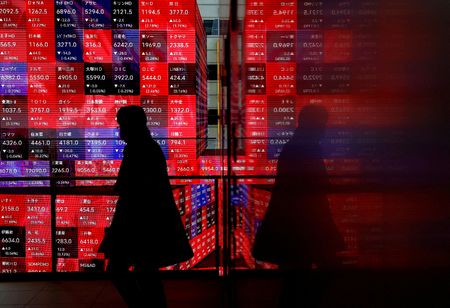

Global financial markets experienced significant turbulence Tuesday as crude oil headed toward unprecedented monthly gains while Asian stock indices prepared for their sharpest losses in two years, driven by escalating Middle East conflict concerns.
Energy markets saw dramatic movements with Brent crude futures climbing approximately 2% to reach $114.98 per barrel, positioning the commodity for a remarkable 59% monthly increase – the highest gain ever recorded. Meanwhile, U.S. crude oil advanced 1.8% to $104.73 per barrel, tracking toward a roughly 56% monthly surge, marking the steepest rise in nearly six years.
The sustained warfare has created widespread anxiety among investors about potential inflationary pressures and economic slowdown risks. Bond markets faced their most significant monthly decline in recent months due to shifting expectations regarding global interest rate policies, while the U.S. dollar achieved its strongest performance in eight months.
Market analysts noted the transition from headline-driven trading to genuine risk aversion. “It appears markets have gone from just mechanically trading headlines … into a little bit more of a fear mode, taking risk off the table,” explained Vishnu Varathan, who serves as Mizuho’s head of macro research for Asia ex-Japan.
Varathan added that investor sentiment shifted from earlier optimism about conflict resolution to growing concerns about extended warfare: “That partly might have to do with the transition from earlier thinking that there’s a good chance of Trump being able to control the timeline and/or your TACO trade, to now beginning to be concerned or fearing a more prolonged conflict.”
Some market optimism emerged following Wall Street Journal reports suggesting President Trump expressed willingness to conclude military operations against Iran despite potential continued disruption of the Strait of Hormuz shipping lane.
This development helped reverse early losses in U.S. futures markets, with Nasdaq contracts gaining 0.34% and S&P 500 futures advancing 0.4%. European markets also showed improvement, with EUROSTOXX 50 futures rising 0.15% and DAX futures climbing 0.26%.
Asian markets bore the brunt of the uncertainty, with MSCI’s comprehensive Asia-Pacific index excluding Japan dropping 0.55% and positioned for a monthly decline exceeding 12% – the most severe downturn since September 2022. Japan’s Nikkei index fell 0.93% and appeared set for a 12.6% monthly loss, while South Korea’s Kospi prepared for a monthly drop surpassing 17%, representing the largest decline since 2008.
Energy price concerns particularly impact Asian economies due to their heavy dependence on Middle Eastern oil supplies, creating additional economic pressure across the region.
Thomas Mathews, Capital Economics’ head of markets for Asia-Pacific, emphasized inflation as the primary immediate concern: “I think inflation will be the bigger near-term concern for global markets.” However, he warned of broader economic implications if current trends continue: “But if oil prices don’t fall back over the next few months, we will probably have to start thinking about growth too.”
The inflation threat prompted investors to increase expectations for interest rate increases across major central banks this year, creating significant pressure on bond markets. Federal Reserve expectations shifted dramatically, with markets now anticipating unchanged rates this year compared to previous expectations of more than 50 basis points in rate reductions before the conflict began.
Federal Reserve Chair Jerome Powell indicated Monday that the central bank would monitor the war’s economic and inflationary impacts, noting that policymakers typically look beyond temporary shocks like oil price spikes.
U.S. Treasury yields stabilized Tuesday, though two-year yields remained on track for a monthly increase exceeding 40 basis points – the largest jump since October 2024. The benchmark 10-year yield similarly advanced approximately 37 basis points during March, marking the most substantial monthly gain since December 2024.
Currency markets reflected the flight to safety, with the dollar heading toward its most significant monthly advance since July. The greenback emerged as a preferred safe-haven asset amid ongoing warfare, rising roughly 2.9% against a basket of major currencies this month.
The euro, trading at $1.1474, faced a nearly 3% monthly decline while the British pound dropped more than 2% in March. The Japanese yen remained near critical levels at 159.93 per dollar, just below the psychologically important 160 threshold.
Precious metals markets showed mixed results, with spot gold climbing 0.6% to reach $4,538.07 per ounce as investors sought alternative safe-haven assets.