
WASHINGTON — Internal divisions within the Democratic Party are threatening their efforts to reclaim control of the U.S. Senate.
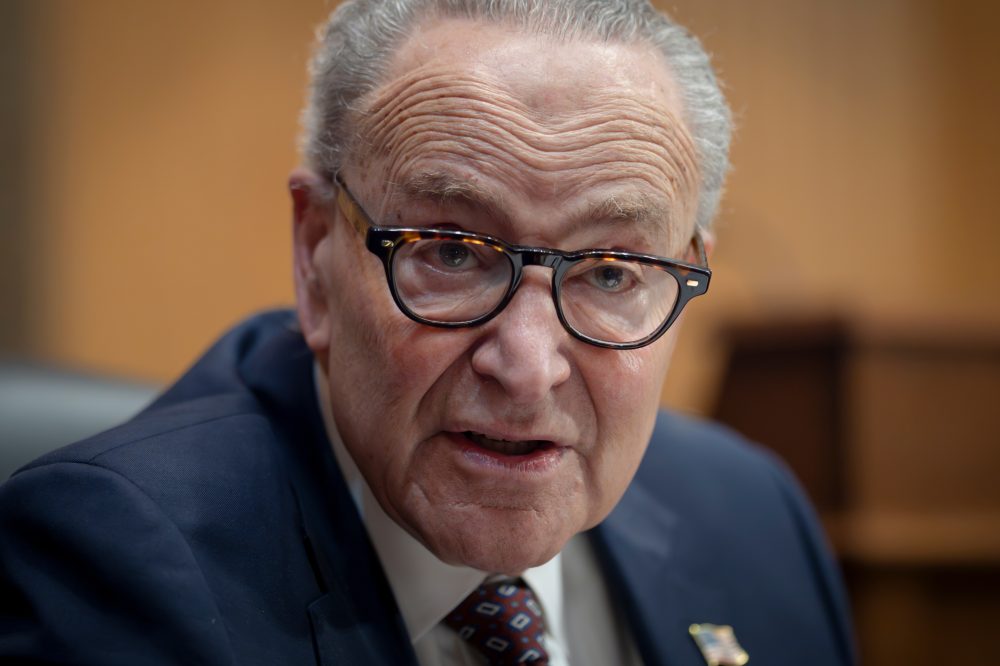
Senate Minority Leader Chuck Schumer finds himself at odds with fellow Democratic senators over candidate selection in critical upcoming races. While Schumer has endorsed Governor Janet Mills in Maine’s pivotal contest, several of his Senate colleagues are supporting challenger Graham Platner, directly challenging Schumer’s electoral strategy. This pattern is emerging in other competitive states like Michigan and Minnesota, where progressive lawmakers are rallying behind anti-establishment contenders.
The disagreement extends beyond individual campaigns to fundamental questions about Democratic Party direction following Donald Trump’s second presidential victory and whether current leadership should continue.
“Clearly there’s a disagreement of strategy here,” stated New Mexico Senator Martin Heinrich, who has endorsed Platner.
Heinrich further explained that “the business-as-usual calculation for what is going to be successful in a given election cycle does not necessarily, in my view, meet the moment.”
These internal tensions stem from Democratic voter frustration following the recent presidential election, where President Joe Biden initially sought re-election despite widespread age-related concerns before withdrawing and endorsing Vice President Kamala Harris, who ultimately lost to Trump.
Nan Whaley, an Ohio Democratic strategist who previously ran for governor, characterized the current debate as transcending traditional progressive versus moderate lines.
“It’s really about, who do you trust? Establishment or not establishment,” she explained. “And frankly, the establishment hasn’t given us a lot to trust these past few years.”
In Maine’s race, Schumer and the Democratic Senatorial Campaign Committee have supported Mills, a 78-year-old moderate serving her second gubernatorial term.
Platner, who works as both a veteran and oyster farmer, secured Senator Bernie Sanders’ endorsement within days of announcing his candidacy. His campaign has gained traction despite facing questions about previous controversial statements and a tattoo that resembles Nazi imagery.
Recent weeks have brought additional endorsements for Platner from Heinrich, Arizona Senator Ruben Gallego, and Massachusetts Senator Elizabeth Warren as his Capitol Hill support grows. Heinrich and Rhode Island Senator Sheldon Whitehouse even hosted a fundraising event for his campaign.
Gallego, a freshman senator who won a competitive race in 2024, minimized the significance of these endorsements as criticism of party leadership.
“Senate leadership didn’t back me at the beginning. So I didn’t take that as a critique,” Gallego commented.
Michigan’s primary presents another contentious battle featuring three prominent candidates. State Senator Mallory McMorrow has declared she would not support Schumer for caucus leader if Democrats regain the majority, earning endorsements from four senators.
Abdul El-Sayed, campaigning from a more progressive position, has received Sanders’ backing while also promoting an anti-establishment message.
U.S. Representative Haley Stevens has aligned herself with establishment figures, collaborating with a former DSCC executive director and gaining support from two senators.
Democratic strategist Lis Smith characterized the endorsements in states like Maine and Michigan as “as much as a rebuke of Schumer as it is an endorsement of these candidates.”
“It’s pretty uncommon for sitting senators to endorse against the Senate leader,” Smith observed. “Senators are reading the tea leaves and are getting feedback from the grassroots that they are dissatisfied with Schumer’s performance as leader.”
Minnesota’s open-seat contest has similarly become a referendum on party direction. Representative Angie Craig represents the centrist option in the primary, with endorsements from House Democratic Leader Hakeem Jeffries and Representative Nancy Pelosi. Lieutenant Governor Peggy Flanagan, the more progressive alternative, has garnered support from Sanders, Warren, and others, including Minnesota Senator Tina Smith, who is leaving the seat.
“She understands that right now what we need are fierce fighters, people who are willing to stand up to the status quo,” Smith said in her endorsement.
Some friction dates back to March 2025, when Schumer joined Republicans in ending a government shutdown, prompting criticism from Democrats who felt he failed to adequately resist Trump’s agenda.
Later that year, Democrats maintained unity during a record-breaking shutdown battle, helping restore credibility with activists and progressives. However, divisions reemerged when moderate Democrats eventually aligned with Republicans, reigniting frustration with party leadership despite Schumer’s opposition to the move.
Since assuming Senate leadership in 2017, Schumer’s electoral performance has shown mixed results. He guided Democrats back to majority status in 2020 and increased their numbers in 2022, but suffered losses in both 2018 and 2024.
“Leader Schumer’s North Star is taking back the Senate and is pursuing a path to do just that,” said Allison Biasotti, Schumer’s spokesperson.
This cycle, he has recruited prominent candidates for challenging Senate races in Alaska, Ohio, and North Carolina. Maeve Coyle, DSCC communications director, credited Schumer with creating “a path to win a Democratic Senate majority this cycle” through his recruitment efforts.
“Senate Democrats overperformed in the last four election cycles and in 2026, we will win seats and flip the majority,” she added.
David Axelrod, former chief strategist for President Barack Obama, noted that serving as Senate leader presents constant challenges, and that Schumer “has been under fire for some time, particularly from progressives in the party.”
According to Axelrod, Schumer’s leadership tenure is likely tied directly to the 2026 midterm results.
“There’s questions as to whether he’ll run in 2028. There’s even questions as to whether he might be challenged as leader,” he said. “I think the results of this election may impact that.”
Currently, Schumer’s caucus maintains tentative support for his leadership. No members have explicitly demanded his resignation. However, dissatisfaction persists, with some openly questioning whether the party requires new direction.
“How people did politics in the 1990s is going to feel different than in the 2020s,” Heinrich noted.