A gradual warming trend is expected to develop across the Delmarva region this weekend, though the warmer temperatures will come alongside several opportunities for showers and thunderstorms through early next week.
Temperatures through Saturday are expected to remain seasonable for early May, with afternoon highs generally in the upper 60s to near 70 degrees and overnight lows ranging from the mid 40s to low 50s.
The weather pattern is forecast to become increasingly unsettled beginning Saturday as an upper level disturbance moves across the Mid Atlantic during the afternoon hours. An associated area of low pressure tracking north of the region will drag a cold front through Delmarva, likely triggering scattered to potentially widespread showers and thunderstorms from late Saturday morning into Saturday afternoon.
Forecast models indicate modest atmospheric instability developing ahead of the front, with around 500 J/kg of elevated instability forecast across portions of the region. In addition, stronger winds aloft may help organize some of the storms. While widespread severe weather is not currently expected, forecasters say a few stronger thunderstorms cannot be ruled out as the system approaches.
At this time, the primary threats with any stronger storms would likely be gusty winds and brief heavy downpours, though confidence in the overall storm intensity remains somewhat limited.
Conditions are expected to improve Saturday night into Sunday as the disturbance exits the region and high pressure briefly builds overhead. This setup should provide mainly dry weather for much of Sunday while also allowing significantly warmer air to surge northward into the region.
High temperatures Sunday are forecast to climb into the upper 70s across much of Delmarva, and a few inland locations could approach the 80 degree mark if enough sunshine develops during the afternoon.
The warmer weather may be short lived, however, as another area of low pressure and its accompanying cold front are expected to move through the region Sunday night into Monday morning. This next system could bring another round of showers and thunderstorms before cooler temperatures return to begin the new work week.
Despite the active weather pattern, no widespread hazardous weather is anticipated at this time. However, residents are encouraged to continue monitoring the forecast through the weekend as details regarding Saturday’s thunderstorm potential become clearer.
SALISBURY, Md. – Salisbury University’s softball team secured three significant Coast-to-Coast Athletic Conference honors along with six All-Conference player selections, the league revealed Wednesday morning.
The Sea Gulls’ impressive season culminated with the conference recognizing both individual players and program achievements across multiple award categories.
The Coast-to-Coast Athletic Conference made the announcement earlier today, highlighting the strong performance of Salisbury’s softball program during the recent season.
Delaware transportation officials are warning drivers about upcoming lane closures on a busy New Castle County highway this weekend.
The Delaware Department of Transportation will restrict traffic lanes on southbound Route 141 this Sunday, May 17th, to remove dangerous trees along the roadway. The work zone will stretch from Alapocas Drive to the Tyler McConnell Bridge, with operations running from 6:00 AM until 8:00 PM.
Officials are advising drivers to exercise caution when traveling through the construction area and to plan for potential minor traffic delays during the 14-hour work period.
Motorists can find additional traffic updates and road closure information by visiting DelDOT’s official website at www.deldot.gov or by downloading the department’s mobile application.
Motorists traveling southbound on Millchop Road should expect delays this afternoon as construction crews have shut down the right lane between Walnut Shade and Stevenson Drive.
According to DelDOT traffic officials, the lane closure will remain active until 6 PM today while work continues in the area.
Drivers are advised to allow extra travel time and use caution when passing through the construction zone. Traffic may be heavier than usual as vehicles merge from the closed right lane into the remaining open lane.
Major financial institutions across the country are preparing one final attempt to convince federal regulators to reduce banking capital requirements before the November election, according to four industry sources with knowledge of the discussions.
In March, the Federal Reserve released revised versions of comprehensive capital regulations that officials estimate would decrease the money large banks must set aside for potential losses by approximately 4.8%. Regulators defended the changes by stating current requirements are damaging the economy.
Although the banking sector views this as a win compared to the Fed’s initial 2023 proposal that would have increased capital requirements by 20%, the advantages won’t be distributed equally. Several major banks believe they’re being disadvantaged relative to their competitors, sources indicated.
JPMorgan Chase, America’s biggest bank, announced last month that it anticipates its capital requirements will actually rise, while rival institutions will see theirs decrease.
Before next month’s comment deadline, JPMorgan along with other major institutions including Wells Fargo, Citigroup, and Bank of America, plus their industry associations, are preparing a final list of requested modifications.
A primary concern, according to sources, involves a requirement in the “Basel” proposal to maintain capital against 10% of unused credit lines called “unconditionally cancelable commitments,” most commonly unused credit card limits. These credit lines currently require no capital reserves since banks can withdraw them anytime, but regulators contend that realistically, lenders might avoid doing so during economic downturns due to customer relationships or risk management considerations.
Banks would receive some capital relief on utilized credit lines also proposed in March. However, major banks plan to argue the new requirement could compel them to lower credit card limits and eliminate unused lines, sources said. Regional and smaller banks won’t be impacted since they’ll operate under a proposed simplified capital system, two sources noted.
“The rational thing to do is cut credit limits closer to approximate usage,” said Matthew Bisanz, a partner at Mayer Brown who is monitoring the proposal closely. He described the amount of affected unused credit as “enormous.”
Representatives for the Fed, JPMorgan, Wells Fargo, Citi and Bank of America either declined comment or didn’t respond to inquiries. Sources requested anonymity because regulatory discussions are confidential.
Federal Deposit Insurance Corporation data shows nearly $5 trillion in unused credit card lines existed at the end of 2025, though Reuters couldn’t immediately determine how much might be affected by the proposal.
The Basel Committee, the international organization that establishes capital standards, initially proposed the new requirement, which was later incorporated into the 2023 plan created by Democratic officials at the Fed and other bank regulators under former President Biden.
After successfully lobbying to postpone and weaken that draft, banks anticipated President Trump’s Republican regulators would reduce or eliminate the requirement and were dismayed to discover it remained when they examined the details, three sources said.
Another significant dispute involves a capital penalty the Fed placed on globally systemically important or “GSIB” U.S. banks after the 2008 financial crisis. These institutions have long contended the Fed should update the data it uses to calculate the “GSIB surcharge,” established in 2015, to account for economic growth and more accurately represent banks’ size relative to the global economy.
The Fed proposed last month a one-time adjustment for recent economic growth and automatic updates for future growth, but banks will again advocate for returning to 2015 calculations, a change that could substantially reduce their surcharges, two sources said. JPMorgan Chase CEO Jamie Dimon described parts of the surcharge as “nonsensical” last month, claiming it penalized the bank for its achievements.
Additional bank requests will likely address trading book asset treatment and how the rules interact with annual bank stress tests, analysts predicted.
“A lot of banks have said, look, we think that this is a very good starting point… but there are things in the proposal that they would like to see changed,” said Richard Ramsden, who oversees financial research coverage at Goldman Sachs.
“At this stage, given just how long this debate has gone on for, it makes sense to just focus on getting this done.”
Banks are eager to complete the rules before November’s mid-term elections potentially give more influence to Democrats who are skeptical of what some have characterized as a Wall Street handout, three sources said, leaving lenders only months to secure favorable modifications.
Fed Vice Chair for Supervision Michelle Bowman, who is spearheading the initiative, has stated she wants to complete the proposal by year’s end. She has also informed banks she doesn’t expect them to repeat the aggressive strategies they employed against the 2023 plan, and to focus their responses, Reuters reported.
Recognizing they may not have such sympathetic regulators for a decade or longer, the industry still plans to seek maximum relief possible, two sources said.
“It’s an unbelievably complicated proposal,” Greg Baer, CEO of the Bank Policy Institute, which spearheaded the industry opposition initially, told Congress last month. “I don’t even want to know how long our comment letter is going to be.”
OCEAN CITY, MD – Families looking for an educational and entertaining weekend activity can head to the Ocean City Life-Saving Station Museum this Sunday for a special patriotic celebration.
The museum is hosting “Angels in Oilskins – A Living History Experience” on August 4th, running from 11:00 a.m. until 5:00 p.m. The free festival pays tribute to two major milestones: America’s 250th anniversary and the United States Coast Guard’s impressive 236 years of protecting our nation’s waters.
This family-oriented event promises to bring history to life through interactive demonstrations and educational activities that showcase the brave men and women who have served in maritime rescue operations throughout American history.
Visitors can expect to learn about the evolution of life-saving services along the Atlantic coast while celebrating the rich heritage of both our nation and the Coast Guard’s long-standing commitment to saving lives at sea.
Federal law enforcement officials in Brazil executed a search and seizure operation Thursday targeting Senator Ciro Nogueira in connection with an expanding investigation into the failed Banco Master, according to a Supreme Court decision released Thursday.
Nogueira previously held the position of chief of staff under former right-wing President Jair Bolsonaro, serving from August 2021 through December 2022. The senator currently leads the Progressives political party and represents Piaui state in Brazil’s upper legislative chamber.
In his ruling, Supreme Court Justice Andre Mendonca stated that the police investigation suggests Nogueira allegedly provided assistance to Banco Master’s owner Daniel Vorcaro “in exchange for undue economic advantages.”
Legal representatives for Nogueira rejected any allegations of misconduct, issuing a statement declaring their client’s willingness to work with investigators and remain available to offer explanations regarding the matter.
The search warrant against Nogueira represents a significant expansion of the corruption investigation into Brazil’s political establishment, as authorities continue examining alleged illegal activities connected to Banco Master.
The financial institution was shut down in November following a serious cash flow crisis, while Vorcaro, the bank’s owner, remains in custody facing charges.
WASHINGTON — American worker productivity experienced another slowdown during the opening months of 2024, though economists anticipate a turnaround as companies pour resources into artificial intelligence technology.
The Bureau of Labor Statistics reported Thursday that nonfarm productivity — which tracks output per worker each hour — rose at an annualized 0.8% during the first quarter. This figure fell short of the 1.0% growth rate that economists surveyed by Reuters had predicted.
The federal agency also adjusted its fourth-quarter figures downward, showing productivity had grown at 1.6% rather than the initially reported 1.8%. This represents a significant decline from the robust 5.2% jump recorded in the third quarter of last year.
When compared to the same period in 2023, productivity still managed a healthy 2.9% increase. Economic analysts believe widespread adoption of artificial intelligence will eventually drive productivity higher while helping control labor expenses.
Meanwhile, unit labor costs — representing what employers pay for each unit of production — climbed 2.3% during the quarter. This increase came in below economists’ expectations of 2.6% growth. These costs rose just 1.2% compared to the previous year.
Worker compensation per hour advanced 3.1% during the first quarter and showed a 4.2% gain when measured against the same timeframe last year. The Labor Department revised fourth-quarter unit labor cost growth upward to 4.6% from the previously calculated 4.4%.
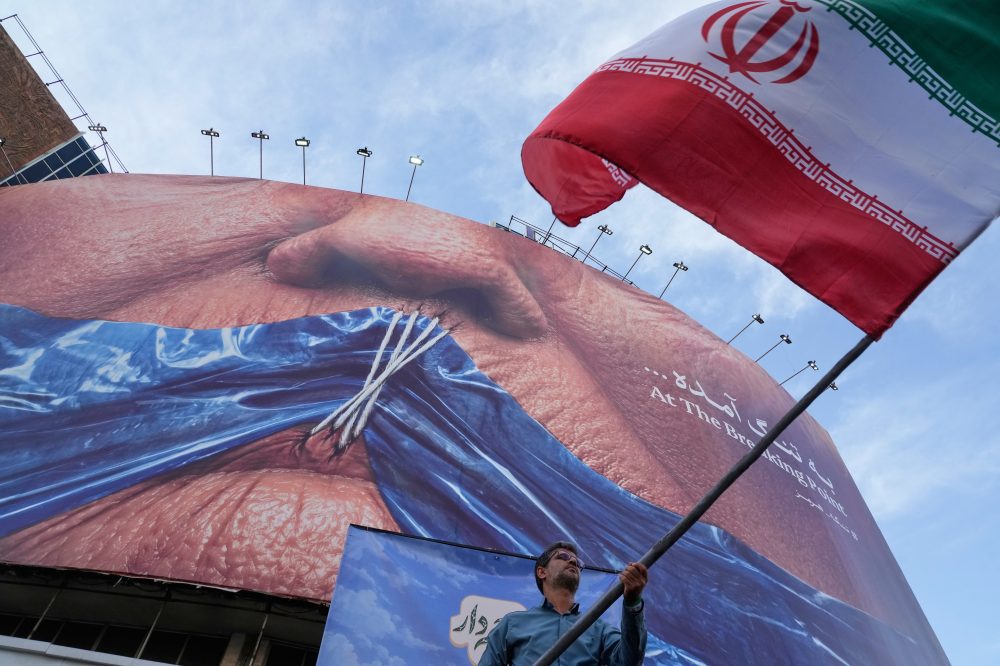
Iran’s control over the Strait of Hormuz has sent shockwaves through the global economy, driving up fuel costs and creating ripple effects that extend well beyond the Middle East region. The situation has also trapped thousands of sailors and numerous vessels in the Persian Gulf waters.
Following attacks by the United States and Israel on February 28, Iran gained effective control over this crucial shipping lane. Despite weeks of intensive bombing campaigns and a U.S. naval blockade implemented last month, Iran maintains its hold on the waterway. Iranian officials have stated they will only allow the strait to reopen when hostilities cease and the blockade ends. President Donald Trump is demanding broader concessions, including Iran’s withdrawal from its controversial nuclear program.
The strategic waterway measures just 21 miles across at its most narrow section between Iran and Oman, where it curves like an elbow. Vessels must navigate through tight shipping channels in shallow waters, creating an even more restrictive bottleneck.
Prior to the conflict, approximately 20% of globally traded oil passed through the Strait of Hormuz daily, along with substantial quantities of natural gas, fertilizer, and other petroleum-based products.
Research data from Lloyd’s List Intelligence shows that roughly 130 ships transited the strait each day before fighting began, including both oil tankers and cargo vessels.
Since hostilities commenced through May 4, Lloyd’s List Intelligence reports that only 450 ships are believed to have successfully passed through the waterway. Many of these vessels likely carried Iranian oil. Under normal circumstances, between 6,500 and 8,450 ships would have traveled through the strait during this timeframe.
American gasoline prices have climbed by $1.20 per gallon on average since the war started. According to AAA, the average gallon price reached $4.56 on Thursday. The strait’s closure has also caused jet fuel costs to nearly double.
Shipping insurance costs have dramatically increased from 1% of cargo value to as high as 10%, according to maritime industry experts.
The United Nations World Food Program warns that 280 million people, primarily in Asian and African nations, could face hunger if the strait remains closed. The organization states that blocked fuel and fertilizer shipments may soon make food and essential goods unaffordable for vulnerable populations.
The U.N.’s International Maritime Organization reports that 47 mariners have died since the Iran conflict began.
According to the International Maritime Organization, 89 ships have been attacked during the hostilities.
U.S. military sources indicate that 387 vessels from 87 different nations are currently trapped in Persian Gulf waters.
Approximately 23,000 sailors remain stranded aboard these ships, with many crew members coming from South and Southeast Asian countries.
The U.S. military has deployed 5,000 American troops along with 100 aircraft to support Project Freedom, President Trump’s initiative to escort ships through the strait. However, the operation was suspended on Tuesday, just two days after its announcement.
As part of Project Freedom, the United States reported successfully guiding 12 ships through the waterway before the program’s suspension.
As spring cleaning season arrives, cybersecurity professionals suggest extending that fresh start mentality to your electronic devices and digital accounts.
This digital decluttering goes beyond simple organization – removing unused accounts and forgotten files can safeguard your personal information, according to security specialists.
“Clutter is fuel for scammers. Old accounts, exposed data and forgotten apps give them more ways in,” said Michael Sherwood, a product vice president at cybersecurity firm Malwarebytes. “Cleaning up your digital life is one of the simplest ways to shrink your attack surface in a threat landscape that’s getting smarter, faster, and more automated.”
Here’s what experts recommend for your digital cleanup:
Constantly running low on phone or computer storage? Those accumulated photos, videos and downloaded files consume significant space over time.
Limited storage capacity can slow device performance and block critical system updates. Most devices include built-in tools to help users manage storage.
iPhone users can navigate to Settings, then General, followed by iPhone Storage to view remaining space and identify which applications consume the most room. Android users can find similar information under the Storage section in settings, with options for manual or automatic cleanup.
Both Windows and Mac computers offer comparable storage management tools in their settings to pinpoint space-consuming files.
Transfer important documents to external drives or cloud services, then remove them from your primary device.
Email inboxes typically overflow with notifications, receipts, newsletters, statements and security alerts – many remaining unopened. Mixed among these may be personal messages worth saving alongside spam requiring deletion.
Organizing this chaos can improve productivity and concentration, with strategies to streamline the process.
Filter messages by size to identify the largest emails – typically those with hefty attachments – for removal. Sort by sender or date to eliminate outdated correspondence or bulk messages from frequent senders.
Consider unsubscribing from newsletters and mailing lists you no longer read.
Review phone applications and remove those you’ve stopped using.
However, don’t overlook the associated accounts. If deleted apps required account creation, log in and permanently close those accounts. Otherwise, your stored information remains accessible to potential hackers.
“Every dormant account is an open door. Scammers actively target abandoned logins because no one’s watching,” Sherwood explained.
Ensure remaining applications are current by checking for updates. Apply the same principle to your device’s operating system, installing the latest software patches for optimal performance and security.
Security professionals recommend examining your presence across Facebook, Instagram, TikTok, LinkedIn and other social platforms.
The goal is to “review what personal info is out there and limit what apps and services can access,” Sherwood noted.
Examine privacy settings for each platform and consider removing older posts.
“Limiting what personal information is publicly available helps to reduce the risk of falling victim to cyberattacks such as phishing and identity theft,” said Chad Thunberg, chief information security officer at cybersecurity company Yubico.
Remember those convenient “sign in with Facebook” or “use your Apple account” options? What about smart home devices requesting Google account access?
Review which external applications and services connect to your primary accounts. Disconnecting unnecessary links enhances online privacy.
When checking Google account settings under “Third-party apps & services,” one user discovered only three active connections, all still needed.
Facebook settings revealed 18 connected services, though all but one had expired. The remaining active connection – a forgotten photobook service with access to name and profile photo – was promptly removed.
Strengthen security by evaluating your password management.
Enable multi-factor authentication across accounts if you haven’t already.
Consider adopting passkeys, which Thunberg describes as a “modern login standard” offering superior security compared to traditional passwords. Passkeys function like digital key-and-lock combinations that only work when properly paired. Major platforms including Google, Amazon, Facebook and eBay now support this technology.
Passkeys require fingerprint, face scan or PIN verification, meaning “they cannot be faked, intercepted or replicated by AI-based attacks,” Thunberg explained.
Password managers can store passkeys if you’re not currently using one. Apple, Google and Samsung provide built-in password management, while third-party options include 1Password, BitWarden and Nordpass.
Even without passkeys, password managers remain essential for tracking login credentials. Best practices involve unique passwords for each account, preventing hackers who breach one service from accessing others. However, memorizing multiple complex passwords proves impossible.
“A password manager not only generates strong, unique passwords for each account, but also ensures users never have to remember them all,” Thunberg concluded.
WEST POINT, N.Y. — Against the backdrop of global conflicts including the ongoing war in Ukraine and rising tensions within NATO, the United States Military Academy conducted its annual Sandhurst Military Skills Competition for the 59th consecutive year.
Over the course of 36 hours, teams of military cadets from both American and international academies faced off in challenging exercises designed to mirror real-world military requirements. This year marked a significant evolution in the competition, as organizers introduced drone warfare simulations controlled through video game interfaces — a new addition reflecting the growing importance of unmanned aircraft in modern combat operations.
The competition concluded with West Point’s black team claiming victory for an unprecedented fourth consecutive year, demonstrating their continued dominance in the prestigious military skills challenge.
Democratic Republic of Congo’s President Felix Tshisekedi has sparked controversy by expressing willingness to pursue a third presidential term, drawing fierce opposition from political rivals who accuse him of attempting to circumvent constitutional term limits.
During a Wednesday evening press conference, Tshisekedi responded to questions about recent constitutional revision proposals from his supporters by stating: “I have not asked for a third term, but if the people want a third term, I will accept.”
The president also warned that continuing violence in eastern Congo could prevent the scheduled 2028 presidential election from taking place as planned. “If this war cannot be ended, unfortunately we will not be able to organise elections in 2028,” Tshisekedi explained. “You cannot hold elections when parts of the country are occupied.”
Congo’s current constitution restricts presidents to serving two terms maximum. Any modification would require constitutional amendments approved through a public referendum, according to Tshisekedi.
Political opposition leaders have condemned the president’s statements, warning they could trigger fresh political instability in the mineral-wealthy nation that has suffered through decades of armed conflict.
Former presidential candidate Delly Sesanga responded on social media platform X, writing: “The DRC cannot enter a new cycle of institutional tensions and the personalization of power. All democrats must stand against this slide.”
The controversy echoes Congo’s previous political crisis under ex-president Joseph Kabila, who postponed elections past his constitutional mandate’s expiration in 2016, leading to fatal demonstrations and international criticism.
Tshisekedi, whose father Etienne Tshisekedi was a prominent opposition figure, secured re-election for his second term in December 2023. He initially suggested constitutional changes in late 2024, arguing the existing document was primarily written by foreign legal advisors and needed modernization.
Recent weeks have seen intensified calls for constitutional reform. In April, Andre Mbata from the Sacred Union coalition invited political parties, civil society organizations, religious groups, labor unions and legal scholars to submit revision proposals.
Mbata announced plans to establish a technical commission after May 20 to review these submissions before presenting recommendations to the president.
The constitutional debate occurs amid ongoing security challenges in eastern Congo, where the AFC/M23 rebel coalition, allegedly supported by Rwanda, maintains control over extensive territory. Rwanda has rejected accusations from the United Nations and Western nations regarding its backing of the insurgent group.
Despite mediation attempts by the United States and other international actors, fighting has persisted in the region.
Seven current and former student-athletes from Goldey-Beacom College were celebrated during the institution’s yearly Honors Day ceremony, a cherished campus tradition that recognizes outstanding achievement.
The athletic department saw significant representation at this year’s event, with student-athletes earning multiple distinctions for their accomplishments both in competition and in the classroom.
Honors Day serves as an eagerly anticipated annual celebration across the Goldey-Beacom campus, bringing together the college community to acknowledge excellence in various areas of student life and academic performance.
Israeli Prime Minister Benjamin Netanyahu delivered a stark warning Thursday that enemy combatants cannot expect protection anywhere, following his military’s assassination of a senior Hezbollah leader in the group’s Beirut stronghold.
The targeted killing Wednesday represented Israel’s first military action against Beirut’s southern neighborhoods since a fragile ceasefire took effect last month, according to military officials.
Israeli forces confirmed they eliminated the leader of Hezbollah’s specialized Radwan unit, though the Iran-supported organization has remained silent about the attack or their commander’s fate.
“He likely read in the press that he had immunity in Beirut. Well, he read it and it is no longer the case,” Netanyahu declared in his public remarks.
Fighting between Israeli forces and Hezbollah resumed March 2nd after the militant group launched attacks following a joint U.S.-Israeli operation against Tehran.
Wednesday’s assassination threatens the Lebanese ceasefire agreement that developed alongside broader Middle Eastern peace efforts, particularly since halting Israeli operations in Lebanon remains a central Iranian requirement in ongoing Washington negotiations.
President Donald Trump revealed the Lebanese ceasefire arrangement April 16th, which initially reduced regional violence significantly. Beirut had remained untouched by Israeli military action for weeks before Wednesday’s operation.
However, both sides have maintained combat operations in southern regions, where Israeli forces established what they term a protective buffer zone.
Netanyahu identified the eliminated Hezbollah official as Ahmed Ali Balout, stating the commander “thought he could continue to direct attacks against our forces and our communities from his secret terrorist headquarters in Beirut.”
“I say to our enemies in the clearest possible way: No terrorist has immunity,” the Israeli leader emphasized.
Lebanese health authorities report over 2,700 fatalities since fighting resumed March 2nd, with approximately 1.2 million Lebanese citizens displaced from their residences, particularly from southern territories.
Israeli military casualties include 17 soldiers killed during southern Lebanon operations, plus two civilian deaths in northern Israel.
Wednesday alone saw 11 Lebanese deaths from Israeli military strikes across three separate southern locations, based on health ministry records.
Hezbollah claimed responsibility for 17 separate attacks against Israeli positions in southern Lebanon Wednesday, while Israeli commanders reported destroying more than 15 militant facilities the same day.
Israeli military intelligence indicates Hezbollah has launched hundreds of rockets and unmanned aircraft toward Israel since March 2nd.
Hezbollah maintains they possess legitimate authority to oppose Israeli forces controlling southern territories.
Israel’s security perimeter extends up to 10 kilometers into southern Lebanon, with officials claiming the zone protects northern Israeli communities from militants operating within civilian populations.
The Lebanese ceasefire initially covered 10 days before receiving a three-week extension during discussions between Lebanese and Israeli diplomatic representatives in Washington, facilitated by Trump at the White House.
Hezbollah sharply criticizes the Lebanese government’s Israeli communications, highlighting significant internal Lebanese political divisions regarding the militant organization.
Trump previously expressed enthusiasm about hosting both Netanyahu and Lebanese President Joseph Aoun soon, suggesting strong possibilities for a comprehensive peace agreement this year.
However, Lebanese Prime Minister Nawaf Salam stated Wednesday that discussing high-level Lebanese-Israeli meetings remains premature, emphasizing that strengthening ceasefire arrangements must precede any future diplomatic negotiations between government representatives in Washington.
Wall Street celebrated new milestones Thursday morning as both the S&P 500 and Nasdaq Composite climbed to unprecedented levels, driven by continued declines in crude oil prices amid growing optimism about diplomatic efforts between the United States and Iran.
The positive momentum reflected investor confidence that a potential peace deal could help stabilize oil flow through the strategically important Strait of Hormuz shipping corridor.
By 9:30 a.m. Eastern Time, major market indicators showed strong gains across the board. The Dow Jones Industrial Average climbed 192.59 points to reach 50,091.92, marking a 0.39% increase. The S&P 500 advanced 6.38 points to 7,374.11, representing a 0.09% rise, while the Nasdaq Composite gained 40.33 points to hit 25,879.28, up 0.16% for the session.
Shares of British semiconductor designer Arm plummeted Thursday following the company’s warning about declining smartphone demand and potential supply shortages for its latest artificial intelligence processor.
The stock price dropped 5% to $225.43 on Thursday, eliminating over $12 billion from Arm’s total market worth of $252 billion.
Despite the decline, the chip design company’s stock value has more than doubled since the beginning of the year, surpassing performance of other major semiconductor firms.
This year, Arm has intensified its focus on artificial intelligence technology, developing a new data center processor designed for autonomous AI systems that can operate independently. This represents a shift from the company’s traditional role of providing chip blueprints to manufacturers like Qualcomm.
Chief Executive Rene Haas explained during an investor call that while Arm can meet initial demand worth $1 billion, the company has not yet arranged sufficient manufacturing capacity to handle orders beyond that amount.
The company requires access to production facilities, silicon wafers, and testing infrastructure to manufacture its AI processor effectively.
Arm projects the new AI chip will bring in over $2 billion in revenue during fiscal years 2027 and 2028 combined.
Taiwan Semiconductor Manufacturing Company, the world’s largest contract chip manufacturer, is handling production of Arm’s AI processor using advanced 3-nanometer technology that combines two separate silicon components into one functioning chip.
During the investor call, Arm executives described smartphone market conditions as “slightly negative.” The company’s technology powers most smartphones globally, but memory chip shortages have hurt the industry by increasing electronic device costs and reducing consumer purchases.
Following Arm’s announcement of record fourth-quarter revenue totaling $1.49 billion and first-quarter projections that exceeded analyst expectations, at least 14 investment firms increased their stock price targets for the company.
A significant portion of Arm’s income comes from licensing its chip designs to major technology companies including Nvidia and Apple, then collecting ongoing royalty fees when those designs are used in products.
SAN ANTONIO — Victor Wembanyama’s competitive fire burns bright whether he’s playing chess, drawing, or shooting hoops. After San Antonio’s narrow defeat in the opening game of their Western Conference semifinal against Minnesota, that competitive drive reached new heights.
The towering All-Star channeled his frustration into a dominant performance Wednesday evening, leading the Spurs to a crushing 133-95 victory over the Timberwolves that leveled their playoff series at one game each.
Even though Wembanyama recorded 11 points, 15 rebounds and an NBA playoff record 12 blocked shots in Monday’s 104-102 defeat, the 7-foot-4 center felt responsible for the loss and knew he had to elevate his game, particularly on offense.
Did anger and frustration fuel his desire to return to action for the second matchup? Without question.
“There always is,” Wembanyama explained. “In the playoffs, magnify that.”
The result was what Minnesota head coach Chris Finch described as a thorough beating in front of a packed, energized home crowd.
Minnesota managed just 35 first-half points while connecting on only 7 of 24 field goal attempts and a dismal 2 of 15 three-point shots.
The Timberwolves finished the contest shooting 40% from the floor and 30% beyond the arc while turning the ball over 22 times. San Antonio controlled the paint 58-36, dominated the boards 55-43, and swatted away nine shots compared to Minnesota’s two blocks.
“We got beat in every way possible, it’s as simple as that,” Timberwolves forward Julius Randle acknowledged. “There’s not really much to say from this game. They outhustled us, out-physicaled us, executed, played better defensively, more energy. They just beat us in every way in this game. We’ve got to come back in the next game and be better.”
The series shifts to Minneapolis for Game 3 on Friday, with Game 4 scheduled for Sunday at Target Center.
Both teams cleared their benches with 10 minutes left on the clock Wednesday, as only the final margin remained in question.
San Antonio’s 38-point triumph surpassed Minnesota’s previous worst playoff loss of 30 points to the Los Angeles Lakers on April 29, 2003.
“I know this team’s capable of doing all of this,” Wembanyama stated. “To be honest, I’m expecting this kind of response from myself, from my teammates. So, I’m not surprised by any means and I’m just going to keep working so we approach more games like we did tonight.”
Following Monday’s collapse when they surrendered a nine-point fourth-quarter advantage, both Wembanyama and De’Aaron Fox accepted responsibility for the narrow defeat.
The All-Star pair managed just 21 combined points in the series opener, going a combined 0-for-12 from three-point range with Wembanyama alone missing eight attempts.
“They acknowledged it, them being the leaders on our team,” Spurs guard Stephon Castle noted. “Coming out of Game 1, I mean, it’s going to happen. You’re going to have bad shooting nights, but I mean, we have nothing but confidence in those two. So, I expect them to play well the rest of the series like they did tonight.”
Wembanyama established his presence immediately in Game 2, tallying seven points on 3-of-4 shooting early on.
Though the Spurs misfired on their opening three attempts, Wembanyama followed up the third miss by soaring through the lane and hammering home a powerful right-handed slam to get San Antonio on the scoreboard.
The French sensation contributed 14 points and nine rebounds in the opening half while anchoring a defensive performance that held Minnesota to 35 points, the lowest first-half total by a San Antonio playoff opponent since Memphis scored 31 in 2013.
“I just think we respond well to adversity,” Castle observed. “I think we’ve done that all year. I mean, I don’t think we were too shell shocked coming out of Game 1. I think we knew why we lost Game 1 and we addressed it right away. And I feel like that’s what carried us through tonight.”
WASHINGTON — Weekly applications for unemployment benefits climbed higher but continue to reflect a resilient job market amid persistent inflation and broader economic challenges, federal data revealed Thursday.
Initial unemployment benefit filings for the week concluded May 2 increased by 10,000 to reach 200,000, according to Labor Department statistics. This figure came in below the 205,000 applications that economists polled by FactSet had anticipated.
The prior week’s initial claims total, representing the lowest count recorded since 1969, received an upward adjustment of 1,000 to 190,000.
These weekly unemployment benefit applications serve as a reliable measure of U.S. layoff activity and provide nearly immediate insight into employment market conditions.
While government statistics show declining dismissals, the ongoing Iran conflict, now entering its fourth month, has created substantial uncertainty regarding potential impacts on both domestic and international economic conditions. This uncertainty persists even as Iran and the United States maintain their ceasefire arrangement, with growing hopes for a war resolution.
American financial markets have recovered to approach record territory, while U.S. crude oil prices stay elevated near $90 per barrel. Though down from last month’s peak of $112, current prices remain 36% above pre-war levels. Gasoline costs have similarly surged since hostilities began, with AAA reporting Thursday’s national average at $4.56 per gallon, creating additional expense burdens for both businesses and consumers.
Recent government data showed a critical inflation indicator surged during March as fuel prices climbed, providing fresh evidence that the Iran conflict continues pushing living costs significantly higher.
The Federal Reserve’s preferred inflation measurement increased 0.7% from February to March, representing a sharp acceleration from the preceding month, Commerce Department figures indicated. Year-over-year, prices advanced 3.5%, marking the largest annual gain in nearly three years.
When removing volatile food and energy components, core inflation also posted March increases.
These developments occur while U.S. inflation already exceeds the Federal Reserve’s 2% objective. The Fed chose to maintain its benchmark interest rate unchanged last week, pointing to economic uncertainty stemming from Middle Eastern instability and continuing elevated inflation.
Reduced interest rates can stimulate economic activity and employment growth, though they typically contribute to inflationary pressures. Federal Reserve officials implemented three rate reductions to conclude 2025 due to concerns about weakening employment conditions.
Last month’s Labor Department report showed U.S. companies added a surprisingly robust 178,000 positions during March, pushing the unemployment rate back down to 4.3%. This followed February’s unexpected decline of 92,000 jobs. Revisions have also reduced December and January payroll figures by 69,000 positions, suggesting continued labor market pressures.
Friday will bring the government’s April employment report.
Several prominent corporations have recently announced workforce reductions, including Morgan Stanley, Block, UPS, Amazon and Disney.
Weekly unemployment assistance applications have remained relatively stable within a 200,000 to 250,000 range since the U.S. economy recovered from the pandemic downturn. Nevertheless, hiring activity began decelerating approximately two years ago and slowed further in 2025 due to President Donald Trump’s unpredictable tariff implementations, federal workforce reductions, and continuing effects from elevated interest rates designed to combat inflation.
Companies added under 200,000 positions last year, compared to roughly 1.5 million in 2024, FactSet data indicates.
Economic analysts describe the American employment landscape as trapped in a “low-hire, low-fire” condition that maintains historically low unemployment rates while making job searches difficult for those seeking work. The current artificial intelligence expansion and associated investment requirements are also making employers hesitant to add staff.
Thursday’s Labor Department data revealed the four-week moving average of jobless claims, which smooths weekly fluctuations, dropped to 203,250, declining 4,500 from the previous week.
Total Americans collecting unemployment benefits for the week ending April 25 decreased by 10,000 to 1.77 million.
Delaware Department of Transportation officials have announced that overnight construction activities will commence Monday, May 11th, affecting Capitol Trail and Kirkwood Highway in Newark.
Work crews will operate during nighttime hours from 8:00 pm until 5:00 am, with the project scheduled to continue through the fall of 2026. The construction will focus on improving ADA accessibility features, replacing concrete surfaces, and enhancing the current roadway infrastructure.
DelDOT officials note that all construction activities are subject to weather conditions and may be delayed or rescheduled accordingly.
The Salisbury University Sea Gulls baseball program is making final preparations as they head into the 2026 Coast-to-Coast Baseball Championship tournament.
The Sea Gulls are among the teams competing in this year’s championship event, which brings together top collegiate baseball programs from across the region.
Tournament organizers have released preview materials highlighting the participating teams and their paths to the championship round.
The Sea Gulls will be looking to make their mark in what promises to be a competitive field of teams vying for the C2C Baseball Championship title.
Delaware’s Department of Natural Resources and Environmental Control is inviting both residents and out-of-state visitors to take advantage of a special license-free fishing opportunity this June.
The state agency is waiving fishing license requirements for Saturday, June 6, and Sunday, June 7, allowing anglers to fish, crab, and clam in Delaware waters without needing a 2026 fishing permit.
This special weekend coincides with National Fishing and Boating Week, which runs from June 6 through June 14. DNREC is promoting the event as a way for people to participate in the national celebration while enjoying Delaware’s waterways at no cost.
The license waiver applies to all forms of recreational fishing activities in state waters during the designated two-day period.
FRANKFURT, Germany — The CEO of Emirates airline announced Thursday that his company has successfully protected itself against rising aviation fuel costs through the end of the decade, revealing this strategy as the Dubai-based carrier posted its highest-ever annual earnings.
Speaking alongside the release of financial results, Chairman and Chief Executive Sheikh Ahmed bin Saeed Al Maktoum explained that the airline has locked in both pricing and supply arrangements with fuel providers. “From a fuel perspective, Emirates is well-hedged until 2028-29; and we have worked with our suppliers to secure the volumes required to support our current operations and our scaling up to predisruption levels,” Al Maktoum stated.
The aviation industry has been grappling with elevated fuel expenses and potential supply disruptions stemming from Iran’s interference with shipping through the Strait of Hormuz, a critical waterway that typically handles one-fifth of global oil transport. These pressures have forced several European carriers, including Air France KLM, SAS and Lufthansa, to eliminate routes from their summer flight schedules.
The protective strategy involves using financial tools like forward contracts to guarantee future fuel prices and delivery amounts.
Emirates Group’s financial performance for the year ending March 31 showed pre-tax earnings of 24.4 billion dirham ($6.6 billion), representing a 7% increase over the prior year. Total revenue climbed 3% to reach 150.5 billion dirham ($41.0 billion) compared to the previous fiscal period.
A group of twelve Democratic senators has formally requested answers from U.S. Central Command regarding American involvement in Israel’s controversial evacuation zone policies across Lebanon and Iran, raising concerns about potential violations of international law.
The inquiry highlights the growing divide within the Democratic Party regarding Israel’s military operations and U.S. support for them.
Throughout the ongoing conflicts with Iran and the Israel-Hezbollah conflict in Lebanon, Israeli forces have consistently released maps designating extensive territorial areas while instructing all residents within these zones to evacuate immediately. This strategy mirrors tactics previously employed in Gaza.
According to the senators, these broad displacement orders have “been used to permanently displace people and destroy homes and towns” and noted that civilians who chose to remain in designated areas have been killed in subsequent military strikes.
Vermont Senator Peter Welch spearheaded the May 4th correspondence to CENTCOM commander Admiral Brad Cooper, obtained by The Associated Press, asserting that Israel’s unilateral mass evacuation declarations in Lebanon and Iran “likely contravene international laws the United States has helped develop around humane warfare.”
Additional signers include Vermont’s Bernie Sanders, Massachusetts Senator Elizabeth Warren, and Wisconsin’s Tammy Baldwin.
The correspondence seeks clarification on whether U.S. forces have coordinated military objectives with Israeli forces during recent Iranian conflicts, if they provided support or intelligence for Israel’s evacuation zone implementation in Lebanon and Iran, and whether CENTCOM approved U.S. military backing for targeting individuals or infrastructure within these zones. The letter also inquires about any military review of the practice’s legality.
Israeli military officials declined comment regarding the letter, while CENTCOM has not yet responded to inquiries.
Israeli authorities have previously stated that evacuation maps serve to protect civilian populations from harm, noting that Hezbollah has established fighters, tunnel networks and weapons throughout civilian areas in southern Lebanon, launching hundreds of drones and missiles into northern Israel without advance warning.
Political observers describe this action as part of a broader transformation in Democratic Party leadership’s position on U.S. military aid to Israel. Democrats have also criticized the Trump administration’s military involvement in the Iranian conflict alongside Israel.
This letter arrived nearly three weeks following more than three dozen Democrats backing Sanders’ initiative to halt arms sales to Israel, demonstrating increasing party dissatisfaction with Israeli Prime Minister Benjamin Netanyahu and the conflicts in Gaza and Iran.
Both resolutions aimed at blocking U.S. sales of bulldozers and bombs to Israel faced unanimous Republican opposition and were defeated 40-59 and 36-63.
Jon Finer, former deputy national security adviser under President Joe Biden, explained that recent Democratic senator actions reflect “growing concern about Israeli conduct of various wars that cause civilian harm and U.S. complicity in that” throughout the Democratic Party spectrum.
When asked about the timing of these Democratic actions, rather than during the initial outbreak of Gaza and Israel-Hezbollah conflicts under the Democratic Biden administration, Finer stated: “our operational integration with Israel appears to be growing, which is part of it, but the truth is the Democratic base has been moving in this direction for some time and Washington has been catching up.”
Andrew Miller, former senior State Department official for Israel and Palestinian Affairs, characterized the letter as “represents a shift among congressional Democrats moving from questions of the legality of Israeli military operations to concerns about the complicity of the U.S. military.”
“It demonstrates that Democrats are taking international law very seriously and that is a welcome development,” Miller added.
Since the current Israel-Hezbollah conflict began March 2nd, Israel has issued numerous evacuation warnings throughout Lebanon. More than one million Lebanese residents have abandoned their homes during this conflict.
Similar warnings have been issued to Iranian civilians during both the 12-day Israel-Iran conflict last year and the U.S.-Israeli military action launched against Iran February 28th. In one instance last year, they warned 300,000 Tehran residents to evacuate the Iranian capital.
Wednesday saw Israeli military Arabic-language spokesperson Avichay Adraee issue evacuation notices to residents of 12 southern Lebanese villages, citing Hezbollah’s use of these locations for launching attacks. These warnings occurred despite a ceasefire nominally established April 17th, though Israel and Hezbollah continue daily attacks.
The senators emphasized that declaring evacuation zones does not release Israeli and U.S. forces “from the absolute legal responsibility to determine that each individual person or civilian facility targeted by drones, jets, and gunfire is, in fact, a military target.” They connected the zone usage to “the deaths of thousands of civilians,” characterizing them as “kill zones.”
Responding to Associated Press inquiries last month, Israeli military officials stated they issue warnings through phone calls, text messages, radio broadcasts, social media and air-dropped leaflets, following “principles of distinction, proportionality and feasible precautions” under international law.
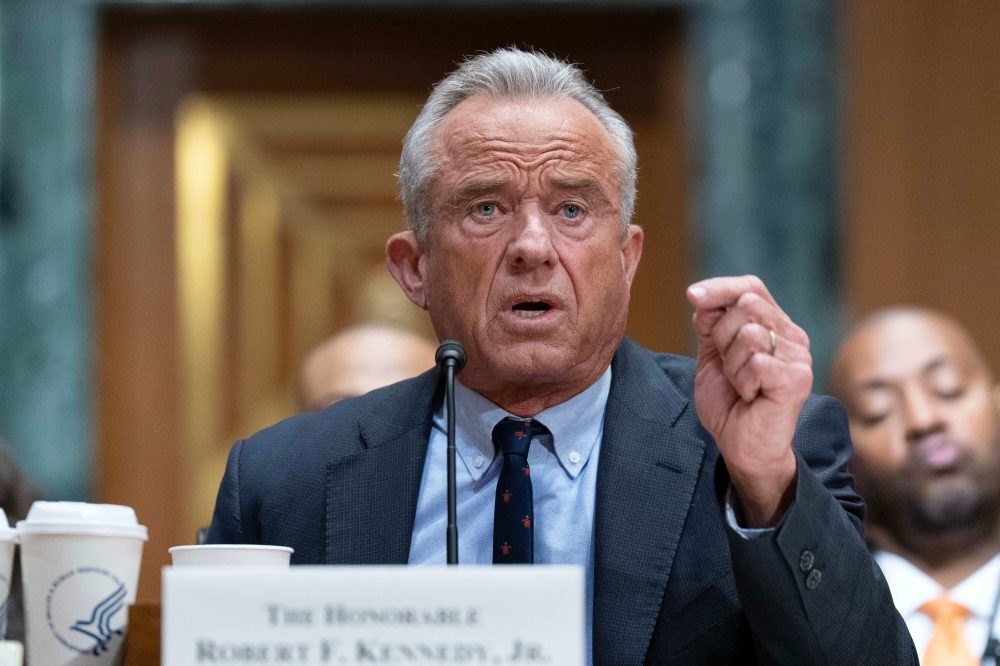
WASHINGTON — Health Secretary Robert F. Kennedy Jr. held a press conference early in his tenure to announce plans for eliminating synthetic food dyes from American food products.
FDA Commissioner Marty Makary began the event by stating his agency would be “removing all petroleum-based food dyes” from the nation’s food supply. However, the details remained unclear until Kennedy disclosed in the closing moments that officials had reached “an understanding” with food manufacturers to voluntarily discontinue use of these chemicals. According to an FDA statement, a “national standard and timeline” for completion would be established soon.
Over a year has passed since that announcement, yet the FDA has not released any comprehensive, science-based regulatory documentation required to establish safety concerns with the approximately six commonly used dyes. The FDA instead maintains a web-based list of companies that have committed to eliminating these chemicals.
This approach to food dye regulation exemplifies the administration’s strategy for various health initiatives. Rather than pursuing the lengthy federal rulemaking process that often spans multiple presidential terms, officials under Republican President Donald Trump have adopted a different method: make broad policy announcements first, then address regulatory details afterward.
“It speaks volumes that the administration has yet to produce a document articulating the scientific basis for the voluntary request,” said Susan Mayne, a Yale University public health expert and former director of the FDA’s food program. The FDA’s website still displays the government’s longstanding position that “the totality of scientific evidence” demonstrates no connection between synthetic dyes and health issues.
“If FDA has changed its position, then FDA should document why and pursue a ban,” Mayne said.
A Kennedy spokesperson stated the administration has employed “multiple approaches” to achieve more rapid progress on food dyes “than at any point in the past.”
“FDA engaged industry early in this effort to encourage timely changes while continuing its scientific and regulatory work,” said Emily Hilliard of the U.S. Department of Health and Human Services. “The agency maintains its role in evaluating safety and will continue to use its regulatory authorities, guidance, and review processes as appropriate.”
The absence of formal regulation development is especially notable at the FDA. Federal law requires the agency to avoid announcing major policy changes through press releases, speeches or other unofficial channels.
However, numerous policy shifts from Makary and his team have first appeared in medical journal opinion pieces, television appearances or social media posts, including new limitations on COVID-19 vaccines and other treatments.
Conventionally, such changes would first be published in the Federal Register, allowing consumers, experts, and companies opportunities to provide feedback and suggest modifications to FDA proposals.
Equally surprising as the agency’s departure from standard rulemaking is the minimal resistance from the powerful companies under FDA oversight.
Throughout decades, the FDA has faced hundreds of legal challenges from pharmaceutical companies, pharmacies, tobacco manufacturers and others claiming the agency failed to follow legally mandated procedures for new regulations and guidelines.
Yet pharmaceutical companies and other multibillion-dollar corporations are remaining passive, at least currently.
“Does the government have the ability to basically bully companies?” asked Dan Troy, the FDA’s former chief counsel. “Yes, and I think we’re seeing that.”
A significant policy shift occurred last May when Makary and then-FDA vaccine director Dr. Vinay Prasad published a medical journal piece announcing the FDA would discontinue routine approval of COVID-19 vaccines for healthy adults under 65 and children without underlying medical conditions. For approval in that demographic, vaccine manufacturers would need to conduct extensive studies that many experts believe may not be practical in the current post-pandemic landscape.
Similar to other vaccine decisions, Makary and Prasad circumvented the agency’s external advisors, who traditionally provided consultation on major vaccine-related choices. Makary contends FDA advisory panels often exhibit bias and require excessive time and resources to organize.
“We had all of this experience looking at the safety of how these vaccines work, and then these two cowboys come and say: ‘We’re going to make this policy’,” said Dr. Kathryn Edwards, who previously chaired the FDA’s vaccine panel.
Edwards and other specialists suggest the lack of resistance from vaccine manufacturers may reflect the substantial authority the FDA wields over them.
“Ultimately, you need the FDA to license your product,” said Edwards, a retired vaccine researcher at Vanderbilt University. “If you’re going to try and buck the FDA — especially in this environment — the likelihood of your product getting a positive review is going to be pretty low.”
Earlier this year, the FDA temporarily declined to review a new mRNA influenza vaccine from Moderna. The agency changed its position following objections from the company and the White House.
Additional factors may explain why typically litigation-prone companies are not confronting the agency.
Several FDA initiatives could potentially benefit companies, including a program providing expedited reviews for medications favored by the Trump administration.
Even apparently restrictive changes may lack permanence since the agency is not pursuing formal processes to establish them as federal regulations or guidelines. This includes rigorous new approval standards for CAR-T therapies previously authorized for various cancer types based on preliminary data.
“Anything that this administration does that they don’t embody in law can easily be undone by a future administration,” Troy said.
Nevertheless, with over two years remaining in Trump’s term, indications suggest some companies may be prepared to voice concerns.
The FDA began publishing rejection letters for disapproved medications last year. This information was previously confidential and belonged to pharmaceutical companies.
Last month, an unidentified pharmaceutical company submitted a formal petition challenging this practice, noting the FDA had provided “only a two-sentence explanation addressing its purported legal authority” to release the correspondence.
While the petition lacks the authority of a lawsuit, it uses identical language found in numerous legal challenges against the agency, describing the FDA’s action as “arbitrary and capricious.”
During scorching summer heat waves, countless air conditioning units kick on simultaneously across the country, creating enormous strain on electrical systems and increasing the likelihood of power outages while driving up energy costs for consumers. Traditional solutions have involved asking residents to raise their thermostat settings during peak hours — a request many homeowners are reluctant to follow.
A new pilot initiative in New York City is exploring an innovative alternative: compact battery units that can operate air conditioners independently from the grid during high-demand periods, reducing pressure on the electrical system while maintaining comfortable indoor temperatures for residents.
“It’s basically a souped up version of the power bank that you would use to charge your phone when you go out,” explained Andrew Wang, chief executive officer of Every Electric, the company spearheading this pilot project in partnership with Con Edison, the city’s utility provider.
These microwave-sized units store electricity when demand is minimal, then supply power to window air conditioning units for several hours during consumption peaks. The program represents one component of Con Edison’s broader demand response initiatives, which compensate customers for reducing or shifting their electricity usage to support grid stability.
This summer, the pilot project is expanding to include more than 1,000 households, with participants eligible to receive monetary rebates for their involvement.
Energy specialists note this program exemplifies the growing trend toward virtual power plants, where numerous small, distributed energy sources work together to alleviate stress during peak demand periods. When implemented on a larger scale, such solutions could substantially improve power system reliability and cost-effectiveness.
During electricity demand surges, utility companies frequently activate backup generating facilities that operate infrequently and tend to be less efficient and more environmentally harmful, according to Kevin Brehm, a manager at RMI, a nonprofit organization focused on energy system research and clean power transitions.
Eventually, these demand spikes can force utilities to construct additional power facilities, often relying on fossil fuels, with associated costs ultimately transferred to consumers.
“There’s a question of emissions, and then there’s also a really important question around affordability,” Brehm stated.
This explains why utility companies frequently request energy conservation during the year’s hottest days and implement higher pricing during peak periods to incentivize power reduction. However, these approaches “can be hard to rely on because they don’t know exactly how consumers are going to behave,” Brehm noted.
Solutions like Every Electric’s technology can address this uncertainty.
Utility companies and government agencies are increasingly seeking methods to handle growing electricity demand as heat waves become more common and severe.
Every Electric’s demand response program represents one approach, compensating customers for reducing or shifting electricity consumption during high-demand periods.
Virtual power plant initiatives offer another expanding solution, implemented state by state. These programs link thousands of small energy devices, including home batteries and smart appliances, coordinating them to return power to the grid during demand spikes, reducing strain without requiring new plant construction. California is developing one of the world’s largest such programs, compensating hundreds of thousands of participants for returning stored energy to the grid during extreme weather events. Most existing programs are restricted to homeowners with solar panel installations.
Con Edison indicated that battery systems can help decrease peak demand, support renewable energy adoption, and reduce infrastructure expansion needs.
Every Electric’s program specifically targets users of window air conditioning units, typically renters, though it doesn’t send power back to the grid. Instead, it decreases demand by utilizing stored battery energy.
Nevertheless, Brehm said programs like this contribute to the broader effort to incorporate consumer energy devices into the grid while rewarding the services they provide.
“I can’t put solar panels on my roof,” said Bianca Pasternack, a New York City renter participating in the program. “This is at least something that’s accessible and easy. It was very set-it-and-forget-it.”
The battery connects to the air conditioning unit, then plugs into a standard wall outlet. A smartphone application detects low-demand periods, charging the battery during off-peak hours and powering the AC during peak times, typically between 1-4 p.m. or 4-8 p.m. during the warmest months.
Program participants also receive financial compensation, roughly equivalent to a July electricity bill’s cost, according to the company. Pasternack reported receiving a $100 gift card at season’s end.
The company reports its pilot is expanding from approximately 200 kilowatts of flexible capacity last year to roughly 2 megawatts this summer, with potential for much greater expansion. For comparison, California’s program exceeds 200 megawatts. Wang said the company is exploring expansion to additional cities.
While Every Electric’s program currently operates on a limited scale, Brehm believes systems like this could significantly reduce grid strain if they reach sufficient households.
“It’s a matter of how we’re able to get to that scale,” he explained, emphasizing that widespread adoption depends on how easily the technology can be deployed and integrated into existing systems. He praised Every Electric’s accessible installation process as “plug-and-play and you don’t need a ton of permissions.”
Secretary of State Marco Rubio conducted diplomatic talks at the Vatican Thursday, meeting with Pope Leo XIV in an effort to repair strained relations following President Donald Trump’s public criticism of the pontiff over Middle East policy.
The diplomatic mission included a 2½-hour session where Rubio sat down with both Pope Leo XIV and Vatican Secretary of State Cardinal Pietro Parolin to address tensions that have emerged between the Trump administration and the Holy See.
Meanwhile, Iran announced it is examining new American proposals to conclude the ongoing conflict, while Trump issued fresh warnings of military strikes unless Tehran agrees to terms that would reopen the strategically important Strait of Hormuz for global shipping. These developments come after several days of conflicting signals from the Trump administration regarding its war strategy.
State Department spokesman Tommy Pigott confirmed that Rubio and the Pope covered Middle Eastern developments “and topics of mutual interest in the Western Hemisphere. The meeting underscored the strong relationship between the United States and the Holy See and their shared commitment to promoting peace and human dignity,” Pigott stated.
Regarding the separate discussion with Cardinal Parolin, Pigott noted the diplomats addressed “ongoing humanitarian efforts in the Western Hemisphere and efforts to achieve a durable peace in the Middle East. The discussion reflected the enduring partnership between the United States and the Holy See in advancing religious freedom,” according to the statement.
The Vatican visit by Rubio, who practices Catholicism, was arranged to address ongoing friction after Trump’s public attacks on Pope Leo XIV regarding the Chicago-born pontiff’s stance on Iran and nuclear weapons policy. The Pope has responded by defending his biblical message of peace and challenging Trump’s characterizations of his positions.
Cardinal Parolin defended the Pope on the eve of Rubio’s arrival, stating in diplomatic language: “Attacking him like that or criticizing what he does seems a bit strange to me, to say the least.” Parolin confirmed that Washington had initiated the request for Rubio’s audience and that the Pope remained willing to continue diplomatic dialogue.
The Trump administration’s messaging on the Iran situation has shifted dramatically in recent days, moving from declarations that a fragile ceasefire was maintaining stability and military actions had concluded, to renewed threats of bombing campaigns against the Islamic Republic.
Defense Secretary Pete Hegseth began Tuesday by describing how U.S. forces were safeguarding stranded vessels attempting to navigate the Strait of Hormuz. Later that day, Rubio announced at the White House that the military mission was “concluded” and objectives had been met, while simultaneously noting Trump continued pursuing a “path of peace” requiring Iranian agreement to reopen the critical shipping lane.
By Tuesday night, Trump declared the ship protection effort was suspended pending potential agreement negotiations. Wednesday morning brought another warning that bombing operations would restart if Tehran rejected American conditions.
Iran’s announcement that it is studying the newest American proposals for ending the two-month conflict provided some optimism to international markets Thursday, despite U.S. military forces firing on an Iranian oil tanker that attempted to break through an American port blockade just hours earlier.
Trump posted on social media that the prolonged war might soon conclude and that disrupted oil and natural gas shipments could resume, contingent on Iran accepting an undisclosed agreement he referenced.
“If they don’t agree, the bombing starts,” Trump wrote.
A major American natural gas producer is cautioning that ongoing Middle East conflicts could continue disrupting global energy markets after reporting significant financial losses in the first quarter.
Cheniere Energy announced a massive $3.5 billion net loss for the three-month period ending in March, a dramatic reversal from the $353 million profit the company earned during the same timeframe last year. The Houston-based firm’s stock price dropped more than 5% in early Thursday trading following the announcement.
The substantial losses stemmed primarily from a $4.8 billion negative impact related to derivative contracts tied to the company’s long-term natural gas agreements. These financial instruments, designed to protect against price fluctuations in energy markets, can create significant exposure when global gas markets experience extreme volatility.
According to company officials, the widening gap between international and domestic natural gas pricing benchmarks, combined with increased global price instability, drove the financial setbacks.
Chief Executive Jack Fusco previously commented in March that disruptions to the liquefied natural gas market harm demand growth by pushing certain countries out of the market due to elevated prices. He emphasized that recent Middle Eastern conflicts have highlighted the importance of diversified energy supply sources.
Despite the quarterly losses, Cheniere reported positive developments in its operational expansion. The company’s Corpus Christi Stage 3 export facility in Texas reached 96.5% completion by the end of March, with initial production from Train 6 expected to begin shortly.
Additionally, the company’s Train 5 facility, which is part of a seven-unit development designed to increase annual export capacity by 10 million metric tons at the Corpus Christi plant, reached full operational capacity in late March.
The company did see revenue growth in its core business, with liquefied natural gas sales climbing nearly 8% to reach $5.72 billion for the quarter.
Looking ahead, Cheniere increased its projected adjusted earnings forecast for 2026, raising the range to between $7.25 billion and $7.75 billion from the previous estimate of $6.75 billion to $7.25 billion. The upward revision reflects anticipated higher production volumes and improved market profit margins.
Ukraine’s chief negotiator Rustem Umerov has traveled to Miami to conduct discussions with American officials, according to a source familiar with the matter, as diplomatic efforts to resolve the ongoing conflict with Russia remain deadlocked.
Ukrainian officials had previously anticipated that US envoys Steve Witkoff and Jared Kushner would make a trip to Ukraine during the early spring months, though that planned visit ultimately did not occur. American attention has shifted significantly from the Ukrainian situation due to the ongoing conflict involving Iran.
The source declined to offer further specifics about the Miami meetings. The American-facilitated negotiations have reached an impasse regarding Ukraine’s eastern Donetsk region. Russian officials are insisting that Ukrainian forces withdraw from areas of the region that Moscow has been unable to secure during its four-year comprehensive military campaign. Ukrainian leadership maintains it will not surrender territory currently under its control.
The most recent three-way discussions involving Ukrainian, Russian, and US officials occurred in February. Since that time, Ukrainian and Russian delegates have conducted only individual meetings with the American negotiating team.
President Donald Trump and Russian President Vladimir Putin conducted a telephone conversation on April 29 to discuss possibilities for a ceasefire arrangement.
Russian authorities declared a temporary halt to hostilities for May 8-9, coinciding with their commemoration of the Soviet Union’s triumph over Nazi Germany and the staging of a military parade in Moscow, which holds particular importance for the Kremlin.
Ukrainian officials stated that Russia’s ceasefire proposal was solely intended to safeguard its parade activities, citing concerns about potential Ukrainian drone strikes, and countered with an indefinite ceasefire proposal beginning May 6.
Both proposals were rejected by the opposing sides. Russian leadership warned of potential strikes against central Kyiv if Ukraine launched attacks on Moscow. Ukrainian authorities accused Russia of ceasefire violations and indicated they would respond in kind to Russian military actions.
VIENNA – Austrian law enforcement confirmed Thursday that three individuals lost their lives in a deadly incident that occurred near a dining establishment in the city of Linz, with authorities successfully recovering the weapon used in the attack.
A police representative confirmed the fatalities but refused to provide additional details about the circumstances surrounding the deaths. Local media outlet Kronen Zeitung has reported that the incident involved gunfire, with initial accounts suggesting a man fatally shot two women before taking his own life.
The investigation remains ongoing as authorities work to piece together the events that led to the tragic deaths in the Austrian city.
Ukrainian President Volodymyr Zelenskyy accused Russia on Thursday of breaking a temporary ceasefire that Kyiv had suggested, warning that Ukraine will maintain its long-distance attacks if Moscow continues its military operations.
The Ukrainian leader had suggested the pause beginning May 6 as a counter to Russian President Vladimir Putin’s own ceasefire proposal for May 8-9, which would align with Russia’s World War Two victory celebrations.
Russia never officially agreed to honor Ukraine’s ceasefire suggestion.
According to Zelenskyy, Russian military units launched drone attacks, missile bombardments, artillery fire, and ground assaults across battle lines from the early morning hours Thursday.
A day earlier, Russian Foreign Ministry representative Maria Zakharova announced that Moscow had advised diplomatic offices to leave Kyiv due to potential large-scale strikes in retaliation for Ukrainian efforts to disrupt Victory Day ceremonies.
Ukrainian air defense reported shooting down 92 out of 102 incoming drones from 6 p.m. Wednesday through Thursday morning. Russian officials claimed their air defense systems eliminated 32 drones targeting Moscow since Thursday began.
“In a mirror response to Russian strikes, we will continue our long-range sanctions. And in response to Russia’s willingness to move toward diplomacy, we will proceed along the path of diplomacy,” Zelenskyy stated.
Ukrainian military units have stepped up operations against Russia’s defense manufacturing facilities and power infrastructure, focusing heavily on petroleum facilities to undermine Moscow’s primary war funding source.
Thursday brought news of Ukrainian drone strikes against a Lukoil refinery in Perm, located near the Ural Mountains, according to Kyiv’s drone unit commander. This marked the second assault on that facility within eight days.
Zelenskyy revealed that Ukrainian forces recently hit locations in Russia’s Chelyabinsk and Yekaterinburg regions, reaching targets almost 2,000 kilometers from Ukraine’s borders.
“There is a need to establish peace, rather than running around the world’s capitals begging for a pause on May 9. We need peace,” Zelenskyy declared.
Weekly unemployment benefit filings across the nation saw a modest uptick last week, though the increase fell short of what economic experts had anticipated, according to federal labor data released Thursday.
The Labor Department reported that first-time unemployment claims climbed by 10,000 to reach a seasonally adjusted 200,000 for the week ending May 2. Economic analysts surveyed by Reuters had predicted claims would hit 205,000. This uptick partially reversed the previous week’s drop in applications.
Recent government statistics from Tuesday revealed nearly one job opening exists for each unemployed American – specifically 0.95 openings per jobless person in March compared to 0.91 in February – indicating a steady employment landscape.
While major technology corporations have announced significant workforce reductions tied to artificial intelligence implementation in various roles, weekly claims have stayed under 230,000 throughout this year. Economic specialists suggest displaced tech employees likely received substantial severance compensation packages.
Challenger, Gray and Christmas, an international outplacement company, reported Thursday that American employers disclosed 83,387 position eliminations in April – a 38% jump from March but 21% lower than the same month last year.
So far in 2024, companies have revealed 300,749 job reductions, representing a 50% decrease from the corresponding timeframe in 2023. Tech firms have dominated these layoffs, frequently citing AI as the driving factor.
Currently, no evidence suggests that oil price volatility from Middle East conflicts involving the U.S. and Israel versus Iran is impacting employment conditions. However, economists caution about potential negative effects as shipping disruptions in the Strait of Hormuz drive up costs for commodities like fertilizers, petrochemicals, and aluminum.
Continuing unemployment claims – representing those collecting benefits beyond their first week and serving as a hiring indicator – dropped by 10,000 to a seasonally adjusted 1.766 million for the week ending April 25.
These unemployment figures will not influence Friday’s highly anticipated April employment report.
Economic forecasters expect nonfarm payrolls likely added 62,000 positions last month following March’s rebound of 178,000 jobs, according to a Reuters economist survey. The projected slowdown reflects diminishing benefits from mild weather conditions and healthcare workers returning from strikes.
This anticipated job growth rate would exceed what economists believe is currently necessary to match working-age population expansion. Estimates for this break-even threshold range from zero to 50,000 monthly positions.
The unemployment rate is expected to hold steady at 4.3% in April, with potential for rounding down to 4.2%. The Chicago Federal Reserve projects the jobless rate at 4.23%, which would round to 4.2%.
A Conference Board consumer survey released Tuesday found fewer Americans view employment as “hard to get” in April, while the percentage describing jobs as “plentiful” remained largely unchanged.
SALISBURY, MD — Salisbury University’s Spring Commencement celebrations will bring substantial traffic challenges to the area this Wednesday and Thursday, May 20-21, as thousands of graduates and family members converge on campus.
Graduate students will receive their diplomas Wednesday evening at 6 p.m. during ceremonies held at the Maggs Physical Activities Center. University officials have designated parking lots A and B (near Chesapeake Hall and the Patricia R. Guerrieri Academic Commons) exclusively for graduating students and their families. Lot C by Perdue Hall will serve as handicapped-accessible parking, available only to those who received special passes from the university ahead of time.
Additional parking for the graduate ceremony will be provided at Lot D near the Guerrieri University Center, Lot E at the Commons, and the Wayne Street Garage. Motorists should expect minor traffic backups on Route 13 near the campus starting around 4 p.m. as attendees begin arriving.
Thursday’s undergraduate ceremony begins at 9 a.m. at Sea Gull Stadium and is expected to create more significant traffic problems. To accommodate event setup and breakdown, Wayne Street between Bateman and Power streets will remain closed from 6 p.m. Sunday, May 17, through 6 p.m. Thursday, May 21.
Thursday morning will bring the heaviest traffic impacts, with congestion anticipated from 6-9 a.m. and again from noon-2 p.m. on all campus approach routes, including Route 13, Milford Street, Beaglin Park Drive and College Avenue. University officials will completely shut down Avery, Bateman, Wayne, and Power streets to regular traffic from 6 a.m. to 2 p.m., allowing only commencement-related vehicles.
Families driving via Bateman Street from Route 13 will be guided to the Wayne Street Garage for parking. Those coming from South Division Street should plan to use the Avery Street Parking Lot.
Special accommodations include a drop-off zone on Power Street south of the stadium for guests with mobility challenges. Accessible parking with advance university permits will be situated at the East Campus Complex on Power Street.
When primary parking areas reach capacity, overflow spaces will open in Parking Lots A, B, and D near the Guerrieri Student Union. Families planning to watch the ceremony via livestream in viewing areas at the Guerrieri Academic Commons and Maggs Physical Activities Center should also utilize these overflow lots.
Regular shuttle service will operate throughout the undergraduate ceremony, picking up passengers from the Lot A bus stop, Lot D at the Guerrieri Student Union entrance, Lot E at the Commons, and Lot H at the College Avenue solar facility.
University officials stress that street parking near campus and athletic facilities is prohibited. Unauthorized parking on private property, including local businesses and schools, could result in tickets or vehicle towing. Officials encourage carpooling when possible to reduce traffic volume.
Employee parking arrangements for May 21 will be posted on the university’s website. Detailed parking maps for both ceremonies can be found at https://www.salisbury.edu/administration/academic-affairs/commencement/guest-information.aspx#maps.
Complete information about Spring Commencement is available at www.salisbury.edu/administration/academic-affairs/commencement.
Drivers traveling eastbound on Walt Messick Road should expect delays this afternoon as construction crews continue their work in the area.
DelDOT reports that the right lane is currently blocked between Whiteleysburg Road and Farmington Road, with the closure expected to remain in effect until 4 PM today.
Motorists are advised to allow extra travel time and use caution when driving through the construction zone.
WASHINGTON—Virginia’s agricultural sector continues to demonstrate its massive economic influence, according to a comprehensive new analysis of farming’s role in the American economy.
The latest edition of the ‘Feeding the Economy’ study, released for its tenth consecutive year, reveals the robust performance of America’s food and agricultural industries despite facing significant economic challenges.
Backed partially by the American Farm Bureau Federation, the 2026 analysis confirms that food and agricultural sectors remain fundamental pillars of the U.S. economy, producing over $10.4 trillion in economic value—accounting for approximately 20% of the nation’s total economic output. These industries provide employment for nearly 49 million Americans, representing roughly 30% of all U.S. jobs.
‘The interesting piece here is where those jobs are,’ explained Daniel Munch, an economist with AFBF. ‘Less than 2% are on the farm, but when you add food manufacturing, wholesale and retail, that adds another 24 million jobs, or about 15% of the workforce.’
The data shows an impressive year-over-year increase of almost $894 billion, demonstrating expansion throughout the agricultural supply chain despite persistent inflation, difficult farming conditions, and unpredictable international trade circumstances.
Across the United States, California dominates with more than $1.2 trillion in agricultural and food production.
Within Virginia’s borders, the combined direct and indirect economic influence of food and agricultural sectors reaches $203 billion in total output, encompassing 1.1 million jobs and $59 billion in employee compensation. These industries contribute $2.7 billion in export revenue and produce more than $26 billion in business tax collections.
Throughout the commonwealth, Lexington claims the top position for total economic output among Virginia’s agricultural and food sectors, generating $21.8 billion.
‘This report is a reminder that agriculture’s impact reaches far beyond the farm gate,’ stated Tony Banks, senior assistant director of agriculture, development and innovation at Virginia Farm Bureau Federation. ‘The farm and forestry economy supports jobs, wages and commerce in every corner of the commonwealth.’
Given the current struggles facing the broader farm economy, Munch emphasized the critical importance of showcasing agriculture’s extensive economic significance throughout America. Economic advantages such as employment opportunities, salary levels, and tax contributions are directly connected to production facilities.
‘If production shifts overseas due to cost pressures, regulatory burdens or competitive challenges, that economic activity moves with it,’ he explained. ‘So, it’s not just about the food supply—it’s about all these other jobs, tax revenue and economic commerce that supports industries across every corner of every state.’
Additional national, state, and county-level economic information regarding food and agricultural sectors can be found at feedingtheeconomy.com.
Media contacts include Banks at 804-290-1114 or Bailey Corwine from AFBF communications at 202-406-3643.
MOUNT SIDNEY, Va.—Agricultural communities across Virginia are finding innovative ways to boost tourism and connect visitors with local farming operations through creative passport initiatives.
This past autumn, agricultural supporters in Augusta County approved their own passport initiative, drawing inspiration from successful programs in surrounding areas that aim to link tourists and residents with nearby farms and agricultural enterprises.
The Augusta County Farm Explorer Passport initiative launched during the current spring season.
Kristin Beery, who teaches agriculture at Valley Career & Technical Center, took her students on an excursion to gather stamps from all 10 agricultural and market locations featured in The Farm Explorer of Frederick County Passport.
Beery found the passport concept to be a “pretty cool idea,” and her colleagues from the Augusta County Farm Bureau Women’s Leadership Committee shared her enthusiasm.
“My students laid out the passport framework and farms they thought would work,” Beery said.
Visitors can obtain Augusta County Farm Explorer Passports from any of the 10 designated agricultural and market locations—Belle Meade Farms, Cross Keys Farm, Endless View Farms, Harmony Harvest Farms, Homestead Manor Market, Middle River Farms, Poplar Ridge Farms, Shomo Fresh Market, Stuarts Draft Farm Market and Valley Pike Farm Market.
Both children and adults may gather stamps until November, with completed passports eligible for prize redemption. Additional information is available at augustafarmexplorer.com.
Beery acknowledged Kayla Lawrence for introducing the farm explorer passport concept to Virginia.
During 2024, Lawrence and the Frederick County Farm Bureau Women’s Leadership Committee launched The Farm Explorer of Frederick County Passport initiative. The complimentary passport booklets encourage families to collect stamps from the region’s 10 farm markets between April and December.
“This allows plenty of time to visit multiple farms!” Lawrence said.
More than 6,000 passport booklets for both adults and children have been given out over the previous two seasons, with hundreds of completed books exchanged for rewards at the visitors center.
Information about participating farms and markets can be found at thefarmexplorer.com.
Additionally, last spring saw the creation of a Travel the Towns Passport initiative featuring 54 total destinations across Broadway, New Market and Timberville, including several agricultural businesses.
“All three towns are rural, so it makes sense that a portion of our businesses are ag-related!” said Savannah Smith, Town of New Market events and marketing director.
The first-year passport initiative proved successful, returning this season with additional locations and a longer timeframe. Participants may collect stickers from more than 60 locations between May 1 and May 31.
Business partners have provided prizes and gift baskets worth more than $2,000 in 2026. Travelers may enter completed passports into prize drawings.
Travel the Towns Passports are available at any participating business or through the Facebook page.
Media contacts include Beery at 540-280-5138, Lawrence at 540-869-145, and Smith at 540-740-3432.
A Massachusetts biotechnology firm announced Thursday that its experimental treatment demonstrated significant progress in enhancing muscle capabilities among young patients battling Duchenne muscular dystrophy, a devastating inherited disorder that gradually destroys muscle tissue.
Entrada Therapeutics conducted testing of their investigational medication, designated ENTR-601-44, on mobile patients between ages six and 17 who carry a specific genetic defect treatable through exon 44 skipping techniques.
This hereditary condition predominantly impacts male children, causing progressive muscle deterioration throughout their lives. Most affected youngsters become wheelchair-bound during their teenage years and eventually face cardiac and respiratory complications.
According to Entrada’s findings, participants receiving the experimental therapy demonstrated substantial enhancement in their ability to transition from floor-sitting to standing positions. Medical professionals rely on this assessment to evaluate muscle power and forecast when patients may lose mobility.
The company reported that the observed progress exceeded statistical significance thresholds and surpassed the benchmark for clinical relevance by more than threefold.
Study participants also exhibited increased levels of dystrophin, an essential muscle protein absent in Duchenne patients, rising approximately 2.4 percentage points above the initial 4% baseline measurement.
Initial trial participants experienced the therapy without major safety concerns, showing good tolerance with no severe adverse reactions and complete treatment adherence, according to Entrada’s report.
The pharmaceutical company noted that drug absorption into children’s bloodstreams fell short of adult-based projections. Researchers have initiated treatment for a second patient cohort using twice the original dosage, with outcomes anticipated by late 2026.
The online retail giant Amazon revealed Thursday that its pharmacy division will begin dispensing Novo Nordisk’s diabetes medication Ozempic in tablet form through automated dispensing machines nationwide, while providing rapid same-day delivery service.
The medication from Novo Nordisk contains the active compound semaglutide, which helps regulate blood glucose levels in individuals diagnosed with type 2 diabetes, a condition where the body struggles to produce adequate insulin or becomes resistant to this blood sugar-controlling hormone. Since January, Amazon’s pharmacy has been distributing Novo’s weight management drug Wegovy, which contains the identical active ingredient found in Ozempic. The company also revealed in April its plans to stock Eli Lilly’s competing weight-loss medication Foundayo.
“Amazon Pharmacy continues to provide customers expanded selection and reliable, convenient access to the latest treatments like the Ozempic pill for type 2 diabetes,” said Tanvi Patel, a vice president at Amazon. “We are making it easy for customers to get the medication they need to stay healthy.”
The company started distributing GLP-1 medications, which represent a category of treatments for diabetes and weight management, beginning in 2021. The injectable forms of these drugs cannot be stored in the automated dispensers due to refrigeration requirements, unlike their pill counterparts.
Approximately half of Amazon’s customer base across the United States can access same-day delivery services, while all customers receive their prescriptions within a four-day window. The company plans to provide rapid delivery of Ozempic to roughly 3,000 communities initially, with plans to extend this service to 4,500 locations before year’s end.
Individuals holding valid prescriptions can purchase the medication through Amazon Pharmacy for a monthly cash price of $149 or utilize their insurance coverage, according to company officials. When using insurance benefits, the minimum cost drops to $25, Amazon stated in its announcement.
Currently, Novo’s Wegovy tablets are available at five automated dispensers located in California, where patients can collect their medications at Amazon’s One Medical facilities after completing medical consultations.
The introduction of these automated dispensers addresses accessibility challenges and reduces shipping costs for patients, initially focusing on commonly prescribed medications including antibiotics, blood pressure treatments, and asthma inhalers.
Individuals do not require a One Medical membership, Amazon’s primary and urgent care platform, to schedule appointments and access the dispensing kiosks. An annual One Medical subscription carries a $199 fee.
Last year, Amazon committed more than $4 billion toward an initiative to triple its delivery capabilities by 2026, with particular emphasis on serving smaller communities and rural regions.
Swedish electric vehicle manufacturer Polestar announced on Thursday that its financial losses more than doubled during the first three months of 2024, even as the company sold more vehicles than the previous year.
The automaker, which is primarily controlled by Chinese company Geely Holding, has been offering price cuts across Europe to entice hesitant consumers while dealing with U.S. trade restrictions that have squeezed profit margins and driven up production expenses.
Although Polestar’s European market focus helped boost vehicle sales by 7% between January and March, the company’s financial losses ballooned to $383 million during the quarter, compared to $166 million in losses during the same period last year.
Total revenue remained essentially unchanged at $633 million. The company’s earnings were hurt by selling fewer of its expensive Polestar 3 vehicles while moving more of the less costly Polestar 4 models.
“With implemented steps to improve our cost base being offset by more challenging market conditions, we are accelerating efforts to adjust our business model, become leaner and improve manufacturing efficiencies,” CEO Michael Lohscheller stated, though he declined to provide financial projections for the remainder of the year.
Looking ahead, Polestar plans to launch a new version of its Polestar 4 model later in 2024, with an updated Polestar 2 scheduled for 2027 and a compact SUV called the Polestar 7 coming after that.
Similar to other emerging electric vehicle companies, Polestar is spending heavily to develop new models and has recently obtained financing through loans and investments from Geely and banking institutions. Volvo Cars is also converting some of Polestar’s debt into company ownership. Additionally, the automaker received approval for a 50 million euro increase to its environmental financing arrangement.
The company’s available cash dropped to $676 million by the end of March, down from $1.16 billion three months earlier.
Operating costs during the first quarter increased due to higher sales commissions, temporary staffing expenses, and advertising spending.
Polestar announced it will release its second-quarter sales figures on July 9.
The golden arches couldn’t quite reach their sales goals this quarter, as McDonald’s reported Thursday that their discount strategies fell short of attracting enough customers struggling with tight budgets due to expensive gas and groceries.
Years of menu price increases across the fast-food sector have now pushed restaurant operators to lean heavily on budget-friendly deals and special promotions in hopes of bringing back diners who are watching their wallets more carefully.
The global burger giant saw its U.S. restaurant sales climb 3.9% during the first three months of the year, falling below the 4.2% growth that financial analysts had predicted, based on LSEG data.
This underwhelming performance mirrors challenges facing the broader restaurant industry.
Other major food chains including Wingstop and Domino’s have also struggled with slower sales growth in recent months, pointing to reduced customer spending as gas prices have surged due to conflicts involving Iran.
Financial experts note that budget-conscious diners are becoming pickier with their choices, often ordering individual items instead of complete meals to save money.
Customer traffic at McDonald’s locations across America showed inconsistent patterns throughout the quarter, according to Placer.ai tracking data.
Store visits dropped 1.3% in January as winter weather kept people home. February saw a strong 3.8% rebound as customers made up for lost time, but March cooled to just 1.2% growth despite new menu items, as climbing fuel costs continued squeezing family budgets.
In response to price-sensitive customers, McDonald’s broadened its McValue offerings in April by adding new $3 and $4 meal options.
Worldwide, the company’s restaurant sales increased 3.8%, slightly below the 3.95% analysts had forecast, though this marked significant improvement from the 1% decrease recorded in the same period last year.
Revenue from restaurants run by local franchise partners grew 3.4%, with Japan leading the gains, while international markets saw 3.9% growth driven by strong performance in Britain, Germany and Australia.
The company’s profits for the January through March period increased 6% to reach $1.98 billion. When accounting for one-time items, McDonald’s earned $2.83 per share, up from $2.67 in the previous year.
Motorists traveling through New Castle County should expect delays on Vance Neck Road today as construction crews continue their work in the area.
DelDOT reports that the northbound lanes of Vance Neck Road at East Edinburgh are experiencing periodic lane restrictions due to active construction operations. The temporary closures began earlier today and are scheduled to continue through 4 PM this afternoon.
Drivers are advised to allow extra travel time when using this route and to consider alternate paths if possible. The construction work is causing intermittent traffic disruptions as crews work to complete their project.
No additional details about the nature of the construction project or future scheduling have been provided at this time.
As spring brings new growth and renewal, Maryland environmental officials are highlighting how natural solutions can help communities battle increasing flood threats and coastal erosion.
The Maryland Department of Natural Resources is preparing to launch a new program called Roots for Resilience that will fund environmentally-friendly flood protection projects across the Eastern Shore. The initiative will support living shoreline installations, tree planting efforts, and wetland restoration work.
According to DNR Secretary Josh Kurtz, these nature-based approaches offer multiple benefits beyond flood control. Native trees and plants naturally absorb excess water through their root systems while preventing soil erosion, creating a sustainable defense against flooding.
The timing is critical for Maryland’s coastal regions. Since 1984, rising sea levels and erosion have transformed approximately 29,100 acres of farmland and upland forests into tidal marshes. Climate projections indicate that one-third of the Eastern Shore’s high marsh areas could disappear by 2050.
Evidence of this environmental shift is already visible in the form of “ghost forests” – stands of dead trees killed by saltwater intrusion in low-lying coastal areas. These skeletal remains demonstrate the ongoing impact of sea level rise and increasingly powerful storms on vulnerable communities.
Living shorelines represent a comprehensive approach to coastal protection, incorporating marsh vegetation, natural breakwaters, and other organic features to combat erosion and flooding. These systems simultaneously protect infrastructure, reduce long-term maintenance costs, support waterfront industries, and enhance coastal resilience.
Kurtz emphasized that environmentally-based flood protection typically costs significantly less than conventional engineering solutions. Natural approaches like strategic tree planting along waterways, reconnecting marshlands with historic floodplains, and reducing shoreline erosion prove more economical than constructing levees, armored coastlines, or massive underground storage systems.
The new Roots for Resilience program represents an expansion of Maryland’s efforts to address ongoing coastal challenges through partnerships with environmental organizations and local communities. Officials say these investments will strengthen both ecosystems and human settlements while improving wildlife habitats and protecting taxpayer resources.
TEL AVIV, Israel (AP) — Israeli prosecutors have formally charged a 36-year-old man with assault following his attack on a Catholic nun near Jerusalem’s Old City, marking another incident in what religious leaders describe as escalating harassment against Christians in the region.
Court documents name the defendant as Yona Schreiber, a resident of Peduel, an Israeli settlement in the occupied West Bank. The charges stem from an assault that was recorded on video and subsequently drew sharp criticism from international and religious authorities.
Following his arrest last week, Israel’s attorney general has requested that Schreiber remain in custody throughout the legal proceedings. When approached by Associated Press reporters at the courthouse, the defendant’s legal representative declined to provide comment.
Prosecutors allege that Schreiber targeted the woman specifically because her religious clothing marked her as a Catholic nun. The attack occurred just beyond the ancient walls of Jerusalem’s Old City, where he allegedly shoved the victim to the ground before kicking her while she lay defenseless, court papers state. The indictment also accuses him of assaulting a bystander who tried to intervene.
The formal charges include simple assault as well as assault driven by religious animosity.
Olivier Poquillon, who heads the French School of Biblical and Archaeological Research, confirmed that the victim works as a researcher at the institution. In a social media post, he characterized the incident as “an act of sectarian violence.”
Documentation by religious organizations shows an uptick in harassment and violent acts directed at Christian visitors, clergy, and Palestinian Christian locals, frequently involving spitting and physical assaults perpetrated by extremist ultra-Orthodox individuals.
This prosecution occurs amid heightened examination of Israel’s policies toward religious minorities, particularly following recent police restrictions on holiday worship access at Jerusalem’s most sacred locations due to security considerations during regional conflict with Iran.
In an unprecedented move, Latin Patriarch Cardinal Pierbattista Pizzaballa was barred from conducting a private Palm Sunday service at the Church of the Holy Sepulchre — the first such prohibition in hundreds of years. Following significant backlash, Jerusalem authorities eventually negotiated an arrangement allowing a restricted Easter celebration at the historic site.
Israel faced additional international censure after a soldier was photographed using an axe to destroy a fallen crucifix statue in southern Lebanon. Israeli officials later condemned the action, announced disciplinary measures for the soldier, and helped local communities restore the damaged religious monument.
Military investigators are also examining another incident involving a soldier who was photographed placing a cigarette in the mouth of a Virgin Mary statue, an image apparently taken several weeks earlier. Military spokespeople described their response to the incident as treating it with “utmost severity.” Additional concerns have emerged regarding Israeli forces bulldozing portions of a Catholic convent in southern Lebanon.
In response to these various incidents, Israel’s Foreign Ministry last month named former Ambassador George Deek as special envoy to Christian communities worldwide. Deek, who previously represented Israel in Azerbaijan and holds the distinction of being the country’s first Arab Christian ambassador, has publicly denounced the soldier’s actions with the Virgin Mary statue.
Deek emphasized that Israel “is committed to preserving religious freedom and the dignity of all religions.”
Israel’s founding charter explicitly guarantees religious freedom protection and the sanctity of all holy sites, with the nation promoting itself as a beacon of religious tolerance within a turbulent region.
However, church officials and watchdog organizations have expressed concern about increasing anti-Christian attitudes and harassment. These tensions are especially evident within Jerusalem’s Old City, where ancient stone pathways wind through densely packed neighborhoods containing sacred sites for Judaism, Christianity, and Islam.
Wadie Abunassar, who coordinates the Holy Land Christian Forum, recently described attacks on Christians as an emerging trend. He suggested the swift response to the nun’s assault resulted primarily from the existence of video evidence.
“I feel great anger on the system and great sadness, because I feel that this will not end anytime soon,” he stated. He identified inadequate deterrence as a fundamental issue contributing to such violence.
“Many times in such cases there are no arrests and if there are arrests, sometimes after one or two days, (suspects) are released,” he explained. “In some cases, the police do not recommend the prosecution to file charges or to indict them. And in some cases, when there is indictment, the indictment is mild.”
CHARLOTTESVILLE, Va.—Trees that have reached their final days don’t have to end up as wood chips or firewood. A Virginia initiative is giving these urban giants a second chance to serve their communities through transformation into meaningful, lasting products.
The Virginia Urban Wood Program, managed by the Virginia Department of Forestry alongside the Virginia Urban Wood Group, champions what officials call “complete lifecycle stewardship” of the state’s city and suburban tree resources.
Since its 2017 inception, this initiative has focused on salvaging trees from developed areas rather than traditional forests. Urban timber encompasses trees removed from residential properties, highway dividers, or even “that single walnut in your Aunt Mary’s backyard,” according to Joe Lehnen, forest utilization and marketing specialist with Virginia DOF.
“We wanted to make sure that we’re honoring the tree’s existence,” Lehnen stated. “Instead of having everything tub ground and chunked into firewood, our goal was to give the tree purpose, try to use it to its best use, and give people opportunities to use that resource to grow a business and create local economies.”
These reclaimed trees can become dining room furniture, kitchen cabinetry, or artistic creations—all while continuing to store carbon in solid form for years to come.
“If somebody has two trees in their backyard that have to come down, they may not necessarily want to part with those trees that have been part of their landscape for decades,” Lehnen observed. “The beauty of urban wood is that you can make something out of any species, and there’s people out there willing to make it for you.”
This statewide network links local timber businesses with homeowners, environmental professionals, and business owners seeking to repurpose their wood materials.
“We try to keep it as local as possible, which creates a better, more vibrant economy,” Lehnen emphasized.
Program coordinators provide assistance throughout the entire recycling chain—from locating specialized removal services equipped for urban settings, to connecting with mobile sawmill operators who can process lumber on-site, to finding skilled craftspeople seeking raw materials.
The initiative has expanded to include Virginia’s Cooperating Universities Urban Wood Program, which has gained national recognition for incorporating local timber into campus furniture, student artwork, and educational experiences. Universities receive training sessions covering sawmill operations, lumber quality assessment, and the community advantages of tree recycling.
Lehnen anticipates expanding program reach and developing additional university partnerships.
“We’re creating a sense of community,” he said. “We’re taking trees that we previously did not use to their best use, and we’re making products out of them that are meaningful to a lot of people.”
Additional details about Virginia’s urban wood initiative are available at vaurbanwood.org.
Property owners can locate nearby services for urban tree removal or small timber lot management through the Virginia Urban Wood Directory. The online resource is provided at no cost, and businesses are invited to register their services to reach potential clients.
For media inquiries, contact Lehnen at [email protected] or 434-977-6555.
LONDON – Counter-terrorism authorities in Britain have taken a 19-year-old man into custody Thursday in connection with an attempted firebombing at a synagogue in north London last month, according to police officials.
The suspect faces charges of attempted arson and is being held in police custody. The case stems from an early morning incident on April 15 at a religious facility in Finchley, located in north London, where authorities report no property damage occurred and no one was hurt.
Two other individuals were previously detained the same day as the attack – a 38-year-old woman and a 46-year-old man, both facing charges of arson with intent to endanger life. Police have since released both suspects on bail with a requirement to return in July.
According to authorities, Counter Terrorism Policing London is spearheading the investigation, which connects to a broader probe examining multiple arson incidents that have occurred throughout London recently.
Technology consulting company EPAM Systems announced Thursday it has boosted its yearly earnings outlook following better-than-expected quarterly results, driven by robust client demand for software development services as businesses maintain their investment in artificial intelligence upgrades.
The firm now projects its full-year adjusted earnings will fall between $12.98 and $13.28 per share, an increase from its previous estimate of $12.60 to $12.90 per share.
For the upcoming second quarter, EPAM anticipates adjusted earnings ranging from $3.10 to $3.18 per share, with the middle point exceeding analyst predictions of $3.10.
“We are on a multi-year transformation journey, continuing to position ourselves to fully benefit and capitalize on AI growth opportunities as well as accelerate our own AI client zero transformation,” stated CEO and President Balazs Fejes.
Despite the positive earnings outlook, the company projects second-quarter revenue between $1.40 billion and $1.42 billion, falling slightly short of analyst expectations of $1.43 billion.
EPAM offers various technology services including business consulting, cloud computing solutions, artificial intelligence transformation, and software development.
For the quarter ending March 31, EPAM reported adjusted earnings of $2.86 per share, exceeding the average analyst estimate of $2.75 according to LSEG data.
Corporate investment in software development and AI-powered transformation initiatives has remained strong despite widespread economic uncertainty.
Looking ahead to 2026, EPAM projects annual revenue growth between 4% and 6.5%.
Medical technology company Becton Dickinson boosted its yearly earnings projections Thursday, driven by robust sales of medical delivery systems and surgical tools, while also naming Vitor Roque as its permanent chief financial officer.
The company’s stock climbed 3% in early trading after reporting second-quarter financial results that exceeded Wall Street expectations. Becton Dickinson manufactures and distributes medical supplies including needles, syringes and disposal equipment.
The pharmaceutical manufacturing sector appears to be stabilizing for life sciences equipment companies, though they still face challenges from conservative post-pandemic investment in smaller biotech firms and reduced academic research budgets.
Earlier this year, Becton Dickinson finalized the separation and merger of its biosciences and diagnostic solutions division in a $17.5 billion transaction with Waters Corp.
The medical device manufacturer now projects annual adjusted earnings per share will range from $12.52 to $12.72, an increase from its prior guidance of $12.35 to $12.65.
For the quarter ending March 31, the company reported adjusted earnings of $2.90 per share, surpassing analyst predictions of $2.77 according to LSEG data.
The interventional division, which offers surgical solutions, saw revenue grow 7.3%, while the medical essentials unit experienced a 4.7% uptick.
Quarterly revenue reached $4.71 billion, topping the anticipated $4.67 billion. The company maintained its annual sales growth projection in the low single-digit range.
“We would have liked to see more organic earnings upside in the quarter and need to see what drove the stronger other operating income number, but a better top-line performance and Vitor Roque’s formal appointment as CFO still look like small steps in the right direction,” J.P.Morgan analyst Robbie Marcus said.
Roque, who has worked at Becton Dickinson for over 25 years, has been acting as interim CFO since December 2025. In this capacity, he helped execute major initiatives including finalizing the separation of the biosciences and diagnostic solutions business.
Contract research firm Charles River Laboratories announced Thursday that it exceeded financial projections for the first quarter, driven by growing demand for pharmaceutical development services.
The company’s strong performance signals a potential recovery for contract research organizations as biotechnology and pharmaceutical companies resume drug discovery activities and safety testing following a period of reduced spending.
Contract research organizations, known as CROs, provide specialized services to biotech companies including managing clinical trial components like patient enrollment, data gathering, and ensuring regulatory compliance.
Chief Executive Officer Birgit Girshick expressed satisfaction with the results, stating: “We are pleased to deliver on our first-quarter financial targets, and remain well positioned to generate improving results over the course of the year.”
The company posted adjusted earnings of $2.06 per share for the quarter ending March 28, exceeding the analyst consensus estimate of $1.94 per share based on LSEG data.
Total revenue reached $995.8 million for the quarter, surpassing Wall Street’s projected $977.5 million.
The discovery and safety assessment division generated $596.9 million in revenue, representing a 0.7% increase from the previous year’s first quarter.
Charles River maintained its annual adjusted earnings guidance of $10.80 to $11.30 per share.
The positive results align with industry trends, as competitor IQVIA Holdings also reported stronger-than-anticipated quarterly performance earlier this week, supported by robust demand for clinical research and technology solutions from pharmaceutical partners.
Citigroup announced Thursday it’s setting ambitious profitability goals for the next few years, with the financial giant targeting an adjusted return on tangible common equity between 11% and 13% for 2027 and 2028. The bank is counting on CEO Jane Fraser’s extensive restructuring plan to deliver these improved results.
These new objectives represent a step up from Citigroup’s current goal of reaching a return on tangible common equity of 10% to 11% this year. This financial metric serves as a key indicator in the banking industry for measuring how effectively a company generates profits from its tangible assets.
The bank revealed these targets just before hosting its investor presentation on Thursday, where executives planned to outline their medium-term strategic objectives across different business units. Financial analysts had been expecting even more aggressive targets, potentially reaching 15% to 18% by decade’s end.
Fraser, now six years into leading the institution, is conducting her second major investor presentation to showcase the outcomes of an extensive corporate transformation. Her overhaul included divesting retail operations around the globe, streamlining management structure, and strengthening risk management and oversight functions.
Since Fraser assumed leadership in March 2021, Citigroup’s stock value has surged by more than 80%. This year alone, shares have climbed over 9%, outpacing the broader market’s approximately 7.5% gain during the same period.
The bank recently exceeded Wall Street projections for its first-quarter earnings, generating strong revenue from trading operations while also capitalizing on increased deal-making activity that boosted investment banking income.
Citigroup achieved a return on tangible common equity of 13.1% during the first quarter and recorded its strongest quarterly revenue in ten years at $24.6 billion.
The golden arches delivered impressive first quarter results that exceeded analyst expectations, thanks to a massive new menu item and strategic pricing moves that drew customers back to restaurants.
McDonald’s reported that same-store sales at locations operating for at least 12 months climbed 3.8% worldwide during the January through March period. Financial experts surveyed by FactSet had anticipated a 3.7% gain.
Stock prices for the fast-food giant jumped nearly 3% in pre-market trading Thursday following the earnings announcement.
The spotlight fell on McDonald’s limited-time Big Arch offering — a massive 1,610-calorie sandwich that launched in American markets last month and quickly became an internet phenomenon. The buzz started when McDonald’s CEO Chris Kempczinski shared a video of himself sampling the burger with what many viewed as an overly cautious bite. The clip drew ridicule online and prompted Burger King’s president Tom Curtis to post his own video enthusiastically chomping into his company’s new Whopper.
Despite the social media mockery, the Big Arch successfully grabbed consumer attention. McDonald’s reported that American customers increased their average spending per restaurant visit compared to the same three-month period last year.
The Chicago-based corporation has doubled down on affordable menu options both domestically and internationally as consumers face rising costs, especially at gas pumps. Beginning April 21, McDonald’s locations across the United States introduced a selection of 10 menu items priced under $3 each.
Total revenue climbed 9% during the quarter to reach $6.52 billion, exceeding Wall Street’s $6.47 billion projection according to FactSet data.
The company’s net income increased 6% to $1.98 billion. When accounting for one-time adjustments, McDonald’s earned $2.83 per share, beating analyst forecasts of $2.74.
Drivers traveling southbound on Route 13 should expect delays and plan alternate routes as Delaware Department of Transportation crews have temporarily closed two right lanes near Hessler Drive for construction activities.
The lane restrictions began earlier today and are expected to continue until 3 PM, according to DelDOT’s traffic incident reporting system.
Motorists are advised to use caution when driving through the work zone and allow extra travel time for their commute. Traffic may be backed up during peak travel hours as vehicles merge into the remaining open lanes.
Drivers traveling on Doncaster Road near East Edinburgh should plan for potential delays as construction crews continue their work in the area.
According to DelDOT officials, intermittent lane restrictions are currently in place on Doncaster Road at the East Edinburgh intersection. The temporary traffic pattern is expected to continue through 3 PM this afternoon.
Motorists are advised to use alternate routes when possible or allow extra travel time if they must use this corridor during the construction period.
Motorists using Nassau Road should expect delays as construction crews have shut down the right lane for southbound traffic in a busy corridor.
The lane restriction affects the stretch of Nassau Road heading south from New Road to Coastal Highway (Route 1), according to DelDOT traffic reports.
Drivers are advised to allow extra travel time and use caution when navigating through the construction zone. Traffic is being funneled into the remaining open lanes while work continues in the area.
No timeline has been provided for when the lane closure will be lifted and normal traffic patterns restored.
Motorists traveling through a local intersection should plan for potential delays this evening as construction crews continue their work.
DelDOT reports that Upland Court at South Skyward Drive will experience periodic lane restrictions through 7 p.m. today due to active construction in the area.
The temporary closures are expected to affect traffic flow intermittently as workers complete their scheduled tasks. Drivers are advised to allow extra travel time and consider alternate routes if possible.
LOS ANGELES (AP) — When devastating fires swept through Southern California in January 2025, destroying homes and damaging places of worship, religious leaders found themselves united in ways they never expected.
Rabbi Amy Bernstein, whose Pacific Palisades home was destroyed and synagogue damaged, describes how the disaster “blew everything open” for area faith communities.
“If our hearts must break, let them break open,” Bernstein explained. She leads Kehillat Israel, where 300 of 900 member families lost their homes. “This tragedy has really pushed us closer to one another. We’re working to change the things we need changed.”
Religious leaders across the fire-ravaged areas of Pacific Palisades, Altadena and Pasadena have formed unprecedented interfaith partnerships to help their communities rebuild 16 months after the catastrophe.
These spiritual leaders have had to quickly master complex topics like insurance policies and zoning laws while keeping their displaced congregations connected and raising funds for essential needs. In Altadena, pastors are fighting to protect longtime Black residents who gained homeownership despite historical redlining but now face pressure from developers seeking investment opportunities.
Throughout this challenging period, clergy members have addressed both the emotional and spiritual wounds of their communities while planning how to reconstruct damaged or destroyed sanctuaries. The fires claimed or damaged more than a dozen religious buildings.
The Rev. Grace Park, associate pastor at Pacific Palisades Presbyterian Church, which was completely destroyed, credits strengthened interfaith relationships for helping leaders navigate these unprecedented challenges.
Religious leaders from Methodist, Presbyterian, Catholic, Jewish and yoga communities have discovered shared experiences in loss and learned to support each other during crisis, Park noted.
“It’s a sense of mutual affection and respect, learning from each other and leaning on one another,” Park said. “We’re sharing the joys and the deep valleys of what it means to lead through a time of tragedy.”
Brother Satyananda, a senior monk at the Self Realization Fellowship, lost his residence and personal belongings in the blaze. Most of the campus, established by Paramahamsa Yogananda who introduced ancient Indian spiritual practices to Western audiences, survived the fire.
Satyananda remembers when Bernstein noticed his distress and provided “motherly compassion.”
“We share the same profession where we’re tuned to people in need,” he explained. “Now, our relationship has changed because we’re tuning into each other. There’s a greater level of trust.”
Pastor BJ King of LoveLand LifeCenter previously collaborated with the late Rev. Cecil B. Murray on interfaith healing efforts following the 1992 Los Angeles riots.
“Back then, there was a choice whether or not to get involved,” King said. “But with these fires, there is no choice. It has affected everybody.”
King’s congregation now holds virtual services after their rented Altadena church building sustained smoke damage. Twelve member families lost their residences. Beyond addressing basic needs, King established a program connecting mental health professionals with community members.
“Many people didn’t even know they needed that,” he observed.
Pastor Jonathan DeCuir of Victory Bible Church in Pasadena emphasizes how faith leaders have maintained crucial communication with officials, including meetings with Gov. Gavin Newsom to advocate for their communities.
DeCuir chairs the Legacy Land Project, a nonprofit providing financial assistance, legal help, contractor guidance and medical services to fire victims.
The crisis has created unprecedented cooperation among area clergy, DeCuir says.
“Denominational lines have been crossed,” he noted. “Even if we have different theological stances or approaches to ministry, we are all now looking at how to care for our people and community. If we don’t come together, Altadena will never ever be the same. The people won’t be there anymore. That, to me, is terrifying.”
Pastor Mayra Macedo-Nolan, executive director of Clergy Community Coalition in Pasadena, argues that while congregations extend beyond physical buildings, churches serve as “beacons of hope” in traumatized neighborhoods. Her organization advocates for prioritizing houses of worship equally with businesses in reconstruction planning.
“When people start seeing churches rebuilding in Altadena, they’re going to feel like it’s going to be OK because the churches are coming back,” she said.
On April 26, Altadena Fountain of Life Church held a groundbreaking ceremony for a new sanctuary to replace their building that stood for over 30 years before the fire destroyed it. Pastor Jonathan Lewis, who serves approximately 75 congregants, hopes to complete construction by next Easter.
“It’ll be a Resurrection Sunday for our church, too,” Lewis said.
Alexis Duncan, an Altadena native who attended that church growing up, brought her 6-year-old daughter to the groundbreaking. She lost both her residence and church building in the fire.
“It means everything to me that they’re rebuilding because I want the church to be there for my daughter as she grows up,” Duncan said. “This new beginning gives me and my family hope and the encouragement to come back.”
Some congregations, including Altadena Community Church, a United Church of Christ parish, are taking time to reconsider their future mission. The Rev. Michael Lewis, who began leading in February after his predecessor’s retirement, said the congregation is exploring multiple options for their one-acre property, including affordable housing development.
“We know that a church is not intended to be a landlord and the pastor is no property manager,” Lewis explained. “But, we’re also thinking about who is able to return to Altadena? How will this rich, economically diverse community that was scattered by the fire come back?”
The church has operated since the 1940s as a gathering place for actors, poets and musicians, with the former sanctuary doubling as a performance venue. Lewis said they plan to include a stage in the new facility.
“It’ll look different from what we had before,” he said. “Once we figure out how to build community, we can decide what physical structures will help us support that community.”
Kehillat Israel plans to carry their Torah scrolls back to their sanctuary on May 15, becoming one of the first houses of worship to return to the Palisades since the disaster.
Bernstein notes that Judaism has “a long history of starting over.”
“It’s encoded in our cultural approach to the world, that there are things that can always be taken away from you,” she said. “But what you become can never get taken away.”
ATHENS, Greece — The nation that gave birth to democracy is taking steps to ensure artificial intelligence remains under human control through groundbreaking constitutional amendments.
Prime Minister Kyriakos Mitsotakis announced the sweeping constitutional updates on Thursday, describing them as essential protections for coming generations amid worldwide worries about AI’s potential threats to democratic institutions and human welfare.
“It’s very important that, in this process of constitutional revision, we take care of the world that will host our children,” Mitsotakis told lawmakers from his governing center-right party.
Under the proposed constitutional language, artificial intelligence would be mandated to “serve the freedom of the individual and the prosperity of society, ensuring that risks are mitigated and that the advantages it provides are fully realized.”
The comprehensive revisions extend beyond AI concerns, encompassing expanded mail-in voting options, extending compulsory education from nine to eleven years, and prohibiting retroactive tax policies.
“These challenges already dominate today: from the climate crisis and protection of water resources to renewable energy sources, but above all the use of artificial intelligence,” the prime minister said. “This great revolution must also be constitutionally placed at the service of individual freedom and social well-being.”
The complex amendment procedure requires multiple votes across two consecutive parliamentary sessions and generally needs bipartisan backing to succeed.
Since recovering from a devastating economic collapse eight years ago, Greece has embraced technological innovation and AI implementation, modernizing border monitoring systems and overhauling its tax collection infrastructure.
The country now operates an extensive digital government platform that handles everything from divorce proceedings to purchasing tickets for professional soccer games.
Just last month, officials announced plans to completely prohibit social media access for anyone under 16 years old, describing the policy as an effort to push the European Union toward adopting comparable restrictions.
Legal scholars within Greece contend that constitutional mandates for AI are necessary because major private tech companies now possess sufficient data and influence to function without meaningful government supervision.
Evripidis Stylianidis, the administration’s primary legislator handling the constitutional updates, described the amendments as long-term safeguards for AI deployment.
“Many issues today are defined at the international level,” he told state radio Thursday. “The protection and proper use of artificial intelligence touches all human rights in daily life and is something that must concern us in the constitutional revision.”
WASHINGTON — Supreme Court Justice Clarence Thomas reached a historic benchmark Thursday, securing his place as the second longest-tenured justice in the nation’s highest court’s history after serving more than 34 years on the bench.
Thomas, now 77 and the court’s first baby boomer member, has evolved from being considered an outsider to wielding tremendous power within the conservative legal establishment during the past ten years, playing a key role in major decisions affecting gun rights, reproductive access, and electoral laws.
Liberal Justice William O. Douglas remains the only member to serve longer than Thomas. Should Thomas continue in his position, he would surpass Douglas’s record by 2028, though he has shown no indication of stepping down.
“I think he’s more energized and excited now than when I first met him,” explained John Yoo, a University of California, Berkeley law professor who previously worked under Republican President George W. Bush and clerked for Thomas thirty years ago.
Thomas joined the court in 1991 following turbulent confirmation proceedings that featured accusations of sexual harassment. In recent years, his receipt of expensive vacations has sparked significant ethical concerns. Despite these controversies, he has transformed from rarely speaking during oral arguments to frequently asking initial questions and authoring a pivotal decision that broadened Second Amendment protections.
With the addition of three conservative justices appointed by former Republican President Donald Trump, Thomas now leads a supermajority that has eliminated constitutional abortion protections, dismantled affirmative action in higher education admissions, and significantly weakened the Voting Rights Act.
“The court has radically moved in his direction over the course of his time on the court,” observed Stanford University law professor Pamela Karlan. Thomas’s senior status allows him to assign opinion-writing responsibilities when he’s part of a majority that excludes Chief Justice John Roberts, which can influence other justices’ votes during private deliberations, Karlan noted.
Beyond his courtroom duties, Thomas has built substantial influence through his extensive network of former law clerks, many of whom served in the Trump administration and increasingly occupy federal judgeships.
“That is an important legacy that he will leave,” stated Sarah Konsky, director of the Supreme Court and Appellate Clinic at the University of Chicago Law School. “Even as justices’ own time on the court winds down, significant influence lives on through their clerks.”
Thomas shows no signs of slowing down. During a recent address, he connected America’s founding principles to a conservative philosophy of restricted government while criticizing progressive ideology in remarks that opponents viewed as inappropriate and biased. However, his comments received enthusiastic applause from the University of Texas audience.
As the court’s second Black justice, Thomas has now served longer than Justice Stephen J. Field, who was selected by Lincoln during the Civil War era and remained the sole 10th justice until 1897.
For Thomas, this milestone represents a dramatic journey from the confirmation hearings where Republican President George H.W. Bush’s nomination nearly failed due to Anita Hill’s harassment allegations, which Thomas vehemently rejected.
More recently, Thomas has faced criticism for accepting unreported luxury travel from a Republican major donor and his wife’s conservative political involvement, including her support of false claims about the 2020 election being fraudulent. The justice maintained he had no obligation to report trips with friends and rejected demands to remove himself from election-related cases.
However, recent years have also featured some of Thomas’s most impactful judicial work, particularly his 2022 ruling establishing that Americans generally possess the right to publicly carry firearms. The justice declined to comment on his tenure when contacted.
Scott Gerber, author of “First Principles: The Jurisprudence of Clarence Thomas,” noted that Thomas’s legal philosophy has remained remarkably stable throughout his career. While the court’s majority has shifted toward his positions, he continues writing notable dissenting opinions.
“He’s incredibly consistent,” Gerber observed. Previously famous for writing solitary dissents, “now he writes majority opinions.”
JACKSON, Miss. (AP) — Devastating weather systems swept across Mississippi Wednesday evening, with at least one verified tornado wreaking havoc on communities and leaving hundreds of residences in ruins, according to state officials.
Fortunately, authorities reported no fatalities or serious injuries from the severe weather that impacted multiple counties across the state.
A trailer park in Bogue Chitto, located in Lincoln County, sustained extensive destruction from the storms.
“I was just watching TikTok on my bed and thought it was thunder. I went to my living room. I went back to my room, and the room’s gone,” resident Max Mahaffey told WAPT-TV.
Mahaffey escaped without harm, though his grandmother injured her ankle and several neighbors received cuts and bruises during the ordeal.
Weather officials described “a very large and dangerous tornado” that traveled from eastern Lincoln County through Lawrence County.
Governor Tate Reeves confirmed that several tornadoes struck central and western regions of Mississippi, with the state’s Emergency Management Agency now coordinating relief operations.
“Pray for Mississippi,” he posted online.
Lincoln County emergency officials confirmed significant destruction and multiple injuries occurred, but emphasized no lives were lost.
“Damage assessments are ongoing, there are multiple roads blocked in the county we ask that you please refrain from sightseeing as crews are working,” the emergency management department posted early Thursday.
Additional severe weather was forecast for Thursday, with tornado risks extending across Alabama, Georgia, and Florida, meteorologists warned. The Carolinas and Texas also faced potential for dangerous storms.
The University of Maryland Eastern Shore Hawks women’s golf team brought their season to a close at the PGA Works Collegiate tournament, with standout player Roman securing a top-ten finish in the final event.
The Hawks completed their campaign at the prestigious collegiate golf tournament, marking the end of another competitive season for the program. Roman’s strong performance highlighted the team’s efforts throughout the tournament.
The top-ten finish by Roman provided a positive conclusion to the Hawks’ season, demonstrating the competitive level the team has maintained in collegiate golf competition.
MOSCOW, May 7 – The Russian Foreign Ministry accused Armenia on Thursday of being pulled into what Moscow characterizes as the European Union’s sphere of influence that opposes Russian interests.
Foreign Ministry spokesperson Maria Zakharova’s remarks highlight the deteriorating relationship between the two nations, who were once strong allies, following Armenian criticism that Russia failed to defend it against neighboring Azerbaijan.
During a press briefing, Zakharova stated that Armenia’s government is allowing the country to embrace what she termed “aggressive Euro-Atlantic standards.”
“Such a course will inevitably lead to negative political and economic consequences for Armenia,” she said in a briefing.
In recent years, Armenia has worked to strengthen its relationship with the European Union, most recently by hosting the European Political Community summit in its capital Yerevan on May 4, followed by an EU-Armenia summit that brought over 40 European leaders to the city.
The relationship between Moscow and Armenia, which houses several Russian military installations, has deteriorated significantly since Azerbaijan used military force to reclaim the breakaway Nagorno-Karabakh region in September 2023, despite Russian peacekeeping forces being stationed in the area.
The United Arab Emirates has been secretly transporting oil tankers through the volatile Strait of Hormuz with their tracking systems turned off to evade potential Iranian strikes, according to industry insiders and maritime data.
These covert operations represent just a small portion of the UAE’s normal oil export volumes before the current U.S.-Israeli conflict with Iran began. However, they highlight the dangerous lengths that oil producers and purchasers will go to in order to maintain crude sales amid regional turmoil. Meanwhile, other Gulf nations including Iraq, Kuwait, and Qatar have either stopped exports entirely, slashed prices dramatically to attract reluctant buyers, or shifted to Red Sea shipping routes like Saudi Arabia.
During April, Abu Dhabi National Oil Company successfully moved at least 4 million barrels of Upper Zakum crude and 2 million barrels of Das crude using four tankers departing from Gulf terminals, according to three industry sources and data from maritime tracking firms Kpler and SynMax.
The oil shipments were handled through various methods: some cargo was transferred ship-to-ship to vessels bound for Southeast Asian refineries, other loads went into Omani storage facilities, while some tankers sailed directly to South Korean processing plants, the sources revealed.
This marks the first time Reuters has documented this export system in operation.
ADNOC representatives chose not to provide comments regarding these shipments.
Iran’s response to the U.S.-Israeli military actions that started February 28 has essentially blocked the Strait of Hormuz to all exports except their own, trapping approximately one-fifth of the world’s oil and gas supplies. This blockade, combined with a U.S. embargo that has stopped Iranian exports recently, has driven global oil prices above $100 per barrel.
Since the conflict began, ADNOC has been forced to reduce exports by over 1 million barrels daily from the 3.1 million barrels per day shipped in the previous year, according to Kpler tracking data. The majority of its exports consist of Murban grade oil transported via pipeline from inland fields to Fujairah.
DANGEROUS VOYAGES
These ADNOC shipments face the constant threat of Iranian attacks. This danger became evident when the UAE accused Iran on Monday of using drone strikes against an empty ADNOC vessel, the Barakah, while it traveled through the Strait of Hormuz.
The tankers operate with their automatic identification transponders switched off, decreasing the likelihood of detection by Iranian military forces. This same strategy is regularly used by Iran to circumvent U.S. sanctions on their oil exports.
This tracking blackout also complicates efforts to monitor the complete volume of ADNOC’s Gulf exports through standard shipping databases, suggesting April’s actual shipment totals could be even higher.
However, Kpler records showed the very large crude carrier Hafeet took on 2 million barrels of Upper Zakum crude within the Gulf on April 7 and successfully passed through the strait by April 15.
Beyond the strait, this cargo was moved to the Greek-registered VLCC Olympic Luck between April 17-18 and transported to Malaysia’s Pengerang refinery, a partnership between Malaysia’s state oil company Petronas and Saudi Aramco, based on Kpler and SynMax analysis.
The Hafeet operates under ADNOC’s Logistics and Services division, which declined comment. Greece-based Olympic Shipping & Management, operators of the Olympic Luck, and Petronas did not respond to comment requests.
Breaking up oil shipments through ship-to-ship transfers enables ADNOC to market smaller cargo lots and allows the large tankers to return quickly to Gulf terminals for additional loading.
One divided Upper Zakum cargo that reached a Northeast Asian refinery sold at an unprecedented premium of $20 per barrel above ADNOC’s official pricing, according to the directly informed source.
For Abu Dhabi’s Das crude variety, the VLCC Aliakmon I collected 2 million barrels on April 27 and cleared the strait by May 2, delivering to Oman’s Ras Markaz storage facility on May 3, Kpler data indicated.
Kpler and SynMax also tracked two Suezmax vessels — the Odessa and Zouzou N. — each carrying 1 million barrels of Upper Zakum crude, heading toward South Korea after strait passage.
All three vessels operate under Greece-based Dynacom Tankers Management. The identity of who chartered these Dynacom tankers remains unclear, and the company did not respond to comment requests.
ADNOC plans to maintain oil sales from within the strait, informing select customers in late April that they could receive Das and Upper Zakum crude starting in May through ship-to-ship transfers at ports beyond the Gulf, including Fujairah and Oman’s Sohar.
The company is currently negotiating with Asian refineries to market May-loading Das and Upper Zakum shipments, according to the source with direct knowledge of ADNOC’s strategy and an Indian refining contact, who requested anonymity as they lack authorization to speak with media.
Two former Chinese defense ministers have received death sentences with two-year reprieves following corruption convictions, according to China’s state news agency Xinhua, highlighting the extensive reach of President Xi Jinping’s military anti-corruption campaign.
Wei Fenghe and Li Shangfu, both former defense ministers, were handed the sentences Thursday as part of a sweeping purge that has targeted China’s military leadership since Xi assumed power in 2012. The anti-corruption drive has particularly focused on the military’s elite Rocket Force, responsible for both nuclear and conventional missile operations, beginning in 2023.
The crackdown has intensified this year, resulting in the dismissal of Zhang Youxia, the top-ranking general in the People’s Liberation Army and a Politburo member who was previously considered a close Xi ally.
According to previous Xinhua reporting, Li faced accusations of accepting “huge sums of money” through bribes while also paying bribes to others. Investigators determined he “did not fulfil political responsibilities” and “sought personnel benefits for himself and others”.
Wei’s 2023 investigation revealed he had taken “a huge amount of money and valuables” as bribes and “helped others gain improper benefits in personnel arrangements”, Xinhua reported in 2024. The news agency described his conduct as “extremely serious in nature, with a highly detrimental impact and tremendous harm”.
Under China’s legal system, death sentences with reprieve are generally converted to life imprisonment when defendants avoid additional criminal activity during the reprieve period.
Following such commutation, prisoners serve life terms without any possibility of additional sentence reductions or parole, Xinhua explained.
According to the International Institute for Strategic Studies, China’s continued military corruption investigations are creating significant gaps in command leadership and likely affecting the preparedness of the country’s rapidly advancing military forces.
Technology stocks are driving a worldwide market rally, with Asian exchanges posting dramatic gains as they catch up to the global semiconductor and AI boom that has been sweeping financial markets this week.
Japan’s Nikkei index soared almost 6% as trading resumed following the Golden Week holiday, powered by SoftBank’s technology-focused shares which jumped nearly 20%. This follows similar tech-driven rallies across Asia as markets return from holiday breaks.
The surge in Tokyo brings Japan’s year-to-date market gains to an impressive 25%, though that still trails South Korea’s remarkable 75% increase this year. Both Asian markets are significantly outperforming U.S. indexes, with the S&P 500 up 8% and the Nasdaq gaining 11% so far in 2024, highlighting how the global race for chip technology and AI equipment is particularly intense overseas.
Meanwhile, U.S. markets continued their own upward climb to fresh record highs, with the S&P 500 adding another 1% on Wednesday. The gains came as oil prices tumbled nearly 8% amid growing optimism about potential peace negotiations involving Iran.
Energy prices continued their decline into Thursday’s trading session, with Brent crude hovering around $99 per barrel and West Texas Intermediate at approximately $93. The drop in oil costs also pushed bond yields lower across major markets.
European markets joined the rally, with the STOXX 600 index climbing 2% on Wednesday, bringing it within 2% of levels seen before the current Middle East conflict began. However, European trading showed some hesitation in early Thursday sessions.
The diplomatic developments center on Iran’s current review of the latest U.S. proposal to end hostilities, which reportedly would trigger a month-long period of intensive negotiations aimed at reaching a comprehensive agreement. Despite the renewed hopes for peace, military actions in the Gulf region and Lebanon have continued intermittently.
On the economic front, upcoming Friday’s U.S. employment report is being closely watched, with early indicators suggesting the labor market has remained resilient despite two months of energy market volatility. Private sector job data from ADP for April exceeded analyst forecasts.
Other significant events on investors’ radar include the scheduled Trump-Xi summit planned for next week, while Thursday brings local elections in the United Kingdom that could significantly impact Prime Minister Keir Starmer’s leadership position within the ruling Labour Party.
The artificial intelligence revolution is clearly extending far beyond Wall Street, with semiconductor and technology equipment manufacturers across Asia experiencing substantial gains that are driving benchmark indexes to new heights throughout the region.
Key economic data releases Thursday include U.S. weekly unemployment claims at 8:30 a.m. and March consumer credit figures at 3 p.m. Federal Reserve officials John Williams from New York, Neel Kashkari from Minneapolis, and Beth Hammack from Cleveland are all scheduled to make public remarks.
Corporate earnings reports are expected from major companies including Airbnb, CoreWeave, and McDonald’s.
The leaders of South Korea and the Netherlands conducted their first official phone conversation on May 7, reaching agreements to strengthen partnerships across several cutting-edge technology sectors, according to an announcement from Seoul’s presidential Blue House.
During the call, South Korean President Lee Jae Myung and Dutch Prime Minister Rob Jetten committed to enhancing collaboration in multiple high-tech industries, including semiconductor manufacturing, artificial intelligence development, quantum computing research, battery technology, and offshore wind energy projects.
The discussion marks the beginning of formal cooperation efforts between the two nations in these strategic technology areas that are increasingly important to global economic competitiveness.
WASHINGTON – Democratic primary races across the country are witnessing an unprecedented wave of candidates making their opposition to the American Israel Public Affairs Committee a central campaign theme as they attempt to defeat established party members who have received backing from the powerful lobbying organization.
This emerging pattern demonstrates deepening fractures within the Democratic Party regarding America’s Israel policy, as ongoing conflicts in Gaza and Iran create internal party strife before November’s midterm elections. The divisions may also hamper Democratic efforts to take advantage of Republican weaknesses related to economic concerns and public opposition to military involvement in Iran.
Established in the 1950s, AIPAC has maintained its position as one of the capital’s most powerful foreign policy advocacy organizations, channeling millions in campaign contributions to candidates who support robust U.S.-Israel ties while pushing for Israeli military assistance, Iranian sanctions, and legislation favorable to Israeli interests.
More than 100 Democratic candidates have received endorsements from two organizations opposing AIPAC: Track AIPAC, which monitors the group’s political expenditures, and Justice Democrats, a progressive political action committee. These endorsed candidates have committed to refusing financial support from pro-Israel organizations like AIPAC and opposing American military assistance to Israel.
“There’s a lot of AIPAC money that will now go to Republican candidates as a result of this,” stated Frank Lowenstein, who previously served as a special envoy for Israeli-Palestinian negotiations during Democratic President Barack Obama’s term. Lowenstein currently works as a policy fellow at J Street, a competing pro-Israel lobbying organization that criticizes Israel’s current government.
According to a Reuters analysis of candidate questionnaire responses, 73 of the 102 anti-AIPAC endorsed candidates are running against current Democratic Congress members who have accepted AIPAC and other pro-Israel lobby support.
AIPAC spokesperson Deryn Sousa expressed that the organization takes pride in “helping the mainstream of the Democratic Party by helping keep far-left, anti-Israel fringe candidates out of Congress.”
“AIPAC and our millions of Democratic members will be active throughout this cycle and future cycles to help elect candidates who support a strong U.S.-Israel partnership,” Sousa stated.
Sousa placed blame for internal Democratic tensions not on AIPAC but on “people trying to drive millions of pro‑Israel Democrats out of the party.”
Traditional Democratic Israel supporters point to American national security concerns connected to Israeli security, longstanding bipartisan support, and electoral considerations when defending AIPAC involvement in competitive congressional districts.
Progressive and moderate Democrats remain split on how extensively the United States should support Israeli security measures. A March survey conducted by the nonpartisan Pew Research Center found that approximately 80% of Democratic voters and Democratic-leaning independents hold negative views of Israel.
With hundreds of Democratic candidates competing in party primaries this year to determine November election nominees, the electoral consequences of the AIPAC controversy remain uncertain as most races have yet to occur.
Two endorsed candidates are mounting competitive U.S. Senate campaigns in Maine and Michigan, contests that will influence which party controls the upper chamber. Both have received Track AIPAC endorsements and actively criticize Israel and AIPAC.
According to OpenSecrets analysis of Federal Election Commission records, AIPAC and its supporters contributed nearly $25 million to Democratic congressional candidates before the 2024 election and over $16 million to Republicans.
However, Israel’s Gaza bombardment has transformed Democratic politics, creating opposition among predominantly younger voters and deepening generational divisions within the party.
While no comprehensive count exists for Democratic candidates who incorporated anti-AIPAC positions into their 2024 campaigns, Track AIPAC reports that this year’s endorsement numbers represent roughly an eightfold increase from two years prior.
Track AIPAC endorsed 12 Democratic candidates before the 2024 election. Justice Democrats, who endorsed no new primary challengers two years ago, have endorsed 15 new challengers this cycle – nine against Democratic incumbents and six in open congressional seats.
During Reuters interviews, six Democratic candidates opposing AIPAC charged the organization with supporting what they characterized as genocide in Gaza and illegal warfare against Iran.
Israel rejects genocide allegations, maintaining it works to minimize civilian casualties while Hamas operates among civilian populations. Both Israel and the United States dispute claims that their Iran operations are illegal, citing objectives including regime change and preventing Tehran’s nuclear weapons development.
AIPAC spokesperson Sousa described the genocide accusations against Israel as “a legally baseless blood libel.”
Anti-AIPAC candidate Darializa Avila Chevalier is challenging U.S. Representative Adriano Espaillat, a New York Democrat. OpenSecrets analysis shows Espaillat received over $133,000 from AIPAC and supporters this election cycle and $181,000 in the 2024 election.
Chevalier accused AIPAC of “pushing our representatives to be complicit in genocide, and pushing us towards this war with Iran.”
Reginald Johnson, an Espaillat campaign spokesperson, said the congressman supports both Israel’s right to exist and Palestinian statehood while opposing Israeli Prime Minister Benjamin Netanyahu’s regional military expansion and the Iran conflict.
Democratic tensions over AIPAC and Israel became visible at a Michigan Democrats’ April 19 convention during a competitive Democratic primary for a U.S. Senate nomination.
When Democratic U.S. Representative Haley Stevens, a Senate candidate, appeared on stage, party activists in attendance booed and heckled her. OpenSecrets data shows she has received over $220,000 from AIPAC and supporters this election cycle.
As Stevens left the stage, audience members stood and chanted “Shame on you,” according to Reuters review of event video.
Arik Wolk, a Stevens campaign spokesperson, said the congresswoman supported the Gaza ceasefire that began last October. “She believes that we must have peace in the region,” Wolk stated. The ceasefire has remained unstable with periodic violence outbreaks.
Steve Israel, a Jewish former Democratic congressman and previous Democratic Congressional Campaign Committee head, characterized these tensions as symptoms of broader concerning party dynamics.
“As younger activists move into the Democratic Party infrastructure and elected office, the party energizes more towards the left. That creates proxy battles, such as whether or not a candidate accepts support from AIPAC.”
He described such conflicts as “self-defeating litmus tests.”
The Democratic National Committee, the party’s governing organization, did not directly respond to Reuters questions about AIPAC-related tensions.
Some Democratic strategists express concern that Republicans could exploit these internal conflicts in election campaigns, as Republicans have generally supported Israel while criticizing Democrats who oppose U.S. assistance.
Kiersten Pels, a Republican National Committee spokesperson, accused Democrats of permitting “a dangerous strain of pro-terrorist, anti-American extremism to take root in their party, which will turn off swing voters in the midterms.”
Financial industry compensation experts are forecasting modest growth for Wall Street bonuses in 2026, as ongoing international conflicts and market volatility create economic headwinds.
According to compensation consulting firm Johnson Associates, bonus payments across the financial sector will likely remain steady with minimal upward movement next year. This projection comes after Wall Street executives received a 9% increase in bonuses during 2025, reaching a record total of $49.2 billion, based on data from New York State Comptroller Tom DiNapoli released in March.
Johnson Associates had previously predicted that the 2025 bonus distribution would mark the highest levels seen since 2021.
Alan Johnson, who founded the consulting firm, identified international tensions as the primary concern for the industry. “The biggest risk continues to be geopolitics,” Johnson explained. “Last year we had the tariffs, this year we got the war.”
The conflict involving Iran, which started on February 28, has created significant market uncertainty. Iran announced Wednesday that officials are examining a new proposal from the United States, with sources indicating that Washington and Tehran are working toward a brief agreement to halt Gulf region hostilities while postponing complex matters like Iran’s nuclear activities.
While diplomatic progress suggests the conflict may be approaching resolution, Johnson warned that elevated oil prices will persist, contributing to continued inflationary pressures.
Energy markets have experienced dramatic price increases since the Iran conflict began, as concerns about potential supply interruptions have driven costs higher, affecting fuel and transportation expenses across multiple sectors.
Despite broader economic challenges, certain financial sectors are positioned for strong performance. Investment banking and commercial banking divisions could see significant gains as traders capitalize on market volatility, while merger and acquisition activity along with initial public stock offerings maintain robust momentum.
“The two leaders are going to be — the advisory business, and trading,” Johnson noted, highlighting substantial expansion in both IPO activity and M&A transactions. Financial advisors working on merger deals and stock offerings may receive bonus increases as high as 20%, according to the consultancy’s analysis.
Banking professionals specializing in investment and commercial services could see compensation increases reaching 10% as revenue growth accelerates and trading activity continues its upward trajectory.
However, the private credit sector faces significant challenges due to recent market disruptions, creating difficulties in fundraising efforts and reducing investment returns. Johnson Associates projects that professionals in what they term “illiquid alternatives” will experience bonus decreases ranging from 2.5% to 7.5%. Average compensation for these specialists is expected to remain flat or increase by no more than 5%.
Private credit companies have encountered substantial pressure from recent market declines, with many investors pulling back from these investment vehicles due to concerns about asset valuations and lending practices.
Hedge fund managers are anticipated to receive bonus increases between 2.5% and 10%, while traditional asset management professionals will likely see 5% improvements, supported by market recovery and new opportunities through alternative investment partnerships.
Wealth management sector bonuses are projected to increase by 5%, driven by increased client assets and intensified competition for skilled private wealth advisors, Johnson Associates reported.
MINNEAPOLIS – A massive immigration enforcement operation that deployed thousands of federal agents to Minnesota significantly disrupted the prosecution of serious crimes including gun violence and drug trafficking, according to a Reuters analysis of federal court documents.
The operation, which President Donald Trump promoted as a crucial public safety initiative targeting violent undocumented immigrants, instead caused widespread disruption to routine federal law enforcement activities, court records and interviews with ten current and former law enforcement officials revealed.
Federal prosecutors filed charges against just eight individuals for gun or drug crimes from January through April, a dramatic decrease from 77 similar cases during the same timeframe last year. Total felony prosecutions also fell to 90, roughly half the previous year’s number.
Among those felony cases were 39 individuals, including journalist Don Lemon, charged with disrupting a church service while protesting the immigration enforcement. An additional 17 criminal cases involved immigration violations like illegal re-entry after deportation. These numbers exclude deportation proceedings, which occur in separate immigration courts rather than criminal court.
Hennepin County Attorney Mary Moriarty, Minneapolis’s chief local prosecutor, revealed to Reuters that the federal prosecutor’s office has become so weakened by staff departures and immigration enforcement duties that federal agents now bring complex cases to her office – an unusual practice for federal investigators.
“You can’t tell me that sex trafficking and drug trafficking and that kind of thing is less important than people going into a church to protest,” Moriarty said. “It’s a public safety issue that they’re not doing the types of prosecutions they should be doing.”
Moriarty refused to specify which cases federal investigators transferred to her office, citing concerns about damaging relationships with federal agencies.
The immigration enforcement effort became a national controversy as approximately 3,000 agents flooded Minneapolis streets beginning in December. Agents removed individuals from vehicles and schools for deportation and fatally shot two U.S. citizen protesters, Renee Good and Alex Pretti, generating nationwide criticism that ultimately forced the administration to withdraw from Minneapolis.
This local enforcement slowdown mirrors a broader national trend of shifting crime-fighting resources toward immigration enforcement, frequently targeting undocumented individuals without criminal histories. Nationally, criminal immigration violation charges reached their highest level in at least twenty years, while drug crime prosecutions hit their lowest point.
Minnesota U.S. Attorney Daniel Rosen declined to respond to inquiries about the enforcement slowdown.
The Justice Department and White House avoided directly addressing court records showing the sharp decline in federal criminal prosecutions this year. Justice Department spokesperson Natalie Baldassarre stated that “assisting our partners with immigration enforcement has not impacted our ability to investigate and swiftly prosecute other crimes.” White House spokesperson Abigail Jackson said Trump “has taken necessary action in Minnesota to crack down on rampant fraud and illegal immigration.”
Federal authorities handle only a small portion of U.S. criminal cases but maintain an outsized public safety role due to their resources and ability to pursue complex investigations of dangerous criminals. Federal agencies possess surveillance and tracking capabilities often unavailable at the state level and can more effectively investigate crimes crossing state boundaries.
State and local authorities depend on their federal partners’ unique resources and jurisdiction, explained John Marti, a former federal prosecutor who previously served as acting U.S. Attorney in Minnesota.
“That’s not there anymore,” he said, due to attorney departures and the government’s intense immigration focus. The consequence, he predicted, will be more violent criminals “who are not apprehended and stopped.”
The transformation in Minnesota since the immigration crackdown has been so sudden that it may permanently impact traditional crime fighting, local law enforcement officials told Reuters. One official involved in the immigration enforcement surge warned that federal authorities’ capacity to pursue violent felons could remain compromised for years due to the “ripple effects” of the administration’s overwhelming immigration emphasis.
Reuters examined the impact using court dockets from Westlaw, a legal research service. The analysis counted cases on the federal district court’s criminal docket, where the most serious charges are filed, excluding cases before federal magistrates who handle minor offenses. Reuters used artificial intelligence to help categorize charges, with a random record review showing 98% accuracy.
Administration officials justified the Minneapolis crackdown as necessary to prevent crime, including a social services fraud scandal from 2022 that resulted in numerous Somali American prosecutions.
However, Reuters found authorities filed only two new wire fraud cases between January and April, neither involving government benefits. Federal and state agencies conducted searches at Minnesota social welfare organizations last week as part of a fraud investigation.
Although Minneapolis doesn’t rank among America’s most dangerous cities, federal authorities had recently prioritized combating violent crime there.
After the Minneapolis surge began, local authorities reported that federal agents already stationed in Minnesota started vanishing from anti-drug task forces to assist with immigration enforcement, though exact numbers remain unclear. “They’re experiencing significant disruptions because agents are being reassigned,” said Robert Small, executive director of the Minnesota County Attorneys Association.
Some agents had been diverted from street crime investigations to immigration work before the surge, according to two sources familiar with the situation. These agents frequently reported being unavailable on certain days while pursuing immigration enforcement.
The operation also triggered an exodus from Minnesota’s U.S. Attorney’s Office, where several prosecutors resigned rather than follow orders to investigate Good’s widow – the woman killed by an Immigration and Customs Enforcement agent.
Additional attorneys subsequently departed. The wave of resignations left the office with approximately half its normal staff of about 50 attorneys, two sources familiar with staffing told Reuters. Five of six supervisors in the criminal section left, according to multiple sources who requested anonymity to discuss internal matters.
The Justice Department has since rotated military lawyers and prosecutors from other states as temporary replacements.
Understaffed federal prosecutors have struggled to file new cases or manage those initiated before the immigration operation. In February, a Minneapolis judge dismissed a case federal prosecutors filed last year against Tavon Timberlake, accused of being a felon possessing a firearm. After prosecutors missed deadlines, sometimes citing staff shortages, the judge ruled Timberlake was denied his right to a speedy trial and dismissed the case.
Last week, federal prosecutors requested court permission to drop charges against a man accused in a carjacking that killed two people and injured a six-year-old child, stating in court filings that local prosecutors would pursue charges instead.
Despite struggling with such serious crimes, federal prosecutors found time to arrest and charge dozens of people protesting Trump’s immigration crackdown. Beyond felony charges related to the church protest, prosecutors charged 40 additional people with mostly minor violations from confrontations with federal agents. They quickly dropped approximately half these cases, court records indicate.
One attorney familiar with the Minneapolis U.S. Attorney’s Office operations described it as severely limited in pursuing traditional cases: “They’re just trying to hang on.”
Groundbreaking genetic research reveals how ancient dietary habits permanently altered the DNA of indigenous Andean populations who made potatoes the cornerstone of their nutrition thousands of years ago.
Scientists have discovered that descendants of the Inca Empire – native Quechua speakers living in Peru today – carry a remarkable genetic adaptation that helps them process starch-heavy diets more effectively than any other population worldwide.
The research, published this week in Nature Communications, examined how these communities developed between 6,000 and 10,000 years ago when their ancestors first cultivated potatoes as a dietary staple rich in starch, vitamins, minerals and fiber.
Modern Quechua speakers possess an average of 10 copies of the AMY1 gene – significantly more than the typical six to eight copies found in most humans. This gene controls the production of amylase, an enzyme in saliva that breaks down starch when people consume starchy foods.
“It is a wonderful case of culture shaping biology,” explained Omer Gokcumen, an evolutionary and anthropological geneticist at the University at Buffalo who co-authored the study.
UCLA anthropological geneticist Abigail Bigham, another senior researcher on the project, noted the broader implications: “This highlights the importance of dietary adaptation in human evolutionary history, with implications for metabolism, health and the impact of domestication events on human biology.”
The extra gene copies allow these populations to produce more of the starch-breaking enzyme, potentially improving their ability to metabolize high-starch meals. The enzyme may also help regulate the body’s microbiome, which adapts to dietary changes over time.
This genetic evolution mirrors other diet-driven adaptations in human history, such as lactose tolerance in populations that historically consumed dairy products.
Researchers analyzed genetic information from more than 3,700 individuals across 85 different populations spanning the Americas, Europe, Africa and Asia, including 81 native Quechua speakers with Andean heritage from Peru.
The findings suggest that natural selection favored individuals with additional AMY1 gene copies over many generations in ancient Andean societies.
“Therefore, one hypothesis is that people with more copies of AMY1 may have been better able to process starch-rich foods, including potatoes,” said Luane Landau, a University at Buffalo doctoral student and co-lead author of the research.
Landau explained the evolutionary advantage: “Individuals who were born with the higher copies of AMY1 may have had an advantage as compared to individuals who did not have it, and left more descendants over generations. Over time, this could explain why the genetic version linked to high AMY1 copy number became more common in Andean populations today.”
Potatoes provided a dependable food source for these high-altitude communities, thriving in the challenging mountain environment where other crops struggled.
“They were one of the main sources for calories in the ancient Andean diet,” noted Kendra Scheer, a University at Buffalo doctoral student and study co-lead author.
The potato remained central to Inca civilization until Spanish conquistadors introduced the crop to Europe and beyond during the 16th century conquest of the empire.
“Their global culinary spread is a testament to their broad likeability,” Bigham observed.
Today, Quechua-speaking vendors in Peruvian highland markets continue this agricultural legacy, selling diverse potato varieties with flesh ranging from purple, blue, and red to gold, white, and black.
“In Peru, there are about 3,000 to 4,000 different kinds of potato, but the majority of the world has access to only a select few strains. Therefore, there is a whole world of different types of french fries that are possible,” Scheer said.
BEIJING – A Chinese-owned oil tanker became the target of an unprecedented attack near one of the world’s most critical shipping lanes this week, according to reports from Chinese media outlet Caixin.
The large refined-products vessel was struck on May 4th while operating near Al Jeer Port in the United Arab Emirates, positioned at the gateway to the strategically important Strait of Hormuz. The incident resulted in flames erupting across the ship’s deck, with the vessel clearly displaying “CHINA OWNER & CREW” markings.
According to Caixin’s Thursday report, this marks a historic first for Chinese maritime operations in the region. A source familiar with the shipping company’s operations described the attack as “psychologically very hard to accept,” highlighting the significance of this unprecedented targeting of a Chinese oil tanker.
The Strait of Hormuz serves as a crucial chokepoint for global oil shipments, making any attacks in the area particularly concerning for international energy markets and maritime security.
A federal commission is set to review President Donald Trump’s controversial plan to cover a historic 19th-century government building adjacent to the White House with white paint, a proposal that forms part of his broader vision to enhance Washington’s aesthetic appeal.
The National Capital Planning Commission has scheduled Thursday to examine Trump’s request to apply white paint to the Eisenhower Executive Office Building’s gray granite facade. The Republican president previously criticized the current gray color, describing it as “really bad” last year.
This painting proposal represents just one element of Trump’s extensive renovation efforts around the presidential complex. His administration is also demolishing the East Wing to construct a ballroom accommodating 1,000 guests, while Lafayette Park remains shuttered for improvements including fountain repairs.
White House official Josh Fisher explained to the U.S. Commission of Fine Arts in April that the administration favors painting the complete structure due to exterior staining and what he termed “great disrepair.” An alternative approach would leave the base granite unpainted while covering the remainder in white.
Fisher noted that government-consulted experts couldn’t promise that cleaning alone would adequately address the building’s condition issues.
However, the proposal has sparked significant concern among preservation advocates, architectural experts, and historians. These critics contend that granite surfaces aren’t designed for paint application and warn that coating the stone could trap water, causing deterioration while failing to resolve the underlying problems the administration seeks to address.
Public sentiment strongly opposes the painting scheme. Extensive public feedback submitted to the National Capital Planning Commission, accessible through their website, demonstrates overwhelming resistance based on concerns about potential granite damage and continued problems despite substantial taxpayer costs. Alternative suggestions include enhanced landscaping, improved lighting, and other appearance upgrades.
The Society of Architectural Historians recently wrote to Will Scharf, a senior White House advisor who chairs the planning commission, explaining why the project “will adversely and permanently alter this important part of American heritage and should be rejected.”
Commission staff members have issued a report supporting building cleaning while requesting additional details to properly assess the painting proposals. They’re asking the White House to specify paint types and provide examples of successful granite exterior applications from other projects, plus alternative approaches including cleaning and lighting solutions.
The Eisenhower Executive Office Building holds National Historic Landmark status and appears on the National Register of Historic Places. Legal challenges to the proposed paint application are currently proceeding through federal courts.
Located across a driveway from the West Wing, the building showcases granite, slate, and cast iron construction representing one of America’s finest examples of French Second Empire architectural style. Originally housing the State, War, and Navy departments, it now contains ceremonial vice presidential offices, the second lady’s offices, National Security Council facilities, and other White House operations.
During their April session, the fine arts commission instructed White House representatives to return with additional information, including paint testing results.
A college student’s deeply personal podcast about his grandmother’s battle with dementia has earned him top honors in NPR’s College Podcast Challenge, demonstrating how creative expression can help families navigate difficult conversations.
Colby McCaskill took home the grand prize for his audio submission that takes the form of a heartfelt letter to his grandparents, Kathy and Dick McCaskill. The podcast centers on his grandmother Kathy’s dementia diagnosis and the family’s journey in learning to discuss challenging topics they had previously avoided.
The winning entry explores themes that many families struggle with but often find too difficult to address directly – the realities of growing older, cognitive decline, and facing mortality. McCaskill admitted he had been frightened to confront his grandmother’s condition before creating the podcast.
The project became more than just a college assignment; it served as a bridge for meaningful family dialogue about subjects that had previously felt too overwhelming to tackle. Through the process of creating his audio story, McCaskill found a way to connect with his grandparents and address the elephant in the room that had been affecting their entire family.
NPR’s annual College Podcast Challenge invites students nationwide to submit original audio content, with entries judged on storytelling quality, production value, and emotional impact. This year’s winning submission stands out for its raw honesty and the way it transforms personal struggle into universal understanding.
Political campaign workers across the country are reportedly turning confidential insider information into significant financial gains through online election betting platforms.
According to reports, campaign staffers have been using private polling data and internal campaign knowledge to place profitable wagers on election prediction markets, with some claiming to earn thousands of dollars from their bets.
The practice has raised concerns about the ethics of using non-public campaign information for personal financial benefit. Campaign workers have access to detailed polling data, voter turnout models, and strategic information that is not available to the general public.
Those involved in the practice characterize the election prediction market environment as a “Wild West” situation, suggesting minimal oversight or regulation of how campaign insiders participate in these betting platforms.
The revelation highlights potential conflicts of interest and ethical questions surrounding the growing popularity of political betting markets, where people can wager money on election outcomes and political events.
Good morning, Delmarva! We’re starting Thursday with mostly cloudy skies and a slight chance of rain showers, but don’t let that dampen your spirits – better weather is on the way!
This morning through early afternoon, we have a 30% chance of light rain showers before 2pm. If you do see any rain, it’ll be light – we’re only expecting about a tenth to a quarter inch at most. Temperatures will climb to a comfortable 64 degrees with a gentle northwest breeze at 5 to 10 mph. Perfect weather for having that umbrella handy, just in case!
Tonight, those clouds will start breaking up, giving us partly cloudy skies and a cool overnight low around 47 degrees – great sleeping weather with the windows open.
Looking ahead to Friday, we’re in for a treat! Sunshine returns with a pleasant high of 68 degrees, making it a beautiful day to get outdoors. Friday night stays mild at 53 degrees, though clouds will start building back in.
Enjoy this lovely spring weather, and I’ll see you tomorrow with your weekend forecast!
Brazilian President Luiz Inacio Lula da Silva traveled to the White House Thursday in an effort to rebuild diplomatic ties with President Donald Trump and prevent additional trade penalties on Brazilian goods, according to three sources familiar with the Brazilian leader’s plans.
The meeting aims to capitalize on what Trump previously described as their “excellent chemistry” while addressing ongoing trade disputes and exploring cooperation on critical minerals and crime fighting efforts.
“We don’t know if the visit will help,” a Brazilian official involved in organizing the meeting said. “But it’s more likely to help than doing nothing.”
Trade tensions escalated last year when Trump imposed 50% tariffs on Brazilian goods – among the steepest penalties placed on any U.S. imports. The former president accused Brazil of conducting what he called a witch-hunt against far-right ex-president Jair Bolsonaro, who was subsequently found guilty of attempting to undermine democratic institutions.
Trump later rolled back most of these trade penalties, including those affecting Brazilian beef and coffee imports, partly to help reduce rising food costs for American consumers. The U.S. Supreme Court eliminated many remaining tariffs in February by overturning global levies Trump had implemented using emergency powers.
However, Brazilian exports continue to face an additional 10% penalty set to end in July. Recent developments suggest Brazil could face new tariffs stemming from a Section 301 probe into alleged unfair trading practices.
Trade disagreements persist over digital commerce policies, with Brazil opposing a U.S.-supported World Trade Organization proposal to maintain an e-commerce tariff freeze. Brazil also maintains high import duties on certain American products, including ethanol.
The U.S. Trade Representative’s office recently claimed that nearly half of Brazil’s timber shipments originate from illegal logging operations. The Lula government disputes this allegation, pointing to record-low deforestation numbers under their administration.
Brazilian representatives grew concerned about potential new tariffs following a meeting with U.S. Commerce Department officials two weeks ago. Participants noted that American officials asked minimal questions during the discussions, suggesting the investigation was designed to justify tariffs rather than resolve trade concerns.
“What they are doing is building a case, even if unfounded, to justify the later adoption of tariffs,” one Brazilian official explained.
CRITICAL MINERALS
Relations began improving last September during the U.N. General Assembly when Trump made his “chemistry” comment, partly acknowledging Brazil’s extensive reserves of essential minerals, according to Monica de Bolle, a Brazilian economist and senior fellow at the Peterson Institute of International Economics.
The Trump administration’s goal of establishing a supply chain for rare earth elements needed in high-tech manufacturing will likely help keep Lula’s visit productive, she noted.
“On the part of the U.S., they are looking for some kind of deal – whatever that happens to be – on critical minerals and rare earths with Brazil,” de Bolle explained. “The U.S. actually needs something from Lula.”
The Lula administration doesn’t anticipate reaching a critical minerals agreement, sources close to the president indicated, as officials have struggled to reach consensus on even a basic understanding. Brazil demands that minerals undergo domestic processing, while the U.S. seeks price protection mechanisms to prevent China from using market dominance to undercut Western competitors. Negotiations remain unclear, lacking specific investment amounts, production targets, or implementation schedules.
American investments, particularly USA Rare Earth’s $2.8 billion purchase of Serra Verde’s rare earth mining assets, are moving forward without established regulatory guidelines, creating uncertainty in Brazil.
Nevertheless, both Trump and Lula benefit from demonstrating their ability to collaborate, meaning even a basic framework could be presented as successful.
“The bar is actually kind of low for both of them,” Bolle observed.
ORGANIZED CRIME
Additional tensions exist over White House efforts to classify Latin American criminal organizations as terrorist groups.
The Lula administration seeks to prevent such designation for domestic gangs PCC and Comando Vermelho, as this could authorize U.S. military intervention in Brazil or sanctions against financial institutions that inadvertently conduct business with gang members.
Such action could have “repercussions for the Brazilian economy, the productive sector, and the financial system,” Federal Police chief Andrei Rodrigues told reporters in March.
Instead, Lula plans to propose enhanced cooperation on organized crime, money laundering, and weapons trafficking.
“I don’t think we will be able to sign anything because we sent it very recently,” said one official involved in preparing the proposal.
A dramatic shift in artificial intelligence investment is placing Asian technology companies at the center of a massive financial surge, transforming Seoul’s stock exchange into the world’s top-performing market and generating worker bonuses reaching $680,000 at major semiconductor firms.
The continent’s three most valuable corporations – Taiwan Semiconductor Manufacturing Co, Samsung Electronics, and SK Hynix – are all chip manufacturers whose exceptional recent financial performance highlights their essential position in the worldwide AI infrastructure.
Samsung’s semiconductor division experienced revenue growth of nearly 5,000% during the most recent quarter, while South Korea’s primary KOSPI index has increased 100% in approximately half a year.
Investment activity from both institutional and individual participants has intensified dramatically. Demonstrating widespread concern about missing profitable opportunities, South Korean individual investors – locally nicknamed “ants” because of their group dynamics – reached unprecedented leveraged KOSPI purchases totaling 25 trillion won in April’s final weeks, according to market data.
“Following the semiconductor stock surge, additional AI-connected companies must now experience similar growth,” stated Kwon Soon-kuk, a 34-year-old office employee pursuing current market opportunities after losing out on 2020’s post-pandemic investment rally.
Simultaneously, institutional investors are embracing the narrative that Asian chip producers and their supply partners currently generate substantial AI profits, contrasting with Silicon Valley companies whose massive technology and hardware investments create greater financial uncertainty.
Samsung, SK Hynix, and TSMC all serve the “Magnificent 7” American technology corporations as clients and provide hardware components to Nvidia, the design company that has evolved into AI industry infrastructure.
“Current conditions favor AI component suppliers,” explained Alex Huang, chairman of Fubon Financial Holding’s investment division, which holds TSMC positions.
“Beyond pricing considerations, Nvidia’s primary concern involves securing adequate production capacity,” he noted. “Regarding product pricing and cost transfer to clients, Taiwan possesses tremendous influence.”
Asian semiconductor manufacturers have established long-term customer contracts, which Sam Konrad, investment manager at Jupiter Asset Management, indicated demonstrates the AI market cycle will likely continue far beyond many predictions.
Nearly 50% of his fund maintains investments in Taiwan and South Korea.
The outcome has generated enormous cash flows into accounts and stock values for virtually every participant in the AI supply network, with Asia’s central role in chip production making the region the boom’s focal point.
The area contains what Andy Wong, head of multi-asset investment at Pictet Asset Management, describes as “a shrimp among whales”: small but extremely sophisticated technology centers that have silently become crucial to global AI development.
“Within specific technology sectors, Asia hosts the world’s leading companies,” he said, referencing areas including memory and foundry operations.
Samsung’s first-quarter profits rose eight times, with semiconductors accounting for 94% of the record 57.2 trillion won total. Its share price has more than doubled this year and recently exceeded the $1 trillion market capitalization milestone, becoming only the second Asian company after TSMC to achieve this level.
SK Hynix, a chipmaker valued below $100 billion sixteen months ago, is approaching $800 billion, which would position it near J.P. Morgan, the world’s most valuable banking institution.
The company agreed to distribute 10% of annual operating profits to employees, which by 2027 could average $680,000 per worker according to Reuters analysis.
This economic impact is energizing South Korean and Taiwanese economies, with Taiwan’s 13.69% first-quarter GDP increase representing the largest growth in nearly forty years and South Korea’s 1.7% expansion marking the fastest pace in almost six years.
“Everything stems from AI,” said Chris Lo, vice president for Nomura Asset Management Taiwan, who reported 70% year-over-year capital spending growth from cloud service providers, with potential for upward adjustments.
“Numerous Taiwan companies have fully reserved production capacity through 2027.”
However, concerning effects and risks exist.
Any indication that major AI companies face fundraising difficulties would reduce chipmaker spending and damage future earnings, while rising stock prices are beginning to generate warnings.
“My assessment suggests conditions are becoming risky,” said Nick Ferres, chief investment officer of Vantage Point Asset Management in Singapore.
A Hong Kong-listed exchange-traded fund following SK Hynix has become the world’s second-largest single-stock leveraged ETF, attracting HK$40 billion ($5.11 billion) during the seven months since launching.
Currently, momentum remains strong and positioning appears neither overcrowded nor overvalued. Global investors withdrew nearly $50 billion from South Korean and Taiwanese stocks in March, with only approximately $7 billion returning since then.
“We’ve increased positions and continue anticipating additional gains,” said Ian Samson, multi-asset portfolio manager at Fidelity International regarding Taiwan and South Korea markets.
“Regardless of valuation or earnings opinions, near-term positioning determines outcomes, and that situation has improved significantly.”
Moscow’s defense forces intercepted 347 Ukrainian drones during an extensive nighttime assault, Russian military officials announced Thursday, marking what appears to be a substantial offensive following Russia’s rejection of a ceasefire proposal earlier this week as tensions escalate before Russia’s Victory Day commemorations.
The intercepted aircraft targeted 20 different Russian territories, including the capital city, defense officials reported, representing Ukraine’s second-largest aerial offensive since Russia began its full-scale invasion over four years ago. The most extensive previous attack occurred in March when Ukraine deployed 389 drones.
The strike preceded Russia’s most significant national holiday, commemorating the end of World War II and Nazi Germany’s defeat. Russian leadership had announced a unilateral halt to military operations in Ukraine for Friday and Saturday.
Ukraine had initially agreed to pause hostilities starting Tuesday at midnight. However, Ukrainian President Volodymyr Zelenskyy stated that Moscow ignored this peaceful gesture and continued launching attacks.
“Russia has not stopped any type of its military activity. Unfortunately, it has not stopped. Ukraine will act symmetrically,” Zelenskyy said in his regular evening video address Wednesday.
Tensions have escalated as Russia’s Victory Day observances draw near while U.S.-sponsored peace initiatives remain stalled.
Moscow will disable all mobile internet connectivity and text messaging on May 9, state media announced Thursday, according to the Ministry of Digital Development, Communications and Mass Media.
Additionally, the traditional Moscow parade will exclude its customary display of tanks, missiles and other military hardware for the first time in almost twenty years.
Russian officials express concern about potential Ukrainian strikes, as Kyiv has enhanced its long-distance drone and missile technology.
The Russian Defense Ministry referenced the “current operational situation” when explaining the decision to remove military equipment. Kremlin representative Dmitry Peskov attributed the reduced celebrations and heightened Moscow security to Ukraine, accusing Kyiv of “terrorist activity,” apparently referring to the drone attacks.
The communication restrictions will affect websites on Russia’s designated “white list,” a collection of government-approved online platforms maintained during the nation’s frequent internet blackouts.
Residential internet and Wi-Fi connections will remain operational, authorities confirmed.
Ukraine’s defensive systems eliminated 92 of 102 drones that Russia deployed overnight, military sources reported.
Russia continues to hold a substantial drone advantage, frequently launching hundreds in individual strikes.
DETROIT — Michigan’s Republican Party is experiencing growing pessimism about the 2026 midterm elections, abandoning earlier confidence that they could reclaim control in a state where Democrats currently dominate all major offices.
Economic pressures including skyrocketing fuel costs, an unpopular conflict in Iran, and trade policies damaging the automotive sector have created challenging conditions for GOP candidates across the state.
A significant alarm bell sounded this week when a Democratic candidate secured victory in a state Senate special election with a nearly 20-point margin in a district that Vice President Kamala Harris barely captured by less than one percentage point in 2024. The previous Democratic incumbent had won the same seat by just 6 points two years earlier.
“To get to this margin in that kind of a district means that Democrats and independent voters are working in tandem to send a message to the Trump administration,” explained Michigan polling expert Richard Czuba regarding the recent electoral outcome.
This political climate presents obstacles for Michigan’s GOP as they approach critical midterm contests that will determine the governor’s mansion, legislative control, and a high-profile U.S. Senate race. The state’s voter sentiment also carries national implications for Republicans, who view Michigan as essential to their coalition after Donald Trump’s 2024 victory there.
Across the country, Trump’s economic approval ratings have declined between March and April as the Iranian conflict drove up consumer costs, according to AP-NORC polling data. The April survey revealed weakening support even among Republican voters, with positive economic views dropping from 74% to 62% during that period.
Independent voters, who play a decisive role in battleground states like Michigan, remain largely unimpressed with Trump’s economic performance. Approximately 20% of independents endorsed his economic handling in April, down from roughly 30% the previous month. Just one-quarter of American adults expressed approval for his approach to cost-of-living issues.
Michigan residents may be experiencing these economic impacts more severely than citizens in other regions. The state’s gasoline prices currently average approximately $4.80 per gallon, ranking tenth nationally according to AAA data, following an 80-cent weekly spike.
Local voter Jared Kaufman, 26, expressed frustration with escalating expenses and the Iranian military involvement. He supported Democrat Chedrick Green in the recent election, explaining that as an educator with limited income, the sacrifices required “for something that is nowhere near us” seem unjustified.
Trade policies have generated additional concerns in a state heavily dependent on automobile manufacturing and Canadian commerce. While Trump contends these measures will bolster domestic production, Michigan suppliers and smaller manufacturers report that uncertainty has complicated investment and growth planning.
“The more stability there is in the environment, the easier it is for me to make decisions to grow and expand,” stated John Lytle, president of Promess Inc., a Detroit-area manufacturing company. “That’s probably been the biggest impact it’s had on us.”
Jason Roe, a political consultant and former Michigan GOP executive director, acknowledged current environmental challenges while arguing that Democrats face their own difficulties and Trump retains time to reduce costs.
“But if they don’t get Iran figured out pretty quick, we’re screwed,” he added.
These political headwinds coincide with internal Republican divisions among leading candidates.
The gubernatorial contest was previously considered the GOP’s strongest pickup opportunity, given Democratic Governor Gretchen Whitmer’s term limits forcing her departure. Michigan historically tends to elect governors from the opposing party when incumbents step down.
Representative John James, a military veteran representing a competitive congressional district, had emerged as the primary frontrunner with previous Trump endorsements in two unsuccessful Senate campaigns. However, party dissatisfaction with his campaign strategy has intensified recently.
When James announced in April that he would skip a GOP debate in a crucial swing county while other major candidates participated, numerous Republicans voiced criticism.
“The data is clear: if John James wins the Aug. 4, 2026, primary, Republicans will almost certainly lose the general election in November,” declared Chris Long, a Michigan GOP leadership member, in a social media statement urging James to withdraw.
James has committed to participating in two July debates.
Democrats confront their own challenges. Secretary of State Jocelyn Benson leads their expected field, though Genesee County Sheriff Chris Swanson is also campaigning. Party members express concern that Detroit Mayor Mike Duggan, a former Democrat now seeking the governorship as an independent, could divide their vote share.
James’s campaign has been further complicated by Perry Johnson’s late entrance. The millionaire businessman, who previously mounted unsuccessful gubernatorial and presidential bids in 2022 and 2024, has launched aggressive attacks against James while announcing a $10 million television advertising campaign in February.
Republican strategist Dennis Lennox characterized James as conducting “an awful campaign,” while noting that any GOP nominee will face difficult circumstances.
“Anyone who isn’t being paid to say otherwise will concede that 2026 is going to be a very difficult year for Republicans,” Lennox observed.
James spokesperson Hannah Osantowske dismissed the criticism as “sore losers griping,” maintaining that James remains the GOP leader and “the only Republican beating both Democrats in November.” She also downplayed Johnson’s candidacy.
“Michiganders are not buying what he is selling,” Osantowske stated. “They want a trusted Trump ally, combat veteran and proven job creator. That is John James.”
Beyond the gubernatorial race, national Republicans are focused on capturing Michigan’s open Senate seat to prevent Democratic control of the chamber.
Former Representative Mike Rogers is mounting another GOP campaign after losing in 2024 by fewer than 20,000 votes to freshman Senator Elissa Slotkin.
Democrats are conducting a competitive and increasingly contentious Senate primary featuring three prominent candidates competing for the August 4 nomination.
Questions persist about Rogers’s ability to win a race he previously lost despite Trump’s ballot presence. No Republican has captured a Michigan Senate seat since 1994.
While Rogers maintains the largest cash reserves among Senate candidates due to an uncontested GOP primary, Democratic contenders state senator Mallory McMorrow and former health official Dr. Abdul El-Sayed outpaced his fundraising in 2026’s first quarter. The Senate Leadership Fund, the primary Republican super PAC, announced a $45 million initial investment in Michigan’s race during early April.
Czuba suggested that external spending might not benefit Rogers if it further nationalizes the contest.
“If the conversation is nationalized in Michigan, we see how poorly the president’s numbers look right now,” Czuba explained. “If undecided voters disproportionately view Donald Trump negatively, I’m not sure what the path is for Mike Rogers.”
DUBAI, United Arab Emirates (AP) — Tehran announced Thursday it is examining fresh American proposals to conclude their ongoing conflict, while President Donald Trump warned Iran of intensified military strikes if negotiations fail to produce an agreement that reopens the vital Strait of Hormuz shipping corridor.
International markets showed optimism Thursday over prospects that the two-month conflict might conclude soon, despite U.S. forces targeting an Iranian oil tanker that attempted to break through the American naval blockade of Iranian ports just hours before. These events came after days of inconsistent communication from the Trump administration regarding its approach to ending the hostilities.
Trump announced on social media that the two-month conflict could conclude soon and that disrupted oil and natural gas deliveries might resume. However, he stated this outcome depends on Iran accepting a reported deal he chose not to elaborate on.
“If they don’t agree, the bombing starts,” Trump wrote.
A tentative ceasefire between Washington and Tehran has mostly remained intact since April 8. However, face-to-face negotiations between both nations, facilitated by Pakistan last month, failed to produce an accord. The conflict commenced February 28, when the United States and Israel conducted strikes against Iran.
“We expect an agreement sooner rather than later,” Pakistan’s Foreign Ministry spokesperson Tahir Andrabi stated Thursday. “We hope the parties will reach a peaceful and sustainable solution that will contribute not only to peace in our region but to international peace as well.”
However, he refused to provide a specific timeframe, stating Pakistan would not reveal details of the continuing diplomatic initiatives.
“What I can tell you and this is what I have stated before that we remain positive, we remain optimist, and we hope the settlement will be soon rather than later,” he said.
When questioned whether Pakistan anticipated any response from Iran later Thursday, Andrabi responded: “I will not comment on specifics or the movement of the messages.”
The Trump administration’s communication during the Iran conflict has been inconsistent and frequently conflicting. This week, the president and his advisors presented a confusing account of U.S. strategy to clear the Strait of Hormuz and conclude the war that dramatically evolved within just hours.
Iran has essentially blocked the strait, a critical passage for transporting oil, gas, fertilizer and other petroleum goods, while the United States maintains a blockade of Iranian ports.
On Wednesday, an American fighter aircraft disabled the steering mechanism of an Iranian oil tanker in the Gulf of Oman as it attempted to break the American blockade, according to U.S. Central Command’s social media announcement.
Trump maintained Wednesday that Iranian leadership desires to conclude the war.
“We’re dealing with people that want to make a deal very much, and we’ll see whether or not they can make a deal that’s satisfactory to us,” the president said.
He indicated the United States could eventually impose a resolution.
“If they don’t agree, the bombing starts,” Trump posted on social media, “and it will be, sadly, at a much higher level and intensity than it was before.”
The White House believes it is close to reaching an accord with Iran on a single-page document to end the war, according to Axios reporting. Terms include halting Iranian uranium enrichment, removing U.S. sanctions, releasing frozen Iranian assets and reopening the strait for vessels.
The White House did not immediately respond to inquiries about the potential accord.
Iranian Foreign Ministry spokesman Esmaeil Baghaei informed state television that Tehran had “strongly rejected” U.S. proposals reported by Axios, but confirmed it was still reviewing the most recent American proposal.
Trump has attempted to intensify pressure on Tehran after halting on Tuesday a brief U.S. initiative, called Project Freedom, designed to establish safe passage for commercial vessels through the Strait of Hormuz.
Only two American-flagged commercial ships are confirmed to have transited the U.S.-protected route after it opened Monday. The U.S. military reported destroying six Iranian small vessels that threatened civilian ships.
Hundreds of commercial vessels remain trapped in the Persian Gulf, unable to reach open waters without traversing the Strait of Hormuz. The strait’s closure has caused fuel costs to surge, disrupted the global economy and created massive economic strain on nations, including major powers like China.
Hapag-Lloyd, among the world’s largest shipping corporations, announced in a statement that the strait’s closure costs approximately $60 million weekly, with increasing fuel and insurance expenses creating particular hardship.
On Thursday, Brent crude oil prices stabilized around $100 per barrel as investors awaited news on whether the strait would reopen.
Meanwhile, French President Emmanuel Macron announced Wednesday that France’s aircraft carrier battle group was advancing into the Red Sea to prepare for a potential French-British operation to restore maritime security in the Strait of Hormuz when circumstances permit.
China’s foreign minister requested a complete ceasefire Wednesday following his Beijing meeting with Iranian Foreign Minister Abbas Araghchi. Wang Yi expressed his country was “deeply distressed” by the conflict.
China’s strong economic and political connections to Tehran provide it with a distinctive influential position. The Trump administration is urging China to leverage that relationship to encourage the Islamic Republic to reopen the strait.
Araghchi’s China visit occurred before Trump’s planned Beijing trip, where he is scheduled to participate in a prominent summit on May 14-15 with Chinese President Xi Jinping. Trump was the most recent U.S. president to visit China in 2017.
Araghchi informed Iranian state television that his visit included conversations about the Strait of Hormuz, Iran’s nuclear program and sanctions imposed on Tehran.
Trump has insisted on a significant reduction of Tehran’s controversial nuclear program.
Electric vehicle giant Tesla experienced continued growth from its Chinese operations in April, with sales climbing 36% compared to the same month in 2023, according to new industry data released Thursday.
The Shanghai manufacturing facility delivered a total of 79,478 electric vehicles last month, including both Model 3 and Model Y variants destined for domestic Chinese customers as well as international exports to European and other global markets, the China Passenger Car Association reported.
While the April figures represent the sixth consecutive month of year-over-year sales increases for Tesla’s Chinese operations, the numbers did show a monthly decline of 7.2% compared to March deliveries.
The positive sales trend comes as Tesla faces growing competitive pressure in China, one of its most important global markets alongside the United States, where numerous domestic and international automakers are expanding their electric vehicle offerings.
President Donald Trump will travel to Beijing next week for a pivotal meeting with Chinese President Xi Jinping, marking the first visit by an American leader to China in nearly ten years. The May 14-15 summit comes as both nations work to manage growing tensions over trade disputes, Taiwan, and the ongoing Iran conflict.
Business leaders and policy experts aren’t anticipating major diplomatic breakthroughs during the visit, though smaller agreements like extending the October trade agreement could emerge from the discussions.
TRADE NEGOTIATIONS TAKE CENTER STAGE
With November’s midterm elections approaching, Trump is expected to push for significant trade concessions from Beijing. Both nations are developing a Board of Trade framework designed to identify products that could increase bilateral trade while protecting national security interests and supply chains.
Under consideration are Chinese purchases of American poultry, beef, and various non-soybean agricultural products, along with a commitment to buy 25 million metric tons of soybeans annually for the next three years. Washington also seeks Chinese investment in Boeing aircraft, coal, oil, and natural gas.
A major Boeing deal has been under negotiation for years, with industry insiders suggesting it could involve 500 737 MAX aircraft plus multiple wide-body planes. According to Dennis Wilder, a former CIA China analyst now at Georgetown University, the agreement has been delayed due to Trump’s threats to restrict critical engine parts exports to China.
TECHNOLOGY AND RARE EARTH DISPUTES
China wants the United States to relax restrictions on advanced semiconductor exports and has expressed concerns about legislation that would limit critical chip manufacturing equipment access. Conversely, the U.S. is demanding China allow rare earth and critical mineral shipments to American companies, as Chinese export controls have significantly disrupted U.S. automotive and aerospace production.
Both countries have recently implemented new economic pressure tactics ahead of the talks. In March, Washington launched investigations into alleged Chinese industrial overcapacity and forced labor practices. The Treasury Department sanctioned a Chinese refinery in April for purchasing Iranian oil and warned of secondary sanctions on Chinese banks facilitating such transactions.
China has responded with legal countermeasures. Premier Li Qiang approved new regulations in April giving authorities broad powers to investigate foreign companies, governments, and individuals attempting to relocate supply chains away from China. These rules could also serve as retaliation against Western sanctions on Chinese businesses abroad.
IRAN CONFLICT DISCUSSIONS
Treasury Secretary Scott Bessent confirmed the presidents will address the Iran war, calling on China to “join us in this international operation” to ensure the Strait of Hormuz remains open for global shipping.
Beijing considers the conflict Washington’s responsibility to resolve, though the war threatens China’s energy supplies and could damage relationships with Gulf nations. While China worked quietly to facilitate Iran-U.S. peace talks in Pakistan last month, experts believe Beijing won’t appear to be following Trump’s directives.
Iranian Foreign Minister Abbas Araqchi visited Beijing this week, briefing Chinese counterpart Wang Yi on the U.S. discussions.
TAIWAN REMAINS FLASHPOINT
During a recent conversation with Secretary of State Marco Rubio, Wang emphasized Taiwan’s critical importance to China, calling the democratically governed island “the biggest point of risk” in bilateral relations. Wang stated the U.S. should “keep its promises and make the right choices in order to open up new space for China-U.S. cooperation.”
China maintains territorial claims over Taiwan and hasn’t ruled out military force to achieve control. Taiwan firmly rejects these claims, asserting only its people can determine the island’s future.
Sources familiar with summit preparations indicate Beijing has privately urged the Trump administration to modify U.S. language regarding Taiwan independence, similar to requests Xi made to former President Joe Biden during their 2024 meeting.
At that summit, Xi requested Biden change the U.S. position to state “we oppose Taiwan independence” instead of the current phrasing that America “does not support” Taiwan independence.
Even minor changes in American language could influence Beijing’s perception of U.S. commitment to supporting Taiwan and raise new concerns about Washington’s security guarantees throughout Asia.
A government-supported Polish electric vehicle company has announced plans to collaborate with Taiwan’s technology giant Foxconn in developing an electric car manufacturing and research facility in southern Poland.
ElectroMobility Poland revealed Thursday that it will work with Foxconn to establish the production hub, marking a significant step in Poland’s efforts to build a homegrown electric vehicle industry as European markets show increased demand.
According to industry data from ACEA, battery-powered electric vehicle sales across the European Union jumped by approximately one-third during the first quarter, driven partly by rising fuel costs related to conflicts involving Iran.
ElectroMobility Poland stated it is currently discussing the details of its collaboration with Foxconn and its electric vehicle division, Foxtron Vehicle Technologies. The discussions include the possibility of creating a joint venture, with the goal of finalizing binding contracts during the latter half of 2026.
The companies expect to complete their partnership agreements in the second half of this year, which would advance the long-awaited project to its next stage.
“From the outset, we have designed this project around the need for a partner that combines industrial scale with technological depth,” said EMP CEO Cyprian Gronkiewicz.
Gronkiewicz highlighted that technology sharing, developing domestic vehicle design expertise in Poland, and the opportunity to work with local suppliers were key factors in selecting the Taiwanese company as a partner.
The proposed joint venture would create a Polish brand and distribute vehicles throughout Europe, beginning with three different models, while establishing manufacturing and technological capabilities within Poland.
The project includes constructing a facility in Jaworzno, a southern Polish city, featuring body construction and painting facilities, battery and electric motor assembly operations, and final vehicle assembly lines.
The Jaworzno location will also house a new research and development center specializing in software development, data analysis, and digital transportation solutions.
ElectroMobility Poland indicated the initiative would include additional investments to support the broader electric mobility industry, including battery manufacturing.
Financial backing will come from Poland’s National Recovery Plan and the Reprivatisation Fund, which provided new capital to EMP in December 2025. The Taiwanese partner will contribute both technological expertise and financial resources, according to the company.
ElectroMobility Poland was established in 2016 by four state-controlled utility companies to lead Poland’s domestic electric vehicle ambitions, though the initiative has faced multiple delays and strategic changes over the years.
Recent state election results in India have revealed a concerning trend of religious-based voting that is widening the political gap between the nation’s Hindu and Muslim communities.
Data from elections held across four Indian states shows Muslim voters are increasingly rallying behind the opposition Congress party, while Hindu voters continue to strongly support Prime Minister Narendra Modi’s ruling party. Political experts warn this pattern signals growing religious division in a country that is officially secular.
Modi’s Bharatiya Janata Party has embraced a Hindu-first ideology known as Hindutva since taking power in 2014. This approach benefits the party significantly because Hindus make up nearly 80% of India’s 1.42 billion population, compared to approximately 14% who are Muslim.
“The rise of the BJP has led to a consolidation of Muslim voters behind so‑called secular parties, particularly the Congress – a form of reverse polarisation is taking place,” explained political analyst Rasheed Kidwai, a visiting fellow with the Observer Research Foundation.
Muslim community leaders and political observers note that voters from their community are shifting away from smaller, Muslim-focused parties toward Congress and other major regional parties that have better chances of forming governments.
The recent state elections produced disappointing results for Congress overall, with the party’s coalition winning control of just one state while BJP-led alliances captured three states and a new regional party took the remaining contest.
However, Muslim support for Congress was particularly striking in Assam, a northeastern state controlled by the BJP. Of Congress’s 19 newly elected representatives there, 18 are Muslim – an increase from about 16 in the previous assembly. Congress had nominated 20 Muslim candidates and roughly 80 non-Muslim candidates for the 126-seat legislature, where the BJP secured 82 seats.
Meanwhile, the Assam-based All India United Democratic Front, which primarily attracts Muslim voters, saw its representation plummet to only two seats from 16 in the previous election cycle.
In neighboring West Bengal, where the BJP achieved its first victory with 207 representatives in the 294-seat assembly, both Congress legislators who won were Muslim.
Notably, the BJP chose not to nominate any Muslim candidates in either Assam or West Bengal. Party officials in both states, including West Bengal’s prospective chief minister Suvendu Adhikari, attributed their victories to Hindu voter support.
“It was a victory for Hindutva,” Adhikari declared.
Political columnist Radhika Ramaseshan warned that this trend could intensify further divisions. “In the future – depending on local political dynamics – if Muslim voters increasingly consolidate behind Congress, dominant Hindu voters may also regroup more strongly around the BJP,” she predicted.
Badruddin Ajmal, leader of the AIUDF in Assam, believes Congress has benefited from fears among Muslim voters who feel marginalized under BJP governance and worry about their citizenship status being questioned.
“The argument being made is that only a party with the strength to fight the BJP at the centre can ultimately address these concerns. This is not true but voters believe it because they are scared,” Ajmal said.
When the BJP criticized Congress for becoming a “new Muslim League,” Congress responded by noting that Muslims comprise about 12% of its 664 state legislators nationwide, while roughly 78% are Hindu – proportions that mirror India’s overall religious demographics.
Congress spokesperson Pawan Khera expressed frustration with the religious focus in modern politics. “I am embarrassed to talk about these things in the 21st century,” he said, emphasizing that his party, which governed India for 54 years following 1947 independence, maintains broad-based support.
“We have always stood by the weak and the oppressed and will continue to do so, irrespective of their religion and caste,” Khera stated.
The BJP has also made efforts to court Muslim voters, though the party did not field any Muslim candidates in the 2024 general election.
Modi has consistently rejected accusations that he uses religious appeals for political gain. “The day I start talking about Hindu-Muslim (in politics) will be the day I lose my ability to lead a public life,” he said while filing his candidacy two years ago. “I will not do Hindu-Muslim. That is my resolve.”
However, columnist Ramaseshan argues that religious rhetoric, particularly during election periods, has become much more prominent under Modi’s leadership compared to previous BJP administrations.
“The BJP and the larger Sangh (the party’s ideological parent) are shaping a new idea of India as a ‘Hindu rashtra (nation)’ — and that narrative has increasingly embedded itself in public consciousness,” she observed. “In the years ahead, we may see a complete overturning of the very idea of India.”
Rising diesel costs stemming from the Iran conflict are pushing Chinese companies to rapidly embrace electric heavy trucks, creating a significant shift in the world’s largest oil-importing nation.
The transition from diesel to electric commercial vehicles has gained remarkable momentum, with electric heavy trucks capturing nearly one-third of new truck sales in 2025. This growth has been fueled by government incentives, affordable charging options, and an expanding network of charging stations. Much of last year’s expansion occurred in the final quarter as purchasers rushed to take advantage of trade-in subsidies they believed would soon expire.
This year has started with similar enthusiasm, as new-energy heavy truck sales – predominantly electric models – jumped 45% compared to the same period last year, reaching 44,000 units. These vehicles now represent more than 25% of the segment, a notable increase from under 20% in the previous year, according to CVWorld.cn data.
CVWorld.cn projects April sales of electric heavy trucks will climb 30%, driven by typical seasonal increases and elevated oil costs.
“The war has driven up domestic fuel prices in China, which will inevitably accelerate the replacement of traditional trucks,” explained Min Ji, senior analyst at S&P Global Mobility. The firm plans to increase its electric truck sales projections later this month.
Currently offering approximately 300 kilometers (186 miles) of range, electric heavy trucks primarily serve short-distance routes connecting industrial facilities and transportation centers. However, long-haul capabilities are expanding, with manufacturers like Sany developing trucks capable of traveling up to 600 kilometers.
The widespread adoption of electric passenger vehicles combined with the rapid deployment of electric and liquefied natural gas trucks has ended decades of increasing diesel and gasoline consumption in China. Most industry experts anticipate the country’s oil demand will reach its peak by 2030.
Several energy consulting firms now predict diesel usage will decline more rapidly than previously anticipated.
GL Consulting forecasts diesel consumption will drop 4.3% this year, compared to their pre-conflict projection of a 4.1% decrease. Rystad Energy expects diesel demand to fall 5% this year, surpassing their earlier 4% decline forecast, representing an additional reduction of roughly 40,000 barrels daily.
The economic case for electric trucks has strengthened significantly since retail diesel prices in China surged 27% following the Iran conflict’s start on February 28, reaching levels not seen since peak prices four years ago.
While electric heavy trucks cost over 500,000 yuan ($73,500) in China compared to more than 300,000 yuan for diesel models, buyers can reduce nearly half this price difference through a trade-in program extended until year-end in April.
Operating costs for electric trucks are substantially lower. GL Consulting calculates that total lifetime expenses for an electric truck – including purchase price, fuel, and operating costs over 1 million kilometers – equals half that of a comparable diesel truck at current fuel rates.
These cost advantages are also fueling an export surge to Europe, the world’s second-largest electric truck market, though it significantly trails China. In 2024, China sold 160,000 electric trucks while European sales totaled fewer than 25,000, according to International Energy Agency data.
Reuters reported in March that at least twelve Chinese manufacturers, including leading brand Sany, intend to begin European sales this year at prices up to one-third below current European averages.
Domestically, Sany had already anticipated accelerated diesel truck replacement in 2025, optimistically projecting the electric tractor truck market would expand 50% to 250,000 units, Deputy General Manager Chen Dong told Reuters in April.
“So far, given rising oil prices, the chances of achieving this target are increasing,” Chen stated.
A technology company based in London announced Thursday it has secured $160 million in investment funding to advance its unique approach to quantum computing using conventional silicon chip manufacturing methods.
Quantum Motion’s strategy focuses on creating quantum computers that would be more compact, cost-effective, and energy-efficient compared to existing alternatives by utilizing standard semiconductor production techniques.
Traditional quantum computers rely on specialized components called qubits, which differ from regular computer transistors by their ability to simultaneously represent multiple states rather than just single binary values. Current quantum computing approaches use various technologies including superconductors employed by companies like IBM and Google’s parent company Alphabet, or laser-targeted neutral atoms.
The main obstacle facing all these methods involves expanding systems to accommodate the thousands or potentially millions of qubits required for practical quantum computing applications. Quantum Motion’s leadership decided to reverse-engineer the problem by starting with components that can already be mass-produced efficiently.
“We just kind of started the company in reverse,” explained James Palles-Dimmock, who serves as Quantum Motion’s CEO. “What are the minimum adaptations that we can make to transistors to turn them into high-quality qubits?”
The company’s technique involves isolating individual electrons within transistor gaps and controlling them through magnetic field manipulation, rather than allowing normal electron flow that occurs in standard computing chips.
While this “electron spin” methodology isn’t completely novel and is being explored by other startups plus Intel, Quantum Motion believes it has developed practical applications through collaboration with manufacturing partner GlobalFoundries. According to Palles-Dimmock, this innovation could enable production of functional quantum computers priced between $10 million and $20 million.
“We’ve got a very clear path to delivering the world’s most powerful computer at a reasonable cost,” Palles-Dimmock stated.
The investment round received co-leadership from DCVC and Kembara, with additional backing from British Business Bank and Firgun. Previous investors including Oxford Science Enterprises, Inkef, Bosch Ventures, Porsche Automobil Holding, and Parkwalk Advisors also participated in the funding.
JAKARTA – Seven residents from Indonesia’s flood-ravaged Sumatra region took legal action Thursday against their government, filing a lawsuit that demands national disaster designation for three provinces still struggling with recovery efforts.
The legal documents were submitted to Indonesia’s state administrative court on Thursday, targeting the country’s president, environment minister, forestry minister, agriculture minister, and the director of the national disaster mitigation agency, according to petitioner Diki Rafiqi.
The lawsuit centers on the government’s failure to declare national disaster status for Aceh, North Sumatra, and West Sumatra provinces, where reconstruction work has ground to a halt due to insufficient provincial funding.
“Many residents still do not have temporary houses … This is the most basic thing and it’s due to the local government’s limited financial capacity,” Rafiqi explained to Reuters.
Under Indonesian law, national disaster designation would require the central government to allocate federal funds for rebuilding efforts, including temporary shelters and permanent housing for displaced families.
The petitioners are also seeking an immediate halt to new permits for forest use, mining operations, and plantation development until environmental restoration is complete across the three provinces. Additionally, they want existing permits in these industries reviewed and potentially revoked.
The devastating floods and landslides, triggered by cyclonic storms last year, claimed at least 1,200 lives and destroyed or damaged approximately 300,000 homes throughout the region.
Environmental organizations have pointed to widespread deforestation across Sumatra as a contributing factor that worsened the natural disaster’s impact on local communities.
Dutch government officials report that roughly 40 cruise ship passengers have been evacuated to the remote South Atlantic island of St. Helena following a fatal hantavirus outbreak aboard their vessel.
The evacuated passengers include the spouse of a Dutch citizen who died from the virus, according to statements from Netherlands authorities. Among those who left the ship during its stop at the rocky, isolated island were a Dutch woman currently receiving medical care in South Africa and a Swiss passenger also undergoing treatment.
Dutch Foreign Minister Tom Berendsen detailed the situation in correspondence to parliament delivered Wednesday evening local time. The minister’s letter outlined the evacuation but did not specify the current whereabouts of the passengers who disembarked.
Officials have not disclosed the present location of the evacuated individuals or provided updates on their medical conditions. St. Helena, known for its rugged terrain and remote location in the South Atlantic, served as the emergency disembarkation point during the health crisis.
NAIROBI, Kenya — The term ‘goonism’ has become the buzzword dominating Kenya’s political landscape, as leaders across the spectrum use it to describe the intimidation tactics employed by gangs targeting political opponents.
President William Ruto’s supporters invoke the term when discussing political violence they claim authorities will not permit. Meanwhile, opposition leaders use the same word to criticize what they view as Ruto’s harsh and questionable campaign strategies as he pursues a second term in next year’s elections.
The situation has created what appears to be competing accusations of goonism in this East African country, where the battle for political control is intensifying with an increasingly dangerous atmosphere.
Many Kenyans now question whether Ruto remains true to the religious principles he championed before assuming office in 2022.
The president had promised to build a born-again Christian society that would fear God and live in harmony with itself.
However, during his presidency, he seems to have gained from the disorder that has become a nationwide problem, as faith leaders and politicians warn that political violence is undermining democratic progress. His opponents argue that this turmoil stems partly from Ruto’s inflexible leadership approach.
During a recent Sunday service, preacher Wilfred Lai shouted, “Goons, goons, goons,” while expressing dismay about Kenya’s current state. “Everyone who wants to rule this country by that kind of thing, I speak as a prophet of God: You shall fall.”
He continued: “You can’t use goons and you are telling us that you are taking us into a better place. You are a liar and the truth is not in you.”
While Lai, who leads a megachurch in the coastal city of Mombasa, never specifically named Ruto during his sermon, many Kenyans believe the president was his target, especially after portions of the message circulated online.
Lai was among the evangelical ministers who supported Ruto during his time as vice president when he sought to succeed President Uhuru Kenyatta, who had not endorsed him. During that period, Ruto was widely regarded as a devout political figure.
Ruto positioned himself as a champion of the underprivileged and working class people who earned their living through physical labor. The leader, known by the nickname “Nabii” (Kiswahili for “God’s prophet”), claimed his political success came through divine favor, contrasting himself with opponents he characterized as privileged offspring of political dynasties. Ruto secured victory in a closely contested race.
However, many supporters believe Ruto transformed immediately after winning the presidency.
While he maintained his Sunday church attendance, observers noted he stopped carrying his Bible and rarely quoted scripture. His decision to tear down a chapel on the statehouse grounds to build a modern replacement drew criticism from some as self-serving. Others felt betrayed by Ruto’s harsh income tax policies implemented shortly after his inauguration.
Thousands of young demonstrators filled Nairobi’s streets, forcing officials to retract certain tax proposals, though public frustration remained high. Ruto later confronted additional protests following the death of a blogger while in police custody.
While the demonstrations did not succeed in ousting Ruto, they weakened his position and motivated him to display strength. Though his standing remains unstable before next year’s election, some opponents acknowledge his shrewdness and continued difficulty in defeating him.
Following protesters’ breach of the parliamentary building in 2024, Ruto promised such an incident would never recur. Last year, when confronted by demonstrators carrying signs reading “Ruto must go,” the president instructed police to “break” protesters’ limbs and declared he would not step down.
“If we go this route, we will not have a country,” Ruto stated during a televised speech. “The country belongs to all of us. And if there’s no country for William Ruto, there’s no country for you.”
Some interpreted this as an implied threat, and opposition leaders suspect the gangs appearing at their events receive government backing.
Prominent opposition figure Kalonzo Musyoka told a local broadcaster: “We must say no, collectively, to the new specter, the new norm, of goonism. The goons are very well-known. So for anybody to pretend that it is the work of united opposition, he really must be ashamed, even before God, that this is state-sponsored.”
Armed groups carrying machetes and firearms can disrupt or prevent political gatherings from occurring. While opposition leaders blame authorities for encouraging violence, Interior Secretary Kipchumba Murkomen recently cautioned goons that “since the politician won’t be with you when you commit the crime, we’ll come for you.”
Speaker Moses Wetang’ula, an ally of Ruto, declared last month that “the culture of goonism has no place in a democratic society.”
A significant incident occurred last month when an opposition legislator from western Kenya was attacked in a restaurant by men challenging his political beliefs. Senator Godfrey Osotsi sustained injuries requiring hospital treatment. The assault triggered demonstrations in his home region and drew condemnation from religious leaders.
Ruto continues pursuing support from church leaders, whose influence spans social networks, as he works to maintain power. His Sunday worship location choices remain unpredictable. Sometimes religious leaders, ranging from Methodist to Pentecostal ministers, gather around him at the statehouse.
Other faith leaders remain critical, recently angered by insults exchanged between Ruto and his former deputy, Rigathi Gachagua, who broke with the president, faced impeachment, and now heads the Wantam movement aimed at limiting Ruto to one term.
Their verbal battles can be bitter.
In March, after Gachagua labeled Ruto a thief who would steal from a funeral home, the president called Gachagua a “cold-blooded pig” who stole from his brother.
Days afterward, Archbishop Maurice Muhatia, head of the local Catholic bishops’ conference, criticized both Ruto and Gachagua during a bishops’ meeting. “Disagreement is OK, but insulting each other in public is a disgrace,” Muhatia stated. “Give us a break.”
Kenyan elections typically involve considerable conflict. A violent group called Mungiki contributed to deadly violence following the 2007 election.
There is a widespread feeling this time that more is on the line, with a president unwilling to retreat. Some fear Ruto is approaching authoritarianism, unlike his recent predecessors.
Kenyatta, Kenya’s fourth president, was an affable leader who accepted internal opposition from Ruto during their shared service. Mwai Kibaki, whom Kenyatta succeeded, was a gentleman who once held a press conference to deny having a second wife.
Kenya’s current president differs significantly, and goonism represents “a product of gangster theology” with Ruto serving as its chief practitioner, according to Christine Mungai, an independent writer based in Nairobi.
Ruto has perfected “how to perform public piety” while simultaneously working “to make life harder for everyone,” she explained.
The identity of Ruto’s primary election challenger remains unclear. Possibilities include Musyoka or Fred Matiang’i, a former interior cabinet secretary. While Gachagua likely cannot seek the presidency following his impeachment, his support will be vital for the opposition.
If Ruto and opposition figures fail to moderate their language, “the election is going to be very bloody,” warned Karuti Kanyinga, a Kenyan development scholar serving as visiting professor at Stellenbosch Institute for Advanced Study in South Africa. “Everyone will have their own protection gangs.”
KUALA LUMPUR, Malaysia — Low-cost carrier AirAsia has committed to purchasing 150 Airbus A220-300 aircraft in a massive deal worth approximately $19 billion at catalog prices, setting a new record as the biggest single purchase ever made for this aircraft model.
Thursday’s announcement took place at an Airbus manufacturing facility in Mirabel, Quebec, with Canadian Prime Minister Mark Carney in attendance.
Carriers worldwide are upgrading their aircraft fleets and seeking better ways to control escalating expenses through the acquisition of fuel-saving narrow-body planes.
The ongoing conflict in Iran has intensified these challenges, driving up fuel costs across the board.
According to AirAsia’s statement, the A220 aircraft offers superior fuel economy and reduced carbon emissions, which will enhance operational efficiency and provide better protection against expensive fuel and other rising expenses. The plane’s capacity of up to 160 passengers allows for profitability with lower passenger loads, making it possible to serve smaller, rapidly expanding markets and secondary airports that weren’t financially feasible before.
Tony Fernandes, who co-founded the airline and serves as an adviser, explained that this purchase demonstrates the company’s strategic vision for expansion and commitment to reducing operational expenses.
“In an environment of high fuel prices and volatility, the answer is not to stand still, it’s to double down on efficiency,” said Fernandes, who is also CEO of Capital A, the majority stakeholder in the airline. “This order reflects our long-term discipline and the scale of our ambitions. The A220 is the perfect tool for our next phase of growth.”
The agreement includes provisions for AirAsia to expand the purchase to potentially 300 planes, encompassing the broader A220 series and possible future versions. Carriers typically receive substantial discounts from published prices when making large-volume purchases.
Aircraft deliveries are scheduled to commence in 2028, and AirAsia plans to deploy them on routes throughout Southeast Asia and the broader Asia-Pacific region. This strategy will allow the airline to reassign its larger A320 and A321 aircraft to medium-distance routes while using A330s for extended flights to Europe, Australia and North America.
This major purchase provides significant momentum for Airbus, bringing total confirmed A220 orders above the 1,000-aircraft milestone. Through the end of March 2026, Airbus reported completing delivery of 501 A220 planes to 25 different airlines.
The chief executive of one of Nike’s biggest retail partners expressed strong confidence in the sportswear giant’s leadership Thursday, even as the company continues to face market challenges.
Regis Schultz, who heads British athletic retailer JD Sports, praised Nike CEO Elliott Hill during a Thursday interview, stating Hill is “doing a great job” leading the company’s recovery efforts.
Hill rejoined Nike as chief executive in October 2024 after spending more than three decades with the company previously. He was brought back to address significant strategic problems that had damaged Nike’s relationships with retail partners.
Despite Hill’s leadership for the past 18 months, Nike continues to lose ground to competitors while Wall Street grows increasingly frustrated with the company’s inability to reduce excess inventory and create popular new sneaker designs.
Nike products represent approximately 45% of JD Sports’ total sales, making the retailer’s perspective particularly significant for the athletic wear manufacturer.
Schultz described JD Sports’ partnership with Nike as “fantastic” and emphasized that Hill simply requires more time to complete his turnaround strategy.
“Elliott Hill has done the right thing which is to change the culture, to come back to a culture of innovation of product, we feel good about what he’s doing,” Schultz told Reuters following JD Sports’ annual financial results announcement.
Philippine maritime authorities have leveled accusations against China, claiming Beijing is carrying out unauthorized scientific research activities in contested South China Sea waters near valuable oil and gas reserves at Reed Bank, officials announced Thursday.
Admiral Ronnie Gil Gavan, who leads the Philippine Coast Guard, declared: “We will continue to challenge any illegal activities that undermine our sovereignty and sovereign rights.”
During surveillance operations conducted Monday, Philippine Coast Guard aircraft observed the Chinese research ship Xiang Yang Hong 33 operating near Iroquois Reef. Maritime patrol crews witnessed the vessel launching a smaller service craft toward the reef area, which authorities say confirms ongoing unauthorized scientific activities in the region.
The patrol also documented the presence of one Chinese Coast Guard ship along with 13 vessels belonging to China’s maritime militia in the vicinity of the reef.
According to Philippine officials, the Chinese research vessel left port in China on April 15 and has since carried out operations near multiple disputed locations including Second Thomas Shoal, Sabina Shoal, Mischief Reef, and Jackson Atoll over recent weeks.
During the same surveillance mission, Philippine authorities tracked 28 Chinese maritime militia vessels positioned near Thitu island.
Manila maintains that China lacks proper authorization to conduct marine research in the area and considers the activities a breach of Philippine sovereign rights as well as violations of the United Nations Convention on the Law of the Sea.
China’s embassy in Manila has not yet provided a response to requests for comment regarding the allegations.
Leaders from Thailand and Cambodia are preparing for uncommon diplomatic discussions in the Philippines following last year’s fatal border conflicts, as both nations maintain a delicate ceasefire without any permanent settlement.
Military forces continue to be stationed along both sides of the contentious 508-mile border following confrontations in July and December, when minor skirmishes rapidly intensified into aerial bombardments and intense artillery exchanges.
The Philippines, currently hosting Association of Southeast Asian Nations gatherings on Cebu island, announced that President Ferdinand Marcos Jr. will supervise the discussions ahead of Friday’s leadership summit.
Speaking to media in Bangkok, Thai Prime Minister Anutin Charnvirakul explained the motivation behind the meeting. “They want an atmosphere for an ASEAN meeting that will go well,” he stated. “That’s why they want us to see each other.”
While Anutin declined to specify discussion topics, he pledged to firmly protect Thailand’s national interests. “I have to stand on principles during discussions,” he declared. “Any talks will have to be beneficial, protect Thai sovereignty and the public interest.”
The two rounds of combat resulted in nearly 150 fatalities and displaced at least 300,000 people, with each nation blaming the other for initiating hostilities.
The initial conflict ended in July after five days through intervention by U.S. President Donald Trump, who facilitated the signing of a military withdrawal agreement in October during an ASEAN summit.
However, Trump failed to prevent a second outbreak, despite claiming he had preserved the ceasefire, with battles continuing for 20 days before both countries bilaterally agreed to stop fighting.
Although combat has ceased, Cambodia has consistently charged Thailand with ceasefire breaches and territorial occupation in disputed border areas, allegations that Bangkok denies.
Kung Phoak, Cambodia’s foreign affairs secretary of state, said Wednesday that the three-way discussion demonstrates ASEAN’s commitment to addressing the dispute. “It shows that the chair is trying to bring us together and to resolve the issue,” he explained to reporters.
“We need to renounce the use and threat of force, and the solution has to be based on international law and existing treaties in agreement,” Phoak added.
The diplomatic meeting occurs during heightened tensions, following Thailand’s unilateral decision Tuesday to cancel an energy exploration agreement with Cambodia, ignoring appeals from its neighbor to maintain the 25-year-old arrangement.
Cambodia announced it had no alternative but to pursue formal resolution of competing territorial claims in the Gulf of Thailand through the United Nations Convention on the Law of the Sea provisions.
BERLIN – A new political survey reveals that Germany’s far-right Alternative for Germany party has surged to a commanding lead in an eastern German state, positioning the controversial group to potentially control a regional government for the first time in the country’s modern history.
According to the infratest dimap polling data released Thursday, the Alternative for Germany now commands 41% voter support in Saxony Anhalt state, representing a two-point increase from previous surveys. This places the party significantly ahead of Chancellor Friedrich Merz’s Christian Democratic Union, which sits at 26%, while the Social Democrats lag far behind at just 7%.
The polling results highlight growing voter dissatisfaction with Germany’s current federal coalition government, coming just one year into Merz’s tenure as chancellor. While the Alternative for Germany has historically performed strongest in former East German territories, the party now rivals the CDU in nationwide polling as well.
Political observers note that mainstream parties have refused to form coalitions with the Alternative for Germany, citing the party’s hardline immigration stance and advocacy for strengthened relationships with Russia. However, these traditional parties face mounting challenges in countering the far-right group’s appeal, particularly as economic uncertainty from Middle Eastern conflicts threatens Germany’s economic recovery.
The September 6th election could present significant coalition-building challenges if other parties maintain their opposition to working with the Alternative for Germany. Current polling shows the Left party at 12%, while both the Green party and the populist BSW party sit at 4% each – below the minimum threshold required for state parliament representation.
A space technology company based in India has achieved a historic milestone by becoming the nation’s first billion-dollar startup in the aerospace sector. Skyroot Aerospace reached the $1.1 billion valuation mark following a successful $60 million funding round led by Singapore’s government investment fund GIC and California-based Sherpalo Ventures.
BlackRock, the global investment management giant, also participated in this latest financing effort, which brings Skyroot’s cumulative funding to $160 million since its establishment, according to a company announcement released Thursday.
The aerospace firm made history in 2022 when it successfully launched the first privately built rocket developed entirely within India and is now preparing for the debut flight of Vikram-1, the nation’s first commercial orbital rocket.
Lieutenant General AK Bhatt, who serves as director general of the Indian Space Association industry group, believes this achievement delivers a powerful message about India’s space industry capabilities. The valuation and high-profile investors provide a “strong signal to global investors” regarding the legitimacy of India’s space sector, Bhatt stated.
Skyroot’s emergence comes as India’s national space agency, the Indian Space Research Organisation (ISRO), has experienced a series of unsuccessful orbital missions, creating opportunities for private sector alternatives.
The company, established in 2018 in Hyderabad, broke new ground by becoming the first private space enterprise to secure access to ISRO’s testing and launch infrastructure when India opened its space sector to commercial companies in 2020.
Pawan Kumar Chandana, who co-founded and leads Skyroot Aerospace as CEO, emphasized the strategic importance of rocket launch capabilities, noting that only a limited number of nations and private entities possess such technology. “This will promote more and more investments in India,” Chandana commented.
The investment round brings additional expertise to Skyroot’s leadership, as Ram Shriram, founder of Sherpalo Ventures and an early Google investor, will join the company’s board of directors.
According to Skyroot officials, the new capital will enable the company to accelerate Vikram-1 launch operations, expand production facilities, and continue developing its next-generation Vikram-2 rocket system.
Federal law enforcement officials have apprehended 18 individuals on charges related to illegal drug sales in the vicinity of MacArthur Park in Los Angeles, according to authorities.
The arrests took place in MacArthur Park, a heavily populated immigrant community located west of Los Angeles’ downtown core. This same neighborhood experienced a temporary display of federal immigration enforcement and National Guard presence during the summer months last year.
Drug Enforcement Administration agents worked alongside other law enforcement personnel during the operation on Wednesday, May 6, 2026. The coordinated effort targeted alleged narcotics distribution activities in the area.
TAIPEI, Taiwan — Santiago Peña, Paraguay’s president, touched down in Taiwan Thursday, marking his inaugural journey to the disputed island that China considers part of its territory.
As Taiwan’s sole remaining diplomatic ally in South America and among just 12 nations worldwide that maintain formal ties with Taipei, Paraguay finds itself at the center of an intensifying diplomatic struggle. Beijing has escalated efforts in recent years to convince Taiwan’s partners to switch their allegiance.
Despite maintaining robust commercial ties with China, Paraguay has consistently reinforced its diplomatic allegiance to Taiwan.
According to Taiwan’s Foreign Ministry, Peña is heading a business mission featuring representatives from agricultural and financial sectors during his Thursday through Sunday stay.
On Friday, Taiwan’s President Lai Ching-te plans to receive Peña with full military ceremonial honors.
This diplomatic visit unfolds against a backdrop of escalating Chinese aggression toward the island democracy, with Beijing routinely dispatching military aircraft and naval vessels near Taiwan’s borders almost daily.
Taiwan continues working to strengthen its global diplomatic footprint amid these challenges.
Just last week, Lai traveled to Eswatini, Taiwan’s final African diplomatic partner, after initially delaying the journey when multiple nations reportedly denied overflight permissions due to Chinese influence.
While Beijing neither confirmed nor refuted these claims, officials praised countries for upholding the “one China principle,” referencing China’s territorial assertions over Taiwan.
The two territories have operated under separate governments since 1949, following the Communist Party’s victory in Beijing after civil conflict. Defeated Nationalist forces retreated to Taiwan, which eventually evolved from military rule into a democratic system.
BEIJING — Beijing’s top foreign affairs official told American lawmakers Thursday that diplomatic relations between the two nations have remained generally steady, even amid significant challenges and setbacks over the past year.
Chinese Foreign Minister Wang Yi made the remarks while hosting a bipartisan group of US Congress members, headed by Senator Steve Daines. Wang praised both President Xi Jinping and President Trump for providing crucial leadership during pivotal moments in the countries’ relationship.
“Over the past year, China-U.S. relations have gone through many twists and disruptions, but we have still managed to maintain overall stability,” Wang stated during the diplomatic meeting.
Senator Daines, who serves on the Senate Foreign Relations Committee and is a vocal Trump ally, echoed the sentiment and emphasized the need for continued cooperation between the superpowers.
“I strongly believe that we want to de-escalate, not decouple. We want stability, we want mutual respect,” Daines remarked.
The Montana senator also expressed optimism about potential economic benefits following next week’s presidential summit, noting “perhaps we could see some more Boeing airplanes purchased, which I know would be something we would like to see.”
Daines praised Beijing’s diplomatic efforts in Middle Eastern affairs, particularly highlighting China’s role in attempting to ease regional tensions and restore access to the Strait of Hormuz. He pointed to Wang’s Wednesday meeting with Iranian Foreign Minister Abbas Araghchi as evidence of China’s active involvement in regional diplomacy.
The discussions come as Trump prepares for his May 14-15 visit to China, with Washington urging Beijing to leverage its relationship with Iran to help reopen the strategically important Strait of Hormuz, through which approximately 20 percent of global oil shipments typically pass.
This marks Daines’ second diplomatic trip to China since Trump assumed office last year. His previous visit occurred in March 2025, during a period of heightened tensions over trade policies and efforts to combat the illegal fentanyl trafficking crisis.
The New York Knicks moved within two wins of advancing to the Eastern Conference finals Wednesday night, defeating the Philadelphia 76ers 108-102 in Game 2 of their semifinal matchup at home.
New York now holds a commanding 2-0 advantage in the best-of-seven series, with Game 3 set for Friday evening in Philadelphia.
Jalen Brunson delivered when it mattered most, contributing 26 points overall with eight critical points in the final quarter to help his team pull away. The Knicks finished the contest with a decisive 12-3 scoring run in a back-and-forth battle that featured 14 ties and 25 lead changes.
“Being down 2-0 after coming back to win in the first round, I think it’s more of a challenge,” 76ers coach Nick Nurse said. “It was 1-1 after two games (against the Boston Celtics in the first round), right? So it’s 2-0. Puts a lot on this next game for sure, but that’s OK.”
Karl-Anthony Towns contributed a double-double with 20 points and 10 rebounds despite being limited to just 27 minutes due to foul difficulties. OG Anunoby added 24 points before leaving the game with 2:31 remaining after suffering what appeared to be a right leg injury, while Mikal Bridges chipped in 18 points.
“He looked like he was hopping,” Knicks coach Mike Brown said of Anunoby. “I have not talked to medical yet.”
The victory extended New York’s winning streak to five games, with their previous four wins coming by an average margin of 33.8 points. Center Mitchell Robinson was ruled out just before tipoff due to illness.
Philadelphia received 26 points from Tyrese Maxey, but the team struggled mightily in the final quarter, managing only 12 points on 4-of-19 shooting (21.1%). The 76ers held their last lead at 99-96 following a Kelly Oubre Jr. three-pointer with 6:52 remaining, but managed just one field goal in their next 10 attempts while committing two turnovers.
“At the end of the day, it came down to who was going to get more stops in that fourth quarter,” Brown said. “To hold a team like that to 12 points – and they missed some shots, we know that – to have them only score 12 points in that fourth quarter, it’s huge.”
Oubre and Paul George each scored 19 points for Philadelphia, while VJ Edgecombe added 17. Star center Joel Embiid remained sidelined with ankle and hip injuries.
Philadelphia opened strong, building their largest advantage with a 15-8 start as George scored 11 early points. New York responded with a 10-2 run to take their first lead at 18-17, setting the stage for the competitive affair that followed.
The 76ers maintained narrow leads at the end of each of the first three quarters: 33-31 after one, 62-61 at halftime, and 90-89 through three periods.
“We felt like we should’ve won it,” Edgecombe said. “It came down to shot-making at the end of the game. They were making shots, we (weren’t).”
The game’s turning point came midway through the fourth quarter when Josh Hart responded to Oubre’s three-pointer with one of his own, sparking a crucial 9-0 New York run. The Knicks extended their largest lead to that point at 105-99 on a Bridges jumper with 2:56 left on the clock.
Both teams struggled offensively in the final minutes, with four consecutive empty possessions before Maxey made one of two free throws with 1:33 remaining. Brunson answered with a pair of successful foul shots, and after Maxey’s layup cut the deficit to five points, Hart and George both missed three-point attempts. Miles McBride connected on one of two free throws with 22.1 seconds left to help seal the victory.
Maxey’s 26-foot three-point attempt missed the mark, and Brunson secured the rebound with 12.6 seconds remaining, dribbling out the remaining time to secure the win.
South Sudan’s President Salva Kiir has removed his top military commander and finance minister from their positions, according to state media reports released Wednesday evening from the capital city of Juba.
The leadership shake-up represents the most recent example of ongoing personnel changes within Kiir’s administration that experts believe demonstrate his attempts to strengthen control during a period of uncertain political succession.
General Paul Nang, who lost his position as army chief, had held the role since October. His leadership faced growing criticism as security conditions deteriorated throughout the nation. Finance Minister Salvatore Garang Mabiordit was also terminated after serving only since April 23.
To replace the military leader, Kiir has brought back General Santino Deng Wol, according to the South Sudan Broadcasting Corporation. Wol, who comes from the same Bahr El Gazal region as the president, maintains close ties to Kiir and previously held the army chief position from 2020 through 2024.
The new finance minister will be Kuol Daniel Ayulo, a professional administrator with previous experience as an undersecretary in both the finance and trade ministries, state media announced.
The East African nation continues to face challenges in executing important reforms established in the 2018 peace deal that concluded five years of civil conflict, particularly combining military forces and conducting elections.
Energy giant Shell delivered stronger-than-anticipated financial results for the first quarter, announcing Thursday that adjusted earnings reached $6.92 billion.
The quarterly performance exceeded Wall Street forecasts by a significant margin, with analysts having predicted earnings of $6.36 billion according to a company survey. The results also represented a substantial increase from the same period last year, when Shell reported $5.58 billion in adjusted earnings.
Despite the strong financial showing, Shell announced a reduction in its stock repurchase initiative, lowering the quarterly buyback program from $3.5 billion to $3 billion.
The energy company experienced a 4% decline in oil and gas production compared to the prior quarter, attributed to the ongoing U.S.-Israeli conflict with Iran. The hostilities caused damage to Shell’s Pearl gas facility in Qatar, with company officials estimating repairs could take approximately one year to complete.
Shell’s debt-to-equity ratio, including lease obligations, increased to 23.2% from 20.7% at the end of 2025. The company had previously indicated it expected higher debt levels while navigating price volatility and supply chain disruptions caused by the conflict, though it had previously expressed comfort with maintaining the ratio at 20%.
The White House has unveiled a revised counterterrorism approach that places the dismantling of drug trafficking organizations throughout the Western Hemisphere at the center of national security efforts.
This new strategic framework represents a significant shift in how the administration plans to address security threats, with drug cartel elimination now serving as the primary focus for counterterrorism operations in the region.
The updated strategy signals a departure from previous counterterrorism priorities and reflects the administration’s commitment to tackling the influence of criminal organizations that operate across international borders in North, Central, and South America.
DEIR AL-BALAH, Gaza Strip — When the beat drops at a Gaza refugee camp, young dancers take center stage, demonstrating their breakdancing skills with rapid spins and precise footwork. Two girls share excited smiles after successfully completing a challenging sequence.
These moments of joy offer precious relief from Gaza Strip’s difficult living conditions. The young performers practice their routines near twisted metal beams and debris piles, remnants of destroyed buildings. Their training takes place at a school located in the Nuseirat refugee camp, a densely populated area in central Gaza established during the 1948 Arab-Israeli conflict.
“I come to this center because I discovered that I have a talent for breakdancing, and I also come here to release the negative energy inside me and to enjoy,” said Habiba Abu Khater, one of the children from around five to 14 years old who train at the school. She explained that after four years of classes, she feels proud of her improvement since beginning as a complete beginner.
Dance instructor Fayez Saraj explained that the facility, which opened in the camp in 2004, uses breakdancing, gymnastics, and contemporary dance to boost children’s confidence and support their emotional well-being.
These physical activities “help the child with psychological release, especially from the difficult situations we experienced during the years of war,” he said. “We have a significant role in … moving them from an atmosphere of depression and frustration to one of joy.”
Gaza’s Health Ministry reports that Israel’s military campaign has resulted in over 72,600 Palestinian deaths, caused extensive infrastructure damage, and forced most residents from their homes.
The ministry, operating under Hamas leadership, keeps comprehensive casualty documentation that U.N. agencies and independent analysts consider generally credible. However, their figures don’t distinguish between civilian and combatant casualties.
Israel began its military response following the Oct. 7, 2023 attack by Hamas-led fighters, who killed approximately 1,200 people, primarily civilians, and captured 251 others as hostages.
Although major combat operations have largely ended since the fragile ceasefire began on Oct. 10, fatal Israeli airstrikes continue to threaten the peace agreement. Both Hamas and Israel claim the other side has broken ceasefire terms. Gaza residents continue facing numerous daily hardships.