The Minnesota Vikings have bolstered their wide receiver group by signing former San Francisco 49ers pass-catcher Jauan Jennings to a contract on Thursday.
While Minnesota has not revealed contract specifics, reports from The Athletic indicate the agreement is for one season with an $8 million base value that could reach $13 million through performance bonuses.
The 28-year-old Jennings was selected by San Francisco in the seventh round of the 2020 draft and developed into a key offensive weapon. His standout 2024 campaign featured 975 receiving yards and six scoring catches on 77 receptions, while he paced all 49ers receivers with 643 yards the previous year and hauled in a personal-best nine touchdown passes.
Throughout his five-year tenure in San Francisco, Jennings accumulated 210 receptions for 2,581 yards and 22 touchdowns.
With the 49ers choosing not to retain him during the offseason, Minnesota was able to enhance what is already considered one of the NFL’s top receiving units as Jennings will team up with Justin Jefferson and Jordan Addison.
This talented receiving trio will provide excellent targets for whichever quarterback emerges from Minnesota’s competition between 2024 first-round selection J.J. McCarthy and newly-acquired free agent Kyler Murray.
American cattle ranchers and beef processors are pinning their hopes on upcoming high-level diplomatic discussions to regain access to China’s lucrative market, where export privileges have been systematically withdrawn over the past year.
The beef industry’s access to Chinese consumers reached its peak in 2022 with $1.7 billion in exports before becoming collateral damage in ongoing trade tensions between Washington and Beijing.
Chinese authorities have allowed export licenses for more than 400 American beef processing facilities to lapse during the past twelve months, eliminating roughly two-thirds of previously authorized plants, according to Chinese customs records. The U.S. Meat Export Federation reports that three additional facilities will lose their export status in June.
Joe Schuele, a spokesperson for the trade organization, noted that Beijing has provided no explanation for allowing these registrations to expire, despite requirements under the Phase One trade agreement signed between the countries in 2020.
Industry leaders are optimistic that the May 14-15 summit between President Donald Trump and Chinese President Xi Jinping could provide the diplomatic opening needed to restore these critical export licenses.
Justin Tupper, president of the United States Cattlemen’s Association and a cattle producer from South Dakota, revealed that White House officials recently confirmed the beef access issue would be addressed during the summit discussions.
“We asked them to make sure that it would be part of the discussion, and the answer was: It will,” Tupper stated. “We’re pushing to make it a big part of the discussion.”
When contacted for comment, White House representatives directed inquiries to the Department of Agriculture, which did not provide a response. Chinese Ministry of Commerce and General Administration of Customs officials also remained silent on the matter.
Market conditions may actually favor renewed Chinese access for American beef producers. Record-high domestic beef prices, driven by shrinking cattle herds, have reduced U.S. export volumes while increasing imports.
The timing could prove advantageous as Australia approaches its quota limits under China’s new import system, Schuele explained. China implemented a beef import quota structure last December, imposing a 55% tariff on shipments exceeding established limits for major suppliers including the United States and Australia, designed to shield domestic producers.
Australian beef exports already consumed over half of their allocated quota during the first quarter, based on customs information.
However, Chinese industry insiders express skepticism that restored access would immediately translate into significant import increases. American beef faces a 10% higher tariff compared to Australian products, while also competing against increasingly sophisticated domestic Chinese producers.
A director at a Beijing-based firm specializing in international beef market access described the situation as leverage for China, noting that “This is a bargaining chip for China, because the U.S. wants China to open up, but China does not lack beef.”
Another executive from a beef importing and breeding company characterized any potential license restoration as “purely a political gesture.” Both executives requested anonymity due to the sensitive nature of the trade discussions.
Chinese government policy currently emphasizes developing domestic high-quality cattle production rather than maintaining dependence on American or Australian imports, according to the import industry executive.
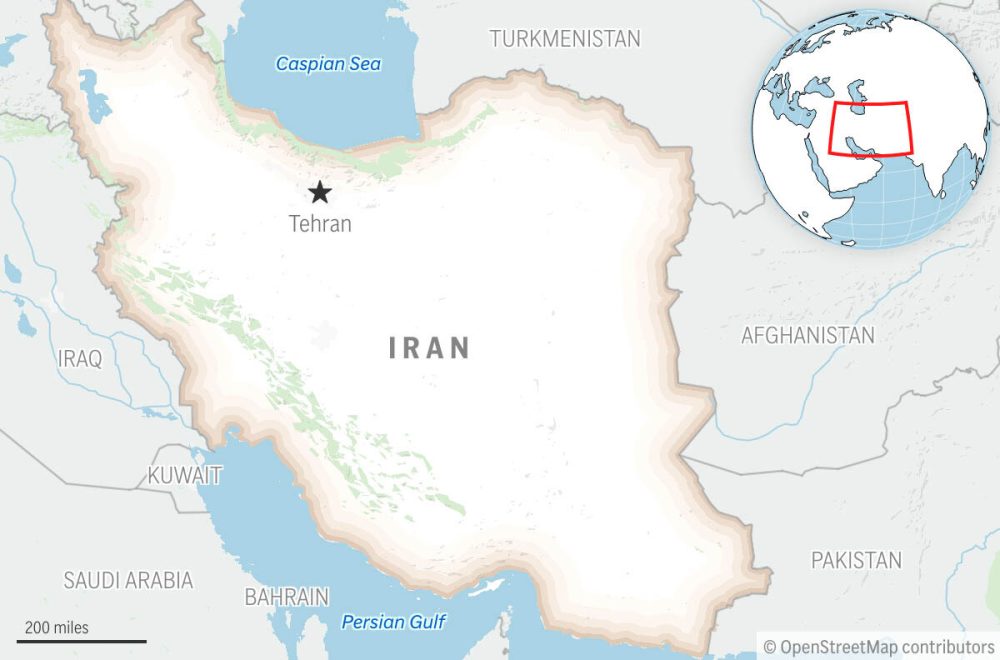
DUBAI, United Arab Emirates (AP) — Defense officials in the United Arab Emirates confirmed Friday morning that the nation’s air defense systems were “actively engaging” incoming missiles and drones, marking another test of the fragile truce between the U.S. and Iran.
UAE defense authorities warned citizens to stay away from any fallen debris and urged people not to photograph or handle “any debris or fragments that have fallen as a result of successful air interceptions.”
The attack came just hours after American military forces reported stopping Iranian assaults on three U.S. Navy vessels in the Strait of Hormuz late Thursday, with the military subsequently striking back at “Iranian military facilities responsible for attacking U.S. forces.”
According to U.S. Central Command’s social media statement, American forces successfully defended against “unprovoked Iranian attacks” and launched defensive counterstrikes in response.
Military officials confirmed that none of the American ships sustained damage during the encounter. The U.S. military emphasized it does not want to escalate tensions but “remains positioned and ready to protect American forces.”
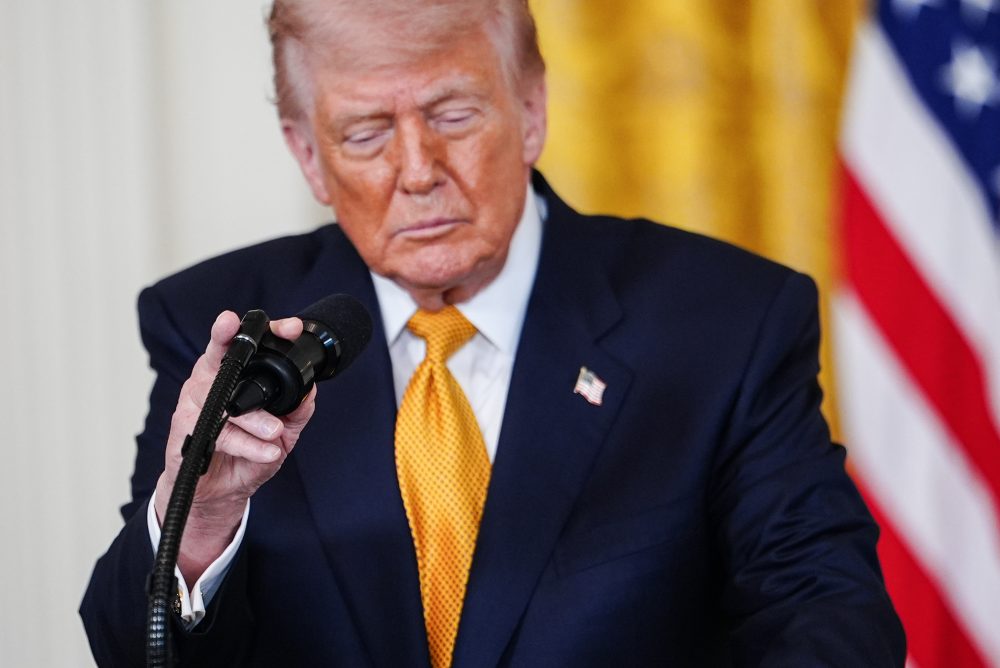
Speaking to media in Washington, President Donald Trump maintained that the ceasefire was still intact despite the recent violence.
The fragile peace agreement between Washington and Tehran has mostly survived since taking effect on April 8. Diplomatic efforts last month in Pakistan, where representatives from both nations met face-to-face, failed to produce a lasting resolution to the conflict that started February 28 when American and Israeli forces conducted joint military operations against Iranian targets.
MELBOURNE, Australia — Authorities have filed slavery and terrorism charges against three Australian women following their return from Syria, where officials claim they maintained connections to the Islamic State terrorist organization.
The women arrived Thursday on Qatar Airways flights from Doha, along with seven other individuals — four women and nine children total — who had been detained for years at Roj Camp in Syria’s desert region. Despite government warnings that criminal charges awaited their return, the group proceeded with their journey home.
Melbourne court proceedings on Friday resulted in charges against Kawsar Abbas, 53, and her daughter Zeinab Ahmed, 31. Law enforcement officials allege the family purchased a female Yazidi slave for $10,000 during their time in Syria.
Defense attorneys indicated they plan to request bail for both women when court reconvenes Monday.
According to police allegations, Abbas relocated to Syria in 2014 with her husband and children during the height of ISIS’s self-declared caliphate. Authorities claim Abbas participated in acquiring the slave, who was subsequently held at the family’s residence.
The elder woman faces four counts of crimes against humanity under Australian legislation, while her daughter confronts two slavery-related charges. Each count potentially carries a 25-year prison sentence.
Kurdish military forces detained both women in March 2019, and they have remained at Roj Camp with other family members since that time.
A third woman, age 32, was apprehended at Sydney Airport and charged with terrorist organization membership and unlawfully entering territory under terrorist control. These charges each carry maximum 10-year prison terms.
Investigators say this woman followed her ISIS-affiliated partner to Syria. Australian law prohibited travel to Raqqa, the former Syrian ISIS stronghold, without legitimate justification between 2014 and 2017.
The Sydney defendant plans to seek bail release during Friday court proceedings.
Government officials have criticized these women for supporting Islamic State militants through their Syrian travel and have declined to assist in their repatriation efforts.
Law enforcement agencies have conducted investigations into potential Australian involvement in Syrian atrocities for over ten years.
Twenty-one additional Australian women and children continue to be held at Roj Camp in northeastern Syria near the Iraqi border. Advocacy groups have informed media outlets they intend to secure their return within the coming weeks.
One woman among those remaining faces a temporary exclusion order preventing her Australian return.
Such exclusion orders allow Australia to block high-risk citizens from returning for up to two years.
These legal measures were established through 2019 legislation designed to prevent defeated ISIS combatants from returning to Australia. No previous public reports exist of such an order being implemented.
Children under 14 cannot be subject to exclusion orders, and Australia has rejected policies that would separate children from their mothers.
Australian administrations have previously facilitated the return of Australian women and children from Syrian detention facilities on two separate occasions. Additional Australians have returned through independent means without government support.
SEOUL, South Korea — North Korean leader Kim Jong Un announced Friday that his military will position new long-range artillery weapons this year with the capability to reach South Korea’s capital area, while also preparing to put the nation’s first naval destroyer into active service within weeks.
This declaration follows recent reports from South Korea indicating that North Korea’s updated constitution has removed all mentions of Korean reunification, aligning with Kim Jong Un’s pledges to sever relations with South Korea and create a two-nation framework on the Korean Peninsula.
On Wednesday, Kim toured a weapons manufacturing facility to examine the production of 155-mm self-propelled gun-howitzers scheduled for placement at an artillery position near the southern border before year’s end, according to the North’s state-run Korean Central News Agency.
The news agency quoted Kim stating that the firing distance of this heavy-caliber weapon exceeds 60 kilometers (37 miles). “Such a rapid extension of striking range and remarkable improvement of striking capability will provide a great change and advantage in the land operations of our army,” Kim said according to KCNA.
Kim indicated that multiple operational and tactical missile platforms along with advanced multiple rocket launcher systems are also planned for border deployment.
While North Korea’s artillery weapons receive less international scrutiny than its ballistic missiles, which face U.N. Security Council launch prohibitions, the country currently maintains numerous artillery pieces positioned near the South Korean border. These weapons present a significant danger to Seoul, South Korea’s capital housing 10 million residents located approximately 40 to 50 kilometers (25 to 30 miles) from the border.
KCNA reported that Kim boarded the destroyer Choe Hyon on Thursday to evaluate its performance capabilities off North Korea’s western coastline. Kim directed officials to transfer the vessel to naval forces by mid-June as planned, after expressing satisfaction that all testing for the destroyer’s operational readiness proceeded without issues, the news agency stated.
Photographs released by KCNA showed Kim’s teenage daughter accompanying him on the destroyer during her most recent public appearance with her father. One image captured her positioned behind Kim as he addressed navy personnel, while another depicted them sharing a meal with the ship’s crew. South Korea’s intelligence agency suggested last month that she might be viewed as Kim’s potential successor.
The destroyer, which received significant publicity when revealed last year, represents North Korea’s largest and most sophisticated naval vessel. North Korea subsequently introduced a second destroyer of identical design, though it sustained damage during a failed launch event. Kim has expressed intentions to construct two additional destroyers.
Kim’s recent military facility visits occurred after South Korea announced Wednesday that North Korea’s new constitution eliminated previous commitments to peaceful reunification with South Korea and redefined the country’s boundaries to include only the northern portion of the Korean Peninsula.
These modifications reflect Kim’s increasingly aggressive position toward South Korea, which he has designated as his nation’s eternal and primary adversary while diplomatic efforts remain stagnant and tensions escalate over his nuclear programs. In January 2024, Kim directed constitutional revisions to remove concepts of shared governance with South Korea, a move that would abandon his predecessors’ longstanding aspirations of peacefully achieving Korean unity under Northern terms.
Kim’s hostile rhetoric toward the South has dealt a significant blow to Seoul’s progressive administration, which seeks renewed engagement and has implemented preliminary measures to reduce tensions, including ending propaganda transmissions along the border.
North Korea has rejected dialogue opportunities with both South Korea and the United States, instead concentrating on expanding its nuclear and missile capabilities since Kim’s comprehensive nuclear negotiations with President Donald Trump failed in 2019.
A federal judge delivered a sharp rebuke Thursday to the Trump administration’s cancellation of hundreds of humanities grants, declaring the actions unconstitutional and discriminatory.
U.S. District Judge Colleen McMahon ruled that last April’s elimination of more than 1,400 grants — worth over $100 million in congressional funding to scholars, writers, research institutions and humanities organizations — violated constitutional protections.
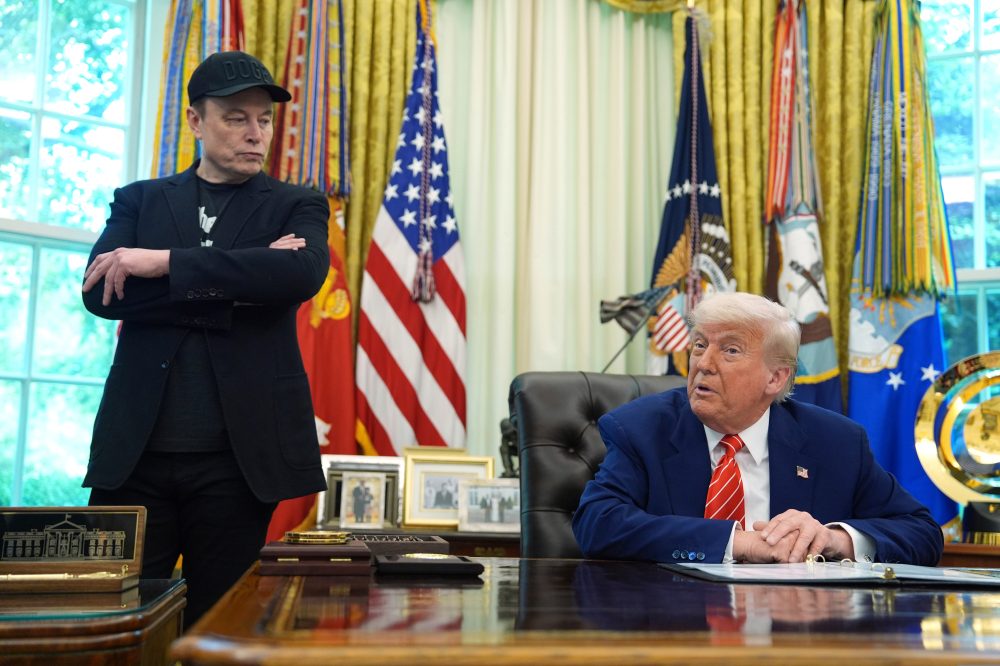
The grant cancellations were conducted as part of cost-reduction efforts overseen by billionaire Elon Musk through the Department of Government Efficiency.
“The Government engaged in blatant viewpoint discrimination,” McMahon stated in her ruling, criticizing what the Trump administration described as efforts to eliminate diversity programs.
According to the judge’s decision, the cancellations breached both First Amendment free speech protections and Fifth Amendment equal protection guarantees. The court also determined that DOGE lacked legal standing to cancel the grants.
“What mattered to DOGE was not whether a grant lacked scholarly merit, failed to comply with its terms, or fell outside NEH’s (National Endowment for the Humanities) statutory purposes. What mattered was that the grant concerned a ‘minority group’,” McMahon wrote in her opinion.
“DOGE swept in race and ethnicity – including grants concerning Black, Asian, Latino, and Indigenous communities – as well as national origin and immigration status; religion and religious identity (including Jewish, Christian, and Muslim subjects); sex; and sexual orientation, as criteria for grant termination.”
The judge additionally noted that DOGE personnel’s reliance on the artificial intelligence platform ChatGPT to justify certain grant terminations did not excuse the government’s actions.
“The government cannot escape liability for DOGE’s work by scapegoating ChatGPT,” McMahon stated.
Civil rights organizations have expressed alarm over Trump’s targeting of educational and cultural institutions, diversity programs, and historical sites and museums, warning these actions could reverse decades of social advancement and diminish recognition of important periods in American history.
Trump has claimed that numerous cultural, arts and educational organizations serve as strongholds of liberal and “anti-American” ideologies that fail to present U.S. history favorably.
The former president has threatened to eliminate federal funding for institutions over pro-Palestinian demonstrations protesting U.S. ally Israel’s military campaign in Gaza, transgender policies, climate programs and diversity initiatives.
His criticism has encompassed prestigious universities, the Smithsonian Institution and the Kennedy Center, as well as media organizations such as National Public Radio and the Public Broadcasting Service.
Most universities in the Big 12 Conference are passing on a groundbreaking private equity loan program that could have provided each school with as much as $30 million in credit, according to a Thursday report from Front Office Sports.
The financing arrangement with RedBird Capital Partners and Weatherford Capital received approval from conference university presidents in late April. Under the program’s structure, participating schools would repay the loans through reduced annual revenue payments from the Big 12.
The investment firms had prepared to distribute up to $500 million total if every school participated, but numerous universities have already announced they won’t join the program. Texas Tech, Iowa State, and Colorado directly told Front Office Sports they’re declining the offer. Local media reports indicate TCU, Cincinnati, Baylor, West Virginia, UCF, Houston, and Kansas State have also decided against participating.
Schools have a full year to decide whether to join the program, and RedBird Capital Partners emphasized this won’t be their only opportunity.
“This partnership is much bigger than just capital to schools — it’s a commercial partnership where RedBird and Weatherford are delivering commercial revenue to the Big 12,” RedBird Capital Partners told Front Office Sports. “We are playing the long game where schools have one year to opt in for when the landscape becomes clearer for the ecosystem and individual needs. It’s not intended to be a one-time offer, it’s a long-term feature of a broader agreement for the Big 12 and their member schools.”
While this marks the first conference-wide private equity agreement in collegiate athletics, similar arrangements have been attempted before. The Big Ten Conference came close to finalizing an investment partnership with UC Investments, the University of California system’s pension fund, in the previous year, but abandoned the plan after several member schools objected.
WASHINGTON – The White House announced late Thursday evening that President Donald Trump will hold a public address in the Rose Garden on Friday afternoon at 12:00 p.m. Eastern time.
Officials have not revealed the subject matter that the president plans to discuss during his scheduled appearance. The announcement came as part of Trump’s official calendar released by White House staff.
The Rose Garden address is set to take place at 4:00 p.m. Greenwich Mean Time for international audiences.
Immigration and Customs Enforcement agents will stay away from this summer’s World Cup soccer matches in Miami, according to organizing committee leadership.
Miami host committee co-chair Rodney Barreto said Thursday he has received guarantees from Secretary of State Marco Rubio that ICE will not have a presence at the international soccer tournament.
“ICE is not going to be at the stadium,” Barreto said in an interview with The Athletic. “This is not going to turn into some ’round them up’ type of thing. That’s not the purpose of this.”
Barreto expressed optimism about the event’s success, stating: “It’ll be a great experience for everybody. I think that we’re lucky that we do have a president who loves sports and has given us the resources to reimburse the cities for their police protection.”
The committee co-chair also discussed passport processing for international visitors, saying: “I spoke to Marco and, first of all, he’s going to make sure that the passports get processed and people can get here and there is an orderly process so people won’t be held up. It’s going to be a major undertaking by the federal government to do that. We feel very comfortable that we’re going to be in good hands.”
Immigration enforcement operations have expanded under President Donald Trump’s second administration, creating nationwide political tensions around the issue.
Miami’s selection as a World Cup venue comes after security problems during the 2024 Copa America final at Hard Rock Stadium in Miami Gardens, where ticketless fans broke through barriers, causing injuries and delaying the Argentina-Colombia championship match.
Reflecting on those incidents, Barreto explained: “(The Miami World Cup organizing committee) took the position that we didn’t want to be critical of the planners of that event. It wasn’t our event. But now that time has passed, I would tell you that where the failure was, which was that there were no perimeters.”
He continued: “People without tickets should have been nowhere near the entrance ways of that stadium. It didn’t take much to overrun an entrance. But listen, you learn from all these events, and you learn to do it better and come up with different scenarios which mitigate this from happening in the future. So that’s where we’re at.”
Professional hockey teams will be allowed to spend a record-breaking $104 million on player salaries during the 2026-27 season, according to a Thursday announcement from the National Hockey League and its Players Association.
The new spending limit represents an $8.5 million boost, marking an 8.9% jump from the current 2025-26 ceiling.
Teams must spend at least $76.9 million on player contracts, with the midpoint set at $90.4 million. The league’s explosive financial growth is evident when considering that today’s minimum spending requirement surpasses what teams were allowed to spend as recently as 2018.
According to PuckPedia data, seven franchises went beyond the spending cap during 2025-26, with the Vegas Golden Knights leading at $107.49 million. Organizations can exceed these limits without facing penalties by utilizing salaries of players on long-term injured reserve.
The rebuilding Chicago Blackhawks invested $82.35 million in player salaries, which remained well above the required minimum spending threshold.
Broadcasting partnerships with ESPN and TNT Sports are projected to push league revenues beyond $7 billion in combined currencies this season. The NHL recently achieved unprecedented television ratings during the opening round of Stanley Cup playoff action.
“It’s a really good time, and we don’t even have the biggest markets (involved in the playoffs),” league commissioner Gary Bettman said recently in an appearance on The Pat McAfee Show. “This is about how good the hockey is.”
Individual players will be eligible to earn up to $20.8 million during the 2026-27 campaign.
Early forecasts suggest an even more dramatic increase for 2027-28, with projections showing a potential $9.5 million rise to $113.5 million.
WASHINGTON (AP) — A federal judge ruled Thursday that current guidelines directing immigration officers on how to conduct arrests without warrants fail to satisfy legal requirements for probable cause and should be discontinued.
U.S. District Judge Beryl A. Howell in Washington, D.C., extended a preliminary injunction she first granted in December, stating that immigration enforcement agents operating in her district cannot use the probable cause standards outlined in a five-page directive from Immigration and Customs Enforcement’s former acting director when making civil immigration arrests without warrants.
The judge identified several problems with the guidance, particularly noting that it did not require officers to evaluate an individual’s ties to their local community before determining whether that person posed a flight risk warranting immediate detention.
This ruling represents another development in litigation brought by four non-citizens and the advocacy group CASA in Washington during 2025, challenging their detentions during federal immigration operations that were part of an enforcement initiative directed by President Donald Trump.
Judge Howell granted the plaintiffs’ request for additional documentation to clarify how the policy would be carried out, though she dismissed certain arguments and acknowledged the government had complied with portions of her earlier injunction.
When asked about Thursday’s decision, the Department of Homeland Security stated in an email that “ICE has authority for lawful arrests.”
“Law enforcement officers use ‘reasonable suspicion’ to investigate immigration status and probable cause to make arrests consistent with the Fourth Amendment to the U.S. Constitution,” the DHS statement continued. “The Supreme Court has already vindicated us on these practices.”
Madeline Gates, associate counsel with the Washington Lawyers’ Committee for Civil Rights and Urban Affairs, said “We got what we were asking for essentially.” She explained the decision “reaffirms that federal agents have to comply with the law. They do not get a pass in doing immigration enforcement.”
“This particular case is all about what happens at the outset, before the arrest is made,” Gates added.
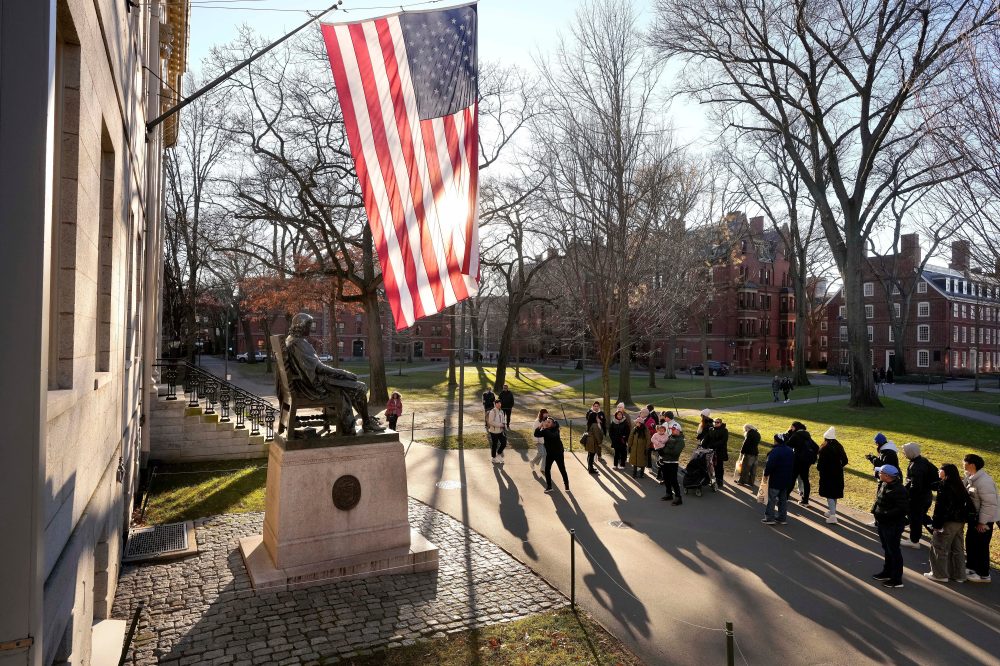
A major cyberattack has disrupted Canvas, the popular educational platform used by colleges and universities nationwide for managing coursework and student grades, according to reports from multiple student publications across the country.
Student journalists at Harvard University’s newspaper, The Crimson, reported that access to the platform was blocked starting Thursday afternoon. The cybercriminal organization ShinyHunters took credit for the breach, stating that Harvard was among “thousands of schools allegedly affected by a breach of Instructure, Canvas’ parent company.”
According to The Crimson’s reporting, when students attempted to log into Canvas, they were instead shown a message from ShinyHunters acknowledging their role in the attack and displaying a catalog of compromised educational institutions.
By Thursday evening, Instructure acknowledged the disruption through its official status webpage, announcing that Canvas and associated platforms had been switched “in maintenance mode” while the company worked to resolve “an issue where some users are having difficulties logging into Student ePortfolios.”
“We anticipate being up soon, and will provide updates as soon as possible,” the company stated on its website. Instructure has not yet responded to media requests for additional information.
The Daily Pennsylvanian at the University of Pennsylvania revealed that ShinyHunters had posted a threatening message on Penn’s Canvas portal the previous week, demanding that any university wanting to prevent data disclosure should reach out to the group before May 12th.
Duke University’s student publication, The Chronicle, confirmed their institution was also impacted by the security breach, which reportedly affected more than 9,000 educational facilities.
Additional student news outlets from UCLA, the University of Nebraska, and other universities have confirmed their schools were also targeted in the widespread attack.
This latest incident continues a pattern of high-profile breaches by ShinyHunters, which has previously targeted major corporations worldwide. Just last month, the group announced they had successfully stolen approximately 80 million business records from Rockstar Games, the company behind the popular Grand Theft Auto video game series.
ANAHEIM, Calif. — The intensity of Stanley Cup playoff hockey has a way of transforming teams. The elevated stakes and electric atmosphere push players who can rise to the occasion toward new heights of determination, skill and excellence.
The Anaheim Ducks represent the newest young squad flourishing under their inaugural experience with postseason intensity.
While breaking their organization’s seven-year absence from the playoffs, the Ducks struggled defensively throughout the regular season, frequently accepting lackluster defensive coverage and inconsistent goaltending that often went unpunished due to their scoring prowess. Anaheim gave up the fourth-highest goal total in the NHL, by far the worst among playoff qualifiers, then allowed 21 goals against the equally offensive-minded Edmonton in round one.
However, when the Ducks needed to preserve a 2-0 advantage against the experienced Vegas Golden Knights with under seven minutes remaining in Wednesday’s Game 2 of the second round, they demonstrated the postseason’s transformative power.
In one chaotic sequence near the goal, three short-handed Ducks threw themselves onto the ice to stop multiple shots — Mikael Granlund even used an extended toe to make one block — while netminder Lukas Dostal scrambled frantically from post to post, later joking he was “playing more soccer goalie than hockey goalie out there.”
The additional playoff intensity was unmistakable, and their bench teammates jumped up in celebration. Anaheim held on for a 3-1 victory, tying the series and building another layer of crucial experience for a young roster planning to compete for Stanley Cups for years ahead.
“A lot of us are going through it together for the first time … and the whole experience is just bringing us closer together,” Ducks forward Troy Terry said Thursday. “I think what you’re seeing, we can feel in our room, just how much we’re coming together at this time of year. Whether it’s a blocked shot, a goal, whatever it is, you can feel the closeness. All of us have just been so hungry for this opportunity. We were all well aware of what it would take to be successful in the playoffs, but you never really know until you get in these positions.”
Postseason action continues Friday with the Montreal Canadiens traveling to face the Buffalo Sabres before Anaheim welcomes Vegas for Game 3.
Most of the Golden Knights’ veteran core has played together for several seasons, developing the chemistry and responsibility needed for peak postseason performance.
This represents uncharted territory for the Ducks, and they’re welcoming the challenge. Anaheim has surrendered just four goals across two contests against Vegas, including an empty-net goal in Game 1 and an inconsequential power-play score with 5.6 seconds remaining in Game 2.
“I know this team had some growing pains we had to go through, but all year long we said, ‘I just can’t wait to get to the playoffs so we can see just how good these guys can be,’” coach Joel Quenneville said. “Across the board, I would have to say for sure we’re playing the best hockey we’ve shown all year.”
Anaheim posted a perfect 3-0 record at Honda Center during the opening round versus the Oilers. Orange County supporters haven’t witnessed May hockey since 2017, when the Ducks reached the Western Conference finals.
When/Where to Watch: Game 2, Friday, 7 p.m. EDT (TNT, HBO MAX).
Following some mistakes, the Buffalo Sabres executed their fast-paced, aggressive offensive style in capturing Game 1 against Montreal.
Now the Canadiens must rediscover their approach while adjusting to a contrasting opponent after Wednesday’s 4-2 defeat.
Despite Montreal’s resilience and skill in the opening round during their seven-game victory over the slower, more physical and defensively-focused Tampa Bay Lightning, the Canadiens must adjust their strategy against Buffalo.
“I can’t say that I learned anything yesterday, but I will tell you that I know we can play with them,” Canadiens coach Martin St. Louis said. “We’re just going to have to do some things a bit better.”
An improved beginning would benefit them, as the Sabres established a 2-0 first-period advantage. Though Montreal outshot Buffalo 11-1 in the final period, most attempts came from outside scoring areas.
Beyond that, the result — from Montreal’s viewpoint — was determined by several unlucky bounces.
Defenseman Lane Hutson lost his footing and lost possession in a turnover that created Buffalo’s first goal. Mike Matheson’s clearing pass was then deflected by Buffalo’s Ryan McLeod, leading to Bowen Byram’s goal that extended the lead to 4-1 during the second period.
“It’s a little bit different, but we know what to expect now,” forward Cole Caufield said when contrasting Tampa and Buffalo.
Following his team-high 51 regular season goals, Caufield focused on rediscovering his scoring ability during a four-game scoreless stretch.
“As a whole, not where I want it to be. I expect more out of myself, and my teammates do too,” he said. “Just trying to get better every game and just trying to make a difference.”
Montreal has avoided consecutive wins or losses this postseason, coming off a Tampa Bay series where all seven contests were decided by single goals — with four settled in regulation.
The Sabres also recognize room for improvement after managing just 16 shots, their lowest playoff total.
“Some of our puck decisions, I thought, weren’t up to the level that we had,” coach Lindy Ruff said, suggesting their four-day layoff may have contributed.
“I hate to say rust — but you haven’t been up and running, your game tempo isn’t quite there,” he added. “Some of our puck decisions led to opportunities, what I call giving up free offense. It wasn’t from lack of effort.”
WASHINGTON — Federal officials are examining Mexico’s network of 53 diplomatic facilities throughout America, an evaluation that may result in some locations being shuttered, according to a State Department source who spoke Thursday.
The anonymous official, who lacked authorization for public statements, provided no explanation for the assessment’s purpose or scope, though the development threatens to escalate already strained relations between the neighboring nations. CBS News first disclosed the review.
Trump has pursued an unusually assertive approach toward Latin American affairs compared to recent presidents, conducting military operations that captured Venezuela’s leadership, demanding sweeping Venezuelan changes, implementing petroleum sanctions against Cuba, intervening in elections across Argentina and Honduras, and issuing military threats against Mexican drug organizations.
Mexican leader Claudia Sheinbaum has worked to preserve positive ties with Trump while countering American pressure through intensified anti-cartel enforcement, which has contributed to declining murder rates. However, recent controversies have triggered significant political turbulence in Mexico.
Initially, two CIA operatives perished during anti-drug operations alongside local forces in northern Chihuahua state, prompting days of conflicting statements from Mexican officials. Subsequently, American prosecutors filed drug trafficking charges against multiple members of Sheinbaum’s political party, including a close associate.
Trump reiterated his position earlier this week, stating: “If Mexico doesn’t act, we will.”
These developments have intensified Trump administration pressure on Sheinbaum while sparking debate about her commitment to protecting Mexican independence.
Mexico operates the largest foreign diplomatic presence within American borders. These facilities assist Mexican nationals residing in the US through document services, legal support, and various citizen needs.
Dylan Johnson, assistant secretary of state for public affairs, explained: “The Department of State is constantly reviewing all aspects of American foreign relations to ensure they are in line with the President’s America First foreign policy agenda and advance American interests.”
Washington has previously shuttered diplomatic facilities from other nations, including a Chinese consulate in Houston and three Russian locations spanning San Francisco, Washington area, and New York region.
Thousands of educational institutions faced major disruptions Thursday when hackers targeted Canvas, a widely-used learning management platform, just as students nationwide were preparing for final examinations.
According to Luke Connolly, a cybersecurity analyst with Emisoft, the hacking collective known as ShinyHunters has taken credit for infiltrating Instructure, the company that operates Canvas. The platform serves as a digital hub where students access coursework, grades, assignments, and lecture materials.
The cybercriminals claim their breach affected approximately 9,000 educational institutions globally and compromised billions of private communications and academic records, Connolly reported. Screenshots obtained by security experts reveal the hackers began making threats on Sunday to release stolen information, setting initial deadlines for Thursday and May 12.
Connolly noted that the extended timeline suggests possible ongoing negotiations over ransom demands. Instructure has not yet responded to media inquiries or clarified whether Canvas was shut down preventively or due to the attack itself.
Educational institutions have become increasingly attractive targets for international cybercriminals seeking valuable digital information that was once stored in physical filing systems. Previous high-profile attacks have targeted major school systems including Minneapolis Public Schools and Los Angeles Unified School District.
The Canvas incident bears striking resemblance to an earlier attack on PowerSchool, another educational technology provider, which resulted in criminal charges against a Massachusetts college student, according to Connolly.
ShinyHunters operates as a loosely organized network of young hackers primarily based in the United States and United Kingdom, Connolly explained. The group has previously been linked to other major breaches, including an attack on Ticketmaster, which is owned by Live Nation.
Affected schools moved quickly to inform their communities about the disruption. The University of Iowa’s information technology director described the situation as “a national-level cyber-security incident” while expressing hope for a swift resolution.
Virginia Tech issued a statement acknowledging the impact on final examinations and other critical end-of-semester activities. “Additional guidance will be shared soon via email and posted on the university status page,” administrators wrote.
Harvard University also experienced system outages, according to reports from the student newspaper. Meanwhile, public school districts worked to reassure families, with Spokane, Washington officials stating they were not “aware of any sensitive data contained in this breach.”
The timing of the attack has created particular challenges for students and faculty who depend heavily on digital platforms for academic activities during the crucial final exam period.
LOS ANGELES (AP) — Federal authorities conducted a sweeping drug enforcement operation near downtown Los Angeles at a location notorious for narcotics activity and homeless camps, timing that coincided with the start of mayoral election voting in a city grappling with ongoing public safety challenges.
Democratic Mayor Karen Bass, who has faced a challenging first term marked by devastating wildfires and recovery efforts, has been pushing city council members to fast-track police department hiring as she campaigns for another four-year term. The primary voting period concludes on June 2.
The Wednesday operation led to 18 people being taken into custody and focused on disrupting fentanyl and methamphetamine trafficking in the MacArthur Park area, situated in a heavily populated immigrant community west of the city center. The enforcement action followed years of neighborhood residents voicing concerns about criminal activity, drug dealing, and gang presence in the vicinity.
Municipal officials have faced mounting pressure to halt a needle distribution initiative at the park that critics argue perpetuates rather than addresses local problems. These harm reduction programs supply clean syringes to drug users with the intention of preventing HIV and other bloodborne disease transmission.
At a Wednesday candidate forum, Bass indicated she would terminate the park’s needle program, aligning her position with Republican challenger Spencer Pratt, who has called for eliminating needle exchanges throughout the city. Democratic City Councilmember Nithya Raman, also running for mayor, stated she would continue the program.
Department-wide police data indicates both property crimes and violent offenses have decreased this year compared to 2025.
“No matter what these crime statistics are telling anybody, it’s not how people feel on the street,” Pratt said.
Security concerns extend beyond local boundaries. World Cup matches are scheduled to begin in Southern California next month, and Los Angeles will serve as host for the 2028 Olympics. While federal agencies lead Olympic security planning, questions already exist about whether the Los Angeles Police Department will have sufficient funding and staffing to fulfill its responsibilities.
President Donald Trump has maintained a contentious relationship with heavily Democratic California. In 2019, he made threats to intervene in the state’s homelessness situation but took no action. California serves as headquarters for the so-called Trump resistance, and Trump frequently portrays California as embodying everything he considers problematic about America.
Los Angeles specifically has drawn administration criticism. Trump sent National Guard troops and Marines to the city last summer over objections from Bass and Gov. Gavin Newsom following protests that erupted after immigration enforcement sweeps throughout the region. A newly established federal anti-fraud unit has focused attention on Los Angeles regarding extensive hospice fraud, although Newsom maintains his administration has been working on the issue for an extended period.
However, federal officials did collaborate with the LAPD on the drug enforcement operation.
First Assistant U.S. Attorney Bill Essayli, appointed during the Trump administration, released a statement saying authorities were “reclaiming MacArthur Park from criminals and drug addicts to return this public space to the citizens.” Bass stated the operation had been in development for “many months.” Pratt expressed support for increased federal participation, describing the joint operation as “unbelievable.”
The mayoral campaign in the nearly 4 million-person city is unfolding during a particularly difficult period, with persistent complaints about homelessness, deteriorating infrastructure, and rising housing costs. The previously growing region is experiencing population decline — Los Angeles County saw approximately 54,000 residents leave between July 2024 and July 2025, representing the nation’s largest numerical population decrease for any county, according to federal statistics.
When campaigning four years ago, Bass discussed expanding police department size. However, officer numbers have declined significantly from a peak of 10,000 sworn officers in 2020 to approximately 8,700 currently.
Bass highlights statistics showing her administration has decreased the homeless population, but deteriorating tent camps and rows of abandoned recreational vehicles continue to be common sights across much of the city.
The race in strongly Democratic LA — which also features tech entrepreneur Adam Miller and community activist Rae Huang — resembles the 2022 election, when billionaire developer Rick Caruso campaigned on promises to increase police spending amid widespread worries about crime and homelessness. Bass won that contest decisively.
Norm Langer, who operates Langer’s Delicatessen across from the park, had contemplated shuttering the well-known restaurant due to drug activity and encampments that he claimed were deterring customers.
He informed reporters Wednesday he was “absolutely thrilled” about the federal operation but also seemed to doubt Bass’ dedication to ending the needle distribution at the park.
The program, he said, is “prolonging these people getting help.”
John Alle, who owns the restaurant building, said the LAPD had reduced patrols in the park.
“We’ve got a day or two where we don’t have MacArthur Park patrolled. And we’re suffering the consequences,” Alle said. “The crime has not gone down.”
A Manhattan federal judge has permanently blocked the Trump administration from eliminating more than $100 million in humanities funding, declaring the grant cancellations violated constitutional protections and exceeded the Department of Government Efficiency’s legal authority.
U.S. District Judge Colleen McMahon ruled Thursday in favor of The Authors Guild and other organizations whose grants were terminated, issuing a permanent injunction against the administration and condemning DOGE’s reliance on artificial intelligence to identify programs for defunding.
Federal attorneys had defended the elimination of over 1,400 congressionally-approved grants as lawful implementation of President Donald Trump’s executive orders, arguing the cuts targeted diversity, equity and inclusion initiatives while reducing discretionary expenditures aligned with administration goals.
Neither the White House nor the Department of Justice, which represented the government in the litigation, responded to requests for comment Thursday night. Officials have not indicated whether they plan to appeal the decision.
In her ruling, McMahon determined the government breached First Amendment protections and Fifth Amendment equal protection guarantees, finding DOGE lacked proper authorization to terminate the funding. She characterized the DEI-based grant cancellations as “a textbook example of unconstitutional viewpoint discrimination.”
“The public interest favors permanent relief,” McMahon stated in her decision. “The public has a strong interest in ensuring that federal officials act within the bounds set by Congress and the Constitution.”
Organizations that challenged the government’s actions, including the American Council of Learned Societies, American Historical Association and Modern Language Association, celebrated the outcome in a collective statement.
“This ruling in an important achievement in our effort to restore the NEH’s ability to fulfill the vital mission with which Congress charged it: helping to create and sustain ‘a climate encouraging freedom of thought, imagination, and inquiry’ through the humanities,” stated Sarah Weicksel, executive director of the American Historical Association.
Authors Guild attorney Yinka Ezekiel Onayemi characterized the funding terminations as “a direct assault on constitutional free speech and equal protection.”
“We’re pleased with the Court’s decision, which vindicates our clients: the brilliant academics, writers, and institutions doing work that is deeply important to our democracy,” Onayemi declared. “It also reaffirms that Congress’s 60 year old commitment to the humanities cannot be dismantled by an overreaching executive.”
The judge examined how administration officials categorized grant programs as DEI-related and employed ChatGPT to identify them for budget elimination. McMahon noted one instance where officials used the AI system to classify an anthology called “In the Shadow of the Holocaust: Short Fiction by Jewish Writers from the Soviet Union” as a diversity initiative, among numerous other examples.
McMahon dismissed the government’s contention that constitutional violations were avoided because ChatGPT, rather than human officials, made the viewpoint determinations.
“ChatGPT was the Government’s chosen instrument for purposes of this project, and DOGE’s use of AI to identify DEI-related material neither excuses presumptively unconstitutional conduct nor gives the Government carte blanche to engage in it,” she explained.
The funding cancellations were announced in April 2025, following Trump’s January executive order called “Ending Radical and Wasteful Government DEI Programs and Preferencing.” A February 2025 executive order implemented DOGE’s “cost efficiency initiative.”
Michael McDonald, serving as interim National Endowment for the Humanities chairman, notified grant recipients of their funding terminations through written correspondence.
In an April 1, 2025 letter to one recipient organization, he stated, “The NEH has reasonable cause to terminate your grant in light of the fact that the NEH is repurposing its funding allocations in a new direction in furtherance of the President’s agenda.”
Most terminated grants had been approved during the Biden presidency, with approximately 40 Biden-era grants surviving the elimination process, according to the judge’s findings.
McMahon acknowledged that incoming administrations may legitimately pursue different funding priorities, but emphasized “it has no license to suppress disfavored ideas.”
In an earlier temporary restraining order addressing First Amendment concerns, the judge determined that “defendants terminated the grants based on the recipients’ perceived viewpoint, in an effort to drive such views out of the marketplace of ideas.”
WASHINGTON — President Donald Trump made a surprise visit Thursday to the Lincoln Memorial, where he inspected the Reflecting Pool following renovations that added what he describes as an ‘American flag blue’ coating to the water feature.
During the unannounced visit, Trump not only examined the work but also drove his vehicle across the pool while speaking with reporters who had been brought to the scene ahead of his arrival.
The Republican commander-in-chief indicated he has additional plans for modifications to the Lincoln Memorial structure itself, though he declined to provide specific details about those proposals.
‘We have a beautiful plan for that too,’ Trump stated when discussing potential changes to the memorial honoring President Abraham Lincoln. However, construction crews have already been working for several years on developing an underground visitors’ center at the site.
Trump first revealed the reflecting pool renovation plans last month during an unrelated appearance in the Oval Office. He explained that the project was motivated by criticism from a German friend who visited Washington and described the pool’s water as dark, dirty and unsightly.
This renovation represents yet another effort by Trump to implement his vision for changes throughout the nation’s capital, following his previous decision to tear down the White House East Wing to construct a large ballroom in that location.
More than half of people in Britain express concern that their nation’s diminishing connection to Christian faith could harm coming generations, according to new research from Whitestone Insight.
The polling data shows 52 percent of British citizens believe their country’s continuing movement away from Christianity will create negative consequences for future generations.
In contrast, just one-fifth of those surveyed indicated they view the religious decline as beneficial for Britain’s future.
Additional findings from the research show that almost 60 percent of Britons recognize Christianity’s potential value to their nation, whether through ethical direction or everyday practical influence.
A newly released international study identifies China as the world’s leading nation for detaining individuals due to their religious practices, according to Global Christian Relief’s yearly Red List report.
While Christians face the most severe persecution in the populous nation, the report notes that Muslims and practitioners of Falun Gong also face imprisonment for their beliefs.
The study places Russia in the second position, with authorities there focusing enforcement actions against religious groups outside the Russian Orthodox faith. Completing the top five countries where believers face the highest arrest risk are Iran, Vietnam, and Nicaragua.
A thrilling comeback victory unfolded at Goldey-Beacom College as the Lightning defeated Jefferson 8-6 in Central Atlantic Collegiate Conference Tournament action, thanks to a dramatic walk-off home run by freshman Kaden Barmer of Edgewood, Maryland.
The Lightning found themselves trailing entering the bottom of the eighth inning but managed to plate three runs to pull within one run of their opponents. The momentum-shifting rally set the stage for what would become a memorable finish.
With the game hanging in the balance in the ninth inning, Barmer stepped to the plate and delivered the decisive blow, launching a walk-off homer that sent the home crowd into celebration and secured the tournament victory for Goldey-Beacom.
The dramatic finish capped off an impressive rally that showcased the team’s resilience and ability to perform under pressure in tournament play. The win advances Goldey-Beacom in the CACC Tournament as they continue their postseason run.
A comprehensive new survey conducted by the Becket Fund, a Christian legal organization, shows that three-quarters of American adults approve of allowing parents to use government-funded vouchers for private school tuition, including enrollment at faith-based institutions.
The research found that 77% of respondents support parents having access to state vouchers for private education and using those funds at religious schools, while 23% are opposed to such policies.
The survey results mirror recent trends in the judicial system, where courts have consistently upheld the legality of applying school voucher programs to religious educational institutions, reinforcing the practice through multiple favorable rulings.
New research from Arizona Christian University’s Cultural Research Institute reveals that America’s youngest generation is showing increased interest in biblical texts and Christian identity, though their theological perspectives often differ significantly from traditional teachings.
The study found that while more members of Generation Z are engaging with scripture and adopting Christian labels, many of their core beliefs diverge from conventional doctrine. Notably, these young adults tend to view traditional biblical marriage as just one acceptable relationship model rather than a divine requirement.
According to the Cultural Research Institute, this generation demonstrates spiritual curiosity and openness, but their interpretations frequently stray from established religious orthodoxy.
A transgender performer has initiated legal proceedings against a Manhattan hotel following an incident involving restroom access.
Wesley Han, a transgender woman, was a guest at the Soho Grand Hotel when the incident occurred. According to Han, other female guests objected to her presence in the women’s restroom facilities.
Han alleges that hotel security personnel removed her from the women’s restroom and directed her to use the men’s facilities instead.
The legal challenge comes in New York, a state known for its progressive policies and strong protections for LGBTQ+ individuals, which may complicate the hotel’s defense strategy.
In response to the lawsuit, representatives from the Soho Grand Hotel issued a public statement emphasizing their commitment to promoting diversity and inclusion.
The nation’s biggest Protestant church organization is preparing for its yearly summer assembly in Orlando this June.
Representatives from the Southern Baptist Convention will converge at the Orange County Convention Center from June 7th through June 10th for their annual meeting.
Convention planners anticipate hosting approximately 200 different sessions and gatherings throughout the four-day event.
While the denomination faces ongoing challenges with declining membership numbers, officials report encouraging growth in baptism rates.
Recent survey data from the Public Religion Research Institute reveals a significant correlation between religious engagement and views on abortion across the United States.
The research shows that seven out of ten Americans who favor abortion access seldom or never engage with religious texts. Additionally, approximately two-thirds of this group do not participate in worship services, while roughly half report never engaging in prayer.
Conversely, individuals who identify as pro-life demonstrate higher levels of religious participation, including regular Bible reading, church attendance, and prayer practices.
The survey identified White Evangelical Protestants and Hispanic Protestants as the religious communities with the most pronounced pro-life positions.
Reproductive rights advocates have successfully gathered the required number of petition signatures to bring a ballot measure before voters this November that would modify the state’s existing abortion restrictions. The proposed initiative seeks to remove criminal penalties currently imposed on medical professionals who violate abortion laws.
The collected signatures are now awaiting official verification before the measure can be formally placed on the ballot. If voters approve the initiative, it would eliminate the threat of imprisonment for healthcare providers who perform procedures that violate current abortion statutes.
Existing state law currently subjects medical professionals to potential prison sentences of up to five years for conducting abortions that violate statutory restrictions. The ballot measure joins similar reproductive rights questions that voters in multiple states will consider during the upcoming November election cycle.
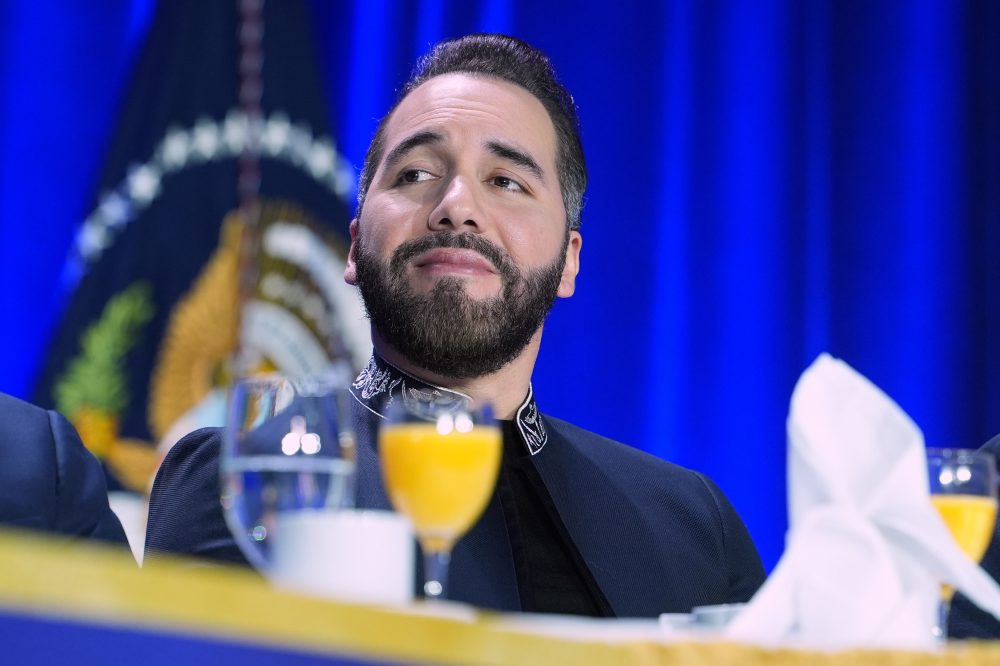
A prominent Salvadoran investigative news organization says government authorities have frozen financial assets and property belonging to two of its staff members, marking what the outlet describes as an escalation in political retaliation for their critical reporting on President Nayib Bukele’s administration.
El Faro’s Director Carlos Dada revealed during a Thursday press conference that bank accounts and real estate had been seized, calling the action part of a coordinated effort to silence the publication’s work.
“It’s another level of attack against us with a clear purpose,” Dada stated. “These are not fiscal measures. They are political measures trying to silence us.”
The news organization has engaged in ongoing conflicts with Bukele regarding their investigative work into governmental corruption, particularly their reporting that revealed secret negotiations between his administration and criminal gangs. The asset seizures occurred shortly after El Faro collaborated with PBS Frontline on a documentary examining these gang negotiations.
Since taking office in 2019 as the region’s youngest head of state on promises to combat corruption, Bukele has drawn mounting criticism from human rights organizations for suppressing opposition and authorizing abuses during a four-year emergency decree that has resulted in over 91,000 imprisonments.
While Bukele’s administration did not provide immediate comment on the asset freezing, the president has previously dismissed El Faro’s investigative work as “fake news.”
According to Dada, the publication discovered the asset seizures through banking institutions and property records rather than receiving official government notification.
Salvadoran tax authorities have conducted continuous audits of the outlet since 2020, claiming the organization owes $200,000 in unpaid taxes—allegations that Dada has rejected.
El Faro’s reporting staff has faced cyberattacks using surveillance software, with Pegasus spyware discovered on more than 20 journalists’ mobile devices in 2022. The publication subsequently filed a federal lawsuit against NSO Group in U.S. courts.
Due to the increasingly hostile environment in El Salvador, El Faro relocated its main operations to Costa Rica in 2023, with all staff members now living outside their home country.
Bukele’s suppression of dissent expanded in 2025 with the detention of well-known human rights advocate Ruth López, who remains imprisoned a year later without trial and with restricted access to family and legal representation. Following her arrest in July 2025, Cristosal, the nation’s premier human rights organization where López was employed, announced its departure from El Salvador citing escalating intimidation and legal pressure.
Similar tactics of conducting government audits and seizing assets to intimidate opposition voices have been employed elsewhere in the region, particularly in Nicaragua under Daniel Ortega’s leadership.
Claudia Paz y Paz, who heads the Costa Rica-based Center for Justice and International Law and represents El Faro before the Inter-American Commission of Human Rights, described the asset seizures during Thursday’s press conference as “retaliation” aimed at the publication’s journalism and an attempt to “silence the voices of journalists.”
BEIJING — Two former Chinese defense ministers received death sentences with two-year suspensions on Thursday from a military tribunal for corruption charges, China’s official Xinhua News Agency reported.
The military court found Wei Fenghe guilty of taking bribes and imposed a death sentence with a two-year delay. Li Shangfu received an identical punishment after being convicted of both accepting and giving bribes.
In China’s legal system, death sentences with suspensions are typically converted to life imprisonment.
These punishments represent the most recent developments in President Xi Jinping’s ongoing effort to remove high-ranking officials from power. Xi launched his anti-corruption campaign over ten years ago and has maintained its intensity, reaching a peak in January with the dismissal of China’s top military commander and other military leaders. The influential Central Military Commission, which previously included 11 members, now consists of only Xi and one other member.
Although the campaign focuses on eliminating corruption, Xi has also employed these anti-corruption measures as a tool to strengthen political allegiance and authority among elite officials.
It remains unknown if either official had policy disputes or political conflicts with Xi.
Wei held the defense minister position from 2018 through 2023. Li took over the role but served only briefly before vanishing from public appearances. His removal from office occurred in October 2023.
Throughout his career, Li worked primarily as an expert in missile technology and military procurement within China’s People’s Liberation Army, and had been subject to U.S. travel restrictions and financial penalties due to acquiring Russian military equipment.
The Communist Party removed both officials from membership in 2024, confirming their downfall.
Dong Jun, who replaced Li as defense minister, remains in his position. Military analysts observe that he was not given a seat on the historically influential Central Military Commission, which controls the armed forces and typically includes the defense minister.
OCHOPEE, Fla. — Florida Governor Ron DeSantis announced Thursday that the controversial immigration detention facility dubbed ‘Alligator Alcatraz’ was designed from the start to be a temporary operation.
The Republican governor’s remarks coincided with reports from The New York Times indicating that state and federal authorities have begun preliminary discussions about closing the Everglades facility, which DeSantis stated has handled and deported 22,000 individuals since beginning operations last summer.
‘At some point, we will, of course, break it down. That was always the goal,’ the governor told reporters during a press conference in Lakeland.
According to DeSantis, the facility will cease operations if the Department of Homeland Security determines it has adequate resources to accommodate detainees at other locations.
While DHS officials haven’t explicitly requested the facility’s closure, such discussions have occurred since Markwayne Mullin became the new secretary in late March, and ‘you take a fresh look at these things,’ the governor explained.
Individuals held at the facility have reported substandard living conditions and challenges in obtaining legal representation.
The Department of Homeland Security issued a statement Thursday refuting claims that it was pressuring Florida to shut down operations at the site.
‘Florida continues to be a valuable partner in advancing President Trump’s immigration agenda, and DHS appreciates their support,’ the department stated. ‘DHS continuously evaluates detention needs and requirements to ensure they meet the latest operational requirements.’
The state has invested over $1 million daily to operate the facility, with DeSantis expecting federal reimbursement. Florida has yet to receive the $608 million it has requested.
According to a handbook released during litigation concerning detainee access to legal counsel, individuals are separated based on their criminal background and flight risk assessment. The document reveals that detainees must remain silent and motionless during routine head counts, with violations resulting in punishment for both the individual and their entire dormitory through confinement to housing units.
Australia’s financial oversight agency has issued an emergency call for banks and investment companies to immediately bolster their cybersecurity measures against emerging artificial intelligence threats.
On Friday, the Australian Securities and Investments Commission distributed a formal notice to financial services companies, emphasizing the need for enhanced security protocols to defend against advanced AI systems like Mythos.
ASIC Commissioner Simone Constant warned that the financial industry has entered uncharted territory regarding cyber threats. “Cyber risk has entered a new era, the advent of frontier AI models creates opportunity but also materially increases risk, with the ability to expose vulnerabilities faster than many realise,” Constant stated.
The commissioner stressed that companies cannot afford to delay action while waiting for more information. “Do not wait for perfect clarity to address the threat posed by new AI models. Instead, act now, and act with discipline, to strengthen the cyber resilience fundamentals that underpin your business,” she said.
Security specialists have raised alarms about Mythos due to its advanced programming capabilities, which could give it extraordinary power to discover cybersecurity weaknesses in financial systems.
Anthropic, the company behind Mythos, has not yet provided a response to ASIC’s warning letter.
This latest alert comes after Australia’s banking oversight authority warned last month that the domestic financial sector’s information security measures were falling behind the rapid advancement of artificial intelligence technology.
Constant emphasized the critical timing of the situation, stating: “The clock is at a minute to midnight – if you aren’t on top of your cyber resilience already, the time to act and prepare is right now.”
Anthropic has made Claude Mythos Preview available through Project Glasswing, a highly restricted testing program that includes major technology companies like Amazon, Microsoft, Nvidia and Apple.
Recent research has highlighted concerns about financial regulators’ ability to keep pace with AI-related risks. A survey revealed that regulatory agencies are significantly behind financial companies in adopting AI technologies and lack sufficient information about emerging threats.
According to April research from the Cambridge Centre for Alternative Finance, financial institutions are implementing AI systems more than twice as quickly as their regulatory supervisors, with only 20% of regulators reporting advanced AI implementation.
Australia’s Lucas Herbert delivered a stunning opening round performance, shooting 8-under-par 64 to claim a two-shot advantage after Thursday’s first round of LIV Golf Virginia at Trump National DC in Potomac Falls, Virginia. The highlight of Herbert’s round came with an eagle on the par-5 second hole.
The 30-year-old golfer has claimed victories across multiple professional tours including the PGA Tour, DP World Tour, and Asian Tour, but remains in pursuit of his inaugural LIV Golf championship during his third season with the circuit.
Herbert admitted he was genuinely shocked by his exceptional first-day showing.
“I don’t know that my expectations could have been any lower than what they were today, having not seen the golf course, feeling pretty under the weather and struggling with a back issue for a couple of weeks and struggling with my game definitely the last few events,” Herbert explained.
“I think over the last 12 months I’ve developed some habits that I wasn’t happy with, and I’m just sort of starting to get my teeth into fixing those. Yeah, I think my goal was to try and feel like I made some progress on those this week. Strangely, here I am sitting here in front of you with a two-shot lead after the first round.”
Starting at the 15th hole due to LIV’s shotgun format, Herbert recorded birdies on holes 16 and 17 before reaching the second green in two shots. He then sank a 15-foot putt for eagle.
Herbert’s momentum continued with an impressive stretch where he collected five birdies across six holes (numbers 6-11), solidifying his position atop the standings.
Though many LIV competitors are gearing up for next week’s PGA Championship, Herbert won’t be participating in that major. Nevertheless, he could earn entry into the U.S. Open by maintaining his position this week, as a victory would likely place him among the top three in individual season rankings by May 18, earning automatic U.S. Open qualification.
“For about two seconds, I wondered whether a win would be enough to do that,” Herbert noted. “Other than that, no. I got to where I am today pretty much not really caring where I was on the leaderboard, just trying to make progress in my game and my golf swing and being in a good frame of mind hitting shots.”
Four players share second place at 6-under 66: England’s Tyrrell Hatton, Australia’s Marc Leishman, Spain’s Sergio Garcia, and Colombia’s Sebastian Munoz. Hatton appears to be peaking at an ideal time, coming off a third-place finish at last month’s Masters Tournament.
“I think my major record has been horrific, to be honest, with the amount of majors I’ve played,” Hatton acknowledged. “It’s good to play well, and hopefully I can finish well here this week and take momentum into next week.”
The strong performances by Herbert and Leishman have positioned their all-Australian squad Ripper GC at the top of team competition standings after round one. At 15-under par, they hold a four-stroke advantage over Jon Rahm’s Legion XIII team.
“We’ve been having a lot of fun,” commented Leishman, whose Cameron Smith-captained team currently leads the season-long team standings by fewer than two points. “Obviously, the start we got off to was pretty pleasing as a team. Certainly excited for the rest of the season. I think all the boys are playing well. We’ve bonded really well as a team. We have a lot of fun together off the golf course. We’re really competitive on the course.”
The Boston Red Sox have sidelined left fielder Roman Anthony for at least 10 days after he suffered a right hand injury, with the move officially dated back to Tuesday.
The 21-year-old player hurt himself during Monday’s contest against Detroit. While the organization initially described it as a wrist injury, Anthony provided more specific details on Thursday, explaining that he had sprained a ligament beneath his right ring finger.
This season, Anthony has appeared in 30 games with a batting average of .229, an on-base percentage of .354, and a slugging percentage of .321. He has recorded one home run and driven in five runs.
To fill the roster spot, Boston brought up 30-year-old Mickey Gasper from their Triple-A affiliate in Worcester. The versatile catcher and infielder, who joined Team Italy for the World Baseball Classic in March, has been performing well in the minors with a .296 batting average, six homers, and 27 RBIs across 28 games.
Manager Alex Cora plans to shift Masataka Yoshida into the designated hitter role to replace Anthony in the starting nine. The outfield duties will be handled by Jarren Duran, Ceddanne Rafaela, and Wilyer Abreu.
Anthony could potentially return as early as May 15, when Boston begins a road series in Atlanta. The young outfielder expressed confidence about meeting that timeline based on guidance from the team’s medical personnel.
“It kind of heals on its own,” Anthony told reporters before Thursday’s game. “So, it’s one of those things, when you feel like you’re able to go, you’re good to go.”
SYDNEY – Three women connected to ISIS faced arrest in Australia this week following their return from Syria, where they had been held in detention camps for more than seven years, according to authorities.
Two of the women, ages 53 and 31, are facing charges related to crimes against humanity, specifically for allegedly owning and using enslaved individuals while living in Syria. These charges could result in prison sentences of up to 25 years. The pair was taken into custody at Melbourne’s airport on Thursday evening after arriving in the country.
“This remains an active investigation into very serious allegations,” stated Australian Federal Police Assistant Commissioner Counter Terrorism Stephen Nutt.
According to police reports, both women departed for Syria in 2014 alongside their families and are accused of holding a female individual in slavery at their residences. Legal representatives for the women were not immediately available for comment.
In a separate incident, authorities arrested a 32-year-old Australian woman at Sydney’s airport on Thursday on terrorism-related charges, including allegations of joining the Islamic State organization. These charges carry a potential 10-year prison term, and her court appearance is scheduled for Friday.
Police indicated this woman had traveled to Syria in 2015 to reunite with her spouse, who had previously departed Australia to join ISIS.
Earlier this week, government officials revealed that four women and nine children were planning to return to Australia from Syrian detention facilities without official government support.
Authorities have refused to provide updates regarding the fourth woman or the status of the children involved.
The return of these individuals has created political pressure for the center-left government, with opposition voices criticizing officials for failing to prevent their homecoming. However, government representatives emphasized that there are “very serious limits” on their authority to block Australian citizens from re-entering their home country.
After ISIS lost its territorial control, numerous family members of suspected fighters found themselves detained in Syrian camps.
In January, the United States initiated the relocation of detained ISIS members from Syria following the breakdown of the Kurdish-led Syrian Democratic Forces, which had been responsible for guarding approximately twelve facilities housing fighters and associated civilians, including foreign nationals.
The Australian government previously brought home four women and 13 children from Syrian camps in 2022. According to the Australian Broadcasting Corp, approximately 21 Australians continue to be held at the al-Roj camp.
Russian air defense systems shot down more than 50 unmanned aircraft targeting Moscow during a 15-hour span from Thursday into Friday, the city’s mayor reported.
Moscow Mayor Sergei Sobyanin announced the drone interceptions through multiple posts on the messaging platform Telegram throughout Thursday. The tally of destroyed aircraft climbed past 50 between approximately 11 a.m. Thursday and 2 a.m. Friday, Sobyanin stated.
According to the mayor, emergency response teams were investigating wreckage that fell to the ground following the interceptions.
In a separate announcement on Telegram, Russia’s Defense Ministry claimed its forces had destroyed 95 Ukrainian drones during a four-hour window that concluded at midnight across multiple areas of central and southern Russia.
The Defense Ministry also declared it would implement a three-day halt to military operations beginning at midnight on May 7-8 and lasting through May 10, citing observances related to the Soviet Union’s World War Two victory over Nazi Germany.
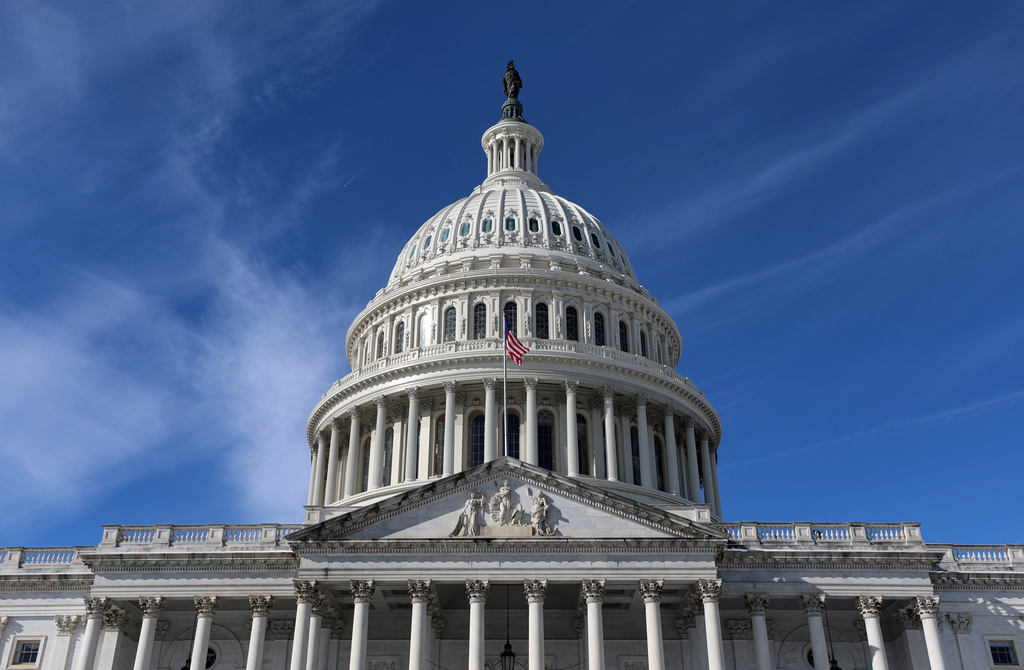
Congressional leaders kicked off America’s 75th National Day of Prayer Thursday with a ceremony at the U.S. Capitol, marking both the milestone anniversary and the nation’s 250 years of history.
House Speaker Mike Johnson and Housing and Urban Development Secretary Scott Turner led the event in Statuary Hall, where Johnson addressed attendees about America’s founding principles.
“Our founders did their best to set up our nation in accordance with his guidelines and principles. And my friends, that is why God has blessed America for 250 years. He is the one that has endowed us with our inalienable rights, among those of the rights of life, liberty and pursuit of happiness,” Johnson said to the assembled crowd.
This year’s observance follows the tradition established in 1952 when Congress passed a joint resolution creating the annual event, which President Harry S. Truman signed into law. The commemoration takes place each year on the first Thursday in May, welcoming Americans of all faith backgrounds to join in prayer for the country.
The 2026 celebration centers around the theme “Glorify God Among the Nations – Seeking Him in All Generations,” drawn from 1 Chronicles 16:24 in the New American Standard Bible.
An evening broadcast from the Capitol’s Statuary Hall was scheduled for 8 p.m. Eastern Time, featuring NDP Task Force leader Kathy Branzell alongside guests including Will Graham, Dr. Rob Pacienza, Os Guinness, Rosemary Siemens, and Eli Bennett.
Branzell authored this year’s official National Prayer, which begins: “Almighty God, King of Glory, we confess our sins and repent of our pride that sought our own glory and comfort, allowing evil to take root instead of Your fruit in our hearts, homes, culture, and country. Please forgive us.”
The prayer continues with themes of renewal and dedication: “Now, with this declaration of rededication, we humble ourselves, pray, and seek Your face, turning from our wicked ways, that You would heal our lives and our land. Please purify and renew our hearts with holy attributes, affections, attitudes, and actions-to love You with all our heart, soul, mind, and strength.”
The text acknowledges America’s history while looking forward: “For 250 years You have guarded and guided America in wisdom, grace, mercy, and love. We praise and thank You for our Founding Fathers, for all who sought You in fervent prayer throughout history and answered Your call to defend justice and freedom.”
The prayer concludes with a commitment to the year’s theme: “We prayerfully commit to ‘Glorify God Among the Nations, Seeking Him in All Generations.’ In Jesus’ name, Amen!”
Motorists traveling along DuPont Parkway (Route 13) are experiencing temporary lane restrictions as construction crews continue their work in the area.
The Delaware Department of Transportation reports that drivers should anticipate periodic lane closures along the stretch of highway between Hyetts Corner Road and American Legion Road. These traffic disruptions are expected to remain in effect until 6 a.m.
Commuters are advised to allow extra travel time and exercise caution when driving through the construction zone. Drivers should remain alert for construction equipment and workers in the area.
A food company based in Zanesville, Ohio has announced it is pulling certain coleslaw products from store shelves due to safety concerns.
My Wife’s Slaw has issued a voluntary recall for both its Original and Jalapeno Heat varieties of coleslaw, which are packaged in 8-ounce and 16-ounce glass mason jars. The recall was announced on May 5, 2026.
According to the company, the coleslaw products are being recalled because they are considered adulterated. The items were manufactured without proper inspection procedures and safety protocols in place.
TEMPE, Ariz. — Arizona Cardinals rookie quarterback Carson Beck believes his challenging college journey will serve him well as he transitions to the NFL.
The 24-year-old signal-caller was selected in the third round of this year’s draft by first-year head coach Mike LaFleur, who appreciated Beck’s experience navigating difficult situations during his six seasons in college football.
Beck could emerge as Arizona’s new starting quarterback following the end of the Kyler Murray era, which concluded poorly last season. During his introduction at the team’s practice facility Thursday, Beck discussed how his struggles — including three seasons as a backup and a serious elbow injury — might benefit his professional career.
“I think going through things and facing adversity helps you — if you respond to it the correct way,” Beck explained. “Just going through stuff doesn’t give me a leg up on anyone if I don’t use that or respond to it the correct way.
“Yes, I’ve faced a lot of adversity in my career. It’s never been perfect. There’s been ups, there’s been downs, there’s been really good moments and really low moments. All that has accumulated and created who I am today as a quarterback.”
The quarterback competition in Arizona features several veterans but lacks high-potential candidates. Jacoby Brissett, 33, took over the starting role for the final 12 games last season after Murray’s foot injury, posting impressive statistics but managing only one victory in 11 starts. The veteran has started 65 games across 10 NFL seasons.
Gardner Minshew, who turns 30 this month, represents the other experienced option. He’s played for five different franchises over seven seasons. Together, Brissett and Minshew have compiled a 37-75 record as NFL starters.
Beck brings extensive college experience, having started 43 games between Georgia and Miami. He guided the Bulldogs to an SEC title in 2024 and led the Hurricanes to a College Football Playoff runner-up finish last season.
Despite Beck’s credentials, Cardinals general manager Monti Ossenfort emphasized a measured approach to the rookie’s development.
“We just want to get him in the building here, show him where the cafeteria is, where the locker room is and get him fitted for his gear,” Ossenfort said in April. “We’re excited to add him. There will be great competition in that room and we’ll see how it shakes out.”
Beck acknowledged his immediate focus isn’t on securing a starting role. Instead, he plans to concentrate on mastering the playbook, adapting to professional football, and absorbing any valuable insights from teammates and coaches.
“Everybody wants to play football, especially at the position of quarterback,” Beck noted. “You want to be the guy out there. It’s such an interesting position. That’s why I think it’s the best position on Earth — there’s only one guy out there.”
The quarterback is approximately 18 months removed from major elbow surgery following a December 2024 injury. This setback prevented him from practicing extensively during his transfer from Georgia to Miami, forcing him to focus on studying film and learning the Hurricanes’ offensive system mentally.
He believes this experience will help him adapt to Arizona’s scheme.
“You come in, you put your hard hat on and you go to work,” Beck said.
Beck represents the Cardinals’ highest quarterback draft selection since Murray was chosen first overall in 2019. Murray arrived with enormous expectations after winning the Heisman Trophy at Oklahoma, earning AP Offensive Rookie of the Year honors and two Pro Bowl selections. However, he struggled with injuries and inconsistent performance.
Murray finished his Arizona tenure with a 38-48-1 record as a starter over seven seasons, leading the team to just one playoff appearance in 2021. He now plays for the Minnesota Vikings.
The Cardinals’ 3-14 record last season resulted in the dismissal of third-year coach Jonathan Gannon. LaFleur, brother of Green Bay Packers coach Matt LaFleur, was hired after three seasons coordinating the Los Angeles Rams offense.
Beck feels physically prepared for the challenge ahead.
“My arm is as strong as it’s ever been,” Beck said. “I feel like I’ve been throwing the ball really well. Obviously, finally having an offseason to train and work and lock in … making sure the mechanics are 100% exactly where I want them to be. I think that will really help.”
NEW YORK — The public dispute between actors Blake Lively and Justin Baldoni appears far from over, even after reaching a legal settlement this week.
Following Monday’s announcement that the parties had resolved Lively’s lawsuit concerning the 2024 movie ‘It Ends With Us,’ her legal representatives issued a statement Thursday declaring the agreement a ‘resounding victory.’
‘By agreeing to this settlement, and waiving their right to appeal, Justin Baldoni and every individual defendant now face personal liability for abusing the legal system to silence and intimidate Ms. Lively,’ attorneys Michael Gottlieb and Esra Hudson said.
The lawyers referenced potential multimillion-dollar financial consequences that a federal judge could impose on defendants for legal expenses and sanctions related to Lively’s costs when Baldoni pursued a countersuit. U.S. District Judge Lewis J. Liman dismissed that counteraction last June, which had accused Lively, her spouse Ryan Reynolds of ‘Deadpool’ fame, and their publicist of defamation and extortion.
In recent court documents, Lively’s legal team stated that federal law mandates ‘severe and mandatory penalties against any party who files unsuccessful retaliatory defamation actions against sexual harassment and retaliation complainants.’
The attorneys also noted that by acknowledging in Monday’s joint statement that Lively’s concerns ‘deserved to be heard,’ Baldoni and co-defendants ‘have ended once and for all the fiction that Ms. Lively ‘fabricated’ claims of sexual harassment and retaliation.’
Her goal was consistently to ‘expose and hold accountable those who weaponize smear campaigns and retaliatory lawsuits to intimidate and silence survivors,’ the lawyers stated. ‘That mission continues.’
Baldoni’s legal representatives have not yet responded to requests for comment.
The original complaint filed by Lively in December 2024 against Baldoni and his production company claimed she and other women endured sexual harassment during filming when Baldoni made comments about their physical appearance and shared personal intimate experiences and pornographic content.
Judge Liman recently dismissed the harassment allegations but allowed certain retaliation claims to proceed toward trial. The court determined Lively could not pursue sexual harassment claims because she worked as an independent contractor rather than an employee during production.
Monday’s settlement resolution of the remaining allegations was officially recorded in court documents Thursday. Financial terms remain confidential.
‘It Ends With Us’ adapts Colleen Hoover’s popular 2016 novel that starts as a romantic story before addressing domestic violence themes. The film surpassed box office projections with a $50 million opening weekend, though its release was overshadowed by rumors of conflict between Lively and Baldoni.
Lively gained recognition in 2005’s ‘The Sisterhood of the Traveling Pants’ and starred in ‘Gossip Girl’ from 2007 to 2012 before appearing in movies like ‘The Town’ and ‘The Shallows.’
Baldoni appeared in the television comedy ‘Jane the Virgin,’ helmed the 2019 film ‘Five Feet Apart’ and authored ‘Man Enough,’ examining conventional masculinity concepts.
A Los Angeles jury has cleared the city of any responsibility in the tragic death of a teenage girl who was fatally struck by an officer’s stray bullet while holiday shopping with her mother nearly three years ago.
The 12-person jury reached their 9-3 decision Thursday following more than a day of deliberations in the wrongful death case involving 14-year-old Valentina Orellana-Peralta. The teen was shopping at a Burlington clothing store in North Hollywood on December 23, 2021, when a police bullet pierced through a dressing room wall and killed her.
The monthlong trial centered on a lawsuit brought by Orellana-Peralta’s parents against the Los Angeles Police Department. The family’s legal team accused the city of wrongful death, negligence, and causing severe emotional trauma, but jurors rejected all claims.
Family attorney Nick Rowley expressed his shock at the outcome in a recorded statement, describing it as “the most devastating loss of my career” and saying he cannot comprehend the jury’s reasoning.
Los Angeles City Attorney Hydee Feldstein Soto acknowledged the family’s profound grief while defending the verdict as appropriate. She noted that the involved officer will continue to “carry the burden of Valentina’s death with him for many years.”
The deadly incident unfolded when police arrived at the store responding to emergency calls about a man attacking two women with a bicycle lock. Officer William Dorsey Jones Jr. joined other armed officers searching the building and discharged his rifle three times, fatally shooting both the attacker and the innocent teenager.
During testimony before the LAPD’s Use of Force Review Board, Jones explained that he confused the bicycle lock for a firearm. The officer also believed the suspect was positioned near an exterior brick wall, unaware that women’s changing rooms were located in that area. One of his bullets bounced off the floor and traveled through the dressing room wall, striking Orellana-Peralta.
The case drew scrutiny from multiple oversight bodies with conflicting conclusions. The Los Angeles Police Commission determined in 2022 that Jones’ initial shot was warranted but his following two shots violated department policy. Former Police Chief Michel Moore disagreed entirely, concluding that all three shots were unjustified.
However, the California Attorney General’s office reached a different determination in April 2024, finding that Jones reasonably believed he faced “imminent death or serious bodily injury” and declining to pursue criminal charges against the officer.
In the weeks leading up to Jeffrey Epstein’s death by suicide at a deteriorating Manhattan detention facility in 2019, guards discovered him on his cell floor – conscious but bearing neck injuries.
The disgraced financier later made a shocking accusation: A corrections officer reported that Epstein blamed his cellmate, Nicholas Tartaglione, for attempting to murder him.
Though Epstein later withdrew these claims, Tartaglione had already become a key figure in the puzzling circumstances surrounding the former financier’s wounds.
Tartaglione, an ex-law enforcement officer facing trial for four murders, offered his own account of what happened. He informed his attorney that Epstein had hidden what appeared to be a suicide note within a book.
While Tartaglione’s legal team received the note, its existence received minimal attention in subsequent years – even following Epstein’s later death, which prompted federal investigation and widespread public doubt.
This Wednesday marked the first public disclosure of the note Tartaglione claimed to discover, after a judge ordered its release from years of courthouse storage during an unrelated legal matter.
Questions persist about the document’s legitimacy, the timing of its creation, and whether its mysterious wording constitutes a suicide message, as Tartaglione maintains.
Following his 2008 disability retirement from police work, Tartaglione allegedly entered drug trafficking and eventually planned the abduction and killing of four individuals in 2016, according to authorities.
Prosecutors state that Tartaglione suspected one victim of stealing money intended for cocaine purchases. The muscular former officer allegedly lured the man to a tavern, tortured him while searching for the missing funds, and ultimately killed him using a zip tie, officials said.
Three companions and family members present at the scene were fatally shot, with all four bodies interred on Tartaglione’s land, prosecutors alleged.
Following his December 2016 arrest, Tartaglione remained in pre-trial detention for three years before becoming Epstein’s cellmate at the Metropolitan Correctional Center.
Tartaglione received his conviction in 2023 and subsequently received four consecutive life sentences.
Jail documentation shows Epstein was discovered in their shared cell at approximately 1:30 a.m. on July 23, 2019. Officials then transferred Epstein to suicide prevention monitoring in a different area. According to the officer’s account, Epstein then sat upright and blamed Tartaglione for the attack, claiming extortion attempts and physical threats.
News of Epstein’s assault allegations spread rapidly, with NBC News reporting within 24 hours that jail administrators were questioning Tartaglione and examining whether an attack occurred.
However, during a follow-up interview with facility personnel one week later, Epstein denied having problems with Tartaglione, stated he felt no threats, and refused to “fabricate something that isn’t there,” according to documentation. He also denied having suicidal thoughts.
Following 31 hours under suicide prevention protocols, Epstein’s status was reduced to psychological monitoring. He had no cellmate when found deceased on August 10, 2019. Authorities discovered a handwritten document in his cell, but it seemed to catalog complaints about unsanitary jail conditions rather than serve as a suicide note. The facility has since shuttered.
Officials determined Epstein died by suicide and concluded the initial incident represented a missed chance to prevent his subsequent fatal attempt.
A timeline within recently disclosed Justice Department documents regarding Epstein’s case indicated Tartaglione contacted his lawyer about the note four days following the suspected July 23 suicide attempt.
Jail personnel failed to reference the note in their report documenting Tartaglione’s late-month interview. “Tartaglione stated he does not understand Epstein’s motive and what he is trying to do,” the document noted. Tartaglione believed Epstein was experiencing cardiac distress.
The document was subsequently entered as evidence in Tartaglione’s drug murder trial and sealed during a disagreement about his legal representation.
During a prison podcast interview last year, Tartaglione referenced the note while attempting to counter persistent conspiracy theories suggesting Epstein didn’t commit suicide. “It was in my book. When I got back into the cell, I opened my book to read, and there it was,” Tartaglione explained.
The short note’s meaning remains unclear.
“They investigated me for month — found nothing!!!” the document states.
“It is a treat to be able to choose” the “time to say goodbye,” it continues. “Watcha want me to do — Bust out cryin!!”
After seven years filled with shocking developments and unresolved questions, the document adds to the confusion and disappointment felt by some accusers.
“It is hurtful to me because I don’t know if Jeffrey Epstein really wrote it, and if he did, when he wrote it,” stated actor and model Alicia Arden, who filed a 1997 police complaint against him that received no action.
Arden questions why the note’s release occurred now. Her attorney, Gloria Allred, noted that while Epstein’s victims seek truth and openness, the note “simply deepens the mystery.”
Jennifer Freeman, representing other survivors, argued the document diverts attention from efforts to examine the government’s management of Epstein’s case and pursue accountability for his enablers.
“We cannot allow the narrative to become muddied by speculation over whether this note is real,” Freeman stated.
False medical rumors circulating on social media platforms have triggered a wave of deadly violence in the Democratic Republic of Congo, resulting in at least 17 deaths according to health monitoring organizations.
The crisis began late last year in Tshopo, a rainforest-covered province in northeastern Congo, when unsubstantiated claims about a mysterious illness causing male genital atrophy began spreading through local communities.
Social media testimonials quickly amplified these baseless fears, creating widespread panic that escalated into lethal mob violence before authorities could intervene effectively.
Four medical professionals conducting vaccination research became victims of this misinformation-fueled rage in October, according to government officials and a team member who survived the attacks.
The violence has extended beyond the initial incident, with the WHO-led Africa Infodemic Response Alliance documenting 17 total fatalities connected to these false rumors, though Reuters was unable to independently confirm all reported deaths.
Elodie Ho, who directs the Nairobi-based monitoring alliance, explained how the misinformation campaign evolved: “It started in communities. It spread into social media and local media. It was amplified by those actors,” she said, noting that the false information “really led to death and murder.”
Reuters’ investigation of more than twelve video testimonials revealed that religious institutions in Tshopo helped propagate the unfounded claims. International social media accounts and regional news outlets also contributed to spreading the misinformation.
Two verified videos showed religious leaders and congregation members at churches in the provincial capital Kisangani claiming that prayer had healed supposed victims of the nonexistent condition.
To document these October incidents and examine misinformation patterns across Africa, Reuters analyzed medical research and interviewed over 20 individuals, including regional administrators, healthcare professionals, and medical specialists.
When contacted by Reuters, a Tshopo government representative confirmed that local authorities had investigated claims from five individuals who said they were affected, but discovered no evidence supporting the existence of such an illness.
Provincial officials have taken action against those who incited the panic. A local court imposed a 12-month prison sentence on a man who falsely accused another person of transmitting the alleged disease, while approximately twelve individuals were arrested, according to government spokespeople.
Medical mistrust in parts of Africa stems partly from colonial-era experiences and more recent problematic Western clinical trials, creating conditions where false health information can flourish.
The African Union’s Africa Centres for Disease Control and Prevention notes that affordable artificial intelligence tools and widespread social media access have intensified this distrust. Limited healthcare access, weak legal systems, and social media usage all contribute to rumor proliferation.
Dr. Jean Kaseya, who leads the African Union’s disease control center, emphasized how false information prevents people from seeking life-saving medical care.
“When populations do not trust vaccines, health workers, or government policies, it means they don’t access services that can help them survive,” Kaseya stated.
Similar attacks targeting community leaders and healthcare workers have occurred in Mozambique and Malawi, connected to false cholera-related information.
A WHO-operated health information line designed to counter medical misinformation has experienced a dramatic increase in calls, jumping from 3,331 in the first quarter of 2025 to 31,636 in the fourth quarter.
Another WHO initiative tracking community interactions has documented approximately 500 incidents since launching last year involving rumors, conspiracy theories, and other misleading information.
Dr. Bavon Tangunza, who manages the misinformation response alliance in Congo, received early warnings about the false illness claims in Tshopo during early October when a colleague alerted him to rumors circulating in the province.
Video testimonials from alleged victims soon emerged online, including footage of a taxi driver speaking at a Christian event in Tshopo, describing how megachurch pastor Jules Mulindwa of the Pentecostal Church Light of the World had supposedly cured him through prayer.
The taxi driver provided no evidence for his claims, and Reuters could not determine his identity or who recorded the video, which displayed the church’s logo. A prominent church worker posted it on TikTok, where it gained widespread viewership and sharing.
The video accumulated over 300,000 views on the Facebook page of Boyoma Revolution, an online news platform registered with a Marseille, France address.
Mulindwa, who presents himself as a prophet with a TikTok channel showing large follower crowds and over 400,000 subscribers, has previously made false claims about curing coronavirus, according to CongoCheck, an online fact-checking organization.
Court records reviewed by Reuters show he received a 12-month prison sentence for defamation last year, though a prosecution lawyer confirmed he has not served the sentence. A close relative working for Mulindwa disputed the conviction when contacted by Reuters.
Mulindwa did not respond to comment requests from the news agency.
Additional footage posted October 3 by a local congregation called Assemblée Chretienne de Kisangani showed pastor Christophore Kabamba claiming to possess a miraculous cure. The church did not respond to Reuters’ inquiries.
James Baka, a Kisangani university student appearing in the video, told Reuters through Facebook messaging that he witnessed others being miraculously healed by the pastor.
When asked for comment, Boyoma Revolution acknowledged no evidence existed for the illness but did not explain why the video remained on their platform.
Meta placed the October video from Mulindwa’s church into their third-party fact-checking review system after Reuters brought it to their attention, according to a company statement.
Meta’s fact-checkers evaluate content on a scale reaching ‘false,’ with each rating carrying different restrictions and labels, based on their misinformation policy for regions outside the United States.
When asked about specific actions taken regarding the material, Meta indicated that fact-checkers determine appropriate ratings independently.
TikTok did not immediately respond to Reuters’ questions.
Tshopo Kwetu, a regional news outlet, also shared posts about the fabricated illness. Director Gaston Mukendi told Reuters his organization published information from various sources as part of their journalistic responsibilities.
He highlighted an interview with a medical student who debunked the rumor as an anxiety-related disorder.
Violence erupted October 6 when healthcare workers arrived in villages within Tshopo’s Isangi area to conduct vaccination surveys.
In Ilambi village, young men accused the health workers of secretly spreading the fake disease after seeing outsiders wearing high-visibility clothing and carrying tablet computers, according to local officials and Jean-Claude Kengefuku Mbatu, a team member who escaped.
Two team members, medical doctors Placide Mbungi and John Tangakeya, attempted to explain their vaccine research, which had no connection to the health scare.
They were killed immediately, officials and Mbatu reported.
“They burned him alive, without even leaving me a trace of him,” Tangakeya’s widow Justine Tangakeya Basekauke told Reuters.
In neighboring Yafira village, their colleagues Mathieu Mosisi and Kevin Ilunga sought assistance from a local police officer, but an angry crowd killed them as well, Tshopo health official Marie Jeanne Lebe told Reuters following a completed incident review.
Reuters could not independently verify all circumstances surrounding the deaths.
The day following the killings, on October 7, the governor’s office released a printed and online statement declaring the rumors false and dangerous.
Over the subsequent month, AIRA’s Tangunza helped develop messages for broadcast in local languages through radio, online platforms, and community workers, while conducting workshops to prepare responses for future misinformation crises.
However, the rumors continue resurfacing months later.
In March, a woman in Congo’s Lualaba province was accused of spreading the disease and lynched, while another person survived an attack, AIRA reported based on local media accounts. Reuters could not independently verify these reports.
Efforts to combat false information face additional challenges as foreign aid cuts from the United States and other nations over the past year have left AIRA with reduced funding, director Ho told Reuters.
The Gates Foundation, one of AIRA’s funders, confirmed an active grant through December but did not indicate whether additional grants were being considered.
AIRA currently maintains personnel in only three countries, including Tangunza in Congo, down from five previously.
An artificial intelligence platform designed to track online conversations for fake information monitoring is currently inactive due to lack of funding for monthly provider subscriptions, Ho explained.
The WHO regional office indicated that discussions are ongoing to secure funding for sustaining and expanding AIRA’s operations.
Two major travel booking platforms reported Thursday that continuing tensions in the Middle East are creating significant challenges for their businesses, as the regional conflict extends into its third month.
Airbnb and Expedia both delivered first-quarter revenues that surpassed analyst predictions, yet their outlook for upcoming months reveals how geopolitical instability is causing widespread travel disruptions and booking cancellations.
Stock prices reflected investor concerns, with Expedia shares dropping 8% in after-hours trading following the company’s projection of second-quarter gross bookings falling short of Wall Street expectations. Airbnb shares declined approximately 1.5% as the company anticipated slower booking growth ahead.
The travel industry has faced mounting pressure since late February attacks involving the United States and Israel against Iran intensified regional hostilities. The escalating situation has forced airspace restrictions around key tourist destinations like Dubai and caused multiple airlines to halt service to affected areas.
While some airline operations have resumed and diplomatic efforts continue, international travelers remain hesitant due to ongoing concerns about potential conflict escalation.
Airbnb reported higher-than-normal cancellation rates spanning Europe, the Middle East, Africa, and Asia-Pacific regions. This places the company alongside industry competitors including Booking Holdings and Marriott, all citing war-related business disruptions.
The vacation rental platform noted that the conflict affected first-quarter booking nights in the Europe, Middle East and Africa region and anticipates continued challenges through the year’s second half.
Expedia experienced similar cancellation patterns across Europe and Asia, with Middle Eastern operations representing roughly 2% of total company revenue.
“The cancellations have subsided as we go into April, but certainly that was an impact,” CEO Ariane Gorin told Reuters in an interview.
Looking at specific projections, Airbnb estimates the ongoing conflict will reduce its second-quarter growth in nights and seats booked by about 1 percentage point. This metric tracks both accommodation bookings and additional services purchased through the platform.
Despite near-term headwinds, Airbnb increased its 2026 revenue growth projection to “low- to mid-teens” from the previous forecast of “at least low double-digits.” This optimism stems from robust travel demand and higher vacation rental pricing in North America and Latin America. Industry analysts predict average revenue growth of 12% for the period.
Domestic U.S. travel, comprising approximately 30% of Airbnb’s total room nights, shows early recovery signs. The market had experienced uneven performance, with budget and mid-range accommodations struggling while premium and luxury options maintained strength.
Seattle-headquartered Expedia projects second-quarter gross bookings between $32.5 billion and $33.1 billion. The forecast’s midpoint falls slightly below the $33 billion average analyst estimate compiled by LSEG.
However, Expedia’s first-quarter performance showed strength with gross bookings climbing nearly 13% year-over-year, powered by solid international travel demand. CEO Gorin noted that revenue growth outside the United States outpaced domestic performance during the quarter.
Gaming giant Wynn Resorts exceeded Wall Street profit forecasts for the first quarter on Thursday, fueled by robust performance at its casino operations in Macau.
The Las Vegas-based company reported that adjusted earnings from its Macau properties climbed more than 10% during the quarter. Wynn operates two major casino resorts in the Chinese territory – Wynn Palace and Wynn Macau – alongside its Las Vegas properties.
Wynn’s adjusted earnings reached $1.25 per share, surpassing analyst projections of $1.18 per share based on LSEG data. The company also recorded a 9.2% increase in total operating revenues for the quarter.
Chief Executive Officer Craig Billings noted the company is “closely monitoring the broader situation in the Gulf region” due to ongoing Middle East conflicts. This comes as Wynn recently restarted construction on its integrated resort project in the United Arab Emirates last month after a brief suspension.
Following the earnings announcement, Wynn’s stock price showed modest gains in after-hours trading sessions.
Authorities have released the name of the victim in Wednesday morning’s deadly single-vehicle accident in Lewes. Delaware State Police say 23-year-old Kenya Hernandez-Gomez of Millsboro lost her life in the crash.
The Delaware State Police Collision Reconstruction Unit continues to examine the circumstances surrounding the fatal incident. Officials are requesting that anyone who saw the accident or has relevant details contact Corporal Grade One K. Marvel at (302) 703-3267. Tips can also be submitted through a private message to the Delaware State Police Facebook page or by reaching out to Delaware Crime Stoppers at (800) 847-3333.
Those affected by crime, witnesses to incidents, or families who have experienced sudden loss can receive support through the Delaware State Police Victim Services Unit and Delaware Victim Center. Help is available around the clock via their toll-free line at 1-800-VICTIM-1 (1-800-842-8461), or by emailing [email protected].
ORLANDO, Fla. — Hip-hop artist Kodak Black finds himself in legal trouble once again after being taken into custody in central Florida on drug trafficking allegations.
Bill Kapri, the 28-year-old performer’s legal name, was processed at Orange County Jail on Wednesday facing felony charges for trafficking MDMA, commonly referred to as ecstasy or molly.
On Thursday, Kapri submitted a written not guilty plea and requested a trial by jury. He also chose to skip appearing personally at an upcoming arraignment in state court. Authorities established his bond at $75,000.
The charges stem from a November incident in Orlando when law enforcement responded to a residential area after citizens called about gunfire. Police arrived to find multiple individuals gathered near high-end luxury SUVs, with Kapri among the group, according to official reports.
A responding officer spotted white powder on a $100 bill inside a Lamborghini SUV that had a marijuana odor, providing grounds to conduct a vehicle search. The investigation uncovered a pink bag holding MDMA in plastic packaging, $37,000 in cash, and multiple documents bearing Kapri’s name, police records indicate.
Investigators noted the pink bag was identical to one visible in a photograph Kapri had shared on his Instagram profile. The bag also held a distinctive lighter that appeared in the same social media post, authorities stated.
Police reports show that all individuals present, including Kapri, denied ownership of the bag. However, Kapri acknowledged the cash belonged to his business operations and requested its return.
Representatives Ambrosia Healy and Kevin Young from Universal Music Group, who handle Kapri’s affairs, have not responded to requests for comment.
This marks another chapter in Kapri’s ongoing legal struggles.
Last year in Plantation, Florida, officers arrested Kapri after discovering him unconscious behind the wheel with white residue around his mouth. While initial testing suggested cocaine, laboratory analysis confirmed the substance was oxycodone, for which Kapri held a valid prescription.
That incident violated terms of his probation from a separate case, resulting in a two-month detention in Miami.
In 2022, Kapri faced charges for oxycodone trafficking and unauthorized possession of controlled substances. He secured release on bond with mandatory drug screening requirements. Court documents show he was mandated to complete 30 days of drug rehabilitation in 2023 after missing a scheduled test and subsequently testing positive for fentanyl.
Former President Donald Trump reduced Kapri’s three-year federal prison term in January 2021, which he received for document falsification in firearms purchases. Kapri had completed approximately half his sentence.
Under his stage name Kodak Black, Kapri has achieved significant commercial success with over 30 million singles sold, including chart-topping tracks like “Super Gremlin,” which climbed to No. 3 on the Billboard Hot 100 in 2022.
Motorists traveling on Calhoun Road southbound are encountering lane restrictions today due to ongoing construction work.
The Delaware Department of Transportation reports that the right shoulder is closed along the southbound lanes between Shawnee Road and the Evan Dukes Lane/Countryside Drive intersection.
The shoulder closure is scheduled to remain in effect until 6 PM today. Drivers are advised to use caution and expect potential delays while traveling through the construction zone.
Motorists traveling on W North Street should prepare for temporary traffic disruptions overnight as crews conduct work requiring intermittent lane restrictions.
The affected area spans the stretch of W North Street from Saulsbury Road to Banning Street, where drivers may encounter periodic lane closures throughout the night.
According to DelDOT officials, the lane restrictions will remain active until 6 AM, after which normal traffic patterns are expected to resume.
Drivers are advised to allow extra travel time and exercise caution when navigating through the work zone during the overnight hours.
American naval forces successfully defended against Iranian military attacks targeting three U.S. Navy vessels while traveling through the strategically important Strait of Hormuz, according to military officials.
The confrontation took place on Thursday as Navy destroyers were making their passage through the waterway, U.S. Central Command announced on social media.
Following the defensive action, American forces conducted retaliatory strikes against Iranian military installations that officials say were responsible for launching the attacks on U.S. personnel.
The incident highlights ongoing tensions in the region as American naval vessels continue regular operations through one of the world’s most critical shipping lanes.
Delaware Department of Transportation crews are conducting construction work that requires periodic closure of westbound lanes on Paper Mill Road overnight.
The affected stretch runs from Polly Drummond Hill Road to North Star Road, where drivers may encounter intermittent lane restrictions as work continues.
According to DelDOT, the westbound lane closures are expected to remain in effect until 5 AM. Motorists traveling through the area should plan for possible delays and consider alternate routes if available.
WASHINGTON — A federal trade court delivered a blow to the Trump administration Thursday, declaring that worldwide tariffs implemented by the president violated federal law.
The Court of International Trade in New York issued a divided ruling, with two of three judges determining that 10% tariffs imposed globally were unlawful following legal action brought by small business owners.
In their majority opinion, two judges concluded that Trump exceeded the authority Congress granted to the executive branch regarding tariff implementation. They described the tariffs as “invalid” and “unauthorized by law.”
The dissenting judge believed federal law provides the president with broader discretion in tariff matters.
Legal experts anticipate the administration will challenge Thursday’s ruling, which would move the case to the U.S. Court of Appeals for the Federal Circuit in Washington before potentially reaching the Supreme Court again.
The disputed tariffs were implemented as a temporary measure following the Supreme Court’s February decision that overturned more extensive tariffs the administration had placed on nearly all nations worldwide last year. These worldwide 10% tariffs, established under Section 122 of the Trade Act of 1974, were scheduled to end on July 24.
NEW YORK (AP) — New York’s governor is standing firm against warnings from President Donald Trump’s immigration enforcement leader, who has vowed to significantly increase federal agents in the state if lawmakers approve restrictions on local cooperation with deportation efforts.
Governor Kathy Hochul made clear Thursday that intimidation tactics won’t change her course of action.
“I don’t take well to threats,” Hochul stated. “We’re going to pass what we think is important to protect New Yorkers.”
The confrontation highlights growing friction as Democratic leaders work to establish boundaries around the Trump administration’s immigration enforcement following what they describe as disorganized and aggressive deportation operations.
The pending legislation would prohibit state and local police from forming partnerships with U.S. Immigration and Customs Enforcement or serving in immigration enforcement roles. The measures would also require ICE agents to obtain court orders before entering protected areas like educational institutions and medical facilities.
Additional proposals from the Democratic governor include prohibiting law enforcement officers from covering their faces with masks during operations and establishing legal pathways for citizens to file lawsuits against ICE personnel.
After announcing Thursday that she had secured agreement from legislative leadership to incorporate the immigration measures into the state’s budget plan, Hochul emphasized her willingness to collaborate on serious criminal cases.
“This does not restrict our ability to help in criminal situations and I want people to understand that, but my God, it has gone too far,” she explained, adding that the state would “help you go after the hardened criminals, the violent, the worst of the worst.”
Border enforcement chief Tom Homan responded to the proposed restrictions during a Fox News appearance, promising substantial increases in federal personnel.
“Of course we’re going to increase manpower, a lot” if New York proceeds with the legislation, Homan declared.
“They can put up all the roadblocks they want, but we’re going to do this job,” he added.
The two officials previously met face-to-face at New York’s state Capitol earlier this year. While their discussion remained private, Hochul revealed Thursday that Homan had assured her “the era of the surges is over” during their conversation.
Republican gubernatorial candidate Bruce Blakeman opposed the governor’s initiative, arguing that his Long Island county’s partnership with ICE has effectively removed “bad people out of our community” while maintaining organized immigration enforcement procedures.
WASHINGTON — Despite President Donald Trump’s ongoing warnings that ‘Cuba is next’ and his suggestions about positioning American naval vessels near the Caribbean island, federal officials confirm no immediate military intervention against Havana is currently being planned.
Government sources involved in early-stage discussions with Cuban leadership told reporters they hold little hope that Cuba’s communist administration will agree to accept an American proposal worth tens of millions of dollars. The package includes humanitarian assistance, two years of complimentary Starlink internet service for Cuban citizens, farming support, and infrastructure development.
However, these officials noted that Cuba has not yet completely rejected the proposal, even after the Trump administration implemented additional economic penalties on Thursday targeting Havana. The aid package comes with requirements that Cuba’s government has historically opposed.
Speaking anonymously to discuss confidential negotiations, the sources emphasized that time remains for Cuba’s leadership to consider the offer. They warned that Trump maintains the flexibility to alter his approach and that military alternatives remain available.
The new economic penalties followed Trump’s executive order from last week that broadened his administration’s power to impose restrictions on Cuba. Both the Treasury and State departments announced these measures.
Cuba’s Foreign Minister Bruno Rodríguez characterized the sanctions as ‘collective punishment’ and criticized what he called the U.S. government’s ‘genocidal intent against Cuba.’
‘These actions rely on the assumption that the United States can impose its will on the world while threatening foreign citizens and businesses with illegitimate coercion,’ Rodríguez wrote on X.
During a Friday speech following the executive order signing, Trump referenced that ‘Cuba’s got problems’ and hinted at potential military demonstrations near the island.
He said one of the U.S. aircraft carriers on its way back from the Middle East could ‘come in, stop about 100 yards offshore, and they’ll say: Thank you very much. We give up.’
An official participating in the discussions explained that the expanded sanctions authority was designed to communicate to Cuban leaders that the Trump administration’s primary objective is ‘not regime change, but changing the regime’s failed policies.’
Secretary of State Marco Rubio, whose parents emigrated from Cuba and who has consistently opposed Cuba’s current leadership, has repeatedly stated that the island’s government has been unsuccessful. This week, he argued that Cuba’s economic system is broken and current leaders ‘can’t fix it.’
‘And the reason that they can’t fix it is not just because they’re communist. That’s bad enough,’ he told reporters Tuesday at the White House. ‘But they’re incompetent communists. The only thing worse than a communist is an incompetent one.’
Rubio is currently visiting Rome and Vatican City, scheduled to meet Pope Leo XIV on Thursday partly to address Cuban matters, where the Catholic Church maintains considerable influence.
One federal official described uncertainty about whether Cuba’s senior leadership would agree to American requirements, which encompass freeing political detainees, ending political and religious oppression, and allowing American private sector investment.
Simultaneously, the official indicated that opportunities for dialogue remain open that could benefit both nations given Cuba’s geographic closeness to America. The United States views China and Russia’s growing presence on the island as a national security concern, including intelligence gathering and logistical cooperation.
Cuban representatives firmly maintain that the country’s internal governance remains non-negotiable.
‘Negotiations on issues like regime change or removing the president are out of the question,’ Cuban Ambassador to the United Nations Ernesto Soberón Guzmán told reporters last week. ‘No internal affairs of Cuba are on the table.’
Guzmán also informed reporters last month that Havana would not comply with any American ‘ultimatums’ regarding political prisoner releases and that Cuban leadership is ‘preparing for all scenarios’ should Trump follow through on intervention threats.
The White House did not immediately respond when asked about potential military action concerning Cuba.
Communication between the Trump administration and Cuba has intensified, including an earlier meeting this year in St. Kitts and Nevis between Rubio and Raúl Guillermo Rodríguez Castro, who reportedly holds substantial influence in Havana as the grandson of former Cuban leader Raúl Castro.
More recently, two high-ranking State Department officials — Jeremy Lewin, who oversees all American foreign assistance, and Michael Kozak, the senior U.S. diplomat for Latin America — headed a delegation to Havana on April 10 and met with Castro’s grandson, according to one federal official familiar with the encounters.
The senior State Department participants had not been previously disclosed. This marked the first U.S. government aircraft to land in Cuba outside of the U.S. Naval Base at Guantanamo Bay since 2016, during former President Barack Obama’s period of improved relations with the island.
The meeting was described as ‘professional and cordial’ but failed to yield concrete outcomes, leaving American delegates doubtful that Cuban leadership would consider even minor reforms that might improve worsening humanitarian circumstances, the official stated.
American officials have frequently dismissed Cuban assertions that the U.S. trade embargo and, more recently, the Trump administration’s energy restrictions are causing the country’s difficulties.
However, Cuba’s problems have worsened following the energy restrictions, implemented after the U.S. removed Nicolás Maduro as Venezuela’s leader in January, eliminating Cuba’s primary energy source.
Cuban officials have condemned American dismissal of their grievances.
‘Traveling 4,500 miles to meet with the Pope, supposedly to request his good offices in delivering U.S. humanitarian assistance to the Cuban people through the Church, while at the same time claiming that the blockade does not exist, is a blatant insult to human intelligence,’ Guzmán said Thursday in a statement.
Storm chaser Ashton Lemley was navigating through the devastation of a Mississippi mobile home community when he detected the distinct cry of a small cat cutting through the early morning silence.
The residential area had been completely destroyed just hours before when severe weather systems generated no fewer than three tornadoes throughout southern Mississippi, leaving a dozen people hurt at the mobile home park in the small town of Bogue Chitto.
Though Lemley couldn’t pinpoint the kitten’s location, he remained committed to locating the animal. The crying suddenly ceased after several minutes, leaving Lemley worried about the kitten’s fate.
However, the meowing resumed five minutes afterward.
“I said, ‘Oh, he’s still alive!’” Lemley shared with The Associated Press on Thursday.
Lemley immediately began digging beneath insulation material from a destroyed wall until his flashlight illuminated the kitten — soaked, frightened and crouched between two wooden supports.
The rescue was recorded on video: “Oh my goodness, I found him!” he tells the camera. “Are you OK? Come here – it’s OK. … We’ll get you cleaned up, baby. Don’t you worry.”
After cradling the kitten briefly, Lemley transferred it to a United Cajun Navy commander, a volunteer emergency response organization member, who dried the animal and ensured its safety. Lemley was amazed the kitten showed no signs of harm.
“I’ve been in these situations so many times,” explained Lemley, who has pursued severe weather since 2010. “I don’t try to get overly emotional. But it is very heartbreaking to see any type of animal or human go through something like that.”
According to Lemley, numerous people have expressed interest in adopting the kitten should its original family not be found. Several potential adopters, he noted, want to call it Tornado.
The kitten won’t be joining Lemley’s household, however: he has a cat allergy.
A dairy operation based in Vernon Center, New York has issued a voluntary recall of their sour cream and onion flavored cheese curds after discovering potential salmonella contamination.
Stoltzfus Family Dairy announced the recall due to concerns that their cheese curd product may contain salmonella bacteria, which poses significant health dangers to vulnerable populations including infants, senior citizens, and individuals with compromised immune systems.
Health officials warn that salmonella infections can lead to severe illness and in some cases may prove fatal, especially among high-risk groups. The contaminated dairy product was distributed from the company’s New York facility.
Consumers who have purchased the affected sour cream and onion cheese curds are advised to dispose of the product immediately and contact their healthcare provider if they experience symptoms of foodborne illness.
For years, Dalene Basden has made it her mission to support struggling families in her community. The dedicated volunteer spends her days working with families who have special needs children, then heads to local soup kitchens to serve meals to those facing hardship.
But now, Basden finds herself confronting the same financial challenges she helps others navigate. Rising fuel costs and grocery store prices are making it increasingly difficult for her to balance her own budget while continuing her volunteer work.
The situation highlights how inflation and economic pressures are affecting even those who dedicate their time to community service. Basden’s experience reflects a growing trend where volunteers and community helpers are themselves feeling the squeeze from increased living expenses.
Despite her own financial concerns, Basden continues her volunteer efforts, demonstrating the commitment that has defined her decades of service to families and individuals in need throughout the community.
The relatives of Austin Tice, an American reporter who vanished in Syria more than ten years ago, now suspect he may have been transported to Iran after Bashar Assad’s government collapsed in 2024, according to his sister Naomi Tice.
Tice, a former Marine whose work appeared in The Washington Post and McClatchy publications, vanished at a Damascus-area checkpoint in August 2014 during his coverage of Syria’s civil war. Video footage released soon after showed armed individuals escorting him away.
According to Houston Public Media, Naomi Tice stated the family suspects Iran’s Islamic Revolutionary Guard Corps could have relocated him from Syria when Assad’s administration fell.
Naomi Tice explained that while Assad repeatedly denied detaining Austin Tice, certain Syrian detention centers operated under Iranian supervision. This arrangement could explain Assad’s denials if Iranian authorities managed facilities housing prisoners.
“With the regime change, we do think, at that point, Austin might have been brought over to Iran during that time,” Naomi Tice said. “Once again, this isn’t confirmed, but we have strong reason to believe that might be the case.”
Extensive searches following Assad’s downfall, including examinations of former Syrian government detention facilities, failed to locate Tice.
Earlier this year, The Media Line’s Rizik Alabi reported the discovery of human remains potentially belonging to Tice in a secluded section of Aleppo province in northern Syria.
Three sets of remains were reportedly found based on information from a former Islamic State operative allegedly connected to the abduction and murder of journalists and activists during Syria’s early conflict years.
Following DNA analysis in the United States, officials confirmed the remains did not match Austin Tice. FBI and Qatari search teams subsequently found additional remains thought to belong to Islamic State casualties, though Tice’s family disputed claims that his remains were discovered and continue asserting he remains alive.
The family is pressing the Trump administration to reach out to Iranian contacts and reports ongoing discussions with US Ambassador to the United Nations Mike Waltz about potential negotiations for Tice’s freedom.
They are also requesting President Trump to pressure Russian President Vladimir Putin to obtain information from Assad, who currently lives in Russian exile, regarding the journalist’s location.
The Tice family has additionally requested Israeli help concerning Khaled al-Halibi, a former Syrian brigadier general currently held in Austria facing war crimes charges. The New York Times publicly identified al-Halibi as a double agent connected to Israeli intelligence.
Jacob Tice, Austin’s brother, believes the FBI should interrogate al-Halibi to gather information that might help determine Austin’s condition or whereabouts.
Family members of Raphael Lemkin, the Polish Jewish scholar who created the word “genocide,” are calling on Pennsylvania state officials to examine a nonprofit organization that bears his name and has accused Israel of committing genocide in Gaza.
The controversy involves a Pennsylvania-based charitable organization called the Lemkin Institute for Genocide Prevention, which claims to focus on preventing mass atrocities and protecting human security. Those opposing the group argue it has exploited Lemkin’s reputation to give credibility to statements critical of Israel. The organization has dismissed these claims and characterized the effort against it as politically motivated.
According to initial reporting by The Algemeiner, Joseph Lemkin, a descendant of Raphael Lemkin, joined forces with the European Jewish Association to petition Pennsylvania Governor Josh Shapiro and the state’s Bureau of Corporations and Charitable Organizations. Their complaint seeks formal action under Pennsylvania’s charitable organization laws rather than simply voicing public opposition to the institute’s stance.
The Washington Free Beacon subsequently revealed that over 100 academics specializing in Holocaust and genocide studies endorsed a letter backing the Lemkin family’s concerns. These scholars contend that the organization’s appropriation of the Lemkin name misrepresents the heritage of a Holocaust survivor who supported Zionism and contributed to developing the Genocide Convention.
The institute made genocide accusations against Israel soon after the October 7, 2023 Hamas assault on Israel, during which militants murdered approximately 1,200 individuals and kidnapped over 250 others. Israeli officials have firmly rejected any genocide allegations, maintaining that their military operations in Gaza constitute legitimate self-defense against Hamas. Meanwhile, South Africa’s genocide lawsuit against Israel continues at the International Court of Justice, which has implemented temporary protective orders but has yet to issue a final determination.
Efforts to strip the organization of its federal tax-exempt standing would encounter significant legal obstacles. The Internal Revenue Service manages federal 501(c)(3) designations, while Pennsylvania’s charitable oversight bureau handles state registration requirements and fundraising regulations. Typically, advocacy work alone, even when highly controversial, does not result in the loss of nonprofit tax benefits.
Drivers using Route 10 in the Lebanon Road and Willow Grove Road area should plan for potential delays today due to ongoing landscaping activities.
Delaware Department of Transportation reports that mowing crews are working along the roadway near the intersection with S Bay Road. The maintenance operation is expected to wrap up by 1 PM this afternoon.
Motorists are advised to use caution when traveling through the work zone and consider alternate routes if possible to avoid delays.
Israel’s Education Minister Yoav Kisch has issued a stark warning to university administrators, demanding they eliminate political activities from their campuses or risk losing government funding through new legislation.
In a Wednesday announcement, Kisch outlined his expectations for university leadership to follow “three clear principles,” which include avoiding political position statements, maintaining continuous campus operations, and “clarifying that there is no place for strikes motivated by political reasons.”
The minister’s directive also seeks to ban political disruptions, campus shutdowns, and work stoppages at higher education institutions.
The Education Ministry defended the initiative, stating “the move is intended to prevent division, preserve the proper functioning of the institutions, and allow all faculty members and students to study, teach, research, and express opinions freely and responsibly.”
Kisch emphasized that higher education institutions should not function as venues for political activism and cautioned that lawmakers might pursue legislation against schools that refuse his demands.
“We are putting an end to the politicization of university presidents,” Kisch declared. “If they wish to promote a political agenda, they are welcome to resign from their positions and run in elections.”
“Academic institutions that enter the political arena — we will advance legislation that will deny them funding,” he continued.
The minister has gained backing from several legislators, including Avichay Buaron.
However, the Association of Heads of Research Universities has firmly rejected Kisch’s demands and criticized him for exploiting academic institutions for political gain.
“We will not allow the Education Minister to drag academia into his political survival battles,” the organization stated.
“It is deeply regrettable that at a time when higher education is fighting international boycotts, the minister chooses to weaken it from within in order to scrounge for votes in the primaries,” the association continued.
The university leaders’ group expressed shock at the minister’s statements, noting that Kisch “never approached us and no discussions were held with him on the matter.”
“To remove any doubt, the heads of higher education have never agreed to any harm to the independence of institutions of higher education,” their statement concluded.
Mysterious explosion-like sounds reported near Iran’s strategic Strait of Hormuz region have injected new complications into delicate US-Iran ceasefire negotiations currently underway.
Iranian news outlets reported hearing multiple blast-like noises Thursday evening near Bandar Abbas, a major port city, and Qeshm Island, both located close to the vital shipping corridor. The source of these sounds remains unclear, with no immediate reports of casualties or damage.
The timing is particularly sensitive as Iran continues evaluating a ceasefire proposal from the United States. Iranian Foreign Ministry spokesman Esmail Baghaei confirmed that Tehran is still reviewing messages delivered through Pakistan, which has served as an intermediary between the two nations. “Iran has not yet reached a conclusion, and no response has been given to the US side,” Baghaei stated.
The peace initiative aims to end hostilities and restore normal shipping through the Strait of Hormuz, though major disagreements persist over Iran’s nuclear activities, American sanctions, maritime access rights, and Iran’s military presence across the region.
President Trump has characterized the negotiations as encouraging while maintaining both military and economic pressure on Iran. American naval forces continue blockading Iranian ports, and Washington is advancing a UN Security Council resolution alongside Bahrain that would impose additional penalties if Iran doesn’t cease ship attacks, stop placing mines in the strait, eliminate vessel tolls, and permit humanitarian shipments.
US Ambassador to the United Nations Mike Waltz met with Gulf state representatives at UN headquarters Thursday as the Security Council moved forward with the proposed resolution. Waltz criticized Iran’s newly created Persian Gulf Strait Authority, saying it forces commercial ships to “check in and pay a bribe, pay a toll” for passage rights. Saudi Arabia, the United Arab Emirates, Kuwait, and Qatar support the American-Bahraini initiative, though China and Russia are anticipated to oppose or block the measure.
European leadership is also becoming more involved in diplomatic efforts. Following discussions with European Commission President Ursula von der Leyen, President Trump announced they were “completely united that Iran can never have a Nuclear Weapon,” explaining that “a regime that kills its own people cannot control a bomb that can kill millions.” Von der Leyen has advocated for any Iranian agreement to cover both nuclear and missile programs while guaranteeing safe passage through Hormuz waters.
The Strait of Hormuz continues serving as the central flashpoint in this standoff. Iran’s establishment of its Persian Gulf Strait Authority to oversee and tax vessels using the waterway has sparked international concerns about navigation freedom. Maritime companies, insurance providers, and energy markets remain uncertain whether Iran’s announced reopening means truly free passage or transit requiring Iranian approval and payment.
Regional powers are increasingly influencing this crisis alongside Washington and Tehran. Saudi Arabia and Kuwait have reportedly removed restrictions on American military access to their facilities and airspace, representing a potential shift after earlier Gulf reluctance to become more deeply involved. This development, initially reported by The Wall Street Journal, would signal significant changes in regional military cooperation if verified, particularly as America seeks to maintain Iranian pressure while preventing broader Gulf warfare.
Saudi Arabia’s stance has proven especially delicate. Riyadh previously resisted American requests to utilize Saudi airspace and bases for “Project Freedom,” the proposed mission to escort commercial vessels through Hormuz. Saudi officials worried that an unclear maritime operation could transform Gulf nations from anxious observers into direct war participants against Iran.
The United Arab Emirates faces greater exposure to the conflict. Iranian strikes on UAE infrastructure and shipping have increased Abu Dhabi’s desire for restored secure navigation, while the eastern Fujairah port remains essential for Gulf commerce beyond Hormuz’s narrowest sections. The UAE has also expressed growing dissatisfaction with regional energy politics, including its reported withdrawal from the Organization of the Petroleum Exporting Countries during this crisis.
Bahrain is contributing diplomatically through the UN initiative regarding Hormuz. This involvement carries significance since Bahrain hosts major American naval facilities and has maintained close security partnerships with Washington. Bahrain’s participation in the draft resolution demonstrates how the maritime crisis has become a measure of whether Gulf states can convert their reliance on open shipping lanes into unified diplomatic pressure against Iran.
Israel remains connected to the broader conflict through both Iranian and Lebanese fronts. The current war started with American and Israeli attacks on Iran, followed by Iranian missile and drone strikes against Israel and Gulf Arab nations. While US-Iran ceasefire discussions continue, Israel has also targeted Hezbollah positions in Beirut and eastern Lebanon, reportedly eliminating a senior Hezbollah leader. This keeps Lebanon within the conflict’s sphere, despite formal negotiations occurring between Washington and Tehran.
Thursday evening’s explosion reports introduce additional uncertainty to an already complex situation. Iran’s semi-official Fars news agency documented multiple blast-like sounds near Bandar Abbas, with other Iranian sources describing similar noises on Qeshm Island near shipping channels. The cause remains undetermined, with no confirmed information about casualties, destruction, or responsibility.
These explosion reports require careful evaluation at this point. No verified evidence indicates whether they resulted from airstrikes, sabotage, air defense activity, naval operations, or industrial accidents. However, the location is significant. Bandar Abbas and Qeshm are positioned near Iran’s maritime infrastructure center, and any unexplained incidents there can disturb diplomatic progress, insurance markets, and shipping decisions.
The current situation represents managed instability rather than peace. Washington seeks Iranian reopening of Hormuz without acknowledging Iranian authority over the waterway. Tehran desires sanctions relief without abandoning its nuclear advantages. Gulf states want shipping restored while avoiding becoming targets themselves. Europe aims to prevent Iranian nuclear weapons development while protecting global energy supplies. Israel seeks Iranian weakening and Hezbollah containment. Lebanon remains susceptible to spillover effects from both conflicts. Currently, a ceasefire proposal awaits response, the strait remains restricted, regional players are reassessing positions, and the Gulf stands one unexplained explosion away from another dangerous escalation.
Government ministers in Israel are preparing to cast votes this Sunday on controversial legislation that would limit citizenship eligibility to those who undergo Orthodox Jewish conversions only, effectively overturning a significant 2021 Supreme Court decision that had acknowledged Reform and Conservative conversions under the nation’s Law of Return statute.
The legislation comes from Simcha Rothman, who serves as chairman of the Knesset Constitution, Law and Justice Committee and represents the Religious Zionism party.
Under Rothman’s proposal, Jewish conversion would be narrowly defined as procedures carried out “in accordance with halakha,” which refers to traditional Jewish religious law.
Should the bill become law, it would nullify Reform and Conservative conversion ceremonies conducted within Israel when it comes to immigration and citizenship matters.
Rothman defended the legislation by stating it aims to restore “the principles established by the founders of the state” while preserving “the unity of the Jewish people” both within Israel and internationally.
The new proposal stands in direct opposition to the groundbreaking 2021 Supreme Court ruling, which determined that individuals who underwent non-Orthodox conversions within Israel should be acknowledged as Jewish under the Law of Return and thus qualify for Israeli citizenship.
Currently, Israel’s immigration policy accepts non-Orthodox conversions for Law of Return purposes, though the Orthodox-dominated Chief Rabbinate does not recognize these conversions for marriage and divorce proceedings.
The proposed changes are anticipated to strain relationships with Jewish communities beyond Israel’s borders, especially in North America, where Reform and Conservative movements hold significant influence in Jewish community affairs.
This legislative push follows a previous unsuccessful attempt last year by Avi Maoz from the Noam party, who tried to eliminate automatic immigration privileges for people with Jewish grandparents who don’t meet religious law criteria for Jewish identity.
Should the Ministerial Committee on Legislation give its approval to Rothman’s proposal, the bill would gain official government support as it moves forward through the Knesset’s legislative procedures.
Health officials in Argentina are conducting an investigation to determine if their nation served as the starting point for a deadly hantavirus outbreak that struck passengers aboard the MV Hondius cruise ship during an extended Atlantic Ocean journey.
The outbreak resulted in fatalities among passengers and led to the identification of at least eight suspected cases of the dangerous virus during the month-long voyage. Medical testing has verified two infections with the Andes strain of hantavirus, while three individuals required emergency medical evacuation from the ship this past Wednesday.
Investigators are working to pinpoint exactly where passengers may have been exposed to the virus. Officials are reviewing travel records and timelines to establish whether contact occurred prior to the ship’s April 1st departure from Argentina bound for Antarctica, during a port call at an isolated South Atlantic island, or while passengers were on the ship itself.
According to the World Health Organization, Argentina holds the distinction of having the globe’s highest rate of hantavirus infections. The disease transmits through exposure to contaminated rodent bodily fluids including saliva, urine, and droppings.
Data from Argentina’s Health Ministry shows 101 hantavirus cases have been documented since June 2025, representing approximately twice the number seen in the prior year.
The specific Andes strain discovered among MV Hondius passengers is capable of triggering hantavirus pulmonary syndrome, a serious lung condition that frequently proves deadly.
Argentine medical experts believe environmental shifts may be playing a role in the virus’s expansion.
Infectious disease specialist Hugo Pizzi explained to the Associated Press: “Argentina has become more tropical because of climate change, and that has brought disruptions, like dengue and yellow fever, but also new tropical plants that produce seeds for mice to proliferate.”
“There is no doubt that as time goes by, the hantavirus is spreading more and more,” he said.
Medical authorities across several nations are actively tracking passengers and crew members linked to the disease outbreak.
The Netherlands has taken in three evacuated individuals for medical care, while Swiss health officials have confirmed a positive test result in a passenger who returned to their home country. Meanwhile, South Africa is providing intensive care treatment for a British patient.
Additional passengers are being monitored in isolation in Britain, the United States, and Singapore, with most showing no symptoms at this time. Dutch authorities are also conducting tests on a KLM airline crew member who may have been exposed through contact with a passenger who died last month in South Africa.
Israeli President Isaac Herzog conducted a groundbreaking diplomatic mission to Panama City on May 6, 2026, marking the first time an Israeli head of state has officially visited the Central American nation. During the historic trip, Herzog and Panamanian President José Raúl Mulino committed to deepening collaboration across multiple sectors including security, commerce, technology, agriculture, innovation, health, and water management.
The Israeli leader received an official welcome at the Presidential Palace, where he participated in both private discussions and expanded bilateral talks with Mulino aimed at enhancing strategic partnerships between their nations.
Following their discussions, Herzog expressed gratitude for Panama’s longstanding support of Israel and highlighted the strong relationship between the countries.
“We will never forget how Panama stood with the Jewish people at the dawn of our statehood, supporting the historic resolution on Israel’s establishment, and formalizing relations just weeks after our independence,” Herzog said.
The Israeli president also spoke about his country’s ongoing conflict with Iran-supported organizations following the Oct. 7, 2023, Hamas attack.
“Since the horrific massacre of October 7th, 2023, Israel has faced a multi-front war with Iran and its terror proxies, including Hamas, Hezbollah and the Houthis,” Herzog said. “We did not seek this war. But we will defend our people.”
Herzog cautioned that Iran’s influence reaches far beyond Middle Eastern borders and recalled Hezbollah’s 1994 bombing attack in Panama.
“Latin America has felt the long arm of Iranian terror,” he said. “Right here on Panama’s soil, Hezbollah murdered 20 innocent civilians in a horrific terror attack in 1994.”
“The international community cannot turn a blind eye to the chaos that the Iranian regime seeks to spread throughout the world,” he added.
The Israeli leader also commended President Trump’s approach to addressing Iran’s nuclear program, describing it as “courageous and necessary.”
Mulino characterized Herzog’s trip as “a historic milestone in Israel-Panama relations” and noted that the partnership between their countries has developed over more than seven decades based on “trust, mutual respect, and cooperation.”
Prior to the presidential meetings, Herzog visited the Panama Canal with Panamanian Foreign Minister Javier Martínez-Acha Vásquez, where he learned about the waterway’s strategic significance and potential areas for cooperation in trade, infrastructure, and innovation.
While at the canal, Herzog drew comparisons between Panama’s role in maintaining global shipping lanes and the disruptions to maritime traffic occurring in the Middle East.
“This is a beautiful example of how to lead and enable freedom of navigation and maritime freedom, as opposed to what we see in the Straits of Bab al-Mandab in the Red Sea, or in the Strait of Hormuz in the Gulf,” Herzog said. “We must all stand up firmly against any blockage of maritime capability and movement around the world.”
Vásquez described the visit as “a very historic and symbolic visit” and expressed Panama’s desire to strengthen partnerships with Israel in commerce and innovation.
Before traveling to Costa Rica to attend President-elect Laura Fernández Delgado’s inauguration, Herzog and First Lady Michal Herzog met with members of Panama’s Jewish community, including students and community leaders.
Speaking to Jewish students, Herzog emphasized the importance of community unity.
“Our unity means a lot,” he said. “Our enemies don’t differentiate between the way we practice Judaism, and Jews all over the world should have the full right to practice their Judaism without harassment, without fear.”
NEW YORK — New York Knicks forward OG Anunoby is dealing with a right hamstring strain but appears to have dodged a major injury after exiting during the final moments of Game 2 in the Eastern Conference semifinals.
According to a source familiar with the situation who spoke to The Associated Press on Thursday, Anunoby’s status for Friday’s Game 3 matchup in Philadelphia remains uncertain, with team officials listing him as questionable. The injury will be monitored on a day-to-day basis.
The source requested anonymity since no official team announcement had been made regarding Anunoby’s condition. ESPN initially broke the news of his injury status.
During Wednesday’s contest, Anunoby was delivering another solid performance when he appeared to injure his leg and signaled to be substituted out of the game. He departed for the locker room and never returned to the sideline as the Knicks secured a 108-102 win, extending their series advantage to 2-0.
The talented forward contributed 24 points in that victory and has been exceptional throughout the playoffs, posting averages of 21.4 points per game while connecting on an impressive 61.9% of his field goal attempts and 53.8% from beyond the three-point arc.
The 6-foot-7 Anunoby, who serves as New York’s premier defensive player, previously dealt with a hamstring issue during the second round two seasons ago when the Knicks held a 2-0 series lead against Indiana. That injury sidelined him for four consecutive games, and he managed only limited minutes in Game 7 as the Pacers mounted a comeback to eliminate New York from the playoffs.
NEW YORK (AP) — Wealthy individuals who purchase expensive second residences in New York City while maintaining their primary residence elsewhere will face a new property tax under a preliminary agreement announced as part of Governor Kathy Hochul’s budget proposal Thursday.
The measure represents a compromise that falls short of Mayor Zohran Mamdani’s broader goal of implementing sweeping income tax increases on New York’s wealthiest residents — a campaign promise that helped propel him to office with supporters chanting demands to “tax the rich.”
This proposed levy on multi-million-dollar secondary residences, commonly called pied-à-terres, emerges as Democratic leaders attempt to balance voter concerns about cost of living with maintaining positive relationships with the business sector ahead of upcoming midterm elections.
Opposition has come from various quarters, including influential business figures, Republican officials, and centrist Democrats, who argue that imposing additional taxes on wealthy individuals who own apartments and homes in New York without claiming them as primary residences will simply drive the ultra-rich away from the city.
While specific details remain under development, Hochul indicated the tax would target properties exceeding $5 million in value. The policy would exclusively affect second homes within New York City limits, excluding other wealthy enclaves across the state such as the Hamptons on Long Island.
Governor Hochul projected the tax would generate a minimum of $500 million in annual revenue for the city.
Following the governor’s announcement, state legislative leaders cautioned that significant negotiations remained ahead. Democratic Assembly Speaker Carl Heastie emphasized that “There is no budget deal,” noting that crucial financial components of the budget still required resolution.
The New York City chapter of the Democratic Socialists of America, which counts Mamdani among its members, criticized the budget proposal through text messages to supporters, arguing it inadequately addresses the city’s multi-billion-dollar budget shortfall or provides sufficient funding for essential social programs.
“Hochul is trying to shove a deal down our throats with no new taxes on the rich besides the pied-a-terre tax, which only fills 10% of NYC’s deficit,” stated organization co-chair Gustavo Gordillo.
Governor Hochul, a Democrat seeking reelection, has rejected broader tax increases on wealthy residents, expressing concerns that such measures could prompt affluent individuals and businesses to relocate to states with lower tax burdens.
“We were able to accomplish this extraordinary budget, with all these accomplishments, without raising statewide taxes at all,” Hochul explained to reporters Thursday.
Mayor Mamdani has characterized the pied-a-terre tax as a political win while continuing to advocate — sometimes through personal appeals — for additional targeted tax increases on the extremely wealthy.
In a publicity move last month designed to generate enthusiasm for the new tax proposal, the mayor filmed himself outside a luxury building where billionaire hedge fund executive Ken Griffin acquired a penthouse for approximately $239 million.
“When I ran for mayor, I said I was going to tax the rich,” Mamdani declared in the video, which garnered over 52 million views on X, before specifically naming Griffin. “Well today, we’re taxing the rich.”
Griffin subsequently expressed alarm about the video, describing it as “frightening” and potentially compromising his personal security. He referenced the recent shooting death of UnitedHealthcare CEO Brian Thompson in the same area, allegedly by someone motivated by anger toward corporate greed. Griffin announced his company’s decision to expand operations in Miami.
“What the mayor of New York has made clear to my partners, and principally my New York partners, is we need to double down on our bet in Miami,” he commented at an economic conference in California this week. “Because we want to be in a state that embraces business.”
Flight data recently made public indicates that fuel was deliberately shut off to both engines of a China Eastern Airlines aircraft before it crashed into a mountain in 2022, claiming the lives of all 132 passengers and crew members.
The National Transportation Safety Board disclosed findings from the Boeing 737-800’s flight data recorder following a public records request. U.S. investigators joined the Chinese probe since American manufacturers built both the aircraft and its engines, with the NTSB recognized globally for its expertise in black box analysis following aviation disasters.
While aviation safety specialists concur that the information demonstrates both engines failed and someone forced the aircraft into a steep dive plus a complete 360-degree rotation, definitive conclusions remain elusive. China’s Civil Aviation Administration has not yet published its final investigation findings more than four years after the incident, despite international protocols recommending crash reports be completed within approximately one year.
The NTSB document bears a July 1, 2022 date and was made public on May 1, though media coverage only emerged this week.
John Cox, CEO of Safety Operating Systems, explained that Boeing 737 fuel controls are engineered to prevent accidental activation. “The levers lock into place, so it’s likely that someone deliberately moved them both to the cutoff position,” Cox stated. Operating these controls requires pulling them outward first to unlock them before movement is possible.
Recording ceased while the aircraft remained at 26,000 feet after the flight recorder and hydraulic systems lost power, but the preceding 12 minutes of data provide crucial insights into the sequence of events.
Though the cockpit voice recorder continued functioning on battery power, the NTSB has not released transcripts from those recordings, leaving that disclosure to Chinese authorities.
Former NTSB and Federal Aviation Administration crash investigator Jeff Guzzetti believes the flight information points to a cockpit confrontation and potential pilot suicide, similar to previous incidents including a 2015 Germanwings crash in the French Alps that killed everyone aboard.
“Typically when you want to roll an airplane, it’s a smooth movement of the control wheel in one direction. But here you have it moving back and forth, back and forth, as if someone is trying to counter the initial movement of the roll,” Guzzetti explained. “So it’s not conclusive, but it sure has the earmarks of a struggle in the cockpit.”
These revelations highlight ongoing aviation industry worries about pilot mental health support. Many aviators hesitate to seek psychological assistance due to fears of losing medical certification and being prohibited from flying. Recertification processes can extend for months without pay, while some nations ban pilots from using standard psychiatric medications like antidepressants.
“Clearly pilots — and very understandably so — are oftentimes reluctant to come forward, knowing that to get recertified after having gone through a mental health evaluation, it can be very arduous and very lengthy,” Cox noted.
Guzzetti referenced an Egypt Air co-pilot suspected of deliberately crashing his aircraft into the ocean near New York in 1999. More recently in 2023, an off-duty pilot who had consumed psychedelic mushrooms attempted to disable engines on a Horizon Air flight while occupying the cockpit jump seat.
The March 21, 2022 disaster occurred as the jet traveled from Kunming in southwestern China to Guangzhou near Hong Kong. The aircraft entered a steep descent from approximately 29,000 feet, briefly appeared to recover, then struck the mountainside. Impact created a 65-foot crater and ignited surrounding forest.
Flight crew members reported no difficulties before losing communication with air traffic controllers. Chinese investigators found no mechanical defects with the aircraft or crew issues, nor adverse weather conditions.
Cox confirmed the NTSB findings show no indication of aircraft malfunction.
The tragedy marked an unusual safety failure for China’s airline industry, which significantly enhanced its safety record following fatal accidents during the 1990s. China Eastern operates as one of four major government-owned carriers in the nation.
A handwritten message that Jeffrey Epstein’s former cellmate says he discovered following the financier’s initial suicide attempt in 2019 has now been released to the public through an unexpected legal avenue – not through Justice Department document releases, but via separate court proceedings.
Federal officials maintain they had no prior knowledge of the document’s existence.
“The note has not yet been authenticated, and this is the first time DOJ is seeing it as well,” the department stated Thursday when questioned about why the document wasn’t included in the extensive Epstein file releases.
Nicholas Tartaglione reported finding the handwritten message inside a book following the incident where the convicted sex offender was discovered in their shared Manhattan federal detention facility cell with bedsheet material wrapped around his neck. Following this event, Epstein was relocated to different housing, where he would later be found deceased several weeks afterward in what was ruled a suicide.
Tartaglione, a former law enforcement officer who was then facing homicide charges, explained he turned the note over to his legal team as protection against potential accusations that he had injured Epstein during their time as cellmates. At the time, Epstein was being held while awaiting trial on sex trafficking allegations.
The document had been stored in a federal court vault in New York since 2021. It became entangled in legal disputes between Tartaglione and his attorneys regarding their representation in his murder case. All materials related to this conflict were kept confidential by judicial order due to attorney-client privilege protections.
Tartaglione, a former suburban New York police officer who later became involved in drug trafficking, received a conviction in April 2023 for strangling one victim and executing three others. He claimed to have found the note while reading in his detention cell.
The New York Times filed a petition with U.S. District Judge Kenneth Karas requesting the note’s release, pointing out that Tartaglione, now serving life imprisonment, had discussed it publicly. The judge granted the request Wednesday, stating that Epstein’s privacy concerns regarding the note had been “vastly reduced” following his death.
“They investigated me for month — found nothing!!!” reads the brief message, which contains some illegible portions and remains unverified. “It is a treat to be able to choose” the “time to say goodbye,” the note continues. “Watcha want me to do — Bust out cryin!!
“NO FUN. NOT WORTH IT!!” the message concludes.
Detention facility records indicate Epstein sustained friction marks and neck irritation from the suspected July 23, 2019, suicide attempt. Correctional officers reported he was breathing laboriously but remained conscious. Epstein initially told guards that Tartaglione had assaulted him, but subsequently withdrew this claim.
Following the incident, jail administrators placed Epstein under suicide watch for 31 hours before reducing his status to psychiatric observation, which remained his classification when he took his own life on August 10, 2019.
The Justice Department raised no objections to making the note public. Deputy U.S. Attorney Sean Buckley informed the judge that the public had legitimate interest in understanding the circumstances of Epstein’s death.
Buckley also explained that while two Justice Department attorneys participated in the 2021 proceedings between Tartaglione and his legal counsel, the judge prohibited them from sharing any information from those sessions to preserve attorney-client privilege. Therefore, even if they had viewed the note, they were legally prevented from disclosing its existence.
MINNEAPOLIS — A Minnesota resident who attacked Democratic Congresswoman Ilhan Omar by dousing her with vinegar during a public meeting entered a guilty plea Thursday in federal court following negotiations with prosecutors.
Anthony Kazmierczak, 55, now faces sentencing after admitting to the assault charge.
Appearing in court wearing bright orange detention attire, Kazmierczak offered only limited details Thursday about the January 27th incident, which occurred during heightened tensions in Minneapolis following deadly encounters between federal agents and civilians during an immigration enforcement operation that brought thousands of officers to Minnesota.
When asked by U.S. District Judge Joan N. Ericksen to describe his recollection of the attack, Kazmierczak responded: “It’s fuzzy.”
During Omar’s January public forum, Kazmierczak suddenly stood up from his seat in the audience when the congresswoman demanded the removal of then-Homeland Security Secretary Kristi Noem. Court records indicate he discharged liquid from a syringe while yelling that Noem would remain in her position and accusing Omar of “splitting Minnesota apart.”
Security personnel immediately subdued Kazmierczak, who informed them the substance was vinegar.
“I didn’t want anybody to think she was in danger,” he stated Thursday.
Omar sustained no injuries and proceeded with the town hall following Kazmierczak’s detention.
Investigation revealed he had sprayed her with a combination of water and apple cider vinegar. Federal prosecutors charged him with assaulting a government official.
Legal filings reveal that Kazmierczak, who opposed Omar politically and posted content supporting President Donald Trump online, previously told an acquaintance years earlier that “somebody should kill” her.
Omar, who came to the United States as a Somali refugee, has frequently been targeted by Trump’s anti-immigration messaging. Following her election seven years ago, Trump suggested she should “go back” to Somalia. He has called her “garbage” and demanded investigations into her conduct.
Trump has additionally claimed Omar orchestrated the attack herself, telling ABC News, “She probably had herself sprayed, knowing her.”
During Thursday’s proceedings, Kazmierczak informed Judge Ericksen that he receives treatment for Parkinson’s disease and has been diagnosed with ADHD and a type of post-traumatic stress disorder.
Following his detention, his former legal counsel indicated he lacked access to necessary medications for Parkinson’s and other serious medical conditions.
Minnesota court files show Kazmierczak was found guilty of felony vehicle theft in 1989 and has faced multiple drunk driving arrests along with numerous traffic violations. Records also suggest he has experienced substantial financial difficulties, including two bankruptcy proceedings.
In online posts, Kazmierczak had attacked former President Joe Biden and labeled Democrats as “angry and liars.” He wrote that Trump seeks to make America “stronger and more prosperous.”
Congressional security data shows threats against lawmakers have risen in recent years, reaching a high point in 2021 after the January 6 Capitol riot by Trump supporters, then declining briefly before increasing again.
A Triple-A baseball manager for the Detroit Tigers organization has been dismissed from his position after acknowledging he sent an inappropriate text message to a female coworker.
Detroit’s front office announced on Tuesday that Gabe Alvarez was terminated due to what officials described as a “violation of club policy,” though they declined to provide specific details about the infraction.
Speaking to ESPN on Wednesday, Alvarez explained that he had sent “a single text message to a colleague that I intended as a lighthearted joke.”
“Shortly after sending it, I recognized that the message was inappropriate and did not reflect the values and judgment I strive to uphold, and I immediately reached out to clarify my intent,” Alvarez stated.
“I never intended to cause discomfort or offense, and I regret that the message created this situation. This was an isolated incident and not reflective of my long-standing record of professionalism, respect for colleagues, and conduct over the course of my career.”
The 52-year-old Alvarez spent portions of three major league seasons playing third base for Detroit and the San Diego Padres before transitioning to coaching at USC. Detroit brought him aboard as a minor league hitting coordinator in 2021, where he managed Double-A Erie starting in 2022 before his recent promotion to oversee Triple-A Toledo in 2025.
This dismissal comes amid broader concerns within the Tigers organization regarding workplace conduct. Last September, The Athletic published findings showing that Detroit had at least eight staff members facing allegations of inappropriate behavior toward women during a two-year period. That investigation spanned from April 2025 and involved interviews with 45 current and former personnel, plus examination of emails, HR files, text communications and legal documents.
According to the report, six of the eight men allegedly involved in harassment and abuse were either fired or not offered contract renewals, while another received a suspension following The Athletic’s inquiry about the accusations.
At the time, the organization released a statement emphasizing its “commitment to a culture of respect, safety, and inclusion.”
With Alvarez’s departure, hitting coach Mike Hessman has stepped into the interim manager role. Speaking to media in Toledo on Tuesday, Hessman indicated the team’s focus remains on baseball despite the recent upheaval.
“There will be questions, we don’t have a lot of answers,” Hessman remarked. “Main message is getting back to baseball. Things happen throughout a season. … One hurdle we’ll jump over.”
Following a challenging period for government employees nationwide, a group of United States Department of Agriculture scientists has received recognition with the prestigious Service to America medal. The research team’s multi-decade efforts have fundamentally transformed dairy farming operations.
The award comes during what has been described as a difficult time for those working in federal agencies across the country. Despite these challenges, the USDA team’s commitment to agricultural innovation has continued to drive significant advances in the dairy sector.
The Service to America medal represents one of the highest honors available to federal employees, recognizing exceptional contributions to public service and national welfare.
For years, Dalene Basden has dedicated her life to supporting those who struggle financially. However, escalating fuel and food costs are now putting financial pressure on Basden herself.
Basden works full-time assisting families who have children with special needs, then volunteers her time at a community soup kitchen. Despite her commitment to helping others, the current economic climate has made it increasingly difficult for her to manage her own household expenses.
The rising prices at gas stations and grocery stores have created a challenging situation for someone who has made serving others her life’s mission. Basden represents many community volunteers and social workers who find themselves caught between their dedication to helping others and their own financial struggles.
NEWARK, Del. – Delaware’s ice hockey team has landed another transfer player to bolster its roster for the upcoming 2026-27 campaign. Head coach Allison Coomey revealed Thursday that defenseman Shea Frost will be joining the Blue Hens program.
The Andover, Massachusetts native brings substantial collegiate experience to Newark, having competed for four seasons with the Boston College Eagles. Frost represents the second transfer acquisition for Delaware’s hockey program within the current month.
The addition of Frost continues the Blue Hens’ efforts to strengthen their defensive corps as they prepare for the 2026-27 ice hockey season under Coomey’s leadership.
The University of Delaware baseball squad is preparing for a road trip to Texas this weekend as they face Sam Houston State University in a Conference USA series.
The Blue Hens will take on the Bearkats in what promises to be an important conference matchup for both teams. This weekend series continues Delaware’s participation in Conference USA competition.
The games will be played at Sam Houston State University’s home facility as part of the regular conference schedule. Further details about game times and broadcast information are expected to be announced.
NEW YORK — The New York Yankees dominated the Texas Rangers with a 9-2 victory on Thursday, extending their impressive streak to 16 victories in their last 19 contests, though the win came at a cost when outfielder Jasson Domínguez sustained an injury.
Domínguez was carted off the field after colliding with the outfield wall while making a catch on Brandon Nimmo’s fly ball to start the game. Following the contest, team officials announced that Domínguez suffered a minor AC joint sprain in his left shoulder and will be placed on the injured list. Initial concussion evaluations came back negative.
Trent Grisham delivered the decisive blow with a three-run double during a decisive six-run rally in the sixth inning, helping the American League-leading Yankees capture their sixth consecutive series victory while the Rangers dropped their seventh game in their past 10 outings.
The Yankees faced an early challenge when scheduled starter Ryan Weathers was ruled out due to illness. Paul Blackburn took the mound for the opening frame, while 27-year-old right-handed pitcher Brendan Beck made his major league debut, surrendering two runs on two hits and three walks across three-plus innings.
Brent Headrick earned his third victory of the season by throwing 1 1/3 scoreless innings without allowing a hit. Both Grisham and Cody Bellinger collected three hits apiece in the offensive showcase.
Max Schuemann made his season debut at shortstop and recorded his first Yankees hit and RBI with a double in the seventh frame.
Texas right fielder Joc Pederson, making his first outfield appearance since 2023, contributed to the Yankees achieving a rare feat – recording two triples in the opening inning for the first time since Carlos Beltrán and Chase Headley accomplished it on April 22, 2015.
The Rangers struggled with difficult sun conditions throughout the afternoon, mishandling four separate plays. Pederson and center fielder Evan Carter both pursued Paul Goldschmidt’s opening drive off MacKenzie Gore (2-3), allowing the ball to carom into center field for a triple. Pederson later attempted a diving backhand catch on Bellinger’s liner, but the ball bounced to the wall as Goldschmidt crossed home plate.
Additional defensive miscues plagued Texas when Grisham’s fourth-inning popup landed on the infield grass in front of shortstop Corey Seager after third baseman Josh Jung retreated. Later, following Bellinger’s sixth-inning walk, left fielder Alejandro Osuna initially broke backward on Amed Rosario’s routine fly ball and couldn’t adjust as it dropped for a single.
After Ryan McMahon drew a walk, Grisham connected on an opposite-field double that reached the left-center wall, giving the Yankees a 4-2 advantage. J.C. Escarra, Aaron Judge, and Bellinger then delivered consecutive RBI singles against the Rangers’ relief pitching.
Ezequiel Durán provided Texas with two RBIs, highlighted by a third-inning home run. Rangers right-hander Peyton Gray exited the game after taking a line drive from McMahon off his pitching hand in the eighth inning.
Looking ahead, the Rangers will send RHP Kumar Rocker (1-3, 4.71) to the mound Friday night at home against the Chicago Cubs, while the Yankees will start LHP Max Fried (4-1, 2.39) in Friday night’s series opener at Milwaukee against RHP Jacob Misiorowski (2-2, 2.84).
Drivers using Old Mill Bridge Road are experiencing traffic delays this evening as construction crews work along a busy stretch of the roadway.
The Delaware Department of Transportation reports that flaggers are managing traffic flow between Waters Run and County Lane, where lanes are being temporarily closed as work progresses. The construction activity is expected to wrap up by 8 PM tonight.
Motorists are advised to allow extra travel time and exercise caution when approaching the work zone. Drivers should follow the directions of flagging personnel and maintain reduced speeds through the construction area.
Escalating fuel costs are creating financial pressure for the overwhelming majority of American families, according to recent findings. The burden of higher prices at the pump is stretching household budgets across the nation.
The economic strain is reaching even those whose careers involve supporting families in need. One social services worker shared how the mounting costs are now impacting her own financial situation, despite her role in helping others navigate similar challenges.
State authorities in New Mexico have revived a criminal probe and established a legislative panel to examine abuse allegations connected to Jeffrey Epstein’s massive ranch property.
The renewed investigation focuses on the sprawling 10,000-acre estate once owned by the disgraced financier. Officials have simultaneously created a legislative committee dedicated to reviewing the claims of misconduct at the remote property.
The dual approach represents a significant development in ongoing efforts to investigate activities that may have occurred at Epstein’s various properties before his death in federal custody.
New Castle County Police continue their investigation into a fatal shooting that claimed the life of a 46-year-old man more than a decade ago in Newark.
Ruben Maldonado was killed on May 7, 2013, at the Cedar Wood Apartments located at 758 Christiana Road. Police officers arrived at the scene around 11:14 p.m. that Tuesday evening after receiving reports of gunfire in the apartment complex.
When officers reached the location, they found Maldonado, who had suffered fatal gunshot wounds. Despite years of investigation, the case remains unsolved and is classified as a cold case homicide.
The New Castle County Police Department continues to seek information from the public that could help solve this case. Anyone with knowledge about the circumstances surrounding Maldonado’s death is encouraged to contact investigators.
This case represents one of several unsolved homicides that local law enforcement continues to actively investigate, hoping that new information or advances in investigative techniques might provide the breakthrough needed to bring closure to the victim’s family.
Federal courts are currently reviewing cases that could eliminate telemedicine options for obtaining mifepristone, a key medication in abortion procedures that involves two different pills.
The 5th U.S. Circuit Court of Appeals in New Orleans is among the judicial bodies examining this issue, with recent developments occurring this week that could shape future access to the medication.
The legal proceedings focus specifically on whether patients should continue having the ability to receive mifepristone prescriptions through remote medical consultations rather than requiring in-person visits.
These court decisions could have widespread implications for how reproductive healthcare is delivered across the United States, particularly affecting patients in areas with limited access to medical facilities.
The ongoing litigation represents part of broader legal challenges surrounding reproductive healthcare access and the role of telemedicine in modern medical practice.
Rabbi Dr. Ari Berman carries himself with quiet confidence despite leading a university during turbulent times. As president of Yeshiva University for nearly nine years, he has navigated rising antisemitism, campus unrest, and the rapid emergence of artificial intelligence with what he describes as an opportunity-focused mindset.
“We were made for this moment,” Berman states, reflecting on challenges ranging from COVID-19 to the aftermath of October 7th attacks.
While acknowledging he couldn’t have foreseen many recent crises, Berman maintains his approach remains consistent. “My approach to all of the changes and challenges of these past years is where can you find the opportunity?” he explains.
The university leader takes firm positions on controversial topics, particularly regarding anti-Israel sentiment on campuses. “Anti-Zionism is definitely antisemitism,” he declares, arguing that singling out Israel’s right to exist while accepting other religious states represents clear discrimination.
Following October 7th, Berman organized university leaders nationwide, creating what he calls “a coalition of universities united against terrorism.” More than 100 institutions joined the effort, which he views as crucial when some universities remained silent during the crisis.
The campus climate has significantly impacted student enrollment patterns. Berman reports “a sharp increase in transfer students” and notes that early decision applications have surged “over 70% over the past two years.” These represent top-tier students who previously would have chosen Ivy League institutions.
Faculty recruitment has also shifted dramatically. “It’s a story that’s not yet being told,” Berman observes, describing how professors are leaving prestigious institutions for Yeshiva University. Recent additions include the former mathematics department chair from Rutgers, a former electrical engineering chair from Cooper Union, and a computer science professor from MIT.
These faculty moves coincide with YU’s aggressive expansion into technology fields. The university recently launched an engineering program supported by major donations and is positioning itself at the forefront of AI research, particularly in healthcare applications.
For Berman, artificial intelligence represents both opportunity and moral challenge. Students must learn to utilize AI “positively and ethically with values,” he emphasizes. “AI itself is obviously morally neutral. The question is how it’s deployed, and what are the policies, and what are the innovations that we’re going to afford.”
He expresses particular concern about AI’s role in spreading misinformation. “This is going to be the key issue of the age,” he warns, describing the challenge as learning to distinguish truth from falsehood while ensuring ethical values shape AI development. “The good AI must learn to beat the bad AI.”
Berman’s commitment to ethical AI development led him to Hiroshima, where he signed the Rome Call of AI and Ethics alongside religious leaders from multiple faiths. A memorable exchange with a Buddhist monk about whether there’s “a Buddha in AI” highlighted the complexity of these discussions.
“You have to be in the leadership. You have to have a seat at the table in terms of how it’s unfolding right now,” Berman insists. YU now participates in a consortium with Brigham Young University and Notre Dame focused on faith perspectives in AI development.
Beyond technology, Berman emphasizes building positive narratives about Jewish communities. He argues that media focus on antisemitism overshadows what he terms “pro-semitism” – widespread support for Jewish traditions and Israel from diverse religious communities.
This philosophy has expanded YU’s international reach, including partnerships with Christian universities in South Korea where Jewish texts are taught in Korean. Berman sees AI as enabling broader educational access across language barriers.
The university president views tradition as providing stability rather than hindering progress. Using a rabbinic metaphor, he explains: “a tree without roots easily breaks in torrential winds. But a tree with roots can withstand times of great turmoil and instability.”
This balance between tradition and innovation extends to addressing parental concerns about digital-age child-rearing. Citing conversations with researcher Jonathan Haidt, Berman argues that faith communities create protective “bubbles” that filter harmful influences while embracing beneficial technological advances.
Looking ahead, Berman anticipates expanded international partnerships, particularly following the Abraham Accords, and continued growth in research capabilities. His vision extends beyond institutional success to broader societal impact.
“We’re looking to build a better world for all,” he concludes, positioning Yeshiva University not merely as an educational institution but as a model for combining ancient wisdom with future-focused innovation.
President Donald Trump has issued an ultimatum to the European Union, demanding the 27-nation alliance finalize last year’s trade agreement by July 4 or face increased tariff rates on their goods entering the United States.
The president’s Thursday social media declaration appears to extend a previous deadline after Trump announced last Friday that European automobiles would be subject to a 25% tariff beginning this week. The president has expressed frustration that the European Parliament has not yet completed the trade framework negotiated in the previous year. The situation became more complex in February when the Supreme Court determined Trump did not have legal authority to declare an economic emergency for imposing the original tariffs that pressured the EU into negotiations.
In related economic news, Americans with lower incomes are bearing the brunt of rising fuel costs following the Iran conflict, according to new research from the Federal Reserve Bank of New York released Wednesday. Despite significantly cutting back on gas purchases, these households still face higher expenses at gas stations, exacerbating economic disparities.
Wealthy Americans, conversely, increased their fuel spending while making minimal reductions to consumption patterns. Middle-class families experienced impacts somewhere between these extremes. Economists describe this phenomenon as contributing to the “K-shaped economy.”
AAA data shows regular gasoline prices have increased 31 cents over the past week, reaching an average of $4.54 per gallon Wednesday. This represents a 52% increase from pre-war levels. The primary driver of higher prices is oil tankers stranded near the Strait of Hormuz due to the conflict.
Oil prices dropped below $100 per barrel Wednesday amid renewed optimism for a peace agreement. While this could eventually reduce gas prices, energy analysts predict it will take several months for costs to return to pre-conflict levels.
The economic pressures are affecting major corporations as well. McDonald’s reported stronger-than-anticipated first-quarter sales but warned that elevated fuel costs and consumer concerns could impact spring sales. Chairman and CEO Chris Kempczinski noted progress in attracting lower-income customers through value meals and promotional pricing, while acknowledging gas prices will disproportionately affect this demographic.
The fast-food giant’s global same-store sales increased 3.8% during January through March, exceeding Wall Street projections. However, April saw declining same-store sales. Revenue climbed 9% to $6.52 billion in the first quarter, also surpassing analyst expectations.
Appliance manufacturer Whirlpool is also feeling economic strain, with the Iran conflict creating what the company calls a “recession-level industry decline” in America as consumer confidence plummeted in late February and March. The maker of KitchenAid, Maytag and Whirlpool brands has raised prices to stabilize its North American operations as Americans postpone major purchases. Revenue fell nearly 10% as major appliance sales in North America dropped more than 7%.
Despite broader economic challenges, the U.S. job market remains relatively stable. Weekly unemployment claims rose by 10,000 to 200,000 for the week ending May 2, according to Thursday’s Labor Department report. This figure came in below the 205,000 new applications economists had predicted and remains at historically low levels despite inflation and other economic pressures.
The previous week’s claims, representing the lowest figure since 1969, were adjusted upward by 1,000 to 190,000. Total Americans receiving unemployment benefits for the week ending April 25 decreased by 10,000 to 1.77 million.
College basketball’s biggest tournament is getting bigger. The NCAA revealed that March Madness will feature 76 teams in both men’s and women’s brackets beginning next season, adding eight additional spots to each tournament.
The expanded format will include 12 preliminary games featuring 24 teams during the opening week, with victorious squads advancing to join the traditional 64-team field. Men’s games will begin on Thursday, while women’s competition starts Friday. Officials expect most of the additional berths to benefit major conference programs.
In Philadelphia, Joel Embiid is making a desperate appeal to 76ers supporters not to sell their playoff seats to New York Knicks fans. With the Knicks holding a commanding 2-0 series advantage, Games 3 and 4 will take place in Philadelphia on Friday and Sunday.
The 2023 NBA MVP missed the second game due to injury concerns, leaving his team in a precarious position. Despite Philadelphia’s attempts to restrict ticket sales to area residents using geographic restrictions, secondary market platforms continue to make seats available to visiting fans. The true test of this strategy will be visible in the arena’s crowd composition Friday evening.
New York Yankees outfielder Jasson Domínguez suffered a left shoulder sprain during Thursday’s contest against Texas after colliding with the outfield wall while making a spectacular catch on Brandon Nimmo’s first-inning line drive. The team confirmed Domínguez sustained a minor AC joint sprain and will be placed on the injured list, though concussion evaluations came back clear.
Playing left field for just his second appearance this season, Domínguez sprinted 81 feet to snare Nimmo’s 101 mph blast, making the grab 375 feet from home plate before his shoulder struck the video board. The impact sent him tumbling to the warning track, prompting manager Aaron Boone and trainer Tim Lentych to rush onto the field.
Despite the injury concern, New York dominated the Rangers 9-2, with Trent Grisham delivering a crucial three-run double during a six-run sixth inning rally. The victory marked the Yankees’ 16th win in their last 19 games and extended their winning streak to six consecutive series.
Soccer’s upcoming World Cup faces potential star power shortages as injuries pile up just five weeks before kickoff. French superstar Kylian Mbappe is currently dealing with a hamstring problem, while Barcelona teenager Lamine Yamal and Brazilian talent Estevao are both sidelined for the remainder of their club seasons.
While Mbappe is anticipated to return for Real Madrid this month with no indication the injury threatens his World Cup participation, any setback to France’s premier player raises concerns. Yamal, recovering from a leg muscle strain, is also expected to make Spain’s roster for his debut World Cup appearance.
Tennis players are escalating their fight for increased prize money at major tournaments, with world number one Jannik Sinner joining calls for better compensation at the French Open and beyond. Fellow top-ranked player Aryna Sabalenka suggested earlier this week that athletes might consider boycotting tournaments.
“It’s more about respect. Because I think we give much more than what we are getting back,” Sinner explained, though he stopped short of committing to a boycott. “I think in the next couple of weeks we know also the prize money we’re going to have in Wimbledon. We truly hope that it’s going to be better. Then, of course, U.S. Open.”
The WNBA’s groundbreaking collective bargaining agreement is establishing new benchmarks for women’s professional sports, providing a template for emerging leagues including the WPBL, PWHL and WER. The historic deal features revenue sharing arrangements, significant salary cap increases, and enhanced travel and healthcare benefits.
These improvements reflect years of player activism and the league’s growing commercial success. Leaders of newer women’s leagues are closely examining these achievements, particularly how player solidarity drove meaningful change, though they acknowledge that differences in funding and organizational maturity mean similar progress will require time and sustained investment.
Detroit Tigers Triple-A manager Gabe Alvarez revealed he was terminated this week following what he described as sending an “inappropriate” text message to a female coworker. While the Tigers announced Tuesday that Alvarez was dismissed for violating team policy without providing specifics, the 52-year-old told ESPN he sent “a single text message to a colleague that I intended as a lighthearted joke.”
Alvarez, who played three major league seasons with Detroit and San Diego, joined the Tigers organization as a minor league hitting coordinator in 2021 before managing Double-A Erie in 2022 and earning promotion to Triple-A Toledo this season.
New York Knicks forward OG Anunoby has been diagnosed with a strained right hamstring and is listed as questionable for Friday’s Game 3 in Philadelphia, according to a source familiar with the situation. The injury appears minor, with Anunoby considered day-to-day after leaving late in Game 2 of the Eastern Conference semifinals.
Chicago Cubs pitcher Matthew Boyd underwent surgery to repair a partial meniscus tear in his left knee that occurred while playing with his children on Wednesday. Manager Craig Counsell expects the 35-year-old left-hander to miss approximately six weeks, adding to an injured list that already includes starters Cade Horton, Justin Steele and Jordan Wicks.
MILFORD — Delaware Governor Matt Meyer made a special trip to Milford today to honor National Small Business Week, touring two locally-owned establishments and putting his signature on a pair of executive orders designed to boost opportunities for small and minority-owned enterprises statewide.
During his visit, Meyer emphasized the critical role these businesses play in Delaware’s economic landscape. “Small businesses are the life blood of the economy. At a time when small businesses are getting squeezed, this” action demonstrates the state’s commitment to supporting local entrepreneurs, the governor noted.
The two executive orders signed during the Milford visit are specifically crafted to expand access and create new pathways for small and diverse business owners across Delaware. The timing of the announcement coincides with the national recognition week dedicated to celebrating the contributions of small business owners.
Meyer’s choice to visit Milford businesses for this announcement underscores the administration’s focus on supporting local entrepreneurs throughout Delaware’s communities.
Health authorities worldwide are working to track down cruise ship passengers who may have been exposed to a deadly hantavirus outbreak that has claimed three lives, though officials remain confident the situation won’t develop into a widespread epidemic.
The virus typically doesn’t transmit easily from person to person, but health officials in multiple countries are conducting thorough contact tracing to locate and monitor individuals who may have encountered infected passengers.
Hantaviruses typically infect people when they breathe in contaminated particles from rodent waste. While human infections are uncommon, small clusters of cases have occurred globally. However, the Andes virus involved in this cruise ship incident might have the unusual ability to pass between people in certain circumstances, and viruses have the potential to evolve.
Researchers are racing to understand more about this particular virus, including whether genetic changes have occurred and the exact mechanisms of transmission.
Contact tracing aims to notify potentially exposed individuals, monitor them for developing symptoms, and stop further transmission to others.
The tracking process presents challenges because people naturally interact socially, move around frequently, spend time in busy locations, and travel extensively.
During this cruise ship incident, less than twelve individuals are believed to have developed symptoms, with only five confirmed infections, though many more passengers may have encountered the virus.
Approximately 140 passengers continue aboard the vessel as it travels toward the Canary Islands for disembarkation, with no reported illnesses among this group.
However, officials are attempting to locate dozens of passengers who departed the ship roughly two weeks after an initial death occurred, but before authorities identified hantavirus as the cause. These individuals came from at least twelve nations, including multiple U.S. states such as Arizona, California, Georgia, and Texas, according to disease specialists and state health departments.
Officials from St. Helena, the isolated volcanic British territory in the South Atlantic where passengers disembarked, reported they are observing a small group of individuals classified as “higher-risk contacts.” These people have been instructed to remain isolated for 45 days, the St. Helena government announced.
British health authorities report that two former ship passengers who flew home during the voyage are self-isolating without symptoms. The U.K. Health Security Agency stated that “a small number” of people who contacted these two individuals are also self-isolating but remain symptom-free.
Singapore health officials said they are observing two men who left the ship at St. Helena, traveled to South Africa, then returned home. These men, who arrived in Singapore at separate times, were undergoing hantavirus testing and quarantined at the nation’s National Center for Infectious Diseases, authorities reported.
The U.S. government has shared limited information regarding its contact tracing efforts.
Texas health officials announced Thursday that public health workers successfully contacted two people who departed the ship on April 24. These individuals report no symptoms and had no contact with sick passengers during the voyage. They agreed to conduct daily temperature monitoring and contact health officials if any signs of illness appear, authorities stated.
Two Canadian passengers who disembarked are currently in Ontario and have been instructed to self-isolate since returning home, according to the province’s health minister.
Beyond tracking individuals, scientists are also working to comprehend the pathogen itself. The Andes virus, part of the hantavirus group found in South America, may be among the uncommon hantaviruses capable of human-to-human transmission. Argentine officials suspect the initial cases may have originated during a birdwatching expedition in the southern city of Ushuaia.
Argentina’s Health Ministry has not yet deployed the team, but researchers from the government-funded Malbrán Institute planned to visit Ushuaia “in the coming days,” the ministry informed The Associated Press.
Scientists are examining the virus’s genetic makeup to determine if mutations have made it more easily transmissible.
They are also investigating the precise transmission methods, explained Dr. Jeanne Marrazzo, chief executive officer of the Infectious Diseases Society of America. Researchers believe people are primarily contagious when showing symptoms, and if the virus spreads between people, it may transmit through tiny droplets expelled when infected individuals speak, cough, or sneeze.
WASHINGTON — Federal officials have launched a new enforcement initiative targeting parents who have fallen behind on child support payments by canceling their U.S. passports.
State Department officials announced Thursday that the passport cancellations would commence Friday, initially targeting individuals who owe $100,000 or more in unpaid support. Data from the Department of Health and Human Services indicates approximately 2,700 American passport holders fall into this category.
The enforcement action, which was initially disclosed by the Associated Press in February, will soon broaden significantly to include parents owing more than $2,500 in delinquent child support payments — a threshold established by a rarely enforced 1996 federal statute.
Officials could not specify Thursday how many passport holders owe amounts exceeding $2,500, as Health and Human Services continues gathering information from state agencies that monitor these figures. However, authorities suggest the number could reach into the tens of thousands.
Previously, only individuals seeking passport renewals faced this penalty. Under the updated enforcement approach, HHS will notify the State Department about all overdue payments exceeding $2,500, leading to passport revocation for affected parents.
“We are expanding a commonsense practice that has been proven effective at getting those who owe child support to pay their debt,” stated Assistant Secretary of State for Consular Affairs Mora Namdar. “Once these parents resolve their debts, they can once again enjoy the privilege of a U.S. passport.”
Following the Associated Press report on the program’s expansion in February, department officials noted that “hundreds of parents took action and resolved their arrears with state authorities since news broke that the State Department would start proactively revoking passports.”
“While we can’t confirm the causation in all of those cases, we are taking this action precisely to impel these parents to do the right thing by their children and by U.S. law,” the department explained.
Prior to this expansion, officials described the program as a “powerful tool” for compelling payment compliance. Since its implementation in 1998, states have recovered approximately $657 million in overdue support, including more than $156 million through over 24,000 individual lump-sum payments during the past five years.
Parents whose passports are canceled will receive notification that their travel documents are no longer valid and must apply for new passports after confirming payment of their outstanding obligations.
Passport holders currently overseas when their documents are revoked must visit a U.S. embassy or consulate to secure emergency travel documentation for their return to the United States.
COLUMBUS, Ohio — A jury in Ohio has convicted a former Franklin County sheriff’s deputy of reckless homicide Thursday in the fatal shooting of Casey Goodson Jr., a Black man who was carrying sandwiches to his grandmother’s home when he was killed in December 2020.
Jason Meade, who is white, was acquitted of the more serious murder charge after jurors indicated they could not reach a unanimous decision on that count, leading the judge to declare a mistrial on the murder charge.
The 47-year-old former deputy, who also serves as a Baptist minister, claimed his actions were justified when he shot the 23-year-old Goodson six times — five bullets striking him in the back and one in the side. Meade maintained he witnessed Goodson holding a firearm and turning toward him in the doorway of the Columbus residence. However, no other witnesses corroborated seeing Goodson with the weapon he was legally permitted to carry, and no video footage captured the incident.
This conviction marks Meade’s second trial, following a hung jury that resulted in a mistrial two years earlier. The verdict makes him only the second white police officer in Ohio to face conviction for killing a Black person since George Floyd’s death in 2020 ignited nationwide demonstrations for police accountability.
In his previous testimony, Meade stated he followed Goodson after the young man allegedly brandished a weapon at him when their vehicles passed each other. Family members and prosecutors countered that Goodson was carrying a bag from Subway in one hand and his house keys in the other while wearing earbuds and listening to music when the shooting occurred.
According to prosecutors, evidence indicates the firearm was not in Goodson’s grasp but secured in a loose holster beneath his belt. They said the weapon was discovered underneath his body with the safety still activated as he lay dying on his grandmother’s kitchen floor.
Meade left his position with the Franklin County Sheriff’s Department in 2021. His legal team defended his version of events and argued the shooting was warranted.
Christopher Corne, who was driving in the area during the incident, provided testimony for prosecutors in both trials. He described seeing Goodson appearing to dance and sing in his vehicle moments before the shooting occurred. During the initial trial, Corne stated he did not observe a gun in Goodson’s possession. Defense lawyers highlighted discrepancies in Corne’s account, noting he described Goodson as having either an afro or ponytail when the victim was actually wearing a skull cap.
Columbus police Officer Samuel Rippey testified in the second trial that while providing emergency medical care to Goodson, he observed the firearm with an extended magazine on the grandmother’s floor.
The shooting death sparked significant public anger throughout Ohio as fatal encounters between white officers and Black citizens intensified calls for law enforcement reform in the wake of George Floyd’s killing in 2020. Protesters displayed banners on Columbus highway overpasses with messages reading “Justice for Casey Goodson Jr.” and “Convict Murderer Meade.” The presiding judge directed authorities to remove these displays during trial proceedings.
Prior prosecutions of similar cases in Ohio have yielded just one conviction — Columbus police officer Adam Coy, who faced murder charges in the 2020 killing of Andre Hill.
Ohio law enforcement has been involved in the fatal shootings of at least three Black children: 12-year-old Tamir Rice in Cleveland in 2014, 13-year-old Tyre King in Columbus in 2016, and 16-year-old Ma’Khia Bryant in Columbus in 2021.
Additional Black individuals killed by white officers in Ohio include John Crawford III in Beavercreek in 2014, Samuel DuBose in Cincinnati in 2015, Miles Jackson in Westerville in 2021, Donovan Lewis in Columbus in 2022, Jayland Walker in Akron in 2022, and pregnant Ta’Kiya Young in Columbus in 2023.
Delaware’s motor vehicle division is participating in a nationwide campaign this May focused on protecting motorcyclists on state roadways. The initiative, coordinated with federal highway safety officials, emphasizes that keeping motorcyclists safe requires cooperation from all drivers.
State transportation authorities are urging motorists to provide motorcycles with additional stopping distance and room to navigate traffic. Officials stress the importance of checking for motorcycles before making turns or switching lanes, as these vehicles can be more difficult to spot than cars and trucks.
The awareness campaign runs throughout the month of May, when warmer weather typically brings more motorcycles onto Delaware’s roads and highways.
Delaware high school students from New Castle, Kent, and Sussex counties got a hands-on civics lesson during County Government Day on April 7, 2026, participating in a simulated County Council meeting.
The educational initiative gave students the opportunity to experience local government operations firsthand by taking on the roles of council members in a mock legislative session.
A video recording of the student-led mock council session is available for viewing online through the county’s media portal.
Three decades of former Ohio State football players, including several who went on to NFL careers, have decided to become part of a federal legal action against the university regarding sexual abuse committed by a team physician years ago, according to an attorney involved in the case who spoke Thursday.
Attorney Rocky Ratliff explained during an interview that these men decided to step forward approximately eight years following the initial filing of the lawsuit because they had to work through feelings of shame about disclosing their sexual abuse by another male and concerns about publicly challenging the university.
The former players are “tearful and living with it,” Ratliff explained. “But as this case progresses on, they see how Ohio State’s treating athletes from the university and I think they want people to know it’s OK, even if it is male to male (sexual abuse), to come forward.”
Since 2018, Ohio State has been defending against federal court cases brought by former student athletes regarding the university’s inability to prevent abuse committed by Dr. Richard Strauss. Hundreds of individuals claim they experienced abuse from Strauss, who served at the institution between 1978 and 1998. Strauss passed away in 2005.
According to Ratliff, the men have executed agreement letters to become part of a legal case filed by other student-athletes who identify as Strauss victims.
Among the 30 individuals, just three have consented to public identification, Ratliff noted. These individuals are Al Washington, Ray Ellis and Keith Ferguson. All three were part of the 1980 Rose Bowl squad and were brought to the team by and competed under famous coach Woody Hayes. The Associated Press maintains a policy of not naming individuals who report being sexual abuse victims unless they voluntarily make their identities known.
According to Ratliff, some additional former football players have reached confidential settlement agreements with the institution that maintained their anonymity.
Ohio State issued a statement saying it has “sincerely and persistently tried to reconcile with survivors, including former football student-athletes, through monetary and non-monetary means, including settlements, counseling services and other medical treatment.”
Through April 15, the university has reached settlements with 317 survivors totaling over $61 million, and continues active participation in mediation processes, the institution stated.
During an interview, Washington described the difficulty of discussing his abuse experience and remembered enduring “unlawful” physical examinations from Strauss when he was 18 or 19 years old. He and fellow players attempted to cope by making light of the situation and joking among themselves.
“But it was really uncomfortable,” Washington, who is now 67, stated.
He avoided discussing the matter with others for decades, but viewing the 2025 documentary “Surviving Ohio State” brought the memories back to the forefront.
“As a matter of fact, I couldn’t make it through that movie,” Washington explained. “The pain and anguish that I saw, I just couldn’t take it.”
Strauss served on Ohio State’s faculty and medical team. He stepped down in 1998 with emeritus recognition. University trustees removed that honorary designation three years ago.
The New York Jets selected Washington in the 1981 draft, and he competed for one season with the franchise. Ellis, who played defensive back, enjoyed a seven-year NFL career spanning 1981 to 1987 with the Philadelphia Eagles and Cleveland Browns. Ferguson, a former defensive end, competed in the NFL from 1981 to 1990, including time with the San Diego Chargers and Detroit Lions.
Technology company Akamai Technologies announced Thursday that its upcoming second-quarter financial results will likely miss analyst projections, citing difficulties from rising memory infrastructure expenses and reduced corporate investment.
The surge in memory infrastructure pricing has created widespread challenges throughout the tech sector, forcing companies like Akamai to allocate additional resources to obtain essential hardware components.
Market analysts have also expressed concerns about how emerging artificial intelligence security solutions from firms like Anthropic might affect established security technology providers.
For the second quarter, Akamai projected revenue ranging from $1.08 billion to $1.10 billion, falling short of the $1.10 billion target set by Wall Street analysts, based on LSEG data.
The company anticipates adjusted earnings between $1.45 and $1.65 per share for the quarter, while financial experts predicted $1.68 per share.
First-quarter revenue reached $1.07 billion, meeting Wall Street projections.
The company reported earnings of 71 cents per share, down from 82 cents per share during the same period last year.
Basketball committees for both men’s and women’s Division I programs gave unanimous backing Thursday to grow the NCAA tournaments from their current 68-team format to 76 teams, according to reports from several media outlets.
The decision came during what sources described as an urgent joint session between the two committees.
Before the changes can take effect, the proposal must still receive approval from basketball oversight committees for both tournaments, the Division I cabinet, and ultimately the NCAA Board of Governors.
According to ESPN’s Wednesday reporting, discussions about tournament growth have been ongoing for more than twelve months, and with media partnership agreements for the men’s competition nearing finalization in late April, the remaining approval steps are anticipated to proceed without major obstacles.
Reports from last month indicate the NCAA’s plan would place 52 teams directly into the main tournament bracket, while the remaining 24 teams would compete in a dozen matchups scheduled for the Tuesday and Wednesday following Selection Sunday. The victorious teams from these contests would then complete the Round of 64 field.
The current “First Four” designation will be retired under the new format, with officials planning to use “opening round” for the preliminary games and “first round” for what is now known as the Round of 64.
The dozen opening round contests are planned for Dayton, Ohio, which currently hosts the First Four, along with an additional location that has not yet been announced.
The women’s tournament currently holds its First Four games as individual contests at college campus venues.
This would represent the tournament’s first growth since 2011, when the field expanded from 65 to 68 teams through the introduction of the First Four format. Prior to that change, the tournament had maintained either 64 or 65 teams since 1985.
Yahoo Sports reported in April that the Big 12 and Atlantic Coast Conference had been the primary advocates pushing for tournament expansion. NCAA president Charlie Baker has also publicly endorsed the idea.
“I said all along that I think there are some very good reasons to expand the tournament,” Baker told ESPN in February. “So, I would like to see it expand.”
Federal officials announced Thursday they have reached a settlement agreement with an Indiana-based data company that was accused of facilitating anti-competitive behavior in the meat industry, a move that could lead to lower prices at grocery stores.
Acting U.S. Attorney General Todd Blanche revealed that the Department of Justice, along with six states, has concluded their civil case against Agri Stats without going to trial. The lawsuit, originally filed in September 2023, claimed the company’s weekly industry reports on pricing and sales data helped create unfair advantages in the chicken, pork, and turkey markets.
According to Blanche, Agri Stats had been operating a system that allowed meat producers exclusive access to sensitive market information, which he said “putting buyers of meat – like grocery stores and restaurants – at a competitive disadvantage.”
The resolution comes as the Trump administration faces mounting pressure over rising living costs, with many Americans expressing dissatisfaction with how inflation has affected their household budgets.
Under the settlement terms, Blanche explained on social media that the agreement “forces Agri Stats to make its reports available to all buyers and sellers to ensure every level of the food supply chain operates on an even playing field. This settlement means that meat prices will go down for consumers.”
Agri Stats had previously denied the allegations, calling them unfounded and arguing that their services actually helped reduce prices. The company has not yet issued a statement regarding Thursday’s settlement announcement, and specific details of the agreement have not been made public.
This resolution represents the latest in a series of legal challenges for Agri Stats. Earlier this year, the company agreed to resolve a separate federal class action lawsuit that accused it of working with major red meat processing companies to artificially suppress wages for plant workers across the United States.
The company also settled another wage-related antitrust case in October, this time involving allegations that it collaborated with poultry processors in Maryland federal court to keep worker compensation below market rates.
As part of these previous settlements, Agri Stats committed to modifying how it handles and reports labor-related information going forward.
Federal highway safety regulators announced Thursday that Tesla’s 2026 Model Y has become the first automobile to successfully complete newly implemented driver-assistance technology evaluations.
The National Highway Traffic Safety Administration revealed that Model Y vehicles built starting November 12, 2025, have met the requirements of these recently introduced assessments, which are now part of the agency’s New Car Assessment Program. The evaluations examine four key safety technologies: automatic emergency braking for pedestrians, lane-keeping assistance, blind spot alerts, and blind spot intervention capabilities.
These pass-or-fail evaluations received approval from NHTSA in November 2024 and took effect for 2026 model year vehicles following a congressional mandate.
Car manufacturers highly value the coveted five-star safety ratings because many consumers consider them when purchasing new vehicles. These ratings operate independently from NHTSA’s required safety standards.
The timing of these enhanced safety measures comes as traffic fatalities experienced a significant increase following the COVID-19 pandemic, with pedestrian deaths reaching their highest point since 1981 in 2022. However, NHTSA reported last month that U.S. traffic fatalities dropped to their lowest level since 2019.
The five-star New Car Assessment Program, which has operated since 1978, serves as a resource for potential car buyers to evaluate vehicle safety features.
The Trump administration postponed these program modifications by one year in September after automotive manufacturers requested additional preparation time.
NHTSA has previously incorporated other driver-assistance technologies into the assessment program, including electronic stability control, forward collision alerts, and lane departure warnings in 2011; backup camera systems in 2013; and automatic emergency braking in 2015 for 2018 model year vehicles.
Meanwhile, NHTSA continues conducting separate investigations into Tesla, including an examination of the company’s Full Self-Driving system amid concerns it may not adequately detect hazards or alert drivers during poor visibility conditions.
The Delaware Division of Motor Vehicles is joining forces with the National Highway Traffic Safety Administration this month to emphasize the importance of motorcycle safety on state roads.
As part of the annual May motorcycle awareness campaign, DMV officials are urging drivers to take extra precautions when sharing the road with motorcyclists. The initiative highlights that protecting motorcyclists requires vigilance from all motorists.
State transportation officials are asking drivers to provide motorcycles with additional stopping distance and room to navigate. They emphasize the need for heightened awareness during turns, lane changes, and when approaching intersections where many motorcycle accidents occur.
The collaborative effort between Delaware’s DMV and the federal highway safety agency aims to reduce motorcycle-related crashes and injuries throughout the state during the peak riding season.
Drivers traveling on Route 13 northbound in Sussex County should expect delays due to ongoing construction work affecting traffic flow.
The Delaware Department of Transportation reports that construction crews have closed the right lane on Sussex Highway (Route 13) in the northbound direction. The lane closure extends from Waller Road to Brick Yard Road.
The construction work and associated lane restrictions are scheduled to continue until 8 PM today. Motorists are advised to use caution when traveling through the work zone and to allow extra time for their commute.
Authorities have released the identity of a motorcyclist who lost his life in a Tuesday evening crash in Newark. Delaware State Police say Keith Stewart, 29, of Wilmington, was the rider who died in the collision on Churchmans Road.
The Delaware State Police Collision Reconstruction Unit continues to examine the circumstances surrounding the deadly accident. Investigators are seeking anyone who may have witnessed the incident or has relevant information to reach out to Master Corporal R. Kunicki at (302) 365-8417. Tips can also be submitted through a private message to the Delaware State Police Facebook page or by contacting Delaware Crime Stoppers at (800) 847-3333.
Those affected by sudden loss or crime-related trauma can access support through the Delaware State Police Victim Services Unit and Delaware Victim Center. The service provides round-the-clock assistance via their toll-free helpline at 1-800-VICTIM-1 (1-800-842-8461). Support can also be requested by emailing [email protected].
Delaware State Police have released the identity of the motorcyclist who lost his life in Tuesday evening’s deadly crash on Christiana Road in Newark. The victim has been identified as Jared Thompson, a 34-year-old Newark resident.
Investigators with the Delaware State Police Collision Reconstruction Unit are continuing their examination of the fatal accident. Officials are seeking assistance from the public and urge anyone who saw the crash happen or has video footage to reach out to Corporal K. Oakes at (302) 365-8483. Tips can also be submitted through private messages to the Delaware State Police Facebook page or by calling Delaware Crime Stoppers at 1-800-847-3333.
Those affected by crime, witnesses to incidents, or families who have experienced the sudden loss of a loved one can receive support through the Delaware State Police Victim Services Unit and the Delaware Victim Center. Help is available around the clock via their toll-free line at 1-800-VICTIM-1 (1-800-842-8461). Support can also be accessed by emailing [email protected].
A Wisconsin-based company has announced a voluntary product recall affecting certain seasoning products over concerns about bacterial contamination.
JCB Flavors, LLC, located in Watertown, Wisconsin, is pulling select topical seasoning items from the market after discovering they may contain Salmonella bacteria.
Health officials warn that Salmonella can lead to severe illness and, in some cases, life-threatening complications. The risk is particularly high for young children, senior citizens, and individuals whose immune systems are compromised.
The company initiated the recall as a precautionary measure to protect consumer safety. Anyone who has purchased the affected seasoning products should stop using them immediately.