
Groundbreaking genetic research reveals how ancient dietary habits permanently altered the DNA of indigenous Andean populations who made potatoes the cornerstone of their nutrition thousands of years ago.
Scientists have discovered that descendants of the Inca Empire – native Quechua speakers living in Peru today – carry a remarkable genetic adaptation that helps them process starch-heavy diets more effectively than any other population worldwide.
The research, published this week in Nature Communications, examined how these communities developed between 6,000 and 10,000 years ago when their ancestors first cultivated potatoes as a dietary staple rich in starch, vitamins, minerals and fiber.
Modern Quechua speakers possess an average of 10 copies of the AMY1 gene – significantly more than the typical six to eight copies found in most humans. This gene controls the production of amylase, an enzyme in saliva that breaks down starch when people consume starchy foods.
“It is a wonderful case of culture shaping biology,” explained Omer Gokcumen, an evolutionary and anthropological geneticist at the University at Buffalo who co-authored the study.
UCLA anthropological geneticist Abigail Bigham, another senior researcher on the project, noted the broader implications: “This highlights the importance of dietary adaptation in human evolutionary history, with implications for metabolism, health and the impact of domestication events on human biology.”
The extra gene copies allow these populations to produce more of the starch-breaking enzyme, potentially improving their ability to metabolize high-starch meals. The enzyme may also help regulate the body’s microbiome, which adapts to dietary changes over time.
This genetic evolution mirrors other diet-driven adaptations in human history, such as lactose tolerance in populations that historically consumed dairy products.
Researchers analyzed genetic information from more than 3,700 individuals across 85 different populations spanning the Americas, Europe, Africa and Asia, including 81 native Quechua speakers with Andean heritage from Peru.
The findings suggest that natural selection favored individuals with additional AMY1 gene copies over many generations in ancient Andean societies.
“Therefore, one hypothesis is that people with more copies of AMY1 may have been better able to process starch-rich foods, including potatoes,” said Luane Landau, a University at Buffalo doctoral student and co-lead author of the research.
Landau explained the evolutionary advantage: “Individuals who were born with the higher copies of AMY1 may have had an advantage as compared to individuals who did not have it, and left more descendants over generations. Over time, this could explain why the genetic version linked to high AMY1 copy number became more common in Andean populations today.”
Potatoes provided a dependable food source for these high-altitude communities, thriving in the challenging mountain environment where other crops struggled.
“They were one of the main sources for calories in the ancient Andean diet,” noted Kendra Scheer, a University at Buffalo doctoral student and study co-lead author.
The potato remained central to Inca civilization until Spanish conquistadors introduced the crop to Europe and beyond during the 16th century conquest of the empire.
“Their global culinary spread is a testament to their broad likeability,” Bigham observed.
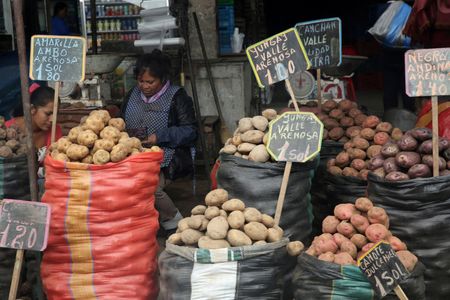
Today, Quechua-speaking vendors in Peruvian highland markets continue this agricultural legacy, selling diverse potato varieties with flesh ranging from purple, blue, and red to gold, white, and black.
“In Peru, there are about 3,000 to 4,000 different kinds of potato, but the majority of the world has access to only a select few strains. Therefore, there is a whole world of different types of french fries that are possible,” Scheer said.