
MINNEAPOLIS – A massive immigration enforcement operation that deployed thousands of federal agents to Minnesota significantly disrupted the prosecution of serious crimes including gun violence and drug trafficking, according to a Reuters analysis of federal court documents.
The operation, which President Donald Trump promoted as a crucial public safety initiative targeting violent undocumented immigrants, instead caused widespread disruption to routine federal law enforcement activities, court records and interviews with ten current and former law enforcement officials revealed.
Federal prosecutors filed charges against just eight individuals for gun or drug crimes from January through April, a dramatic decrease from 77 similar cases during the same timeframe last year. Total felony prosecutions also fell to 90, roughly half the previous year’s number.
Among those felony cases were 39 individuals, including journalist Don Lemon, charged with disrupting a church service while protesting the immigration enforcement. An additional 17 criminal cases involved immigration violations like illegal re-entry after deportation. These numbers exclude deportation proceedings, which occur in separate immigration courts rather than criminal court.
Hennepin County Attorney Mary Moriarty, Minneapolis’s chief local prosecutor, revealed to Reuters that the federal prosecutor’s office has become so weakened by staff departures and immigration enforcement duties that federal agents now bring complex cases to her office – an unusual practice for federal investigators.
“You can’t tell me that sex trafficking and drug trafficking and that kind of thing is less important than people going into a church to protest,” Moriarty said. “It’s a public safety issue that they’re not doing the types of prosecutions they should be doing.”
Moriarty refused to specify which cases federal investigators transferred to her office, citing concerns about damaging relationships with federal agencies.
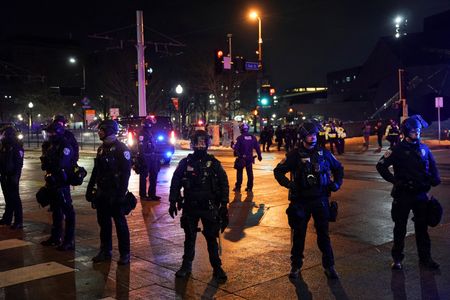
The immigration enforcement effort became a national controversy as approximately 3,000 agents flooded Minneapolis streets beginning in December. Agents removed individuals from vehicles and schools for deportation and fatally shot two U.S. citizen protesters, Renee Good and Alex Pretti, generating nationwide criticism that ultimately forced the administration to withdraw from Minneapolis.
This local enforcement slowdown mirrors a broader national trend of shifting crime-fighting resources toward immigration enforcement, frequently targeting undocumented individuals without criminal histories. Nationally, criminal immigration violation charges reached their highest level in at least twenty years, while drug crime prosecutions hit their lowest point.
Minnesota U.S. Attorney Daniel Rosen declined to respond to inquiries about the enforcement slowdown.
The Justice Department and White House avoided directly addressing court records showing the sharp decline in federal criminal prosecutions this year. Justice Department spokesperson Natalie Baldassarre stated that “assisting our partners with immigration enforcement has not impacted our ability to investigate and swiftly prosecute other crimes.” White House spokesperson Abigail Jackson said Trump “has taken necessary action in Minnesota to crack down on rampant fraud and illegal immigration.”
Federal authorities handle only a small portion of U.S. criminal cases but maintain an outsized public safety role due to their resources and ability to pursue complex investigations of dangerous criminals. Federal agencies possess surveillance and tracking capabilities often unavailable at the state level and can more effectively investigate crimes crossing state boundaries.
State and local authorities depend on their federal partners’ unique resources and jurisdiction, explained John Marti, a former federal prosecutor who previously served as acting U.S. Attorney in Minnesota.
“That’s not there anymore,” he said, due to attorney departures and the government’s intense immigration focus. The consequence, he predicted, will be more violent criminals “who are not apprehended and stopped.”
The transformation in Minnesota since the immigration crackdown has been so sudden that it may permanently impact traditional crime fighting, local law enforcement officials told Reuters. One official involved in the immigration enforcement surge warned that federal authorities’ capacity to pursue violent felons could remain compromised for years due to the “ripple effects” of the administration’s overwhelming immigration emphasis.
Reuters examined the impact using court dockets from Westlaw, a legal research service. The analysis counted cases on the federal district court’s criminal docket, where the most serious charges are filed, excluding cases before federal magistrates who handle minor offenses. Reuters used artificial intelligence to help categorize charges, with a random record review showing 98% accuracy.
Administration officials justified the Minneapolis crackdown as necessary to prevent crime, including a social services fraud scandal from 2022 that resulted in numerous Somali American prosecutions.
However, Reuters found authorities filed only two new wire fraud cases between January and April, neither involving government benefits. Federal and state agencies conducted searches at Minnesota social welfare organizations last week as part of a fraud investigation.
Although Minneapolis doesn’t rank among America’s most dangerous cities, federal authorities had recently prioritized combating violent crime there.
After the Minneapolis surge began, local authorities reported that federal agents already stationed in Minnesota started vanishing from anti-drug task forces to assist with immigration enforcement, though exact numbers remain unclear. “They’re experiencing significant disruptions because agents are being reassigned,” said Robert Small, executive director of the Minnesota County Attorneys Association.
Some agents had been diverted from street crime investigations to immigration work before the surge, according to two sources familiar with the situation. These agents frequently reported being unavailable on certain days while pursuing immigration enforcement.
The operation also triggered an exodus from Minnesota’s U.S. Attorney’s Office, where several prosecutors resigned rather than follow orders to investigate Good’s widow – the woman killed by an Immigration and Customs Enforcement agent.
Additional attorneys subsequently departed. The wave of resignations left the office with approximately half its normal staff of about 50 attorneys, two sources familiar with staffing told Reuters. Five of six supervisors in the criminal section left, according to multiple sources who requested anonymity to discuss internal matters.
The Justice Department has since rotated military lawyers and prosecutors from other states as temporary replacements.
Understaffed federal prosecutors have struggled to file new cases or manage those initiated before the immigration operation. In February, a Minneapolis judge dismissed a case federal prosecutors filed last year against Tavon Timberlake, accused of being a felon possessing a firearm. After prosecutors missed deadlines, sometimes citing staff shortages, the judge ruled Timberlake was denied his right to a speedy trial and dismissed the case.
Last week, federal prosecutors requested court permission to drop charges against a man accused in a carjacking that killed two people and injured a six-year-old child, stating in court filings that local prosecutors would pursue charges instead.
Despite struggling with such serious crimes, federal prosecutors found time to arrest and charge dozens of people protesting Trump’s immigration crackdown. Beyond felony charges related to the church protest, prosecutors charged 40 additional people with mostly minor violations from confrontations with federal agents. They quickly dropped approximately half these cases, court records indicate.
One attorney familiar with the Minneapolis U.S. Attorney’s Office operations described it as severely limited in pursuing traditional cases: “They’re just trying to hang on.”