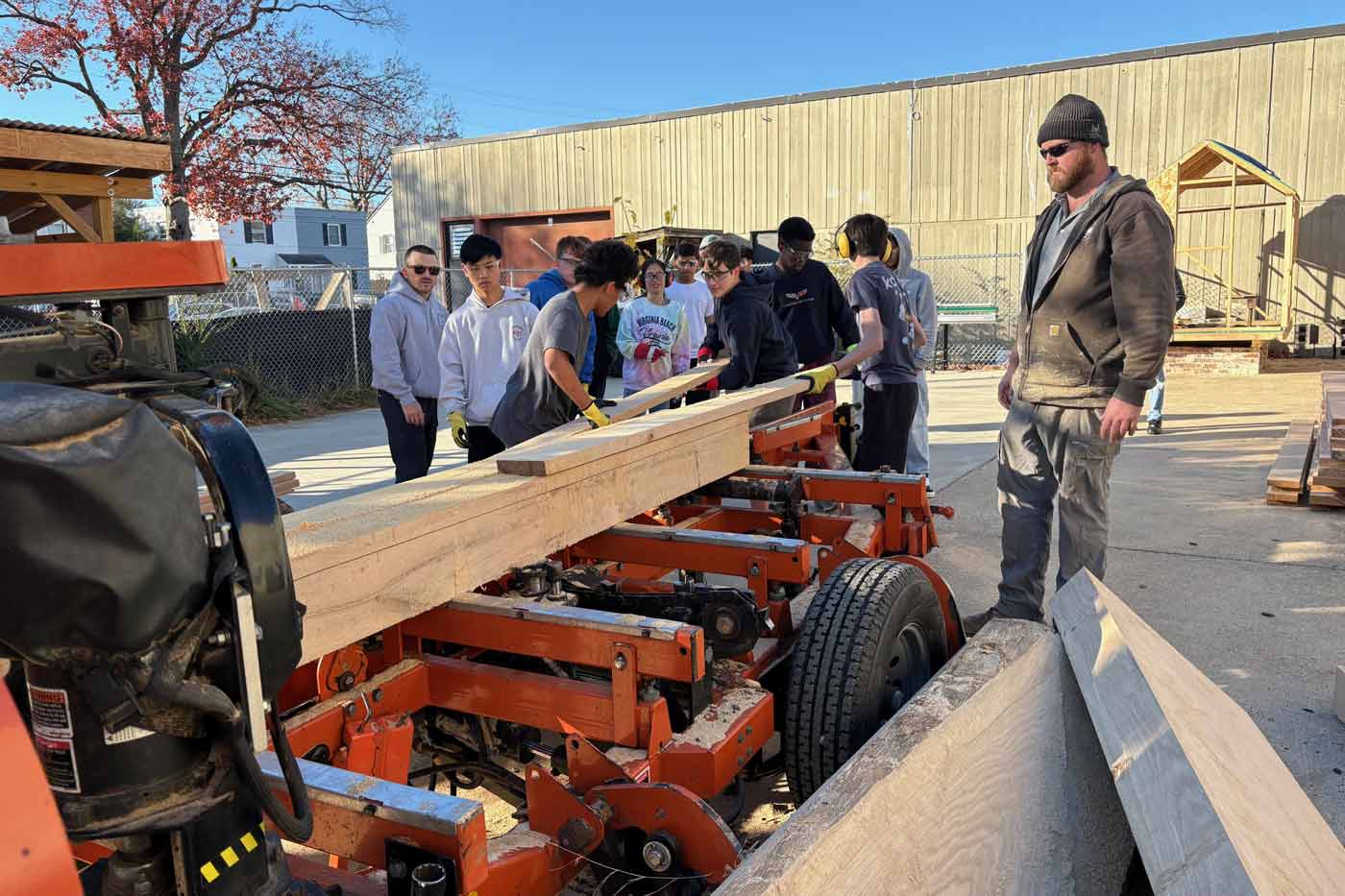

CHARLOTTESVILLE, Va.—Trees that have reached their final days don’t have to end up as wood chips or firewood. A Virginia initiative is giving these urban giants a second chance to serve their communities through transformation into meaningful, lasting products.
The Virginia Urban Wood Program, managed by the Virginia Department of Forestry alongside the Virginia Urban Wood Group, champions what officials call “complete lifecycle stewardship” of the state’s city and suburban tree resources.
Since its 2017 inception, this initiative has focused on salvaging trees from developed areas rather than traditional forests. Urban timber encompasses trees removed from residential properties, highway dividers, or even “that single walnut in your Aunt Mary’s backyard,” according to Joe Lehnen, forest utilization and marketing specialist with Virginia DOF.
“We wanted to make sure that we’re honoring the tree’s existence,” Lehnen stated. “Instead of having everything tub ground and chunked into firewood, our goal was to give the tree purpose, try to use it to its best use, and give people opportunities to use that resource to grow a business and create local economies.”
These reclaimed trees can become dining room furniture, kitchen cabinetry, or artistic creations—all while continuing to store carbon in solid form for years to come.
“If somebody has two trees in their backyard that have to come down, they may not necessarily want to part with those trees that have been part of their landscape for decades,” Lehnen observed. “The beauty of urban wood is that you can make something out of any species, and there’s people out there willing to make it for you.”
This statewide network links local timber businesses with homeowners, environmental professionals, and business owners seeking to repurpose their wood materials.
“We try to keep it as local as possible, which creates a better, more vibrant economy,” Lehnen emphasized.
Program coordinators provide assistance throughout the entire recycling chain—from locating specialized removal services equipped for urban settings, to connecting with mobile sawmill operators who can process lumber on-site, to finding skilled craftspeople seeking raw materials.
The initiative has expanded to include Virginia’s Cooperating Universities Urban Wood Program, which has gained national recognition for incorporating local timber into campus furniture, student artwork, and educational experiences. Universities receive training sessions covering sawmill operations, lumber quality assessment, and the community advantages of tree recycling.
Lehnen anticipates expanding program reach and developing additional university partnerships.
“We’re creating a sense of community,” he said. “We’re taking trees that we previously did not use to their best use, and we’re making products out of them that are meaningful to a lot of people.”
Additional details about Virginia’s urban wood initiative are available at vaurbanwood.org.
Property owners can locate nearby services for urban tree removal or small timber lot management through the Virginia Urban Wood Directory. The online resource is provided at no cost, and businesses are invited to register their services to reach potential clients.
For media inquiries, contact Lehnen at [email protected] or 434-977-6555.