
Recent state election results in India have revealed a concerning trend of religious-based voting that is widening the political gap between the nation’s Hindu and Muslim communities.
Data from elections held across four Indian states shows Muslim voters are increasingly rallying behind the opposition Congress party, while Hindu voters continue to strongly support Prime Minister Narendra Modi’s ruling party. Political experts warn this pattern signals growing religious division in a country that is officially secular.
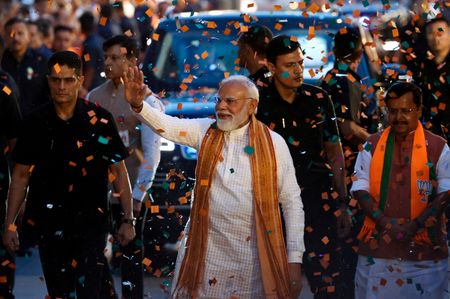
Modi’s Bharatiya Janata Party has embraced a Hindu-first ideology known as Hindutva since taking power in 2014. This approach benefits the party significantly because Hindus make up nearly 80% of India’s 1.42 billion population, compared to approximately 14% who are Muslim.
“The rise of the BJP has led to a consolidation of Muslim voters behind so‑called secular parties, particularly the Congress – a form of reverse polarisation is taking place,” explained political analyst Rasheed Kidwai, a visiting fellow with the Observer Research Foundation.
Muslim community leaders and political observers note that voters from their community are shifting away from smaller, Muslim-focused parties toward Congress and other major regional parties that have better chances of forming governments.
The recent state elections produced disappointing results for Congress overall, with the party’s coalition winning control of just one state while BJP-led alliances captured three states and a new regional party took the remaining contest.
However, Muslim support for Congress was particularly striking in Assam, a northeastern state controlled by the BJP. Of Congress’s 19 newly elected representatives there, 18 are Muslim – an increase from about 16 in the previous assembly. Congress had nominated 20 Muslim candidates and roughly 80 non-Muslim candidates for the 126-seat legislature, where the BJP secured 82 seats.
Meanwhile, the Assam-based All India United Democratic Front, which primarily attracts Muslim voters, saw its representation plummet to only two seats from 16 in the previous election cycle.
In neighboring West Bengal, where the BJP achieved its first victory with 207 representatives in the 294-seat assembly, both Congress legislators who won were Muslim.
Notably, the BJP chose not to nominate any Muslim candidates in either Assam or West Bengal. Party officials in both states, including West Bengal’s prospective chief minister Suvendu Adhikari, attributed their victories to Hindu voter support.
“It was a victory for Hindutva,” Adhikari declared.
Political columnist Radhika Ramaseshan warned that this trend could intensify further divisions. “In the future – depending on local political dynamics – if Muslim voters increasingly consolidate behind Congress, dominant Hindu voters may also regroup more strongly around the BJP,” she predicted.
Badruddin Ajmal, leader of the AIUDF in Assam, believes Congress has benefited from fears among Muslim voters who feel marginalized under BJP governance and worry about their citizenship status being questioned.
“The argument being made is that only a party with the strength to fight the BJP at the centre can ultimately address these concerns. This is not true but voters believe it because they are scared,” Ajmal said.
When the BJP criticized Congress for becoming a “new Muslim League,” Congress responded by noting that Muslims comprise about 12% of its 664 state legislators nationwide, while roughly 78% are Hindu – proportions that mirror India’s overall religious demographics.
Congress spokesperson Pawan Khera expressed frustration with the religious focus in modern politics. “I am embarrassed to talk about these things in the 21st century,” he said, emphasizing that his party, which governed India for 54 years following 1947 independence, maintains broad-based support.
“We have always stood by the weak and the oppressed and will continue to do so, irrespective of their religion and caste,” Khera stated.
The BJP has also made efforts to court Muslim voters, though the party did not field any Muslim candidates in the 2024 general election.
Modi has consistently rejected accusations that he uses religious appeals for political gain. “The day I start talking about Hindu-Muslim (in politics) will be the day I lose my ability to lead a public life,” he said while filing his candidacy two years ago. “I will not do Hindu-Muslim. That is my resolve.”
However, columnist Ramaseshan argues that religious rhetoric, particularly during election periods, has become much more prominent under Modi’s leadership compared to previous BJP administrations.
“The BJP and the larger Sangh (the party’s ideological parent) are shaping a new idea of India as a ‘Hindu rashtra (nation)’ — and that narrative has increasingly embedded itself in public consciousness,” she observed. “In the years ahead, we may see a complete overturning of the very idea of India.”