
Shares of British semiconductor designer Arm plummeted Thursday following the company’s warning about declining smartphone demand and potential supply shortages for its latest artificial intelligence processor.
The stock price dropped 5% to $225.43 on Thursday, eliminating over $12 billion from Arm’s total market worth of $252 billion.
Despite the decline, the chip design company’s stock value has more than doubled since the beginning of the year, surpassing performance of other major semiconductor firms.
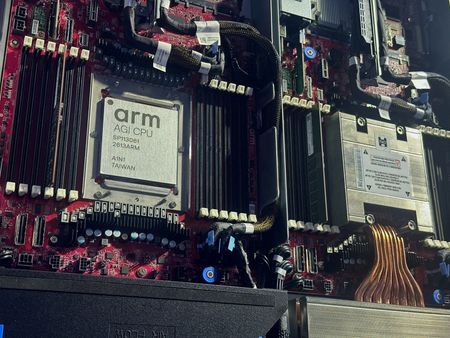
This year, Arm has intensified its focus on artificial intelligence technology, developing a new data center processor designed for autonomous AI systems that can operate independently. This represents a shift from the company’s traditional role of providing chip blueprints to manufacturers like Qualcomm.
Chief Executive Rene Haas explained during an investor call that while Arm can meet initial demand worth $1 billion, the company has not yet arranged sufficient manufacturing capacity to handle orders beyond that amount.
The company requires access to production facilities, silicon wafers, and testing infrastructure to manufacture its AI processor effectively.
Arm projects the new AI chip will bring in over $2 billion in revenue during fiscal years 2027 and 2028 combined.
Taiwan Semiconductor Manufacturing Company, the world’s largest contract chip manufacturer, is handling production of Arm’s AI processor using advanced 3-nanometer technology that combines two separate silicon components into one functioning chip.
During the investor call, Arm executives described smartphone market conditions as “slightly negative.” The company’s technology powers most smartphones globally, but memory chip shortages have hurt the industry by increasing electronic device costs and reducing consumer purchases.
Following Arm’s announcement of record fourth-quarter revenue totaling $1.49 billion and first-quarter projections that exceeded analyst expectations, at least 14 investment firms increased their stock price targets for the company.
A significant portion of Arm’s income comes from licensing its chip designs to major technology companies including Nvidia and Apple, then collecting ongoing royalty fees when those designs are used in products.