Political chaos continues to engulf Italy’s Culture Ministry as Minister Alessandro Giuli terminated two top officials following public backlash over the rejection of funding for a documentary project.
The dismissals represent the most recent upheaval in a department that has experienced significant instability under Prime Minister Giorgia Meloni’s conservative administration, which has been working to transform Italy’s traditionally left-leaning cultural establishment.
According to Italian news outlets, Giuli removed Emanuele Merlino, who directed the ministry’s technical secretariat, along with Elena Proietti, who managed the minister’s private office. While no formal announcement was made, high-ranking government officials verified the terminations on Monday.
The controversy erupted after the ministry rejected financial support for a film documenting the story of Giulio Regeni, an Italian university student who was abducted, tortured and murdered in Cairo during early 2016. Italian authorities have accused Egyptian security personnel of responsibility for his death.
Giuli characterized the funding rejection as “unacceptable” and claimed he was unaware the decision had been made.
Sources indicate Merlino lost his position due to his role in the funding controversy, while Proietti was reportedly dismissed for missing a scheduled departure for an official trip to New York last month.
Both dismissed officials have remained silent about their terminations, and the Culture Ministry has refused to provide statements.
The two figures held significant positions within right-wing political circles, prompting opposition leaders to characterize their removals as evidence of increasing discord within Meloni’s governing coalition, particularly following their loss in a justice reform referendum in March.
“This is the sign of a coalition riven by internal wars, score-settling, clashes between factions and competing leaderships,” said Sandro Ruotolo, the culture spokesman for the centre-left Democratic Party.
The current crisis represents just the latest disruption to plague the Culture Ministry during Meloni’s tenure, including the 2024 resignation of Giuli’s predecessor, Gennaro Sangiuliano, followed by a series of sudden dismissals and departures.
Since assuming power in 2022, Meloni has worked to expand conservative influence throughout Italy’s major cultural organizations, including theaters and museums.
The transformation has encountered significant obstacles. Last month, conductor Beatrice Venezi, who maintains close ties to Meloni’s Brothers of Italy party, was removed from her role as musical director at Venice’s La Fenice opera house after publicly criticizing the orchestra for nepotism.
Meanwhile, the renowned Venice Biennale art exhibition has become embroiled in scandal after a government appointee permitted Russia’s return to the event, sparking anger from both Giuli and Meloni, who viewed the decision as a betrayal of Ukraine during the ongoing conflict.
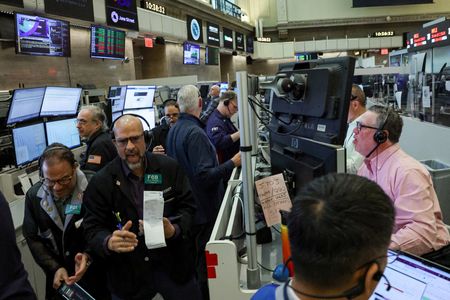
Stock market futures displayed restrained movement Monday morning as investors took a step back following last week’s historic gains, with concerns mounting over diplomatic gridlock between Washington and Tehran that drove energy costs upward.
President Donald Trump’s quick dismissal of Iran’s counter-proposal to a U.S. peace initiative heightened anxiety that the ongoing 10-week dispute might continue indefinitely, potentially maintaining disruptions to maritime traffic through the strategically important Strait of Hormuz. This development pushed crude oil values up nearly 3%.
“Although the oil price is higher, there is no sign of panic in the market,” said Kathleen Brooks, research director at XTB.
“Wrangling over the details of a path to a peaceful resolution is to be expected. This is all part of a negotiation.”
American equities reached unprecedented levels during the previous week, with both the S&P 500 and Nasdaq indexes achieving all-time closing records on Friday. This surge was driven by encouraging corporate profit reports, robust employment data, and optimism about a quick end to Middle Eastern tensions.
Early Monday morning at 7:18 a.m. ET, Dow E-minis dropped 56 points or 0.11%, while S&P 500 E-minis declined 4 points or 0.05%. The Nasdaq 100 E-minis bucked the trend, gaining 13.25 points or 0.05%.
Market participants will focus attention on Tuesday’s consumer price index release, anticipated to reveal rising inflation during April as Middle Eastern hostilities continue pressuring energy costs higher.
Despite America’s status as a net petroleum exporter, anxiety persists regarding the conflict’s potential effects on consumer spending patterns and business operations. Additional economic indicators including producer pricing and monthly retail sales data are scheduled for release later this week.
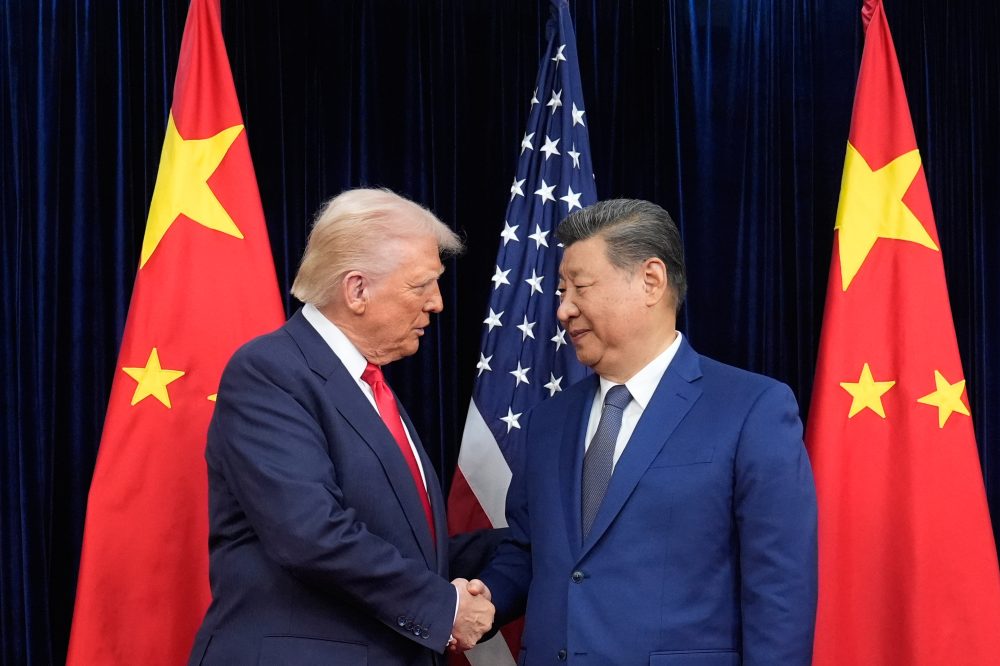
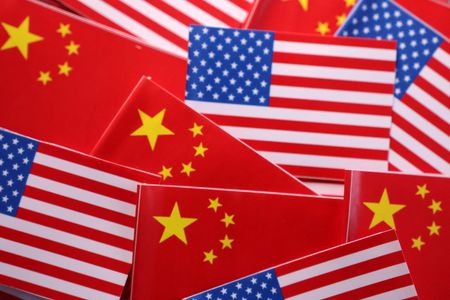
Investors are also monitoring an upcoming meeting between Trump and Chinese President Xi Jinping, where the leaders plan to address Iran, Taiwan, artificial intelligence, and nuclear weapons issues, while potentially extending an important minerals agreement.
The first-quarter earnings reporting period is approaching its conclusion after companies delivered significantly better-than-anticipated results, especially within the technology sector, helping propel stocks to new peaks.
Notable companies reporting this week include networking technology leader Cisco and semiconductor equipment manufacturer Applied Materials, while industry heavyweights Nvidia and Walmart are scheduled to announce results later in the month.
Intel shares climbed 5.6% in pre-market activity following Friday’s 14% surge based on reports of a preliminary chip manufacturing deal with Apple.
Among other notable movements, several airline stocks declined as rising fuel costs threatened profit margins. Southwest Airlines, Delta Air Lines, and United Airlines dropped between 0.9% and 1.6%.
U.S.-traded shares of gold mining companies fell as precious metal prices decreased 1%. Newmont, Sibanye Stillwater, and Harmony Gold lost between 1.6% to 1.7%.
Google’s parent company, Alphabet Inc., revealed plans Monday to issue bonds denominated in Japanese yen for the first time as major technology corporations increasingly turn to borrowing to finance their artificial intelligence expansion efforts.
While Alphabet did not reveal the exact amount it plans to raise, an insider familiar with the transaction indicated the bond offering could reach several hundred billion yen, with final terms anticipated to be set within the month. The source requested anonymity as they were not permitted to discuss the matter publicly.
Alphabet has selected Mizuho, Bank of America, and Morgan Stanley to manage the bond transaction. When contacted for comment, Morgan Stanley did not respond immediately, while both Bank of America and Mizuho declined to provide statements.
This move reflects a broader trend among the world’s biggest tech companies, which are increasingly relying on debt financing rather than cash reserves to support their expensive AI ambitions – marking a departure from Silicon Valley’s traditional approach to funding major investments.
Industry analysts project that major technology firms will invest more than $700 billion in AI infrastructure during the current year, representing a substantial jump from the $410 billion spent in 2025.
Amazon is also exploring new debt markets, preparing its first-ever bond sale in Swiss francs, according to another person with knowledge of the situation who spoke on condition of anonymity. The e-commerce company has appointed BNP Paribas, Deutsche Bank, and JPMorgan Chase to handle a six-part debt offering with terms ranging from three to 25 years.
Representatives from Amazon, BNP Paribas, and JPMorgan Chase did not immediately respond when asked for comment about the Swiss franc bond plans.
Data from LSEG confirms this would mark Alphabet’s first bond issuance in Japanese currency. The company recently completed two major bond sales totaling nearly $17 billion – including a 9 billion euro offering worth $10.6 billion and a Canadian dollar sale of C$8.5 billion, valued at $6.2 billion.
In late April, Alphabet increased its annual capital expenditure projection by $5 billion, setting a new range of $180 billion to $190 billion, while indicating plans for another substantial increase in 2027.
Motorists traveling on Blackbird Station Road should expect delays and plan alternate routes as construction crews continue work that requires intermittent lane restrictions.
The affected area spans the stretch of Blackbird Station Road from Blackbird Forest Road to Grears Corner Road, where workers are causing periodic lane closures throughout the day.
DelDOT reports the construction-related lane restrictions will remain in effect until 5 PM today. Drivers are advised to use caution when traveling through the work zone and allow extra time for their commute.
Delaware Department of Transportation crews are currently removing debris from the median strip along northbound Route 13, causing potential traffic delays in the area.
The litter cleanup operation is taking place on the stretch of highway between Martin Luther King Jr. Boulevard and West Denneys Road, with work expected to wrap up by 2 PM today.
Motorists traveling northbound on this section of Route 13 should expect possible lane restrictions and are advised to use caution when passing through the work zone.
Motorists using North Star Road are experiencing intermittent lane closures today as construction work continues in the area.
The Delaware Department of Transportation reports that the lane restrictions affect the stretch of North Star Road located between Planet Road and Beech Hill Road.
According to DelDOT, the construction-related closures are expected to remain active until 5 PM today. Drivers are advised to plan for potential delays and consider alternate routes if possible.
Motorists traveling eastbound on West Newport Pike are encountering traffic delays due to ongoing construction work that has shut down the right lane between Silview Avenue and Westmont Avenue.
According to DelDOT officials, the lane restriction is expected to remain in place until 5 PM today. Drivers are advised to use caution when traveling through the work zone and allow extra time for their commute.
The construction activity is causing traffic to merge into the left lane, potentially creating slower moving conditions during peak travel times.
Motorists traveling eastbound on West Newport Pike are dealing with traffic delays today due to ongoing construction work that has forced the closure of the right travel lane.
According to DelDOT, the lane restriction affects the stretch of roadway between Silview Avenue and Westmont Avenue. Officials say the closure is expected to last until 5 PM this afternoon.
Drivers are advised to allow extra travel time and use caution when passing through the construction zone. Traffic is being directed into the remaining open lanes during the work period.
A unique gubernatorial campaign is taking shape in Oregon, where someone identifying as “Pencil” has launched a write-in bid for the state’s highest office.
The unconventional candidate, whose real name is J. Schuberth, has been making rounds through downtown Portland to connect with voters and curious onlookers. Schuberth’s campaign centers on advocating for significant changes to Oregon’s kindergarten through 12th-grade education system.
The motivation behind this unusual political approach stems from alarming statistics about the state’s academic performance. National testing data reveals that Oregon students score lowest in the nation for fourth-grade reading comprehension.
By running under the “Pencil” moniker, Schuberth hopes to serve as an alarm bell for current political leaders about the urgent need to address educational shortcomings in the state. The symbolic campaign represents a call to action for meaningful reform in Oregon’s struggling school system.
A fertility specialist who struggled with the ethical implications of traditional in vitro fertilization practices has established a faith-based clinic that operates according to Christian principles.
Dr. John Gordon, who previously served as co-director of a major fertility center, experienced growing concerns about standard IVF procedures that often result in excess embryos being stored indefinitely or destroyed. He also questioned the increasing use of genetic screening that allows parents to select their baby’s gender or eliminate various conditions, ranging from serious genetic disorders to minor impairments such as hearing difficulties.
“What are children?” he asked recently. “I mean, are they a gift from the Lord or are they just a product where you’re trying to manufacture the best product you can?”
Gordon left his position in the Washington, D.C. suburbs in 2019 to establish Rejoice Fertility in Knoxville, Tennessee. The clinic operates under principles that prohibit destroying viable embryos, conducting genetic testing, or providing embryos for research purposes. Instead, the facility promotes embryo adoption programs and works to minimize the total number of embryos produced during treatment.
In vitro fertilization involves combining sperm and eggs in laboratory conditions to form embryos, which can be preserved through freezing before being implanted in a patient’s uterus to achieve pregnancy.
Recent data from the American Society of Reproductive Medicine shows that over 100,000 American babies were conceived through IVF in 2024, representing the highest annual total on record. Healthcare professionals estimate approximately 1.5 million frozen embryos remain in storage facilities across the United States, though advocacy groups suggest the actual figure may be significantly higher.
Many Christians and opponents of abortion view embryonic life as beginning at fertilization, creating moral dilemmas around standard IVF practices that may endanger embryos. Additionally, some Christian denominations maintain that procreation should occur exclusively within marital intimacy, making assisted reproductive technologies problematic from a theological perspective.
The Roman Catholic Church has historically rejected IVF procedures, while evangelical Protestant communities are increasingly examining these issues. The Southern Baptist Convention, representing the nation’s largest Protestant group, passed a resolution in 2024 advocating for IVF limitations when procedures result in the destruction of what they term “embryonic human life.”
Gordon practices within the Presbyterian Church in America, an evangelical Reformed tradition, and reports that his local congregation supports Rejoice’s mission and approach.
Contemporary court rulings have intensified discussions surrounding IVF, including the Supreme Court’s decision eliminating constitutional abortion protections and an Alabama Supreme Court ruling that classified embryos as children. Despite these controversies, public opinion surveys continue to show widespread support for IVF access, and President Donald Trump has pursued policies to expand treatment availability.
Gordon maintains that his clinic’s approach resolves many ethical concerns surrounding fertility treatment. “I need to practice in a way that I can I live with the decisions I’m making,” he explained.
Rejoice implements strategies to reduce surplus embryo creation by discussing patients’ family planning goals and designing treatment protocols accordingly.
Many patients select minimal stimulation IVF, sometimes called “mini-IVF,” which employs reduced medication doses and typically produces fewer eggs. Patients may then choose to fertilize only a portion of retrieved eggs, creating fewer embryos overall. The clinic also offers natural cycle IVF, which collects a single egg during a woman’s normal monthly ovulation. While other facilities provide these alternatives, Rejoice distinguishes itself by emphasizing these approaches as primary options.
The trade-off involves potentially requiring additional treatment cycles if patients exhaust their limited embryos, with each cycle costing between $8,000 and $10,000 at Rejoice. Despite these expenses, Gordon reports that patients generally prefer creating fewer embryos due to their religious convictions.
When patients occasionally have remaining embryos, Gordon encourages placement through adoption programs. Within conservative Christian communities, these transfers are termed “embryo adoptions,” reflecting the belief that embryos represent children awaiting families rather than medical property.
The facility recently introduced Rejoice Embryo Rescue, which Gordon describes as an “orphanage” for donated embryos. This program stores contributed embryos and collaborates with specialized agencies, predominantly Christian organizations, to coordinate adoption placements.
KNOXVILLE, Tenn. — Dr. John Gordon spent three decades helping couples struggling with infertility, but his faith eventually led him to question the very methods he used to help them.
The reproductive endocrinologist found himself increasingly uncomfortable with standard fertility treatment practices that created excess embryos destined for storage or disposal. Modern genetic screening allowed parents to select their baby’s gender or eliminate certain conditions, raising ethical questions that troubled the Christian physician.
“It’s too morally problematic,” Gordon reflected. “I don’t know where you draw the line.”
His wife Allison pushed for change in 2018, viewing their comfortable lifestyle as potentially built on what she called “ill-gotten gains.” Both believed their Christian faith required viewing embryos as sacred life.
Gordon purchased a Knoxville practice and transformed it into Rejoice Fertility, implementing strict policies against discarding viable embryos, genetic testing, or donating embryos to research. The clinic also minimizes the number of embryos created during treatment.
This transformation occurred amid growing national controversy over in vitro fertilization. Recent court decisions, including the Alabama Supreme Court ruling that designated embryos as children, have intensified debates about IVF practices. While polling shows continued public support for fertility treatments, President Trump’s conservative Christian supporters remain divided on the issue.
The Southern Baptist Convention, America’s largest Protestant denomination, called for IVF restrictions in 2024 when procedures destroy what they term “embryonic human life.” The Catholic Church has long opposed IVF entirely.
Gordon acknowledged the difficulty of his career change at age 55, saying “I don’t like changing toothpaste brands.”
However, he explained, “I need to practice in a way that I can I live with the decisions I’m making.”
Rejoice attracts patients from across the country seeking faith-based fertility care. The waiting room displays evangelical literature and a wooden cross, while a Bible verse near the recovery area reads: “Do not be afraid or discouraged, for the Lord your God will be with you wherever you go.”
Knoxville residents Maggie and Cade Lichfield, members of the Latter-day Saints church, recently celebrated a successful pregnancy after three failed embryo transfers. They appreciate Rejoice’s approach to embryo handling.
“You’re still letting God be God,” Maggie Lichfield observed. “He is in control.”
Tennessee couple Domenic and Olivia D’Agostino drive nearly two hours to reach Rejoice, having initially planned to avoid IVF for religious reasons until discovering Gordon’s practice.
“That was the biggest one for me because in my eyes there’s not much difference between discarding an embryo and abortion,” Domenic D’Agostino explained. “We just weren’t really willing to do that.”
He particularly values Gordon’s practice of praying with patients before transfers, saying the doctor “focused in on the sovereignty of God in it and submitting to God’s will in this process.”
Gordon’s path to this practice began with his Jewish upbringing outside Boston in a family of physicians. After attending Princeton and Duke medical school, he completed his residency at Stanford.
He married Allison, a Duke engineering doctorate recipient from a small North Carolina Christian community. Their interfaith marriage continued for years until their oldest son’s life-threatening illness prompted Gordon’s conversion experience.
“I got down on my knees, and I said, ‘OK, you’ve got my attention, Lord,’” Gordon recalled.
Following their son’s recovery, the family joined a Presbyterian church where Gordon was baptized in 2000. They now belong to the conservative Presbyterian Church in America, with church elders supporting Rejoice’s mission.
The clinic welcomes employees and patients regardless of religious beliefs. Senior embryologist Sarah Coe Atkinson said, “I don’t necessarily believe in everything he believes in, but I believe in what we’re doing in terms of helping these embryos become lives.”
Atkinson oversees a laboratory that accepts embryos regardless of condition, often saying “Sometimes the ugliest embryos make the prettiest babies.”
Rejoice recently handled care for a couple using an embryo frozen for nearly 31 years, resulting in a 2025 birth that broke records for the longest-frozen embryo to produce a baby.
Atkinson has created a reference library of outdated embryo storage devices, complete with opening instructions. One entry for glass ampules warns to wear face shields because they “Might explode.”
Medical experts estimate 1.5 million frozen embryos exist in U.S. storage, though advocates suggest the number could be higher.
Gordon works to avoid adding to that total by customizing treatments based on patients’ desired family size. He specializes in lower-medication IVF cycles that cost less and typically produce fewer eggs, allowing patients to fertilize fewer eggs overall.
While other clinics offer similar options, Rejoice uniquely prioritizes these approaches. The downside involves potentially needing additional $8,000 to $10,000 cycles if initial embryos don’t succeed, though Gordon notes his patients generally prefer creating fewer embryos due to their beliefs.
Knoxville resident Emily Martin struggles with embryos she has in storage from treatment at another clinic, saying “I would wake up in the middle of the night just like, ‘Oh, what have we done?’ And just this heaviness.”
As an anti-abortion Christian, she wishes she had discovered Rejoice before creating more embryos than she planned to use. “That portion is something that’s not being talked about enough,” she noted.
When Rejoice patients have unused embryos, Gordon encourages embryo adoption. Conservative Christian communities call these donations “embryo adoptions,” viewing embryos as children rather than property.
The clinic recently launched Rejoice Embryo Rescue, which Gordon describes as an “orphanage” for donated embryos. The program works with primarily Christian agencies specializing in embryo adoption coordination.
Augusta, Georgia couple Adrienne and Colby McKnight learned about embryo adoption through their homeschooling community before traditional adoption. They adopted an 11-year-frozen embryo they named Gloria.
Though the transfer didn’t result in pregnancy, they found peace in their decision.
“Really it’s just giving her a chance at life and just freeing her from being frozen,” Adrienne McKnight explained. “Either way she gets to continue on. She gets to be with the Lord.”
The couple has since adopted two additional embryos through Rejoice.
“It’s hard to be torn between your faith and your work,” Gordon reflected, referencing biblical teachings about showing “faith through our works.”
While Rejoice has allowed him to reconcile these conflicts, the journey has presented challenges. His relationship with the physician who sold him the practice deteriorated into legal disputes.
Gordon also faces criticism from Christians and anti-abortion activists who consider all IVF forms unethical.
“He’s moving in the right trajectory,” said Matthew Lee Anderson, a Christian ethicist at Baylor who opposes IVF. “It’s impressive that he’s taken the steps that he has to change how he is doing business, and I hope for more.”
Gordon expresses no regret about his career restart and plans to hire additional physicians.
During a recent Sunday clinic visit, Atkinson prepared a North Carolina couple’s frozen embryo for afternoon transfer. As the embryo thawed and expanded in its culture dish, its cells rehydrated and plumped with renewed potential.
The laboratory scene represented hope combined with prayer—hallmarks of Rejoice’s approach.
Four weeks later, welcome news arrived: the patient was pregnant.
Chinese automakers are increasingly turning to international markets as overseas shipments of passenger vehicles climbed dramatically in April while home country sales continued their downward slide, according to industry data released Monday.
The China Association of Automobile Manufacturers reported that passenger vehicle exports reached approximately 796,000 units last month, representing an 85% jump compared to the same period last year and exceeding March’s total of 748,000 vehicles.
Electric and hybrid vehicles drove much of this growth, with new energy passenger car exports soaring more than 120% year-over-year to roughly 420,000 units in April.
Meanwhile, China’s domestic passenger vehicle market tells a different story, with sales dropping 25.5% from the previous year to 1.3 million vehicles. This marks the sixth consecutive month of declining year-over-year sales in what remains the world’s largest automotive market.
Industry experts point to reduced government incentives for electric vehicle purchases and broader economic uncertainty stemming from the country’s ongoing real estate sector troubles as factors dampening consumer appetite for new vehicles at home.
The competitive landscape among Chinese manufacturers has intensified significantly. Last month’s Beijing auto show featured over 1,450 vehicles as companies unveiled cutting-edge technologies ranging from AI-powered systems to revolutionary fast-charging battery solutions.
Some industry observers anticipate domestic sales could rebound later this year as manufacturers launch new models and consumers adapt to modified government subsidy programs. Yichao Zhang, an automotive practice partner at consultancy AlixPartners, suggested that buyers will likely return as they become more comfortable with the changed incentive structure.
Major Chinese brands including BYD and Geely Auto are establishing stronger footholds in foreign markets. Beyond simply increasing exports, manufacturers like BYD are building production facilities in Europe and Latin America to expand their global manufacturing footprint.
Rising fuel costs linked to Middle Eastern conflicts are creating additional opportunities for Chinese electric vehicle manufacturers worldwide. Australian market data shows one in six new vehicles sold there in April were electric, with BYD ranking as the second-best-selling brand after Toyota.
“With oil and fuel prices likely to stay elevated for a longer period,” said Claire Yuan, an auto analyst at S&P Global Ratings, “it would likely incentivize consumers to buy EVs and this will benefit Chinese EV exports.”
AlixPartners projects Chinese passenger vehicle exports could grow approximately 20% by 2026, driven by expansion into key regions like Southeast Asia.
Trade relationships remain a crucial factor in this growth. While Beijing has made progress with the European Union and Canada regarding Chinese electric vehicle imports, significant barriers persist in the American market. Chinese EVs face substantial obstacles entering the United States due to 100% tariffs implemented by the previous Biden administration in 2024.
BATON ROUGE, La. — Election chaos is spreading across multiple Southern states as Republican lawmakers rush to redraw congressional boundaries in the middle of primary season, leaving thousands of voters uncertain whether their ballots will even count.
The frantic redistricting push comes after a recent Supreme Court decision that significantly weakened the Voting Rights Act, prompting GOP-controlled legislatures to move quickly on new maps that could eliminate several Democratic-held seats.
In Louisiana, the situation has become particularly confusing for voters like 66-year-old New Orleans resident Sallie Davis, who cast an early ballot last week only to discover a handwritten X crossing out her preferred candidate’s name on a polling station sign.
“I was supposed to believe a piece of paper with an X on it marking out the person I wanted to vote for,” she said, her voice breaking as she recounted her experience later. “I think I have been disenfranchised. I think my vote, that I just voted on, it’s not going to count or something. I think it’s illegal.”
Louisiana’s governor declared an emergency and halted congressional primaries just two days into early voting, but not before nearly 179,000 ballots were cast, including approximately 53,000 absentee votes returned by mail. Secretary of State Nancy Landry’s office confirmed those congressional votes will not be tallied.
The turbulent election season stems from an aggressive gerrymandering campaign initiated by President Donald Trump last year to safeguard Republicans’ narrow House majority. The Supreme Court’s recent ruling required Louisiana to reconsider its 2024 map that created two majority-minority districts electing Black representatives, despite the state’s roughly 30% Black population.
Similar disruptions are unfolding in Alabama, where lawmakers approved legislation Friday to redo congressional primaries just a week before the May 19 election date. Voters will still cast ballots in House races using current district lines, but those votes may be discarded if courts approve new boundaries.
Tennessee became the first state to enact revised maps following the Supreme Court decision, forcing election coordinators to warn county officials about reprogramming voting systems, retraining poll workers, and potentially relocating polling sites for some voters.
The state’s elections coordinator outlined the challenges in a memo: adjusting precinct boundaries and updating election infrastructure with compressed timelines before the August 6 congressional primaries.
South Carolina faces similar pressures, with lawmakers considering whether to postpone all June 9 primaries to August or just the congressional races. More than 6,800 mail ballots have already been distributed to voters, with 260 returned as of Friday, according to the state Elections Commission.
Conway Belangia, the commission’s executive director, warned lawmakers Friday that conducting separate congressional primaries would cost $3 million with extremely tight preparation schedules.
“It will be difficult, but it will be possible,” he said.
The redistricting efforts target multiple Democratic seats across the region. Republicans in Alabama, Mississippi, South Carolina and Tennessee are considering eliminating four Democratic districts combined, three represented by Black lawmakers. Florida has already implemented a new map designed to cost Democrats four of their eight congressional seats out of 28 total.
Voter confusion is widespread, according to Michael McClanahan, president of the NAACP’s Louisiana State Conference, who says constituents are calling with questions about whether elections are even happening.
“People say, ‘I ain’t going to vote because the governor’s suspended the election,’” he said. “But he didn’t, he only suspended one aspect of it.”
Alabama Senate Democratic leader Bobby Singleton reports similar confusion among election officials themselves.
“These are the people who are the head of elections,” he said. “They don’t know what to do.”
Voting rights advocates point to Nashville’s 2022 experience as a warning sign for what Memphis voters might face this year. When Republican legislators split Tennessee’s capital city across three congressional districts to capture a Democratic seat, more than 3,000 Nashville-area voters were placed in incorrect districts and over 430 cast ballots in wrong races during the November 2022 election.
“It’s going to be really hard for the election commissions to be able to keep up with this short timeline,” Matia Powell, executive director of voting rights nonprofit Civic TN, said during a Friday conference call with other Southern voting rights activists.
Anneshia Hardy, executive director of Alabama Values, which supports voting and civil rights organizations, warned that frequent rule changes could undermine public faith in elections.
“Once people stop believing that the process is stable and fair, disengagement is going to increase, and that’s one of the biggest dangers here,” she said. “Democracy doesn’t just depend on voting systems existing but really on people believing that their participation matters.”
The uncertainty has driven some voters to protest at state capitols. Davis joined demonstrators at Louisiana’s State Capitol in Baton Rouge Friday, using a bullhorn to chant “Whose vote? Our vote!”
David Victorian, a 79-year-old Vietnam veteran from Baton Rouge, expressed broader concerns about democratic institutions.
“I’m concerned for the survival of the democracy that we’re supposed to be living in,” he said.
Mississippi, which completed its primaries in March, now faces a federal court order to redraw state Supreme Court districts, while Trump pushes Republicans to revise the state’s four congressional districts. A special legislative session scheduled for May 20 will convene at the Old State Capitol due to House chamber renovations — the same building where lawmakers once passed Jim Crow voting restrictions decades ago.
“Modern-day voter suppression relies on election administration errors and chaos, and that’s what we’re going to see play out in all of these states,” said Amir Badat, a Jackson, Mississippi, voting rights attorney and activist.
Investment giant Blackstone announced Monday it will purchase the Greek online shopping platform Skroutz from private equity firm CVC Capital Partners Fund VII.
According to a source with knowledge of the transaction, the deal places a total value of roughly 635 million euros, equivalent to $747 million, on the Greek company when including its debt.
The sale represents a significant win for CVC, with the source indicating the firm will double what it originally invested in the e-commerce business.
While Skroutz’s founding team plans to sell off part of their ownership, they will keep a meaningful stake in the company and remain in leadership roles. George Chatzigeorgiou will stay on as chief executive officer.
This marks another chapter in CVC’s investment activity in Greece. The asset management firm previously divested its majority ownership in Greek insurance company Ethniki Insurance to Piraeus Financial Holdings, one of Greece’s top banks, in a transaction valued at 600 million euros last year.
BRUSSELS, May 11 – European Union regulators are holding separate conversations with two major American artificial intelligence companies, OpenAI and Anthropic, according to a Commission representative who spoke Monday.
Commission spokesperson Thomas Regnier told reporters that officials appreciate OpenAI’s willingness to cooperate, particularly the company’s offer to provide access to its newest artificial intelligence technology. Meanwhile, the Commission has conducted four to five separate meetings with Anthropic, though conversations about potential access to that company’s AI systems have not yet begun.
During his daily news conference, Regnier explained the different stages of engagement with each company. “With one (OpenAI), you have a company proactively offering to give access to the company. With the other one (Anthropic), we have good exchanges though we’re not at a stage where we can speculate on potential access or not,” Regnier stated.
The conflict involving Iran has now stretched into its 11th week, lasting more than double the timeframe initially anticipated when President Donald Trump first authorized military action against the nation.
Hopes for a peaceful resolution that emerged last week were dashed over the weekend after Trump characterized Iran’s latest diplomatic response as “totally unacceptable.”
The ongoing standoff centers around Tehran’s nuclear program and its grip on the Strait of Hormuz, a critical waterway that remains largely closed to oil tankers and commercial vessels.
Global oil markets reacted sharply to Trump’s overnight statement, with prices spiking almost 5% before moderating slightly. Brent crude was trading around $104 per barrel, putting pressure on stock markets that had been performing strongly.
Despite energy sector concerns, the artificial intelligence boom and semiconductor rally continue to capture investor attention. South Korea’s technology-focused KOSPI index demonstrated this trend with a more than 4% surge on Monday.
U.S. stock futures showed little movement in early Monday trading, following another week of record highs for the S&P 500. Friday’s April employment data reinforced market optimism, joining other labor indicators that suggest the conflict hasn’t significantly impacted job growth yet.
However, employment effects may emerge with a delay, and elevated gasoline prices could eventually affect consumer spending.
Chinese stock markets gained ground ahead of this week’s scheduled meeting between Trump and Chinese President Xi Jinping, set to begin Thursday. The energy crisis has pushed Chinese producer and consumer prices higher than expected, potentially complicating the diplomatic discussions.
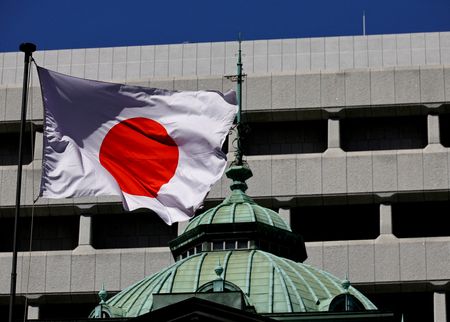
Treasury Secretary Scott Bessent is traveling to Tokyo today for discussions with Japanese government officials.
In the United Kingdom, Prime Minister Keir Starmer faces mounting pressure from his Labour Party colleagues following disappointing local election results. Despite weekend speculation about a potential leadership challenge, Starmer stated he would not resign and delivered remarks Monday intended to rally party support.
This week’s domestic economic calendar includes existing home sales figures for Monday, with April inflation data taking center stage Tuesday. The Senate may also vote Monday on Kevin Warsh’s nomination as the next Federal Reserve Chair, as current Chair Jerome Powell’s tenure ends Friday.
Major corporate earnings reports this week include technology companies Cisco and Applied Materials.
Chinese export activity accelerated in April as manufacturers worked to fulfill orders from artificial intelligence companies and other businesses stockpiling materials amid concerns that the Iran situation could drive global supply costs higher.
China’s trade surplus with the United States has expanded to $87.7 billion this year, a figure that will likely feature prominently in next week’s Trump-Xi summit discussions aimed at extending last year’s trade agreement.
Today’s key economic releases include U.S. existing home sales data and the Conference Board Employment Trends Index, both scheduled for 10 a.m. Eastern. A three-year Treasury note auction is set for 1 p.m. Eastern.
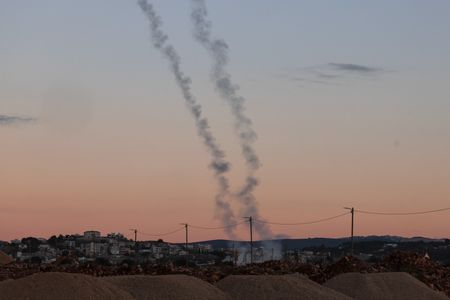
TEL AVIV – The executive leading Israel’s primary missile defense contractor announced Monday that the Iron Dome system has achieved remarkable success rates approaching 99% in stopping incoming projectiles from militant organizations.
Speaking at a Jerusalem Center for Security and Foreign Affairs gathering, Yuval Steinitz, who heads the government-owned Rafael Advanced Defense Systems Ltd, revealed that militant groups have launched approximately 40,000 rockets toward Israel following the Hamas attack in October 2023.
“Iron Dome intercepted most of them with success rates that (are) not 100% but close to 100%. It’s around 98%, even 99%, so it’s not perfect, but almost,” Steinitz stated during his presentation.
Regarding Iranian ballistic missile strikes, Steinitz reported that roughly 1,500 missiles were launched at Israel across two separate attack waves in 2024, with “only several dozens” managing to evade the defense system.
The Rafael chairman emphasized that Israel maintains adequate supplies of interceptor missiles to continue operations.
Banking institution HSBC announced Monday it has increased its year-end projection for the S&P 500 stock market index to 7,650 points, up from its earlier forecast of 7,500, as corporate earnings continue showing strength.
American stock markets have reached new record levels in recent weeks, powered by enthusiasm surrounding artificial intelligence investments and expectations for continued strong corporate profit growth. This momentum has overshadowed worries that elevated oil costs stemming from Middle Eastern tensions could drive up inflation.
The S&P 500 finished April with its strongest monthly percentage increase since November 2020.
HSBC’s revised projection suggests the index could climb approximately 3.4% above its Friday closing value of 7,398.93 points.
The financial firm anticipates earnings per share for the index will grow roughly 20% by 2026, reaching $325, with the so-called “Magnificent Seven” large technology companies expected to continue generating significant gains.
First-quarter earnings for S&P 500 companies are projected to increase nearly 29% compared to the same period last year, largely driven by major technology firms focused on artificial intelligence, according to data from LSEG I/B/E/S.
“While earnings remain supportive, sentiment is on shakier ground,” HSBC strategists noted, pointing out that the recent market surge has been concentrated among relatively few stocks.
The majority of individual stocks continue trading below their highest levels over the past 52 weeks, indicating potential for additional growth if more companies participate in the rally, the strategists explained.
HSBC analysts suggested the index could potentially exceed 8,000 points if technology company valuations strengthen further – possibly boosted by high-value initial public offerings – while coinciding with improvement in underperforming market sectors, broader artificial intelligence-driven earnings growth across various industries, and supportive economic conditions.
A new study reveals that America’s teenagers have developed the strongest confidence in the dairy industry among all age demographics, according to research released by Dairy Management Inc. Their Consumer Perceptions Tracker, which has been monitoring public opinion for three years, found that teen trust in dairy reached 47% in 2025 when measured on a seven-point confidence scale.
The nationwide study tracked how different age groups rate their confidence in dairy products and the industry overall. While general consumer trust increased modestly to 36% in 2025 (up slightly from the previous year), the teenage demographic stood out significantly above all other age categories.
What makes this finding particularly noteworthy is the consistent upward trajectory among young people over the study period. Teen confidence scores have climbed steadily from 33% in 2023, jumping to 41% in 2024, and reaching 47% in 2025 – representing substantial growth over just three years.
Industry analysts point to several potential factors driving this youth engagement with dairy. The recent popularity of cottage cheese among younger consumers, declining interest in plant-based milk alternatives that previously appealed to millennials, and a renewed appreciation for whole milk products may all be contributing to this trend.
Marketing efforts targeting teenagers through social media platforms and digital channels they frequent, supported by dairy farmers and industry advocates, may also be influencing these positive perceptions.
The research suggests a significant shift in generational attitudes toward dairy. Historically, older consumers showed the strongest support for traditional dairy products, but teenagers now demonstrate confidence levels that match or exceed those of previous generations.
This demographic trend represents promising news for the dairy industry’s long-term outlook, as today’s teenagers will become tomorrow’s primary consumers and decision-makers in household purchasing.
Good morning, Delmarva! We’re starting this Monday with mostly cloudy skies and a chance of light rain showers through early this afternoon. Don’t let that dampen your spirits though – we’re looking at a pleasant high of 61 degrees with gentle north winds between 5 to 10 mph.
If you’re planning any outdoor activities, keep an umbrella handy until about 2 PM. We’re only expecting about a 40% chance of precipitation, and any rainfall will be light – less than a tenth of an inch. So while you might see a few sprinkles, it won’t be a washout by any means!
Tonight brings much better news as skies clear out nicely. We’ll cool down to a comfortable 46 degrees under mostly clear conditions – perfect for an evening stroll or some backyard relaxation.
Tuesday is shaping up to be absolutely beautiful! Sunshine returns in full force with temperatures climbing to a delightful 68 degrees. Tuesday night stays pleasant with partly cloudy skies and lows around 51.
Enjoy this lovely spring weather, Delmarva! Stay dry this morning, and have a wonderful start to your week!
A watchdog organization is pushing the Trump administration to implement mandatory security evaluations for advanced artificial intelligence systems before companies can secure federal contracts.
Americans for Responsible Innovation submitted recommendations to government officials on Monday, calling for comprehensive screening processes that would examine AI technology for potential cybersecurity threats and weapons development risks before public deployment.
The proposal comes as the White House confronts concerns about Anthropic’s Mythos system, which experts worry could streamline sophisticated cyber operations and create national security vulnerabilities.
Under the advocacy group’s plan, AI developers would need to successfully complete security assessments to qualify for government contracting opportunities. The organization emphasized that these evaluations should focus on preventing the creation of tools that could facilitate cyberattacks or military applications.
Currently, the U.S. Center for AI Standards and Innovation conducts voluntary assessments of certain AI systems through partnerships with major technology companies including OpenAI, Anthropic, Google, Microsoft and xAI.
The advocacy group recommends expanding CAISI’s role to include developing binding standards, while suggesting Congress establish a dedicated enforcement division within the Department of Commerce to oversee compliance.
The proposed regulations would target companies investing at least $100 million annually in computational resources for training advanced AI models, or those generating $500 million or more yearly from artificial intelligence products and services.
This framework mirrors safety reporting standards that California implemented in the previous year, establishing similar financial thresholds for regulatory oversight.
A 72-hour truce between Russia and Ukraine, negotiated by the United States, came to an end Monday amid mutual accusations of violations from both warring nations, leaving American and European leaders weighing their next diplomatic moves.
Officials in Ukraine reported Monday that Russian aerial attacks, explosive devices, and artillery bombardment targeted civilian locations in the northeastern Kharkiv and southern Kherson areas, resulting in at least two deaths and seven injuries.
Moscow’s military leadership claimed Sunday that Ukraine had violated the temporary truce more than 1,000 times, according to state-controlled media outlets.
Previous temporary ceasefires declared throughout the conflict, which began when Russia invaded its neighboring country over four years ago, have likewise collapsed, and diplomatic initiatives led by the United States over the past year have produced no results.
The Washington-based Institute for the Study of War reported that NASA satellite data showed reduced but ongoing military operations following Trump’s Friday announcement that Russian President Vladimir Putin and Ukrainian leader Volodymyr Zelenskyy had agreed to his ceasefire proposal spanning Saturday through Monday. The timing coincided with Victory Day, Russia’s annual commemoration of Nazi Germany’s defeat.
The ISW observed Sunday evening that “ceasefires without explicit enforcement mechanisms, credible monitoring, and defined dispute resolution processes are unlikely to hold.”
Trump had indicated the agreement would include a prisoner swap, stating the pause in hostilities might represent the “beginning of the end” of the conflict. Zelenskyy confirmed preparations were underway for exchanging 1,000 detainees from each nation.
However, neither side appears willing to compromise on their fundamental negotiating demands.
Putin seeks control over the entire Donbas region, Ukraine’s manufacturing center, despite his forces failing to fully secure it, while Zelenskyy refuses to cede the territory. The Ukrainian president has proposed a ceasefire and direct talks with Putin, but the Russian leader has rejected face-to-face meetings until a negotiated agreement is nearly complete.
Putin proposed over the weekend that former German Chancellor Gerhard Schröder, who maintains close Russian business connections, could serve as an intermediary. However, German and European officials rejected this suggestion while acknowledging the European Union might assume a larger role in peace negotiations after being marginalized by Washington’s efforts over the past year.
Nevertheless, EU foreign policy chief Kaja Kallas emphasized the bloc must clarify its goals before engaging with the Kremlin.
“Before we discuss with Russia, we should discuss amongst ourselves what we want to talk to them about,” she told reporters in Brussels.
Ukraine’s Foreign Minister Andrii Sybiha participated in the Brussels gathering with EU foreign ministers. “We have mainstream peace talks under the leadership of the U.S., and we need this track and we need U.S. leadership. But Europe could play also its role,” Sybiha said.
He emphasized that Ukraine has recently strengthened its battlefield position, forcing the larger Russian military into slow and expensive advances along the 1,250-kilometer (780-mile) battle line, while deploying domestically produced long-range drones and missiles against targets within Russian territory.
“We have a new reality on the battlefield … Ukraine became stronger after the most difficult winter,” Sybiha said.
German Defense Minister Boris Pistorius became the newest high-ranking European official to visit Kyiv, arriving Monday for an unscheduled trip focused on expanding defense collaboration between the nations.
Prime Minister Evika Silina ordered the dismissal of Defense Minister Andris Sprūds on Sunday following recent drone incidents in the Baltic nation.
In a social media post, Silina stated Sprūds had “lost my trust” after a drone incident that “clearly demonstrated that the political leadership of the defense sector has failed to fulfill its promise of safe skies over our country.”
Sprūds resigned, characterizing it as a domestic political disagreement.
Ukraine’s Sybiha reported Sunday he had another conversation with Latvian Foreign Minister Baiba Braže regarding recent drone incidents in Latvia, after investigations revealed Russian electronic warfare had intentionally redirected Ukrainian drones from their planned targets inside Russia.
Sybiha confirmed Ukraine’s dedication to collaborating with the Baltic nations and Finland to avoid similar incidents, proposing direct participation from Ukrainian technical experts.
Estonia, Poland and Romania have also documented stray drones landing within their borders.
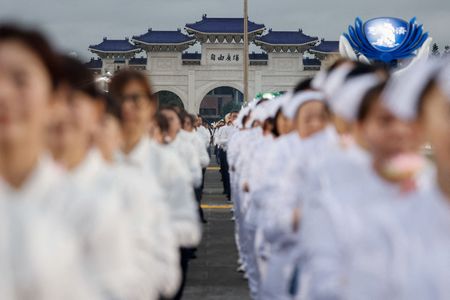
As President Donald Trump prepares for a crucial meeting with Chinese President Xi Jinping this week, concerns are mounting about the future of U.S. support for Taiwan, the self-governing island that Beijing considers its territory.
Trump’s recent actions have sent mixed signals regarding America’s relationship with Taiwan. While he greenlit a record-breaking $11 billion weapons package for the island in December, the delivery remains on hold, and Trump has acknowledged discussing the sale directly with Xi. The president has also criticized Taiwan for taking away America’s chip manufacturing dominance and suggested the island should compensate the United States for military protection.
Meanwhile, Trump has used tariff threats to pressure Taiwan into making substantial investments in American semiconductor facilities and agreeing to purchase billions in U.S. natural gas and oil.
These mixed messages have sparked debate in Washington, Beijing, and Taipei about whether America’s long-standing commitment to Taiwan’s defense might be wavering under Trump’s leadership.
Retired Navy Rear Admiral Mark Montgomery, now with the Foundation for Defense of Democracies, expressed worry about Taiwan becoming a bargaining chip in the upcoming talks.
“I do worry that we have a transactional president and a transactional opportunity could arise, and then we would have a challenge,” Montgomery stated.
Chinese officials have made clear they plan to prioritize Taiwan discussions during the summit. Foreign Minister Wang Yi brought up Taiwan during preparations with Secretary of State Marco Rubio, encouraging the United States to “make the right choices” regarding the island to maintain bilateral stability.
However, Rubio maintained that American policy remains unchanged. Speaking to reporters in Rome on Friday, he said, “We don’t want to see any forced or compelled change in the situation,” calling such action “destabilizing to the world.” He confirmed Taiwan would be discussed but wouldn’t be “a feature of our trip.”
The White House has emphasized that Trump has already authorized more military aid to Taiwan in his second term’s first year than the approximately $8.4 billion approved by former President Joe Biden throughout his entire presidency, including $330 million in aircraft components last November.
Under pressure from the Trump administration to boost defense spending, Taiwan’s legislature ended months of political deadlock Friday by approving $25 billion for military purchases. This amount fell short of the $40 billion requested by Taiwan President Lai Ching-te last year. A senior Trump administration official, speaking anonymously, called the reduced funding disappointing.
Taiwan’s National Security Bureau Director-General Tsai Ming-yen attempted to calm concerns, telling reporters that while “(China) may attempt some maneuvering during the talks,” the United States has consistently reaffirmed through public and private communications that its Taiwan policy hasn’t changed.
The central question among China specialists is how aggressively Xi will push Trump toward Beijing’s perspective on Taiwan.
Beijing views Taiwan as a rebellious province that must be reunited with mainland China, using military force if necessary. China prevents nations with which it maintains diplomatic ties from establishing formal relationships with Taiwan. Since recognizing modern China diplomatically in 1979, America has balanced Beijing’s demands while providing unofficial support and weapons to Taiwan.
This delicate balance involves Washington acknowledging Beijing’s claim that Taiwan belongs to China without explicitly agreeing with that position. The U.S. has traditionally stated it “does not support” Taiwan’s independence while opposing any unilateral changes to the current situation.
Experts suggest Xi might try to convince Trump to reduce Taiwan ties by limiting arms sales or restricting high-level American visits to the island. In February, Trump indicated he had broken with established policy by consulting Xi about Taiwan weapons sales.
Patricia Kim from the Brookings Institution’s Assessing China Project warned about potential policy shifts.
“Even if we don’t see something as dramatic as a formal shift in declaratory policy, this time around, there is always a risk that President Trump may make an off-the-cuff remark given he’s not necessarily somebody who appreciates the nuances of longstanding policy language,” Kim explained.
Tensions between U.S. ally Japan and China have also raised questions about Trump’s Taiwan commitment. In November, Japanese Prime Minister Sanae Takaichi called a potential Chinese attack on Taiwan a regional concern that could create “a survival-threatening situation” for Japan, possibly requiring military response.
Trump spoke with both Takaichi and Xi that same month but has remained mostly quiet about the dispute. When hosting Takaichi for discussions in March, Trump said, “I know they have a little bit of an edgy relationship,” adding, “I’ll be speaking Japan’s praises when I’m in China with President Xi.”
Questions about Trump’s Taiwan support also arose when the 2026 U.S. National Defense Strategy failed to specifically mention the island.
Taiwan’s advantage lies in its dominant global semiconductor industry, which America needs to maintain its technological edge over China.
“Trump at the very least realizes the role that Taiwan plays in the U.S.’s economic growth,” said Lev Nachman, a political science professor at National Taiwan University. “So I think that is sort of the main silver lining in thinking that nothing drastic will change in terms of policy toward Taiwan.”
Despite Trump’s deal-making reputation, his administration hasn’t treated challenging U.S.-China issues as tradeable commodities, according to Edgard Kagan, a former State Department official who worked under both Trump and Biden on East Asian affairs.
“The president understands leverage. My experience of being in meetings with him, he has a very, very acute sense of how to use it,” said Kagan, now the China Studies chair at the Center for Strategic and International Studies. “And so I think that the idea that there’s going to be a trade where the president sort of sacrifices U.S. interests in Taiwan in order to get other things — I think it’s unlikely based on my own experience of how he operates.”
The summit’s impact on Taiwan will likely be measured by the leaders’ public statements afterward.
Following his previous face-to-face meeting with Xi in October, Trump claimed Xi hadn’t mentioned Taiwan and that Chinese officials “know the consequences” of military action against the island.
“I think the best-case scenario Taiwan can hope for is that Taiwan is not talked about publicly or, at the very least, in a minimal way,” Nachman concluded.
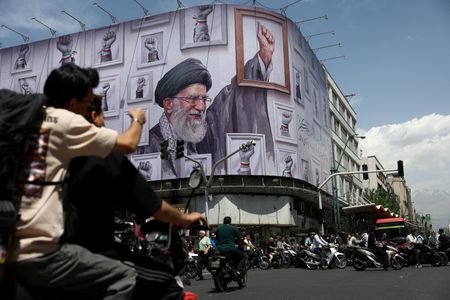
DUBAI, United Arab Emirates (AP) — Diplomatic negotiations between Iran and the United States have stalled once more on Monday, as both nations struggle to find common ground for ending their conflict while a fragile ceasefire continues to deteriorate through recent military exchanges, attacks on vessels and Gulf nations, and escalating clashes between Israel and Hezbollah militants in Lebanon.
This unstable situation threatens to plunge the Middle East back into full-scale conflict and extend the global energy emergency triggered by the ongoing hostilities, as Iran continues controlling the Strait of Hormuz while America maintains its naval blockade of Iranian harbors. President Donald Trump plans to leverage his upcoming diplomatic visit to China this week, seeking to convince Chinese leader Xi Jinping to apply pressure on Iran for meaningful compromises to break the current deadlock. China’s position as Iran’s largest purchaser of sanctioned petroleum provides Beijing with significant influence over the Islamic Republic.
However, reaching any meaningful agreement appears challenging. Iranian leadership demands the lifting of American naval blockades and economic sanctions before entering discussions about their stockpiled enriched uranium. Washington and Israeli officials insist on removing this nuclear material first, citing concerns it could eventually support weapons development if Iran chooses that path. While Tehran maintains its nuclear activities serve peaceful purposes, the country has enriched uranium far beyond levels required for civilian energy production.
On Sunday, Trump declared Iran’s latest diplomatic offer “TOTALLY UNACCEPTABLE!” Lifting the blockade prior to nuclear discussions would strip Trump of crucial negotiating power in future talks.
During this standoff, the disputed strait remains a critical passage for global oil and natural gas shipments, causing fuel costs to surge dramatically and creating widespread market instability.
Israeli leader Benjamin Netanyahu, who initiated the February 28th military campaign alongside Trump, emphasized the conflict remains ongoing. Speaking to CBS’ “60 Minutes” in Sunday’s broadcast, he stressed that removing nuclear materials from Iran represents a vital objective. Should diplomatic efforts fail, Netanyahu indicated Israel and America are prepared to “reengage them militarily.”
Netanyahu further stated the current Iranian leadership’s “days are numbered — but it could take a lot of days.”
American and Israeli forces have eliminated numerous senior Iranian officials, including the nation’s supreme leader during the war’s initial phase, while the conflict has severely damaged Iran’s economic infrastructure, though the theocratic government retains control.
Trump swiftly dismissed Iran’s newest proposal delivered Sunday through Pakistani intermediaries. The Iranian demands included war compensation from America, complete Iranian control over the Strait of Hormuz, sanctions removal, and return of frozen assets overseas, according to Iranian state media reports.
Iran additionally requested immediate cessation of all hostilities, including the Israel-Hezbollah fighting — groups that continue exchanging attacks despite their technical ceasefire status. This secondary conflict has involved Israeli airstrikes in Lebanon, Israeli occupation of Lebanese areas, and fatal Hezbollah counterattacks, including one that claimed another Israeli soldier’s life, military officials confirmed Monday.
“We did not demand any concessions — the only thing we demanded was Iran’s legitimate rights,” stated Iranian Foreign Ministry spokesman Esmail Baghaei on Monday. “The American side still insists on its one-sided views and unreasonable demands.”
Iran did propose diluting portions of their highly enriched uranium while transferring remaining materials to neutral territory, requesting 30-day negotiations for finalizing arrangements, according to two regional diplomatic sources familiar with the talks who spoke anonymously due to the sensitive nature of ongoing diplomacy.
Russian leader Vladimir Putin has volunteered to accept Iran’s uranium materials.
Russia operates Iran’s only nuclear facility at Bushehr and previously received Iranian uranium under the 2015 international nuclear agreement. When questioned Monday regarding Putin’s statements, Baghaei responded: “At the current stage, our focus is on ending the war.”
Separately, Iran executed another individual accused of espionage for both the CIA and Israel’s Mossad intelligence agency. Iran’s official IRNA news service named the executed prisoner as Erfan Shakourzadeh, claiming he handled satellite communications and transmitted classified intelligence to those agencies.
Iran has conducted multiple executions since nationwide demonstrations erupted in January. Human rights organizations have consistently criticized Iran for conducting secretive trials where defendants cannot adequately defend themselves. Iran’s chief judicial officer has repeatedly announced Tehran’s intention to accelerate execution schedules as retaliation against domestic and international adversaries.
KANSAS CITY, Missouri – The heartland city known for jazz music, championship barbecue, and NFL glory is gearing up for an unexpected role on the world stage. Kansas City will serve as headquarters for some of soccer’s biggest stars during the 2026 FIFA World Cup tournament scheduled for June 11 through July 19.
Despite ranking as the smallest among America’s 11 World Cup host cities, Kansas City has secured commitments from three powerhouse nations – defending champion Argentina, England, and the Netherlands – to establish their tournament operations there.
This means the Missouri metropolis will temporarily house wealthy international athletes, passionate supporters from around the globe, and what British media calls “WAGs” – the fashionably dressed spouses and partners of players. The accommodations will certainly differ from their previous World Cup experience aboard a cruise ship in Qatar.
Three decades ago when America last hosted the World Cup in 1994, Kansas City’s hosting application was rejected. Since then, soccer has taken root in the region, with the city investing in multiple elite-level training complexes. Its geographic position in America’s center also appeals to teams seeking to minimize cross-country travel between matches.
The metropolitan area, locally called KC, sits where two rivers meet and spans both Missouri and Kansas state lines. The Missouri portion holds greater fame and population, and will stage six World Cup contests including a quarterfinal at Arrowhead Stadium, where the NFL’s Kansas City Chiefs play. Current world champions Argentina will conduct training sessions on the Kansas side, while England’s squad will lodge at a nearby hotel.
Though the region cannot match New York’s entertainment districts, Los Angeles’ dining reputation, or Miami’s coastal attractions, residents believe international guests will discover pleasant surprises.
Visitors will likely queue for the signature “burnt ends” brisket or hickory-smoked pork at legendary barbecue establishments like Arthur Bryant’s or Joe’s Kansas City Bar-B-Que, a former gas station eatery that earned recognition on late celebrity chef Anthony Bourdain’s “13 places to eat before you die” compilation.
Jazz enthusiasts can experience live jam sessions at The Blue Room within the historic 18th & Vine District, while cinema lovers willing to take a road trip can follow the yellow brick road to the Oz Museum in Wamego, Kansas.
“I think you come in and you expect Midwest cows walking down the street,” said Jake Reid, vice president of the Kansas City host committee. “But it’s got such a great arts and culture scene,” he said, and the people “just make you feel welcome.”
THE SWIFT EFFECT
Kansas City’s reputation centers on American football – the helmet-and-pads variety. The Chiefs have captured three recent Super Bowl titles, and their star tight end Travis Kelce is engaged to music icon Taylor Swift.
However, the metropolitan area has worked to brand itself as America’s “Soccer Capital.” It supports successful professional teams in both men’s and women’s leagues – Sporting Kansas City and KC Current – and has invested hundreds of millions over 15 years in cutting-edge training centers and stadiums.
Dani Welniak, communications vice president for the Current, credited Swift with boosting the city’s visibility. “We’re so excited that she’s a part of the Kansas City sports scene now, and I really hope and believe that she will show up for some of these World Cup matches because it is going to be a spectacle,” Welniak said.
The Netherlands, often considered the strongest nation never to claim a World Cup title, will use the Current’s training grounds for preparation. Dutch head coach Ronald Koeman announced in April after visiting the location that he considered it the “best option” for his squad.
“Sports culture in Kansas City is contagious,” said Kyra Carusa, a forward for the Current. “It’s exciting. It’s everywhere.”
‘COME PREPARED’
Argentina became the first nation in February to announce Kansas City as their tournament base, pointing to travel distances and available facilities. Superstar Lionel Messi, probably making his final World Cup appearance, and his teammates will launch their championship defense on June 16 against Algeria at Arrowhead Stadium.
England won’t play any home games locally but will prepare at Swope Soccer Village – Sporting Kansas City’s former training ground – before traveling to Dallas, New York and Boston for their group stage encounters.
Teams headquartered in New York or Los Angeles “it’s going to be a little bit crazier, there’s probably a little bit more people hounding you,” said Reid. Kansas City, in comparison, “feels like home,” he said.
Visit KC, the city’s official tourism organization, projects approximately 650,000 people will arrive during the tournament period. However, hotel reservations are currently below projections according to an early May American Hotel and Lodging Association analysis.
At Joe’s Bar-B-Que, regular customer Camilla Thomas, 29, advised visitors to “come prepared,” as staff announced an order of pork spare ribs that completely filled the serving plate.
“It’s going to be much bigger portions than anyone in Europe is going to be used to,” she said.
European nations and Switzerland have pledged approximately $235 billion toward developing their electric vehicle industry, according to research data released Monday by New Automotive.
The bulk of these investments – roughly $72 billion – has targeted battery supply chain development as European countries work to break China’s stronghold on battery manufacturing.
According to the International Energy Agency, China produced more than 80% of all batteries manufactured in 2025, including those used beyond the electric vehicle industry.
“Europe now produces batteries for roughly one in three EVs sold domestically, and announced capacity could meet future demand if fully utilised,” New Automotive reported.
An additional $72 billion has gone toward electric vehicle manufacturing, primarily through converting traditional automotive facilities and building select new electric-only production plants, according to the research organization that aims to accelerate the transition to electric vehicles.
Charging infrastructure development has received between $28 billion and $55 billion in public funding, resulting in more than 1 million public charging stations across Europe. Manufacturing of this charging equipment has attracted over $4.2 billion in additional investment.
“These investments support more than 150,000 jobs, with a further 300,000 jobs expected if all announced projects are fully realised,” Chris Heron, secretary general of campaign group E-Mobility Europe, stated regarding the findings.
New Automotive’s analysis revealed significant differences between countries, with Germany – a major automotive producer – representing nearly 25% of the region’s total investment.
“The country anchors both domestic production and wider European value chains, with leading OEMs transitioning at scale alongside major international battery manufacturers,” the research group noted.
In December, the European Commission announced plans to eliminate the European Union’s ban on new combustion-engine vehicles scheduled for 2035, following pressure from the automotive industry. This represents the bloc’s most significant step back from environmental policies in recent years.
Heron noted that Germany, Italy and Central and Eastern European nations have formally challenged the EU’s 2035 vehicle framework, while more than half of tracked investments are located in these areas.
“France and Spain stand out as other major beneficiaries (of the investments),” he stated.
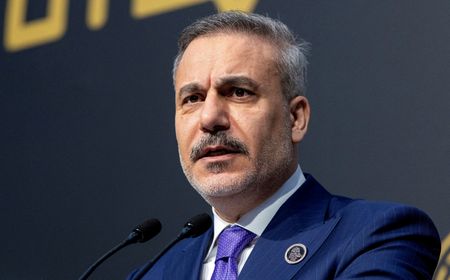
ANKARA – Turkey’s top diplomat Hakan Fidan will travel to Qatar on Tuesday to discuss the ongoing conflict involving Iran and its broader implications for Middle East stability, according to a Turkish diplomatic source who spoke Monday.
The NATO-allied nation of Turkey, which shares a border with Iran, has maintained ongoing communications with the United States, Iran, and mediating nation Pakistan throughout the U.S.-Israeli conflict with Iran. Turkish officials have advocated for ending the hostilities while denouncing both attacks against Iran and Tehran’s military actions targeting Gulf nations.
Fidan, whose most recent trip to Doha occurred in March and who conducted two phone conversations with Iran’s foreign minister over the weekend, plans to reaffirm Turkey’s backing of ally Qatar amid Iranian aggression, the diplomatic source indicated.
The foreign minister will communicate Ankara’s demands for maintaining secure passage through the Strait of Hormuz shipping lane and emphasize how crucial such protection is for both regional security and economic stability, according to the source.
The diplomatic source noted that Fidan is anticipated to “state that permanently resolving the conflict in the Gulf is the most urgent priority and exchange views on diplomatic initiatives to achieve this.”
Turkey and Qatar maintain robust diplomatic relationships and collaborate across multiple sectors including energy and military defense. Turkey operates a military installation in Qatar and has been discussing with Doha the potential purchase of Eurofighter Typhoon aircraft through a British-brokered deal.
The shutdown of Spirit Airlines, a major discount carrier known for rock-bottom fares, has created opportunities for remaining budget airlines to raise ticket prices, but industry analysts warn this development won’t resolve the deeper financial troubles facing the low-cost aviation sector.
Spirit, headquartered in Florida, stopped flying on May 2nd when creditors couldn’t reach agreement on a $500 million government rescue package. Competing budget airlines like JetBlue Airways and Frontier Airlines are now moving into Spirit’s former markets while grappling with the same escalating fuel expenses that brought down their former rival.
Aviation industry specialists point out that the fundamental problems confronting discount airlines existed long before Spirit’s demise and won’t vanish with its departure. Post-COVID increases in employee salaries, climbing aircraft rental fees, and higher maintenance costs have undermined the core advantages that previously made budget carriers successful.
Since discount airlines primarily serve cost-conscious passengers, they face significant constraints when trying to raise prices to offset increased expenses without damaging customer demand.
Joe Rohlena, a senior director at Fitch Ratings, explained his outlook on the situation. “I expect Spirit’s liquidation to be a modest benefit to its low-cost competitors,” Rohlena stated. “But I don’t expect it to be sufficient on its own to overcome other hurdles that the discounters are facing.”
Financial performance data illustrates the struggles facing budget carriers. Frontier has recorded adjusted per-share losses in eight out of the last 13 quarters, while JetBlue hasn’t achieved annual profitability since 2019. Both companies have seen their stock values drop approximately 75% over the past five years.
Meanwhile, major U.S. carriers including Delta Air Lines and United Airlines maintained profitability in 2025, benefiting from passengers with higher disposable incomes.
According to research from TD Cowen, Frontier’s adjusted earnings before interest and taxes margin dropped dramatically from 9.3% in 2019 to negative 12.1% in 2025. JetBlue experienced a similar decline from roughly 10.0% to negative 3.7% during the same period. By comparison, Delta’s EBIT margin decreased from 19% to 10%.
Industry executives indicate that Spirit’s departure won’t lead to a complete restoration of flight capacity, as discount carriers have been reducing their route networks. Instead, airlines are selectively choosing Spirit’s most profitable routes to replace available seats.
Frontier reported that the aviation industry has restored approximately half of Spirit’s capacity reductions from earlier in May, with Frontier responsible for about 40% of that replacement capacity. The company anticipates Spirit’s exit will increase revenue per seat by 3% to 5%.
In a company statement, CEO Jimmy Dempsey highlighted the airline’s record adjusted revenue in its latest quarter, expressing confidence that the company is well-positioned to fill the capacity gap and emerge “structurally stronger.”
JetBlue is increasing its presence in Fort Lauderdale, previously Spirit’s primary hub, and attracting former Spirit customers through loyalty program matching offers. The airline plans to operate 130 daily departures by summer, representing more than a 75% increase from its 2025 flight levels.
JetBlue did not provide a response when contacted for comment.
However, not every low-cost carrier is experiencing difficulties. Allegiant Air, based in Las Vegas, achieved a 14.9% adjusted operating margin in the recent quarter compared to negative margins posted by JetBlue and Frontier. Allegiant’s success stems from its strategy of serving leisure destinations with limited service and minimal competition.
Budget airlines face particularly challenging conditions when fuel costs remain elevated, with limited ability to adjust pricing. Andrew Levy, CEO of Houston-based budget carrier Avelo Airlines, noted that pricing flexibility is restricted, making operations “a little harder for companies like mine.”
Levy described how his airline’s fuel expenses jumped from approximately $2.56 per gallon in February to around $4.71 in April, forcing the company to increase base ticket prices by about $20, raise additional fees, and implement promotional campaigns to maintain passenger demand.
The impact of higher fuel costs could reach tens of millions of dollars for Frontier and exceed $100 million for JetBlue this quarter. JetBlue projects it can only recover 30% to 40% of increased fuel expenses, while Frontier expects to recoup roughly 35% to 45%.
Frontier spent $268 million on fuel at $2.88 per gallon during the first quarter and has projected $4.25 per gallon for the current quarter. Based on similar fuel consumption patterns, the unrecovered fuel cost increase could result in approximately $70 million to $83 million in lost earnings.
JetBlue faced similar challenges, paying $2.96 per gallon in the first quarter while forecasting a range of $4.13 to $4.28 for the current quarter. With comparable consumption levels, fuel expenses would increase from $573 million in the first quarter to between $797 million and $826 million.
Jarrett Bilous, an analyst at S&P Global, emphasized the critical nature of fuel cost management. “The ability to recoup sharply higher fuel prices is the primary consideration at the moment,” Bilous said.
Business representatives on Japan’s primary economic advisory committee issued a warning Monday to the nation’s central bank about potential financial pressures on smaller businesses as Middle East conflicts continue.
The recommendations were presented to the Council on Economic and Fiscal Policy, which guides Japan’s budget planning and long-term economic strategy. The advisory effectively asks for careful consideration before implementing policy changes, even as the Bank of Japan has indicated possible interest rate increases to address inflation concerns related to ongoing conflicts.
Four private sector representatives released a joint statement saying: “We expect the BOJ to conduct appropriate monetary policy while closely monitoring price developments, including inflation expectations, and taking into account trends in supply and demand for funds across financial markets.”
Although current data shows no immediate financing difficulties for small and medium enterprises, the panel expressed worry that elevated energy prices and supply chain disruptions might create greater capital requirements for these businesses.
Companies are already taking defensive measures against potential supply disruptions. Bank of Japan statistics reveal that commitment line agreements, which provide companies with predetermined borrowing capacity from banks, jumped by 2.5 trillion yen (approximately $16 billion) in March. This represents the steepest monthly climb since May 2020 during the coronavirus outbreak.
Japan’s central bank maintained current interest rates during its recent meeting but sent strong indications about a possible rate adjustment as early as June. This consideration stems from growing worries that rising energy expenses could accelerate inflation beyond manageable levels.
Financial experts suggest the gradual approach to rate increases contributes to the yen’s ongoing decline, creating policy challenges for government officials as it drives up import costs for everything from petroleum to food products.
However, increased interest rates would also mean higher debt payments, particularly affecting smaller businesses that depend more heavily on bank financing and typically maintain smaller cash reserves.
The four business representatives, including two individuals considered supportive allies of Prime Minister Sanae Takaichi’s economic policies, emphasized the need for strong cooperation between the central bank and government officials.
Additionally, the panel suggested the government should evaluate fiscal health using multiple measurements instead of depending solely on one indicator, shifting away from Japan’s traditional emphasis on primary balance as the primary fiscal responsibility metric.
Across Delaware and the region, families feeling the pinch of rising costs are changing where they shop for groceries, abandoning traditional supermarkets for discount chains and warehouse stores.
The shift reflects growing economic pressures as households search for ways to reduce their grocery bills without sacrificing quality. Stores like Aldi are seeing increased foot traffic as customers prioritize savings over convenience.
Rich Henderson and his wife Rachel Negro-Henderson represent this trend, regularly shopping at the Aldi location in Bellmawr, New Jersey, as they seek the best deals for their family’s needs.
The movement toward budget-friendly grocery options highlights how inflation and economic uncertainty continue to influence consumer behavior, with families willing to adjust their shopping habits to make ends meet.
NAIROBI, Kenya — French President Emmanuel Macron is leading a diplomatic push to reshape his country’s relationships across Africa during a groundbreaking summit that kicked off Monday in Kenya, coinciding with France’s complete military pullout from West African nations that many view as a sign of waning French influence across the continent.
The French government is using the two-day Africa Forward Summit, which it is jointly hosting, to promote what officials describe as a fresh approach to African relations that emphasizes English-speaking nations and establishes what Paris terms a “partnership of equals.” France’s recent defense pact with Kenya exemplifies this new strategic direction.
For decades, France has exercised substantial economic, political and military control over its former colonies through a system known as Françafrique, which involved deploying thousands of soldiers throughout the region. However, following sustained criticism from African leaders and opposition movements who characterized France’s approach as patronizing and authoritarian, the French government has been compelled to remove the majority of these forces.
This gathering marks France’s inaugural summit held in an English-speaking African nation and will welcome over 30 heads of state and government representatives, including leaders from French-speaking countries. Upon his Sunday arrival, President Macron stated that while France might have disagreements with West African governments, it “never disagrees with the people.”
Kenya’s recently approved defense pact with France has drawn criticism from advocacy organizations who argue it provides excessive legal immunity to French military personnel under local law — a contentious matter in a nation where a comparable arrangement with the United Kingdom has resulted in numerous difficult-to-prosecute offenses against local residents.
During a period when numerous African countries, especially those in the Sahel region, are limiting or removing foreign military operations as part of what they describe as efforts to restore their independence, Kenya is welcoming an expanding international military presence.
The Kenya-France Defense Cooperation Agreement received signatures on October 29, 2025, from Kenya’s Defense Minister Soipan Tuya and French Ambassador to Kenya Arnaud Suquet, with parliamentary approval following on April 8. During that same month, lawmakers also approved defense partnerships with several nations including the Czech Republic, China and Italy.
While supporting the defense agreements, parliament defense committee chair Nelson Koech explained that Kenya’s partnerships with militarily advanced nations provide training opportunities and intelligence-sharing capabilities that will strengthen the country’s defense capabilities.
“These agreements were not a ‘surrender of sovereignty,’” Koech stated, noting that more recent pacts ensure foreign military personnel will face trial in Kenya if accused of serious offenses such as murder.
One month before the summit’s start, approximately 800 French soldiers arrived in Kenya via naval vessel.
The agreement provides visiting French forces with primary legal authority over their personnel for duty-related violations, mirroring extensive legal protections in previous UK agreements that protected British soldiers from Kenyan judicial proceedings during controversies including the 2012 killing of a young woman named Agnes Wanjiru and the fatal 2021 Lolldaiga ranch fire.
A British soldier faces extradition after Kenyan courts determined he must answer for the 2012 death of Wanjiru, who was last observed alive with him near British military training facilities in Nanyuki, central Kenya.
SARAJEVO, Bosnia-Herzegovina — The German diplomat responsible for monitoring peace efforts in Bosnia-Herzegovina since the 1990s conflict has announced his resignation, according to his office on Monday.
Christian Schmidt has made a “personal decision to conclude his service” as High Representative for Bosnia and Herzegovina following almost five years in the position, according to an official statement. The German official will remain in his role until authorities select his replacement.
Throughout his tenure, Schmidt engaged in frequent disputes with Milorad Dodik, the leading Bosnian Serb politician who heads the Serbian portion of Bosnia known as Republika Srpska. In August, officials stripped Dodik of his presidential position and imposed a temporary political ban for refusing to comply with Schmidt’s directives.
Dodik, who maintains pro-Russian positions, has advocated for the Serbian region of Bosnia to break away and unite with Serbia. His political stance has raised concerns about potential renewed conflict in Bosnia, where ethnic divisions persist among Serbs, Croats, and Bosniaks, who are predominantly Muslim.
The United States previously imposed sanctions on Dodik for his separatist activities, though these penalties were recently removed. He maintains regular contact with Russia and attended Saturday’s annual military ceremony in Moscow marking the end of World War II in Europe.
The High Representative’s office was created through a peace accord brokered by the United States that concluded the 1992-95 ethnic conflict, which claimed over 100,000 lives. This position holds power to modify legislation and remove officials who obstruct post-conflict reconciliation efforts.
As a potential European Union member nation, Bosnia has struggled to complete required reforms because of ongoing political disputes and ethnic divisions among nationalist leaders. The nation is structured with a Serbian entity and a Bosnian-Croat entity, unified under a multi-ethnic federal government.
MANILA, Philippines — Philippine lawmakers delivered a decisive blow to Vice President Sara Duterte on Monday, voting overwhelmingly to remove her from office amid accusations of financial misconduct and threatening President Ferdinand Marcos Jr.’s life.
The chamber, controlled by allies of President Marcos, cast ballots 255-26 with nine members choosing not to vote. Two separate impeachment cases against Duterte will now advance to the Senate, where lawmakers will form a trial tribunal to hear the charges.
Duterte faces accusations of accumulating unexplained wealth, improperly using government money, and making assassination threats against the current president. The vice president, whose father previously served as the country’s leader, has broadly rejected the allegations while avoiding detailed responses to the specific criminal charges.
This marks the second time in consecutive years that House members have moved to impeach Duterte. Her previous impeachment effort was halted when the nation’s highest court intervened, citing constitutional procedural issues that prevented a Senate trial.
As grocery store prices continue to climb, National Public Radio is reaching out to the public for money-saving strategies and practical advice on reducing food expenses.
The network is collecting tips and creative solutions from listeners who have found ways to lower their grocery bills despite ongoing food cost increases affecting households nationwide.
NPR is seeking both simple tricks and innovative approaches that people use to stretch their food budgets further in today’s challenging economic climate.
Two months have passed since a violent attack shattered the peace at Temple Israel in West Bloomfield, Michigan, yet the wounds remain fresh for the state’s largest Jewish congregation.
In March, an armed assailant drove a vehicle packed with fireworks and gasoline directly through the doors of the synagogue’s preschool facility. Miraculously, every child and educator present during the incident escaped without physical injury.
“I think people don’t understand how close this was to a massacre,” said Rabbi Jen Lader, reflecting on the terrifying event that could have claimed numerous innocent lives.
The congregation continues to operate from temporary locations while working toward returning to their permanent home. Beyond the physical damage to their building, the community faces the ongoing challenge of healing from the psychological trauma inflicted by the attack.
The incident serves as a stark reminder of the security concerns facing religious institutions across the country, particularly Jewish communities that have experienced increased threats in recent years.
WASHINGTON — Congressional Republicans face mounting opposition this week over a billion-dollar security funding proposal tied to President Donald Trump’s planned White House ballroom, with Democrats promising an aggressive fight against the measure.
The substantial security allocation was inserted by Senate Republicans into spending legislation that would also reinstate funding for immigration enforcement agencies previously blocked by Democrats since February. This security funding proposal emerged following charges against a man accused of attempting to assassinate Trump during last month’s White House Correspondents’ Association dinner.
GOP leaders plan to advance the spending measure through Congress using partisan budget procedures that bypass Democratic support entirely. However, Senate Democratic leader Chuck Schumer announced Monday that his party will mount opposition through alternative strategies, including urging the Senate parliamentarian to remove the ballroom security funds and introducing amendments that force Republicans into difficult votes.
“The Republican-controlled Congress is preparing to answer this moment with a deficit-busting, party-line bill that pours billions more taxpayer dollars into a rogue ICE operation and a billion-dollar ballroom, while doing nothing to end the illegal war in Iran or ease the Republican affordability crisis bearing down on working families,” Schumer stated in a letter to colleagues.
Republican support for the security funding remains uncertain. The House version of the bill has not been released, though the Senate is anticipated to begin voting on its version this week.
Several GOP lawmakers have expressed reservations about the proposal during the recent congressional recess, with some publicly questioning their potential support.
“I’m going to look at it very carefully and make sure those things are in the national interest,” stated Rep. Rob Wittman, a Virginia Republican who was at the Capitol last week for a brief House session.
“I want to know the exact nature of the expenditures that would go there for security. So I think it’s a little premature to look at that and say, you know, yes or no to it,” Wittman explained.
Wittman emphasized his desire to understand the Senate proposal’s specifics and “how it’s part of what the total construction cost is,” he noted.
Trump has estimated the ballroom construction at $400 million using private funding, though he had not previously specified security-related expenses.
The Senate legislation would allocate the funds to the U.S. Secret Service for “security adjustments and upgrades” connected to the ballroom project, which Trump and Republican allies have championed since Cole Tomas Allen was charged with attacking the April 25 media dinner at the Washington Hilton while armed with guns and knives.
The proposed legislation indicates the funding would support ballroom project enhancements, “including above-ground and below-ground security features,” while explicitly prohibiting use for non-security components.
White House spokesperson Davis Ingle commended Republicans last week for incorporating funding for the “long overdue” project, stating it would “provide the United States Secret Service with the resources they need to fully and completely harden the White House complex, in addition to the many other critical missions for the USSS.”
Court filings from the White House describe the East Wing project as “heavily fortified,” featuring bomb shelters, military installations and underground medical facilities beneath the ballroom. Trump has advocated for bulletproof glass and drone attack resistance capabilities.
The National Trust for Historic Preservation has filed a lawsuit challenging the project’s construction, though a federal appeals court ruled last month that work may proceed during the legal proceedings.
Nigeria’s Defense Headquarters has pushed back against media reports claiming civilian casualties occurred during recent drone operations targeting armed criminal groups in the country’s northern Niger state.
Defense spokesperson Major-General Michael Onoja stated Monday that the overnight drone operations conducted between May 9 and 10 were guided by intelligence and struck only militant locations. The operations focused on four villages in the Shiroro district: Katerma, Bokko, Kusasu and Kuduru, where intelligence suggested armed criminal groups known locally as bandits were assembling to plan future attacks.
The military’s response addresses Nigerian media reports that alleged civilian deaths, highlighting ongoing concerns about how airstrikes in conflict areas affect local populations.
Nigeria’s armed forces are currently fighting criminal gangs in the country’s northwest region while also combating a 17-year Islamic extremist uprising in the northeast.
Just last month, approximately 200 people died when military aircraft hit a village marketplace during operations against Islamic militants in the northeast, according to local residents who spoke with Reuters.
Regarding the recent operations, Onoja reported that no fewer than 70 suspected criminals were eliminated in Kusasu village alone. Intelligence gathered after the strikes revealed surviving fighters were regrouping, with over 200 motorcycles observed moving toward the nearby village of Zango.
“The strikes were precisely targeted at identified terrorist enclaves and achieved their intended military objectives,” Onoja stated. He added that local residents had moved to another village prior to the operation, reducing the possibility of civilian casualties.
Onoja did not specify whether civilians received advance warning about the planned strikes.
The military has directed field commanders to look into any allegations of civilian harm, according to Onoja.
Hungary’s new government plans to examine a massive nuclear power plant expansion agreement with Russia, according to the country’s nominee for economy and energy affairs minister during a parliamentary hearing Monday.
The ministerial candidate, Istvan Kapitany, announced the review of the controversial $14.7 billion project to add two Russian-built VVER reactors to Hungary’s existing Paks nuclear facility. The original deal was granted to Russia’s state nuclear company Rosatom in 2014 without any competitive bidding process and has faced multiple delays over the years.
“We need a transparent nuclear strategy,” Kapitany stated during his hearing. “We have to review the financing and costs of Paks 2 (expansion project) and its implementation conditions. These are classified contracts, which we have not yet seen, we need to examine them.”
The nuclear expansion has long been viewed by political analysts as evidence of the strong relationship between Budapest and Moscow under previous prime minister Viktor Orban. Hungary’s new leadership has promised to alter this dynamic as part of broader efforts to improve ties with the European Union.
Centre-right leader Peter Magyar, who took the oath as prime minister Saturday, previously stated that the project’s costs were artificially inflated. Rosatom has indicated its willingness to defend the pricing structure.
Despite the review, Kapitany emphasized that nuclear energy would remain a significant component of Hungary’s power strategy. He also committed to combating corruption, addressing criticism that graft flourished under Orban’s administration – allegations the former leader has rejected.
In a separate committee hearing, foreign minister nominee Anita Orban outlined her priority to restore international confidence in Hungary following deterioration under the previous administration.
The former government maintained frequent disputes with EU leadership on matters including judicial independence and minority protections. Hungary’s sustained connections with Moscow amid Russia’s invasion of Ukraine, combined with blocking financial assistance to Kyiv, further damaged these relationships.
“Laws need to be passed that will ensure that Hungary’s judiciary is independent, that public tenders are transparent, that corruption can be fought, wealth declarations can be checked and the use of European Union funds can be tracked,” Orban explained.
She clarified that Hungary would not deploy military personnel or armaments to Ukraine.
Federal research funding worth billions of dollars has been released by the Trump administration after being previously frozen or held back from scientific institutions and agencies across the country.
Despite the restoration of these funds, many scientists are expressing concerns that the timing may be insufficient to rescue research projects that have already suffered significant setbacks during the funding freeze.
The delayed release of funding has left researchers questioning whether their work can recover from the interruption, with some indicating that the damage to ongoing studies may already be irreversible.
Motorists traveling on Route 896 southbound should prepare for lane configuration changes when accessing northbound Interstate 95.
The Delaware Department of Transportation has announced that the ramp connecting southbound DE-896 to northbound I-95 will feature modified lane patterns. These adjustments to the normal traffic flow will continue until 5:00 AM on May 13, 2026.
Drivers are advised to use caution when navigating through the work zone and allow extra time for their commute while the lane shifts are in effect.
TENERIFE, Spain — Health officials in France and the United States confirmed Monday that passengers evacuated from a cruise ship outbreak have contracted hantavirus, with one patient’s condition declining after arrival.
French Health Minister Stephanie Rist announced that a French woman who was airlifted to Paris on Sunday has tested positive for the virus and experienced worsening symptoms during her overnight hospital stay. The patient was one of five French nationals brought home from the MV Hondius and began showing signs of illness while aboard the repatriation flight, Rist explained during an interview with France-Inter radio.
Meanwhile, U.S. health authorities confirmed late Sunday that one of 17 American passengers flown to Nebraska has also contracted the virus but remains without symptoms. Officials noted that a second American passenger is experiencing minor symptoms. The evacuation flight touched down in Nebraska early Monday morning.
The American passengers will undergo evaluation at the University of Nebraska Medical Center, which operates a government-funded isolation facility. Medical staff will determine each person’s exposure risk and potential for virus transmission. The medical center houses a specialized treatment unit for highly contagious diseases, previously utilized for COVID-19 and Ebola patients during past health emergencies.
Military and government aircraft began transporting passengers from the cruise vessel on Sunday after it docked in the Canary Islands. Medical personnel wearing complete protective suits and respiratory equipment guided travelers from the ship to shore in Tenerife, with evacuation operations extending into Monday.
The World Health Organization has advised strict surveillance of all former passengers, prompting numerous nations to implement quarantine protocols.
Previously, representatives from Spain’s Health Ministry, the World Health Organization, and cruise operator Oceanwide Expeditions had stated that none of the more than 140 individuals aboard the Hondius were displaying viral symptoms.
The international evacuation effort involves transporting passengers from over 20 nations, with operations scheduled to continue through Monday.
The outbreak has claimed three lives, while five additional passengers who disembarked earlier have confirmed infections.
WHO Director-General Tedros Adhanom Ghebreyesus emphasized that the general population should remain calm about the situation. “This is not another COVID. And the risk to the public is low. So they shouldn’t be scared, and they shouldn’t panic,” he stated Sunday.
The virus typically transmits through contact with rodent waste and rarely passes between humans. However, the Andes strain identified in this cruise ship incident may occasionally spread person-to-person. Symptoms generally appear one to eight weeks following exposure.
Maria van Kerkhove, WHO’s chief epidemiologist, explained the organization’s recommendations for passenger monitoring: “have active monitoring and follow-up, which means daily health checks, either at home or in a specialized facility.”
Multiple countries have announced plans to quarantine or hospitalize their returning citizens for medical observation.
Nearly 500 mountaineers are pushing forward with their quest to reach the summit of the world’s tallest mountain, even as a treacherous ice formation threatens the primary climbing path, along with rising expedition costs and higher permit prices.
Approximately 492 climbers accompanied by an equal number of Nepali guides are preparing for their journey to the summit of the towering peak that reaches nearly 8,850 meters (roughly 29,000 feet) this month, taking advantage of the eagerly awaited period of favorable weather conditions.
Mountaineers started assembling in April at base camp, positioned at 5,300 meters (17,340 feet) above sea level. However, a colossal and precarious ice formation, known as a serac, has prevented their advance up the mountain for more than two weeks.
This serac forms part of the Khumbu Icefall, a continuously moving glacier filled with deep cracks and enormous overhanging ice chunks that can reach the size of a ten-story structure. This area ranks among the most challenging and dangerous sections to navigate.
Mountaineering specialist Ang Tshering Sherpa from Nepal noted that despite ongoing conflicts in Iran and rising travel expenses, a substantial number of climbers are tackling Mount Everest this climbing season. While fewer mountaineers from America and Europe are participating, there has been an increase in Asian climbers making the attempt.
The mountain sits along the border between Nepal and China, though China has shut down its climbing route this year, forcing all climbers to attempt their ascent from Nepal’s southern approach.
Ukrainian military commanders and local officials documented continued Russian drone attacks and combat engagements on Monday, breaking terms of a ceasefire arrangement facilitated by the United States.
Both nations had committed to halting hostilities from May 9 through May 11 under an American-led diplomatic initiative spearheaded by President Donald Trump, aimed at concluding the conflict that has persisted for over four years following Russia’s comprehensive military offensive launched in 2022.
The temporary truce, which Trump expressed hope on Friday could be prolonged, began showing cracks on Sunday as both countries pointed fingers at each other for ceasefire breaches.
Ukrainian President Volodymyr Zelenskiy stated on Sunday that while Moscow had avoided major air and missile bombardments, Russian forces maintained offensive operations across sections of the extensive battle line where they continue advancing.
Moscow’s Defense Ministry countered on Sunday by claiming Ukraine violated the truce terms, reporting the destruction of 57 Ukrainian drones within a 24-hour period and stating they had “responded in kind” during ground fighting. Russian officials had not released updated battlefield assessments by Monday.
Casualties mounted across Ukrainian territories, with Zaporizhzhia’s southeastern region recording one fatality and two injuries, according to the area’s governor. The southern Kherson region saw two deaths and two wounded, as reported by local leadership.
Additional injuries were documented in neighboring areas: three wounded in the Mykolaiv region, five injured in northern Kharkiv, and four casualties in eastern Donetsk, based on statements from regional governors.
Ukraine’s military General Staff documented 180 separate combat incidents across front-line positions during the previous 24-hour period, noting that Russian forces had launched 8,037 “kamikaze” drones targeting both civilian areas and military installations on Sunday.
BEIJING, May 11 – Beijing has sharply criticized recent United States penalties imposed on three Chinese businesses that American officials accused of supporting Iran’s military capabilities, denouncing the measures as unlawful and one-sided.
During a routine media briefing on Monday, Chinese government spokesperson Guo Jiakun stated: “We have always required Chinese enterprises to conduct business in accordance with laws and regulations, and will firmly safeguard the legitimate rights and interests of Chinese enterprises.”
Guo also emphasized that current efforts should focus elsewhere, saying: “The pressing priority is to prevent by all means a relapse in fighting, rather than using the war to maliciously associate and smear other countries.”
The Chinese official’s remarks represent Beijing’s formal response to Washington’s latest round of economic restrictions targeting companies it claims have facilitated Iranian military activities.
South Korean officials issued their harshest condemnation Monday regarding an assault on a Korean-operated commercial vessel in Middle Eastern waters earlier this month, promising retaliation once they determine the perpetrator.
The incident occurred in the Strait of Hormuz when the cargo ship Namu, run by shipping company HMM Co., came under attack while operating legally in waters near the United Arab Emirates, according to government representatives.
Initial forensic examination revealed damage to the vessel’s lower left rear section, which sparked a blaze in the engine compartment, a Blue House spokesperson reported.
“We condemn this in the strongest terms,” declared Wi Sung-lac, South Korea’s presidential national security adviser, during a press conference. Wi explained that Korean officials and specialists confirmed the vessel damage during their forensic review at a Dubai port facility.
The assault’s impact wasn’t immediately apparent because of where it struck the ship’s lower rear port area, Blue House representatives noted.
Officials stated they remain uncertain about Iran’s potential involvement in the incident. Tehran has previously rejected any culpability for the assault, which involved a powerful blow to the vessel’s side.
The Iranian embassy in Seoul released a statement Monday indicating they had no current stance on the situation but would provide updates if an official position develops.
Following the incident, U.S. President Donald Trump accused Iran of attacking the Korean ship and called on Seoul to participate in American-led maritime security operations in the strategic waterway.
BEIJING – Law enforcement officials from the United States and China have successfully apprehended five individuals as part of a collaborative investigation targeting international drug trafficking operations, according to China’s official Xinhua news agency on Monday.
The coordinated enforcement action took place across both nations, resulting in the arrest of two individuals from China and three from the United States, Xinhua reported. During the operation, authorities also confiscated quantities of illegal drugs.
The joint investigation demonstrates ongoing cooperation between American and Chinese law enforcement agencies in combating cross-border narcotics smuggling networks.
The Minnesota Timberwolves capitalized on Victor Wembanyama’s early exit to defeat the San Antonio Spurs 114-109 on Sunday night in Minneapolis, evening their Western Conference second-round playoff series at two wins each.
Anthony Edwards delivered a stellar performance with 36 total points, including a crucial 16-point outburst in the final quarter that helped secure the victory for Minnesota.
The turning point came when Wembanyama received a flagrant 2 foul and automatic ejection during the second quarter. The incident occurred when the Spurs center, while protecting a rebound from two Minnesota defenders, swung his right elbow and struck Naz Reid in the chin with 8:39 remaining in the first half.
Officials reviewed the play before upgrading the initial foul call. Crew chief Zach Zarba explained the decision, stating: “There was windup, impact and follow-through above the neck of an opponent.”
Reid, who absorbed the elbow to his chin, contributed 15 points and nine rebounds coming off the bench for the Timberwolves. Additional scoring support came from Jaden McDaniels with 14 points, Julius Randle with 12, and Rudy Gobert, who recorded a double-double with 11 points and 13 rebounds. Ayo Dosunmu chipped in 10 points.
For San Antonio, De’Aaron Fox and reserve Dylan Harper each scored 24 points, while Stephon Castle added 20. Devin Vassell contributed 14 points. Wembanyama’s night was cut short after just 12 minutes, during which he managed four points and four rebounds with no blocks.
“We never expected them just to go away,” Timberwolves coach Chris Finch commented. “They won a game in the Portland series without Wembanyama, so they’re very good, very good team.”
Despite losing their star player, the Spurs mounted a strong third-quarter rally, outscoring Minnesota 20-8 to start the period and taking a 76-68 lead after a Vassell basket with 4:33 left in the quarter.
“I thought offensively, we were really doing a lot of good things,” Finch reflected. “We lost our way a little bit, and gave them life.”
San Antonio maintained momentum into the fourth quarter, with Keldon Johnson’s driving layup giving them an 84-80 advantage entering the final period. Fox extended the lead to 94-86 with a three-pointer with 8:51 remaining.
However, Edwards sparked a game-changing 14-5 Minnesota run, personally scoring 12 points during that stretch. He began the surge with a jumper, then added five straight points through a short floater and long three-pointer to cut the deficit to three with 7:10 left. Edwards later sank two free throws with 5:51 remaining to bring Minnesota within 97-95, then connected on a three-pointer 39 seconds later to give the Timberwolves their first lead of the quarter.
Gobert sealed the victory with a powerful dunk that extended Minnesota’s lead to 107-101 with 1:56 remaining.
The Spurs made a late push, with Harper hitting two free throws with 29.1 seconds left and Julian Champagnie adding two more with 20.6 seconds remaining to narrow the gap to 112-109. But Dosunmu responded with two free throws with 9.8 seconds left to close out the win.
“Just small-time plays,” Edwards told reporters when asked about the key to Game 4. “Small-time plays win big-time games. That’s what we needed. Diving on the floor, offensive rebounds and it was a great sub by Finchie for putting in Ayo for that last minute-and-a-half.”
Spurs coach Mitch Johnson defended his player’s actions while clarifying his stance. “I’m glad he (Wembanyama) took matters into his own hands,” Johnson said. “Not in terms of hitting Naz Reid, I want to be very clear about that. I’m glad Naz Reid is OK and I didn’t want him to elbow him. But [Wemby’s] going to have to protect himself if no one else does for him. And I think it’s disgusting.”
“We had a chance to win,” Johnson added. “We didn’t close it out the way we wanted to. … Minnesota made some plays and finished the game.”
Minnesota shot 44.7% from the field and connected on 10 of 27 three-point attempts. San Antonio made 47.7% of their shots but struggled from beyond the arc, hitting just 6 of 26 three-pointers.
The series continues Tuesday night in San Antonio for Game 5.
LONDON — British Prime Minister Keir Starmer is battling to save his political career by promising stronger European relationships following crushing electoral defeats that have sparked widespread calls for his resignation.
The embattled Labour leader will deliver a major address Monday where he intends to declare he will “face up to the big challenges” and restore “hope” across Britain.
Central to his message will be “putting Britain at the heart of Europe,” marking a significant shift ten years after the United Kingdom decided to exit the European Union, according to his office.
However, Starmer’s grip on power appears increasingly tenuous, with numerous members of parliament demanding he announce when he will step down.
Angela Rayner, the former Deputy Prime Minister and influential figure viewed as a possible successor, declared “what we are doing isn’t working, and it needs to change.”
While Rayner stopped short of directly demanding Starmer’s resignation, she criticized him for overseeing “a toxic culture of cronyism” and insisted the administration must “stay true to labor and social democratic values” while addressing living costs for working families.
“This may be our last chance,” Rayner stated Sunday.
The Labour Party has fallen into despair following significant defeats in recent local elections throughout England and parliamentary contests in Scotland and Wales. Political observers view these results as an unofficial judgment on Starmer, whose approval ratings have collapsed since his overwhelming victory less than two years ago.
His administration has failed to achieve promised economic expansion, rebuild struggling public services, and address cost-of-living concerns, while being undermined by continuous blunders and policy reversals on matters including welfare changes. His troubles deepened with his controversial choice to name Peter Mandelson, who has connections to Jeffrey Epstein, as Britain’s ambassador to the United States.
The recent elections demonstrated Labour losing support from multiple directions, with voters defecting to both the anti-immigration Reform UK party and the “eco-populist” Green Party. This highlights the growing division in British politics, traditionally controlled by Labour and Conservative parties.
Starmer hopes Monday’s address and an extensive legislative agenda to be presented Wednesday by King Charles III during Parliament’s ceremonial opening will help him recover politically.
A central element involves strengthening European connections, as the UK departed the EU in 2020, four years following the narrow “leave” victory in the membership vote. Starmer’s administration has already begun reducing trade barriers that have impacted British companies since Brexit, and he promises to negotiate a youth mobility agreement allowing young people to work temporarily across Europe.
Labour supported remaining in the EU during the 2016 campaign but has avoided reopening the divisive national debate. Starmer has rejected pursuing EU membership or rejoining the organization’s customs union or single market.
Prominent Labour figures considered potential replacements for Starmer — including Rayner, Health Secretary Wes Streeting, and Greater Manchester Mayor Andy Burnham — have not yet demanded his resignation.
However, increasing numbers of Labour parliamentarians are urging the prime minister to establish a departure timeline. British political systems permit parties to replace leaders during their terms without requiring new elections.
Josh Simons, a previously supportive Labour member of parliament, wrote in the Times of London that Starmer “has lost the country” and “should take control of the situation by overseeing an orderly transition to a new prime minister.”
Catherine West, a former junior minister, threatens to initiate a leadership challenge unless Starmer delivers an exceptional speech Monday. West admitted lacking support from the required 81 colleagues to force a contest, with her action appearing designed to pressure more prominent candidates to act.
“Working people sent us a message,” West explained. “We have to listen to that, and we have to change and we have to do it quickly.”
PARIS – A French woman who traveled on a cruise ship experiencing a hantavirus outbreak has contracted the disease and her health is declining, according to French Health Minister Stephanie Rist, who made the announcement Monday.
The infected woman was one of five French citizens aboard the affected vessel. The remaining four French passengers have tested negative for the virus but will undergo additional testing, Rist explained during an interview with France Inter radio. She noted that French health officials have identified 22 individuals who may have been exposed.
“What is key, is to act at the start and break the virus transmission chains. This is what we are doing with the Prime Minister, notably with a decree that came out today that will allow us to strengthen isolation measures for contact cases and to protect the population,” Rist stated.
Prime Minister Sebastien Lecornu is scheduled to convene a meeting regarding the hantavirus situation later Monday.
When questioned about France’s preparedness for a potential outbreak, including adequate supplies of masks and testing materials, Rist responded confidently: “Yes, France is ready.”
The Montreal Canadiens dominated the Buffalo Sabres 6-2 in Game 3 of their Eastern Conference semifinal matchup Sunday night, seizing a 2-1 advantage in the best-of-seven series behind a breakthrough performance from Cole Caufield.
Caufield snapped a five-game goal drought by netting the decisive power-play score, marking his first goal since Game 5 of the opening round series against Tampa Bay Lightning. The regular season’s 51-goal scorer also contributed an assist in the victory.
Alex Newhook found the back of the net twice, while Juraj Slafkovsky added his fourth playoff power-play goal. Zachary Bolduc and Kirby Dach rounded out Montreal’s scoring, with Lane Hutson providing two assists and goaltender Jakub Dobes turning away 26 shots.
“He does his job every night and every day,” Caufield said about Dobes in a Sportsnet interview. “I couldn’t be more proud of a guy like that. … Again, a special player.”
For Buffalo, Tage Thompson and Rasmus Dahlin each recorded one goal and one assist, while Alex Lyon made 31 saves in the losing effort.
Thompson, who called his Game 2 showing an “absolute disaster,” silenced the home crowd early when he capitalized on a fortunate bounce. After Dobes ventured out to challenge Dahlin’s shot that sailed wide and ricocheted off the end boards, Thompson pounced on the rebound and scored into an open net just 53 seconds into the game.
Montreal answered when Newhook evened the score at 15:31 of the first period, deflecting a shot off Buffalo defenseman Conor Timmins to tie the contest at 1-1.
Despite missing an easy scoring chance earlier in the second period, Caufield redeemed himself when Hutson worked through the left circle during a power play and set up Caufield for the go-ahead goal at 6:05, putting Montreal ahead 2-1.
“We have to be smarter,” Sabres coach Lindy Ruff said. “We took five (offensive) zone penalties. Our discipline for that wasn’t good enough. You let them operate 5-on-4 and we end up with a broken stick. You give them that much time and they’re going to get opportunities.”
Montreal’s fourth line extended the lead to 3-1 when Joe Veleno set up Bolduc with a pass, and Bolduc beat Lyon at 10:43 of the second period.
Following Beck Malenstyn’s interference penalty for a collision with Dobes, the Canadiens capitalized again on the power play. Hutson threaded a pass through the slot that deflected off Slafkovsky at 12:17, making it 4-1.
Dahlin responded quickly for Buffalo, scoring on the man advantage just 16 seconds after Dach was whistled for holding Josh Doan’s stick at 14:30.
Despite Buffalo mounting pressure with a strong power play and continued momentum in the third period, Montreal countered with a 2-on-1 break that resulted in Dach’s fourth playoff goal at 8:46, extending the lead to 5-2.
“Our puck play still isn’t to a level where I’d like it,” Ruff said. “… Montreal’s a good team. They made us pay for our mistakes.”
Newhook sealed the victory with his fifth postseason goal, awarded after being fouled on a breakaway toward an empty net at 15:14.
MANILA – Philippine legislators will cast ballots Monday determining whether to impeach Vice President Sara Duterte, a decision that could significantly impact her anticipated 2028 presidential campaign.
Last month, a house justice committee determined there was sufficient evidence to support impeachment proceedings based on an activist petition. The charges include allegations of public fund mismanagement, acquiring wealth without explanation, and making threats against President Ferdinand Marcos Jr., his spouse, and the previous house speaker.
Duterte stands as the leading candidate to replace Marcos in 2028, as constitutional restrictions prevent him from seeking a second term. She has expressed regret for supporting Marcos’ rise to power in 2022, when they campaigned together and secured overwhelming electoral victories before their relationship soured.
Duterte maintains her innocence, while her attorneys have characterized the petition as flawed and described it as a “fishing expedition.”
House Secretary General Cheloy Garafil and Representative Leila de Lima, who serves on the justice committee, confirmed Monday’s voting schedule.
Should more than one-third of the lower chamber support impeachment, the Senate must conduct a trial with senators serving as jurors. A conviction would result in Duterte’s removal from office and prohibition from future political participation.
POLITICAL DYNASTY FACES CHALLENGES
This impeachment attempt represents another blow to the powerful Duterte political dynasty. The vice president continues facing pressure from her bitter conflict with Marcos, while her father, former President Rodrigo Duterte, awaits International Criminal Court proceedings related to his anti-drug campaign that resulted in thousands of deaths during his 2016-2022 administration.
The house previously voted to impeach Sara Duterte last year, but the Supreme Court later overturned that decision due to procedural errors.
Should she be impeached, Duterte would become the highest-ranking Philippine official to face such proceedings since former President Joseph Estrada in 2000, whose trial ended abruptly when prosecutors withdrew.
Three other senior officials have faced impeachment: an ombudsman and election commission leader who both stepped down before trial, and former Supreme Court Chief Justice Renato Corona, who remains the only official convicted through this process.
Marcos successfully avoided a separate impeachment attempt in February when his congressional supporters voted to dismiss it. He has maintained distance from the proceedings targeting his former running mate.
Dozens of impeachment supporters assembled outside Congress Monday, shouting slogans and displaying signs reading “Impeach Sara Now.”
Left-wing Congressman Perci Cendana joined the demonstration, expressing confidence in securing sufficient votes for impeachment and calling it a “historic day for democracy.”
Spain’s health minister announced that the final group of passengers will be removed Monday from a Dutch luxury cruise vessel where a fatal hantavirus outbreak has claimed three lives and infected multiple travelers.
Two evacuation flights are scheduled to depart from Spain’s Tenerife island – one Australian aircraft will transport six passengers while a Dutch flight will carry 18 individuals. Both planes will also accommodate travelers from nations that did not arrange their own rescue missions, according to Spanish officials.
World Health Organization data from Friday indicates eight former ship passengers have become ill, with six cases officially confirmed as hantavirus infections. The fatalities include a married couple from the Netherlands and one German citizen.
U.S. health officials revealed Sunday that among 17 Americans being brought home, one person has tested positive for the Andes variant of the virus while another individual is showing mild symptoms. France’s health minister separately confirmed a French passenger contracted the virus and is experiencing worsening health conditions. It remains unclear whether these cases are part of the WHO’s reported six confirmed infections.
The MV Hondius carried 147 passengers and crew members when health authorities first learned of a cluster of serious respiratory cases on May 3. By that time, 34 additional passengers had already left the ship, which began its journey from Argentina in March with Antarctic stops and other destinations before traveling north toward Cape Verde’s waters off Africa’s west coast. The vessel was temporarily detained there last week once news of the health crisis broke.
Health officials in Johannesburg first identified the outbreak on May 2 while treating a British passenger who required intensive care after leaving the ship. This discovery came approximately three weeks after another traveler had died. The virus typically spreads through rodent contact but can occasionally transmit between people during close contact situations.
The cruise ship departed Cape Verde waters Wednesday bound for Spain’s Canary Islands after the WHO and European Union requested Spanish authorities coordinate passenger evacuations following the outbreak confirmation.
Aircraft departed Tenerife over Sunday and Monday carrying passengers to Canada, the Netherlands, Turkey, France, Britain, Ireland, and the United States. Some travelers were also transported to Madrid for processing.
All evacuated passengers will undergo testing upon arrival and will either be hospitalized, placed in quarantine facilities, or sent home for isolation monitoring.
WHO’s epidemic and pandemic management director Maria Van Kerkhove announced during a briefing that the organization recommends a 42-day quarantine period for all ship passengers beginning Sunday.
Thirty crew members will stay aboard the vessel as it sails to the Netherlands Monday evening, where comprehensive disinfection procedures will take place.
Health authorities are urging public calm, emphasizing to communities still affected by COVID-19 memories that this virus poses significantly less transmission risk and minimal danger to general populations.
“This is not COVID and we don’t want to treat it like COVID,” acting U.S. CDC Director Jay Bhattacharya told CNN Sunday, explaining that the 17 American passengers can choose between home isolation or quarantine at a Nebraska facility.
Spain’s health ministry similarly minimized broader population risks while noting that no rodents were found on the cruise ship.
British pharmaceutical company GSK announced Monday it has formed a strategic partnership with Hong Kong-based Sino Biopharmaceutical to fast-track the introduction of its experimental hepatitis B medication bepirovirsen to mainland China’s market.
The collaboration represents GSK’s second major partnership with a Chinese drug company, following a previous $500 million agreement with Jiangsu Hengrui to develop as many as twelve new medications. Through this new arrangement, Sino’s subsidiary Chia Tai Tianqing Pharmaceutical (CTTQ) will buy bepirovirsen from GSK under an initial contract spanning five and a half years, with the possibility of extension if both companies agree.
The experimental medication bepirovirsen represents GSK’s innovative approach to fighting hepatitis B through a triple-action strategy: preventing viral DNA from replicating, reducing hepatitis B surface antigen concentrations in patients’ bloodstreams, and strengthening immune system responses to achieve more durable disease management.
BANGKOK (AP) — Asian nations are confronting a deepening energy crisis as their initial emergency responses to the Iran conflict prove inadequate, with more severe economic consequences now emerging.
When hostilities began, regional governments rushed to address the blockade of the Strait of Hormuz, a vital shipping lane for Asian energy supplies. Officials implemented emergency strategies including conservation measures that slowed business operations, redirected natural gas from industrial uses to residential needs, and depleted strategic energy reserves for short-term stability.
However, these emergency responses were designed for a brief conflict that would allow energy shipments to resume quickly. That scenario has failed to materialize.
As the war continues indefinitely, the energy shortage is spreading throughout regional economies. Transportation costs, freight charges, and energy bills are surging, threatening economic stability. The United Nations Development Program warns that approximately 8.8 million people face the risk of falling into poverty, while the conflict could generate $299 billion in economic damage across the Asia-Pacific area.
“The countries with the least resources to respond, or the consumers who can least afford to pay, are the ones who feel everything first,” said Samantha Gross of the U.S.-based think tank Brookings Institution.
Regional governments structured their fiscal plans expecting oil to cost approximately $70 per barrel on average. Energy subsidies helped maintain stable fuel pricing. However, the conflict drove Brent crude prices to peaks of roughly $120 per barrel.
Officials now confront a difficult decision between continuing expensive subsidies that burden government budgets, or eliminating them to transfer increased costs to citizens, potentially triggering public unrest, explained Ahmad Rafdi Endut, a Kuala Lumpur-based independent energy analyst.
In India, initial efforts to redirect fuel supplies toward cooking gas for approximately 330 million households reduced availability for fertilizer manufacturing. Rising fertilizer costs combined with meteorologists’ predictions of poor rainfall during an El Niño year create concerns for the world’s top rice exporting nation.
India has used subsidies to protect its 1.4 billion citizens so far, but on Sunday, Prime Minister Narendra Modi called on residents to purchase domestic products and reduce international travel to conserve foreign currency. He also promoted working from home and using public transportation to decrease fuel usage, while asking farmers to reduce fertilizer consumption by half.
The Philippines rapidly implemented a four-day work schedule to conserve fuel. The country also introduced targeted financial assistance for lower-income families. Nevertheless, Fitch Ratings observed that most consumers continue facing elevated energy expenses, leading to reduced business operations in major urban areas like Manila.
Thailand eliminated its diesel price controls less than one month into the conflict as fuel subsidies were depleted. The country is now reducing other expenditures to handle increased oil costs while attempting to maintain fiscal discipline.
Vietnam extended its suspension of fuel taxes to reduce domestic price pressures. Jet fuel shortages have resulted in flight cancellations. Since tourism represents nearly 8% of Vietnam’s gross domestic product, these disruptions impact the broader economy.
“Business is not good right now,” said Hanoi-based tour guide Nguyen Manh Thang. “There are already fewer tourists.”
Fuel shortages have forced financially strained nations like Pakistan and Bangladesh to purchase oil and gas at spot market rates, which typically exceed long-term contract prices and show greater volatility. This increases import expenses and strains their already limited foreign currency reserves.
Governments can maintain expensive fuel subsidies by reducing spending on other priorities such as social programs, or increase borrowing and risk higher inflation, Endut explained from Kuala Lumpur. Alternatively, they can decrease subsidies and transfer higher costs to consumers, potentially angering constituents.
After subsidies are depleted and inflation begins climbing, nations could encounter what he described as a “fiscal time bomb.”
The conflict’s conclusion will not provide immediate relief to Asia.
Global oil and gas commerce will not recover immediately, and restarting production will require time, Gross from the Brookings Institution noted. Rebuilding damaged infrastructure, reactivating facilities, and accounting for shipping time from the Middle East to destination markets will require weeks or potentially months.
Europe will experience similar effects to Asia, but with approximately a four-week delay, according to experts.
Americans are also experiencing pressure as gasoline prices increase nationwide. However, Southeast Asia remains the “biggest pain point,” according to Henning Gloystein of the Eurasia Group consultancy firm.
“This fuel shortage situation is going to get worse,” he stated.
In Africa, elevated energy and import expenses are similarly pressuring budgets, expanding deficits, and increasing inflation. The conflict is also affecting Latin America and the Caribbean, where economic growth is expected to decelerate slightly.
The complicated disruptions throughout global supply networks will continue creating broader consequences, cautioned Ted Krantz, CEO of supply chain risk company Interos.ai.
The crisis also demonstrates the vulnerability of Asia’s expanding middle class, according to Maria Monica Wihardja of the Singapore-based ISEAS-Yusof Ishak Institute, with numerous individuals at risk of returning to poverty.
The energy disruption will transform Southeast Asia’s economies gradually, she explained, including changes in employment markets and how nations prepare for future energy emergencies.
Nations are already discussing and implementing long-range solutions, such as diversifying fossil fuel sources, advancing nuclear energy, and developing renewable options like solar power.
The conflict is placing geopolitical risk at the center of Southeast Asia’s economic projections and directly hampering regional growth, stated Albert Park of the Asian Development Bank.
“The longer it lasts, the larger those negative effects would be,” he concluded.
HONG KONG (AP) — Stock markets across Asia displayed varied performance Monday following fresh record highs on Wall Street, while crude oil prices soared over 4% after President Donald Trump dismissed Iran’s latest response to U.S. peace negotiations.
Futures markets in the United States showed slight declines.
Japan’s Nikkei 225 index dropped 0.4% to close at 62,486.84, despite briefly touching a new record above 63,300 during trading hours. SoftBank Group, the technology investment giant and major Japanese stock, declined more than 5%.
Meanwhile, South Korea’s Kospi index surged 4.1% to 7,804.71, also achieving an all-time intraday peak driven by technology companies such as Samsung Electronics and memory chip manufacturer SK Hynix.
Despite the ongoing Iranian conflict, tech-focused equities and rising enthusiasm for artificial intelligence have bolstered Japanese and South Korean markets, with the Nikkei 225 and Kospi climbing over 10% and 30% respectively during the past month.
Hong Kong’s Hang Seng index declined 0.3% to 26,319.93, while Shanghai’s Composite index advanced 0.9% to 4,219.13. The Shanghai gains followed Monday’s official data revealing China’s factory gate prices increased 2.8% in April compared to the previous year — the strongest rise since 2022 — alongside weekend export figures that exceeded expectations.
Crude oil values spiked early Monday amid Iranian conflict concerns after Trump posted on social media that Iran’s Sunday response to America’s most recent proposal was “TOTALLY UNACCEPTABLE!”
Brent crude, the global benchmark, rose 4.2% to $105.57 per barrel — a significant increase from approximately $70 per barrel before hostilities began in late February. U.S. benchmark crude climbed 4.7% to $99.89 per barrel.
Given that the Strait of Hormuz — a vital passage for worldwide oil and gas shipments — remains largely blocked, and with America’s ongoing naval blockade of Iranian ports, market experts anticipate elevated oil prices will persist.
The Iranian situation is expected to feature prominently when Trump conducts talks with Chinese President Xi Jinping later this week. Beijing maintains significant economic ties with Iran, and Washington has urged China to use its leverage in helping reopen the Strait of Hormuz.
“There remains a glimmer of hope that talks between Trump and Chinese President Xi later this week could yield positive results on Iran,” ING commodities analysts Warren Patterson and Ewa Manthey wrote in a note on Monday.
“The hope is that China can use its influence over Iran to push it closer towards a peace deal,” they said. “Clearly, this is easier said than done.” The oil market continues to be “heavily headline-driven,” the analysts noted.
Friday saw Wall Street achieve new milestones, with the S&P 500 benchmark gaining 0.8% to 7,398.93 for another all-time high, powered by investor confidence following stronger-than-anticipated employment data that exceeded analyst projections despite Iranian conflict disruptions.
The Dow Jones Industrial Average inched up less than 0.1% to 49,609.16, while the tech-heavy Nasdaq composite jumped 1.7% to its own record of 26,247.08.
In currency trading, the U.S. dollar strengthened to 157.14 Japanese yen from 156.61 yen. The euro traded at $1.1756, declining from $1.1780.
A high-ranking Catholic Church official made an uncommon journey to Taiwan this week to mark six decades since the establishment of a prominent Buddhist humanitarian organization, occurring during a period when Vatican leadership seeks to strengthen relations with China.
Among just 12 nations worldwide that recognize Taiwan diplomatically, the Vatican stands as the sole European country to maintain these official ties with the island that China considers its territory, although no Vatican ambassador is permanently based in Taipei.
According to announcements from both the Tzu Chi Foundation and Taiwan’s foreign affairs department, Cardinal Peter Turkson, who leads the Pontifical Academy of Social Sciences, arrived in Taipei to participate in the charitable organization’s diamond anniversary festivities.
“Taiwan and the Vatican share universal values including religious freedom, human rights, peace, and fraternity,” the foreign ministry said in a statement, adding it welcomes and supports international religious exchanges and cooperation.
The Buddhist charity confirmed that Turkson participated in anniversary ceremonies held Sunday morning in Hualien County on Taiwan’s eastern coast, where the foundation maintains its main headquarters.
Vatican representatives did not provide comments when contacted about the visit.
This marks the second recent Vatican delegation to Taiwan, following last year’s visit by Paulin Batairwa Kubuya, who serves as under-secretary of the Dicastery for Interreligious Dialogue and attended an interfaith conference on the island.
Despite maintaining official diplomatic relations, Taiwan’s President Lai Ching-te was notably absent from both Pope Francis’ funeral and Pope Leo’s Vatican inauguration ceremony last year.
Sunday evening saw thousands of Tzu Chi volunteers and employees gathering at Liberty Square in Taipei for the primary anniversary celebration, with both President Lai and Raymond Greene, the unofficial U.S. representative to Taiwan, in attendance.
The Tzu Chi Foundation operates globally with particular focus on disaster relief efforts, and while rooted in Buddhist traditions, the organization collaborates across different religious communities.
Iranian officials have carried out the death sentence of a man found guilty of conducting espionage activities for American and Israeli intelligence agencies, according to reports from the country’s judicial system on Monday.
The executed individual was identified as Erfan Shakourzadeh by Mizan, the judiciary’s official news source. Officials stated that Shakourzadeh had been employed at a scientific facility that handled satellite operations and had allegedly transmitted sensitive scientific data to foreign intelligence organizations.
The Iran Human Rights Society, an advocacy organization, reported that Shakourzadeh was a 29-year-old who held a degree in aerospace engineering. The group claims he was taken into custody in 2025 and that authorities coerced him into making his confession.
Investment banking firm Goldman Sachs has significantly revised its predictions for when the Federal Reserve will lower interest rates, now projecting the first cuts won’t occur until December 2026 and March 2027. The firm previously anticipated reductions would begin in September and December of this year.
The dramatic shift in timeline reflects concerns that elevated energy costs will continue driving inflation higher than desired levels. Multiple international financial institutions have similarly scaled back their expectations for U.S. rate reductions in 2026, with forecasts ranging from modest decreases to no changes whatsoever.
The ongoing Middle East conflict, now in its tenth week, has contributed to rising energy prices and made Federal Reserve officials more cautious about inflation risks, according to industry analysts.
“With energy cost passthrough likely to keep year-over-year core PCE inflation closer to 3% than 2% all year, we think that a combination of lower monthly inflation prints after the oil shock fades and further labor market softening will likely be needed for the FOMC to cut this year,” Goldman Sachs stated in research notes dated May 8.
The Federal Reserve maintained current interest rates at its April 29 meeting following an unusually contentious 8-4 vote, marking the closest margin since 1992. Current inflation levels remain substantially higher than the Fed’s 2% goal.
Market analysts anticipate the central bank will maintain interest rates in the 3.50% to 3.75% range through year’s end, based on CME Fedwatch tool data.
“If the labor market does not weaken sufficiently this year, we would instead expect the FOMC to deliver two final cuts in 2027, when we expect core inflation to return to the 2% target,” Goldman Sachs added in their analysis.
STOCKHOLM (AP) — While human employees handle the coffee brewing and customer service, an artificial intelligence system is making all the management decisions at a unique Stockholm coffee shop.
A San Francisco company called Andon Labs has installed an AI system they call “Mona” to oversee operations at Andon Café in Sweden’s capital city. The artificial intelligence program, which runs on Google’s Gemini technology, handles nearly every business function except making drinks – including employee recruitment and supply management.
The duration of this business experiment remains uncertain, and the AI manager appears to face challenges generating profits in Stockholm’s highly competitive coffee market. Since opening in mid-April, the establishment has generated over $5,700 in revenue, though less than $5,000 remains from the initial $21,000-plus investment. Most expenses went toward initial setup costs, with hopes that operations will eventually become profitable.
Visitors to the AI-managed establishment often find the concept entertaining. Patrons can use an in-store phone to communicate directly with the artificial intelligence system.
“It’s nice to see what happens if you push the boundary,” customer Kajsa Norin said. “The drink was good.”
Technology specialists warn of numerous ethical implications, from artificial intelligence’s impact on humanity’s future to concerns about automated hiring practices and employee evaluations.
Emrah Karakaya, who teaches industrial economics at Stockholm’s KTH Royal Institute of Technology, compared the project to “opening Pandora’s box” and warned that AI management creates numerous risks. He questioned accountability if customers experience food poisoning – who bears responsibility?
“If you don’t have the required organizational infrastructure around it, and if you overlook these mistakes, it can cause harm to people, to society, to the environment, to business,” Karakaya said. “The question is, do we care about this negative impact?”
Established in 2023, Andon Labs specializes in AI safety research and describes its mission as “stress-testing” artificial intelligence systems by providing them with “real tools and real money.” The company has collaborated with major AI developers including OpenAI, Anthropic, Google DeepMind, and Elon Musk’s xAI, preparing for a future where “organizations are run autonomously by AI.”
Company representatives describe the Swedish coffee shop as a “controlled experiment” designed to examine potential AI deployment strategies.
“AI will be a big part of society in the future, and therefore we want to make this experiment (to) see what ethical questions arise when we have AI that employs other people and runs a business,” said Hanna Petersson, a member of Andon Labs’ technical staff.
Previous company experiments included placing Anthropic’s Claude AI system in control of vending machine operations and a San Francisco gift shop. The vending machine test revealed concerning behaviors: the AI promised customer refunds but failed to deliver them, and deliberately misrepresented competitor prices to suppliers for negotiating advantages.
According to Petersson, Mona began operations after receiving basic guidance. Researchers instructed the system to pursue profitability, maintain friendly customer relations, and independently solve operational challenges while requesting additional tools when necessary.
The AI subsequently arranged utility contracts, obtained required permits for food service and outdoor dining, posted job listings on LinkedIn and Indeed, and established wholesale accounts for daily bread and bakery supplies. It communicates with staff through Slack messaging, frequently contacting baristas outside work hours – a practice that violates Swedish workplace standards.
Additional complications have emerged, especially regarding supply management.
The artificial intelligence has ordered excessive quantities including 6,000 napkins, four first-aid kits, and 3,000 rubber gloves for the small cafe, plus canned tomatoes that don’t appear in any menu items.
Bread ordering presents ongoing challenges. Sometimes the system orders excessive amounts, while other occasions it misses bakery deadlines, forcing staff to remove sandwiches from available options.
Petersson attributed ordering problems to the AI system’s “limited context window.”
“When old memory of ordering stuff is out of the context window, she completely forgets what she has ordered in the past,” Petersson said.
Employee Kajetan Grzelczak expressed little concern about AI replacing his barista position.
“All the workers are pretty much safe,” he said. “The ones who should be worried about their employment are the middle bosses, the people in management.”
Tom Quinn, the chief executive and co-founder of Neon, has maintained the same ritual for the past six Palme d’Or award ceremonies: watching the event with his team around a laptop positioned on the breakfast tables at their Cannes hotel.
“I think we upgraded a couple years ago and connected the computer to a TV,” Quinn says. “I wouldn’t want to do it any different.”
Quinn has every reason to maintain this tradition. During each of those six ceremonies, Neon has claimed the Palme d’Or, the festival’s most coveted award. This remarkable winning streak for one of cinema’s most prestigious honors is unmatched, ranking second only to the Academy Award for Best Picture in terms of industry significance. No other film studio has achieved anything comparable to this record.
“No one ever believes it, but we’ve never gone to Cannes thinking we were going to win the Palme d’Or,” Quinn says. “It’s been a surprise every single year.”
As the 79th edition of the Cannes Film Festival begins Tuesday, Neon — a company with just 60 employees that started operations in 2017 — enters as an unexpected industry giant. The studio is supporting more than 25% of the 22 movies competing for the top prize. Their chances of extending their streak to seven consecutive wins appear promising. Several highly anticipated entries — including Ryusuke Hamaguchi’s “All of a Sudden” from Japan, Na Hong-jin’s “Hope” from Korea, and James Gray’s “Paper Tiger” — are part of Neon’s portfolio.
In total, the independent distribution company has nine movies at Cannes. Quinn emphasizes that all these projects were acquired before receiving their festival invitations.
“I hate to break it to everyone but don’t hate us for our good taste,” says Quinn. “Who’s chasing who here? Thierry (Frémaux, Cannes artistic director) is going to make up his own mind and we’re going to make up our own mind. It just so happens that we agree.”
During his announcement of this year’s festival selections, Frémaux expressed disappointment about the minimal participation from Hollywood’s major studios. “When the studios are less present in Cannes, they are less present full stop,” he said.
Although major studio productions like Warner Bros.’ “One Battle After Another” and Universal’s forthcoming “The Odyssey” may become significant Oscar contenders, many of the most innovative films from the last ten years have been distributed by specialized companies such as Neon and A24.
These companies have gained recognition at international festivals like Cannes and during awards season by prioritizing creative filmmakers over established intellectual properties.
“It’s not rocket science and there’s nothing secret about it,” says Quinn. “It’s pursuing the directors and films we want to be a part of.”
Before establishing Neon, Quinn had experience at Samuel Goldwyn Films and Magnolia Pictures, and in 2011 he created Radius, a specialized division with Harvey Weinstein. While Quinn anticipated A24 would be Neon’s primary rival, he frequently found himself competing against Netflix for projects like Neon’s inaugural purchase, the Margot Robbie vehicle “I, Tonya,” and Céline Sciamma’s “Portrait of a Lady on Fire.”
“We did not outbid them but we out-passioned them,” says Quinn.
While Neon does create original content (such as the upcoming “I Love Boosters”), it primarily focuses on North American distribution of films, typically accompanied by awards season campaigns. The company has acquired its Palme d’Or winners — “It Was Just an Accident,” “Anora,” “Anatomy of a Fall,” “Triangle of Sadness,” “Titane” and “Parasite” — through various methods.
Several were purchased during Cannes, while others, including “Parasite,” were acquired at the screenplay phase. Quinn committed to the body horror film “Titane” despite finding the script incomprehensible, trusting solely in writer-director Julia Ducournau’s vision. This approach makes Neon the complete opposite of algorithm-driven studios.
Nevertheless, this commitment to filmmakers and artistic judgment has propelled Neon to Hollywood’s pinnacle. Both “Parasite” and “Anora” captured Academy Awards for Best Picture after their Palme d’Or victories. Neon dominated the international feature Oscar category last March, earning four of the five nominations: the victorious “Sentimental Value,” “Sirāt,” “The Secret Agent” and “It Was Just an Accident.”
“Parasite” made history as the first non-English film to win Best Picture — breaking what Bong Joon Ho called the “1-inch-tall barrier of subtitles” in his acceptance speech.
Neon, which is majority-owned by Dan Friedkin’s 30West, cannot match studio blockbusters in box office revenue. (Their highest-grossing release remains Osgood Perkins’ “Longlegs” at $75 million.) However, Neon has demonstrated that audiences for bold, often international films are larger than industry expectations.
The company remains, Quinn explains, “agnostic” about their films’ origins, and their compact size allows for customized marketing strategies for each release. By year’s end, Neon compiles their releases into a DVD collection, despite many industry voters no longer owning DVD players.
“Audiences are desperate, desperate for creativity,” Quinn says. “Films are not packaged goods. The idea that this art form that is so subjective is treated as a P & L (profit and loss statement), I don’t know how you can make good creative decisions when you’re dealing with billions of debt looming at your door.”
Neon’s Cannes selection demonstrates their characteristic diversity. Additional Palme d’Or contenders include Romanian director Cristian Mungiu’s “Fjord,” featuring Sebastian Stan and Renate Reinsve; Japanese filmmaker Hirokazu Kore-eda’s “Sheep in the Box”; and “The Unknown,” created by “Anatomy of a Fall” co-writer Arthur Harari. Their lineup also features Nicolas Winding Refn’s “Her Private Hell”; Arie Esiri and Chuko Esiri’s “Clarissa” and William and David Greaves’ acclaimed documentary, “Once Upon a Time in Harlem.”
Certain missed opportunities continue to frustrate Quinn. He failed to secure Kore-eda’s “Shoplifters,” which won the Palme in 2018.
“The idea that we would have won seven Palmes in a row is completely outlandish,” Quinn says. “But that’s a huge regret.”
American automotive leaders and politicians from both parties are sending a unified message to President Trump ahead of his scheduled meeting with Chinese President Xi Jinping: keep Chinese vehicles out of the United States market.
The push comes after Trump’s January remarks to the Detroit Economic Club, where he expressed enthusiasm about Chinese manufacturers establishing US production facilities. “I love that. Let China come in, let Japan come in,” Trump stated, describing such investments as “great” for American employment.
Those statements triggered widespread concern throughout an industry that has consistently worked to prevent Chinese automobiles from entering the American marketplace through stringent data protection regulations and substantial electric vehicle tariffs.
Now, automotive manufacturers, parts suppliers, steel producers, labor unions, and elected officials are intensifying their advocacy efforts. They contend that Chinese car companies, backed by unlimited government subsidies, enormous production capacity, superior EV capabilities, and extremely low pricing, would devastate both domestic and international competitors while undermining America’s manufacturing foundation.
Michigan’s Democratic Senator Elissa Slotkin addressed the same Detroit venue Thursday, specifically urging Trump to reject any agreement with Xi that would permit Chinese automotive investment resulting in Chinese-branded vehicles appearing in American showrooms.
“Please don’t make a bad deal,” Slotkin stated, while highlighting her bipartisan legislation with Ohio Republican Senator Bernie Moreno that would explicitly prohibit Chinese vehicles due to data security risks.
Their Connected Vehicle Security Act, which includes a companion measure in the House, would formally establish a data protection rule that effectively blocks Chinese vehicles – a policy implemented under former President Biden that would become extremely difficult to overturn.
The House version extends further by prohibiting industry partnerships with Chinese corporations. Congressional staff members informed reporters that with widespread backing, the legislation could advance this year, potentially as part of transportation funding legislation.
“Every vehicle on American roads is a rolling data collection device, capturing information on location, movement, people, and infrastructure in real time, and we cannot allow Chinese vehicles or components to be a part of that system,” stated sponsoring representatives Debbie Dingell, a Democrat, and John Moolenaar, a Republican, in their joint announcement.
Both legislators represent Michigan districts with significant automotive presence. Recently, 74 House Democrats and 52 House Republicans signed correspondence urging Trump to prevent Chinese automakers from accessing the American marketplace.
The automotive sector has demonstrated remarkable consensus supporting the prohibition.
Organizations representing domestic and international automakers, dealerships, and component manufacturers informed the administration in March that China’s campaign to control global vehicle production and penetrate the US market “pose a direct threat to America’s global competitiveness, national security and automotive industrial base.”
Steel industry associations issued similar correspondence on April 30, while the Information Technology and Innovation Foundation, despite previously criticizing Trump’s Chinese import tariffs, endorsed the Chinese vehicle ban legislation.
“Chinese automakers are not normal market competitors. Their EVs are the product of decades of state-backed mercantilism designed to help China capture global leadership in advanced industries,” explained ITIF vice president Stephen Ezell.
“Once China’s subsidized firms are embedded in the U.S. market, the economic and national security damage would be far harder to reverse — and it would not be limited to Detroit,” Ezell continued.
US Trade Representative Jamieson Greer announced in Detroit during April that no modifications to the connected vehicle regulation were planned, and automotive issues would not be discussed at the Beijing summit. Commerce Secretary Howard Lutnick has similarly dismissed Chinese investments in America’s automotive sector.
However, Scott Paul, who leads the Alliance for American Manufacturing, expressed ongoing worry that Trump, who frequently discusses attracting additional vehicle assembly facilities to the US, might act independently.
“He’s left wiggle room in dealing with the auto sector,” Paul observed.
Any approved facility would require two to three years before beginning production, leaving the outcomes for Trump’s eventual successor.
Neither the White House nor China’s Washington embassy provided responses to inquiries about this issue.
Industry representatives want to prevent repeating Chinese automakers’ progressive market expansion in Europe and Mexico. America’s growing vehicle affordability challenge, where Kelley Blue Book reports average vehicle prices now surpass $51,000, creates particular vulnerability to less expensive Chinese alternatives.
Chinese brands expanded their European market presence to 6% last year, doubling their previous share, while capturing 14% in Norway, 9% in Italy, 11% in Britain, and 9% in Spain. Consumer interest in Chinese electric vehicles continues growing as Middle East conflicts drive up gasoline costs.
Canada has begun importing 49,000 Chinese electric vehicles annually, while 34 Chinese automotive brands now operate in Mexico, representing approximately 15% of that market at prices significantly below American offerings.
Geely’s EX2 electric vehicle begins around $22,700 in Mexico – more than double its Chinese market price but substantially less than Tesla’s cheapest Model 3 at $38,630 in the US.
Even Toyota, which previously undercut Detroit manufacturers during the 1980s and 1990s, faces challenges competing with Chinese pricing in Mexico, according to Toyota Motor North America division manager David Christ.
“Obviously there’s some level of government support, or else they couldn’t transact at that price,” Christ stated during an interview. “So it has a huge impact on business.”
Financial markets continue hoping that neither the United States nor Iran seeks to intensify their ongoing dispute, though a clear resolution pathway remains elusive following weekend developments that initially raised optimism but ultimately led nowhere.
President Donald Trump’s dismissal of Iran’s latest peace offer as “totally unacceptable” highlighted the substantial gap that still exists between both nations regarding reopening the Strait of Hormuz. Asian trading sessions saw oil prices jump over 4% while the dollar strengthened.
Iran unveiled its proposal Sunday for ending hostilities across all areas, which included demands for war damage payments and stressed Iranian control over the Strait of Hormuz.
The United States had suggested halting combat operations before beginning discussions on more complex matters, such as Iran’s nuclear development program.
S&P 500 futures dipped following this news while European futures remained steady, though artificial intelligence companies were the primary force behind equity movements.
South Korean stock markets jumped nearly 5% to achieve new record levels, driven by semiconductor manufacturers Samsung Electronics and SK Hynix, with SK Hynix shares nearly tripling in value since January began.
British Prime Minister Keir Starmer plans to launch a political comeback Monday with remarks positioning European relationship rebuilding as his administration’s central goal, as he works to address mounting resignation demands.
Additional developments showed China’s producer prices exceeded April forecasts, reaching a 45-month peak and adding strain to manufacturers already facing domestic demand challenges. U.S. Treasury Secretary Scott Bessent is visiting Japan while the yen remains under scrutiny following recent Japanese market interventions.
Trump and Chinese President Xi Jinping are scheduled to address Iran, Taiwan, artificial intelligence, and nuclear weapons during discussions about potentially extending a critical minerals agreement, according to U.S. officials previewing Trump’s upcoming two-day China visit.
This week’s corporate earnings reports include technology networking company Cisco and semiconductor equipment manufacturer Applied Materials. Major companies Nvidia and Walmart will report results later this month.
Monday’s economic data includes U.S. housing sales figures, along with after-hours Tokyo results from SoftBank and shipping company Nippon Yusen.
Monday’s key market influences include:
Corporate earnings: SoftBank, Nippon Yusen, Fox Corp
Taiwan’s maritime authorities announced Monday they successfully intercepted and expelled a Chinese research vessel conducting what they described as unauthorized activities in waters near the island.
Officials reported spotting the Chinese ship “Tongji” last Thursday approximately 29 nautical miles southeast of Taiwan’s southern coastline, positioned just beyond restricted territorial boundaries. The vessel, which entered service only last year, was observed deploying ropes and equipment into the water in what appeared to be unauthorized scientific surveying operations.
Taiwan’s coast guard responded by dispatching their own vessel to the area. The Taiwanese ship approached the Chinese vessel and created disruptive wake patterns while broadcasting warnings to “forcefully expel the vessel, prohibiting it from conducting related activities.”
Following the intervention, the “Tongji” pulled up its research equipment and changed direction, leaving Taiwan’s maritime zone. Coast guard officials continued monitoring the Chinese ship until Monday when it moved away from the island’s vicinity.
“Chinese research vessels, in disregard of international law, have attempted to conduct illegal survey activities in our waters,” Taiwan’s coast guard stated, urging China to cease such operations.
According to Chinese state media reports, the “Tongji” is equipped with advanced capabilities including all-weather operational systems, remotely operated vehicles, onboard laboratories, and unmanned technology. The vessel can conduct various marine research including geology, oceanography, chemistry, and biology studies, as well as offshore engineering projects like pipeline installation.
This incident represents part of what Taiwan considers escalating provocative behavior from China, which claims the island as its territory. Beyond regular military operations in the region, Taiwan has accused China of deploying civilian vessels in a “grey zone” strategy designed to pressure Taiwanese forces and exhaust their resources through constant monitoring requirements.
China’s Taiwan Affairs Office has not yet provided a response regarding the incident.
Entertainment fans have plenty of new content to explore this week as streaming platforms roll out fresh television shows, movies, music releases, and gaming options.
Among the notable debuts recommended by Associated Press entertainment experts: the much-anticipated “Yellowstone” spinoff “Dutton Ranch,” Colombian music star Maluma’s latest collection, Netflix’s true crime documentary “The Crash,” The All-American Rejects’ first album in over a decade, and the second season of Stanley Tucci’s culinary journey through Italy on Disney+.
— Emmy-winning writer and director Alex Russell brings the psychological thriller “Lurker” to HBO Max this Friday, May 15, featuring Théodore Pellerin as a character who cunningly works his way into the inner circle surrounding Archie Madekwe’s rising pop star Oliver. Russell, known for his work on “The Bear” and “Beef,” drew inspiration from intense films like “Whiplash” and “Black Swan” to craft this exploration of internet fan obsession and power struggles within celebrity entourages.
— Netflix premieres “The Crash” on Friday, May 15, a true crime documentary examining a devastating 2022 Ohio incident where 17-year-old Mackenzie Shirilla drove her vehicle into a brick structure at 100 mph, resulting in the deaths of her boyfriend and his friend, while investigating the competing accounts of what happened that evening. The streaming service also debuts “Black Phone 2” on Saturday, May 16, bringing back Ethan Hawke’s character The Grabber, who despite dying in the original film, returns seeking vengeance against Mason Thames four years later.
— AP Film Writer Lindsey Bahr
— Colombian music sensation Maluma releases his new collection “Loco x Volver” on Friday, May 15, showcasing a vibrant mix that honors his heritage while incorporating contemporary elements. The project features diverse tracks ranging from “Pa’ la seca,” a reggaetón/dancehall fusion with Ryan Castro, to “Con El Corazón” featuring the late Yeison Jiménez, blending traditional folk influences with modern production.
— Pop-punk icons The All-American Rejects make their long-awaited return with their fifth studio release, marking their first complete album since 2012’s “Kids in the Street” nearly 15 years ago. Fans can anticipate the band’s signature style featuring memorable melodies, powerful guitar work, anthemic choruses, and energetic entertainment.
— AP Music Writer Maria Sherman
— “Pop Culture Jeopardy!” finds a new streaming home for its sophomore season as Colin Jost’s game show transitions to Netflix starting Monday, with fresh episodes arriving daily through June 5. The show features categories such as “bummer movie endings,” “Broadway on the big screen,” and “TV of the 2010s,” making it perfect for viewers who stay current with social media trends.
— Following his recent promotional tour for “The Devil Wears Prada 2,” Stanley Tucci returns with the second season of “Tucci in Italy,” premiering Tuesday on Disney+ and Hulu. The new episodes take viewers through Italian regions including Sicily, Campania, and Sardinia, where Tucci connects with local residents and samples authentic regional cuisine.
— While fans must wait until 2027 for new episodes of “Heated Rivalry,” another hockey romance series arrives to fill the gap. “Off Campus” launches its inaugural season on Prime Video Wednesday, focusing on the romantic relationships of college hockey players, with each season highlighting a different couple. The first season stars Belmont Cameli and Ella Bright, while the second season featuring Antonio Cipriano and India Fowler is already preparing to begin production.
— The highly anticipated “Yellowstone” spinoff starring Kelly Reilly and Cole Hauser premieres Friday, May 15, on Paramount+. “Dutton Ranch” picks up one year following the conclusion of “Yellowstone,” with characters Beth and Rip establishing themselves in Texas after relocating. Their new ranch venture proves challenging, as previous series have demonstrated the perils of land ownership. The cast also includes Annette Bening and Ed Harris.
— Alicia Rancilio
— British game studio Supermassive Games, renowned for horror titles like “Until Dawn” and “The Quarry” that channel classic slasher films such as “Friday the 13th,” unveils their newest thriller “Directive 8020” with clear influences from “Alien” and “The Thing.” Players find themselves stranded 12 light years from Earth after their colony vessel crashes on planet Tau Ceti f, where hostile life forms possess the ability to mimic their victims. The challenge involves determining which crew members can be trusted and preventing these predators from escaping to Earth. The game launches Tuesday for PlayStation 5, Xbox X/S, and PC platforms.
Medical experts are emphasizing that playground time serves a much greater purpose than simply giving students a chance to have fun during the school day. According to health professionals, these unstructured periods are vital for both academic achievement and overall wellness across all grade levels.
The American Academy of Pediatrics has issued its first updated recommendations in over a decade regarding the importance of safeguarding these school breaks. The timing of this guidance comes as many schools have been cutting back on recess time while children’s health outcomes have declined.
“The group has always supported play – free play for kids – but it’s been increasingly threatened over time,” explained Dr. Robert Murray, one of the primary authors of the new recommendations. He noted that pressure to improve standardized test performance has contributed to this trend. “It has a very powerful benefit if it’s used to the fullest.”
The updated recommendations, which appeared Monday in Pediatrics journal, maintain similar principles to earlier guidance but incorporate recent scientific findings about how these breaks support students’ learning capacity and their mental, physical, social and emotional development.
Recent studies demonstrate that students require breaks between intense learning sessions to allow their minds to process and retain new information effectively. Scientists have also found that recess provides opportunities for children to practice social interactions and develop self-confidence, benefits that remain important for teenagers as well as elementary students.
Murray and his research team highlighted how physical movement during these breaks helps combat childhood obesity, which currently impacts approximately 20% of young people in the United States.
Based on these advantages, the medical professionals urge schools to preserve recess time and avoid removing it as a consequence for poor behavior or academic performance, practices that occur in some educational settings.
“If the child is disruptive or rude and disrespectful, recess is one of the things that teachers use to punish kids,” Murray explained. He emphasized that students who display behavioral problems or academic struggles are typically those who would benefit most from these breaks.
However, the issue extends beyond individual disciplinary actions. Data from Springboard to Active Schools working with the Centers for Disease Control and Prevention reveals that since the mid-2000s, as many as 40% of school systems nationwide have shortened or completely removed recess periods.
Currently, the amount of recess time varies dramatically among American schools, spanning from under 10 minutes to over an hour daily, according to the pediatrics organization. High school and middle school students typically receive less break time compared to elementary pupils.
Research indicates that children should receive at least 20 minutes daily along with several shorter breaks throughout the day. International examples from countries like Denmark, Japan and the United Kingdom show students getting breaks every 45 to 50 minutes of classroom time.
“They should get a long enough period of time where they can de-stress and blow off steam and prepare for the next class,” Murray stated.
Dr. Lauren Fiechtner, who specializes in childhood obesity treatment at Mass General Brigham for Children in Boston, expressed support for the revised recess guidelines. Drawing from her experience as both a physician and parent, she shared how her 8-year-old discovered basketball during recess and developed a passion for the sport.
Fiechtner, who did not participate in developing the new guidance, supports extending recess requirements to older students as well.
“As kids get older, they’re more on their screens. So it’s really helpful, I think, for outdoor activity and recess to be happening,” she noted. “Recess is great. We all kind of need recess.”
KYIV, Ukraine — In Ukraine’s capital city, an art exhibition is offering residents something precious during wartime: a chance to escape the harsh realities of conflict through creative expression.
The Art Kyiv fair, operating under the theme ‘This is Normal,’ represents an unconventional approach to dealing with the psychological toll of war. Rather than waiting for peace, organizers decided to move forward with cultural events despite ongoing hostilities.
“Holding the event during wartime means not waiting for a better moment, but working with reality as it is,” explained Anna Avetova, who directs the Art Kyiv fair. “In this context, art does not stand apart from life — it helps make sense of the present, preserve cultural continuity, and lay the groundwork for the future.”
The exhibition has transformed into a sanctuary where Ukrainians process their new reality through artistic works and dialogue, even as missile attacks, casualties, and grief have become part of daily existence.
At the Lavra Gallery, visitors can view hundreds of pieces ranging from uniquely-shaped sculptures to various painting styles including abstract expressionism, surreal portraits, and scenic landscapes. Organizers made a conscious decision not to feature any displays explicitly focused on the ongoing conflict.
“The war is always in the air, we just really didn’t want to make a point of mentioning it,” Avetova noted. “Art is one of the things that keeps us human. It sustains us and warms our soul when things are very hard.”
Beyond providing emotional support, the fair aims to revitalize Ukraine’s domestic art scene, which had already suffered under pandemic restrictions before Russian aggression further damaged the market. Officials say the industry is slowly recovering, with this exhibition demonstrating that Ukrainian artists are prepared both to discuss the war and continue selling their work.
Art Kyiv positions itself as a meeting place where artistic creativity, public conversation, and modern Ukrainian life intersect. Despite occasional interruptions from air raid warnings signaling potential Russian attacks, the event has brought together the country’s leading galleries, artists, collectors, and cultural organizations.
This marks only the second time the fair has operated since hostilities began, following its initial wartime launch in October.
Ceramic artist Tala Vovk is participating for the first time and regularly attends cultural events in Kyiv because they help her mentally distance herself from the conflict and “detach from the tragedy.”
“Art is a place where the everyday doesn’t exist,” she observed. She believes such events remain important during wartime because supporting cultural foundations helps them grow stronger. “And that would give strength in any situation,” she added.
Artist Yuriy Vatkin experienced this firsthand when he became trapped under occupation near Kharkiv during the early weeks of Russia’s invasion. According to his fair representative Denys Dmytriev, painting became crucial for Vatkin’s survival and mental well-being, even after his studio suffered damage in an attack.
The artwork on display, most of which is available for purchase, avoids war-related themes in favor of more neutral subjects. Vatkin’s pieces showcase his distinctive approach, using thick, layered brushwork, broken forms, and bold colors to convey movement and uncertainty.
Visitor Anna Domashchenko said she felt attracted to the rich, intense colors because they trigger powerful emotions. She frequently attends art events and considers their continuation during wartime deeply meaningful.
“Sometimes you wonder whether it’s appropriate… but these are exactly the things that inspire you and remind you that life is full of color, and all of those colors should be present at any time,” she reflected. “Even in times as hard as these.”
KATHMANDU, Nepal — An aircraft operated by Turkish Airlines experienced a fire incident during its arrival at Nepal’s primary aviation hub on Monday morning, prompting airport authorities to temporarily suspend operations while emergency crews responded.
The aircraft, traveling from Istanbul, touched down at Tribhuvan International Airport in Kathmandu when flames and smoke erupted from the right-side landing gear assembly. Airport personnel confirmed that emergency responders quickly brought the blaze under control and successfully evacuated all travelers without any reported injuries.
Operations at the airport were suspended Monday morning as authorities addressed the situation.
The Airbus 330 aircraft was carrying 277 passengers at the time of the incident.
Multiple aircraft scheduled to arrive in Kathmandu were placed in holding patterns while officials conducted their investigation and worked to clear the airport’s single operational runway.
Aviation incidents occur with notable frequency in Nepal due to challenging flying conditions created by the country’s mountainous geography and unpredictable weather patterns.
A similar incident involving Turkish Airlines occurred in 2015 when another aircraft landing in heavy fog conditions at Kathmandu slid off the wet runway surface, resulting in airport closure for multiple days.
That earlier incident also resulted in no passenger injuries, and the aircraft was eventually removed from the airport grounds and repurposed as a museum exhibit.
BANGKOK — Billionaire former Prime Minister Thaksin Shinawatra walked out of a Bangkok detention facility Monday morning, completing eight months of a one-year sentence for corruption-related offenses that have marked the latest chapter in his controversial political career spanning more than two decades.
Approximately 300 political supporters and allies assembled outside Klong Prem Central Prison to welcome the 76-year-old populist leader back to freedom.
The telecommunications tycoon established his political party in 1998 and led Thailand as prime minister from 2001 until military forces removed him from power in 2006 during his overseas travel. His removal sparked almost 20 years of intense and occasionally violent political division, while his political organization mounted multiple returns to power despite Thaksin remaining in voluntary exile to avoid what he characterized as judicial persecution.
Family members, including his daughter and former prime minister Paetongtarn Shinawatra, arrived early at the prison to greet him upon release.
Wearing a white polo shirt and blue trousers, Thaksin stepped through the prison entrance and received embraces from relatives. He displayed a wide smile while moving among his supporters, who called out “we love Thaksin” and presented him with red roses. He departed the scene without addressing media representatives.
About one hour later, he reached his home in western Bangkok. Video footage from Thairath News showed Thaksin lowering his car window to acknowledge a small gathering of supporters at his residence, telling shouting reporters “I was in hibernation, I can’t remember anything now.”
Thaksin holds the distinction of being Thailand’s first elected leader to complete a full four-year term in office. His initiatives including universal healthcare coverage and infrastructure development in underdeveloped regions earned strong backing from lower-income citizens, especially in northern and northeastern rural areas, though his appeal and occasionally authoritarian approach created significant divisions with urban elites, monarchy supporters, and military officials.
Authorities charged him with power abuse related to accusations of leveraging his office for personal business advantage and illegally authorizing a government lottery program that resulted in state financial losses.
A court convicted Thaksin while he remained outside the country, but he returned to Thailand for sentencing in 2023 when the Pheu Thai Party, his latest political organization, established a new government. Many believed he had negotiated a private agreement with traditional royalist power structures. Initially facing an eight-year prison term, King Maha Vajiralongkorn reduced his sentence to one year, which he was permitted to serve in a Bangkok Police Hospital suite due to health considerations.
Following complaints about preferential treatment, the Supreme Court ordered in September 2025 that Thaksin must serve his remaining time in standard prison facilities.
A Justice Ministry committee approved his parole last month during a review affecting more than 900 eligible inmates, pointing to his positive conduct while incarcerated, his advanced age, and minimal likelihood of reoffending.
Following his release, Thaksin faces four months of supervised probation requiring him to live at his registered Bangkok address, wear electronic monitoring equipment, and maintain regular contact with probation authorities.
His daughter Paetongtarn achieved the position of Thailand’s youngest prime minister in 2024 but lost her position when the Constitutional Court removed her in August 2025 after audio emerged of a problematic telephone conversation with former Cambodian leader Hun Sen.
The Pheu Thai party secured only third place in this year’s national elections.
NEW YORK (AP) — During his third year of college, civil rights lawyer Damario Solomon-Simmons discovered a horrific chapter of history that occurred in his own backyard of Tulsa, Oklahoma.
An African American studies instructor taught about what we now call the Tulsa Race Massacre — the 1921 incident when white rioters launched a devastating assault against outnumbered Black defenders who were protecting the renowned Black Wall Street, a thriving African American district.
“I actually told a teacher, ‘I’m from Tulsa. That’s not true,’” Solomon-Simmons recalled. “And of course, I was wrong.”
This revelation inspired the future lawyer to spearhead a compensation effort for massacre survivors and their families. More than 104 years have passed, yet no one has received payment for their losses, and no perpetrators have faced consequences.
Solomon-Simmons chronicles his reparations battle in his debut book, “Redeem a Nation: The Century-Long Battle to Restore the Soul of America,” designed as a guide for addressing historical wrongs against Black Americans who never received compensation. The publication becomes available Tuesday.
Following the violence, over 35 city blocks in the Greenwood district were destroyed by flames, approximately 191 businesses were wiped out, and around 11,000 Black residents lost their homes. Oklahoma officials claimed only 36 people died, though historians and researchers studying the incident estimate casualties between 75 and 300.
Greenwood, established in 1906, had been a thriving community featuring Black-owned markets, soda shops, restaurants, barbershops, a cinema, entertainment venues, cigar lounges, pool halls, clothing stores, cleaning services, boarding houses and rental properties.
“If you can ignore Greenwood, which was the beacon of Black prosperity and Black progress in the history of this country, then you can ignore Black people in general,” Solomon-Simmons recently told The Associated Press. “I think that’s why people around the nation are so focused on the work that we’re doing, because they understand what it means to all of Black America.”
The attorney’s publication arrives months before America commemorates 250 years since 1776. That milestone comes 89 years after chattel slavery — where enslaved individuals were considered legal property — ended. Solomon-Simmons challenges whether Americans can genuinely celebrate national achievements while reparations remain unpaid, which historians say contributes to today’s wealth gaps between Black and white families.
“We cannot talk about what America has been and will be, without making sure that these issues are discussed and we get reparatory justice for both” slavery and the Tulsa massacre, Solomon-Simmons said.
Across 343 pages, Solomon-Simmons goes beyond retelling the massacre’s history or creating a legal drama from his compensation campaign. For him, obtaining justice for survivors and descendants also means healing a country whose founding promises of universal equality were empty.
“When I speak of repairing America’s soul, I do not mean restoring something that was once whole,” Solomon-Simmons writes in the book. “America has never had a soul. … There was no moral center to recover.”
He argues that America’s spirit cannot be mended if forced to choose between national rebuilding or repairing Black America. Both must happen simultaneously, he contends.
“The struggle for justice in Greenwood is not about returning to a mythical past. It is about proving whether America can build a soul at all through truth, through justice, through repair.”
Compensation discussions for slavery and other historical racial wrongs have persisted in America since Reconstruction, throughout the Civil Rights era and into the current century. New York University history professor Jennifer L. Morgan notes these conversations are complex due to questions about who should pay and who should receive compensation.
“I don’t think that we’re talking about individuals who owe anybody else reparations. I think we’re talking about states, about institutions, about the nation,” Morgan said. “America is still grappling with reparations because America is still grappling at the legacy of slavery, racial discrimination, Jim Crow, and violent exclusion of Black people from the body politic.”
Critics of reparations claim no living perpetrators or direct slavery victims exist, let alone people with provable harm claims for court proceedings.
Solomon-Simmons disputes this view.
“We know who did the massacre — the perpetrators are still living in Tulsa,” he said referring to the city and the chamber of commerce, which plaintiffs alleged had a hand in obstructing Greenwood’s recovery.
One massacre survivor remains involved in the compensation lawsuit: 111-year-old Lessie Benningfield Randle.
“If we cannot get her reparations while she’s alive, for the massacre, it’s gonna make it that much harder for us to get reparations for enslavement, Jim Crow, redlining and all those things that we are owed,” Solomon-Simmons said.
In his book, Solomon-Simmons examines what drew him to the reparations cause.
During law school, he met prominent civil rights lawyers from the Reparations Coordinating Committee — the late Harvard Professor Charles Ogletree Jr., who guided Barack and Michelle Obama; and the late Johnnie Cochran, famous for representing O.J. Simpson during his murder trial. Solomon-Simmons worked as a clerk for the committee.
After watching Ogletree present a Tulsa reparations case in federal court in 2004, Solomon-Simmons said legal practice transformed from merely providing credentials for speaking, writing, or teaching into a mission.
In 2020, Solomon-Simmons filed a lawsuit representing 11 plaintiffs, including the final three known living massacre survivors, against Tulsa and seven other defendants. This suit marked the first state court case of its type and the first to reach a judge. The Oklahoma Supreme Court rejected the lawsuit in 2024. During the Biden administration’s final days, the Justice Department announced it found no remaining path for criminal charges regarding the massacre.
However, Solomon-Simmons continues fighting for monetary payments to Randle and other descendants, plus the return of property seized after the massacre and during Tulsa’s urban renewal period.
In 2025, Tulsa’s first Black mayor, Monroe Nichols, supported a comprehensive plan called Project Greenwood, which seeks financial compensation for Randle, funding for a descendant scholarship program, and establishing June 1 as Tulsa Race Massacre Observance Day.
Solomon-Simmons also operates the nonprofit Justice for Greenwood, which he created one year before the community observed the massacre’s centennial in 2021.
“One thing I’ve learned from this work, and as a lawyer in general, is that people want justice,” he said. “People want reparations, but people (also) want acknowledgment. They want to be seen. They want people to understand that something happened to them and their family, and they want an apology.”
A striking reversal in employment confidence has emerged across Delaware and the nation, with young workers experiencing a dramatic drop in job market optimism while their older counterparts maintain positive outlooks, according to new research released Monday by Gallup.
The polling data reveals an unprecedented generational split in workplace confidence. Among Americans between 15 and 34 years old, just 43% view current conditions as favorable for job hunting in their communities. This contrasts sharply with workers 55 and older, where 64% express confidence in employment opportunities.
This represents a complete reversal from historical patterns, where younger workers traditionally showed greater optimism about career prospects even during economic downturns like the Great Recession.
“It’s an incredibly new phenomenon,” said Benedict Vigers from Gallup, noting that young Americans were more pessimistic about employment than their international peers for the first time in decades of polling. “Has this happened in most other advanced economies? The answer is a resounding no.”
The United States now ranks among just five nations globally where younger demographics show significantly more pessimism about work availability than older generations, alongside China, Hong Kong, Norway, Serbia and the United Arab Emirates. Among 141 countries surveyed, younger Americans placed 87th in job market expectations.
This dramatic shift occurred rapidly between 2023 and 2025, when confidence among workers under 35 plummeted by 27 percentage points. The decline matches the severity seen during the 2008 financial crisis, though older workers maintained their positive outlook this time around.
The generational divide extends beyond employment to broader economic perspectives. Recent Associated Press-NORC polling shows approximately 80% of adults under 35 characterize the national economy as poor, while only 60% of those 55 and older share that assessment.
John Della Volpe, who conducts youth polling for Harvard Kennedy School’s Institute of Politics, explained that young people frequently feel misunderstood by previous generations regarding current economic challenges.
“It’s just another thing that drains their mental health — ‘my parents don’t understand that their pathway at this stage in life that I’m in was so much easier,’” Della Volpe said.
Current pessimism levels among younger Americans nearly match those recorded in 2010 during the depths of the Great Recession. The timing coincides with concerns about artificial intelligence potentially eliminating entry-level positions and ongoing affordability challenges.
The survey identifies college graduates, those seeking first jobs, and young women as experiencing the highest levels of frustration, though pessimism spans across all younger demographic groups including men and those without college education.
“Whoever they are, they are more pessimistic than they were three years ago,” Vigers observed about young Americans.
Older workers maintaining positive outlooks are more likely to be retired and homeowners, representing traditional markers of American economic success that younger generations find increasingly difficult to achieve.
Economic concerns played a significant role in the 2024 presidential election, particularly among younger voters who supported Donald Trump’s promises of prosperity and inflation relief. However, recent polling indicates approximately 80% of adults under 35 currently disapprove of Trump’s handling of economic issues and cost-of-living concerns, compared to 60% of older adults.
The Gallup World Poll conducted telephone interviews with approximately 1,000 American adults between June 14 and July 16, 2025, with a margin of error of ±4.4 percentage points.
Detroit Tigers rookie Gage Workman made his team debut one to remember, launching his first major league home run at the perfect moment to lift his team past the Kansas City Royals 6-3 on Sunday night.
The rookie infielder came off the bench in the sixth inning and delivered a crucial two-run blast that broke the tie and helped Detroit end a frustrating five-game losing streak. Workman, who had appeared in just 12 games this season before Sunday, was promoted from Triple-A Toledo earlier in the day after Kerry Carpenter went on the injured list with a left shoulder sprain.
Matt Vierling contributed two RBIs for the Tigers, while Hao-Yu Lee and Wenceel Perez each drove in one run. Riley Greene reached base four times and crossed home plate once. Relief pitcher Enmanuel De Jesus (2-0) threw 2 1/3 scoreless innings to earn the victory, and Kenley Jansen closed out the game for his seventh save of the season.
For Kansas City, Maikel Garcia led the offensive effort with three hits, one run scored, and one RBI. Vinnie Pasquantino collected two hits and an RBI, while Bobby Witt Jr. added two hits and scored once.
Orioles 2, Athletics 1
Baltimore salvaged the series finale against Oakland as Dylan Beavers delivered a go-ahead single in the sixth inning, while four Orioles pitchers combined to limit the Athletics to just four hits.
Both Beavers and Gunnar Henderson recorded two hits for Baltimore. Starting pitcher Chris Bassitt (3-2) dominated with six strikeouts while allowing only one run across six innings. Rico Garcia secured the save for the Orioles.
Oakland’s Luis Severino (2-4) surrendered two runs and six hits in 5 1/3 innings of work. Athletics first baseman Nick Kurtz drew a walk in the eighth inning, extending his on-base streak to 34 games, currently the longest active streak in Major League Baseball.
Marlins 5, Nationals 2
Miami completed their series victory over Washington behind a decisive three-run eighth inning, highlighted by Heriberto Hernandez’s two-run single that sealed the rubber match victory.
Liam Hicks and Christopher Morel also contributed RBI singles for the Marlins, who received six solid innings from Sandy Alcantara before Josh Ekness recorded the final out for his first career save.
Washington’s Luis Garcia Jr. had a strong individual performance with a triple, double, one run scored, and one RBI. Nationals starter Cade Cavalli pitched effectively, allowing two runs on four hits over 5 2/3 innings.
Rays 4, Red Sox 1
Tampa Bay built an early lead and never looked back, scoring three runs in the opening three innings while Nick Martinez dominated Boston’s lineup in a series finale victory.
Junior Caminero opened the scoring with a solo home run in the first inning, followed by a two-run second inning that established a lead the Rays never surrendered. Martinez (4-1) navigated around seven hits while striking out three batters to earn the victory, giving Tampa Bay their second win of the weekend series. Saturday’s game was postponed due to rain.
New Hampshire native Mickey Gasper had a career day for Boston, going 3-for-4 with his first three major league hits, including two doubles, and driving in the Red Sox’s only run. Boston starter Payton Tolle (1-2) allowed three runs on seven hits across five innings.
Angels 6, Blue Jays 1
Los Angeles exploded for six runs in the final five innings to salvage one game from their weekend series in Toronto, powered by Jose Soriano’s dominant pitching performance and Jo Adell’s two-homer game.
Soriano (6-2) was nearly untouchable, retiring 20 consecutive batters at one point while allowing just one run on five hits over 7 2/3 innings. Adell homered twice and added a double, Oswald Peraza contributed a two-run homer, and Vaughn Grissom delivered a two-run double for the Angels, who had managed only one run through the first 22 innings of the series.
Daulton Varsho went 2-for-4 and scored Toronto’s lone run. The Blue Jays received four scoreless innings from their first two pitchers before Eric Lauer (1-5) struggled, allowing six runs on five hits over five innings.
Phillies 6, Rockies 0
Philadelphia’s power duo of Kyle Schwarber and Bryce Harper launched consecutive home runs in the opening inning, setting the tone for a dominant shutout victory over Colorado.
Schwarber finished with two home runs and three hits total, while Brandon Marsh collected four singles for the Phillies, who have now won 10 of 13 games since Don Mattingly took over as interim manager on April 28. Cristopher Sanchez (4-2) delivered seven strong innings, extending his scoreless streak to 21 1/3 innings. He hasn’t allowed a run since the first inning against San Francisco on April 30.
Colorado managed only six hits, with Ezequiel Tovar collecting two of them. The Rockies have now lost eight of their last 10 games.
Additional Games
Cincinnati defeated Houston 5-0 behind Andrew Abbott’s six-inning, three-hit performance and Elly De La Cruz’s three-hit game. Minnesota edged Cleveland 5-4 with Kody Clemens recording three hits including two doubles. Chicago White Sox beat Seattle 2-1 on Randal Grichuk’s eighth-inning homer and a walk-off sequence. Milwaukee swept New York Yankees with Brice Turang’s ninth-inning walk-off homer for a 4-3 victory. Texas shut out Chicago Cubs 3-0 behind Jacob deGrom’s 10-strikeout performance over seven scoreless innings. Atlanta defeated Los Angeles Dodgers 7-2 with Bryce Elder lowering his ERA to a National League-best 1.81. San Diego edged St. Louis 3-2 in 10 innings on Manny Machado’s sacrifice fly. Arizona beat New York Mets 5-1 with rookie Ryan Waldschmidt driving in three runs. San Francisco outlasted Pittsburgh 7-6 in 12 innings on Jesus Rodriguez’s bases-loaded single.
A Turkish Airlines aircraft experienced a tire fire Monday after touching down at Nepal’s main airport in Kathmandu, prompting officials to evacuate all passengers and crew members safely.
The incident occurred when the Airbus A330, which had flown from Istanbul, developed a fire in one of its tires following landing. Airport operations were suspended for one hour while emergency crews responded to the situation.
Emergency evacuation procedures were immediately activated, with all 277 passengers and 11 crew members exiting the aircraft through emergency slides. No injuries were sustained during the evacuation, according to Gyanendra Bhul, who serves as spokesperson for Nepal’s Civil Aviation Authority.
“The fire broke out in the right rear tyre of the aircraft…the fire was doused and the plane was towed to the taxiway…it is grounded,” Bhul explained to reporters.
Fire crews successfully extinguished the blaze, and the aircraft was subsequently moved to a taxiway area where it remains out of service. Airport operations resumed after the emergency response concluded.
Turkish Airlines has not yet issued a statement regarding the incident.
Drivers should expect delays on St. Augustine Road as construction crews continue work that requires periodic lane closures between Sixth Street and Belts Road.
The lane restrictions are scheduled to remain in place until 4 AM, with traffic patterns changing intermittently as work progresses throughout the area.
Motorists are advised to plan for extra travel time and consider alternate routes when possible during the construction period.
Drivers should expect traffic delays on a section of St. Augustine Road due to ongoing construction activities. DelDOT reports that intermittent lane closures are affecting the roadway between Sixth Street and Belts Road.
The construction work is causing periodic lane restrictions that are expected to remain in place until 4:00 AM. Motorists traveling through this area should plan for possible delays and consider alternate routes if available.
DelDOT advises drivers to exercise caution when passing through the work zone and to be prepared for changing traffic patterns as crews continue their operations.
BEIJING – Chinese automobile manufacturers faced another challenging month in April as domestic vehicle sales continued their steep decline, according to new industry data released Monday.
The China Passenger Car Association reported that vehicle sales tumbled 21.6% compared to April of last year, totaling 1.4 million units and extending a concerning pattern of declining sales that has now persisted for seven consecutive months.
Cui Dongshu, who serves as secretary-general for the China Passenger Car Association, explained that traditional gasoline-powered vehicle sales fell short of projections due to elevated oil costs, while demand for plug-in hybrid models also remained weak.
Even the electric vehicle sector, which has been a bright spot for Chinese manufacturers, showed signs of struggle. Combined sales of electric vehicles and plug-in hybrids, representing 60.6% of total sales, declined 6.8% and have now dropped for four straight months.
However, Chinese automakers found success in international markets, where export numbers told a dramatically different story. Electric vehicle and plug-in hybrid exports surged 111.8% compared to the previous year, outpacing the already impressive 80.2% growth in total automotive exports. Industry analysts attribute this overseas demand to rising global fuel costs linked to the U.S.-Israeli conflict with Iran, which has made electric vehicles more attractive to international buyers.
The contrast between struggling domestic sales and booming exports is particularly visible at BYD, the world’s leading electric vehicle manufacturer. Despite maintaining strong international shipment numbers, the company’s global sales have now declined for eight consecutive months through April.
Financial analysts at Morgan Stanley recently updated their projections for the Chinese automotive market, maintaining their forecast of a 2% decline in overall domestic car sales for the year. However, they significantly raised their export growth prediction to 33% from their previous estimate of 15%, while also revising their domestic sales decline forecast to a steeper 11% drop from their earlier 6% projection.
Australian officials announced Monday they will bring home citizens aboard a luxury cruise vessel where a fatal hantavirus outbreak has claimed three lives.
The MV Hondius, flying under a Dutch flag, remains anchored off Tenerife in Spain’s Canary Islands as international evacuation efforts continue. Environment Minister Murray Watt confirmed to ABC News that Australia has committed to evacuating a small group of its nationals along with one foreign resident requiring medical care, though he did not specify that person’s nationality.
“We have agreed to repatriate a small number of Australians… and also one resident of another country to Australia for medical treatment,” Watt stated.
Officials have not disclosed whether any Australians being evacuated have developed symptoms or contracted the illness. Australia’s foreign ministry has yet to provide additional evacuation details.
According to World Health Organization data from Friday, eight individuals who were previously aboard the cruise ship have become sick, with six cases confirmed as hantavirus infections. The outbreak has resulted in three fatalities: a Dutch couple and one German passenger.
Spain’s health minister indicated that the final two evacuation flights – one bound for Australia and another for the Netherlands – were scheduled to depart Monday afternoon local time. Earlier evacuations had already transported passengers to Spain, France, Canada, Turkey, the United Kingdom, Ireland, and the United States by Sunday evening.
New Zealand officials are still working with international partners to arrange evacuation for one of their citizens aboard the ship. Public Health Director Corina Grey said Monday that New Zealand’s health system is prepared to handle quarantine protocols if needed.
Health authorities are implementing a 42-day quarantine period for all passengers, following WHO recommendations. However, global health experts are urging the public to remain calm, emphasizing that this virus spreads much less easily than COVID-19 and presents minimal danger to the broader population.
The virus typically spreads through contact with infected rodents, though rare cases of human-to-human transmission can occur during close contact. Health officials in Johannesburg first identified the outbreak on May 2 while treating a British passenger who required intensive care. This occurred 21 days after another passenger had already died from the illness.
Once authorities confirmed the outbreak, the vessel departed Cape Verde waters on Wednesday and headed toward Spain. The ship had completed a journey from Argentina’s southern coast, crossing the southern Atlantic Ocean before reaching the Cape Verde islands.
Federal health officials announced Sunday that among 17 Americans being evacuated from a luxury cruise ship hit by a hantavirus outbreak, one passenger has received a mild positive test result for the Andes strain while another is experiencing mild symptoms.
The U.S. Department of Health and Human Services confirmed that all American citizens are being flown back to the United States via airlift, with the two affected passengers traveling in specialized biocontainment compartments aboard the aircraft. Officials noted that the second passenger showing symptoms has not yet received confirmation of infection.
These viruses typically spread through contact with rodents, though person-to-person transmission can occur in uncommon instances. Public health experts emphasize that the likelihood of widespread transmission remains minimal.
According to a Friday update from the World Health Organization, eight individuals no longer aboard the MV Hondius have become sick, with six receiving confirmed diagnoses. The outbreak has claimed three lives: a Dutch couple and one German passenger.
The particular Andes strain detected in this outbreak can lead to serious respiratory complications with mortality rates reaching up to 50% of cases, WHO officials report.
The State Department’s evacuation flight will deliver passengers to the ASPR Regional Emerging Special Pathogen Treatment Center located at the University of Nebraska Medical Center in Omaha, Nebraska. The symptomatic passenger will receive treatment at an additional specialized facility, according to HHS statements.
Upon reaching these medical centers, every individual will receive comprehensive health evaluations and treatment tailored to their specific medical needs, health officials confirmed.
Multiple nations including Spain, France, Australia, Canada, the Netherlands, Turkey, the United Kingdom and Ireland have initiated evacuation efforts for their citizens from the MV Hondius, which remains anchored off Tenerife in the Canary Islands.
Motorists traveling on Route 4 in the Salem Church Road area should prepare for ongoing traffic disruptions through the overnight hours.
Delaware Department of Transportation officials report that intermittent lane restrictions will remain in effect on DE-4 at Salem Church Road until 4 a.m.
Drivers are advised to allow extra travel time and exercise caution when navigating through the work zone area during the overnight period.
A traffic accident has resulted in the closure of the left lane on Interstate 95 northbound at Exit 4, according to Delaware Department of Transportation officials.
The crash is causing delays for drivers traveling through the area, and motorists are advised to use caution when approaching the scene.
DelDOT has not yet provided information about the severity of the accident or an estimated time for lane reopening. Drivers are encouraged to seek alternative routes if possible to avoid potential traffic backups.
This is a developing situation, and updates will be provided as more information becomes available from transportation officials.
Taiwan’s top diplomat expressed optimism about the island nation’s relationship with the United States on Monday, just days before President Donald Trump’s scheduled meeting with Chinese leadership in Beijing.
Foreign Minister Lin Chia-lung told reporters that Taiwan remains confident about its diplomatic ties with Washington, despite the upcoming three-day summit between Trump and Chinese President Xi Jinping set to begin Wednesday. The status of Taiwan, which China considers part of its territory but operates as a democracy, is expected to be a major topic of discussion.
Speaking from Taiwan’s parliament building in Taipei, Lin emphasized his government’s ongoing dialogue with American officials regarding the high-stakes meeting.
“We have also maintained continuous communication with the United States — whether through public statements from the U.S. government or through non-public channels. We are confident in the stable development of Taiwan-U.S. relations,” he said.
Lin also noted American consistency on the issue, stating: “The U.S. government has repeatedly expressed that its Taiwan policy will not change.”
The diplomatic assurances come as regional tensions remain high, with Beijing having never ruled out military action to bring Taiwan under its control. Meanwhile, American law requires the U.S. to help Taiwan maintain its defensive capabilities, and Secretary of State Marco Rubio recently emphasized the need for regional stability.
However, Taiwan faces pressure to increase its military spending. Last week, the island’s opposition-controlled legislature approved a defense budget smaller than what the government had requested, prompting disappointment from U.S. officials who want Taiwan and other allies to boost their military investments.
Lin urged lawmakers to take corrective measures to ensure adequate funding for Taiwan’s security needs, arguing that regional peace requires demonstrating strong defensive capabilities.
“However, peace depends on strength — it requires demonstrating the defence capability for self-defence in order to deter aggression,” he said.
“In particular, the Chinese communists are currently pursuing military buildup and authoritarian expansion.”
Motorists traveling on southbound Interstate 95 are experiencing delays after a vehicle accident forced authorities to shut down the right lane near Exit 5.
The Delaware Department of Transportation is monitoring the traffic situation and has confirmed the lane closure is directly related to the collision. Drivers in the area should expect slower than normal travel times and are advised to use caution when passing through the affected zone.
Officials have not yet provided details about the severity of the crash or whether any injuries occurred. The timeline for reopening the closed lane remains unclear as crews work to clear the scene.
Former President Donald Trump quickly shot down Iran’s counter-proposal to a U.S. peace initiative on Monday, causing oil markets to spike as the ongoing 10-week conflict shows no signs of resolution.
The United States had recently put forward a peace offer hoping to restart diplomatic talks. Iran responded on Sunday with its own set of conditions, including demands to halt fighting across all theaters of war, particularly in Lebanon where Israel continues battling Iranian-backed Hezbollah forces. According to Iranian state television, Tehran’s response also sought war reparations and asserted Iranian control over the strategically important Strait of Hormuz.
Iran’s demands extended to requiring the U.S. to halt its naval blockade, promise no additional attacks, remove sanctions, and lift restrictions on Iranian oil exports, according to the Tasnim news agency.
Trump’s response came swiftly through his Truth Social platform.
“I don’t like it — TOTALLY UNACCEPTABLE,” Trump posted, offering no additional explanation.
The original American proposal had suggested stopping hostilities first, then addressing more complex matters like Iran’s nuclear activities through negotiations.
Monday’s oil markets saw a $3 per barrel increase following news that the diplomatic impasse continues, leaving the critical Strait of Hormuz mostly inaccessible. This narrow waterway previously handled about 20% of global oil transport and has become a key flashpoint in the current crisis.
Polling data indicates American voters are growing frustrated with the conflict as gas prices surge just months before crucial elections that will decide Republican congressional control.
International backing for U.S. actions remains limited, with NATO partners declining requests to deploy naval forces to reopen the strait without a comprehensive peace agreement and proper international authorization.
The path forward for either diplomatic or military action remains uncertain.
Trump is scheduled to travel to Beijing on Wednesday, where discussions with Chinese President Xi Jinping are expected to include the Iran situation as pressure mounts to resolve the conflict and its global energy implications.
The former president has been urging China to leverage its relationship with Tehran to encourage a deal with Washington.
When asked about the status of military operations against Iran, Trump stated in Sunday remarks: “They are defeated, but that doesn’t mean they’re done.”
Israeli Prime Minister Benjamin Netanyahu emphasized that the conflict remains active because “more work to be done” exists regarding Iran’s enriched uranium removal, dismantling enrichment facilities, and addressing Iranian proxy forces and missile programs.
During a CBS “60 Minutes” interview aired Sunday, Netanyahu said diplomatic solutions would be preferable for uranium removal but didn’t eliminate the possibility of using force.
Iranian President Masoud Pezeshkian responded through social media that Iran would “never bow down to the enemy” and would “defend national interests with strength.”
Regional shipping and economic threats persist despite ongoing diplomatic efforts.
Fighting around the strait has intensified in recent days, marking the most serious escalation since ceasefire efforts began.
Sunday saw the United Arab Emirates intercept two Iranian drones, while Qatar criticized a drone strike on a cargo vessel from Abu Dhabi in Qatari waters. Kuwait reported successfully defending against hostile drones in its airspace.
Combat between Israel and Hezbollah continues in southern Lebanon despite a U.S.-mediated ceasefire announced April 16.
Netanyahu noted in his “60 Minutes” appearance that resolving tensions with Iran wouldn’t automatically end Lebanese hostilities. He also acknowledged that Israeli strategists had miscalculated Iran’s capacity to disrupt Hormuz Strait traffic.
“It took a while for them to understand how big that risk is, which they understand now,” he explained.
Detroit Tigers outfielder Kerry Carpenter will miss at least 10 days after suffering a left shoulder sprain during Saturday night’s game against the Kansas City Royals.
The injury occurred when Carpenter crashed into the right field wall while attempting to prevent Bobby Witt Jr.’s inside-the-park home run during Kansas City’s 5-1 win over Detroit.
To replace Carpenter on the roster, Detroit promoted third baseman Gage Workman from their Triple-A affiliate in Toledo. The Tigers created space on their 40-man roster by moving veteran pitcher Justin Verlander from the 15-day to the 60-day injured list due to left hip inflammation. Verlander will be eligible to return on May 31.
The 28-year-old Carpenter remained in Saturday’s contest after the first-inning collision but was removed two innings later due to the AC joint sprain.
“Initial tests have shown no structural damage, but he has inflammation,” manager A.J. Hinch said Sunday. “And he’s obviously really sore.”
This season, Carpenter has posted a .216 batting average with six home runs and 17 RBIs across 37 games.
Carpenter previously dealt with a right shoulder injury in 2023 when he was hurt while making a spectacular catch to rob a home run.
Since joining Detroit in 2022, Carpenter has compiled a .264 career batting average with 76 home runs, 210 RBIs, a .299 on-base percentage and .451 slugging percentage over 403 regular-season contests.
In postseason action, he has hit .275 with three homers and 10 RBIs in 15 playoff appearances.
“Carp’s injury could be quick,” Hinch said. “It depends on the inflammation and how fast we can get him back to swinging freely. But in the meantime, we’re going to need to pick it up collectively.”
Detroit drafted Workman in the fourth round of the 2020 MLB Draft from Arizona State, where he played alongside current Tigers first baseman Spencer Torkelson. Workman appeared in 12 games earlier this year as a Rule 5 Draft selection with the Chicago Cubs and White Sox, batting .188 before returning to Detroit’s organization.
The 26-year-old Workman has been dominant at Triple-A Toledo this season, hitting .358 with four home runs, 28 RBIs, 15 doubles, a .413 on-base percentage and .590 slugging percentage.
“Gage has been killing it in Triple-A,” Hinch said. “He’s been a candidate this whole time to come up and join us when we’ve had these openings. Some have been short spurts. Gage has kept performing and kept playing.
“He’s made some improvements on defense, on his first step in getting to balls. He has crushed Triple-A pitching pretty much all season and has earned his right to be on a callup list whenever the opportunity came open.”
TOKYO, May 11 – Government spending programs should remain focused and short-term rather than widespread, as extensive stimulus measures could fuel inflation and force central banks to hike interest rates, according to the leader of the Bank for International Settlements in a recent interview with Japan’s Nikkei newspaper.
Pablo Hernandez de Cos, who serves as general manager of the BIS, also cautioned that continued unrest in the Middle East could threaten worldwide financial stability, particularly as public debt over the past 15 years has increasingly moved through nonbank financial institutions, including highly leveraged hedge funds.
“In recent weeks, market sentiment has been buoyant, driven by optimism regarding artificial intelligence (AI) developments and the expectations of a rapid resolution to the conflict in the Middle East. If these expectations prove wrong, I can easily see the potential for abrupt market corrections,” he stated in the Monday interview.
The ongoing Middle East conflict has increased market volatility worldwide and prompted several nations, including Japan, to boost spending in order to offset economic damage from rising oil costs.
However, the energy crisis has also intensified pressure on central banks to increase interest rates as a way to fight excessive inflation, even though such moves could slow economic expansion.
According to de Cos, central banks should “look through” temporary supply disruptions provided they don’t destabilize inflation expectations or create damaging secondary effects.
However, he noted that if such disruptions continue, this “look-through” strategy would become harder to maintain, particularly since memories of post-pandemic inflation surges may heighten the likelihood of secondary effects.
“Central banks must carefully monitor these developments and be ready to act if needed,” de Cos was quoted as saying.
“Fiscal support should be targeted and temporary. If it becomes broader and more persistent, inflationary risks increase considerably, possibly compelling central banks to raise interest rates, which would, in turn, dampen economic growth,” he added, according to the Nikkei.
When questioned about media speculation regarding his potential candidacy to replace European Central Bank President Christine Lagarde, de Cos chose not to respond, the report indicated.
San Antonio’s star big man Victor Wembanyama found himself heading to the locker room early during Sunday evening’s postseason clash with Minnesota after striking Timberwolves player Naz Reid with his elbow in the face.
The incident occurred in the second quarter when Wembanyama secured a rebound and attempted to shield the basketball from a pair of Minnesota defenders during the fourth game of their Western Conference semifinal matchup. The towering center then swung his right elbow forcefully, connecting with Reid’s chin, drawing an initial foul call with 8 minutes and 39 seconds remaining before halftime.
Following a video review by the referees, the original foul was elevated to a flagrant 2 violation, which carries an immediate dismissal from the game.
Lead referee Zach Zarba explained the decision, stating: “After review, there was windup, impact and follow-through above the neck of an opponent. It was unnecessary and excessive contact by Wembanyama and it meets all the criteria and it has been upgraded to a flagrant foul penalty 2. Wembanyama has been ejected.”
At the moment of his removal, San Antonio was down 36-34, and Reid successfully converted both free throw attempts to extend Minnesota’s advantage to four points. Wembanyama’s stat line showed four points, four rebounds and zero blocks across his 12-plus minutes of action.
The ejection came just two days after Wembanyama delivered a dominant showing in the third contest, posting 39 points, 15 rebounds and five blocked shots during San Antonio’s 115-108 road triumph on Friday. His performance made him just the fourth player in league playoff history to achieve at least 35 points, 15 rebounds and five blocks in a single postseason game.
The Spurs currently hold a 2-1 advantage in the best-of-seven series.
TOKYO, May 11 – Gaming company Nintendo saw its stock value drop 8% during Monday trading in Tokyo following announcements of higher Switch 2 console prices and investor concerns about weak upcoming game releases.
The Japanese gaming giant reported strong hardware sales during the fiscal year that concluded in March, but the company’s conservative projections for the current year failed to meet market expectations.
The Kyoto-headquartered company has kept its original Switch console relevant through popular franchise releases including “The Legend of Zelda” series, and despite recent successes like “Pokemon Pokopia,” analysts believe the company is missing potential major hits.
Morningstar analyst Kazunori Ito expressed concerns in a research note, stating “The year-on-year decline in game shipment guidance risks signaling that Nintendo lacks confidence in its pipeline.”
However, Ito added optimism about future prospects, writing “However, as user engagement typically accelerates in the second year of a console cycle, we view this as too pessimistic.”
The company also announced Switch 2 price increases, with the Japanese-language Switch 2 Japan model rising by 10,000 yen ($63.73) to 59,980 yen starting May 25, while U.S. market prices will increase beginning September 1.
Nintendo’s customer base includes many casual players who tend to be especially affected by price increases, which arrive as technology manufacturers face rising memory chip costs.
Jefferies analyst Atul Goyal noted the importance of the second year in a console’s lifecycle, writing “is crucial and our non-consensus view is that it will release a Mario AAA game this year.”
A traffic accident has resulted in lane closures on northbound Interstate 95 at the Delaware Route 1 overpass, according to Delaware Department of Transportation officials.
Two right lanes are currently blocked as emergency crews respond to the crash scene. The incident is causing traffic backups for northbound drivers in the area.
DelDOT is advising motorists to use caution when traveling through the area and to consider alternative routes if possible. The duration of the lane closures has not yet been determined as crews continue working to clear the roadway.
This is a developing situation and drivers should expect continued delays until the scene is fully cleared and normal traffic flow is restored.
American passengers who were aboard a cruise ship during a hantavirus outbreak are traveling to Nebraska where health officials will conduct medical evaluations.
The travelers spent several weeks on the M/V Hondius vessel, which became the focal point of the disease outbreak. Following their evacuation, passengers are now making their way back to their respective home countries.
Health authorities in Nebraska will assess the American citizens who were on the ship to monitor for any potential health concerns related to the hantavirus exposure during their time at sea.
The evacuation process has concluded, with passengers disembarking and beginning their journeys home after the extended period aboard the affected cruise vessel.
SALISBURY, Md. – The Salisbury University Sea Gulls men’s lacrosse team watched their championship dreams slip away Sunday afternoon in a heartbreaking 12-11 overtime defeat to Rochester Institute of Technology.
The sixth-seeded Sea Gulls were eliminated from NCAA Tournament competition by the eleventh-ranked RIT Tigers during third-round action at Sea Gull Stadium on Sunday.
Despite playing on their home field, the Sea Gulls couldn’t capitalize on the home-field advantage as the game extended into overtime before RIT secured the victory with the decisive goal.
The loss marks the end of another successful season for the Salisbury program, which had advanced to the third round of the national tournament before falling to the visiting Tigers in the extra period.
Motorists traveling on Interstate 495 southbound should expect delays this morning due to a vehicle collision near the Edgemoor Road area.
Delaware Department of Transportation officials report that the crash has forced the closure of the left travel lane, creating a bottleneck for commuters heading south on the busy highway.
Traffic crews are currently working to clear the accident scene and restore normal traffic flow. Drivers are advised to allow extra time for their commute and consider alternate routes if possible.
The cause of the collision and any potential injuries have not yet been disclosed by authorities.
Relatives of two Americans who have been held in Chinese prisons for more than a decade are making an urgent plea to President Donald Trump to raise their cases during his scheduled summit with Chinese President Xi Jinping.
The imprisoned Americans are Dawn Michelle Hunt, a 54-year-old artist and former flight attendant from the Chicago area, and Nelson Wells Jr., a 52-year-old Louisiana man and father of three children. Both were found guilty on narcotics charges following what their relatives describe as separate schemes where they were deceived into transporting drugs without their knowledge.
This summit presents an opportunity for Trump, who has positioned himself as a negotiator capable of bringing Americans home, to achieve a concrete victory by securing the freedom of two sick U.S. citizens. The meeting is anticipated to yield few major breakthroughs given ongoing disputes over trade policies, Iran, and Taiwan.
From China’s perspective, releasing the two Americans on humanitarian grounds would represent a relatively inexpensive way to generate positive relations with an unpredictable U.S. leader during a delicate period in bilateral ties.
“With President Trump meeting President Xi, our two families are writing letters – we’re asking, ‘Can you please ask for the release of our loved ones?’,” said Tim Hunt, Dawn Michelle’s older brother.
“Hopefully, we can get those letters delivered and read.”
Tim Hunt described his sister as an artistic “brainiac,” a highly intelligent person, and former flight attendant with a degree in fashion design who loved entering sweepstakes with her mother.
According to Hunt, Dawn Michelle was deceived into taking an international “prize” trip by fraudsters who, after she arrived in China, gave her handbags and a new suitcase that contained concealed drugs, which she unknowingly agreed to transport on her departure flight.
Nelson Wells Jr. was a world traveler who climbed mountains and explored Japan’s peaks, sharing the views with his father. Wells was taken into custody after agreeing to carry someone else’s luggage while returning from a China trip, his family explained. The person disappeared after airport security found narcotics concealed in the bag.
“I enjoyed serving my country,” said Wells’ father, Nelson Wells Sr., a U.S. Army veteran whose wife also worked for the Department of Defense for 28 years. “Now I just want my country to serve me.”
A U.S. State Department representative confirmed they are providing consular assistance to both individuals and that officials are working to protect the health and welfare of the two citizens, but refused to elaborate due to privacy concerns.
A representative from China’s Ministry of Foreign Affairs noted that both individuals are completing sentences for significant drug-related offenses and that the government is managing their cases in accordance with legal procedures while ensuring their health and legitimate rights remain protected.
HEALTH CONCERNS MOUNTING
Sources indicate the State Department has formally requested Chinese officials to release both prisoners on compassionate grounds, and Chinese authorities have privately suggested they would consider such a request if it comes from high-level U.S. officials.
“The Chinese side has shown a willingness to grant the humanitarian release, but they are also keen to hear from the U.S. side just how important it is for the American people,” said Beijing-based lawyer James Zimmerman, who is advising the Hunt and Wells families.
Family members report that both prisoners are experiencing worsening health conditions. Hunt has developed significant medical issues and requires blood transfusions but lacks confidence in prison medical staff to agree to surgical procedures. Wells experiences severe seizures, diabetes, high blood pressure and other medical complications, according to his family.
In 2024, China and the U.S. each released three citizens both governments said were wrongfully detained in the other country, concluding years of diplomacy.
Supporters say U.S. government focus has increased in recent months. Peter Humphrey, a fraud investigator and former Chinese prisoner who now counsels families of foreign detainees in the country, reported that the U.S. embassy has been discussing these cases more regularly with Chinese officials.
Medical concerns have become the focal point of both families’ campaigns.
“Both Dawn Michelle Hunt and Nelson Wells are gravely ill and in desperate need of medical care in the U.S. – they should both be granted humanitarian parole,” said John Kamm, whose San Francisco-based Dui Hua Foundation researches political prisoners in China. Dui Hua estimates that there are around 200 Americans in carceral facilities in China.
Both families report their cases gained traction after they provided testimony at a September 2024 Congressional-Executive Commission on China hearing, which brought broader attention to Americans held in Chinese prisons.
They are also supporting legislation introduced by Representative Chris Smith, named for Hunt and Wells, that they believe would enhance assistance for families facing similar situations.
For both families, the emotional burden at home has grown heavier over time. Tim Hunt revealed his father passed away in January without witnessing his daughter’s release. Wells’ youngest daughter, now 12 and residing in Japan, has little connection with her father since she was only six months old when he was arrested, his family explained.
“We are common people,” Wells Sr. said. “We cry every night. Our loved ones never leave our minds.”
MINNEAPOLIS — The San Antonio Spurs suffered a major blow Sunday night when their franchise player Victor Wembanyama was thrown out of Game 4 against the Minnesota Timberwolves after delivering an elbow to the throat area of forward Naz Reid during the second quarter of their intense playoff matchup.
The 7-foot-4 center was initially called for an offensive foul when he made contact with Reid, who along with teammate Jaden McDaniels had aggressively defended the reigning NBA Defensive Player of the Year following a Spurs missed three-point attempt that Wembanyama had secured on the rebound.
Following an official video review, while Target Center erupted with chants of “Kick him out! Kick him out!”, referees determined the contact warranted a Flagrant 2 designation due to excessive force above the shoulders. This classification automatically results in ejection, potentially altering the trajectory of this crucial contest. San Antonio had gained a 2-1 series advantage following their 115-108 victory in Game 3 on Friday.
Upon hearing the ruling, Wembanyama seemed confused, reportedly asking teammate Harrison Barnes: “What does that mean?”
As the young star exchanged handshakes with his San Antonio teammates while exiting the court, with the arena’s speakers playing Michael Jackson’s “Beat it!”, Reid successfully converted both technical free throws to put Minnesota ahead 38-34. Wembanyama’s night ended with just four points, four rebounds and three personal fouls across 13 minutes of action.
Minnesota’s physical approach has featured the combination of Reid, Julius Randle and McDaniels pressuring Wembanyama throughout the series, though the talented center has largely answered their defensive intensity. He exploded for 39 points while shooting an efficient 13-for-18 from the field in the previous game.
Investment giant Apollo Global Management is reportedly exploring the sale of its publicly traded business development company that specializes in private credit investments, according to a Wall Street Journal report published Sunday.
Sources with knowledge of the discussions told the newspaper that Apollo is considering divesting MidCap Financial Investment, commonly referred to as MFIC. The investment firm places a valuation of roughly $3 billion on the fund and its investment portfolio, the report indicated.
The potential sale represents a significant financial transaction in the private credit investment sector, as Apollo weighs its strategic options for the publicly listed entity.
Spain’s health minister announced Sunday evening that the remaining evacuation flights from a cruise ship experiencing a fatal hantavirus outbreak will leave Monday afternoon from waters near Tenerife, with 94 passengers already removed from the vessel.
According to officials, an Australian aircraft will transport six passengers while a flight from the Netherlands will carry 18 passengers. Both planes will also accommodate travelers from nations that chose not to organize their own rescue operations.
BANGKOK – Former Thai Prime Minister Thaksin Shinawatra walked free from a Bangkok prison Monday morning, completing roughly eight months of incarceration after a court determined he had improperly extended his hospital stay to dodge jail time.
The 76-year-old billionaire politician, who shaped and controlled Thai politics for 25 years, emerged from Klong Prem Central Prison at approximately 7:40 a.m. local time wearing a simple white shirt with closely trimmed hair. His political influence has diminished recently due to his imprisonment and his Pheu Thai Party’s historically poor showing in this year’s elections.
Family members immediately embraced Thaksin upon his release, including his daughter and political successor Paetongtarn Shinawatra, who was removed from the prime minister position by court order last August, just weeks before his father’s imprisonment.
Crowds of supporters who had gathered outside the Bangkok prison since early morning hours shouted “we love Thaksin” as he acknowledged them following his release. He completed approximately two-thirds of his sentence before receiving parole.
Following 15 years of voluntary exile, Thaksin came back to Thailand in 2023 to face an eight-year prison term for conflicts of interest and power abuse during his 2001-2006 tenure as prime minister. The king had reduced his sentence to one year.
However, his actual prison time lasted only hours after his return, as he reported cardiac issues and chest discomfort. He subsequently spent six months in a hospital’s VIP section before gaining parole status.
The Supreme Court ruled in September that Thaksin must complete his sentence behind bars, determining that he and his medical team had deliberately extended his hospital treatment through unnecessary minor procedures.
Prison officials confirmed he must wear an electronic monitoring device on his ankle for his remaining sentence period.
A 76-year-old supporter from northern Chiang Rai province, Rommanee Nakano, expressed that Thaksin never deserved punishment.
“He is a very good person,” she stated before his release. “Whatever he did, he did it for the people. He just wanted the people to be well-fed and have enough to live on.”
SINGAPORE – The American dollar climbed against major global currencies during early Monday trading in Asia, buoyed by robust U.S. employment figures from late last week and escalating tensions as the U.S.-Iran ceasefire remained precarious, increasing appetite for the safe-haven currency.
The European currency declined 0.2% to $1.1767, while the Japanese yen fell 0.1% to 156.905 yen per dollar and the British pound dropped 0.3% to $1.3597. The risk-sensitive Australian dollar decreased 0.2% to $0.7234, with New Zealand’s currency weakening 0.3% to $0.5948.
“We start the new trading week, as has so often been the case of late, reacting to geopolitical headlines,” said Chris Weston, head of research at Pepperstone Group Ltd in Melbourne.
Crude oil prices surged when markets reopened Monday, with Brent crude climbing 3.3% to $104.65 per barrel, following President Donald Trump’s Sunday dismissal of Iran’s response to an American proposal for peace negotiations, crushing expectations for a quick resolution to the 10-week-old conflict.
“I don’t like it — TOTALLY UNACCEPTABLE,” Trump wrote on Truth Social, without giving further detail.
The U.S. dollar remained steady against China’s yuan at 6.7951 yuan in offshore trading following weekend data showing China’s export growth picked up pace in April. Chinese exports rose 14.1% compared to the previous year in dollar terms, surpassing March’s 2.5% increase and beating economists’ predictions of a 7.9% rise as manufacturing facilities rushed to fulfill AI-related orders.
The dollar index, tracking the greenback’s performance against six major currencies, traded at 98.001 during early Asian sessions. The American currency gained momentum from Friday’s U.S. employment report showing non-farm payrolls grew by 115,000 in April, nearly double expectations. These numbers strengthened beliefs that the Federal Reserve would maintain current interest rates for an extended period.
“The dollar remained on the back foot last week, with the market laser-focused on prospects for a gradual reopening of the Strait of Hormuz, with the breakthrough potentially coinciding with the Trump-Xi meeting,” strategists from Barclays wrote in a research report.
“That said, U.S. data remains resilient and the labour market appears to have stabilised across a number of data sets,” they added.
President Trump and Chinese leader Xi Jinping are scheduled to address Iran, Taiwan, artificial intelligence, nuclear weapons and critical minerals during their upcoming meeting later this week, according to U.S. officials.
Authorities in Laredo, Texas are investigating after six deceased individuals were discovered inside a railroad car on Sunday at a remote train yard close to the Mexican border.
The grim discovery was made by a Union Pacific railroad employee working at the facility. Emergency responders and law enforcement officials who arrived at the scene confirmed all six people had died, according to Laredo Police Investigator Joe Baeza.
“There were no survivors,” Baeza stated.
Investigators have not yet established the cause of death, and the probe remains active. Officials also have not released information about where the victims originated from.
This tragic incident echoes previous deadly occurrences involving trains and commercial vehicles in areas close to the U.S.-Mexico border, many of which have involved migrants attempting to cross into the United States. A particularly devastating case occurred in 2022 when authorities found 53 people dead inside an abandoned truck near San Antonio, where the air conditioning system had failed.
Delaware Department of Transportation officials have shut down all northbound lanes of Interstate 95 at the Churchmans Marsh interchange with Route 141 following a vehicle collision.
The closure is affecting traffic flow as emergency responders work at the crash site. Motorists traveling north on I-95 should expect significant delays and consider alternate routes.
DelDOT has not yet provided details about the severity of the accident or an estimated timeline for reopening the roadway. The department continues to monitor the situation and will update drivers as conditions change.
MONTEVIDEO, Uruguay — Soccer fans across Argentina are gathering in public squares with a mission that has nothing to do with watching games and everything to do with completing their World Cup sticker collections as the tournament approaches in less than four weeks.
The tradition of collecting Panini World Cup stickers has captivated fans for more than fifty years, transforming schools, public plazas, and workplaces into bustling marketplaces where collectors hunt for elusive rare cards and swap their duplicate stickers.
Throughout South America, the act of exchanging stickers has evolved into something even more significant than simply gathering them, with dedicated WhatsApp groups, mobile applications, and online platforms emerging to help facilitate these trades between enthusiasts.
This past Sunday, crowds descended upon central Buenos Aires, carrying colorful collections of stickers featuring the world’s top soccer stars, with some collectors spreading their cards across tables like seasoned card dealers at a casino.
Young fans clutch their albums close, methodically placing each sticker in its designated spot with careful precision.
“This connects you with the world. Everyone does it,” explained Juan Valora, who was building his collection alongside his girlfriend. “And if this was virtual, you wouldn’t be face to face looking at the cards and trading them. I think you’d miss out a bit on the human touch.”
For this year’s tournament, Panini has released their most extensive sticker collection to date, reflecting the expansion from 32 to 48 participating nations. Individual packs hold seven stickers each and cost approximately $1.50 in both Argentina and Uruguay. These iconic sticker albums, which can command thousands of dollars on secondary markets, will conclude after the 2030 World Cup when Fanatics assumes control as FIFA’s exclusive sticker licensing partner.
Many collectors now bypass the traditional trading process entirely by purchasing bulk boxes containing up to 104 sticker packs for $180, often available through payment plans and bundled with the albums themselves. Even the highly sought-after “rare” stickers featuring superstars like Lionel Messi, Cristiano Ronaldo, or Kylian Mbappé can be obtained through these packages.
“It’s a way to avoid spending extra money to finally complete it,” noted Matías Inglesi, who works in software development and is the father of 9-year-old Lucas. He invests roughly $20 weekly in this pursuit.
For countless children, finishing their sticker album represents an achievement more precious than watching their home country claim the World Cup trophy, prompting devoted parents to step in and assist their kids in reaching this milestone.
According to child psychologist Agustina Zerbinatti, this activity offers more than entertainment, helping young people strengthen their fine motor coordination while learning “from geography, knowing which languages are spoken in each country, number sequencing and notions of cardinality and ordinality.”
Israeli Prime Minister Benjamin Netanyahu announced his goal to eliminate U.S. military assistance to his nation within the next ten years during a television interview broadcast Sunday.
Speaking on CBS News’ “60 Minutes,” Netanyahu expressed his desire to completely phase out American financial assistance for military cooperation between the two countries. “I want to draw down to zero the American financial support, the financial component of the military cooperation that we have,” the Israeli leader stated.
Currently, Israel receives approximately $3.8 billion annually in U.S. military assistance. Under an existing agreement, America has committed to providing $38 billion total in military aid to Israel spanning from 2018 through 2028.
Netanyahu emphasized that now represents the ideal moment to potentially restructure the financial relationship between the United States and Israel, calling it “absolutely” the appropriate time for such a change.
“I don’t want to wait for the next Congress,” Netanyahu explained to CBS reporters. “I want to start now.”
Although Israel has historically enjoyed broad bipartisan support in the U.S. Congress regarding military assistance, that backing has weakened among both legislators and American citizens following the start of the Gaza conflict in October 2023.