
TENERIFE, Spain — Health officials in France and the United States confirmed Monday that passengers evacuated from a cruise ship outbreak have contracted hantavirus, with one patient’s condition declining after arrival.
French Health Minister Stephanie Rist announced that a French woman who was airlifted to Paris on Sunday has tested positive for the virus and experienced worsening symptoms during her overnight hospital stay. The patient was one of five French nationals brought home from the MV Hondius and began showing signs of illness while aboard the repatriation flight, Rist explained during an interview with France-Inter radio.
Meanwhile, U.S. health authorities confirmed late Sunday that one of 17 American passengers flown to Nebraska has also contracted the virus but remains without symptoms. Officials noted that a second American passenger is experiencing minor symptoms. The evacuation flight touched down in Nebraska early Monday morning.
The American passengers will undergo evaluation at the University of Nebraska Medical Center, which operates a government-funded isolation facility. Medical staff will determine each person’s exposure risk and potential for virus transmission. The medical center houses a specialized treatment unit for highly contagious diseases, previously utilized for COVID-19 and Ebola patients during past health emergencies.
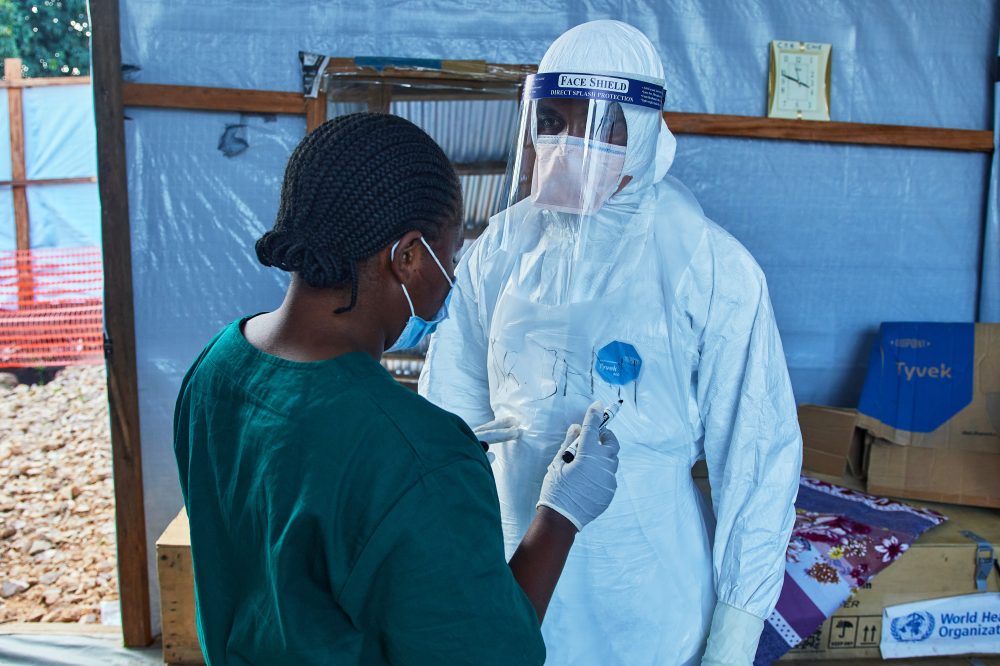
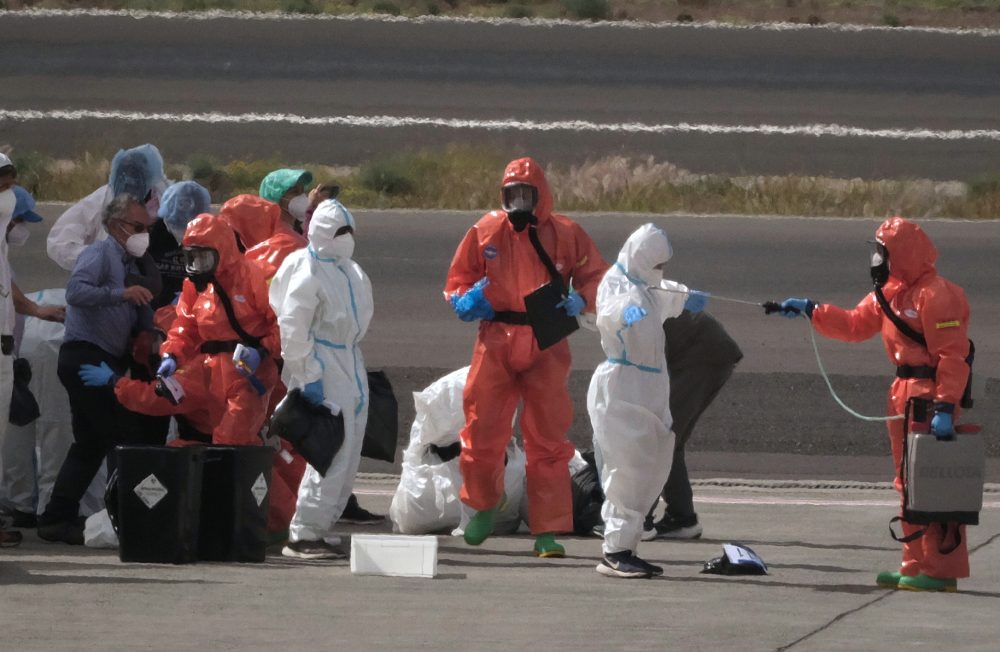
Military and government aircraft began transporting passengers from the cruise vessel on Sunday after it docked in the Canary Islands. Medical personnel wearing complete protective suits and respiratory equipment guided travelers from the ship to shore in Tenerife, with evacuation operations extending into Monday.
The World Health Organization has advised strict surveillance of all former passengers, prompting numerous nations to implement quarantine protocols.
Previously, representatives from Spain’s Health Ministry, the World Health Organization, and cruise operator Oceanwide Expeditions had stated that none of the more than 140 individuals aboard the Hondius were displaying viral symptoms.
The international evacuation effort involves transporting passengers from over 20 nations, with operations scheduled to continue through Monday.
The outbreak has claimed three lives, while five additional passengers who disembarked earlier have confirmed infections.
WHO Director-General Tedros Adhanom Ghebreyesus emphasized that the general population should remain calm about the situation. “This is not another COVID. And the risk to the public is low. So they shouldn’t be scared, and they shouldn’t panic,” he stated Sunday.
The virus typically transmits through contact with rodent waste and rarely passes between humans. However, the Andes strain identified in this cruise ship incident may occasionally spread person-to-person. Symptoms generally appear one to eight weeks following exposure.
Maria van Kerkhove, WHO’s chief epidemiologist, explained the organization’s recommendations for passenger monitoring: “have active monitoring and follow-up, which means daily health checks, either at home or in a specialized facility.”
Multiple countries have announced plans to quarantine or hospitalize their returning citizens for medical observation.