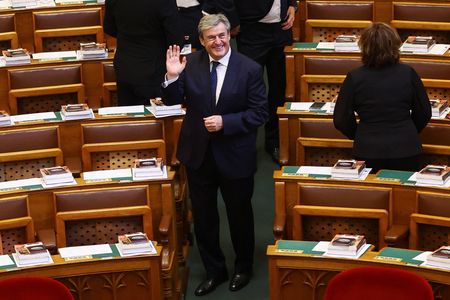

Hungary’s new government plans to examine a massive nuclear power plant expansion agreement with Russia, according to the country’s nominee for economy and energy affairs minister during a parliamentary hearing Monday.
The ministerial candidate, Istvan Kapitany, announced the review of the controversial $14.7 billion project to add two Russian-built VVER reactors to Hungary’s existing Paks nuclear facility. The original deal was granted to Russia’s state nuclear company Rosatom in 2014 without any competitive bidding process and has faced multiple delays over the years.
“We need a transparent nuclear strategy,” Kapitany stated during his hearing. “We have to review the financing and costs of Paks 2 (expansion project) and its implementation conditions. These are classified contracts, which we have not yet seen, we need to examine them.”
The nuclear expansion has long been viewed by political analysts as evidence of the strong relationship between Budapest and Moscow under previous prime minister Viktor Orban. Hungary’s new leadership has promised to alter this dynamic as part of broader efforts to improve ties with the European Union.
Centre-right leader Peter Magyar, who took the oath as prime minister Saturday, previously stated that the project’s costs were artificially inflated. Rosatom has indicated its willingness to defend the pricing structure.
Despite the review, Kapitany emphasized that nuclear energy would remain a significant component of Hungary’s power strategy. He also committed to combating corruption, addressing criticism that graft flourished under Orban’s administration – allegations the former leader has rejected.
In a separate committee hearing, foreign minister nominee Anita Orban outlined her priority to restore international confidence in Hungary following deterioration under the previous administration.
The former government maintained frequent disputes with EU leadership on matters including judicial independence and minority protections. Hungary’s sustained connections with Moscow amid Russia’s invasion of Ukraine, combined with blocking financial assistance to Kyiv, further damaged these relationships.
“Laws need to be passed that will ensure that Hungary’s judiciary is independent, that public tenders are transparent, that corruption can be fought, wealth declarations can be checked and the use of European Union funds can be tracked,” Orban explained.
She clarified that Hungary would not deploy military personnel or armaments to Ukraine.