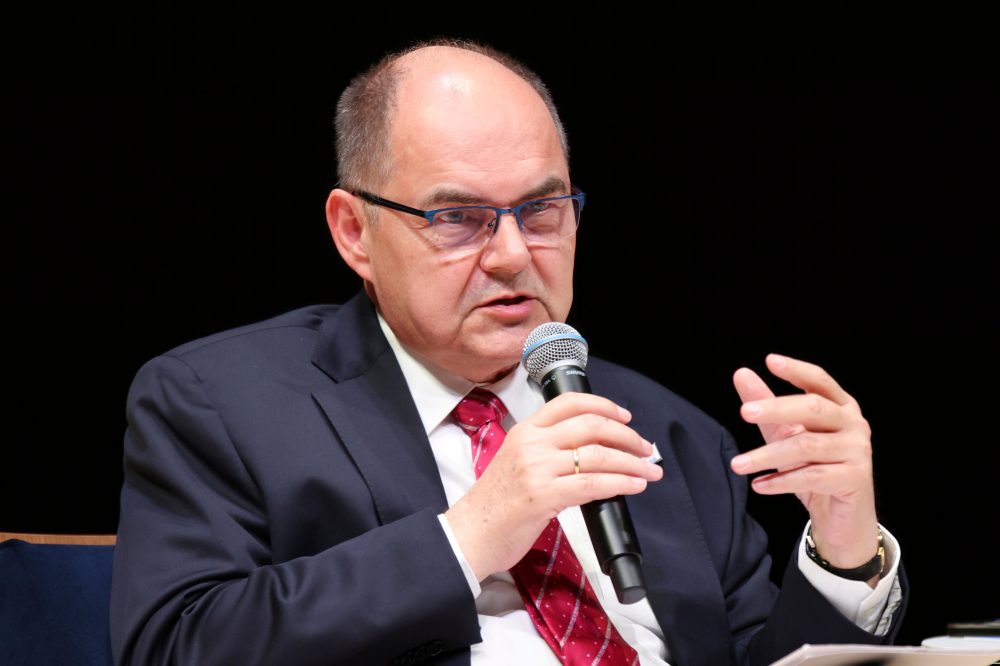

SARAJEVO, Bosnia-Herzegovina — The German diplomat responsible for monitoring peace efforts in Bosnia-Herzegovina since the 1990s conflict has announced his resignation, according to his office on Monday.
Christian Schmidt has made a “personal decision to conclude his service” as High Representative for Bosnia and Herzegovina following almost five years in the position, according to an official statement. The German official will remain in his role until authorities select his replacement.
Throughout his tenure, Schmidt engaged in frequent disputes with Milorad Dodik, the leading Bosnian Serb politician who heads the Serbian portion of Bosnia known as Republika Srpska. In August, officials stripped Dodik of his presidential position and imposed a temporary political ban for refusing to comply with Schmidt’s directives.
Dodik, who maintains pro-Russian positions, has advocated for the Serbian region of Bosnia to break away and unite with Serbia. His political stance has raised concerns about potential renewed conflict in Bosnia, where ethnic divisions persist among Serbs, Croats, and Bosniaks, who are predominantly Muslim.
The United States previously imposed sanctions on Dodik for his separatist activities, though these penalties were recently removed. He maintains regular contact with Russia and attended Saturday’s annual military ceremony in Moscow marking the end of World War II in Europe.
The High Representative’s office was created through a peace accord brokered by the United States that concluded the 1992-95 ethnic conflict, which claimed over 100,000 lives. This position holds power to modify legislation and remove officials who obstruct post-conflict reconciliation efforts.
As a potential European Union member nation, Bosnia has struggled to complete required reforms because of ongoing political disputes and ethnic divisions among nationalist leaders. The nation is structured with a Serbian entity and a Bosnian-Croat entity, unified under a multi-ethnic federal government.