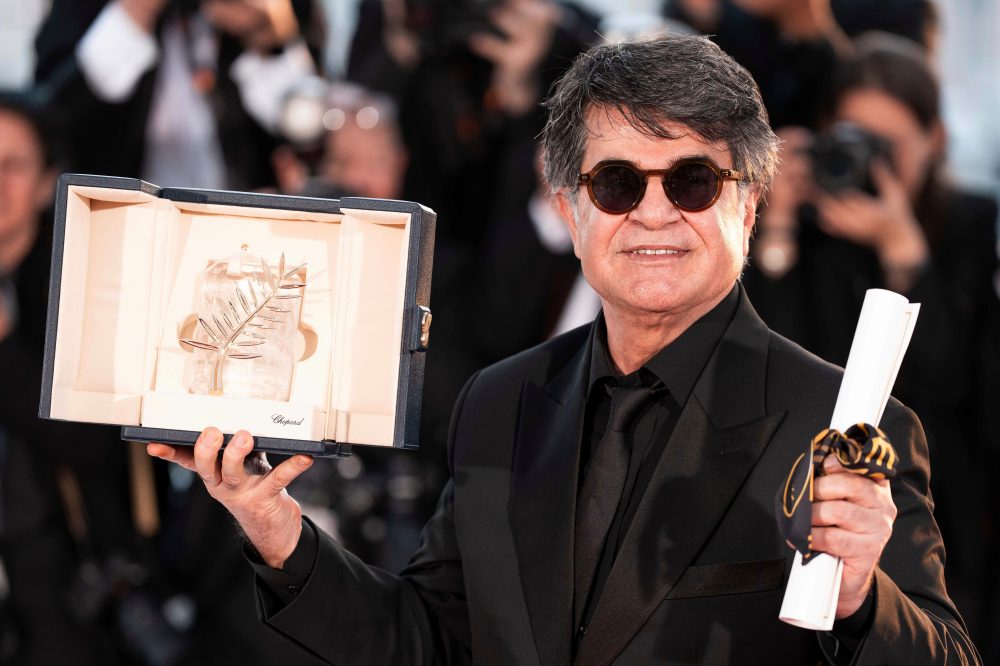

Tom Quinn, the chief executive and co-founder of Neon, has maintained the same ritual for the past six Palme d’Or award ceremonies: watching the event with his team around a laptop positioned on the breakfast tables at their Cannes hotel.
“I think we upgraded a couple years ago and connected the computer to a TV,” Quinn says. “I wouldn’t want to do it any different.”
Quinn has every reason to maintain this tradition. During each of those six ceremonies, Neon has claimed the Palme d’Or, the festival’s most coveted award. This remarkable winning streak for one of cinema’s most prestigious honors is unmatched, ranking second only to the Academy Award for Best Picture in terms of industry significance. No other film studio has achieved anything comparable to this record.
“No one ever believes it, but we’ve never gone to Cannes thinking we were going to win the Palme d’Or,” Quinn says. “It’s been a surprise every single year.”
As the 79th edition of the Cannes Film Festival begins Tuesday, Neon — a company with just 60 employees that started operations in 2017 — enters as an unexpected industry giant. The studio is supporting more than 25% of the 22 movies competing for the top prize. Their chances of extending their streak to seven consecutive wins appear promising. Several highly anticipated entries — including Ryusuke Hamaguchi’s “All of a Sudden” from Japan, Na Hong-jin’s “Hope” from Korea, and James Gray’s “Paper Tiger” — are part of Neon’s portfolio.
In total, the independent distribution company has nine movies at Cannes. Quinn emphasizes that all these projects were acquired before receiving their festival invitations.
“I hate to break it to everyone but don’t hate us for our good taste,” says Quinn. “Who’s chasing who here? Thierry (Frémaux, Cannes artistic director) is going to make up his own mind and we’re going to make up our own mind. It just so happens that we agree.”
During his announcement of this year’s festival selections, Frémaux expressed disappointment about the minimal participation from Hollywood’s major studios. “When the studios are less present in Cannes, they are less present full stop,” he said.
Although major studio productions like Warner Bros.’ “One Battle After Another” and Universal’s forthcoming “The Odyssey” may become significant Oscar contenders, many of the most innovative films from the last ten years have been distributed by specialized companies such as Neon and A24.
These companies have gained recognition at international festivals like Cannes and during awards season by prioritizing creative filmmakers over established intellectual properties.
“It’s not rocket science and there’s nothing secret about it,” says Quinn. “It’s pursuing the directors and films we want to be a part of.”
Before establishing Neon, Quinn had experience at Samuel Goldwyn Films and Magnolia Pictures, and in 2011 he created Radius, a specialized division with Harvey Weinstein. While Quinn anticipated A24 would be Neon’s primary rival, he frequently found himself competing against Netflix for projects like Neon’s inaugural purchase, the Margot Robbie vehicle “I, Tonya,” and Céline Sciamma’s “Portrait of a Lady on Fire.”
“We did not outbid them but we out-passioned them,” says Quinn.
While Neon does create original content (such as the upcoming “I Love Boosters”), it primarily focuses on North American distribution of films, typically accompanied by awards season campaigns. The company has acquired its Palme d’Or winners — “It Was Just an Accident,” “Anora,” “Anatomy of a Fall,” “Triangle of Sadness,” “Titane” and “Parasite” — through various methods.
Several were purchased during Cannes, while others, including “Parasite,” were acquired at the screenplay phase. Quinn committed to the body horror film “Titane” despite finding the script incomprehensible, trusting solely in writer-director Julia Ducournau’s vision. This approach makes Neon the complete opposite of algorithm-driven studios.
Nevertheless, this commitment to filmmakers and artistic judgment has propelled Neon to Hollywood’s pinnacle. Both “Parasite” and “Anora” captured Academy Awards for Best Picture after their Palme d’Or victories. Neon dominated the international feature Oscar category last March, earning four of the five nominations: the victorious “Sentimental Value,” “Sirāt,” “The Secret Agent” and “It Was Just an Accident.”
“Parasite” made history as the first non-English film to win Best Picture — breaking what Bong Joon Ho called the “1-inch-tall barrier of subtitles” in his acceptance speech.
Neon, which is majority-owned by Dan Friedkin’s 30West, cannot match studio blockbusters in box office revenue. (Their highest-grossing release remains Osgood Perkins’ “Longlegs” at $75 million.) However, Neon has demonstrated that audiences for bold, often international films are larger than industry expectations.
The company remains, Quinn explains, “agnostic” about their films’ origins, and their compact size allows for customized marketing strategies for each release. By year’s end, Neon compiles their releases into a DVD collection, despite many industry voters no longer owning DVD players.
“Audiences are desperate, desperate for creativity,” Quinn says. “Films are not packaged goods. The idea that this art form that is so subjective is treated as a P & L (profit and loss statement), I don’t know how you can make good creative decisions when you’re dealing with billions of debt looming at your door.”
Neon’s Cannes selection demonstrates their characteristic diversity. Additional Palme d’Or contenders include Romanian director Cristian Mungiu’s “Fjord,” featuring Sebastian Stan and Renate Reinsve; Japanese filmmaker Hirokazu Kore-eda’s “Sheep in the Box”; and “The Unknown,” created by “Anatomy of a Fall” co-writer Arthur Harari. Their lineup also features Nicolas Winding Refn’s “Her Private Hell”; Arie Esiri and Chuko Esiri’s “Clarissa” and William and David Greaves’ acclaimed documentary, “Once Upon a Time in Harlem.”
Certain missed opportunities continue to frustrate Quinn. He failed to secure Kore-eda’s “Shoplifters,” which won the Palme in 2018.
“The idea that we would have won seven Palmes in a row is completely outlandish,” Quinn says. “But that’s a huge regret.”