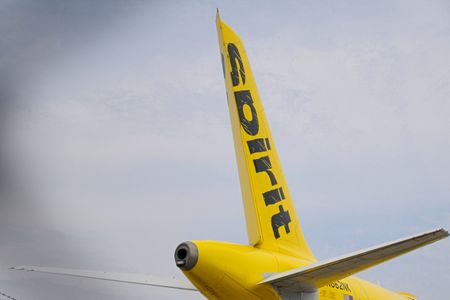

The shutdown of Spirit Airlines, a major discount carrier known for rock-bottom fares, has created opportunities for remaining budget airlines to raise ticket prices, but industry analysts warn this development won’t resolve the deeper financial troubles facing the low-cost aviation sector.
Spirit, headquartered in Florida, stopped flying on May 2nd when creditors couldn’t reach agreement on a $500 million government rescue package. Competing budget airlines like JetBlue Airways and Frontier Airlines are now moving into Spirit’s former markets while grappling with the same escalating fuel expenses that brought down their former rival.
Aviation industry specialists point out that the fundamental problems confronting discount airlines existed long before Spirit’s demise and won’t vanish with its departure. Post-COVID increases in employee salaries, climbing aircraft rental fees, and higher maintenance costs have undermined the core advantages that previously made budget carriers successful.
Since discount airlines primarily serve cost-conscious passengers, they face significant constraints when trying to raise prices to offset increased expenses without damaging customer demand.
Joe Rohlena, a senior director at Fitch Ratings, explained his outlook on the situation. “I expect Spirit’s liquidation to be a modest benefit to its low-cost competitors,” Rohlena stated. “But I don’t expect it to be sufficient on its own to overcome other hurdles that the discounters are facing.”
Financial performance data illustrates the struggles facing budget carriers. Frontier has recorded adjusted per-share losses in eight out of the last 13 quarters, while JetBlue hasn’t achieved annual profitability since 2019. Both companies have seen their stock values drop approximately 75% over the past five years.
Meanwhile, major U.S. carriers including Delta Air Lines and United Airlines maintained profitability in 2025, benefiting from passengers with higher disposable incomes.
According to research from TD Cowen, Frontier’s adjusted earnings before interest and taxes margin dropped dramatically from 9.3% in 2019 to negative 12.1% in 2025. JetBlue experienced a similar decline from roughly 10.0% to negative 3.7% during the same period. By comparison, Delta’s EBIT margin decreased from 19% to 10%.
Industry executives indicate that Spirit’s departure won’t lead to a complete restoration of flight capacity, as discount carriers have been reducing their route networks. Instead, airlines are selectively choosing Spirit’s most profitable routes to replace available seats.
Frontier reported that the aviation industry has restored approximately half of Spirit’s capacity reductions from earlier in May, with Frontier responsible for about 40% of that replacement capacity. The company anticipates Spirit’s exit will increase revenue per seat by 3% to 5%.
In a company statement, CEO Jimmy Dempsey highlighted the airline’s record adjusted revenue in its latest quarter, expressing confidence that the company is well-positioned to fill the capacity gap and emerge “structurally stronger.”
JetBlue is increasing its presence in Fort Lauderdale, previously Spirit’s primary hub, and attracting former Spirit customers through loyalty program matching offers. The airline plans to operate 130 daily departures by summer, representing more than a 75% increase from its 2025 flight levels.
JetBlue did not provide a response when contacted for comment.
However, not every low-cost carrier is experiencing difficulties. Allegiant Air, based in Las Vegas, achieved a 14.9% adjusted operating margin in the recent quarter compared to negative margins posted by JetBlue and Frontier. Allegiant’s success stems from its strategy of serving leisure destinations with limited service and minimal competition.
Budget airlines face particularly challenging conditions when fuel costs remain elevated, with limited ability to adjust pricing. Andrew Levy, CEO of Houston-based budget carrier Avelo Airlines, noted that pricing flexibility is restricted, making operations “a little harder for companies like mine.”
Levy described how his airline’s fuel expenses jumped from approximately $2.56 per gallon in February to around $4.71 in April, forcing the company to increase base ticket prices by about $20, raise additional fees, and implement promotional campaigns to maintain passenger demand.
The impact of higher fuel costs could reach tens of millions of dollars for Frontier and exceed $100 million for JetBlue this quarter. JetBlue projects it can only recover 30% to 40% of increased fuel expenses, while Frontier expects to recoup roughly 35% to 45%.
Frontier spent $268 million on fuel at $2.88 per gallon during the first quarter and has projected $4.25 per gallon for the current quarter. Based on similar fuel consumption patterns, the unrecovered fuel cost increase could result in approximately $70 million to $83 million in lost earnings.
JetBlue faced similar challenges, paying $2.96 per gallon in the first quarter while forecasting a range of $4.13 to $4.28 for the current quarter. With comparable consumption levels, fuel expenses would increase from $573 million in the first quarter to between $797 million and $826 million.
Jarrett Bilous, an analyst at S&P Global, emphasized the critical nature of fuel cost management. “The ability to recoup sharply higher fuel prices is the primary consideration at the moment,” Bilous said.