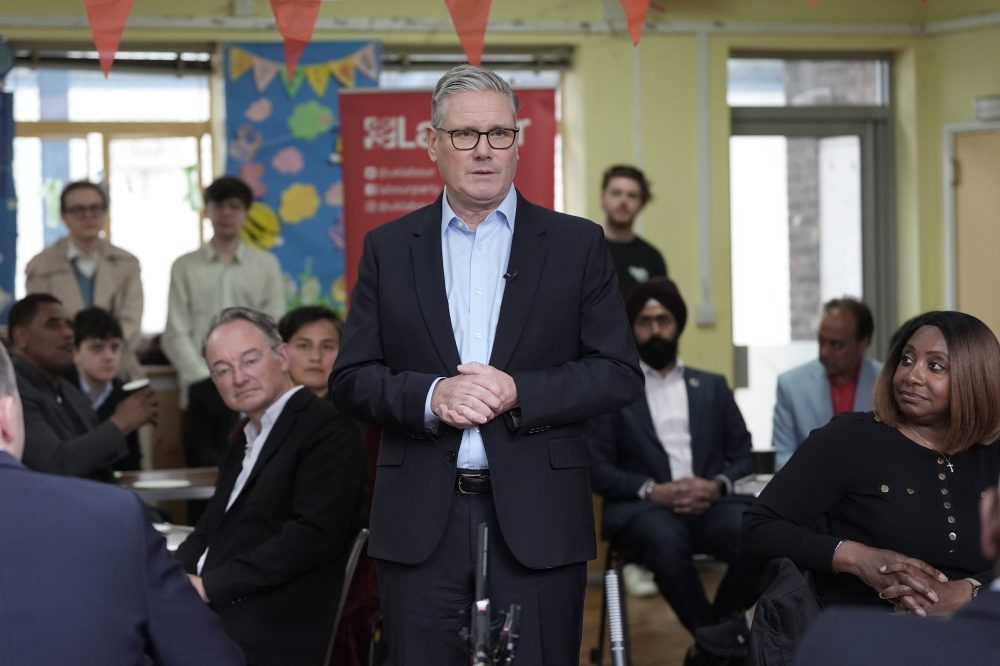

LONDON — British Prime Minister Keir Starmer is battling to save his political career by promising stronger European relationships following crushing electoral defeats that have sparked widespread calls for his resignation.
The embattled Labour leader will deliver a major address Monday where he intends to declare he will “face up to the big challenges” and restore “hope” across Britain.
Central to his message will be “putting Britain at the heart of Europe,” marking a significant shift ten years after the United Kingdom decided to exit the European Union, according to his office.
However, Starmer’s grip on power appears increasingly tenuous, with numerous members of parliament demanding he announce when he will step down.
Angela Rayner, the former Deputy Prime Minister and influential figure viewed as a possible successor, declared “what we are doing isn’t working, and it needs to change.”
While Rayner stopped short of directly demanding Starmer’s resignation, she criticized him for overseeing “a toxic culture of cronyism” and insisted the administration must “stay true to labor and social democratic values” while addressing living costs for working families.
“This may be our last chance,” Rayner stated Sunday.
The Labour Party has fallen into despair following significant defeats in recent local elections throughout England and parliamentary contests in Scotland and Wales. Political observers view these results as an unofficial judgment on Starmer, whose approval ratings have collapsed since his overwhelming victory less than two years ago.
His administration has failed to achieve promised economic expansion, rebuild struggling public services, and address cost-of-living concerns, while being undermined by continuous blunders and policy reversals on matters including welfare changes. His troubles deepened with his controversial choice to name Peter Mandelson, who has connections to Jeffrey Epstein, as Britain’s ambassador to the United States.
The recent elections demonstrated Labour losing support from multiple directions, with voters defecting to both the anti-immigration Reform UK party and the “eco-populist” Green Party. This highlights the growing division in British politics, traditionally controlled by Labour and Conservative parties.
Starmer hopes Monday’s address and an extensive legislative agenda to be presented Wednesday by King Charles III during Parliament’s ceremonial opening will help him recover politically.
A central element involves strengthening European connections, as the UK departed the EU in 2020, four years following the narrow “leave” victory in the membership vote. Starmer’s administration has already begun reducing trade barriers that have impacted British companies since Brexit, and he promises to negotiate a youth mobility agreement allowing young people to work temporarily across Europe.
Labour supported remaining in the EU during the 2016 campaign but has avoided reopening the divisive national debate. Starmer has rejected pursuing EU membership or rejoining the organization’s customs union or single market.
Prominent Labour figures considered potential replacements for Starmer — including Rayner, Health Secretary Wes Streeting, and Greater Manchester Mayor Andy Burnham — have not yet demanded his resignation.
However, increasing numbers of Labour parliamentarians are urging the prime minister to establish a departure timeline. British political systems permit parties to replace leaders during their terms without requiring new elections.
Josh Simons, a previously supportive Labour member of parliament, wrote in the Times of London that Starmer “has lost the country” and “should take control of the situation by overseeing an orderly transition to a new prime minister.”
Catherine West, a former junior minister, threatens to initiate a leadership challenge unless Starmer delivers an exceptional speech Monday. West admitted lacking support from the required 81 colleagues to force a contest, with her action appearing designed to pressure more prominent candidates to act.
“Working people sent us a message,” West explained. “We have to listen to that, and we have to change and we have to do it quickly.”