
American automotive leaders and politicians from both parties are sending a unified message to President Trump ahead of his scheduled meeting with Chinese President Xi Jinping: keep Chinese vehicles out of the United States market.
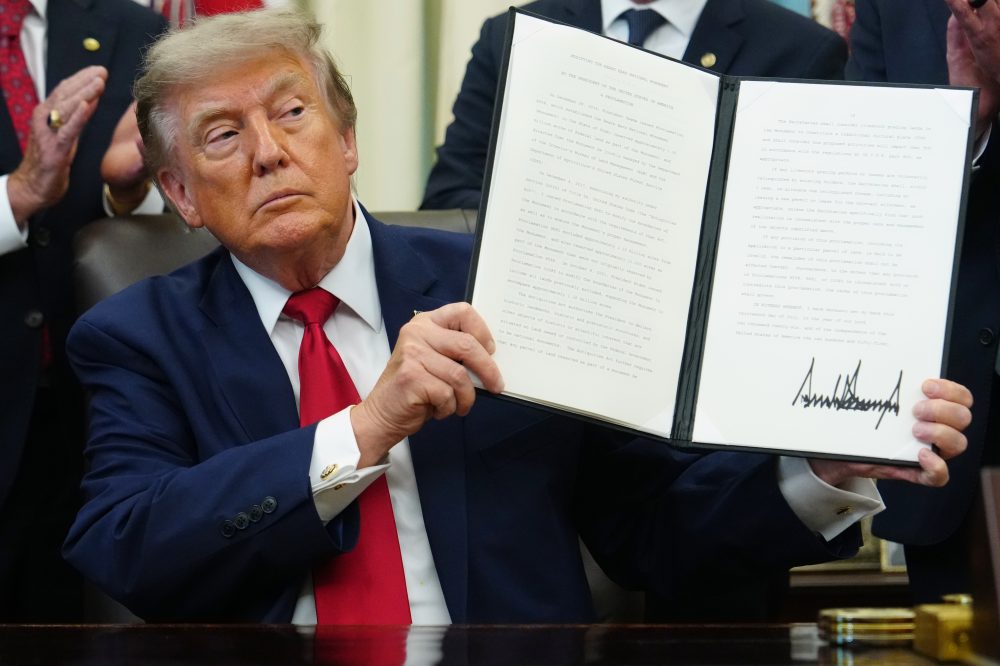
The push comes after Trump’s January remarks to the Detroit Economic Club, where he expressed enthusiasm about Chinese manufacturers establishing US production facilities. “I love that. Let China come in, let Japan come in,” Trump stated, describing such investments as “great” for American employment.
Those statements triggered widespread concern throughout an industry that has consistently worked to prevent Chinese automobiles from entering the American marketplace through stringent data protection regulations and substantial electric vehicle tariffs.
Now, automotive manufacturers, parts suppliers, steel producers, labor unions, and elected officials are intensifying their advocacy efforts. They contend that Chinese car companies, backed by unlimited government subsidies, enormous production capacity, superior EV capabilities, and extremely low pricing, would devastate both domestic and international competitors while undermining America’s manufacturing foundation.
Michigan’s Democratic Senator Elissa Slotkin addressed the same Detroit venue Thursday, specifically urging Trump to reject any agreement with Xi that would permit Chinese automotive investment resulting in Chinese-branded vehicles appearing in American showrooms.
“Please don’t make a bad deal,” Slotkin stated, while highlighting her bipartisan legislation with Ohio Republican Senator Bernie Moreno that would explicitly prohibit Chinese vehicles due to data security risks.
Their Connected Vehicle Security Act, which includes a companion measure in the House, would formally establish a data protection rule that effectively blocks Chinese vehicles – a policy implemented under former President Biden that would become extremely difficult to overturn.
The House version extends further by prohibiting industry partnerships with Chinese corporations. Congressional staff members informed reporters that with widespread backing, the legislation could advance this year, potentially as part of transportation funding legislation.
“Every vehicle on American roads is a rolling data collection device, capturing information on location, movement, people, and infrastructure in real time, and we cannot allow Chinese vehicles or components to be a part of that system,” stated sponsoring representatives Debbie Dingell, a Democrat, and John Moolenaar, a Republican, in their joint announcement.
Both legislators represent Michigan districts with significant automotive presence. Recently, 74 House Democrats and 52 House Republicans signed correspondence urging Trump to prevent Chinese automakers from accessing the American marketplace.
The automotive sector has demonstrated remarkable consensus supporting the prohibition.
Organizations representing domestic and international automakers, dealerships, and component manufacturers informed the administration in March that China’s campaign to control global vehicle production and penetrate the US market “pose a direct threat to America’s global competitiveness, national security and automotive industrial base.”
Steel industry associations issued similar correspondence on April 30, while the Information Technology and Innovation Foundation, despite previously criticizing Trump’s Chinese import tariffs, endorsed the Chinese vehicle ban legislation.
“Chinese automakers are not normal market competitors. Their EVs are the product of decades of state-backed mercantilism designed to help China capture global leadership in advanced industries,” explained ITIF vice president Stephen Ezell.
“Once China’s subsidized firms are embedded in the U.S. market, the economic and national security damage would be far harder to reverse — and it would not be limited to Detroit,” Ezell continued.
US Trade Representative Jamieson Greer announced in Detroit during April that no modifications to the connected vehicle regulation were planned, and automotive issues would not be discussed at the Beijing summit. Commerce Secretary Howard Lutnick has similarly dismissed Chinese investments in America’s automotive sector.
However, Scott Paul, who leads the Alliance for American Manufacturing, expressed ongoing worry that Trump, who frequently discusses attracting additional vehicle assembly facilities to the US, might act independently.
“He’s left wiggle room in dealing with the auto sector,” Paul observed.
Any approved facility would require two to three years before beginning production, leaving the outcomes for Trump’s eventual successor.
Neither the White House nor China’s Washington embassy provided responses to inquiries about this issue.
Industry representatives want to prevent repeating Chinese automakers’ progressive market expansion in Europe and Mexico. America’s growing vehicle affordability challenge, where Kelley Blue Book reports average vehicle prices now surpass $51,000, creates particular vulnerability to less expensive Chinese alternatives.
Chinese brands expanded their European market presence to 6% last year, doubling their previous share, while capturing 14% in Norway, 9% in Italy, 11% in Britain, and 9% in Spain. Consumer interest in Chinese electric vehicles continues growing as Middle East conflicts drive up gasoline costs.
Canada has begun importing 49,000 Chinese electric vehicles annually, while 34 Chinese automotive brands now operate in Mexico, representing approximately 15% of that market at prices significantly below American offerings.
Geely’s EX2 electric vehicle begins around $22,700 in Mexico – more than double its Chinese market price but substantially less than Tesla’s cheapest Model 3 at $38,630 in the US.
Even Toyota, which previously undercut Detroit manufacturers during the 1980s and 1990s, faces challenges competing with Chinese pricing in Mexico, according to Toyota Motor North America division manager David Christ.
“Obviously there’s some level of government support, or else they couldn’t transact at that price,” Christ stated during an interview. “So it has a huge impact on business.”