
A fertility specialist who struggled with the ethical implications of traditional in vitro fertilization practices has established a faith-based clinic that operates according to Christian principles.
Dr. John Gordon, who previously served as co-director of a major fertility center, experienced growing concerns about standard IVF procedures that often result in excess embryos being stored indefinitely or destroyed. He also questioned the increasing use of genetic screening that allows parents to select their baby’s gender or eliminate various conditions, ranging from serious genetic disorders to minor impairments such as hearing difficulties.
“What are children?” he asked recently. “I mean, are they a gift from the Lord or are they just a product where you’re trying to manufacture the best product you can?”
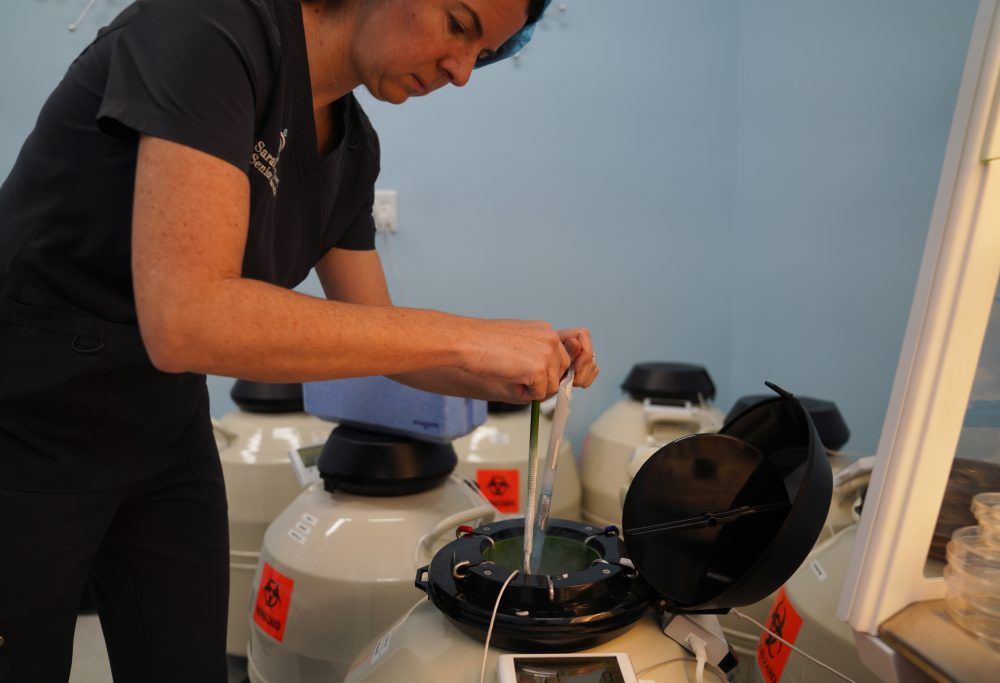
Gordon left his position in the Washington, D.C. suburbs in 2019 to establish Rejoice Fertility in Knoxville, Tennessee. The clinic operates under principles that prohibit destroying viable embryos, conducting genetic testing, or providing embryos for research purposes. Instead, the facility promotes embryo adoption programs and works to minimize the total number of embryos produced during treatment.
In vitro fertilization involves combining sperm and eggs in laboratory conditions to form embryos, which can be preserved through freezing before being implanted in a patient’s uterus to achieve pregnancy.
Recent data from the American Society of Reproductive Medicine shows that over 100,000 American babies were conceived through IVF in 2024, representing the highest annual total on record. Healthcare professionals estimate approximately 1.5 million frozen embryos remain in storage facilities across the United States, though advocacy groups suggest the actual figure may be significantly higher.
Many Christians and opponents of abortion view embryonic life as beginning at fertilization, creating moral dilemmas around standard IVF practices that may endanger embryos. Additionally, some Christian denominations maintain that procreation should occur exclusively within marital intimacy, making assisted reproductive technologies problematic from a theological perspective.
The Roman Catholic Church has historically rejected IVF procedures, while evangelical Protestant communities are increasingly examining these issues. The Southern Baptist Convention, representing the nation’s largest Protestant group, passed a resolution in 2024 advocating for IVF limitations when procedures result in the destruction of what they term “embryonic human life.”
Gordon practices within the Presbyterian Church in America, an evangelical Reformed tradition, and reports that his local congregation supports Rejoice’s mission and approach.
Contemporary court rulings have intensified discussions surrounding IVF, including the Supreme Court’s decision eliminating constitutional abortion protections and an Alabama Supreme Court ruling that classified embryos as children. Despite these controversies, public opinion surveys continue to show widespread support for IVF access, and President Donald Trump has pursued policies to expand treatment availability.
Gordon maintains that his clinic’s approach resolves many ethical concerns surrounding fertility treatment. “I need to practice in a way that I can I live with the decisions I’m making,” he explained.
Rejoice implements strategies to reduce surplus embryo creation by discussing patients’ family planning goals and designing treatment protocols accordingly.
Many patients select minimal stimulation IVF, sometimes called “mini-IVF,” which employs reduced medication doses and typically produces fewer eggs. Patients may then choose to fertilize only a portion of retrieved eggs, creating fewer embryos overall. The clinic also offers natural cycle IVF, which collects a single egg during a woman’s normal monthly ovulation. While other facilities provide these alternatives, Rejoice distinguishes itself by emphasizing these approaches as primary options.
The trade-off involves potentially requiring additional treatment cycles if patients exhaust their limited embryos, with each cycle costing between $8,000 and $10,000 at Rejoice. Despite these expenses, Gordon reports that patients generally prefer creating fewer embryos due to their religious convictions.
When patients occasionally have remaining embryos, Gordon encourages placement through adoption programs. Within conservative Christian communities, these transfers are termed “embryo adoptions,” reflecting the belief that embryos represent children awaiting families rather than medical property.
The facility recently introduced Rejoice Embryo Rescue, which Gordon describes as an “orphanage” for donated embryos. This program stores contributed embryos and collaborates with specialized agencies, predominantly Christian organizations, to coordinate adoption placements.