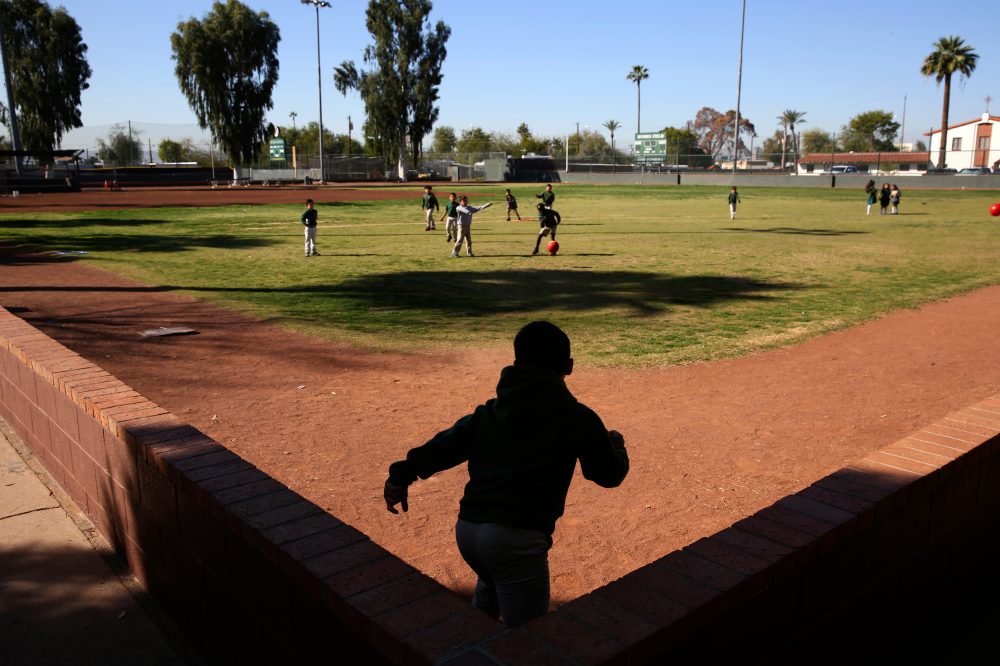

Medical experts are emphasizing that playground time serves a much greater purpose than simply giving students a chance to have fun during the school day. According to health professionals, these unstructured periods are vital for both academic achievement and overall wellness across all grade levels.
The American Academy of Pediatrics has issued its first updated recommendations in over a decade regarding the importance of safeguarding these school breaks. The timing of this guidance comes as many schools have been cutting back on recess time while children’s health outcomes have declined.
“The group has always supported play – free play for kids – but it’s been increasingly threatened over time,” explained Dr. Robert Murray, one of the primary authors of the new recommendations. He noted that pressure to improve standardized test performance has contributed to this trend. “It has a very powerful benefit if it’s used to the fullest.”
The updated recommendations, which appeared Monday in Pediatrics journal, maintain similar principles to earlier guidance but incorporate recent scientific findings about how these breaks support students’ learning capacity and their mental, physical, social and emotional development.
Recent studies demonstrate that students require breaks between intense learning sessions to allow their minds to process and retain new information effectively. Scientists have also found that recess provides opportunities for children to practice social interactions and develop self-confidence, benefits that remain important for teenagers as well as elementary students.
Murray and his research team highlighted how physical movement during these breaks helps combat childhood obesity, which currently impacts approximately 20% of young people in the United States.
Based on these advantages, the medical professionals urge schools to preserve recess time and avoid removing it as a consequence for poor behavior or academic performance, practices that occur in some educational settings.
“If the child is disruptive or rude and disrespectful, recess is one of the things that teachers use to punish kids,” Murray explained. He emphasized that students who display behavioral problems or academic struggles are typically those who would benefit most from these breaks.
However, the issue extends beyond individual disciplinary actions. Data from Springboard to Active Schools working with the Centers for Disease Control and Prevention reveals that since the mid-2000s, as many as 40% of school systems nationwide have shortened or completely removed recess periods.
Currently, the amount of recess time varies dramatically among American schools, spanning from under 10 minutes to over an hour daily, according to the pediatrics organization. High school and middle school students typically receive less break time compared to elementary pupils.
Research indicates that children should receive at least 20 minutes daily along with several shorter breaks throughout the day. International examples from countries like Denmark, Japan and the United Kingdom show students getting breaks every 45 to 50 minutes of classroom time.
“They should get a long enough period of time where they can de-stress and blow off steam and prepare for the next class,” Murray stated.
Dr. Lauren Fiechtner, who specializes in childhood obesity treatment at Mass General Brigham for Children in Boston, expressed support for the revised recess guidelines. Drawing from her experience as both a physician and parent, she shared how her 8-year-old discovered basketball during recess and developed a passion for the sport.
Fiechtner, who did not participate in developing the new guidance, supports extending recess requirements to older students as well.
“As kids get older, they’re more on their screens. So it’s really helpful, I think, for outdoor activity and recess to be happening,” she noted. “Recess is great. We all kind of need recess.”