
Chinese automakers are increasingly turning to international markets as overseas shipments of passenger vehicles climbed dramatically in April while home country sales continued their downward slide, according to industry data released Monday.
The China Association of Automobile Manufacturers reported that passenger vehicle exports reached approximately 796,000 units last month, representing an 85% jump compared to the same period last year and exceeding March’s total of 748,000 vehicles.
Electric and hybrid vehicles drove much of this growth, with new energy passenger car exports soaring more than 120% year-over-year to roughly 420,000 units in April.
Meanwhile, China’s domestic passenger vehicle market tells a different story, with sales dropping 25.5% from the previous year to 1.3 million vehicles. This marks the sixth consecutive month of declining year-over-year sales in what remains the world’s largest automotive market.
Industry experts point to reduced government incentives for electric vehicle purchases and broader economic uncertainty stemming from the country’s ongoing real estate sector troubles as factors dampening consumer appetite for new vehicles at home.
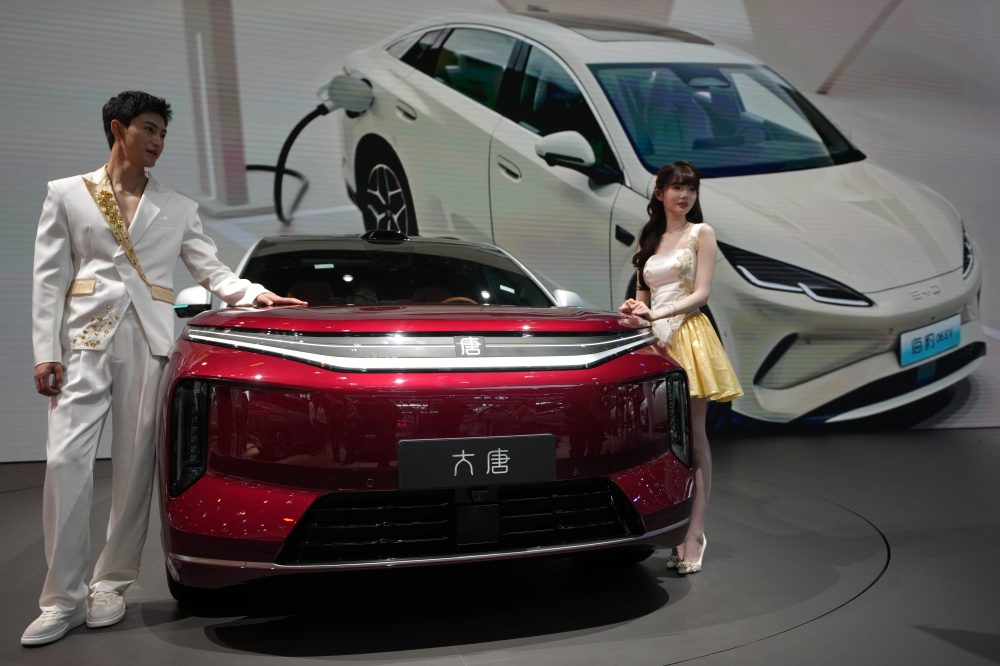
The competitive landscape among Chinese manufacturers has intensified significantly. Last month’s Beijing auto show featured over 1,450 vehicles as companies unveiled cutting-edge technologies ranging from AI-powered systems to revolutionary fast-charging battery solutions.
Some industry observers anticipate domestic sales could rebound later this year as manufacturers launch new models and consumers adapt to modified government subsidy programs. Yichao Zhang, an automotive practice partner at consultancy AlixPartners, suggested that buyers will likely return as they become more comfortable with the changed incentive structure.
Major Chinese brands including BYD and Geely Auto are establishing stronger footholds in foreign markets. Beyond simply increasing exports, manufacturers like BYD are building production facilities in Europe and Latin America to expand their global manufacturing footprint.
Rising fuel costs linked to Middle Eastern conflicts are creating additional opportunities for Chinese electric vehicle manufacturers worldwide. Australian market data shows one in six new vehicles sold there in April were electric, with BYD ranking as the second-best-selling brand after Toyota.
“With oil and fuel prices likely to stay elevated for a longer period,” said Claire Yuan, an auto analyst at S&P Global Ratings, “it would likely incentivize consumers to buy EVs and this will benefit Chinese EV exports.”
AlixPartners projects Chinese passenger vehicle exports could grow approximately 20% by 2026, driven by expansion into key regions like Southeast Asia.
Trade relationships remain a crucial factor in this growth. While Beijing has made progress with the European Union and Canada regarding Chinese electric vehicle imports, significant barriers persist in the American market. Chinese EVs face substantial obstacles entering the United States due to 100% tariffs implemented by the previous Biden administration in 2024.