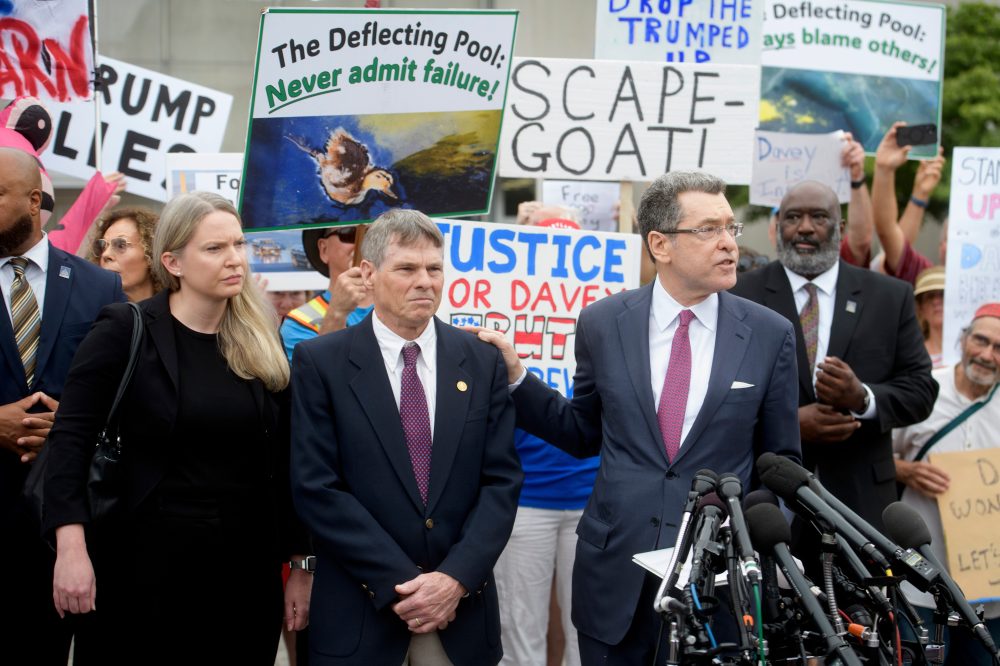

NEW YORK (AP) — During his third year of college, civil rights lawyer Damario Solomon-Simmons discovered a horrific chapter of history that occurred in his own backyard of Tulsa, Oklahoma.
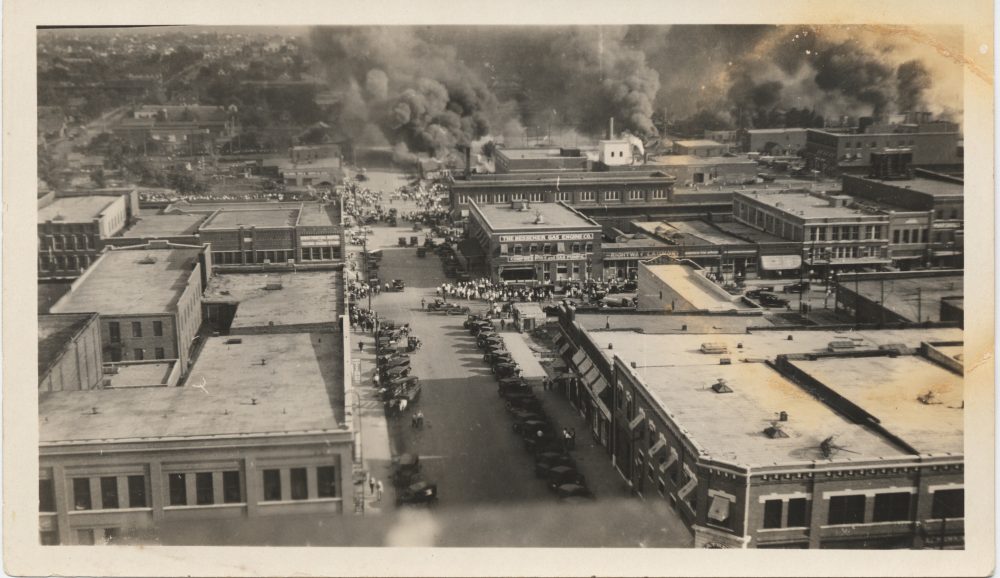
An African American studies instructor taught about what we now call the Tulsa Race Massacre — the 1921 incident when white rioters launched a devastating assault against outnumbered Black defenders who were protecting the renowned Black Wall Street, a thriving African American district.
“I actually told a teacher, ‘I’m from Tulsa. That’s not true,’” Solomon-Simmons recalled. “And of course, I was wrong.”
This revelation inspired the future lawyer to spearhead a compensation effort for massacre survivors and their families. More than 104 years have passed, yet no one has received payment for their losses, and no perpetrators have faced consequences.
Solomon-Simmons chronicles his reparations battle in his debut book, “Redeem a Nation: The Century-Long Battle to Restore the Soul of America,” designed as a guide for addressing historical wrongs against Black Americans who never received compensation. The publication becomes available Tuesday.
Following the violence, over 35 city blocks in the Greenwood district were destroyed by flames, approximately 191 businesses were wiped out, and around 11,000 Black residents lost their homes. Oklahoma officials claimed only 36 people died, though historians and researchers studying the incident estimate casualties between 75 and 300.
Greenwood, established in 1906, had been a thriving community featuring Black-owned markets, soda shops, restaurants, barbershops, a cinema, entertainment venues, cigar lounges, pool halls, clothing stores, cleaning services, boarding houses and rental properties.
“If you can ignore Greenwood, which was the beacon of Black prosperity and Black progress in the history of this country, then you can ignore Black people in general,” Solomon-Simmons recently told The Associated Press. “I think that’s why people around the nation are so focused on the work that we’re doing, because they understand what it means to all of Black America.”
The attorney’s publication arrives months before America commemorates 250 years since 1776. That milestone comes 89 years after chattel slavery — where enslaved individuals were considered legal property — ended. Solomon-Simmons challenges whether Americans can genuinely celebrate national achievements while reparations remain unpaid, which historians say contributes to today’s wealth gaps between Black and white families.
“We cannot talk about what America has been and will be, without making sure that these issues are discussed and we get reparatory justice for both” slavery and the Tulsa massacre, Solomon-Simmons said.
Across 343 pages, Solomon-Simmons goes beyond retelling the massacre’s history or creating a legal drama from his compensation campaign. For him, obtaining justice for survivors and descendants also means healing a country whose founding promises of universal equality were empty.
“When I speak of repairing America’s soul, I do not mean restoring something that was once whole,” Solomon-Simmons writes in the book. “America has never had a soul. … There was no moral center to recover.”
He argues that America’s spirit cannot be mended if forced to choose between national rebuilding or repairing Black America. Both must happen simultaneously, he contends.
“The struggle for justice in Greenwood is not about returning to a mythical past. It is about proving whether America can build a soul at all through truth, through justice, through repair.”
Compensation discussions for slavery and other historical racial wrongs have persisted in America since Reconstruction, throughout the Civil Rights era and into the current century. New York University history professor Jennifer L. Morgan notes these conversations are complex due to questions about who should pay and who should receive compensation.
“I don’t think that we’re talking about individuals who owe anybody else reparations. I think we’re talking about states, about institutions, about the nation,” Morgan said. “America is still grappling with reparations because America is still grappling at the legacy of slavery, racial discrimination, Jim Crow, and violent exclusion of Black people from the body politic.”
Critics of reparations claim no living perpetrators or direct slavery victims exist, let alone people with provable harm claims for court proceedings.
Solomon-Simmons disputes this view.
“We know who did the massacre — the perpetrators are still living in Tulsa,” he said referring to the city and the chamber of commerce, which plaintiffs alleged had a hand in obstructing Greenwood’s recovery.
One massacre survivor remains involved in the compensation lawsuit: 111-year-old Lessie Benningfield Randle.
“If we cannot get her reparations while she’s alive, for the massacre, it’s gonna make it that much harder for us to get reparations for enslavement, Jim Crow, redlining and all those things that we are owed,” Solomon-Simmons said.
In his book, Solomon-Simmons examines what drew him to the reparations cause.
During law school, he met prominent civil rights lawyers from the Reparations Coordinating Committee — the late Harvard Professor Charles Ogletree Jr., who guided Barack and Michelle Obama; and the late Johnnie Cochran, famous for representing O.J. Simpson during his murder trial. Solomon-Simmons worked as a clerk for the committee.
After watching Ogletree present a Tulsa reparations case in federal court in 2004, Solomon-Simmons said legal practice transformed from merely providing credentials for speaking, writing, or teaching into a mission.
In 2020, Solomon-Simmons filed a lawsuit representing 11 plaintiffs, including the final three known living massacre survivors, against Tulsa and seven other defendants. This suit marked the first state court case of its type and the first to reach a judge. The Oklahoma Supreme Court rejected the lawsuit in 2024. During the Biden administration’s final days, the Justice Department announced it found no remaining path for criminal charges regarding the massacre.
However, Solomon-Simmons continues fighting for monetary payments to Randle and other descendants, plus the return of property seized after the massacre and during Tulsa’s urban renewal period.
In 2025, Tulsa’s first Black mayor, Monroe Nichols, supported a comprehensive plan called Project Greenwood, which seeks financial compensation for Randle, funding for a descendant scholarship program, and establishing June 1 as Tulsa Race Massacre Observance Day.
Solomon-Simmons also operates the nonprofit Justice for Greenwood, which he created one year before the community observed the massacre’s centennial in 2021.
“One thing I’ve learned from this work, and as a lawyer in general, is that people want justice,” he said. “People want reparations, but people (also) want acknowledgment. They want to be seen. They want people to understand that something happened to them and their family, and they want an apology.”