
WASHINGTON (AP) — When President Donald Trump touches down in Beijing this Wednesday, observers will closely monitor the ceremonial reception China provides, including which officials welcome him, the musical selections, and whether local children participate with flowers and flags.
Within China’s strictly structured diplomatic hierarchy, ceremonial events and formal protocols hold significant meaning. Trump’s welcome appears designed to be cordial and appealing to a U.S. president who appreciates grand displays, though it’s expected to fall short of the elaborate “state visit plus” treatment President Xi Jinping provided Trump in 2017.
“That reflects greater Chinese confidence in their position, greater skepticism of Trump, and the awkwardness of the current relationship,” said Rush Doshi, C.V. Starr senior fellow for Asia studies at the Council on Foreign Relations and an assistant professor of security studies at Georgetown University.
Over the past nine years, relations between China and the United States have transformed from cooperative engagement to strategic rivalry, reaching particularly low points during the COVID-19 pandemic and ongoing trade disputes.
According to experts, China’s growing economic influence and its control over global supply chains have strengthened Beijing’s negotiating position, leading to more practical approaches from the Trump administration. The current conflict with Iran, which has disrupted the Strait of Hormuz and destabilized global markets, has further enhanced Xi’s advantageous position entering these talks.
The Iranian conflict, which started with American and Israeli military actions on February 28, forced a postponement of Trump’s originally planned late-March visit. This trip to Beijing will be considerably shorter than his 2017 journey, and first lady Melania Trump will not accompany him.
“The context for this visit is wholly different,” said Danny Russel, a former senior U.S. diplomat, who does not expect Beijing to outdo itself this time in receiving Trump. “The schedule has been compressed to basically one day and stripped down to the basics.”
However, America maintains unique importance in China’s international relationships, and Chinese leaders will still provide Trump with substantial ceremonial grandeur because they view it as an effective diplomatic strategy, Russel explained.
Based on the 2017 visit, Trump can anticipate descending from Air Force One onto a red carpet with gold trim while being welcomed by an enthusiastic gathering.
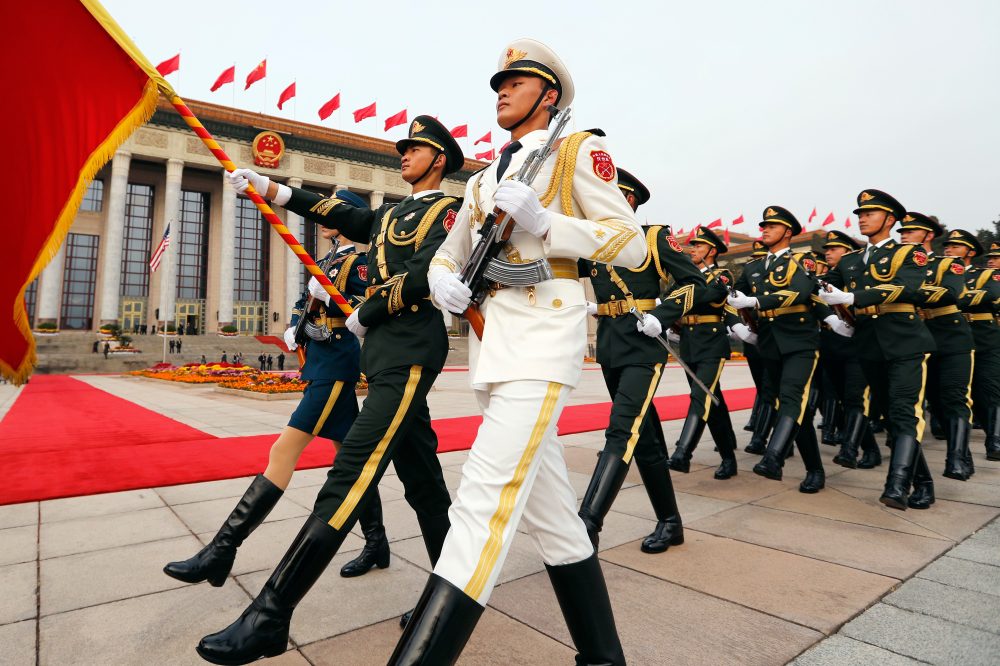
During the formal welcoming ceremony the following day, Xi and other Chinese leaders will greet him, with their positions potentially revealing diplomatic significance. Trump will then review military honor guards, arranged precisely by height, whose attention will follow both leaders as they proceed along the red carpet. A 21-gun salute will likely conclude the formal reception.
“It’s no secret to any government that President Trump responds positively to flattery and spectacle,” Russel said. “The pomp and pageantry is designed both to flatter Trump and to pacify him, making him more amenable to Chinese asks and reducing the risk of an embarrassing public confrontation.”
Xi will also provide unique experiences, as he has during previous American presidential visits. In 2014, he took former President Barack Obama on an evening walk through the Zhongnanhai leadership compound. During 2017, he arranged a private dinner for Trump at the Palace Museum within the former imperial palace grounds.
For this visit, the special connection between the Chinese and American leaders will unfold at the Temple of Heaven, a historic imperial location, near the Hall of Prayer for Good Harvests, a distinctive blue-tiled structure famous for its circular architecture and triple-layered roof. The White House confirms Xi will personally guide Trump through this World Heritage location, where Chinese emperors historically prayed for abundant crops.
Park officials have closed the entire complex Wednesday and Thursday, while main features including the hall and Echo Wall were shuttered Tuesday for “the maintenance of ancient architecture,” according to park administrators.
Such closures are uncommon. The facility remained open when British and Spanish prime ministers toured the Palace Museum and Summer Palace in Beijing during their visits this year. Additionally, Xi did not personally escort those leaders.
Beijing designated Trump’s initial presidential visit as a “state visit plus,” the only such designation China has granted any foreign leader. That trip featured extraordinary arrangements never before offered.
Xi and his wife, Peng Liyuan, personally toured the Palace Museum with Trump and the first lady, sharing afternoon tea and watching traditional opera in a royal theater that hadn’t hosted performances for a century. They also shared dinner there — an unprecedented honor for any foreign leader.
At the subsequent formal ceremony, “The Stars and Stripes Forever” played while both presidents reviewed Chinese military units, an uncommon selection chosen specifically to impress Trump.
Trump, who frequently mentions his positive relationship with Xi, continues referencing that nearly nine-year-old visit.
“You know, last time I went to China, President Xi, he treated me so well, he gave me a display,” Trump said in February. “I never saw so many soldiers, all the same height, exactly the same height within a quarter of an inch.”
China’s treatment of Trump during this visit will provide insights into current relationship dynamics, according to Doshi, who worked on former President Joe Biden’s National Security Council and assisted with planning Biden’s 2022 and 2023 summits with Xi.
“China uses diplomatic protocol as a method of signaling favor or disfavor. That is why we should pay close attention to how President Trump is received,” Doshi said.