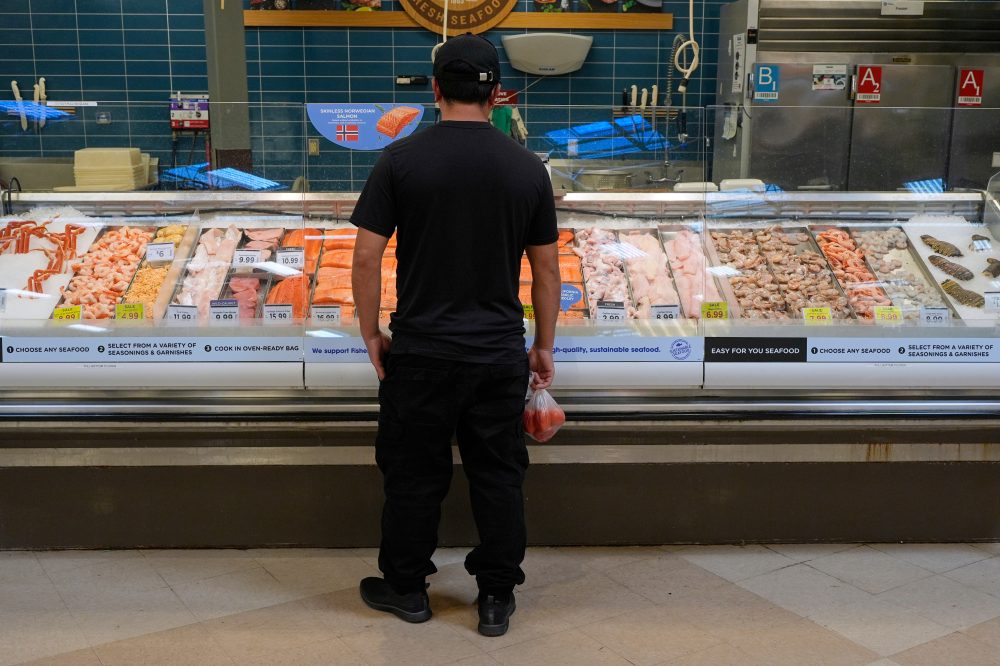

Delaware families are spending more at the grocery store as food costs climbed nationwide last month, driven by multiple economic pressures beyond just rising fuel prices.
Government data released Tuesday shows grocery store food prices jumped 2.9% in April compared to the same period last year, marking the steepest annual increase since August 2023. Restaurant and fast-food prices also climbed, pushing overall food inflation to 3.2% over the past 12 months, according to the Labor Department’s consumer price index.
While fuel costs have surged due to the Iran conflict disrupting shipping through the Strait of Hormuz – a crucial oil transport route – this represents just one piece of the pricing puzzle. Diesel fuel, which powers fishing vessels, farm equipment, and trucks carrying 83% of America’s agricultural products, has jumped 61% from last year, AAA reported Tuesday.
Raymond Campise, who owns Sparrow Market, an independent grocery store in Ann Arbor, Michigan, said his suppliers for meat, produce and dry goods have all implemented fuel surcharges on deliveries in recent weeks. Wholesale costs for many products have also increased, he noted.
“For independent markets operating on narrow margins, even small increases can have a major impact,” Campise said.
Purdue University economists Ken Foster and Bernhard Dalheimer warn that energy cost impacts on food pricing may not have fully materialized yet in American supermarkets. They explain that increased expenses for producing, processing, storing and shipping food typically take three to six months before appearing on store shelves, and once prices rise, they tend to decrease slowly.
“Most of what we’re seeing now in the food price chain probably predates the conflict,” Foster, a professor of agricultural economics, said. “We’re cautiously waiting to see what the June numbers and the May numbers might show as they come out in terms of … the extent to which energy shocks in the Strait of Hormuz and shipping blockades and so forth are going to impact food prices.”
The consumer price index tracks retail price changes for meat, bread, milk, produce and other grocery essentials in American cities. Historical data from the U.S. Department of Agriculture shows grocery prices have risen an average of 2.6% annually over the past two decades.
Fresh and refrigerated items typically see faster price increases when energy costs spike. Urban consumers paid 6.5% more for fresh fruits and vegetables last month compared to April 2023, while meat prices surged 8.8%, Labor Department figures show.
However, U.S. trade decisions and severe weather conditions have also contributed to rising food costs over the past year. The Trump administration’s 17% tariff on Mexican fresh tomatoes, implemented in July 2023, preceded a 40% consumer price increase for tomatoes in the 12 months leading to April.
Western U.S. drought conditions have helped drive beef prices 15% higher year-over-year in April. Coffee costs jumped 18.5%, partially due to drought and weather issues affecting global coffee production in recent years.
“Today’s CPI showed that food prices have been rising 3.2 percent in the past year, but the story behind that number is more complicated than just an energy shock,” said Dalheimer, an assistant professor of macroeconomics and trade in Purdue’s Department of Agricultural Economics.
Some food categories saw stable or declining prices over the 12-month period. Milk and chicken prices dropped slightly, while butter costs fell 5.8% in April compared to the previous year. Egg prices plummeted 39% as farmers rebuilt poultry operations devastated by the ongoing bird flu outbreak.
Food pricing and broader inflation issues are expected to play major roles in November’s midterm elections. During his 2024 campaign, President Donald Trump frequently highlighted the costs of bacon, cereal, crackers and other grocery items as justification for voters to elect him to the White House.
Some food industry sectors report current struggles due to elevated fuel expenses. The Southern Shrimp Alliance, representing shrimpers across eight states, said some vessels have remained docked this spring because crews cannot catch sufficient shrimp to offset diesel costs.
While fuel typically accounts for 30% to 50% of U.S. shrimping expenses, these operators supply only 6% of American shrimp consumption, limiting their ability to increase prices or implement fuel surcharges, the organization explained.
Rising fuel costs may affect food pricing through additional channels. Foster suggested that April’s 5% annual increase in non-alcoholic beverage prices might partially stem from petroleum derivatives used in plastic bottle manufacturing.
“It’s possible some of that’s starting to seep down the supply chain and get into those prices,” he said.
Looking ahead, Americans may face higher food costs due to escalating fertilizer expenses, since approximately 30% of global fertilizer passes through the Strait of Hormuz.
Fertilizer costs pose less immediate concern for U.S. farmers this year, as many secured supplies before the conflict began, Foster noted. However, impacts could become more apparent next year if the war continues.
“I expect the Iran conflict to impact the coming years’ food prices through a couple of channels. One, the energy costs and transportation handling. The other would be through packaging costs,” Foster said. “If the conflict were to last longer, then we might see more coming online as fertilizer prices start to impact longer-term planting decisions and cropping decisions.”