
Korean American filmmaker Eugene Yi has long questioned which ethnic groups truly fall under the Asian American and Pacific Islander umbrella term.
“When we’re talking about Asian Americans or Asian people in the U.S., oftentimes it’s people who might look like you and me, and maybe not people who look like (New York City Mayor) Zohran Mamdani,” Yi explained to The Associated Press. “Why is that when this term is supposed to be so capacious and so inclusive?”
These questions drove Yi’s enthusiasm when he was selected to direct an HBO documentary exploring AAPI identity and community connections.
Launching Wednesday on HBO Max during AAPI Heritage Month, “The A List: 15 Stories from Asian and Pacific Diasporas” represents the newest installment in Timothy Greenfield-Sanders’ “List Series.” Previous documentaries in this collection have highlighted prominent figures from Black, Latino, and LGBTQ+ communities.
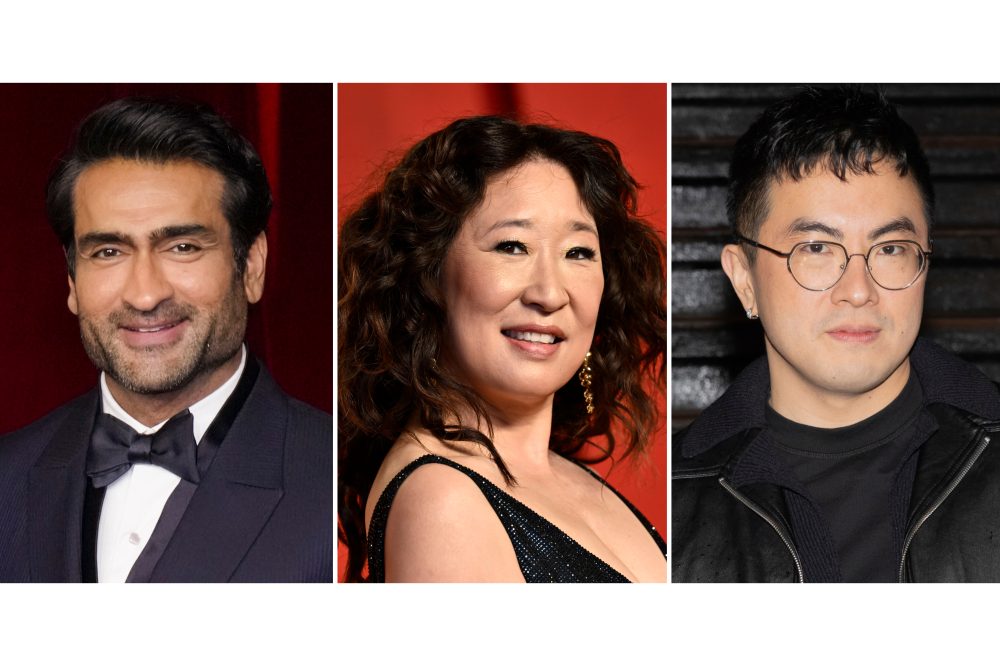
Yi’s film features straightforward, personal conversations between journalist Jada Yuan and 15 individuals of AAPI background from various fields. Participants include news anchor Connie Chung, Senator Tammy Duckworth, and “Basement Bhangra” founder DJ Rekha. Comedy stars Sandra Oh, Kumail Nanjiani, and Bowen Yang also opened up about questions of identity and acceptance.
“When talking to people who are professionally funny, oftentimes they’re really comfortable not being funny,” during unscripted discussions, Yi noted. “I appreciated that chance to get a little bit deeper into some of their stories.”
Minneapolis chef Yia Vang, who operates the acclaimed Hmong restaurant Vinai, recorded his interview three years ago and has since appeared on numerous culinary programs. Born in a Thai refugee camp before his family relocated to Wisconsin when he turned 4, Vang compared the filmed conversation to a spiritual confession.
Through tears, Vang shared how his childhood embarrassment about being “the weird kid” led him to discard school lunches of sticky rice and fermented vegetables his mother prepared. The unexpected emotion revealed a fundamental life principle.
“I will never, ever try to be ‘cool,’” Vang declared. “That’s why I guess I get so intense about like how we do our food here. Not because I’m chasing perfection or some kind of award, but I just want to make sure I stay true to the integrity that they (my parents) laid before me.”
In what Vang describes as “full-circle redemption,” those same dishes he once threw away now appear on his restaurant’s menu.
During a Milwaukee Film Festival screening last month, Vang witnessed local reactions to the documentary. His childhood fears of being seen as different proved unfounded.
“The audience really connected because I’m a Wisconsin boy,” Vang shared. Several attendees approached him simply to express: “It’s so awesome to see a Midwest kid in there.”
Despite Asian Americans representing one of America’s fastest-growing demographic groups, adults struggle more to identify AAPI influence compared to other racial communities, according to recent research from The Asian American Foundation.
The organization’s yearly Social Tracking of Asian Americans in the United States (STAATUS) Index, conducted with NORC at the University of Chicago, revealed that 40% of American adults cannot name a single famous Asian American. Jackie Chan, who is not American, ranked among the most common responses. Approximately half could not identify any notable Native Hawaiians or Pacific Islanders.
“It’s an indication of just how for most of America — and our data shows this as well — people get most of their information about Asian Americans not so much from direct contacts, but from the media,” explained Norman Chen, The Asian American Foundation’s CEO.
Chen attended a recent “A List” screening and praised the diverse range of personal narratives Yi assembled. He believes such a film might not have found support ten years earlier, making audience reactions to both celebrity and ordinary citizen stories particularly meaningful.
“Even people that we don’t know have such powerful stories to show you the depth and richness of our community and the struggles that we’ve had to go through in multiple generations,” Chen observed.
Production began while Vice President Kamala Harris campaigned against Donald Trump. With a Republican Trump administration now opposing diversity, equity, and inclusion programs, Yi recognizes the documentary’s potential political interpretation.
“What I’ve certainly seen during the stretch of time — just speaking for myself — is just how quickly things can backslide and how quickly people can be erased,” Yi reflected. “We literally have people being disappeared on the streets and we literally have histories being erased.”
Yi particularly values contributions from older participants who witnessed historical events, including activist Kathy Masaoka’s account of her mother’s imprisonment in Japanese American detention facilities. He hopes viewers will understand both past and present AAPI struggles while recognizing community strength.
“We can really move forward from this moment in terms of rebuilding and reclaiming and taking up space with confidence and hope again,” Yi concluded.