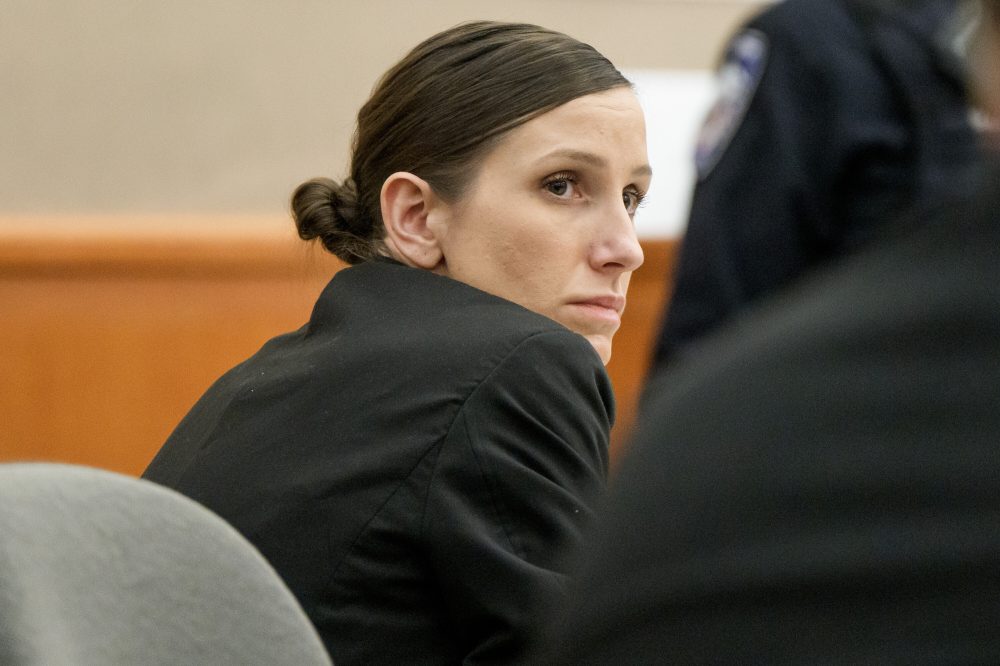

PARK CITY, Utah — A mother from Utah who authored a children’s book about dealing with loss following her husband’s passing will discover Wednesday the length of her prison term for his murder.
In March, Kouri Richins received a guilty verdict for aggravated murder after poisoning her husband’s drink with a fentanyl dose five times stronger than what would be fatal at their residence near Park City in 2022.
According to prosecutors, the 35-year-old real estate professional who ran a home renovation business owed millions of dollars and was planning a life with another man. Without Eric Richins’ awareness, she had secured multiple life insurance policies on him and incorrectly assumed she would receive his estate valued at over $4 million following his death.
The Park City jury also convicted Richins on four additional felony charges, including attempted murder for her earlier effort to poison her husband on Valentine’s Day using a fentanyl-contaminated sandwich.
The case drew significant attention from true-crime followers when authorities arrested her in 2023 during promotional activities for her children’s book titled “Are You with Me?” which tells the story of a young boy dealing with his father’s passing.
At Wednesday’s sentencing hearing, which coincides with what would have been her husband’s 44th birthday, Richins could receive anywhere from several decades to life imprisonment. Her legal representatives chose not to provide statements prior to the proceeding.
Following the verdict, Eric Richins’ sister Amy Richins expressed satisfaction, stating she was “just very happy that we got justice for my brother” and could now concentrate entirely on caring for his sons, who were 9, 7, and 5 years old when their father passed away.
According to a prosecution document submitted before the hearing, the children informed the judge they would feel unsafe if their mother ever gained freedom from prison.
“I’m afraid if she gets out, she will come after me and my brothers, my whole family,” said the oldest boy, who is now 13. “I think she would come and take us and not do good things to us, like hurt us.”
The middle child, now 11, expressed sadness that his father won’t be present for important life events. With his mother incarcerated, he said he can “live a happy and successful life without fear of (her) hurting me or anyone I love.”
The youngest child stated he would be “so scared” if his mother received release.
Utah judges commonly assign sentences as broad ranges instead of specific year amounts.
The primary charge of aggravated murder carries a penalty of 25 years to life imprisonment, or life without the possibility of parole. The prosecution chose not to seek capital punishment.
The prison term for attempted aggravated murder varies based on the extent of physical harm inflicted. Following a bite of the sandwich his wife prepared for him, Eric Richins developed hives, used his son’s EpiPen on himself, consumed an entire bottle of Benadryl, and lost consciousness, according to prosecutors. Based on the judge’s evaluation, Kouri Richins might receive 15 years to life, 6 years to life, or 5 years to life for this charge.
Two insurance fraud counts, classified as second-degree felonies, each come with 1-15 year sentences, while a third-degree felony forgery charge carries a 0-5 year prison term.
Judge Richard Mrazik holds the authority to determine whether Richins’ sentences for each conviction will run concurrently or consecutively. Prosecutors have requested no concurrent sentencing and pushed for life imprisonment without parole.
Richins additionally faces more than twenty financial criminal charges in a separate proceeding that remains pending.
The trial was originally planned for five weeks but concluded ahead of schedule when Richins chose not to testify, and her defense team concluded their case without presenting any witnesses. Her lawyers expressed confidence that prosecutors had failed to provide sufficient evidence for a murder conviction.
The jury reached a guilty verdict on all charges after deliberating for slightly less than three hours.
During the proceedings, prosecutors depicted the mother of three as someone driven by greed to commit murder. They presented text messages between Richins and her romantic partner where she discussed leaving her husband and obtaining millions through divorce. Prosecutors also revealed internet searches from Richins’ device, including inquiries about fatal fentanyl amounts, upscale correctional facilities, and how poisoning appears on death certificates.
The defense maintained that Eric Richins struggled with painkiller addiction. Prosecutors responded by showing police body camera recordings from the evening of his death, where Kouri Richins tells an officer her husband had no background with illegal drug consumption.
Defense lawyers also questioned the credibility of the prosecution’s key witness, a housekeeper who testified about selling Kouri Richins fentanyl multiple times, suggesting she was incentivized to provide false testimony for legal immunity. The housekeeper received immunity in exchange for her cooperation in the investigation.