
MANILA, Philippines (AP) — Rising fuel prices triggered by the Iran conflict are pushing desperate consumers across Asia to embrace rooftop solar energy systems, creating a potential financial boon for China as the globe’s dominant solar technology supplier.
The Philippines, currently facing a national energy crisis, conducted a survey of 20 regional solar companies that revealed weekly installations jumped 70% with customer inquiries increasing six-fold since hostilities commenced.
“This crisis is a driving force for solar,” said Brenda Valerio of the nonprofit New Energy Nexus, which conducted the survey. “People want solar and people want solar now.”
China appears positioned to capitalize on war-driven demand. Chinese clean technology equipment exports reached record levels in March, according to energy think tank Ember, while global solar interest continues climbing.
“China really is, by far, leading this race,” said Li Shuo, director of the Asia Society Policy Institute’s China Climate Hub, who described the renewable industry as “a one-man show.”
The Philippines, heavily dependent on Middle Eastern crude oil and liquefied natural gas, ranks among Southeast Asian nations most severely affected by Strait of Hormuz disruptions.
Domestic airlines are considering fuel rationing measures. Public transportation workers are receiving emergency cash assistance. Gasoline and diesel costs have surged dramatically. Government offices have adopted four-day work schedules and must maintain air conditioning temperatures at 24 degrees Celsius (75 degrees Fahrenheit) or higher to preserve energy.
Climate nonprofit 350.org estimates that oil and gas price increases during the Iran war’s initial 60 days have cost Filipino consumers, businesses and public institutions over $600 million.
“When we got our energy bill after the Iran war broke out, we were very shocked. It was wow. It was a significant increase,” said Jaime Quemado, who recently purchased a rooftop solar system in Manila.
Quemado also expressed growing worries about possible power outages, prompting his search for alternative energy sources like “solar, which is very abundant here in the Philippines.”
Consumer interest in rooftop solar systems skyrocketed from approximately 115 inquiries in February, before the Iran war started on Feb. 28, to over 450 by mid-April, the New Energy Nexus survey showed.
Solar organizations must “ride this wave and take advantage of this momentum,” Valerio said.
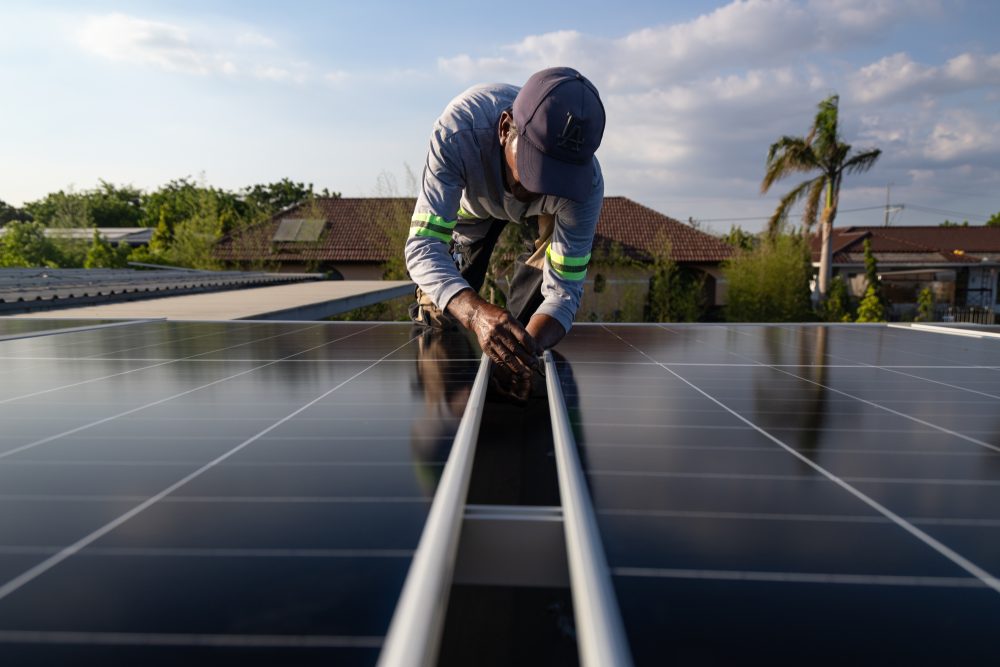
During two scorching days in Manila, EcoSolutions technicians endured extreme heat while installing an 18-kilowatt rooftop solar array featuring 28 panels from major Chinese manufacturer LONGi and four batteries from Suzhou-based battery company Dyness.
The conflict has “helped the solar industry really get its footing,” EcoSolutions president Richmond Reyes said.
Joel Remegio of the Association of Solar Installers of the Philippines called the energy crisis a “game changer” for the country’s emerging solar sector.
Clean technology like rooftop solar can be rapidly deployed because it is “accessible to all of us,” according to Marissa Cerezo of the Department of Energy’s Renewable Energy Management Bureau.
This “gives us the power to choose them,” she said.
Solar adoption is spreading throughout Southeast Asia.
Indonesia established an aggressive goal to deploy 100 gigawatts of rooftop solar by 2034, a dramatic increase from its current 1.3 gigawatts. Vietnam aims to install rooftop solar on at least 10% of government buildings and residences nationwide by 2030. Thailand is evaluating new policies to enhance rooftop solar benefits by expanding the amount of excess energy the national grid can purchase.
The energy crisis is motivating these decisions, according to Yu Sun Chin of the research group Zero Carbon Analytics.
“It totally makes sense for policymakers to take another look at rooftop solar and see ways that they can save costs,” she said.
Online marketplaces and utility companies throughout the United States and Europe have also documented increases in solar sales and inquiries since the Iran war started.
“Solar is definitely one of the easiest things people can do” to reduce monthly electricity costs, said Jan Rosenow, a professor of energy and climate policy at Oxford University.
The accessibility and cost-effectiveness of rooftop solar make it the most practical clean technology option given the higher expenses for purchasing electric vehicles or installing heat pumps, Rosenow said.
Ember, the energy think tank, reported China exported 68 gigawatts worth of clean technology products in March, matching Spain’s total solar capacity and doubling its February production. The Iran war is accelerating global energy transformation, Ember determined.
Exports to Africa reached 10 gigawatts, a 176% increase from February, with substantial growth in Nigeria, Kenya and Ethiopia. Exports to other Asian countries doubled to 39 gigawatts, including significant increases to India, Malaysia and Laos.
Ramnath Iyer of the U.S.-based Institute for Energy Economics and Financial Analysis said the transition’s pace depends on whether world leaders “decide to go ahead with electrification and move away from fossil fuels.”
Li of the China Climate Hub noted Chinese companies maintained excess inventory of solar panels and other equipment before the war, positioning them perfectly to exploit current demand.
“When it comes to the clean tech sector, China at this point in time is already so far ahead,” Li said. “The current situation in Iran will help China cement its dominance.”