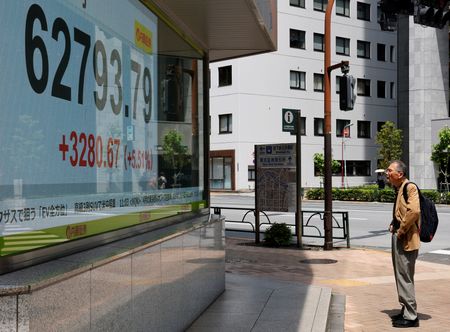

Stock markets throughout Asia opened lower Wednesday morning as investors grappled with unexpectedly high U.S. inflation numbers and continued instability from Middle Eastern conflicts.
The MSCI Asia-Pacific index excluding Japan dropped 0.6%, marking its second consecutive day of declines. South Korean markets experienced the sharpest volatility, initially plummeting 3.2% before staging a partial recovery. Industry observers noted that Korean stocks had been on an impressive run recently, hitting multiple records during an artificial intelligence-driven surge that many believed was overdue for a correction.
Japan’s Nikkei 225 index fell 0.2%, while futures for the S&P 500 edged down 0.1%.
“A hotter-than-expected inflation report and persistent geopolitical tensions reminded investors that sticky prices and elevated energy costs are not going away anytime soon,” said Tony Sycamore, market analyst at IG in Sydney.
The Middle Eastern situation remains deadlocked as President Donald Trump indicated Tuesday that he doesn’t anticipate needing China’s assistance to resolve the conflict with Iran, speaking ahead of his scheduled meeting with Chinese President Xi Jinping this week.
“We’ve seen this movie before, and we know it doesn’t end with a breakthrough agreement that resets the U.S.-China relationship,” said Phillip Wool, chief research officer and head of portfolio management at Rayliant Investment Research.
“That creates a pretty low bar for success: As long as Trump and Xi can get along and the trade détente continues, that should be enough to count this meeting as a win for both sides,” Wool added.
Brent crude oil prices declined 0.6% to $107.13 per barrel. Energy prices have remained at or above $100 since late February, when American and Israeli military actions against Iran and Tehran’s subsequent effective blockade of the Strait of Hormuz disrupted global supply chains.
In South Korea, Samsung Electronics stock tumbled 5.7% after the technology giant was unable to reach a wage agreement with its domestic labor union Wednesday. This development sets up a potential strike by more than 50,000 workers that could severely impact production of artificial intelligence processors and other semiconductor components.
U.S. markets closed lower Tuesday night, with the S&P 500 down 0.2% and the Nasdaq Composite falling 0.7% following news that American consumer inflation rose at its fastest pace in three years during April. This development increases the likelihood that the Federal Reserve may need to implement interest rate increases sooner than previously anticipated.
Financial markets have essentially eliminated expectations for any Fed rate reductions this year, while the probability of at least a 25 basis point increase at December’s meeting has climbed to over 35% from under 22% earlier this week, based on CME’s FedWatch Tool data.
The 10-year U.S. Treasury bond yield remained steady at 4.469%, representing its highest point since July.
The U.S. dollar index, which tracks the currency’s performance against six major international counterparts, held firm at 98.322, continuing its third straight day of increases.
Compared to the Japanese yen, the dollar strengthened 0.1% to 157.77 after the yen briefly surged Tuesday amid speculation about “rate checks,” which market watchers often interpret as a signal of potential government intervention.
Investors remain alert for any moves by Tokyo officials after sources indicated that authorities had already stepped in during the past two weeks to halt the yen’s slide.
In commodity markets, gold increased 0.1% to $4,718.48 per ounce, while bitcoin dropped 0.2% to $80,508.37 and ethereum declined 0.4% to $2,275.36.