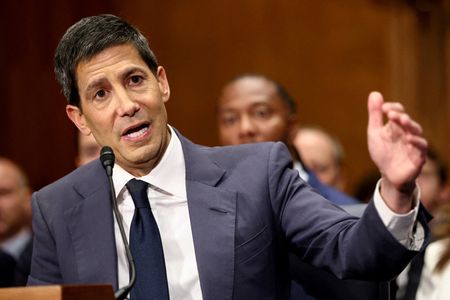

WASHINGTON – Kevin Warsh is poised to assume leadership of the Federal Reserve this month, bringing with him an extensive reform agenda that economists warn could prove difficult to implement swiftly.
The 56-year-old attorney and finance expert departed the central bank 15 years ago in disagreement with an aggressive bond-purchasing strategy that ultimately left the Fed holding a massive $6.7 trillion investment portfolio.
Warsh’s vision for change encompasses multiple areas, from revamping inflation tracking methods to reconsidering market intervention policies and overhauling how the Fed communicates with the public. His proposals would require both technical modifications to the bank’s economic assessments and delicate adjustments to its public messaging approach – areas that have proven resistant to rapid transformation in the past.
The incoming chair could quickly alter the Fed’s communication style and potentially reduce activities like media briefings, marking a shift back toward the more secretive central banking practices that existed before the 2007-2009 financial crisis prompted greater transparency and market guidance.
While Warsh opposes the current communication approach, he remains cautious about market disruption. “There are so many things that he wants to do and it is just going to take time to work through that,” explained Randall Kroszner, a University of Chicago economics professor who worked with Warsh as a Fed governor from 2006 to 2009. “It’s not just ‘off with their heads’ or suddenly tomorrow we’re going to have the balance sheet be $4 trillion.”
The Senate is expected to confirm President Donald Trump’s selection of Warsh to replace Jerome Powell this week. Trump frequently criticized Powell, initially pushing for rate reductions before escalating tensions through attempts to remove Fed Governor Lisa Cook and launching a Justice Department investigation into Powell that many viewed as an attack on the Fed’s independence. The Cook matter awaits Supreme Court review, while the Justice Department has concluded its Powell inquiry.
Powell’s eight-year leadership term concludes Friday, though he plans to retain his position on the Board of Governors as the investigation fully concludes, partly to shield the Fed from additional legal challenges from the administration.
Warsh’s first major hurdle involves balancing Trump’s pressure for rate cuts against economic indicators that provide little justification for such action. Unemployment sits at a relatively modest 4.3%, while inflation continues running significantly above the Fed’s 2% goal and appears to be climbing.
At Warsh’s inaugural policy meeting in June, success might simply mean preventing colleagues on the Federal Open Market Committee from advocating for rate increases. Three Fed officials voted against the majority at the April 28-29 meeting, favoring language that suggested rate hikes might be necessary, and this position could gain support as inflation spreads beyond factors related to tariffs or elevated energy costs.
Powell enjoyed roughly six months after Trump elevated him to Fed leadership in 2018 before facing presidential criticism, and investors currently don’t anticipate rate reductions until 2028.
Throughout the past year, Warsh has presented various arguments in speeches, interviews and public testimony for why rates might still decline despite current economic data. He suggests productivity improvements from artificial intelligence could reduce costs across the economy, that reducing the Fed’s long-term bond holdings might justify lower short-term rates, and that alternative inflation measurements show prices rising more gradually than current Fed indicators suggest.
While these arguments may have merit, supporting them with convincing research and persuading fellow policymakers will require significant time and effort, if achievable at all.
Former Fed personnel and officials indicate Warsh would likely begin by ordering comprehensive internal evaluations, followed by FOMC discussions and eventually potential modifications to policies like bank reserve requirements – one possible route to reducing the balance sheet – or incorporating different inflation data into policy deliberations.
Warsh has also expressed interest in modifying established communication mechanisms like the quarterly Summary of Economic Projections, which features the “dot plot” chart showing rate forecasts. Widespread dissatisfaction with certain SEP elements exists, making this area potentially suitable for quicker reform.
However, both the central bank’s SEPs and the Fed chair’s media briefings have become influential tools for managing public expectations. A recent Brookings Institution poll of 29 academic and private-sector Fed specialists found nearly all respondents considered post-meeting press conferences “useful or extremely useful,” while just over half expressed similar views about the SEP and dot plot.
Media briefings specifically represent “an international standard” for explaining policy decisions and economic forecasts, noted former St. Louis Fed President James Bullard, now dean of Purdue University’s Mitch Daniels School of Business. “I think it would be hard to change that.”
Regarding other matters, former Fed officials and staff indicate Warsh’s suggestions would undergo the same scrutiny as any proposal.
Concepts for balance sheet reduction are already being discussed, but skepticism exists about Warsh’s theory that shrinking bond holdings would enable rate cuts.
Warsh’s observations about productivity improvements affecting inflation are generally accepted in principle, but questions remain about timing and rate implications. Chicago Fed President Austan Goolsbee recently outlined an alternative situation where widespread AI expectations could prompt people to spend anticipated stock and wealth gains immediately, increasing inflation and forcing Fed rate hikes.
The disagreement centers less on AI’s economic impact and more on timing and risk – how quickly productivity gains reduce inflation versus encouraging additional current spending, and whether the Fed can safely rely on future disinflation to justify immediate rate cuts.
“He might be right in the impact on demand versus the impact on supply,” Goolsbee told reporters following a Los Angeles conference. “I think it is worth thinking about… I don’t know what the debate ground rules are going to be… I hope, for my purposes… it will be rooted in serious economic research.”