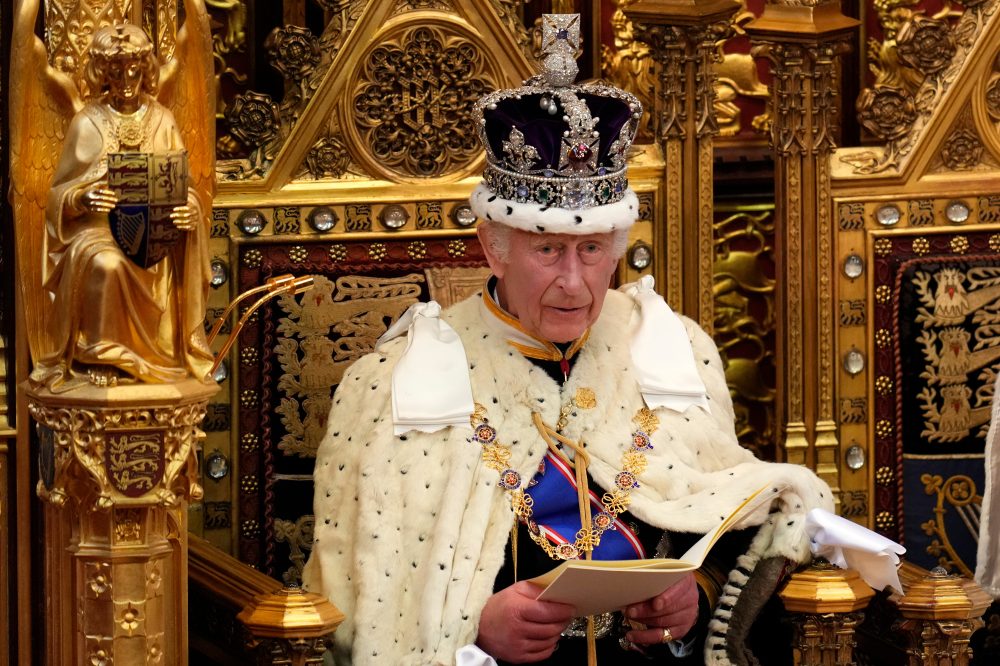

LONDON — Britain’s King Charles III will present his government’s legislative priorities to Parliament members Wednesday during the traditional ceremonial opening, complete with the historic pageantry that marks this significant political event.
The central question remains whether Prime Minister Keir Starmer will survive politically to execute these plans, and if he does weather the current governmental turmoil, whether he’ll possess sufficient political capital to advance his agenda through Parliament.
This King’s Speech represents Starmer’s second effort to rescue his leadership position following devastating defeats for his Labour Party in recent local and regional voting. These electoral setbacks have further undermined his already fragile hold on authority and intensified demands from Labour Party colleagues for his resignation, as they argue Starmer has failed to aggressively address escalating living costs, economic disparity, and deteriorating public infrastructure.
Starmer’s troubles deepened following his Monday address to party members, which was promoted as the beginning of his political comeback. Critics dismissed the speech as “tone deaf” and lacking the decisive policy measures necessary to address Britain’s challenges. Cabinet member Jess Phillips, who served as Safeguarding Minister, stepped down Tuesday, stating the administration needed to “have a row, push back, make arguments, bring people along.”
Wednesday’s King’s Speech will highlight the contrast between Britain’s ceremonial grandeur and its contemporary challenges as a medium-sized nation facing military budget constraints, mounting debt, and diminished global standing. The country continues wrestling with immigration control and funding essential services including healthcare and education.
The royal address forms part of Parliament’s state opening ceremony, a cornerstone political tradition featuring elaborate ceremonial displays that demonstrate Britain’s transformation from absolute monarchy to parliamentary democracy, where true authority rests with the elected House of Commons.
Political observers will scrutinize this year’s proceedings particularly closely given Starmer’s vulnerable political standing.
Expected legislative proposals include measures targeting the cost-of-living emergency, establishing a national wealth fund to encourage private infrastructure investment, and strengthening asylum seeker regulations. Additional possibilities include the administration’s disputed plan to eliminate jury trials for certain cases in England and Wales, reducing the voting age to 16, and implementing a “duty of candor” requiring public officials to provide truthful testimony and cooperate with investigations.
Starmer’s challenge lies in the fact that many anticipated proposals have already been publicly announced, raising doubts about his ability to satisfy skeptical party members.
Nevertheless, the speech anchors a day steeped in ceremony and tradition maintained since 1852, incorporating customs dating to the 1500s.
The monarch customarily journeys from Buckingham Palace to Parliament, covering less than one mile in a horse-drawn carriage. Upon arrival, he assumes the Imperial State Crown and ceremonial robes before leading a formal procession into the House of Lords chamber.
An official known as Black Rod, named for the ceremonial ebony staff carried, proceeds to the House of Commons to invite members to the joint parliamentary session. Commons chamber doors are ceremonially shut in Black Rod’s presence to demonstrate the chamber’s independence from royal authority, reopening only after Black Rod strikes the doors three times.
Following the Commons members’ entry into the Lords chamber, the monarch reads a government-authored speech outlining the legislative agenda for the upcoming parliamentary session.
After the address concludes and the king departs, both parliamentary houses commence several days of debate regarding the speech’s contents.