
South Korea’s Defense Minister Ahn Gyu-back announced Wednesday that his country is exploring ways to gradually support maritime security operations in the Strait of Hormuz, following high-level discussions with American defense officials.
During a press briefing with South Korean journalists in Washington, Ahn revealed details of his Monday meeting with U.S. Defense Secretary Pete Hegseth, where Seoul outlined its position on potential involvement in the strategic waterway.
“We said at about this level that, fundamentally, we will participate as a responsible member of the international community and that we will review ways to contribute in a phased manner,” Ahn stated, according to confirmation from Seoul’s defense ministry.
The minister outlined several potential forms of graduated assistance, including diplomatic backing, personnel deployment, intelligence sharing, and providing military equipment. However, he emphasized that detailed conversations about expanding South Korean military presence had not occurred.
“There was no deep discussion on something like specifically expanding our military’s participation,” he explained, noting that any future commitments would require approval through South Korea’s domestic legal processes.
Wi Sung-lac, who serves as South Korea’s presidential national security adviser, told reporters during a Wednesday roundtable that the government is examining whether to join America’s Maritime Freedom Construct, designed to protect shipping lanes through the Strait of Hormuz.
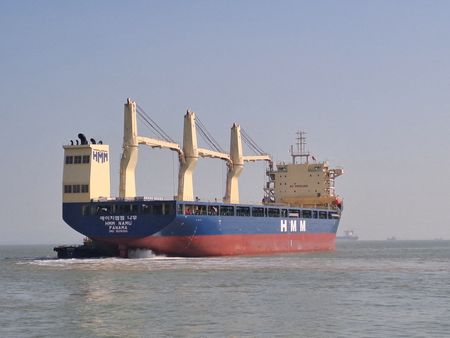
The defense talks occurred one day after Seoul condemned an assault on a South Korean-flagged cargo vessel near the Strait of Hormuz the previous week. South Korea’s presidential administration issued strong criticism of the incident while maintaining that investigations into who was responsible remain ongoing.
Ahn confirmed he addressed the ship attack with American officials, stating that Seoul would determine its response only after completing its investigation.
During Monday’s meeting, Hegseth emphasized Washington’s expectation for allies to “stand shoulder-to-shoulder” against increasing global security challenges, referencing President Donald Trump’s authorization of Operation Epic Fury as demonstration of the administration’s commitment.
The U.S. Defense Secretary commended Seoul’s plans to boost military spending and take on greater security responsibilities for the Korean Peninsula, describing it as effective alliance burden-sharing.
Ahn reported that Hegseth showed understanding regarding South Korea’s stance on a conditions-based transfer of wartime operational control (OPCON) from American forces, along with Seoul’s objective to complete this transition quickly.
However, the minister noted that Washington maintained a “slightly different view” on the OPCON transfer timeline, adding that South Korea would continue working to align American perspectives with their position.
President Lee Jae Myung’s government has indicated its intention to finalize the operational control process during his presidency, which extends through 2030, once the country satisfies military capability requirements previously agreed upon with Washington.
The defense leaders also discussed other partnership matters, including South Korea’s plans for developing nuclear-powered submarines.
Ahn clarified that their discussions did not address potential reductions in U.S. military personnel stationed in South Korea or changes to the strategic flexibility of American troops deployed in the country.