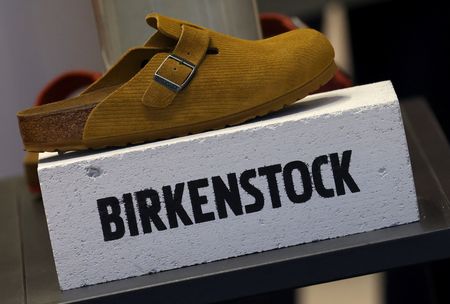

The iconic German footwear manufacturer Birkenstock fell short of Wall Street’s second-quarter sales projections on Wednesday, citing inconsistent consumer demand for its high-end sandals and clogs, along with shipping disruptions caused by ongoing Middle East tensions.
The company’s stock price tumbled 8% during pre-market trading in New York after executives revealed that conflict in the Middle East resulted in a 6 million euro ($7.02 million) negative impact on their Europe, Middle East and Africa business segment.
According to company officials, approximately half of these losses stemmed from their inability to fulfill certain product deliveries to affected regions. The remaining impact resulted from weakened European consumer confidence, primarily driven by elevated energy prices and ongoing inflation connected to the regional conflict.
These financial results emerge during a period of increased uncertainty surrounding consumer discretionary purchases, as geopolitical instability and rising inflation continue to dampen spending sentiment. Despite these challenges, luxury brands like Birkenstock have demonstrated relative stability in recent reporting periods.
The sandal manufacturer maintained its annual revenue and earnings projections unchanged, despite the Middle East-related setbacks, relying on its strategy of controlled product distribution and maintaining full retail pricing.
Regional performance varied significantly, with the Asia-Pacific market leading growth at 22% during the quarter on a reported basis. The Americas segment expanded by 4%, while the EMEA region posted 10% growth.
The company’s gross profit margin declined to 53.9% from the previous year’s 57.7%, affected by currency exchange fluctuations and U.S. import duties, though these impacts were partially balanced by increased product pricing.
Quarterly revenue reached 618.3 million euros, falling below the analyst consensus estimate of 620.07 million euros compiled by LSEG data.
Adjusted earnings per share came in at 0.50 euros, representing a 9% decrease from the prior year’s 0.55 euros per share.