American travelers visiting China will soon find it easier to make digital purchases thanks to a new partnership between PayPal and Chinese technology company Tencent.
The arrangement will enable PayPal account holders from the United States to conduct transactions using QR code scanning technology through Tencent’s WeChat Pay platform, which operates an extensive network of merchants throughout China. According to Tencent’s announcement, the service will initially launch for U.S. customers before expanding to additional countries.
This development addresses a growing need as digital transactions have become the standard payment method across China, making the change particularly beneficial for international visitors navigating the country’s cashless economy.
WeChat Pay, along with Ant Group’s Alipay from the Alibaba business network, dominates China’s digital payment landscape and can be found everywhere from taxi services to dining establishments.
According to Gary Ng, a senior economist for Asia Pacific at French bank Natixis, simplifying digital payment access for tourists supports China’s broader strategy to increase international visitor numbers.
Government statistics reveal that tourism accounted for more than 4% of China’s economic output in 2024.
China has recently eliminated visa requirements for travelers from multiple nations, including the U.K., Spain and Australia. However, this policy change has not been applied to U.S. travelers, who must still obtain visas before entering China, with exceptions only for brief transit stops when continuing to other destinations.
International visitor numbers dropped dramatically during the COVID-19 pandemic as China restricted most foreign entry and implemented strict quarantine measures in numerous locations.
However, tourism has rebounded significantly, with foreign arrivals excluding those from Hong Kong and Taiwan exceeding 35 million last year, surpassing the nearly 32 million visitors recorded in 2019.
Ng noted that the PayPal integration reflects a worldwide movement toward connecting payment systems through compatible international QR code technology.
Ivan Su, a senior equity analyst at Morningstar, suggested the QR code partnership with PayPal may have minimal immediate impact on Tencent’s overall performance due to the relatively small number of U.S. visitors currently traveling to China.
WeChat Pay has permitted users to connect foreign bank cards to their accounts since 2019. Tencent also announced it will waive transaction fees for new users linking international bank cards to WeChat as an incentive to encourage broader adoption of this payment method.
According to Tencent’s data, transactions made by foreign travelers in China increased by nearly 80% year-over-year during the January-April period.
MELBOURNE, Australia — A 34-year-old woman from Melbourne faces terrorism charges after Australian authorities accused her of joining ISIS in Syria, according to police officials.
Australia Federal Police Deputy Commissioner Hilda Sirec announced Thursday that the woman was taken into custody at her Melbourne residence eight months following her return to Australia through Lebanon, accompanied by another woman.
The charges come just two days after 19 individuals — seven women and 12 children with ISIS connections — arrived back in Australia from a Syrian refugee facility, despite opposition from the Australian government.
Last month, 13 additional people in comparable situations returned from the Roj displacement camp, situated close to where Syria’s borders meet Turkey and Iraq. Upon their arrival, three of the four women in that group faced slavery and terrorism charges and were detained.
Sirec stated that all women who have returned from Syria this month continue to face police scrutiny. The companion who traveled with Thursday’s arrestee from Lebanon is also under investigation.
“A period of time passing without charges does indicate investigations have ceased,” Sirec noted.
The Melbourne woman was scheduled to appear Thursday before the Melbourne Magistrates’ Court on charges of entering and staying in a designated conflict area and joining ISIS as a terrorist organization. Both charges could result in up to 10 years imprisonment.
Authorities claim she journeyed to Syria during 2013 and 2014 to become an ISIS member. Kurdish forces captured her in March 2019 following ISIS’s defeat and held her at al-Hol displacement camp.
Police allege her return to Australia occurred on September 26.
Janai Safar, 32, from Sydney, received similar charges upon her May 7 arrival in Australia with her 9-year-old son. A magistrate denied her bail request, requiring her to serve a minimum two-month prison term in Sydney.
Authorities claim Safar followed her ISIS-fighter partner to Syria in 2015 and gave birth to a child there. The partner reportedly died in 2017. Australian law prohibited citizens from traveling to Raqqa, the former ISIS stronghold in Syria, without legitimate purposes from 2014 through 2017.
Kawsar Ahmed, also called Kawsar Abbas, and her daughter Zeinab Ahmed, 31, faced charges in a Melbourne court on May 8 related to accusations that their family purchased a female Yazidi slave for $10,000 while in Syria, police reported.
The daughter plans to seek bail next week, while the mother has a bail hearing set for June 16.
An elephant at the Bronx Zoo who helped scientists better understand animal behavior and became the focus of a prominent animal rights lawsuit has died at age 55.
Happy was put down after contributing to important research that gave scientists new understanding of how elephants behave. The elephant also became central to a widely followed legal case involving animal rights.
The elephant’s death marks the end of a life that significantly advanced scientific knowledge about animal self-awareness and cognition.
Taiwan’s Vice Premier Cheng Li-chiun announced Thursday that while the United States continues to consider semiconductor tariffs under national security provisions, no specific timeline has been established for their implementation.
Speaking from Taipei, Cheng explained that Taiwan has already negotiated protective measures through a bilateral trade agreement signed in January. Under this arrangement, the island nation secured most-favored-nation status for its semiconductor exports, ensuring preferential treatment even if future tariffs are imposed.
The January trade deal includes immediate benefits for Taiwan, with the U.S. eliminating or reducing certain tariffs to 15% on various Taiwanese products. These reductions cover automotive components, aircraft parts, wood products, and steel, according to Federal Register documentation. The tariff adjustments take effect retroactively from May 1 and were scheduled for official publication Thursday in U.S. time.
Cheng emphasized that Taiwan’s advance negotiations have locked in favorable terms regardless of when Section 232 semiconductor tariffs might be implemented. Section 232 refers to U.S. national security investigations targeting critical imports including computer chips and pharmaceutical products.
“That means that no matter when the U.S. proposes Section 232 semiconductor tariffs, it must grant corresponding preferential treatment to Taiwanese businesses investing in the U.S.,” Cheng stated.
The Vice Premier noted that these protective arrangements will remain in place despite ongoing U.S. discussions about potential semiconductor tariffs. She confirmed that American officials have repeatedly suggested such measures might be forthcoming, but emphasized Taiwan’s secured position through the January agreement.
Taiwan plays a crucial role in global semiconductor manufacturing and serves as headquarters for TSMC, the world’s largest contract chipmaker. TSMC is currently investing $165 billion to construct manufacturing facilities in Arizona.
TikTok’s parent company is working on custom computer processors to fuel its artificial intelligence operations as rising costs and supply chain issues hamper expansion efforts, according to three sources with knowledge of the project.
ByteDance’s initiative highlights the tech industry’s growing focus on “inference” – the process where AI systems are put to work on tasks requiring more processing power from central processing units alongside the graphics cards from companies like Nvidia that have powered the AI revolution.
This trend has led to processor shortages in recent months, pushing major tech companies including Google’s parent Alphabet, Amazon and Microsoft to create their own custom chips to cut expenses and optimize performance for their specific needs. The development has also positioned major processor manufacturers Intel and AMD as key competitors to Nvidia’s AI market leadership.
The Beijing-based company plans to use its custom-built processors in its own servers and data centers for internal operations while preparing a large-scale launch of AI-powered products including its Coze platform, according to the first source.
ByteDance has reached out to multiple external partners for assistance with the project, with these collaborators expected to help both with chip design and securing production capacity at manufacturing facilities, sources indicated. The initiative is still in early development stages, the first source noted.
The sources requested anonymity since the plans have not been made public.
ByteDance did not provide a response to requests for comment.
The company’s strategy puts it among a growing number of technology firms that have determined the financial benefits of custom processors outweigh the challenges of developing them.
ByteDance is pursuing dual development paths for its processor project – one using technology from SoftBank-owned Arm and another based on the open-source RISC-V design framework, as it evaluates which approach best meets its long-term data center needs, sources revealed.
Creating two designs at once is a typical strategy for major tech companies, allowing them to compare options before investing in expensive, large-scale production.
Arm did not immediately provide comment when contacted.
The custom chip development effort comes as Intel has informed Chinese customers of server processor delivery delays extending up to six months, as previously reported in February.
Intel announced last month that first-quarter demand from AI companies was so intense that the company sold processors it had previously considered unsaleable.
AMD’s chief executive warned recently that the worldwide processor market remains “tight,” with demand exceeding projections and supply limitations expected to continue.
ByteDance currently purchases processors from Intel and AMD, with both companies implementing substantial price increases ranging from 10% to 35% quarter-over-quarter in recent months, according to two sources, spurring ByteDance to speed up its internal chip development efforts.
Intel stated it had adjusted pricing on certain products due to continued strong demand, higher component and material costs, and changing market conditions. AMD did not immediately respond to comment requests.
Nvidia is moving beyond graphics cards into the processor market, with its chief executive hoping the company’s new “Vera” central processors will provide access to a $200 billion market opportunity.
The company introduced a new central processor and AI system using technology from Groq – a startup focused on inference processing – in March, as part of efforts to maintain its position in the AI chip sector.
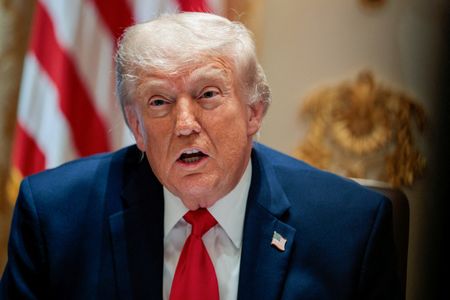
NEW YORK – Former President Donald Trump submitted a revised defamation lawsuit on Wednesday demanding at least $10 billion in damages from the Wall Street Journal regarding their coverage of his connections to Jeffrey Epstein, following a federal judge’s dismissal of his original complaint due to legal shortcomings.
The legal action represents one of multiple lawsuits Trump has initiated in his individual capacity targeting news organizations, which critics characterize as part of a broader effort to pressure media outlets.
Trump’s legal filing alleges the Rupert Murdoch-owned publication damaged his standing through an article that depicted a birthday card to the deceased sex offender Jeffrey Epstein as containing Trump’s signature. Trump and his legal team maintain the card is fraudulent, despite its release by lawmakers conducting an investigation into Epstein’s case.
The revised lawsuit seeks at least $10 billion in damages, matching the amount requested in the previous filing.
“At the time of publication, Defendants recklessly disregarded whether the Defamatory Statements were true and/or they purposefully avoided the discovery of the truth,” Trump’s attorneys stated in the updated complaint.
The legal action, submitted in Miami federal court, identifies Rupert Murdoch, Dow Jones, News Corp and its CEO Robert Thomson, plus two Wall Street Journal reporters, Khadeeja Safdar and Joseph Palazzolo, as defendants. The lawsuit claims they defamed Trump and caused him to experience “overwhelming” financial and reputational damage.
Dow Jones has stated it maintains complete confidence in the thoroughness and precision of the Journal’s journalism and plans to vigorously contest the lawsuit.
Epstein, the disgraced financier and sex offender, passed away in a New York detention facility in 2019. His situation spawned conspiracy theories that gained traction among Trump’s supporter base, who suspected the government was concealing Epstein’s connections to wealthy and influential individuals. Trump has stated he ended his relationship with Epstein before the financier’s legal problems became public knowledge in 2006.
U.S. District Court Judge Darrin P. Gayles, an appointee of former President Barack Obama, dismissed Trump’s initial complaint in April. The judge determined Trump had not satisfied the “actual malice” legal requirement for public figures in defamation cases, which demands evidence that a defendant published information they knew or should have known was false.
Trump has also initiated defamation and other legal actions against additional media organizations, including the New York Times, the BBC and Iowa’s Des Moines Register. These outlets have rejected wrongdoing allegations and are contesting the cases in court.
Trump’s administration has moved to limit press access to government agencies and threatened to employ regulatory authority against critical outlets, prompting legal challenges from media organizations.
The White House has characterized Trump as the most transparent and available U.S. president in history, claiming his administration has expanded press access in unprecedented ways.
Federal authorities have filed charges against a retired high-ranking CIA official, alleging the former intelligence officer made off with hundreds of gold bars valued at more than $40 million from government stockpiles.
The accused former agency employee, who previously maintained top secret security clearance during their career, is suspected of hiding the stolen precious metals at their personal residence, according to the charges.
The case involves what prosecutors describe as a massive theft of federal property, with the gold bars representing a significant financial loss to taxpayers.
PARIS (AP) — Nearly 200 years after France ended slavery, a colonial-era statute that defined human beings as property has remained quietly on the books. Thursday marks the day legislators will finally take action to remove it.
The legislation, anticipated to pass in the National Assembly, will eliminate the Code Noir, also known as the Black Code, which was established by a 1685 decree from King Louis XIV to regulate enslaved people throughout France’s colonial territories.
This statute transformed people into commodities, permitting their exploitation through forced labor, physical violence, sale, sexual assault and murder — and France never officially eliminated it.
This discovery has stunned many citizens.
“That shocks me,” said Muriel Jean-Baptiste, a Paris-born nurse whose parents are from Martinique, a French overseas department in the Caribbean.
“A law that treated Black people as property was left sitting there,” she said.
The statute’s scope was comprehensive. Article 44 designated enslaved individuals as “movable property.” Additional provisions mandated bodily harm for escapees and established that testimony from enslaved people held no legal weight.
The 60 provisions of Code Noir “should never have survived the abolition of slavery” in the 19th century, President Emmanuel Macron stated last week.
“The silence, even the indifference, that we have maintained for nearly two centuries toward this Black Code is no longer an oversight,” Macron said. “It has become a form of offense.”
Similar to previous French presidents, Macron did not offer an apology.
France operated the world’s third-largest slave trade, transporting approximately 1.4 million Africans to plantations whose sugar profits funded the development of French cities like Nantes and Bordeaux. Its colonial reach eventually extended across four continents.
Some view this repeal as more significant — evidence, they contend, of a nation that has not fully confronted its history, representing one of many gradual measures in that process.
Legally, formally removing it is straightforward, experts note. Code Noir became powerless in 1848, when France ended slavery.
France maintained control of its slave territories: the four oldest — Guadeloupe, Martinique, French Guiana and Réunion — became full French overseas departments in 1946. This designation means Paris governs them like any other region.
Their approximately 1.9 million residents, mostly descendants of enslaved people, hold French citizenship.
Despite full integration into France, these overseas departments remain among the nation’s most impoverished areas. Joblessness rates run about twice the mainland average, and over three-quarters of Mayotte households fall below the national poverty threshold.
Before learning the facts, the French legislator who introduced the repeal proposal was unaware the law still existed.
Max Mathiasin, representing Guadeloupe, had purchased copies of the document over time and stored them on his bookshelf.
“As the great-great-grandson of people who were enslaved, I had never been able to read it in full,” he said. “This was made by human beings — against human beings.”
For him, the legislative action represents “a way of restoring our ancestors, restoring our humanity” before a France whose national motto proclaims liberty, equality, fraternity. “It means living up to the Republican promise.”
That commitment, he argues, remains unfulfilled domestically.
“In Guadeloupe,” Mathiasin said, “in the most important positions, in the structures of the state, they are white.”
The Foundation for the Memory of Slavery is led by a former prime minister, Jean-Marc Ayrault, and its deputy director is Pierre-Yves Bocquet — both white men.
Bocquet describes Code Noir as the origin of France’s “colonial exception” — the concept that the French Republic’s fundamental rights could be suspended for those under its authority.
This concept survived the empire’s end, he explained: “Even today, we accept that people in the overseas territories can have fewer rights than in mainland France.”
France is not the only nation maintaining remnants of empire — the United Kingdom and the United States also govern overseas territories.
However, what distinguishes France, analysts say, is its decision to make former slave colonies equal departments of the Republic, rather than distant dependencies.
The government maintains that overseas departments are France like everywhere else, while residents say they face inferior treatment.
For Max Relouzat, 81, president of the Association for the Memory of Slaveries, the repeal holds importance because so little else has changed.
His African ancestor possessed no name under the law, only a number and registration code — the family living in Martinique received the surname Relouzat upon emancipation, probably derived from Nelouzat, a village in central France’s Auvergne region.
What frustrates him, he explained, is what the symbolic gesture leaves unchanged: institutional racism in France.
“Under the cover of departmentalization, a colonial system was maintained,” Relouzat said. “If the overseas departments are part of France, why is there a ministry for the overseas?”
In France, he stated, “we are still today in a form of apartheid … a form of colonial continuity.”
For some longtime advocates, Thursday does not represent the milestone it seems.
For Florence Alexis, a slavery expert and daughter of Haitian writer Jacques Stephen Alexis, the genuine breakthrough occurred 25 years earlier. In 2001, the Taubira law made France the first nation to classify the slave trade and slavery as crimes against humanity.
“That is what changed my life,” Alexis said.
For her, racism stems from slavery itself, not from any single law.
“When I was a child at school, they called me the little monkey,” she said. “People made animal cries when I walked past — as they still do in football stadiums today.”
Paris-born Élodie Léon, 29, whose family originates from French Guiana, supports the repeal but regrets the postponement.
“Symbolic neglect is also neglect,” she said.
During the Taubira law’s 25th anniversary on May 21, Macron suggested the possibility of reparations — an issue France has long avoided confronting.
He described it as “a question we must not refuse,” but one where “we must not make false promises.”
He pledged no funds, instead defining repair primarily as truth-telling, education and historical research.
France’s most profitable plantations operated in Saint-Domingue, where enslaved people rebelled and achieved independence in 1804 as Haiti. France subsequently compelled the liberated nation to pay compensation for their masters’ losses — a debt settled only in 1947.
France is not unique in this regard. In the United States, federal reparations proposals have remained stagnant for decades. California approved an apology but provided no monetary compensation.
However, the timing of Macron’s recent remarks was problematic. Two months prior, France abstained when the U.N. General Assembly voted 123-3, with 52 abstentions, to designate the trans-Atlantic slave trade as the most serious crime against humanity.
Additionally, this month at the Africa Forward Summit in Kenya, days after calling himself a “pan-Africanist,” Macron grabbed a microphone and demanded the room become silent.
“As soon as he sets foot on the African continent,” French opposition lawmaker Danièle Obono said, “he can’t help but behave like a colonizer.”
The Code Noir repeal, Bocquet noted, “will have no direct effect.” Whether it assists France in combating racism and inequality in its overseas territories, he said, “remains to be seen.”
“It is easy for the French authorities, and for Macron, to do this,” Alexis added. “Because it commits them to nothing.”
WIENER NEUSTADT, Austria — An Austrian court is set to deliver its decision Thursday in the case of a young man who confessed to planning an assault on a Taylor Swift performance in Vienna almost two years ago.
Although authorities successfully prevented the attack, officials in Austria decided to call off Swift’s trio of scheduled shows in August 2024.
The accused, a 21-year-old Austrian national identified only as Beran A. according to Austrian privacy laws, is charged with terrorist-related crimes and belonging to a terrorist group.
According to his defense lawyer, he entered a guilty plea to the charges connected to the concert scheme when the trial began last month. The maximum sentence he could receive is 20 years behind bars.
Prosecutors allege that Beran A. intended to harm concertgoers outside the Ernst Happel Stadium using knives or explosive devices he made himself. Thousands of Taylor Swift supporters, commonly called Swifties, had made the journey to Austria for the pop star’s historic Eras Tour shows. Crushed by the show cancellations, many fans congregated in Vienna’s city center to exchange friendship bracelets and share their disappointment over the cancelled events.
Beran A. stands trial with Arda K., whose complete identity has also been kept confidential. These two defendants, along with a third individual who was taken into custody and continues to be held in Saudi Arabia awaiting trial, reportedly conspired to execute coordinated attacks in Saudi Arabia, Turkey and the United Arab Emirates during the 2024 Ramadan period on behalf of the Islamic State group.
Beran A. alone faces charges regarding the concert attack plan. He entered a not guilty plea concerning the charges tied to the coordinated international attack scheme.
The timeline for Thursday’s verdict remains uncertain, as expert testimony must still be presented and final arguments delivered.
MALABO, Equatorial Guinea — A luxury hotel on a tropical island off Central Africa’s coast has been transformed into an unlikely prison for asylum seekers under a controversial deportation agreement with the United States.
The Bamy Hotel, with its palm-lined entrance and marble lobby adorned with the country’s presidential portrait, now serves as a detention center rather than welcoming tourists or business visitors. Since November, the facility has housed people against their will as part of a $7.5 million arrangement between the Trump administration and Equatorial Guinea’s leader, Teodoro Obiang Nguema Mbasogo.
The hotel, owned by the president’s family, functions as a temporary holding facility. Of at least 32 individuals detained there since late last year — all previously granted protection by US courts, according to their attorneys — 25 have been compelled to return to African nations where they may face danger. Those remaining endure pressure from officials to depart.
“Government people would come all the time and say: Where is your passport? You need to go back to your own country,” explained a 26-year-old man from an East African nation who was held at the facility. He requested anonymity due to fear of repercussions, as did two other deportees who spoke with The Associated Press.
Immigration attorneys describe these third-country deportations as a legal workaround used by the Trump administration to indirectly compel asylum seekers to return to their origins.
The authoritarian nature of Equatorial Guinea’s government — similar to other nations with comparable agreements — makes it challenging for international journalists to visit and document conditions firsthand. The AP gained access to the island of Bioko during a recent papal visit and became the only global news organization to observe the migrant detention hotel.
Individuals from Angola, Eritrea, Ethiopia and Mauritania now find themselves stranded in a nation many had never known existed before their arrival. They spend their days walking the hotel’s lengthy hallways and staring through windows at a swimming pool they cannot access.
While no physical mistreatment has occurred, detainees experience severe psychological strain knowing they likely face return to countries they fled in fear.
“I am scared and depressed,” the East African man stated.
Due to his ethnic background and refugee status, he believes he would face imprisonment or death if forced to return home. Human rights specialists say all asylum seekers at the hotel confront significant persecution risks in their countries of origin.
Through a series of unclear and often confidential agreements, the Trump administration has sent thousands of people to nearly two dozen nations other than their homelands, according to advocacy groups, as part of extensive US immigration enforcement efforts. These partner countries are primarily in the developing world, says Third Country Deportation Watch, with approximately twelve located in Africa. Specialists believe nations accepting deportees may seek to build favorable relationships with the US regarding trade, migration or assistance negotiations.
The Trump administration refused to discuss specifics of its Equatorial Guinea arrangement. A State Department representative stated, “we remain unwavering in our commitment to end illegal and mass immigration.”
Equatorial Guinea’s government did not respond to requests for comment.
During the East African man’s interview, a government supervisor with limited English proficiency sat nearby, using his phone in an otherwise vacant conference room.
Following his journey from Africa through Brazil, the man reached the US border in August 2024 and was detained. He was then transferred between detention facilities in California, Arizona and Louisiana before arriving in Equatorial Guinea nearly six months ago.
Daily life at the hotel follows a monotonous routine made surreal by the circumstances, he explained.
Detainees occupy luxurious rooms that receive infrequent cleaning and eat rice and meat served at white-clothed tables in the hotel restaurant. After becoming ill from the food multiple times, the East African man now consumes minimal amounts.
A local attorney provides fresh toothbrushes, phone SIM cards, and feminine hygiene products for women.
Healthcare provision has been inconsistent. The East African man received immediate hospital treatment for an eye complaint. However, when he developed malaria and typhoid, medical attention was delayed until his condition severely worsened, requiring intravenous treatment. He reports other detainees have faced similar delays.
When the East African man recently voiced complaints to a police officer about his circumstances, the officer suggested his troubles would end if he went to the hotel’s fourth floor and jumped from the window.
“What can I do now? It’s become worse,” he said, his weakened frame trembling. “I started losing my mind.”
Equatorial Guinea ranks among Africa’s wealthiest nations due to petroleum reserves. However, it also faces widespread corruption and human rights violations, according to US officials.
The former Spanish territory experienced economic collapse after 1968 independence. Its fortunes changed in the 1990s when American companies began offshore oil drilling. The resulting economic transformation left over half the population in poverty despite national wealth.
Rights organizations report that oil revenues have been largely captured by Obiang and his relatives. The president’s 57-year-old son and successor, Teodoro “Teodorin” Obiang Nguema, displays his extravagant lifestyle on TikTok — showing infinity pools, lobster dinners, and private jet travel — while citizens cannot access the platform.
The younger Obiang, serving as vice president, has faced international sanctions due to corruption throughout his father’s government. However, the US removed sanctions, permitting him to attend a senior UN meeting in New York last September, shortly before deportations to Equatorial Guinea commenced.
Critical voices are virtually absent in Equatorial Guinea, where rights groups and the State Department accuse the government of detaining, torturing and killing dissidents.
Despite this record, American companies remain the largest foreign investors, and the US government provides military training funding.
Remaining detainees at the Bamy Hotel understand they could be sent home at any moment.
Officials from the UN’s International Organization for Migration and refugee agency visited the hotel in November, promising to return. They have not done so.
The East African man is the sole detainee permitted legal representation, though the reason remains unclear.
Although Equatorial Guinea lacks asylum procedures, his attorney submitted a formal appeal to the prime minister’s office — a desperate attempt with minimal success prospects.
He was instructed to appeal for clemency from the vice president, but his asylum request was denied.
The following morning, authorities deported five others, leaving him distressed while awaiting his outcome. Officials informed him he would be next to leave.
SACRAMENTO, Calif. — California’s crowded gubernatorial primary has Democratic voters struggling to make their choice as the election approaches its final stretch.
Despite voting starting in early May before the June 2 primary election, Democratic voters have been slower than usual to submit their ballots following a turbulent campaign season filled with unexpected developments. This gubernatorial contest differs from previous ones, lacking a clear leading candidate or celebrity figure comparable to Republican Arnold Schwarzenegger or Democrat Jerry Brown in past races.
“I’m kind of pinching my nose and voting this go-around rather than being excited,” said Colin Culver, a 21-year-old San Diego resident who ultimately voted for Tom Steyer, a billionaire hedge fund manager turned climate activist.
The confusion among Democratic voters stems partly from California’s top-two primary format, which puts all candidates on one ballot without regard to party affiliation. Approximately 60 candidates are competing to replace the termed-out Democratic governor. The field features six major Democratic contenders and only two well-known Republicans.
Due to the large Democratic field, party officials worried months earlier that the two leading Republican candidates, Riverside County Sheriff Chad Bianco and conservative commentator Steve Hilton, might both advance to the general election, eliminating Democrats entirely. This possibility became less probable after former Rep. Eric Swalwell withdrew from the race following sexual assault allegations, though the controversy added to Democratic voters’ unease. President Donald Trump’s April endorsement of Hilton may have unified Republican voters behind him and reduced chances of a Republican surprise in a state that last elected a Republican governor in 2011.
However, voter anxiety persists. Some Democrats are delaying their vote submissions, hoping one candidate will emerge as the clear choice in the final days, using polling data to guide their decisions. Others have found it challenging to decide, reluctantly selecting a candidate after finding the entire field underwhelming.
Even typically reliable Democratic primary voters — usually older, white constituents — have been hesitant to submit their ballots, according to Paul Mitchell, a Democratic strategist who monitors ballot returns.
“My joke is: Call your Democratic parents and tell them to turn in their ballot,” he said. “They are holding onto the ballot because they have seen this kind of topsy-turvy governor’s race. They’re waiting to make sure they’re making the right choice.”
As of Wednesday, approximately 10% of the state’s roughly 23 million registered voters had cast ballots, based on Mitchell’s tracking system. This includes about 15% of Republicans, 10% of Democrats, and 7% of unaffiliated or third-party voters. This pattern is atypical, as Democrats have historically voted early in recent elections while Republicans typically wait until Election Day.
Among the leading Democratic candidates voters are considering are former state attorney general and federal Health secretary Xavier Becerra and Steyer.
A mid-May survey by the Public Policy Institute of California showed that Becerra and Hilton each garnered support from approximately 2 in 10 likely California primary voters. Steyer, Bianco, and former Congresswoman Katie Porter each received backing from 10% to 15% of likely voters in the poll. No other candidates reached double-digit support.
Becerra’s support has grown significantly from just 5% in a PPIC survey conducted in late March and early April, when Swalwell remained in the race.
Some voters are making their decisions independent of polling data. San Francisco native Mary O’Neal chose former Los Angeles Mayor Antonio Villaraigosa based on her approval of his leadership record from 2005 to 2013. Despite participating in debates, he has struggled to build substantial support.
Fresno native Alexa Duran, 22, a recent University of California, Berkeley graduate, said she’s considering Becerra, though she has reservations about his decision as attorney general not to investigate the 2020 killing of a Latino man by a police officer in the San Francisco Bay Area.
“I know he has tons of political experience, but I’m just not sure if he’s the right candidate,” Duran said.
Amber Larson, 41, a judicial analyst for the state living in Chico, favors Ramsey Robinson, a socialist candidate. However, she believes voting for him would be a “waste” given his minimal chances of success.
She’s reluctant to support a career politician like Becerra and has doubts about billionaire candidates like Steyer.
“Are we at a point where only a billionaire can beat an establishment, career politician?” Larson said, referencing Steyer spending millions to largely self-fund his campaign.
Despite her reservations, she planned to vote for Steyer because she supports his energy affordability proposals and recognizes him as one of the frontrunners.
A new United Nations climate forecast warns that Earth faces an overwhelming likelihood of repeatedly breaking through critical warming limits during the next five years, while simultaneously shattering existing temperature records.
The World Meteorological Organization’s latest projections paint a concerning picture of an overheating Arctic region that could warm nearly 3 degrees Fahrenheit between now and 2030, alongside dangerous drought conditions threatening the Amazon rainforest – a vital component of Earth’s natural climate defense systems. Scientists warn that rising global temperatures from fossil fuel combustion will trigger more severe weather events, including flooding, droughts and extreme heat waves.
The forecast from the U.N. climate agency and the United Kingdom’s Meteorological Office indicates a 75% probability that average global temperatures from 2026 to 2030 will surpass 1.5 degrees Celsius above pre-industrial levels. This benchmark represents the warming limit established by the 2015 Paris climate agreement when averaged over two decades.
A subsequent U.N. scientific assessment revealed that crossing this 1.5-degree mark increases the likelihood of fatalities, environmental hazards and species extinction. Despite appearing minimal, this fractional temperature increase places unbearable stress on vulnerable ecosystems like coral reefs and glaciers.
The WMO report indicates a 91% probability that at least one year within the next five will exceed the 1.5-degree threshold, with an 86% likelihood that one of these years will surpass 2024’s record as Earth’s hottest year on record. Projections show annual temperatures between now and 2030 ranging from 1.3 to 1.9 degrees Celsius above late 1800s levels.
“It’s important to note that (1.5) is not kind of a cliff edge that we’re going to fall off,” said report co-author Melissa Seabrook, a climate scientist at the U.K. Meteorological Office. “Every kind of 0.1 of a degree has more and more severe impact.”
She referenced this week’s extraordinary May heat wave across Europe as an example.
Sustaining temperatures above the 1.5-degree threshold for an entire year or longer “means a whole range of extreme weather events, probably many so hot/wet/dry that it exceeds anything we’ve experienced in the past and thus crucially, anything our city planning, agriculture etc. has anticipated,” Imperial College of London climate scientist Friederike Otto, who wasn’t part of the report, said in an email. “This will mean many people will lose their lives, we are in for a lot of food price shocks, and more intense wildfires.”
Most short-term predictions anticipate the development of a powerful El Nino pattern – a natural warming phenomenon in parts of the central Pacific that influences global weather patterns and elevates worldwide temperatures. The WMO report suggests this could persist through 2028. Due to this factor, Seabrook indicated 2027 will likely surpass 2024’s temperature record.
Should the upcoming five years average above 1.5 degrees Celsius compared to pre-industrial times, Earth will have experienced a quarter-degree Celsius warming within a single decade – exceeding previous warming rates that typically measured closer to two-tenths of a degree Celsius per decade.
Climate researchers are currently examining whether global warming is gaining momentum, “which obviously is quite scary,” and these projections would provide additional support for those observing an accelerated pace of change, Seabrook noted.
The forecasts, derived from averaging approximately 200 computer simulation runs using 13 different climate models from various nations, demonstrate Arctic warming occurring 3.5 times faster than the global average, attributed to diminishing ice and snow that previously reflected solar energy back to space, Seabrook explained. This creates a self-perpetuating cycle.
“As the temperature warms, more sea ice melts, the worse this makes it,” Seabrook said.
Arctic winters from 2020 to 2025 averaged 2.1 degrees Fahrenheit warmer than the 1991-2020 baseline. The WMO anticipates the next five winters will average 5.1 degrees Fahrenheit above that recent standard, Seabrook reported.
The assessment also predicts continued summer Arctic sea ice reduction.
The report anticipates increasingly warm and unusually arid conditions across the Amazon basin, potentially proving catastrophic for both regional populations and global climate stability, Seabrook stated.
Local communities depend on the Amazon for water resources, and the projected hotter, drier environment should elevate wildfire risks, Seabrook explained, potentially transforming the Amazon from a region that currently absorbs heat-trapping carbon dioxide from the atmosphere into an area that amplifies the climate problem.
Africa’s Sahel region, which has experienced exceptional dryness, may receive above-normal rainfall that could trigger flooding, Seabrook said.
United Nations leadership emphasized that climate change mitigation efforts remain insufficient.
“Despite the progress of recent years, it’s clear that global heating is still outpacing global efforts to contain it, and the baking temperatures in Europe, India and elsewhere show yet again the brutal human and economic impacts of humanity still burning colossal amounts of coal, oil and gas,” U.N. climate chief Simon Stiell said about the WMO report.
“Whether it’s extreme heat, mega-storms, floods, massive wildfires or droughts hitting food supply and prices,” he said, “every nation is already paying a huge price from this global climate crisis.”
Job seekers who make it past the initial application stage may find themselves facing an unexpected interviewer: artificial intelligence.
As employers struggle with an overwhelming number of AI-created applications from easy-apply platforms, many are deploying their own artificial intelligence solutions. These companies now rely on automated chatbots to conduct candidate screenings through telephone conversations, text exchanges, or video sessions featuring digital avatars.
While recruitment teams have utilized AI-powered evaluation systems for several years, their adoption has accelerated alongside technological developments.
The shift toward automated interviews leaves many job candidates feeling uncomfortable, though experts believe this approach will continue growing. Research from hiring platform Glasshouse indicates increasing numbers of job hunters encounter AI-based interviews. However, significant portions of applicants abandon the process entirely when faced with these digital screenings, potentially indicating discomfort or revealing candidates with questionable intentions.
Career professionals offer guidance for navigating these technological interviews successfully.
Amanda Augustine, a career coach at Careerminds, which assists companies in supporting displaced employees with resume development and job hunting services, emphasizes that core interview principles remain unchanged regardless of format.
Before any interview, candidates should thoroughly examine job requirements, investigate the company, and identify what employers seek.
“The more prepared you are, the easier it will be to tailor your responses, even when you’re interacting with AI instead of a person,” she advised.
First encounters with AI interviews can feel disturbing or uncomfortable for inexperienced candidates.
During a demonstration interview arranged by Netherlands-based TestGorilla, a company offering recruitment technology platforms, the process began with two question sets evaluating problem-solving abilities and professional background. This was followed by interaction with an AI-generated female avatar.
“My goal is to learn more about you and the experiences, skills and competencies that you might bring to this role,” it said, adding that I should plan to spend about two minutes to answer each of three questions.
Unlike human interactions, no informal conversation or relationship-building occurred. Smiling or attempting to create connection served no purpose.
Industry specialists recommend thorough preparation to overcome these challenges.
“You need to practice out loud,” said Priya Rathod, workplace trends editor at online job board Indeed. “And when I say practice out loud, I mean, say the actual answers out loud,” because the chatbot needs to record what you’re saying, she said.
Remember that you’re delivering information to technology rather than engaging in dialogue.
“You have to be particularly descriptive and a very clear communicator in your language so that they can pick up on things that a regular interviewer might pick up through your facial expressions and tone,” Rathod said.
An AI interviewer “cares less about my tone and more about what it is that I’m saying,” she added.
Online interview simulation tools provide valuable preparation opportunities, with numerous options available. These platforms record responses and deliver immediate feedback regarding content, presentation, and timing. They also familiarize users with speaking to cameras, managing time constraints, and delivering structured answers without natural conversational flow, Augustine explained.
During the demonstration interview for a communications position, the AI posed challenging questions.
One inquiry focused on how I incorporate AI into my “workflow,” requesting examples of both achievements and setbacks. When I mentioned time savings through an AI transcription service for interviews and recordings, the system summarized my response and asked if I wanted additional comments. I remained uncertain about answer adequacy.
TestGorilla’s evaluation rated my performance “below average” on this question, noting I provided “no concrete metric” such as time saved. “The improvement claim is therefore vague,” it determined.
AI interviewers focus on “behavioral questions” seeking candidate examples of handling specific workplace scenarios, complete with numerical data and measurements, Rathod explained.
“Those are the kinds of questions that AI relies heavily on. And the trap that we see a lot of people falling into is giving really vague answers,” she said.
Candidates should continue using established techniques like the STAR approach — representing situation, task, action, result.
Prepare to discuss particular workplace circumstances and assigned responsibilities, actions taken, and outcomes achieved, Rathod recommended.
“You want to use numbers as much as possible. Even if you’re not in a revenue driving role, there are ways in which you can say (how) you influenced something or impacted something within a group,” she said.
Physical workspace arrangement remains important even for AI-conducted video interviews rather than human interactions.
Check audio and visual equipment beforehand. Ensure adequate lighting illuminates your face properly. Position your laptop at eye level to avoid looking downward at the camera.
“Small adjustments, such as using a stack of books or a ring light, can make a noticeable difference in how polished and professional you present,” Augustine said.
Job candidates might consider using AI assistance for generating responses, reasoning that easy accessibility and non-human interaction make detection impossible.
“That’s a big no-no because it’s pretty obvious” to both the AI interviewing tool and anyone who might review the recording, said Rathod. Using AI for your answers “can sometimes immediately disqualify you.”
When experiencing difficulty responding, candidates can request clarification or question repetition.
Some questions deliberately test for AI assistance usage. TestGorilla’s head of marketing, Mehak Chowdhary, said it sometimes poses simple questions worded in a very convoluted way.
“We do that intentionally to understand whether you are running an AI alongside, because the AI will then try and optimize for the length of the question,” she said. “But if you know your skill set, you will understand what’s being asked.
“And we strongly recommend candidates put the AI devices aside. This is a test of your capability.”
BOGOTA, Colombia — Colombian citizens will select their next president and vice president on May 31 in an election being viewed as a judgment on the current administration’s policies under President Gustavo Petro.
Petro, age 66 and a former participant in Colombia’s M-19 guerrilla movement that fought for social justice during the 1970s and 1980s, has pursued disputed peace talks with remaining rebel organizations while advocating for social and economic changes including a complete revision of the country’s employment laws.
His foreign policy approach has also differed from past Colombian administrations by confronting the United States on issues such as drug enforcement policy and immigration, though he has maintained some cooperation with the Trump administration on these topics.
These policies face scrutiny as citizens prepare to vote, putting to the test Petro’s statement that “the people will decide if the revolution is defeated or if it moves forward.”
While 14 candidates appear on the ballot, the contest has essentially become a competition between three main contenders.
Colombia’s constitution prevents Petro from running for another term. His party, the Historical Pact, has nominated Iván Cepeda, 63, a three-term senator recognized for advocating for victims of government crimes during Colombia’s extended conflict.
Cepeda faces competition from Abelardo de la Espriella, 47, a flamboyant attorney known as “The Tiger” who is campaigning as an independent and portrays himself as an outsider. He maintains he is seeking the presidency without backing from any of the country’s major political parties.
De la Espriella has represented high-profile clients including business leaders accused of money laundering, a sex worker who exposed misconduct by U.S. Secret Service agents, and an acid attack victim whose case led to legislation imposing severe penalties for such attacks, which typically target women.
Another contender with significant backing is Paloma Valencia, 48, a senator from the Democratic Center, the party headed by former President Álvaro Uribe. Valencia’s campaign receives support from most traditional parties and economists concerned about rising debt levels during the Petro presidency who want Colombia to return to more conventional policies.
A runoff election will take place on June 21 between the leading two candidates if no one receives 50% of the vote.
Cepeda has pledged to expand the economic changes initiated by Petro, which include substantial minimum wage increases, including a 23% boost this year, along with increased taxes on wealth and corporate earnings.
The senator has also committed to continuing peace discussions with remaining rebel organizations while promoting rural development by providing subsidized loans to small farmers through a government-operated bank.
Cepeda has indicated he will seek a “national agreement” to advance reforms. However, he has also stated that without such an agreement, he would call for a constituent assembly, a process that could allow Colombia to rewrite its constitution. Opponents claim this would threaten Colombia’s democracy by weakening the independence of the country’s Congress and courts.
Valencia and De la Espriella strongly oppose constitutional revision. Both candidates have stated they will halt peace negotiations with rebel groups and confront them more aggressively.
They have also committed to lowering business taxes and enabling oil and gas investments that were prevented during the Petro administration.
De la Espriella has pledged to cut government spending by as much as 40% over four years and eliminate various government departments, including the Ministry of Equality, an agency established under Petro to address discrimination against ethnic minorities and promote economic inclusion for disadvantaged groups.
Over 41.2 million people are registered to vote, including 1.2 million living overseas. This represents the third-largest presidential election in Latin America following Brazil and Mexico. Voting is voluntary.
More than half of Colombian overseas voters reside in three nations: the U.S., Spain and Venezuela. During the previous presidential election in 2022, 59% of overseas-registered Colombians voted, according to the National Registrar’s Office.
In 2022, 21.3 million voters participated in the first round of the presidential election, while 22.6 million people voted in the runoff, according to the National Registrar’s Office.
A 2016 peace agreement between Colombia’s government and the Revolutionary Armed Forces of Colombia, or FARC, resulted in the demobilization of over 13,000 fighters.
However, multiple criminal organizations did not join the agreement and some former FARC leaders returned to conflict after several years of retirement. Since the peace deal was implemented, various smaller groups have been battling for control of rural territories previously held by FARC.
The Petro administration has tried to conduct peace negotiations with these groups and provided them with multiple ceasefires as incentives to remain in talks.
However, critics argue these rebel organizations have exploited peace discussions to reorganize, rearm and strengthen their control over communities where they extort businesses and benefit from illegal activities, such as cocaine trafficking.
The Red Cross reports that the humanitarian impact of Colombia’s armed conflict reached its most severe level in ten years last year, with displaced persons doubling in 2025 to 225,000 people. The Red Cross also reported that in 2025, there were 965 people killed or wounded by explosive devices including land mines and drones, representing a 33% increase from the previous year.
Brazil’s lower house of congress moved the country closer to joining a regional trend toward shorter work weeks, passing a constitutional amendment Wednesday that would establish a 40-hour, five-day work schedule.
The measure has strong public support as Brazil approaches its October presidential elections, with President Luiz Inácio Lula da Silva backing the initiative and frequently advocating for it. The change represents part of a broader regional movement that has earned praise from labor advocates while drawing sharp criticism from business interests.
Under the current system, Brazilian workers put in five eight-hour shifts plus an additional four hours on a sixth day, totaling 44 hours weekly. The approved amendment would eliminate the sixth work day while maintaining current wages for approximately 37 million workers and cap the work week at 40 hours. The new rules would guarantee workers two full consecutive days off each week, ideally Saturday and Sunday.
“People who have this workweek from Monday to Saturday are the ones that have to work the hardest and are paid the least,” lawmaker Paulo Pimenta, Brazil’s government whip in the lower house, told his peers as they voted. “We need to be brave and do justice.”
While numerous opposition legislators supported the measure following months of constituent pressure, some maintained their opposition to the plan.
“I don’t care this is an election year. I think we need to be responsible. This will be a problem for many companies,” lawmaker Kim Kataguiri said. “We are doing this in a rush and workers should know they might end up worse than they are now if business leaders stop hiring.”
The legislation provides companies with 14 months to implement the changes, a crucial element in the negotiation process. Many corporate executives and legislators had pushed for a gradual implementation spanning 10 years.
“This was built with a lot of responsibility, thinking about workers and families in Brazil,” said lawmaker Leo Prates, who drafted the amendment in the lower house. “We need to accomplish this for the Brazilian people.”
Wednesday evening’s lower house approval sends the amendment to the upper chamber. Brazil’s Senate has not scheduled its vote and could modify the proposal before it reaches Lula for final constitutional approval.
Lula’s primary electoral opponent, Sen. Flávio Bolsonaro, advocates replacing the existing work week structure with a more flexible hourly payment system, an approach that appears popular mainly among certain business leaders.
Several other Latin American nations have recently implemented similar work week reductions.
Mexican lawmakers in February approved President Claudia Sheinbaum’s proposal to reduce the 48-hour work week. The changes will be phased in gradually, reaching a 40-hour work week by 2030.
Chile enacted its “40-Hour Law” in 2023, cutting its work week to 40 hours effective last year. The law covers all workers under Chile’s Labor Code while preserving current pay levels.
However, Argentina has moved in the opposite direction under libertarian President Javier Milei and may expand its 48-hour work week. A labor reform package enacted earlier this year increases the maximum daily shift from eight to 12 hours and eliminates overtime compensation, among other changes that Argentine labor organizations claim benefit employers over workers.
A multinational peacekeeping mission for Gaza announced with fanfare in February has yet to deploy a single soldier, as escalating regional conflicts and diplomatic complications derail the ambitious plan.
The International Stabilization Force for Gaza was unveiled during the first gathering of U.S. President Donald Trump’s Board of Peace, with an American general selected to oversee the proposed 20,000-person deployment promising to deliver “future prosperity and enduring peace” following the destructive Israel-Hamas conflict.
However, three months later, the designated commander remains without troops as all five nations that committed forces have failed to deliver meaningful deployments.
Peacekeeping efforts have encountered significant obstacles as Hamas continues to resist disarmament while Israel expands its territorial control and maintains military operations against what it identifies as militant positions, frequently resulting in civilian casualties.
The conflict with Iran has created additional challenges for Arab and Muslim nations considering cooperation with the United States and Israel, whom many regional populations perceive as hostile actors, while the accompanying global energy shortage has strained their available resources.
The most significant setback occurred approximately one week following the February 28 U.S.-Israeli strikes on Iran, when Indonesia indefinitely postponed its commitment to provide 8,000 personnel. The original deployment schedule called for 1,000 troops in April with the remaining forces arriving in June.
Indonesia’s contribution represented the largest portion of the multinational commitment, which also included pledges from Morocco, Kazakhstan, Kosovo and Albania. U.S. Maj. Gen. Jasper Jeffers, who addressed the Board of Peace gathering, was designated as the force commander.
Indonesian officials halted their participation due to what Defense Minister Sjafrie Sjamsoeddin described as insufficient commitment from a preoccupied Washington administration, stating “we have not yet received any implementation guidelines.”
“New dynamics have emerged,” he informed parliament. “Because the intensity of the conflict between U.S. and Iranian forces remains very high, the BoP has tended to be left behind. Since the BoP has been left behind, the ISF has also been left behind.”
Internal political considerations may have influenced Indonesia’s withdrawal, according to Muhammad Zulfikar Rakhmat, director of the Indonesia-Middle East/North Africa desk at Jakarta’s Center for Economic and Law Studies.
The Iran conflict faces overwhelming opposition in Indonesia, the world’s largest Muslim nation. Economic hardship from rising prices linked to the fighting has combined with widespread doubt about the Board of Peace initiative.
“If you talk to the people on the street, I don’t think they believe that the Board of Peace will actually help the people of Gaza,” Rakhmat explained. He noted additional concerns about deploying military personnel to the Middle East during domestic economic difficulties.
Indonesia suffered the loss of four peacekeepers serving with the United Nations mission in Lebanon during clashes between Israel and Iran-supported Hezbollah. This incident has further damaged public support for such international military commitments, he said.
The U.S. military’s Central Command refused to provide comments or make Jeffers available for interviews, directing all inquiries to the Board of Peace.
Board of Peace spokesman Brad Klapper similarly declined to discuss Indonesia’s withdrawal or the stabilization force’s prospects, instead referencing May 21 statements delivered at the U.N. by Nickolay Mladenov, a former Bulgarian defense minister appointed by Trump to direct the Board of Peace.
Mladenov indicated the international force could not commence operations without agreement and execution of the ceasefire’s second phase, requiring Hamas disarmament and the beginning of Israeli withdrawal. Israeli forces currently occupy approximately 60% of Gaza.
Mladenov has attributed the impasse to Hamas, declaring its disarmament “non-negotiable” and blocking advancement on other issues, including Israeli withdrawal and reconstruction efforts.
“You cannot build a future with armed groups running the streets, hiding in tunnels and stockpiling weapons,” Mladenov stated in Jerusalem this month. “You cannot deliver reconstruction with militias on every corner.”
Hamas maintains Israel has repeatedly breached the ceasefire, preventing further implementation, and has criticized Mladenov for favoring Israel.
Israeli military actions have resulted in more than 880 Palestinian deaths since the ceasefire began, according to local health authorities. Israel claims these operations responded to truce violations.
Hamas is also demanding Israeli withdrawal from territories captured after the ceasefire’s start, according to an Egyptian official familiar with the negotiations, who spoke anonymously to discuss private discussions. Egypt has traditionally mediated with Hamas.
Multiple countries that promised forces have declined to deploy troops without an agreement on Hamas disarmament, the official said.
Kazakhstan has limited its stabilization force support to “the humanitarian component,” including medical units with a field hospital. Its Foreign Ministry did not respond to requests for comment.
Albania’s Defense Ministry also refused to discuss its troop commitment, describing it as a “dynamic and ongoing process.”
Earlier this month, its chief of staff, Lt. Gen. Arben Kingji, informed reporters that while the military had “participated in reconnaissance activities,” no troops had been deployed. He said only a small number would be sent as part of the stabilization force headquarters, without specifying numbers, adding that additional contributions remained under consideration.
Kosovo, expected to contribute 20 troops, announced in April it was in the “final phase of preparations.” The Defense Ministry did not respond to requests for updates.
Morocco’s Foreign Ministry also failed to reply. At the Board of Peace inaugural meeting, Foreign Minister Nasser Bourita said it would deploy “high-level military officers to the joint military command of the ISF.”
Despite Indonesia’s delays, Rakhmat suggested it was premature to eliminate eventual participation in the stabilization force.
President Prabowo Subianto is a former army general eager to elevate Indonesia’s international standing and avoid damaging economic relationships with the U.S., Rakhmat said.
“Prabowo wants to strengthen ties to Washington and sign different agreements with the U.S., so to completely withdraw and completely cancel the plan, I don’t think it’s on the table,” he said.
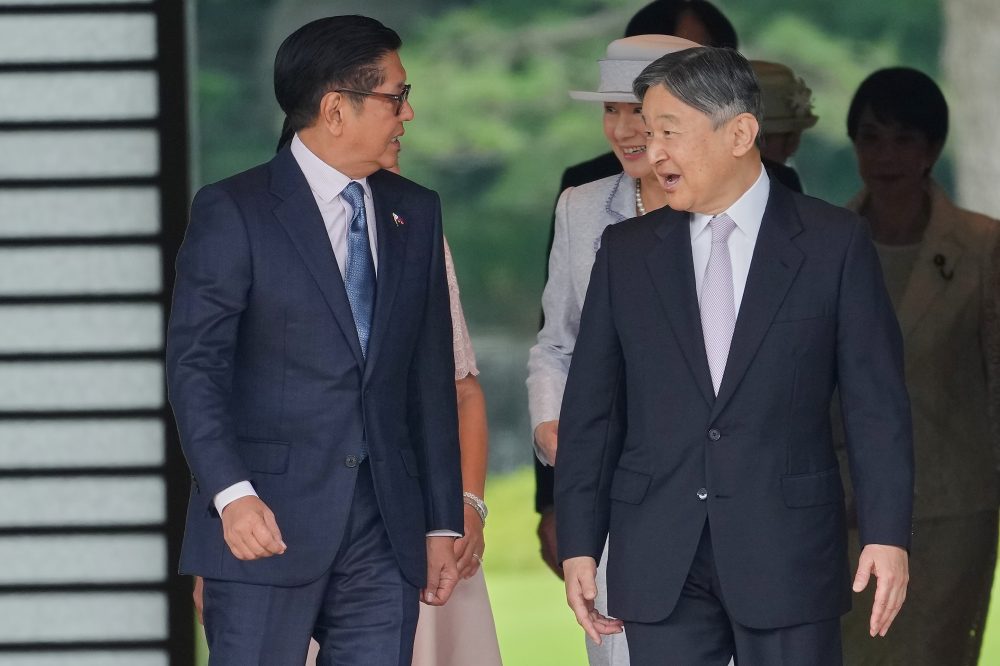
TOKYO (AP) — A four-day diplomatic mission to Japan by Philippine President Ferdinand Marcos Jr. is concluding Thursday with an extraordinary display of hospitality from his hosts.
The visit has featured a formal palace dinner, a distinguished national honor, and clear signals that Tokyo wants to strengthen relationships with a country it views as a crucial defense ally — and significant arms buyer — amid growing concerns about China’s military presence across Asia.
Marcos’ trip, which ends with his Friday departure, has included a formal reception by Emperor Naruhito, who presented him with the Grand Cordon of the Supreme Order of the Chrysanthemum.
Thursday’s agenda includes discussions between Marcos and Japanese Prime Minister Sanae Takaichi, with expectations that the meetings will produce announcements further enhancing defense and military equipment collaboration.
During remarks to Japanese lawmakers Wednesday, Marcos noted that the focus on elevating bilateral relations demonstrates an “exceptional level of trust” between the two countries.
Both governments are keeping China at the forefront of their thinking as they strengthen a military partnership that the United States anticipates will serve as a barrier against Beijing’s territorial goals in the East and South China Seas and its claims over Taiwan, the independently governed island that China considers its territory.
Marcos represents the first significant potential buyer of Japanese military equipment since Takaichi’s administration eliminated restrictions on exporting deadly weapons. This policy shift in April marked a departure from Japan’s post-World War II pacifist approach as the country accelerates its defense and arms manufacturing expansion.
The two countries have committed to pursuing discussions regarding the sale of several Abukuma-class destroyers and Japanese navy TC-90 training aircraft. Philippine Defense Minister Gilberto Teodoro Jr., who watched joint live-fire training exercises with his Japanese counterpart this month, has also shown interest in Type-88 surface-to-ship missiles.
According to Japanese officials, Marcos’ state visit also connects to the 70th anniversary of diplomatic relations between the nations and to the Philippines currently serving as the rotating chair of the Association of Southeast Asian Nations.
Marcos and Takaichi are also anticipated to establish formal discussions aimed at creating a military intelligence sharing agreement, which would allow better communication and strengthen three-way military cooperation with the U.S., their shared ally, according to Japanese officials.
Japan has delivered a package of five coastal surveillance radars to the Philippines through official security aid, and intelligence-sharing would improve reconnaissance collaboration.
Japan seeks to strengthen its relationship with the Philippines beyond Marcos’ term, which concludes in 2028, as Tokyo aims to prevent what it views as inconsistent China policies by some former Philippine administrations.
Marcos has adopted a firm position against China regarding territorial conflicts in the South China Sea. Under his leadership, the Philippines and Japan have quickly strengthened their security connections both bilaterally and in partnership with the U.S.
Japan and the Philippines established an agreement in 2024 permitting their military forces to easily visit each other’s territory for joint training exercises. This created opportunities for Japan to send 1,400 military personnel as regular participants in combined military training.
The nations signed an additional defense agreement this year that would permit the duty-free supply of ammunition, fuel, food and other essential items when their forces conduct joint training.
Throughout the state visit, Marcos and Takaichi are also scheduled to address energy cooperation and a Japan-led international funding initiative announced in April.
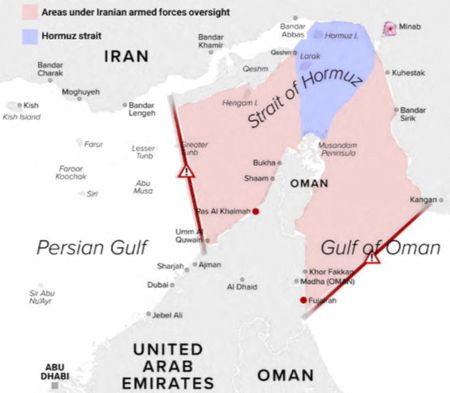
This initiative aims to assist Southeast Asian nations, including the Philippines, in maintaining stable oil reserves through financial support for building required infrastructure as they deal with consequences from the Iran conflict that has stopped oil shipments through the Strait of Hormuz.
COLUMBIA HEIGHTS, Minn. — A young student cautiously walked toward the therapy dog positioned near the school library, extending her hand to stroke the animal’s soft golden fur. Social worker Nicole Herje watched closely.
“How does it feel when you pet Sage?” Herje asked.
“I like it,” the child responded. “In Ecuador, I had a dog.”
Just months before, this student and numerous others at Valley View Elementary had been hiding indoors to escape immigration enforcement agents swarming their Minneapolis-area neighborhood. School attendance dropped dramatically as families chose to keep children home during the enforcement operation under the previous administration.
Sage the goldendoodle serves more than just comfort. The dog represents part of a comprehensive approach to heal the mental trauma experienced by children who saw arrests happen, lost family members to deportation, or spent frightening weeks confined to their homes. Four students from the school were actually detained themselves and transported hundreds of miles to a detention facility in Texas.
Before “Operation Metro Surge” concluded in February, immigration enforcement resulted in over 4,000 arrests and multiple shootings, including two deaths, creating psychological scars in young children that mental health experts warn could persist for years.
Columbia Heights Public Schools, similar to other districts, provided remote learning options for students who stayed home during the enforcement period, though virtual classes stopped after spring break. Now that many have returned to campus, educators are concentrating on helping them heal.
“What we know about trauma is that our bodies hold on to the fear,” Herje explained.
During February, the children connected to Zoom sessions from different areas of their houses: family rooms and bedrooms with closed curtains, underneath clothing racks in closets, on sofas with a Mexican flag displayed on the wall. Many kindergarten students struggled to remain seated. One child walked away to perform cartwheels.
Anxiety continued long after the thousands of immigration agents deployed by President Donald Trump to the Twin Cities area had departed. The situation worsened when one of their fellow students, preschooler Liam Conejo Ramos, was apprehended by Immigration and Customs Enforcement upon returning home from school, still carrying his Spiderman backpack and wearing a bright blue hat with bunny ears.
This explains why, during their virtual learning time, Herje conducted a special lesson about feelings with the kindergarten class. Students discussed what brought them joy and sadness, peace and anger. They expressed missing their friends and wanting to come back to school.
“When you’re happy, you laugh and jump and dance and play, and you want to share that feeling with everyone,” Herje said, reading from the children’s book “The Color Monster.” “Anyone want to raise your hand and tell us something that makes you feel happy?”
“When I’m happy, I want to go to school when I see my friends,” one student replied.
Herje then asked: What made them sad?
“When my grandma, she go (to) Ecuador,” another student answered.
Every child had experienced one of the most intense immigration enforcement campaigns in U.S. history. They witnessed masked agents driving through neighborhoods in SUVs, followed by protesters using loud whistles. They saw videos of crying and screaming immigrants being arrested, shared repeatedly on social media. Many times, parents were separated from their families.
Increasing research reveals how trauma affects children, including those too young to comprehend what’s happening. Extended exposure to high-stress situations can alter a baby’s brain development, according to Rebecca Parlakian, the senior director of programs at early childhood advocacy group Zero to Three.
“When a child is experiencing sustained and consistent traumatic experiences where they have lost the sense of basic safety, we see that the brain reorganizes itself for survival, which actually translates to structural anatomical changes in the brain,” Parlakian explained.
Trauma symptoms can differ significantly based on the individual child, their age, and what they witnessed or endured. Robyn Tabibi, a family physician in St. Paul who frequently works with expecting parents, described treating a 3-year-old who lost multiple family members to deportation and had to relocate with his mother to avoid being targeted.
“He gradually stopped eating, became listless, refused to play anymore,” Tabibi said. “He’s in this new space, and he is so traumatized.”
Even children from families without immigration worries developed anxiety disorders.
Sarah Anikpo was born in the U.S., and her Liberian-born husband became a citizen in 2020. So Anikpo, a psychiatric physician assistant, didn’t consider discussing the enforcement operation with their 9-year-old son Zeke, despite helicopters flying over their South Minneapolis area.
Then an ICE officer fatally shot Renee Good, a U.S. citizen who had recently dropped her son at his elementary school. Demonstrations began. Zeke’s school district cancelled classes for two days.
Following that incident, Zeke couldn’t sleep in his bedroom. He described a “grey man” appearing in his nightmares and became worried about flashing lights outside his window. A classmate became upset, asking Zeke to pray for her mother and grandmother, who had gone back to Mexico. This made him both angry and scared.
“We couldn’t talk him out of it,” Anikpo said. “He definitely didn’t feel safe.”
The anxiety affecting immigrant families — including those with legal status — may have lasting effects on an entire generation of American students, according to specialists. The Brookings Institute calculates 4.6 million U.S. citizen children live with a parent who lacks documentation or has temporary legal status, and over 200,000 have parents who were detained or deported during the previous administration.
“Children in mixed-status families often live with chronic anticipatory anxiety that a loved one could be detained or deported,” a group of psychiatrists wrote in a special report for Psychiatric News. “These fears have been shown to lead to school absenteeism, academic disengagement, and heightened emotional distress.”
Valley View staff have identified students requiring additional support, including two fifth-graders and a second-grader who, like Liam, had been held at Dilley Detention Center in Texas, where court documents indicate children lacked sufficient food and medical care. Herje conducted group therapy sessions with Sage the goldendoodle for these students.
Coming back to school is what many truly needed. Herje has observed happy reunions between young friends who hadn’t met in person for months.
Herje asked them previously what makes them feel loved. One student responded: “When I’m in love, I find my best friend.”
The organization that gained national attention for documenting anti-Asian incidents during the pandemic is now focusing its efforts on voter engagement through a new political initiative.
Stop AAPI Hate has established Stop AAPI Hate Action, a separate nonprofit designed to increase Asian American and Pacific Islander voter registration and turnout at polling stations. The creation of this political advocacy branch comes as a response to President Donald Trump’s actions and Republican legislative efforts to modify electoral districts and weaken portions of the Voting Rights Act.
The group revealed Thursday that this new venture will leverage Stop AAPI Hate’s established reputation for highlighting issues of racism, discrimination and community solidarity. This represents a significant expansion for the organization, which has engaged in policy development and advocacy activities for six years, according to co-founder Manjusha Kulkarni, who spoke exclusively with The Associated Press.
“Those pieces — alongside what we’re seeing from our community in terms of data — really motivated and inspired us to make this move,” Kulkarni said. “Because we see how our communities are being harmed and exactly what needs to be done to address the harm, and prevent it in the future.”
The new organization has been structured as a social welfare entity, allowing leadership to participate in political campaign activities within specific legal boundaries.
Research from an AAPI Data/AP-NORC poll indicates that most Asian Americans, Native Hawaiians and Pacific Islanders view President Donald Trump’s immigration and border security policies during his second term as more detrimental than beneficial.
The organization’s yearly assessment, published during AAPI Heritage Month in May, revealed that approximately half of AAPI adults reported that either they or someone in their personal circle experienced negative consequences from immigration policies or anti-immigrant sentiment in 2025. During the previous year, Trump enacted restrictions on H-1B visa recipients — many of whom originate from Asian nations — and imposed a $100,000 yearly charge for highly skilled international workers.
Additionally, Chinese citizens encounter numerous anti-China regulations across different states.
Navia Gutta, 28, was disturbed by an incident that occurred last summer at a Chipotle location in Atlanta, where a woman confronted her and a companion, labeling the two Indian Americans as “murderers” and “rapists.” The situation intensified when the woman threatened to contact U.S. Immigration and Customs Enforcement to send them “back” to India, which she described as a “dirty country.” Both individuals were born in the United States.
“Our hands were shaking and we full-on cried in the car,” Gutta said. “It made me realize that I grew up still very privileged, and I felt like I lived in a bubble up until then, because nothing like that had ever happened to me.”
She subsequently reported the incident to Stop AAPI Hate, and after extensive conversations with a staff member, was motivated to volunteer with the organization.
“It made me realize I would love to be a part of this solution,” Gutta said. “I would love to educate people. I would look at these issues and continue educating myself further because I think politics can be really scary.”
Stop AAPI Hate Action is preparing to actively participate in the November midterm elections. However, this doesn’t involve automatically endorsing all Democratic candidates, Kulkarni explained. The organization’s primary objective is backing candidates who align with fundamental principles regarding immigration policy and civil rights.
“It is really, at its core, about harnessing the pain felt at an individual level and turning it into a collective power,” Kulkarni said. “This really has been an existential threat to our community.”
The organization also seeks to avoid competing with or replicating existing AAPI-centered civic participation groups. Their strategy extends beyond traditionally blue states and battleground areas. A key objective involves converting red districts with substantial Asian American populations to blue. There are regions in Republican-controlled states “that deserve to be reached out to,” according to Andy Wong, Stop AAPI Hate Action managing director of advocacy.
“The ones in Iowa and Nebraska and Alaska and other places where there are competitive purple districts — many of them with GOP incumbents,” Wong said. “We are going to reach voters in those places,” by recruiting phone bank volunteers fluent in Korean, Vietnamese, Cantonese and Mandarin.
This outreach campaign begins in July, with plans to target individuals who typically vote only during major general elections. To establish connections, they intend to pair volunteers with voters sharing similar ethnic backgrounds.
This new political organization is designed for long-term impact rather than short-term results, according to Stop AAPI Hate personnel. The Asian American and Pacific Islander demographic represents one of the most rapidly expanding populations in the United States, creating opportunities for new voter recruitment with each election cycle.
However, political parties have ignored this reality and failed to invest in voter outreach and civic engagement efforts, Kulkarni noted. “We’ve really been an afterthought. We’re 24 million people.”
Stop AAPI Hate views the coming years as a chance not only to attract voters but also to strengthen AAPI influence as a unified voting constituency. Kulkarni references data suggesting that Latino, Black and Asian Americans who shifted rightward during the 2024 election are moving back toward the left.
“Where you see that especially is the South Asian or Indian American community specifically. You’ve seen that in some of the others, in the Japanese American community,” she said. “How do we harness that?”
The organization must establish infrastructure to maintain engagement beyond major election periods, Wong emphasized. They also aim to support Asian Americans and Pacific Islanders already active in their communities to develop leadership roles in their areas.
“They’re putting in the phone calls. They’re showing up at public hearings, delivering comments,” Wong said. “It’s about building long-term civic and political power.”
NEW YORK (AP) — That beloved pair of denim in your wardrobe likely journeyed across the globe, passing through cotton fields, dyeing facilities, washing plants and manufacturing sites before reaching your dresser. The fabric might be brand new but appears aged through stone washing, sanding, chemical bleaching or laser treatments to achieve that worn look.
These manufacturing steps demand substantial water, energy and chemical usage — contributing to why denim has emerged as a key focus for environmental initiatives throughout the fashion sector, which ranks among the globe’s largest greenhouse gas contributors.
Companies are addressing increased consumer awareness by promoting their denim as “sustainable,” highlighting regenerative cotton sources, recycled materials and water-conserving production methods. However, determining the accuracy of these claims proves much more complex. Sustainability lacks a clear definition and universal measurement standards.
Last week, Chinese fast-fashion giant Shein acquired Everlane, a brand known for transparency and sustainability efforts, highlighting broader tensions over scale and affordability. Enhanced sustainable methods typically increase costs, creating challenges for businesses operating with rapid production schedules and budget pricing to implement these practices broadly. Shoppers must navigate complex considerations involving agricultural methods, chemical treatments, worker conditions and varying price points.
Industry professionals recommend consumers research actual jean manufacturing processes to identify truly sustainable options.
Cotton serves as the primary material for most denim, and this crop often demands substantial water, fertilizer and pesticide applications.
Beth Jensen, chief impact officer at the nonprofit Textile Exchange, noted that numerous companies still cannot fully trace their cotton origins. Since denim manufacturing frequently involves multiple nations and suppliers, monitoring workplace conditions also becomes challenging.
“We as an industry, collectively, have a long way to go on this,” she said.
With growing concerns about fashion’s environmental effects, certain companies have explored alternatives like regenerative cotton, emphasizing soil wellness, ecosystem diversity and reduced synthetic chemical usage. However, as Jensen explained, methods that work on California farms may not suit locations like India or Australia due to climate differences.
Following cotton harvest, the material becomes yarn and receives dyeing — usually with indigo, requiring considerable water consumption and chemical processing. The dyed cotton then becomes denim fabric before being cut and assembled into jeans.
Finished jeans typically undergo additional treatments creating various colors, fading effects and distressed appearances. Bill Curtin, owner of New Jersey-based BPD Washhouse, explained that denim finishing divides into “wet” and “dry” methods.
Wet processing involves washing denim with water, chemicals and treatments that lighten or alter the fabric color. Traditional methods used pumice stones for achieving weathered, stonewashed appearances — with stones frequently imported from Mexico, increasing transportation emissions and expenses. Many operations now use enzyme-based substitutes and ozone systems requiring less water.
Dry processing creates wear patterns, whisker marks and torn details through manual work or laser systems, which Curtin described as more efficient and requiring less manual labor.
Stretch denim often includes materials like polyester or elastane — petroleum-based synthetic fibers that may release microplastics during use.
Fashion designer Maria McManus spent years considering adding denim to her environmentally conscious collection but couldn’t find production methods matching her principles. The obstacle, she explained, remained the washing procedures.
“From a water and chemical perspective, it’s very invasive,” she said.
Instead, she obtained dark, untreated denim from Japan — indigo-dyed with minimal processing — and eliminated washing entirely, avoiding the faded and weathered appearance characterizing most commercial jeans. This represented an intentional limitation maintained for years.
Progress occurred through her partnership with Agolde, a prominent denim company. Together with its parent organization Citizens of Humanity, the brand has earned fashion industry recognition for emphasizing regenerative cotton cultivation.
The collaboration provided McManus access to resources her smaller company couldn’t develop independently — a consulting firm connecting her with regenerative cotton producers, an approved indigo-dyeing method using biochemical instead of petrochemical dyes, and thorough supply chain verification.
Even this approach, she noted, involves complications. Organic and regenerative cotton harvests may fail. Supply networks prove difficult to confirm. “You know when they tell you their harvest failed” that they’re honest, she said of one supplier. “I know I can trust them because really, what they should have done as business people or capitalists was just get regular cotton — because nobody is testing this stuff.”
These methods often result in higher costs. McManus’ jeans retail for nearly $700 — reflecting limited production quantities, she explained. “It’s truly a units game.”
Industry professionals advise consumers to question unclear environmental claims and seek companies providing comprehensive details about their sourcing and production methods.
Dana Davis, a strategic fashion adviser who led sustainability efforts for the label Mara Hoffman, urged shoppers to examine beyond individual product descriptions and investigate whether companies address worker rights, materials and production locations throughout their operations — not merely in specialty collections.
“If a brand really explains the whys behind why they’re doing these things, then you can get a sense of, ‘OK, this feels authentic,’” Davis said. However, she noted that “greenwashing” — exaggerating environmental benefits — complicates consumers’ ability to identify genuine efforts.
Third-party certifications offer guidance, though Davis warned no single designation ensures sustainability. B Corp certification deserves consideration, as it assesses companies’ social and environmental performance. Certain plant-based fibers like lyocell, frequently mixed into denim, may originate from Forest Stewardship Council (FSC) approved sources, showing the wood pulp came from responsibly managed forests.
One of the most effective methods for reducing denim’s environmental impact remains the least exciting: purchasing fewer jeans, wearing them longer, washing them less frequently and buying secondhand.
A life cycle study by Levi Strauss & Co. found that if 34.2 million people — representing 1 in 10 Americans — purchased secondhand jeans this year instead of new pairs, it would prevent approximately 1.5 billion pounds (roughly 0.7 million metric tons) of carbon dioxide, matching emissions from about 150,000 gasoline vehicles.
“The most sustainable thing you can do,” Jensen said, “is use a product that’s already been made.”
Fresh data from the U.S. Centers for Disease Control and Prevention reveals that roughly 8% of Americans went without health insurance coverage during 2025, maintaining similar levels from the previous year.
The survey findings, made public Thursday, indicate the nationwide uninsured rate continues to remain well below levels seen in past years, though experts warn that upcoming policy shifts under the current administration may cause those numbers to climb.
Major revisions to Medicaid — the federal safety-net program serving Americans with lower incomes — that became law in the previous year may leave an additional 10 million people without coverage over the next ten years, based on projections from the Congressional Budget Office.
Additionally, the end of specific Affordable Care Act subsidies this year — which previously helped reduce premium expenses — is also leading to decreased enrollment in marketplace insurance options. The healthcare research organization KFF projects approximately 5 million fewer Americans will sign up for these plans in 2026 when compared to 2025 enrollment figures.
Federal agencies use various methods to monitor insurance coverage among Americans, which can produce different results based on timing and how questions are asked. According to David Howard, a health policy and management professor at Emory University, many experts view the U.S. Census Bureau as “the official scorekeeper.”
However, the CDC survey data aligns closely with census findings and provides the first comprehensive information covering all of 2025 — marking the initial year of President Donald Trump’s return to office.
The current administration has worked to broaden availability of lower-cost catastrophic health plans and reduce medication costs for uninsured Americans. Officials have also indicated that anticipated drops in insurance enrollment reflect the removal of fraudulent and ineligible participants rather than qualified citizens.
While the percentage of insured versus uninsured Americans remained essentially unchanged in 2025 compared to the prior year, the total number of uninsured individuals increased by roughly 800,000 — including 300,000 children. This growth reflects the expanding U.S. population overall.
The survey data also points to a potential increase in insurance coverage among Hispanic Americans. However, Howard noted this might partially result from the administration’s immigration enforcement efforts, if uninsured individuals within this demographic departed the country.
The majority of Americans aged 65 and above receive health coverage through the federal Medicare system. Younger Americans face a different situation, with many relying on various combinations of government and private insurance programs.
Uninsured rates among Americans under 65 climbed during the 1980s, 1990s, and early 2000s — jumping from 12% in 1980 to over 18% by 2010. These numbers declined after the Affordable Care Act passed in 2010, which broadened Medicaid eligibility and created new pathways for affordable health coverage.
By 2016, the rate had dropped to nearly 10%, then increased to 11-12% during the first administration under President Trump, according to historical data from the CDC’s National Center for Health Statistics.
The COVID-19 pandemic brought another decline in uninsured rates, as government measures helped maintain coverage during pandemic-related disruptions. The rate reached a historic low in 2023, falling beneath 9%.
Australian health officials announced Thursday they are adding more time to the isolation period for six cruise ship passengers who returned home following a hantavirus outbreak aboard their vessel.
The group, which includes four Australian citizens, one permanent resident, and one New Zealand resident, has been staying at an isolation facility near Perth in Western Australia since their return on May 15.
Originally scheduled to complete their quarantine on June 5, the passengers will now remain in isolation until June 23 – bringing their total quarantine time to 42 days. The decision came after recommendations from health authorities.
Health Minister Mark Butler confirmed the passengers have been notified of the government’s decision to extend their stay.
“The passengers have been informed about the advice and the decision of government. I’m happy to say they remain well,” Butler said.
The travelers were aboard a Dutch-flagged luxury cruise vessel when the hantavirus outbreak occurred, prompting their repatriation and subsequent quarantine measures.
Federal Reserve Vice Chair Philip Jefferson declared Thursday that bringing inflation back to the central bank’s 2% goal should be the primary priority, citing the strength and durability of America’s employment sector during current economic challenges.
Speaking during a question-and-answer session following his presentation at a Tokyo conference organized by the BOJ and its research institute, Jefferson outlined his policy approach.
“When I’m thinking about my policy decision meeting by meeting, I’m absolutely focused on price stability, but by mandate I also need to keep in mind what’s happening in the labour market,” Jefferson explained.
“The U.S. labour market has been very resilient to the current shock. Given that resiliency, it seems appropriate that the focus will be on returning inflation to 2%,” he stated.
These remarks represent Jefferson’s initial public statements following Kevin Warsh’s installation as the Fed’s new chair last Friday.
Jefferson acknowledged the complexity of predicting future interest rate decisions, noting the unpredictable nature of current economic disruptions.
“What all segments of society are noticing is increasing energy and gasoline prices in particular. We are sensitive to how that’s impacting the lives of everyday people,” he commented.
The Fed official highlighted a unique economic situation where artificial intelligence investments are driving growth even as energy-related disruptions create obstacles.
“The energy shock is a headwind for growth, but we are still having growth during this episode,” Jefferson observed. “In terms of monetary policy communication, the emphasis has been on monitoring the second-round effect associated with supply shocks and a surge in investment demand.”
In his formal conference presentation, Jefferson indicated that current monetary policy settings are appropriate given continued inflation risks.
Regarding the upcoming Federal Open Market Committee gathering scheduled for June 16-17, Jefferson remained noncommittal about future actions.
“I have not prejudged the next meeting and look forward to engaging with my colleagues about the policy necessary to best achieve our dual-mandate goals,” he said.
Ukrainian President Volodymyr Zelenskiy has introduced legislation to his country’s parliament seeking approval for a major loan agreement with the European Union, according to parliamentary documents released Thursday.
The proposed legislation outlines a framework that would enable Ukraine to secure 90 billion euros in total funding, which equals approximately $104 billion based on current exchange rates, according to supporting documentation accompanying the draft.
The draft legislation now awaits parliamentary consideration for ratification of the loan agreement with the EU.
Iran’s Revolutionary Guards announced Thursday they launched a strike against an American military installation at 4:50 a.m. local time, according to reports from Tasnim news agency. The Iranian forces described their action as retaliation for what they characterized as an earlier morning American attack near the airport in Bandar Abbas.
Iranian officials did not reveal the location of the American base they claim to have targeted.
The Revolutionary Guards issued a warning that future incidents they consider acts of aggression would prompt a “more decisive” response. They placed blame for any resulting consequences on what they termed the “aggressor.”
SAN DIEGO (AP) — Philadelphia pitcher Cristopher Sánchez celebrated with emphatic fist pumps after making baseball history Wednesday, capping off a remarkable month of May where he didn’t surrender a single run while shattering a franchise record that had stood for more than a century.
The left-handed hurler stretched his scoreless streak to 44 2/3 innings during Wednesday’s contest, surpassing Hall of Famer Grover Cleveland Alexander’s previous team record in Philadelphia’s 3-0 victory over the San Diego Padres, completing a sweep of the three-game series.
The historic achievement required four complete innings to eclipse Alexander’s mark of 41 consecutive scoreless innings from 1911. Sánchez continued his dominant performance for three additional shutout frames before exiting after 100 pitches. His line included six hits allowed, nine strikeouts, and zero walks.
His outstanding performance concluded with Philadelphia holding a 2-0 advantage, as he celebrated enthusiastically following a strikeout of pinch-hitter Ty France to close the seventh inning.
“I just went out to compete and give the best of myself,” he said through an interpreter.
Despite feeling his command wasn’t at its peak, Sánchez overwhelmed a San Diego offense that failed to deliver with runners in scoring position throughout the series, going 0 for 20 in such situations while leaving 19 baserunners stranded and recording 32 strikeouts.
Interim manager Don Mattingly noted the team recognized the achievement following the game, with Sánchez speaking to his teammates about the accomplishment.
“I just told them it was something special for me,” Sánchez said. “First I thanked God and then I thanked all my teammates and everyone around me for their support. It’s really special to have their support, in the good times and through the rough times as well. That’s something I admire with this group.
“This is a game that it’s not only about me or about what I do on the mound, it’s about our group and I think it’s really something special and beautiful to feel the support of the team as a whole,” he added.
A tense moment occurred in the fourth inning with Sánchez one frame away from the record, as Manny Machado launched a fly ball toward left field that Edmundo Sosa secured near the warning track. The pitcher then struck out Xander Bogaerts, allowed a double to left by Ramon Laureano, and induced Jackson Merrill to ground out to second base, officially establishing the new record.
Machado had connected for a home run during Tuesday evening’s 4-3 Philadelphia victory.
San Diego left runners in scoring position during both the opening and second innings, while Gavin Sheets hit a fly ball that landed just short of the warning track in right field to end the third.
“There were a couple of hits that I thought were gone off the bat, but thank God they didn’t,” he said.
Center fielder Justin Crawford made an impressive running grab on Machado’s fly ball with one out in the sixth inning, preventing an extra-base hit before colliding with the padded outfield wall.
Sánchez’s remarkable run began during the second inning of the opening game of a doubleheader versus San Francisco on April 30.
He established another franchise milestone by recording at least seven scoreless innings for his fifth consecutive start, joining just five other pitchers in major league history to accomplish this feat.
The streak also represents the longest single-season scoreless innings stretch by a left-handed pitcher in the Expansion Era, surpassing former Los Angeles Dodgers star Clayton Kershaw’s 41-inning run from 2014.
“You just don’t expect him to give up any runs,” said Mattingly, who managed Kershaw with the Dodgers in 2014. “I thought he was a little rough early. I don’t know if this thing’s on his mind at all, you know, he knew he had to get through four. He seemed to settle down a little more after that.
“He’s been amazing from the standpoint of, it just seems like every time out, no matter what team or who it is, he just kind of keeps going.”
KANSAS CITY, Mo. — Yankees pitcher Gerrit Cole was eager to emphasize Wednesday evening that his second consecutive outstanding performance since returning from Tommy John surgery represented just that: his second outing back.
“Small sample size,” the former Cy Young winner stated.
However, what an impressive sample it has been.
Following his first major league appearance since Game 5 of the 2024 World Series against the Dodgers, where he surrendered two hits across six shutout innings versus Tampa Bay, the 35-year-old Cole delivered an even more impressive showing against the struggling Kansas City squad. He gave up four hits while recording 10 strikeouts and zero walks, leading the Yankees to a 7-0 triumph — extending their winning streak against the Royals to 14 games.
“I feel like maybe the first game was the appetizer,” Yankees manager Aaron Boone commented, “and that was the main course right there. That was surgical. You saw everything, like, good fastball, both breaking balls going, mixed in the cutter a little bit, made some really good change-ups along the way. There was good defensive plays behind him early and then he kind of cruised.”
Cole (1-0) required just 79 pitches to complete 6 2/3 innings, and likely could have pitched deeper into the contest against Kansas City. However, at this stage of what the Yankees anticipate will be an extended season, there was no justification for taxing Cole’s previously injured right elbow.
Kansas City’s best scoring opportunity against him occurred in the third inning, when Michael Massey connected for a one-out double. Cole recovered to strike out Isaac Collins, bringing Maikel Garcia to bat. Garcia lined a single toward right field, where Aaron Judge handled a difficult bounce cleanly before delivering an accurate throw that retired Massey at home plate to end the inning.
Cole also left Garcia stranded at second base following a two-out double in the sixth inning. Salvador Perez managed a single against him in the seventh.
That represented the extent of Kansas City’s baserunners against him.
“I think it just reminds you of who he is, and how great a consistent pitcher he is,” Boone remarked. “And to see him go through the process the last several months to get back to this, and go out there and execute like he is here to start, it’s fun to watch.”
Cole demonstrated remarkable efficiency, particularly with his 96 mph fastball. He delivered first-pitch strikes to 16 of the 23 batters he encountered, with only a couple of hitters managing to work the count to three balls against him throughout the entire evening.
“I expect to execute pitches. I don’t necessarily expect to not give up any runs, especially on 75 percent strikes. You’re putting a lot of pressure on guys,” Cole explained. “So you have to play good defense, which is what we did tonight.”
Cole faced pressure to perform effectively because the Yankees never provided him with substantial run support. They managed two runs through a single by Paul Goldschmidt, a triple by Ben Rice and Judge’s sacrifice fly, while their remaining offense materialized after Cole’s departure.
The offensive output wasn’t nearly as explosive as the Yankees’ remarkable 15-1 victory Tuesday evening, during which they launched six home runs and collected 24 hits — achieving a franchise first where every New York starter recorded at least two hits.
However, with Cole commanding the mound, they required only a small portion of that offensive production Wednesday evening.
“It’s two games. Small sample size,” Cole noted. “We still have stuff to improve, and just have to keep the same mindset that we have right now, and that’s to take it one outing at a time.”
HOUSTON (AP) — Democratic candidate James Talarico kicked off his general election bid for the U.S. Senate on Wednesday by characterizing his Republican challenger, state Attorney General Ken Paxton, as a member of a dishonest political system that prioritizes personal gain over public service.
The Democrat has provided his party with their strongest opportunity in recent years to capture a Senate seat in Texas and has improved their challenging prospects of regaining control of the U.S. Senate this November. Talarico, a former educator and state representative from Austin, outlined his campaign approach for the coming months: highlighting Paxton’s ethical controversies to frustrated voters.
“Ken Paxton is the most corrupt politician in America,” Talarico addressed approximately 1,000 supporters gathered at a downtown Houston dance club. “He has failed the character test. He has put his own interests above the laws of Texas. Those are not my words, those are the words of Ken Paxton’s fellow Republicans.”
The candidate also connected what he described as the “rot” within the country’s political framework to daily challenges facing ordinary citizens, emphasizing concerns about increasing expenses that have become central to Democratic messaging for this year’s midterm elections.
“In America, we have an affordability crisis because we have a corruption crisis,” Talarico declared to the audience.
This represented a dramatic shift from the more optimistic, faith-based messaging of Talarico’s Democratic primary race. He is now embracing the same criticisms of Paxton that Republican Senate leadership worried would make the attorney general a less viable candidate than Sen. John Cornyn, whom Paxton defeated in Tuesday’s Republican runoff.
The varied Houston crowd carried signs displaying “Talarico,” featuring a new element. The reverse side showcased the campaign’s updated slogan: “THE PEOPLE vs. KEN PAXTON.”
Designed like legal proceedings targeting the state’s top law enforcement official, this theme debuted on the three-year anniversary of Paxton’s impeachment on charges that he misused his position to assist a wealthy political contributor.
Paxton received acquittals on all 20 impeachment charges, which has strengthened his confidence and energized his base. Many supporters have consistently maintained that both he and President Donald Trump, who backed him, have been subjected to political targeting.
However, the messaging appeared to connect with attendees at Talarico’s event.
Monique Green, a retired Houston elementary school educator, explained that the most significant aspect of “The People vs. Ken Paxton” sign she held while waiting to meet Talarico were the opening two words.
“It’s a declaration that it’s about us,” she explained. “We are the ones, all of us, what we can definitely do together. And he inspires us to act. He doesn’t just talk — he believes.”
Campaign officials reported that Talarico collected $600,000 in small online contributions within two hours of Paxton’s Republican runoff victory Tuesday, marking the most profitable two-hour period for his campaign since announcing his candidacy in September 2025.
Among the initial speakers at the gathering was Democratic state representative Ann Johnson, who jointly led Paxton’s impeachment proceedings with a Republican colleague.
Talarico stressed that the corruption-related impeachment was initiated by the Republican-controlled Texas legislature, Paxton’s own political party. Following his rally, he explained his focus on Paxton’s history because “he has escaped accountability for years.”
Paxton’s campaign did not respond immediately to requests for comment. However, after Talarico concluded his remarks, Paxton shared a link to his campaign donation website on social platform X with a personal criticism of his rival: “James Talarico and his big vegan allies have raised a fortune trying to stop the America First agenda. I need your help!” he posted.
This mirrored Paxton’s statement following his Tuesday runoff win, and Talarico had prepared a comeback for his Houston supporters: “I’ve been eating barbecue since before Ken Paxton’s first indictment,” he responded.
The dietary criticism represents Paxton’s effort to identify perceived vulnerabilities in Talarico’s campaign for potential exploitation. Using tactics similar to Trump, Paxton has also been experimenting with derogatory nicknames for his challenger.
These included “TalaFreako,” which Talarico converted into a campaign advantage Wednesday evening. He informed supporters they could visit his campaign website to purchase T-shirts featuring the new moniker.
During a CBS News interview before Wednesday’s rally, Talarico addressed questions about his views on gender, clarifying that he believes “God cannot be defined by human categories” and acknowledged “two sexes, men and women.”
“I also know there’s a very small percentage of people who have these chromosomal abnormalities, and I believe that they deserve to be treated with dignity and respect,” he stated.
A veteran Indigenous leader in Brazil is stepping up to continue his uncle’s decades-long battle to protect the Amazon rainforest and Indigenous rights.
Chief Megaron Txucarramae, 75, has dedicated his life to defending the Kayapo people’s interests, working to establish boundaries for their Amazon territory and fighting against unauthorized mining operations and dam construction projects.
The leader now faces his biggest responsibility yet: carrying on the work of his uncle and teacher, Chief Raoni Metuktire, a 94-year-old Indigenous activist recognized around the world for his environmental advocacy.
Chief Raoni recently spent a week receiving intensive medical treatment for pneumonia before returning to his community. His health struggles have occurred multiple times in recent years. For many years, Chief Raoni has been an international symbol of Indigenous activism, meeting with world leaders, religious figures, and celebrities like musician Sting during 1980s campaigns to save the rainforest. Both chiefs guide Kayapo settlements along the Xingu River, where the Amazon rainforest borders Brazil’s expansive grasslands.
The Kayapo people first encountered non-Indigenous Brazilians during the 1950s, when Chief Megaron was just a child.
Soon afterward, he started collaborating with Chief Raoni and now declares his readiness to take up the cause.
“I have followed it closely,” he said. “And I will continue it, continue his struggle.” He made these comments to Reuters while in Pykany village during a Greenpeace-organized expedition to investigate unauthorized mining activities on Kayapo territory.
Megaron’s mission comes during a critical period for the Amazon. Almost 20 percent of the rainforest has disappeared due to agricultural development, cattle ranching, and mining operations, while climate change has brought more severe dry periods and forest fires.
“The best thing is to preserve the Amazon, to preserve what is ours, what belongs to everyone,” he said. “It helps people breathe better, it holds back the winds, it keeps the heat from becoming too intense.”
His goals include continuing advocacy for the Kayapo and other Indigenous communities, building international understanding of the forest’s significance, and working toward greater Indigenous participation in Brazil’s government.
Brazilian lawmakers have enacted multiple measures in recent years that restrict Indigenous rights, including legislation that reduces land protections for certain Indigenous communities.
Chief Megaron expressed particular concern about the possibility of an anti-Indigenous candidate winning the October general elections.
Chief Raoni had backed President Luiz Inacio Lula da Silva during his 2023 swearing-in ceremony, following the tenure of former president Jair Bolsonaro, who had promised to stop creating new Indigenous reserves. Senator Flavio Bolsonaro, the ex-president’s son, is challenging Lula in the upcoming election.
“They can’t kill us with weapons, but they want to pass laws to exploit [our land], to destroy our culture, to put an end to our customs,” he said. “The more Indigenous people there are in Congress, the better for us.”
During the 2022 elections, seven Indigenous candidates won seats among the 594 total Congressional positions.
He also aims to support his uncle’s efforts to prevent young Indigenous people from abandoning their forest homeland and traditional ways of life.
“You can learn, you can reach university, but you must not stop being Indigenous,” he said. “That is his struggle.”
Kuwait’s military announced Thursday that defense systems were actively countering incoming missile and drone threats targeting the country.
Military officials explained that any explosion sounds heard by residents were from their air defense systems successfully neutralizing the attacks. The army did not identify where the hostile fire was originating from.
The head coach at Ole Miss is raising questions about fairness in NCAA enforcement after his program came under investigation for tampering violations involving linebacker Luke Ferrelli’s recruitment, while he believes other schools deserve similar scrutiny.
During the Southeastern Conference meetings in Miramar Beach, Florida on Wednesday, Pete Golding addressed the tampering allegations and suggested inconsistent enforcement by investigators.
When discussing the Ferrelli situation, Golding referenced how the linebacker served as a replacement for another player who left through the transfer portal under questionable circumstances. He appeared to reference former starting linebacker TJ Dottery, a three-year starter who transferred to LSU on the portal’s final day.
“The kid we’re talking about with tampering was on an official visit that weekend,” Golding stated regarding Ferrelli, before shifting focus to Dottery. “We’re not comparing that to a guy that was a three-year starter somewhere, that wasn’t in the portal that’s at a new school now? What are we doing?”
Golding continued his criticism, saying: “There’s an enforcement on this that just took an OV, but there’s not an enforcement of this, that he just ruined his brand over three years, who’s been tampered with his entire time?”
The tampering allegations emerged after Clemson’s head coach Dabo Swinney held a January press conference accusing Ole Miss of improper contact with Ferrelli. The linebacker had initially committed to transfer from Cal to Clemson and had already arrived on campus before switching to Ole Miss.
Dottery, who started for Ole Miss the previous two seasons, became the fourth player to follow former coach Lane Kiffin to LSU after Kiffin was hired away during Ole Miss’s 2025 playoff campaign.
Golding, who assumed control when Kiffin departed, extended his criticism to coaching tampering as well, referencing congressional efforts to address the issue through legislation dubbed the “Lane Kiffin Rule” designed to restrict coaching movement during seasons.
“My thing when they talk about tampering, you don’t think the coaches get tampered with?” Golding asked. “You don’t think ADs meet with head coaches? I mean we’re talking about this new Kiffin rule and this s—, who do you think’s meeting with these guys and offering them the job before?”
“So, I’m not getting into all of that, but holy cow,” he concluded.
The two programs will face each other when Ole Miss hosts LSU in Oxford, Mississippi on September 19.
Australia’s government announced Thursday it has filed a massive lawsuit against chemical manufacturer 3M, demanding more than $1.43 billion in compensation for contamination linked to firefighting foam containing dangerous PFAS chemicals.
The legal case represents the largest lawsuit ever initiated by Australia and targets both the Minnesota-based company and its Australian subsidiary for environmental, economic and cultural damages caused by the contamination, officials said.
“Make no mistake, this legal action against 3M is significant,” Attorney-General Michelle Rowland told reporters.
“The Commonwealth is seeking more than A$2 billion in damages to recover significant past and future expenses incurred in investigating and managing contamination resulting from the historical storage and use of this foam,” Rowland stated.
Australian officials claim 3M provided assurances that the firefighting foam was safe for disposal, would break down naturally, and posed no toxicity risks when the government utilized it at 28 military installations nationwide.
However, Rowland accused 3M of concealing its own research that demonstrated “significant adverse environmental effects” from the product’s use.
In response, 3M indicated it plans to contest the allegations in court proceedings.
“3M has never manufactured PFAS in Australia and ceased sales of the products at issue in Australia around two decades ago,” the company stated.
“Despite this, the Department of Defence continued to use PFAS-containing firefighting foams for nearly two decades longer,” 3M added.
PFAS represents a category of synthetic chemicals commonly found in products designed to resist heat, stains, grease and water.
These substances, dubbed “forever chemicals,” persist indefinitely in the environment without natural decomposition, creating concerns about their buildup in ecosystems, water supplies and human bodies.
Scientific studies have connected PFAS exposure to various health problems including liver damage, reduced birth weight and testicular cancer.
Assistant Defence Minister Peter Khalil revealed the department has invested $1.3 billion addressing contamination consequences, including $408 million in legal settlements with impacted communities.
The cleanup efforts have involved treating or removing over 200,000 metric tons of contaminated soil and processing more than 13 billion liters of water.
“This is the most significant legal action undertaken by Commonwealth and Defence in living memory,” Khalil said.
“To put it plainly, we are taking on 3M on behalf of the Australian people and the Australians that are affected,” he added.
3M has confronted thousands of PFAS-related lawsuits. The company reached a $10.3 billion settlement in 2023 with numerous U.S. public water systems to resolve water pollution claims.
A major South Korean technology company announced Wednesday that wage negotiations with its workers’ union have collapsed despite government intervention to help broker a deal.
Kakao Corp revealed that second-round discussions mediated by government officials failed to produce an agreement on employee compensation. The company stated it remains committed to continuing efforts to find common ground with union representatives.
Following the unsuccessful talks, a union representative confirmed to Reuters via text message that workers will proceed with their planned strike action in June.
Workers at Kakao Corp and four related companies, including headquarters operations, Kakao Pay Corp and Kakao Enterprise, had previously approved strike authorization through a formal vote.
The union has not disclosed exactly how many members from the main company and its four affiliates will join the work stoppage. However, approximately 700 union members gathered at a demonstration on May 20, according to a union leader.
In a statement released earlier this month, the union criticized management for providing “excessive bonuses” exclusively to executives while the company achieved record-breaking revenue and profits in recent years.
Union representatives also accused the company of failing to address concerns about overtime policies and showing a lack of genuine commitment during bargaining sessions.
Kakao Corp responded in its own statement, asserting that it had engaged in good-faith negotiations with the union regarding the 2026 wage agreement but could not come to terms on how to structure employee compensation.
Major League Baseball players are pushing for significantly higher minimum wages and broader free agency rights as labor negotiations intensify ahead of a potential work stoppage.
The players’ union submitted their demands on Wednesday, seeking to nearly double the current minimum salary while expanding both free agency opportunities and salary arbitration access. The proposal also calls for increased revenue sharing between teams, with a guarantee that smaller-market clubs would receive at least $240 million each year.
These demands arrived just one day before league officials are expected to counter with a salary cap proposal. The existing labor agreement ends on December 1, with many expecting a lockout to follow. League management has rejected the union’s requests, claiming they would create worse competitive balance problems across the sport.
Meanwhile, congressional leaders are attempting to resolve ongoing issues in college athletics through new bipartisan legislation. Republican Senator Ted Cruz and Democratic Senator Maria Cantwell have developed a bill aimed at breaking through legislative gridlock that has stalled efforts to regulate student-athlete compensation.
Their proposed legislation would limit college athletes to one penalty-free transfer during their careers while establishing what they call a “Lane Kiffin Rule” to restrict coaching changes during active seasons. The senators shared details of their proposal with reporters, expressing hope it could secure the 60 votes needed for Senate passage after more than a year of congressional inaction on the issue.
In professional football news, Green Bay Packers running back Josh Jacobs has been released from custody while prosecutors continue reviewing domestic abuse allegations. Brown County District Attorney David Lasee announced Wednesday that more time is needed before making any formal charging decisions.
Jacobs was taken into custody Tuesday on allegations including strangulation and other offenses stemming from a weekend incident. His legal team expressed satisfaction with his release from jail while the investigation continues.
Soccer’s governing body FIFA faces new scrutiny over World Cup ticket pricing and sales practices that fans claim resulted in unfair deals. New York and New Jersey attorneys general announced Tuesday they are examining whether FIFA’s ticketing methods violated consumer protection regulations.
The investigation includes subpoenas demanding information about FIFA’s “variable pricing” system that caused ticket costs to skyrocket for most matches, along with stadium seating chart changes that allegedly moved fans’ seats away from the field. FIFA has not responded to requests for comment on the investigation.
President Donald Trump announced plans to attend NBA Finals games at Madison Square Garden next month after receiving an invitation from New York Knicks owner James Dolan. Trump said he would join Dolan when the Knicks face either the San Antonio Spurs or Oklahoma City Thunder in the championship series.
The Knicks advanced to their first finals appearance since 1999 after completing a sweep of Cleveland in the Eastern Conference finals. Trump, who grew up in New York, praised the team’s performance and called their championship return after decades of struggles “great to see.”
Kansas City Chiefs tight end Travis Kelce has expanded his portfolio by purchasing a minority stake in the Cleveland Guardians baseball franchise. The team announced the investment Wednesday before their game against the Washington Nationals.
Kelce, who has won three Super Bowl titles and earned four All-Pro selections while being engaged to music star Taylor Swift, bought a small portion of David Blitzer’s 35% ownership share. The Cleveland Heights native joins the ownership group as Blitzer prepares to potentially become the controlling owner after the 2027 season.
At the French Open in Paris, Novak Djokovic advanced to the third round despite being challenged by 74th-ranked Valentin Royer in a four-set match lasting over three and a half hours. Djokovic ultimately prevailed 6-3, 6-2, 6-7 (7), 6-3 as temperatures climbed above 90 degrees Fahrenheit for the fourth consecutive day.
This year’s Australian Open champion Elena Rybakina suffered an upset loss to Ukrainian player Yuliia Starodubtseva 3-6, 6-1, 7-6 (4). Ukrainian players had a strong showing overall, with Elina Svitolina and Marta Kostyuk both advancing after recent victories at the Madrid Open and Italian Open. Four-time French Open winner Iga Swiatek improved her Roland Garros career record to 42-3 by defeating 35th-ranked Sara Bejlek 6-2, 6-3.
New York Yankees slugger Giancarlo Stanton has reached an important milestone in his injury recovery by beginning outdoor running exercises. Manager Aaron Boone reported Wednesday that recent medical imaging of Stanton’s right calf injury has left the team optimistic about his progress.
Stanton has been sidelined since April 24 after experiencing stiffness while running bases during a game against Houston. Boone said the timeline for Stanton’s return remains uncertain despite the encouraging signs. Before his injury, Stanton was performing well with a .256 batting average, three home runs, and 14 RBIs through 24 games. Fellow Yankees prospect Jasson Dominguez is also preparing to increase his baseball activities this week as he recovers from a shoulder injury.
The Vegas Golden Knights have reached the Stanley Cup Final under coach John Tortorella, who was hired in March after the team dismissed Bruce Cassidy following a stretch where they lost six of seven games. Under Tortorella’s leadership, Vegas finished the regular season 7-0-1 and has compiled a 12-4 playoff record, including a sweep of Presidents’ Trophy winner Colorado.
If Tortorella guides Vegas to a championship, he would become just the eighth coach to win the Stanley Cup after taking over mid-season. This rare achievement has occurred five times since 2000, and a sixth occurrence would equal the combined total of such accomplishments across the NFL, NBA, and MLB throughout their histories.
The U.S. women’s national soccer team has reunited the “Triple Espresso” trio of Trinity Rodman, Mallory Swanson, and Sophia Wilson for upcoming training camp. All three players have been selected for the roster ahead of two June matches against Brazil’s national team.
The trio earned their nickname during the 2024 Paris Olympics and haven’t played together since the gold medal match. Swanson recently returned to her club team, the Chicago Stars, after taking time away following the birth of her daughter. Her last appearance for the national team was in October 2024.
WASHINGTON — Two influential senators are introducing bipartisan legislation aimed at addressing widespread turmoil in college athletics by establishing regulations on athlete compensation, restricting players to a single unrestricted transfer during their collegiate careers, and implementing what they’re calling a “Lane Kiffin Rule” to prevent coaching departures mid-season.
Sens. Ted Cruz, R-Texas, and Maria Cantwell, D-Wash., who serve as the chair and ranking member of the Senate Commerce Committee that has jurisdiction over collegiate athletics, shared details of their proposed legislation with The Associated Press. They developed the bill with hopes of securing the 60 votes necessary for Senate passage.
“This is a stability bill, not just an NIL bill,” Cruz said, referring to the name, image and likeness compensation that has resulted in football programs with $30 million payrolls and transformed the landscape.
Cantwell said she and Cruz collaborated on the measure “because he and I really do believe the college sports system is in a bit of chaos.”
The legislation resembles a compilation of the strongest elements from two previous proposals — one called SCORE, another called SAFE — that have stalled in recent months. It includes two components the NCAA has endorsed: limited antitrust protection and provisions that would override much of the inconsistent state-by-state NIL regulations currently in place.
Meredith Page, the chair of the NCAA Division I Student Athlete Advocacy Committee and a former volleyball player at Radford, described the bill as “a phenomenal step,” particularly following the recent failure of the SCORE Act, which the SAAC had also endorsed.
“I think this has lots of great protections and gives the ability for us to stablize the field that is so, so unstable right now,” Page said.
NCAA President Charlie Baker said the association was examining the bill and anticipated “further productive dialogue with members of Congress.”
Antitrust Protection
College athletics has been seeking federal assistance as it confronts escalating costs of athlete compensation and an unmanageable transfer system that have endangered smaller sports programs, particularly women’s athletics, which form the foundation of the U.S. Olympic development system.
This legislation, titled the Protect College Sports Act, would provide what Cruz and Cantwell described as focused antitrust protections for organizations like the NCAA and the College Sports Commission, which was included in the primarily Republican-supported SCORE Act that faced Democratic opposition. In return, Cruz said there would be “public-facing protections” for athletes across multiple areas, including guaranteed health coverage and scholarships, stricter oversight of NIL agreements with outside parties and the agents who facilitate these deals.
“I think it’s better predictability,” Cantwell said. “Why did we do it? Because when you’ve got thousands of athletes being cut, hundreds of programs being cut, the risk to the whole infrastructure was too high to not try to get better predictability.”
Regulations for Athletes and Coaches
The proposed legislation would restrict athletes to one unrestricted transfer throughout their college careers — a concept with broad national support — and would implement something similar to the five-year eligibility timeframe that the NCAA appears prepared to establish next month.
The bill also attempts to control coaching mobility. Kiffin’s unexpected departure to LSU from rival Mississippi while the Rebels were preparing for the College Football Playoff last season highlighted an escalating problem in an environment where programs invest millions to assemble rapidly changing football rosters: Schools have decreased patience and increased financial resources to pursue coaches for immediate solutions.
According to the bill’s provisions, mid-season coaching changes would be banned.
“It’s not fair or right to poach a coach in the middle of the season while the team is still competing,” Cruz said. “There’s a reason the NFL has a rule that you can’t do that. Obviously, NFL teams hire coaches away from each other but they don’t do so in the middle of the season.”
Television Revenue Sharing
The bill would modify the Sports Broadcasting Act to permit conferences to combine their television contracts — a change supporters claim could generate billions of additional dollars for the system, though the Southeastern and Big Ten Conferences dispute this assessment.
The senators explained that leagues wouldn’t be mandated to participate in media pooling, but those choosing to do so would need to allocate a portion of any revenue increases to support women’s and Olympic sports. This requirement alone could prove unacceptable to the SEC, which has reportedly been discussing possibilities including separating from the NCAA and permitting athlete collective bargaining during its conference meetings in Florida this week.
SEC commissioner Greg Sankey, along with Jim Phillips of the Atlantic Coast and Brett Yormark of the Big 12 all indicated they were examining the bill, with Sankey stating “bipartisan engagement in Washington on these issues is critical.”
Prospects for Passage
The SCORE Act, which received minimal Democratic backing, was scheduled for a House vote last week but was suddenly removed when the Congressional Black Caucus and NAACP opposed it. Even if it had narrowly passed in the closely divided House, it had virtually no possibility of succeeding as written in the Senate, where 60 votes would be required to overcome a potential filibuster.
“The Congressional Black Caucus and I have the same objective: stop the ‘SEC SCORE Act,’” said Cantwell, referring to the SEC as one of numerous conferences that have backed that legislation.
Some Democrats were hesitant to endorse a bill like SCORE that prevented college athletes from being designated as school employees. The new bill adopts what Cantwell characterized as a neutral position on employment status.
However, it doesn’t address all Democratic concerns, as Sen. Chris Murphy, D-Conn., outlined in a statement released shortly after the bill’s announcement.
“It gives the NCAA an antitrust exemption that no other industry gets just so they can keep underpaying the athletes,” he said. “Sure, there are some good things for players in this bill, but this seems like a great deal for the NCAA and the rich guys who run college sports, and a bad deal for athletes.”
Mit Winter, a Missouri attorney who specializes in sports law, said the proposal was so comprehensive he doubted it would pass in its current form.
“When you start getting into the stuff about giving the CSC and NCAA antitrust exemptions and liability protection from enforcing rules on athlete denial of compensation, I think that’s where things get a little more dicey,” he said.
A federal commodities regulator is requesting a judge cancel a $5 million fine it levied against a digital currency trading platform owned by twin brothers Tyler and Cameron Winklevoss, who contributed to President Donald Trump’s 2024 campaign.
The U.S. Commodity Futures Trading Commission stated Wednesday that regulators should not have charged the Winklevoss brothers’ Gemini Trust Company with providing false information related to its bitcoin futures operations.
Gemini resolved the CFTC allegations in January 2025 during the closing days of President Joe Biden’s term, paying the $5 million fine and accepting an order prohibiting the firm from providing false or deceptive information to the CFTC.
However, both Gemini and the CFTC now concur the agreement should be canceled, pointing to the CFTC’s revised approach to cryptocurrency enforcement under Trump.
Each Winklevoss brother contributed $1 million in bitcoin to his 2024 election campaign.
In joint court documents, the CFTC and Gemini argued the settlement should be reversed and that the CFTC had “resorted to inappropriate tactics” to file a lawsuit and “extract a settlement from Gemini.”
The CFTC and Gemini stated that the agency, during the Biden administration, filed suit against Gemini using a whistleblower report that lacked credibility, and that Gemini was actually defrauded by the company’s former chief operating officer and two clients who obtained illegitimate rebates from Gemini.
Instead of probing the fraud committed against Gemini, the CFTC investigated Gemini for supposedly making deceptive statements about its bitcoin futures trading operations’ integrity, the joint court filing stated.
During the case proceedings, regulators improperly used their authority by informing Gemini it would not gain approval for a new prediction market platform while the CFTC’s enforcement proceeding was active, the court filing indicated. Gemini obtained approval for its prediction market service, named Gemini Titan, in December 2025.
The court filing did not specify whether Gemini would receive a refund for the $5 million penalty it has already paid. Gemini did not respond immediately to a comment request late Wednesday.
The Winklevoss twins initially became publicly known after filing suit against Mark Zuckerberg, claiming he took their concept for Facebook. They reached a settlement in 2008 for cash and stock.
Trump’s original choice to head the CFTC, Brian Quintenz, alleged last year that Tyler Winklevoss lobbied the White House to delay his nomination due to the CFTC lawsuit. Trump eventually withdrew Quintenz’s nomination and appointed Michael Selig as the CFTC’s new chair.
NEW YORK (AP) — An Asian elephant at the Bronx Zoo who provided scientists with groundbreaking insights into animal intelligence and became the focal point of a high-profile animal rights lawsuit has died at 55 years old, zoo officials announced Wednesday.
The elephant, named Happy, was euthanized on Tuesday at the facility where she had resided for nearly 50 years. According to zoo representatives, several health issues related to her advanced age had worsened over recent weeks, with the animal displaying symptoms of declining kidney or liver function. Post-mortem examination uncovered arthritis and large uterine tumors that could not be surgically removed and are impossible to detect in elephants through standard medical examinations or imaging techniques, the zoo reported.
“She was a wonderful elephant,” said interim zoo director Craig Piper during a Wednesday interview, while saddened staff members mourned the loss of an animal some had cared for more than three decades. “She served as a tremendous ambassador for elephants and for elephant conservation.”
Following Happy’s passing, the zoo’s 57-year-old elephant Patty remains the sole elephant on display in the nation’s most populous city. The facility’s governing organization, the Wildlife Conservation Society, made the decision two decades ago to cease obtaining new elephants.
Happy entered the world in the Asian wilderness and was transported to America when she was just one year old. She received her name from a character in “Snow White and the Seven Dwarfs” prior to her 1977 arrival at the zoo.
The elephant demonstrated strong bonds with her caretakers and responded well to incentives like her preferred snacks, including watermelon and strawberries, according to Keith Lovett, the zoo’s director of animal programs. Piper noted that she would occasionally hide treats in her ear for later consumption.
In 2005, Happy demonstrated to scientists that elephants possess the ability to recognize their own reflection in mirrors — an indication of self-awareness observed in only a handful of animal species. Throughout the study, Happy stood before her mirror image and continuously used her trunk to touch an “X” mark painted above her eye, which she could only observe through the reflection.
She shared living space with other elephants until her final companion passed away in 2006. Happy subsequently lived apart from Patty and another elephant due to worries that they might not coexist peacefully, although Lovett explained the animals maintained visual, scent, and physical contact through a barrier. The third elephant, named Maxine, died in 2018.
Zoo representatives stated that the average lifespan for Asian elephants in American zoos is approximately 45 years. Their longevity in natural habitats is more challenging to determine.
Throughout Happy’s years, elephant exhibits at zoos faced growing criticism. Certain specialists argued that city-based animal facilities were inadequate for animals that travel vast distances in their natural environment. Animal welfare advocates contended that zoo enclosures were inappropriate for highly intelligent, socially complex elephants.
Several zoos eliminated their elephant displays and relocated the animals to sanctuaries, while other facilities continue supporting the housing and breeding of these creatures, maintaining that they generate public interest in wildlife preservation.
The Nonhuman Rights Project, an advocacy organization, filed a lawsuit against the Bronx Zoo in 2018, attempting to have Happy legally recognized as a “person” and relocated to a spacious animal sanctuary. This marked the first legal case of its kind involving an elephant, the group stated.
Using a legal concept typically employed to challenge unlawful human detention, the advocacy group characterized Happy as “an extraordinarily cognitively complex and autonomous nonhuman being” who was illegally denied freedom and suffered from confinement in an exhibit without elephant companions.
Zoo administrators maintained that Happy received excellent care and had access to areas for swimming, foraging, and other instinctive behaviors. Relocating her from her established home could cause her distress, the zoo argued.
New York’s highest court eventually dismissed the activists’ petition by a 5-2 vote. Colorado’s supreme court subsequently issued a comparable decision regarding five elephants at a zoo in that state.
However, two New York high court justices authored strong dissenting opinions. One described Happy’s confinement as “inherently unjust and inhumane” and “an affront to a civilized society.”
The Nonhuman Rights Project continues pursuing similar cases involving elephants in different states.
Happy chose to spend her last weeks in a non-public barn and yard area within her habitat, Piper reported. In what resembled zoo-based end-of-life care, staff members offered hydration, nutrition, and pain relief, he explained.
Officials report that Patty is currently in good health.
The Wildlife Conservation Society announced in 2006 that once only one elephant remained, the animal might be transferred to another zoo under appropriate conditions. Piper stated the zoo will approach any decision about relocating Patty from her 53-year home with careful consideration.
WASHINGTON — American forces carried out a deadly attack Wednesday on a vessel believed to be transporting narcotics in the eastern Pacific, resulting in two deaths.
U.S. Southern Command released footage on social media platforms displaying a watercraft floating on the ocean surface moments before an explosive strike. The final moments of the recording capture flames and smoke billowing from the targeted vessel.
Tuesday saw U.S. forces conduct a similar operation against a suspected narcotics boat in the eastern Pacific, resulting in one death and two people rescued. Southern Command stated it “immediately notified the U.S. Coast Guard to activate the Search and Rescue system for the survivors.”
The current administration’s strategy of destroying suspected drug-smuggling boats throughout Latin American waters, spanning the eastern Pacific and Caribbean Sea regions, has continued since early September and resulted in no fewer than 196 total deaths. Military officials have not released proof that any targeted vessels actually contained narcotics.
The Pentagon’s oversight office announced last week it would examine whether U.S. forces adhered to proper targeting procedures during these operations against suspected smuggling boats. The six-step Joint Targeting Cycle encompasses military commander objectives, target identification, analysis, decision-making, execution and evaluation.
The Pentagon inspector general’s office described the review as “self-initiated.” The investigation will not examine the legal basis for these operations, which have faced significant criticism from some Democratic lawmakers and military legal experts.
The current administration maintains the U.S. is engaged in warfare against Latin American drug organizations, which it blames for the epidemic of deadly drug overdoses affecting numerous American communities.
California’s governor put his signature on new legislation Wednesday designed to prevent federal interference in state elections, expressing concerns that President Donald Trump’s administration might attempt to disrupt this year’s midterm contests.
The new statute, which became effective right away and comes just days ahead of next Tuesday’s primary election, bars anyone — federal agents included — from gaining access to voter databases or election systems without obtaining a court order first. The measure also limits law enforcement from interfering with election personnel, except during public safety emergencies.
While Trump administration representatives have stated they don’t intend to deploy immigration agents to voting sites nationwide — a worry expressed by multiple Democratic secretaries of state this year — the governor cautioned that “we have to be prepared for everything” since “there’s no rules anymore with the Trump administration.”
California’s closely monitored gubernatorial primary is already seeing voter participation, with numerous Democratic candidates and two competitive Republicans competing for only two positions on the November general election ballot. The state’s open primary format allows just the top two vote recipients to move forward, without regard to party membership.
The governor, who is term-limited and cannot run again, described the election legislation as addressing “legitimate anxiety” regarding Trump’s methods, especially in states led by Democrats, where the president has sent federal agents despite local officials’ opposition. The Democratic leader cautioned against underestimating someone who “doesn’t believe in free and fair elections.”
“I expect the worst with Trump because he’s done the worst,” he stated during a press briefing.
White House spokeswoman Abigail Jackson responded to The Associated Press Wednesday evening that Trump remains dedicated to ensuring Americans maintain complete confidence in election administration.
“Instead of levying false attacks at the President, Newscum should look in the mirror,” she commented in a statement, referencing Trump’s disparaging term for the governor.
During a Vanity Fair interview last year, White House chief of staff Susie Wiles dismissed suggestions that Trump would use military forces to suppress voting, calling such claims “categorically false.”
The California statute also criminalizes knowingly removing completed ballots from election officials’ control.
Earlier this year, Trump’s FBI confiscated 2020 general election ballots from Georgia’s largest county, which leans heavily Democratic and has been central to the president’s unfounded allegations that fraud caused his electoral loss. The FBI and Justice Department have also requested records from past elections in the biggest counties in Arizona and Michigan.
Trump sparked nationwide redistricting activity before the midterms by encouraging Republicans in Texas and other states to redraw their U.S. House districts to help the party maintain control of the narrowly divided chamber. Missouri, North Carolina, Ohio, Florida and Tennessee have also approved new maps that may favor Republicans, with Louisiana potentially following suit.
Republicans currently believe they could pick up as many as 14 seats through redistricting in November, while Democrats estimate they could gain six in California and Utah.
The American dollar maintained strength close to its highest point in a week on Thursday following reports that the United States conducted fresh military strikes against Iran at a military facility, according to a Reuters report. At the same time, Japan’s currency declined toward levels that prompted central bank action last month.
The military action has created complications for ongoing diplomatic discussions between Washington and Tehran. On Wednesday, President Donald Trump expressed dissatisfaction with potential Iranian agreements, stating he was “not satisfied” regarding any deal with Iran. He also rejected claims from Iranian state media suggesting Iran and Oman would share control of Strait of Hormuz shipping as part of peace negotiations.
Energy prices climbed while the dollar found support as investors lost confidence in quick diplomatic solutions. Market watchers increasingly anticipate the American currency will continue rising as the Federal Reserve prioritizes fighting inflation amid higher energy costs.
“Geopolitics and the subsequent inflation risks remain a key concern,” wrote Alex Saunders, Citi’s head of global quant macro strategy. “We continue to see a trim in the USD underweight.”
European currencies declined against the dollar, with the euro dropping slightly to $1.1620 and the British pound falling 0.1% to $1.34176.
Currencies sensitive to market risk also weakened, including the Australian dollar which fell 0.2% to $0.71305, while New Zealand’s currency remained mostly unchanged at $0.58965.
The dollar index, tracking the greenback’s performance against six major trading partners, held steady at 99.288, approaching its strongest position since May 22.
Financial markets are now awaiting today’s release of the Federal Reserve’s preferred inflation measurement, the core PCE deflator, which will influence future interest rate expectations.
Japan’s yen declined as low as 159.60 against the dollar Thursday, marking its weakest level since April 30 and approaching the 160 threshold that triggered Japanese government market intervention last month.
While that intervention provided temporary relief for policymakers, questions remain about its long-term effectiveness, according to Tony Sycamore, a market analyst at IG.
“The broader question is whether it was worth it for what essentially amounts to just a single month’s relief. And furthermore, will authorities have the stomach to write a similar-sized cheque if the 160 level is breached again in the coming sessions?” he said.
Financial markets are currently pricing approximately a 70% probability of a quarter-point interest rate increase at the Bank of Japan’s June 15-16 policy meeting, according to LSEG data.
Federal prosecutors have opened a criminal investigation into writer E. Jean Carroll, who previously brought successful civil lawsuits against U.S. President Donald Trump, according to a source with knowledge of the matter.
The investigation centers on potential perjury charges related to Carroll’s testimony in connection with two civil cases she won against Trump – one involving her claims that he sexually abused her at a New York department store and another concerning defamation in 2019, the source told reporters Wednesday while requesting anonymity due to the ongoing nature of the investigation.
CNN was first to report this development.
The U.S. Attorney’s Office in Chicago is leading the investigation, though the initiation of such a probe does not guarantee that charges will ultimately be filed against Carroll.
Neither the department nor Carroll’s attorney Robbie Kaplan provided immediate responses to requests for comment.
Trump’s Justice Department has initiated numerous investigations targeting the president’s critics since last year, with some resulting in criminal charges.
According to the source, prosecutors are focusing on a 2022 deposition in which the former Elle magazine columnist stated she had not received external funding for her legal case. Her legal team subsequently disclosed that Reid Hoffman, the billionaire co-founder of LinkedIn, had covered portions of her attorney fees.
In May 2023, a jury determined that Trump had sexually assaulted Carroll and defamed her through false statements, though they did not find him guilty of rape. A separate jury in January 2024 concluded he had defamed her and ordered him to pay $83.3 million in damages.
Trump has maintained his innocence regarding all allegations and continues to pursue legal challenges related to Carroll’s cases.
Acting Attorney General Todd Blanche, who has moved swiftly to implement Trump’s directives since replacing his predecessor Pam Bondi, has recused himself from this department investigation due to his previous role as one of Trump’s personal lawyers handling the Carroll appeals, the source noted.
Stock markets throughout Asia displayed caution Thursday after reports emerged of another U.S. military action in Iran, dampening investor hopes for an immediate resolution to regional tensions. Meanwhile, anticipated U.S. inflation figures posed additional concerns for bond markets and interest rate policies.
Energy prices surged 2% while Treasury bond yields climbed higher as the military action sent mixed messages about ongoing negotiations. This came after President Donald Trump rejected an Iranian announcement regarding a potential agreement to reopen shipping lanes through the Strait of Hormuz.
“Over the next 2 weeks, we expect either a deal for a new ceasefire, or the current ceasefire will have collapsed with active hostilities resuming,” said Madison Cartwright, a senior geo-economics analyst at CBA.
Cartwright estimated a 70% likelihood that negotiators would reach an agreement, though he warned that the shipping corridor’s future remained uncertain.
“Insurance through the strait has become prohibitively expensive and it’s unclear how and at what price insurance will be made available,” he added. “It is also not clear if Iran will charge a toll, or a toll by another name.”
Given that shipping traffic through the waterway remains severely limited, Brent crude prices climbed 2.3% to reach $96.50 per barrel, while U.S. crude increased 2.2% to $90.59.
Ten-year Treasury note yields rose 2 basis points to 4.502% as concerns about sustained high oil prices maintained upward pressure on inflation forecasts.
The uncertainty also slowed the technology sector’s recent market gains, with Japan’s Nikkei declining 0.2% and South Korean markets remaining unchanged. MSCI’s comprehensive Asia-Pacific stock index excluding Japan fell 0.1%.
Japanese media indicated the government intends to issue “bridging bonds” to finance major programs designed to stimulate investment in economic growth and security initiatives.
European market futures showed weakness, with EUROSTOXX 50 and DAX futures both dropping 0.2%, while FTSE futures declined 0.3%. S&P 500 and Nasdaq futures gained 0.1%.
Market attention now turns to upcoming U.S. personal consumption expenditure data, which contains the Federal Reserve’s preferred inflation measurements.
Energy price impacts are projected to push headline PCE to a three-year peak of 3.8%, while core inflation is expected to increase 0.3% to an annual rate of 3.3%, significantly exceeding the Fed’s 2% objective.
The inflation acceleration has prompted additional Fed officials to advocate for abandoning the central bank’s accommodative stance or even considering rate increases.
“With inflation well above target but the growth impact of the conflict still uncertain, the Fed faces genuine two-sided risk,” argued analysts at NAB in a note.
“We see that uncertainty as the argument for holding rates through end-2027, whereas a firming in services core inflation would sharpen the case for higher-for-longer and a sharp moderation would shift attention to the emerging growth headwinds.”
Financial markets suggest equal odds for a quarter-point federal funds rate increase to 3.75-4.0% by year’s end.
Evolving Fed policy expectations have strengthened the U.S. dollar, which traded at 99.291 against major currencies, remaining stable for the week.
The dollar reached a four-week high against the yen at 159.57, approaching the 160.00 level that has previously prompted Japanese currency market intervention.
The euro declined slightly to $1.1620, though it maintains support from expectations that the European Central Bank will raise rates at its June meeting.
During Thursday remarks, ECB Chief Economist Philip Lane stressed the critical need to prevent energy price spikes from creating higher inflation expectations.
In commodities trading, gold dropped 0.3% to $4,445 per ounce, continuing to provide limited appeal as either a safe-haven investment or inflation protection.
The National Basketball Association plans to implement artificial intelligence technology to automatically handle certain types of calls during games, Commissioner Adam Silver announced this week.
Speaking on ESPN’s the Pat McAfee Show on Wednesday, Silver explained that the league will deploy an automated system to handle out-of-bounds determinations and similar possession decisions, aiming to accelerate game pace and eliminate arguments over ball possession.
Silver drew parallels to the Hawk-Eye electronic system used in professional tennis, which rapidly determines whether balls land within or outside court boundaries.
“We’re going to move to a system like that where that whole category of calls will be automatic,” Silver stated during the broadcast.
“It’s going to be Laker ball, Knick ball, whatever it is. Those calls will be done by an AI, automated system with cameras lined around the court,” he explained.
The new technology would provide immediate decisions and enable referees to concentrate on contact violations and foul calls instead.
“It will take all those so-called objective calls out of the hands of the referees,” Silver noted. “You won’t have to deal with challenges on those calls.”
While Silver didn’t specify an exact launch date for the system, he indicated implementation would happen “fairly quickly.”
The league has progressively adopted replay reviews and centralized decision processes to enhance officiating precision, though these reviews sometimes extend game duration.
Silver emphasized that referees will continue to play a crucial role in evaluating physical contact situations, where human judgment remains necessary to assess whether players have been hindered.
“There’s often contact on every play, but that doesn’t mean there’s a foul on every play,” Silver observed. “That’s something that can’t just be done on camera.”
WASHINGTON, May 27 — Federal officials on Wednesday imposed fresh sanctions targeting Iran by placing the Persian Gulf Strait Authority on the Treasury Department’s Specially Designated Nationals list, according to the department’s website.
The authority serves as Iran’s administrative body for handling passage requests through the Strait of Hormuz.
Iran’s control over this critical waterway, which carries roughly one-fifth of the world’s oil supply, has created significant disruption to global economic markets.
The strait was shut down by Iran following the commencement of military operations by the U.S. and Israel against Iran on February 28.
Last week, the Persian Gulf Strait Authority released a map that reinforced Iran’s territorial claims over an extensive area of water surrounding the strategic chokepoint.
The Treasury Department’s Office of Foreign Assets Control, which oversees the SDN list containing thousands of sanctioned individuals and organizations, made the designation official.
Drivers traveling on Faulkland Road should prepare for potential delays as construction work creates intermittent lane restrictions at the Oak Hill Road intersection.
The ongoing construction project will continue to impact traffic flow with periodic lane closures until 6AM.
Motorists are advised to allow extra travel time and exercise caution when navigating through the work zone area.
Drivers traveling northbound on S. College Avenue, also known as Route 896, should expect delays due to ongoing construction work that has shut down the right lane.
The lane closure affects the stretch of roadway between Exit 1B and Welch Tract Road, with the restriction scheduled to remain in place until 6 a.m.
Motorists are advised to plan for extra travel time and use caution when navigating through the construction zone.
Drivers traveling on southbound College Avenue should expect delays due to ongoing construction work that has forced the closure of the right lane.
The affected stretch runs from Plymouth Drive to Welch Tract Road on Route 896 southbound, where construction crews are working on an unspecified project.
According to traffic officials, the lane restriction will stay in place until 6 AM, though no specific date was provided for when the closure will be lifted.
Motorists are advised to plan for extra travel time and consider alternate routes if possible while the construction work continues.
A significant restructuring is underway in Australia’s private healthcare sector as HealthCo Healthcare & Wellness REIT announced Thursday that a nonprofit organization will assume control of a hospital previously managed by a troubled healthcare company.
The arrangement involves Mount Private Hospital, which will transition to management by Bethesda Health Care beginning in the first quarter of fiscal year 2027. The facility is currently part of a network owned by one of Australia’s major private hospital operators, which entered receivership twelve months ago.
Key elements of the transition include:
• The current hospital operator manages 38 facilities across Australia and has been under receivership for one year
• Mount Private Hospital is among 11 facilities in the network owned by Unlisted Healthcare Fund and HealthCo Healthcare
• Bethesda Health Care, operating as a nonprofit private hospital company, will assume operations under a new extended lease arrangement
• The Western Australia state government will serve as guarantor and provide financial support to facilitate the operational transfer
• State health authorities plan to utilize the facility for procedures including elective surgeries to reduce public healthcare waiting lists
• Officials have granted due diligence periods to potential operators, including Calvary Health Care, for 27 additional hospitals in the network
• New lease agreements are already established for 10 other facilities with Healthe Care, Acurio Health, and KnG Healthcare operating in Victoria, New South Wales, and Queensland respectively
A prominent defense research organization warned Thursday that military confrontation between the United States and China over Taiwan could spiral into nuclear conflict, with both nations likely to launch extensive attacks on each other’s command and communication centers.
The London-based International Institute for Strategic Studies (IISS) released the strategic evaluation before this weekend’s major annual defense gathering in Singapore. The organization stated the world stands at the threshold of a fresh nuclear arms competition “with the Asia-Pacific at its core.”
“Regional states and those with strategic interests are expanding their nuclear arsenals, while non-nuclear weapons states pursue long-range conventional-strike capabilities: both challenging strategic stability,” the IISS assessment said.
Taiwan is anticipated to be a major discussion point at the IISS’ Shangri-La Dialogue, alongside Iranian conflicts and questions about American regional commitments.
The unofficial conference spans May 29 to 31, bringing together a diverse group of ministers, generals, intelligence chiefs, diplomats, analysts and weapons makers.
The gathering follows a summit between Chinese President Xi Jinping and his U.S. counterpart Donald Trump in Beijing earlier this month, which led to some concern in Taipei about the U.S. commitment to help the democratically ruled island defend itself.
Beijing has never ruled out the use of force to take control of Taiwan, but has also said it would prefer “peaceful reunification.” Taiwan’s government rejects Beijing’s sovereignty claims.
China has ramped up pressure on Taiwan by increasing its military presence around the island, keeping Taipei on high alert for further Chinese moves following the summit.
Trump’s Defence Secretary Pete Hegseth will be speaking at the Singapore conference on Saturday, China has yet to confirm that its Defence Minister Dong Jun will be attending.
The 156-page IISS assessment examines evolving military doctrines across the region as well as how a conflict over Taiwan might play out.
Although American and Chinese forces would have different objectives in a Taiwan situation – the Chinese seeking to keep the U.S. and its allies away while America strengthens Taiwan’s defenses – both nations could be anticipated to initiate massive operations spanning all military areas.
“Conflict with China would risk escalation, potentially to a nuclear level, given the strategic importance of Taiwan to Beijing,” the document says.
“There is currently little public evidence to suggest that both militaries understand the necessary guard rails to prevent, or rules of engagement that would restrict, both sides potentially targeting each other’s key command, control, communications, computers, intelligence, surveillance and reconnaissance nodes,” the assessment says.
“The prospect of nuclear escalation will thus continue to loom large in an major U.S.-China conflict.”
While both the U.S. and Russian nuclear arsenals still dwarf China’s stockpiles, U.S. officials and arms control analysts say China is expanding and improving its atomic weapons capabilities faster than any other nuclear power.
A Pentagon report released in December said China was on track to field 1,000 warheads by 2030.
The Federation of American Scientists estimates that Russia and the U.S. field 4,400 and 3,700 active warheads respectively while China has 620.
Motorists traveling eastbound on Naamans Road are encountering lane restrictions due to ongoing construction work.
The right lane is currently closed along the stretch between Peach Tree Road and Hickman Road, creating potential delays for commuters and other drivers in the area.
Transportation officials indicate the lane closure will remain in effect until 6 AM, when normal traffic patterns are expected to resume.
Drivers are advised to allow extra travel time and exercise caution when navigating through the construction zone.
Washington imposed new economic penalties Wednesday on Iran’s maritime control agency as part of an extensive financial pressure strategy during ongoing hostilities, focusing on the nation’s recently established organization that oversees vessel movement through the Strait of Hormuz.
The action, initially disclosed by The Associated Press, represents Washington’s continued strategy of combining financial pressure with military measures to compel Iranian officials toward a settlement that would conclude the conflict and reopen the crucial shipping lane through which one-fifth of global oil and natural gas typically flows. President Donald Trump has indicated an agreement is approaching, though discussions continue.
The decision arrives amid increasing energy costs and other expenses resulting from Iran’s effective blockade of the strait, creating political challenges for Trump and fellow Republicans before upcoming midterm congressional elections.
“The Iranian military’s latest attempt to extort global maritime trade is proof that Economic Fury has left the regime desperate for cash,” Treasury Secretary Scott Bessent said in a statement.
The penalties focus on Iran’s Persian Gulf Strait Authority and any individual or organization working with the recently announced agency that authorizes passage through the strait and imposes fees potentially reaching $2 million per ship.
Iran’s influential paramilitary Revolutionary Guard has supported this supervision initiative, claiming the sole secure passage for transit through the vital waterway follows their designated corridor and warning that vessels departing from that route encounter multiple attacks and dangers.
Iran’s grip on the strait has triggered global energy disruptions following the commencement of hostilities by the U.S. and Israel on Feb. 28. Costs have increased for oil, gas and associated products, with analysts indicating recovery of shipping and pricing would require weeks or months after the waterway’s reopening.
Meanwhile, the U.S. has maintained a blockade of Iranian ports for more than a month, with Trump stating it “will remain in full force and effect until an agreement is reached, certified, and signed.”
These recent financial measures occur as Washington and Tehran have participated in some of their most intensive diplomatic discussions and negotiations in years, seeking to conclude the war and establish a framework for addressing longer-term disputes between the long-standing adversaries.
Trump stated Wednesday that Iran is “negotiating on fumes” and indicated the parties are approaching an agreement even after U.S. military officials reported conducting strikes on missile facilities and vessels deploying mines in “self-defense.” Later Wednesday, American forces executed additional defensive strikes on an Iranian military installation after destroying Iranian attack drones, according to U.S. officials who lacked authorization for public comment and requested anonymity.
“They want very much to make a deal,” Trump said at a Cabinet meeting Wednesday. “So far, they haven’t gotten there. We’re not satisfied with it, but we will be — either that or we’ll have to just finish the job.”
The Republican president has also restated his warning that combat would continue without a settlement but has stepped back from those threats multiple times over recent months.
Federal prosecutors in Miami have been instructed by the Trump administration to halt criminal investigations targeting Venezuela’s acting President Delcy Rodríguez, who has long been monitored by the U.S. Drug Enforcement Administration, according to current and former law enforcement officials. The directive signals improving diplomatic relations between Washington and the oil-rich South American nation.
Whether prosecutors had connected Rodríguez to criminal activity or were preparing charges remains unknown. A Justice Department representative stated via email that “there was never an investigation into her to shut down.”
However, DEA documents acquired by The Associated Press this year reveal that Rodríguez has repeatedly appeared in federal law enforcement reports since at least 2018, despite never facing criminal charges in the United States unlike other high-ranking Venezuelan officials.
The order to halt scrutiny of Rodríguez aimed to prevent interference with the administration’s efforts to bring stability to Venezuela following the arrest of her predecessor, Nicolás Maduro, among other considerations, according to an official. Whether the White House participated in this decision remains uncertain, as they directed inquiries to the Justice Department.
“Everybody has been told to stand down,” stated one former official.
The former officials, who received briefings on this development, along with the current official, all spoke to The Associated Press under anonymity because they lacked authorization to discuss internal matters publicly.
Rodríguez, a U.S. attorney representing her, and the Venezuelan Communications Ministry did not respond to comment requests.
Eliminating the possibility of charges, even temporarily, reduces pressure on Rodríguez while the Trump administration attempts to collaborate with the acting leader to stabilize Venezuela after Maduro’s removal and welcome U.S. investment to the country.
President Donald Trump called Rodríguez a “terrific person” shortly after the U.S. military transported Maduro and his wife to New York to face federal drug charges. Both have entered not guilty pleas.
Recently, the U.S. has removed sanctions against Rodríguez and acknowledged her as Venezuela’s singular head of state, enabling her to restore connections with western financial institutions and collaborate more freely with U.S. investors interested in accessing the world’s largest oil reserves. As relations between both governments have strengthened, some point to the Venezuelan approach — marked by oil embargoes, leadership indictments, and military intervention threats — as a blueprint for promoting internal regime change while the U.S. pressures other long-standing adversaries in Iran and Cuba.
Rodríguez and her brother, Jorge Rodríguez, who leads the National Assembly, faced U.S. sanctions during Trump’s first presidency for their involvement in weakening Venezuelan democracy and solidifying Maduro’s authoritarian control.
Rodríguez “is doing a great job,” Trump posted on social media in early March. “The Oil is beginning to flow, and the professionalism and dedication between both Countries is a very nice thing to see!”
In recent months, Rodríguez has organized events with numerous American oil executives, some participating in prominent delegations headed by U.S. Energy Secretary Chris Wright and Secretary of the Interior Doug Burgum.
Absent from all the mutual praise is any discussion of elections, despite Rodríguez exceeding a 90-day deadline last month established by Venezuela’s high court to temporarily occupy Maduro’s role.
“I don’t know,” she answered in English when a visiting U.S. journalist earlier this month called out a question about her timeline for conducting elections. “Some time.”
Sen. Jeanne Shaheen of New Hampshire, the leading Democrat on the Senate Foreign Relations Committee, has requested the administration justify its favorable approach toward Rodríguez, describing her as a “central figure in Nicolás Maduro’s repressive regime.”
“Sanctions have been lifted on Ms. Rodríguez without any indication that she has taken concrete and meaningful actions to restore democratic order,” Sheehan, alongside Sen. Elizabeth Warren of Massachusetts, stated in a letter to Secretary of State Marco Rubio and Secretary of Treasury Scott Bessent last week.
Rick de la Torre, a former CIA chief of station in Caracas, explained that the decision to protect Rodríguez aligns with the Trump administration’s foreign policy objectives in Venezuela.
“She’s a lifelong Marxist and was a senior leader of one of the world’s most corrupt regimes but the U.S. is providing her with breathing space and carrots to lay the foundation for democracy and U.S. investment,” said de la Torre, the CEO of Tower Strategy, which advises companies on Venezuela.
“There’s a shelf life to her utility, however. At some point she will face justice,” he added.
The DEA had compiled an extensive intelligence file on Rodríguez from at least 2018, receiving accusations against her ranging from drug trafficking to gold smuggling, the AP reported earlier this year. One confidential informant told DEA in early 2021 that Rodríguez was using hotels in the Caribbean resort of Isla Margarita “as a front to launder money,” the records show.
Her name has appeared in nearly a dozen DEA investigations — several of which continued as recently as this year — involving field offices from Paraguay and Ecuador to Phoenix and New York. She had also been connected to Maduro’s alleged financial operative, Alex Saab, whom U.S. authorities first detained in 2020 on money-laundering charges, the records show.
Rodríguez expelled Saab this month during a cleanup of insider businessmen accused of enriching themselves through corrupt arrangements with Maduro.
Which Miami investigations mentioned Rodríguez’s name remains unclear. Two former officials said Rodríguez has also been discussed in meetings with investigators in Tampa assigned last year by former Attorney General Pam Bondi to examine financial crimes in Venezuela.
At that time, Rodríguez served as Maduro’s vice president. Justice Department policy requires the attorney general to personally authorize charging any foreign head of state, who typically enjoy immunity from prosecution under international and U.S. law.
The suspension of investigations into Rodríguez occurs as the Trump administration has similarly slowed ongoing federal investigations into another prominent Latin American leftist, Colombian President Gustavo Petro.
The DEA had also labeled Petro a “priority target” due to alleged connections to drug traffickers that federal prosecutors had investigated for months. The New York Times reported in March that U.S. officials recently assured the Colombian government Petro does not face charges in those cases.
Duncan Levin, a former prosecutor who worked for the U.S. attorney’s office in Brooklyn, said it would be “deeply troubling” for law enforcement to be “told to stand down from a legitimate investigation for political or transactional reasons.”
“The White House cannot use criminal enforcement as a diplomatic light switch,” Levin told AP. “DOJ decisions are supposed to be based on law, evidence, policy and public safety — not on whether a foreign official is useful to the administration at a given moment.”
South Korean exports are anticipated to climb for a twelfth consecutive month in May, fueled by worldwide artificial intelligence investment that has sparked increased demand for semiconductors, according to a new Reuters survey released Thursday.
Nine economists surveyed predicted that exports from Asia’s fourth-largest economy would increase 48.4% compared to the same period last year. The country’s trade performance serves as an important indicator for global commerce trends.
The projected growth rate would represent a slight uptick from April’s 48.0% increase, though it falls short of March’s 50.2% surge, which marked the highest level recorded since August 1988. Export growth has been sustained since June 2025, with double-digit increases documented since December.
“It is in line with projection that export growth will accelerate in the second quarter from the first quarter, but the pace is even stronger,” said Stephen Lee, an economist at Meritz Securities in Seoul.
Data from the first 20 days of May revealed exports jumped 64.8% year-over-year, with semiconductor sales more than tripling during that period.
“The export boom will continue for a significant period of time on the global manufacturing cycle being robust despite high oil prices and the boom in chip exports,” said Park Sang-hyun, an economist at iM Securities.
The survey also indicated imports would likely grow 21.5% this month compared to last year, representing an acceleration from April’s 16.7% gain and marking the fastest pace since August 2022.
Consumer inflation is expected to reach 3.0% in May, up from 2.6% in April, which would represent the quickest year-over-year growth since March 2024.
Official trade data for May will be released by South Korea on Monday, June 1, at 9 a.m. local time.
A federal agency responsible for protecting consumers in financial matters announced Wednesday it will bring nearly all of its field staff back to Washington, D.C., in what appears to be another effort to reduce the organization’s scope.
The Consumer Financial Protection Bureau plans to move approximately 450 workers from locations near its previous regional centers in San Francisco, Atlanta, Chicago and New York to its Washington headquarters. The agency will also eliminate remote work options, according to an internal email.
This consolidation is expected to prompt more employees to leave the agency, adding to a trend of departures that has already reduced staffing significantly.
For over a year, the current administration has been fighting in federal courts to gain approval for plans to cut the majority of the agency’s employees, though legal challenges have prevented this so far.
Agency representatives did not provide immediate responses to requests for comment made after regular business hours Wednesday.
High-ranking administration officials, including the president, have characterized the CFPB, which Congress established in 2010, as a politically motivated obstacle to business freedom. Meanwhile, opposition party members and supporters of the agency view elimination efforts as favoring corporations over consumer interests.
Workers currently based at the agency’s headquarters near the White House must return to in-person work five days per week starting in July, the internal communication stated.
Starting August 31, the email specified that “staff whose duty stations are greater than 50 miles from headquarters, staff associated with former regional offices” and all field workers will need to report to the new headquarters location.
The agency will provide relocation expenses for “eligible” employees following existing guidelines, according to a separate memo.
In February, the administration terminated the lease on the CFPB’s well-positioned Washington headquarters near the White House. The building now partially serves as workspace for Office of Management and Budget Director Russell Vought, who also serves as acting director of the consumer protection agency.
The replacement office is located in a different area of the capital with less convenient public transit access, the email indicated.
Since the administration announced plans to eliminate the agency last year and suspended most of its operations, the CFPB has lost roughly one-third of its approximately 1,700 employees, court documents show.
Officials are currently seeking judicial approval to terminate about half of the workers who remain.
The chief executive of technology giant Nvidia has reportedly accepted a position on the advisory board of a Chinese university, according to a Financial Times report published Wednesday.
Sources familiar with the situation told the publication that the CEO has agreed to join the advisory board at Tsinghua University School of Economics and Management in Beijing. The board is currently led by Apple’s Tim Cook as chair.
The technology executive recently accompanied U.S. President Donald Trump during a visit to China, according to the report.
Neither Nvidia nor the Beijing university immediately provided responses when contacted by Reuters for verification of the report. Reuters was unable to independently confirm the information at the time of publication.
WASHINGTON, May 27 – American military forces conducted an operation in the eastern Pacific Ocean that resulted in the deaths of two individuals, according to military officials.
The U.S. Southern Command released a statement explaining the action, saying “Intelligence confirmed the vessel was transiting along known narco-trafficking routes in the Eastern Pacific and was engaged in narco-trafficking operations.”
NEWARK, Del. – The Blue Hens women’s basketball team has secured a major recruiting victory by signing Amalia Fruchtman, who captured the 2025-26 Gatorade Delaware Girls Basketball Player of the Year honor, according to head coach Sarah Jenkins who made the announcement Wednesday.
The addition of Fruchtman represents a significant coup for the University of Delaware program, bringing in the top high school talent from within the state’s borders.
Federal Reserve Vice Chair Philip Jefferson declared Wednesday that the nation’s monetary policy stance is appropriately calibrated as inflation concerns persist.
Speaking at the 2026 Bank of Japan-Institute for Monetary and Economic Studies Conference in Tokyo, Jefferson indicated the federal funds target rate range of 3.5% to 3.75% positions the central bank favorably “to respond to economic developments based on the incoming data, the evolving outlook, and the balance of risks.”
The Fed’s second-highest official refrained from previewing future rate decisions, stating regarding the June 16-17 Federal Open Market Committee meeting: “I have not prejudged the next meeting and look forward to engaging with my colleagues about the policy necessary to best achieve our dual-mandate goals.”
These remarks marked Jefferson’s initial public statements following Kevin Warsh’s swearing-in as Fed chair last Friday, replacing Jerome Powell, who remains as a governor temporarily.
Warsh, previously known for hawkish positions, has shown keen interest in rate reductions while pursuing the Fed’s leadership role, though analysts doubt such moves this year given inflation increases linked to President Donald Trump’s import tax policies and Middle East conflict.
In his address, Jefferson acknowledged that despite America’s significant oil production, the country remains vulnerable to energy market disruptions caused by ongoing warfare. While he anticipates inflation pressures will diminish later this year, he cautioned about potential upward risks to this projection.
Jefferson characterized the U.S. economy as performing strongly alongside a steady employment market marked by minimal hiring and layoff activity. He noted employment-related risks lean toward potential weakening.
Federal authorities have filed charges against a Google software engineer accused of exploiting confidential company data to place lucrative wagers on a prediction betting platform, according to court documents made public Wednesday.
Michele Spagnuolo, a 36-year-old Italian citizen, is accused of leveraging inside knowledge to wager on Google’s annual most-searched rankings through Polymarket, generating $1.2 million in winnings, prosecutors allege.
Court filings indicate Spagnuolo placed bets on unlikely candidates such as indie pop artist D4vd, who gained massive search traffic following his arrest in connection with a teenage girl’s murder. D4vd ultimately became the year’s most-searched individual when Google released its statistics on December 4, but Spagnuolo had allegedly placed his wager on November 27 using confidential data.
The D4vd bet proved especially lucrative since betting markets assigned virtually no chance that the musician would top Google’s search rankings, according to prosecutors.
Using the username “AlphaRaccoon,” Spagnuolo also allegedly exploited insider data for additional wagers tied to Google’s search statistics. In October, he bet on rapper Kendrick Lamar topping the most-searched list, at a time when Google’s internal metrics showed Lamar leading in search volume.
Spagnuolo resides in Switzerland, according to the federal complaint filed in Manhattan court. Reuters was unable to immediately locate legal representation for the defendant.
U.S. Attorney for the Southern District of New York Jay Clayton stated that prosecutors will aggressively pursue corporate employees who exploit confidential business data for betting market profits.
“Insider trading compromises the integrity of our markets, and the American people want this greed-driven conduct investigated and prosecuted,” Clayton said.
Google confirmed it is cooperating with law enforcement and emphasized that using confidential information for betting purposes violates company policy. A Google spokesperson said Spagnuolo has been suspended pending the investigation.
This case follows April charges against a U.S. Army soldier accused of using classified intelligence to place Polymarket bets regarding the potential capture of Venezuelan leader Nicolas Maduro.
Chemical storage tanks number in the millions across the United States, and specialists indicate failures are extremely uncommon when facilities follow proper maintenance and inspection procedures.
However, the past week witnessed two significant hazardous material incidents on the West Coast. On Tuesday, a large container holding corrosive chemicals burst at a paper mill in Longview, Washington, resulting in two confirmed deaths and potentially nine additional fatalities. Additionally, around 50,000 residents were forced to evacuate in Southern California late last week when a chemical storage vessel overheated and posed a risk of catastrophic explosion. Officials successfully addressed the danger, allowing residents to return to their homes.
These events have sparked discussions about regulatory oversight for companies managing dangerous substances. A review by the Associated Press revealed that officials across local, state and federal jurisdictions share responsibility for maintaining safety at these operations.
Here’s what to understand:
According to chemical engineering professor Stephen Kmiotek, nearly all industries utilize chemical storage tanks. These containers are widespread because most manufacturing operations incorporate chemicals during production processes.
Kmiotek explained that while millions of tanks exist nationwide, they remain generally secure when companies adhere to construction, maintenance and inspection standards. The Worcester Polytechnic Institute professor noted that chemical tank failures occur at approximately 1 incident per 1 million tanks annually.
“There are a lot of measures in place to keep people safe,” Kmiotek stated, noting he has closely monitored the Washington situation.
However, companies must maintain adequate upkeep and inspections, especially as tanks age. He recommended increasing inspection frequency after tanks reach 10 years of operation. This becomes particularly crucial for containers storing highly caustic materials, such as the white liquor involved in the Washington incident. Tank valves require more frequent replacement in these applications.
Washington authorities reported they have not yet determined the tank’s age or when valves were last replaced.
Following the 1984 Bhopal, India, pesticide plant catastrophe that claimed at least 3,800 lives, the chemical industry implemented numerous safety improvements. These included ensuring proper tank construction and inspection, educating workers about hazards, and conducting failure analysis to identify potential risks and affected populations.
The U.S. Environmental Protection Agency participated in responses to both incidents, and the U.S. Chemical Safety Board announced Wednesday it would investigate the Washington event. This independent federal agency examines incidents that could result in “the catastrophic release of extremely hazardous substances.”
State agencies in Washington and California supervised safety at both companies, working alongside local fire marshals and hazardous materials teams, according to Marissa Baker, an associate professor in the University of Washington, Department of Environmental & Occupational Sciences. The California Division of Occupational Safety and Health and the Washington state Department of Labor and Industries would have handled inspections, she explained.
In Washington state, where chemical facilities outnumber available inspectors, the state labor agency typically initiates investigations following complaints or incidents, Baker noted.
Baker mentioned that the Washington company, Nippon Dynawave, had been subject to two state labor and industries agency investigations, though those issues were unrelated to the current situation, and the facility had experienced fires in recent years.
Federal regulations mandate that facilities storing or using hazardous chemicals maintain a “safety data sheet” outlining dangers and emergency response guidance. Companies must share this information with state, tribal and local authorities. Under an EPA right-to-know regulation, businesses must permit fire department inspections upon request.
The federal Occupational Safety and Health Administration has established procedures for industries using or storing highly dangerous chemicals, called Process Safety Management standards. These encompass inspections, training, special work permits, operating procedures and emergency planning and response.
While the GKN Aerospace facility in Garden Grove, California, would be subject to this regulation due to manufacturing materials used, it remained unclear whether the Longview paper mill must follow Process Safety Management protocols.
Stephen Lester, a public health specialist and former science director of the Center for Health, Environment & Justice, expressed concern about unclear exposure level standards. One primary standard addresses workplace exposure, but no established guideline exists for safe chemical exposure levels following spills or explosions.
“Without these health-based guidelines, you’re ending up with some person making the judgment about what’s acceptable and what’s not,” Lester said, drawing from over 40 years helping communities evaluate health risks.
Additionally, workplace standards are based on an average man, failing to account for children, elderly individuals, or those with compromised immune systems.
“It’s a very tough situation. I don’t envy the scientists and the toxicologists in the position of advising the decision makers because that person’s going to have to make a judgment call in their best opinion based on what information he knows and he’s been able to research and generally accept it about the exposure to these chemicals,” Lester said.
NEW YORK (AP) — New York has enacted legislation making it a criminal offense to prevent individuals from accessing houses of worship or to engage in behavior that causes worshippers to feel threatened when entering religious facilities, following a wave of disruptive demonstrations at synagogues across the state.
Gov. Kathy Hochul signed the legislation on Tuesday, which also grants law enforcement the authority to create 50-foot protective zones around religious buildings where demonstrations are prohibited.
“Every New Yorker should be able to enter their house of worship and practice their religion without fear,” Hochul, a Democrat, said in a statement.
However, opponents express concern that these protective zones might be utilized to suppress peaceful protests or restrict constitutional speech rights.
“This law risks chilling activism at a time when the voices of New Yorkers are more needed than ever, which will be a gift to the Trump administration,” said Donna Lieberman, executive director of the New York Civil Liberties Union. “This effort to trade away New Yorkers’ rights was needless and reflects the worst kind of governance.”
The governor enacted this legislation following multiple demonstrations at synagogues that were hosting real estate gatherings encouraging relocation to Israel and territories under Israeli control in the West Bank.
Organizations supporting Palestinian causes have contended that these gatherings are components of an extended effort to displace Arab populations from Israel and territories under its authority. They further assert that such events support the expansion of unauthorized Jewish communities in occupied regions.
However, certain Jewish community leaders have characterized these demonstrations as antisemitic in nature.
At one demonstration outside a Queens synagogue, protesters voiced support for Hamas. Additional protests have escalated into confrontations between groups supporting Israel and those backing Palestinian causes.
The recent legislation establishes misdemeanor charges for individuals who obstruct access to religious facilities.
The concept of establishing protest-free zones has been under review for several months, creating questions about how authorities can maintain equilibrium between constitutional speech protections and religious freedom rights in legislation that could withstand legal challenges. In 2014, the U.S. Supreme Court invalidated a 35-foot demonstration-free area outside Massachusetts abortion facilities, ruling it violated constitutional principles.
Hochul’s signed legislation will take effect across the entire state and encompasses all religious facilities, including mosques, which have also faced protests in previous years.
New York City Mayor Zohran Mamdani has additionally enacted separate municipal legislation requiring the New York Police Department to reveal strategies for managing demonstrations outside religious buildings and guidelines for implementing security perimeters.
Mamdani rejected similar legislation that would have covered protests near schools due to concerns about overly broad definitions of educational institutions.
Crude oil prices experienced a significant surge on Thursday, climbing more than $1 per barrel as markets reacted to recent U.S. military action against Iranian targets, even as diplomatic discussions continue between the two countries.
West Texas Intermediate crude futures jumped $1.42, representing a 1.6% increase, reaching $90.10 per barrel by 2328 GMT. This sharp rise followed a substantial 5.55% decline in the prior trading session.
The price volatility reflects market concerns over potential supply disruptions as military tensions persist alongside ongoing peace negotiations between Washington and Tehran.
WASHINGTON — Texas Attorney General Ken Paxton’s commanding victory over longtime Senator John Cornyn in Tuesday’s Republican Senate runoff delivered President Donald Trump a significant political triumph, but it may have also handed Democrats exactly the matchup they were hoping for in the Lone Star State.
Though Trump’s last-minute endorsement of Paxton proved successful, political analysts warn the outcome could jeopardize the GOP’s slim Senate majority.
Here are five key implications from the race:
CORNYN BECOMES AN UNPREDICTABLE FORCE
Trump’s backing of Paxton created friction with Senate Republican Leader John Thune and Senator Tim Scott, who leads the GOP’s Senate campaign efforts.
With no future election campaigns to consider, Cornyn could now operate as an independent voice during his remaining time in office, similar to retiring Senator Thom Tillis of North Carolina, who successfully opposed Kevin Warsh’s Federal Reserve chair nomination, or Senator Bill Cassidy of Louisiana, who lost his state’s primary runoff and recently joined Democrats in supporting an Iran war powers resolution.
Cornyn now finds himself in that same category of senators, though whether the former GOP leadership member will challenge Trump during his final months remains uncertain, especially after running a campaign closely aligned with the president.
FINANCIAL CHALLENGES LOOM FOR PAXTON
During his victory remarks Tuesday evening, Paxton urged supporters to contribute through his campaign website, cautioning that his Democratic opponent, state Representative James Talarico, will “raise more money than any Democrat in America.”
Recent financial disclosures revealed Paxton held $2.3 million in campaign funds as of early May, while Talarico possessed $9.9 million in early April.
A confidential memo from last year by the Senate Republicans’ campaign organization cautioned that a Paxton candidacy could “cause Republicans to divert hundreds of millions that would otherwise be spent winning key battlegrounds.”
With Paxton now the nominee, the source of that funding remains uncertain. The Senate Leadership Fund, the GOP’s main super PAC, declined to comment, as did MAGA Inc, Trump’s $356 million super PAC.
“This is the wrong election to have someone who’s as weak of a nominee as Paxton up against someone who’s as strong a fundraiser as Talarico,” observed one Texas political consultant, predicting that “MAGA Inc. will have to step in.”
TEXAS BECOMES MORE COMPETITIVE
Both Cook Political Report and Sabato’s Crystal Ball at the University of Virginia’s Center for Politics moved their Texas Senate race ratings from “likely Republican” to “lean Republican,” confirming concerns that Paxton represents a more vulnerable candidate than Cornyn.
Despite Trump carrying Texas by nearly 14 points in 2024, Republicans must now invest millions in what’s expected to be a contentious battle to protect what was previously a secure seat.
A Wednesday campaign memo from Talarico’s team positioned him as “the best positioned candidate in a generation to win Texas.” He characterized Paxton as “the most corrupt and damaged nominee in the modern Texas GOP,” referencing his felony charges, Texas House impeachment proceedings, corruption allegations, and reports of extramarital relationships.
Paxton and his supporters plan to target Talarico on cultural issues, including his support for transgender youth, describing God as nonbinary, his previous “non-meat campaign” purchasing only vegan products, and statements suggesting more than two biological sexes exist.
A Wednesday advertisement also highlighted Talarico’s comparison of the border to a “front porch” with “a giant welcome mat.”
OTHER COMPETITIVE RACES AT STAKE
Republicans currently maintain a 53-47 Senate advantage, meaning Democrats need to gain four seats for control.
Democrats must defend two states Trump carried in 2024 — Georgia and Michigan — while pursuing Republican-held territories including North Carolina, Maine, Ohio, and Alaska.
Lauren French, a spokesperson for the Democratic group Senate Majority PAC, suggested Republicans face a “tough conversation” about reallocating resources from other competitive states.
In North Carolina, former Governor Roy Cooper faces former Republican National Committee Chairman Michael Whatley to replace the retiring Tillis. Ohio features former Senator Sherrod Brown challenging incumbent Republican Senator Jon Husted. Both contests are rated as toss-ups and will be crucial for determining Senate control in November.
“Will it be less in North Carolina, where their candidate is already down?” French questioned. “Less in Ohio, where they put an astronomical amount of money signaling their concern over Husted?”
LOW TURNOUT AIDED PAXTON’S SUCCESS
While Trump may view Paxton’s win as proof of his endorsement power, the general election will feature a vastly different voter pool than the limited Republican runoff participants.
Paxton benefited from minimal runoff turnout, securing fewer than 900,000 votes — significantly below the March primary participation levels. Over 2 million Democrats voted in their primary, with more than a million supporting Talarico.
Without Trump appearing on the ballot, some voters may skip the election or leave the Senate race blank while Talarico appeals to independent and moderate Republican voters.
Professional golfer Tiger Woods has confirmed he will sit out all major championships this season after choosing not to register for The Open Championship, marking his continued absence from competitive golf since 2024.
While Woods lacks eligibility for next month’s U.S. Open, he maintained special qualification status for The Open. The golf star had previously spoken publicly about potentially making his return at last month’s Masters tournament.
However, a vehicle collision in late March that led to a DUI arrest changed those comeback aspirations. Following the incident, Woods revealed he would pursue treatment and step back from his organizational responsibilities, which included his positions on the PGA Tour Policy Board and the Future Competition Committee, while also removing himself from consideration as U.S. Ryder Cup captain.
Physical challenges have significantly impacted Woods’ professional involvement in recent years. A different automobile accident in 2021 caused injuries to his lower leg, and he has undergone seven back operations, including disk replacement surgery in October. The 15-time major winner has been unable to secure another championship since the 2021 accident, with his most recent victory coming at the 2019 Masters.
At age 50, Woods maintains his exemption status for The Open Championship through age 60.
Meanwhile, 55-year-old Phil Mickelson has chosen to register for the tournament, though his attendance remains uncertain due to his absence from multiple LIV events this spring while dealing with a family health matter. Mickelson’s last missed Open Championship occurred in 2009, and he claimed the title in 2013.
Woods captured Open Championship victories in 2000, 2005, and 2006.
California’s governor has declared his state will fully tax any money distributed to residents from the Trump administration’s $1.8 billion compensation fund targeting alleged victims of political persecution, according to an announcement made Wednesday.
Governor Gavin Newsom stated his intention during public remarks, saying “One thing I think we’re going to try to do … is tax 100%. Anyone from California who receives any of those funds, we want to tax 100% of those proceeds and that’s an action the state of California can take. It’s an action we look forward to taking.”
The governor’s office took to social media to label the $1.776 billion compensation program as a “slush fund.”
Newsom provided no timeline for when California would begin implementing this taxation policy.
Neither the White House nor the Justice Department offered immediate responses when asked for comment.
The compensation program emerged from a legal settlement between U.S. President Donald Trump and the Internal Revenue Service, following Trump’s lawsuit against the agency for releasing his tax information to news outlets.
More than 1,500 individuals connected to January 6 received presidential pardons from Trump last year. Many of these defendants are now tallying expenses from their legal proceedings, incarceration periods, and lost businesses while seeking reimbursement for what they consider misconduct by the Justice Department during former President Joe Biden’s tenure.
This unprecedented compensation effort already faces court challenges from two law enforcement officers who protected the U.S. Capitol during the January 6, 2021 riots.
Both Democratic and some Republican lawmakers have raised concerns about the fund’s legal foundation, particularly questioning a settlement provision that permanently prevents the IRS from conducting future audits of Trump, his family members, and his business enterprises.
Republican Senator Thom Tillis of North Carolina criticized the program, stating “(The fund) could potentially compensate someone who assaulted a police officer, admitted their guilt, got convicted, got pardoned and now we’re going to pay them for that? That’s absurd.”
American military forces launched fresh overnight attacks against an Iranian military installation that defense officials say presented a danger to US personnel and commercial shipping vessels navigating the Strait of Hormuz, according to a US official who spoke to Reuters on Wednesday.
The official, requesting anonymity, revealed that American forces have also destroyed several Iranian drones that presented comparable risks to regional security.
These previously unreported military operations took place while diplomatic efforts continue to resolve a three-month conflict that has resulted in thousands of casualties and caused worldwide energy costs to surge dramatically since hostilities began February 28 with American and Israeli military actions.
US President Donald Trump on Wednesday rejected claims from Iranian state media suggesting that Iran and Oman would share control of Strait of Hormuz shipping operations as part of a potential peace agreement. Trump stated the critical waterway would continue operating normally.
American forces previously conducted what officials described as defensive military operations against Iran on Monday, which Iranian authorities characterized as breaking the nations’ delicate ceasefire agreement. Those US operations targeted vessels attempting to deploy mines and missile launching facilities that Central Command determined threatened American military personnel.
Motorists traveling southbound on Route 13 should expect periodic lane restrictions this morning due to ongoing construction work.
The intermittent lane closures are affecting the stretch of highway between Lorewood Grove Road and Biddle’s Toll Plaza, according to traffic officials.
The construction-related restrictions are expected to remain in place until 5:30 AM, potentially impacting early morning commuters in the area.
Drivers are advised to allow extra travel time and exercise caution when passing through the work zone.
Drivers traveling eastbound on Kirkwood Highway should expect delays due to construction-related lane restrictions currently affecting traffic flow.
The intermittent lane closures are occurring along the eastbound direction of Kirkwood Highway between Ogletown Road and Anna Way, with work expected to wrap up by 5 a.m.
Motorists are advised to plan for additional travel time and consider alternate routes when possible to avoid potential delays in the construction zone.
Federal prosecutors have brought criminal charges against an employee of Google for allegedly earning $1.2 million through trading activities on the Polymarket platform.
This represents the second documented instance where federal authorities have pursued criminal prosecution against an individual suspected of leveraging insider knowledge to generate substantial profits on a prediction market platform.
KANSAS CITY, Mo. — New York Yankees power hitter Giancarlo Stanton has reached an important milestone in his recovery from a right calf injury, beginning outdoor running exercises after encouraging medical imaging results, though his return timeline remains uncertain.
The slugger has been out of action since April 24, when he felt stiffness in his right calf during base running against Houston.
“I think he wants it fully clear, and I think we got enough news today that allows us to take that step to hopefully the running goes in line with how he’s feeling, and we can start to ramp up,” manager Aaron Boone told reporters Wednesday before the team’s final game against the Royals.
Through his first 24 games this season, Stanton was performing well with a .256 batting average, three home runs, and 14 RBIs. The five-time All-Star’s right-handed power is particularly crucial when Boone fields lineups heavy with left-handed hitters like Ben Rice, Trent Grisham, Jazz Chisholm Jr., Cody Bellinger and Austin Wells.
“Having him in the middle, his presence is massive,” Boone noted. “So you know, hopefully not too much longer.”
When Stanton was injured, the team brought up Jasson Dominguez from Triple-A Scranton/Wilkes-Barre, but the young outfielder also landed on the injured list May 7 after straining his left shoulder’s AC joint in a collision with the outfield wall at Yankee Stadium.
Dominguez received a shoulder injection on May 11 and has been taking batting practice off a tee for approximately one week.
Team officials plan to increase Dominguez’s baseball activities this week as the Yankees finish their Kansas City series and travel to Sacramento for three games against the Athletics, wrapping up their six-game, seven-day road trip.
“Hopefully when we get back next week,” Boone explained, “there may be some live (batting practice) situations for him.”
Civil rights organizations filed a federal lawsuit Wednesday challenging new regulations from the Consumer Financial Protection Bureau that advocates claim will weaken decades-old protections against lending discrimination targeting Black, Latino and other minority communities.
The legal challenge, submitted in Washington, D.C., targets modifications made this year to the Equal Credit Opportunity Act, which prohibits lenders from discriminating against loan applicants. One key change being contested eliminates the requirement for lenders to evaluate “disparate impact” — seemingly neutral policies that disproportionately harm specific demographic groups.
The organizations contend the regulatory changes would allow lenders to focus their marketing efforts on predominantly white communities, pushing minority borrowers toward dangerous, high-cost lenders offering predatory loans with excessive interest rates.
“This is the deliberate dismantling of 50 years of legal jurisprudence, regulatory guidance, and bipartisan consensus that lending discrimination has no place in America,” Lisa Rice, the CEO and president of the National Fair Housing Alliance, one of the plaintiffs that filed the lawsuit, said in a statement.
“This reversal by the CFPB is a continuation of this Administration’s efforts to gut fair housing and lending protections,” she said. “Eviscerating these guardrails will ultimately result in less credit access for many people, make our markets less sound, and cause our economy to be less productive.”
Paulina Gonzalez-Brito, the CEO of another plaintiff, Rise Economy, a California nonprofit that advocates for economic justice, accused the CFPB of ignoring “public comments, common sense, and decades of precedent in its misguided attempt to turn anti-discrimination law on its head.”
“The CFPB was created to protect consumers and small businesses from financial abuse and discrimination, and this final Reg B rule would do real harm, setting us back in our collective efforts to ensure that all families and small businesses have a fair chance to achieve the American Dream,” Gonzalez-Brito said.
The CFPB did not respond to a request for comment.
Plaintiffs argue that the rule change is part of a broader campaign by the Trump administration to dismantle regulations related to fair housing and lending protections.
The administration, the National Fair Housing Alliance said, has proposed eliminating the budget for the Fair Housing Initiatives Program, which funds nonprofits to ensure access to housing for seniors, disabled veterans, families with children and other groups. It also has cut staffing in half at the Department of Housing and Urban Development’s Office of Fair Housing and Equal Opportunity.
Several high-profile settlements in recent years indicate housing discrimination remains a significant problem.
In 2023, the Justice Department accused Los Angeles-based City National Bank of discrimination by refusing to underwrite mortgages in predominately Black and Latino communities, requiring the bank to pay more than $31 million in the largest redlining settlement in department history. In 2016. the Justice Department and the CFPB fined Mississippi-based BancorpSouth $10.6 million, alleging the bank deliberately discriminated against minorities in its lending practices.
Plaintiffs are asking court to vacate the rule, which they contend is arbitrary and capricious, in excess of statutory authority, and issued outside the procedures required by Congress.
“The Final Rule does not reflect reasoned decision-making or an expert, good-faith effort to implement our nation’s foundational credit antidiscrimination statute,” plaintiffs wrote. “Quite the opposite: The Final Rule is a drastic turn, without justification, from the CFPB’s (and its Federal Reserve Board predecessor’s) longstanding interpretation and enforcement of key ECOA provisions.”
The former first lady has revealed she was terrified during her husband’s catastrophic debate appearance in June 2024, believing the former president might be experiencing a medical emergency during the performance that ultimately ended his reelection bid.
“I was frightened, because I had never ever seen Joe like that before or since. Never,” the former first lady shared during a television interview with CBS News set to broadcast Sunday.
The former president’s unsteady, unclear, and at times bewildered presentation against Donald Trump during the June 2024 face-off reinforced existing concerns among voters regarding his capability to serve another four-year term. His subsequent efforts to dismiss the poor showing and provide confidence about his readiness for the presidency failed to calm voter anxieties. Facing increasing demands from fellow party members, he withdrew from the race, leading Democrats to select Vice President Kamala Harris as their nominee.
“I don’t know what happened,” the former first lady explained during the interview. “As I watched it, I thought, ‘Oh, my God, he’s having a stroke.’ And it scared me to death.”
The former first lady is currently publicizing her upcoming book titled “View from the East Wing: A Memoir,” which will be released next week.
Motorists traveling on Kirkwood Highway should expect periodic lane restrictions overnight due to construction activity in the area.
The work zone extends along the highway between Harmony Road and East Green Valley Circle, where crews are causing intermittent lane closures that will remain in effect until 5 AM.
Drivers are advised to plan for potential delays and exercise caution when traveling through the construction zone during the overnight hours.
The United States has reinstated Francesca Albanese, a United Nations expert on Palestinian territories, to its sanctions list, as shown on the Treasury Department’s website Wednesday.
Key developments in the case:
• The sanctions were originally imposed in July 2025 because of what the U.S. described as Albanese’s attempts to encourage the International Criminal Court to pursue action against American and Israeli officials, businesses and executives.
• Earlier in May, Albanese was taken off the sanctions list when a federal judge approved an injunction requested by her husband and daughter that temporarily suspended the sanctions.
• U.S. District Judge Richard Leon in Washington determined the Trump administration likely infringed on her free-speech rights by implementing the sanctions following her criticism of Israel’s military actions in Gaza.
• Last Friday, a three-judge panel from the U.S. Court of Appeals for the District of Columbia Circuit granted an administrative stay of Leon’s decision, permitting the government to reinstate Albanese’s status as a sanctioned foreign national.
• The appeals court emphasized that the administrative stay was procedural in nature and “should not be construed in any way as a ruling on the merits” of the government’s larger appeal to suspend the lower court’s injunction while the case proceeds.
Moscow announced Wednesday that its military forces have seized two Ukrainian settlements – one located in the northeastern Kharkiv region and another in the southeastern Zaporizhzhia region, according to Russia’s Defence Ministry.
Ukrainian military officials and the nation’s most popular military monitoring blog questioned the validity of Moscow’s claims.
The Russian Defence Ministry stated its troops had gained control of Hraniv in the Kharkiv region near the Russian border, as well as Vozdvyzhivka in a heavily disputed area of Zaporizhzhia region.
Ukraine’s 14th Army rejected Moscow’s announcement, maintaining that Hraniv remains under Ukrainian military control.
“Units of the Defence Forces of Ukraine are reliably holding designated defensive lines, effectively repelling enemy offensive actions, and inflicting significant losses on them in personnel and equipment,” the unit posted on Facebook.
DeepState, a Ukrainian military blog that monitors both sides across the 1,250-km (775-mile) battle line using publicly available information, declared the Russian claim about Vozdvyzhivka’s seizure to be false.
The blog reported that while a contingent of Russian soldiers had temporarily entered the settlement earlier this month, they were either forced out or eliminated.
On Tuesday, the 14th Army also refuted the seizure of one of two settlements that Russian forces claimed to have taken in Sumy region, a border territory where Moscow says it seeks to establish an expanded buffer zone.
Russia, which controls approximately 20% of Ukrainian land, has maintained an extended military operation aimed at gaining full control of the eastern Donetsk region, declaring village captures on a weekly basis.
However, Ukraine’s military has reported in recent weeks that Russian progress has decelerated and its forces are in their most advantageous position in several months.
Baltimore Ravens quarterback Lamar Jackson broke his public silence Wednesday during his second OTA practice, speaking for the first time since watching placekicker Tyler Loop miss a crucial short field goal that ended the team’s playoff hopes.
That missed kick capped off a difficult campaign for the two-time NFL Most Valuable Player, who sat out four games with injury. Jackson posted career-worst numbers, rushing for just 349 yards while getting sacked 2.77 times per game—also a career high. For the first time in eight largely successful seasons, he watched the postseason from home.
During Wednesday’s session, Jackson disclosed that the hamstring injury he sustained in Week 3 against the Lions continued to bother him even after he returned for the season’s final nine contests.
Significant changes have swept through Baltimore since that disappointing finish. The organization dismissed the only head coach the current Ravens roster had ever played under, with John Harbaugh quickly landing with the New York Giants.
“I gotta lot of respect for Coach. I was shocked in a way,” Jackson commented regarding Harbaugh’s firing. “I feel like (team owner) Mr. Steve (Bisciotti) did what was best for the team. I hope Coach has a great, great time in New York. Hats off to Coach because we did so much for the city, for the team, for this organization.”
Baltimore brought in Jesse Minter, the former Los Angeles Chargers defensive coordinator, as the franchise’s fourth head coach. The 43-year-old Minter added 30-year-old Declan Doyle as offensive coordinator, bringing over the former Chicago Bears’ OC (though head coach Ben Johnson handled play-calling duties). Doyle is only months older than his star signal-caller.
While Jackson skipped last week’s OTAs, he has maintained regular communication with both Minter and Doyle about the offensive system he’ll be running. The quarterback is anticipated to have significant influence in shaping that scheme.
“All of us are having fun with the new system, and what he (Doyle) sees on the field and the film,” Jackson explained, characterizing the environment at 1 Winning Drive in Owings Mills, Md. as “a breath of fresh air.”
“It means a lot because I feel like I should know what coach is thinking when he calls certain plays on the field. It sure makes my job a lot easier.”
Despite the absence of a contract extension this offseason, Minter expressed no concerns about Jackson’s dedication to the organization.
“Great to see him out there making the plays that he can make,” Minter stated.
Baltimore restructured Jackson’s 5-year, $260 deal from 2022 this past March, incorporating a voided year and reducing the 2026 cap hit to $34.39 million.
Though both Jackson and the Ravens organization remain quiet about his long-term status in Baltimore, the quarterback made his preferences clear Wednesday, stating his allegiance to purple and black.
“Absolutely. I love the Ravens. I love this organization. I love this city,” Jackson declared. “This is the team that drafted me. I love Baltimore. Everyone should know that by now.”
A Brazilian senator seeking his country’s presidency conducted high-level diplomatic meetings in Washington this week, including sessions with U.S. Vice President JD Vance and Secretary of State Marco Rubio on Wednesday.
Senator Flavio Bolsonaro confirmed the Wednesday meetings occurred one day after he visited President Donald Trump in the Oval Office on Tuesday.
These Washington visits take place while the senator faces political turbulence following his admission that he solicited funds from a banker, who is now imprisoned, to finance a documentary about his father, former President Jair Bolsonaro. The senator maintains his innocence regarding any misconduct.
Public opinion surveys show the senator’s support has declined since this controversy became public knowledge this month, though he continues to run neck-and-neck with President Luiz Inacio Lula da Silva in projected runoff scenarios for the October presidential race.
According to the senator, his conversations with American officials this week covered topics including combating organized crime, rare earth minerals, and freedom of expression issues.
Bolsonaro revealed that his father’s medical situation was also discussed during the meetings, including the Oval Office session with Trump. His father is currently under house arrest while serving a 27-year prison term following his conviction for attempting to orchestrate a coup.
President Lula had previously met with Trump at the White House earlier this month.
Thousands of Southern California residents who fled their homes when a chemical storage tank overheated are back in their neighborhoods, but many remain anxious about living close to an aerospace facility with a troubled safety record.
Last week, approximately 50,000 people were forced to leave their homes in and around the Orange County community when a cooling system malfunction caused authorities to warn of a possible devastating blast. The storage container eventually developed a crack that released pressure naturally, allowing the temperature to stabilize without additional measures and enabling people to return.
Bobbi-Lee Smart came back to her residence on Monday but keeps her luggage, pet carriers and vital paperwork prepared for a quick departure if necessary.
“I won’t even open the doors and windows in my house because I don’t know for sure that the air is safe,” said Smart, who lives in Anaheim, next to Garden Grove. “How do we know it is stable?”
The same day California officials ended the last evacuation warnings, a separate chemical container burst at a mill facility in Washington state, resulting in fatalities and missing persons in another dangerous industrial incident.
The storage vessel at GKN Aerospace Transparency Systems, a manufacturer of aircraft cockpit windows, canopies and windshields, holds between 6,000 and 7,000 gallons of methyl methacrylate, a highly combustible substance. According to the Environmental Protection Agency, contact with this chemical can lead to severe breathing difficulties, nervous system damage and irritation of skin, eyes and throat.
Orange County Fire Capt. Brian Yau reported Wednesday that the container’s temperature stayed steady at 91 degrees without requiring sprinkler cooling.
“The team will continually monitor the temperature,” Yau said.
Public health authorities have told residents no pollution or toxic gases escaped, and they plan to continue air quality testing for several months while also examining sewage and storm drainage systems.
Smart believes the business should have faced greater oversight given its violation history. She wants the company to relocate from the crowded, working-class area filled with family businesses, but only after providing compensation to residents and local business owners.
“The reality is the company has broken the public trust,” Smart said.
The United Kingdom-based GKN Aerospace stated it is working with officials and partnering with charitable organizations to assist community recovery efforts.
Legal action filed on behalf of a nearby couple claims the company failed to shield neighbors from “foreseeable chemical releases, toxic vapor migration, evacuation conditions, and catastrophic industrial failures.”
The legal complaint states residents experienced strong chemical smells, breathing problems, headaches and dizziness, leaving them concerned about ongoing risks.
During Tuesday evening’s city council session, community members questioned why the chemical facility was permitted to operate in such close proximity to residential areas.
The Orange County District Attorney’s office has opened an investigation. Mayor Stephanie Klopfenstein promised the company would face consequences for its actions.
In the previous year, GKN paid state regulatory agencies over $900,000 to resolve violations related to record maintenance, permit problems and nitrogen oxide emissions, based on documentation from the South Coast Air Quality Management District website.
The Occupational Safety and Health Administration has conducted four inspections of the company’s facility since 2018, discovering 10 violations according to public documents reviewed by the Los Angeles Times. Additional details about these violations were not readily accessible.
During 2019, the California Department of Industrial Relations asked an Orange County Superior Court judge to require the company to pay $2,898 in outstanding civil fines.
The violation, detailed in court documents obtained by the Times, accused the company of failing in April 2018 to “ensure that all machinery and equipment in service were inspected or maintained as recommended by the manufacturer.”
None of the documented violations appear connected to the overheated storage tank incident.
Purdue University engineering professor Andrew Whelton indicated the container would probably need replacement.
Whelton noted the California emergency resembles a 2014 chemical leak in Charleston, West Virginia, where storage containers failed at a Freedom Industries facility. That spill forced the state capital and surrounding communities to stop using tap water for multiple days. Local businesses temporarily closed and hundreds sought emergency medical care for symptoms ranging from nausea to skin rashes.
The West Virginia incident led to new state legislation mandating increased inspections and registration requirements for above-ground storage containers. Freedom Industries later filed for bankruptcy and two executives received federal prison sentences on pollution charges.
Soccer’s international governing body FIFA is facing legal scrutiny over dramatically inflated World Cup ticket costs and sales methods that supporters claim resulted in unfavorable purchases.
Top prosecutors from New York and New Jersey, the state set to host eight tournament games including the championship match, revealed Tuesday they are examining whether FIFA’s ticket sales practices broke consumer protection regulations.
Legal officials have issued subpoenas to the worldwide soccer organization seeking details about various ticketing concerns, including FIFA’s implementation of “variable pricing” systems that caused ticket costs to skyrocket for most games and revised venue layouts that supporters claim moved their seats away from the field.
The prosecutors, collaborating with the New York City Department of Consumer and Worker Protection, indicated their investigation centers mainly on ticketing procedures for games at MetLife Stadium in East Rutherford, New Jersey.
“New Yorkers have been waiting years for the World Cup to come to their backyard, and they deserve a fair shot at affordable tickets,” New York Attorney General Letitia James said. “No one should be manipulated into paying sky-high prices for seats, and fans should be able to trust that the tickets they purchase will be the ones they receive.”
New Jersey Attorney General Jennifer Davenport accused FIFA of turning the act of buying a World Cup ticket “into a gauntlet of confusion, fake scarcity, and impossibly high prices.” It’s an honor for New Jersey to host the World Cup, she said, “but the event is not an invitation to exploit our residents and visitors.”
FIFA declined to comment.
The tournament begins June 11 with games in Mexico City and Guadalajara, Mexico. The opening game at the approximately 82,000-capacity MetLife Stadium — temporarily called New York New Jersey Stadium for the tournament — features Brazil facing Morocco on June 13.
Certain seats for the July 19 championship are selling for almost $33,000.
Last week, New York City Mayor Zohran Mamdani revealed that 1,000 tickets — roughly 150 tickets for each MetLife Stadium contest, not including the championship — will be offered to city residents through a lottery process costing $50 per ticket.
FIFA had earlier offered some $60 tickets for every game, distributing them via the national organizations of the competing teams.
A family-owned Iowa seed company has filed a federal lawsuit claiming Bayer engaged in illegal tactics to dominate the American market for genetically modified corn seeds, allegedly earning “hundreds of millions, if not billions, of ill-gotten dollars.”
The legal action by Latham Quality targets the concentrated U.S. seed industry as the current administration examines anti-competitive practices in agricultural supply chains. The Germany-based pharmaceutical and agricultural giant already faces thousands of separate lawsuits claiming its Roundup weedkiller causes cancer.
According to the complaint filed in U.S. District Court for the Eastern District of Missouri last month and made public Tuesday, Bayer artificially inflated costs for farmers and independent seed companies by dominating the market for corn seeds engineered to withstand Roundup.
“Bayer has the power to control market prices and exclude competition,” the lawsuit stated. “In fact, it does so.”
The civil case seeks class-action status and requests triple damages for losses allegedly suffered by Latham and similar companies. American crop producers have been grappling with elevated expenses for seeds, fuel and fertilizer while confronting a fourth consecutive year of declining profit margins.
Bayer, which purchased American seed manufacturer Monsanto in 2018, responded Wednesday that it considers the claims without merit and will address them through the court system. The company maintained it operates fairly across all areas of its agricultural operations while following applicable regulations.
“The crop input and corn seed markets are competitive, fair and diverse,” Bayer stated.
The Department of Justice announced last week that Bayer eliminated potentially anti-competitive elements from a loyalty program designed for independent seed companies that license its technology for seed production.
The lawsuit centers on corn seeds called NK603, which Bayer controls. Nearly all genetically engineered hybrid corn seeds distributed in America contain the NK603 characteristic that provides Roundup resistance, the complaint noted. Federal estimates indicate approximately 92% of corn acreage utilizes herbicide-tolerant seeds.
Despite Bayer’s final patent on NK603 expiring in 2022, demand has remained strong while no meaningful competition has developed, according to the filing.
“This is the direct result of Bayer’s anti-competitive conduct to maintain its monopoly,” the complaint alleged.
The lawsuit claims Bayer blocked independent seed companies from utilizing its genetic seed material to create competing generic corn products even after the NK603 patent lapsed. The company also continued collecting royalties on seeds grown from its genetic material and increased licensing costs for companies like Latham.
Latham had licensed rights from Bayer or Monsanto to incorporate NK603 into corn seeds that Latham manufactured and sold to farmers. When Latham began developing its own corn seeds that would compete with Bayer’s offerings, a Bayer representative allegedly warned the company to “stay 100% loyal to Bayer.”
After Latham continued its competitive efforts, Bayer brand sales representatives retaliated by using confidential information to steal the company’s customers, pushing Latham toward bankruptcy, the lawsuit claimed.
“Unfortunately, many independent companies are going out of business as these multinational companies have become more powerful and frankly predatory,” John Latham, president of Latham Quality, testified to a U.S. Senate Judiciary Committee hearing on competition in the seed and fertilizer sectors in October.
Bayer’s Crop Science division, which encompasses seeds, reported first-quarter earnings that increased 17.9% to 3 billion euros ($3.49 billion).
Professional golfer Justin Thomas was questioning whether his career at golf’s highest level could continue before he stepped onto the course at the Arnold Palmer Invitational in early March this season.
Thomas had received microdiscectomy surgery to address persistent hip discomfort, forcing an early end to his 2025 campaign in mid-November. Despite missing the cut at Bay Hill, completing 36 holes without pain validated his choice and the challenging, uncertain path back to full health.
“I had confidence and belief and faith in what I was doing was the best thing for me and my career,” said Thomas on Wednesday before he tees it up for the ninth time this season at the Charles Schwab Challenge in Fort Worth Texas.
“And that’s, you know, after all the information, everything that I had kind of gathered and talking, reading, whatever you want to call it, I felt like that was what it was. So it wasn’t necessarily a moment after the fact, because I felt like I had already kind of committed to that. But it’s also not something of like once you’ve hit that first driver and it feels good you’re like, OK, I’m good the rest of my life, I don’t have to worry about this ever again. It’s like everything, it’s a process and you got to keep working on it.”
Seven days after that tournament, Thomas placed T8 at the Players Championship. He advanced past the cut at the Masters, and recently carded a 5-under par 65 to claim a tie for fourth place at the PGA Championship.
The 33-year-old Thomas captured the 2017 and 2022 PGA Championships as part of his 16 tour victories. He sat out last week but will return to Colonial CC for his first appearance there since 2022.
“Yeah, probably wasn’t quite as much relaxing as it maybe could have gone for,” said Thomas. “But to go out there and play the round I did when I knew I needed to was great and, yeah, last week just was really a couple days off and then back to the grind.”
When asked about his tournament selection process amid ongoing talks about elevated PGA Tour events, Thomas explained his approach.
“Everybody’s different. I would say the most, the first and foremost, most important thing that a lot of the top guys… anybody that’s in the majors, you’re going to at least I would think, is what’s going to prepare me the best for the major,” he said. “So like I’ve had success in majors when I play the week before.
“So it’s very situational of when you play, don’t play in that regard. But I mean I really, really, really try with all my might to not do four in a row. Four in a row is like I’m not fun to be around. It’s very taxing. So I try to cap it at three. And, yeah, there’s a lot of great tournaments, we’re very fortunate to have to miss some great events, but you have to at some point. So just kind of start with the majors and fill it in here and there, I guess.”
Thomas is grouped with Russell Henley and Korea’s Sungjae Im for an 8:06 a.m. local time Thursday start.
Ben Griffin captured the Charles Schwab Challenge by one stroke over Germany’s Matti Schmid in 2025.
The Texas Rangers made the decision Wednesday to designate veteran outfielder Andrew McCutchen for assignment, dealing a significant setback to the 39-year-old’s professional baseball career.
The former National League MVP once ranked among baseball’s elite players, earning National League All-Star honors for five straight years while playing for the Pittsburgh Pirates from 2011 through 2015. However, his performance declined in recent years, and this season with Texas proved particularly challenging as he managed only a .192 batting average with a single home run and five runs batted in across 37 games, while recording 22 strikeouts in 73 plate appearances.
In a related roster move, Texas brought aboard infielder Nicky Lopez on a one-year contract. Lopez had appeared in just four games with the Chicago Cubs, going hitless in five at-bats before Chicago designated him for assignment this past Sunday.
McCutchen joined the Rangers organization in March as a free agent and is currently in his 18th major league campaign. Throughout his career, he has accumulated 333 home runs, 1,157 RBIs, and 220 stolen bases while maintaining a .271 batting average over 2,299 games. His career has taken him through multiple organizations including the Pirates (2009-17, 2023-25), San Francisco Giants (2018), New York Yankees (2018), Philadelphia Phillies (2019-21), and Milwaukee Brewers (2022). Pittsburgh originally selected him as the 11th overall choice in the 2005 amateur draft.
Lopez, who is 31 years old, brings a .245 career batting average along with seven home runs and 153 RBIs accumulated over 690 games during eight professional seasons. His career has included stops with the Kansas City Royals (2019-23), Atlanta Braves (2023), Chicago White Sox (2024), Los Angeles Angels (2025), and Cubs (2025-26). His best statistical season came in 2021 when he posted a .300 batting average across 151 games for Kansas City.
Venezuela’s interim government has selected U.S. financial firm Centerview Partners to guide the country’s massive debt restructuring effort without conducting a formal competitive bidding process, according to eight individuals familiar with the selection.
The oil-rich nation is working to overhaul more than $150 billion in debt obligations. When interim President Delcy Rodriguez’s administration announced this initiative, officials promised transparency that would distinguish their approach from past governments.
However, the selection of Centerview Partners as financial adviser has sparked concerns about fairness and openness among investors and government officials. The firm, which has grown in recent years by recruiting talent from established companies like Lazard, stands to earn tens of millions in advisory fees from this prestigious assignment.
Centerview will develop Venezuela’s financial strategy and lead negotiations on debt that the country stopped paying under former President Nicolas Maduro in 2017. The restructuring involves billions of dollars in obligations expected to be reduced, with the final amount determining the nation’s financial stability and economic recovery prospects.
Questions have emerged about investor Mauricio Claver-Carone’s involvement in securing Centerview’s appointment, according to seven sources. Claver-Carone served as a Latin America envoy during portions of President Donald Trump’s first and second terms but currently holds no official government position.
When asked about the absence of a competitive selection process, Claver-Carone told Reuters: “How does an open process work in Venezuela? What else right now has an open bidding?” He added that the Venezuelan government had discussions with other firms. “We want American firms that can work with the U.S. government, that have worked with the U.S. government, that can be trusted.”
Claver-Carone confirmed he has been assisting the U.S. government with Venezuela policy implementation since July. He said he provided his opinion about Centerview when Rodriguez and other officials sought his views, though he did not formally endorse the company.
A Centerview spokesperson stated: “Centerview was hired by Venezuela because our team is the world leader, with unique experience working on the largest sovereign-debt restructurings and no conflicts of interest.” The spokesperson emphasized that Claver-Carone “was not involved in our pitch for the business and we don’t have any financial or other relationship” with him.
Venezuelan government officials did not respond to requests for comment.
A State Department spokesperson described Claver-Carone as an expert with regional connections who “as a good U.S. citizen, routinely consults and shares his perceptions with U.S. officials.”
The U.S. capture of Maduro on January 3 created opportunities to reopen the Latin American nation, which possesses the world’s largest proven oil reserves, following years of severe sanctions and economic decline.
Washington’s licensing authority and influence in global financial and energy markets provide significant control over Venezuela’s economy, affecting investment decisions and trade relationships. Numerous investors and advisers have traveled to Caracas seeking business opportunities.
The capital’s luxury hotels are filled with investors exploring deals involving real estate, furniture, and rare earth minerals. While preliminary agreements are being signed, legal uncertainty and high asset valuations make it unclear how many will become final contracts, according to four lawyers and financial advisers.
Centerview representatives met with Venezuelan officials as early as February and made multiple trips through May, three sources reported.
Veteran banker Matthieu Pigasse leads Centerview’s team, which includes Charles Albinet and Hamouda Chekir. The group brings extensive sovereign debt restructuring experience, having advised countries from Argentina to Congo Republic to Greece, which involved the largest sovereign debt restructuring in history.
Pigasse, 58, is a prominent French banker often described as “left-leaning” in media coverage. His clients have included major corporations L’Oreal and Kering. The self-described punk music enthusiast owns media holding Combat in France and maintains ownership in newspaper Le Monde.
Recently, Pigasse has made media appearances opposing what he characterizes as expanding right-leaning media influence in France.
Regarding Centerview’s selection, Pigasse told Reuters: “I have known Delcy Rodriguez and worked with her for the past 15 years.”
Pigasse began his career at Lazard, where he worked alongside Chekir and Albinet advising governments. However, major debt advisory firms including Lazard, Rothschild and Alvarez & Marsal were not formally invited to compete for the Venezuela assignment, according to four sources.
Selecting an adviser without a formal competitive process is uncommon, three sources noted. Officials from Lazard, Rothschild and Alvarez & Marsal declined to provide comments.
Some observers point to Claver-Carone’s influence in the selection. He currently serves as managing partner of LARA, the Latin America Real Assets Opportunity Fund, which invests in energy, infrastructure and industrial projects throughout Latin America and the Caribbean.
His apparent government backing despite lacking formal authority has created concerns among investors and Venezuelan political figures, sources said.
Claver-Carone explained that his business partner, Jessica Bedoya, a former colleague from his time leading the Inter-American Development Bank, met with Rodriguez regarding U.S. policy relationships and security matters.
With diplomatic relations being reestablished, Claver-Carone said he expects his informal role to conclude soon. He confirmed having no financial interests in Venezuela or Centerview.
Bondholders anticipate Venezuela will maintain momentum and reach a creditor agreement by the end of 2027.
The Department of Defense revealed Wednesday it has signed a massive five-year software contract worth $9.69 billion designed to bring together Microsoft and other enterprise software licenses that have been spread across military branches, intelligence agencies, and the U.S. Coast Guard under one unified agreement, according to officials.
This cost-reduction initiative provides Microsoft with a guaranteed enterprise-wide presence throughout the U.S. armed forces while eliminating redundant expenditures that officials say had steadily grown over years of scattered, independent purchasing practices.
The agreement, known as the Core Enterprise Technology Agreement, does not represent additional spending since multiple Pentagon software contracts were set to renew at the same time. The funding comes from current budgets already being utilized to buy Microsoft 365 subscriptions — which include email, Word, Excel, PowerPoint and other applications — as well as cloud subscriptions and on-premises licensing, bringing them together under one umbrella where the department’s complete purchasing power can be leveraged to reduce expenses.
The Federal Reserve’s internal oversight office announced Wednesday it is conducting a review of procedures used by the central bank’s Board of Governors when reappointing regional Federal Reserve presidents and their second-in-command officers to five-year terms.
According to a press release from the Inspector General, the examination will determine whether the Washington-based board’s procedures “to approve the reappointment of Reserve Bank presidents and first vice presidents aligns with relevant Federal Reserve Administrative Manual requirements and leading practices.”
The oversight office also indicated it would evaluate “the quality and completeness of executive performance evaluations and other potentially relevant information necessary to assess the merits of a reappointment.”
The IG did not respond immediately to requests for additional details about the investigation or its timing.
Scrutiny of the reappointment procedures has intensified following U.S. President Donald Trump’s aggressive pressure campaign against the Fed, with some observers fearing it could be used to push out regional policymakers who declined to back his demands for interest rate cuts.
This investigation represents one of several reviews the IG is pursuing, including a high-profile examination launched late last year into cost overruns associated with the renovation of the Fed’s headquarters in Washington. That investigation, which the government has since closed and turned over to the Fed’s IG, became a major flashpoint between the central bank, then-Fed chief Jerome Powell, and the Trump administration.
The IG has maintained for some time a separate examination into how Fed regional bank presidents and their seconds-in-command are selected. That process has been criticized for its opacity and limited opportunity for public comment.
The 12 regional Fed banks are quasi-private institutions overseen by local boards drawn from the private sector. Those boards select new presidents subject to the approval of the central bank. The regional bank presidents help set monetary policy, collect local economic intelligence and provide services to the financial sector.
They undergo a reappointment process every five years for new terms that in almost all cases sees them retaining their jobs.
The most recent reappointment cycle concluded late last year, with the Fed’s board unanimously approving the 11 officials up for reappointment. It also reappointed the Atlanta Fed’s first vice president, Cheryl Venable, who is serving as acting president until it finds a successor for Raphael Bostic, who retired earlier this year.
The previous reappointment cycle occurred before a trading controversy at the central bank that led to the departure of several of its policymakers. The Fed was criticized in some quarters for not spotting the financial issues during the reappraisal period, although then-Fed Governor Lael Brainard described the review process as “rigorous.”
Listen to the Evening Delmarva Farm Report Update — May 27, 2026
DELMARVA — Persistent wet weather in the Midwest is pushing corn farmers up against critical crop insurance deadlines. Producers in Illinois, Indiana, Ohio, and Michigan face a June 5 cutoff for corn and June 20 for soybeans to maintain coverage.
According to Jason Williamson from Williamson Crop Insurance, every day planted after those final dates carries financial penalties. The pressure is mounting for growers balancing muddy fields against insurance requirements.
Policy
The USDA opened a review period today for base acre allocations under federal farm programs. Property owners across the country have until August 31 to examine their base acre status and explore potential increases under Agriculture Risk Coverage and Price Loss Coverage programs.
Markets
Soybeans showed mixed results today. July contracts closed at $11.85¼, down ¾ of a cent. Soybean meal and oil provided some support despite falling crude prices. USDA reports soybean planting hit 79% complete, ahead of normal pace.
Corn at Laurel Grain Company in Laurel, Delaware is bringing $4.98 a bushel for July delivery. Soybeans there are $11.26 for July.
Forecast
The region has a chance of showers and thunderstorms through tonight with temperatures in the mid-60s. Thursday looks much better, mostly sunny, with highs around 72° and lighter northwest winds. Friday stays sunny with temperatures in the mid-70s. Good drying weather is ahead.
This article is based on the Delmarva Farm Report Update Evening Edition, May 27, 2026. Hosted by Tom Bradley.
SAN ANTONIO (AP) — Victor Wembanyama delivered a subdued performance during Game 5 of the Western Conference finals and chose not to address the media following the contest.
The San Antonio Spurs are undoubtedly counting on witnessing a transformed player when they take the court Thursday evening.
The sixth game of the Western Conference championship series approaches, with San Antonio — confronting their first elimination scenario of these playoffs — preparing to welcome the reigning champion Oklahoma City Thunder to their home court. The Thunder hold a 3-2 series advantage and would maintain home-court benefit should a seventh game become necessary this Saturday.
“I think we’ll be fine,” Spurs forward Julian Champagnie said. “I think we’ll be ready to play next game. Obviously, it’s a win-or-go-home situation, so I’m 100% sure everybody’s going to come to play.”
This expectation extends to Wembanyama, who managed just 20 points — his lowest output of the series — during Tuesday’s Game 5 defeat in Oklahoma City. He declined to meet with media members following that contest, resulting in the NBA issuing him a warning Wednesday for failing to meet his media responsibilities.
San Antonio would undoubtedly prefer Wembanyama express himself through his play Thursday night. Ensuring he receives more than 15 shooting opportunities will be essential, according to Spurs coach Mitch Johnson.
“That’s probably the easiest (adjustment) in terms of just surface-level stuff,” Johnson said. “He’ll definitely need to take more shots.”
Numerous technical and sophisticated modifications occur throughout a playoff series, particularly during a competitive back-and-forth battle like this Western Conference final has proven to be.
Strategic approaches can appear quite complex. However, for Oklahoma City, their strategy entering a potential series-clinching Game 6 against San Antonio follows a straightforward approach.
“We’ve got to understand what’s going on,” Thunder star Shai Gilgeous-Alexander said.
The situation is clear: San Antonio will battle for their postseason survival, supported by their home crowd hoping to witness their team extend the season for at least another game.
This competitive series — where San Antonio captured Game 1, Oklahoma City claimed Games 2 and 3, the Spurs bounced back in Game 4, and the Thunder responded in Game 5 — has now entered the elimination phase for San Antonio.
“We’ve been great when we’re desperate all year,” Spurs guard Stephon Castle said. “I can’t wait to see how we respond.”
Oklahoma City holds a perfect 2-0 record in elimination opportunities this season, securing Game 4 victories on opposing courts against both Phoenix in the opening round and the Los Angeles Lakers in round two. They finished 4-2 in closeout situations last season while capturing the NBA championship.
San Antonio successfully navigated elimination games in their previous two playoff series before this season, though they eventually fell in both of those matchups.
Betting lines suggest a seventh game is anticipated. They’ve established San Antonio as a 3.5-point home favorite for Game 6, indicating the series would return to Oklahoma City for a final deciding contest.
The Thunder remain the betting favorites to claim the NBA championship.
NEW YORK — Major League Baseball players launched their initial bargaining position Wednesday in what’s anticipated to be challenging labor contract talks, requesting broader free agency rules and salary arbitration eligibility alongside nearly doubling minimum wages and enhancing revenue distribution from high-earning teams to smaller-market franchises.
One day ahead of Major League Baseball’s anticipated salary cap presentation, the players’ union detailed their opening economic demands during negotiations at the union’s Manhattan headquarters.
The current labor agreement concludes December 1, with MLB anticipated to implement a lockout, which serves as management’s version of a work stoppage under federal labor regulations.
“Attendance, viewership, interest — by any measure you want to use, our game is moving in a positive direction,” Baltimore pitcher Chris Bassitt, a member of the union’s eight-man executive subcommittee, said in a statement. “We’ve put forward proposals designed to continue that trend. Support, incentivize, and reward clubs who are committed to competing, especially small-market clubs. Compensate players fairly for the work they are doing.”
MLB obviously opposes the union’s presentation and argues the union’s strategy would reduce revenue distribution.
“We understand their proposals are designed to benefit players. Unfortunately, they do not address and in fact exacerbate the competitive balance problem our fans are telling us we must address,” MLB spokesman Glen Caplin said in a statement. “The MLBPA’s proposal would reduce the amount transferred to lower-revenue clubs, weaken the competitive balance tax and lead to even more payroll disparity than exists today. For example, under the union’s proposal, the Dodgers would pay less in luxury tax payments, giving them an additional $70 million to spend on payroll.”
Marcus Semien and Sean Manaea of the Mets and Eugenio Suárez of Cincinnati were present for the meeting while additional players joined virtually.
“The players’ proposals provide increased revenue sharing initially guaranteeing every small-market club a minimum of $240 million in revenue every season,” interim union head Bruce Meyer, who replaced Tony Clark in February, said in a statement. “This enhanced revenue sharing includes added protections to ensure clubs prioritize winning over profiteering.”
Key proposal elements include raising the luxury tax ceiling from this season’s $244 million to $300 million by 2027, followed by $15 million annual increases. Draft pick penalties would be removed, and surcharge rates would decrease from the current 110% maximum to 10% above previous levels.
Free agency qualification, unchanged at six major league seasons since 1976, would drop to five seasons for players reaching age 30 by November 1. Teams could retain such players through qualifying offers, with refusal leading to arbitration eligibility.
Minimum salaries would jump from this year’s $780,000 to $1.5 million next season and $2.2 million by 2031.
Salary arbitration access would broaden with teams required to offer eligible players at least $3 million. The eligibility threshold moved from two to three years in 1986, with the super 2 classification beginning in 1991 at 17% and reaching 22% in 2013. The union proposes expanding this to 44%. Additionally, arbitration panel decisions would guarantee salaries, with some comparison salaries valued at 120%.
The pre-arbitration bonus fund, set at $50 million in the current 2022-26 agreement, would grow to $180 million next year with subsequent $15 million annual increases. Players signing multiyear contracts within their first 21 major league days would lose eligibility.
The qualifying offer system for six-year service players would end. This mechanism has limited some free agent markets since its 2012 introduction due to signing team penalties.
The amateur draft lottery would expand from six to eight teams.
Service time manipulation prevention rules from 2022 would broaden, including full service year credit for eligible prospects finishing top five in MVP balloting.
Lower-revenue franchises losing free agents would receive enhanced compensation, while low-revenue teams would gain additional draft picks.
A competitive integrity levy would target teams spending below 50% of the minimum tax threshold, with additional penalties for teams falling further behind. Franchises would face consequences for not investing received revenue-sharing funds in payrolls.
Every small-market franchise would receive guaranteed annual revenue of at least $240 million, while retaining more ballpark-generated income.
Low-revenue teams achieving winning records or playoff berths would earn additional revenue-sharing money, with local media income distributed more broadly among all teams.
The previous five-year agreement was finalized March 10, 2022, on the 99th day of a lockout, maintaining the 162-game regular season format. This marked baseball’s ninth work stoppage and first since the 7½-month strike spanning 1994-95 that cancelled the World Series for the first time since 1904.
President Donald Trump revealed Wednesday that he’s been extended an invitation to witness the New York Knicks compete in the NBA Finals at Madison Square Garden next month.
Speaking to reporters, Trump shared that Knicks owner James Dolan has offered him tickets to watch the Eastern Conference champions face either the Oklahoma City Thunder or San Antonio Spurs when the series comes to New York.
The Knicks are set to host the third and fourth games of the finals on June 8 and June 10, respectively. New York has been on a remarkable postseason run, winning 11 consecutive playoff games after completing a four-game sweep of the Cleveland Cavaliers in the Eastern Conference finals.
The president, who hails from New York, had originally considered attending the fifth game of the conference finals at Madison Square Garden, but the Knicks wrapped up the series before that became necessary. Trump praised Dolan as a “great guy” and expressed admiration for the team’s performance.
“Boy, what a team,” Trump remarked. “They have some really great players.”
The president described the franchise’s first finals appearance since 1999 as “great to see.”
“The Knicks have really suffered for years,” Trump commented, drawing laughter from reporters. “They’re doing (well) right now.”
Throughout his political career, Trump has frequently attended major sporting events, including the College Football Playoff championship and a primetime NFL matchup between the Pittsburgh Steelers and New York Jets just before the 2024 election.
Madison Square Garden has long been known for attracting celebrity fans to courtside seats, including filmmaker Spike Lee, who has previously had public disagreements with Trump.
Legal representatives for Don Lemon, the former CNN anchor now working as an independent journalist, filed court documents Wednesday requesting access to grand jury transcripts from his federal civil rights case, pointing to a pattern of prosecutorial misconduct nationwide as justification for the unusual request.
The former television host entered a not guilty plea in February to federal civil rights charges connected to a demonstration at a Minnesota church in January, where an Immigration and Customs Enforcement official serves as pastor. Lemon is among 39 individuals facing charges related to the January incident.
Lemon maintains his presence at Cities Church in St. Paul on Jan. 18 was strictly professional, stating he was there to document the protest as a journalist rather than participate in it.
Working alongside fellow independent journalist Georgia Fort, Lemon submitted a motion in February requesting access to grand jury transcripts that led to indictments against them and seven other individuals.
In their most recent submission to U.S. District Court in Minneapolis, Lemon’s legal team contends that “the past 15 months have seen an unprecedented and growing distrust in the Justice Department’s use of the grand jury process,” making the release of his grand jury transcripts necessary.
“In the past two weeks alone, several courts have chastised Justice Department prosecutors for irregularities in the grand jury process and gone so far as to dismiss indictments for grand jury misconduct,” Lemon’s attorneys stated in Wednesday’s filing.
A spokesperson for the Justice Department did not immediately respond to a request for comment.
Lemon references the May 21 dismissal of all pending charges against four remaining activists who protested outside a federal building during last year’s immigration crackdown in Chicago. The dismissal came after a judge scrutinized allegations of grand jury misconduct by the prosecutor’s office.
Lemon also references the May 15 dismissal of nine felony grand jury indictments by three federal judges in Wyoming. The judges cited misconduct by the interim U.S. attorney that could have prejudiced the jurors, including comments he made to the grand jurors.
Lemon cites a third case out of Rhode Island where a federal judge on May 13 blocked the Trump administration’s sweeping demands for confidential transgender patient information from the state’s largest hospital that provides gender-affirming care to minors.
In that case, the judge rebuked actions by prosecutors, saying the Justice Department can no longer be trusted to enforce its power fairly and honestly.
Additionally, Lemon’s legal team highlighted the rejection of search warrants requested by the Justice Department for Lemon’s YouTube channel and account, as well as cellphone data for four other defendants. The magistrate judge determined the government failed to demonstrate probable cause that evidence of criminal activity would be discovered through the requested searches.
The search warrants were rejected in February, but the court record was unsealed on Tuesday.
Multiple judges — including Minnesota’s chief federal judge — determined there was insufficient probable cause to support the initial complaints prosecutors attempted to file against the two journalists, leading them to decline signing arrest warrants for Lemon or Fort before the government pursued grand jury proceedings.
Lemon’s legal representatives contend they deserve access to grand jury records due to the “checkered history of this case” and “numerous examples of grand jury misconduct by DOJ around the country.”
Lemon is “entitled to see whether the government allowed the grand jury to serve its role or whether, as elsewhere, the government interfered with the proper function of the grand jury,” his attorneys argued.
Federal aviation officials have suspended all SpaceX Starship rocket launches while they investigate problems that occurred during last week’s test mission.
The Federal Aviation Administration said Wednesday that the hour-long test flight from last Friday constituted a mishap due to issues with the massive rocket’s first-stage booster performance.
Following Friday’s liftoff from Texas, the booster detached normally but suffered engine failures during its return journey to Earth. Rather than executing a planned controlled landing in the Gulf of Mexico, the booster crashed into the water. The FAA reported no injuries or property damage occurred and will supervise the company’s investigation into the incident.
Meanwhile, the upper spacecraft successfully completed its mission around Earth, deploying 20 test satellites before concluding with an intentional fiery descent into the Indian Ocean as scheduled.
Standing 407 feet tall, this rocket represents the largest and most powerful version yet of SpaceX CEO Elon Musk’s Starship vehicle, engineered to transport crews to Mars. NASA plans to use this spacecraft for lunar astronaut missions beginning as early as 2028 and to establish a moon base.
Global equity markets achieved fresh record highs Wednesday as investors navigated mixed developments regarding possible U.S.-Iran diplomatic negotiations while preparing for Thursday’s critical U.S. inflation report.
Major American markets including the S&P 500, U.S. dollar, and Treasury bonds showed minimal movement as traders processed contradictory information about potential peace negotiations between Washington and Tehran.
Market analyst Jamie McGeever examined parallels between today’s artificial intelligence investment surge – described as the biggest on record – and the internet bubble of the late 1990s. While acknowledging increasing risks, McGeever suggested that a market collapse may not be immediate or certain.
Conflicting reports emerged Wednesday regarding diplomatic progress. Iranian state television referenced an unofficial agreement framework that would potentially reopen the Strait of Hormuz within 30 days. However, U.S. officials dismissed this as a “complete fabrication.” Despite the contradictions, markets responded as though negotiations were advancing, with oil prices dropping below $100 per barrel and stocks maintaining record levels.
Thursday brings the release of April’s Personal Consumption Expenditures inflation data, marking the first significant inflation report during Kevin Warsh’s tenure at the Federal Reserve. Economic forecasters anticipate headline annual PCE inflation will climb to 3.8%, matching headline Consumer Price Index figures, while core annual rates are expected to reach 3.3% – significantly above the 2.8% core CPI reading.
Speculation about resolving the U.S.-Iran conflict has reduced oil prices, bond yields, and Federal Reserve rate expectations, though traders still assign equal odds to a rate increase before year’s end.
Wednesday’s market performance showed South Korea surging 3% to new highs while China declined 1%. European markets remained flat with the UK gaining 0.1%. Wall Street presented mixed results as the Dow Jones and Russell 2000 posted new records while the S&P 500 and Nasdaq stayed essentially unchanged.
Individual stock movements varied significantly, with consumer discretionary sectors rising 1.9% while energy fell 1.5%. Notable decliners included Zscaler dropping 31%, Qualcomm falling 9%, and JPMorgan Chase down 2.4%. Gainers featured United Airlines climbing 6% and Procter & Gamble advancing 3%.
Currency markets saw the dollar index hold steady while New Zealand’s dollar led major currency gains with a 1% increase. The Japanese yen reached four-week lows, returning to levels that might prompt intervention.
Central banking developments globally showed increasing hawkish sentiment. New Zealand’s Reserve Bank maintained current rates in a split decision signaling potential future increases, following rate hikes in Australia and Norway. This trend reflects similar hawkish guidance from European Central Bank officials and shifting Federal Reserve tone.
Emerging market central banks also tightened policy, with Sri Lanka surprising markets with a 100 basis point increase this week, while Brazil’s easing trajectory faced complications from persistent inflation pressures.
Thursday’s calendar includes potential Middle East developments, South Korea’s interest rate decision, speeches from Bank of Japan and European Central Bank officials, eurozone confidence data, Canadian current account figures, U.S. jobless claims, PCE inflation data, durable goods orders, GDP estimates, Treasury auctions, and Federal Reserve official remarks.
The Chicago Stars dismissed general manager Richard Feuz on Wednesday following the team’s disappointing performance that has left them languishing near the bottom of the NWSL table with the worst goal differential in the league at minus-17.
Currently holding a 3-8-0 record for nine points, the Stars occupy 15th place in the 16-team league. This follows their last-place finish among 14 teams in 2025 with a 3-12-11 record totaling 20 points. This season, Chicago has managed just five goals while conceding 22, making them both the lowest-scoring and most porous defensive team in the league.
“What we hope for in a league like this is to be competitive,” Stars president Karen Leetzow told reporters on Wednesday, per ESPN. “You want to be in playoff contention all the time.”
“But at the very least, you need to have a compelling product on the pitch. I don’t think we have either this year. And that is not for lack of trying. That’s why we are disappointed with the outcome and why we decided to make the change that we made today.”
During Feuz’s tenure as general manager since his appointment in February 2024, the Stars compiled a 16-34-13 record in regular season play and 17-36-14 across all competitions. The team did secure a playoff berth in his first season as the eighth seed.
Head coach Martin Sjogren joined the organization in August 2025 but was unable to begin coaching duties until this season due to previous commitments in Sweden.
Speaking about the coaching staff on Wednesday, Leetzow stated that “right now, we’re confident in Martin and Martin’s process,” adding that “we feel good about the coaches we have.”
The general manager responsibilities will be shared among Leetzow, assistant general manager Beatrice Caliani, and director of soccer operations Olivia Wynn until a permanent replacement is found.
“We are seeking an experienced sporting leader who brings a proven track record of building competitive rosters and aligning organizations around a clear vision,” Leetzow said in a news release on Wednesday. “We are grateful for Richard’s dedication to the Stars and for his work in attracting world-class talent to Chicago.”
MEXICO CITY, May 27 – Latin America’s leading telecommunications company America Movil has revealed its business strategy extending to 2028, projecting consistent financial expansion while maintaining capital investments at roughly $7 billion annually, based on information from a J.P. Morgan analyst note.
The company’s investor presentation took place behind closed doors without media access. A company spokesperson did not provide immediate confirmation of the reported financial projections when contacted for comment.
During the New York investor meeting, America Movil forecasted annual service revenue growth averaging between 4.0% and 5.0% from 2026 through 2028. The company also expects earnings before interest, taxes, depreciation and amortization to climb by 4.5% to 6.0% each year during this timeframe.
The telecommunications leader intends to maintain its yearly capital expenditures near $7 billion, representing a total investment of $21 billion across the three-year span. Company leadership explained this spending level is achievable since America Movil has largely finished acquiring expensive radio spectrum licenses needed for its 5G infrastructure.
This consistent investment approach is projected to produce substantial cash flow, which the company plans to allocate toward corporate acquisitions, debt reduction, and shareholder returns.
Leadership confirmed they are pursuing potential acquisition targets, specifically noting interest in financially distressed internet service providers operating in Brazil and telecommunications companies located in Eastern European nations including Serbia and Slovenia.
Regarding major markets such as Brazil and Colombia, company executives expressed an “aspiration to join the club of 50,” describing their long-range objective of reaching 50% profit margins in these regions.
Indianapolis Colts quarterback Daniel Jones is setting his sights on a Week 1 comeback as he continues his recovery from a torn Achilles that ended his season last November.
Six months after undergoing surgery, Jones participated in individual workouts and throwing sessions during the team’s voluntary organized activities in Indianapolis. The quarterback confirmed his goal to serve as the starter when Indianapolis hosts Baltimore for their season opener in September and intends to take part in all training camp activities.
“Absolutely,” Jones stated. “Definitely still work to be done and progress to be made. So, I think it’s just continuing to get stronger, continuing to run faster, cut harder. And progress kind of, according to the program.”
Head coach Shane Steichen remains open to possibilities with Anthony Richardson, who continues seeking a trade after Indianapolis chose to recommit to Jones. While Steichen noted Richardson maintains his desire for a new opportunity elsewhere, the team allowed him to practice with the offense Wednesday since “there’s the potential he could” remain with Indianapolis next season.
While Jones was expected to primarily observe during early organized team activities, Steichen anticipated his gradual integration into full participation.
“I’m actually not surprised, just because of the way he works,” Steichen commented.
Jones began the previous season strongly, helping Indianapolis to an 8-2 record while competing for the AFC’s top playoff position before injuries derailed their campaign – a recurring theme from his tenure with the New York Giants.
Indianapolis committed to continuing with Jones by securing him with a two-year, $88 million contract, avoiding another search for a franchise quarterback.
Riley Leonard remains with the team after Indianapolis brought Philip Rivers out of retirement to start in December when Jones was injured, Richardson dealt with an eye issue, and Leonard battled a minor knee problem sustained while replacing Jones during a game at Jacksonville.
Seth Henigan, formerly of Memphis, represents the only other quarterback currently on the roster heading into training camp. Indianapolis added him to their practice squad on Christmas Day last season for additional depth.
Technology giant HP exceeded Wall Street projections for quarterly earnings and revenue on Wednesday, powered by robust sales of artificial intelligence-enhanced computers and ongoing Windows 11 system upgrades.
Computer manufacturers like HP, Dell Technologies and China’s Lenovo Group are dealing with a memory chip shortage as data center construction absorbs available supply and drives up costs for smartphones and computers.
This supply shortage is encouraging some businesses to purchase higher-profit premium equipment during the Windows 11 upgrade period, following Microsoft’s decision to discontinue Windows 10 support in October of last year.
A week ago, competitor Lenovo announced an unexpected 27% increase in fourth-quarter revenue, as robust consumer interest in computers ahead of possible price increases helped the world’s top computer manufacturer grow its market position.
HP’s quarterly revenue increased 9% to $14.41 billion compared to the same period last year, surpassing the LSEG-compiled analyst consensus of $14.07 billion. The company’s adjusted earnings per share of 86 cents also exceeded projections of 71 cents for the quarter that concluded April 30.
Company stock climbed as high as 15% in after-hours trading following the announcement. The shares were most recently trading up approximately 1%.
“During the second quarter, we continued executing our future of work strategy through intelligent devices, edge AI, and connected experiences while navigating rising commodity costs,” HP interim CEO Bruce Broussard said in a statement.
The corporation’s “future of work” approach emphasizes AI-enhanced computers, hybrid workplace tools and office software.
HP announced it now anticipates fiscal 2026 adjusted EPS of $2.90 to $3.10, compared with previous projections of $2.90 to $3.20.
The company forecasts third-quarter adjusted EPS between 61 cents and 71 cents, with the midpoint slightly exceeding analyst expectations of 64 cents.
President Donald Trump announced his intention to attend an NBA Finals game at Madison Square Garden after receiving an invitation from Knicks owner James Dolan.
The president revealed he had been asked to attend Game 5 of the Eastern Conference finals, but New York completed a four-game sweep of the Cleveland Cavaliers on Monday, eliminating the Wednesday game before Trump could accept Dolan’s invitation.
“Boy, what a team,” Trump commented at the White House while taking a break from a Cabinet meeting. “I think I’ll be going to one of the games. Yeah, I was invited by numerous people.”
The Knicks have reached the NBA Finals for the first time since 1999 and are waiting to learn their opponent from the Western Conference finals. The defending champion Oklahoma City Thunder currently lead the San Antonio Spurs 3-2 in the best-of-seven series, with Game 6 scheduled for Thursday night.
The Western Conference winner will host the Knicks on June 3 and June 5. New York will host Game 3 on June 8 and Game 4 on June 10 in the best-of-seven championship series.
Throughout his two presidential terms, Trump has made appearances at numerous major sporting events, including the Super Bowl, U.S. Open tennis tournament, Ryder Cup and Daytona 500. Most recently, he attended a UFC event at Madison Square Garden in November 2024.
Trump, a former longtime New York resident, maintains connections to both the franchise and Dolan, who also manages the arena and the NHL’s New York Rangers.
A remote detention facility situated in the Florida Everglades that has earned the nickname ‘Alligator Alcatraz’ could be shutting down in the near future due to rising operational costs.
Officials indicate that maintaining the facility in the swampland location has proven financially unsustainable, prompting discussions about potential closure.
While students across the country typically ride buses to reach their classrooms, children in the remote Alaska community of South Naknek experience a very different daily commute. For nearly four decades, pilot Jon King has been transporting students to school by aircraft on almost every school day.
The remote location of South Naknek in rural Alaska makes traditional school transportation methods impractical, leading to this unique aviation-based solution for getting students to their education.
Motorists traveling on southbound Interstate 495 are experiencing delays due to a vehicle breakdown at the Christina River Bridge location.
The right lane has been shut down to traffic while authorities work to clear the disabled vehicle from the roadway. Drivers are advised to use caution when passing through the area and expect possible delays during the cleanup process.