A Pennsylvania-based manufacturing company has issued a voluntary recall of specific batches of popular chocolate-covered snacks due to potential allergen contamination.
Bazzini, LLC, located in Allentown, PA, which serves as a co-manufacturer for the SkinnyDipped brand, announced the recall of select cases of SkinnyDipped Dark Chocolate Coconut Almond Bites. The company took this precautionary step after discovering the products may contain peanuts that were not listed on the packaging.
The recall affects only a small number of product cases and was initiated out of an abundance of caution. Individuals with peanut allergies could face serious health risks if they consume the affected products.
Memorial Day weekend brought cloudy skies and overcast conditions that weren’t ideal for beach trips, but created perfect circumstances for fishing enthusiasts throughout Maryland waters.
Beginning June 1, striped bass regulations will become much simpler to follow as all Maryland sections of the Chesapeake Bay and tidal waterways will allow striped bass fishing through July 31. Anglers must follow a 19-inch to 24-inch slot restriction with a daily limit of one fish per person.
This week features a full moon – the second of the month, making it a blue moon. This lunar event will trigger the yearly May worm swarms, providing fish with abundant nutrition. Spot fish have reached many Bay areas, and fishing enthusiasts must remember they are required to use non-offset circle hooks when pursuing striped bass with live or cut bait.
Water Conditions: May 27 – June 2
NOAA monitoring stations report main Bay surface and river mouth temperatures have dropped slightly to the upper 60s and should remain steady throughout the week. Smaller waterways and streams are also maintaining temperatures in the upper 60s. Smaller streams and downwind locations on sunny days will heat up more quickly and frequently reach the low to mid 70s. As waters warm, bottom oxygen concentrations are beginning to decline. Currently, most Bay bottom waters have sufficient oxygen levels except around Quantico on the Potomac River and near the Bay Bridge.
Most Maryland rivers and streams should experience typical flow levels. Water clarity should be average for most Maryland Bay areas and rivers. Above-normal tidal movements are expected all week due to the May 31 full moon. Horseshoe crabs should begin appearing on beaches with salt levels above 6ppt for their spring mating migration.
Upper Chesapeake Bay
Weekend rainfall increased flows at the Conowingo Dam this week, where anglers are successfully targeting blue and flathead catfish in the dam pool. Blue catfish action mixed with channel catfish continues downstream along the Susquehanna and into the upper Bay. All regional tidal rivers also contain blue and channel catfish populations.
Overcast weather has created excellent striped bass fishing conditions that anglers are reporting this week. Casting paddletails and soft plastic jigs near structure and jigging along channel edges produces good results. Pooles Island, Hart-Miller Island, the Love Point rocks, the Patapsco River mouth, and Baltimore Harbor all offer productive light tackle fishing spots. Trolling umbrella rigs along 30-foot channel edges effectively locates striped bass when fish are scattered.
The season’s first spot are being caught off Sandy Point State Park, with enough numbers for live-lining striped bass. White perch are appearing at the Bay Bridge’s west end, the Magothy River mouth, and lower sections of regional tidal rivers.
Middle Bay
Striped bass fishing at Bay Bridge piers has been productive this past week and should continue. Boats anchor up-current of bridge piers on the east side and drift live spot and various baits back to pier foundations. Other anglers position near piers and cast soft plastic jigs to pier bases with good success.
Light tackle striped bass fishing is excellent for anglers casting and jigging at many traditional middle Bay locations. Eastern Bay, Poplar Island, Thomas Point, and the Choptank River mouth are among locations where casting paddletails and soft plastic jigs works well. Shallow waters are good for casting paddletails and topwater lures. Deeper channel edges are ideal for jigging with soft plastics. Bluefish have reached the middle bay region this past week, so soft plastics may get damaged.
Trolling along channel edges at approximately 30-foot depths effectively targets striped bass this week. Channel edges at Bloody Point, the Buoy 83 edge, and the False Channel are productive trolling locations. Umbrella rigs with bucktail trailers have been popular. With bluefish arriving in the region, adding Drone spoons to trolling spreads might be beneficial. Spot are arriving and anglers are already using this striped bass bait for live-lining at preferred locations.
White perch are gradually moving to summer habitat locations at tidal river and creek mouths near oyster reefs and structure including docks, piers, and submerged objects. Bottom rigs baited with grass shrimp or bloodworm pieces work well around deep structure. Casting spin jigs and small lures along promising shoreline structure provides enjoyable evening light tackle fishing.
Lower Bay
Deeper channel edge waters are being targeted by anglers jigging with soft plastic jigs or trolling with umbrella rigs along 30-foot edges. Adding several Drone spoons behind inline weights for regional bluefish is recommended. The steep Potomac channel edge from St. Georges Island to Piney Point, the lower Patuxent, and the eastern bay side from Buoy 76 to Buoy 72 deserve exploration.
Red and black drum are being found on the Bay’s eastern side from the Middle Grounds past the Target Ship and Tangier Sound. Finding them on depth finders and dropping soft crab baits is the most popular technique. Red drum can also be caught by jigging with large soft plastics or trolling large spoons behind inline weights.
Spot have arrived in the lower Patuxent River, St. Marys River, near Hoopers Island, and Tangier Sound, where anglers will begin live-lining spot near traditional channel edges. Anglers must remember to use non-offset circle hooks when targeting striped bass with live or cut bait.
White perch are steadily moving into typical summer habitats, though some report the process seems slower than previous years. Bottom rigs baited with grass shrimp or bloodworm pieces work well in deeper waters, while casting spin jigs and small lures in shallower waters provides entertaining fishing.
Blue Crabs
Many crabbers were active over the weekend during foggy and sometimes rainy conditions, attempting to provide crabs for Memorial Day Weekend gatherings. Most managed successful catches in all Bay regions. Recreational crabbers in the lower Eastern Shore performed best, with most reporting 8-12 feet of water as the optimal depth for crabs.
Freshwater Fishing
Maryland’s spring trout stocking season has concluded. Stocking began in February and finished on May 18. A total of 254,810 trout were stocked; 182,260 trout went into open waters and 72,550 were stocked during the closure period. Trout were placed in 118 waterbodies, including 53 streams and rivers and 65 lakes and ponds. The next regular trout stocking period begins in October.
Due to warming temperatures, some delayed harvest trout management waters (Group I) in central and parts of western regions will open to trout harvest from June 1 to September 30. Other areas known as Group II in the western region will open to trout harvest from June 16 to September 30. This strategy allows anglers catch-and-release fishing during months when cold temperatures provide good trout survival, and keeping five trout daily when temperatures become too warm for good survival.
Many Maryland rivers and streams received needed rainfall, resulting in increased flows. Upper Potomac River levels at Paw Paw were measured at four feet last Thursday and are predicted to reach 17 feet on May 28. The North Branch, higher in the watershed, only experienced a three-foot gauge increase. River flows will decrease in coming weeks.
The fish hatchery program supplements upper Potomac smallmouth bass and walleye populations annually with fingerlings to boost recruitment of these valuable species. Walleye fingerlings are also stocked in selected rivers and reservoirs to increase angling opportunities.
Triadelphia Reservoir will receive walleye fingerlings measuring about one inch. Fisheries biologist Ross Williams noted this program dates back to 1992. In a 2024 gill net survey at Triadelphia Reservoir, biologists surveyed 11 walleye weighing between 3 pounds. Walleye fingerlings are also regularly stocked in the lower Susquehanna River, Rocky Gorge, Liberty and Savage reservoirs.
Largemouth bass anglers are enjoying excellent fishing opportunities this week. Bass are in post-spawn feeding patterns and feeding throughout the day due to cooler temperatures and overcast skies. Intermediate waters outside shallow grass areas are good targets for spinnerbaits, jerkbaits, crankbaits and soft plastics. Shallower grass beds are good locations for topwater lures.
Chesapeake Channa, also known as snakeheads, can be found in grass bed areas in tidal waters, with many beginning to spawn. Noisy and disruptive topwater lures effectively attract attention from parent fish protecting eggs or fry balls.
Chain pickerel fishing always provides exciting entertainment and they can be found on grass bed outside edges. Crappie can be found near structure this month. Various sunfish species can be found roaming outside shallower waters.
Blue catfish and channel catfish offer active fishing in the bay’s tidal rivers while flathead catfish in the upper Potomac provide action. Blue and channel catfish are attracted to cut baits and scented baits. Flathead catfish prefer live bait.
Atlantic Ocean and Coastal Bays
Surf anglers are enjoying productive fishing off Ocean City and Assateague Island beaches. Anglers using large cut baits are catching large striped bass, red drum and bluefish. Most striped bass measure over the maximum slot size of 31 inches but provide exciting catch-and-release action, as do large red drum. Black drum are being caught on sand fleas and clams.
At the Ocean City Inlet and Route 50 Bridge area, anglers are catching striped bass by casting soft plastic jigs and paddletails. A fair number of striped bass being caught fall within the 28-31 inch slot. Anglers drifting cut baits in the inlet during evening hours are catching good numbers of striped bass. Flounder are moving through the inlet with catch and release tautog fishing available.
Back bay channels leading from the inlet are productive places to drift for flounder as they move through channels and spread throughout back bay waters. Striped bass are being caught near Route 90 and Verrazzano bridge piers by anglers casting soft plastic jigs and paddletails.
Offshore fishing at wrecks and reefs for black sea bass has been very productive with limit catches being common. Flounder and ling can be part of the mix for anglers. Farther offshore at the canyons, anglers are finding the first yellowfin tuna and dolphin with reports of bluefin tuna moving through canyon areas.
Maintaining steady climate conditions in museums throughout every season requires enormous amounts of power and comes with hefty costs. However, certain cultural institutions are discovering ways to address this challenge.
Museums must keep their internal environments at consistent temperature and humidity levels regardless of outside weather conditions, creating substantial energy demands that drive up operational expenses.
The winner of the 2025 Scripps National Spelling Bee is offering guidance to aspiring competitors looking ahead to next year’s competition.
The champion is revealing the strategies and preparation methods that led to victory, providing valuable insights for students who hope to compete successfully in the 2026 spelling competition.
The term “bird watching” doesn’t encompass the complete spectrum of individuals who enjoy seeking out wild birds in their natural habitats. Among these enthusiasts are numerous birders with visual impairments who rely on their sense of hearing to pursue their passion.
These dedicated nature lovers demonstrate that enjoying birds doesn’t require perfect vision, as they’ve developed skills to identify species through their calls, songs, and other auditory cues.
Conservation specialists are working to protect seeds from extremely rare plant species following a recent wildfire that swept through Santa Rosa Island off the California coastline.
Heather Schneider from the Santa Barbara Botanic Garden discussed the facility’s conservation initiatives during a recent interview, highlighting their work to safeguard genetic material from uncommon plant varieties found on the island where the fire occurred.
The botanical garden has been actively collecting and preserving seeds from rare flora native to Santa Rosa Island as part of their broader conservation mission to protect endangered plant species from extinction.
What appeared to be a desperate move by the Vegas Golden Knights when they dismissed Bruce Cassidy and hired John Tortorella late in the season actually follows a pattern that has produced championship results before.
After Tortorella led the Golden Knights through a sweep of the Presidents’ Trophy-winning Colorado team on Tuesday night, he now stands on the verge of becoming just the eighth coach in NHL history to capture the Stanley Cup following a mid-season hiring.
Since 2000, this feat has been accomplished five times, with Larry Robinson’s journey with the New Jersey Devils in that year bearing the strongest resemblance to Tortorella’s situation, as Robinson also assumed control with only eight games left in the 1999-00 campaign. The other successful mid-season coaches had significantly more time to implement their systems.
Vegas turned to Tortorella following a disastrous stretch in March when the team dropped six of seven contests. Under his leadership, the Golden Knights posted a 7-0-1 record to close the regular season and have dominated the Western Conference playoffs with a 12-4 mark.
The most recent championship team to achieve success after changing coaches mid-season was St. Louis in 2018-19, when Craig Berube replaced Mike Yeo early in the campaign. Kris Knoblauch nearly accomplished the same feat in 2023-24 with Edmonton, falling just one victory short after losing Game 7 of the Final to Florida.
Should Tortorella successfully guide the Golden Knights to their second championship, the six instances of mid-season coaching changes leading to titles in the NHL since 2000 would match the combined total from the NFL (0), NBA (4) and Major League Baseball (2) throughout their entire histories.
This accomplishment occurred only twice in the NHL during the 20th century, with Toronto’s Dick Irwin achieving it in 1932 and Montreal’s Al MacNeil doing so in 1971, before becoming more common in recent years.
The NBA coaches who have won championships after mid-season hirings include Jack McKinney with the Lakers in 1980, Pat Riley twice with Los Angeles in 1982 and Miami in 2006, and Tyronn Lue with Cleveland in 2016. In baseball, Jack McKeon led the Florida Marlins to a World Series title in 2003, while Bob Lemon accomplished the same with the Yankees in 1978.
A detailed examination of the five most recent NHL coaches who captured Stanley Cup championships after taking over during the season reveals:
After firing Yeo just 19 games into the 2018-19 campaign, St. Louis promoted Berube. The Blues plummeted to last place by early January before mounting a remarkable comeback.
St. Louis secured second place in the Central Division and overcame a 3-2 series deficit against Dallas in the second round, winning in double overtime in Game 7. They then erased a 2-1 series deficit in the conference final, defeating San Jose in six games to reach their first Stanley Cup Final since 1970.
Berube then guided St. Louis through a seven-game series victory over Boston, delivering the franchise’s first championship.
Pittsburgh was struggling in the early portion of the 2015-16 season and appeared ready to squander another prime year of Sidney Crosby’s career when they dismissed Mike Johnston and elevated Sullivan from the AHL.
Energized by crucial midseason acquisitions and exceptional performances from Crosby, Pittsburgh surged into playoff contention and maintained that momentum. The Penguins dropped only three games total in the opening two rounds before rallying from a 3-2 deficit in the conference final to eliminate Tampa Bay.
They dominated San Jose in a six-game series, claiming the Stanley Cup for Crosby’s second championship.
The Kings sat in 11th place in the Western Conference during December and were struggling offensively when they fired Terry Murray and eventually convinced Sutter to leave his Alberta farm for his first coaching position in over five years.
Sutter’s direct approach and focus on fundamentals proved exactly what the Kings required, helping them secure a playoff berth as the eighth seed. They stormed through the playoffs, stunning top-seeded Vancouver in five games during the first round and winning 15 of their initial 17 playoff games.
Los Angeles ultimately defeated New Jersey in six games for the franchise’s first championship, with their four losses tying for the second-fewest in a Cup-winning playoff run since the first round expanded to best-of-seven format in 1987.
Following their Final appearance in 2008, the Penguins were barely above .500 by February the following season, prompting GM Ray Shero to dismiss Michel Therrien and promote Bylsma from the AHL.
Pittsburgh compiled an 18-3-4 record down the stretch to claim the fourth seed in the Eastern Conference. The Penguins then navigated challenging series against Philadelphia and Washington before sweeping Carolina in the conference final.
This established a rematch opportunity against Detroit, and Pittsburgh prevailed this time, capturing Game 7 on the road for the franchise’s first title since 1992.
Despite holding first place in the East and owning the third-best record league-wide with eight games remaining in the regular season, GM Lou Lamoriello made the surprising choice to fire Robby Ftorek and elevate Robinson from his assistant coaching position.
New Jersey had managed just one playoff series victory over the previous four seasons and was faltering late in 2000 when Lamoriello determined a change was necessary.
His decision proved brilliant.
Robinson intensified practice schedules and emphasized defensive commitment, which proved crucial during a playoff run that included a comeback from a 3-1 deficit in the conference final against Philadelphia and a 2-1 double-overtime victory on the road in Game 6 of the Stanley Cup Final against defending champion Dallas.
SAO PAULO (AP) — Brazil’s administration revealed Wednesday its commitment to spend $75 million on the BR-319 roadway that passes through Amazon rainforest territory, despite environmental advocates warning the project may speed up forest destruction and intensify climate issues.
The government of President Luiz Inácio Lula da Silva concurrently revealed environmental safeguarding measures designed to protect the forest from possible highway-related damage. The roadway links northern states Amazonas and Rondonia to Brazil’s remaining regions.
“From an environmental standpoint, it will be the most modern road in the world,” Lula stated at an Amazonas state ceremony, joined by Environment Minister João Paulo Capobianco.
“Any foreigner who comes here to weigh in on the climate issue, we will show what we’ve done here,” Lula stated.
The BR-319 roadway opened in 1976 yet stays mostly unpaved. It passes through Amazon rainforest territory and connects to Manaus, the Amazon’s biggest city with over 2 million people. The route follows the Madeira River — a major Amazon River tributary affected by droughts that interrupt freight transportation.
During Wednesday’s event in Iranduba, an Amazonas city located approximately 23 miles (37 kilometers) from Manaus, Brazilian officials also revealed regional investments featuring projects from government oil company Petrobras and subsidiary Transpetro in Amazonas. Lula appeared with regional politicians anticipated to back his reelection bid for a fourth non-consecutive term this October.
Authorities presented a video detailing environmental safeguarding strategies for the roadway, featuring environmental oversight of a 50-kilometer-wide (31-mile-wide) zone on both sides of the route throughout its length. They explained the roadway needs enhanced government presence since it travels through one of the rainforest’s most delicate regions.
Officials also promised to establish inspection stations, enforcement agency facilities and develop new conservation areas. They stated plans to contract a private company in 2028 for enforcement support.
Tuesday saw Lula touring a highway section, photographing with equipment and workers, and seemingly operating machinery while work progressed on the unpaved route.
Environmental organizations, including the Climate Observatory, have legally contested the project. In 2024, Climate Observatory initiated legal action to reverse the 2022 preliminary authorization for BR-319 highway paving, claiming officials disregarded technical advisories from Brazil’s environmental agency and neglected to mandate essential protections like Indigenous consultation and climate impact assessments.
Additional legal actions temporarily stopped a related bidding procedure in April, though a superior court quickly reversed the halt.
Minister George Santoro stated Wednesday that the complete highway will be contracted and under construction by June’s end.
The Amazon, Earth’s biggest rainforest, serves a vital function in controlling global climate patterns. The route passes through one of the ecosystem’s most preserved areas, containing numerous protected zones and Indigenous lands.
Scientific studies have demonstrated that constructing new rainforest roads increases deforestation by encouraging illegal side route development. A 2014 study in Biological Conservation journal revealed 95% of forest clearing happens within 5.5 kilometers (3.4 miles) of roads. Each 1 kilometer (0.6 miles) of official roadway generates roughly 3 kilometers (1.9 miles) of unofficial routes.
Marina Silva, a previous environment minister under Lula’s administration, stated during last year’s Senate hearing that BR-319 area deforestation increased immediately following roadwork announcements. She left office in April to pursue Congress candidacy.
Marcio Astrini, executive director of Climate Observatory, stated the government is circumventing proper procedures in implementing environmental protection measures. A deforestation prevention strategy for the highway, he argued, should have been discussed, authorized and executed before paving started — not simultaneously as currently occurring.
“Just the simple announcement under (former President Jair) Bolsonaro’s government that the road would be rebuilt nearly doubled land grabbing and deforestation in the area. Laying asphalt there creates another incentive,” Astrini stated. “If there are no protection measures in place, it just becomes yet another driver of deforestation.”
Two dramatically different approaches to spelling success are on display as 54 young competitors vie for spots in Thursday’s National Spelling Bee finals.
Shrey Parikh, a 14-year-old from Rancho Cucamonga, California, exemplifies the intensive preparation method. After placing third in the 2024 competition but stumbling at his school bee last year, he’s gone all-in for his final eligible year. The teenager works with three different coaches, purchases specialized word lists and study materials, and dedicates himself to mastering Greek and Latin roots along with language patterns. He also participates year-round in online competitions against the nation’s elite spellers.
In stark contrast stands 12-year-old sixth-grader Sarv Dharavane from Dunwoody, Georgia, who also secured third place in 2025 despite being relatively unknown in spelling circles. His secret? Complete reliance on the Merriam-Webster’s Unabridged dictionary as his sole study companion.
“The book is my coach,” Sarv explained.
His methodology remained unchanged from his previous success. “I didn’t really change anything because my strategy got me far last year, but I did more of what I did before,” he noted. “I used to read the dictionary and set aside difficult words to study later. I did it a lot, so I got a lot of words and it was really easy just to go through them. I’ve always been able to remember pretty well, and I can read through long lists without getting tired, so this strategy works pretty well for me.”
These contrasting methods have reignited an ongoing discussion within spelling communities about whether language comprehension or memorization techniques prove more effective.
Sam Evans, who has coached the previous two champions, advocates for memorization’s importance. “At the end of finals, most of the words aren’t going to have a really clean-cut language pattern or rule that you can pull from. So I think memorization is really important,” he stated. “Sometimes it gets a bad reputation, but you have to do it.”
Reaching the finals typically requires understanding word components absorbed into English, including roots and origin languages. However, certain champions have distinguished themselves through exceptional memory capabilities – the capacity to immediately visualize encountered words or recite dictionary definitions word-for-word. This group includes Nihar Janga in 2016, Zaila Avant-garde in 2021, and Bruhat Soma in 2024.
Dev Shah, the 2023 winner, promotes what he calls an artistic spelling methodology, also supported by his coach Scott Remer. This approach emphasizes mastering roots and language patterns while learning to identify exceptions, enabling spellers to tackle unfamiliar words through deduction rather than recall.
Shah acknowledged the impossibility of memorizing the entire dictionary – “No one can,” he said – and believed unknown words could be solved through reasoning. “The skill of guessing is everything,” he wrote in a Washington Post opinion piece following his victory.
In a Wednesday interview, Shah recognized memorization’s value, particularly for unusual words with obscure backgrounds. He identified the top spellers, including Avant-garde, as those who balance memorization with mastery. Understanding conceptual spelling principles can also support performance under pressure when memory lapses occur, Shah noted, admitting he finds memorizing vast word volumes challenging.
Former champion Sohum Sukhatankar, who coaches Shrey, emphasizes loading competitors’ minds with the most valuable information. “When you’re at the highest level, you have to be prepared for hundreds of thousands of words,” he explained. “You want to do as little memorization as possible to avoid the chance that you just forget it, so it’s all about efficiency.”
While Shrey recognizes he may need to guess at the microphone, he aims to minimize uncertainties. This approach makes sense considering last year’s setback when he failed to become his school’s top speller.
“I had a fever at my school bee last year, and I just blanked on the word ‘calipers’ … and I missed it,” he recalled. “I was really devastated.”
Several months passed before Shrey felt motivated to resume studying. Upon restarting, he added Sukhatankar to his coaching roster. He’s developed techniques for slowing down at the microphone following a negative 2023 experience when rushing through a word led to unclear pronunciation and an incorrect ruling from judges.
Shrey also supports study guide usage. He credits an interactive, AI-powered platform called Onyma – offering personalized learning and inter-speller competition, launched this month by Sukhatankar and Evans – with improving his preparation. Additionally, he utilizes SpellPundit, an online resource developed by former spellers and their parents that gained prominence at the 2019 bee when most of that year’s eight co-champions used it. The company reports every subsequent champion as a client.
Despite winning the annual SpellPundit bee, the South Asian Spelling Bee, and several other online competitions, Shrey doesn’t view these victories as necessarily beneficial. “I feel like it (creates) more pressure to perform,” he said.
Evans believes spellers seeking victory should maximize study time efficiency, though no limits exist on learning every possible word. “There’s a common joke among spellers that says everything’s in the dictionary, so it’s all ‘on-list,’” he noted. “The dictionary is the most basic thing that spellers need to know.”
WASHINGTON — During what started as a routine Cabinet meeting, the president transformed into a construction foreman Wednesday, enthusiastically describing municipal improvement projects throughout the nation’s capital to his assembled officials and a national television audience.
The commander-in-chief spent considerable time detailing fountain repairs and pool cleaning operations, carefully explaining the differences between various blasting techniques and describing efforts to fix damaged walkways in a public park.
While the scene might have resembled a local municipal leader updating residents at a community meeting, this was the president drawing on his background in real estate development to showcase Washington renovation efforts.
“I love construction. It’s very exciting,” the president declared, asserting that the improvements he’s overseen mean “D.C. is looking beautiful.”
His construction commentary stretched for 10 minutes and provided more detail than discussions of other significant topics covered during the session, including military action in Iran. The meeting also touched briefly on rising fuel costs across the country and economic concerns that could impact his party’s efforts to maintain congressional control following November’s midterm elections.
The president revealed new aspects of his construction agenda, mentioning for the first time that improvements would reach the fountain at the World War II Memorial.
He reported that crews were enhancing 28 fountains under his supervision, then highlighted efforts to restore what he called the “reflecting lake” or “reflecting pond” — referring to the Lincoln Memorial Reflecting Pool — which he said had undergone steam-cleaning, fumigation and coating with “American flag blue” paint.
“Over the years, I built hundreds of pools,” the president recalled, referencing his construction career in 1970s and 1980s New York. “I always like to build Olympic-sized swimming pools.”
The renovation work included removing “more than 10 dumpsters of garbage,” according to the president.
“Every corner had massive amounts,” he explained, adding, “I guess that’s the way the tide goes” — despite the fact that no tide reaches the pool.
The president indicated the goal was finishing the work by Independence Day and progress was largely on schedule, though recent rainfall in Washington had caused some setbacks.
The most extensive details emerged when discussion turned to power-washing procedures.
Crews “sandblasted it, and then we pebble-blasted,” the president explained, describing it as “a bigger version of sand.”
To prevent leaks, he said workers were applying “a very sophisticated form of rubber.”
The president also claimed credit for rebuilding the park situated across Pennsylvania Avenue from the White House.
“I made a contribution to redoing Lafayette Park. That’s the entrance to the White House. And it was an embarrassment that floors were broken,” the president said, referring to the park’s brick walkways.
Throughout the presentation, most Cabinet officials listened attentively with minimal reaction, except Commerce Secretary Howard Lutnick — already recognized for conspicuous laughter at such gatherings — who nodded frequently and enthusiastically. Interior Secretary Doug Burgum also provided comments about some renovation projects when asked.
Before shifting to city improvements, the president began the meeting by announcing that only selected Cabinet members would be permitted to speak to expedite proceedings.
“Everybody around here has got a lot to say. But we did that once, and it lasted for like four or five hours. It was a little much,” the president said.
While that was an overstatement, previous Cabinet meetings have featured extended remarks — often highly complimentary of the president — from senior officials. One such gathering last summer extended the public portion beyond three hours.
Ultimately, the president’s construction briefing consumed roughly one-eighth of the 80-minute session. Defense Secretary Pete Hegseth attempted to redirect the discussion toward Iran. “I think, actually, your efforts on the reflecting pool are actually a great segue,” Hegseth suggested.
“If you look at Washington and Lincoln, these are two men that faced monumental tasks and stood up in historic fashion and delivered for the American people,” the defense secretary continued. “And, when you step back and look at 47 years of what Iran waged — war against us and our people — there’s only one man, over the course of both presidencies, who has stood up and said they will never get a nuclear weapon.”
NEWARK, N.J. — Several Democratic congressional representatives toured a federal immigration detention facility in New Jersey on Wednesday, amid ongoing protests and claims that detainees are refusing to eat in protest of facility conditions.
Following his tour of Delaney Hall in Newark, U.S. Rep. Adriano Espaillat, a Manhattan Democrat, stated that detainees were declining meals due to what he characterized as “inhumane” conditions.
“We will shut this center down. We will shut it down,” Espaillat declared following the approximately one-hour inspection.
Manhattan Democrats U.S. Reps. Jerry Nadler and Dan Goldman subsequently addressed protesters and relatives of detainees who were demonstrating beyond the facility’s security entrance.
“We want to make sure the conditions here are going to be dealt with,” Goldman stated just before both legislators entered the complex.
Over 50 demonstrators carried placards reading “Stop Family Separation” while chanting “Free Them All” along with other rallying cries.
Several protesters directed comments at the armed, helmet-clad Immigration and Customs Enforcement officers positioned outside, shouting “cowards” and “idiots.”
The demonstrations started Friday and have experienced periods of heightened tension.
On Monday, U.S. Sen. Andy Kim, a New Jersey Democrat, reported being pepper-sprayed when he and New Jersey Gov. Mikie Sherrill attempted to lead a group of Democratic officials to visit detainees but were refused access.
“Instead of engaging with me and others about the poor conditions, ICE sent in an armored vehicle and a line of armed agents that only poured gasoline on the fire,” Kim wrote on social media following Monday’s confrontations. “Civilians were tackled and restrained, and agents fired pepper balls and spray into the crowd.”
Gabriela Soto stated Wednesday that her spouse was among those detainees who joined the food refusal before being moved to a different location.
“At first it was just 300. Then it became a little bit more. Now, every single detainee inside there is participating. Every single one,” she explained, dressed in a black shirt reading “Abolish ICE.”
Amol Sinha, executive director of the American Civil Liberties Union of New Jersey, indicated his group has received “horror stories” about detainees, including expectant mothers, not receiving adequate medical care for their health issues.
“Cruelty is the point,” he stated.
ICE officials have not replied to email requests for comment Wednesday, though the U.S. Department of Homeland Security, which supervises the agency, has rejected claims of any hunger strike, mistreatment or substandard conditions within the center and characterized the complaints as political theater.
“The fact is, we’re giving them the calories they want,” Homeland Security Secretary Markwayne Mullin said Wednesday regarding detainees at Delaney Hall. “This isn’t Holiday Inn.”
President Donald Trump also supported the detention facility.
“We run the finest facilities anywhere in the world — of their type — but we have some horrible killers,” he said Wednesday.
Situated along an industrial section of Newark Bay and operated by a private prison company, Delaney Hall has repeatedly become a center of demonstrations and confrontations between immigrant advocacy groups and immigration enforcement personnel.
Newark Mayor Ras Baraka and U.S. Rep. LaMonica McIver, a New Jersey Democrat, were among individuals detained during protests when the 1,000-bed complex opened last May.
The Atlanta Hawks announced Wednesday they have elevated general manager Onsi Saleh to president of basketball operations, rewarding him with a promotion after the team’s return to postseason play for the first time since 2023.
The 40-year-old executive, who initially came to Atlanta as assistant general manager in May 2024 before being elevated to GM in April 2025, has agreed to a long-term contract extension with the organization.
“I have such tremendous gratitude for the trust and partnership that the Resslers have shown me since my first day in Atlanta,” Saleh said of the team owners. “They have provided all the resources necessary for our front office to continue methodically building our program into one of the NBA’s elite. It’s an honor to lead this team, and I take seriously my responsibility to deliver for Hawks fans — I could not be more excited for what is ahead for our franchise.”
The promotion comes after Saleh finished as runner-up for NBA Basketball Executive of the Year recognition last month. Under his leadership, Atlanta compiled a 46-36 record, captured the Southeast Division championship, and secured the No. 6 playoff seed. However, their postseason run ended when the New York Knicks defeated them in six games during the first round.
“Onsi possesses a rare combination of valuable leadership qualities and a clear vision that will position our franchise to compete at a championship level. He is a gifted communicator and talent evaluator, widely respected by his peers within the NBA community,” Hawks principal owner Tony Ressler said.
Looking ahead to next month’s NBA draft, Atlanta holds valuable assets including two first-round selections at positions No. 8 and No. 23, plus the No. 57 pick.
The Hawks represent the only 2026 playoff qualifier possessing a top-10 draft selection this year, having obtained that pick through a 2025 draft-night transaction with the New Orleans Pelicans. Atlanta traded Derik Queen, who was selected 13th overall, to New Orleans in return for the better of two first-round picks controlled by the Pelicans and Milwaukee Bucks. The Pelicans’ disappointing season resulted in the pick falling into lottery territory for Atlanta’s benefit.
A top Federal Reserve official warned Wednesday that interest rates could go up if inflation doesn’t start moving in the right direction.
Federal Reserve Governor Lisa Cook told an economic policy conference at Stanford that while she currently supports maintaining steady interest rates, several factors are pushing prices higher and forcing the central bank to consider tougher action.
“I see elevated risks to both sides of our mandate, and from a risk-management perspective, I currently believe that the right course of action is to hold rates steady,” Cook stated during her prepared remarks at the AI policy forum at Stanford’s Institute for Economic Policy Research.
However, Cook expressed concern that inflation is “clearly moving in the wrong direction.” She pointed to several causes: tariffs implemented last year, oil price increases since the Iran war began on February 28, and rising demand for computer chips and software as companies invest heavily in artificial intelligence data centers.
The Fed official noted that while tariff effects should diminish soon, the combination of energy costs and AI-related investment is creating upward pressure on construction worker wages and overall prices.
Cook acknowledged that inflation has remained above the Federal Reserve’s 2% target for five consecutive years, raising concerns it could become embedded in how businesses set prices and wages.
“I want to be clear about my risk assessment: The risks remain tilted toward higher inflation,” she explained. “I am prepared to raise rates, if the expected disinflation does not appear in a timely manner.”
Cook, who faced an unsuccessful removal attempt by President Donald Trump last year in a case currently before the Supreme Court, joined the majority vote last month to maintain the policy rate between 3.50% and 3.75%.
Her stance on potential rate increases could create complications for new Fed Chair Kevin Warsh, whom Trump appointed with expectations of lowering interest rates once the Iran war concludes and energy costs decrease. Several other Fed policymakers have similarly indicated they might support rate increases.
Regarding artificial intelligence’s economic impact, Cook expressed optimism about AI boosting growth and productivity through rapid business adoption. However, she cautioned that job losses might occur before employment gains materialize, creating risks for the currently stable job market.
Despite these concerns, Cook believes the labor market will maintain stability without requiring interest rate cuts, though she indicated readiness to reduce rates if employment conditions worsen. April’s unemployment rate stood at 4.3%.
PARIS – Top-ranked tennis players experienced mixed results during Wednesday’s action at the French Open, with some stars moving forward while others suffered unexpected defeats in challenging weather conditions.
Four-time champion Swiatek managed to advance to the third round despite struggling with 38 unforced errors during her match against Czech player Sara Bejlek, winning 6-2 6-3 in the intense heat.
“It was a tricky match in terms of the rhythm, because Sara plays differently than most of the players,” Swiatek explained. “I’m happy with the way I adjusted and how I was making decisions, because sometimes it wasn’t obvious when to attack and stay back. In the end I felt pretty good.”
Three-time champion Djokovic faced a challenging battle against French player Valentin Royer but ultimately prevailed 6-3 6-2 6-7(7) 6-3, keeping his pursuit of a 25th Grand Slam title alive at age 39.
“I think Valentin deserves a big round of applause for his performance today. I hope I won’t play any more French players for the rest of the tournament,” Djokovic commented after the match.
The Serbian star noted the difficult playing conditions, saying “The feelings on the court are different when you win. But it was a tough match in difficult conditions.”
However, second seed Rybakina suffered a stunning early elimination, falling to Yuliia Starodubtseva 3-6 6-1 7-6(10-4). The recent Australian Open champion struggled significantly, committing 71 unforced errors throughout the contest.
“I feel like if you’re trying to beat one of the best, you have to think that you can,” Starodubtseva said following her first victory over a top-five player. “I was trying to go into this match with this mindset, try not to give too much respect, even though she’s a great player and someone you can look up to.”
Ukrainian players continued their recent success, with Rome champion Elina Svitolina defeating Kaitlin Quevedo 6-0 6-4 on Court Philippe Chatrier. Fellow Ukrainian and Madrid winner Marta Kostyuk also advanced, beating Katie Volynets 6-7(4) 6-3 6-3.
Drama unfolded off the court when Spanish player Alejandro Davidovich Fokina discovered his coach had abandoned him mid-tournament. Mariano Puerta left the venue after sending a text message and flew to Miami without explanation.
“After the match against Damir Dzumhur, we had lunch and after that, I went to cool down. He said he was feeling bad, he was going to the hotel,” Davidovich Fokina revealed after his four-set victory over Argentine Thiago Agustin Tirante. “In the afternoon … he texted me a message (saying) he’ll not continue … he didn’t say nothing to anybody, he just took the flight and flew to Miami.”
Additional tension arose during Tamara Korpatsch’s 6-2 2-6 6-3 victory over 32nd seed Wang Xinyu on Court Seven. The match concluded without a handshake after a disputed line call led to heated exchanges between the players.
The controversy began when Wang believed her shot had landed inside the baseline, but Korpatsch pointed to a ball mark outside the court. Wang crossed the net to examine the mark, earning a code violation from chair umpire Aurelie Tourte for unsportsmanlike conduct.
“I can’t say I’ll gift her the point,” Korpatsch explained. “I’m a bit surprised, because we have a good relationship, we’re not enemies. I didn’t offer her my hand because that’s not fair for me. She was unfair to come on my side, and I’m not an unfair player.”
Other notable results included Tokyo Olympics gold medallist Belinda Bencic’s commanding 6-4 6-0 victory over American Caty McNally. German player Alexander Zverev was scheduled to face Czech Tomas Machac in the evening session as he continues his quest for a first Grand Slam title.
Moscow has issued a stark ultimatum to Armenia, threatening to cut off discounted energy supplies if the South Caucasus nation continues its pursuit of European Union membership.
The warning comes as Armenia prepares for parliamentary elections on June 7, with polls showing Prime Minister Nikol Pashinyan’s Civil Contract party maintaining a strong advantage over candidates favoring closer Russian ties. Pashinyan has cultivated stronger relationships with Western nations, drawing Moscow’s displeasure.
Maria Zakharova, who speaks for Russia’s Foreign Ministry, confirmed the formal notification to the RIA news agency. “The Russian Embassy has officially forwarded a letter…stating that if the process of accession to the EU continues, the Russian side will suspend or unilaterally terminate the Agreement on Cooperation in the Supply of Natural Gas, Petroleum Products and Rough Diamonds,” she stated.
The landlocked country of approximately 3 million people has historically maintained strong connections with Russia and belongs to the Moscow-led Eurasian Economic Union. Armenia houses Russian military installations and relies heavily on Moscow for energy needs, with 82% of its gas originating from Russia last year, the Interfax news agency reported.
During a campaign event, Pashinyan indicated Armenia had no plans to exit the Eurasian Union, arguing that membership in both organizations could coexist. “For now, Armenia can be a member of the Eurasian Economic Union and proceed with reforms to achieve European standards. We are on this path,” Russian news outlets reported him saying.
“When the time comes to make a choice, we will make a choice. We must have an alternative so that no one can say of Armenia — who needs it, where is it heading?” he added.
Relations between the two countries have deteriorated significantly following Azerbaijan’s recapture of the breakaway Nagorno-Karabakh region in September 2023, which led to a massive departure of ethnic Armenians despite Russian peacekeeping forces being stationed there.
Pashinyan blamed Russia for failing to safeguard his nation during that crisis and has subsequently worked to strengthen connections with Brussels and Washington. Armenia has also halted its involvement in a Moscow-led regional defense alliance.
U.S. Secretary of State Marco Rubio traveled to the Armenian capital on Tuesday, where he finalized a strategic partnership agreement demonstrating improved bilateral relations. Armenia also passed legislation last year beginning its EU membership application process.
Moscow contends that EU membership would conflict with Armenia’s participation in the Eurasian Economic Union. This month, Russian officials criticized Armenia for being pulled into what they termed the EU’s “anti-Russian orbit” and for giving Ukrainian President Volodymyr Zelenskiy “a platform for anti-Russian remarks.”
The cooperation deal that Russia threatens to cancel enables Armenia to purchase oil, gas and rough diamonds without export taxes and at significantly reduced prices.
Moscow confirmed that Russian Energy Minister Sergei Tsivilev sent the warning letter to Armenia’s Territorial Administration and Infrastructure Ministry.
According to the letter’s text published by Russia’s Kommersant newspaper, Tsivilev described Armenia’s EU orientation as “inconsistent with the nature of the partnership between the governments and economic entities of our countries.”
Armenian ministry officials told state media on Wednesday they had not received any correspondence from Tsivilev.
Private equity giant Carlyle believes defense sector investments offer boundless opportunities as nations worldwide boost their military budgets, according to Chief Executive Harvey Schwartz.
Speaking at the Bernstein Strategic Decisions Conference in New York on Wednesday, Schwartz described the potential market for the company’s newly established defense-focused division as having no limits.
“The total addressable market for a new dedicated unit that the firm set up to invest in that sector is unlimited, because everywhere you go everybody’s increasing their defense budgets by 1%, 2%, 5%,” Schwartz explained.
He characterized the trend as a worldwide occurrence during his remarks at the conference.
According to a company statement, the specialized unit will focus on investments across aerospace, defense, and industrial companies.
Schwartz has emphasized Carlyle’s Washington, D.C. origins as a competitive edge over rival private capital firms based in New York while working to navigate the company through internal challenges and broader industry difficulties.
Data from the Stockholm International Peace Research Institute shows worldwide military spending hit $2.89 trillion in 2025, pushing defense expenditures as a percentage of global economic output to levels not seen since 2009.
The abundance of potential investment opportunities in the sector means “we’re saying ‘no’ to a lot of transactions of the smaller ticket size,” according to Schwartz.
He noted that the new specialized unit could enable the firm to pursue transactions valued at $200 million to $300 million.
A New Jersey-based frozen treat manufacturer has issued a voluntary product recall due to potential allergen contamination. DE DIOS’S ICE POPS II LLC, located in Paterson, New Jersey, is pulling 3.7-ounce packages of popsicles from shelves because the products may contain undisclosed ingredients including milk, pecans, pistachios, and food dyes Yellow #5 and Red #40.
The recall poses particular concern for individuals with allergies to these specific ingredients, as the substances were not properly declared on product packaging. Consumers who have purchased these frozen treats and have known sensitivities to any of the listed allergens are advised to avoid consumption.
Six individuals have been chosen to participate in the 2026 Maryland Horse Career Program, which will take place from June 1 through June 5, according to an announcement from the Maryland Horse Foundation.
The program represents a collaborative effort between the Maryland Horse Foundation, the Maryland Horse Industry Board, and University of Maryland Equine Studies. Its mission focuses on linking up-and-coming professionals with established figures in the equine industry.
Originally established in 2017 under the name Maryland Thoroughbred Career Program, the initiative has evolved to encompass broader aspects of the horse industry beyond thoroughbred racing.
Authorities have issued a warning about fraudulent activity targeting people and businesses in connection with the Old-Fashioned Ice Cream Festival.
Reports indicate that scammers are sending deceptive emails that falsely claim to offer vendor opportunities for the festival. These fraudulent messages are demanding complete payment upfront from potential participants.
Officials want to make it clear that these email solicitations are not legitimate and represent a scam operation targeting unsuspecting victims.
The U.S. Track & Field and Cross Country Coaches Association (USTFCCCA) revealed Wednesday the Most Outstanding Performers from the 2025 NCAA Division III Outdoor Track & Field Championships held in New Orleans.
Kai Smith received recognition as one of the championship’s Most Outstanding Performers following the competition. The USTFCCCA made the announcement after concluding the Division III outdoor track and field national championships.
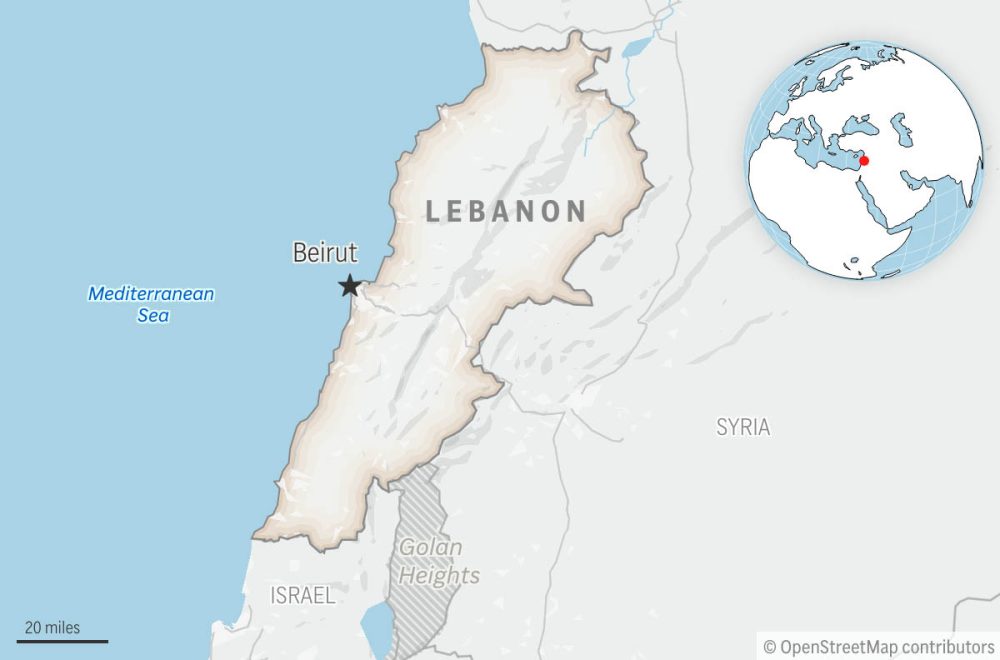
Israeli military forces announced Wednesday they have expanded their designated combat zone in southern Lebanon and are directing civilians in the region to relocate northward, threatening to use “great force” against the Lebanese armed group Hezbollah within the area.
The military’s announcement on X appears to indicate an intensification of conflict following more than 120 strikes that targeted Lebanon’s southern and eastern regions on Tuesday, occurring despite a ceasefire that was announced on April 16.
“We advise residents of southern Lebanon to evacuate to the north of the Zahrani River, as all areas south of the river are considered a combat zone,” an Israeli military spokesperson posted on X.
The Zahrani River flows from east to west approximately 40 kilometres (25 miles) north of Israel’s border with Lebanon, with the Lebanese territory located south of the waterway encompassing roughly 2,000 square kilometres.
Israeli Prime Minister Benjamin Netanyahu stated on Tuesday that Israel required additional action in Lebanon to safeguard communities in northern Israel from Hezbollah threats.
Previously, the Israeli military had directed people living below the Litani River further south to depart. The forces had already issued specific evacuation orders and conducted strikes in several dozen towns situated between the Litani and Zahrani rivers.
Wednesday’s directive marked the first instance that residents were commanded to evacuate the complete zone south of the Zahrani.
The Israeli military encouraged civilians to maintain distance from Hezbollah operatives, facilities and weapons locations.
Lebanese security sources informed Reuters that people were moving north toward the port city of Sidon, which is already sheltering thousands of displaced individuals from other areas of southern Lebanon. The latest announcement occurred as Muslims throughout Lebanon were observing Eid al-Adha celebrations.
Over 1.2 million Lebanese citizens have been displaced due to Israeli strikes and evacuation directives since March 2, when Hezbollah launched attacks at Israel in solidarity with its ally Iran.
Following that date, Israeli strikes have battered Lebanon’s southern and eastern regions as well as its capital Beirut, resulting in more than 3,200 deaths, according to Lebanon’s health ministry.
Combat has persisted in southern Lebanon despite a U.S.-brokered ceasefire announced on April 16. The World Health Organization has reported that at least 608 people in Lebanon have died in Israeli attacks since the truce began.
The Israeli military reported that 10 of its soldiers had died since the April 16 ceasefire, with six killed by Hezbollah’s explosive drones.
The Israeli military has extended its ground operations in southern Lebanon beyond a security zone occupied by its troops, though it provided no specifics regarding the scope of advancement past the so-called Yellow Line.
The Lebanese capital Beirut has avoided new strikes, though Israeli surveillance drones can be heard flying overhead daily and a warplane was audible flying low on Wednesday, according to Reuters reporters in the city.
Three senior Israeli officials indicated Israel believes it has operational freedom in southern Lebanon but faces more constraints in Beirut.
The officials informed Reuters that Israel seeks to avoid appearing to undermine U.S. President Donald Trump’s potential agreement with Iran by destroying buildings in the Lebanese capital.
Municipal workers from Salisbury, MD joined forces with Hope and Life Outreach (HALO) on May 27, 2026, to provide hot meals at HALO’s Café. The café operates as a vital resource for people facing hunger and homelessness throughout the area.
The volunteer initiative allowed municipal employees to work directly alongside HALO staff members and other volunteers, providing meals to those experiencing homelessness and other difficulties while creating a compassionate and inviting atmosphere.
This volunteer effort demonstrates the municipality’s ongoing dedication to civic involvement and backing organizations that create meaningful change in Salisbury.
“Opportunities like this remind us of the importance of coming together as a community,” said Mayor Randy Taylor. “We’re grateful for organizations like HALO that work every day to support individuals and families facing difficult circumstances, and we were honored to spend time serving alongside their team.”
HALO remains essential in delivering shelter, food services, resources and assistance programs for people experiencing homelessness and hardship throughout the Salisbury region.
Additional photos are available on the organization’s Facebook and Instagram pages.
About HALO Ministry
HALO Ministry operates as a nonprofit organization assisting people experiencing homelessness and hardship in the Salisbury region. The organization provides shelter services, food programs, outreach initiatives and community collaborations to deliver hope, stability and assistance for those in need while supporting individuals in achieving long-term independence.
About the City of Salisbury
Situated on Maryland’s Eastern Shore, the City of Salisbury stands as the largest municipality on the Delmarva Peninsula and functions as the economic, cultural and educational center of the area. Dedicated to innovation, sustainability and civic participation, Salisbury continues developing as a dynamic municipality where both residents and visitors can live, work and flourish.
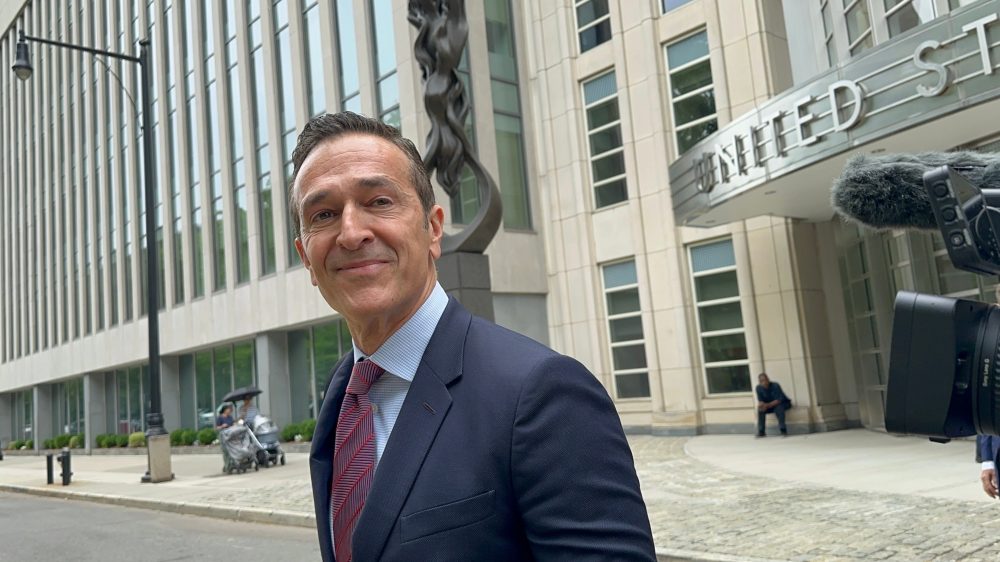
A Brooklyn federal judge dismissed criminal charges Wednesday against a former Fox television executive following a prosecutor’s statement that the soccer corruption case no longer aligns with current administration enforcement priorities.
Judge Pamela K. Chen granted the government’s request to drop the indictment against Hernan Lopez after U.S. Attorney Joseph Nocella Jr. explained the administration’s shift in focus away from international soccer corruption cases.
Lopez, who previously served as CEO of Fox International Channels, smiled as he departed the federal courthouse and expressed relief to reporters, saying “a case that never should have started is finally over.”
During the hearing, Nocella informed Chen that the current administration prioritizes cases involving domestic and international terrorist groups, national security matters, drug trafficking, human trafficking and violent criminal organizations.
The judge determined that Nocella’s explanation, combined with written documentation filed with the court, offered adequate grounds to approve the dismissal request.
In 2023, Lopez and Full Play Group SA, a South American sports media corporation, faced conviction for distributing tens of millions in bribe payments to secure broadcasting rights for World Cup matches and other premier soccer competitions. Chen later overturned those convictions with an acquittal ruling.
An appellate court reversed the acquittals in July, restoring the original convictions, though subsequent appeals left the prosecution’s future unclear.
Chen clarified during Wednesday’s proceedings that her decision to dismiss the charges was not influenced by her earlier acquittal ruling.
Government attorneys informed the Supreme Court in December that officials had concluded dismissing the criminal case serves justice, without providing additional reasoning.
Before issuing her ruling, Chen questioned all parties about how dismissing this indictment might impact the broader decade-long corruption investigation into television rights for international soccer tournaments, which has produced multiple convictions.
FIFA, the international soccer governing organization, stated in court documents filed two weeks prior that it supported the U.S. government’s position that dropping charges against Lopez and Full Play would not directly impact other defendants’ convictions.
FIFA noted its collaboration with the Department of Justice to eliminate corruption from soccer and described implementing disciplinary measures, including permanent bans, to address misconduct uncovered by U.S. authorities.
Justice Department officials wrote to the judge on March 12 explaining that each prosecution within the broader case involves distinct facts and circumstances.
In its filing, FIFA reported that the U.S. government had already transferred $201 million to FIFA and other organizations for distribution to soccer-related community impact projects globally.
FIFA highlighted various funded initiatives, including after-school soccer programs in disadvantaged Miami neighborhoods, renovated community soccer facilities in Ohio, Tennessee and Washington, D.C., teacher and coach training programs throughout the Caribbean, and youth soccer tournaments across South America.
DURHAM, N.C. — Researchers at Duke University have created a revolutionary robot that’s preparing to take on real-world challenges from every possible angle.
Rather than mimicking symmetrical forms found in nature by designing robots that resemble humans, canines, or bugs, engineering professor Boyuan Chen and his research team concentrated on consistency of movement, which he refers to as “dynamic symmetry.”
This approach led to the creation of Argus. The spherical robot takes its name from a legendary multi-eyed creature and features depth-sensing cameras mounted on 20 extending legs that project outward from a center hub. Without designated front, rear, top, or bottom surfaces, the machine can observe and travel in all directions without delay.
“Instead of measuring how your legs are arranged around a different part of your body, we’re measuring how fast you can move in any direction,” Chen said. “Who said, you know, if you have a robot to help us in a most effective way, it has to look like us?”
During testing phases, Argus has successfully traversed sandy shorelines and dense forest floor vegetation, rolling across barriers and regaining balance after being knocked off course. The robot can scale between parallel brick surfaces by alternating between bracing and pushing movements with its appendages. Even when one or multiple motors fail or a leg becomes damaged, operation continues.
“Watching Argus move is unlike watching any other robot we’ve worked with,” said Jiaxun Liu, a graduate student and co-author of a study about Argus published online Wednesday in the journal Science Robotics. “The first time we saw it navigate among trees and rough terrain, even under heavy collisions, we knew this was something different.”
During their research, the team established a new design concept called dynamic isotropy that evaluates robots on a measurement from 0 to 1 according to how evenly they can accelerate in all directions. Most currently operating robots, including humanoid models and drones, achieve scores under 0.6. Argus reaches 0.91.
“When a robot can accelerate equally well in every direction, it stops needing to face the world in any particular way,” said Chen, who hopes the same principle could guide the development of search and rescue robots, underwater or aerial vehicles or robots with the ability to grip objects.
“Instead of building a robot hand that looks like a human hand … one idea is to think about having Argus be the hand itself, and it can manipulate objects in any direction,” he said. “The knowledge we can transfer to the rest of the world is much more deeper than building an existing robot or copying an existing species.”
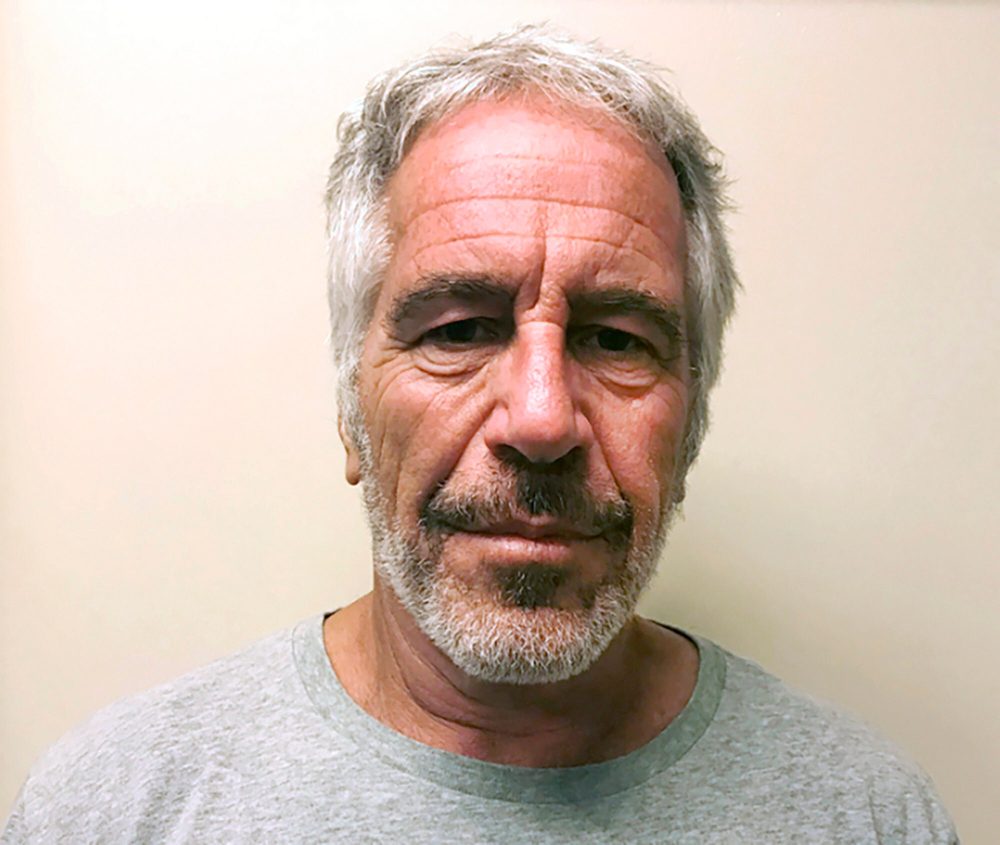
INTERLOCHEN, Mich. — A prestigious Michigan arts academy and summer program where Jeffrey Epstein allegedly encountered at least two victims plans to demolish a building that previously carried the convicted sex offender’s name.
Officials at the Interlochen Center for the Arts announced this week that trustees have given the green light to destroy the Green Lake Lodge, formerly called the Jeffrey E. Epstein Scholarship Lodge before administrators severed connections and removed all references to the deceased millionaire sex criminal following his initial conviction in 2008.
The disgraced financier was a camper at Interlochen Arts Camp in 1967 during his teenage years and contributed over $400,000 to the institution from 1990 through 2003, with $200,000 specifically funding the lodge’s construction.
“The lodge has, over time, come to carry associations that are not reflective of who we are as an institution or the values we strive to uphold,” Interlochen said in a statement. “After careful consideration, the Board determined that removing this structure in a safe and timely manner is the right step for Interlochen at this time.”
The internationally recognized institution for aspiring artists, performers and musicians has produced notable graduates including Grammy winners Chappell Roan and Norah Jones, plus Oscar winner Da’Vine Joy Randolph.
Two women who accused Epstein have stated they encountered him at Interlochen during the 1990s.
School officials acknowledged awareness of media coverage regarding these women’s allegations and extended invitations for them to meet with an independent investigator conducting an external probe into reports of past misconduct at Interlochen.
Two internal examinations, including one conducted after Epstein’s sex trafficking arrest in 2019, discovered no documentation of improper behavior involving Epstein in school files, according to administrators.
Epstein made regular visits to Interlochen, frequently accompanied by his associate and former romantic partner Ghislaine Maxwell, and used the lodge scheduled for demolition as his accommodation.
Justice Department documents recently made public reveal that Epstein arranged for student tuition payments from his donations and once transported violinist Itzhak Perlman to the campus using his private aircraft.
Epstein took his own life in a federal Manhattan detention facility in August 2019, one month following his indictment on federal sex trafficking charges. He previously served jail time in Florida in 2008 and 2009 after entering a guilty plea for soliciting prostitution from a minor.
Maxwell received a sex trafficking conviction in 2021 for her role in recruiting Epstein’s underage victims and is currently serving a 20-year prison term.
Atlanta quarterback Michael Penix Jr. continues his rehabilitation from a torn ACL and has not received medical approval for full-contact team practice sessions, according to new Atlanta head coach Kevin Stefanski’s Wednesday announcement.
The 26-year-old quarterback is making excellent progress in his recovery and will take part in position-specific training and smaller 7-on-7 practice sessions during organized team activities while he awaits complete medical approval for his left knee, Stefanski explained.
“He’s not 100 percent, but he’s exactly where he needs to be,” Stefanski said.
When Penix receives full clearance, the quarterback selected eighth overall in the 2024 first-round draft is anticipated to battle with newly acquired quarterback Tua Tagovailoa for the starting position.
Penix suffered the campaign-ending knee injury during Week 11 of 2025, which marked his first year beginning the season as Atlanta’s primary quarterback. He took over the starting role from Kirk Cousins partway through his 2024 debut season.
Throughout 14 professional games with 12 starts, Penix has achieved a 59.6% completion rate, throwing for 2,757 yards with 12 touchdown passes and six interceptions.
Tagovailoa, age 28, posted a 44-32 win-loss record during his time with the Miami Dolphins, completing 68.0% of his attempts for 18,166 yards, 120 touchdowns and 59 interceptions across six seasons.
Both signal-callers are adapting to a fresh offensive system under Stefanski and offensive coordinator Tommy Rees. Atlanta’s quarterback room also includes Trevor Siemian and undrafted rookie Jack Strand.
Green Bay Packers running back Josh Jacobs walked free from police custody Wednesday after being detained on multiple domestic violence allegations.
Prosecutors have not filed formal charges against the 28-year-old player. The Brown County District Attorney’s Office in Wisconsin explained there’s a difference between what’s needed for an arrest versus filing charges. While “probable cause” justifies an arrest, proving guilt “beyond a reasonable doubt” is required for criminal charges.
“After reviewing the available evidence in this case, the Brown County District Attorney’s Office is not yet prepared to make a formal charging decision,” District Attorney David L. Lasee said in a statement. “Our office has requested additional investigation, as there is reason to believe that additional evidence may exist that would impact whether criminal charges are appropriate.”
The Hobart-Lawrence Police Department in Wisconsin took Jacobs into custody Tuesday on allegations including battery (domestic abuse, criminal damage to property), domestic abuse, disorderly conduct (domestic abuse, strangulation and suffocation) and intimidation of a victim.
According to Brown County jail records, the strangulation and suffocation allegation carries felony status, while the remaining charges are classified as misdemeanors.
Jacobs’ legal team issued a statement Wednesday defending their client.
“We are extremely pleased that Josh has been released from custody and that no criminal charges have been filed against him,” a statement from David Z. Chesnoff, Richard A. Schonfeld and Clarence Duchac read. “As we previously stated, we encourage everyone to keep an open mind while the matter is fully reviewed. We remain confident that, once all of the evidence is gathered and evaluated, it will confirm that no charges should be brought against Josh in the future.”
When reporters asked Packers head coach Matt LaFleur about Jacobs during Wednesday’s organized team activities, he declined to elaborate.
“I’m going to stick with the statement we put out as an organization and just let the process play out,” he said.
Currently in his third year with Green Bay after inking a four-year, $48 million contract in 2024, Jacobs has earned Pro Bowl honors three times (2020, 2022, 2024) and first-team All Pro recognition in 2022, when he topped the NFL in rushing yards while playing for the Las Vegas Raiders.
Throughout his seven-year NFL career, Jacobs has accumulated 7,803 rushing yards on 1,840 carries with 74 touchdowns.
CBS News has decided against renewing the contract of correspondent Sharyn Alfonsi from “60 Minutes” following her disagreement with Editor-in-Chief Bari Weiss regarding a December story about a Salvadoran prison, the New York Times reported Wednesday.
The network withdrew the story — which focused on a large prison facility where the United States has placed hundreds of primarily Venezuelan migrants without trials — just hours before its scheduled broadcast, leading to claims from “60 Minutes” staff and members of Congress that CBS was practicing self-censorship due to political influence.
Speaking to the New York Times Wednesday, Alfonsi confirmed she remains a CBS employee but lacks a contract and doesn’t anticipate returning to the renowned news program.
The network’s refusal to extend her contract “sends a chilling message to the entire newsroom,” Alfonsi stated to the Times. “I think it was a deliberate choice to penalize a journalist for refusing to sanitize accurate reporting.”
CBS falls under Paramount Skydance ownership. A network representative did not respond immediately to requests for comment. Attempts to contact Alfonsi directly were unsuccessful.
The prison story circulated online in December before eventually broadcasting on CBS one month afterward.
At the time, Alfonsi condemned the network’s choice, stating in a message to her colleagues that CBS withdrew the story for “political” motivations. Weiss defended the delay in a December staff email, explaining that regaining Americans’ confidence “sometimes means holding a piece about an important subject to make sure it is comprehensive and fair.”
Skydance Media, led by David Ellison — son of President Donald Trump supporter Larry Ellison — purchased Paramount in August and appointed Weiss as editor-in-chief in October. David Ellison helped obtain regulatory clearance for the transaction that formed Paramount Skydance, promising the CBS network would represent the “varied ideological perspectives” of American audiences.
Trump has consistently urged the Federal Communications Commission to remove broadcasting licenses from major networks NBC and ABC while demanding payment for their use of public airwaves, criticizing their news coverage.
Before the acquisition, Paramount settled a 2024 Trump lawsuit for $16 million concerning a “60 Minutes” interview with former Vice President Kamala Harris, which he claimed presented a misleading portrayal of his presidential opponent.
The FCC stated the settlement and regulatory approval process were separate matters.
Conference USA has finalized the television broadcast schedule and game timing for University of Delaware football, the conference revealed Wednesday through coordination with its media partners.
The Fightin’ Blue Hens are slated to appear on national television programming no fewer than seven occasions throughout the 2026 season, according to the announcement made from Dallas.
The United States poultry industry is showing signs of growth according to new data tracking broiler production activities.
Statistics reveal that broiler-type eggs set nationwide increased by 1 percent compared to previous periods. The data also shows that broiler-type chicks placed throughout the country experienced a larger jump of 3 percent.
These figures indicate positive momentum in the commercial poultry sector, which supplies much of the nation’s chicken meat production.
GREEN BAY, Wis. — Star running back Josh Jacobs of the Green Bay Packers has been freed from a Wisconsin detention facility as officials continue examining domestic violence accusations against the NFL player.
The 28-year-old athlete was taken into custody Tuesday in Brown County facing allegations of strangulation and suffocation stemming from an incident that allegedly occurred over the weekend. Legal representatives for Jacobs stated their client maintains his innocence.
District Attorney David Lasee indicated it remains premature to determine formal charges.
“Our office has requested additional investigation, as there is reason to believe that additional evidence may exist that would impact whether criminal charges are appropriate, and what charges would be issued. … The investigation remains open and is ongoing,” Lasee said.
The legal team representing Jacobs — David Chesnoff, Richard Schonfeld and Clarence Duchac — expressed satisfaction with his release from custody.
“We encourage everyone to keep an open mind while the matter is fully reviewed. We remain confident that, once all of the evidence is gathered and evaluated, it will confirm that no charges should be brought against Josh in the future,” they said.
According to Hobart/Lawrence Police Chief Michael Renkas, officers responded to a report involving Jacobs at approximately 8:30 a.m. Saturday morning.
The football player serves as Green Bay’s leading returning ground-game performer following a season where he accumulated 929 rushing yards and scored 13 touchdowns in 2025. This came after his 2024 campaign in which he gained 1,329 yards on the ground with 15 touchdowns while receiving his third Pro Bowl recognition.
Green Bay commenced organized team activities Tuesday. Team officials have refused to provide comment regarding the arrest.
“I know there’s going to be a lot of questions about Josh,” coach Matt LaFleur said Wednesday. “I’m going to stick with the statement that we put out as an organization and just let the process play out.”
Jacobs represents Green Bay’s most talented player at a position where the team has limited backup options. Emanuel Wilson, who finished as their second-leading rusher last season, has since joined the Seattle Seahawks. The organization did not select any running backs in this year’s draft.
The veteran spent his initial five NFL seasons with the Raiders. He received All-Pro recognition and led the league with 1,653 rushing yards while playing for Las Vegas in 2022.
Throughout his seven-year professional career, he has accumulated 7,803 rushing yards and 74 touchdowns. Among current NFL players, only Baltimore’s Derrick Henry (122) and Buffalo’s Josh Allen (79) have scored more career rushing touchdowns.
Weather conversations are commonplace, particularly across Britain.
Yet it’s difficult to envision a gentle discussion about meteorological conditions serving as an emotionally powerful moment in a motion picture. This becomes even more surprising when the movie centers on World War II, among the most dramatically compelling topics in cinema history.
However, this changes once you experience Andrew Scott’s performance, an actor capable of making even mundane material sound captivating — or at minimum, touching and complex.
Individuals frequently discuss precipitation, his character, Capt. James Stagg, contends during “Pressure,” which chronicles how weather science influenced the success of D-Day. Yet do they contemplate the reasons behind rainfall? Or what creates wind patterns? How, he wonders, could such phenomena be considered dull?
At moments, “Pressure,” helmed and co-authored by Anthony Maras, resembles a sequence of similarly refined monologues. This approach makes sense given its theatrical origins — the 2014 stage production by David Haig. Chronicling the lesser-known account of how weather experts determined the optimal timing for the Normandy beach assault, the movie creates tension between two figures: Scott’s contemplative, obstinate, even bitter weather scientist, and the legendary Dwight D. Eisenhower, distinguished military leader and eventual president, portrayed by Brendan Fraser.
Fraser’s interpretation of Eisenhower appears physically commanding — significantly more so than the historical figure — and equally headstrong, though more vocally so. However, he proves less compelling than Scott’s complex Stagg, a role and portrayal that transforms an otherwise competent, well-crafted military film into something more captivating.
The movie opens with fallen soldiers scattered across a shoreline beside bloodied waters — evoking the disastrous D-Day preparation known as Exercise Tiger, which claimed hundreds of American military lives. This serves as Maras’s method of emphasizing both the human cost and the potential for additional tragedy.
Several months afterward, in June, Stagg arrives for assignment at Allied command. The Scottish weather expert, reluctant to leave his expectant wife behind, has been recruited to assist with Eisenhower’s planned assault, which depends on surprising the enemy. Additionally, and critically, on meteorological conditions.
Stagg receives orders to meet Eisenhower, through his reliable assistant Kay Summersby (an outstanding Kerry Condon, injecting energy into a part that avoids further speculation about her connection with the general). Eisenhower explains that the entire war’s outcome depends on this mission. “We invade France Monday,” he declares.
However, the commander requires an accurate weather prediction. The mission demands a full moon and cloudless skies for aerial support, plus tranquil seas. Eisenhower seeks approval — which his own reliable forecaster, Irving P. Krick (Chris Messina), readily provides. Using historical data, Krick maintains that June 5, 1944, will bring peaceful and bright conditions.
Krick represents everything Stagg isn’t — sociable, bold, self-assured. He even performs songs and dances. Stagg, however, disagrees with the American’s evaluation. “Get me the data,” he demands. Historical trends hold no value in this volatile area, he maintains.
Requesting information from every weather monitoring post or balloon within 2,000 miles of Normandy, Stagg contends two storm systems approach. A June 5 launch will result in massive casualties, he warns. Actually, suitable weather might not appear until June 18. This message finds no welcome audience — not from Eisenhower, not from Krick and certainly not from Field Marshal Bernard Montgomery (Damian Lewis, embracing the theatrical nature). “My men are ready and primed,” Montgomery declares. “Get them onto the beaches, and leave the rest to me.”
As historical records confirm, D-Day did not occur on June 5. Eisenhower eventually decides to delay based on Stagg’s prediction, proven correct when Sunday’s clear weather suddenly becomes stormy during morning worship. Yet just as the chance seems lost, Stagg identifies a temporary weather improvement. He suggests — spoiler alert — that the invasion move forward one day later, on June 6.
For beach combat sequences, Maras utilized archival material — he has stated inspiration from Peter Jackson’s remarkable World War I documentary “They Shall Not Grow Old” — adding color and combining it with his own footage of frightened soldiers. Somehow, genuine tension emerges when Eisenhower and others assemble in the operations room.
Close by, silently, Stagg remains. Like his role, Scott accomplishes more with minimal resources. While the performer may be recognized for praised performances in “Fleabag,” “Ripley” and “Sherlock,” he’s also an accomplished theater artist, and his contribution here echoes the nuanced work he delivered in “Vanya,” the Chekhov adaptation where he portrayed all eight characters. Among Scott’s most powerful moments: when he receives heartbreaking news via telephone during a crucial war planning period. His suffering is evident, yet somehow he shows minimal external reaction.
“The weather feeds us,” Stagg states earlier, making his argument that weather is far from tedious. Indeed, meteorology itself becomes the central character in “Pressure.” The movie relates a story in which John F. Kennedy, traveling to his inauguration, questioned his predecessor about what advantage the Allies possessed.
“We had better meteorologists than the Germans,” Eisenhower responded.
“Pressure,” a Focus Features release arriving in theaters Friday, has received a PG-13 rating from the Motion Picture Association for “war violence, bloody images, some strong language, and smoking.” Runtime: 100 minutes. Two and a half stars out of four.
A former political leader in Northern Ireland is facing serious criminal charges after prosecutors allege he sexually abused two young girls over more than two decades.
Jeffrey Donaldson, age 63, who previously headed the Democratic Unionist Party, entered not guilty pleas to 18 charges on Wednesday. The criminal counts include rape, gross indecency, and indecent assault allegations involving two complainants from 1985 through 2008.
During opening arguments at Newry Crown Court, prosecutor Rosemary Walsh informed the jury that both alleged victims contacted authorities over two years ago to report what they described as “difficult and traumatic incidents they say happened when they were children.”
Donaldson stepped down from his leadership position with the DUP and left his seat in the U.K. Parliament following his arrest in March 2024.
His departure sent shockwaves through the DUP, coming just after the party had rejoined Northern Ireland’s power-sharing government following a boycott. This return to cooperation occurred after Donaldson secured favorable changes to post-Brexit trade policies with the European Union.
During his tenure as DUP leader from 2021 to 2023, Donaldson held significant influence within Northern Ireland’s unionist community, which advocates for preserving the region’s connections to the United Kingdom.
According to Walsh’s statements to jurors, both complainants reported that Donaldson inappropriately touched them during their elementary school years. The prosecutor indicated that one victim, identified in court documents as Complainant B, alleged the abuse persisted for multiple years.
Complainant B also testified that years after the alleged incidents, a church-organized meeting took place where Donaldson expressed regret “for what had happened in the past.”
During police questioning, Donaldson characterized the sexual abuse allegations as “unbelievable.”
Eleanor Donaldson, the defendant’s spouse, faces separate charges for allegedly assisting in her husband’s crimes, though Judge Paul Ramsey determined she is mentally unfit for trial proceedings.
While jurors will review evidence related to Eleanor Donaldson’s case, she cannot face conviction or sentencing. Court officials anticipate the trial will continue for approximately one month.
LA PAZ, Bolivia — Just half a year after taking office, Bolivia’s centrist President Rodrigo Paz finds his administration under siege from violent demonstrations that have brought the nation to a standstill.
When Paz was sworn in, many Bolivians felt hopeful after enduring their country’s most severe economic downturn in decades and growing tired of nearly 20 years of mostly socialist rule. His pro-business approach quickly eliminated lengthy queues at fuel stations by securing imported gasoline. The nation’s struggling currency gained strength in unofficial markets as investors responded positively to his deficit-reduction strategy. International relationships improved dramatically, with numerous foreign delegations attending his inauguration ceremony.
However, that initial hope has turned to fear as explosive protests threaten the administration that has aligned itself with the Trump government. Protesters armed with dynamite have surrounded major urban areas, creating critical shortages of food, gasoline, and medical equipment. Rural and Indigenous communities who originally supported Paz’s promises to transform the system while maintaining social programs are now demanding he resign.
The demonstrations have exposed deep divisions within Paz’s coalition. Many former backers from Bolivia’s historically powerful Movement Toward Socialism party, known as MAS, who helped him defeat more conservative opponents, now feel abandoned by his administration.
After taking power, Paz formed partnerships with more conservative congressional factions while sidelining his populist running mate who many credited with his election victory. His cabinet appointments excluded members of Bolivia’s Indigenous majority population. He endorsed agricultural reform legislation that Indigenous farmers feared would lead to their displacement. When he eliminated fuel subsidies, prices jumped nearly 90%, and drivers complained the imported gasoline damaged their vehicles.
Paz attempted to ease the economic burden by providing direct payments to struggling families and raising minimum wages by 20%. He also reversed the contentious land legislation. However, his refusal to grant additional wage increases angered the country’s main labor organization.
The geographic layout of Bolivia makes La Paz particularly vulnerable to siege tactics. Blockades positioned on the mountainous routes into the capital can completely cut off more than 1.6 million people living in the metropolitan area, representing over 13% of Bolivia’s total population.
This blockade strategy has historical roots in Indigenous resistance movements, dating back to an 18th-century uprising against Spanish colonial rule. Similar tactics in 2003 and 2005 brought down two pro-Western administrations protesting foreign control over natural gas resources, ultimately leading to former President Evo Morales’ rise to power.
The current roadblocks surrounding La Paz have continued for four weeks. Thousands of supply trucks carrying food and critical items like hospital oxygen remain stuck on highways. Meat, eggs, and fresh produce have vanished from store shelves. Military planes are now flying subsidized poultry into the capital. Government officials report at least four deaths due to lack of medical access, while hospitals continue operating but reserve supplies for emergency cases.
Business owners and transportation workers who oppose the protests are pressuring Paz to clear the roads by any means necessary. During a Tuesday march in the city center, they carried white flags and banged cookware while shouting, “We want solutions! We can’t take it anymore!”
Despite security forces using tear gas against demonstrators and detaining more than 120 individuals, Paz has avoided using stronger measures to break the blockades. Concerned that protester deaths at police hands would worsen the situation, he continues advocating for negotiation as the best solution.
“There shouldn’t be any deaths in Bolivia,” he stated Wednesday while establishing a council to give underrepresented social groups more influence in economic policy. “What we need is dialogue. For the love of our country, let’s talk.”
Paz has offered teacher bonuses and reached settlements with some protesting mining groups. He cut his own pay in half, dismissed his unpopular labor secretary, and named an Indigenous lawyer to replace him.
Pressure is mounting for Paz to declare a state of emergency, which would give military forces control over public order for 60 days. Following congressional approval of legislation expanding the army’s authority in civil disturbances Tuesday night, Paz now has constitutional power to take this step. He considers it a final option.
Morales, the former labor organizer who became Bolivia’s first Indigenous president in 2006 and governed for 14 years, is pushing for immediate elections.
“Paz only has two paths left: a suicidal decision like militarization or … an election in the next 90 days,” he posted on social media.
For nearly two years, Morales has been hiding in Bolivia’s central Chapare coca-farming region, avoiding arrest on human trafficking charges related to sexual contact with a 15-year-old girl. He maintains the accusations are politically driven.
Several unions and Indigenous organizations opposing Paz have connections to Morales, whose constitutional violations and power-grabbing attempts cost him much of his support base and led to his controversial 2019 removal. His supporters from coca-farming unions officially joined the protest movement last week, marching through mountain regions to the capital demanding Paz’s resignation. Paz’s administration claims Morales is financing the demonstrations, which he denies.
Trump-aligned governments recently elected throughout Latin America, including those in Argentina, Chile, Honduras, and Costa Rica, have expressed support for Paz while condemning the protests as destabilizing forces.
Colombian President Gustavo Petro, one of the region’s remaining leftist leaders, defended the protests, calling them a “struggle for Latin American dignity” and “response to geopolitical arrogance.” Bolivia subsequently expelled Colombia’s ambassador.
The United States has taken a firm position, describing the unrest as an attempted coup.
“We will not allow criminals and drug traffickers to overthrow democratically elected leaders in our hemisphere,” U.S. Secretary of State Marco Rubio declared last week. The American Embassy in La Paz announced it would close Wednesday and Thursday due to the violence.
The nation’s highest court has given final approval to an agreement that resolves a decade-long legal battle over water rights along the Rio Grande, one of North America’s major waterways.
In a concise ruling issued Tuesday, the Supreme Court endorsed the recommendation from a special master to proceed with the settlement framework initially put forward last year by New Mexico, Texas and Colorado.
The agreement mandates cuts to groundwater extraction along the shrinking river and the elimination of water rights tied to agricultural land in southern New Mexico. State officials presented the plan as a commitment to bring stability back to a complex water storage and distribution network serving two major irrigation districts spanning southern New Mexico and western Texas.
Scientists have cautioned that the Rio Grande’s unsustainable usage patterns — the river begins in Colorado and flows southward into Mexico — pose risks to water availability for millions who depend on this cross-border watershed.
Agricultural producers in southern New Mexico have increasingly relied on underground water sources to sustain pecan groves and chile farming operations as rising temperatures and reduced precipitation have diminished river levels and reservoir capacity in recent decades. This groundwater extraction led Texas to file suit in 2013, alleging the practice was reducing water allocations.
Although the Colorado River dominates water crisis coverage, specialists note the Rio Grande faces equally serious challenges. River sections extending north to Albuquerque are projected to run completely dry again this year, representing the third occurrence within a five-year span.
Representatives from the New Mexico Department of Justice and the state engineer’s office did not respond immediately to Wednesday inquiries regarding the court’s decision. They have stated previously that these agreements will enable local water management decisions while preventing catastrophic financial penalties worth billions for water delivery shortfalls.
The settlement framework establishes a comprehensive tracking system for water allocation to Texas. New Mexico will be able to use credit and deficit mechanisms across multiple years to manage drought and wet cycles, though extended delivery delays could trigger additional water-sharing requirements.
According to the settlement terms, New Mexico must decrease yearly groundwater depletion by 18,200 acre-feet, equivalent to approximately 5.9 billion gallons (22.3 billion liters).
Authorities anticipate meeting most reduction targets through voluntary water rights purchases from landowners, which would remove more than 14 square miles (36 square kilometers) of agricultural property from production.
Additional specifics — including total costs — remain under development, but senior water officials have consistently informed New Mexico legislators that success requires “an all hands on deck approach.”
“The problems that we face with water are problems we can’t face unless we work together,” Hannah Riseley-White, director of the Interstate Stream Commission, told a group of water experts during a meeting in March.
She referenced a mix of extended land retirement programs, water conservation measures and upgraded irrigation systems.
LOUISVILLE, Ky. – Salisbury University softball player Karlie Wolfe has been recognized with First Team All-American status by the National Fastpitch Coaches Association.
The organization made the announcement regarding Division III All-Americans this afternoon, highlighting Wolfe’s outstanding performance during the season.
The NFCA First Team All-American designation represents one of the highest individual honors available to college softball players at the Division III level.
With warmer weather on the horizon, countless individuals begin planning their time on the water. From angling and water skiing to leisurely cruises and peaceful moments in quiet bays, boat rentals offer an excellent opportunity to experience aquatic recreation without the financial burden and maintenance demands of owning a vessel.
For those planning vacations or seeking more outdoor adventures, several key factors should guide your selection of the perfect rental boat.
1. Research Thoroughly in Advance
Begin by investigating rental companies operating in your target waterway or local area through online searches. Examine customer feedback and verify that businesses maintain appropriate licenses and insurance coverage. Company websites typically contain essential details about their fleet, policies, and safety protocols, making advance review worthwhile. Additionally, seek referrals from acquaintances and relatives—personal recommendations frequently lead to trustworthy operators that deliver exceptional boating adventures.
2. Evaluate Available Vessel Options
Various water activities demand specific boat categories. Determine your desired boating adventure before booking. Will you need an open motorboat for angling, a personal watercraft for touring, a kayak for paddling, a pontoon vessel for group relaxation, or specialized equipment for towed water activities?
Numerous rental operations maintain diverse fleets, while some focus on particular categories like personal watercraft, pontoon vessels, or sailboats. Confirm your chosen company stocks the appropriate craft for your intended pursuits.
3. Seek Clear Pricing Information
Verify that all expenses are outlined transparently from the start, covering fuel costs, security deposits, cleaning charges, and supplementary equipment fees. When uncertain about any charges, inquire before completing the contract. Unexpected expenses can dampen an otherwise perfect day on the water.
4. Examine the Vessel Before Departure
Spend time evaluating the boat prior to launching. Does the craft look clean and properly maintained? Are there any pre-existing damages that require documentation before your rental period starts?
Additionally, ensure the rental company demonstrates the location and correct usage of mandatory safety gear, including life preservers, fire suppression equipment, sound devices, and other required items.
5. Review the Rental Contract Thoroughly
The rental contract represents a legal agreement between you and the boat rental company that defines mutual rights and obligations. Study it completely and seek clarification on any confusing elements before accepting the vessel.
Through advance preparation and proper questioning, boat rentals can provide enjoyable, secure, and unforgettable water experiences this summer. Enjoy responsibly and always wear your life jacket.
A Cape Henlopen High School senior has completed his internship with the Rehoboth Beach Police Department, marking the end of an eight-month learning experience. Dale Edwards finished his time with the department on Wednesday, May 27, after starting the program in September.
Edwards managed to juggle his internship responsibilities with his academic schedule, working at the police department two to three days weekly. He often arrived early in the morning before returning to school for afternoon classes.
The police department has maintained its internship program since 2013, focusing on providing students with substantial learning opportunities. According to Internship Coordinator Lt. Will Sullivan, the approach goes beyond basic office tasks.
“These students won’t learn by answering phones,” Sullivan explained. “This is a position where they interact with officers and administration, 911 staff, and other support agencies.”
The program operates as a genuine “student-in-training” experience. Following an initial orientation period, participants work in various departments including Criminal Investigations, Community Outreach, Records, Patrol, Policies & Procedures, Property & Evidence, Administration & Budgeting, Communications, and Outside Agencies.
Edwards appreciated the diverse experiences the internship offered. “There was so much different stuff I got to do, including ride-alongs. But all in all, the best part was the people. They are great officers, and I had a great lieutenant,” he said.
While his father, RBPD Sgt. Ray Edwards, works at the same department, Dale emphasized that family connection wasn’t his motivation for choosing this internship. He pointed to Cape Henlopen High School’s Work-Based Learning (WBL) program as the key factor in his preparation and career exploration during high school.
“I wasn’t sure what I wanted to do, but this was something I could see myself doing in a few years and as a career,” Edwards noted. “Overall, it’s an incredible program. Basically, any job you’d be interested in has an internship.”
Lt. Sullivan praised the partnership with the school’s WBL program, conducting regular evaluations and maintaining communication with WBL Coordinator Garnet Rhue. “They’ve all been really good kids to work with,” Sullivan said. “They all come recommended by the school. They’re goal‑oriented students.”
The department has already selected next year’s intern, and Sullivan mentioned that many former participants maintain contact with the department. Several have pursued careers in law enforcement or related support positions.
Edwards has graduation scheduled for June 2, and his colleagues at the police department helped him practice his ceremonial walk by rehearsing in the station corridors. His summer plans include working in North Shores before enrolling at Delaware Tech to earn an associate degree in business and finance, with aspirations of joining law enforcement. He’s also considering returning next summer as a seasonal officer.
Lt. Sullivan expressed enthusiasm about that possibility. “It’s been nice working with him. He has a great personality. He’s going to go very far,” he said.
A Goldey-Beacom College baseball player has received recognition from a national coaching organization for his outstanding performance this season.
The American Baseball Coaches Association has selected senior pitcher Kory Williams, a Pennsauken, New Jersey native, for the second team All-East Region squad. Williams was instrumental in helping the Lightning baseball program secure its fourth consecutive appearance in the NCAA Tournament.
The honor highlights Williams’ significant contributions to Goldey-Beacom’s continued success on the diamond and the program’s sustained excellence at the national level.
Energy markets experienced significant volatility Wednesday as crude oil values declined while investors monitored ongoing tensions surrounding the Strait of Hormuz and potential diplomatic developments between Washington and Tehran.
Brent crude prices decreased approximately 1.5% to around $98 per barrel, while US West Texas Intermediate saw a steeper decline of roughly 2% to about $92. These drops reversed some of Tuesday’s gains that followed American military strikes against Iranian positions.
The market retreat occurred as investors searched for indications that diplomatic discussions between Washington and Tehran might yield an agreement to reopen the strategic waterway, despite Iran’s allegations that the United States breached ceasefire terms and Washington’s assertion that its military actions were defensive in nature. This crucial passage connects the Gulf to the Arabian Sea and serves as one of the planet’s most vital energy corridors, facilitating the transport of substantial quantities of crude oil and liquefied natural gas from Gulf nations to Asian, European, and other global markets.
Recent movement of liquefied natural gas vessels through the waterway has sparked cautious optimism that shipping activity might begin recovering. Previous Reuters coverage indicated that oil and liquefied natural gas carriers had departed Hormuz bound for Pakistan and China, while additional vessel movements demonstrated modest but noticeable signs of renewed passage.
Energy markets continue to exhibit extreme sensitivity to each military and diplomatic development. Oil values had surged 4% Tuesday following fresh American strikes in Iran that diminished expectations for rapid route reopening. Prices had previously declined when President Donald Trump indicated that US-Iran negotiations were approaching completion, demonstrating how rapidly traders alternate between escalation concerns and deal optimism.
Extended disruption would impact far beyond fuel costs. Energy expenses influence transportation, electricity, food manufacturing, and fertilizer pricing, with Gulf exporters maintaining central roles in worldwide supply chains. Dallas Federal Reserve President Lorie Logan cautioned Wednesday that if the waterway remains blocked, global consumers may need to curtail oil and natural gas consumption to align with available supplies.
Currently, energy markets are responding less to already-lost shipments than to upcoming developments from the region: mine removal operations, vessel traffic, ceasefire negotiations, or additional military action.
An oil tanker owned by a Greek company suffered a mysterious blast along its hull while sailing in waters off Oman on Tuesday, creating new worries about maritime safety near one of the world’s most important shipping passages. The United Kingdom Maritime Trade Operations agency reported the explosion struck the left side of the vessel near the waterline, approximately 60 nautical miles from Muscat.
Officials identified the ship as the Olympic Life, a massive crude oil carrier managed by Springfield Shipping and owned by Olympic Shipping & Management. Authorities confirmed the vessel and all crew members remained safe following the incident, and the ship was traveling empty without any cargo aboard. The United Kingdom Maritime Trade Operations agency stated investigators have not determined what caused the blast.
The explosion damaged one of the ship’s fuel storage tanks and resulted in a minor fuel spill, which crews successfully stopped from spreading. According to Reuters, the incident happened at approximately 9:20 am UTC, though the Wall Street Journal cited the United Kingdom Maritime Trade Operations agency as reporting the time closer to 9:45 am UTC.
The geographic location makes this incident particularly concerning for international commerce. The Gulf of Oman borders the entrance to the Strait of Hormuz, the narrow waterway that connects oil-producing nations in the Gulf region with markets worldwide. Massive quantities of the planet’s crude oil and liquefied natural gas typically travel through this strait, making shipping safety in the area a crucial factor in maintaining ceasefires and advancing diplomatic discussions between the United States and Iran.
This explosion occurred while Washington and Tehran continue complex negotiations regarding Hormuz passage rights, economic sanctions, frozen assets, and Iran’s nuclear activities. The incident also follows recent American military strikes against Iranian missile installations and ships that Washington claimed posed threats near the waterway. Iran has criticized these strikes as violations of the ceasefire agreement, while American officials maintain the actions were necessary for defense.
No government or organization has publicly accused any nation or militant group of responsibility for the tanker explosion. As long as investigators work to determine whether the blast resulted from a mine, drone attack, missile strike, or other cause, this incident serves as another troubling reminder that even a single explosion in this shipping corridor can disrupt energy markets across the globe.
Israeli military officials announced Wednesday they had successfully eliminated Mohammed Odeh, the recently appointed commander of Hamas’ military operations in Gaza, during a Tuesday operation that targeted multiple structures being used as hideouts in Gaza City. The operation followed months of intelligence gathering by Israeli Defense Forces and Shin Bet.
According to Israeli military sources, Odeh had assumed leadership of Hamas’ armed wing just last week following the death of Izz al-Din al-Haddad, who was killed by Israeli forces on May 15. Military officials stated that Odeh previously led Hamas’ military intelligence operations and accused him of participating in the planning and coordination of the October 7, 2023, assault on Israel that resulted in approximately 1,200 deaths and the abduction of around 250 individuals.
Prime Minister Benjamin Netanyahu initially announced Tuesday’s operation against Odeh on social media without confirming whether the target had been killed. “We have now attacked Mohammed Odeh in Gaza – the leader of Hamas’s military wing and one of the architects of the October 7 massacre. We will reach everyone,” Netanyahu posted online.
Defense Minister Israel Katz subsequently confirmed Odeh’s death in a joint announcement with Netanyahu, stating that the “commander of the armed wing of the Hamas terrorist organization in Gaza was eliminated yesterday and sent to meet his associates in the depths of hell.”
The military operation targeted Gaza City on the day before Eid al-Adha celebrations. Medical officials at Palestinian hospitals reported a minimum of three fatalities and 12 injuries from the strike, while Reuters cited Gaza officials claiming that Odeh’s wife, son, and three additional individuals were killed, with more than 20 people sustaining injuries.
Since the October 2023 attack, Israeli operations have resulted in the deaths of multiple high-ranking Hamas officials, including several successive leaders of the organization’s military branch. These targeted eliminations have significantly disrupted Hamas’ senior leadership structure, although the group maintains operations throughout Gaza using smaller units and regional commanders.
The operation took place despite an October ceasefire agreement that has not prevented continued Israeli military actions and ongoing Hamas activities in the territory. Health officials in Gaza report that more than 72,000 Palestinians have died since the conflict began, though this number does not differentiate between civilian casualties and combatants.
Following more than ten years of conflict, economic sanctions, and financial collapse, Syria is capturing fresh interest from regional and international investors examining reconstruction possibilities across energy, infrastructure, logistics, real estate, and digital services sectors. However, sanctions risks, fragile institutions, deteriorated infrastructure, and political instability persist in making the nation among the region’s most dangerous investment environments.
The magnitude is staggering. The World Bank has calculated Syria’s reconstruction requirements at $216 billion, with potential expenses ranging from $140 billion to $345 billion, following years of warfare that harmed residences, government buildings, utilities, transportation systems, industrial facilities, and critical services.
Some analysts and investors view that destruction as creating what they describe as an unusual opportunity: a nation needing nearly complete reconstruction, from electrical grids, roadways, bridges, ports, airports, hospitals, schools, and water systems to housing, telecommunications, banking infrastructure, and government services. Others consider Syria to remain a high-risk setting where political instability, ongoing sanctions issues, vulnerable institutions, and weak financial frameworks could delay or prevent significant investment.
The revived interest comes after various political and economic changes following Damascus’ return to the Arab League and its renewed relations with Saudi Arabia, the United Arab Emirates, Jordan, Egypt, Iraq, and other Arab nations. It has also been supported by sanctions relief in Europe and renewed international conversations about economic recovery, though targeted sanctions and compliance risks continue as significant barriers for banks, contractors, and investors.
The European Union has removed broad economic restrictions imposed during the Assad era while keeping targeted measures against individuals and entities connected to the former regime. The International Monetary Fund has also resumed engagement with Syria, while recent logistics and port agreements have contributed to the perception that segments of the international business community are once again exploring the Syrian market.
The disparity remains sharp. The US State Department continues to recommend Americans avoid travel to Syria, citing serious security threats, while commercial conversations increasingly center on reconstruction, energy, logistics, housing, and digital services.
Mustafa al-Nuaimi, a Syrian affairs analyst and researcher, told The Media Line that Syria’s postwar period will not be determined exclusively by politics or military strength, but by economics as well.
“Rebuilding a country the size of Syria means contracts worth billions of dollars and long-term influence over strategic sectors such as electricity, energy, ports, telecommunications, and infrastructure,” he said.
According to al-Nuaimi, current developments indicate the start of early competition over “postwar Syria,” with regional and international players seeking influence in the country’s future economy before the framework of reconstruction is completely established.
At the focus of investor attention is electricity. Syria’s power sector suffered severe damage during the war, with power plants, transmission lines, fuel supply chains, and distribution networks all impacted. Ongoing electricity shortages continue to interrupt daily life, industry, commerce, and public services.
Syrian-Saudi businessman Nabil Al-Mazloum told The Media Line that the electricity crisis has generated significant demand for investment in power generation, solar and renewable energy, transmission improvements, and projects designed to address the country’s severe energy shortage.
Economic projections indicate that restoring the electricity sector alone could need tens of billions of dollars. Al-Mazloum said Syria’s domestic power demand makes the sector among the most appealing areas for investors, especially because electricity is vital for restarting factories, commercial operations, and essential services.
Real estate and construction are also fundamental to the reconstruction discussion. Extensive areas of Aleppo, Homs, the Damascus countryside, and other regions need rebuilding of residential areas, commercial districts, industrial zones, hotels, and public facilities. A future return of refugees and internally displaced Syrians could dramatically increase demand for housing, schools, clinics, transportation, and municipal services.
Yet reconstruction is not merely a business prospect. Property disputes, refugee rights, land ownership records, sanctions compliance, corruption concerns, territorial fragmentation, and unresolved political questions could determine who profits from rebuilding and whether displaced Syrians can return to homes and communities changed by years of war.
The oil and gas sector remains another potential area of focus, despite the sharp decline in Syrian production during the conflict. Oil fields, pipelines, refineries, and related infrastructure need extensive rehabilitation, while Syria’s location provides it broader significance in regional energy considerations.
Still, energy investment remains politically and legally complex. US sanctions exposure, divided territorial control, and overlapping local and foreign interests around energy resources continue to make the sector challenging for major international companies, even where commercial opportunities are evident.
Beyond heavy infrastructure, some investors view technology and digital services as less vulnerable to political and physical risk. Syria has a large young population, increasing smartphone usage, and demand for e-commerce, software, digital payments, technical services, and telecommunications. Those sectors could grow rapidly if economic opening continues and banking and regulatory systems strengthen.
Adel al-Shammari, head of investor support within Syria’s Ministry of Foreign Affairs’ expatriate affairs department, told The Media Line that the Syrian government acknowledges that Arab and foreign capital will be crucial to any recovery. He said officials are working to revive the economy and promote investment in energy, infrastructure, industry, real estate, and services.
“There is increasing interest from Arab and foreign businessmen in the Syrian market,” al-Shammari said, adding that the government is seeking to simplify administrative procedures, encourage partnerships, and create a more flexible environment for new projects.
“Syria today is not what it was during the war years,” he said. “There are major opportunities in electricity, energy, industry, real estate, and services, and the state is working to create the right conditions to attract investors.”
Al-Shammari acknowledged, however, that sanctions, banking restrictions, and difficulties with financial transfers remain major obstacles for companies and businessmen considering work in Syria.
Lebanese businessman Raouf Abou Zaki, who works in energy and real estate development, told The Media Line that Syria represents “one of the most important long-term investment opportunities in the region.”
According to Abou Zaki, investors who enter post-conflict markets early are often positioned to benefit most if stability improves.
“Whoever waits until Syria becomes fully stable will enter too late,” he said.
He said the scale of destruction has created demand across almost every major sector, including electricity, construction, logistics, services, and technology. Lower operating costs and depressed real estate prices, he added, could offer investors a cheaper entry point than in more developed Arab markets.
Abou Zaki said Gulf businessmen have begun studying potential projects in solar energy, real estate, light industry, logistics, and services, though many remain cautious because of sanctions, financing obstacles, and uncertainty over Syria’s political and legal environment.
A Syrian businessman familiar with the market told The Media Line that the growing optimism does not fully reflect conditions on the ground. He said the issue is not whether Syria has economic opportunities, but whether investors can operate in a clear and reliable administrative environment.
He pointed to bureaucracy, slow procedures, weak banking infrastructure, difficulties in financial transfers, and legal ambiguity in some sectors as major concerns. Many Arab businessmen, he said, are monitoring Syria closely but prefer to wait for greater clarity before entering directly.
That caution remains central to Syria’s investment story. The country may offer one of the Middle East’s largest reconstruction markets, but it also carries some of the region’s most serious investment risks. Damaged infrastructure, limited financing, unresolved sanctions exposure, weak governance, fragile institutions, and incomplete security continue to complicate any long-term economic recovery.
For now, Syria sits between two realities: a country still burdened by war, sanctions, institutional collapse, and political risk, and a potential reconstruction market drawing renewed attention from governments, investors, and companies seeking an early position in the postwar economy. The opportunity is real, but so is the danger. In Syria, rebuilding will not be only about contracts and capital; it will also be about power, legitimacy, and who gets to shape the country after years of destruction.
Motorists traveling westbound on Route 9 between Lewes and Georgetown should expect delays due to ongoing construction work affecting traffic flow in the area.
The construction zone spans the section of Lewes Georgetown Highway, also known as Seashore Highway, between Kits Burrow Court and Emerson Way. Drivers will encounter a shoulder closure and must navigate through a lane shift while passing through the work area.
Traffic restrictions are expected to remain in place until 4 PM today. Motorists are advised to allow extra travel time and exercise caution when driving through the construction zone.
Law enforcement officials with the New Castle County Division of Police Drug and Human Trafficking Investigations Team have taken two people into custody after conducting a months-long drug investigation.
The probe began in April 2026 when investigators started looking into 45-year-old William Comer, whom authorities believed was selling fentanyl across New Castle County.
During the course of their investigation, detectives gathered intelligence suggesting that Comer had been living in Elkton, Maryland. Officers then worked together with authorities to coordinate the arrest operation.
Tehran charged Washington on Tuesday with breaking the ceasefire following American military operations against Iranian targets in the country’s southern region, hitting missile facilities and vessels near the Strait of Hormuz while diplomatic discussions in Qatar continued regarding a potential deal to halt the conflict and resume commercial shipping through the strategic waterway. The United States characterized the operations as defensive measures designed to safeguard American military personnel from Iranian threats.
Officials from Iran characterized the military actions as evidence of “bad faith and unreliability” and stated they damaged negotiations that seemed to be progressing toward a temporary agreement. Tehran declared the operations breached the ceasefire and issued warnings about responding to additional hostile actions. American officials said the mission focused on missile launch facilities and vessels trying to deploy mines near Hormuz, the crucial Gulf corridor that has emerged as the focal point of recent diplomatic efforts.
The Qatar discussions have centered on prolonging the ceasefire, restoring access to the Strait of Hormuz, unfreezing Iranian assets, and establishing additional negotiations regarding Iran’s nuclear activities. Iranian Parliament Speaker Mohammad Bagher Ghalibaf and Foreign Minister Abbas Araghchi participated in the Doha meetings before departing the nation, while American officials indicated conversations might resume in upcoming days.
The situation has created a challenging scenario for President Donald Trump’s administration: pursuing an agreement to ease strain on worldwide energy markets while maintaining military operations against Iranian facilities it claims pose risks to American troops and maritime commerce. The Strait of Hormuz handles a significant portion of global oil and liquefied natural gas transport, making its reopening essential for Washington, Gulf nations, and energy-importing countries.
Iran has additionally started restoring internet connectivity following one of the nation’s most extended countrywide blackouts, which had increased economic hardship and isolated numerous businesses and residents throughout the conflict.
The recent military operations do not seem to have terminated the negotiations, but they have reduced opportunities for agreement. With Iran labeling the attacks a violation and Washington maintaining it responded defensively, the ceasefire’s future hinges on whether both nations can maintain dialogue while continuing military actions along its boundaries.
The latest installment of ‘Facing the Middle East with Felice Friedson’ tackles themes of conflict, oppression, historical memory, and ethical obligations. The show’s host begins by exploring how the Islamic Republic attempts to connect with Iranian expatriates while simultaneously strengthening its control over domestic opposition, before presenting an exclusive investigation into sexual violence and government suppression within Iran, a discussion regarding Black-Jewish unity in America, and a defense expert’s evaluation of unstable truces involving Iran, Lebanon, and Gaza.
The program opens with Ashkan Rostami, an Italian-Persian political analyst specializing in Iran, Israel, and Middle Eastern regional affairs. Rostami examines correspondence allegedly distributed via Iranian embassy networks to diaspora Iranians following the war’s beginning. One communication encouraged recipients to participate in a government initiative opposing what the regime labels the “big and small Satan,” referring to America and Israel. A separate message requested monetary assistance, with Rostami noting the provided account seemed linked to the Red Cross in Kenya. According to him, this effort demonstrates a typical government strategy: disconnect internet access within Iran, separate domestic populations, and attempt to rally or fragment overseas Iranians.
The show subsequently features an exclusive investigation by The Media Line’s Omid Habibinia, who interviews women and families throughout Iran regarding sexual assault, imprisonment, state killings, and government oppression under the Islamic Republic. The investigation contains accounts from women claiming security personnel employed rape, rape threats, and sexual degradation to frighten demonstrators and prevent women from rejoining street protests. The report also analyzes the regime’s increased reliance on executions, coerced admissions, and security accusations against opposition members, minorities, and political detainees.
The most heartbreaking segments emerge through individual testimonies: demonstrators, family members of killed protesters, and relatives of imprisoned individuals describe detentions, isolation, shootings, and terror during wartime circumstances. Human rights expert Azadeh Pourzand cautions that recent military actions by the US and Israel have provided the Islamic Republic with additional justification to escalate oppression.
Shifting from Iran to America, the program examines the interconnected histories of Black and Jewish Americans. The host interviews Dr. Benjamin Franklin Chavez Jr. and Dr. Sherry Rogers from Spill the Honey, a group dedicated to maintaining and educating about these connected stories. Rogers talks about her film ‘Shared Legacies,’ which captures testimonies from civil rights activists and Jewish supporters who collaborated during the fight for racial equality. Chavez, who served with the Southern Christian Leadership Conference during the 1960s, expresses concern that younger people are becoming disconnected from Black and Jewish heritage during a period of increasing antisemitism, racism, Holocaust denial, and misrepresentation of the transatlantic slave trade.
The concluding segment showcases Jonathan Conricus, a former Israel Defense Forces lieutenant colonel and senior fellow at the Foundation for Defense of Democracies. In conversation with The Media Line’s Gabriel Colodro, Conricus maintains that Iran, Israel, Gulf nations, Hezbollah, and other area participants are utilizing the prolonged ceasefire to restock supplies and organize for future combat. He states that discussions advanced by President Donald Trump remain significantly divided, particularly concerning Iran’s atomic program, missile systems, and the Strait of Hormuz.
Conricus additionally addresses Lebanon and Gaza, stating that the Israel-Hezbollah truce functions more theoretically than practically, while the tunnel system operated by a militant group remains challenging to evaluate despite years of Israeli military actions.
The host concludes by encouraging audiences to distribute accounts of truth and optimism, emphasizing that journalism must expose both wrongdoing and strength in one of the globe’s most disputed areas.
The head of the American Booksellers Association, Allison Hill, frequently encounters people who offer condolences when they discover her profession.
“It’s all so funny,” she says. “When I tell them I run the trade association for independent stores, they’ll say, ‘It’s just so sad that they’re disappearing.’ I don’t think they’re really keeping track, or they just know about a store that closed or heard about one closing.”
While popular culture continues to portray bookstore closures as inevitable – even referenced in “The Devil Wears Prada 2” where a character mourns that bookstores are “getting downsized and consolidated” – the reality shows a different story. The downturn actually concluded years ago, with recent data from the American Booksellers Association revealing independent bookstore growth at levels not witnessed this century.
ABA membership increased by more than 500 in the past year, reaching 3,417 members operating 3,783 locations. This represents nearly three times the membership from ten years ago and marks the highest participation since the late 1990s. New establishments include diverse formats – traditional shops like Hey Books! in San Diego, traveling operations like the Wandering Quills Bookshop in Westerville, Ohio, and temporary locations like Banyan Books in St. Petersburg, Florida.
Numerous new members capitalize on the current popularity of romance, fantasy and romantasy genres, such as the Spicy Librarian in Denver or the Flutter Romance Bookstore in Austin, Texas, which describes itself as a place “Where butterflies begin. And every story ends in happily-ever-after.”
Independent bookselling attracts idealists rather than profit-seekers, drawing young people with purpose, retirees seeking new adventures, and mid-career professionals wanting change. “I think people want to realign their lives with their values,” Hill explains.
Kelley Hartnett, a 55-year-old marketing consultant and copywriter from Wentzville, Missouri, fulfilled her longtime dream of operating a bookstore despite her husband’s worries about competing with Amazon. She launched Double Dog Bookshop in 2025 as a mobile operation, traveling in a converted cargo trailer with two Australian Cattle Dog mutts, before establishing a permanent downtown location.
“For me, Double Dog is about maybe 50% books and 50% community,” says Hartnett, who seeks larger space to accommodate customers who want to gather and “just be.”
“People are craving connection, especially in-person connection,” she said. “People are over the internet and virtual meetings and algorithms. They’re not the same as having a human to human connection. It feels really healing.”
While Hill can laugh about misconceptions regarding bookselling’s demise, she acknowledges the industry remains “precarious” despite its health. Operating expenses remain elevated, and budget reductions affecting schools and libraries reduce their purchases from local establishments.
Independent operators also express concerns about Barnes & Noble, a former rival that once appeared threatened itself.
The chain store giant dominated sales during the 1980s and 1990s, widely blamed for forcing hundreds or possibly thousands of independent stores to close. However, Amazon overtook Barnes & Noble by the 2010s, forcing the chain to close locations rather than expand and struggle to find buyers before Elliott Management Corp. acquired it in 2019.
Under CEO James Daunt’s direction, Barnes & Noble has resumed expansion, adding over 100 locations in the past two years. In Chicago, the owner of decade-old Volume Books attributed her closure to a new Barnes & Noble, while Hill noted that “even a small decrease in sales can make or break a bookstore’s year in an industry with paper-thin margins.”
Daunt rejects suggestions that he targets independent sellers, claiming such behavior isn’t in his “DNA.”
“I’m an independent seller myself,” he says, referencing his founding of Daunt Books in London. He mentions customers who patronize both his store and British chain Waterstones, where he also serves as managing director. “I never thought of the market as finite.”
The owners of The Book Loft Oak Park, another Chicago-area establishment that opened last summer, admit some anxiety about an upcoming nearby Barnes & Noble. However, Heather Nelson and Sophie Schauer Eldred hope the stores will complement each other.
“We’re hoping people whose curiosity is piqued by the new Barnes and Noble will walk down the street,” Schauer Eldred said, “and pop into our bookstore.”
Israeli forces issued evacuation directives Wednesday for civilians throughout southern Lebanon as military operations expand in the region. Military officials announced they would deploy “extreme force” in their campaign against the militant organization Hezbollah.
This evacuation order represents the first such directive issued since a truce became effective on April 17, occurring during heightened tensions in the ongoing conflict between Israel and Hezbollah. Israeli forces have advanced beyond the Litani River and are moving toward the southern Lebanese city of Nabatiyeh.
The intensified military activity occurs just two days prior to scheduled discussions at the Pentagon between Lebanese officials and military leaders, where strengthening the existing ceasefire arrangement will be among the topics addressed.
Previously, Israeli military commanders had specifically instructed civilians in the southern communities of Nabatiyeh and the coastal city of Tyre to evacuate and maintain distance from what officials identified as Hezbollah personnel and military installations.
Since the ceasefire period began, Israel and Hezbollah have engaged in almost continuous attacks. The militant group has taken credit for multiple strikes targeting both Israeli military personnel operating in Lebanon and communities along Israel’s northern border. After an increase in explosive drone strikes, Israeli Prime Minister Benjamin Netanyahu declared that military forces would broaden their offensive operations throughout Lebanon.
Opening statements commenced Wednesday in a South Carolina courtroom where a store owner faces murder charges for the deadly shooting of a 14-year-old Black teenager in 2023. Prosecutors described the incident as unprovoked and “heinous,” while defense attorneys maintained their client acted to protect his son.
Chikei Rick Chow, 61, who is Asian, fatally shot Cyrus Carmack-Belton in the back while pursuing him on foot in Columbia on May 28, 2023. Prosecutors say Chow mistakenly believed the teen had stolen four water bottles from his store. The incident deeply impacted the African American community in Richland County, where Black residents make up nearly half the population.
Although prosecutors admit Carmack-Belton carried a semiautomatic pistol, they contend the weapon dropped to the ground during the pursuit and the teen never used it to threaten anyone. However, defense attorneys claim the teenager aimed the gun at Chow’s son, Andy, prompting Chow to fire a single defensive shot.
“Ladies and gentlemen of the jury, what is the value of a human life?” prosecutor Byron E. Gipson asked the 12-member jury. “To grieving parents who lost a 14-year-old to senseless acts of violence, a human life is priceless.”
Gipson added, “But on May 28, 2023, Chikei Rick Chow, the defendant in this case, determined that Cyrus Carmack-Belton’s life was worth less than four bottles of water.”
The prosecutor then challenged Chow’s assertion that he was defending his son.
“In what world do you get to falsely accuse a 14-year-old of stealing, chase a 14-year-old 130 plus yards down a road while you’re armed with a pistol, shoot that person in the back, then claim you’re defending your son?” he said. “Folks it’s for that senseless act, for that ridiculous act, for that heinous act, that Chikei Rick Chow, the defendant in this case, has been charged and indicted for the crime of murder.”
Defense attorney Jack Swerling opened by questioning why the teenager was carrying a pistol with a laser sight on Columbia streets.
“If he didn’t have that weapon, he never would have had a weapon to draw on Andy Chow,” Swerling said. “He never would have had a weapon to put Andy Chow in danger. And he never would have had a weapon that would cause Mr. Chow to believe his son was going to be shot and have to make a split-second decision — a split-second decision — as to whether or not to go ahead and fire that gun and protect his son.”
Swerling argued Chow believed he had no alternative but to shoot the teenager. The defense attorney noted that Chow administered CPR to Carmack-Belton afterward, which he said demonstrates Chow acted without malice — a necessary component of murder charges in South Carolina.
“Nobody’s saying everybody’s happy about this, but unfortunately there are occasions in human life when someone has to exercise that right of self-defense or defense of others,” Swerling said. “It’s sad. It’s tragic. There’s no question about that. My heart goes out to the family. They suffered a tremendous loss.”
Chow sat with his legal team at the defense table, dressed in a dark suit and white-collared shirt without a tie, periodically taking notes on a pad.
Following opening statements, a responding police officer became the first witness to testify. The trial is anticipated to continue for several days.
Carmack-Belton had entered the store around 8 p.m. that evening, wearing a hoodie and carrying a backpack. Following store policy, he left the backpack at the entrance and walked through the aisles, Gipson explained.
The teenager eventually approached a cooler and removed four water bottles, then returned all the bottles to the cooler, Gipson said. While Carmack-Belton shopped, the Chows observed him with suspicion, he noted. The Xpress Mart Shell station store had multiple surveillance cameras both inside and outside that captured the sequence of events.
A confrontation occurred when Carmack-Belton returned to the store entrance and rejected the Chows’ accusations that he had stolen water, Gipson said. The teen then retrieved his backpack and exited the store.
Chow and his son Andy then pursued Carmack-Belton, who started running. The teen lost a shoe and stumbled several times during the chase, which covered approximately 130 yards from the store to a city street before the shooting occurred, Gipson said.
A firearm was discovered near Carmack-Belton’s body, but investigators have stated there is no evidence the teen ever pointed the weapon at Chow or his son.
Owning a business was a dream for Chikei Rick Chow, Swerling said. Chow was born in Hong Kong and his wife was born in Malaysia. Both became U.S. citizens and had two sons, he said.
Iranian citizens started getting back online Wednesday as government officials ended an internet blackout that lasted for months. However, people using the restored service report sluggish connections and patchy coverage across different regions, with popular platforms such as YouTube and Instagram still facing significant limitations similar to restrictions that existed before the January cutoff during widespread protests.
Government officials defended the internet blackout as necessary for military reasons following strikes by the United States and Israel against Iran on Feb. 28. The decision to restore partial connectivity this week coincided with ongoing negotiations that appear to be moving toward a lasting ceasefire agreement. Many Iranian citizens worry that internet access could be severed again without warning.
According to internet monitoring firm Netblocks, Iran’s connectivity levels – which track how well devices can reach the internet – have reached approximately 86% of pre-shutdown capacity. Meanwhile, data from internet analysis company Kentik shows that actual internet traffic, measuring data transfer volumes and indicating real usage patterns, sits at roughly 40% of previous levels.
Iranian cybersecurity expert Amir Rashidi noted that significant service interruptions persist across the country. “It’s too early to say the shutdown is over,” he posted on X.
The country’s approximately 90 million residents experienced one of the globe’s most extensive and restrictive national internet blackouts for the majority of 2026. Young professionals whose livelihoods depended on online work watched their earnings disappear completely. Employment losses and the collapse of internet-based businesses compounded the conflict’s already severe economic impact.
The communication blackout created enormous challenges for Iranian families trying to stay in touch during months of civil unrest and warfare. During certain periods, telephone services were also disconnected, though these were eventually restored.
One Tehran resident explained that for months she could barely maintain contact with her sons living in other countries. She expressed disbelief that officials had actually restored internet access, saying she had expected authorities to find reasons to extend the blackout indefinitely.
A taxi driver confirmed that service had returned but remained unreliable. He voiced optimism that connections would strengthen enough for him to use messaging applications with relatives and friends. Both individuals requested anonymity due to safety concerns.
Internet costs skyrocketed during the shutdown period, with Tehran residents sometimes paying approximately $7.50 per gigabyte. Pricing has now dropped back to around $2.25 for 30 gigabytes, returning to levels seen before the protest movement began.
Even before the complete shutdown, Iran maintained strict controls over access to major social media platforms, forcing many users to depend on virtual private networks or VPNs. The expense of these workaround tools increased dramatically during the blackout, putting them beyond the financial reach of many people as the economy suffered severe damage.
Companies are beginning to establish their online presence again, posting announcements about their return on platforms including Instagram and Telegram.
A gaming content creator and technology influencer from the central city of Isfahan described how the shutdown devastated his audience on YouTube and Instagram, where he had invested years building a substantial following.
“All my views and interactions are way down. I’ve been erased from the algorithm,” he explained in a voice message sent through WhatsApp, noting that his internet connection remained slower than pre-shutdown speeds.
“The situation is such that many content producers have had their income reduced to zero, have moved on to other jobs, or have been forced to sell their equipment to survive,” he continued. He also requested anonymity due to fears of government retaliation.
Iranian officials initially cut internet access in January as massive anti-government demonstrations erupted across the nation before being violently suppressed. The crackdown resulted in thousands of deaths and tens of thousands of arrests.
Just as that initial cutoff was beginning to be relaxed, the government implemented a total internet blackout following the outbreak of war, after U.S. and Israeli attacks killed Iran’s supreme leader along with other senior officials.
The extended shutdown drew widespread criticism as it inflicted additional damage on an economy already struggling with inflation, attacks on critical industries, and a U.S. blockade affecting Iranian ports.
The internet blackout generated estimated daily losses of $30-40 million, with indirect economic damage likely reaching twice that amount, according to Iran’s Chamber of Commerce member Afshin Kolahi, who spoke to a local newspaper last month. Communications Minister Sattar Hashemi reported that roughly 10 million people work in jobs requiring internet connectivity.
Citizens retained access to a domestic network during the shutdown, but this system offered much more limited functionality, with users complaining about poor performance and extensive censorship. High-ranking government officials received special SIM cards providing them access to the global internet. Facing mounting pressure, authorities eventually expanded SIM card access to include certain professional groups during the blackout period.
WASHINGTON — During a Cabinet meeting on Wednesday, President Donald Trump expressed confidence about ongoing negotiations with Iran, claiming the Iranian side is “negotiating on fumes” as talks continue at a critical juncture.
The president’s optimism about reaching an agreement comes just days after he stated that his administration and Tehran had “largely negotiated” a settlement, though discussions remain fluid.
Trump seeks an agreement that would reopen the Strait of Hormuz while providing him with a convincing case that Iran’s nuclear capabilities have been sufficiently reduced to claim success, bringing closure to a conflict that has proven politically damaging for Republicans.
The potential agreement delays many crucial matters for future resolution and has already drawn sharp criticism — including from some of the president’s own allies — who argue that Iran’s hardline leadership will emerge from the conflict wounded but strengthened. This development unfolds as midterm elections approach and Republicans express concern that increasing costs and fuel prices are souring voters’ attitudes.
Speaking at the beginning of his Cabinet meeting, Trump acknowledged that additional work remains to finalize an agreement, but he expressed confidence that both parties would reach their goal.
“They want very much to make a deal,” Trump said. “So far, they haven’t gotten there. We’re not satisfied with it, but we will be — either that or we’ll have to just finish the job.”
However, discussions became more complex following what the Pentagon described as “defensive” strikes by U.S. forces on missile launch facilities and mine-laying vessels in southern Iran on Monday. The U.S. claimed it acted with “restraint” given the ongoing ceasefire, while Iran condemned the action as evidence of “bad faith and unreliability.”
Republican Supporters Express Doubts
Despite Trump’s assertion that an agreement is achievable, significant differences appear to exist between the U.S. and Iran on several crucial matters. The president also faces criticism from Republican colleagues, including Sens. Roger Wicker of Mississippi, Lindsey Graham of South Carolina and Ted Cruz of Texas, who believe the terms appear too advantageous for Tehran.
These lawmakers oppose elements of the agreement that have become public, arguing they too closely mirror the nuclear deal that Democratic President Barack Obama negotiated with Iran, which Trump abandoned during his first presidency.
According to the proposed agreement, Tehran would surrender its stockpile of highly enriched uranium — a central Trump requirement — in exchange for sanctions relief. This information comes from two regional officials and one senior Trump administration official, all speaking anonymously due to the delicate nature of the negotiations.
One regional official with direct access to the negotiations explained that the method for Iran’s uranium surrender would be determined during a 60-day period of additional talks. Some material would likely be diluted, while the remainder would be transferred to another country, the official noted.
Iran possesses 440.9 kilograms (972 pounds) of uranium enriched to 60% purity, which represents a brief technical step from weapons-grade levels of 90%, according to the International Atomic Energy Agency. Iran has not publicly agreed to surrender its uranium.
In a Truth Social post on Monday, Trump stated that the uranium, believed to be stored beneath nuclear facilities damaged by U.S. airstrikes last year, would either be given to the U.S. or “destroyed in place or, at another acceptable location, with the Atomic Energy Commission, or its equivalent, being witness to this process and event.” This statement indicates a relaxation of Trump’s earlier demand that the U.S. directly control Iran’s uranium stockpile.
Impact on Israel’s Lebanon Operations
A significant unresolved matter involves whether the ceasefire will extend to Israel’s operations against Hezbollah, the Iranian-supported militant organization in Lebanon. Iran has demanded that Lebanon be included in any ceasefire agreement negotiated with the United States.
The administration appears to maintain flexibility regarding the Lebanon situation. The developing memorandum of understanding calls for a ceasefire between the U.S. and its partners against Iran and its allies, including Hezbollah, while also emphasizing Israel’s right to respond to immediate threats and defend itself.
Prime Minister Benjamin Netanyahu announced on Tuesday that the Israeli military is “deepening its operation” in Lebanon. During the night, Israel’s military engaged with the Iran-backed militant Hezbollah organization along a strategic river in southern Lebanon as Israeli forces advanced northward.
Jonathan Conricus, a former spokesperson for the Israel Defense Forces, predicted that Israel expects Iran would quickly use any sanctions relief to rebuild its military strength and support proxy organizations, including Hezbollah and Hamas in Gaza.
“We’re not done fighting, because the Iranian regime isn’t done,” said Conricus, who serves as a senior fellow with the Foundation for Defense of Democracies, a hawkish Washington think tank.
Trump Links Abraham Accords to Iran Agreement
On Monday, Trump stated that any agreement to conclude the Iran conflict should require several additional nations, including Saudi Arabia, Qatar and Pakistan, to join the Abraham Accords, the U.S.-facilitated agreements from Trump’s first term designed to normalize diplomatic and economic relationships with Israel.
Trump’s expectation that other Middle Eastern and majority Muslim nations could quickly join the accords may be overly optimistic.
Saudi Arabia, for instance, the most influential power in the Arab world and long considered the most valuable target for the normalization initiative, has maintained that creating a guaranteed pathway to a Palestinian state remains a prerequisite. This is something that Israel strongly rejects.
Trump promoted the Abraham Accords expansion during a weekend call with leaders of Middle Eastern allied nations.
Federal immigration authorities announced Wednesday that roughly 11,000 Lebanese nationals currently residing in the United States will receive extended deportation protections and work authorization through November 27.
The six-month extension was published in the Federal Register and applies to individuals covered under the Temporary Protected Status program, according to a 2024 government estimate.
According to the Department of Homeland Security notice, Secretary Markwayne Mullin has not completed his evaluation of Lebanon’s TPS designation and the protection was automatically renewed as a result.
The federal TPS program, established by Congress in 1990, offers deportation relief and employment authorization to individuals already present in the United States whose home nations face natural disasters, armed conflicts, or other exceptional circumstances. The homeland security secretary designates eligible countries for periods ranging from six to 18 months.
Current regional instability tied to the U.S.-Israeli conflict with Iran and ongoing cross-border violence were referenced in Wednesday’s announcement. Israeli forces conducted extensive airstrikes against Lebanon on Tuesday in what marked one of the most intense bombing campaigns in recent weeks.
Mullin, who previously served as a U.S. senator from Oklahoma, received confirmation as secretary in March following the dismissal of Kristi Noem by the administration.
During her tenure as secretary, Noem had ended TPS designations for various countries during their renewal periods, leading to legal challenges alleging inadequate review processes and discriminatory motivations.
The Supreme Court conducted oral arguments in April regarding the termination of TPS protections for Haitian and Syrian nationals, with a decision anticipated before the court’s term concludes in late June or early July.
The current administration has sought to eliminate most TPS program enrollment, arguing that permitting these immigrants to stay conflicts with national interests.
DHAKA – A unique albino buffalo in Bangladesh that gained the moniker “Donald Trump” because of its blonde hair has avoided ritual slaughter during Eid al-Adha following government intervention, according to a Home Ministry official who spoke Wednesday.
The massive 700-kilogram (1,543-pound) creature had been purchased for ceremonial sacrifice when officials intervened at the eleventh hour, expressing concerns about security issues stemming from intense public fascination before Thursday’s religious observance.
Home Minister Salahuddin Ahmed issued orders to save the buffalo from slaughter, reimburse the purchaser, and relocate the animal to Dhaka’s national zoo.
“At the last moment, the decision was taken to spare the buffalo from sacrifice due to security concerns and the unusual level of public interest,” a ministry official said.
What started as an ordinary Eid livestock transaction transformed into a national sensation when footage spread across social media platforms. Large crowds flocked to the farm where people journeyed from distant locations to witness its golden-colored fringe and peaceful temperament.
Farm owner Ziauddin Mridha explained the animal received its distinctive name from his younger brother, who noticed the physical similarity.
Mridha described the buffalo as exceptionally docile, requiring special care including consistent feeding schedules and routine washing.
Such albino buffalo are uncommon in Bangladesh, where livestock typically display darker coloring, making this specimen particularly notable during the busy Eid animal trading period – although its famous nickname ultimately proved to be its salvation.
American Airlines plans to maintain its current annual profit projections despite facing a significant increase in fuel expenses, according to company leadership speaking at an investor event Wednesday.
Chief Executive Officer Robert Isom told attendees at a Bernstein investor conference that the airline is “not making any changes” to its financial outlook, even though elevated fuel costs are projected to increase expenses by $4 billion to $5 billion during the current year.
The executive noted there was “no doubt” that travel patterns show a K-shaped recovery, with affluent passengers traveling at higher rates compared to middle- and lower-income customers.
However, Isom reported that travel is expanding across all income levels, with the airline approximately 80% booked for the second quarter, business travel increasing 13% compared to the previous year, and leisure travel demand described as “incredibly” robust.
Company stock prices climbed roughly 1% during afternoon trading sessions.
The airline previously reduced its 2026 profit projections last month when jet fuel expenses climbed, announcing expectations for fuel costs to increase by more than $4 billion annually. The company now forecasts 2026 results between a 40-cent per share loss and a $1.10 per share profit, compared to earlier projections of $1.70 to $2.70 per share profit.
Isom projected second-quarter revenue would climb 15% from the same period last year with approximately 5% capacity expansion, suggesting around 10% unit revenue growth.
The carrier has consistently lagged behind competitors Delta Air Lines and United Airlines in profitability metrics for several years, creating concerns among labor unions and shareholders.
To address this performance gap, the airline has increased spending on premium services and customer improvements as part of efforts to boost revenue streams.
The company is expanding premium offerings, with Isom stating that premium seating capacity would expand at double the pace of standard cabin seating, while lie-flat seats would grow nearly 50% during the next three years.
According to Isom, the airline’s financial recovery hinges on revenue performance. He said the company anticipates maintaining much of its recent revenue gains through premium upgrades, sales and distribution modifications, stronger hub operations, and baggage fee income.
While maintaining projections that span from losses to profits, Isom expressed confidence that the airline would “repeat the profitability we had last year.”
Domestic carriers are also receiving benefits from a more constrained market following the departure of a major discount airline, which removed low-cost capacity and supported fare levels in certain markets. The ultra-low-cost carrier, known for aggressive pricing, stopped operations earlier this month after unsuccessful attempts to secure creditor backing for a government assistance package.
Isom reported that the airline experienced a temporary increase in basic economy fare purchases following the competitor’s exit, though this impact has since stabilized. He noted the defunct carrier represented approximately 1.5% of market share at the time of closure.
Challenges facing ultra-low-cost airlines stem from increasing operational expenses and broader efforts by major network carriers to compete across multiple fare categories through basic economy options, customer loyalty programs, airport lounges, and premium cabin services, according to Isom.
The executive clarified he was “not out here declaring ULCCs are dead,” but emphasized that the airline’s size, route network, and service offerings provide competitive advantages as consumers continue investing in travel experiences.
A major French technology consulting firm says artificial intelligence is creating new revenue streams and expanding business opportunities, countering investor fears that AI might hurt the company’s traditional services.
During a presentation to investors on Thursday, Capgemini executives explained that clients are approaching artificial intelligence differently than typical technology projects, viewing it as company-wide operational changes rather than simple IT improvements.
“Now the net result is a more resilient, more diversified Capgemini, one with stronger client intimacy,” CEO Aiman Ezzat said at the company’s Capital Markets Day event.
The presentation aimed to address widespread concerns among investors that AI technology might reduce the need for external technology contractors by automating programming tasks and other technical services. Instead, company leaders argued the technology is broadening the types of projects they can pursue with existing clients.
Chief Technology Officer Franck Greverie highlighted the company’s growing opportunities during the investor event.
“We’ve seen an explosion of our business opportunities over the last few months. And our pipeline of business opportunities already exceeds $12 billion,” Greverie told attendees.
An executive from OpenAI also participated in the presentation, describing how businesses are evolving their AI usage. Nate Harbacek, OpenAI’s vice president of global business, said companies are transitioning from “individual use and amazement to real enterprise deployment and scale,” where “entire workflows” would be “re-architected”.
The consulting firm, which belongs to OpenAI’s Frontier Alliance as a founding member, also discussed targeting demand for “sovereign” artificial intelligence systems designed to comply with local data protection, regulatory requirements and hosting preferences.
Ezzat explained that the company is collaborating with Amazon Web Services, Google Cloud and Microsoft to develop region-specific cloud and artificial intelligence solutions, responding to increasing demands from companies and governments for greater control over where essential systems operate.
A vehicle accident has forced authorities to completely shut down northbound Route 13 at Rodgers Road, creating a total blockage for motorists traveling in that direction.
The crash has resulted in a full closure of the roadway, with no traffic able to pass through the affected area. Drivers are advised to find alternative routes while emergency responders and cleanup crews work at the scene.
The Delaware Department of Transportation is monitoring the situation and working to restore normal traffic flow as quickly as possible.
San Francisco and reserve quarterback Mac Jones have reached agreement on restructuring his 2026 season contract, according to a Wednesday report from NFL Network.
The reworked agreement features a $300,000 roster bonus, $3.55 million in base salary, and an additional $2.25 million in potential incentive payments, according to the report.
The 27-year-old Jones, who stepped into the starting role for eight games last season (posting a 5-3 record) while filling in for an injured Brock Purdy, will hit free agency in March.
During his debut season with San Francisco, Jones posted career-best numbers by completing 69.6% of his throws for 2,151 yards, throwing 13 touchdown passes against six interceptions over 11 appearances.
Originally selected 15th overall in the first round and earning Pro Bowl honors with New England in 2021, Jones holds a 25-32 record as a starting quarterback across his time with the Patriots (2021-23), Jacksonville Jaguars (2024) and 49ers. Throughout 63 career games, he has connected on 66.5% of his attempts for 12,741 yards with 67 touchdowns and 50 interceptions.
Purdy, 26, was sidelined for eight contests last season due to a turf-toe injury. San Francisco’s quarterback room also includes Adrian Martinez and Kurtis Rourke.
Fishing enthusiasts and newcomers alike will have three opportunities this summer to cast their lines in Maryland waters without purchasing licenses or permits. The dates include June 6, June 13, and July 4, when both residents and out-of-state visitors can fish freely.
These yearly license-free events offer an excellent opportunity to discover the state’s varied fishing locations. Experienced anglers can use these occasions to bring friends or relatives who haven’t tried fishing before.
The Maryland Department of Natural Resources (DNR) schedules these special fishing days annually on the opening two Saturdays in June plus Independence Day to capitalize on optimal spring and summer fishing conditions. During these designated periods, anyone may legally catch and keep finfish for personal enjoyment in both saltwater and freshwater areas throughout Maryland.
Participants must still comply with existing regulations, including minimum size requirements and daily bag limits outlined in the department’s fishing and crabbing guide.
The DNR provides numerous tools for both novice and seasoned fishermen, including an interactive angler access map and fish identification charts. Anglers at every skill level are invited to subscribe to the weekly Maryland Fishing Report for current fishing updates.
Those interested in helping protect Chesapeake Bay can target invasive species during these free fishing opportunities, including Chesapeake Channa (northern snakehead) and blue catfish. These non-native fish harm local species but offer exciting fishing action and provide delicious, protein-rich meals. No seasonal restrictions or catch limits apply to invasive species.
Beyond these free fishing days and specific license-free areas, Maryland requires anyone 16 years or older to carry a valid fishing license while fishing in state waters. Licenses are available for purchase or renewal online, at department service centers, through participating retail sports license agents, or by calling 866-344-8889. Revenue from fishing licenses, equipment, boats, and marine fuel sales supports the DNR’s fish conservation efforts.
Kansas City Chiefs tight end Travis Kelce, known for his three Super Bowl championships, four All-Pro selections, and engagement to pop icon Taylor Swift, has taken on a new role as a minority owner of the Cleveland Guardians baseball franchise.
The baseball team made the announcement Wednesday prior to their matchup with the Washington Nationals, revealing that Kelce had acquired a small portion of David Blitzer’s 35% ownership stake. Blitzer has the option to become the controlling owner following the 2027 season or can delay exercising that right.
Speaking on the “New Heights” podcast with his brother Jason Kelce, the NFL star explained his decision: “The opportunity came across my desk and I just couldn’t say no. These guys (Blitzer and majority owner Paul Dolan) gave me the opportunity to show my Cleveland love and plant my roots in Cleveland forever, no matter what. It’s an awesome feeling knowing that a childhood kid that grew up on the east side is now part owner of his favorite baseball team.”
Kelce’s athletic background extends beyond football, having participated in football, basketball, and baseball during his time at Cleveland Heights High School. His baseball prowess was recognized when he was named Cleveland Plain Dealer baseball player of the week after achieving a .636 batting average (14 for 22) with two home runs and 12 RBIs during a May 2008 stretch in his senior season. He continued playing baseball on a collegiate summer team in 2010 while studying at the University of Cincinnati.
In a combined statement, Dolan and Blitzer praised the acquisition: “Travis Kelce knows what it takes to win at the highest levels and he’s exemplified that throughout his playing career and in the way he shows up as a community leader and businessman. He cares deeply for Cleveland and Northeast Ohio and is committed to supporting our mission of building out a world-class organization that helps uplift the communities we serve. It’s great to welcome Travis home and we know he’ll make a lasting impact here.”
During the podcast recording, Kelce sported a Guardians City Connect jersey while sharing memories of attending games during his youth. Both brothers revealed that Albert Belle and Jim Thome were their childhood baseball heroes.
“There’s so many countless memories of the 1990s and then early 2000s where it’s in me to always root for the Guards and always wanted to be a part of them from,” he said. “It’s a dream come true for a Cleveland kid. Any Cleveland kid would be through the roof right now, and I’m happy to be the honorable one to get to do it for us.”
Kelce and Swift were spotted in Cleveland recently, attending Game 3 of the Eastern Conference finals between the Cavaliers and New York Knicks last weekend.
As his inaugural act as a Guardians owner, Kelce is scheduled to throw the ceremonial first pitch on June 14 when the team faces the Detroit Tigers. This will be his second attempt at the honor, following a 2023 home opener against Seattle where his pitch bounced near home plate and rolled to the backstop.
Guardians manager Stephen Vogt expressed mixed feelings about Kelce joining the organization, given his allegiance to the San Francisco 49ers.
“I’m still a little bit bitter because the Chiefs beat the Niners twice in the Super Bowl,” Vogt said before the series finale against the Nationals. “But outside of that, it’s pretty cool to have Kelce on board.”
This makes Kelce the second Chiefs player to hold ownership in a baseball franchise, joining teammate Patrick Mahomes, who owns a share of the Kansas City Royals. Mahomes congratulated Kelce by posting a video of his previous first pitch attempt on social media.
SAN JUAN, Puerto Rico (AP) — The governor of Puerto Rico declared a state of emergency Wednesday to combat escalating coastal erosion that has been battering the U.S. territory’s northern shoreline.
Gov. Jenniffer González stated that the executive declaration will enable her administration to fast-track initiatives aimed at safeguarding natural resources and at-risk coastal areas. Officials noted in a statement that elevated sea levels, storm surges and additional environmental factors have worsened the erosion problem throughout Puerto Rico.
González committed to assisting northern municipalities, including Loiza, where residents have been forced to relocate and sections of pavement from seaside roadways have collapsed into the sea after powerful wave activity.
The emergency declaration comes just prior to the beginning of Atlantic hurricane season, which spans from June 1 through November 30.
Officials have not yet calculated the total expense for the planned protective measures.
A battle between congressional generations ended with newcomer Rep. Christian Menefee unseating longtime Rep. Al Green in a Democratic primary runoff for a Houston-area congressional seat that was newly formed through last year’s Republican-controlled redistricting process.
Green, who has held office since 2005 and gained recognition for his demonstrations during President Donald Trump’s addresses, established himself as a champion of progressive racial justice measures that frequently angered Republican colleagues.
“I am so honored to have served for these many years, more than twenty. And I’m honored to have done some things that I’m very proud of,” Green told his supporters during an election night event.
“You probably see me smiling and it’s because it’s because this is not the end,” he added as the audience cheered. “This is the beginning of a new chapter.”
During the campaign, the 78-year-old Green faced attacks from cryptocurrency advocates due to his resistance to digital currency technology.
“Rep. Green’s defeat proves that anti-crypto hostility carries real electoral consequences, making him the first Democratic incumbent this cycle to lose his seat,” said Geoff Vetter, a spokesperson for Fairshake, a pro-cryptocurrency super PAC that spent millions in the runoff to unseat Green. “Fairshake was the difference-maker in this race, and we will continue to aggressively back leaders like Rep. Menefee across the country.”
Menefee, 38, previously served as the chief legal officer for Texas’ most populous county before taking his congressional oath in February following his victory in a January special election to replace the deceased Rep. Sylvester Turner. Turner passed away in February of the previous year, but Texas Gov. Greg Abbott delayed scheduling the special election for several months. Democratic leaders criticized this postponement as a strategy to preserve Republicans’ narrow House majority.
In a statement after his victory, Menefee praised Green’s service record, describing him as an “icon” and promising to continue his legislative efforts.
“For decades, Congressman Green has done what so few in public life are willing to do: he has spoken truth to power, directly to their faces, without flinching,” said Menefee. “He protested with his body, his voice, and his career on the line. He stood in the well of the United States House of Representatives and called President Trump out to his face, even when he stood alone. That is a legacy that will outlast any election.”
Menefee also criticized the state’s voting procedures.
Before Republican state legislators redrafted the congressional boundaries to favor more GOP-leaning districts, Green and Menefee had represented adjacent constituencies under the previous district lines.
“Republicans have made this hard on purpose,” Menefee told his supporters. “They delayed this election. They drew maps designed to dilute our power. They made you come back to the polls over and over again because they were hoping you would get tired and give up. You didn’t. Now it’s time to finish the job.”
Green made history in 2017 as the second Democratic lawmaker to introduce impeachment proceedings against Trump during his initial presidency and maintained his calls for the president’s ouster. In the past year, Green submitted three distinct impeachment articles targeting Trump, citing power abuse and allegedly encouraging threats against government officials and judicial officers.
After Tuesday’s runoff results, Trump described Green as “one of the most mentally deficient Congressmen in the history of our Country” in a social media message celebrating the outcome.
“But I will miss that lunatic not screaming and violently waving his cane at me during my next State of the Union Speech,” Trump wrote.
WASHINGTON — Alabama’s Republican leadership petitioned the U.S. Supreme Court on Wednesday to permit the state to implement a congressional district map that benefits the GOP for upcoming elections, even though a federal court determined the redistricting plan deliberately targets Black voters with discrimination.
State officials submitted an emergency petition to the high court one day after a panel of three judges declined to approve a map the state created three years earlier, which contains only one district with a Black majority among Alabama’s seven congressional seats.
Instead, the judicial panel mandated that Alabama must continue utilizing a court-imposed map that was implemented for the 2024 elections, featuring two districts where Black voters represent a majority or near-majority of the population.
Attorney General Steve Marshall argued before the court that the state did not deliberately target Black residents with discriminatory practices and should be permitted to conduct this year’s elections using a map selected by state legislators rather than federal judges.
This petition represents the most recent chapter in the aftermath of last month’s Supreme Court decision that eliminated a Black-majority district in Louisiana and diminished the strength of the federal Voting Rights Act. Following that decision, Republican officials across multiple Southern states, including Alabama, have initiated efforts to redraw voting districts containing substantial minority populations that have historically supported Democratic candidates.
This redistricting activity forms part of a wider effort by President Donald Trump to maintain Republicans’ narrow House majority heading into November’s elections.
Alabama’s redistricting battle has been ongoing for several years. In 2023, the three-judge panel determined that a map created by Republican state legislators deliberately weakened the electoral influence of Black citizens. The court noted that Alabama, with approximately 27% Black population, should contain two districts where Black voters hold majority or near-majority status. The court-selected map was implemented in 2024.
Following the Supreme Court’s recent Louisiana decision, Alabama officials attempted to put their 2023 state-drawn map into effect. The Supreme Court’s conservative majority agreed to remove the injunction blocking the map’s implementation and returned the case to the three-judge panel for fresh consideration based on the Louisiana decision.
During this period, Alabama voters participated in May 11 primaries, and Republican Gov. Kay Ivey scheduled new special primaries for Aug. 11 in four congressional districts impacted by the map change.
After additional review, the judicial panel maintained its original determination that there was “undisputed evidence” of deliberate racial discrimination, a conclusion that remained separate from and uninfluenced by the Supreme Court’s Voting Rights Act ruling.
The panel stated that the special congressional primaries should move forward using the previously court-approved districts.
Implementation of the court-mandated map resulted in the 2024 election victory of U.S. Rep. Shomari Figures, a Black Democrat. State Republicans are pushing to implement a map that would provide the GOP with a chance to regain the south Alabama congressional seat.
WASHINGTON — Two influential senators are preparing to unveil bipartisan legislation aimed at addressing ongoing turmoil in college athletics by establishing rules for player compensation, restricting student transfers, and implementing what they call a “Lane Kiffin Rule” to prevent coaches from switching jobs during active seasons.
Senators Ted Cruz, R-Texas, and Maria Cantwell, D-Wash., who serve as chair and ranking member of the Senate Commerce Committee overseeing collegiate athletics, shared details of their proposed legislation with The Associated Press. The lawmakers developed the measure hoping it can secure the 60 votes required for Senate passage.
“This is a stability bill, not just an NIL bill,” Cruz explained, referring to name, image and likeness compensation that has resulted in football teams with $30 million payrolls and transformed the collegiate sports landscape.
Cantwell explained their collaboration on the measure, stating she and Cruz worked together “because he and I really do believe the college sports system is in a bit of chaos.”
The proposed legislation combines elements from two previous unsuccessful proposals known as SCORE and SAFE that have stalled in recent months. It incorporates two provisions the NCAA has endorsed: limited antitrust protection and language that would override the current patchwork of state regulations governing NIL.
Collegiate athletics has sought federal intervention while dealing with escalating player compensation costs and an uncontrolled transfer system that has put smaller programs at risk, particularly women’s sports that form the foundation of America’s Olympic development system.
The proposed Protect College Sports Act (PCSA) would provide what Cruz and Cantwell described as highly “targeted” antitrust protections — similar to the Republican-supported SCORE Act that Democrats largely rejected. In return, Cruz said the bill would include “public-facing protections” for student-athletes across 10 categories, including health insurance guarantees, scholarship protections, and stricter oversight of third-party NIL agreements.
“I think it’s better predictability,” Cantwell noted. “Why did we do it? Because when you’ve got thousands of athletes being cut, hundreds of programs being cut, the risk to the whole infrastructure was too high to not try to get better predictability.”
The legislation would restrict student-athletes to one unrestricted transfer during their collegiate careers — a concept that has gained widespread support nationwide — and would implement something similar to the five-year eligibility framework the NCAA appears poised to approve next month.
The measure also addresses coaching mobility. Kiffin’s abrupt departure to LSU from conference rival Mississippi while the Rebels prepared for the College Football Playoff last season highlighted an escalating problem in an environment where programs invest millions in rapidly changing football rosters: Universities show less patience and deploy more resources to hire coaches for immediate solutions.
The proposed legislation would ban mid-season coaching transitions.
“It’s not fair or right to poach a coach in the middle of the season while the team is still competing,” Cruz stated. “There’s a reason the NFL has a rule that you can’t do that. Obviously, NFL teams hire coaches away from each other but they don’t do so in the middle of the season.”
The bill would modify the Sports Broadcasting Act to permit conferences to combine their television rights — a change supporters claim could generate billions in additional revenue, though the Southeastern and Big Ten Conferences dispute this projection.
The senators explained that conferences wouldn’t face mandatory participation in media pooling, but those choosing to participate would need to allocate a portion of any resulting revenue increases toward women’s and Olympic sports programs. This requirement alone could prove unacceptable to the SEC.
“If you do nothing, then obviously, all these other women’s and Olympic sports and less revenue-driven activities are going to suffer,” Cantwell said. “I’ve heard directly from my institutions, they say they’re counting on this. Not creating this stability now would be a missed opportunity.”
The SCORE Act, which received minimal Democratic backing, appeared on last week’s House agenda but was suddenly withdrawn after the Congressional Black Caucus and NAACP announced their opposition.
However, even if it had narrowly passed the closely divided House, it faced virtually no prospect of Senate approval in its current form, requiring 60 votes to overcome a potential filibuster.
“The Congressional Black Caucus and I have the same objective: stop the ‘SEC SCORE Act,’” Cantwell said, noting the SEC among numerous conferences supporting that measure.
Several Democrats hesitated to endorse legislation like SCORE that prevented college athletes from gaining employee status at their institutions. The new proposal adopts what Cantwell characterized as a “neutral” position on employment classification.
“Senator Cruz and I have been very concerned about producing a bill that’s not just about the 1% of athletes who go on and have a professional career,” she explained. “We took care of the entire ecosystem and have opportunities for athletes to continue to have that collegiate experience.”
Royal Caribbean has abandoned its plans for a massive water park development along Mexico’s Caribbean coastline after facing government rejection and widespread environmental concerns, President Claudia Sheinbaum announced on Wednesday.
The cruise line’s withdrawal of its “Perfect Day” mega-tourism development comes after Mexican officials turned down the proposal amid fierce public opposition over the potential environmental damage to an untouched stretch of Mexico’s coast.
The controversy surrounding the large-scale tourism project highlighted growing tensions between development interests and environmental protection efforts in Mexico’s coastal regions.
A recent analysis shows that President Donald Trump’s decision to suspend century-old shipping restrictions has failed to meaningfully reduce gasoline costs for American consumers, despite oil industry participation in the program.
In March, the president temporarily lifted requirements under the Jones Act, which mandates that vessels moving goods between U.S. ports must be American-built, American-owned, and staffed by American crews.
The century-old legislation was designed to bolster the domestic shipping sector and protect national security interests, though it has historically increased transportation expenses for domestic fuel movement.
The presidential action was intended to ease fuel transportation along American coastlines, particularly shipping products from Gulf Coast refineries to Eastern and Western regions that depend on imports because they lack adequate local refining capacity and pipeline infrastructure.
This suspension marks the most extensive Jones Act waiver ever implemented and provides a practical examination of whether relaxing these regulations can lower fuel transportation expenses.
Fuel costs have surged since the U.S.-Israeli conflict with Iran started in late February, prompting the administration to pursue multiple strategies to address rising prices that contribute to inflation. High gasoline costs could damage Republican prospects as they seek to maintain congressional control in November’s midterm voting.
According to AAA, nationwide gasoline averaged $4.49 per gallon on Tuesday, up from below $3 before the conflict began. California drivers faced even steeper costs at $6.11 per gallon on average.
“This waiver is not delivering on what (Trump) was told it would do: lower prices at the pump, and materially increase the flow of product across the country,” said Jennifer Carpenter, president of the pro-Jones Act group American Maritime Partnership.
White House officials stated that information gathered since implementing the Jones Act suspension demonstrated that substantially more supply reached U.S. ports more quickly. Administration representatives expressed satisfaction with the waiver’s performance and informed the petroleum industry they would consider future extensions if circumstances warrant, according to two sources.
Federal records indicate that during the waiver’s initial two months, refiners including Valero and Phillips 66 utilized the exemption approximately 50 times, transporting 2.6 million barrels of crude oil and 7.5 million barrels of gasoline, diesel and jet fuel.
However, these quantities represented only a small portion of daily U.S. consumption, while costs for available foreign-flagged vessels remained elevated because numerous ships were stuck in the Strait of Hormuz.
“Freight rates are much, much higher than they typically would be,” said Ryan Kellogg, an energy policy professor at the University of Chicago. “International vessels were just really hard to get.”
Critics of the Jones Act argue the law creates operational inefficiencies, and point to waiver usage as evidence of demand for additional tanker capacity.
“The fact that waivers have been used 50 times to move energy suggests that this was the best option, and if this didn’t exist, a more expensive, costlier option would have had to be used,” said Colin Grabow at the conservative think tank Cato Institute, which has long called for the law to be repealed.
California, America’s largest oil and fuel importing state, received more than 60% of gasoline and blendstock shipments moved under the waivers — approximately 3 million barrels, equivalent to 2.1 million gallons daily. This amount represents roughly 6% of the 36 million gallons California residents consume each day.
International vessels also delivered gasoline to Alaska, Florida, South Carolina and Oregon, according to data. Total shipments reached about 84,000 barrels daily, a small fraction of the 8.75 million barrels consumed nationwide each day.
Transportation via international vessel from the U.S. Gulf Coast to the West Coast would have reduced costs by approximately 6.6 cents per gallon, or 1% of California’s current prices, compared to using a Jones Act tanker, according to price reporting firm Argus. On the East Coast, strong demand for foreign ships bound for Asia actually made Jones Act tankers the more economical option.
Industry experts predicted companies will likely increase waiver usage in upcoming weeks as international tanker rates decline.
The suspension also seemed to alter shipping patterns, creating concerns about limited U.S. tanker availability. At least one American tanker carried Alaskan crude to South Korea in April, marking its first documented international trip since 2014. Valero recently sought a Jones Act tanker for fuel transport to Mexico, two sources reported.
Industry sources identified this as a potential unintended result of the waiver: Foreign vessels undercutting domestic routes could push more U.S. ships toward international business, creating strain on domestic tanker supply. Tax uncertainty surrounding waiver voyages also discouraged companies from hiring foreign tankers for U.S. routes, according to a shipping source.
Bank of America’s chief executive Brian Moynihan announced Wednesday that the financial institution anticipates a 15% surge in trading revenue during the second quarter compared to the same period last year, when markets experienced turbulence due to elevated U.S. tariff policies.
Speaking at a financial conference, Moynihan cautioned about year-over-year comparisons, stating: “Got to be careful year over year. You got to remember last year was liberation quarter, so some of these numbers will look big.”
The reference points to President Donald Trump’s implementation of comprehensive global import tariffs in April 2025, which he dubbed “Liberation Day.” The Supreme Court later overturned most of these tariffs earlier this year.
Regarding the bank’s investment banking division, Moynihan described it as being in “pretty good shape” and projected wealth management revenue growth in the low teens percentage range when compared to the previous year.
Global dealmaking activity has recently recovered following a significant decline in the weeks after the Iran war began, as businesses and investors move past market uncertainty to pursue major transactions.
The CEO noted that the initial public offering pipeline remains robust with elevated activity levels.
Financial markets are generating excitement over the anticipated debut of Elon Musk’s rocket and satellite company, SpaceX, expected next month. This blockbuster public offering could potentially trigger additional IPOs from artificial intelligence-focused enterprises.
Moynihan indicated that net interest income – representing the gap between earnings from loans and payments on deposits – may reach the higher end of the 6% to 8% projected range for this year.
The financial institution increased its 2026 net interest income growth projection to 6% to 8%, up from the previous 5% to 7% forecast issued in April.
American banking institutions have gained advantages from the repricing of fixed-rate assets and securities portfolios over time into higher-yielding investments.
The CEO reported that consumer spending patterns and credit quality continue showing strength as employment remains stable despite inflationary pressures and elevated interest rates.
According to Bank of America’s internal data, total credit and debit card spending per household increased 4.8% in April year-over-year, rising from the 4.3% growth recorded in March compared to the previous year.
The Trump administration’s trade office announced Wednesday that it will begin the first of three negotiating sessions with Mexico this week to overhaul the North American trade pact, while notably excluding Canada from the discussions.
According to a statement from the U.S. Trade Representative’s office, Deputy U.S. Trade Representative Jeffrey Goettman will head bilateral discussions in Mexico City on Thursday and Friday, concentrating on “economic security and rules of origin for key industrial goods.”
The trade office outlined that the United States and Mexico will conduct a second negotiating session in Washington on June 16-17, targeting agriculture and “a level playing field,” followed by a third round of discussions in Mexico City during the week of July 20.
“The negotiations will focus on ensuring that the USMCA benefits U.S. manufacturers, farmers, ranchers, workers, and service suppliers, and businesses of all sizes, including our small and medium-sized enterprises,” the trade office stated.
During the first Trump presidency, three-way negotiating sessions included both Mexico and Canada to establish the current USMCA, which superseded the 1994 North American Free Trade Agreement in 2020.
However, the trade office’s announcement made no reference to bilateral discussions with Canada. Limited conversations have occurred between U.S. Trade Representative Jamieson Greer and his Canadian counterpart, Canada-U.S. Trade Minister Dominic LeBlanc, since early March, with no official start to a U.S.-Canada negotiating framework.
During remarks Tuesday in Washington, Greer indicated the United States faces “significant” trade disagreements with Ottawa that will prove challenging to resolve, particularly noting that Canada has refused to accept U.S. President Donald Trump’s tariff implementation on Canadian vehicles, steel and aluminum, and has not negotiated trade compromises like other major trading partners Japan, South Korea, Taiwan, Britain and the European Union.
Greer criticized Canada for responding to U.S. actions with retaliatory tariffs on U.S. vehicles, steel and aluminum, pointing out that only Canada and China had retaliated against U.S. tariffs. Multiple Canadian provinces have also removed U.S. liquor products from retail shelves.
On Wednesday, Canadian Prime Minister Mark Carney revealed that Canada’s military was in negotiations to purchase Swedish early warning radar aircraft from Saab instead of buying from U.S.-based Boeing.
Greer stated the United States plans to maintain certain tariff levels on both Mexican and Canadian products under USMCA, which together with NAFTA, established a North American duty-free trade zone for over thirty years that supported nearly $1.6 trillion in three-way commerce.
He indicated both countries could receive favorable treatment if agreements can be reached to shield the North American region from external products, including those from China, through increased tariffs and strengthened rules of origin for automobiles and industrial products.
Greer explained the rules of origin would aim to promote increased production, though he did not provide specific details regarding U.S. requirements.
“I think that over the course of these negotiations, we are going to be talking about rules of origin in a way that enhances U.S. content in these goods,” Greer commented regarding the Mexico discussions.
Alabama state officials have petitioned the U.S. Supreme Court to permit the use of a congressional district map that would eliminate one of two districts where Black voters hold a majority or near-majority, as Republicans work to maintain congressional control heading into November’s midterm elections.
The appeal comes after a federal court on Tuesday prohibited the state’s most recent attempt to implement a redrawn map designed to convert a U.S. House seat currently occupied by a Black Democratic representative into a Republican-held district.
Democratic candidates typically receive strong support from Black voters, while Republicans are working to protect slim majorities in both chambers of Congress during the upcoming midterm elections.
State Republicans are requesting that the Supreme Court overturn Tuesday’s judicial prohibition issued by a three-judge federal panel, which determined that the Republican-supported map deliberately discriminated against Black voters and cannot be implemented for the 2026 elections.
This decision represents the most recent chapter in an intense wave of congressional redistricting occurring throughout the South, as Republican-controlled states rush to capitalize on an April Supreme Court ruling that significantly diminished the Voting Rights Act, the landmark 1965 legislation designed to prevent voting discrimination.
Legal battles over Alabama’s congressional boundaries have bounced back and forth between the Supreme Court and the federal three-judge panel over recent years.
State Republican lawmakers are attempting to reinstate a map they enacted in 2023 that the same three-judge panel had previously ruled discriminatory. This map would reduce the number of districts where Black voters constitute a majority or near-majority from two down to one among the state’s seven U.S. House seats. Approximately one-quarter of Alabama’s population is Black.
On May 11, the Supreme Court approved the state’s petition to remove the lower court’s earlier decision preventing Alabama from implementing the map.
In their dissenting opinion, the three liberal justices indicated that the three-judge panel retained the authority to reinstate its judicial prohibition against Alabama Republicans’ preferred map. Tuesday’s lower court decision did precisely that, leading to Alabama officials’ new Supreme Court filing.
Drivers should expect delays on Montchanin Road today as crews work to remove trees from the roadway.
Transportation officials have shut down both lanes of Montchanin Road between Adams Dam Road and Smithbridge Road while the tree removal operation takes place.
The road closure is scheduled to remain in effect until 3 PM today. Motorists are advised to seek alternate routes during this time.
Delaware State Police have taken a 15-year-old male from Sudlersville, Maryland into custody on charges of auto theft and numerous traffic violations after a Monday evening chase through Kent County.
According to authorities, the incident began on May 25, 2026, around 10:20 p.m. when officers received reports of a stolen white 2023 Chevrolet Silverado with an attached trailer from the 1400 block of Arthursville Road in Hartly. The owner was able to track the vehicle using GPS technology. When troopers spotted the Silverado on POW/MIA Parkway and attempted a traffic stop, the driver accelerated and fled. The chase involved dangerous speeds and erratic driving across multiple Kent County roadways. The pursuit concluded after the Silverado drove through the grass median on South Dupont Highway near Longacre Drive and crashed when the driver couldn’t make a turn, causing damage to a nearby business. Following the collision, the masked suspect attempted to escape on foot but was apprehended shortly after.
Authorities transported the youth to Troop 3, where he faced charges on the following offenses, was processed through Justice of the Peace Court 11, and was released to a parent or guardian with a $5,260 unsecured bond.
Theft of a Motor Vehicle (Felony)
Wearing a Disguise During the Commission of a Felony (Felony)
Weather officials have issued a severe thunderstorm warning that went into effect at 11:58 AM EDT on May 27th and will remain active until 1:00 PM EDT the same day.
The alert was issued by the National Weather Service office in Mount Holly, New Jersey, as meteorologists monitor dangerous weather conditions in the region.
Residents should stay alert for potential severe weather conditions and take appropriate safety precautions during the warning period.
Official records from a March 6, 2026 meeting of the Mystic Harbour Water & Wastewater Advisory Board have been made available for public review.
The advisory board convened at 2:00 pm on Friday, March 6, 2026, and the corresponding meeting minutes were subsequently published online on May 27, 2026.
Community members can access the complete meeting documentation through the county’s official website calendar system, where the minutes are posted as a downloadable PDF file.
The advisory board oversees water and wastewater matters affecting the Mystic Harbour area, and these public records provide transparency into the board’s discussions and decisions.
Weather officials from the National Weather Service Mount Holly office in New Jersey issued a severe thunderstorm warning on Monday, May 27th.
The warning went into effect at 11:20 AM Eastern Daylight Time and was scheduled to expire at 12:00 PM EDT the same day.
The alert was distributed through the National Weather Service’s official warning system to notify residents of potentially dangerous weather conditions in the affected area.
Iranian authorities have tightened media controls by issuing new directives to international news organizations, requiring them to prevent Israeli media outlets from accessing their content from the country.
On Tuesday, the Ministry of Culture and Islamic Guidance, which supervises media operations, sent instructions to multiple international news organizations operating in Tehran, including The Associated Press. The directive mandates specific language must be added to “all submitted content, including photos, videos, reports, and other media productions.”
The ministry’s instructions, translated from Farsi, warned that “Responsibility for failing to comply with this directive rests with the submitting media outlet.”
These heightened restrictions arrive three months following attacks by the United States and Israel on Iran, which escalated into an ongoing regional conflict that occasionally intensifies. On the 88th day of the conflict, President Donald Trump claimed a peace agreement was near, while Iran on Tuesday criticized recent U.S. strikes as evidence of “bad faith and unreliability.”
Under the new requirements, news organizations must include language stating their content cannot be utilized by Israeli media outlets or Farsi-language television stations operating outside Iran. For several years, Iran has prohibited international media from distributing certain materials to BBC Persian, VOA Persian, Manoto TV and Iran International, threatening to close their operations in the country for violations.
However, numerous overseas Farsi-language media organizations continue to obtain images and videos from Iranian state media through various websites and messaging applications, despite these limitations.
Freedom House, a Washington-based organization, categorizes Iran as lacking free and independent media, observing that hard-liners within the theocracy control all television channels while journalists at other outlets experience harassment and detention. Although satellite dishes are prohibited, many citizens use them to view Farsi-language programming from abroad, and internet access to external sites has been blocked for weeks.
JOHANNESBURG (AP) — Approximately 300 Ghanaian citizens departed for their homeland Wednesday as Ghana launched a voluntary evacuation initiative responding to growing anti-immigration hostilities in South Africa.
At Johannesburg’s Tambo International Airport, families and passengers assembled with their belongings while authorities and law enforcement managed the evacuation procedures.
The evacuation comes after fresh protests against undocumented immigration erupted across various South African regions, where joblessness, criminal activity, and limited public services have intensified social friction.
Benjamin Quashie, Ghana’s High Commissioner to South Africa, informed media at the airport that additional individuals beyond those initially registered arrived seeking departure.
He indicated their paperwork would be handled before the subsequent Ghana-bound flight, scheduled for Sunday departure.
Ghana previously called in South Africa’s ambassador regarding alleged assaults on Ghanaian residents before declaring plans to remove affected nationals.
Loren Landau, a migration expert and political analyst at the University of the Witwatersrand, described Ghana’s action as diplomatic messaging expressing displeasure with recent developments.
“I think in this case, it’s less about Ghana trying to protect its citizens per se, or these 300. This is a symbolic move to try to send a message to their sort of bigger counterpart, South Africa, that this is politically unacceptable,” said Landau.
Several evacuees had been detained at the Lindela Repatriation Centre on immigration violations.
Over 800 Ghanaians enrolled with the Ghana High Commission in Pretoria seeking evacuation after weeks of demonstrations and growing anxiety among foreign residents.
Ghanaian officials stated the evacuation operation proceeded with South African coordination following worries about migrant safety and welfare.
South African leaders have denounced attacks on foreign residents while recognizing illegal immigration concerns.
Nigeria has also criticized the treatment of its nationals and indicated it may evacuate some citizens as well.
Search teams prepared to continue their work Wednesday looking for nine employees at a Washington state paper mill following a devastating tank collapse that released a dangerous chemical mixture known as “white liquor,” resulting in one confirmed fatality.
Officials stated there was no expectation of locating additional survivors from Tuesday’s tank collapse at Nippon Dynawave Packaging Co. in Longview, an incident that also left nine others wounded, including a firefighter who responded to the scene. However, before recovery teams can retrieve any remains of those still missing, workers must first secure the damaged tank on Wednesday, as it remains unstable and could release additional caustic chemicals.
The collapse caused the massive round tank to cave in and crumple on one side, with officials announcing they would limit operations to daylight hours due to safety concerns. Although the cause has not been determined, authorities confirmed there was no danger to the surrounding community, a Columbia River town of approximately 40,000 residents with deep connections to Washington and Oregon’s paper and timber sectors.
This marked the second significant chemical tank incident in recent days along the West Coast, coming after thousands of Southern California residents were evacuated due to a compromised tank at an aerospace facility before evacuation orders were canceled Tuesday evening.
The industrial tank contained approximately 900,000 gallons (3.4 million liters) of a solution consisting primarily of sodium hydroxide and sodium sulfide. This substance, called white liquor, is combined with heat to break down wood fibers for producing kraft paper, a strong material used in packaging, shopping bags and similar products.
The extensive facility, which provides jobs for roughly 1,000 workers, produces materials for tissues, printing paper, cups, plates, and cartons. The plant is located riverside alongside other timber, paper and chemical operations.
During a community prayer service Tuesday evening, dozens of people came together to pray, light candles and comfort one another.
Crystal Moldenhauer, a Longview resident, said she has friends at the plant who remained unaccounted for. She said people called and texted each other all day trying to figure out what happened.
“We’re all still waiting for answers,” she said. “There’s families that have been torn apart, and we don’t know why.”
The cause of the implosion remained unclear.
Scott Goldstein, a fire chief with Cowlitz County, said Tuesday night that the tank still held about 90,000 gallons (more than 340,000 liters) of the volatile liquid.
“We don’t know until we know, hopefully tomorrow, how we can stabilize the tank. Do we remove the product first? Do we stabilize the tank first or the vice versa?” Goldstein said.
Hours after the disaster, officials repeatedly referred to the situation as a recovery effort.
Some of those who were injured suffered burns or inhalation injuries, authorities said.
Following the tank’s rupture, the liquid spilled into a drainage ditch, said Brittny Goodsell, a state Ecology Department spokesperson.
“I know there’s a lot of questions about how all of this happened and I want to assure you that we will all continue to pressure to get answers to those questions,” Murray said.
Safety complaints were filed against Nippon Dynawave in March and May. The state’s labor and industries department said on X that both were unrelated to the current situation. One was an anonymous complaint about a valve on a tank, according to the department, which noted that it was not the tank that imploded.
Nippon Dynawave, a subsidiary of Japan-based Nippon Paper Group, has been fined $3,400 for three separate health and safety violations found by Washington Department of Labor and Industries inspectors since the start of 2021, according to the department’s online database.
Just over 40 people died between January 2021 and mid-October 2023 as a result of hazardous chemical incidents in the U.S., according to a paper released by a network of environmental justice organizations in late 2023.
NEW YORK (AP) — Federal officials announced Wednesday that the Trump administration intends to establish a medical facility in Kenya to treat Americans who have been exposed to Ebola, rather than transporting them back to the United States.
According to an administration official who spoke anonymously about the government’s strategy, the quarantine and medical treatment center will be established through a joint effort by the Departments of Defense, State and Health and Human Services. The facility is intended to serve Ebola patients who must leave the Democratic Republic of the Congo and require immediate medical attention, the official explained. This approach would eliminate the need for patients to endure lengthy medical evacuations lasting several hours to reach the U.S.
Details remain unclear about the specific location within Kenya where the new medical center will be constructed, and it’s unknown whether Kenya’s government has approved the proposal.
The official indicated that the facility will have the capability to treat patients across the complete range of Ebola symptoms, describing it as a rare but serious disease that frequently proves deadly. However, they noted that patients might be moved to other locations for more specialized treatment when necessary.
Medical officials in Congo are working to control an outbreak that the World Health Organization describes as overwhelming their response efforts. The situation became more complicated after the rare Bundibugyo strain of Ebola was identified several weeks after initial detection, as testing had initially focused on a more commonly occurring variant.
Eastern Congo is approaching nearly 1,000 suspected Ebola cases, with a minimum of 220 suspected fatalities. Congo’s health ministry reported Tuesday that 101 cases have received confirmation and officials are investigating more than 3,000 potential contacts.
The response effort faces significant obstacles, including security threats from armed groups operating in eastern Congo, large populations of displaced residents, and inadequate infrastructure.
State prosecutors in New York and New Jersey announced Wednesday they have launched a formal investigation into FIFA’s ticket distribution methods, following recent media coverage that highlighted concerns about fan seating arrangements.
The attorneys general from both states issued a legal subpoena to the international soccer organization as part of their inquiry into ticketing procedures, according to a joint statement released by the state officials.
The investigation was prompted by recent news reports that raised questions about where fans were being seated at events, the officials explained in their announcement.
The organization that oversees OpenAI announced Wednesday it will dedicate an initial $250 million toward grants, partnerships and direct initiatives designed to assist workers and economies as they adapt to disruption from artificial intelligence technology.
This marks the first major funding commitment from the foundation, which plans to support research examining how AI affects employment, provide assistance to workers and communities experiencing immediate job displacement, and investigate new methods for sharing AI’s economic benefits more widely across society.
“The current pace of change means the window to get this right is shorter than we’re used to, and the cost of getting it wrong is profound,” the organization stated.
Growing adoption of AI systems that can automate various tasks including computer programming has raised concerns about potential mass unemployment, with multiple corporations such as Block and Standard Chartered directly attributing recent workforce reductions to AI-driven efficiency improvements.
The foundation obtained a 26% ownership stake in the company’s for-profit division last year during a corporate reorganization that assessed its holdings at $130 billion, establishing it as among the world’s largest charitable organizations. In March, the company pledged to invest a minimum of $1 billion through its charitable arm over the coming year for AI-related initiatives, encompassing life sciences research and community programs.
The organization revealed Wednesday that its initial programs will be unveiled later this year and confirmed it is assembling a team that will operate programs directly rather than functioning solely as a grant distributor like traditional charitable organizations.
Funding will support charitable organizations along with various other types of institutions, according to the announcement.
Among the initiatives the foundation seeks to support are projects utilizing AI-powered modeling systems to predict how economic systems might transform as the technology advances.
A chilling courtroom scene unfolded in Austria as a 24-year-old Kurdish Syrian refugee facing murder charges told a judge he would carry out deadly violence again if given the opportunity, according to Austrian media covering the proceedings.
The unnamed defendant appeared in court in Klagenfurt on Wednesday to face charges stemming from a brutal knife attack in the southern Austrian town of Villach last February. The assault claimed the life of a 14-year-old boy and left five others injured when the man used a jackknife in the attack.
Court proceedings revealed that the defendant has admitted to conducting the violent assault and pledging loyalty to Islamic State. When the presiding judge asked through an interpreter if he would repeat such crimes given another chance, the defendant nodded in affirmation, media outlets including national broadcaster ORF and news agency APA documented.
Prosecutors described to the court how the man experienced what they termed “lightning radicalisation” through the social media platform TikTok, a transformation so rapid it caught even his own brother off guard, according to trial reports.
The defendant now faces charges of murder, attempted murder and terrorism-related crimes, with a potential life sentence awaiting if found guilty. During the trial’s opening day, he spoke very little while seated behind a protective barrier as part of heightened security protocols. Court officials prohibited reporters from bringing any electronic devices into the courtroom.
This marks Austria’s second fatal attack by an Islamist militant, following a November 2020 incident in Vienna where a gunman killed four people and wounded 22 others before police fatally shot the attacker.
The Villach proceedings, scheduled to conclude Thursday, are running simultaneously with another terrorism trial involving a 21-year-old defendant accused of plotting an attack on a Taylor Swift concert in Vienna in 2024. Authorities successfully prevented that planned assault. The second defendant, identified as Beran A, has admitted guilt to charges related to the concert plot but denies involvement in other alleged schemes. A verdict in that case is also anticipated Thursday.
Iranian state media reported Wednesday that Tehran could restore maritime traffic through the Strait of Hormuz to levels seen before the current conflict within 30 days, as part of a potential framework agreement with the United States that would also involve the withdrawal of American forces from Iran’s region.
According to the television report, the United States would halt its naval blockade of Iranian vessels, referencing a memorandum of understanding currently being discussed between both nations to conclude the war that has severely restricted global energy supplies through the vital shipping corridor.
Iranian state television claimed to have accessed an unofficial version of the memorandum, though it emphasized the document remains incomplete and may never reach final agreement.
The White House rejected the claims, describing them as “complete fabrication” in a statement posted on social media.
Iranian government officials have not provided any response to the report.
The television broadcast noted that the matter of American military presence in the area requires additional negotiations, without providing further specifics.
The report made no reference to Iran’s nuclear program, which the United States seeks to eliminate.
This latest state television announcement represents another indication of potential movement toward an agreement, though both Tehran and Washington have publicly maintained vastly different positions, and the terms described by the broadcaster failed to address all American requirements.
U.S. Secretary of State Marco Rubio indicated Tuesday that several more days might be needed, following President Donald Trump’s weekend comments that raised expectations for a swift conclusion to the conflict.
Major obstacles have centered on reopening and controlling the waterway that previously carried one-fifth of global oil and liquefied natural gas before hostilities began, as well as eliminating Iran’s nuclear capabilities.
Oil markets dropped more than 5% Wednesday following the Iranian television announcement.
The scope of any American military reduction described by Iranian state media remains unclear.
Currently, the U.S. military maintains approximately 15,000 troops enforcing the Iranian blockade, with thousands more stationed at regional bases in Gulf nations including Qatar, the United Arab Emirates and Bahrain.
American naval ships carrying thousands of sailors and Marines routinely operate in the region, making port visits in locations such as Oman. The Pentagon has not yet responded to requests for comment.
Iranian sources indicate that nuclear program discussions would occur during a second phase of negotiations – an approach that may prove unacceptable to some of Trump’s key allies.
Trump, scheduled to meet with senior advisors at the White House Wednesday, has stated that eliminating Iran’s nuclear program to prevent Tehran from acquiring nuclear weapons represents the war’s primary objective. Iran maintains its program serves only peaceful purposes.
Earlier Wednesday, a high-ranking Iranian official speaking to reporters at the first International Security Forum in Moscow said reopening the strait continues to present challenges.
“As long as we have not agreed on all issues, we consider that nothing has been agreed,” Iran’s deputy secretary of the Supreme National Security Council, Ali Bagheri Kani, told reporters when questioned about a waterway reopening agreement.
State television reported that the framework, which would exclude military ships and envision Iran controlling vessel movement through the strait alongside Oman, has not been completed and that Tehran would take no action without “tangible verification.”
The conflict, which started February 28, has resulted in thousands of deaths and triggered an unprecedented disruption to oil supplies, driving up costs for fuel, fertilizer and food products.
The war has also generated domestic political challenges for Trump, with polling data showing public opposition to the conflict six months ahead of mid-term elections.
Despite ongoing peace negotiations, the United States conducted what it termed defensive strikes Tuesday against missile installations and vessels attempting to deploy mines in Iran’s southern Hormozgan province.
Iran’s foreign ministry characterized the strikes as a “gross violation” of a fragile ceasefire that has held for nearly seven weeks.
The United Nations human rights office has issued a warning that Israeli military forces may be committing war crimes through the killing of Palestinian civilians who approach the armistice boundary with Hamas.
According to UN data provided exclusively to Reuters, roughly one-third of the 453 verified Palestinian deaths since the October ceasefire through February 5 occurred near the military boundary line. This amounts to 152 individuals – including 102 men, 15 women, 24 boys and 11 girls – who were killed in proximity to what Israel calls the “yellow line.”
Ajith Sunghay, who leads the U.N. Human Rights Office in the occupied Palestinian territory, expressed grave concerns about the pattern of deaths. “The available information raises serious concerns that the Israeli army is shooting at and killing presumed civilians simply on the basis of their proximity to the so-called yellow line, which would amount to unlawful killings and thus war crimes,” Sunghay stated, describing the trend as deeply troubling.
He further noted that the victims “do not appear to have posed any risk to the life of the Israeli military, including some cases in which they appear to have been shot while carrying out daily activities or having approached or crossed Israel’s so-called yellow line.”
The Israeli military has established this boundary using concrete blocks placed at intervals to mark what they term a “yellow line.” However, military forces have repeatedly moved these markers further into territory controlled by Hamas, and current Israeli maps indicate their restricted military zone now encompasses nearly two-thirds of Gaza.
This expansion has created anxiety among displaced Palestinians living in temporary shelters and damaged buildings near the boundary, as they fear being targeted while the population becomes compressed into an increasingly smaller area.
Sunghay highlighted the confusion surrounding the boundary’s location, explaining that “nobody clearly knows exactly where it starts, where it ends, and how it moves, and when it moves.”
Israeli authorities justify their control of seized territory in Gaza, Syria and Lebanon as necessary “buffer zones” to prevent potential militant attacks following the Hamas-led assault of October 7, 2023, which triggered the current conflict.
The ceasefire arrangement facilitated by U.S. President Donald Trump has not stopped Israeli military operations in Gaza, with Israeli forces continuing to target Hamas leadership, resulting in two deaths in recent weeks.
Gaza health officials report that approximately 900 Palestinians have died in Israeli strikes since the truce began, though they have not provided location-specific breakdowns. During the same timeframe, four Israeli soldiers have been killed by militants, according to the country’s military. Hamas has not released casualty figures for its fighters.
Israeli military officials, who maintain that their forces near the armistice line are working to counter militant threats, did not immediately respond to requests for comment regarding the UN allegations.
A more active weather pattern is expected to unfold across the Mid Atlantic today as a disturbance moving out of the Great Lakes pushes toward the Ohio Valley and East Coast. Forecasters are monitoring the potential for scattered strong to severe thunderstorms this afternoon and evening, especially across portions of Maryland, Delaware, Virginia, and southern Pennsylvania.
An upper level trough currently swinging southeast through the Great Lakes will help provide the energy needed for thunderstorm development later today. Early morning satellite and water vapor imagery already showed a lead disturbance tracking across southern Ohio into the central Appalachians, helping to spark areas of showers and thunderstorms ahead of the main system.
At the surface, a frontal boundary draped across the region has been reshaped by ongoing morning rainfall and thunderstorms. As this boundary gradually slides southeast through the day, warm and humid air ahead of it will continue building instability across the Mid Atlantic. Dewpoints climbing into the upper 60s and lower 70s will create a very moisture rich atmosphere capable of supporting stronger storms by this afternoon.
Clusters of thunderstorms to develop and move east southeastward later today. The primary threat with the strongest storms will be damaging wind gusts ranging from 50 to 65 mph, capable of bringing down tree limbs and causing isolated power outages. Some of the more intense storm cores may also produce small to marginally severe hail.
While widespread severe weather is not expected, scattered strong storms could become locally intense during the peak heating hours this afternoon into early evening. Residents across the region should stay alert for rapidly changing weather conditions and be prepared for possible severe thunderstorm warnings later today.
In addition to the wind threat, locally heavy rainfall may also accompany stronger storms given the humid environment already in place across the region.
KAMPALA, Uganda (AP) — Officials in Uganda announced Wednesday they are immediately shutting down their nation’s border with Congo as an uncommon strain of Ebola continues spreading rapidly in the neighboring country and new infections appear domestically.
The decision came from a regional Ebola response team headed by Vice President Jesca Alupo following increased exposure of Ugandan medical personnel to the disease through Congolese patients who had entered the country before officials announced the outbreak on May 15.
The World Health Organization cautioned against such border restrictions in its recent declaration labeling this outbreak a global health emergency, stating that countries should not implement travel or trade limitations. “Such measures are usually implemented out of fear and have no basis in science,” the WHO noted, though it recognized that bordering nations face elevated risks.
The WHO further warned: “They push the movement of people and goods to informal border crossings that are not monitored, thus increasing the chances of the spread of disease.” The organization specified that individuals who are infected or have had contact with infected persons should avoid international travel except for medical evacuation purposes.
The Uganda-Congo boundary spans hundreds of miles and includes many unofficial crossing points and walking paths beyond designated checkpoints.
Congolese health officials are working to control an outbreak that the WHO describes as overwhelming their response capabilities, following the delayed identification of the uncommon Bundibugyo strain after initial testing focused on a more typical variant.
Eastern Congo is approaching 1,000 suspected Ebola infections, with no fewer than 220 suspected fatalities. Congo’s health ministry reported Tuesday that 101 infections have been verified, while officials are monitoring more than 3,000 potential contacts.
Response efforts face obstacles including threats from militant groups operating in eastern Congo, large populations of displaced residents, and inadequate infrastructure.
Uganda has documented seven Ebola infections, including an initial case involving a 59-year-old man who passed away in the capital city of Kampala on May 14.
Although Uganda’s Ebola numbers remain relatively stable, exposure among local residents through healthcare workers has been climbing.
“They have families, and so the number has been increasing,” Dr. Diana Atwine, permanent secretary of the Ministry of Health, said of health workers.
Border crossings from Congo will only be permitted for emergency situations, including Ebola response activities, freight transport, or security matters, she explained.
She expressed concern about seeing groups of Ugandans gathering to celebrate Arsenal as British Premier League champion. The team has a large following in Uganda.
“I don’t understand,” Atwine said, urging Ugandans to be vigilant, avoid shaking hands and use sanitizer.
A charitable running and walking event at a Wilmington farm has generated significant funding to help feed Delaware children in need. The 2026 Milk Run/Walk, hosted at Ramsey’s Farm, brought together 136 participants and raised more than $20,000 for children’s nutrition programs across the state.
The Delaware Farm Bureau (DEFB) Foundation organized the event alongside Beast Coast Productions, with proceeds supporting three key organizations: the DEFB Foundation, Food Bank of Delaware, and the Ministry of Caring.
Participants could choose from multiple race options, including 5K and 10K runs as well as a Health Walk, all taking place on picturesque routes winding through the farm property. Winners in each category received distinctive cowbell awards along with other prizes. A special highlight was the chance for runners and walkers to pose for photos with an actual dairy cow, provided by Emerson Farms.
The day wrapped up with an awards presentation, a 50/50 raffle drawing, and a silent auction featuring donations from various local businesses throughout the area.
The funds raised will directly benefit three programs focused on youth nutrition and education. The Ministry of Caring serves individuals and families in need throughout the Wilmington region, with milk being a key component of the nutritious meals provided at the Emmanuel Dining Room. Meanwhile, the Food Bank of Delaware’s Backpack Program ensures children have access to food over weekends by sending them home with backpacks filled with shelf-stable milk, juice, macaroni and cheese, granola bars, and applesauce.
The DEFB Foundation focuses on building greater awareness and appreciation for Delaware’s agricultural sector. Money from this fundraising event will support the Foundation’s educational programs and other efforts advancing this goal.
Food Bank of Delaware Special Events Manager Jessi Domingeuz expressed appreciation for the partnership. “We’re so grateful for the Delaware Farm Bureau Foundation’s partnership and support of the Food Bank of Delaware’s Backpack Program,” Domingeuz said. “The Milk Run was a beautiful morning filled with energy and enthusiasm from the crowd, all coming together to support children facing food insecurity across our state. Events like this help ensure kids have nutritious meals and snacks to take home over the weekends, making a meaningful impact for Delaware families.”
The successful event relied heavily on community support from sponsors. Diamond-level sponsors included Delmarva Farmer, First State Orthopedics, Kathy Barry Agency, Hoobers Inc./Case IH, Hy-Point Dairy Farm, Land O’ Lakes, Ramsey’s Farm, Seasons Pizza, and Woodside Farm Creamery.
Gold sponsors comprised Del-One, Delaware Department of Agriculture, Delaware Electric Cooperative, Dempsey Farms LLC, Dr. James Fierro, Holtz Farm LLC, Jones Family Farm, Kenny Family Foundation, Kevin Rogers & Jackie King, Lisa Broadbent Insurance Inc., Gail Melendres Wynn, MD, New Castle County Conservation District, New Castle County Farm Bureau, Puglisi Egg Farms, SpineCare Delaware, Syngenta, and University of Delaware – CANR/UDairy.
Additional information about the Delaware Farm Bureau and Foundation can be found at www.defb.org. Those interested in learning more about the Ministry of Caring can visit https://www.ministryofcaring.org/, while details about the Food Bank of Delaware are available at https://www.fbd.org/. Complete race results can be accessed at www.runsignup.com/Race/Results/Overview/73211.
Northampton County in Virginia is opening its doors to visitors participating in the Virginia250 commemoration, offering opportunities to explore the region’s rich historical heritage.
The county is actively hosting tourists and history enthusiasts who are taking part in the statewide celebration marking Virginia’s 250th anniversary milestone.
Visitors to Northampton County can experience various historical attractions and learn about the area’s significant role in Virginia’s past during their commemorative journey.
THE HAGUE, Netherlands — International inspectors have uncovered dozens of chemical weapons munitions from the former Assad government that were previously unknown, according to a Wednesday report from the global chemical weapons monitoring organization.
The Organization for the Prohibition of Chemical Weapons, headquartered in The Hague, detailed in its May findings that investigators were permitted to examine “high-priority undeclared locations” beginning this month. The report stated that “Dozens of undeclared chemical munitions such as aerial bombs and rockets … have been found at several of these undeclared locations.”
Syria became a member of the OPCW in 2013, declaring chemical weapons existed at 26 sites throughout the nation. However, the monitoring organization believes approximately 100 additional locations may contain such weapons.
After the removal of Assad from power in December 2024, Syria’s transitional government led by interim-President Ahmad al-Sharaa has promised to eliminate any leftover chemical weapons from the previous administration.
During an address to the OPCW in The Hague last year, Syrian Foreign Minister Asaad Hassan al-Shibani requested international assistance in eliminating these prohibited weapons from his nation.
Syria’s current leadership has vowed to “destroy any remains of the chemical weapons program developed under the Assad regime, to put an end to this painful legacy, to bring justice to victims, and to ensure that the compliance with international law is a solid one,” he said.
Syria became an OPCW member in 2013 to prevent potential military strikes following a chemical weapons incident near Damascus. While Assad’s administration rejected claims of chemical weapons usage, the OPCW has previously documented evidence of their continuous deployment by Syria throughout the prolonged civil conflict.
The watchdog organization has also determined that the Islamic State group employed chemical weapons during the warfare.
TORONTO (AP) — Prime Minister Mark Carney revealed Wednesday that Canada has selected surveillance aircraft manufactured by Sweden’s Saab and Canada’s Bombardier instead of choosing between two competing American alternatives.
The prime minister stated his administration has begun discussions to acquire Saab’s Airborne Early Warning & Control Aircraft, constructed using the Canadian-built Bombardier Global 6500 platform, which will boost domestic manufacturing.
Carney emphasized the aircraft includes 20% U.S. components. The federal government had previously indicated its intent to purchase six surveillance aircraft.
Last year, Canada became part of a significant European Union defense initiative, with Carney working to reduce the country’s military procurement reliance on the United States.
The Saab aircraft feature advanced radar systems that provide awareness of aircraft and missile activity across hundreds of miles. These planes can identify threatening aerial or naval activity and guide fighter aircraft toward their objectives.
“Saab’s GlobalEye will be a key resource for the Canadian Armed Forces to detect and deter threats across the Arctic,” Carney said.
The competing American choices included Boeing’s E-7A Wedgetail surveillance aircraft and L3Harris’s Aeris X system.
NATO is similarly evaluating the Saab aircraft against the American alternatives.
Carney had stated previously that Canadian military equipment purchases would limit U.S. spending to no more than 70 cents per dollar.
Actions by U.S. President Donald Trump — including initiating trade disputes and proposing Canada as America’s 51st state — angered Canadians and established conditions that helped Carney secure the prime minister position after pledging to counter Trump’s escalating hostility.
The Canadian administration is examining its planned F-35 fighter jet acquisition from the U.S. to consider alternatives. Carney indicated that opportunities for increased Canadian production influence decisions. Saab has proposed conducting Gripen fighter jet assembly and maintenance operations within Canada.
JOHANNESBURG (AP) — Officials in South Africa and organizations representing Afrikaner interests strongly disputed claims made by the Trump administration on Wednesday regarding an alleged humanitarian crisis affecting the country’s white population.
This justification was used to expand America’s refugee intake, specifically targeting white Afrikaners. On Tuesday, the Trump administration announced it would accept an additional 10,000 white South Africans as refugees in the coming year, expanding the annual limit while preventing individuals from other nations from accessing the same program.
U.S. President Donald Trump published his decision in the Federal Register, stating he was expanding refugee admissions due to “an unforeseen emergency refugee situation.” Trump attributed blame to South Africa’s leadership for “recent increases in the incitement of racially motivated violence,” though he provided no concrete evidence.
South Africa’s international relations department responded Wednesday by calling allegations of widespread persecution against white Afrikaners baseless, noting that some people who participated in immigration programs have decided to return to South Africa.
“This reality is further corroborated by the actions of individuals who, despite having availed themselves of this preferential immigration program, have since resolved to return home,” spokesman Chrispin Phiri said.
The Afrikaner labor organization Solidariteit contended that refugee designation isn’t an appropriate remedy for Afrikaners, who ought to flourish within South Africa. Representative Jaco Kleynhans stated the group had not engaged with the Trump administration about any “unforeseen emergency refugee situation,” while acknowledging America’s right to set its own refugee policies regarding Afrikaners.
The organization “is in no way aware of anything that the Trump administration could be referring to,” Kleynhans said.
AfriForum, an advocacy group representing the nation’s white Afrikaner minority population of over 300,000 members, indicated it “does not have information” about the specific claim of an emergency refugee crisis.
The group’s CEO, Kallie Kriel, explained their mission centers on “fighting to create the circumstances in South Africa where there is no need for Afrikaners to leave.”
Trump halted America’s refugee program immediately upon taking office and has subsequently transformed it into a pathway specifically for Afrikaners — white South Africans primarily of Dutch ancestry — to enter the United States. Critics argue this decision to concentrate a long-established program on a single demographic has abandoned people worldwide who are escaping conflict and hardship.
Refugee advocacy organizations have questioned the prioritization of white South Africans over individuals from nations experiencing warfare and natural catastrophes. The vetting process for U.S. refugee status typically requires multiple years.
According to Dr. Bryony Fox, a social justice researcher at Stellenbosch University, the Trump administration’s preference for white Afrikaner refugee admissions creates concerns about discriminatory humanitarian aid, inconsistent refugee protection, and favoring advantaged populations while overlooking other refugee communities facing extreme difficulties.
“This risks politicizing refugee protection in a way that may ultimately weaken the legitimacy and universality of the refugee regime itself,” she said.
WASHINGTON — Military defense contractors will require a minimum of three years to restore America’s arsenal of critical weapons systems that were heavily utilized during the Iran conflict, according to a new study released Wednesday. This timeline raises concerns about potential limitations in U.S. military capabilities should tensions escalate with China in the future.
The weapons in question include Tomahawk cruise missiles designed for deep-strike operations against enemy positions, along with Patriot and THAAD defense systems that intercept incoming missiles and aerial threats.
The Center for Strategic and International Studies stated in their latest report, shared with The Associated Press: “The United States has enough munitions for any plausible scenario in the Iran war, but the depleted inventories have created a window of vulnerability for a potential Western Pacific conflict. The time needed to rebuild those inventories has thus become a major concern.”
Beijing has publicly declared its intention to develop military capabilities sufficient for forcibly taking Taiwan if needed by 2027, though analysts view this more as an aspiration than a firm timeline. However, Chinese President Xi Jinping cautioned this month that poor handling of U.S.-China relations regarding the self-governing island could lead to confrontation or even open warfare.
The Washington think tank’s study considers the Republican Trump administration’s proposed defense budget of $1.5 trillion for 2027, which dramatically increases spending on advanced munitions that started during the Democratic Biden administration. Despite bipartisan congressional support for rebuilding stockpiles, the report emphasized: “the problem today isn’t money; it’s time.”
“It takes time to expand production capacity and to build these complex systems,” the analysis noted, explaining that the vulnerability period will continue “for several years until inventories return to their previous levels and another several years before they get to the levels that war planners desire.”
While exact munitions inventories remain classified, CSIS indicated that Pentagon budget documents provide enough public data to project production schedules.
President Donald Trump and Defense Secretary Pete Hegseth have maintained America’s readiness for any military engagement. They’ve pressured defense manufacturers to accelerate munitions output, with Hegseth informing legislators last month that Trump’s military spending will enable manufacturers to double or triple their production capabilities.
Chief Pentagon spokesman Sean Parnell stated that the military “has everything it needs to execute at the time and place of the President’s choosing.”
“We have executed multiple successful operations across combatant commands while ensuring the U.S. military possesses a deep arsenal of capabilities to protect our people and our interests,” Parnell said.
Some defense experts disagree. Pentagon leadership “knew the reality of our military stockpiles and hopefully told someone, ‘Hey, if we go to this fight, even in the most conservative estimates, we are drawing down our stockpiles to a critical level,’” stated Virginia Burger, a senior defense policy analyst at the Project On Government Oversight watchdog group and former Marine officer.
Depleted stockpile concerns dominated recent congressional hearings. Democrats view the munitions shortage as evidence against the Iran war, which Trump initiated without legislative authorization. Some Republicans blame the issue on sending Patriot missile systems to Ukraine following Russia’s 2022 invasion, though multiple American allies operate these systems.
The situation’s origins trace back to the Cold War’s conclusion, explained Mark Cancian, a retired Marine colonel and senior adviser at CSIS who co-authored the study with research associate Chris H. Park.
Following the Soviet Union’s collapse in late 1991, America anticipated future conflicts would be brief and regional, requiring fewer high-end weapons, Cancian explained in an interview. The Pentagon ordered smaller quantities, expecting limited need. Defense contractors adapted accordingly, maintaining smaller manufacturing operations.
Russia’s Ukraine conflict demonstrated that wars could extend longer and demand extensive advanced weapons inventories, Cancian noted. Simultaneously, U.S. military planners began modeling potential western Pacific scenarios.
“The thinking started to change, but it just takes time to build inventories,” Cancian said, noting the complexity of coordinating supply chains and subcontractors producing specialized components.
President Joe Biden’s administration deserves recognition for initiating defense industry discussions, investing in the industrial base, and increasing production, said Cancian, who managed military hardware acquisitions at the Office of Management and Budget under Presidents George W. Bush, a Republican, and Barack Obama, a Democrat.
“A lot of people in the Trump administration are inclined to say that everything was terrible until they arrived, and that’s not true,” Cancian said. “Now, it is true that the Trump administration really increased funding.”
America launched over 1,000 Tomahawk missiles against Iran, and CSIS projections suggest complete inventory restoration could extend until late 2030.
Annual Tomahawk production remains under 200 units due to historically small orders, the report indicates. Nevertheless, manufacturer Raytheon aims to increase capacity beyond 1,000 annually.
RTX, Raytheon’s parent company, declined commenting on CSIS findings without reviewing the report. However, RTX highlighted multi-billion dollar production investments, including facility expansions in Alabama and Arizona.
Regarding high-demand air defense systems, replacing up to 290 THAAD, or Terminal High Altitude Area Defense, interceptors that destroyed incoming Iranian drones and missiles could require until late 2029, CSIS estimates. Restoring over 1,000 Patriot interceptors should conclude by mid-2029.
Lockheed Martin is substantially increasing production for both systems, while THAAD deliveries “were apparently re-sequenced to prioritize U.S. needs over those of allies and partners,” CSIS observed.
“Patriot deliveries pose a dilemma for the United States because of the need to replenish its own inventories, help Ukraine defend against Russian missile attacks, and meet the needs of 17 other countries that use the interceptor,” the report stated.
Lockheed Martin announced in a statement that it’s investing $9 billion through 2030 and “is already delivering tangible results to meet heightened munitions demand, including a new facility in Alabama announced last week along with more than 20 others across the United States.”
Meanwhile, CSIS suggested a potential China conflict is “not all bleak,” citing recent U.S. military demonstrations against Iran, Venezuela and the Houthi rebels in Yemen.
“China is deeply aware that it has no recent combat experience and that it performed poorly in its last war — against Vietnam in 1979,” the report stated. “That difference in experience may preserve deterrence until munitions inventories are restored.”
President Donald Trump will convene his Cabinet Wednesday during a critical juncture in diplomatic efforts to conclude the conflict with Iran, following his recent assertions that his administration and Tehran had “largely negotiated” a settlement while discussions continue to shift.
The 79-year-old president recently completed another medical examination, stating “Everything checked out PERFECTLY” as he works to address questions about his age and fitness. The White House reported his more than three-hour visit to Walter Reed National Military Medical Center involved routine preventive medical and dental evaluations.
Congressional departures are reaching significant levels, with 73 out of 535 voting members not returning next term — the highest number at this calendar point since President Barack Obama’s time in office, based on an Associated Press review of congressional turnover data from 2013 onward.
Various factors drive these departures: some pursue different offices, others retire following lengthy service careers, and several leave rather than campaign in unfamiliar districts after extensive redistricting. Approximately two-thirds of departing members from both chambers are Republicans.
Construction crews are building a temporary octagon-shaped structure on the South Lawn for next month’s UFC event, scheduled to commemorate the nation’s 250th anniversary and President Donald Trump’s 80th birthday.
Digital designs show the planned wire-mesh-enclosed fighting area for the June 14 event, surrounded by patriotic red, white and blue staging beneath a massive arch displaying stars and stripes designs and two large screens broadcasting live coverage. Thousands of temporary seats will encircle the structure and stage, with ringside areas designated for a complete marching band.
“I have never seen anybody want anything so much as people want those tickets,” Trump said recently. “That’s gonna be something.”
Through social media, Trump praised Paxton for a “tremendous win” and pledged that “I will do some nice, big, beautiful rallies for Ken. Texas, this will be FUN!
Trump also praised Cornyn “for having run a strong and powerful race but, more importantly, having had a truly great career.”
When endorsing Paxton, Trump stated Cornyn “was not supportive of me when times were tough” and that “John was very late in backing me.”
However, Trump said Wednesday that, “John will remain my friend for a long time to come, as we both watch Ken become a fantastic, common-sense Senator.”
Joe Biden filed suit against the Justice Department Tuesday seeking to prevent release of audio recordings and transcripts from the former president’s conversation with a ghostwriter, materials gathered by the special counsel investigating his classified document handling.
Biden’s legal team filed the lawsuit in Washington’s federal court, claiming the Justice Department intends to provide the materials to Congress and a conservative organization, the Heritage Foundation, despite the department’s previous position that they were protected from disclosure under public records law.
Biden’s attorneys contended the release would “constitute an unwarranted invasion of President Biden’s privacy.”
“Every American, including a sitting or former Vice President, has a right to privacy in the personal conversations he has within his own home,” his attorneys wrote. “And when the U.S. Department of Justice obtains that private information through a criminal investigation, the Department bears a particular responsibility to protect it from disclosure.”
The Trump administration seeks to require all current and future federal workers to sign nondisclosure agreements, continuing efforts to prevent media leaks.
A draft notice, released Tuesday on the Office of Personnel Management website, is scheduled for official Federal Register publication Wednesday, requesting feedback on a proposed NDA for federal agencies covering “both new and existing employees.”
“The form is intended to document Federal employees’ acknowledgment of, and agreement to comply with, current legal obligations to safeguard nonpublic, confidential, or proprietary information, created or obtained through their official duties, while expressly preserving the right to make disclosures authorized by law,” the notice said.
The draft notice requests input on various aspects, including whether the NDA should apply solely to unclassified material and what suitable measures agencies might take regarding new or current workers who decline to sign.
Trump continues winning Republican primaries, though his strengthening control over his party may complicate November midterm success, when Republicans must appeal to a wider electorate frustrated with the president’s second term and economic conditions.
Republican operatives note this challenge grows due to the billionaire president’s casual approach to addressing Americans’ economic concerns, worsened by Trump’s trade uncertainties and his continuing Iran conflict.
Republican strategist David Urban, a Trump supporter, recognized the president’s methods are creating difficulties for his party.
“It’s going to be a tough fall unless things dramatically change,” Urban said.
He cautioned that Trump cannot afford a careless Iran war exit to end a conflict that has restricted global oil supplies and increased American gas prices.
“I think the president wants to help,” he said, but “you do not want to give the Iranians a win just because of the midterms.”
Texas Attorney General Ken Paxton secured the Republican Senate nomination Tuesday, soundly defeating four-term Sen. John Cornyn in another race where Trump worked to remove an incumbent he considered insufficiently supportive.
Trump backed Paxton last week, describing him as a “true MAGA warrior.” Paxton’s Tuesday runoff victory makes Cornyn — initially elected to the Senate in 2002 — the first Republican Texas senator to lose his party’s renomination bid.
Celebration erupted throughout the ballroom at Paxton’s election night gathering when results were announced, and he addressed supporters chanting his name. He immediately credited Trump.
“When everyone in Washington told him to abandon me and abandon the people of Texas, he didn’t listen,” Paxton said. “President Trump is the leader of our party, and his endorsement is the most powerful force in politics.”
As he prepares to meet with top advisors, Trump expresses confidence about finalizing an agreement to reopen the Strait of Hormuz and provide justification that Iran’s nuclear capabilities have been sufficiently reduced to claim success, concluding a conflict that has proven politically damaging for Republicans.
However, Trump also faces the possibility that ending his chosen war may produce an unsatisfying conclusion.
The developing agreement delays numerous crucial matters for future resolution and has already subjected the president to sharp criticism — including from some supporters — that Iran’s hardline leadership will exit the conflict damaged but strengthened.
PARIS, May 27 – Key results from Wednesday’s fourth day of competition at the French Open (all times GMT):
1328 SVITOLINA ADVANCES TO ROUND THREE
Ukrainian seventh seed Elina Svitolina defeated Kaitlin Quevedo 6-0 6-4 to advance to the third round. The Italian Open champion continues her quest for her first Grand Slam title.
1300 KHACHANOV SURVIVES MARATHON MATCH
Russian 13th seed Karen Khachanov overcame Marco Trungelliti 7-6(5) 5-7 6-1 7-6(4) in an epic battle lasting almost four hours to secure his spot in the third round.
1145 SWIATEK SETS UP POTENTIAL OSTAPENKO SHOWDOWN
Third seed Iga Swiatek defeated Sara Bejlek 6-2 6-3 to advance to the third round.
The four-time French Open winner will face either Magda Linette or Jelena Ostapenko next. Ostapenko, a former Roland Garros champion, holds a perfect 6-0 record against the Polish player in their previous encounters.
1040 BENCIC REACHES THIRD ROUND
Swiss 11th seed Belinda Bencic became the first woman to secure a third-round berth after defeating American Caty McNally 6-4 6-0.
0909 COMPETITION BEGINS
Play commenced in sweltering conditions at Roland Garros, with Paris temperatures reaching 28 degrees Celsius and expected to climb to approximately 32 degrees, accompanied by gentle breezes.
Four-time champion Iga Swiatek, the third seed, kicked off action on Court Philippe-Chatrier against Czech competitor Sara Bejlek, while 24-time Grand Slam champion Novak Djokovic was scheduled to face Valentin Royer later.
WEDNESDAY’S SCHEDULE (seeding indicated by prefix number):
COURT PHILIPPE CHATRIER (starting at 1000 GMT)
Sara Bejlek (Czech Republic) v 3-Iga Swiatek (Poland)
7-Elina Svitolina (Ukraine) v Kaitlin Quevedo (Spain)
Valentin Royer (France) v 3-Novak Djokovic (Serbia)
Tomas Machac (Czech Republic) v 2-Alexander Zverev (Germany)
COURT SUZANNE LENGLEN (starting at 0900 GMT)
8-Alex De Minaur (Australia) v Alexander Blockx (Belgium)
Yuliia Starodubtseva (Ukraine) v 2-Elena Rybakina (Kazakhstan)
13-Jasmine Paolini (Italy) v Solana Sierra (Argentina)
15-Casper Ruud (Norway) v Hamad Medjedovic (Serbia)
COURT SIMONNE MATHIEU (starting at 0900 GMT)
Caty McNally (U.S.) v 11-Belinda Bencic (Switzerland)
Camilo Ugo Carabelli (Argentina) v 11-Andrey Rublev
The Ugandan government announced Wednesday it will immediately shut down its border with the Democratic Republic of Congo in an emergency effort to prevent the spread of an Ebola outbreak.
Senior health official Diana Atwine announced during a press briefing that the border closure will remain in effect for four weeks as authorities work to contain the deadly virus.
The decision represents a significant step by Uganda’s leadership to protect its population from the neighboring country’s health crisis through strict border control measures.
President Donald Trump is scheduled to convene his Cabinet Wednesday during a critical juncture in discussions aimed at concluding the conflict with Iran, coming just days after he claimed his administration and Tehran had “largely negotiated” a settlement while negotiations continue to remain uncertain.
As Trump prepares to meet with his senior advisors, he’s expressing optimism about reaching an agreement that would reopen the Strait of Hormuz and give him credible grounds to argue that Iran’s nuclear capabilities have been sufficiently reduced to claim success, bringing to a close a conflict that has proven politically unpopular among Republicans.
The developing agreement delays numerous crucial matters for future resolution and has already subjected the president to harsh criticism — including from some of his own allies — that Iran’s extremist leadership will come out of the conflict damaged but strengthened.
In other political developments, Texas Attorney General Ken Paxton handily beat four-term Sen. John Cornyn in the most recent race where Trump aimed to remove an incumbent he viewed as not sufficiently supportive. The controversy-ridden Republican will now face Democratic state Rep. James Talarico in November, with Senate control remaining uncertain.
Additionally, the 79-year-old president came out of another medical examination stating “Everything checked out PERFECTLY” after working to address questions about his age and energy levels. The White House reported his more than three hours at Walter Reed National Military Medical Center were dedicated to preventive medical and dental examinations.
Construction crews are building a temporary octagon-shaped cage on the South Lawn for next month’s UFC match, scheduled to commemorate the nation’s 250th anniversary — and President Donald Trump’s 80th birthday. Online designs show what the finished, wire-mesh-fence-surrounded fighting area is anticipated to look like before the June 14 event, surrounded by a red, white and blue stage beneath a massive arch featuring stars and stripes designs and two large screens broadcasting the action live.
“I have never seen anybody want anything so much as people want those tickets,” Trump said recently. “That’s gonna be something.”
Through a social media message, Trump praised Paxton on a “tremendous win” and pledged that “I will do some nice, big, beautiful rallies for Ken. Texas, this will be FUN!
Trump also praised Cornyn “for having run a strong and powerful race but, more importantly, having had a truly great career.”
In his support of Paxton, Trump stated Cornyn “was not supportive of me when times were tough” and that “John was very late in backing me.”
However, Trump said Wednesday that, “John will remain my friend for a long time to come, as we both watch Ken become a fantastic, common-sense Senator.”
Joe Biden filed a lawsuit against the Justice Department on Tuesday attempting to prevent the release of audio recordings and transcripts from the former president’s conversation with a ghostwriter that were secured by the special counsel who examined his management of classified documents. Biden’s attorneys argued in a lawsuit filed in Washington’s federal court that the Justice Department intends to release the files to Congress and a conservative organization, the Heritage Foundation, after the department had previously contended that they were protected from disclosure under public records law.
Biden’s legal team contended that the disclosure would “constitute an unwarranted invasion of President Biden’s privacy.”
“Every American, including a sitting or former Vice President, has a right to privacy in the personal conversations he has within his own home,” his attorneys wrote. “And when the U.S. Department of Justice obtains that private information through a criminal investigation, the Department bears a particular responsibility to protect it from disclosure.”
The Trump administration is seeking to have all current and future federal employees sign nondisclosure agreements, as part of an ongoing effort to prevent leaks to the media. A draft notice, revealed Tuesday on the Office of Personnel Management website, is anticipated to be formally published in the Federal Register on Wednesday, requesting feedback on a proposed NDA to be utilized by federal agencies for “both new and existing employees.”
“The form is intended to document Federal employees’ acknowledgment of, and agreement to comply with, current legal obligations to safeguard nonpublic, confidential, or proprietary information, created or obtained through their official duties, while expressly preserving the right to make disclosures authorized by law,” the notice said.
Texas Attorney General Ken Paxton secured the Republican nomination for U.S. Senate on Tuesday, soundly defeating four-term Sen. John Cornyn in the most recent race where Trump worked to remove an incumbent he considered insufficiently supportive. Trump backed Paxton last week, describing him as a “true MAGA warrior.” Paxton’s success in Tuesday’s runoff makes Cornyn — who was initially elected to the Senate in 2002 — the first Republican senator from Texas to lose the party’s nomination for reelection.
Applause echoed through the ballroom at Paxton’s election night celebration when the race was decided, and he addressed the stage to supporters chanting his name. He immediately credited Trump.
“When everyone in Washington told him to abandon me and abandon the people of Texas, he didn’t listen,” Paxton said. “President Trump is the leader of our party, and his endorsement is the most powerful force in politics.”
Four states have enacted new legislation this year criminalizing the disruption of religious services, following a notable protest that occurred at a Minnesota church.
Advocates for these laws, primarily Republican legislators, argue the new statutes extend beyond standard trespassing regulations to safeguard worshipers’ ability to practice their faith without interference and help avoid confrontations, particularly given growing concerns about violence directed at religious communities.
Numerous religious institutions continue to feel vulnerable following recent mass shootings and violent incidents targeting faith-based groups. BA, reporting.
Three local FFA chapters received specialized training in government advocacy before meeting with state officials last month at the Delaware State Capitol.
The Delaware Farm Bureau conducted an advocacy training session on May 20, 2026, at the Delaware State Fairgrounds for students from Lake Forest FFA, Milford FFA, and Woodbridge FFA chapters.
The training session was designed to help students develop their advocacy abilities before visiting Legislative Hall. Participants learned about the importance of civic engagement, methods for determining their legislative districts, and techniques for sharing compelling personal narratives. The workshop included practice sessions for making introductions, discussing their agricultural backgrounds, and formulating questions for government officials.
After completing their training, the FFA students made their way to Legislative Hall in Dover, where they had meetings with multiple lawmakers and Delaware Governor Matt Meyer.
The Oklahoma City Thunder defeated the San Antonio Spurs 127-114 in Game 5, positioning themselves just one victory away from returning to the NBA Finals. Shai Gilgeous-Alexander led the Thunder with 32 points, while Alex Caruso contributed 22 points off the bench in another impressive reserve performance on Tuesday night.
Jared McCain, stepping into his first playoff start due to injuries sidelining Jalen Williams and Ajay Mitchell, delivered 20 points for Oklahoma City. The Thunder now hold a 3-2 advantage in the Western Conference finals.
For San Antonio, Stephon Castle topped the scoring with 24 points, supported by Julian Champagnie’s 22 points and Victor Wembanyama’s 20 points. However, Wembanyama struggled offensively, connecting on just 4 of 15 shot attempts.
The late businessman Lamar Hunt played a crucial role in establishing professional soccer in America, founding both the North American Soccer League and later Major League Soccer. He was also instrumental in organizing the 1994 World Cup. His sons Clark and Dan are now carrying forward his vision, coordinating matches for the upcoming World Cup in Kansas City and Dallas. They express confidence that their father would be pleased with soccer’s current progress.
The Vegas Golden Knights have advanced to the Stanley Cup Final for the third time in nine seasons, establishing themselves as one of the most successful expansion teams in North American professional sports. They eliminated the Colorado Avalanche 2-1 on Tuesday night, sweeping the Presidents’ Trophy winners.
This year’s Golden Knights team mirrors their 2023 championship squad, utilizing depth scoring and solid defensive play. Coach John Tortorella highlighted the valuable contributions from the third and fourth lines. Goalie Carter Hart has been exceptional throughout the playoffs, posting a 12-4 record with a .924 save percentage.
Iga Swiatek has extended her remarkable French Open career record to 42-3 after defeating 35th-ranked Sara Bejlek 6-2, 6-3 to advance to the third round. The four-time Roland Garros champion previously won the tournament in 2020, 2022, 2023 and 2024.
Despite continued hot weather conditions in Paris, 11th-seeded Belinda Bencic also progressed, defeating American player Caty McNally 6-4, 6-0. Upcoming matches include 39-year-old Novak Djokovic facing 74th-ranked French player Valentin Royer, while second-seeded Alexander Zverev was scheduled to play Tomas Machac in the evening session on Court Philippe-Chatrier.
Curaçao has created an unprecedented World Cup narrative. The small autonomous territory, home to approximately 156,000 people, has become the smallest nation by both population and geographic size to qualify for soccer’s premier tournament. Adding to their unique story, they’ll compete under 78-year-old coach Dick Advocaat, who is poised to become the tournament’s oldest-ever coach.
Throughout their qualifying campaign, they faced skepticism about their small size and their coach’s age, with many doubting their chances. However, they’ve proven critics wrong by securing their historic World Cup berth.
Green Bay Packers running back Josh Jacobs faces five criminal charges, including strangulation and suffocation, following a weekend incident. Hobart/Lawrence Police Chief Michael Renkas announced that Jacobs was arrested Tuesday and taken to Brown County Jail.
The charges include strangulation and suffocation, battery-domestic abuse, criminal damage to property-domestic abuse, disorderly conduct-domestic abuse and intimidation of a victim. Police responded to a complaint involving Jacobs on Saturday at 8:37 a.m., according to Renkas.
The San Antonio Spurs have followed a consistent pattern throughout the Western Conference finals: they win when Victor Wembanyama dominates, and lose when he doesn’t. Tuesday night fell into the latter category as the Spurs dropped Game 5 to the Oklahoma City Thunder 127-114.
While Wembanyama’s subpar performance wasn’t the sole reason for the defeat, it was certainly a significant factor. The star player, who recorded 41-point and 33-point performances in the team’s victories during the series, never found his rhythm throughout the game.
The 2026 World Cup is expected to feature the final appearances of soccer legends Lionel Messi and Cristiano Ronaldo. This tournament may signal the conclusion of their era as they hand over leadership to emerging talent.
Rising stars like Spain’s Lamine Yamal and France’s Kylian Mbappé are prepared to step into the spotlight. Additional players to monitor include Norway’s Erling Haaland and Team USA’s Christian Pulisic. As Messi and Ronaldo approach retirement, the tournament presents an opportunity for new soccer icons to establish themselves.
IOC president Kirsty Coventry has announced that sports and medal events eliminated from the 2032 Brisbane Olympics schedule will have opportunities to return in subsequent Summer Games. Coventry provided this assurance during the annual gathering of Summer Games sports organizations known as ASOIF.
She had previously warned in February about difficult upcoming discussions aimed at making future Olympic hosting more streamlined. The International Olympic Committee plans to finalize the Brisbane sports lineup soon. Coventry had earlier informed sports leaders that fewer than the 36 sports featured in the 2028 Los Angeles Olympics would be included.
Shohei Ohtani was struck on the right hand by a pitch during the Los Angeles Dodgers’ matchup with the Colorado Rockies. Colorado pitcher Kyle Freeland hit Ohtani in the fourth inning, and the dual-threat star exited the game after grounding out in the fifth inning.
Ohtani finished 0 for 2 with one run scored. Manager Dave Roberts explained that the ball primarily struck the protective pad on Ohtani’s hand before making contact with his pinkie finger. Roberts removed Ohtani from the game to allow him rest before his scheduled pitching start on Wednesday, though he hadn’t determined whether Ohtani would also bat.
CAPE TOWN, South Africa — The Trump administration has boosted refugee slots for white South Africans to 17,500 this year, adding 10,000 new positions based on claims of “recent increases in the incitement of racially motivated violence” by South Africa’s Black-led government and political parties.
The administration’s Tuesday announcement did not specify what incitement prompted this expansion, marking the latest assertion by the U.S. president that minority white Afrikaners face persecution — a claim South African officials firmly reject.
The foundation for this refugee resettlement was established through an executive order last year, which characterized Afrikaners as victims of racially motivated violence driven by government policies.
Afrikaners trace their ancestry to Dutch and French colonists who arrived in South Africa during the 1600s.
American officials point to isolated attacks on white farmers’ homes as proof of racial persecution. However, South African authorities and experts argue this misrepresents reality, noting that Black farmers and agricultural workers also fall victim to what are primarily violent robberies rather than racially motivated crimes.
South Africa indeed struggles with violent crime affecting all racial groups, including white farmers.
Official crime data shows more than 23,000 homicides occurred nationwide between April 1, 2025, and March 31, 2026, impacting all races but disproportionately affecting the impoverished Black majority. By contrast, AfriForum, an Afrikaner advocacy organization, recorded 29 farm-related homicides in 2025. Agricultural killings account for roughly 0.1% of total homicides.
South African law enforcement reports that Black individuals were also among farm homicide victims, though rural crimes aren’t typically categorized separately or broken down by victim race.
AfriForum, which leads efforts to highlight rural crime concerns, doesn’t publish statistics on Black farmers and agricultural workers killed, stating it “does not racialize the issue.”
The administration claimed recent increases in racial violence incitement by South African government officials and politicians created “an unforeseen emergency refugee situation” and “grave humanitarian concerns” for Afrikaners.
The specific incidents referenced remain unclear, as no public incitement to violence has emerged from South Africa’s government, which consists of a 10-party coalition — some led by white individuals. White South Africans, including those with Afrikaner background, hold Cabinet positions.
Afrikaners belong to South Africa’s white minority, which includes people of British and other backgrounds. Approximately 4.5 million white people live among South Africa’s 62 million residents, with over 80% being Black and additional minorities of Indian and multiracial heritage.
Claims of an “emergency refugee situation” for Afrikaners don’t align with daily life in South Africa, where Afrikaners serve as prominent politicians, business executives, and sports figures.
Afrikaans, their language, enjoys widespread use and school instruction as one of 11 official languages, while Afrikaner monuments and churches remain standing and maintained within the nation’s multicultural framework.
The administration has previously highlighted one far-left opposition party that has inflamed racial tensions by occasionally using a decades-old chant from the anti-apartheid resistance era, which ended in 1994. The chant contains lyrics “kill the Boer” — referring to white farmers — and has faced hate speech investigations.
South African leadership hasn’t condemned the chant, arguing it holds historical significance tied to the anti-apartheid struggle and shouldn’t be interpreted literally. Afrikaner groups like AfriForum have criticized this government position and demanded the chant be banned.
The far-left party operates outside the government and lacks national political influence.
The Trump administration has also cited South Africa’s affirmative action legislation as evidence of anti-white policies. These laws aim to create opportunities for Black people and others oppressed under white minority rule, while also supporting women and disabled individuals, though their effectiveness remains debated.
These policies have drawn attention from allies like South African-born billionaire Elon Musk, who claims he was denied a license for his Starlink satellite internet service because of his race.
Government officials call this characterization misleading. Starlink can operate in South Africa but must comply with affirmative action requirements in that sector, mandating previously disadvantaged groups hold minority stakes in local entities. The government notes over 600 American companies currently operate in South Africa while following affirmative action rules.
South African officials have previously stated that Afrikaners remain free to emigrate to the U.S., just as other South Africans have sought opportunities abroad. However, they argue against classifying them as refugees fleeing persecution.
“The assertion that white Afrikaners, in particular, endure systemic persecution is entirely without foundation,” South African foreign ministry spokesperson Chrispin Phiri told The Associated Press on Wednesday.
Approximately 6,000 South Africans have relocated to the U.S. since the Afrikaner program launched last year, according to American government data.
The administration maintains broader disagreements with South Africa’s government, particularly regarding the Israel-Palestinian conflict. South Africa, a long-standing Palestinian supporter, has accused close U.S. ally Israel of genocide in Gaza through a high-profile case at the United Nations’ top court.
Israel, established following the Holocaust, has strongly rejected these allegations and argued that the Hamas-led attack on southern Israel on Oct. 7, 2023, constituted a genocidal act.
American officials have pointed to South Africa’s stance on this issue and the country’s diplomatic ties with Iran as evidence of anti-American foreign policy, which South Africa disputes.
THE HAGUE, Netherlands — International Criminal Court officials announced Wednesday that former Philippine President Rodrigo Duterte will face trial for crimes against humanity beginning November 30.
Prosecutors allege the former president bears responsibility for dozens of killings, claiming he directed fatal anti-narcotics operations during his time as mayor of Davao, a southern Philippine city, and throughout his presidency.
“The expediency of the trial is of the upmost importance,” presiding Judge Joanna Korner said, rejecting requests from the registry of the court to delay the start date over concerns about a lack of translators.
Duterte, who held the presidency between 2016 and 2022, was taken into custody in the Philippines last year and transported to The Hague, where the international court operates. He maintains his innocence regarding all accusations.
Korner called on court personnel to guarantee translation services would be provided for Philippine languages, including Tagalog. The court’s official languages are English and French.
Death toll figures from Duterte’s time in office differ significantly, ranging from over 6,000 according to national police records to as many as 30,000 as reported by human rights organizations.
Duterte has chosen not to attend any court proceedings, having waived his right to be present. Judges determined last month that he was mentally competent to face trial, after an earlier session was postponed due to health concerns.
This month, the court made public an arrest warrant for Ronald Marapon dela Rosa, who headed the national police under Duterte and assisted in implementing his anti-drug campaigns that resulted in thousands of deaths, primarily among minor offenders.
Dela Rosa has disappeared after a confrontation at the country’s Senate building that involved gunshots. Philippine officials are searching for him and have promised to surrender him to the court.