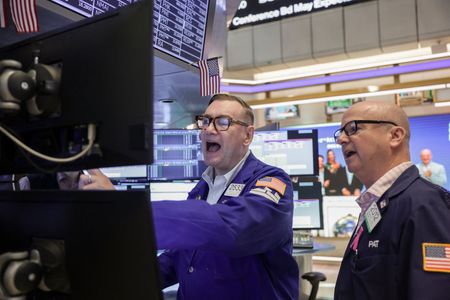

Global equity markets achieved fresh record highs Wednesday as investors navigated mixed developments regarding possible U.S.-Iran diplomatic negotiations while preparing for Thursday’s critical U.S. inflation report.
Major American markets including the S&P 500, U.S. dollar, and Treasury bonds showed minimal movement as traders processed contradictory information about potential peace negotiations between Washington and Tehran.
Market analyst Jamie McGeever examined parallels between today’s artificial intelligence investment surge – described as the biggest on record – and the internet bubble of the late 1990s. While acknowledging increasing risks, McGeever suggested that a market collapse may not be immediate or certain.
Conflicting reports emerged Wednesday regarding diplomatic progress. Iranian state television referenced an unofficial agreement framework that would potentially reopen the Strait of Hormuz within 30 days. However, U.S. officials dismissed this as a “complete fabrication.” Despite the contradictions, markets responded as though negotiations were advancing, with oil prices dropping below $100 per barrel and stocks maintaining record levels.
Thursday brings the release of April’s Personal Consumption Expenditures inflation data, marking the first significant inflation report during Kevin Warsh’s tenure at the Federal Reserve. Economic forecasters anticipate headline annual PCE inflation will climb to 3.8%, matching headline Consumer Price Index figures, while core annual rates are expected to reach 3.3% – significantly above the 2.8% core CPI reading.
Speculation about resolving the U.S.-Iran conflict has reduced oil prices, bond yields, and Federal Reserve rate expectations, though traders still assign equal odds to a rate increase before year’s end.
Wednesday’s market performance showed South Korea surging 3% to new highs while China declined 1%. European markets remained flat with the UK gaining 0.1%. Wall Street presented mixed results as the Dow Jones and Russell 2000 posted new records while the S&P 500 and Nasdaq stayed essentially unchanged.
Individual stock movements varied significantly, with consumer discretionary sectors rising 1.9% while energy fell 1.5%. Notable decliners included Zscaler dropping 31%, Qualcomm falling 9%, and JPMorgan Chase down 2.4%. Gainers featured United Airlines climbing 6% and Procter & Gamble advancing 3%.
Currency markets saw the dollar index hold steady while New Zealand’s dollar led major currency gains with a 1% increase. The Japanese yen reached four-week lows, returning to levels that might prompt intervention.
Central banking developments globally showed increasing hawkish sentiment. New Zealand’s Reserve Bank maintained current rates in a split decision signaling potential future increases, following rate hikes in Australia and Norway. This trend reflects similar hawkish guidance from European Central Bank officials and shifting Federal Reserve tone.
Emerging market central banks also tightened policy, with Sri Lanka surprising markets with a 100 basis point increase this week, while Brazil’s easing trajectory faced complications from persistent inflation pressures.
Thursday’s calendar includes potential Middle East developments, South Korea’s interest rate decision, speeches from Bank of Japan and European Central Bank officials, eurozone confidence data, Canadian current account figures, U.S. jobless claims, PCE inflation data, durable goods orders, GDP estimates, Treasury auctions, and Federal Reserve official remarks.