
Thousands of Southern California residents who fled their homes when a chemical storage tank overheated are back in their neighborhoods, but many remain anxious about living close to an aerospace facility with a troubled safety record.
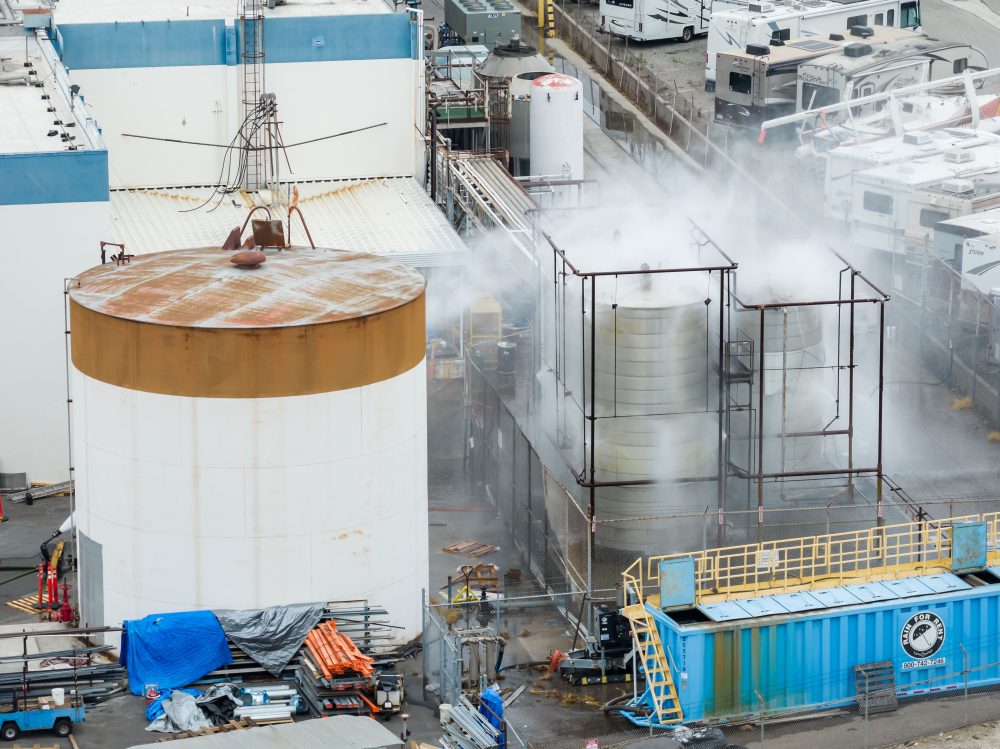
Last week, approximately 50,000 people were forced to leave their homes in and around the Orange County community when a cooling system malfunction caused authorities to warn of a possible devastating blast. The storage container eventually developed a crack that released pressure naturally, allowing the temperature to stabilize without additional measures and enabling people to return.
Bobbi-Lee Smart came back to her residence on Monday but keeps her luggage, pet carriers and vital paperwork prepared for a quick departure if necessary.
“I won’t even open the doors and windows in my house because I don’t know for sure that the air is safe,” said Smart, who lives in Anaheim, next to Garden Grove. “How do we know it is stable?”
The same day California officials ended the last evacuation warnings, a separate chemical container burst at a mill facility in Washington state, resulting in fatalities and missing persons in another dangerous industrial incident.
The storage vessel at GKN Aerospace Transparency Systems, a manufacturer of aircraft cockpit windows, canopies and windshields, holds between 6,000 and 7,000 gallons of methyl methacrylate, a highly combustible substance. According to the Environmental Protection Agency, contact with this chemical can lead to severe breathing difficulties, nervous system damage and irritation of skin, eyes and throat.
Orange County Fire Capt. Brian Yau reported Wednesday that the container’s temperature stayed steady at 91 degrees without requiring sprinkler cooling.
“The team will continually monitor the temperature,” Yau said.
Public health authorities have told residents no pollution or toxic gases escaped, and they plan to continue air quality testing for several months while also examining sewage and storm drainage systems.
Smart believes the business should have faced greater oversight given its violation history. She wants the company to relocate from the crowded, working-class area filled with family businesses, but only after providing compensation to residents and local business owners.
“The reality is the company has broken the public trust,” Smart said.
The United Kingdom-based GKN Aerospace stated it is working with officials and partnering with charitable organizations to assist community recovery efforts.
Legal action filed on behalf of a nearby couple claims the company failed to shield neighbors from “foreseeable chemical releases, toxic vapor migration, evacuation conditions, and catastrophic industrial failures.”
The legal complaint states residents experienced strong chemical smells, breathing problems, headaches and dizziness, leaving them concerned about ongoing risks.
During Tuesday evening’s city council session, community members questioned why the chemical facility was permitted to operate in such close proximity to residential areas.
The Orange County District Attorney’s office has opened an investigation. Mayor Stephanie Klopfenstein promised the company would face consequences for its actions.
In the previous year, GKN paid state regulatory agencies over $900,000 to resolve violations related to record maintenance, permit problems and nitrogen oxide emissions, based on documentation from the South Coast Air Quality Management District website.
The Occupational Safety and Health Administration has conducted four inspections of the company’s facility since 2018, discovering 10 violations according to public documents reviewed by the Los Angeles Times. Additional details about these violations were not readily accessible.
During 2019, the California Department of Industrial Relations asked an Orange County Superior Court judge to require the company to pay $2,898 in outstanding civil fines.
The violation, detailed in court documents obtained by the Times, accused the company of failing in April 2018 to “ensure that all machinery and equipment in service were inspected or maintained as recommended by the manufacturer.”
None of the documented violations appear connected to the overheated storage tank incident.
Purdue University engineering professor Andrew Whelton indicated the container would probably need replacement.
Whelton noted the California emergency resembles a 2014 chemical leak in Charleston, West Virginia, where storage containers failed at a Freedom Industries facility. That spill forced the state capital and surrounding communities to stop using tap water for multiple days. Local businesses temporarily closed and hundreds sought emergency medical care for symptoms ranging from nausea to skin rashes.
The West Virginia incident led to new state legislation mandating increased inspections and registration requirements for above-ground storage containers. Freedom Industries later filed for bankruptcy and two executives received federal prison sentences on pollution charges.