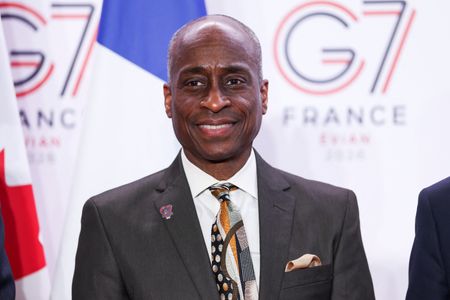

Federal Reserve Vice Chair Philip Jefferson declared Thursday that bringing inflation back to the central bank’s 2% goal should be the primary priority, citing the strength and durability of America’s employment sector during current economic challenges.
Speaking during a question-and-answer session following his presentation at a Tokyo conference organized by the BOJ and its research institute, Jefferson outlined his policy approach.
“When I’m thinking about my policy decision meeting by meeting, I’m absolutely focused on price stability, but by mandate I also need to keep in mind what’s happening in the labour market,” Jefferson explained.
“The U.S. labour market has been very resilient to the current shock. Given that resiliency, it seems appropriate that the focus will be on returning inflation to 2%,” he stated.
These remarks represent Jefferson’s initial public statements following Kevin Warsh’s installation as the Fed’s new chair last Friday.
Jefferson acknowledged the complexity of predicting future interest rate decisions, noting the unpredictable nature of current economic disruptions.
“What all segments of society are noticing is increasing energy and gasoline prices in particular. We are sensitive to how that’s impacting the lives of everyday people,” he commented.
The Fed official highlighted a unique economic situation where artificial intelligence investments are driving growth even as energy-related disruptions create obstacles.
“The energy shock is a headwind for growth, but we are still having growth during this episode,” Jefferson observed. “In terms of monetary policy communication, the emphasis has been on monitoring the second-round effect associated with supply shocks and a surge in investment demand.”
In his formal conference presentation, Jefferson indicated that current monetary policy settings are appropriate given continued inflation risks.
Regarding the upcoming Federal Open Market Committee gathering scheduled for June 16-17, Jefferson remained noncommittal about future actions.
“I have not prejudged the next meeting and look forward to engaging with my colleagues about the policy necessary to best achieve our dual-mandate goals,” he said.