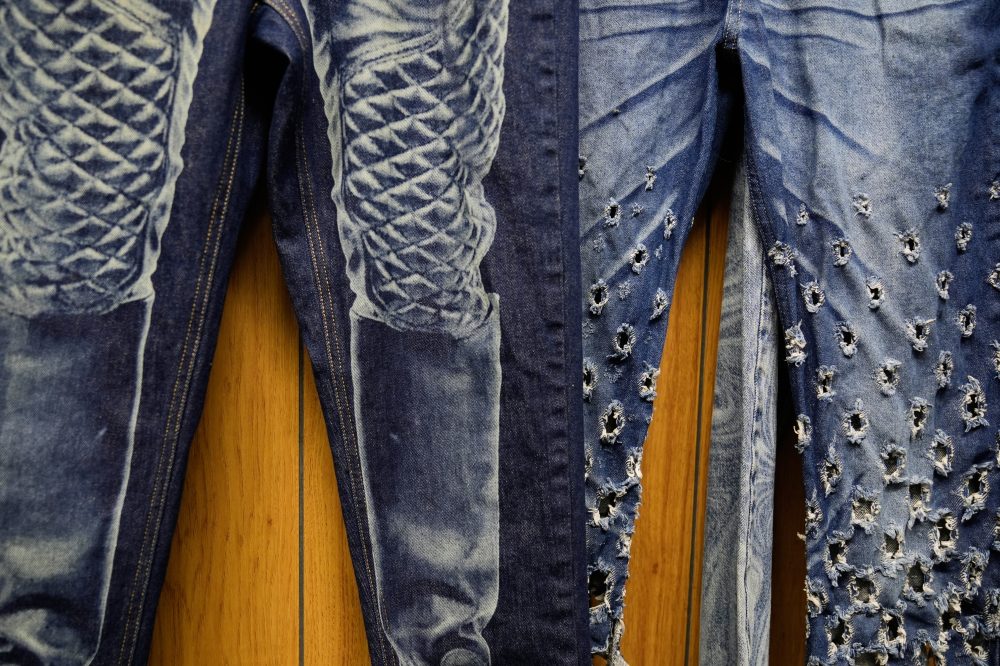

NEW YORK (AP) — That beloved pair of denim in your wardrobe likely journeyed across the globe, passing through cotton fields, dyeing facilities, washing plants and manufacturing sites before reaching your dresser. The fabric might be brand new but appears aged through stone washing, sanding, chemical bleaching or laser treatments to achieve that worn look.
These manufacturing steps demand substantial water, energy and chemical usage — contributing to why denim has emerged as a key focus for environmental initiatives throughout the fashion sector, which ranks among the globe’s largest greenhouse gas contributors.
Companies are addressing increased consumer awareness by promoting their denim as “sustainable,” highlighting regenerative cotton sources, recycled materials and water-conserving production methods. However, determining the accuracy of these claims proves much more complex. Sustainability lacks a clear definition and universal measurement standards.
Last week, Chinese fast-fashion giant Shein acquired Everlane, a brand known for transparency and sustainability efforts, highlighting broader tensions over scale and affordability. Enhanced sustainable methods typically increase costs, creating challenges for businesses operating with rapid production schedules and budget pricing to implement these practices broadly. Shoppers must navigate complex considerations involving agricultural methods, chemical treatments, worker conditions and varying price points.
Industry professionals recommend consumers research actual jean manufacturing processes to identify truly sustainable options.
Cotton serves as the primary material for most denim, and this crop often demands substantial water, fertilizer and pesticide applications.
Beth Jensen, chief impact officer at the nonprofit Textile Exchange, noted that numerous companies still cannot fully trace their cotton origins. Since denim manufacturing frequently involves multiple nations and suppliers, monitoring workplace conditions also becomes challenging.
“We as an industry, collectively, have a long way to go on this,” she said.
With growing concerns about fashion’s environmental effects, certain companies have explored alternatives like regenerative cotton, emphasizing soil wellness, ecosystem diversity and reduced synthetic chemical usage. However, as Jensen explained, methods that work on California farms may not suit locations like India or Australia due to climate differences.
Following cotton harvest, the material becomes yarn and receives dyeing — usually with indigo, requiring considerable water consumption and chemical processing. The dyed cotton then becomes denim fabric before being cut and assembled into jeans.
Finished jeans typically undergo additional treatments creating various colors, fading effects and distressed appearances. Bill Curtin, owner of New Jersey-based BPD Washhouse, explained that denim finishing divides into “wet” and “dry” methods.
Wet processing involves washing denim with water, chemicals and treatments that lighten or alter the fabric color. Traditional methods used pumice stones for achieving weathered, stonewashed appearances — with stones frequently imported from Mexico, increasing transportation emissions and expenses. Many operations now use enzyme-based substitutes and ozone systems requiring less water.
Dry processing creates wear patterns, whisker marks and torn details through manual work or laser systems, which Curtin described as more efficient and requiring less manual labor.
Stretch denim often includes materials like polyester or elastane — petroleum-based synthetic fibers that may release microplastics during use.
Fashion designer Maria McManus spent years considering adding denim to her environmentally conscious collection but couldn’t find production methods matching her principles. The obstacle, she explained, remained the washing procedures.
“From a water and chemical perspective, it’s very invasive,” she said.
Instead, she obtained dark, untreated denim from Japan — indigo-dyed with minimal processing — and eliminated washing entirely, avoiding the faded and weathered appearance characterizing most commercial jeans. This represented an intentional limitation maintained for years.
Progress occurred through her partnership with Agolde, a prominent denim company. Together with its parent organization Citizens of Humanity, the brand has earned fashion industry recognition for emphasizing regenerative cotton cultivation.
The collaboration provided McManus access to resources her smaller company couldn’t develop independently — a consulting firm connecting her with regenerative cotton producers, an approved indigo-dyeing method using biochemical instead of petrochemical dyes, and thorough supply chain verification.
Even this approach, she noted, involves complications. Organic and regenerative cotton harvests may fail. Supply networks prove difficult to confirm. “You know when they tell you their harvest failed” that they’re honest, she said of one supplier. “I know I can trust them because really, what they should have done as business people or capitalists was just get regular cotton — because nobody is testing this stuff.”
These methods often result in higher costs. McManus’ jeans retail for nearly $700 — reflecting limited production quantities, she explained. “It’s truly a units game.”
Industry professionals advise consumers to question unclear environmental claims and seek companies providing comprehensive details about their sourcing and production methods.
Dana Davis, a strategic fashion adviser who led sustainability efforts for the label Mara Hoffman, urged shoppers to examine beyond individual product descriptions and investigate whether companies address worker rights, materials and production locations throughout their operations — not merely in specialty collections.
“If a brand really explains the whys behind why they’re doing these things, then you can get a sense of, ‘OK, this feels authentic,’” Davis said. However, she noted that “greenwashing” — exaggerating environmental benefits — complicates consumers’ ability to identify genuine efforts.
Third-party certifications offer guidance, though Davis warned no single designation ensures sustainability. B Corp certification deserves consideration, as it assesses companies’ social and environmental performance. Certain plant-based fibers like lyocell, frequently mixed into denim, may originate from Forest Stewardship Council (FSC) approved sources, showing the wood pulp came from responsibly managed forests.
One of the most effective methods for reducing denim’s environmental impact remains the least exciting: purchasing fewer jeans, wearing them longer, washing them less frequently and buying secondhand.
A life cycle study by Levi Strauss & Co. found that if 34.2 million people — representing 1 in 10 Americans — purchased secondhand jeans this year instead of new pairs, it would prevent approximately 1.5 billion pounds (roughly 0.7 million metric tons) of carbon dioxide, matching emissions from about 150,000 gasoline vehicles.
“The most sustainable thing you can do,” Jensen said, “is use a product that’s already been made.”