
A new United Nations climate forecast warns that Earth faces an overwhelming likelihood of repeatedly breaking through critical warming limits during the next five years, while simultaneously shattering existing temperature records.
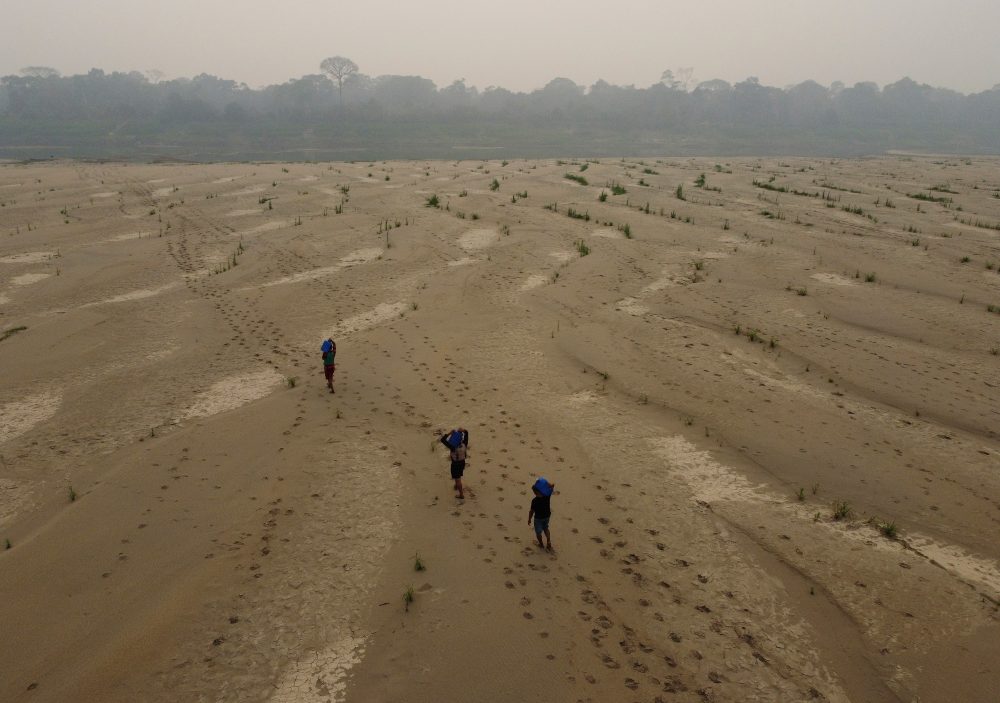
The World Meteorological Organization’s latest projections paint a concerning picture of an overheating Arctic region that could warm nearly 3 degrees Fahrenheit between now and 2030, alongside dangerous drought conditions threatening the Amazon rainforest – a vital component of Earth’s natural climate defense systems. Scientists warn that rising global temperatures from fossil fuel combustion will trigger more severe weather events, including flooding, droughts and extreme heat waves.
The forecast from the U.N. climate agency and the United Kingdom’s Meteorological Office indicates a 75% probability that average global temperatures from 2026 to 2030 will surpass 1.5 degrees Celsius above pre-industrial levels. This benchmark represents the warming limit established by the 2015 Paris climate agreement when averaged over two decades.
A subsequent U.N. scientific assessment revealed that crossing this 1.5-degree mark increases the likelihood of fatalities, environmental hazards and species extinction. Despite appearing minimal, this fractional temperature increase places unbearable stress on vulnerable ecosystems like coral reefs and glaciers.
The WMO report indicates a 91% probability that at least one year within the next five will exceed the 1.5-degree threshold, with an 86% likelihood that one of these years will surpass 2024’s record as Earth’s hottest year on record. Projections show annual temperatures between now and 2030 ranging from 1.3 to 1.9 degrees Celsius above late 1800s levels.
“It’s important to note that (1.5) is not kind of a cliff edge that we’re going to fall off,” said report co-author Melissa Seabrook, a climate scientist at the U.K. Meteorological Office. “Every kind of 0.1 of a degree has more and more severe impact.”
She referenced this week’s extraordinary May heat wave across Europe as an example.
Sustaining temperatures above the 1.5-degree threshold for an entire year or longer “means a whole range of extreme weather events, probably many so hot/wet/dry that it exceeds anything we’ve experienced in the past and thus crucially, anything our city planning, agriculture etc. has anticipated,” Imperial College of London climate scientist Friederike Otto, who wasn’t part of the report, said in an email. “This will mean many people will lose their lives, we are in for a lot of food price shocks, and more intense wildfires.”
Most short-term predictions anticipate the development of a powerful El Nino pattern – a natural warming phenomenon in parts of the central Pacific that influences global weather patterns and elevates worldwide temperatures. The WMO report suggests this could persist through 2028. Due to this factor, Seabrook indicated 2027 will likely surpass 2024’s temperature record.
Should the upcoming five years average above 1.5 degrees Celsius compared to pre-industrial times, Earth will have experienced a quarter-degree Celsius warming within a single decade – exceeding previous warming rates that typically measured closer to two-tenths of a degree Celsius per decade.
Climate researchers are currently examining whether global warming is gaining momentum, “which obviously is quite scary,” and these projections would provide additional support for those observing an accelerated pace of change, Seabrook noted.
The forecasts, derived from averaging approximately 200 computer simulation runs using 13 different climate models from various nations, demonstrate Arctic warming occurring 3.5 times faster than the global average, attributed to diminishing ice and snow that previously reflected solar energy back to space, Seabrook explained. This creates a self-perpetuating cycle.
“As the temperature warms, more sea ice melts, the worse this makes it,” Seabrook said.
Arctic winters from 2020 to 2025 averaged 2.1 degrees Fahrenheit warmer than the 1991-2020 baseline. The WMO anticipates the next five winters will average 5.1 degrees Fahrenheit above that recent standard, Seabrook reported.
The assessment also predicts continued summer Arctic sea ice reduction.
The report anticipates increasingly warm and unusually arid conditions across the Amazon basin, potentially proving catastrophic for both regional populations and global climate stability, Seabrook stated.
Local communities depend on the Amazon for water resources, and the projected hotter, drier environment should elevate wildfire risks, Seabrook explained, potentially transforming the Amazon from a region that currently absorbs heat-trapping carbon dioxide from the atmosphere into an area that amplifies the climate problem.
Africa’s Sahel region, which has experienced exceptional dryness, may receive above-normal rainfall that could trigger flooding, Seabrook said.
United Nations leadership emphasized that climate change mitigation efforts remain insufficient.
“Despite the progress of recent years, it’s clear that global heating is still outpacing global efforts to contain it, and the baking temperatures in Europe, India and elsewhere show yet again the brutal human and economic impacts of humanity still burning colossal amounts of coal, oil and gas,” U.N. climate chief Simon Stiell said about the WMO report.
“Whether it’s extreme heat, mega-storms, floods, massive wildfires or droughts hitting food supply and prices,” he said, “every nation is already paying a huge price from this global climate crisis.”