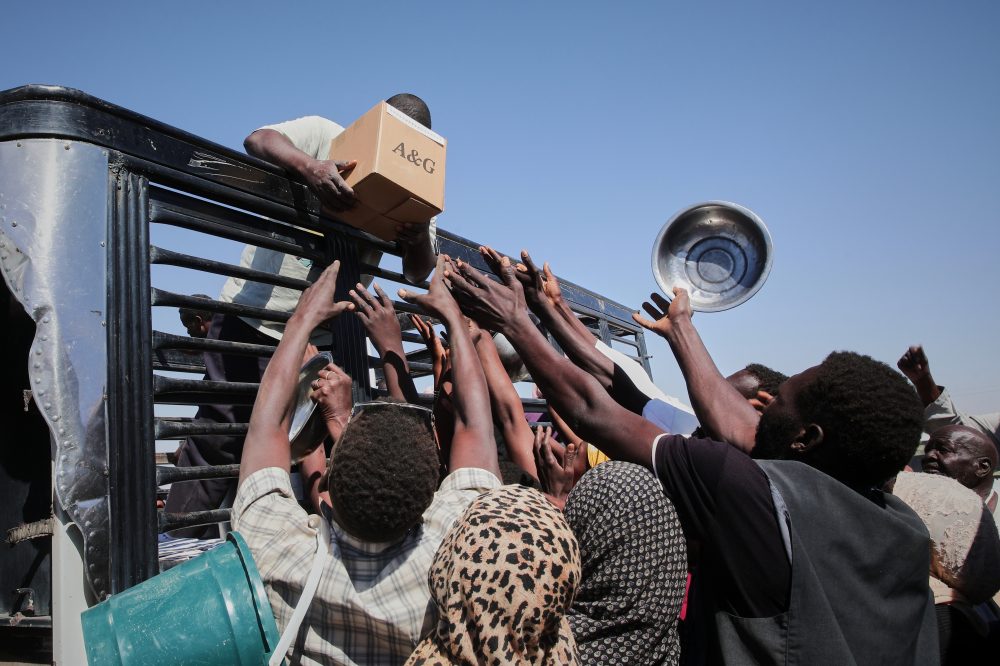
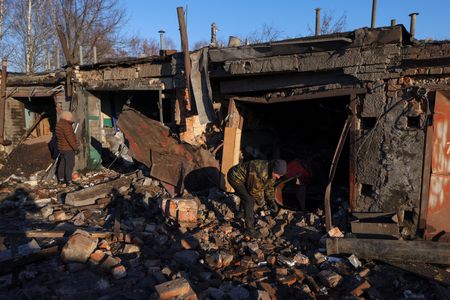
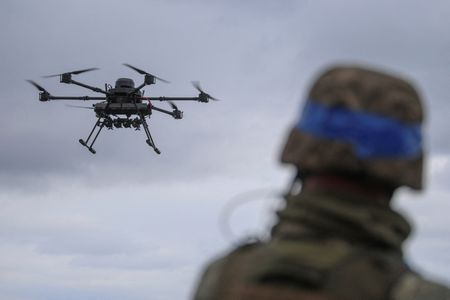
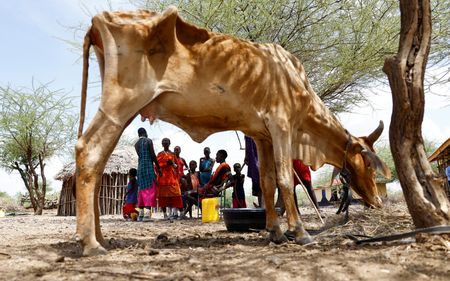
Three people lost their lives and four aid workers sustained injuries Thursday when drones targeted a humanitarian convoy transporting essential supplies through Sudan’s conflict-torn Kordofan region, according to medical monitoring groups.
The Sudan Doctors Network reported on social media that the vehicles were delivering food and emergency aid to Kadugli city and Dilling town in South Kordofan when the attack occurred in the Kartala area. The medical group attributed the drone assault to the Rapid Support Forces (RSF), though the specific aid organization operating the convoy remains unknown.
Sudan has been engulfed in civil war since April 2023, with fighting between the RSF and government military forces spreading nationwide. The World Health Organization reports that the conflict has claimed at least 40,000 lives and forced 12 million people from their homes. Aid organizations warn the actual casualty count may be significantly higher due to limited access to remote combat zones.
The Kordofan region has become the latest battleground, where humanitarian groups and security analysts document increasing drone attacks that disrupt relief efforts and harm civilians. This occurs despite military claims of regaining control and lifting sieges in Kadugli and Dilling. February alone saw 77 civilian deaths from drone warfare across Kordofan.
United Nations agencies announced Wednesday that a convoy successfully reached Dilling and Kadugli with assistance for over 130,000 residents – marking the first substantial aid delivery in three months. Nevertheless, relief workers express growing alarm over the intensifying violence.
This marks the second assault on humanitarian convoys within a month, the Sudan Doctors Network noted. Earlier in the month, attackers struck a World Food Program convoy in North Kordofan.
Meanwhile, a UN-supported investigative team released findings Thursday concluding that RSF actions in el-Fasher, North Darfur’s capital, during late October displayed “hallmarks of genocide.” In response to these findings, the U.S. Treasury Department imposed sanctions on three RSF commanders involved in el-Fasher operations and demanded the group agree to an immediate ceasefire.
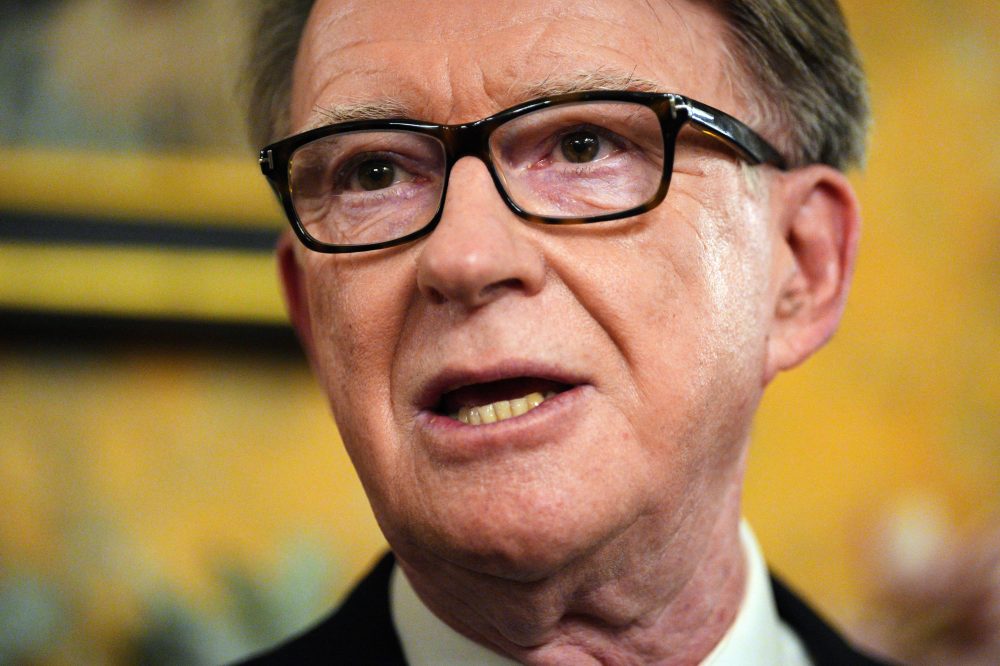
A prominent British lobbying company has ceased operations and entered bankruptcy proceedings following damaging revelations about its co-founder’s ties to Jeffrey Epstein, the deceased convicted sex offender.
Global Counsel announced Friday it has halted business activities and dismissed approximately 80 employees in the United Kingdom after numerous clients severed relationships with the firm. The exodus occurred after documents exposed the depth of Peter Mandelson’s connection to Epstein, who died while imprisoned in New York during 2019. The company employs roughly 130 people across the globe.
Mandelson, who established Global Counsel in 2010 following the Labour Party’s electoral defeat, stepped down from the company’s board last year and divested his ownership stake this month in what appeared to be an effort to shield the business from the growing controversy.
Interpath, a consulting company, has assigned administrators to explore possibilities for the enterprise and examine its holdings.
“While Global Counsel had grown over the past 15 years to become one of the U.K.’s leading public affairs consultancies, the rapid and sudden loss of clients over recent weeks has had a monumental impact on the business,” said Will Wright, U.K. chief executive of Interpath and joint administrator.
Among the extensive collection of Epstein-related documents released by the U.S. Justice Department, correspondence revealed that Mandelson shared confidential government intelligence with the financier he called his “best pal” during 2009, while serving as a senior Labour government official.
The files also contained evidence of $75,000 in payments during 2003 and 2004 from Epstein to financial accounts connected to Mandelson or his spouse, Reinaldo Avila da Silva. Mandelson has challenged the validity of these banking records. In his resignation letter to Labour, Mandelson stated he had no memory of receiving such funds and pledged to investigate the matter.
After the Epstein documents became public, law enforcement officers conducted searches at Mandelson’s London residence and another property associated with him.
British authorities are investigating Mandelson for possible misconduct while in public service, though he faces no allegations of sexual crimes. On Thursday, Andrew Mountbatten-Windsor was taken into custody on similar suspicions related to his tenure as a UK trade representative.
Mandelson’s selection for the prestigious diplomatic position nearly ended Prime Minister Keir Starmer’s career as critics questioned his decision-making abilities. Mandelson’s extensive political history has been marked by scandal, including two departures from Tony Blair’s administrations around 2000.
Less than a year after the appointment, Starmer dismissed Mandelson in September when earlier email releases demonstrated he maintained his friendship with Epstein following the financier’s 2008 conviction for sexual offenses involving a minor.
The government intends to publish records from the screening process, hoping to clear Starmer’s name and demonstrate that Mandelson was dishonest.
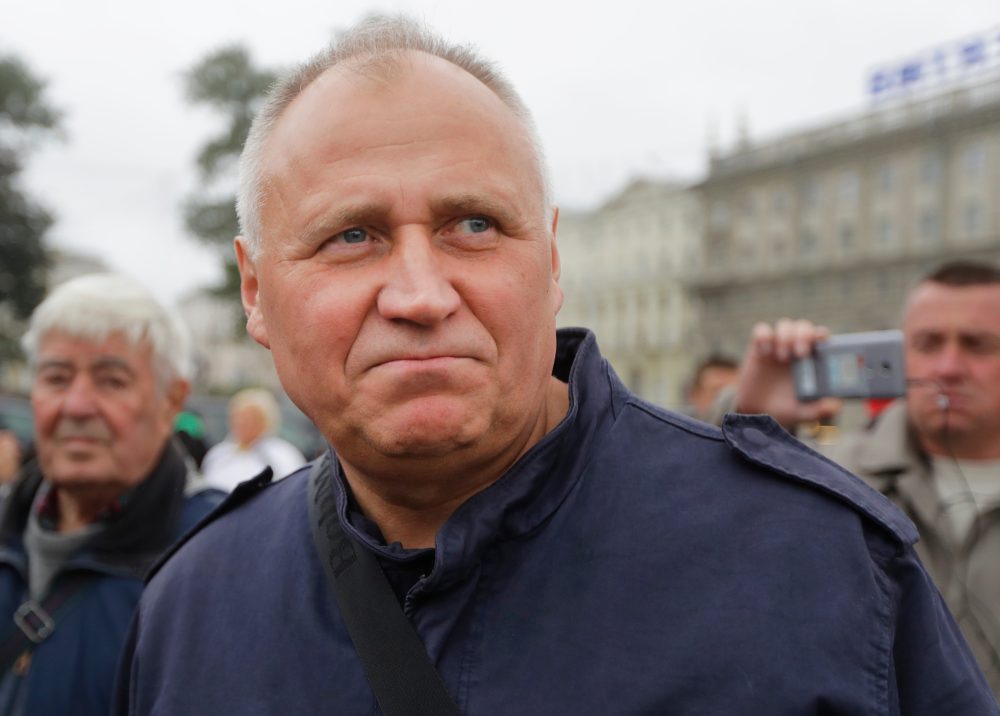
A prominent Belarusian opposition figure who made headlines for rejecting forced exile has been freed from prison following a medical emergency that left him with lasting health complications.
Mikola Statkevich, 69, was released after experiencing a stroke while serving his sentence, according to his wife Maryna Adamovich. Speaking to reporters Friday from Belarus’s capital city, she explained that her husband continues to experience speech difficulties as a result of the medical episode. “Now he’s recovering and gaining strength,” Adamovich stated during a telephone conversation.
The veteran politician’s release came after he made a dramatic stand in September when dictator Alexander Lukashenko granted pardons to 52 political detainees. While other prisoners accepted transport to Lithuania’s border as part of the U.S.-negotiated agreement, Statkevich denounced the arrangement as “forced deportation.” He dramatically exited the transport vehicle and remained in the border zone for hours before Belarusian authorities arrested him and returned him to custody.
Statkevich had been serving a 14-year sentence following his 2020 arrest on accusations of inciting mass disorder, charges that international human rights organizations like Amnesty International have condemned as politically driven.
Government spokesperson Natalia Eismont announced Friday that Lukashenko authorized Statkevich’s freedom due to his medical situation, responding to appeals from his family members.
The authoritarian leader, often called “Europe’s last dictator,” has controlled Belarus for more than 30 years through systematic suppression of opposition voices. After massive demonstrations erupted following disputed 2020 elections, authorities detained over 65,000 individuals, physically assaulted thousands, and shuttered hundreds of independent news organizations and civil society groups.
International sanctions and diplomatic isolation have pressured Belarus for years due to human rights violations and its support for Russia’s 2022 Ukraine invasion. Recently, Lukashenko has attempted to improve Western relations by freeing hundreds of imprisoned dissidents.
Statkevich’s initial release occurred following discussions between Lukashenko and then-President Donald Trump in August, which led to the lifting of restrictions on Belarus’s national carrier, Belavia. An additional 123 political prisoners, including Nobel laureate Ales Bialiatski, gained freedom on December 13 when the U.S. removed certain trade penalties.
However, government persecution of critics continues despite these prisoner exchanges. The Viasna human rights organization reports that 1,146 political prisoners remain in Belarusian custody.
“It’s still unclear what Statkevich’s legal status is and whether the authorities have cleared the accusations against him,” explained Pavel Sapelka from Viasna. “Political repressions in Belarus are continuing, and it means that no government critic can feel secure.”
According to Sapelka, Statkevich required more than a month of intensive medical treatment at a prison hospital following his stroke.
Throughout his lengthy political career, Statkevich, who ran against Lukashenko in the 2010 presidential race, has faced imprisonment three times and spent over 12 years in detention facilities.
Exiled opposition leader Sviatlana Tsikhanouskaya, who fled Belarus in 2020, expressed her emotions about the development. “I feel immense relief that Statkevich is finally free and at home,” she told reporters. “With his courage and bravery, he won a huge moral victory, for which he paid a high price.”
PARIS – French officials have approved the killing of roughly 200 wolves after the animals began expanding into agricultural regions and venturing close to major metropolitan areas, the nation’s Agriculture Minister Annie Genevard announced Friday.
With approximately 1,000 wolves currently living throughout France, government officials raised the permitted killing threshold to 21 percent – totaling just over 200 animals – up from the previous 19 percent limit. Genevard indicated the percentage could climb as high as 23 percent if needed.
“The wolf is causing increasing damage to our livestock farms, plunging farmers into a state of stress and even terrible pain,” Genevard stated during an interview with France Inter radio.
The decision follows a heated dispute last year between agricultural groups and wildlife advocates regarding wolves, whose population and livestock attacks have both increased significantly. The conflict concluded with European Parliament members voting to support farmers’ concerns.
In May, European legislators decided to reduce the wolf’s classification from “strictly protected” to “protected” status. This change permits EU member nations to authorize wolf hunting while still requiring measures to prevent the species from becoming endangered.
The European Commission justified the status change by citing comprehensive research showing wolf numbers are growing throughout the EU, with approximately 20,300 wolves documented in 2023. This population increase has resulted in greater livestock damage across member countries.
Within France, wolf numbers continue climbing as the animals return to territories they abandoned hundreds of years ago, when they retreated to isolated locations like remote Alpine valleys.
Genevard pointed to the Haute-Marne region in central France as an example, located just 60 kilometers from cities including Nancy, Dijon and Troyes, where agricultural producers reported wolves killed 850 sheep during the previous year.
Chancellor Friedrich Merz of Germany is preparing for his inaugural diplomatic journey to China next week, marking his first official visit to the Asian nation since assuming leadership of Europe’s largest economy earlier this year.
According to government spokesperson Sebastian Hille, Merz is scheduled to meet with Chinese Premier Li Qiang and President Xi Jinping in Beijing on Wednesday. The German leader will also travel to Hangzhou in China’s southeastern region during his diplomatic mission.
Hille explained to reporters in Berlin that the central focus of the visit will revolve around “competition” and finding “the right balance of cooperation” with China. “We want cooperation where it is necessary and in our mutual interest,” the spokesperson emphasized.
For several years, Germany has worked to preserve strong diplomatic and economic relationships with China while simultaneously expressing concerns about Beijing’s increasingly aggressive international stance and its reluctance to condemn Russia’s military actions in Ukraine. The European nation has also been working to reduce its economic dependence on China by expanding trade relationships with other countries and diversifying its supply chains for essential goods.
New statistics released Friday by Germany’s Federal Statistical Office reveal that China has once again become the country’s largest individual trading partner in the previous year, with combined imports and exports reaching 251.8 billion euros (approximately $297 billion). China previously held this distinction from 2016 through 2023 before being overtaken by the United States in 2024. While commercial activity with China increased last year, trade volume with America fell to 240.5 billion euros.
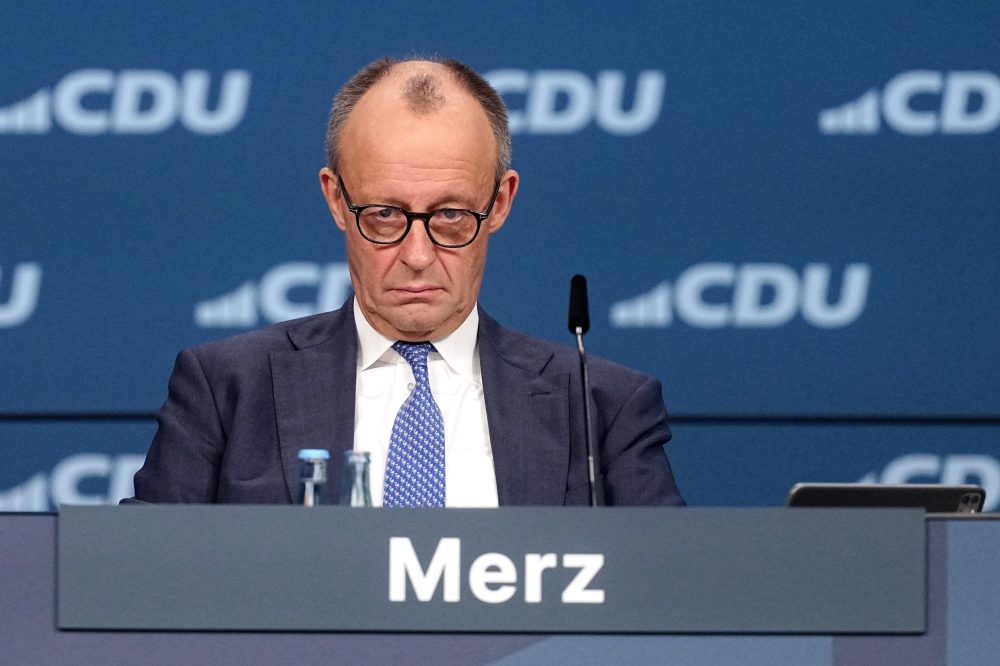
Speaking at a Christian Democratic Union party gathering in Stuttgart, Merz, who assumed the chancellorship in May, stated that “we need business ties in the whole world, and that of course also includes a country like China.” He added that “China is an important trading partner for us, so I will go to China next week with a large business delegation.”
Details about the composition of the accompanying business delegation were not disclosed by either Merz or his spokesperson.
However, the chancellor cautioned against having any “illusions” regarding China, describing the nation as one that “asserts the claim to define a new multilateral order according to its own rules.”
During his Stuttgart address, Merz reinforced his belief that the traditional rules-based international system has fundamentally changed, noting that “a new world order, an order of great powers, is taking shape at high speed.” He stressed the importance of Europe strengthening both its economic capabilities and military capacity while actively pursuing additional trade agreements with diverse international partners.
President Donald Trump is expected to make his own visit to China in April.
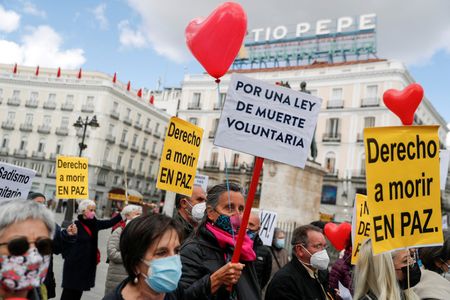
Spain’s Constitutional Court has denied a father’s legal challenge to prevent his 25-year-old daughter from proceeding with medically assisted death, according to a court announcement released Friday.
The young woman became paralyzed from the waist down following a suicide attempt in October 2022, when she jumped from a fifth-story window. Court documents reveal she had previously made multiple suicide attempts using drug overdoses while battling psychiatric illness.
Spain legalized medically assisted death and euthanasia in 2021, becoming the fourth nation in the European Union to permit the practice for individuals facing terminal or severely debilitating medical conditions. Government statistics show 426 people utilized assisted dying services in 2024.
A specialized medical panel in Catalonia granted approval for the woman’s euthanasia request in July 2024, with the procedure originally set for August 2nd. However, her father’s ongoing legal battles have prevented the process from moving forward.
Medical documentation indicates the patient experiences severe, ongoing, and disabling pain from her injuries, with medical professionals stating no possibility exists for improvement in her condition.
The father received backing from Abogados Cristianos, an ultra-conservative advocacy organization known as “Christian Lawyers,” who contended that the woman’s psychiatric condition might compromise her capacity to make a rational, well-informed choice regarding ending her life.
Multiple lower courts had previously sided with the woman’s position, and Friday’s ruling by Spain’s highest court determined no fundamental rights violations had occurred.
While Spanish citizens generally support assisted dying rights, the euthanasia legislation passed only after prolonged resistance from conservative political parties and the Catholic Church, which has traditionally influenced Spanish perspectives on end-of-life decisions.
The Christian Lawyers organization announced Friday they plan to escalate the matter to the European Court of Human Rights.
“We will not abandon these parents. We will continue to fight to the end to defend their right to save their daughter’s life,” stated Polonia Castellanos, who leads the advocacy group.
STUTTGART, Germany – German Chancellor Friedrich Merz delivered a forceful message on Friday, reaffirming his commitment to prevent any collaboration between his conservative party and the far-right Alternative for Germany (AfD).
Speaking to members of his Christian Democratic Union (CDU) during their national party gathering in Stuttgart, Merz made his position crystal clear regarding the controversial political group.
“We will not allow these people from the so-called Alternative for Germany to ruin our country,” Merz declared to his fellow conservatives assembled in the southwestern German city.
The chancellor emphasized his unwavering stance, stating: “And that is why I say with full conviction: this party cannot be a partner of the CDU.” He further warned that the AfD should prepare for strong resistance from conservative forces.
The AfD’s growing influence has sparked significant concern among German citizens, with many drawing uncomfortable comparisons to the Nazi Party’s rise to power during the 1930s, when democratic institutions were dismantled through seemingly legitimate political processes.
Germany’s established political parties have maintained a unified front against the AfD, refusing to offer their representatives key parliamentary roles or include them in governing coalitions. The AfD has criticized this coordinated exclusion as a violation of democratic principles.
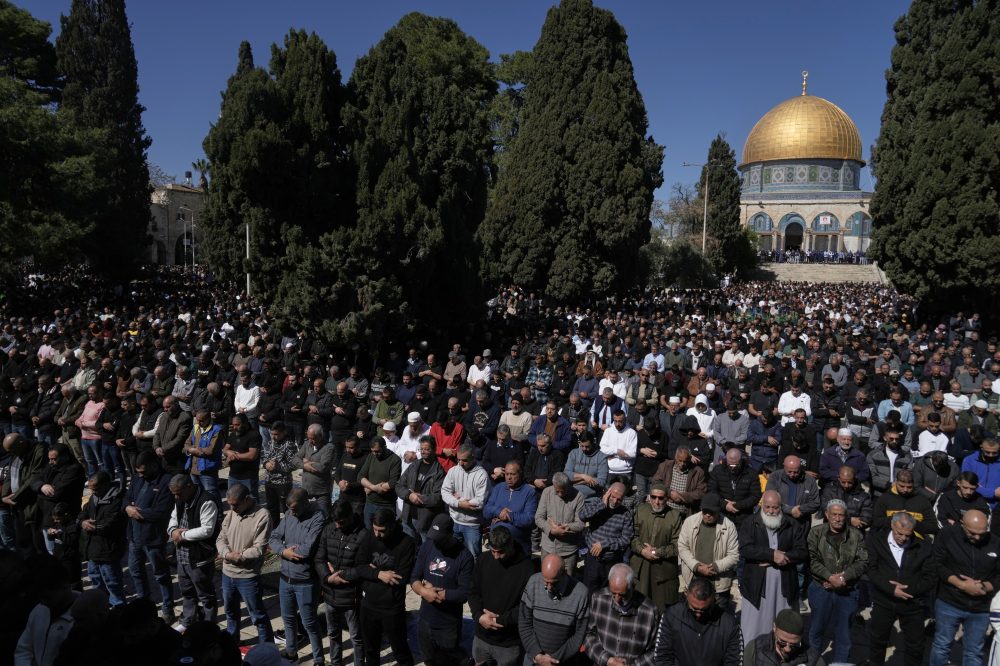
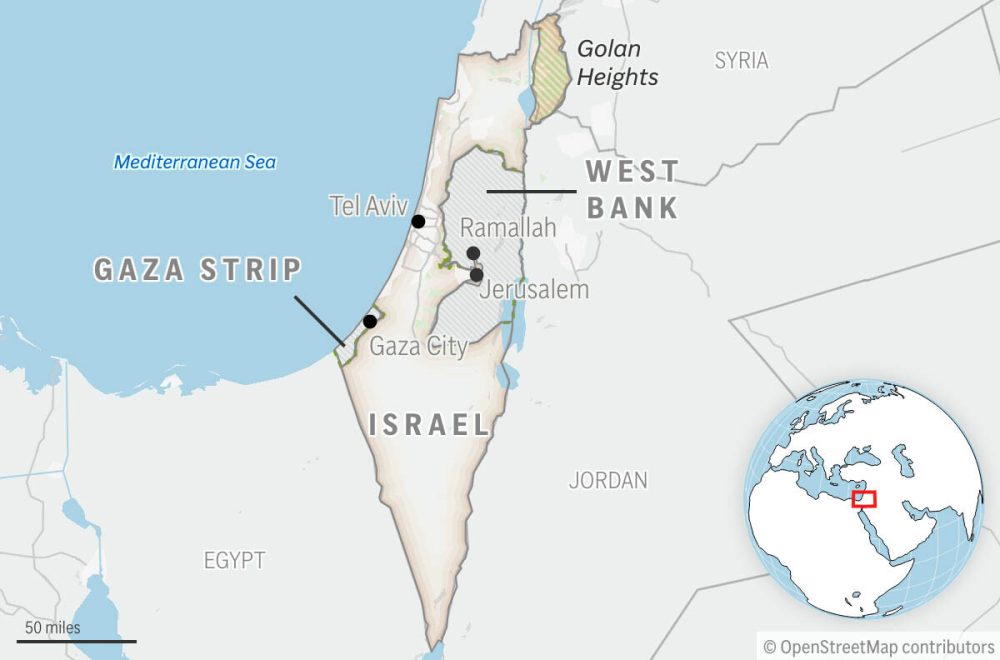
Massive crowds of Muslim worshippers converged on Jerusalem’s Al-Aqsa Mosque compound Friday for the opening Friday prayers of Ramadan, marking the first such gathering since the fragile ceasefire between Israel and Hamas took effect in October.
The historic religious site welcomed tens of thousands of faithful, including Palestinians who traveled from the West Bank under tight security measures. For many, this represented their first chance to worship at the Jerusalem Old City location since Ramadan a year ago.
Israeli authorities implemented strict limitations, permitting only 10,000 Palestinians from the West Bank to enter Israel on Friday. Access was restricted to men aged 55 and older, women over 50, and children under 12 – similar age-based restrictions previously imposed for security reasons.
The compound holds profound significance for both faiths: Jews revere it as the Temple Mount, Judaism’s most sacred location and site of the ancient biblical temples, while Muslims know it as the Noble Sanctuary, housing the Al-Aqsa Mosque, Islam’s third-holiest site.
This religiously significant area has repeatedly become a source of tension in the ongoing Israeli-Palestinian conflict.
More than 3,000 Israeli police officers were stationed throughout Jerusalem, according to authorities who emphasized their deployment was designed for emergency assistance rather than intimidation.
The Jerusalem Islamic Waqf, Jordan’s religious authority overseeing the compound, reported 80,000 attendees. During typical years, Ramadan Friday prayers at Al-Aqsa can attract as many as 200,000 worshippers.
West Bank Palestinian Ezaldeen Mustafah expressed disappointment with the attendance limitations. “We need more people than this,” Mustafah said.
Many Palestinian worshippers described how the month’s usual celebratory atmosphere feels diminished as they cope with sorrow and devastation from the two-year Gaza conflict.
Gaza resident Ramiz Firwana, participating in Friday prayers held in a schoolyard, reflected on the destruction. “Previously, there were mosques, but today all the mosques have been bombed,” Firwana said.
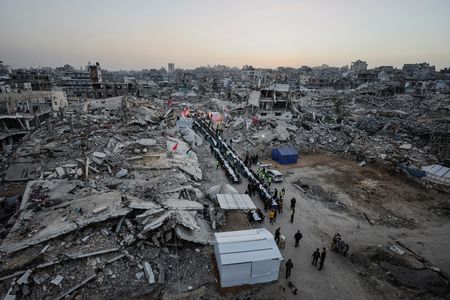
Thursday evening saw families breaking their fast with Iftar meals surrounded by debris and ruins.
Mohammad Kollab from Khan Younis expressed resilience despite the circumstances. “Despite the displacement, the pain, and the destruction, we want to rejoice and live,” he said. “We are a people who want to live, we are not a people destined only for destruction and killing.”
Gaza’s Health Ministry reports Israel’s military campaign has resulted in over 72,000 Palestinian deaths, along with extensive destruction that has displaced most residents. Israel initiated this offensive following the October 7, 2023 Hamas-led attack that killed approximately 1,200 people, primarily civilians, and resulted in 251 hostages.
The U.S.-mediated ceasefire agreement from October 10 sought to end more than two years of warfare between Israel and Hamas. Although major combat operations have decreased, the ceasefire period has witnessed nearly daily Israeli military actions.
The Turkish government has forced dozens of Christian missionaries to leave the country, stating these religious workers pose risks to national security. In response, the European Union’s legislative branch has passed a formal resolution demanding that Turkey safeguard religious liberty and fulfill its duties as a participant in the global community.
While Turkey officially maintains a secular government structure, President Erdogan has increasingly championed Islamic practices in recent years. This shift has coincided with growing harassment and persecution targeting Christian communities within the nation.
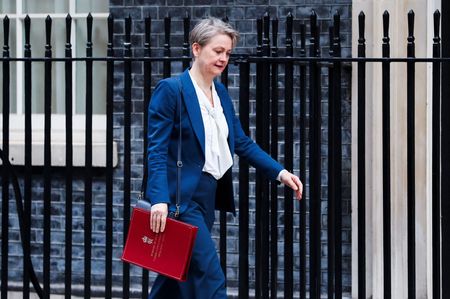
Britain’s Foreign Minister Yvette Cooper is scheduled to sit down with U.S. Secretary of State Marco Rubio this Friday, as tensions escalate following President Trump’s repeated attacks on London’s decision regarding the Chagos Islands sovereignty deal.
The controversy centers around an agreement reached last year by British Prime Minister Keir Starmer to hand over sovereignty of the Indian Ocean island chain to Mauritius. However, Britain retained control of Diego Garcia through a 99-year lease arrangement that allows continued U.S. military operations at the strategic air base.
While the Washington administration initially supported the arrangement last year, Trump has since flip-flopped on the issue multiple times. The president called the decision an act of “great stupidity” in January, then seemed to soften his stance earlier this month by saying he understood it was the best deal Starmer could negotiate, only to resume his attacks this week.
Cooper’s Washington meeting with Rubio will focus on defense and security matters, coming at a time when Trump is also escalating pressure on Iran, demanding Tehran reach a nuclear agreement within 10 to 15 days or face consequences he described as “really bad things.”
The Diego Garcia facility has played a crucial role in recent Middle East operations, including missions against Yemen’s Houthis and humanitarian assistance efforts to Gaza.
Despite Rubio’s State Department expressing support for the Chagos agreement on Tuesday, Trump reversed course the following day, declaring Britain was making a serious error.
“DO NOT GIVE AWAY DIEGO GARCIA!” Trump posted on Truth Social, emphasizing the base’s importance for potential future military actions to “eradicate a potential attack” from Iran.
The current arrangement requires Britain’s advance approval for any operations launched from Diego Garcia, a condition that may be complicating U.S. military planning.
According to a Thursday report in Britain’s The Times, Trump’s renewed criticism stems from Britain’s reluctance to authorize the base for potential Iranian strikes due to concerns about violating international law.
When questioned about The Times’ reporting, Britain’s Ministry of Defence declined to discuss operational details Thursday, stating only that Britain supports ongoing diplomatic efforts between the United States and Iran.
Norwegian military officials announced Friday they are repositioning several of their approximately 60 troops currently deployed in Middle Eastern countries due to escalating security concerns in the region.
The announcement follows President Donald Trump’s Thursday warning to Iran demanding a nuclear agreement within 10 to 15 days, threatening that “really bad things” would occur otherwise. Iran responded by threatening to strike back at American military installations throughout the region if attacked.
Norwegian defense officials refused to disclose the exact number of personnel being moved or specify which locations are being evacuated.
“These are soldiers who have jobs like training local forces and other missions,” Lieutenant Colonel Vegard Finberg from the Norwegian Joint Headquarters told Reuters.
“The way the situation is now, it’s not possible for them to do their primary tasks, and that’s why we are relocating them,” Finberg explained, noting that several other countries have implemented comparable troop movements in recent days.
Norway maintains military personnel at multiple installations throughout Iraq and surrounding nations in the region.
ABUJA, Nigeria — Law enforcement officials in Nigeria report that coordinated strikes by Islamic militants have claimed the lives of at least 33 individuals in the country’s northwestern region.
The deadly assault occurred Wednesday in Kebbi state’s Biu community, according to a statement released Thursday evening by police spokesman Bashir Usman.
Usman explained that the attackers traveled from neighboring Sokoto state, where portions of the territory are controlled by the militant organization known as Lakurawa.
“Preliminary investigations confirm that armed Lakurawa militants entered the area to rustle cattle,” Usman stated, noting that law enforcement officers have been sent to the region to reestablish peace and security.
The Lakurawa organization maintains a presence across several areas of northwestern Nigeria, with significant activity concentrated near communities throughout Sokoto state. This militant faction is notorious for livestock theft, village raids, and abducting victims to demand ransom payments.
Nigeria’s northern territories face an ongoing and complicated security emergency involving both extremist religious groups and criminal organizations that capture individuals for financial gain.
The West African country has recently strengthened security partnerships with the United States following earlier diplomatic disagreements. This week, Nigerian military officials confirmed that 100 American soldiers have arrived in the country to provide training assistance in combating armed militant organizations.
A court in Austria has found a 37-year-old man guilty of manslaughter through gross negligence following the death of his girlfriend during a mountain climbing expedition last year.
The Innsbruck state court handed down a five-month suspended prison term along with a 9,600-euro ($11,300) financial penalty following Thursday evening’s single-day trial, according to Austria Press Agency reports. Court officials withheld the defendant’s identity following standard local privacy protocols.
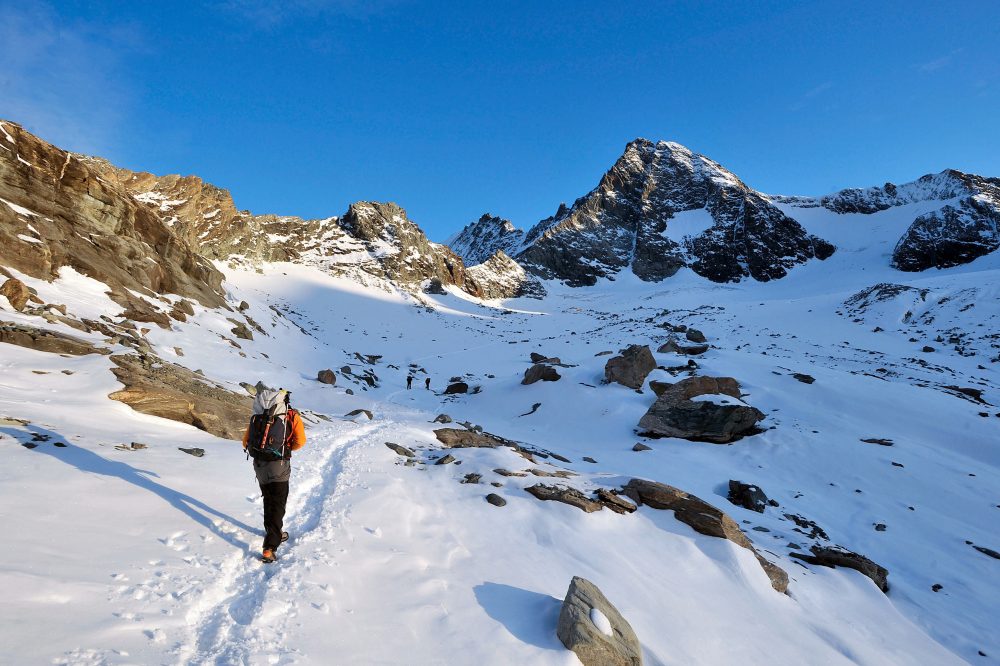
The tragic incident occurred when the couple embarked on an expedition to scale Grossglockner, Austria’s tallest mountain located in the country’s western region, during January 2025. According to prosecution testimony, the 33-year-old woman perished from freezing temperatures approximately 50 meters (164 feet) from the summit of the 3,798-meter (12,460-foot) mountain after her partner abandoned her position. The accused maintained his innocence throughout proceedings.
Presiding Judge Norbert Hofer determined that while the defendant made poor decisions regarding the mountain conditions, he did not intentionally abandon his companion. The judge noted the woman’s mountaineering experience was significantly inferior to her partner’s capabilities. The imposed sentence fell considerably below the potential three-year maximum imprisonment.
“I don’t see you as a murderer, I don’t see you as a cold-hearted man,” the judge stated, referencing online commentary surrounding the case. “I see you as the one who ultimately tried to call help and stand by his girlfriend.”
Nevertheless, Judge Hofer criticized the defendant for failing to fulfill his “leadership responsibility.” The court determined the victim likely would have survived “if the appropriate measures had been taken,” such as placing emergency calls sooner or deciding to retreat from the climb.
During testimony, the defendant expressed being “endlessly sorry,” as reported by APA. He maintained that both climbers participated equally in planning their expeditions, including the fatal Grossglockner attempt.
The man disputed claims about the experience gap, stating he lacked formal Alpine instruction and argued his girlfriend’s mountaineering knowledge wasn’t substantially less than his own. He testified she appeared healthy when a police helicopter passed overhead earlier during their climb and couldn’t account for her sudden decline. He claimed he descended seeking assistance only after discussing the plan with her.
PHNOM PENH, Cambodia (AP) — Two reporters from Cambodia are challenging their treason convictions and 14-year jail sentences after sharing Facebook images connected to last year’s border fighting with Thailand, according to a family member and court representative who spoke Friday.
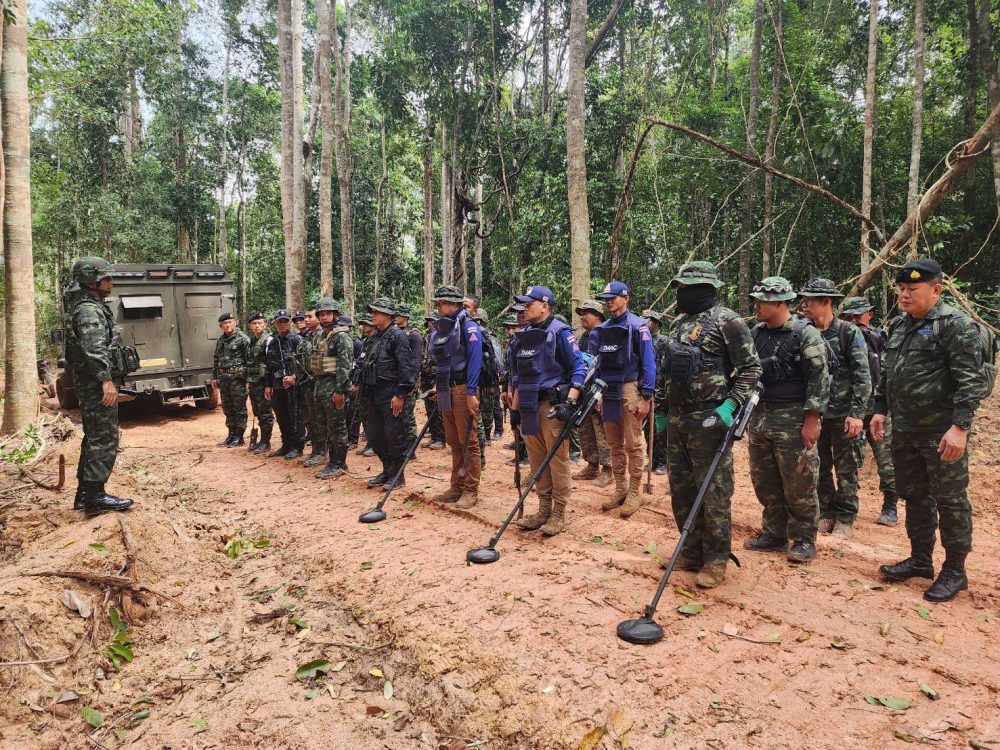
Battambang Post TV Online’s Phorn Sopheap and TSP 68 TV Online’s Pheap Pheara were taken into custody at different locations on July 31 as they returned from assignment coverage. Officials claim the pair captured images within a forbidden military area, including one that displayed landmines, seemingly contradicting Cambodia’s official statements denying the deployment of such devices.
The Siem Reap Provincial Court found them guilty and imposed sentences in December under accusations of “providing foreign nations with details harmful to national security.” Treason guilty verdicts result in prison terms ranging from seven to 15 years.
According to the Paris-headquartered organization, Cambodia placed 161st among 180 nations and regions in the 2025 Reporters Without Borders World Press Freedom Index, “positioning it within countries where media freedom conditions are deemed ‘extremely grave.’”
“Cambodia’s government must not contest Pheap Phara and Phorn Sopheap’s challenge to these shocking guilty verdicts and should cease employing unclear national security statutes to make legitimate journalism a crime,” stated Shawn Crispin, the Committee to Protect Journalists’ senior Southeast Asia representative from New York, in Friday’s announcement.
The Cambodian rights organization Licadho reported that based on details the Siem Reap court shared in September, the accusations stemmed from social media posts the journalists published during their coverage of Cambodia-Thailand confrontations.
Both men faced arrest on allegations of information collection and photography within a restricted military area close to combat zones, with the court asserting their behavior could compromise national security, the Cambodian Journalists Alliance Association reported.
Thai news organizations widely circulated the photograph, claiming it depicted multiple unused landmines visible in the frame’s background.
Cambodia had formally rejected accusations of landmine deployment during the dispute, stating its compliance with international treaties prohibiting such weapons. Thailand claimed Cambodia planted new mines near the boundary that injured Thai patrol units, while Cambodian officials suggested any mines could be remnants from conflicts spanning decades that concluded in the late 1990s.
Om Sarath, Pheap Pheara’s wife, informed The Associated Press that her spouse never intended to compromise national security in any way.
“This treatment of my husband is unjust, since he only brought supplies to give frontline troops and photographed himself with them as a keepsake without realizing a landmine was visible behind them,” she explained during a telephone conversation from her residence in northwestern Banteay Meanchey province. “Had he understood that his picture with the frontline personnel was taken in a forbidden zone, he probably wouldn’t have shared it publicly.”
She mentioned submitting an appeal through legal counsel on Monday and expressed hope that a superior court would deliver justice for her spouse and clear both him and Phorn Sopheap.
Yin Srang, representing the Siem Reap Provincial Court, verified the 14-year sentences imposed on both journalists and confirmed that both families had submitted appeals.
The July and December border confrontations forced hundreds of thousands to flee their homes in Thailand and Cambodia and resulted in approximately 100 military and civilian deaths. No additional combat has occurred following December’s ceasefire agreement, though regional tensions continue.
MOSCOW – Eight people are missing and presumed dead after a tour bus carrying Chinese visitors broke through ice and sank into Russia’s Lake Baikal on Friday, according to regional officials.
The tragic incident occurred when the vehicle was traveling across the frozen surface of the massive Siberian lake, regional governor Igor Kobzev announced through his Telegram channel. Among those missing are seven Chinese tourists and the bus operator.
A single tourist successfully escaped the freezing waters, Kobzev reported, while rescue teams continue their search efforts for the remaining passengers.
Lake Baikal, situated north of Mongolia, holds the distinction of being the world’s deepest freshwater lake and attracts visitors from around the globe.
The prosecutor’s office in the Irkutsk region has launched a criminal investigation to determine what led to the deadly accident.
Chinese visitor numbers to Russia have dramatically increased in recent years following improved diplomatic relations between the nations and their declared strategic partnership with “no limits” announced last year. The countries have also established visa-free travel arrangements, making tourism more accessible.
AMSTERDAM – Rodrigo Duterte, the former leader of the Philippines, will be absent from crucial International Criminal Court proceedings scheduled for next week, officials announced Friday from the Netherlands-based tribunal.
The 80-year-old ex-president’s legal team successfully petitioned to excuse him from the pre-trial sessions, citing concerns about his mental capacity. However, court officials described the reasoning behind his absence as “speculative.”
His defense attorneys argued that Duterte’s deteriorating cognitive condition would prevent him from participating in the proceedings.
Just last month, judges at the international war crimes tribunal in The Hague determined that Duterte was mentally capable of attending the hearings. This decision came after independent medical professionals concluded he possessed sufficient mental faculties to comprehend and engage with his legal case.
Duterte, who led the Philippines between 2016 and 2022, was apprehended and transported to The Hague in March of last year.
International prosecutors allege that Duterte established, financed, and equipped vigilante killing units as part of his anti-narcotics campaign, during which thousands of suspected drug dealers and users lost their lives.
The former president has consistently maintained that he only authorized law enforcement to use lethal force when defending themselves, and continues to justify his aggressive drug enforcement policies.
Next week’s court sessions are designed to formally validate the murder charges related to crimes against humanity that prosecutors want to bring against Duterte.
Within the International Criminal Court’s legal framework, judges must approve these charges before any trial proceedings can begin.
Official police records indicate that 6,200 suspects died during narcotics enforcement operations while Duterte held office. However, human rights advocates contend the actual death toll was significantly higher, with ICC prosecutors suggesting that up to 30,000 individuals may have perished.
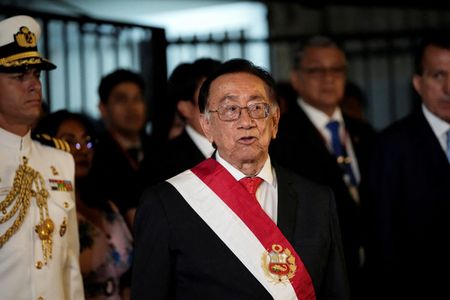
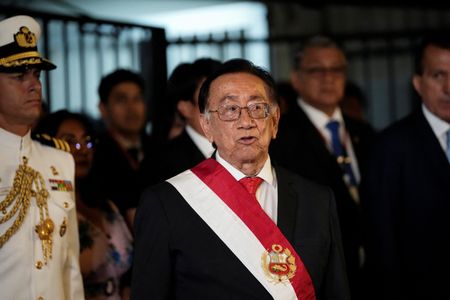
Peru witnessed another dramatic change in leadership this week when lawmakers removed the nation’s seventh president in fewer than ten years, yet financial markets have remained remarkably stable as investors appear accustomed to the country’s political instability.
Congress unexpectedly voted Tuesday to remove President Jose Jeri from office due to corruption allegations, ending his presidency after just four months and with elections scheduled for April 12th approaching.
On Wednesday, lawmakers selected far-left representative Jose Balcazar as temporary president, who will hold the position until the newly elected leader assumes office on July 28th.
While political chaos typically sends markets into turmoil across Latin America, Peru stands as a notable exception. This week’s governmental upheaval has barely registered with investors, as the nation once again shows its ability to weather crises that would cause significant market drops elsewhere.
“Portfolio investors have become desensitized to Peru’s political drama,” said Eileen Gavin, head of sovereign analysis at Verisk Maplecroft. “The mining-focused economy’s macro and credit risk metrics have remained fairly exemplary throughout a near decade of instability.”
Financial experts continue to regard Peru as among the region’s most secure investment destinations. The country ranks close behind Chile for having the smallest gaps between its government bond yields and U.S. Treasury rates, indicating investors consider Peru a relatively safe bet.
Peru’s long-term government bonds due in 2060 dropped modestly Thursday, trading at approximately 56 cents per dollar, according to emerging market specialists. Meanwhile, the nation’s dollar-based bonds maturing in 2032 remained unchanged, data from Refinitiv indicated.
Following his Wednesday inauguration, Balcazar promised to conduct “unquestionable” elections in the world’s second-largest copper producing nation and committed to avoiding “experimenting” with economic policies — a message of stability directed specifically at the investment community.
Market experts attribute Peru’s economic resilience to its commodity-based economy and faith in its experienced central bank leadership, which have historically protected markets from political disruptions.
“The combination of a copper-dependent economy and a highly credible central bank has cushioned Peru from politics before,” said Jo-Marie Burt, a Peru specialist at George Mason University.
However, the 2026 elections will present another major challenge for Peru’s democratic systems, and experts warn that Balcazar’s surprise rise to power could further complicate an already divided political landscape.
At 83 years old, Balcazar brings a troubled history to the presidency. Prior to joining Congress in 2021, he was removed from his role as an interim Supreme Court justice for professional misconduct and subsequently lost his law license.
Local news outlets have also revisited his 2023 controversial statements that many interpreted as supporting child marriage, creating additional scrutiny around his leadership.
Adding to the complexity, a historic number of candidates are competing in April’s presidential race, while voters will simultaneously choose representatives for a new 60-member Senate as part of the restored two-chamber Congress system.
“I see a lack of time for voters to coalesce around a good candidate,” said Cynthia McClintock of George Washington University.
“There’s already a feeling of, ‘There are so many candidates — how are we supposed to cope?’” she added.
Recent polling by Ipsos revealed that roughly 42% of survey participants remain undecided, plan to invalidate their ballots, or intend to abstain from voting entirely.
McClintock explained that the constant presidential turnover stems from Congress using its removal authority too aggressively, a strategy that has left voters feeling disconnected from the political process.
Jeri had taken over from Dina Boluarte, who served as a placeholder following the impeachment of leftist President Pedro Castillo after his brief and turbulent 17-month administration.
Political tensions between congressional parties may influence the approaching presidential election, where right-wing Lima Mayor Rafael Lopez Aliaga currently leads polling but faces challenges securing broader conservative backing needed for a potential runoff victory.
Trailing in second place is Keiko Fujimori, whose father Alberto Fujimori previously served as Peru’s president.
Despite the ongoing uncertainty, if the upcoming elections maintain their credibility, “the market will likely keep looking past the politics,” Gavin concluded.
A top United Nations official disclosed devastating casualty figures from Ukraine’s ongoing war during a press conference in Berlin on Friday.
Sofia Calltorp, who leads UN Women’s operations in Geneva, revealed that the death toll among Ukrainian women and girls has surpassed 5,000 since Russia launched its comprehensive military assault in February 2022. The conflict has also left approximately 14,000 women and girls wounded, according to her statement to journalists.
The sobering statistics highlight the severe human cost of the war that has now stretched across two years, with women and children bearing a significant portion of the casualties from the sustained military campaign.
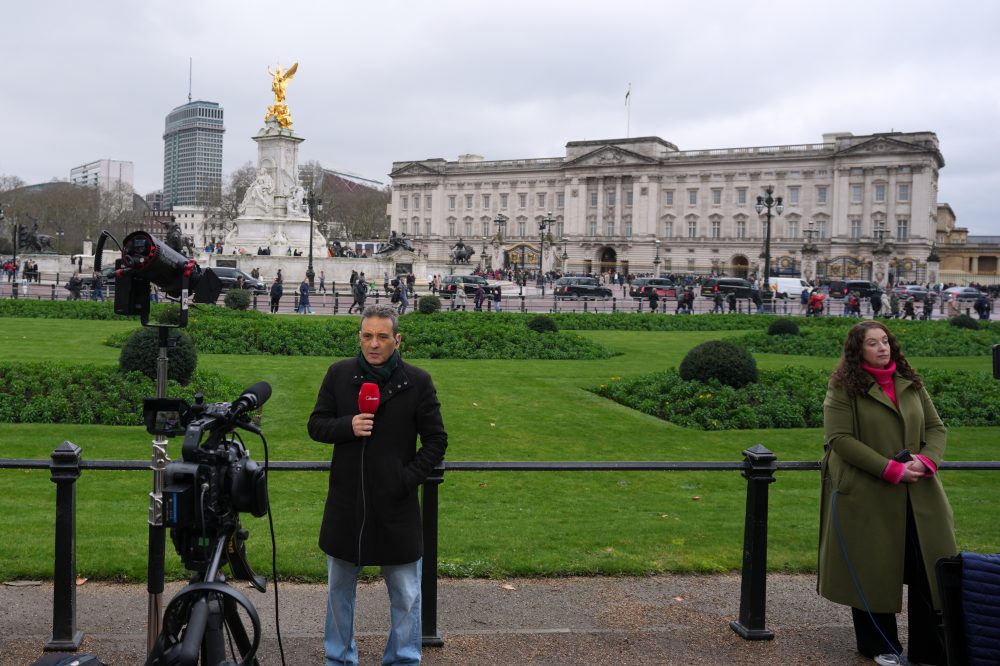
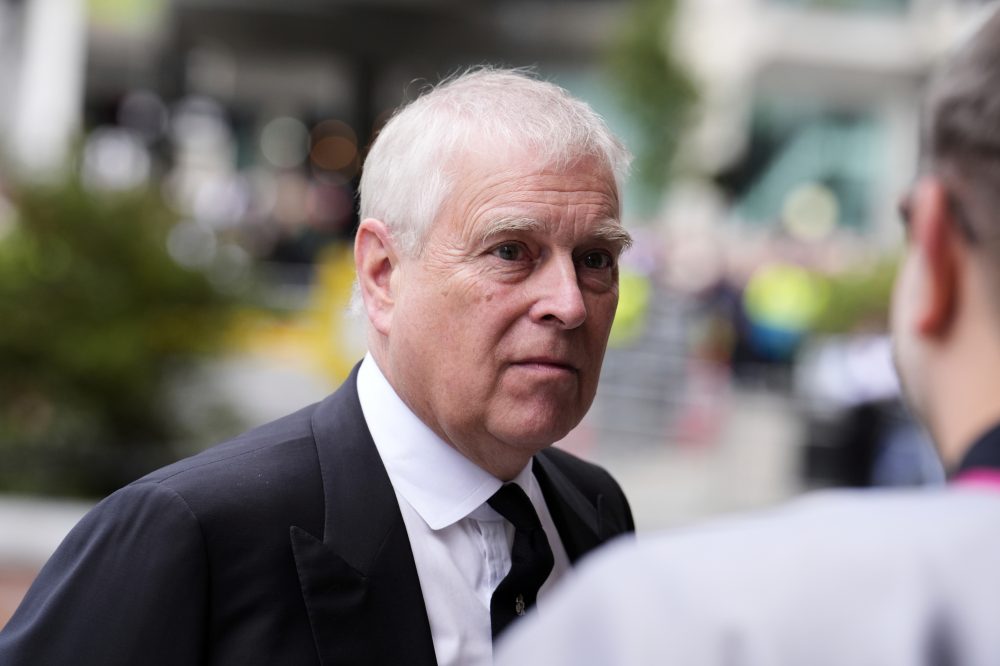
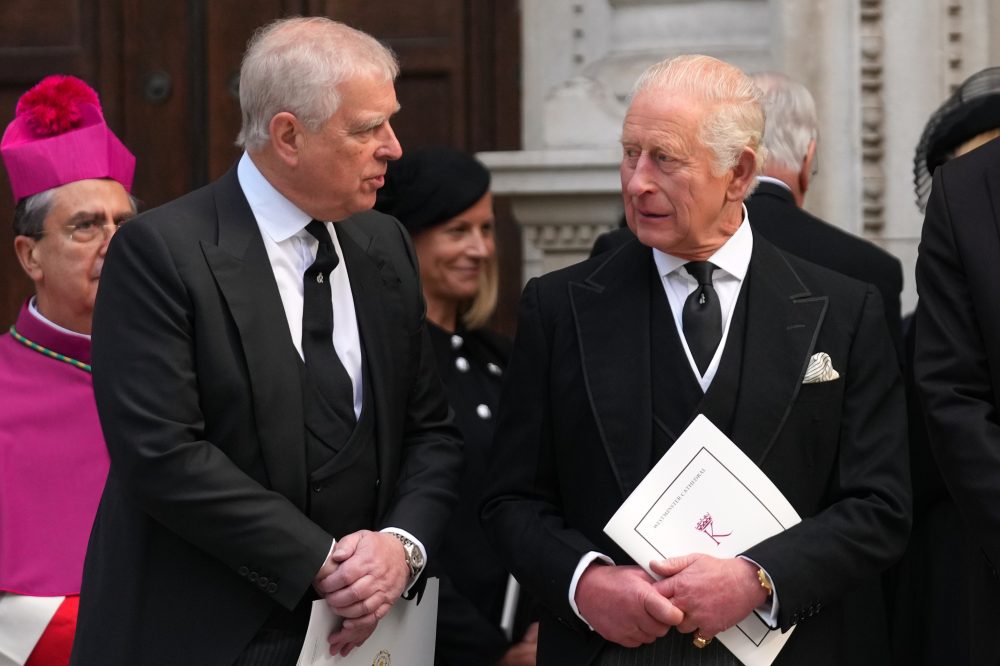
LONDON (AP) — Investigators extended their search Friday at Andrew Mountbatten-Windsor’s previous residence, following his historic detention Thursday on allegations of official misconduct connected to his relationship with deceased sex offender Jeffrey Epstein.
After experiencing one of the most dramatic episodes in recent British royal history, the former Prince Andrew has returned to his current residence at the Sandringham estate, King Charles III’s private property located approximately 115 miles north of London.
Authorities have wrapped up their examination at his current location but continue investigating Royal Lodge, his previous 30-room residence situated within Windsor Castle’s grounds, located west of the capital.
Mountbatten-Windsor, who was photographed appearing dejected in his driver’s vehicle after his Thursday evening release, stays under active investigation by Thames Valley Police, meaning he faces neither formal charges nor clearance at this time.
His detention stems from longstanding accusations regarding his connections to Epstein, who died by suicide in a New York detention facility in 2019. The central allegation involves Mountbatten-Windsor — formerly Prince Andrew before his brother removed his royal titles in October — allegedly providing sensitive trade intelligence to the disgraced financier while serving as Britain’s trade representative.
Recent emails disclosed by the U.S. Department of Justice last month seemingly demonstrate Mountbatten-Windsor transmitting official visit reports from Hong Kong, Vietnam and Singapore.
One November 2010 message appears to show Andrew forwarding information within five minutes of receiving it. Another document from weeks later seemingly shows him providing Epstein with classified briefings about investment prospects in Afghanistan’s Helmand Province reconstruction efforts.
Additional British law enforcement agencies are pursuing separate investigations into Mountbatten-Windsor’s Epstein connections.
While Mountbatten-Windsor has repeatedly rejected wrongdoing claims regarding his Epstein association, he has remained silent about recent accusations emerging from the released “Epstein files.”
Officers arrived at Mountbatten-Windsor’s property for his 8 a.m. Thursday arrest — coinciding with his 66th birthday — before transporting him to a local station for interrogation.
His responses during questioning remain unknown. He potentially remained silent or responded “no comment,” which represents his legal right.
Legal professionals noted that proving misconduct in public office presents significant challenges.
“Initially, authorities must establish whether Andrew Mountbatten-Windsor held a governmental position qualifying as a public officer,” explained Sean Caulfield, a criminal defense attorney at Hodge Jones & Allen. “No standardized definition exists for clear reference.”
The Crown Prosecution Service will determine whether to file formal charges.
Andrew Gilmore, a Grosvenor Law partner, explained that prosecutors will implement the two-part “Code for Crown Prosecutors” evaluation.
“This assessment determines whether evidence suggests a realistic conviction possibility and whether prosecution serves public interest,” he stated. “Meeting both criteria results in formal charges and court proceedings.”
Mountbatten-Windsor represents the first royal arrest since King Charles I nearly four centuries ago. That incident became a pivotal British historical moment, triggering civil conflict, Charles’ execution, and temporary monarchy dissolution.
His arrest undoubtedly constitutes one of the most serious crises facing the House of Windsor since its founding over a century ago. Arguably, only King Edward VIII’s 1936 abdication and Princess Diana’s 1997 death have presented comparable institutional threats to the modern British monarchy.
Despite the ongoing investigation, the king and royal family will maintain their regular responsibilities, though questions about Mountbatten-Windsor will persist throughout the lengthy investigation process.
In Thursday’s statement, the king declared the “law must take its course,” adding that “as this process continues, it would not be right for me to comment further on this matter.”
Thursday’s investigated allegations differ from Virginia Giuffre’s claims, who alleged being trafficked to Britain for sexual encounters with the prince in 2001 at age 17. Giuffre died by suicide last year.
Nevertheless, Giuffre’s sister-in-law Amanda Roberts expressed overwhelming joy receiving a 3 a.m. phone call about the arrest news. However, her celebration became bittersweet realizing she couldn’t share these “vindication” feelings with Giuffre.
“We can’t tell her how much we love her, and that everything that she was doing is not in vain,” Roberts said through tears.
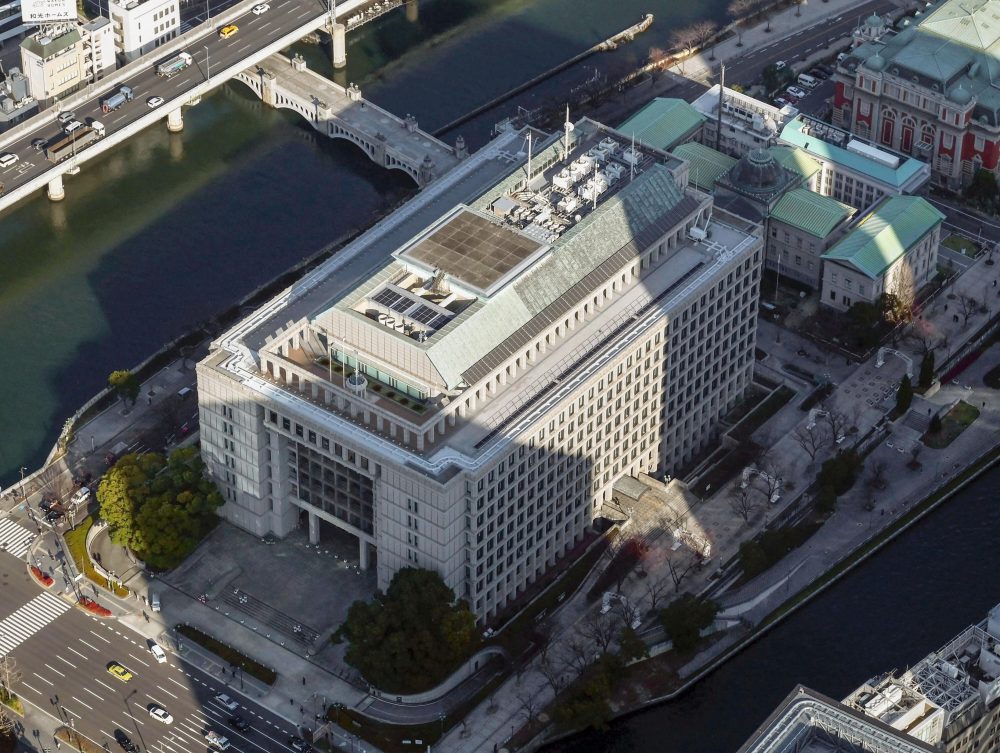
A mysterious benefactor has made an extraordinary contribution to help address a Japanese city’s infrastructure crisis, delivering gold bars worth $3.6 million specifically designated for water system repairs.
The remarkable donation of 46 pounds of gold, valued at 560 million yen, was presented to Osaka’s water department in November by an unidentified individual concerned about the city’s deteriorating pipe network, according to Mayor Hideyuki Yokoyama’s announcement to media on Thursday.
“It’s a staggering amount and I was speechless,” Yokoyama said. “Tackling aging water pipes requires a huge investment, and I cannot thank enough for the donation.”
City officials confirmed they will honor the contributor’s specific request and dedicate the funds toward waterworks infrastructure improvements.
Infrastructure concerns in Osaka intensified following a tragic incident last year when a large sinkhole claimed a truck driver’s life after swallowing his vehicle, an event connected to deteriorated sewer systems in nearby Saitama. The city documented 92 instances of pipe failures beneath roadways during the fiscal period concluding in March 2025, according to waterworks administrator Eiji Kotani.
Osaka, home to 2.8 million residents and Japan’s third-most populous metropolitan area, faces significant infrastructure challenges as a major commercial center in western Japan.
The nation’s essential public works systems were constructed during the post-war economic boom period, but Osaka’s earlier urban expansion means its infrastructure is deteriorating ahead of other municipalities, Kotani explained.
City engineers estimate they must replace 160 miles of water lines throughout the metropolitan area. The cost to renovate just 1.2 miles of piping reaches approximately $3.2 million, according to Kotani’s estimates.
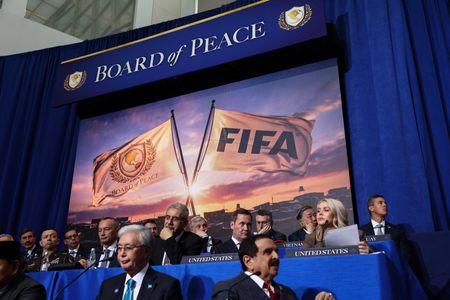
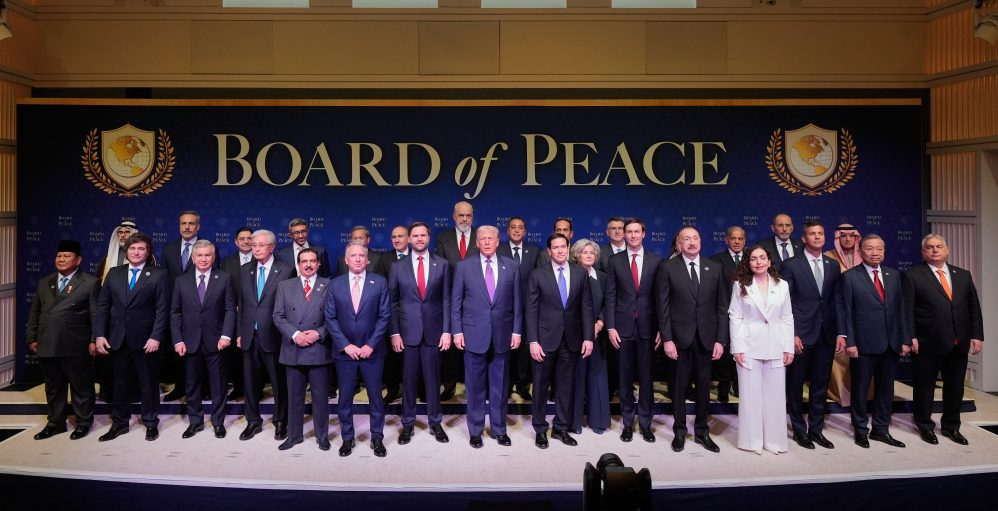
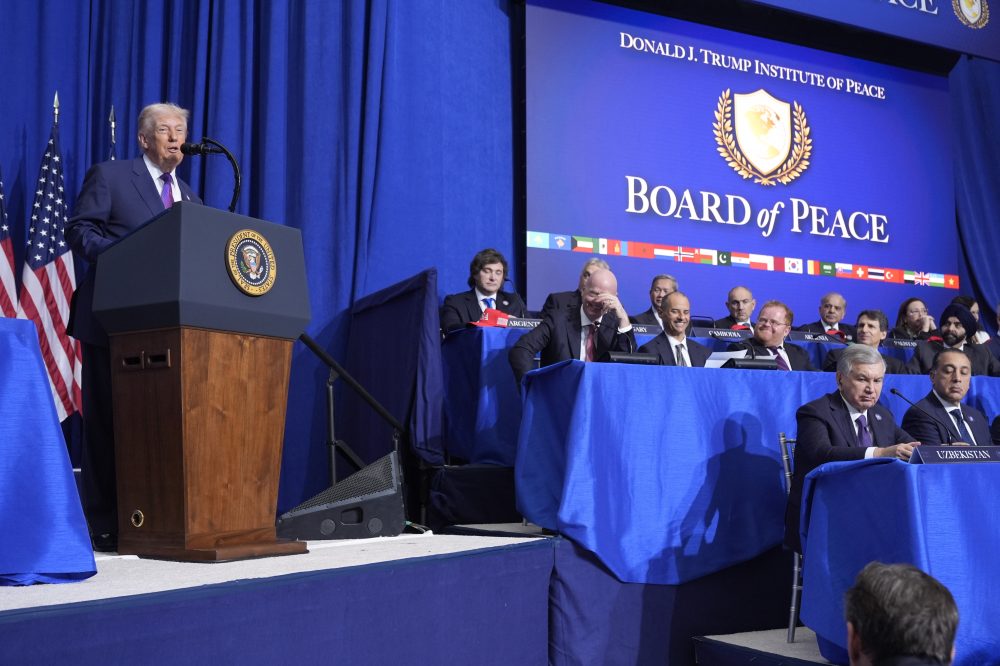
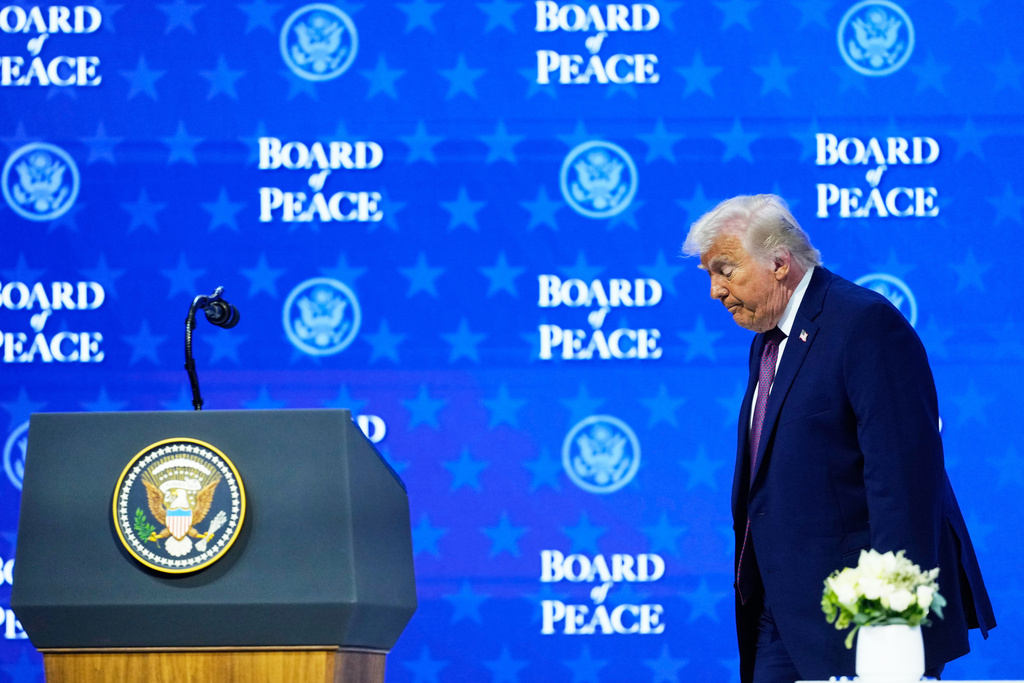
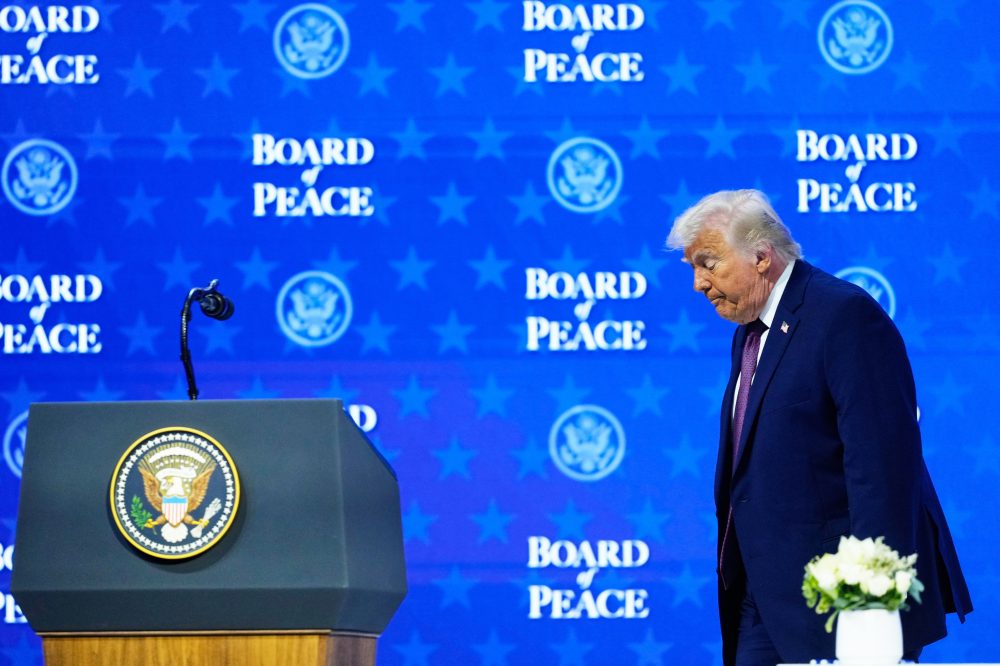
The world’s governing body for soccer announced Thursday it has formed a partnership with a board created by President Donald Trump to channel investments toward rebuilding war-torn areas using sports development.
FIFA has teamed up with the Board of Peace, which Trump established and which convened its inaugural session to address funding for Gaza’s rebuilding efforts. The board’s mission centers on reconstructing the region following the disarmament of Hamas forces.
Experts anticipate major obstacles ahead for the board’s success, including ensuring Hamas militants lay down weapons, coordinating Israeli military withdrawal, determining reconstruction funding levels, and managing humanitarian assistance delivery to Gaza’s devastated population.
Under the soccer partnership, FIFA outlined plans to construct 50 smaller playing fields positioned close to schools and neighborhoods throughout Gaza, along with five regulation-sized soccer fields spread across different areas. The initiative also calls for establishing an advanced FIFA training facility and constructing a new stadium capable of seating 20,000 spectators.
Trump announced that FIFA will secure $75 million in funding specifically for soccer-related development projects in the territory.
“Today, FIFA and the Board of Peace have signed a landmark partnership agreement that will foster investment into football for the purpose of helping the recovery process in post conflict areas,” stated FIFA President Gianni Infantino.
“Together with the support of the Board of Peace, FIFA will drive this partnership which is built to deliver impact at every stage,” Infantino added.
According to FIFA, the comprehensive program will prioritize employment opportunities, engaging young people, establishing organized soccer leagues for both male and female players, building community connections, and boosting local business activity.
Moldova’s national veterinary agency ANSA has halted all poultry imports from Ukraine following the discovery of metronidazole contamination in a shipment of Ukrainian products, believed to be animal feed.
The import prohibition went into effect on January 26th, with officials citing “deficiencies in the exporting country’s veterinary drug certification and control system” as the primary justification for the trade restriction.
The detection of metronidazole traces in the Ukrainian poultry products prompted immediate action from Moldovan authorities, who moved quickly to protect their domestic food supply chain from potentially unsafe imports.
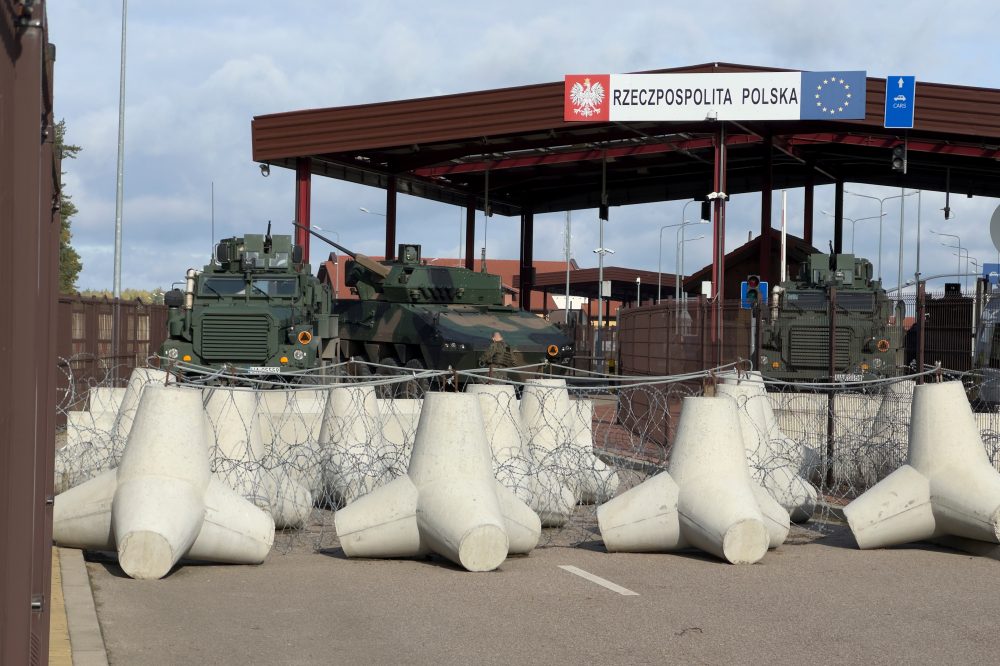
WARSAW, Poland (AP) — Polish officials announced Friday that the nation has formally exited an international agreement that prohibited antipersonnel mines, with plans to manufacture and deploy these weapons along its eastern frontier as protection against potential Russian threats.
The Ottawa Convention of 1997, which forbids member nations from producing or deploying antipersonnel mines, lost Poland as a signatory after the country determined these weapons were essential for border security. These explosive devices have historically caused significant civilian casualties in post-conflict regions across Cambodia, Angola, and Bosnia and Herzegovina, often remaining dangerous long after wars end.
After joining the agreement in 2012 and eliminating its entire stockpile of antipersonnel mines by 2016, Poland reversed course and officially departed the treaty Friday, announcing intentions to restart weapon production.
Deputy Defense Minister Paweł Zalewski explained to The Associated Press that “These mines are one of the most important elements of the defense structure we are constructing on the eastern flank of NATO, in Poland, on the border with Russia in the north and with Belarus in the east.”
Zalewski justified the decision by pointing to Russia’s hostile behavior, describing it as a nation with “very aggressive intentions vis a vis its neighbors” that never agreed to the international mining prohibition.
Following Russia’s comprehensive attack on Ukraine, neighboring nations have reconsidered their commitment to the mining ban. Warsaw joined Finland and the Baltic nations of Estonia, Latvia, and Lithuania, along with Ukraine, in announcing their departure from the treaty last year.
Russia remains among approximately three dozen nations, including the United States, that never joined the Ottawa agreement.
According to Zalewski, Poland will launch domestic manufacturing of both antipersonnel and anti-tank explosive devices, working alongside Polish companies to achieve independence in mine production.
These weapons detonate when individuals or vehicles pass over them, with anti-tank versions specifically engineered to avoid triggering from human weight alone. The Ottawa Convention permits anti-tank mines.
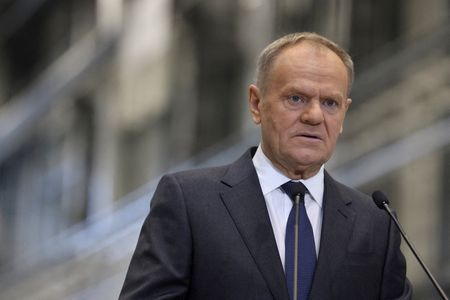
During a Thursday presentation of the Bluszcz, an automated vehicle created by Polish firm Belma S.A. and military researchers to distribute anti-tank mines, Prime Minister Donald Tusk announced Poland would “soon” possess the capability to mine its eastern boundaries within two days if threatened.
Considering the extensive length of Poland’s eastern frontier, Tusk noted that substantial quantities of mines would be required.
The mining initiative forms part of Poland’s Eastern Shield project, a comprehensive fortification system the country began constructing along its Belarus and Russia borders in 2024, Zalewski explained.
However, he emphasized that mine deployment would occur only “when there is a realistic threat of Russian aggression.”
“We very much respect our territory and we don’t want to exclude it from day to day use for the Polish citizens,” Zalewski stated.
Human rights organizations have criticized nations abandoning the Ottawa Convention, warning that antipersonnel mines pose excessive risks to civilian populations.
Zalewski countered that Poland maintains balance by keeping mines in storage unless facing attack.
“We are not an aggressive country,” he declared, “but we have to use all means to deter Russia.”
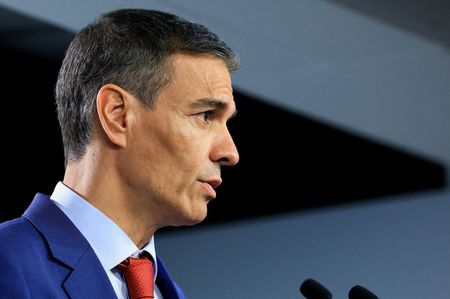
Spanish Prime Minister Pedro Sanchez is walking a political tightrope, using his opposition to Trump administration policies to boost his standing at home while risking damage to Spain’s relationship with its powerful American ally.
The Socialist leader has openly challenged Washington on multiple fronts – criticizing U.S. involvement in Venezuela, advocating for tighter social media regulations, and refusing to meet NATO’s defense spending requirements. His approach has drawn sharp warnings from political advisers connected to the White House.
Sanchez, representing one of Europe’s few remaining left-wing voices in leadership, has deliberately positioned his policies as alternatives to President Trump’s approach. In a New York Times opinion piece, he accused “MAGA-style leaders” of misleading the public about immigration dangers and described his social media proposals as “making social media great again.”
His supporters argue he’s maintaining popular positions that resonate with voters and allies in the Global South, where Europe seeks stronger partnerships to reduce reliance on both the United States and China.
However, Trump administration advisers warn that Sanchez is taking dangerous risks, particularly regarding defense spending, which has repeatedly drawn Trump’s criticism.
Benjamin Leon, the newly confirmed U.S. ambassador to Madrid and longtime Republican donor, told senators during his confirmation that he would pressure Spain to meet NATO’s 5% GDP spending target – a commitment Sanchez has consistently rejected.
Spain’s decision to ban weapons shipments to Israel from using its ports has triggered a U.S. investigation that could lead to restrictions on Spanish shipping to America.
When asked about relations with Sanchez, a State Department representative emphasized Leon’s appointment and expressed hope for cooperation on “common challenges.”
“I want to get along with Spain,” said Wilson Beaver, a senior defense adviser at the Heritage Foundation, a conservative think tank aligned with Trump. “It’s Prime Minister Sánchez getting in the way.”
Joshua Trevino from the America First Policy Institute said Spain “nearly stands alone in its willingness to be on the wrong side of the U.S. on all these issues.”
While most European nations have chosen to accommodate Trump privately to advance their interests, some have grown frustrated with Sanchez, particularly his refusal to match their defense spending commitments.
“He’s playing to a domestic anti-Trump and anti-American audience to great effect, leaving both transatlantic and European solidarity at the wayside,” said one unnamed European diplomat.
Domestically, Sanchez faces political pressure from scandals and disputes with coalition partners that have blocked his legislative priorities. Foreign policy offers him a chance to demonstrate leadership, according to analysts and pollsters.
His stance taps into historical Spanish resentment toward America, rooted in U.S. support for dictator Francisco Franco after World War II in exchange for military base access.
A recent YouGov survey showed 66% of Spaniards view the U.S. unfavorably, up from 45% before Trump’s second term started.
Sanchez’s other international positions enjoy widespread domestic support. Polling shows most Spaniards consider Israel’s Gaza actions genocidal – which Israel disputes – and oppose U.S. intervention in Venezuela. An Ipsos poll found over 80% backing his proposal to prohibit social media use for children under 14.
Defense spending divides Spanish opinion, but left-leaning voters support his lower spending pledge, surveys indicate.
“These are areas where he can set the agenda, offsetting the image of paralysis and reinforcing his profile as a bulwark against the far right,” said Paula Canas, an analyst at GAD3.
Conservative opposition members blame Sanchez for Spain’s exclusion from a U.S.-led critical minerals trading group and preparatory sessions for December’s G20 summit.
Despite criticism, Sanchez appears undeterred. Someone familiar with his policy-making process said he has strong instincts for international affairs and, while willing to speak boldly, understands diplomatic boundaries.
Three sources close to Sanchez maintain that U.S.-Spain relations remain solid, with diplomatic communication continuing normally.
His allies point to Greenland, where Trump’s annexation threats prompted European leaders to take a firm stance that ultimately forced a retreat.
“The current administration will respect you if you defend your interests, not if you project weakness and pretend to be what you are not,” said Arancha Gonzalez Laya, dean at Paris’s Sciences Po university and Sanchez’s former foreign minister.
“Many European leaders have tried to appease Trump. Spain has no desire to change or hide its policies … That stands out because of the silence of others.”
Spain’s trade deficit with the U.S. also provides protection against punitive tariffs compared to major exporters like France or Germany, said Ignacio Molina, senior fellow at Spain’s Royal Elcano Institute.
“Sanchez has an incentive to continue this path. It’s very difficult for the U.S. to punish Spain,” Molina said. “He has more to gain than to lose.”
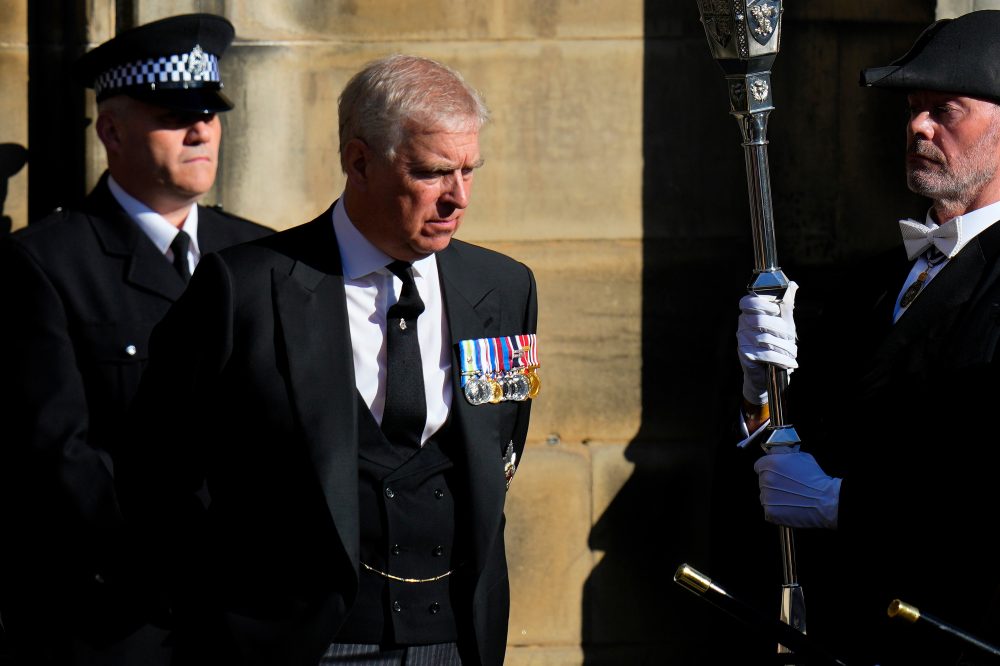
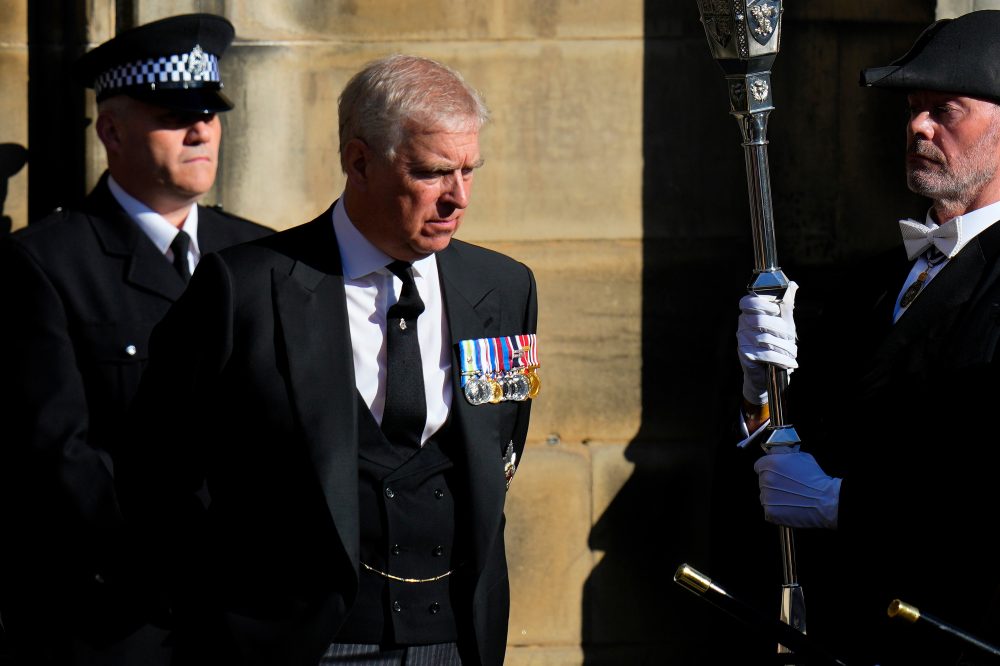
British authorities conducted searches at royal properties Friday as their investigation continues into Andrew Mountbatten-Windsor, the younger brother of King Charles III.
The 66-year-old former royal was taken into custody Thursday on his birthday, facing allegations of misconduct in public office related to claims he transmitted sensitive government materials to convicted financier Jeffrey Epstein while serving as a trade representative.
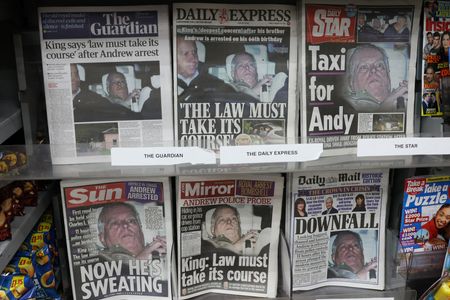
Following more than 10 hours in police custody, Mountbatten-Windsor was freed pending further investigation. No formal charges have been filed against him, though Reuters captured a striking image of the visibly shaken man sitting in the rear of a Range Rover following his release, appearing exhausted with reddened eyes and a stunned expression.
The dramatic photograph showing the once-prominent naval officer and reported favored child of the late Queen Elizabeth made front-page headlines globally, with publications using words like “Downfall” to describe his situation.
While Mountbatten-Windsor has consistently rejected any allegations of improper conduct regarding Epstein, who died by suicide in 2019 after his conviction as a sex offender, he has expressed regret about their association. However, recently released U.S. government documents revealed he maintained contact with Epstein well beyond the financier’s 2008 conviction for soliciting prostitution from a minor.
These records indicated that Mountbatten-Windsor had shared British government intelligence with Epstein, including reports on investment prospects in Afghanistan and evaluations of Vietnam, Singapore and other nations he visited in his role as the government’s Special Representative for Trade and Investment.
The detention of such a high-ranking royal family member, who stands eighth in succession to the throne, marks an extraordinary moment in modern British history. The last royal arrest in Britain dates back to Charles I, who faced execution in 1649 after his treason conviction.
King Charles, who previously removed his brother’s princely title and evicted him from his Windsor residence last year, responded to Thursday’s arrest with what he called “deepest concern.”
“Let me state clearly: the law must take its course,” the monarch declared. “What now follows is the full, fair and proper process by which this issue is investigated in the appropriate manner and by the appropriate authorities.”
The dramatic events began Thursday morning when six unmarked police vehicles and approximately eight plainclothes investigators arrived at Wood Farm, located on the king’s Sandringham estate in Norfolk, eastern England, where Mountbatten-Windsor currently lives.
Thames Valley Police officers simultaneously conducted searches at the mansion on the king’s Windsor estate west of London, the former residence of Mountbatten-Windsor before his forced departure following the Epstein scandal.
By Thursday evening, authorities announced the royal’s release under investigation. While the Sandringham searches had wrapped up, operations at Windsor continued.
An arrest indicates police have reasonable grounds to suspect criminal activity and believe the individual may be involved in an offense, though it does not establish guilt.
If convicted of misconduct in public office, the penalty could include life imprisonment, with such cases handled by Crown Courts that deal with the most severe criminal matters.
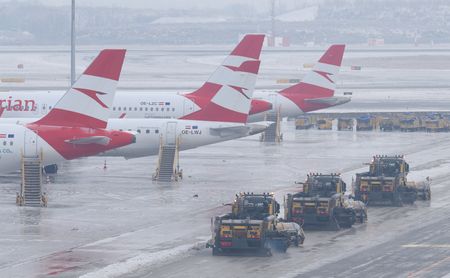
VIENNA – Heavy snowfall forced Vienna Airport officials to extend their flight suspension until noon on Friday, with airport operations severely disrupted by the winter weather conditions.
Airport representatives announced that the original flight halt has been pushed back by three additional hours until 1100 GMT, with operational disruptions anticipated to persist well into the afternoon hours.
According to airport officials, limited departures may resume starting at midday, while incoming aircraft could begin landing operations around 1 p.m. The severe weather conditions have resulted in significant schedule disruptions, with approximately 150 flights canceled out of the 232 that were originally planned for Friday morning operations at the Austrian airport.
Arms control specialists are expressing alarm over a potential nuclear agreement between the United States and Saudi Arabia that could permit uranium enrichment operations within the kingdom, according to congressional documents and nonproliferation organizations.
Both former President Donald Trump and current President Joe Biden have pursued nuclear cooperation agreements with Saudi Arabia to share American atomic technology. However, nonproliferation specialists caution that allowing centrifuge operations in Saudi Arabia might create opportunities for a weapons program, particularly since Crown Prince Mohammed bin Salman has indicated he might pursue nuclear weapons if Iran develops them.
The situation became more complex last year when Saudi Arabia and nuclear-capable Pakistan established a mutual defense agreement following Israel’s strike on Qatar that targeted Hamas leaders. Pakistan’s defense minister subsequently stated his country’s nuclear capabilities “will be made available” to Saudi Arabia if necessary, which many interpreted as a message directed at Israel, widely considered the Middle East’s sole nuclear-armed nation.
Kelsey Davenport, who serves as director for nonproliferation policy at the Washington-based Arms Control Association, emphasized the complexity of such arrangements. “Nuclear cooperation can be a positive mechanism for upholding nonproliferation norms and increasing transparency, but the devil is in the details,” Davenport stated.
She added that the documents raise “concerns that the Trump administration has not carefully considered the proliferation risks posed by its proposed nuclear cooperation agreement with Saudi Arabia or the precedent this agreement may set.”
Saudi Arabia has not yet responded to inquiries from The Associated Press regarding these concerns.
Congressional documentation reviewed by the AP reveals that the Trump administration sought to establish 20 nuclear commerce agreements with countries worldwide, including Saudi Arabia. The potential Saudi agreement could generate billions of dollars in revenue.
The documentation argues that finalizing an agreement with the kingdom “will advance the national security interests of the United States, breaking with the failed policies of inaction and indecision that our competitors have capitalized on to disadvantage American industry and diminish the United States standing globally in this critical sector.” Nations including China, France, Russia and South Korea currently dominate the international nuclear power plant technology market.
The proposed agreement would require both America and Saudi Arabia to establish safeguard arrangements with the International Atomic Energy Agency, the United Nations’ nuclear monitoring organization. This would include supervision of the “most proliferation-sensitive areas of potential nuclear cooperation,” with enrichment, fuel fabrication and reprocessing identified as possible areas of cooperation.
The Vienna-based IAEA has not responded to requests for comment. Saudi Arabia maintains membership in the IAEA, which supports peaceful nuclear development while conducting inspections to prevent secret weapons programs.
Davenport warned that “This suggests that once the bilateral safeguards agreement is in place, it will open the door for Saudi Arabia to acquire uranium enrichment technology or capabilities — possibly even from the United States.” She continued, “Even with restrictions and limits, it seems likely that Saudi Arabia will have a path to some type of uranium enrichment or access to knowledge about enrichment.”
While uranium enrichment doesn’t automatically lead to nuclear weapons development — nations must also master additional technologies including synchronized high explosives — it does create weaponization possibilities, which has driven Western concerns about Iran’s nuclear activities.
The United Arab Emirates, Saudi Arabia’s neighbor, established what’s known as a “123 agreement” with the U.S. to construct its Barakah nuclear facility with South Korean support. However, the UAE proceeded without seeking enrichment capabilities, which nonproliferation experts consider the “gold standard” for countries pursuing atomic energy.
This push for a Saudi-U.S. agreement occurs as Trump has threatened military intervention against Iran unless it negotiates regarding its nuclear program. These military threats follow widespread Iranian protests that resulted in a violent government crackdown killing thousands and reportedly detaining tens of thousands more.
Iran has consistently maintained its nuclear enrichment activities serve peaceful purposes. Nevertheless, Western nations and the IAEA assert Iran operated an organized military nuclear program until 2003. Tehran has also enriched uranium to 60% purity, requiring only a brief technical step to reach weapons-grade levels of 90% — making it the only nation worldwide to achieve this level without an acknowledged weapons program.
Iranian officials have long referenced 86-year-old Supreme Leader Ayatollah Ali Khamenei’s statements as a binding fatwa, or religious ruling, prohibiting Iran from developing nuclear weapons. However, Iranian representatives have increasingly threatened to pursue weapons development as U.S. tensions have escalated.
Saudi Crown Prince Mohammed bin Salman, who manages the kingdom’s daily operations, has stated that if Iran develops nuclear weapons, “we will have to get one.”
Turkish law enforcement officials have taken into custody a seasoned journalist working for Deutsche Welle, Germany’s state-funded international news organization, on charges of spreading false information and insulting the country’s president.
According to a statement released Thursday evening by the Istanbul Chief Public Prosecutor’s Office, authorities arrested Alican Uludag and opened a criminal case against him based on content he posted on social media platforms. Officials plan to bring him before prosecutors on Friday.
The German broadcasting company, known as DW, confirmed that their correspondent, who has worked with the organization for multiple years, was taken into custody in Ankara on Thursday before being transported to Istanbul for questioning.
Barbara Massing, who serves as Director General of Deutsche Welle, dismissed the charges as unfounded and described the detention as “a deliberate act of intimidation and shows how severely the government is suppressing press freedom.”
According to DW officials, the charges against Uludag stem from his public criticism of Turkish government policies that resulted in the release of individuals suspected of having ties to the Islamic State. The journalist made these comments in a post on the social media platform X approximately 18 months ago.
The news organization also reported that authorities conducted a search of Uludag’s residence and seized computer equipment and other technology devices during the investigation.
BANGKOK – A Bangkok court has imposed an additional prison term of two years and eight months on activist attorney Arnon Nampa for making statements against Thailand’s monarchy during a November 2020 demonstration, according to a human rights organization that announced the decision Friday. This latest conviction pushes his total prison sentence beyond 30 years.
The 41-year-old Nampa played a key role in the historic youth-driven pro-democracy demonstrations that swept through Bangkok in 2020, which boldly demanded changes to the country’s monarchical system.
Thailand enforces strict lese-majeste legislation that shields the royal family from any criticism, with violators facing potential prison terms of up to 15 years for each instance of perceived disrespect toward the monarchy. International human rights organizations have widely criticized these penalties as excessive.
Nampa has remained imprisoned since September 2023 due to violations of the royal insult statute related to his public addresses at political gatherings and content he posted on social media platforms during 2020 and 2021.
The court ruling announced Friday represents the 11th conviction out of 14 total royal insult charges pending against him.
Data from Thai Lawyers for Human Rights indicates that no fewer than 291 individuals have faced lese majeste charges since 2020.
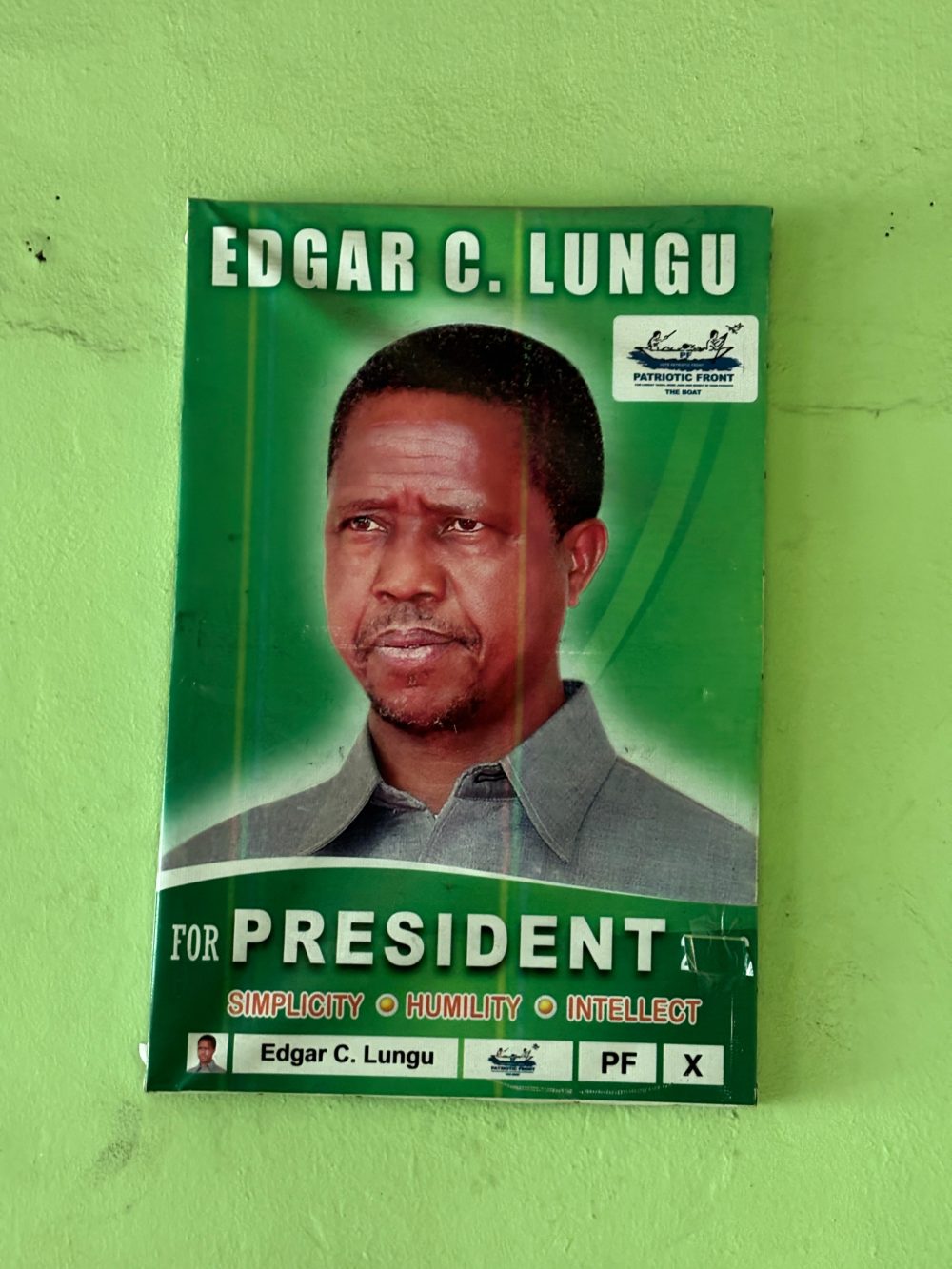
LUSAKA, Zambia — Eight months have passed since former Zambian President Edgar Lungu died, yet his body remains stored in a South African funeral home, caught in the middle of a bitter feud between his family and his political successor.
The disturbing conflict has created a haunting image: an empty grave the size of a coffin sits unfilled in a Lusaka cemetery, where current President Hakainde Hichilema planned to hold a state funeral. However, Lungu made his final wishes clear to relatives before his death — his longtime political opponent should never be allowed near his remains.
Courts have consistently ruled in favor of Zambian government officials against Lungu’s family’s desires. Despite these legal decisions, the deceased president’s relatives continue fighting for a burial ceremony that would exclude Hichilema entirely.
The corpse remains preserved in South Africa, where Lungu passed away, while Zambia faces a shocking controversy that violates cultural customs and sparks numerous concerns in a nation where failing to bury deceased individuals quickly and respectfully is considered deeply offensive.
This standoff stems from years of animosity between two political enemies. Religious leaders and academics who spoke with The Associated Press describe it as a supernatural conflict between Hichilema, who faces reelection in August, and Lungu, who appears to be continuing his fight beyond death.
“It has shifted from the physical, it has shifted from politics, and it is now a spiritual battle,” said Bishop Anthony Kaluba of Life of Christ congregation in Lusaka.
Those who support Hichilema view Lungu’s final instructions as placing a hex on the current leader, while they argue that allowing Hichilema to attend a state funeral would demonstrate kindness toward Lungu and his relatives.
While the battle over a deceased person’s body may appear strange to outsiders, Lungu’s final command strikes a chord with many Zambians.
Citizens sometimes prevent their adversaries from participating in their funeral services, frequently holding them responsible for their troubles. These conflicts typically remain personal matters, unlike this public spectacle involving a former president who, while dying, struck back at his opponent using the powerful words of ancestral tradition.
Throughout Africa, final statements carry “vital force” that can either promote life or obstruct it, explained Chammah J. Kaunda, a Zambian professor of African Pentecostal theology who leads the Oxford Center for Mission Studies as academic dean.
Elderly people approaching death possess the power to place curses or offer blessings, and Lungu’s situation demonstrates that curses “can acquire a life of their own,” he noted.
Zambia operates as a thriving democracy. The nation’s first president was the cheerful, handkerchief-waving Kenneth Kaunda, who lost power through elections in 1991, despite his reputation as a hero of independence.
Similar to Kaunda, later presidents have been civilians without the military backing of various dictators found elsewhere across Africa, providing Zambia’s presidential candidates the chance to campaign based on their individual qualifications.
Nevertheless, many believe that certain political figures — like numerous fellow citizens — fear they could fall victim to witchcraft. This concern is common in a country where ancestral beliefs flourish alongside Christianity, and verbal curses are feared by many as spiritually binding when triggered by unfairness.
“It is a weapon,” said Herbert Sinyangwe of WayLife Ministries in Lusaka. “We believe in our culture that curses work.”
Regarding three recent presidents — Michael Sata, Lungu and Hichilema — mistrust was widespread. The official presidential residence is now believed by many to be cursed with death because all six former presidents have died. Hichilema conducts business there but spends nights elsewhere.
Sata, who served as president from 2011 to 2014, feared that Hichilema, then in opposition, was targeting him while claiming that protective charms from his own area were more powerful. Zambian officials convicted and imprisoned two men last year for allegedly attempting to assassinate the president through magical means. Lungu’s family remains suspicious of Hichilema.
The burial site in Lusaka intended for Lungu was rapidly excavated and prepared before officials learned of the family’s objections, stated cemetery caretaker Allen Banda. He cautioned that a tomb lacking a body was like digging “your own grave.”
“If nobody goes there, culturally it’s your body that’s going to go there,” he said.
Hichilema’s willingness to risk public backlash by opposing Lungu’s family has strengthened the beliefs of those who perceive a supernatural conflict between him and Lungu.
“On the one hand, nearly everything done by the Lungu family so far seems to have been designed to deny Hichilema access to Lungu’s body,” said Sishuwa Sishuwa, a Zambian historian who is a visiting scholar at Harvard. “On the other, Hichilema’s conduct so far suggests that he will do whatever it takes to secure access to Lungu’s corpse, perhaps because the president sees the issue as a matter of life and death.”
Lungu passed away on June 5, 2025, from complications following surgery. He was 68 years old and had received treatment for esophageal narrowing.
To arrange a state funeral, Zambian officials needed to take possession of Lungu’s body until burial. However, Lungu’s relatives opposed Hichilema’s plans during discussions about funeral arrangements.
They wanted to transport the remains via private aircraft and hoped to keep the body at Lungu’s home overnight. They selected three individuals to oversee it during the state funeral that ultimately never occurred.
After Lungu’s family realized their requests would likely be denied, they chose to hold a private funeral in South Africa. They were proceeding with that ceremony when they discovered Zambian authorities had prevented it.
A South African court decided in August that Zambian officials could bring Lungu’s body back home for burial.
Bertha Lungu, the former president’s sister, became distraught in the courtroom following the decision, crying and cursing at Mulilo Kabesha, Zambia’s attorney general, who stated it was time to bring the body home. She claimed that Hichilema wanted the corpse for ceremonial purposes.
Hichilema denies any ill intentions toward Lungu, and has stated his Christian beliefs prohibit acceptance of traditional religious practices.
Lungu assumed power following Sata’s death in 2014. Sata’s vice president, Guy Scott, was unable to run for president in a 2015 election, and Lungu was chosen to complete Sata’s term.
His primary challenger was Hichilema, a successful businessman. The race was extremely tight — Lungu prevailed by fewer than 28,000 votes.
Following the 2016 election, which Lungu won again, Hichilema faced treason accusations and spent four months in prison for allegedly refusing to give way to the presidential convoy.
Five years later, Lungu was defeated by Hichilema and announced his political retirement. He reversed this decision in 2023, and Zambian authorities revoked Lungu’s retirement benefits.
Lungu faced additional pressure when his wife and daughter were detained in 2024 on fraud charges related to property purchases.
When Lungu became ill, he struggled to leave Zambia. The government limited his travel. He managed to escape to South Africa early in 2025, purchasing a ticket at the airport counter. Local media reported this incident as a security failure that resulted in an airport manager’s dismissal.
Lungu is “still influencing our politics from the grave,” said Emmanuel Mwamba, a Zambian diplomat who represents Lungu’s party. “His issues remain. How he was treated in life and how he was treated in death.”
SEOUL, South Korea — Former South Korean President Yoon Suk Yeol showed no signs of backing down Friday after a Seoul court sentenced him to life in prison for rebellion charges stemming from his failed martial law attempt.
Through a statement issued by his legal team, Yoon continued to defend his controversial December 2024 martial law declaration, claiming it was implemented “solely for the sake of the nation and our people.” He also criticized the Seoul Central District Court, alleging it held prejudice against him.
The former president, who lost his position during the political turmoil that followed his unsuccessful power grab, has consistently fought back against eight separate criminal charges that prosecutors say amount to an attempted coup and other offenses.
Throughout the legal proceedings, Yoon has taken an combative approach — holing up in the presidential compound for weeks, refusing to cooperate with investigators after his detention, failing to show up for court hearings, and confronting witnesses during his rare appearances.
When delivering Thursday’s rebellion conviction, Judge Jee Kui-youn criticized Yoon for displaying “no sign of apology for the staggering social costs incurred by the emergency martial law” and noted he “refused to appear in court without any justifiable reason” on multiple occasions.
Outside the courthouse, hundreds of police officers kept opposing groups of demonstrators apart as Yoon’s conservative backers voiced frustration and anger over the decision, while his critics celebrated the outcome in nearby areas. No significant confrontations occurred between the groups.
Yoon’s Friday statement challenged the legitimacy of the court’s decision.
“In a situation where the independence of the judiciary cannot be guaranteed and a verdict based on law and conscience is difficult to expect, I feel deep skepticism whether it would be meaningful to continue a legal battle through an appeal,” the 65-year-old said from jail, where he has been held since last July.
However, attorney Yoo Jeong-hwa clarified that Yoon was “merely expressing his current state of mind” and wasn’t suggesting he would give up his appeal rights. The former president has one week to challenge Thursday’s ruling.
While expressing regret for military personnel, law enforcement officers and government workers now under investigation or facing charges related to his martial law order, Yoon also told his supporters “our fight is not over.”
The court determined Yoon was guilty of leading a rebellion by deploying military and police units in an unlawful attempt to take control of the liberal-controlled parliament, detain political rivals and create unlimited authority indefinitely. Yoon has justified his authoritarian actions as necessary to combat the opposition-dominated legislature, which he characterized as “anti-state” elements.
The independent counsel team, which had sought the death penalty for Yoon, may also file their own appeal and has the authority to request a higher court modify the punishment. Investigation team member Jang Woo-sung told media following the verdict that prosecutors have “reservations” about the court’s factual conclusions and the punishment’s severity.
The Seoul court additionally found five former military and police leaders guilty for their roles in implementing Yoon’s martial law order. Among them was former Defense Minister Kim Yong Hyun, who received 30 years in prison for his key involvement in developing the plan, deploying troops and directing military intelligence agents to detain prominent politicians, including current liberal President Lee Jae Myung. Kim has filed an appeal.
Conservative People Power Party leader Jang Dong-hyuk argued at Friday’s press briefing that the court didn’t make a compelling argument that Yoon’s martial law constituted rebellion and, alluding to a potential appeal, emphasized that “the right to be presumed innocent applies to everyone without exception.”
Yoon’s martial law announcement, made during late evening hours on December 3, 2024, remained in effect for roughly six hours before lawmakers managed to penetrate military barriers and voted unanimously to reverse it, compelling his administration to rescind the order.
Legislative action suspended Yoon from his duties on December 14, 2024, following his impeachment, and the Constitutional Court officially terminated his presidency in April 2025. He has been defending himself in several criminal proceedings while in custody, with the rebellion charge carrying the harshest potential consequences.
Despite its brief duration, Yoon’s martial law declaration triggered South Korea’s most serious political upheaval in decades, bringing government functions and international relations to a standstill while disrupting financial markets. The leadership crisis ended when Lee secured victory in an emergency election held in June of last year.
NEW DELHI (AP) — In a significant diplomatic development on Friday, India became part of an American-led coalition focused on enhancing technology partnerships among key allies, highlighting the improving relationship between the two nations following recent tensions over New Delhi’s continued acquisition of discounted Russian petroleum.
This partnership brings India into alignment with Washington’s strategy to establish reliable supply networks for computer chips, cutting-edge manufacturing, and vital technologies as global rivalry with China grows more intense. The move also represents a restoration of diplomatic relations after disagreements over energy purchases and trade duties.
Other countries participating in the Pax Silica program include Japan, South Korea, the United Kingdom, and Israel.
“Pax Silica will be a group of nations that believe technology should empower free people and free markets. India’s entry into Pax Silica isn’t just symbolic. Its strategic, its essential,” stated U.S. Ambassador Sergio Gor during remarks made before the agreement was officially signed.
The Pax Silica program focuses on enhancing collaboration between member nations regarding semiconductor development, manufacturing, research initiatives, and supply network stability. The program aims to decrease reliance on Chinese-controlled production centers while fostering dependable manufacturing partnerships among democratic nations and strategic allies.
This announcement at New Delhi’s artificial intelligence conference follows India and America reaching a preliminary trade agreement several weeks ago to lower tariffs and increase market access for both countries, helping to resolve disputes that had threatened to weaken bilateral progress.
President Donald Trump revealed earlier this month that America would reduce mutual import duties on India from 25% to 18% and eliminate an extra 25% charge that was imposed for purchasing Russian oil, following Indian Prime Minister Narendra Modi’s commitment to halt such purchases.
India had increased its Russian petroleum imports following Moscow’s military action in Ukraine in 2022, prompting disapproval from Western allies while New Delhi justified the transactions as essential for controlling domestic price increases and safeguarding consumers.
India’s participation in Pax Silica, along with trade benefits, represents a strategic alignment that goes beyond economic matters to encompass extended technology and security collaboration, strengthening India’s position as an important American ally in the Indo-Pacific region.
“From the trade deal to Pax Silica to defense cooperation, the potential for our two nations to work together is truly limitless,” Gor remarked.
DZENZELIVKA, Ukraine – At 65 years old, Halyna Popriadukhina has been forced to abandon her home three separate times as Russian forces have advanced through eastern Ukraine over four years of conflict. Weary from constant displacement, she now prays Ukraine can find a way to stop their advance.
“I’m afraid there’s nowhere else to escape,” she said, her voice heavy with fatigue as she described how one son has disappeared in combat while the other is believed to be in Russian custody.
Popriadukhina represents just one of nearly 4 million internally displaced Ukrainians, in addition to over 5 million who have sought refuge across Europe, as the conflict approaches its fifth year next week. Many harbor deep fears they may never return to their homes or reunite with missing family members.
The fate of her native Donbas region – encompassing Ukraine’s industrial eastern areas of Donetsk and Luhansk – remains central to ongoing U.S.-supported peace negotiations aimed at ending Europe’s largest military conflict since World War Two.
Moscow is insisting that Kyiv surrender the remaining 20% of Donetsk territory that Russian forces have failed to capture – a demand Ukrainian President Volodymyr Zelenskiy has rejected despite reportedly being told privately by U.S. negotiators that such concessions could secure peace.
“We can’t just withdraw,” Zelenskiy stated this week. “We have to understand that Donbas is a part of our independence … It’s not about the land. It’s not only about territories: it’s about people.”
INVASION BEGAN DURING MORNING CHORES
Popriadukhina recalled she was tending to her cows alongside a friend when rockets started falling on February 24, 2022, marking the start of Russia’s full-scale invasion. Despite her reluctance, she eventually heeded her son’s pleas to evacuate, abandoning her home and the livestock that provided her livelihood.
“I tried to make it so that I had everything (in life),” said Popriadukhina, who previously worked on a collective farm.
“I didn’t take anything from there. Everything was lost.”
Following several months in western Ukraine, she returned to the Donetsk area during summer 2022 – but was compelled to flee once more last March as Russian troops continued their offensive. When enemy forces pushed further west into the Dnipropetrovsk region, she relocated yet again.
She currently resides in central Ukraine, hundreds of kilometers from her original hometown of Vremivka in the east, which Russian forces now control. Ukrainian officials provided her with a deteriorating, vacant house in Dzenzelivka village.
Similar to numerous communities throughout Ukraine, this village displays a memorial called an “Alley of Heroes” featuring photographs of deceased soldiers. Local residents gather there each morning to pay their respects with a quiet moment of remembrance.
Popriadukhina’s repeated relocations mirror Russia’s steady territorial gains throughout the war. Moscow now controls approximately one-fifth of Ukrainian territory following what Ukrainian officials describe as extremely costly attacks across battle-damaged plains that have completely destroyed entire communities.
“I don’t need their little Russia,” she said, employing a dismissive term Ukrainians use to mock their larger neighbor’s territorial ambitions.
Although Kyiv’s outnumbered and outgunned forces have prevented any major enemy breakthrough, the Norwegian Refugee Council has cautioned that internally displaced persons face increasing survival challenges as humanitarian assistance decreases and personal resources are exhausted.
“Many families are now forced to live in precarious conditions, often resorting to risky or unsustainable solutions to cope, including reducing their health or heating expenses,” the organization reported Thursday.
Popriadukhina mentioned being offered safe passage to Poland but responded: “But I said I won’t leave my country.”
She remains tormented by uncertainty regarding her two sons’ whereabouts.
One was receiving medical care at a Mariupol hospital when Russian forces captured the besieged city. The other followed his brother into military service before disappearing in 2023.
According to Kyiv, more than 70,000 Ukrainian military personnel and civilians remain unaccounted for in Vladimir Putin’s war, beyond the tens of thousands of Ukrainian troops confirmed killed.
“Honestly, if I could, I would tear him apart with my own hands, that Putin,” said Popriadukhina. “He brought suffering to so many people.”
From her current living room, she remembers discovering a young man outside her Vremivka residence who had been killed by explosive fragments earlier in the conflict. As a mother, the sight particularly devastated her.
“Please tell me,” she said. “How can you forgive this?”
Ukraine has given the green light to resume military equipment exports for the first time since Russia’s invasion began, with a top defense official projecting sales could reach multiple billions of dollars in 2024.
Davyd Aloian, who serves as deputy secretary of Ukraine’s National Security and Defence Council, revealed that government commissioners recently approved most requests from 40 defense companies seeking permission to sell military products and services internationally.
The war-torn nation completely stopped all weapons exports when Moscow launched its full-scale attack in February 2022, instead focusing entirely on securing arms from international partners to fight off Russian forces.
During this period, Ukraine significantly ramped up its domestic weapons production, especially in drone and missile technology. The country’s extensive combat experience has sparked a major surge in defense innovation and manufacturing.
When asked about this year’s export possibilities, Aloian explained: “Taking into account ready-made products, spare parts, components, and services that can be provided, it amounts to several billion dollars.”
He noted the export potential now “significantly higher” compared to pre-war levels.
However, Aloian cautioned against expecting an immediate surge in weapons sales, emphasizing that Ukraine’s own military requirements remain the top priority as Russian forces continue pushing forward in eastern regions while launching strikes across the country.
Meanwhile, U.S.-mediated peace negotiations have stalled over Russia’s insistence on territorial concessions.
International allies have shown strong interest in acquiring Ukraine’s advanced military technology, according to Aloian. He identified Germany, Britain, the United States, Nordic nations, three Middle Eastern countries, and at least one Asian nation as particularly eager buyers.
One Middle Eastern country with historical defense trade ties to Ukraine is examining opportunities in drone technology and heavy military vehicles, though Aloian declined to specify which nation.
Ukraine plans to prioritize sales to countries providing the strongest wartime support, Aloian said.
The government also wants to emphasize joint ventures and collaborative partnerships with foreign nations to bring in investment capital, establish new weapons supply routes to combat zones, and gain access to cutting-edge technologies. This approach takes precedence over simply selling finished products, Aloian added.
Defense companies have been urging Ukraine to restart exports, warning the country risks missing opportunities in the global arms marketplace. Several manufacturers have already established overseas subsidiaries.
“There is no desire or goal to lock all manufacturers in here and just keep our own… There is an approach, and it is focused on making a system that prioritises the frontline and national interests,” Aloian stated. “And then come commercial interests.”
Ukrainian officials are also weighing the implementation of export taxes on defense producers.
While no final decision has been reached, Aloian believes such taxes would help justify resuming exports by generating revenue for Ukraine’s underfunded military needs.
Among the approved applications, none involve selling complete weapons systems ready for immediate use, Aloian clarified. Most applications actually focus on reimporting military equipment back to Ukraine for frontline use.
Some approvals relate to equipment for the Ukraine-U.S. FrankenSAM initiative, which creates surface-to-air missile defense systems by combining Ukraine’s Soviet-era equipment with Western missiles.
Former South Korean President Yoon Suk Yeol issued an apology on Friday following his life imprisonment sentence for his brief martial law declaration last December, which a Seoul court ruled constituted insurrection.
Through a statement from his legal team, Yoon expressed regret for the “frustration and hardship” his martial law order caused citizens, though he defended the “sincerity and purpose” of his decisions.
The former president criticized Thursday’s life sentence from the Seoul Central District Court as “predetermined” and claimed the ruling represented political revenge against him.
“Forces that seek to smear a decision made to save the nation as an ‘insurrection’ and to use it beyond political attacks as an opportunity to purge and eliminate their opponents will only grow more rampant going forward,” Yoon stated.
He expressed doubt about whether filing an appeal would be worthwhile in what he characterized as a system lacking judicial independence, while encouraging his supporters to “unite and rise.”
However, his legal representatives clarified that the statement did not indicate he would abandon his right to appeal the verdict.
Yoon’s martial law order remained in effect for approximately six hours before lawmakers rejected it, triggering nationwide demonstrations and political upheaval throughout South Korea.
The court determined Yoon violated constitutional principles by sending military forces to occupy the parliament building and attempting to arrest political rivals, marking a stunning downfall that resulted in his removal from office and imprisonment.
The former career prosecutor maintained his innocence, contending he possessed constitutional power to impose martial law and that his actions were intended to highlight opposition parties’ interference with governmental operations.
Prosecutors had requested capital punishment for Yoon, although South Korea has not executed anyone since 1997.
On Thursday, a prosecutor indicated the prosecution team felt some “regret” about the sentence but would not confirm plans for an appeal.
Japanese Prime Minister Sanae Takaichi delivered a stark warning about China’s military expansion during her inaugural parliamentary address on Friday, describing the current security situation as Japan’s most dangerous since World War II.
Speaking to lawmakers after her coalition’s decisive electoral victory this month, Takaichi outlined sweeping changes to Japan’s defense posture in response to what she characterized as Beijing’s increasingly aggressive regional behavior.
“Japan faces its most severe and complex security environment since World War Two,” Takaichi declared, citing China’s military buildup, its strengthening defense partnership with Russia, and North Korea’s advancing nuclear weapons program.
The Prime Minister’s four-month administration has already sparked tensions with Beijing after she stated Japan might use military action if a Chinese attack on Taiwan posed threats to Japanese territory.
Following her party’s transformation of a narrow majority into an overwhelming mandate in recent lower house elections, Takaichi now controls more than two-thirds of parliamentary seats, giving her broad authority to implement her security agenda.
“China has intensified its attempts to unilaterally change the status quo through force or coercion in the East China Sea and South China Sea,” she told the legislative body.
Takaichi announced her government will update Japan’s three fundamental security policy documents this year, creating a fresh defense framework while accelerating reforms to military export regulations that will boost overseas arms sales and support domestic defense manufacturers.
The Prime Minister is accelerating a military expansion program that began in 2023, pushing Japan’s defense budget to 2% of gross domestic product by March’s end – a spending level that will rank Japan among the world’s top military powers despite its pacifist constitutional principles.
She also revealed plans for a new national intelligence coordination body under her direct leadership, bringing together information from various agencies including law enforcement and military intelligence. Unlike the United States’ CIA or Britain’s MI5, Japan currently lacks centralized foreign or domestic intelligence services.
Beyond military matters, Takaichi proposed establishing a Japanese equivalent to America’s Committee on Foreign Investment to examine foreign investments in sensitive industries, while announcing a review of regulations governing land purchases by non-Japanese buyers.
The Prime Minister committed to reinforcing supply networks to decrease reliance on “specific countries” and collaborate with allied nations to secure essential materials, including rare earth elements, near Minamitori, a distant Pacific territory.
Takaichi also pledged to accelerate the reopening of nuclear power facilities that have remained shuttered since the 2011 Fukushima disaster.
“A nation that does not take on challenges has no future,” she concluded. “Politics that only seeks to protect cannot inspire hope.”
Financial markets are on edge as tensions escalate between the United States and Iran, with President Trump delivering a stark ultimatum that has traders watching closely for potential conflict.
Trump has given Iran between 10 and 15 days to reach an agreement regarding its nuclear weapons program, warning the country will face “really bad things” if no deal is struck.
The administration has deployed aircraft carriers, naval vessels, and fighter jets to the Middle East region as diplomatic pressure mounts. Iran has indicated it will retaliate if attacked.
Oil markets are already responding to the heightened tensions, with Brent crude prices climbing above $72 per barrel – marking the highest level seen in six and a half months. The U.S. dollar is also strengthening, heading toward its biggest weekly gain in four months as investors seek safe-haven assets.
While many view this as typical Trump-style diplomacy, traders remain ready to push oil and dollar prices even higher should military action occur.
In an unexpected social media post, Trump also announced plans to direct Defense Secretary Pete Hegseth and other government agencies to declassify files related to extraterrestrial life and unidentified aerial phenomena.
Separately, market concerns are growing in the private equity sector after Blue Owl Capital’s recent moves rattled investors. The firm announced it had liquidated $1.4 billion in assets to return money to investors while permanently eliminating quarterly withdrawal options for one of its funds. This decision has intensified existing worries about how private equity funds value their holdings and provide liquidity to investors.
Walmart’s newly appointed chief executive also expressed caution about consumer spending patterns during Thursday’s discussions.
Looking ahead, investors will be monitoring several key economic releases including U.S. personal consumption expenditure data, GDP figures, and purchasing managers’ index surveys from around the globe. Corporate earnings from major companies including Danone, Air Liquide, and Anglo American are also expected.
TOKYO (AP) — Japan’s iconic kimono, the intricate silk garment once worn by geisha and samurai warriors, is experiencing a modern renaissance focused on environmental sustainability.
These authentic silk garments, whose name translates to “worn thing,” can endure for a century or longer. Within Japanese households, they pass from one generation to the next, much like precious family heirlooms, artwork, and war memorabilia.
Their timeless appeal never fades.
The fundamental structure of kimonos and their accompanying “obi” belts has remained unchanged since Japan’s 17th-century Edo era, the same period featured in classic Akira Kurosawa samurai films.
However, contemporary artisans are embracing innovative approaches, transforming traditional kimonos by deconstructing and reconstructing them into modern jackets, contemporary dresses, and stylish trousers.
“I noticed that a lot of beautiful kimono is just sleeping in people’s closets. That’s such a waste,” said Mari Kubo, who heads a kimono-remake business called K’Forward, pronounced “K dash forward.”
Her company represents part of a growing trend in such services, which also convert vintage kimonos into handbags and decorative figurines.
Kubo’s most sought-after items are “tomesode,” formal black kimonos featuring vibrant embroidered designs of flowers, birds, or plant life along the hem.
She specializes in coordinated outfits, which she refers to as “set-ups.” A tomesode becomes a jacket while preserving its characteristic flowing sleeves, with elaborate designs positioned prominently across the back. She then selects a complementary patterned kimono to fashion matching bottoms. Occasionally, obi fabric serves as collar accents for added visual interest.
According to Kubo, her primary customers are younger consumers seeking to appreciate kimono culture without traditional complications.
Redesigned kimonos at K’Forward range up to 160,000 yen ($1,000) for a “furisode,” the vibrant long-sleeved style traditionally worn by unmarried young women, while black tomesode pieces cost approximately 25,000 yen ($160).
Designer Tomoko Ohkata finds the greatest satisfaction in her vintage kimono creations comes from environmental responsibility rather than guilt over waste.
“I feel the answer was right there, being handed down from our ancestors,” she said.
Japanese recycling centers receive thousands of vintage kimonos daily as families discover them stored away by previous generations. Modern Japanese typically reserve kimono wearing for significant events like weddings. Many brides now choose Western white gowns over traditional kimono, though some opt for both styles.
Ohkata’s customers frequently bring family kimonos seeking transformation. They value the garments’ historical significance, she explained.
Her compact Tokyo shop showcases various figurines, including traditional samurai and wife pairs displayed in Japanese homes during the annual Girls’ Day celebration on March 3rd. Her dolls wear meticulously crafted miniature outfits made from repurposed kimono fabric, priced at 245,000 yen ($1,600) per set.
Traditional kimono wearing is also experiencing renewed interest.
“Unlike the dress, you can arrange it,” says Nao Shimizu, who heads a school in Japan’s ancient capital of Kyoto that teaches people how to wear a kimono and how to carry oneself while wearing it.
“In half a year, you can learn how to do it all by yourself,” she said, briskly demonstrating several ways to tie the obi to express different moods, from playful to understated.
Beyond durability, Shimizu emphasizes that this adaptability contributes to kimono sustainability.
Modern Japanese youth adopt more casual approaches, pairing kimonos with boots instead of traditional “zori” sandals, she noted with amusement.
While proper kimono dressing requires technique, instruction is available from teachers like Shimizu, similar to learning musical instruments. Professional assistance can be found at beauty salons, hotels, and specialty retailers.
Though most Japanese wear kimonos only occasionally throughout their lives, the experience remains significant.
Singer Sumie Kaneko, who performs on traditional koto and shamisen instruments, frequently appears in striking dresses created from recycled kimonos. She believes sustainability principles are fundamental to Japanese culture, pointing out that ivory and animal materials for her instruments are increasingly scarce.
She describes this concept as “the recycling of life.”
“The performer breathes new life into them,” says the New York-based Kaneko.
“In the same way, a past moment — and those patterns and colors that were once loved — can come back to life.”
TALLINN, Estonia — As Russia’s full-scale war against Ukraine approaches its fourth year, Moscow maintains control over approximately one-fifth of Ukrainian land. Between 3 million and 5 million people still living in these occupied territories struggle with basic necessities including shelter, water, electricity, heating, and medical services.
Even Russian President Vladimir Putin has admitted to “many truly pressing, urgent problems” existing in the Donetsk, Luhansk, Kherson and Zaporizhzhia regions that Moscow illegally claimed as its own following the February 24, 2022 invasion.
Authorities impose Russian citizenship, language and cultural practices on local populations, transforming educational curricula and academic materials to reflect Moscow’s agenda.
Residents live with constant anxiety about being labeled as Ukrainian sympathizers, say those who managed to escape. Human rights advocates report widespread imprisonment, physical violence and killings of civilians.
According to Oleksandra Matviichuk, who leads the Nobel Peace Prize-winning Center for Civil Liberties, Russia has created a “vast network of secret and official detention centers where tens of thousands of Ukrainian civilians” remain locked up indefinitely without formal charges.
Moscow has declined to address previous accusations from United Nations human rights officials regarding the torture of civilians and captured soldiers.
Inna Vnukova recalls spending the initial period of Russian control in the Luhansk area concealed in a wet basement with her relatives. In her community of Kudriashivka, military personnel intimidated locals, established roadblocks and stole from houses while artillery bombardments continued.
“Everyone was very scared and afraid to go outside,” Vnukova shared with The Associated Press from Estonia, where she currently resides. The forces specifically targeted government workers and public employees like herself and her spouse, Oleksii Vnukov.
During mid-March 2022, she departed the community with her teenage son Zhenya and her brother’s household, despite having to temporarily abandon her husband. They took a dangerous car journey to nearby Starobilsk, displaying a white cloth while mortar rounds exploded around them.
Oleksii Vnukov, who worked in court security, remained almost two additional weeks. Russian troops threatened his life twice before he managed to flee.
“The people there aren’t living, they’re just surviving,” he described regarding the 150 residents — including the family’s elderly parents — who continue living in the community that previously housed 800 people.
The Vnukovs have established themselves in Estonia, where she operates printing equipment and he works as an electrical technician. Their son has reached age 20, and they now have a one-year-old daughter named Alisa.
Russian military units surrounded Mariupol for weeks before capturing the coastal city in May 2022. The destruction of the Donetsk Academic Regional Drama Theater on March 16 that year resulted in nearly 600 deaths in and surrounding the structure, according to an Associated Press investigation — representing the conflict’s most devastating single assault on non-combatants.
While most of the approximately half-million residents evacuated, many remained hidden in underground spaces, according to a former theater performer who sheltered for months with his parents.
The former performer, currently in Estonia, requested anonymity to protect his 76-year-old parents who remain in Mariupol. They accepted Russian documentation to access healthcare and received a one-time payment equivalent to $1,300 each as reimbursement for their demolished residence, he explained.
Housing shortages persist despite the population dropping to roughly half its pre-war size. New residential units are marketed to incoming Russians rather than displaced locals, based on video complaints sent to Putin.
Not all residents reject Russian control. The former performer estimates half his previous theater colleagues support the Kremlin. Nevertheless, he noted his parents requested he avoid sending Ukrainian-language postcards because “it could be dangerous.”
Extended warfare and abandonment have left numerous cities with deteriorating public infrastructure.
In Alchevsk, a Luhansk region municipality, more than half the residences lack heating during this harsh winter season. Officials have established five warming centers.
Throughout the Donetsk area, water delivery trucks fill containers outside residential buildings — though they freeze completely in winter, explained a resident who requested anonymity due to safety concerns. “There’s constant squabbling over water,” she noted.
Moscow incentivizes Russian migration to occupied areas through various benefits. Educational staff, medical professionals and cultural employees receive salary bonuses for five-year commitments in these regions.
The northeastern municipality of Sievierodonetsk, previously home to 140,000 residents, sustained extensive destruction and currently houses only 45,000 primarily elderly or disabled people. A single ambulance team serves the entire city, while Russian healthcare workers rotate through its hospital, said a 67-year-old former engineer who spoke anonymously fearing retaliation.
“I know how difficult it is now for the residents of the liberated cities and towns. There are many truly pressing, urgent problems,” Putin stated in September. He mentioned requirements for dependable water systems and healthcare access, announcing a “large-scale socioeconomic development program” for these areas.
Stanislav Shkuta, 25, from Nova Kakhovka in the Kherson area, described barely avoiding detention multiple times before reaching Ukrainian-controlled land in 2023. He remembered traveling on a bus stopped by Russian soldiers, where “men and women were asked to strip to the waist to see if they had Ukrainian tattoos.”
Shkuta, now residing in Estonia, recalled he “turned white with fear, wondering if I’d cleared everything on my phone.”
Contacts remaining in Nova Kakhovka report deteriorating conditions, with suspected Ukrainian supporters detained on streets or during unexpected home searches, he added.
Mykhailo Savva from Ukraine’s Center for Civil Liberties stated “Russian special services continue to identify disloyal Ukrainians, extract confessions, and continue to detain people,” with locals subjected to identification verification and mass inspections.
Human rights organizations report Russia operated “filtration camps” during the war’s early phase to identify potentially disloyal individuals, along with anyone employed by the government, who assisted Ukrainian forces or had military relatives, plus journalists, educators, researchers and political figures.
Approximately 16,000 civilians face illegal detention, though actual numbers could be significantly higher since many are held without communication access, according to Ukrainian Human Rights Ombudsman Dmytro Lubinets.
PIROT, Serbia — In the small Serbian town of Pirot near the Bulgarian border, residents have discovered the perfect remedy for harsh winter weather: a distinctive spiced sausage that locals say boosts both energy and morale during the coldest months.
Known locally as “peglana kobasica,” this specialty meat product gets its English name “ironed sausage” from an unusual preparation method that involves flattening the casing with a bottle, creating its characteristic horseshoe appearance. The delicacy combines carefully chosen meats with abundant spices and undergoes natural air-drying.
While this culinary tradition has passed through multiple generations in Pirot, the high-quality, sustainably produced sausage has recently attracted attention far beyond this quiet border community.
Serbian food safety officials recognized the product’s excellence in 2022, granting it a certificate for regional distinction and authenticity. This designation requires manufacturers to adhere to strict production standards to earn the official recognition.
“It is a supreme product,” declared Marjan Savic, who leads a local association of sausage producers, in comments to The Associated Press. “Our sausage is one of the best, if not the best.”
The sausage-making heritage in Pirot stretches back at least 100 years, with some historians suggesting it may have originated during Ottoman rule, which concluded in the Balkans in 1913.
Historical accounts describe early producers using meat from mature livestock to create their sausages, then air-drying them by suspending them on wooden handles in storage buildings and upper floors of homes.
Currently, approximately 35 to 40 licensed manufacturers operate in the region. They source locally raised cattle and goat meat, incorporating garlic, spicy peppers, and herbs gathered from the picturesque Stara Planina mountains in the vicinity.
Creating these ironed sausages requires “hard labor,” according to Savic. The initial step involves completely removing all fatty tissue and connective material from the meat, “which is probably the hardest part of the job,” he noted.
Workers then air-dry and manually flatten the sausages each day to achieve proper flavor and form. The entire process concludes in time for Pirot’s annual sausage festival each January, which draws thousands of attendees, including many visitors from Bulgaria.
However, increasing popularity hasn’t shielded the industry from significant challenges. Local goat populations are shrinking, while recent winters have become warmer and more moisture-laden, conditions that scientists partially attribute to changing climate patterns.
Misa Rajic acquired his sausage-making skills from his grandfather and recalls preparing ironed sausages each winter during his childhood. He currently operates a small production facility at his residence on Pirot’s periphery.
“It takes about a month to get a dry, dehydrated product that is ready for consumption,” Rajic explained while demonstrating how producers press the sausages with glass bottles, working from center to edges.
This technique, he continued, “helps further mix the meat inside the sausage and it helps with the drying because it extracts the moisture.”
Properly dried sausages develop a dark appearance with the grayish exterior of beef intestine casings, which consumers remove before eating. Pirot residents typically enjoy the sausage similar to an after-dinner digestive — following complete meals, including dessert. They slice it paper-thin and chew deliberately while sipping red wine to savor the flavor.
“We recommend red wines that are a bit robust to match the poignant aroma,” Savic advised. “It’s not so good with white wine.”
TALLINN, Estonia — From her safe haven in Estonia, Inna Vnukova still cannot shake the haunting memories of Russian occupation in eastern Ukraine during the early days of the conflict and her family’s desperate flight to freedom.
The family sought shelter in a wet basement for several days in their hometown of Kudriashivka following Russia’s comprehensive assault in February 2022. Armed soldiers terrorized locals in the streets, established military checkpoints, ransacked houses, and maintained constant artillery bombardment.
“Everyone was very scared and afraid to go outside,” Vnukova shared with The Associated Press, explaining how forces targeted Ukrainian supporters and government workers like herself and her spouse, Oleksii Vnukov.
By mid-March, she made the difficult choice to evacuate with her teenage son Zhenya, 16, alongside her brother’s family, despite having to temporarily abandon her husband. Their dangerous automobile journey to nearby Starobilsk required displaying a white flag while dodging mortar attacks.
“We had already said our goodbyes to life, cursing this Russian world,” stated the 42-year-old Vnukova. “I’ve been trying to forget this nightmare for four years, but I can’t.”
Numerous Ukrainians like Vnukova escaped the advancing military. Those who remained faced detention risks or worse outcomes as Russian troops eventually seized approximately 20% of Ukraine’s territory and its estimated 3 to 5 million inhabitants.
Following four years of conflict, existence in devastated urban centers like Mariupol and rural communities like Kudriashivka continues to be challenging, with locals confronting issues regarding shelter, water supply, electricity, heating, and medical services. Even President Vladimir Putin has admitted they face “many truly pressing, urgent problems.”
Within the unlawfully seized territories of Donetsk, Luhansk, Kherson and Zaporizhzhia, authorities impose Russian citizenship, language and customs on inhabitants, including through educational materials and classroom instruction. By spring 2025, approximately 3.5 million residents across these four areas received Russian documentation — mandatory for accessing essential services like healthcare.
Residents in these territories report living with constant anxiety about being suspected of Ukrainian allegiance. Numerous individuals have faced imprisonment, physical assault and death, according to human rights advocates.
Oleksii Vnukov, employed as courthouse security, remained in the community for almost two weeks. Russian troops threatened his life twice, including one incident where soldiers forcibly removed him and a companion from the street. However, he survived and eventually fled the village as well.
The family journeyed through Russia before reaching Estonia, where Inna found employment at a printing facility and Oleksii, 43, works as an electrician.
“All life is leaving the occupied territories,” Vnukov explained. “The people there aren’t living, they’re just surviving.”
Mykhailo Savva from Ukraine’s Center for Civil Liberties described the Russian military’s ongoing practice of maintaining “systemic and total control” throughout these regions.
“Even though a significant number of socially active people have already been detained, Russian special services continue to identify disloyal Ukrainians, extract confessions, and continue to detain people,” Savva explained. “Residents face such practices as document checks, mass searches, and denunciations on a daily basis.”
Human rights organizations report Russian officials utilized “filtration camps” to locate potentially disloyal persons, including government employees, Ukrainian military supporters, those with military family members, plus journalists, educators, researchers and political figures.
Stanislav Shkuta, 25, formerly of occupied Nova Kakhovka in Kherson region, narrowly avoided multiple arrests before reaching Ukrainian-held territory in 2023. He remembered being aboard a bus halted by Russian soldiers.
“It was horrific. Men and women were asked to strip to the waist to see if they had Ukrainian tattoos,” recalled Shkuta, now residing in Estonia. “I turned white with fear, wondering if I’d cleared everything on my phone.”
His friends remaining in Nova Kakhovka describe deteriorating conditions, with suspected Ukrainian supporters detained during street stops or unexpected home inspections.
“Today, my friends complain that life there has become impossible,” he stated.
Russia created a “vast network of secret and official detention centers where tens of thousands of Ukrainian civilians” remain held indefinitely without charges, according to Oleksandra Matviichuk, director of the Nobel Peace Prize-winning Center for Civil Liberties.
“Everyone knows that if you end up in the basement, your life is worth nothing,” she noted.
Russian representatives have declined to address previous accusations by U.N. human rights officials regarding civilian and prisoner torture.
Approximately 16,000 civilians face illegal detention, though actual numbers could be significantly higher due to incommunicado holdings, stated Ukrainian Human Rights Ombudsman Dmytro Lubinets.
A U.N. report from last summer revealed that between July 2024 and June 2025, investigators interviewed 57 detained civilians from occupied regions, with 52 reporting severe beatings, electrical torture, sexual assault, humiliation and violence threats.
One notable case involves Ukrainian journalist Victoria Roshchyna, 27, who vanished in 2023 while reporting near the Zaporizhzhia Nuclear Power Plant and died while in Russian custody. When her remains were returned to Ukraine in 2025, they showed torture evidence with some organs removed, prosecutors reported.
“Russia uses terror in the occupied territories to physically eliminate active people working in certain fields: teachers, children’s writers, musicians, mayors, journalists, environmentalists. It also intimidates the passive majority,” Matviichuk states.
During the war’s beginning, Russian forces surrounded Mariupol before the coastal city surrendered in May 2022. The Russian attack on the Donetsk Academic Regional Drama Theater on March 16 that year killed nearly 600 people in and surrounding the structure, according to an AP investigation, marking the conflict’s single most deadly civilian attack.
Most of the city’s roughly half-million residents evacuated, but many sheltered in basements, including a former theater performer who spent months hiding with his parents, reporting they nearly died from Russian bombardment.
The former performer, now in Estonia, requested anonymity to protect his 76-year-old parents still in Mariupol. They accepted Russian citizenship to access medical treatment and received a one-time $1,300 payment per person as compensation for their destroyed residence, he explained.
Similar to other occupied cities, Mariupol undergoes Russification through street name changes, Moscow-approved school curricula, Russian telecommunications and television networks, and adoption of Moscow’s time zone.
“But even today, the threat of death has not gone away. Only those who have Russian passports can survive,” the former performer explained, adding his parents requested he avoid sending Ukrainian postcards because “it could be dangerous.”
Putin “openly states that there is no Ukrainian language, no Ukrainian culture, no Ukrainian nation. And in the occupied territories, these words are turning into terrible practice,” Matviichuk observed.
However, not everyone opposes Russian control in Mariupol. The former performer reports half his former theater colleagues now support the Kremlin and believe Kyiv “provoked the war.”
Housing remains problematic in Mariupol, where current population equals roughly half the pre-2022 level. New residential buildings emerged from destruction, but instead of housing displaced residents, they’re sold to Russian newcomers.
Some displaced residents have created video pleas to Putin. “You said we ‘don’t abandon our own.’ Do we not count as your own?” questioned one resident during a large gathering.
At least 12,191 Mariupol apartments were designated as supposedly “ownerless” and abandoned properties for seizure during 2025’s first half. Thousands more face confiscation elsewhere.
Moscow encourages Russian citizens to relocate to occupied territories, providing various incentives. Teachers, medical professionals and cultural workers receive salary bonuses for five-year residency commitments.
Years of warfare and neglect have created serious heating, electrical and water supply challenges in many occupied eastern Ukrainian cities.
The northeastern city of Sievierodonetsk experienced major destruction before falling to Russia in June 2022. Once housing 140,000 residents, only 45,000 remain, primarily elderly or disabled individuals.
A single ambulance crew serves the entire city, with doctors and medical staff rotating from Russian regions like Perm to staff the hospital, according to a 67-year-old former engineer who requested anonymity fearing retaliation.
Despite conditions, she still endorses “the great work Putin is doing,” citing her Soviet Union upbringing.
In Alchevsk, located in Luhansk region, over half the residences have lacked heating for two frigid months. Five warming centers operate while utility companies report over 60% of municipal heating infrastructure requires repair without available funding.
Even pro-Moscow politician Oleg Tsaryov accused authorities of freezing “an entire city.” When heating failed in 2006, he noted on social media that Ukrainian authorities “and the entire country stepped in to help and completely replaced the faulty equipment.” Following Russian takeover, officials “contrived to repeat this Armageddon scenario all over again,” he added.
In Donetsk region, water delivery trucks fill containers outside apartment buildings — but they freeze completely during winter, reported a resident who requested anonymity fearing consequences.
“There’s constant squabbling over water,” she explained, noting “insane” lines for the vital resource, with working people often missing truck arrivals.
Donetsk residents submitted an appeal for Putin’s intervention in what became “a humanitarian and environmental catastrophe.”
Putin acknowledged last year the difficulties across the four regions.
“I know how difficult it is now for the residents of the liberated cities and towns. There are many truly pressing, urgent problems,” he stated while marking the third anniversary of incorporating these areas into Russia. He mentioned needs for dependable water supplies and healthcare access, among other concerns, announcing a “large-scale socioeconomic development program” for these territories.
Meanwhile, Inna Vnukova builds her new Estonian life: She and Oleksii now parent 1-year-old daughter Alisa. Their son reached age 20.
Only approximately 150 people — including the couple’s parents — remain in the village that once housed 800, Vnukova reported, expressing hopes to someday show her daughter the family’s native Luhansk region.
“We’ve been dreaming of returning for four years, but we increasingly wonder — what will we see there?” she questioned.
A compelling photo collection from February 13-19, 2026, captures the vibrant cultural celebrations and daily life across Latin America and the Caribbean.
Colorful Carnival festivities filled the streets throughout Bolivia, Brazil, Venezuela, and neighboring countries as communities celebrated with traditional parades and public gatherings. The week-long celebration drew thousands of participants in elaborate costumes and festive displays.
Meanwhile, in Mexico City, the religious observance of Ash Wednesday brought faithful parishioners to local churches where they received traditional ash markings to begin the Lenten season.
The photo series also documents the human impact of upcoming 2026 World Cup preparations in Mexico City. Among those featured is Montserrat Fuentes, who has maintained her work location on the same street corner for two decades. The World Cup infrastructure projects are now disrupting the income sources for sex workers like Fuentes and others in similar situations.
Mexico City-based photo editor Jon Orbach assembled this visual collection, selecting images that represent the diverse experiences across the region during this significant week.
BANGKOK — Authorities in Thailand turned to an unusual disguise when traditional law enforcement tactics failed to capture a repeat offender who kept evading their attempts at arrest.
Officers from Bangkok’s police department donned a colorful red-and-gold lion costume typically used in cultural celebrations to approach their target without detection. Department video shows the disguised officers performing traditional dance moves as they moved closer to the 33-year-old suspect during Wednesday’s Lunar New Year festivities at a Nonthaburi province temple, located adjacent to Bangkok. The operation culminated when the officer positioned inside the costume’s ornate head suddenly broke character and tackled the unsuspecting man.
Authorities report the individual faces charges for repeatedly breaking into a Bangkok police commander’s residence three separate times during January, stealing items valued at approximately 2 million baht, equivalent to $64,000.
According to department statements, previous arrest attempts had failed because the suspect consistently recognized approaching officers and fled before they could apprehend him. Investigators eventually tracked him down by following the trail of stolen religious amulets he had sold, which led them to discover his habit of frequenting temples throughout Nonthaburi.
The timing proved perfect for the unusual operation, as Lunar New Year festivities featuring traditional lion performances are widespread throughout Thailand, despite not being an official government holiday. This cultural backdrop allowed the officers to blend seamlessly into the celebration.
Department officials report the suspect has admitted to the break-ins, explaining he committed the crimes to fund drug purchases and gambling activities. Records show he has prior convictions for both narcotics violations and burglary offenses.
BUENOS AIRES – In the early morning hours of Friday, Argentina’s Chamber of Deputies gave approval to controversial workplace reform legislation championed by libertarian President Javier Milei, despite widespread labor union opposition that resulted in a nationwide work stoppage paralyzing much of the nation.
The legislative measure received backing from 135 lawmakers while 115 voted in opposition. Having previously gained Senate approval last week, the bill underwent several amendments and must now return to the upper chamber for a final determination before it can be enacted into law.
Pakistan and the United States have finalized a partnership agreement to renovate the historic Roosevelt Hotel in New York City, according to official documents and government sources.
The memorandum of understanding was executed on Thursday following approval from Pakistan’s cabinet, sources confirmed. The collaborative arrangement between the two nations will enable Pakistan to maximize returns on what officials consider one of their most valuable international real estate holdings.
The renovation project represents a significant diplomatic and economic partnership between Washington and Islamabad, focusing on revitalizing the Manhattan landmark property.
The downfall of Andrew Mountbatten-Windsor reached a devastating new chapter Thursday when authorities arrested King Charles’ younger brother on suspicions he illegally shared government documents with Jeffrey Epstein.
Law enforcement officials detained the 66-year-old on his birthday while investigating claims he violated his duties as a British trade representative by improperly disclosing official information to the notorious sex trafficker.
Mountbatten-Windsor has maintained his innocence regarding any Epstein-related misconduct and previously expressed remorse for his “ill-judged association” with the deceased American criminal.
His public image was already devastated following his decision to settle a civil case filed by Virginia Giuffre, who claimed he sexually assaulted her as a minor at locations connected to Epstein and his network, allegations he repeatedly rejected.
This latest crisis transforms the individual once considered Queen Elizabeth II’s preferred child and celebrated as a distinguished war hero into essentially a social outcast.
Born as second in the line of succession, he held the title of Prince of the United Kingdom and later became the Duke of York.
Though an arrest doesn’t establish guilt, criminal charges could result in imprisonment if authorities and legal officials determine prosecution is warranted.
“Let me state clearly: the law must take its course,” King Charles declared in an official statement.
MILITARY SERVICE AND MARRIAGE
Andrew Albert Christian Edward Mountbatten-Windsor entered the world at Buckingham Palace on February 19, 1960, when his mother was 33 years old, nearly a decade following his older sister Anne’s birth, making him the first royal baby born to a sitting monarch in over a century.
Following the path of his father and elder brother Charles, he enrolled at Gordonstoun, the demanding Scottish boarding school, before entering Dartmouth naval college in 1979.
His naval career began with helicopter pilot training in 1981, and he deployed aboard HMS Invincible during the 1982 Falklands War against Argentina, operating a Sea King helicopter for anti-submarine operations and transport missions that earned him military recognition.
Before his recent troubles, Mountbatten-Windsor was primarily recognized for his 1986 wedding to Sarah Ferguson, popularly called “Fergie.” The queen granted them the titles Duke and Duchess of York on their wedding day.
Their marriage ended in separation during March 1992, part of what the queen famously termed her “annus horribilis” due to multiple royal family scandals.
Reports suggested the former prince was heartbroken by his wife’s departure, though Ferguson later characterized him as a kind person worthy of affection.
Their union produced two daughters, Princesses Beatrice and Eugenie, and despite divorcing in 1996, the family maintained positive relationships, taking vacations together and cohabiting for extended periods.
TRADE ROLE UNDER SCRUTINY
Mountbatten-Windsor completed 22 years of naval service before accepting the position of UK Special Representative for International Trade and Investment in 2001, serving until his Epstein connections sparked public outrage.
Investigators are now examining his conduct during this diplomatic assignment.
Following his military retirement, he concentrated on performing ceremonial responsibilities for the queen while working to stimulate economic development and employment opportunities.
Associates portrayed the Duke of York as a straightforward individual whose primary interest was his professional duties. They argued his efforts advancing British commerce internationally received insufficient recognition. However, some diplomatic personnel considered him discourteous, uninformed and crude.
Media attention focused heavily on his romantic relationships. Publications connected him romantically with various women including fashion models and business executives, earning him the nickname “Air Miles Andy” due to his luxury travel habits.
His association with Epstein, who received a 2008 conviction for child sex crimes, ultimately destroyed his career. Public pressure forced him to resign his trade position in 2011, and Giuffre publicly accused him of sexual abuse in 2015.
Palace officials revoked his military appointments, charitable patronages and “His Royal Highness” designation after his disastrous 2019 BBC interview intended to restore his reputation.
In February 2022, he paid an undisclosed sum, reportedly exceeding 10 million pounds ($13.5 million) according to media accounts, to resolve Giuffre’s American lawsuit. She took her own life three years afterward.
“Today, our broken hearts have been lifted at the news that no one is above the law, not even royalty,” her relatives stated Thursday. “He was never a prince.”
Last October, following additional Epstein revelations, King Charles removed his brother’s princely status and evicted him from his Windsor residence.
“These censures are deemed necessary, notwithstanding the fact that he continues to deny the allegations against him,” according to a Buckingham Palace announcement.
Critics view his destruction as the result of his pride and privileged attitude. A former royal security officer recalled Andrew’s angry outbursts when staff disturbed the stuffed animals arranged on his bed.
Military tensions between the United States and Iran reached new heights Thursday as President Trump delivered an ultimatum to Tehran while a second American aircraft carrier moved closer to Middle Eastern waters.
Speaking to reporters, Trump stated he believes Iran has “10 to 15 days” to negotiate a nuclear agreement, cautioning that without a meaningful arrangement, “bad things happen.”
The warning comes as Iran conducted joint military exercises with Russia in the Gulf of Oman and Indian Ocean. Iranian state media reported the drills focused on improving operational coordination and sharing military expertise between the two nations.
Iran’s vulnerability has increased following what officials describe as 12 days of combined Israeli and American attacks on nuclear facilities and military installations last year, coupled with violent suppression of mass demonstrations in January.
Iranian Ambassador to the United Nations Amir Saeid Iravani sent a letter to the Security Council Thursday declaring that while Iran “does not seek tension or war and will not initiate a war,” any American aggression would meet a “decisive and proportionate” response.
“In such circumstances, all bases, facilities, and assets of the hostile force in the region would constitute legitimate targets in the context of Iran’s defensive response,” Iravani wrote.
The USS Gerald R. Ford aircraft carrier was tracked near Morocco’s coast Wednesday, positioning it to potentially enter the Mediterranean Sea. Military analysts estimate the carrier would need over a week to reach Iranian waters.
Recent Iranian military activities included live-fire exercises in the Strait of Hormuz, the critical waterway through which one-fifth of global oil trade passes. The nation also issued rocket-fire warnings to regional pilots, suggesting plans to test anti-ship missiles.
Nuclear negotiations have remained stalled for years, with Iran refusing to address American and Israeli demands to reduce its missile capabilities and cut connections to armed groups. Recent indirect talks in Geneva showed minimal progress, though Iran agreed to prepare written responses to U.S. concerns raised during discussions.
A senior U.S. official, speaking anonymously, revealed that national security leaders met Wednesday to review Iran policy. They received briefings indicating “full forces” needed for potential military operations would be positioned by mid-March.
Polish Prime Minister Donald Tusk issued urgent evacuation orders for Polish citizens in Iran, warning that “within a few, a dozen, or even a few dozen hours, the possibility of evacuation will be out of question.” He provided no additional details.
German military officials confirmed relocating “a mid-two digit number of non-mission critical personnel” from an Iraqi base due to regional circumstances, though some troops remain to maintain operations at the multinational facility in Irbil.
The New York-based Soufan Center noted that 50 additional U.S. combat aircraft, including F-35s, F-22s, and F-16s, were deployed to the region this week, joining hundreds already stationed at Arab Gulf bases.
Israeli Prime Minister Benjamin Netanyahu, who met with Trump last week, declared Israel ready “for any scenario.” He warned that if Iran targets Israel, “they will experience a response they cannot even imagine.”
Netanyahu has consistently advocated for stronger U.S. action against Iran, arguing any agreement should eliminate Tehran’s nuclear program, restrict its missile arsenal, and force separation from militant organizations like Hamas and Hezbollah.
Iran maintains its nuclear program serves peaceful purposes, though U.S. and international officials suspect weapons development intentions. Tehran claims it ceased uranium enrichment following last summer’s strikes, which Trump said “obliterated” Iranian nuclear sites, though actual damage remains unclear as international inspectors have been barred.
A regional government official, speaking confidentially about diplomatic conversations, said he has warned Iranian leaders that Trump’s threats should be taken seriously, pointing to the president’s track record on international issues. The official suggested focusing negotiations on nuclear matters while postponing discussions about missile programs and proxy group support.
Inside Iran, tensions continue rising as mourners conduct ceremonies honoring protesters killed by security forces 40 days ago. Some gatherings have featured anti-government demonstrations despite official warnings.
Alberta’s Premier Danielle Smith revealed plans Thursday evening for a fall referendum that would ask provincial residents whether their government should impose restrictions on incoming international students, temporary foreign workers, and asylum seekers.
The announcement, delivered during a televised speech from Calgary, signals Alberta’s bid to challenge federal authority over immigration matters – an area traditionally controlled by Canada’s national government rather than individual provinces.
The referendum proposal threatens to create new tensions within Canada as Prime Minister Mark Carney works to strengthen relationships with western provinces and counter growing separatist sentiment in Alberta.
During her address, Smith explained that her administration expects to announce a substantial budget shortfall next week, attributing the deficit partially to declining oil revenue from lower global energy prices.
However, the Premier also pointed to Alberta’s unprecedented population surge as a contributing factor to the province’s financial pressures. Statistics Canada reports that Alberta’s population exceeded 5 million residents in 2025, with over 600,000 new arrivals during the previous five years – making it Canada’s fastest-growing province.
“Throwing the doors wide open to anyone and everyone across the globe has flooded our classrooms, emergency rooms and social support systems with far too many people, far too quickly,” Smith stated during her televised remarks.
Alberta isn’t alone in experiencing immigration-driven population increases. Following years of expansive immigration policies under former Prime Minister Justin Trudeau, Canada has recently moved to reduce immigration quotas and establish limits on temporary residents due to mounting pressure on housing availability, infrastructure capacity, and social services.
What distinguishes Alberta from other Canadian provinces, according to research from ATB Financial, is its exceptionally high rate of internal migration as Canadians relocate there seeking improved economic prospects and lower housing costs.
Smith noted that recent town hall discussions revealed international immigration as a primary concern among Alberta residents, prompting her decision to pursue referendum authorization for policy changes.
The proposed modifications could include legislation requiring Canadian citizenship, permanent residency, or “Alberta approved immigration status” for eligibility to receive provincially funded services including healthcare, education, and social programs.
A court in Tunisia has handed down an eight-month prison sentence to parliament member Ahmed Saidani following his social media posts that ridiculed the country’s president, according to Thursday’s ruling that critics view as evidence of growing suppression of dissent.
Saidani, who previously backed President Kais Saied’s agenda targeting political rivals, has shifted to become an outspoken opponent. He now accuses the president of attempting to control all governmental decisions while shifting responsibility for the nation’s troubles to others.
According to a judicial official, the parliamentarian received his sentence on accusations of using communication networks to insult others.
Authorities detained Saidani earlier this month following a Facebook post where he ridiculed the president, calling him the “supreme commander of sewage and rainwater drainage.”
“This is a violation of the law and an attack on institutions. How can parliament hold the executive authority to account if it carries out an unlawful arrest over critical views,” said Bilel Mechri, who serves alongside Saidani, in comments to Reuters.
Saidani won his parliamentary seat in late 2022 during an election marked by extremely poor voter participation. This vote occurred after Saied disbanded the former parliament and removed the government in 2021.
Since that time, Saied has governed through executive orders, actions that opposition groups have characterized as a coup.
Numerous opposition figures, some members of the press, and other Saied critics have been incarcerated since he consolidated most governmental authority.
Human rights organizations claim Saied has established authoritarian control and transformed Tunisia into an “open-air prison” as part of his campaign against political opponents.
The president maintains he is upholding legal standards and working to “cleanse” the nation.
SEOUL, South Korea (AP) — North Korean leader Kim Jong Un has launched his nation’s most significant political gathering, where he’s anticipated to outline his policy priorities for the coming five years while solidifying his family’s grip on power.
The state-run Korean Central News Agency reported Friday that the Workers’ Party Congress began Thursday in Pyongyang, with Kim delivering remarks focused on economic development.
According to Kim, the nation has achieved substantial advancement since the previous 2021 gathering, which took place amid the COVID-19 crisis. He pointed to economic improvements and stronger regional positioning that he described as an “irreversible” enhancement of the country’s standing.
“This created favorable conditions and circumstances for giving a greater spur to our socialist construction,” he said. “Our party is faced with heavy and urgent historic tasks of boosting economic construction and the people’s standard of living and transforming all realms of state and social life as early as possible.”
Government media outlets haven’t yet reported whether Kim addressed his ongoing tensions with the United States and South Korea or discussed his nuclear weapons development.
In recent years, Kim has used Russia’s conflict in Ukraine as an opportunity to develop his nuclear and missile programs while building closer ties with Moscow. He has sent thousands of soldiers and significant military supplies to support Russia’s war effort, potentially receiving economic assistance and military technology in return. Kim has also strengthened relationships with China, North Korea’s traditional partner and economic supporter, visiting Beijing last year for a World War II commemoration and holding his first summit in six years.
Although North Korea’s tight control over information makes it difficult to assess the country’s actual economic condition, international analysts believe there has been steady improvement, likely helped by increased trade with China after the pandemic and weapons sales to Russia.
The multi-day congress follows weeks of preparation during which Kim showcased his military strength and visited defense facilities and major construction projects to highlight his claimed accomplishments over the past five years. Kim stated that approximately 5,000 representatives are attending the gathering, including 224 central party leadership members.
Analysts predict Kim will use this opportunity to outline future economic objectives and additional plans to expand his nuclear-equipped military, which already possesses various weapons systems aimed at U.S. partners in Asia and long-range missiles that could potentially reach American territory.
South Korea’s intelligence service informed legislators last week that they’re monitoring whether Kim might use the congress to elevate his teenage daughter — reportedly named Kim Ju Ae and approximately 13 years old — as a possible heir, establishing the regime’s fourth-generation leadership transition.
Diplomatic discussions between Pyongyang and Washington have stalled since 2019, after talks between Kim and President Donald Trump broke down over disputes regarding U.S. sanctions related to North Korea’s nuclear activities. Kim’s administration has rejected American overtures for renewed dialogue since Trump returned to office, insisting that Washington must first drop its demands for North Korea’s nuclear disarmament before any negotiations can proceed.
North Korea has also halted virtually all communication and cooperation with South Korea following Kim’s disagreement with Trump. Tensions between the neighboring countries have intensified in recent years as Kim abandoned North Korea’s historical objective of peaceful reunification and established a confrontational “two-state” framework for the Korean Peninsula, a position he may further embed in the Workers’ Party’s founding document during this congress, according to experts.
Poland’s Prime Minister Donald Tusk issued an emergency directive Thursday, calling on all Polish nationals currently in Iran to depart the country without delay as deteriorating security conditions threaten to close evacuation pathways.
“In a few hours, there may be no more possibility to evacuate Poles from Iran,” Tusk declared, emphasizing the urgent need for “all Poles in Iran” to leave immediately.
The Polish government has conducted similar rescue operations in the past during escalating tensions across the Middle East, with previous missions involving Polish nationals traveling through adjacent nations before being transported back to Poland, as reported by Polish government media and diplomatic officials.
The United States issued its second evacuation advisory in early February, with the State Department strongly recommending that American citizens depart Iran immediately. The Virtual U.S. Embassy warned Americans to make departure plans independently without counting on U.S. government support, pointing to escalating security threats, communication limitations, and volatile travel circumstances. The initial American warning was released in January following widespread demonstrations and violent government responses.
According to Israel’s national broadcaster Kan, Israeli officials have elevated their military alert status Thursday and believe a potential conflict with Iran may commence “within days,” possibly extending into a multi-week military operation.
These evacuation warnings align with reports of substantial American military reinforcement throughout the Middle East. Axios reported, referencing flight tracking information and a U.S. official, that the Trump administration deployed a second naval carrier battle group to the area last week. The report indicates over 50 combat aircraft, including F-35, F-22, and F-16 fighters, have been repositioned to Middle Eastern bases in the past day.
The Wall Street Journal characterized the current American air force deployment as the most extensive regional presence since the 2003 Iraq invasion. The publication noted this military buildup would enable extended operations beyond the scope of last June’s U.S. attack on Iranian nuclear installations during the Israel-Iran conflict, which utilized B-2 strategic bombers.
North Korean leader Kim Jong Un declared his isolated nation has defeated economic hardship and reached significant milestones during the launch of the country’s most significant political gathering, according to state-run media reports released Friday.
The Ninth Party Congress began Thursday, marking the nation’s most important political assembly that occurs every half-decade to assess progress, establish fresh policy directions, and potentially shuffle leadership positions under supreme leader Kim.
During his opening remarks, Kim stated North Korea had achieved “significant accomplishments” during the previous five-year period across political, economic, defense, cultural and diplomatic areas, strengthening the country’s independence.
Regarding international relations, North Korea has created a “big change” in its connections with other nations and influenced worldwide political dynamics, Kim declared.
Notably absent from Kim’s address were any references to ties with the United States or neighboring South Korea, and he made no mention of his nation’s nuclear weapons development program.
The gathering, drawing 5,000 members of the ruling Workers’ Party, received presentations outlining fresh objectives and strategies across multiple areas for the upcoming five-year period, state media KCNA announced.
Observers expect North Korea to display military strength through parades and announce weapons development targets during the conference.
Political experts are watching closely to see if Kim receives the “president” designation and whether his teenage daughter, Ju Ae, appears publicly or gains an official position.
Growing speculation among researchers and South Korean intelligence suggests Kim may be preparing Ju Ae as his eventual successor.
Kim described conditions during the previous Eighth Congress as “extremely challenging,” pointing to natural catastrophes and a global health emergency, clearly referencing the COVID-19 pandemic. The nation’s economic systems and industries were operating under outdated methods, Kim acknowledged.
North Korea’s economic performance hit its worst decline in over two decades during 2020, hammered by ongoing United Nations sanctions, coronavirus restrictions, and severe weather conditions, according to South Korea’s central banking authority.
However, recent indicators suggest improvement, with the economy expanding 3.7% in 2024, marking the strongest yearly growth in eight years, supported by strengthened economic partnerships with Russia, based on Bank of Korea calculations.
“Everything has changed fundamentally for the past five years,” Kim stated.
He urged party officials to work toward transforming the nation across all areas to boost economic development and enhance citizens’ living standards “as soon as possible.”
This week, Kim celebrated finishing 10,000 new residential units in Pyongyang, fulfilling the 50,000-home construction target established during the Eighth Congress.
The duration of this gathering remains uncertain, though the Seventh Congress lasted four days while the Eighth Congress extended to eight days.
A community south of Tel Aviv continues to process the aftermath of a devastating attack that claimed nine lives and shattered their sense of security.
In Bat Yam, residents are opening up about their experiences following last June’s Iranian missile attack that struck a residential building in their neighborhood. The deadly incident has left survivors grappling with a complex mix of emotions as they try to move forward.
According to reporting by The Media Line, those who lived through the attack describe feelings that range from determination and strength to weariness and doubt about what lies ahead. The community finds itself caught between trying to rebuild normalcy while remaining on edge about potential future conflicts.
The video interviews were conducted close to where the missile struck, serving as a stark reminder of the violence that disrupted their daily lives. As diplomatic tensions between Iran and Israel continue to escalate, these residents face the challenging reality of living with both the memory of past trauma and anxiety about what tomorrow might bring.
Their stories highlight the human cost of regional conflicts and the lasting impact such events have on ordinary people trying to live their lives in areas affected by geopolitical tensions.
CAIRO — A devastating highway crash in Egypt Thursday afternoon claimed the lives of 18 people and left three others injured when two vehicles collided, according to Egyptian authorities.
The fatal accident took place around 12:30 p.m. on the 30 June Axis highway south of Port Said province, where a truck struck a pickup vehicle carrying fishermen to their workplace. Officials have not yet determined what caused the two vehicles to crash into each other.
The pickup was transporting fishermen to fish farms located in Port Said, a coastal area in Egypt’s northeast known for its thriving fishing sector, when the deadly accident occurred. Authorities believe the workers were likely residents of Matareya, a town and district within Dakahlia province.
Images shared on the Facebook page of Dakahlia’s governor revealed the devastating scene, showing the pickup vehicle completely destroyed between two large cargo trucks with wreckage spread throughout the roadway.
Egypt’s Prime Minister Mustafa Madbouly issued a statement offering sympathy to the bereaved families and directed that financial support be given to them. The Port Said governor also traveled to both the accident location and area hospitals where the injured were being treated to confirm traffic flow had resumed and survivors were getting adequate medical attention, his office announced on Facebook.
Egypt experiences thousands of traffic fatalities annually due to its problematic transportation safety situation. Most accidents result from excessive speed, deteriorating road conditions, and inadequate enforcement of driving regulations.
WASHINGTON — During his visit to the nation’s capital for the first Board of Peace summit, Indonesia’s President Prabowo Subianto finalized a mutual trade agreement with President Donald Trump on Thursday.
While specific terms weren’t immediately disclosed, the nations had previously established a framework agreement last summer requiring Southeast Asia’s biggest economy to remove tariffs on most U.S. products, with America imposing a 19% tariff rate on Indonesian imports — matching rates applied to Cambodia and Malaysia.
This week also saw Indonesian and American businesses finalize 11 separate agreements totaling $38.4 billion, covering purchases of U.S. agricultural products including soybeans, corn, cotton and wheat, along with partnerships in critical minerals, oil field recovery operations, and semiconductor joint ventures.
Speaking to business leaders Wednesday at the U.S. Chamber of Commerce, Prabowo stated: “We have negotiated very intensively over the last few months, and I think we have reached solid understandings on many issues.”
The White House described the agreement as a “great deal” in an official statement.
“The Agreement will help both countries to strengthen economic security, promote economic growth, and thereby continuously lead to global prosperity,” according to the White House announcement.
The trade agreement was finalized on the same day Prabowo, who leads the world’s largest Muslim nation, confirmed his commitment at the Board of Peace gathering to deploy 8,000 troops or “more if necessary” for an international stabilization mission in Gaza.
Indonesia became one of the first nations to make a concrete commitment to a key component of Trump’s post-conflict Gaza reconstruction strategy.
During the Board of Peace session, Trump acknowledged Prabowo, saying: “President Prabowo of Indonesia, thank you very much. It’s a big country you have, and you do a great job.”
Prabowo responded with praise for Trump’s leadership: “We are very optimistic with the leadership of President Trump, this vision of real peace will be achieved. There will be problems, but we will prevail.”
Cambodia and Vietnam represent the other two Southeast Asian nations participating in the board, which initially focused on overseeing the Gaza ceasefire but has expanded to address broader international conflicts.
Leaders from both countries traveled to Washington for the opening session. Cambodia has already completed its trade agreement with the United States, while Vietnam has established a preliminary framework deal.
Indonesian businesses committed this week to purchasing 1 million tons of soybeans, 1.6 million tons of corn, and 93,000 tons of cotton from American suppliers. They also promised to buy up to 5 million tons of U.S. wheat through 2030.
The nations also agreed to collaborate on critical minerals, though specific details remain undisclosed.
Washington seeks Indonesia’s cooperation in removing export restrictions on critical minerals, which the Trump administration believes could protect U.S. manufacturers from supply chain interruptions. The administration aims to reduce dependence on China’s control over essential materials used in products ranging from military aircraft to mobile devices.
During the Chamber of Commerce gathering, Prabowo suggested Indonesia could function as a “bridge” and “honest broker” between major powers, seemingly referencing U.S.-China tensions.
At the Board of Peace meeting, Trump praised Vietnam as “incredible as a country and as a force” and told leader To Lam it was “a really great honor to have you.”
Lam’s U.S. visit marks his first since winning reelection as head of Vietnam’s Communist Party leadership last month. Traditionally, China serves as an initial destination to acknowledge ideological connections and Beijing’s position as Vietnam’s primary trade partner. Lam did travel to China in August 2024 before his first U.S. visit during his initial term.
Political observers note that Lam’s decision to visit America before Beijing represents a significant change in diplomatic sequencing. Hanoi characterizes its international approach as independent and balanced among global powers.
Trade discussions between Vietnam and the United States continue following the Trump administration’s implementation of 20% tariffs on Vietnamese exports. The most recent sixth round of negotiations wrapped up in early February.
WASHINGTON – Iran has issued a stern warning to the United Nations, declaring it would retaliate with force if attacked militarily, according to a letter sent Thursday to UN Secretary-General Antonio Guterres.
In the correspondence, Iranian officials stated that Tehran would view military installations, infrastructure and resources belonging to any “hostile force” throughout the region as valid targets should Iran come under military assault.
The communication from Iran’s permanent UN mission characterized President Donald Trump’s language regarding Iran as creating “a real risk of military aggression,” while emphasizing that Iran does not seek armed conflict.
However, the letter made clear that Iran would react “decisively” if faced with military attacks against its territory.
Prince Andrew, the younger brother of King Charles, was taken into custody Thursday on suspicion of misconduct in public office amid allegations he shared classified government materials with deceased sex offender Jeffrey Epstein. Authorities released him later that day without filing formal charges.
The detention comes after the U.S. Justice Department made public millions of documents connected to Epstein, revealing the extensive connections between the wealthy financier and numerous high-profile political and business leaders. Epstein died while incarcerated in 2019.
The 66-year-old Andrew Mountbatten-Windsor has already lost his royal titles and been removed from his residence due to his connections with Epstein. Two years ago, he reached a settlement in a civil case filed by an Epstein victim who claimed he sexually assaulted her as a minor. The settlement included no admission of guilt, and Thursday’s arrest was unrelated to those accusations.
Andrew has consistently denied any wrongdoing and expressed remorse about his association with Epstein. He has maintained he witnessed no sexual crimes.
Representatives for Andrew did not return requests for comment after his arrest, and he has remained silent publicly since the document release.
The following details from the released files reveal the nature of the relationship between Epstein and Mountbatten-Windsor:
CLASSIFIED GOVERNMENT MATERIALS
Released correspondence from U.S. authorities appears to demonstrate that Mountbatten-Windsor transmitted official documents and confidential materials to Epstein during 2010, while serving as a government trade representative. Trade representatives typically cannot share such materials due to confidentiality agreements.
One November 2010 correspondence shows Mountbatten-Windsor transmitting four UK government visit reports to Epstein covering Vietnam, Singapore, Hong Kong and Shenzhen, which his palace adviser had provided just minutes before following an official trade mission to southern China and Southeast Asia.
That same day, Mountbatten-Windsor also sent Epstein multiple files marked “Overseas Bids 301110,” which he had just received from his private office.
The materials also contain comprehensive expense evaluations related to his commercial and charitable activities.
A December 24, 2010 email reveals Mountbatten-Windsor transmitting what he called a “confidential brief” from Afghanistan’s Provincial Reconstruction Team regarding potential international investment opportunities to Epstein. He requested Epstein’s feedback and suggestions.
A May 2010 message references an earlier private conversation with Epstein about managing “responsibility” for financial matters. The context of whether the former prince was discussing his trade envoy duties or other matters remained unclear.
Mountbatten-Windsor indicated there were “no problems” provided he assigned investment responsibility to trusts, banks, investment vehicles or “trusted individuals.”
Additional messages show Mountbatten-Windsor sharing sensitive internal information with an Abu Dhabi banker, including details about a potential approach to luxury automaker Aston Martin. A former royal aide forwarded that correspondence to Epstein. Other communications include financial discussions and preparations for a planned China trip in his trade envoy capacity.
BUSINESS VENTURES
Other correspondence indicates Mountbatten-Windsor was considering a private business venture with Epstein called the Green Park Group in 2010 while still serving as trade envoy. Separate messages show discussions with a mutual contact about an investment entity called Witan Holdings.
A July 2010 email chain shows Mountbatten-Windsor discussing a proposed $8 billion “cash-for-oil” deal involving contacts in Abu Dhabi, Dubai and Libya. The messages describe potential roles for senior UAE and Libyan officials, including an introduction to a top aide of Libya’s former leader Muammar Gaddafi.
Additional emails show Mountbatten-Windsor discussing China-related business engagement in 2010, including preparations for a Beijing trip and an “exchange deal of private placement for oil.”
SOCIAL CONNECTIONS
The documents reveal that Mountbatten-Windsor maintained social contact with Epstein both before and after his 2008 conviction for soliciting prostitution from a minor.
In a 2009 sworn statement, Epstein’s former house manager Juan Alessi testified that Mountbatten-Windsor would stay at the disgraced financier’s property for weeks and received “daily massages.” Alessi could not be reached for comment.
Mountbatten-Windsor has denied any improper conduct during his time with Epstein.
In 2010, shortly after Epstein’s house arrest concluded, he emailed Mountbatten-Windsor about a “beautiful” and “trustworthy” 26-year-old Russian woman he thought the then-prince might enjoy dining with. Mountbatten-Windsor replied he would be “delighted” to meet her and asked: “Will she be bringing a message from you?”
The documents also contain photographs of Mountbatten-Windsor lying across the laps of several women, whose faces have been obscured.
North Korean leader Kim Jong Un declared Thursday that his nation has successfully pulled through economic hardships and achieved key financial objectives during the launch of the country’s most important political gathering, according to state-run media reports.
The hermit kingdom kicked off its Ninth Party Congress, a massive political assembly that takes place once every five years to assess the government’s performance, establish new policy directions, and potentially shuffle leadership roles.
During his opening remarks, Kim claimed North Korea had achieved “significant accomplishments” across multiple areas including politics, the economy, military defense, cultural affairs, and international relations over the previous five-year period, while strengthening the nation’s independence.
The North Korean leader also stated that his country has created a “big change” in its relationships with foreign nations and influenced the worldwide political situation.
State media KCNA reported Friday that the gathering drew 5,000 members from the controlling Workers’ Party, who received proposals for new objectives and strategies across different government sectors for the upcoming five-year term.
HAVANA — Seventy-year-old Guillermo Beltrán carried home two hefty bags Thursday filled with crucial supplies his family desperately needed — rice, beans, amaranth, and crackers — along with cooking oil, large tins of sardines, and canned fruit. Each item bore identical markings reading “Made in Mexico.”
Beltrán, a Cuban father of two, joined hundreds of others receiving Mexican humanitarian relief ordered by President Claudia Sheinbaum to assist the struggling island nation battling power outages and critical fuel shortages intensified by U.S. oil restrictions.
“I feel very grateful,” Beltrán expressed. “The Mexican president should be praised to the skies for showing such concern and courage.”
Mexican Navy vessels carrying humanitarian supplies arrived at Cuban ports last week, coming two weeks following U.S. President Donald Trump’s warnings about imposing tariffs on nations that provide oil to the island, further intensifying the Caribbean nation’s already dire economic and energy situation.
The vessels delivered approximately 800 tons of essential items, with an additional 1,500 tons of powdered milk and beans scheduled for transport in upcoming days.
Cuban officials announced the assistance will benefit at-risk families with malnourished children or senior citizens in Havana and the Mayabeque and Artemisa provinces. State television broadcast earlier this week showed the materials being distributed to bodegas — government-operated stores that provide basic necessities to citizens using a nationwide rationing system.
The supplies Beltrán received were delivered straight to his residence by his local Havana bodega supervisor.
“People are very grateful for these donations,” 28-year-old manager Roberto Román explained to The Associated Press. His responsibilities include serving 1,780 customers across 850 households.
Cuba’s economic troubles that began in 2020 have worsened due to heightened U.S. sanctions designed to pressure changes in the island’s governing system. These restrictions have created critical supply shortages and devastating power failures that reached their worst point in early 2026.
The island had depended significantly on Venezuelan oil deliveries that stopped when the U.S. launched attacks against the South American nation in early January and detained its leadership.
Since Cuba generates just 40% of its necessary fuel internally, it faces extreme vulnerability to foreign blockades. Although strong supporters like Russia and China have criticized U.S. actions, their assistance has stayed primarily rhetorical so far.
Naval operations in the Pacific Ocean this week resulted in massive cocaine seizures totaling more than 10 tons by Mexican and Salvadoran forces, while U.S. military operations against suspected drug smuggling vessels claimed 11 lives across three separate incidents in Latin American waters.
Mexico’s most recent operation occurred Thursday when authorities intercepted a semi-submersible vessel approximately 250 nautical miles south of Manzanillo port, seizing nearly four tons of suspected narcotics and apprehending three individuals aboard the low-profile craft equipped with three visible engines.
Mexican Security Secretary Omar García Harfuch announced on X that this latest bust pushed the week’s total seizures to nearly 10 tons, though specific details about additional operations were not disclosed.
Intelligence cooperation between Mexican authorities and U.S. Northern Command, along with the U.S. Joint Interagency Task Force South, facilitated the successful interdiction, according to Mexican officials.
El Salvador achieved what officials called the nation’s largest drug seizure in history on Sunday, capturing 6.6 tons of cocaine from a 180-foot vessel flying a Tanzanian flag located 380 miles southwest of the Salvadoran coastline. Naval divers discovered 330 cocaine packages concealed within the ship’s ballast compartments, leading to the arrest of 10 individuals from Colombia, Nicaragua, Panama, and Ecuador.
Salvadoran officials displayed the confiscated vessel FMS Eagle at La Union port on Thursday, where more than 200 wrapped drug packages were arranged across the deck for public viewing.
The Trump administration has intensified pressure on Mexico to increase drug interdiction efforts throughout the past year, with President Trump citing fentanyl trafficking as justification for imposing tariffs on Mexican goods.
Mexican President Claudia Sheinbaum has adopted a more confrontational approach toward drug cartels compared to her predecessor, including the extradition of dozens of narcotics trafficking suspects to face prosecution in American courts.
However, Sheinbaum has publicly criticized U.S. military strikes against suspected drug-carrying vessels in Caribbean and Pacific waters.
Since the U.S. government initiated operations targeting individuals it labels “narcoterrorists” last September, at least 145 people have died in these military strikes.
This week’s U.S. operations targeted three vessels – two boats in the eastern Pacific carrying four people each, and one Caribbean vessel with three occupants aboard. While the administration released images showing the destruction of these boats, no evidence was provided confirming they contained illegal drugs.
VIENNA – A court in Austria has convicted a 37-year-old recreational climber of manslaughter in connection with his girlfriend’s fatal exposure to cold temperatures near the country’s tallest mountain, according to Austrian media outlets.
The tribunal in Innsbruck, located in western Austria, sentenced the man to five months in prison, though the term was suspended. Officials determined he caused the woman’s death through severe negligence when he abandoned her to seek rescue assistance in January 2025.
The tragic incident occurred in the vicinity of Austria’s highest peak, where the woman succumbed to the extreme cold conditions after being left alone during the climbing expedition.
The opera world is mourning the loss of José van Dam, a celebrated Belgian bass-baritone who passed away at 85 years old, according to an announcement Thursday from a Belgian conservatory.
The renowned vocalist died Tuesday while in Croatia, confirmed Natsumi Krischer from Belgium’s Queen Elisabeth Music Chapel. Van Dam had established the institution’s voice department in 2004 and served as a master in residence.
The singer was born Joseph van Damme in Brussels on August 25, 1940, and studied at the Brussels Royal Conservatory. He chose José van Dam as his professional name when he first stepped onto the opera stage in 1960, performing Don Basilio in Rossini’s ‘Il Barbiere di Siviglia’ at Belgium’s Opéra Royal de Wallonie-Liège.
Two years later, van Dam made his Paris Opera debut as Priam and the Voice of Mercury in Berlioz’s ‘Les Troyens.’ His reputation grew significantly during the late 1960s and early 1970s while performing at Berlin’s Deutsche Oper under chief conductor Lorin Maazel, and through his 1971 Salzburg Easter Festival appearance as Don Pizarro in Beethoven’s ‘Fidelio’ alongside conductor Herbert von Karajan.
The bass-baritone made his mark at the world’s most prestigious venues by performing Escamillo in Bizet’s ‘Carmen’ – first at Milan’s Teatro alla Scala in 1972, followed by London’s Royal Opera in 1973, and New York’s Metropolitan Opera in 1975. He later performed the title character in Mozart’s ‘Le Nozze di Figaro’ during a 1976 Paris Opera tour at the Met.
Van Dam earned particular recognition for his portrayals of leading characters in Verdi’s ‘Falstaff’ and ‘Simon Boccanegra,’ Mozart’s ‘Don Giovanni,’ Berg’s ‘Wozzeck,’ and Mussorgsky’s ‘Boris Godunov.’ He was also highly praised for his performances as Philipp II in Verdi’s ‘Don Carlo,’ Hans Sachs in Wagner’s ‘Die Meistersinger von Nürnberg,’ and Amfortas in Wagner’s ‘Parsifal.’
In a 2010 Opera magazine interview, van Dam reflected on his approach to selecting roles. ‘Before taking on a new role that has interested me, I always looked carefully at the tessitura,’ he explained. ‘At age 20, I was more of a bass; with the help of careful exercises, the voice stretched further at both ends, and especially at the top, I’ve never had any particular vocal difficulties with a role, but I’ve always been careful.’
The singer, recognized for his sophisticated interpretations, revealed his artistic preferences during a 1981 interview, expressing that he favored concert performances over staged operas.
‘When I’m on the stage and I’m acting, I’m singing Figaro or Giovanni or Amfortas,’ he stated. ‘I’m not José van Dam!’
Van Dam originated the demanding title role in Messiaen’s ‘Saint François’ during its 1983 Paris premiere and reprised it at the 1988 Salzburg Festival.
New York Times critic John Rockwell praised his performance during the original production, writing that van Dam was ‘technically and interpretively impressive in his extremely long role.’
The Belgian artist’s final operatic performance came in 2010 when he appeared in Massenet’s ‘Don Quichotte’ at Brussels’ La Monnaie theater.
Throughout his career, van Dam received 10 Grammy nominations and claimed three victories. He won the vocal solo category for his Ravel songs recording with conductor Pierre Boulez in 1984, and earned best opera recording honors for Strauss’ ‘Die Frau ohne Schatten’ in 1992 and ‘Meistersinger’ in 1997, both conducted by Georg Solti.
Beyond the opera stage, van Dam appeared in films, including a 1979 adaptation of Mozart’s ‘Don Giovanni’ directed by Joseph Losey, where he played Leporello. He also starred as opera singer Joachim Dallayrac in 1988’s ‘The Music Teacher,’ which received an Academy Award nomination for Best Foreign Language Film.
LA PAZ, Bolivia (AP) — Former Bolivian President Evo Morales made his first public appearance Thursday after vanishing from public view for nearly seven weeks, putting to rest widespread speculation about his whereabouts and addressing supporters in his political home base.
The extended absence of Bolivia’s longtime socialist leader had generated intense speculation and rumors that he had left the country following the recent U.S. capture of his Venezuelan ally, former President Nicolás Maduro.
Morales’ lengthy disappearance highlighted how little information flows out of the remote Chapare region, where the ex-president has been hiding for the past year while avoiding arrest on human trafficking charges. It also demonstrated the country’s anxiety about potential future foreign policy moves by U.S. President Donald Trump.
Video released by Radio Kawsachun Coca, the media arm of Morales’ coca farmers’ union, showed the former leader wearing dark sunglasses and smiling as he rode a tractor into a stadium in Chimoré, a town in central Bolivia, to speak with his followers.
The 66-year-old Morales, who became Bolivia’s first Indigenous president and governed from 2006 until his controversial removal from power in 2019 followed by self-imposed exile, revealed he had been battling chikungunya, a mosquito-transmitted disease that brings fever and intense joint pain with no available cure, and experienced unexpected complications.
“Take care of yourselves against chikungunya — it is serious,” Morales told the crowd, looking noticeably weaker than in previous public appearances.
He rejected speculation spread by local political figures and amplified on social media platforms suggesting he might attempt to escape Bolivia, promising to stay in the country despite facing potential detention under conservative President Rodrigo Paz, whose victory last October brought an end to nearly twenty years of governance by Morales’ Movement Toward Socialism party.
“Some media said, ‘Evo is going to leave, Evo is going to flee.’ I said clearly: I am not going to leave. I will stay with the people to defend the homeland,” he declared.
President Paz’s restoration of diplomatic relationships with the United States and recent moves to welcome back the Drug Enforcement Administration — approximately 17 years after Morales kicked out American anti-narcotics officers while building closer ties with China, Russia, Cuba and Iran — have created unease in the coca-farming areas that form Morales’ core support base.
On Thursday, Paz announced he will attend a meeting with Trump in Miami on March 7 for a gathering of ideologically similar Latin American leaders, as the Trump administration works to challenge Chinese influence and strengthen U.S. control in the region.
Prior to announcing his endorsed candidates for Bolivia’s upcoming municipal and regional elections next month, Morales delivered an extended address that echoed his previous frequent criticisms of American imperialism.
“This is geopolitical propaganda on an international scale,” he stated regarding Trump’s efforts to revive the 1823 Monroe Doctrine to reestablish American dominance in the Western Hemisphere. “They want to eliminate every left-wing party in Latin America.”
A Palestinian-American teenager has died after being shot by an Israeli settler during a confrontation in the occupied West Bank, according to Palestinian health officials who announced the death late Wednesday evening.
The victim, identified as 19-year-old Nasrallah Mohammed Jamal Abu Siam, was wounded during the Wednesday incident in Mukhmas village, located near Ramallah.
U.S. embassy representatives have spoken out against the violence. A State Department official told Reuters on Thursday: “The U.S. Department of State has no higher priority than the safety and security of U.S. citizen overseas.”
According to a family member who requested anonymity due to concerns about retaliation from Israeli security personnel, the deadly encounter began when settlers entered the village attempting to steal livestock. The relative explained that when local residents, including Abu Siam, intervened to stop the theft, the settlers opened fire on the group, striking Abu Siam and other villagers.
Palestinian Authority news service WAFA reported that the violence left five individuals injured overall, with three suffering gunshot wounds including Abu Siam. The agency provided no additional information about the remaining injuries.
Israeli military officials have not yet provided a response to requests for comment regarding the shooting.
Such attacks by Israeli settlers targeting Palestinians in the West Bank have dramatically escalated since Gaza hostilities commenced in October 2023. United Nations statistics show nearly 700 people have been forced from their homes due to settler violence in 2026.
UN records indicate nine Palestinians have lost their lives in West Bank violence during 2026, while 240 were killed throughout 2025. During that same 2025 period, two Israelis died in West Bank incidents, the data shows.
Prosecutions for settler violence remain uncommon in Israel. Israeli watchdog organization Yesh Din reported that by the close of 2025, just 2% of the hundreds of settler violence cases they tracked since October 7, 2023, led to criminal charges.
Abu Siam joins several other American citizens, including activist Ayşenur Ezgi Eygi, who have been killed by Israeli military personnel or settlers in the West Bank over the past two years.
NEW YORK — America has recently delivered roughly $160 million to the United Nations, though this amount represents just a small portion of the almost $4 billion debt the country carries with the international organization, UN officials announced Thursday.
According to UN spokesperson Stéphane Dujarric, the funds from the Trump administration are designated specifically for the organization’s standard operating expenses.
The United Nations reports that America’s total debt includes $2.196 billion owed to the main operational fund — with $767 million of that amount due for the current year — plus an additional $1.8 billion owed to the separate fund that supports peacekeeping missions worldwide.
UN Secretary-General Antonio Guterres issued a stark warning last month, stating the organization faces potential financial ruin unless member countries settle their outstanding payments or the financial system undergoes major reforms — a statement widely understood as targeting the United States specifically.
This payment announcement coincided with President Donald Trump launching the inaugural session of his Board of Peace initiative, which observers view as an effort to challenge the UN Security Council’s authority in global conflict resolution.
Trump has previously criticized the United Nations for failing to reach its full potential. His administration made no contributions to the UN in 2025 and has severed ties with multiple UN agencies, including the World Health Organization and UNESCO, while cutting financial support to numerous other affiliated organizations.
According to UN leadership, the United States accounts for approximately 95% of all overdue payments to the organization’s primary budget.
Israeli military forces have elevated their state of readiness following intelligence assessments suggesting a potential confrontation with Iran could begin imminently, according to Wednesday reports from Israel’s state broadcaster Kan that cited high-ranking Israeli officials.
The heightened alert status comes as tensions continue to mount across the Middle East region, accompanied by a substantial increase in American military presence. Israeli leadership believes Washington may launch strikes against Iranian targets in the coming days, potentially developing into an extended military campaign spanning multiple weeks.
Sources speaking to Kan indicated that President Donald Trump appears increasingly inclined to approve major military action in the region, leading Israeli defense officials to prepare for hostilities that could commence “possibly within days.” Security agencies throughout Israel are operating under enhanced vigilance protocols.
During a recent parliamentary meeting, Boaz Bismuth, who leads the Knesset’s Foreign Affairs and Defense Committee, acknowledged the gravity of the situation. “We are facing challenging days in relation to Iran,” Bismuth stated. “The public is preparing, the authorities are preparing,” he added.
Israeli government officials confirmed that a previously scheduled security cabinet meeting has been moved from Thursday to Sunday due to the mounting tensions between Washington and Tehran, along with the expanded American military deployment throughout the region.
According to Axios reporting based on flight tracking data and U.S. official sources, the Trump administration sent a second aircraft carrier strike group to the Middle East last week. The news outlet documented that more than 50 military aircraft, including advanced F-35, F-22 and F-16 fighters, have been repositioned to the region within the past day.
The Wall Street Journal characterized the current American air power concentration as the most substantial Middle Eastern military buildup since the 2003 Iraq invasion. This deployment capability would support a far more extensive operation than the previous U.S. attack on Iranian nuclear installations during last June’s Israel-Iran conflict, which utilized B-2 stealth bombers.
Concurrently, Iran and the United States wrapped up their second session of indirect nuclear negotiations in Geneva this week. These diplomatic discussions took place at Oman’s embassy with mediation provided by Omani Foreign Minister Sayyid Badr bin Hamad Al Busaidi. The initial round of talks occurred in Muscat on February 6.
In a separate development, Polish Prime Minister Donald Tusk issued an urgent advisory for Polish nationals to immediately depart Iran, emphasizing that the threat of active military conflict is “very, very real.” Tusk warned that fighting could commence within “a few, a dozen or several dozen hours,” and stressed that evacuation opportunities may soon disappear entirely.
Earlier this year, both the U.S. State Department and the U.S. virtual embassy to Iran issued advisories recommending American citizens leave Iran as widespread protests and government crackdowns intensified throughout the country.
A prominent Belarusian opposition figure has been released from prison following a stroke he experienced while incarcerated, according to exiled opposition leader Sviatlana Tsikhanouskaya announced Thursday.
Mikola Statkevich, 69, had previously declined deportation to Lithuania following his release in September 2025 and was subsequently jailed again. He was among 52 political prisoners released from Belarus last September following an intervention by U.S. President Donald Trump, a group that included journalists and other political adversaries of President Alexander Lukashenko. While all other freed prisoners were transported to Lithuania’s border and crossed into the country, Statkevich alone chose to remain.
“I am relieved that he is free and able to hug his wife, who waited for him for so long,” Tsikhanouskaya posted on X, sharing an image of Statkevich embracing his wife with smiles on their faces. She noted that his speech has been significantly impacted by the stroke.
The veteran politician mounted an unsuccessful campaign against Lukashenko during the 2010 presidential race. Authorities detained him in May 2020, and he received a 14-year sentence to a high-security facility in 2021 on charges of “organising riots.”
Brazilian officials announced Thursday that President Luiz Inacio Lula da Silva has received an invitation from French President Emmanuel Macron to participate in the G7 summit taking place in June.
The invitation was extended when both world leaders crossed paths during India’s artificial intelligence summit in New Delhi. During their encounter, Macron and Lula engaged in discussions covering various international matters, with a focus on global peace and security concerns.
Brazilian government representatives have not indicated whether President Lula has accepted Macron’s invitation to join the gathering of world leaders.
SANTIAGO – Chilean prosecutors executed search warrants Thursday at the residences of two former high-ranking officials from the state-owned mining company Codelco, as investigators continue examining a fatal mine collapse that occurred last year at the El Teniente facility.
During the operations, authorities confiscated electronic devices from former Chief Operations Officer Mauricio Barraza and ex-mine manager Claudio Sougarret, according to a statement released by Chile’s prosecutor’s office.
The searches extended to Codelco’s corporate facilities, where company officials voluntarily provided additional equipment to investigators. The mining company has refused to provide public comment regarding the ongoing investigation.
Prosecutors revealed that materials connected to Rodrigo Andrades, who previously served as El Teniente’s projects manager, had been collected during a separate operation in October.
All three former executives lost their positions last week following the completion of an internal company review that uncovered irregularities connected to a 2023 rock explosion at El Teniente. The audit specifically identified problems with subsequent safety reports submitted to Sernageomin, Chile’s mining regulatory agency.
Earlier this week, Sernageomin announced plans to submit official complaints to authorities regarding the matter.
The El Teniente mine was the location of a catastrophic collapse in the previous year that resulted in six fatalities.
From her apartment balcony in Tehran, an Iranian teacher called out into the night air: “Death to the dictator!” and “Death to the murderer, Khamenei!” Her voice joined a chorus of similar cries echoing from windows and rooftops throughout her middle-class neighborhood.
When a few voices responded with pro-government slogans supporting Iran’s Islamic Republic, neighbors quickly silenced them. “Shut up! Choke on it!” they yelled back, overwhelming the government supporters, the teacher told The Associated Press. She requested anonymity due to safety concerns.
Citizens throughout Iran continue to grapple with trauma, sorrow and terror following the violent suppression of widespread demonstrations – marking the most lethal government response during 86-year-old Supreme Leader Ali Khamenei’s reign. The crackdown resulted in thousands of deaths and tens of thousands of arrests.
Despite the brutal response, resistance endures. Social media footage and protester interviews reveal deep-seated fury toward Iran’s leadership. However, three demonstrators contacted by the AP also described feelings of hopelessness about achieving change after hundreds of thousands courageously took to the streets, only to face overwhelming government violence. All protesters requested anonymity to avoid punishment or detention.
The situation grows more complex with America’s military threats against Iran. U.S. naval vessels and combat aircraft have been deployed to the region while nuclear negotiations continue between the two nations.
Nighttime rooftop chanting represents one form of ongoing resistance, echoing tactics from previous protest movements.
Another manifestation appears during memorial services for those killed 40 days prior. These ceremonies – called “chehelom,” meaning “the 40th” in Persian – traditionally honor any deceased person. During periods of civil unrest, however, these gatherings take on political significance.
This week commemorates 40 days since January 8 and 9, when the deadliest violence occurred. Multiple online videos show 40-day ceremonies across Iranian towns and cities. Some gatherings attracted hundreds of participants who frequently erupted in anti-government chanting.
Many ceremonies take on celebratory tones, with friends and family members of deceased protesters singing and scattering flowers – deliberately contrasting the somber atmosphere the state promotes at official events. Most participants avoid using “shaheed” (martyr), a term with Islamic religious meaning, instead choosing “javid nam,” a Persian expression meaning “Long live the name.”
AP-verified videos from this week captured hundreds gathered at the central cemetery in Abdanan, a small western Iranian town, chanting “Death to Khamenei” and raising their fists during the chehelom for Alireza Seydi, a 16-year-old killed January 8. The footage shows security forces firing from armored vehicles, releasing clouds of apparent tear gas that scattered the crowd.
During Iran’s 1979 Islamic Revolution that overthrew the shah and established the current government, 40-day memorials for killed protesters frequently became rallies that security forces attempted to crush, creating new casualties – which would then be commemorated 40 days later with fresh protests.
Social media reports indicate security forces are working to prevent people from attending some chehelom ceremonies.
“For every person killed, a thousand more stand behind him,” several hundred people chanted Tuesday in the eastern city of Mashhad during the chehelom for Hamid Mahdavi, according to AP-verified video. When police officers bothered some people honoring Mahdavi, a firefighter shot dead during January protests, the crowd responded: “Shameless! Shameless!”
The government conducted its own chehelom for the deceased, with the Revolutionary Guard issuing a statement portraying them as casualties of violence by foreign-supported armed “terrorist” organizations that exploited “legitimate public demands.” The statement described the 40-day commemoration as “a chance to renew commitment to national unity.”
“More than sad, people are angry. Everyone is so angry. Everyone is waiting for some kind of explosion,” said a Karaj resident from the city near Tehran.
He participated in street demonstrations on January 8 and 9 and reported that five relatives and family friends died when security forces fired on protesters.
The Human Rights Activists News Agency has documented over 7,000 deaths and believes the actual number is much higher. Iran’s government provided its sole death count on January 21, claiming 3,117 people died while characterizing many protesters as “terrorists.”
“I don’t know anyone around me who doesn’t know someone who was killed, or someone who was arrested or wounded,” the 26-year-old Tehran teacher said. Two of her acquaintances died and her co-worker’s husband was arrested, she reported.
Iranians also face a rapidly deteriorating economy as their currency loses value dramatically.
Prices increase daily, the Karaj resident explained. “We are getting near an economic collapse,” he said. “Buying fruit has become a luxury.”
A north Tehran resident working in tourism who joined last month’s protests noted that with the Persian New Year approaching in March, the bazaar would typically bustle with shoppers, but not currently.
“It’s a combination of grieving, lack of money and inflation,” he said, describing people in the capital as experiencing “mass depression.”
The somber atmosphere has affected Iran’s usually dynamic cultural scene. One prominent actress announced she would no longer accept new roles “in this land that smells of blood.”
Alireza Ostad Haji, who officiates a popular television strongman competition, expressed condolences to “all mourning families” in an Instagram post and resigned from two national athletic committees. He wept while discussing former bodybuilding champion Masoud Zatparvar, who was killed. “He was not a terrorist, he was a protester,” he stated.
Many fear that street demonstrations cannot create change when confronted with the state’s massive use of force.
Both the Karaj resident and the Tehran tourism worker expressed support for Reza Pahlavi, son of the deposed shah, who has positioned himself as a leader of Iran’s fractured opposition from exile. Pahlavi has promoted protests and urged the U.S. to attack Iran.
Measuring Pahlavi’s support throughout Iran remains impossible. However, during January’s protest wave, chants supporting him became common – a significant shift from the past when the shah’s son received little attention domestically or was viewed as disconnected.
Some are taking previously unthinkable steps – expressing hope for American military action.
“Every night, every hour, I wish I could hear (U.S.) strikes,” the tourism worker said. “We cannot fight anymore with our fists against machine guns.” He said many friends who demonstrated with him in January refuse to protest again due to state violence.
The teacher, while having joined previous protests, stayed home in January because she opposed expressions of Pahlavi support.
However, she said some friends who also reject the shah’s son participated in January protests and even chanted “Long live the shah!”
“People have become very tired, and they see no alternative,” she explained.
She worries a U.S. attack would bring war, civil conflict and additional bloodshed.
“I am afraid there will be more massacres,” she said.
WASHINGTON — Officials from nearly 50 nations converged on the nation’s capital Thursday for the inaugural gathering of the Board of Peace, marking a significant diplomatic milestone.
The historic summit included 27 countries that have formally joined the board as full members, while additional nations and the European Union participated in an observer capacity.
During opening remarks, President Donald Trump revealed that nine member countries had committed a total of $7 billion in humanitarian assistance for the war-torn Gaza Strip.
The comprehensive list of participating nations included regional powers and allies from across the globe. Full board members in attendance were Albania, Argentina, Armenia, Azerbaijan, Bahrain, Bulgaria, Cambodia, Egypt, El Salvador, Hungary, Indonesia, Israel, Jordan, Kazakhstan, Kosovo, Kuwait, Mongolia, Morocco, Pakistan, Paraguay, Qatar, Saudi Arabia, Turkey, United Arab Emirates, Uzbekistan, and Vietnam.
Observer nations that joined the proceedings included Austria, Croatia, Cyprus, Czech Republic, Finland, Germany, Greece, India, Italy, Japan, Mexico, Netherlands, Norway, Oman, Poland, South Korea, Romania, Slovakia, Switzerland, Thailand, and the United Kingdom. The European Union also participated as an observer.
The diverse representation at the summit demonstrates the international community’s commitment to collaborative peace-building efforts across multiple regions and continents.
A Kenyan intelligence assessment delivered to lawmakers this week reveals that more than 1,000 citizens from Kenya have been enlisted to serve with Russian forces in the Ukraine conflict, representing a dramatic increase from earlier government estimates.
The Russian Embassy in Nairobi rejected claims Thursday that Moscow was conducting illegal recruitment of Kenyan nationals for the Ukraine war, while acknowledging that foreign nationals may voluntarily enlist in Russian military service.
Parliament Majority Leader Kimani Ichung’wah presented the National Intelligence Service findings to legislators Wednesday, outlining how corrupt government employees worked alongside human trafficking operations to enlist Kenyans for Russia’s military campaign in Ukraine.
The recruitment scheme focused on ex-military personnel, former police officers, and jobless individuals, offering monthly wages of approximately 350,000 shillings ($2,715) plus potential bonuses reaching 1.2 million shillings ($9,309).
“So far over 1,000 Kenyans have been recruited and departed to fight in the Russia-Ukraine war,” Ichung’wah stated.
Kenyan officials reported in November that more than 200 of their nationals were serving with Russian forces in Ukraine.
During that same period, Ukrainian authorities indicated roughly 1,400 people from 36 African nations were fighting with Russian troops on Ukrainian soil, with some enlisted through fraudulent means.
According to the latest intelligence assessment, as of February 2024, 89 Kenyans remained active on Ukraine’s front lines, 39 were receiving medical treatment, and 28 were listed as missing in action.
The report detailed how recruits initially departed Kenya using tourist documentation, traveling to Russia through Turkey or the United Arab Emirates. When Kenyan authorities increased security measures at Nairobi’s airport, the recruitment network shifted operations to routes through Uganda, South Africa, and the Democratic Republic of Congo.
The intelligence findings indicated that recruitment organizations worked with dishonest Kenyan airport personnel, immigration officers, and other government employees, along with staff from Russia’s Nairobi embassy and Kenya’s Moscow embassy to enable the recruits’ travel.
The Russian Embassy in Kenya issued a statement declaring: “The government authorities of Russia have never engaged in illegal recruitment of Kenyan citizens in the Armed Forces of the Russian Federation.”
Embassy officials stated they had not provided visas to Kenyan nationals seeking to travel to Russia “with the stated purpose of participating in the Special Military Operation (SMO) in Ukraine,” while noting that Russian legislation permits foreign citizens to voluntarily join its armed forces.
A spokesperson for Kenya’s Foreign Ministry was unavailable for immediate comment about its Moscow embassy’s involvement.
Incidents of African men being deceived into traveling to Russia with promises of security work only to end up fighting in Ukraine have increased in recent months, straining diplomatic relations between Moscow and several affected nations.
Four South African nationals who became trapped in Ukraine’s Donbas region returned home Wednesday, representing part of a group of 17 who contacted their government for assistance last year.
Kenya’s foreign ministry announced last week that 27 Kenyan citizens had been rescued after becoming stranded in Russia. Foreign Minister Musalia Mudavadi has indicated plans to travel to Russia next month for discussions regarding this issue.
President Donald Trump delivered a sharp ultimatum to Iran on Thursday, demanding the nation reach a nuclear agreement or face consequences, while seemingly establishing a 10-day timeframe for action.
Speaking at the inaugural meeting of his Board of Peace in Washington, Trump cautioned that negotiations with Iran are progressing but emphasized Tehran must achieve a substantial agreement.
“Otherwise bad things happen,” Trump declared, continuing his pattern of threatening military action against Iran.
The president referenced the June U.S. airstrikes, claiming Iran’s nuclear capabilities had been “decimated,” before adding “we may have to take it a step further or we may not.”
“You’ll be finding out over the next probably 10 days,” he stated, offering no additional details.
These developments unfold against a backdrop of significant U.S. military deployment in the Middle East, raising concerns about potential broader conflict. The buildup has contributed to rising oil prices, while a Russian corvette warship joined scheduled Iranian naval exercises in the Gulf of Oman on Thursday, highlighting the strategic importance of this global energy corridor.
Recent diplomatic efforts show mixed results. Iranian and American negotiators convened on Tuesday, with Iranian Foreign Minister Abbas Araqchi reporting agreement on “guiding principles.” However, White House press secretary Karoline Leavitt acknowledged Wednesday that significant disagreements persist between the parties.
Trump characterized the discussions positively, saying “good talks are being had,” while a senior administration official indicated Iran would submit written proposals addressing American concerns.
The president urged Tehran to embrace the “path to peace” with the United States.
“They can’t have a nuclear weapon, it’s very simple,” Trump emphasized. “You can’t have peace in the Middle East if they have a nuclear weapon.”
Iran continues to resist major compromises regarding its nuclear activities, maintaining these programs serve peaceful objectives. Both the United States and Israel have previously alleged Tehran seeks to develop nuclear weapons capability.
Russia issued warnings Thursday against an “unprecedented escalation of tension” surrounding Iran, calling for restraint as American military forces continue arriving in the region. A senior U.S. official indicated this military positioning should conclude by mid-March.
Trump has deployed aircraft carriers, naval vessels, and fighter aircraft to the area, heightening possibilities of additional strikes against the Islamic Republic.
Last June, the United States and Israel conducted bombing operations targeting Iranian nuclear installations and select military facilities. Secretary of State Marco Rubio is scheduled to meet with Israeli Prime Minister Benjamin Netanyahu on February 28 to discuss Iran policy, according to senior officials.
American demands include complete cessation of uranium enrichment activities – a process necessary for nuclear power generation but also potentially for weapons development.
Washington and Tel Aviv additionally seek Iranian abandonment of long-range ballistic missile programs, termination of support for regional militant groups, and ending violent suppression of domestic demonstrations.
Iranian officials reject discussions extending beyond nuclear matters, declaring missile program limitations a non-negotiable boundary.
Satellite imagery has documented Iranian efforts to rebuild and strengthen targeted sites since last summer, revealing activity at both nuclear and missile locations, alongside American base preparations throughout the Middle East in recent weeks.
The Iranian-Russian naval cooperation began during extended Iranian military exercises in the Gulf of Oman, with state television broadcasting footage of special forces operations involving helicopters and naval vessels.
Growing international concern over escalating tensions prompted Poland to become the latest European nation Thursday advising citizens to evacuate Iran, with Prime Minister Donald Tusk warning Poles might have only hours to depart safely.
Trump renewed threats against Iran in January as Iranian authorities violently suppressed nationwide protests, resulting in thousands of deaths across the country.
CARACAS, Venezuela (AP) — Venezuelan lawmakers are scheduled to continue heated discussions Thursday on legislation that would determine who among hundreds of individuals imprisoned on political grounds could receive pardons and freedom.
The proposed legislation could provide relief to opposition figures, activists, journalists, human rights advocates and numerous others who have been prosecuted by the governing party throughout the last 27 years. Legislative discussions halted last week when representatives couldn’t reach consensus on several points, particularly whether individuals who fled Venezuela to escape arrest could receive pardons, revealing opposition from some government supporters to granting clemency to opposition figures.
Acting President Delcy Rodríguez introduced the legislation following the dramatic January 3 military operation in which U.S. forces apprehended former President Nicolás Maduro in Caracas and transported him to New York to face narcotics trafficking allegations.
The amnesty discussions represent another dramatic shift in Venezuelan policy, as the government has rapidly implemented directives from President Donald Trump’s administration, including recent changes to the nation’s petroleum sector regulations.
While Venezuelan officials have consistently rejected claims of holding political detainees, the proposed legislation essentially confirms their existence.
According to last week’s presentation, the measure aims to provide individuals with “a general and full amnesty for crimes or offenses committed” during designated timeframes beginning in 1999 that featured politically-motivated conflicts in Venezuela, including “acts of politically motivated violence” surrounding the 2024 presidential contest. The election’s aftermath sparked demonstrations and led to over 2,000 arrests, including minors.
Representatives approved the bill’s general framework but suspended discussions due to disputes over coverage, particularly regarding individuals the government has charged with various crimes but who avoided prosecution by remaining hidden within Venezuela or seeking refuge overseas. Government party legislators, including Maduro’s son, argued during last week’s sessions that such individuals must first face the judicial system to qualify for amnesty, since Venezuelan law prohibits trials conducted without the defendant present.
“When one sins, I don’t absolve myself at home; I must go to church, I will go to confession (and say), ‘Father, I confess that I have sinned,” stated Nicolás Maduro Guerra, drawing parallels between religious confession and Venezuela’s legal system. “Therefore, the ritual of saying, ‘I came to the rule of law, and I acknowledge that we are under the law, under strong institutions that have endured and upheld the republic’ … is important.”
His remarks, however, disregard that many accused individuals, including current prisoners, frequently encounter fabricated charges, are refused legal representation and cannot access evidence presented against them. The comments also ignore that cases are handled by compliant judges loyal to the ruling party.
While general amnesty has remained a primary goal of Venezuela’s opposition and human rights organizations, they have approached the proposal with measured hope while expressing multiple concerns regarding qualification criteria and execution.
Foro Penal, a Venezuelan prisoners’ rights organization, calculates that more than 600 individuals remain detained for political reasons.
Following Maduro’s arrest, Rodríguez’s administration announced plans to release a substantial number of prisoners. However, family members and human rights monitors have criticized the sluggish release process. Foro Penal has documented 448 releases.
Relatives awaiting their loved ones’ freedom have maintained vigils outside detention centers for days. Several began hunger strikes on Saturday.
Three commanders from Sudan’s paramilitary Rapid Support Forces now face U.S. sanctions following their participation in an 18-month assault on the city of al-Fashir, federal officials announced Thursday.
The Treasury Department leveled serious accusations against the RSF, claiming the group conducted what officials described as a brutal campaign involving ethnic-based murders, torture, forced starvation, and sexual assault during their prolonged attack and eventual takeover of al-Fashir.
The city of al-Fashir in Sudan’s Darfur region succumbed to RSF control in October 2025 following the extended siege that resulted in mass casualties.
According to Treasury officials, after securing the city in October, RSF militants intensified their systematic campaign of widespread murders, arbitrary detentions, and sexual assault, with no civilians spared from harm. Federal authorities also allege the organization launched a deliberate effort to conceal evidence of mass murders by burying, incinerating, and disposing of tens of thousands of corpses.
An estimated 100,000 residents evacuated al-Fashir starting in late October once the paramilitary organization assumed control following the 18-month blockade that created famine conditions in the city.
Those who escaped described ethnically-targeted mass executions and widespread imprisonment both during and following the takeover. Numerous individuals remain missing throughout al-Fashir and neighboring regions.
“The United States calls on the Rapid Support Forces to commit to a humanitarian ceasefire immediately. We will not tolerate this ongoing campaign of terror and senseless killing in Sudan,” Treasury Secretary Scott Bessent said in the statement.
The Treasury Department’s Thursday sanctions include an RSF brigadier general who officials say recorded himself executing defenseless civilians, along with a major general and an RSF field commander.
NAIROBI, Kenya — Kenyan intelligence officials have disclosed that approximately 1,000 citizens from their country were deceived into joining Russian forces in Ukraine through fraudulent job recruitment schemes.
Parliamentary leader Kimani Ichung’wah delivered the intelligence findings to lawmakers on Wednesday, claiming that Russian diplomatic personnel worked alongside employment agencies to trick Kenyans with promises of professional positions in Russia. According to Ichung’wah, these individuals received tourist visas before being deployed to combat zones.
Russian Embassy representatives in Nairobi rejected these claims in a Thursday statement, asserting they never provided visas to individuals planning to participate in the Ukraine conflict. The embassy added: “the Russian Federation does not preclude citizens of foreign countries from voluntarily enlisting in the armed forces.”
The National Intelligence Service findings presented by Ichung’wah revealed that 89 Kenyans were actively serving in combat areas, 39 required medical treatment, 28 were unaccounted for, while others had managed to return home. At least one fatality has been verified. The intelligence document also identified specific recruitment organizations allegedly involved in transporting Kenyans to Russia.
Ichung’wah issued a warning that any Kenyan diplomatic staff in Moscow found to be involved in this operation would face accountability.
Multiple Kenyan families have recently appealed to their government for assistance in retrieving relatives trapped in Russia, with some reportedly compelled to serve in combat roles and others detained as prisoners of war in Ukraine.
Returning Kenyan recruits have described being offered professional positions including electrical and plumbing work. These individuals reported signing agreements written in Russian before being deployed to warfare with minimal or no combat preparation.
Kenya’s foreign affairs department had previously recognized this issue and advised citizens to exercise caution.
Authorities arrested two recruitment agents last year who were subsequently released on bail while awaiting court proceedings.
JOHANNESBURG — Police in South Africa have taken the youngest son of Zimbabwe’s late President Robert Mugabe into custody for questioning Thursday following a shooting incident at a Johannesburg residence, according to the country’s public broadcaster.
South African Broadcasting Corporation identified Bellarmine Chatunga Mugabe as one of two individuals detained in connection with the incident, which reportedly took place at his residence. He is the younger son of Zimbabwe’s former president, who passed away in 2019, and Grace Mugabe, his second spouse.
Television footage from SABC showed Bellarmine Chatunga Mugabe restrained with handcuffs in the property’s driveway following the arrival of law enforcement officers.
According to a police statement, a household worker at the residence located in an upscale Johannesburg neighborhood sustained gunshot wounds and remains in critical condition at a medical facility. While authorities did not identify the two individuals brought in for questioning, they confirmed an attempted murder investigation is underway.
“The motive of the shooting is unknown at this stage and police investigations are underway,” police spokesperson Col. Dimakatso Nevhuhulwi said.
The elder Mugabe governed Zimbabwe for nearly four decades until military forces removed him from power in 2017. He passed away in Singapore two years following his ouster at age 95.
This isn’t the first legal trouble for the Mugabe family. Bellarmine Chatunga Mugabe’s elder sibling, Robert Mugabe Jr., paid a $300 penalty in Zimbabwe last year following a guilty plea to cannabis possession charges.
Their mother, Grace Mugabe, faced allegations of attacking a model while her sons Robert Jr. and Bellarmine were present at an upscale Johannesburg hotel in 2017. Though she served as Zimbabwe’s first lady during the incident and was initially summoned to court, she ultimately received diplomatic immunity protection.
LONDON — Thames Valley Police officers arrested Andrew Mountbatten-Windsor on Thursday morning, taking the former British royal into custody on charges of misconduct in public office connected to his relationship with deceased convicted sex offender Jeffrey Epstein.
The detention occurred at Sandringham, King Charles III’s private estate where Mountbatten-Windsor currently resides. This marks the most significant legal action taken against the former prince following years of scrutiny over his ties to Epstein, who died by suicide in a New York jail cell in 2019.
Authorities are investigating claims that Mountbatten-Windsor improperly shared classified trade documents with Epstein during his tenure as Britain’s special representative for international trade in 2010.
The charges stem from recently released Justice Department files containing millions of pages of Epstein-related documents. These materials allegedly include email correspondence showing Mountbatten-Windsor forwarding confidential reports about official diplomatic visits to Hong Kong, Vietnam, and Singapore.
One particularly damaging email from November 2010 appears to show Andrew forwarding a message just five minutes after receiving it. Another correspondence from Christmas Eve 2010 allegedly shows him sending Epstein classified information regarding investment possibilities in Afghanistan’s Helmand Province reconstruction efforts.
This development represents one of the most serious challenges facing the British royal family in over a century. Legal experts compare its potential impact to King Edward VIII’s 1936 abdication and Princess Diana’s death in 1997.
The Crown Prosecution Service characterizes misconduct in public office as “serious willful abuse or neglect of the power or responsibilities of the public office held.” While this offense theoretically carries a life sentence, legal professionals expect any conviction would result in a shorter prison term.
Criminal defense attorney Sean Caulfield from Hodge Jones & Allen explained the prosecution’s challenge: “Firstly, it must be determined if Andrew Mountbatten-Windsor was in a role within government that constitutes the title of public officer.”
Legal experts note that proving misconduct in public office cases presents significant difficulties for prosecutors.
British law permits police to detain suspects for up to 24 hours without filing charges, with possible extensions up to 96 hours maximum. Officers have authority to search Mountbatten-Windsor’s properties and conduct formal questioning during this period.
Law enforcement teams are currently searching locations in Berkshire and Norfolk. Windsor Castle, Mountbatten-Windsor’s former residence until recently, sits in Berkshire, while his current home at Sandringham is located in Norfolk.
Grosvenor Law partner Andrew Gilmore outlined the prosecution’s next steps, explaining they must apply the “Code for Crown Prosecutors” two-stage evaluation.
“That test is to determine whether there is a more realistic prospect of a conviction than not based on the evidence and whether the matter is in the public interest,” Gilmore stated. “If these two tests are met, then the matter will be charged and proceed to court.”
This arrest marks the first time a senior British royal has faced detention in nearly four centuries, dating back to King Charles I’s arrest that ultimately led to his execution and temporary elimination of the monarchy.
King Charles III responded to his brother’s arrest with a brief statement emphasizing judicial independence. “As this process continues, it would not be right for me to comment further on this matter,” the king wrote, signing the statement Charles R. “My family and I will continue in our duty and service to you all.”
Queen Camilla declined to respond to reporters’ questions outside a London concert venue, offering only waves to cameras. Sarah Ferguson, Mountbatten-Windsor’s former spouse, has not issued any public statements regarding the arrest. She faces her own allegations concerning Epstein connections.
Mountbatten-Windsor has consistently denied any wrongdoing but has remained silent regarding these latest accusations. The investigation continues as multiple UK police departments conduct their own inquiries into the matter.
BANGKOK — A key figure in Myanmar’s armed resistance movement has given himself up to the country’s military forces after coming under fire from competing opposition groups, according to government media reports released Thursday.
Bo Nagar, who commanded the Burma National Revolutionary Army (BNRA) in Myanmar’s upper-central Sagaing area, made the decision to surrender in what underscores the deep divisions plaguing the armed opposition movement. These internal conflicts have sparked intermittent fighting over territorial control and governance issues.
The Sagaing region has served as a hub for armed opposition since Myanmar’s military overthrew Aung San Suu Kyi’s democratically elected administration in 2021. When security forces violently suppressed peaceful protests, many civilians joined armed groups, plunging much of the nation into ongoing civil conflict.
According to Thursday’s coverage in the government-controlled Myanma Alinn publication, Bo Nagar — who also goes by Naing Lin — along with relatives reached out to military officials at a base in Pale township within Sagaing Region on Wednesday afternoon to “return to the legal fold.” Government media displayed images of Bo Nagar alongside various weapons he had handed over.
Independent Myanmar news outlets provided extensive Wednesday reports indicating that Bo Nagar and several family members were evacuated by military helicopters from his base of operations in central Sagaing.
The official newspaper stated that additional resistance members who surrender “will be welcomed and accepted, provided with the necessary assistance and support, and cash rewards for any arms and ammunition.”
Bo Nagar’s departure followed assaults on his organization by People’s Defense Force (PDF) units, which operate under the oversight of the shadow National Unity Government. The NUG was formed by democratically elected officials who were removed from power during the 2021 military takeover.
Friction had been building between Bo Nagar’s forces and regional PDF groups since the previous year due to accusations that BNRA fighters were demanding money at roadway checkpoints.
These conflicts reportedly escalated last week when the BNRA acknowledged killing a PDF member during a disagreement over weaponry. On Tuesday, PDF forces responded by attacking MNRA positions.
A Wednesday statement from the NUG maintained that the dispute emerged after BNRA personnel declined to participate in investigations regarding alleged criminal activities, including PDF member deaths and sexual assault. The statement also claimed approximately 150 BNRA members had defected to join PDF ranks.
NUG spokesperson Nay Phone Latt informed The Associated Press on Thursday that the NUG attempted to address reported criminal behavior by certain BNRA members, but Bo Nagar, who appeared to maintain regular communication with military officials, was extracted by army aircraft.
“We have received reports of child rape and other crimes committed by some BNRA members, including Bo Nagar,” Nay Phone Latt said.
Bo Nagar remained unavailable for response since entering military custody.
During the initial phase of armed opposition, Bo Nagar gained significant recognition as a leading resistance figure after first commanding a locally organized guerrilla unit called the Myanmar Royal Dragon Army, which had partnered with the NUG and became a priority target for Myanmar’s armed forces. He reorganized his forces as the BNRA in September 2023, reducing connections with PDF operations.
A Palestinian committee backed by the United States has launched a recruitment campaign for law enforcement officers in Gaza, marking a significant step as President Donald Trump prepares to present his peace initiative for the region.
The National Committee for the Administration of Gaza announced Thursday that it is accepting applications from qualified candidates interested in joining a new police force for the territory. This development comes just ahead of Trump’s inaugural Board of Peace meeting in Washington.
During the upcoming meeting, Trump is anticipated to reveal a multi-billion-dollar rebuilding initiative for Gaza and outline plans for a United Nations-authorized peacekeeping force in the Palestinian territory. Creating a stable security environment represents one of numerous significant challenges ahead.
The committee posted on social media platform X that the recruitment process “is open to qualified men and women who wish to serve in the police force.” The announcement directed interested candidates to an online application portal.
According to the application requirements, candidates must be Gaza residents between ages 18 and 35, possess clean criminal backgrounds, and meet physical fitness standards.
Previous Reuters reporting indicated that Hamas, the Islamist organization, has been working to integrate its existing 10,000 police officers into the new U.S.-supported Palestinian government structure. Hamas maintained control before the conflict that began with its assault on Israel and has resumed administrative duties despite Israel’s commitment to eliminate the group.
Following a ceasefire agreement negotiated by President Trump in October, Hamas maintains authority over slightly less than half of Gaza, while Israel occupies more than 50% of the territory.
Israel’s military withdrawal and Hamas’s disarmament remain major obstacles as the United States works to advance its peace strategy for the area.
The comprehensive 20-point peace proposal, currently in its second implementation phase, designates NCAG as Gaza’s governing body, specifically excluding Hamas participation.
In their announcement, NCAG acknowledged “the dedication of the police officers who continued to serve their people amidst the bombardment, displacement, and exceptionally difficult circumstances.”
The committee did not specify whether current Gaza police personnel, who have operated under Hamas authority, would be eligible for positions in the new force.
Neither NCAG nor Hamas provided immediate responses to requests for comment regarding the recruitment initiative.
Hamas representative Hazem Qassem had previously stated to Reuters that the organization stands ready to transfer governmental responsibilities to the 15-member NCAG and its leader, Ali Shaath, without delay.
“We (have) full confidence that it will operate on the basis of benefiting from qualified personnel and not wasting the rights of anyone who worked during the previous period,” Qassem stated, referring to the potential inclusion of more than 40,000 government workers and security staff.
Israel has firmly opposed any Hamas participation in Gaza’s future governance.
More than two years of Israeli military operations have left Gaza severely damaged, with local health officials reporting over 72,000 Palestinian deaths and widespread destruction throughout the territory.
The conflict began when Hamas-led militants launched an attack against Israel on October 7, 2023, resulting in 1,200 Israeli deaths and the capture of more than 250 hostages, according to Israeli government figures.
President Trump held the inaugural session of his newly-formed Board of Peace Thursday, gathering delegates from more than 40 nations along with observers from an additional dozen countries. The first meeting centered on rebuilding efforts in Gaza and establishing an international stabilization force for the territory, where a fragile ceasefire remains in effect.
According to Trump, board participants have committed $5 billion toward reconstruction efforts, though this represents only a small portion of the estimated $70 billion experts say is required to fully restore the Palestinian region. The group is also expected to provide thousands of personnel for international security and police operations, raising concerns that Trump aims to establish an alternative to the United Nations.
Vatican Emphasizes UN’s Primary Role
Earlier this week, Vatican Secretary of State Cardinal Pietro Parolin expressed to reporters that “at the international level it should above all be the U.N. that manages these crisis situations.”
The Trump administration responded Wednesday with pushback from White House press secretary Karoline Leavitt: “This president has a very bold and ambitious plan and vision to rebuild and reconstruct Gaza, which is well underway because of the Board of Peace. This is a legitimate organization where there are tens of member countries from around the world.”
U.S. ambassador to the U.N. Mike Waltz emphasized that the board is “not talking, it is doing.”
“We are hearing the chattering class criticizing the structure of the board, that it’s unconventional, that it’s unprecedented,” Waltz stated. “Again, the old ways were not working.”
Trump’s Perspective on UN Effectiveness
Earlier this week, Trump expressed hope that the board would encourage the U.N. to “get on the ball.”
“The United Nations has great potential,” he commented. “They haven’t lived up to the potential.”
Security Council Criticizes Israeli West Bank Actions
On Wednesday, ahead of Trump’s Board of Peace gathering, United Nations Security Council members demanded that the Gaza ceasefire become permanent while condemning Israeli plans to expand control in the West Bank as undermining the possibility of a two-state solution. The council convened to address the future of Palestinian territories.
Participating Nations
Countries that have announced their participation include Argentina, Albania, Armenia, Azerbaijan, Bahrain, Belarus, Bulgaria, Cambodia, Egypt, El Salvador, Hungary, Indonesia, Jordan, Kazakhstan, Kuwait, Kosovo, Morocco, Mongolia, Pakistan, Paraguay, Qatar, Saudi Arabia, Turkey, United Arab Emirates, Uzbekistan and Vietnam.
Expanded Mission Beyond Gaza
The board’s scope has grown since its creation as part of Trump’s 20-point peace proposal to end the Gaza conflict. Following the October ceasefire, Trump envisions an expanded mandate that would not only achieve lasting peace between Israel and Hamas but also help address global conflicts.
Challenges in Hamas Disarmament
Central to ongoing discussions is the question of how to disarm Hamas. Israel has made the creation of an armed international stabilization force a key requirement, viewing it as essential for maintaining security and ensuring Hamas gives up its weapons as part of the ceasefire agreement.
So far, only Indonesia has made a concrete commitment to contribute to Trump’s proposed force. Meanwhile, Hamas has shown little indication of willingness to proceed with disarmament.
ISLAMABAD — Following a devastating suicide bombing that claimed the lives of 11 Pakistani soldiers and a young girl, Pakistan’s Foreign Ministry has formally confronted Afghanistan’s diplomatic representative with strong objections.
On Wednesday, Pakistani officials called in Afghanistan’s deputy head of mission in Islamabad to deliver an official diplomatic complaint regarding Monday’s deadly assault in the northwestern Bajaur district. Pakistani authorities maintain that militants operating from Afghan territory carried out the attack.
“Pakistan reserves the right to respond and eliminate those who were behind the attack wherever they may be located, to protect its soldiers, civilians and borders,” the ministry declared in its statement. Afghan officials have not yet responded to the accusations.
Relations between the two nations have remained tense following violent border confrontations in October 2025 that resulted in numerous deaths among soldiers, civilians, and suspected militants. Those clashes erupted after explosions rocked Kabul on October 9, which Afghanistan attributed to Pakistani involvement. While a Qatar-brokered ceasefire has maintained relative calm, subsequent diplomatic discussions in Istanbul failed to reach a comprehensive resolution, leaving bilateral relations fragile.
Pakistan has experienced an escalation in militant attacks over recent years, with most incidents attributed to the Pakistani Taliban, formally known as Tehrik-e-Taliban Pakistan or TTP. This group operates independently from but maintains close ties with Afghanistan’s Taliban government, which regained control in 2021. Pakistani officials assert that the TTP conducts operations from Afghan soil without restriction, an allegation that both the militant group and Kabul’s government reject.
President Donald Trump launched his newly-formed Board of Peace Thursday, bringing together delegates from more than 40 nations plus observers from an additional dozen countries. The first-ever gathering centered on rebuilding efforts in Gaza and establishing an international peacekeeping presence in the war-torn region, where a fragile ceasefire remains in place.
According to Trump, board participants have committed $5 billion toward reconstruction efforts, though this represents only a small portion of the estimated $70 billion experts say will be required to fully restore the Palestinian territory. Participants are also expected to provide thousands of personnel for international peacekeeping and police operations, raising concerns among some that Trump aims to establish an alternative to the United Nations.
Earlier this week, Vatican Secretary of State Cardinal Pietro Parolin expressed reservations to reporters, stating that “at the international level it should above all be the U.N. that manages these crisis situations.”
The Trump administration defended the initiative Wednesday, with White House press secretary Karoline Leavitt responding: “This president has a very bold and ambitious plan and vision to rebuild and reconstruct Gaza, which is well underway because of the Board of Peace. This is a legitimate organization where there are tens of member countries from around the world.”
U.S. Ambassador to the UN Mike Waltz emphasized that the board “is not talking, it is doing.”
“We are hearing the chattering class criticizing the structure of the board, that it’s unconventional, that it’s unprecedented,” Waltz stated. “Again, the old ways were not working.”
Trump expressed hope this week that his board would motivate the UN to “get on the ball.”
“The United Nations has great potential,” he remarked. “They haven’t lived up to the potential.”
Meanwhile, UN Security Council members gathered Wednesday to advocate for making the Gaza ceasefire permanent and criticized Israeli expansion activities in the West Bank as threatening two-state solution prospects. The high-level UN session was originally planned for Thursday but was rescheduled earlier after Trump announced his board meeting for the same date, creating scheduling conflicts for diplomatic personnel.
This timing issue highlights potential coordination challenges between the UN’s most influential body and Trump’s broader goals to mediate international disputes, which has sparked worry in some nations about possible competition with the UN Security Council.
In related economic news, the Commerce Department announced Thursday that the U.S. trade deficit decreased slightly in 2025 as Trump implemented significant tariff increases on imports from most nations. The trade imbalance dropped to just over $901 billion from $904 billion in 2024, with exports climbing 6% and imports rising nearly 5%.
Countries participating in the Board of Peace include Argentina, Albania, Armenia, Azerbaijan, Bahrain, Belarus, Bulgaria, Cambodia, Egypt, El Salvador, Hungary, Indonesia, Jordan, Kazakhstan, Kuwait, Kosovo, Morocco, Mongolia, Pakistan, Paraguay, Qatar, Saudi Arabia, Turkey, United Arab Emirates, Uzbekistan and Vietnam.
The organization has evolved since its creation as part of Trump’s 20-point peace framework to resolve the Gaza conflict. Following October’s ceasefire, Trump envisions an expanded role that would address not only Israeli-Hamas peace efforts but also help mediate conflicts worldwide.
A critical component of both Israeli demands and the ceasefire agreement involves creating an armed international stabilization force to maintain security and ensure Hamas disarmament. So far, only Indonesia has made a concrete commitment to Trump’s proposed force, while Hamas has shown little indication of willingness to proceed with disarmament.
A devastating accident in Santiago, Chile claimed three lives Thursday morning when a tanker truck carrying liquid gas veered out of control and exploded after striking a highway barrier.
The blast left ten additional people wounded in what authorities describe as a tragic incident that occurred in Santiago’s northern district during early morning hours.
During a news briefing, Victor Vielma, who leads the Carabineros police department, explained that the gas transport vehicle lost control before colliding with the guardrail, though investigators have not yet determined what caused the driver to lose control.
The explosion’s impact extended beyond the initial crash, with seven additional passenger vehicles sustaining damage from the incident that unfolded in Chile’s capital city early Thursday.
Extremist groups have launched a series of synchronized assaults across Burkina Faso over the past week, resulting in the deaths of dozens of military personnel and civilians, according to confidential diplomatic reports obtained by Reuters.
The coordinated operations were carried out by Jama’at Nusrat al-Islam wal-Muslimin, an organization with ties to Al Qaeda, demonstrating the group’s growing capability to organize large-scale attacks across vast areas simultaneously.
Burkina Faso’s current military leadership took control through a coup in 2022, vowing to strengthen the nation’s security situation. However, extremist violence has escalated throughout the West African nation as government forces struggle against an insurgency that has expanded throughout the Sahel region from neighboring Mali.
The synchronized strikes targeted multiple communities in northern and eastern areas, including Bilanga, Titao, Tandjari, and Nare, according to the diplomatic documents. Additional attacks occurred in the eastern city of Fada N’Gourma and the northern Ouahigouya region.
“These attacks, which were almost simultaneous and spread across several provinces, demonstrate unprecedented coordination between jihadists and the junta’s inability to contain the assaults,” stated one confidential report, which estimated casualties at over 180 people.
A second diplomatic assessment provided no casualty figures but confirmed the incidents appeared synchronized and involved several hundred fighters from JNIM and potentially Islamic State-affiliated groups. The militants targeted military installations, civilian transport routes, and marketplace areas.
According to the U.S.-based SITE Intelligence Group, JNIM has claimed responsibility for killing numerous Burkinabe military personnel during last week’s operations.
Government officials in Burkina Faso have not responded to requests for information regarding the attacks or casualty reports.
In the northern community of Titao, militants stormed a military installation and ignited a local market, the confidential reports indicated. One assessment stated that nearly 80 soldiers and pro-government militia fighters were killed, while another reported approximately 10 civilian deaths in the same location.
Ghana’s foreign ministry confirmed on Tuesday that eight tomato merchants were among the civilian casualties.
SITE reported that JNIM’s media division claimed the insurgents captured military vehicles, weapons, and other equipment during the operations.
More than ten years of armed insurgencies throughout the Sahel have forced millions from their homes and caused economic devastation, with violence spreading southward toward West Africa’s coastal nations.
According to SITE director Rita Katz in a LinkedIn post, JNIM has claimed responsibility for nearly 500 attacks in Burkina Faso during 2025 and almost 300 in Mali.
Workers across Argentina walked off the job Thursday as the nation’s Congress prepared to vote on sweeping changes to employment laws championed by libertarian President Javier Milei.
The Chamber of Deputies was scheduled to consider the controversial workplace legislation late Thursday, while a massive 24-hour work stoppage disrupted transportation, banking, and government services nationwide.
Argentina’s most powerful labor organization, the CGT umbrella union, organized the strike to protest what it calls an attack on decades-old worker rights, including protections for striking employees. The walkout affected bus and train services, banks, and government offices across the South American nation.
Maritime workers had already begun their own 48-hour work stoppage Wednesday, shutting down cargo operations at the port of Rosario, a critical hub for the country’s agricultural exports and one of the world’s busiest grain ports.
Milei’s administration defends the proposed changes as necessary economic reforms that will attract business investment and create more legitimate jobs. The legislation received approval from Argentina’s Senate last week with backing from Milei’s party and centrist coalition partners.
Under the proposed reforms, companies would face restrictions on striking workers’ ability to completely shut down essential services, requiring minimum staffing levels during work stoppages. The changes would also reduce costs for employers when laying off workers by removing certain bonus payments from severance calculations.
Financial markets are closely monitoring whether Milei can successfully advance his free-market economic policies through Congress. If lawmakers modify the legislation during Thursday’s vote, it would return to the Senate for final consideration before becoming law.
LONDON — Andrew Mountbatten-Windsor, the brother of King Charles III who was once known as Prince Andrew, was taken into custody Thursday on charges of misconduct in public office. The arrest follows years of mounting allegations concerning his relationship with the late Jeffrey Epstein, a convicted sex offender.
The 66-year-old has consistently maintained his innocence regarding any improper conduct in his association with the disgraced financier. His legal troubles intensified after the U.S. Justice Department made public over 3 million pages of Epstein-related documents.
Here’s how Mountbatten-Windsor’s situation unfolded over the years:
His troubles began when he was compelled to step down from his position as Britain’s special trade representative after initial reports emerged about his connections to Epstein, who had previously served time for sex crimes involving minors.
When Epstein faced new sex trafficking charges and subsequently took his own life in a New York detention facility, scrutiny intensified around claims that the royal had engaged in sexual activity with at least one minor who had been trafficked. Mountbatten-Windsor has consistently rejected these accusations.
In an attempt to address the growing controversy, he participated in a televised interview with BBC journalist Emily Maitlis. The appearance proved damaging as he defended his association with Epstein while showing little compassion for victims and providing explanations many found unconvincing. During the interview, he claimed he had ended all communication with Epstein in December 2010 — a statement that would later prove problematic.
Shortly after the interview, Buckingham Palace declared that Andrew would step back from all royal responsibilities indefinitely. Within days, he lost his patronage of 230 charitable organizations.
He reached a financial agreement to resolve a civil case brought by Virginia Giuffre, who claimed she was coerced into sexual encounters with the royal at age 17. Though he admitted no wrongdoing, Andrew acknowledged Giuffre’s suffering as an abuse victim. Legal analysts believe the confidential settlement may have cost him up to $10 million, though the funding source remains unclear.
Giuffre later died by suicide in Australia, where she had resided since approximately 2002.
British media later disclosed that Andrew had contacted Epstein via email on February 28, 2011 — more than two months beyond the date he told the BBC he had severed ties. In the message, Andrew indicated they were “in this together” and would need to “rise above it.”
He subsequently announced he would relinquish his royal titles, including Duke of York, stating that ongoing allegations were becoming a distraction for the monarchy and his brother’s reign.
In a book published after her death, Giuffre provided additional details about meeting Andrew in March 2001 and described being forced into sexual encounters with him on three different occasions.
King Charles then removed his brother’s remaining titles and honors, including his birthright as a prince. He became known as Andrew Mountbatten-Windsor and was later required to vacate Royal Lodge, his 30-room residence near Windsor Castle where he had lived for over two decades. He agreed to move to the king’s private Sandringham Estate.
The release of the Epstein documents by the U.S. Justice Department revealed additional troubling information about the relationship between Andrew and Epstein. A particularly disturbing photograph showing Mountbatten-Windsor positioned over an unconscious, unidentified woman in what appeared to be Epstein’s New York residence sparked public outrage. The documents also suggested that Mountbatten-Windsor had provided Epstein with classified reports from a 2010 Southeast Asia trade mission — allegations that ultimately led to his arrest.
After relocating from his Windsor Castle residence to a smaller dwelling on the Sandringham Estate, the situation continued to deteriorate.
King Charles indicated his willingness to cooperate with law enforcement investigating claims that his brother had shared sensitive information with Epstein.
Thames Valley Police, responsible for the area west of London that includes Mountbatten-Windsor’s former residence, confirmed they are examining reports that Andrew transmitted trade documents to Epstein in 2010. This investigation culminated in Thursday’s arrest on suspicion of misconduct in public office.
LONDON (AP) — Once considered Queen Elizabeth II’s favored son, Andrew Mountbatten-Windsor has become a persistent source of trouble for Britain’s monarchy.
On Thursday, coinciding with his 66th birthday, Mountbatten-Windsor was taken into police custody on suspicion of misconduct in public office connected to his association with Jeffrey Epstein. This detention represents an unprecedented moment, as no senior member of the British royal family has faced arrest in contemporary times.
Born into royalty in 1960 as Queen Elizabeth II and Prince Philip’s second son, Andrew followed the traditional path for non-heir royals by pursuing military service, while his older brother Charles was groomed for the crown.
Following a distinguished 22-year career with the Royal Navy, where he served as a helicopter pilot in combat during the 1982 Falklands conflict, Andrew received an appointment as Britain’s special representative for international trade and investment in 2001.
The ongoing police probe relates to this diplomatic period. Recent revelations from newly disclosed Epstein documents indicate that Andrew may have shared official government materials with the deceased financier during his tenure as trade representative. No criminal charges have been filed against the former prince, who has consistently maintained his innocence regarding any Epstein-related misconduct.
Mounting pressure over his connection to Epstein, who received an 18-month prison sentence in 2008 for soliciting prostitution from a minor, forced Mountbatten-Windsor to resign from his trade position in 2011.
Previously known for attracting tabloid attention due to his romantic relationships, earning him the nickname “Randy Andy,” he later became notorious for financial difficulties and associations with controversial figures, particularly Epstein, the American financier and registered sex offender.
Following Epstein’s 2019 re-arrest, Andrew participated in a catastrophic BBC Newsnight interview attempting to distance himself from the scandal. The appearance proved counterproductive, drawing widespread criticism for his implausible explanations and apparent lack of compassion for Epstein’s victims.
The public outcry prompted Andrew to announce on November 20, 2019, his withdrawal from public responsibilities and charitable commitments “for the foreseeable future.”
Virginia Giuffre, an Epstein victim, filed a lawsuit against Andrew in New York federal court in August 2021, claiming the prince engaged in sexual conduct with her while she was a minor. Though Andrew disputed these accusations, he lost all military honors and royal charitable positions.
The case concluded with Andrew agreeing to an undisclosed financial settlement. While not admitting guilt, Andrew did recognize Giuffre’s trauma as a trafficking victim. Giuffre took her own life in April 2025 at age 41.
The controversy continued when correspondence surfaced last year revealing Andrew maintained contact with Epstein beyond what he had previously disclosed. This led King Charles III to revoke his brother’s princely title, other ceremonial positions, and his residence at Royal Lodge in Windsor.
His current arrest adds another chapter to his downfall.
Despite everything, he retains his position as eighth in succession to the British throne.
BUDAPEST – Opposition leader Peter Magyar spoke out Thursday against a controversial campaign advertisement released by Hungarian Prime Minister Viktor Orban’s Fidesz party, which features an emotionally charged scene of a young girl crying at a window while witnessing her father’s wartime execution.
With Hungary’s parliamentary election scheduled for April 12, Orban has framed the contest as a decision between “war and peace,” claiming that Magyar’s center-right Tisza party would force Hungary into Ukraine’s conflict with Russia under pressure from the European Union.
The Tisza party has maintained its commitment to peace, stating it would not provide weapons or military personnel to Ukraine.
The brief 33-second advertisement, shared on the Budapest branch of Fidesz’s Facebook page, shows a blindfolded Hungarian soldier kneeling on a rain-soaked battlefield before being shot. Text accompanying the video states: “This is only a nightmare now, but Brussels is preparing to make it a reality … Let’s not take risks. Fidesz is the safe choice!”
Magyar issued a statement describing the video as “sickening, unforgivable and deeply outrageous.” “This is not politics, this is soulless manipulation,” he declared.
During a press conference, Orban’s chief of staff noted that more than one thousand casualties occur daily in Ukraine’s ongoing conflict.
“What we see is the reality of the war,” stated Gergely Gulyas.
Gulyas did not dispute that artificial intelligence technology was used to create the video, which enables the production of realistic, complex scenes without traditional filming methods or performers.
Last October, Magyar submitted a criminal complaint alleging that one of Orban’s senior political advisors used deepfake technology to create a false representation of him in another campaign advertisement without proper disclosure.
The ruling Fidesz party has frequently employed AI-created election content in recent months, with some videos properly labeled and others not identified as artificially generated. The European Union’s upcoming AI Act will require mandatory disclosure of such content.
Reuters verified that Google’s AI technology was utilized in creating the war-themed video.
A Thursday poll from the 21 Research Centre revealed that 23% of voters think Tisza would involve Hungary in the Ukraine conflict if elected.
Among Fidesz supporters, 57% agreed with this assessment, while virtually no Tisza supporters shared this view.
Current polling shows Tisza maintaining an 8-12 point advantage over Orban’s Fidesz party, although government-affiliated pollsters continue to report the ruling party in the lead.
STOCKHOLM – Swedish officials announced Thursday a substantial new military assistance commitment to Ukraine valued at 12.9 billion crowns, equivalent to $1.42 billion.
The aid package will provide Ukraine with air defense systems, unmanned aerial vehicles, and long-range missile capabilities, according to Swedish authorities.
Defence Minister Pal Jonson revealed during a news briefing that this latest commitment is part of a broader 40 billion crown framework designated for Ukrainian military assistance through 2026.
With this new package included, Sweden’s total military assistance to Ukraine has reached 103 billion Swedish crowns since Russia launched its invasion in 2022, Jonson stated.
An 83-year-old congressman from Peru’s left-wing Peru Libre party has taken control of the country’s government following the congressional ouster of the previous interim leader.
Jose Balcazar assumed the interim presidency after Peru’s Congress voted Wednesday evening to install him in the position, defeating three other candidates including center-right legislator Maria del Carmen Alva. The veteran politician will hold office until the winner of April 12 general elections and a likely June runoff takes power on July 28.
The transition comes after lawmakers removed interim President Jose Jeri on Tuesday following just four months in office. Jeri faced a scandal involving undisclosed meetings with a Chinese businessman, and Balcazar was among those who voted for his removal.
Balcazar brings considerable legal experience to the role, having worked as both a lawyer and former judge. The Cajamarca region native earned a doctorate in law and political science, spent decades teaching at universities, and served on superior courts in Lambayeque before holding a temporary position on Peru’s Supreme Court.
However, his appointment comes with significant controversy. During 2023 legislative discussions about prohibiting child marriage, Balcazar made statements suggesting sexual relationships among minors were commonplace, referencing situations involving students and teachers. These remarks drew immediate criticism from human rights groups and government officials.
The new interim president also faces ongoing legal challenges. Prosecutors are investigating him for alleged influence peddling, and the Lambayeque Bar Association permanently removed him from membership in 2024 over suspected fund misappropriation. Balcazar maintains his innocence regarding these allegations.
Since winning his congressional seat in 2021 representing Lambayeque, Balcazar has held prominent positions including leading the special committee responsible for choosing Constitutional Court magistrates and serving in key roles on justice and education committees.
Following his swearing-in ceremony, Balcazar outlined his priorities: “We are going to work to make the elections cleaner and to have new representatives.”
The interim president inherits a nation experiencing severe political instability and widespread public skepticism toward government institutions. His primary responsibilities include maintaining order, supervising elections characterized by voter uncertainty and political fragmentation, and ensuring a smooth power transition in July.
Peru’s latest leadership change represents another test of whether the country’s political framework can prevent further deterioration during this period of crisis.
A 19-year-old Palestinian-American man died Wednesday night during violent confrontations in the Israeli-occupied West Bank, according to Palestinian health officials.
Palestinian Health Ministry officials identified the victim as Nasrallah Muhammad Jamal Abu Siyam, who they say was fatally shot by settlers in Mukhmas village, located north of Jerusalem.
Israeli military officials provided a different account, stating that their forces responded to violent disturbances in the region and worked to break up rioting. Military representatives said unidentified individuals opened fire on several Palestinians, who were then transported for emergency medical care.
Abu Siyam’s mother confirmed to The Associated Press that her son possessed U.S. citizenship. The American Embassy has not responded to requests for comment regarding the incident.
Extremist settler violence throughout the West Bank has dramatically increased over recent years.
Palestinian communities and human rights organizations maintain that Israeli authorities consistently fail to bring settlers to justice or hold them responsible for acts of violence. Data from Israeli human rights organization Yesh Din shows that investigations into settler attacks have dropped significantly under National Security Minister Itamar Ben-Gvir’s leadership.
Israeli prosecutors made an unusual announcement earlier this week, revealing plans to file charges against a settler for killing a Palestinian activist during an altercation that was recorded on video.
The occupied West Bank and east Jerusalem house more than 3.4 million Palestinians alongside 700,000 Israeli settlers. Israel seized these territories during the 1967 war, and Palestinians view them as essential for establishing a future independent state. Most of the international community views Israeli settlement expansion in these areas as violating international law and hindering peace efforts.
A new report from the Committee to Protect Journalists reveals that dozens of Palestinian journalists detained by Israel during the Gaza conflict endured harsh treatment, including beatings, forced uncomfortable positions, isolation tactics, sexual abuse and inadequate medical attention.
The organization has verified the detention of at least 94 Palestinian journalists and one media worker throughout the Gaza war. This includes 32 journalists and one media worker from Gaza, 60 from the West Bank, and two from Israel. Thirty journalists remain imprisoned, according to CPJ findings.
The investigation revealed that half of the detained journalists never faced formal charges and were imprisoned through Israel’s administrative detention system, which permits holding individuals considered security threats for six-month periods that can be extended without limit.
Israeli prison authorities have not yet responded to requests for comment about the report, though they previously dismissed a similar January report about Palestinian prisoner conditions as containing “false allegations,” maintaining they operate within legal bounds, face proper oversight and investigate complaints.
The extensive damage throughout Gaza will require a minimum of seven years just to clear away debris, according to United Nations Development Program estimates.
Former Belgian Prime Minister Alexander De Croo, who recently visited Gaza, reported that UNDP workers have cleared only 0.5% of the rubble, and Gaza residents are living in “the worst living conditions that I have ever seen.”
De Croo described how 90% of Gaza’s 2.2 million residents are living in “very, very rudimentary tents” surrounded by debris, creating serious health risks and dangers from unexploded ordnance.
He noted that UNDP has constructed 500 improved temporary housing units with 4,000 more prepared for deployment, but estimates show the actual need ranges from 200,000 to 300,000 units. These temporary structures are designed to provide shelter during the reconstruction process. He urged Israel to allow greater access for reconstruction materials and goods, and called for private sector involvement in development efforts.
LONDON — British authorities have taken Andrew Mountbatten-Windsor into custody Thursday, charging the former royal with suspected misconduct in public office.
Following standard UK procedures, Thames Valley Police did not publicly identify the detained individual by name. However, when questioned about Mountbatten-Windsor’s arrest, officials referenced their statement about apprehending a man in his sixties. The former Prince Andrew is currently 66 years old.
Thames Valley Police released the following official statement:
“During our ongoing investigation, we detained a man in his sixties from Norfolk today (19/2) under suspicion of misconduct in public office. We are currently conducting searches at properties located in both Berkshire and Norfolk.”
“The detained individual continues to be held in police custody.”
“In accordance with national protocols, we will not be disclosing the identity of the arrested individual. We also remind everyone that this matter is now an active case, so caution must be exercised in any reporting to prevent contempt of court violations.”
Assistant Chief Constable Oliver Wright provided additional details about the investigation:
“After conducting a comprehensive review, we have initiated a formal investigation into this allegation of misconduct in public office.”
“Maintaining the integrity and impartiality of our investigation is crucial as we collaborate with our partners to examine this alleged violation.”
“We recognize the considerable public attention surrounding this matter, and we will share additional information when it is appropriate to do so.”
BUENOS AIRES, Argentina — Major labor organizations across Argentina launched a country-wide work stoppage Thursday in opposition to President Javier Milei’s proposed changes to workplace regulations, escalating tensions between the libertarian president and influential union groups while lawmakers consider the controversial legislation.
The strike brought widespread disruption as financial institutions and government schools shuttered, public transit systems halted operations, air carriers grounded hundreds of scheduled flights, and medical facilities delayed non-critical procedures. The work stoppage coincided with legislative discussions in Argentina’s lower chamber, occurring one week following the Senate’s preliminary endorsement of the workplace reform measure.
This demonstration of union strength — encompassing employees from transit, building trades, food industry, and other essential sectors — reflects growing discontent with Argentina’s unsteady economic progress under Milei’s administration. While his government has achieved monetary stability in a nation previously troubled by soaring prices, challenges remain with joblessness, wage stagnation, and sluggish economic expansion.
The president views updating Argentina’s five-decade-old employment regulations as essential for attracting international investment, enhancing worker productivity, and generating employment opportunities in a nation where approximately 40% of the workforce operates in the informal economy.
Labor organizations contend the proposed changes would erode established worker safeguards by diminishing severance compensation, limiting strike rights, simplifying employee termination procedures, and permitting extended 12-hour shifts.
“The labor reform project is entirely regressive,” stated Cristian Jerónimo, a prominent figure within the General Confederation of Labor, Argentina’s primary union alliance, during a media briefing about the strike. “The only thing it prioritizes is the restriction of workers’ rights.”
Strong union resistance has previously blocked government initiatives to modernize Argentina’s outdated employment framework, which experts consider among Latin America’s most expensive for businesses to navigate.
The labor reform’s outcome represents Milei’s first major political challenge since his emerging libertarian movement, La Libertad Avanza, secured victory in Argentina’s recent midterm contests with support from key partner U.S. President Donald Trump.
The timing proved awkward for the Argentine leader, who was attending Trump’s inaugural Board of Peace gathering in Washington during the strike.
Should the workplace legislation survive Thursday’s lower house proceedings, it requires Senate approval next week before enactment into law.
This additional step became necessary after a last-minute provision reducing wages by half for workers on medical leave for non-workplace injuries sparked outrage among opposition legislators, forcing government modifications to the Senate-approved version.
Union data indicates roughly 40% of Argentina’s 13 million documented workers maintain union membership, with many connected to the labor-focused populist Peronist movement that controlled the previous administration and influenced national politics for generations.
LONDON — British law enforcement officials took Andrew Mountbatten-Windsor into custody Thursday, charging him with misconduct in public office.
Thames Valley Police, which serves regions west of London including where Mountbatten-Windsor previously resided, announced they are examining allegations that the former royal family member shared confidential trade information with Jeffrey Epstein, a convicted sex offender, back in 2010.
The investigation began after authorities reviewed extensive documentation from a U.S. probe into Epstein’s activities. Mountbatten-Windsor’s name appears multiple times throughout these released documents.
Following standard British legal protocol, police did not publicly identify the arrested individual by name. However, when questioned about Mountbatten-Windsor specifically, officials referenced their announcement about detaining “a man in his 60s.” Mountbatten-Windsor is currently 66 years old.
“Following a thorough assessment, we have now opened an investigation into this allegation of misconduct in public office,” the statement said. “We understand the significant public interest in this case, and we will provide updates at the appropriate time.”
Mountbatten-Windsor has consistently rejected any allegations of improper conduct regarding his connections to Epstein. In recent months, King Charles III removed Andrew’s royal designations, including his princely status, as the monarchy sought to distance itself from ongoing scandals surrounding the king’s brother and his ties to Epstein. These controversies have cast a shadow over the British royal family for more than ten years.
Social media posts showed what appeared to be unmarked law enforcement vehicles stationed at Mountbatten-Windsor’s residence, Wood Farm located on the Sandringham Estate in Norfolk, with investigators visible near the property.
WARSAW – Polish Prime Minister Donald Tusk announced Thursday that his nation will have the capability to install anti-personnel mines along its eastern frontier within just two days once it formally exits the Ottawa Convention, a move set to take effect shortly.
Poland’s departure from the international treaty comes as nearly all of Russia’s European neighbors, with the exception of Norway, are moving to abandon the agreement that prohibits the manufacturing and deployment of anti-personnel mines. The country intends to use these weapons as part of its comprehensive ‘East Shield’ initiative designed to fortify its boundaries with Belarus and Russia’s Kaliningrad territory.
‘We are in the process of finalising this mine project, which is crucial for our security, for the security of our territory and border,’ Tusk stated during a press briefing.
Back in December, Deputy Defence Minister Pawel Zalewski revealed to Reuters that Warsaw plans to restart anti-personnel mine manufacturing for the first time since the Cold War era, with intentions to place them along the eastern frontier and possibly supply them to Ukraine.
The withdrawal process from the Ottawa Convention began in August, with Poland set to formally leave the agreement after completing a six-month exit period that concludes on February 20, 2026.
Northern Kenya is confronting a devastating return of drought conditions, leaving communities struggling with severe food shortages as international relief organizations face significant funding cuts that limit their ability to provide assistance.
Just four years following a catastrophic dry period that ravaged the region, insufficient rainfall has once again brought widespread hunger to northern Kenya, with humanitarian groups forced to reduce operations and serve fewer people in need.
In Turkana county’s desolate landscape, 76-year-old widow and grandmother Echakan Amaja endures harsh conditions outside her earthen dwelling in Loperot village, relying on wild gingerbread fruit she gathers and minimal relief supplies.
Her family’s situation became even more dire two weeks ago when cattle thieves killed her son during a livestock raid and made off with all their animals. “When my livestock were stolen by bandits, all my grandchildren came back home,” Amaja explained to Reuters, describing how she now bears responsibility for feeding her five daughters and seven grandchildren.
The household depends on gathered wild fruit and approximately 43.2 kilograms of food supplies plus 3.2 liters of cooking oil provided monthly through the United Nations’ World Food Programme.
According to Kenya’s National Drought Management Authority, more than nine counties throughout the nation – primarily in northern and eastern regions – were experiencing developing drought conditions as of December, potentially severely impacting food availability, water supplies, and grazing land.
Officials have cautioned that repeated dry periods are intensifying competition over limited resources and heightening the potential for violent disputes as the emergency extends into previously unaffected areas.
Sarah Ayodi, who leads the WFP’s Turkana field operations, stated that 333,000 county residents need food assistance, but warned the organization cannot continue supporting them beyond next month.
Save the Children reported last August that at least four African nations, Kenya among them, would exhaust their supplies of specialized nutrition products for severely undernourished children due to shortages resulting from aid reductions.
The United States has dramatically reduced humanitarian funding under President Donald Trump’s administration, while other Western countries have similarly decreased their contributions as part of broader long-term cuts.
Families in Turkana report that even wild fruits, which have historically sustained them during difficult periods, are vanishing or withering due to the extreme dry conditions. Asinyen Akol, 81, characterized the current drought as unlike anything she has witnessed.
“This year is so bad that this is the worst drought I have ever experienced. You can’t survive here because of drought … even trees and wild fruits are nowhere to be seen, not even a green leaf,” Akol stated.
The drought has created a visible path of destruction throughout Kenya, with dead cattle scattered across pastoral lands.
The emergency has also impacted other Horn of Africa nations, with Somalia announcing a national drought emergency in November following consecutive seasons of poor precipitation.
The WFP issued a warning last month that millions of Somalis are confronting acute hunger, with nearly half of all children suffering from malnutrition and requiring immediate medical intervention.
BAGHDAD – A representative from the Kurdistan Workers Party described Turkey’s parliamentary commission decision to endorse a peace plan as a significant breakthrough that signals a major shift in Turkish government policy, according to statements made to Reuters Thursday.
The commission delivered an overwhelming endorsement Wednesday of the comprehensive report, which outlines legal changes paired with the dissolution of the PKK militant organization, moving forward a peace initiative aimed at concluding decades of warfare.
“The vote is considered an achievement and an important step toward consolidating democracy in Turkey,” said the PKK source.
The PKK – classified as a terrorist entity by Turkey, the United States and European Union – suspended its attacks in the previous year and announced in May its intention to dissolve and abandon armed resistance.
Wednesday’s parliamentary decision moves the peace initiative into the legislative arena, as President Tayyip Erdogan, who has led Turkey for over twenty years, works to conclude a conflict responsible for more than 40,000 deaths, creating significant internal division and extending violence beyond Turkey’s borders into Iraq and Syria.
LONDON – British law enforcement officers made an appearance Thursday at the home of Prince Andrew, brother to King Charles III, according to reports from The Daily Telegraph.
The publication reported that half a dozen unmarked police vehicles along with approximately eight officers in civilian clothing were observed arriving at Wood Farm, located on the Sandringham royal estate in eastern England, during Thursday morning hours.
This development follows earlier announcements from Thames Valley Police in February regarding their examination of claims that Prince Andrew provided classified government materials to convicted sex trafficker Jeffrey Epstein, based on information from recently disclosed documents.
The Duke of York has rejected any allegations of misconduct and has expressed regret over his association with Epstein. However, he has remained silent regarding specific inquiries following the release of the most recent files by United States authorities.
When contacted about Thursday’s reported police presence, Thames Valley Police declined to provide immediate commentary on the matter.