
PHNOM PENH, Cambodia (AP) — Two reporters from Cambodia are challenging their treason convictions and 14-year jail sentences after sharing Facebook images connected to last year’s border fighting with Thailand, according to a family member and court representative who spoke Friday.
Battambang Post TV Online’s Phorn Sopheap and TSP 68 TV Online’s Pheap Pheara were taken into custody at different locations on July 31 as they returned from assignment coverage. Officials claim the pair captured images within a forbidden military area, including one that displayed landmines, seemingly contradicting Cambodia’s official statements denying the deployment of such devices.
The Siem Reap Provincial Court found them guilty and imposed sentences in December under accusations of “providing foreign nations with details harmful to national security.” Treason guilty verdicts result in prison terms ranging from seven to 15 years.
According to the Paris-headquartered organization, Cambodia placed 161st among 180 nations and regions in the 2025 Reporters Without Borders World Press Freedom Index, “positioning it within countries where media freedom conditions are deemed ‘extremely grave.’”
“Cambodia’s government must not contest Pheap Phara and Phorn Sopheap’s challenge to these shocking guilty verdicts and should cease employing unclear national security statutes to make legitimate journalism a crime,” stated Shawn Crispin, the Committee to Protect Journalists’ senior Southeast Asia representative from New York, in Friday’s announcement.
The Cambodian rights organization Licadho reported that based on details the Siem Reap court shared in September, the accusations stemmed from social media posts the journalists published during their coverage of Cambodia-Thailand confrontations.
Both men faced arrest on allegations of information collection and photography within a restricted military area close to combat zones, with the court asserting their behavior could compromise national security, the Cambodian Journalists Alliance Association reported.
Thai news organizations widely circulated the photograph, claiming it depicted multiple unused landmines visible in the frame’s background.
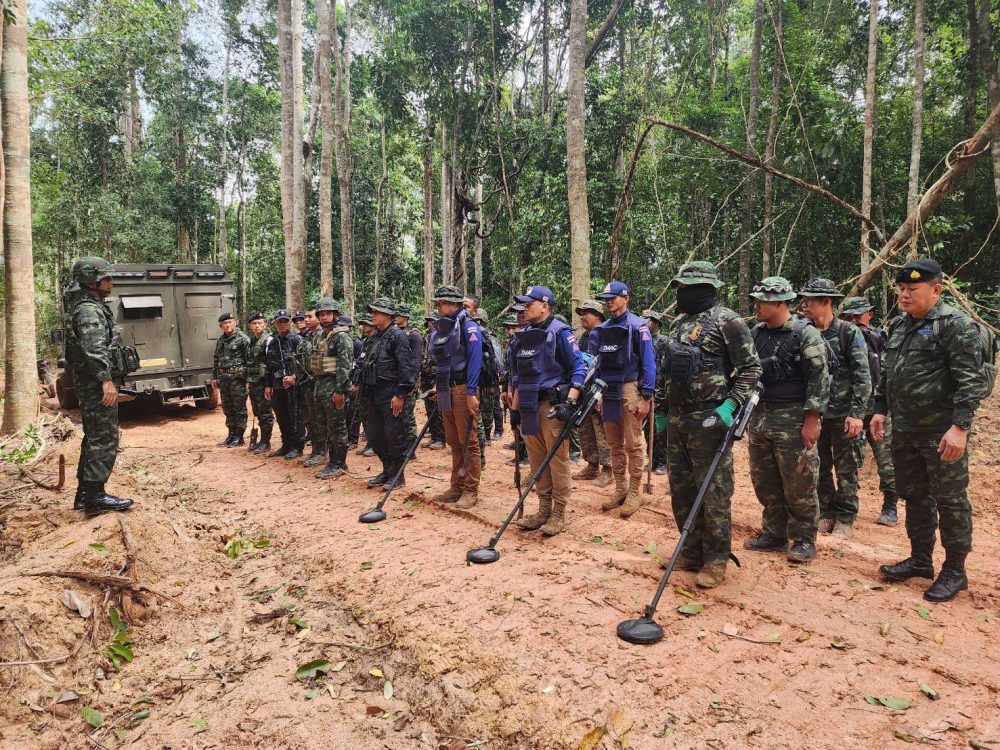
Cambodia had formally rejected accusations of landmine deployment during the dispute, stating its compliance with international treaties prohibiting such weapons. Thailand claimed Cambodia planted new mines near the boundary that injured Thai patrol units, while Cambodian officials suggested any mines could be remnants from conflicts spanning decades that concluded in the late 1990s.
Om Sarath, Pheap Pheara’s wife, informed The Associated Press that her spouse never intended to compromise national security in any way.
“This treatment of my husband is unjust, since he only brought supplies to give frontline troops and photographed himself with them as a keepsake without realizing a landmine was visible behind them,” she explained during a telephone conversation from her residence in northwestern Banteay Meanchey province. “Had he understood that his picture with the frontline personnel was taken in a forbidden zone, he probably wouldn’t have shared it publicly.”
She mentioned submitting an appeal through legal counsel on Monday and expressed hope that a superior court would deliver justice for her spouse and clear both him and Phorn Sopheap.
Yin Srang, representing the Siem Reap Provincial Court, verified the 14-year sentences imposed on both journalists and confirmed that both families had submitted appeals.
The July and December border confrontations forced hundreds of thousands to flee their homes in Thailand and Cambodia and resulted in approximately 100 military and civilian deaths. No additional combat has occurred following December’s ceasefire agreement, though regional tensions continue.